Home Blog Page 630

Manila stages WRO Asia Pacific Open Championship 2025 to foster innovators in robotics and AI

The Philippines hosted the World Robot Olympiad (WRO) Asia Pacific Open Championship 2025 last Sept. 19-21 in Manila, with FELTA Multi-Media, Inc. serving as the exclusive national organizer.

The international robotics competition gathered delegations from more than 30 countries across the Asia-Pacific region and beyond, making it the largest robotics event ever staged in the Philippines.

The championship was organized in partnership with the Department of Education (DepEd), Department of Science and Technology-Science Education Institute (DoST-SEI), Department of Information and Communications Technology (DICT), Department of Tourism (DoT), Commission on Higher Education (CHEd), Tourism Promotions Board (TPB), and Intramuros Administration (IA), alongside private sector sponsors.

The World Robot Olympiad is a global robotics competition that brings together young minds to develop creativity, problem-solving, and critical thinking skills through science, technology, engineering, and mathematics (STEM). The Asia Pacific Open serves as a regional championship fostering cross-cultural engagement, technical exchange, and innovation among future leaders.

Hosting the competition highlighted the Philippines’ growing influence in the global tech-education landscape, aligning with the government’s thrust toward digital transformation, inclusive education, and global competitiveness through science and innovation. The event also supports the Philippine Development Plan 2023-2028, particularly in enhancing the digital economy, promoting lifelong learning, and empowering youth for the Fourth Industrial Revolution.

The championship set out five objectives: to bring together over 1,000 student participants, coaches, and delegates from more than 30 countries; to promote STEM education and innovation in the Asia-Pacific region; to position the Philippines as a global hub for youth innovation and robotics; to provide an international platform for Filipino youth to showcase their talents and skills in AI and robotics; and to encourage tourism, cultural exchange, and goodwill among students, educators, and families.

Competitions were held under four categories: RoboMission, which featured autonomous robotics tasks; Future Innovators, which focused on open-ended innovation projects with real-world impact; Future Engineers, with advanced robotics engineering challenges; and RoboSports, a fast-paced two-on-two robot sports game, which this year carried the theme “Robo Tennis.”

Beyond competitions, the program also included a Cultural Exchange Night celebrating unity among nations, a Technology Showcase and Exhibits highlighting innovations from agencies, tech companies and Filipino startups, as well as educational workshops and seminars on STEM, AI and robotics. Participants also joined guided tours around Intramuros, Manila’s historic cultural district.

The event brought together over 1,000 students aged 8-19, more than 300 coaches and mentors, and some 200 international and local officials, judges, and volunteers.

Mylene Abiva, president and CEO of FELTA Multi-Media, said that the WRO Asia Pacific Open Championship 2025 is a “convergence of education, innovation, and international partnerships.” 

“With the full support of key Philippine government agencies and FELTA Multi-Media, Inc.’s commitment to advancing STEM education, this event marks a bold step in preparing Filipino youth for a dynamic, tech-driven global future,” she said.

“Let the world witness Filipino talent. Let Manila be the stage of innovation. Let us build the future, one robot at a time.”


SparkUp is BusinessWorld’s multimedia brand created to inform, inspire, and empower the Philippine startups; micro, small and medium enterprises (MSMEs); and future business leaders. This section will be published every other Monday. For pitches and releases about startups, e-mail to bmbeltran@bworldonline.com (cc: abconoza@bworldonline.com). Materials sent become BW property.


SEC extends shelf registration validity to five years

SEC.GOV.PH

COMPANIES will now have up to five years, from the previous three, to issue securities under a shelf registration after the Securities and Exchange Commission (SEC) approved rules extending the validity period and simplifying requirements for subsequent tranches.

In memorandum circular (MC) No. 12, series of 2025, the SEC said the enhanced shelf registration framework extends the validity period starting from the registration statement’s effective date.

This gives issuers more time to offer and sell securities in multiple tranches, amending Rule 8.1.2 of the Securities Regulation Code.

The circular also introduced new guidelines simplifying filing requirements for Permit to Sell (PTS) applications for subsequent tranches.

Issuers must submit a signed and notarized SEC Form 12-1-SR with annexes, an updated offering supplement or prospectus, and certificates of no material change when applicable.

The SEC also set new deadlines for filing applications. For offers within one year where no updated financial statements are required, applications must be filed seven calendar days before the offer.

If updated financials are needed, filings must be made 30 days before the offer.

For tranches issued after more than a year, filings must also be made 30 days in advance.

Under the revised rules, registration fees will be paid in proportion to each tranche, with payments due at least seven business days before the offering or sale of securities.

Issuers must undertake to pay any remaining registration fees at least 30 business days before the expiry of the shelf registration.

The SEC said the new validity period will apply to all shelf registration statements already approved and subsisting when the amendments take effect.

However, the remaining validity period of these registrations will still be calculated from the original registration’s effective date. — Alexandria Grace C. Magno

New York Fashion Week: Tory Burch, Siriano, Hudson unveil collections for spring

TORYBURCH.PH

AMERICAN designer Tory Burch unveiled her Spring 2026 collection at New York Fashion Week on Monday, inspired by “the complexity of women and different facets of their style,” she said.

The runway took place in a Romanesque-Revival style room in a building formerly used as a bank headquarters that now houses luxury condominiums. Celebrities including Lily Collins, Jessica Alba, and Emma Roberts were front-row guests. (See the show here: www.toryburch.ph )

The collection opened with a palette of moody hues, featuring browns and blues juxtaposed with teal, peach, and bold reds. American sportswear like the polo, trench, and striped shirt were part of Ms. Burch’s inspiration, according to collection notes.

As the show progressed, vibrant shades of bright pink and electric yellow heralded the arrival of spring, showcased through long dresses, versatile jackets, and coordinated handbags. Many models sported statement jewelry pieces and closed-toe heels, while a few wore sandals.

The collection also featured florals and hand-stitched seed beading on cardigans and mesh dresses. “A piped blazer was inspired by my father, and we referenced antique samplers for monogram embroidery with our design team’s initials,” said Ms. Burch.

The relaxed yet sophisticated line offered Ms. Burch enthusiasts an array of options, from pantsuits to evening dresses and two-piece sets.

SIRIANO, HUDSON
Christian Siriano and Sergio Hudson hit the runway on Friday evening, showing off their spring/summer collections for 2026.

Mr. Siriano’s collection, inspired by old Hollywood glamor, used German-American screen actress Marlene Dietrich as his muse, he told Reuters. (Watch the show here: www.youtube.com/watch?v=shBisdUq9AM )

Models started down the runway wearing mostly black-and-white gowns and suits, with pops of color appearing midway. At the end of the show, looks included large top hats and floor-length bubble-hem dresses in vibrant colors to match, with Canadian model Coco Rocha closing out the presentation.

“I wanted the whole collection to feel like silver screen, like in a film, and then ends like if the color was turned on. … It’s very old Hollywood, very glamorous, but a bit masculine, feminine, all those things,” said the 39-year-old designer, who got his start when he won the fourth season of the television fashion design competition show Project Runway.

Taking place at Macy’s, celebrities in the front row included Oscar winner Whoopi Goldberg, entertainment mogul Oprah Winfrey, and pop singer Lizzo.

Meanwhile, designer Sergio Hudson told Reuters that the audience at his show would see a “reset” of his designs, stating that he was no longer listening to pressure from retailers to put more dresses, rather than suits — which he said he’s especially known for — in his collection. (See the show here: www.youtube.com/watch?v=cRRLxWg6bXk )

Mr. Hudson’s designs featured custom zebra and cheetah prints, silk suits and lively colors married with precise tailoring, as models sported chunky gold hoops and large belts.

He said his embroidery, featuring sequins, crystals, and beads, was inspired by African tribe scarification.

“Most people won’t really know that’s where the patterns took inspiration from. It’s just a beautiful, whimsical pattern to most people, but I know,” he said. — Reuters

Needed: MMDA Transport Authority similar to Transport for London

STOCK PHOTO | Image by Dele Oke from Unsplash

On Nov. 11, 1999, the British Parliament established the Greater London Authority. Prior to that, there was no single entity managing the entirety of London. The governance of the city was fragmented, and responsibilities for planning, transport, and other city-wide matters were divided between local boroughs and national authorities.

The Greater London Authority was established in 2000 to represent the interests of Londoners and to direct the future of London, particularly on issues surrounding transport, policing, planning, culture, environment, health, fire and emergency services, and economic planning.

It is a strategic regional authority, with powers over transport, policing, economic development, and fire and emergency planning. Three functional bodies — Transport for London, the Mayor’s Office for Policing and Crime, and the London Fire Commissioner— are responsible for delivery of services in these areas.

Given its broad powers, on July 3, 2000, the Greater London Authority created Transport for London (TfL), a statutory corporation. Under its charter, TfL has been responsible for operating multiple urban rail networks, including the London Underground and Docklands Light Railway, as well as London’s buses, taxis, principal road routes, cycling provision, trams, and river services. The underlying services are provided by a mixture of wholly owned subsidiary companies (principally London Underground), by private-sector franchisees (the remaining rail services, trams, and most buses) and by licensees (some buses, taxis, and river services). Fares are controlled by TfL, rail services fares calculated using numbered zones across the capital.

On March 21, 1995, Republic Act 7924 created the Metropolitan Manila Development Authority (MMDA). The MMDA is tasked with planning, supervising, coordinating, and regulating essential metro-wide services that extend beyond the boundaries of individual local government units, including traffic management, solid waste disposal, flood control, and urban renewal.

The MMDA has a purely administrative function an, unlike the Greater London Authority, has no legislative or regulatory powers.

Thus, in land transportation, the regulatory power in the National Capital Region is still the Land Transportation and Franchising Board (LTFRB). On June 1, 1994, under Department Order 94-795 the LTFRB suspended the acceptance of new applications for public utility buses, jeeps, and taxi services on all routes in Metro Manila.

The impact of this suspension was fully described in my previous column entitled “LTFRB: Cause of Our Traffic Congestion” (BusinessWorld, Feb. 3, 2025). We quote:

“The number of trips of the Public Utility Jeepneys declined by 50% from 193,221 in 2013 to 95,659 in 2023 while the trips by the Public Utility Buses declined by 42% from 36,551 to 21,107.

“Over-all trips by private vehicles increased from 2,280,124 trips in 2017 to 3,349,502 in 2023 or a 47% increase while trips by public vehicles declined from 418,927 in 2017 to 284,731 in 2023 or a 32% decrease. As private vehicles occupy the same space as jeepneys but carry only one or two passengers as opposed to eight to 10 passengers for a jeepney, the result is severe traffic congestion, all as a result of the catastrophic decisions of the LTFRB.”

“The most plausible explanation for the adverse actions of the LTFRB is “regulatory capture.” Regulatory capture occurs when the regulator, in this case LTFRB, is captured by those organizations it is supposed to regulate, in this case the jeepney, bus, and motorcycle operators.

“As a captured agency, the LTFRB serves the interest of the operators rather than the public, in this case the commuters. Clearly by decreasing the franchises and so the public vehicles on the road, the LTFRB serves the interest of the operators since their vehicles will now be filled with overflowing passengers, some hanging on for dear life. On the other hand, commuters want more franchises so there will be enough vehicles to meet their transport needs.

“Lacking adequate public transport, some of our hapless commuters were forced to buy (usually on installment) motorcycles if they were to have any hope of reaching their destination on time. Thus the trips by motorcycles increased from 433,340 in 2013 to 1,674.646 in 2023 for a staggering increase of 286%.

“Despite this response from the commuting public, there is still the problem of commuters who could not afford to buy motorcycles. This was of no concern to LTFRB but was of great concern to the city mayors of Metro Manila.

“They decided to provide the public service that the LTFRB appallingly neglected to provide. The cities of Caloocan, Malabon, Manila, Pasig, Taguig and Valenzuela, started operating public bus services.

“In the case of Pasig, the Pasig Bus Service was started in 2015 to provide free shuttle services from the Pasig City Hall to key drop-off points in the city of Pasig. Pasig City bought it own buses and hired its own drivers.

“In the case of Quezon City, the Quezon City Bus Service was started in 2020 has now 100 buses serving eight routes with the Quezon City Hall as hub. However, instead of providing the service itself, Quezon City subcontracted the operation to Philtranco, Genesis, and Saulog. The rides are also free.

“The city governments had to offer the rides for free since they do not have franchises from the LTFRB. Without the franchise, they cannot operate as a regular bus service. This arrangement has created problems. In addition to the issue of sustainability, the city government is also accused of unfair competition by the private operators.”

For this reason, we argue for the creation through an Act of Congress of the MMDA Transport Authority which will function like the Transport for London, franchising and regulating private vehicles, creating and operating public transport corporations, and planning and implementing a land transportation development plan for the national capital region.

This would mean the devolution of the regulatory powers of the LTFRB in Metro Manila to the MMDA Transport Authority (MTA).

Upon devolution, the MTA will design the Metro Manila Transport Development Plan. The implementation of the plan would involve as in the Transport for London:

1.) The creation or acquisition of transportation subsidiaries;

2.) The setting up of a franchising and regulatory office to grant franchises and licenses as well as determine fares and subsidy schemes like the LTFRB; and,

3.) The setting up of services and facilities office to effectively implement various transportation laws, rules, and regulations like the Land Transportation Office.

We make this proposal for the following reasons:

1.) Given their interest and information on the needs for public transport in their community, the Metro Manila mayors, through the MMDA Transport Authority, are in the best position to be the regulator for local public transport franchises rather than LTFRB;

2.) Given that the regulatory powers will be diffused among the Metro Manila mayors, regulatory capture will be avoided; and,

3.) The MMDA Transport Authority directly and the Metro Manila mayors indirectly can be held accountable when traffic congestion occurs in their locality. At present the critical role of the LTFRB in our present traffic congestion is not even realized by both our government officials and the commuting public.


Dr. Victor S. Limlingan is a retired professor of AIM and a fellow of the Foundation for Economic Freedom. He is presently chairman of Cristina Research Foundation, a public policy adviser and Regina Capital Development Corp., a member of the Philippine Stock Exchange.

Zambo Sur gets agri aid worth P1.27 billion, mainly farm roads

PHILSTAR FILE PHOTO

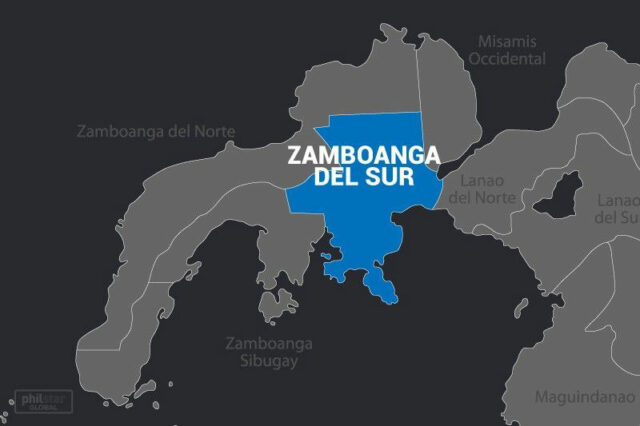
THE DEPARTMENT of Agriculture (DA) said it delivered a P1.27-billion farm aid package to Zamboanga del Sur (Zambo Sur), led by P968 million for road projects connecting farmers to their buyers.

In a statement, the DA said P803 million will go towards the construction of farm-to-market roads and P165 million to complete ongoing road projects.

The Bureau of Fisheries and Aquatic Resources (BFAR) will also invest P26.6 million in seaweed farming projects, including a warehouse and drying facility, and five deep-sea nursery modules with boats and fishing equipment.

Zamboanga del Sur will get cacao processing and marketing enterprise projects worth P67.6 million as well as P6.4 million in livelihood projects for the municipalities of Dumingag and Lakewood.

The Coconut Farmers Marketing Cooperative in the municipality of Ramon Magsaysay will be provided a P46.7-million copra drying and coconut oil processing facility by the Philippine Center for Postharvest Development and Mechanization, the DA said.

The Philippine Coconut Authority provided P2.24 million for hybrid seedlings and fertilizer.

The Swine Industry Recovery Project will give beneficiaries P9 million worth of housing, feed, piglets, medicine, and insurance support through local cooperatives.

The Upgraded Swine Artificial Insemination project in Guipos municipality will get P4.75 million for breeder housing and a swine AI laboratory.

Dairy farmers in Mahayag and Molave will also receive P1.17 million from the National Dairy Authority to improve dairy cow genetics.

Unconditional cash assistance worth P23 million will be distributed to 3,258 rice farmers from the Rice Competitiveness Enhancement Fund. Additionally, 945 farmers in six towns will receive P3,000 in fuel assistance .

Agriculture Secretary Francisco P. Tiu Laurel, Jr. said the aid package was granted in connection with President Ferdinand R. Marcos, Jr.’s birthday. — Andre Christopher H. Alampay

Peso may move sideways as market awaits more Fed hints

BW FILE PHOTO

THE PESO could continue to sideways against the dollar this week as investors remain cautious as they await further policy guidance from US Federal Reserve officials.

On Friday, the local unit closed at P57.15 per dollar, weakening by nine centavos from its P57.06 finish on Thursday, data from the Bankers Association of the Philippines showed.

Meanwhile, week on week, the peso went up by five centavos from its P57.10 close on Sept. 12.

The local unit dropped as the dollar was generally stronger on Friday following a stronger-than-expected US jobless claims report, Rizal Commercial Banking Corp. Chief Economist Michael L. Ricafort said in a Viber message.

“The dollar-peso closed lower, tracking the dollar’s recovery overnight on a less dovish Fed and lower than expected initial jobless payments,” a trader likewise said in a phone interview.

Early on Friday, the US dollar rose against major peers on news that fewer Americans filed new applications for unemployment benefits in the prior week, Reuters reported.

The number of Americans filing new applications for unemployment benefits fell, but the labor market has softened as both the demand for and supply of workers have diminished.

Though the report from the Labor department on Thursday confirmed layoffs remained relatively low, the hiring side of the labor market has almost stalled. Demand for workers has slowed, with economists blaming uncertainty stemming from tariffs on imports. At the same time, an immigration crackdown has reduced labor supply, creating what Federal Reserve Chair Jerome H. Powell on Wednesday described as a “curious balance.”

Economists welcomed the decline in applications as a sign of the economy’s resilience. Some even suggested that the US central bank’s concerns about the labor market were probably overblown and further interest rate cuts were unwarranted.

Initial claims for state unemployment benefits decreased 33,000 to a seasonally adjusted 231,000 for the week ended Sept. 13. Claims in the prior week had jumped to 264,000, a level last seen in October 2021.

Economists polled by Reuters had forecast 240,000 claims for the latest week.

The US central bank on Wednesday cut its benchmark overnight interest rate by a quarter of a percentage point to the 4%-4.25% range and projected a steady pace of reductions for the rest of 2025 to help the labor market.

The Fed paused its policy easing cycle in January because of uncertainty over the inflationary impact of President Donald J. Trump’s import tariffs.

For this week, the trader said the market remain cautious before the release of a fresh batch of US economic data, including reports on the final gross domestic product (GDP) estimate for the second quarter, mortgage applications, and the August personal consumption expenditures price index.

Several Fed officials, including Mr. Powell, are also scheduled to speak this week, which markets will monitor for policy guidance, the trader added.

The trader sees the peso moving between P57 and P57.40 per dollar this week, while Mr. Ricafort expects it to range from P56.90 to P57.40. — A.M.C. Sy with Reuters

Brazil entry, player protection program lift DigiPlus shares

DIGIPLUS.COM.PH

DIGIPLUS Interactive Corp. rose last week on updates about its overseas expansion and player protection initiative.

DigiPlus was the eighth-most actively traded stock at the Philippine Stock Exchange (PSE), with P1.22 billion worth of 55.40 million shares traded from Sept. 15 to 19.

Shares in the Tanco-led company closed at P23.65 apiece on Friday, up 18.8% from P19.90 a week earlier. The services index gained 5.1%, while the benchmark PSE index rose 2.5%.

Year to date, DigiPlus shares were down 12.9%. The PSE index fell 4% in the same period, while the services index grew 8.9% year on year.

The jump in DigiPlus’ share price was significantly influenced by news of its plan to diversify into traditional casinos and upcoming operations in Brazil, Jash Matthew M. Baylon, equity analyst at The First Resources Management and Securities Corp., said in a Viber message.

He said the index rose as investors hunted for bargains when it reached the 6,000 level, while optimism from Wall Street spilled over to the local market after the US Federal Reserve cut interest rates by 25 basis points for the first time this year.

Last week, DigiPlus said it would launch operations in Brazil on Sept. 22, marking its first international expansion. GamePlus will be the initial platform, offering 150 games in free-to-play and real-money formats.

The company said it is entering Latin America’s fastest-growing iGaming market after the Brazilian government approved regulations for online betting and gaming this year, allowing the entry of foreign players. By 2026, DigiPlus plans to launch BingoPlus in Brazil.

“[The] expansion in Brazil showed the firm’s goal to achieve its global growth strategy… and will introduce its entertainment services to new community which may attract new users and increase its user base,” Mr. Baylon said.

He added the launch aligns with DigiPlus’ plan to expand into other markets, including its recent move to divest in South Africa.

DigiPlus also partnered with Philippine First Insurance Co., Inc. to launch a surety bond program providing up to P1 million in coverage for verified players’ wallet balances, without requiring users to buy separate insurance.

“The surety bond will strengthen its user base as it will bring more confidence among its users. This move may also be aligned with the regulatory issues of online gaming in the country,” Mr. Baylon said.

Meanwhile, Reuters reported the US Federal Reserve lowered its policy rate by 25 basis points to a range of 4%-4.25% and signaled further easing but warned of sticky inflation.

For the second quarter, DigiPlus’ net income rose 30.2% to P4.2 billion from P3.23 billion a year earlier. Revenues climbed 30.6% to P24.71 billion from P18.93 billion.

For the first half, net income surged 60.9% to P8.4 billion from P5.22 billion a year earlier, while consolidated revenues jumped 46.7% to P47.78 billion from P32.56 billion.

Mr. Baylon attributed the growth to new games that boosted its user base and margins. He said the resolution of regulatory issues would help provide more clarity on the stock’s direction.

He said he sees “the P20 per share as the support, while the P25 and P30 level are the key resistance level.” — Abigail Marie P. Yraola

New UK exhibition looks at ‘the most fashionable queen’ Marie Antoinette

SLIPPER belonging to Marie Antoinette, beaded pink silk — PARIS MUSÉES / MUSÉE CARNAVALET – HISTOIRE DE PARIS/VAM.AC.UK

LONDON — From her dazzling jewels and silk footwear to modern interpretations of her extravagant gowns, a new exhibition exploring the style of France’s doomed 18th century queen Marie Antoinette opened in London last week.

Running at the V&A Museum, Marie Antoinette Style is the UK’s first exhibition dedicated to the queen, a member of the Austrian royal family who wed French King Louis XVI.

She became a fashionable and contentious figure, known for her opulent taste, before she and her husband were overthrown during the French Revolution and executed in 1793. Marie Antoinette was 37 years old.

“(The exhibition is) about the style shaped by the most fashionable queen in history, Marie Antoinette,” exhibition curator Sarah Grant said in an interview.

“We look at the style that she shaped from 1770 until her death and then the legacy of that style.”

Some 250 objects are on display in the exhibition, including Marie Antoinette’s footwear, jewels, and other personal belongings, including an eau de cologne bottle and porcelain dinner service.

Fashions from that period as well as portraits of the queen and her furniture are also on display, including items on loan from the Palace of Versailles. Her chemise, or underwear, from when she was in prison, and a final note written before her execution, are featured.

The contemporary section features an array of designer frocks and shoes looking at the influence Marie Antoinette has had on fashion and film. These include costumes made for Sofia Coppola’s 2006 film Marie Antoinette, starring Kirsten Dunst in the titular role.

“What’s incredible is that her influence has been so continuous,” Ms. Grant said. “It’s continued … really ever since her death and continues now.”

Marie Antoinette Style runs until March. — Reuters

The return of PhilHealth funds is the people’s victory

BW FILE PHOTO

By Filomeno Sta. Ana III and Pia Rodrigo

On Saturday, Sept. 20, President Ferdinand Marcos, Jr. announced that the P60 billion diverted from the Philippine Health Insurance Corp. (PhilHealth) to the National Treasury in 2024, which was strongly opposed by civil society and challenged in a Supreme Court petition (GR 274778, Pimentel vs. House of Representatives), would be returned to PhilHealth.

He cited savings from Department of Public Works and Highways (DPWH) projects as the reason the P60 billion would be returned to PhilHealth.

President Marcos’ decision to return the P60 billion that the National Government took away from PhilHealth is the result of relentless, sustained, and immense public pressure, which started in July 2024. It is the result of the coming together of diverse segments of society: healthcare workers, labor groups, youth groups, patients’ groups, and government workers, among many others. It is thus the people’s victory.

But if the intent of the Marcos administration is to placate an angry nation and defuse a political crisis in the wake of the controversy surrounding anomalous flood control projects and massive corruption in the General Appropriations Act, its pivot is clumsy. And its concessions — e.g., throwing former Speaker Martin Romualdez, the president’s cousin and strategic political ally, under the bus and returning the seized PhilHealth funds — are too little, too late.

Tinimbang ka ngunit kulang (you’ve been weighed and found wanting).” We explain why.

Accountability does not end in rearranging the leadership in Congress. Let us not forget that the corrupted budgets in 2024 and 2025 were the handiwork of both Congress and the Executive.

Congress — through a special provision in the 2024 General Appropriations Act (GAA), which the President signed — enabled the unconstitutional transfer of funds from PhilHealth and the Philippine Deposit Insurance Corp. (PDIC) to the National Government.

The coup de grâce, following Congress authorization, was the memorandum circulars released by the Department of Finance (DoF) that directed PhilHealth and PDIC to remit P89.9 billion and P107.23 billion to the National Treasury, respectively. (PhilHealth actually ended up transferring P60 billion of the P89.9 billion, for the Supreme Court issued a temporary restraining order that stopped the final installment from being remitted to the National Treasury.)

It is ironic, therefore, that the DoF issued a statement welcoming the return of PhilHealth’s P60 billion when the fund transfer was ordered by the Finance department in the first place. Just a few months ago, in April, Finance Secretary Ralph Recto himself delivered an impassioned speech at the Supreme Court oral arguments, defending the fund transfer and claiming that the diverted PhilHealth funds used for infrastructure were still beneficial to health, given that new roads facilitate access to healthcare.

Moreover, the defunding of PhilHealth is not limited to the illegal transfer of its exclusive funds. In the 2025 national budget that Congress and the President both approved, PhilHealth received a budget of zero. This is a blatant violation of the Sin Tax Law (Republic Act 10351), which provides the earmarking of sin tax revenues for PhilHealth and the Universal Health Care Act (Republic Act 11223), which ensures government funding for the annual premiums of the indirect contributors (i.e., mainly the poor).

For the proposed 2026 budget of PhilHealth, the subsidy is a pitiful P53.3 billion, an amount way below the earmarked revenues from sin taxes and an amount that is woefully inadequate to cover the contributions of indirect contributors.

In light of all this, the return of P60 billion does not fully account for the egregious defunding of PhilHealth. The Supreme Court oral arguments on the PhilHealth case debunked the misconception that PhilHealth had excess funds, rather, it exposed the Commission on Audit findings over the past years: that PhilHealth’s finances have been in the red. In a Sept. 8 Yellow Pad column by Dr. Jeepy Perez, he noted that with new benefits on the way (mostly a result of political pressure), PhilHealth faces both a financial and technical crisis, and that it will exceed its benefit budgets of P271 billion by over P34 billion by the end of the year.

Worse, the gesture of returning the P60 billion is deceptive. It is heavily outweighed by PhilHealth’s zero budget in 2025 and the pittance of PhilHealth funds in the 2026 National Expenditure Program.

Still and all, the return of the P60 billion to PhilHealth is a significant victory for the people, for those who fought to protect the integrity of PhilHealth funds, which belong to its members and must only be used for their main purpose: life-saving healthcare services.

We must continue demanding full accountability. The PhilHealth fund transfer was not just done by Congress — those in the Executive responsible for the reprehensible diversion of people’s healthcare funds must also be held accountable for their actions.

We ask the government to own up to its mistakes, and to apply the consequences of its irresponsible, nay, illegal, acts. Finally, we hope that the Supreme Court releases its decision on GR 274778 at the soonest possible time and that it rules the fund transfer unconstitutional to avoid its reoccurrence.


Filomeno S. Sta. Ana III coordinates the Action for Economic Reforms. Pia Rodrigo is strategic communications officer at Action for Economic Reforms.

Nueva Vizcaya ARBs get P20-M irrigation project

PHILIPPINE STAR/CESAR RAMIREZ

AGRARIAN REFORM BENEFICIARIES (ARBs) in Nueva Vizcaya received a P20-million irrigation project from the Department of Agrarian Reform (DAR) and the National Irrigation Administration (NIA), the agencies said.

Completed earlier this year in June, the Namamparan-Bungol Communal Irrigation Project was turned over to 23 ARBs. Featuring a diversion dam, lined canals, farm-level turnout structures, and access roads, it will irrigate 23 hectares.

“This project is not only an investment in infrastructure but also in the future of our farmers. It is aligned with the nine-Point Agenda of DAR Secretary Conrado M. Estrella III and highlights the importance of collaboration with NIA to sustain farm productivity and improve the lives of our agrarian reform beneficiaries,” DAR Regional Director Primo C. Lara said. — Andre Christopher H. Alampay

The ghost is clear

A snap from the Manila International Auto Show 2017. The auto industry is still expected to break half-a-million units in sales this year. — PHOTO BY KAP MACEDA AGUILA

Last month was an expected bump in the road for auto sales, but there were other things at play

THE HUNGRY ghosts came to roost. This year, the so-called “ghost month” fell from Aug. 23 through to Sept. 21; the Hungry Ghost Festival itself was on Sept. 6. This is a traditional Chinese occasion when ghosts and spirits — including those of deceased ancestors — are said to rise from the lower realm to visit family or seek victims among the living. To promote good luck and harmony during this period, some practices are observed, such as avoiding the start of construction, signing of contracts, undergoing major surgery, and the purchase of condos — or automobiles.

New vehicle sales reports for August seem to suggest that many car buyers may have had their “third eye” on the observance of the ghost month. In my many years in the automotive industry, this tradition has been a go-to reason by auto dealers and salespeople for low sales. In fact, it is already incorporated into the seasonality of the sales cycle.

The Chamber of Automotive Manufacturers of the Philippines, Inc. (CAMPI), Truck Manufacturers Association (TMA), and the Association of Vehicle Importers and Distributors (AVID) reported total sales of 35,944 units in August. This is the second-lowest monthly sales turnover for 2025, higher only than April. This is 8.4% lower than sales in August last year, and represents a 6.6% decline compared to July 2025. This tells quite a tale. It did not help that the ghost month started on the last week of the month when car deliveries usually peak — accounting for 30% to 40% of the month’s sales. Buyers may have opted to push back deliveries to September to be on the safe side of tradition. On top of that, the two national holidays also resulted to a shorter sales month than usual.

If unofficial reports by non-member importers and distributors are considered, sales in August 2025 are at 37,444 units, which is a lesser drop of 6% versus the same month last year.

The ghost month’s effects notwithstanding, the biggest contributor to the sales slack in August 2025 versus the same month last year is the pickup segment. As will be recalled, the Capital Markets Efficiency Promotions Act (CMEPA) was signed by President Ferdinand Marcos, Jr. last June. Among the provisions in the law was the imposition of an excise tax on double-cab pickup trucks effective last July 1. This raised prices of some pickup variants by more than P200,000. The drop in sales was not immediately reflected in July due to carry-over inventories by some distributors, imported prior to the effectivity of the excise tax. The full impact was felt in August, thus the significant drop in total market sales.

As mentioned above, the total market dropped 6% versus August 2024 — if including sales of non-member auto distributors. Sales of pickup trucks, on the other hand, declined by almost 1,800 units or 34%. Only Isuzu did not experience a contraction in sales in August, presumably because it still has stocks that can be offered at pre-excise tax prices. If we add back the lost pickup sales, total August sales would have been almost at par (98%) with 2024. So there. The ghosts may have given us a scare, but the sales numbers do tell their own story.

Undoubtedly, growth percentages are starting to regularize this year versus last. In the first half of 2024, supply disruptions were still evident and new model launches were continuing to hit the market in quick succession. As we enter the second semester of 2025, growth rates will start to abate due to the higher sales base in the same period last year. This will become even more apparent in Q4 as the plug-in hybrid electric vehicle (PHEV) segment started recording volume sales last year. At the current pace, the market is on track to exceed 490,000 units. But with the usual strong sales takeup in the last quarter, breaking the 500,000 unit sales level is still very much in play.

On a year-to-date basis, total market sales of CAMPI, TMA, and AVID are reported at 306,378 units — just about even with the sum over the same period in 2024. Passenger-car sales dropped by 21.5% due to a fall in the small subcompact sedan market by 30%, primarily on the back of a decline in Vios sales. The supply of Vios was managed down by Toyota Motor Philippines (TMP) to give way to the production of the Tamaraw at its Santa Rosa factory. Making up the slack is a growth in the entry hatchback segment, which saw a growth of 13% led by the Suzuki Espresso (up 42%) and the Toyota Wigo (up 11%).

Meantime, sales of commercial vehicles were reported to have grown by 7.3%, mainly on the strength of the light commercial multi-purpose vehicle segment that includes the Toyota Tamaraw, Mitsubishi L300, Suzuki Carry, and Isuzu Travis. This segment reported a growth of 48% versus the same period last year. This growth is consistent with the sustained demand for versatile workhorse vehicles needed to drive economic activity, especially for use by micro, small, and medium enterprises (MSME) that comprise 99% of businesses in the Philippines. Though year-to-date pickup sales grew by 4%, this is due to pull forward demand and is expected to lag in the coming months.

If we include sales of non-member distributors, total auto sales are estimated at around 320,000 units, up 4% versus the same period last year. This is almost at pace with the gross domestic product (GDP) growth of 5%. Outside of the growth segments mentioned above, another driver is the electrified vehicle (xEV) segment whose sales breached 32,000 units as of August. This accounts for 10.1% of total vehicle sales compared to the whole of 2024 with annual sales of almost 25,000, accounting for 5.1% of the automotive market. Hybrid electric vehicle (HEV) sales are still preferred among the new electrified drivetrains, accounting for almost half of the xEV segment. PHEVs have grown significantly to 37% of the segment while battery electric vehicles (BEV) make up 15%.

Geo-political and geo-economic events continue to cast uncertainty on the economy. The impact of increased tariffs on exports to the USA are also expected to manifest more in the second semester of the year. Furthermore, fiscal and trade deficits continue to climb. Nonetheless, GDP is on a stable trajectory, inflation continues to abate, the Philippine peso remains reasonably strong, interest rates are lowering, and OFW remittances are holding ground. If things stay the course, auto sales should be able to sustain growth and, hopefully, shatter the 500,000 sales mark.

Further BSP easing likely as growth outlook remains ‘delicate’

A woman buys food items at a supermarket in Quezon City, March 4, 2022. — PHILIPPINE STAR/ MICHAEL VARCAS

THE BANGKO SENTRAL ng Pilipinas (BSP) may cut benchmark interest rates again in December to prop up the economy as consumer sentiment remains weak and with fiscal support expected to be limited as the government continues its consolidation plan, Deutsche Bank Research said. 

“Downside risks to the Philippine economy have not faded in our view, despite BSP suggesting that it has reached the policy rate ‘sweet spot’ of 5%. The real rate remains high, and with fiscal constraints and subdued economic sentiment, we think that BSP still has some room to further ease,” Deutsche Bank Research economist Junjie Huang said in a Sept. 19 report.

“The Philippine economy’s current ‘Goldilocks’ state is fairly delicate… We maintain our call for another 25-bp (basis point) rate cut in its December meeting.”

Last month, the BSP lowered benchmark interest rates by bps for a third straight meeting to bring the policy rate to 5%. It has now reduced borrowing costs by a cumulative 150 bps since it began its rate-cut cycle in August 2024.

BSP Governor Eli M. Remolona, Jr. said the policy rate is now at their “Goldilocks” rate or “sweet spot” for both inflation and output.

Still, he left the door open to one more reduction within this year to support the economy if needed, which would likely mark the end of its easing cycle.

The Monetary Board’s last two meetings this year are scheduled for Oct. 9 and Dec. 11.

Philippine gross domestic product (GDP) grew by 5.5% in the second quarter, supported by a rebound in agriculture production and faster household spending.

Economic expansion averaged 5.4% in the first semester, just a tad below the government’s 5.5% to 6.5% growth target.

Mr. Huang said the country’s real rate is at 3.5% and would only reach around 2% in mid-2026, which shows that there is space for a looser monetary stance.

While trade has been driven by strong demand for electronics products from Asian economies, the frontloading done by exporters before the US’ “reciprocal” tariffs kicked in last month was also a strong driver of outbound sales, he noted.

“That said, the imposition of semiconductor tariffs could weigh heavily on the Philippines. Electronics comprise ~60% of its total exports, while semis (semiconductors) alone accounts for 40%.”

The country’s trade deficit narrowed to $28.46 billion in the first seven months from the $29.93-billion gap a year ago, government data showed. Exports increased by 13.9% to $48.62 billion as of end-July.

Mr. Huang added that monetary support for the economy may be needed as public spending is only expected to increase “marginally” next year as the government continues its fiscal consolidation path, albeit at a slower pace than initially planned.

“Its target deficit for 2026 is now 5.3%, 0.6 percentage point wider than the 4.7% initially planned, but nonetheless still lower than the 5.5% projected in 2025. Moreover, projected spending in 2026 at 21.5% of GDP is only marginally higher than the 21.4% in 2025, suggesting limited fiscal impulse next year,” he said.

“This in turn may require continued support from BSP to anchor growth at a time when consumer sentiment remains subdued.”

The Development Budget Coordination Committee in June revised the medium-term fiscal program amid global uncertainties.

Based on the revised fiscal plan, government spending is programmed at P6.63 trillion next year or 21.5% of GDP from this year’s P6.082 trillion (21.4% of GDP).

Meanwhile, revenues are projected to reach P4.983 trillion in 2026 or 16.2% of economic output from P4.52 trillion this year or 15.9% of GDP. — Katherine K. Chan