Home Blog Page 6269

TKC Metals widens net loss to nearly P50M

TKC Metals Corp. incurred P49.68 million in first-quarter net loss attributable to parent equity holders, wider by 41.8% compared with the P35.04 million recorded a year earlier.

The negative bottom line comes despite gross revenues improving by 66.4% to P195.23 million from P117.34 million, driven by higher nominal sales value generated by the operations of its subsidiary,  Zhangzhou Stronghold Steel Works Co. Ltd. (ZZS).

TKC’s two main subsidiaries are Treasure Steelworks Corp. (TSC) and ZZS. TSC manufactures steel billets used as raw materials for downstream steel products such as bars, wire rods, and sections. ZZS makes various types of steel pipes and distributes its products in China and other export markets.

“ZZS is still operating, however, the overall market conditions is still unfavorable coupled with a very volatile steel prices in China due to higher steel supply and the long-term effect of the COVID-19 pandemic,” the firm said in a disclosure.

TKC said that ZZS is in talks for a partnership for the necessary working capital and machinery for the fabrication, coating, and galvanizing facilities that will add more value to its existing facilities. 

The subsidiary will also develop land to build its own port or berth to service the housing requirements of heavy industrial structures.

In 2013, TSC suspended its plant operations in Iligan City and terminated its contract with plant employees due to a shortage in power supply in Mindanao.

“TSC, however, is planning to produce nickel concentrate and nickel pig iron instead to lessen the plant’s power supply requirement. By shifting to nickel concentrate and nickel pig iron, the power supply requirement will drop to 5 megawatts per hour (MWPH) as compared to producing steel billets at 15 to 20 MWPH,” the company said.

The firm has almost completed the refurbishment and upgrade of the billet manufacturing plant and the installation of the iron ore beneficiation plant, the sintering plant, and the first blast furnace plant.

TSC will also be looking into new technology for nickel leaching, which is a chemical process that will take only two hours to extract nickel from laterite ores and will result in a nickel recovery rate of 20-50%.

As of May 31, TKC shares remained unchanged at P0.77. — Luisa Maria Jacinta C. Jocson

‘A Mitsubishi for every lifestage’

PHOTO BY KAP MACEDA AGUILA

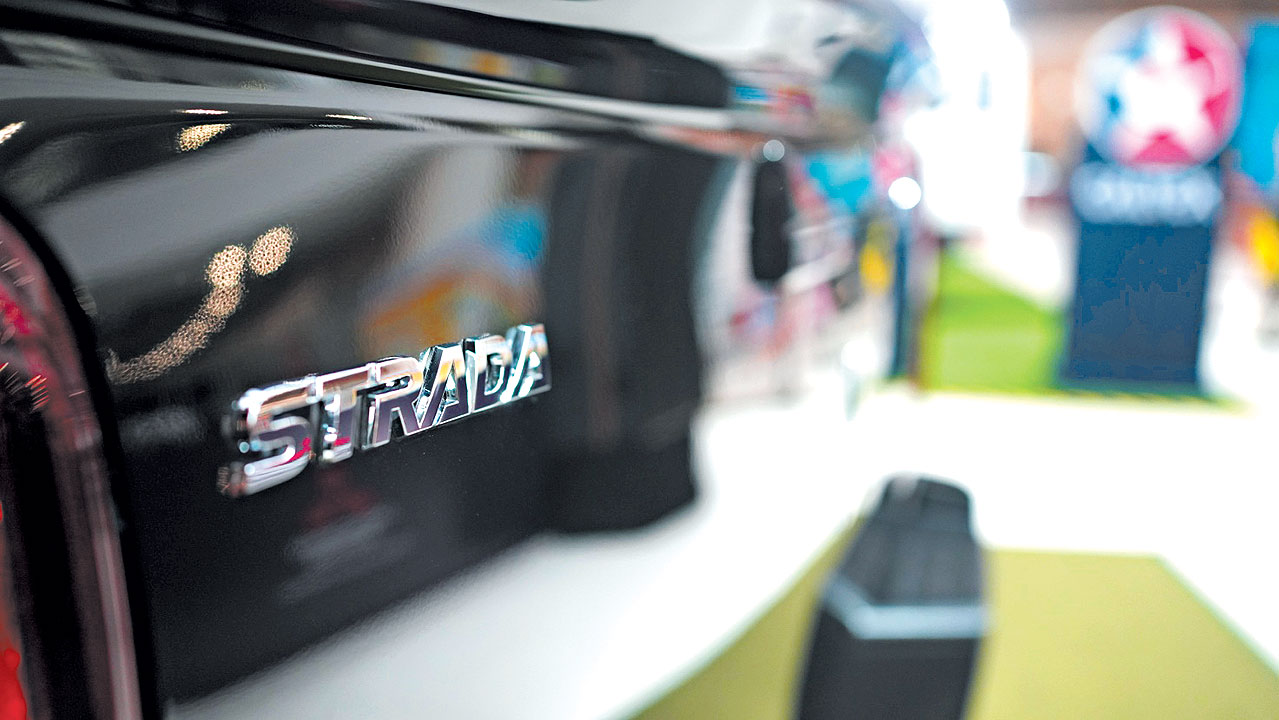
“WHAT WE want to do is to showcase the different lifestyles and lifestages of our customers. There’s a Mitsubishi Motors vehicle for each Filipino,” said Mitsubishi Motors Philippines Corp. (MMPC) Assistant Vice-President for Brand Communications Mark Parulan in an interview with “Velocity” at the Glorietta Activity Center of Ayala Malls in Makati.

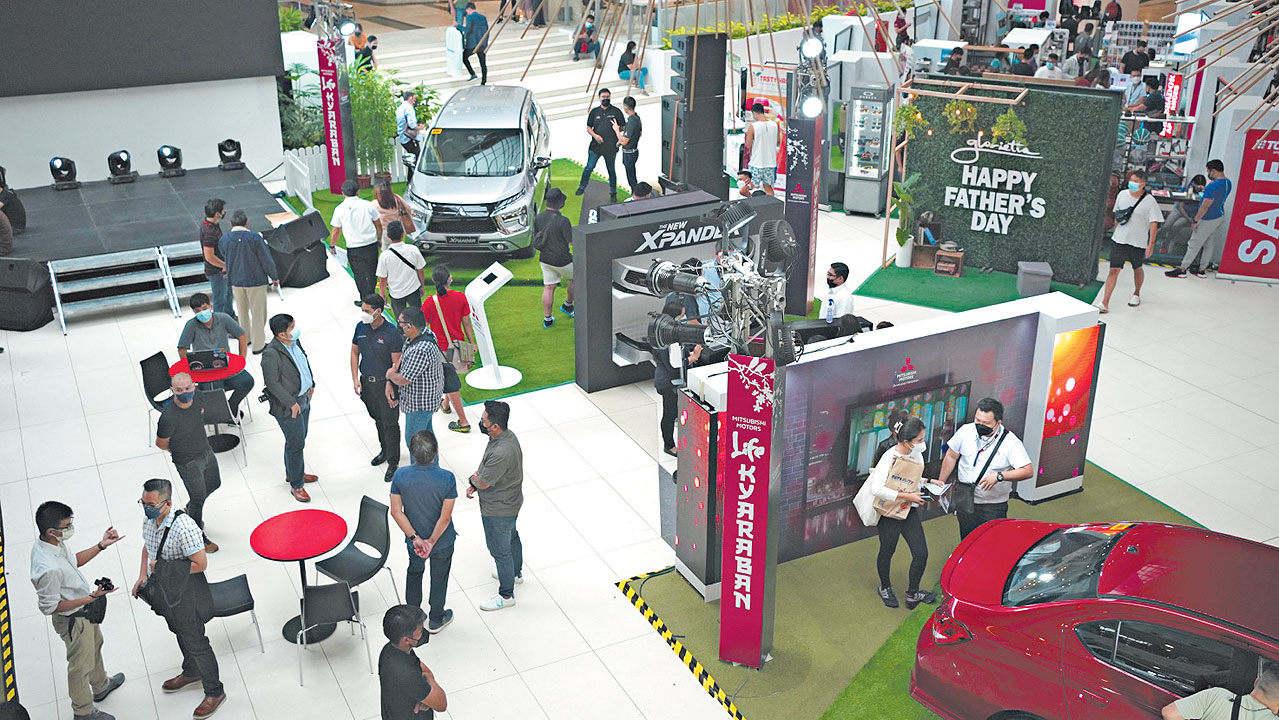
Over the weekend, the Makati mall was the venue of the initial staging of “Life Kyaraban,” a series of roadshows to serve as way for customers and customers-to-be to not only see the latest Mitsubishi vehicles, including the recently refreshed Xpander, up close, but to also “thoroughly experience the essence of the brand’s local slogan, ‘Life Made Better.’”

In a release, MMPC President and CEO Takeshi Hara said that “Life Kyaraban” is a “fusion of two concepts. ‘Life’ that echoes Mitsubishi Motors’ commitment to add value and further enrich the lives of Filipinos. Then ‘kyaraban,’ which actually means “caravan” in Nihongo, representing (the) commitment to reach customers in all parts of the country.”

Beyond a typical car display, “Life Kyaraban,” also featured several lifestyle, technology and fuel partners which helped “to convey and let everyone discover the holistic and enjoyable ownership experience they can get with Mitsubishi Motors.”

Attendees were given freebies, including a limited-edition Kool Cloud Water Bottle, and discounts of up to P5,000 on reservations. Partner merchants held interactive activities and games with prizes like Caltex SavePlus Cards and 40% off Combi coupons. Realme 8i phone were raffled off throughout the day as well. Meanwhile, accessorized vehicles showcased Black Rhino Wheels Philippines, Concept One Wheels Philippines, and Overland Kings products. Last Saturday, singer Kyla capped off the pre-Father’s Day treat for families dropping by.

“Aside from our grand roadshow, there’s no better way to celebrate ‘Life Made Better’ in the presence of our Filipino customers than by presenting our new service motto to them which is Mitsubishi Motors Cares. After-sales has always been one of the core strengths in MMPC’s 59 years of existence in the local automotive scene. This program is our way of solidifying that legacy and a recommitment to better service quality that forms part of their car life journey as a Mitsubishi owner,” added Mr. Hara.

More information about Mitsubishi Motors Cares can be gleaned from https://www.mitsubishi-motors.com.ph. For more information, subscribe to the official accounts of Mitsubishi Motors Philippines on Facebook, Instagram, and YouTube. — KMA

Abarrientos joins Belangel in Korean Basketball League

FEU rookie and Gilas stalwart RJ Abarrientos — THE UAAP

THE Far Eastern University (FEU) super rookie and Gilas Pilipinas stalwart RJ Abarrientos is joining Ateneo’s SJ Belangel in the Korean Basketball League (KBL) with an impending contract with Ulsan Hyundai Mobis Phoebus.

Barring any hitches, the Tamaraws shooting guard is scheduled to be announced as the newest Filipino player in the KBL under the Asian Player Quota program this week as reported by Korean sports outlet Jumpball.

Mr. Abarrientos’ looming signing came just two weeks after Mr. Belangel forged a deal with Daegu Kogas Pegasus as the first Filipino player in Korea.

If becomes official, Mr. Abarrientos would be foregoing his remaining years with FEU in the University Athletic Association of the Philippines (UAAP) after a one-and-done season. The STAR has sought for a comment from FEU on the possible departure of its prized cager, but has yet to respond as of press time.

Mr. Abarrientos, nephew of Philippine basketball legend, led FEU’s Final Four finish in his lone season behind averages of 13.8 points, 4.4 rebounds, 2.5 assists and 1.3 steals.

The streaky guard was also part of the Gilas team that trooped to South Korea over the weekend as part of its preparation for the International Basketball Federation (FIBA) World Cup Asian Qualifiers and FIBA Asia Cup.

He registered 12.5 points, 2.0 rebounds and 2.0 assists as Gilas fell short in two friendly games, 96-92 and 106-102.

In the KBL starting the 2022-2023 Season, Mr. Abarrientos is expected to carry over his scoring pedigree for Ulsan Hyundai that finished fourth last season with a 30-24 card. — John Bryan Ulanday

At avatar fashion store, Meta to sell virtual clothes for real money

PHOTO FROM TWITTER.COM/METANEWSROOM

FACEBOOK owner Meta Platforms is launching a digital clothing store where users can purchase designer outfits for their avatars, Chief Executive Mark Zuckerberg said on Friday.

Virtual outfits designed by fashion brands Balenciaga, Prada and Thom Browne will be available for purchase to start, said Zuckerberg, speaking in a live video stream with Instagram’s head of fashion.

A Meta spokesperson said they would be priced between $2.99 and $8.99, much less than the real outfits by those designers. Prada’s Matinee ostrich leather bag, for example, sells for $10,700.

Mr. Zuckerberg said he hoped to build the store out into an open marketplace where developers can create and sell a wide array of digital clothes.

Avatars have emerged as one way for Meta to link user identity across Facebook, Instagram and its other services, as it increasingly ties the platforms together and steers toward building an immersive “metaverse” of shared, interconnected digital worlds where users can gather.

Users of the company’s virtual reality headsets set up avatars to play video games, take exercise classes and participate in conference calls, although initially the digital outfits will be available only on Facebook, Instagram, and Messenger, Meta said in a statement.

The company redesigned its virtual reality avatars last year to be more expressive and three-dimensional, then made them available on Facebook, Instagram, and Messenger starting in January. — Reuters

Yields on gov’t debt climb as Fed fires off 75-bp hike

By Lourdes O. Pilar, Researcher

YIELDS on government securities (GS) climbed last week after the US Federal Reserve fired off its biggest rate hike in nearly three decades to contain surging inflation.

GS bond prices dropped as yields edged up by an average of 7.88 basis points (bps) week on week, based on PHP Bloomberg Valuation Service Reference Rates as of June 17 published on the Philippine Dealing System’s website.

“Local bond yields have yet to peak and have continued to drift higher as market remains defensive over supply pressure and anticipated aggressive rate hikes from Fed and BSP (Bangko Sentral ng Pilipinas),” First Metro Asset Management, Inc. (FAMI) said in a Viber message on Friday.

It added that inflation pressures still haunt the market, especially with the recent rebound in oil prices and “drastic” movements in the foreign exchange rate.

“With the Fed doing outsized rate hikes, local bond yields are likely to be strained as spread premium over US Treasury counterparts would narrow,” FAMI said.

It also added GS are prone to selloff from offshore players given the further depreciation of peso against the dollar.

“The local bond market had a full plate this past trading week but mostly due to external developments,” a bond trader said in a Viber message on Friday.

The bond trader said it started with May inflation in the US accelerated to a 40-and-a-half-year high of 8.6% year on year amid soaring fuel and food prices.

“This development had market reassess its US Fed hike projection to 75 bps from 50 bps,” the bond trader said. “Consequently, GS yields soared [last] week as market players scrambled to price in steeper rate hikes by the US Fed in the months to come.”

The US Fed raised last week its interest rates by 75 bps, the largest increase since 1994, to control surging inflation, Reuters reported.

Local GS yields increased across the curve week on week on Friday except those at the long end as the rates of the 20- and 25-year papers declined by 23.27 bps and 25.80 bps, respectively, to 6.5166% and 6.4974%.

The rates at the short end of the curve went up, with the rates of the 91-, 182- and 364-day Treasury bills increasing by 8.42 bps, 5.81 bps, and 9.43 bps, respectively, to 1.5705%, 1.9366%, and 2.2014%.

At the belly, the two-, three-, four-, five-, and seven-year Treasury bonds saw their yields climb by 13.10 bps (to 4.3338%), 17.16 bps (5.0875%), 19.26 bps (5.6754%), 21.11 bps (6.1167%), and 21.11 bps (6.6617%), respectively.

Likewise, the 10-year debt jumped by 20.40 bps week on week to fetch 6.9816%.

GS volume traded narrowed to P4.302 billion on Friday from P6.112 billion on June 10.

“Locally, there’s not much supply on the 20- and 25-year space and consequently helped push their respective benchmark yields lower,” said the bond trader.

The decline seen at the long end of the yield curve is “possibly temporary,” FAMI said, attributing lower movement to “growing recession risks for US and likely slowdown for our local economy as central banks pose to suppress demand with their fight with inflation.”

All eyes will be on the BSP’s Monetary Board meeting on June 23, with the market betting on a more aggressive hike to rein in rising inflation expectations.

The central bank had said it will likely raise the local interest rates at its next two meetings starting June to address soaring inflation.

However, the incoming BSP chief and current Monetary Board member Felipe M. Medalla signaled last week that the pace of the next rate hikes will be gradual, ruling out rate hikes higher than 25 bps. Mr. Medalla made the remarks ahead of the Fed’s decision.

The central bank fired off its first interest rate hike since 2018 in May, raising borrowing costs by 25 bps.

Domestic consumer price increases breached the central bank’s 2-4% inflation target for the second straight month in May at 5.4% amid rising food and fuel costs. The BSP expects inflation to average 4.6% this year.

“We are convinced that the BSP should also raise more aggressively (+50 bps) this June meeting as inflation path could get stickier given the wage increases, higher-for-longer oil prices and sustained peso depreciation,” FAMI said. “The BSP is also faced with Fed’s more advanced hike cycle.”

“Trading volume will remain light and yields will likely be biased to move higher on elevated US Treasuries given aggressive US Fed rate hikes ahead and local supply pressure,” FAMI said.

“Given the current risk backdrop, investors will remain opportunistic with nimble trading positions,” it added.

The bond trader also expects the BSP to hike interest rates by 50 bps this Thursday.

“GS market will continue to be cautious which will cause yields to move higher for the week,” the trader said.

MREIT buildings acquire IMMUNE certification

MREIT, Inc., the real estate investment trust of Megaworld Corp., announced that two buildings in its portfolio received a four-star IMMUNE certification from Healthy by Design Building Institute (HDBI).

Megaworld’s 1800 Eastwood Avenue and 1880 Eastwood Avenue office towers, its first-ever township development in Eastwood City, were awarded for being “healthy buildings of the future.”

“We take great pride in becoming the first-ever recipient of the IMMUNE Building Standard certifications in Asia. We hope to make this a benchmark across all the properties in our portfolio, and we look forward to accrediting all our assets in the future. As you know, we are into township development, and creating safe working environments not only benefits the office population, but also the greater community that surrounds our developments. That’s why it’s a very important step for MREIT to be taking. We are truly honored to be given this recognition,” MREIT President and Chief Executive Kevin L. Tan said in a statement.

The IMMUNE Building Standard was designed in response to the coronavirus disease 2019 (COVID-19) pandemic and aims to help mitigate the effects of pandemics and other bacteriological and toxicological health threats by creating and promoting healthy buildings of the future.

“The first IMMUNE building in Asia is another major step for the standard, and we are happy to contribute with our know-how in creating healthier workplaces for people all around the world. Megaworld has truly become trailblazers within this particular field and a beacon within Asia,” HDBI Director Darren Allen said.

IMMUNE incorporates a network of specialized sensors measuring the indoor environment parameters such as air, humidity, temperature, or CO2 levels, devices and available technologies, specialized equipment, dedicated personnel, and new amenities.

MREIT earlier announced the acquisition of an additional four prime properties worth P5.3 billion.

Once completed, MREIT’s portfolio will cover 18 office properties from four Megaworld premier townships: 1800 Eastwood Avenue, 1880 Eastwood Avenue, and ECommerce Plaza in Eastwood City; One World Square, Two World Square, Three World Square, 8/10 Upper McKinley, 18/20 Upper McKinley, and World Finance Plaza in McKinley Hill; One Techno Place, Two Techno Place, Three Techno Place, One Global Center, Two Global Center, Festive Walk 1B, and Richmonde Tower in Iloilo Business Park; and One West Campus and Five West Campus in McKinley West.

On Friday, MREIT shares ended lower by 2.62% or 42 centavos to finish at P15.60. — Luisa Maria Jacinta C. Jocson

Suzuki Auto Festival goes to Davao

Suzuki S-Presso — PHOTO FROM SUZUKI PHILIPPINES

SUZUKI PHILIPPINES, INC. (SPH), went down south over the weekend to Davao through its Auto Festival Virtual Roadshow. Davaoeños got to experience the brand and its virtues last June 18 to 19 at the Atrium of SM Lanang Premier, Davao.

“The Suzuki team is thrilled to finally, once again, bring its show on the road,” shared Suzuki Automobile General Manager for Automobile Norihide Takei ahead of the staging. “After all, the road is precisely where the Suzuki brand belongs.”

Features lined up for the two-day car festival included a Suzuki Kids Scouts Area, booth games and rewards for Auto Fest attendees — including exclusive promo discounts on the Dzire, Ertiga, XL7 and S-Presso, and more. The event was also streamed on Suzuki’s Facebook page.

For more information on the brand and its products, visit any of the 74 authorized Suzuki Auto dealerships nationwide or http://suzuki.com.ph/auto/. For daily updates, like the Facebook page at https://www.facebook.com/SuzukiAutoPh, follow the company on Twitter at https://twitter.com/SuzukiAutoPh and Instagram (@suzukiautoph).

Gilas girls’ youth off to Jordan for FIBA U16 Asian Championship

GILAS Pilipinas girls’ youth team takes its turn in flying the flag high in the International Basketball Federation (FIBA) Under 16 (U16) Women’s Asian Championship in Jordan following the gallant stand of the national boys’ youth squad.

The Philippine cagebelles fly to Amman on Tuesday to slug it out against Indonesia, Syria and Samoa in Group A of the tilt slated June 24 to 30.

Ava Fajardo, sister of senior women’s team stalwart Ella, leads the Gilas teens that will work their way up from Division B.

Completing the team are Emaleena Elson, Hannah Lopez, Samantha Medina, Ryan Kelly Nair, Camille Nolasco, Kailah Jade Oani, Naomi Panganiban, Sierra Jade Patricio, Gabriella Ramos, BJ Villarin and Kristan Yumul.

Pepperdine University women’s basketball assistant coach Brian Rosario will mentor the squad with the help of long-time national women’s deputy mentor Julie Amos.

Gilas girls’ youth team international exposure is part of the overall development of the Philippine women’s team under the watch of Samahang Basketbol ng Pilipinas (SBP) women’s program director Pat Aquino.

Led by Mr. Aquino who also serves as women’s head coach, the Philippines maintained its Division A status in the FIBA Asia last year followed by successful gold medal defense in the Hanoi Southeast Asian Games last month.

Meanwhile, the Gilas boys’ youth team finished in the Top 8 of the U16 Asian tilt in Doha, Qatar, though it could go up to seventh place in the still ongoing classification battle against Iran as of press time. — John Bryan Ulanday

Corn price hike forces Mexicans to reduce purchases of tortillas

REUTERS

MEXICO CITY — Business at Marco Antonio Jimenez’s taco stall in Mexico City was just starting to recover from repeated COVID-19 lockdowns when global corn prices skyrocketed, sinking his sales once again.

The surge in the cost of corn —which is used to make Mexico’s staple tortilla — forced Mr. Jimenez to raise the price of his tacos by two pesos (10 US cents), but he said many of his mainly low-income customers could no longer afford the 20-peso snack.

“When the price of tortillas increases, I have to increase the price of tacos,” Mr. Jimenez, 26, told the Thomson Reuters Foundation. “Many people prefer not to buy anything anymore,” he said.

The conflict in Ukraine has hit global grains and fertilizer supplies, contributing to a jump of almost 20% in global corn prices between February and March and taking them to a nine-year high in April, according to World Bank data.

Ukraine is the world’s No. 4 corn supplier, while seven Latin American countries were among the 20 biggest importers of the grain during 2021.

That fuels the threat of food poverty in a region where 267 million people have had to reduce the amount they eat since the start of the coronavirus pandemic, with many sometimes going hungry, said Carolina Trivelli, senior adviser for strategic analysis at the Food and Agriculture Organization (FAO).

Latin America had the biggest increase in food poverty globally between 2014 and 2020 due to the reduction of economic growth rates, extreme inequality and serious climate events that predated the pandemic, according to recent FAO statistics.

In Mexico, longer and more frequent droughts have forced farmers in some corn-growing areas to switch to less thirsty crops in recent years.

Such factors mean the region is especially vulnerable to the impact of higher grains and fertilizer costs linked to the war in Ukraine, Ms. Trivelli said. Rising fertilizer prices can lead farmers to cut their usage, causing production to fall.

“We are seeing the perfect storm,” Ms. Trivelli said. Jiovani Santiago, 34, who works at a tortilla shop on the northern fringe of Mexico City, said he sees first-hand how the everyday essential is becoming a luxury for some customers.

“I’ve seen the kilo of tortilla go up (from 18 pesos) to 22 pesos in the last month,” said Mr. Santiago. “Now people have to buy less than they used to.”

As the pandemic wreaked havoc on the region’s already weak economies, the prevalence of food insecurity rose to 40.9% from 31.9% between 2019 and 2020 in Latin America and the Caribbean, according to the latest FAO data.

Accelerated inflation is expected to push 7.8 million people more into food insecurity this year, according to new estimates released by the Economic Commission for Latin America and the Caribbean (ECLAC).

Food and drink inflation in six countries — Colombia, Paraguay, Mexico, Chile, Brazil and Uruguay — hit double digits in March, with women and people with informal jobs set to be hit hardest, ECLAC said.

“Food security must be a priority. For that, international food and fertilizer commerce must not be restricted, as that would accelerate inflation and damage the poorest,” Mario Cimoli, acting executive secretary of the UN agency, told a recent news conference.

Central American countries such as Guatemala and Honduras, which rely on corn-based foods like tamales and pupusas, are particularly at risk from rising grains prices after the 2020 hurricanes Eta and Iota wrecked crops and exacerbated hunger.

Caribbean countries, which are heavily dependent on imported grains and fuel, are also threatened by food insecurity due to an increase in debt burdens during the pandemic, said Ms. Trivelli.

Alarmed about the impact on consumers, governments are taking emergency measures to rein in inflation. Mexico has suspended import duties for a year on a range of essential goods including corn, while Argentina — where inflation could top 70% this year — proposed a bill this month to tax companies that earn “extraordinary income” as a result of fallout from the war in Ukraine — mainly commodities firms.

During the Summit of the Americas in early June, the Biden administration pledged $331 million in funding for food security in El Salvador, Guatemala, Honduras, Haiti and Colombia.

However, analysts say the food crisis looks set to last until well into 2023, calling for public policies such as direct welfare payments or school lunch programs to help the poorest.

“We need a package of temporary and focalized social policies for the most vulnerable populations and measures to support food production,” said Ms. Trivelli.

The jump in food prices — which is also linked to climate worries and lingering pandemic fallout — also fans the risk of social unrest in countries including Brazil and Argentina, according to a recent report by international risk consultants Verisk Maplecroft.

Idly waiting on his taco stand for the first customers of the day, Mr. Jimenez said he was worried about his rapidly dwindling income, which has dropped from 10,000 pesos to 7,000 in a matter of weeks.

“We’re being attacked on all fronts. Meat, eggs, even electricity has gone up,” he said. “Since the pandemic we haven’t had a chance to recover.” —  Thomson Reuters Foundation

Relief rally possible ahead of BSP rate decision

BW FILE PHOTO

PHILIPPINE financial markets may see a relief rally ahead of the anticipated rate hike by the Bangko Sentral ng Pilipinas (BSP) at its policy meeting this week.

The benchmark Philippine Stock Exchange index (PSEi) fell by 61.45 points or 0.96% to close at 6,331.56 on Friday, while the broader all shares index declined by 40.29 points or 1.17% to 3,394.95.

Week on week, the PSEi dropped by 198.48 points from its close of 6,530.04 on June 3.

Rizal Commercial Banking Corp. Chief Economist Michael L. Ricafort said the PSEi dropped in the past week in line with declines in the US and global stock markets due to rising inflation.

“US stock markets declined amid concerns over more aggressive Fed rate hikes in an effort to clamp down elevated US inflation even if this would mean risk of economic slowdown or even recession, as part of the Fed’s efforts to bring down inflation eventually back to the target of 2%,” he added.

China Bank Securities Corp. Research Director Rastine Mackie D. Mercado said shares may rally this week on bargain hunting, but gains are likely to be limited.

“Given the extent of the sell-off over the past two weeks, we may see a relief rally occur at some point in the coming week as bargain hunters pick up shares. This may become more broad-based as some underlying index issues have already begun their bounce. Potential upside, however, is likely to be modest as investors are likely to secure gains fairly quickly following the bounce,” Mr. Mercado said in an e-mail.

RCBC’s Mr. Ricafort said signals from central bank officials about the certainty of another rate hike this week show the economy is already strong enough to weather higher borrowing costs.

The Monetary Board is holding a policy meeting on Thursday, June 23. Incoming BSP chief and Monetary Board member Felipe M. Medalla last week said a rate increase this week is a “sure thing,” with hikes at subsequent meetings also possible.

Analysts in a BusinessWorld poll were divided on the magnitude of the BSP’s move on Thursday, with nine expecting another 25-basis-point (bp) increase and six betting on a 50-bp hike.

The BSP kicked off its tightening cycle at its May 19 meeting, hiking rates by 25 bps for the first time since 2018 to stem rising inflation.

“There is a chance of a local policy rate hike of 50 bps on the next rate-setting meeting on June 23 and more local policy rate hikes for the rest of the year, partly to maintain a comfortable interest rate differential with the US, to account for the comfortable interest rate differentials. [This] could lead to higher borrowing and financing costs for some listed companies, a drag on net income and valuations,” Mr. Ricafort added.

For the coming week, Mr. Ricafort placed the PSEi’s next support levels at 6,100 to 6,200 and immediate resistance at 6,550 to 6,600. — Luisa Maria Jacinta C. Jocson

The Velocity Q&A: Steven Tan (President and CEO Mazda Philippines)

PHOTO FROM MAZDA PHILIPPINES

Interview by Kap Maceda Aguila

THE INTENSE sunlight beams down on the asphalt of the Clark International Speedway. This means it’s a good day, without a hint of precipitation, to race — never mind that spectators and drivers alike are cooking in the searing heat.

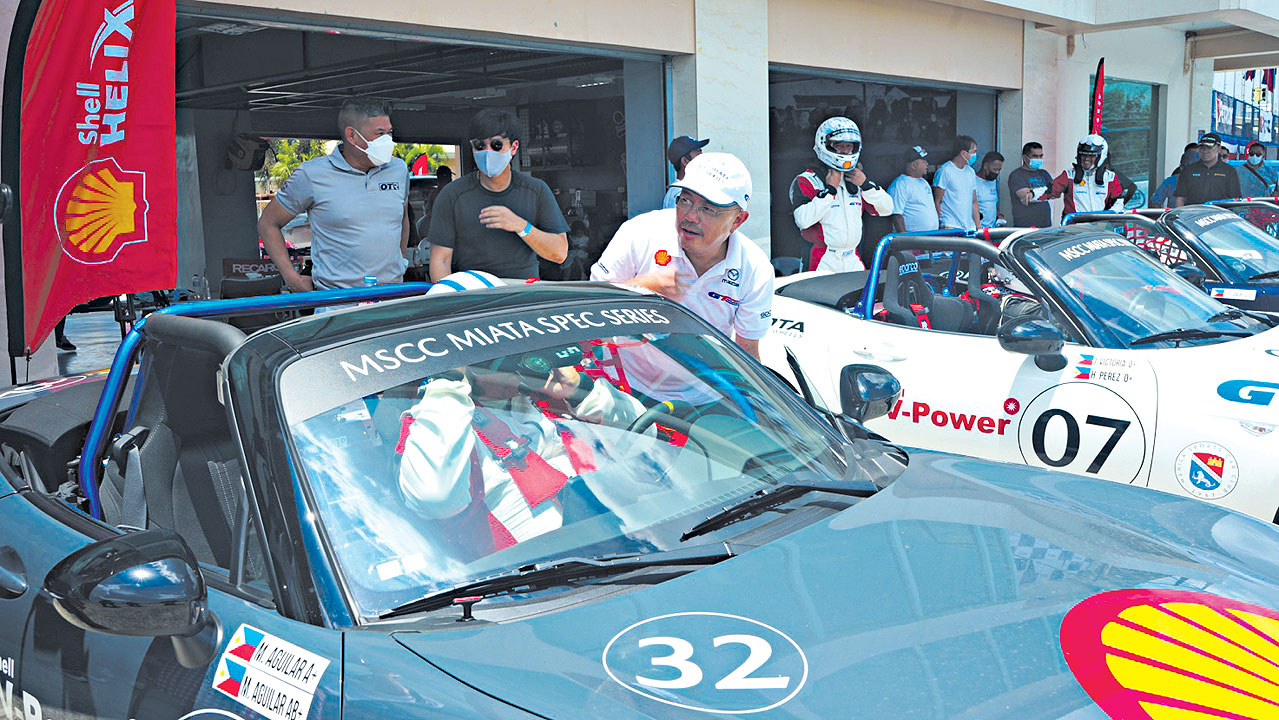
Soaking in the sights, din of revving engines, and the excited babble of attendees is a grinning Steven Tan. He dons a white cap emblazoned with the logos of corporate sponsors, and “MSCC (or Manila Sports Car Club) MIATA SPEC SERIES.” It’s the inaugural leg of the four stages to be held this year, and Race 1 is nearing flag-off. Alternating races with the long Miata Cup series today, there are lots of people who have made the trip to the country’s premier track to witness real wheel-to-wheel action.

Twenty similarly appointed and equipped Mazda MX-5s are freed of their soft tops for the run. “This is a dream come true not just for us at Mazda Philippines, but for the Manila Sports Car Club as well,” shares Mr. Tan.

Under the hood of the MSCC Miata Spec Series MX-5 is a stock 181hp, 2.0-liter Skyactiv-G engine mated to a six-speed Skyactiv manual. Suspension components have been swapped with Cusco-branded sports coilovers and given chassis braces. To enable the engine to breathe more freely and to give it a racier note, Drift Xaust fits a custom stainless steel exhaust system. Completing the slew of performance and safety enhancements are a Sparco competition tiller, racing seat, harness, and safety net. A Cusco racing roll cage also provides additional protection. All the cars roll on GT Radial Champiro SX2 tires affixed to custom 17×8.0 J Rota Strike wheels. Pilipinas Shell is the official fuel and lubricant sponsor.

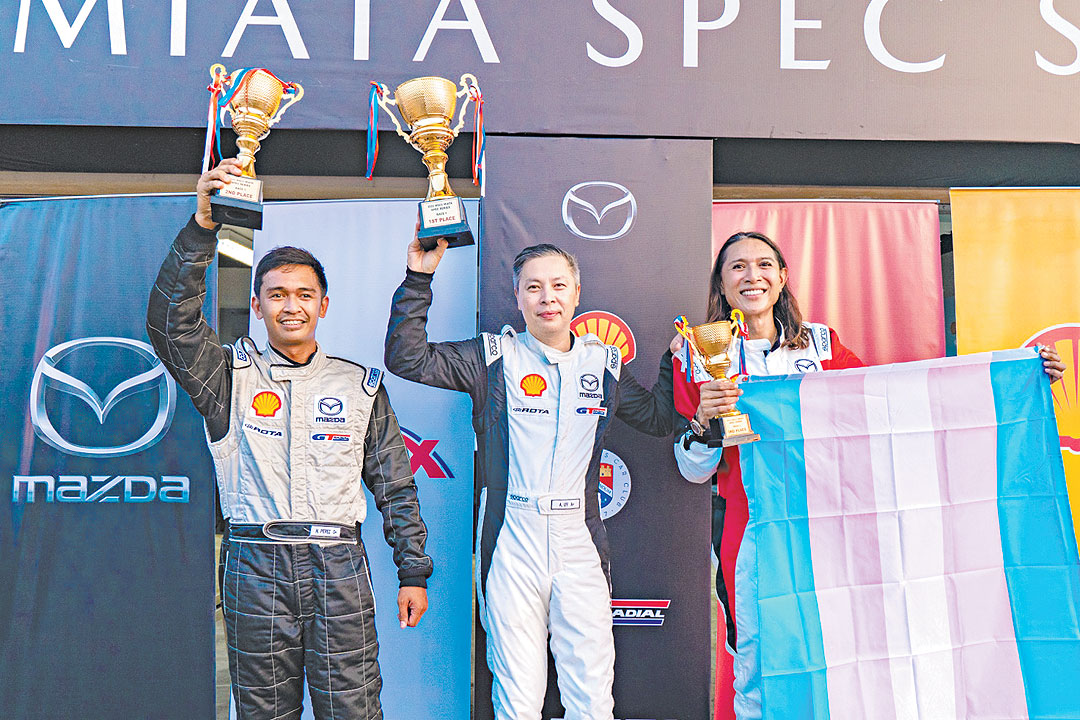
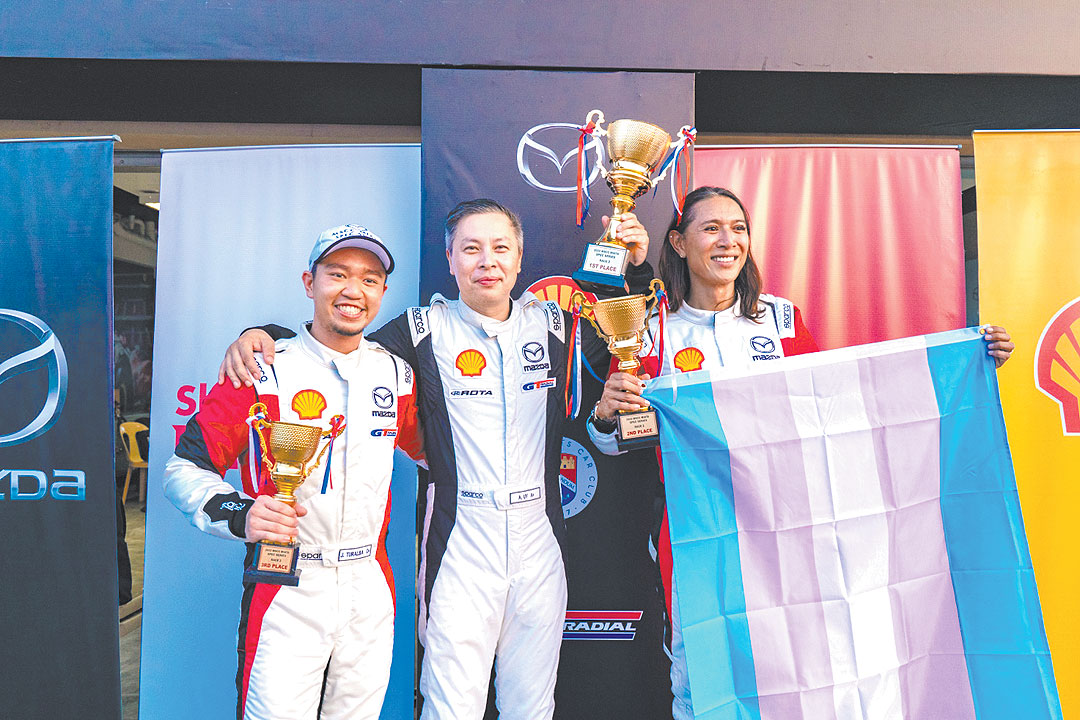
Race 1 is won by Allan Uy’s #99. He is joined on the podium by Paul Henderson Perez in #77 and Angie King in #12. As the sun starts to climb down, Race 2 offers some respite, but Mr. Uy presses on for another win. Ms. King notches second; Juha Turalba in #12 completes the top three. The fastest lap time is also achieved by Mr. Uy, who completes the circuit in 2.19 minutes — averaging 108kph.

The next rounds are set on Aug. 27 (Races 3 and 4), Oct. 22 (Races 5 and 6), and Nov. 26 (Races 7 and 8) — all at the Clark International Speedway. Always in the middle of the action, Mr. Tan talks to us exclusively after attending to a series of “taxi rides” aboard the competition MX-5s.

Here are excerpts of our interview with the Mazda Philippines head.

VELOCITY: How do you differentiate the MSCC Miata Spec Series and the Miata Cup?

Steven Tan: Well, they work together very well. The Miata Cup has been in existence for 15 years now. It’s part of the genetics of the Miata Club. If you have a Miata, then you’d naturally want to have a track day. It’s the same everywhere around the world. They always have a track day or a fun run. The formula here is that the MSCC Miata Spec Series is a one-make race where all the cars are identical — same power, engine, transmission. We collaborated with Cusco and Sparco to build out a really high-quality car that is good on the track and on the road. It has a kind of a dual personality. It’s very fast and it will run with the best of the best in that category. But it’s also very nice to drive on the road.

The Miata Club is 25 years old this year, and the Miata Cup is made up of different generations of the model, so you can’t really go one make with that. But I think what makes me the most fulfilled is that both cups are running on the same day, just on different grids. There’s a lot of camaraderie and festivities around today’s event.

The Miata Club is probably one of the strongest car clubs in the Philippines. As far as Filipinos go, the fascination with the Miata or MX-5 is strong as well. Why do you think that is?

The Miata Club Philippines has been extremely resilient. Twenty-five years, and it’s thriving. There’s cohesiveness.

So how many members are there now?

They have maybe 150, 160 active members, and every year, new members come in. They are being looked after by a very strong group of what they call the council presidents. That becomes the institutional knowledge or memory about how the club DNA should be… I think the secret to the longevity of the club is that it is very strong — again, guidance, and a constitution. Plus, the car itself has remained relatively unchanged in its personality, bringing people together through camaraderie and happiness. What comes to mind is the joy of driving.

Mazda Philippines has traditionally been very close to the club, so it’s a two-way street, too.

I came in 10 years ago, so this year would be our 10th anniversary and my 10th year in the Philippines. I immediately engaged the club because I feel that engagement with the users or customers is really important. We are the kind of brand that tries on engagement, enjoyment of the product — getting together and sharing the same experience. The Miata Cup and the MSCC Miata Spec Series are extensions; parts of the journey. It’s part of evangelizing the brand to a different group of people.

So what makes the Miata popular here? It’s counterintuitive in a way because of the hot climate we have, and our penchant for acquiring bigger SUVs.

Why would the Miata be so popular? Like you said, it’s a two-door — two seats, open top, small. I will say: not practical, right? But it’s extremely successful here. You know, the Philippines has the honor of having the largest Miata population outside Japan — I mean, in all the countries that we have that including even China.

Does that surprise Mazda? Does that surprise you?

It surprised Mazda. But if you’re here and you understand the culture of people who have cars, it shouldn’t. We love sports car, and we talk about cars all the time. So get a group of people together, especially young boys or guys together. They may talk about other things, but eventually everything comes out that a car is not just a mobility device to get from point A to point B. It’s an expression of who you are, what your life is like and what your values are. The goal is not to have the fastest car or even the best-looking car. It’s just about who I am and what my car is. So in terms of the Miata, a lot of people you know say, “This is who I am.” It’s not supposed to be an expensive sports car, and it’s easy to maintain.

Mazda is also known for its sustainability efforts. The company is working on being carbon-neutral, and is working on developing sustainable fuels. And of course, we’re also aware that you have an electrified or electric vehicle that has won awards out there. Do you have a timetable for bringing it in? Maybe that’s the question.

We don’t have a firm timetable. I think electrification is such a buzzword today, but there are lots of other structural elements that need to be in place in order to make electrification a practical thing. I think ultimately, the direction will be electrification in whatever form it is. It could be EV (electric vehicle), it could be plug-in hybrid, it could be a mild hybrid. But all the other pieces that come together in terms of like, what’s the source of energy. Is it green? Is it fossil fuel? Is it solar power? On our side, it’s also important for each company to take a position and say, what we are doing is part of the conversation about where we are going in terms of, you know, the tipping point two degrees Celsius.

Mazda has already declared that by 2035 its plants will be carbon-neutral.

Yes. I’m really glad about that. But even here, in collaboration with Shell, our partner in 2020, we’ve completely net-offed our carbon emission for our company fleet. They help us do that. They came to us and asked, “Would you want to be a partner?” We said yes, we are the first automaker in this country that said, okay, we have that many cars that we used in 2020… So every time we pump gas, they register how many BTUs and so they came to us a year after that… We’re very low emission, but we still emit. So Shell set based on the emission a planned equivalent number of trees to sink the carbon into the ground, right? Yes. Planting and growing trees is the most practical, easy form of carbon sink, right? We put carbon back. If you cut down a tree and burn it, you release the carbon, but if you plant a tree, you’re sinking carbon. We did that for 2020.

What are you seeing with regard to electric vehicles? Is it still a wait-and-see for Mazda Philippines? Are you waiting for the aforementioned tipping point in the country — for it to mature or evolve to a state where EVs will become more palatable, more viable?

No, I think you’re right that, you know, if everybody sits around and waits for something to happen, it’s not going to happen. So last year, we took the first step by introducing hybrids (Mazda3 and Mazda CX-30 variants). They’ve been very popular, I must say that I drive one myself and I can see how things work; mild hybrid works, hybrid works, plug-in hybrid works. I know the government is doing something to incentivize and establish structures around it so that the energy provider can build a charging station and all of these pieces have to come together. If we wait around for somebody to do it, or we wait for the government or government for us, it becomes a waiting game. Our EV is called the MX-30, but Mazda’s strategy is not just one solution. It could be multiple solutions to see which is more appropriate here. So, if your electric energy is coming from a coal or a fossil-fuel source, then you know you’re transferring tailpipe emission from the car to somewhere else — unless you’re pulling it from geothermal, or other form of green energy.

What can you share with us about your plans for Mazda?

One thing I’ve learned in life is that plans change all the time. If you’re going to stick with a plan and say this is what we’re going to do and not allow the change, you’ll get frustrated. However, you must have a plan. So in my mind, when we started this project three years ago, I really had no idea it was going to pick up.

You were planning in the middle of the pandemic?

I was planning before the pandemic. And the pandemic put a pause to it. And I think that pause was a blessing. I’m a member of the Manila Sports Car Club… and it makes sense for us to collaborate. They’ve been extremely good partners to work with in terms of you know, the membership, making the rule development. And so, here we are today and there are several way it will evolve as the club experience in driving the series matures and more people come in. We may have to spin off into two different classes — one for beginners and one for experts because putting them on the same grid frustrates both groups, and it could become a safety thing as well. But we said we were very pragmatic about it, we said the first year is a learning year.

Manageable expectations.

For example, this weekend we’ll have a dialogue and say, “Okay, guys, what do we learn from this? What worked? What didn’t work? What would you like to change?” And then you do it again and again. And then one day it’s like, hey, this thing works pretty well, everybody.


Dimakiling misses out on third GM norm in Singapore event

FILIPINO Oliver Dimakiling settled for a second-place finish after missing out on a third and final Grandmaster (GM) norm in the Grand Copthorne Professor Lim Kok Ann Invitational GM tournament in Singapore on Saturday.

Denied the last norm that would have pushed him closer to becoming a GM following a heartbreaking eighth and penultimate-round defeat, the 42-year-old International Master from Davao City salvaged some measure of pride with a win over Myanmar’s IM Wynn Zaw Htun in the last round to claim No. 2.

Overall, the player popularly called “Dimaks” tallied six points on five wins, two draws and the same number of losses.

GM Tin Jingyao of Singapore topped the event with seven points despite absorbing a final-round beating at the hands of GM Daniel Howard Fernandez of England.

It could have been a better had Mr. Dimakiling, who claimed his two norms in the 2006 Dato Arthur Tan Malaysia Open and the 2012 Battle of the GMs in Boracay, obtained that final GM result.

That would have left Mr. Dimakiling to just reach the 2500-rating plateau to become a full-pledged GM as his rating is already at 2439.9 including the whopping 19.9 points he obtained recently. — Joey Villar

ADVERTISEMENT
ADVERTISEMENT