Home Blog Page 6239

NEDA: Unsolicited proposals, dev’t plans need to be aligned

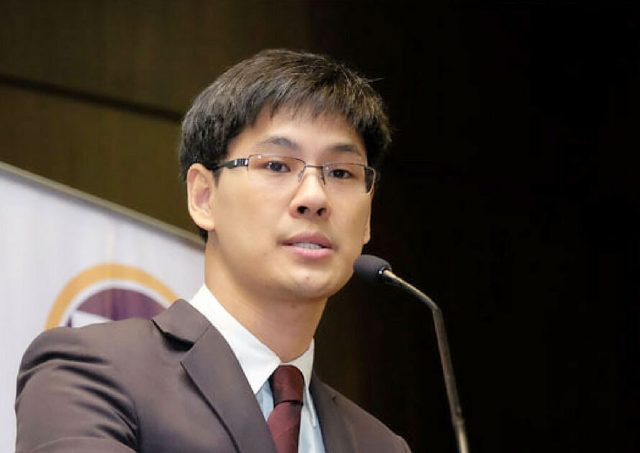
KARL KENDRICK T. CHUA — PHILSTAR FILE PHOTO

THE National Economic and Development Authority (NEDA) said the infrastructure of the future needs to be “smart,” “sustainable,” and aligned with development planning to a degree not seen in the unsolicited proposal process.

“We want to have a master plan so that all our infrastructure is well thought out; that they connect transport with the urban planning, with the land use, with water use, with the issue of population demographics and congestion, and also, to make sure that all (infrastructure) is planned very well and not just accepting unsolicited proposals that are totally out of the scope of our plans,” Socioeconomic Planning Secretary Karl Kendrick T. Chua said at a briefing on Monday.

Infrastructure spending as a percentage of gross domestic product was at 5.8% last year, and has been counted on by the current government to drive the economic recovery, a policy which the next government has signaled may continue.

At the briefing, Undersecretary Roderick M. Planta added that “smart and sustainable infrastructure development requires the adoption and innovative use of smart solutions, technologies in different infrastructures, services, and urban facilities to achieve our societal goals in improving our overall quality of life.”

Such goals are to be considered when implementing the Philippine Development Plan (PDP) and in drafting the next one, he said.

“The Philippines faces various economic, environmental, and social problems due to increasing population, rapid urbanization, vulnerability to disasters, and huge infrastructure gaps that need to be addressed immediately,” he added.

NEDA has commissioned 13 sector-wide master plans in urban areas nationwide that were funded through the NEDA project development and other related studies fund, Mr. Planta said in his presentation. These will guide the preparation and implementation of sustainable infrastructure development.

In the drafting of the next PDP, Mr. Planta said further attention will be paid to transport, water resources, energy, social infrastructure, and information and communications technology infrastructure. — Diego Gabriel C. Robles

Cabinet nominee Frasco calls for ‘balanced’ safety measures for tourism

PHILSTAR FILE PHOTO

THE next government’s nominee to head the Tourism department said health measures imposed on her industry must balance the need for safety and preserving livelihoods.

Tourism Secretary-designate Maria Esperanza Christina G. Frasco said during her welcoming ceremony at the Department of Tourism in Makati City on Monday that the pandemic has left tourism workers scarred by the loss of income when travel was restricted.

“When people lose their livelihoods and are left hungry and without opportunities for income, they may lose their lives as well. So, it’s very important to strike a balance between lives and livelihood. Therefore, it is important to (evaluate) the existing health and safety protocols and to examine whether or not there is a necessity to (relax them) in the interest of revitalizing the tourism industry,” Ms. Frasco said.

“We greatly appreciate all the efforts of the National Government in implementing the necessary health and safety protocols for the protection of life. But at the same time, from our experience in Cebu, we have also seen the importance of balancing the protection of life with the protection of livelihoods, because if we continue to allow ourselves to be shackled by the fear of the pandemic rather than revising our perspective to learn how to live with this virus in a manner that is responsible and conscious of health protocols, then not only lives will be lost but livelihoods as well,” she added.

COVID-19 cases have been rising again recently. The weekly case bulletin of the Department of Health issued on Monday indicates that the Philippines logged 4,634 new COVID-19 cases between June 20 to 26, up 53% compared to the week earlier.

Ms. Frasco said she will push to promote other sites in the Philippines that are not yet widely known to tourists. She gave no details.

“It is very important for us to continue to harness the marketability of our already well-known tourism sites, but at the same time, shed light on the sites in the Philippines that have not yet had equal opportunity for promotion and product development,” Ms. Frasco said.

She said the promotion strategy on her watch will seek to “focus on our natural resources but also on the development and promotion of our people and our products.” — Revin Mikhael D. Ochave

Coconut industry development plan launched

PHILSTAR FILE PHOTO

THE Coconut Farmers and Industry Development Plan (CFIDP) was launched in Lucena City on June 24, outlining the steps the government plans to take in upgrading social protections, raising productivity, and organizing coconut farmers to help them arrive at more viable business plans.

The Department of Agriculture (DA) said in a statement on Monday that the plan, which it launched with the Philippine Coconut Authority, hopes to also address the development of hybrids suitable for Philippine conditions, farm rehabilitation and improvement, integrated coconut processing and the development of downstream products, research, and support services.

The CFIDP is authorized by Republic Act No. 11524 or the Coconut Farmers and Industry Fund Act, signed on Feb. 26, 2021 by President Rodrigo R. Duterte. The plan was approved on June 2 via Executive Order No. 172.

The development plan will receive funding from the P75-billion Coconut Farmers and Industry Trust Fund, which had been created under the law.

“(The) CFIDP aims to increase the income and productivity of the 2.5 million coconut farmers in the country; promote poverty alleviation, education, and social equity; and rehabilitate and modernize the Philippine coconut industry,” the DA said.

Agriculture Secretary William D. Dar said modern farming methods, better varieties, and a science-based approach has the potential to improve yields drastically to 150 nuts per tree annually from the current 40 to 45.

Coconut farmers can avail of the various CFIDP programs if they join the National Coconut Farmers’ Registry.

“Eligible members include: farm owners and/or owner-tillers, coconut growers who own not less than 0.5 hectares of land with at least 20 coconut trees; tenants or tenant-workers; and farm workers or laborers,” the DA said. — Revin Mikhael D. Ochave

NGO seeks urgent status for bill creating fisheries department

PHILSTAR FILE PHOTO

A FOOD security advocacy called on the incoming Marcos administration to certify as urgent a measure establishing the Department of Fisheries and Aquatic Resources (DFAR), billing such a move as in aid of containing rising food prices and reverse faltering productivity.

In a virtual briefing on Monday, Tugon Kabuhayan Convenor Roberto A. Ballon said he is asking the next government to make a major effort towards achieving “seafood security.”

“Everyone is in agreement, the municipal, commercial, business, aquaculture, post-harvest (subsectors), that a DFAR is needed. We want an office with a desk. Just build DFAR; there will be seafood security,” Mr. Ballon, a Ramon Magsaysay Award recipient, said.

President-elect Ferdinand R. Marcos, Jr. will be sworn into office on June 30.

Asis G. Perez, also a Tugon Kabuhayan convenor, said that the administrative infrastructure for such a department is already in place, in the form of the Bureau of Fisheries and Aquatic Resources (BFAR).

He estimated the cost of establishing the DFAR at P12 billion. The BFAR had a budget of P4.57 billion in 2022.

“No DFAR bill in previous Congresses have reached second reading,” Mr. Perez said, arguing that such a department will have broader reach than the DA, the BFAR’s parent department.

“The DA is organized only at the regional level, while the BFAR reaches into the provinces,” Mr. Perez, a former BFAR director, said.    

Mr. Perez, who is a former BFAR director, said a DFAR would have to serve as regulator and promoter of industry development.

“Both the developmental aspect and also the regulatory aspect will have to be put into one. It should be synchronized,” Mr. Perez said.

“With the fifth largest coastline in the world, we have a total of 233 million hectares of water resources, which is 7.7 times bigger than the country’s land area. We need to have a separate DFAR to manage it,” he added. 

The Philippine Statistics Authority estimated the value of fisheries production at constant 2018 prices to have contracted 5.8% in the first quarter. It accounted for 12.9% of overall Philippine agricultural output. Overall agricultural production of the Philippines dropped 0.3% during the period. — Revin Mikhael D. Ochave

Tulfo backs power subsidies targeting only the poorest

A SENATOR who is hoping to land the top job on the chamber’s Energy Committee in the 19th Congress said he supports power subsidies for a defined target population consisting of the poorest users, as officials scramble to find ways to cushion the blow of higher electricity prices.

Senator-elect Rafael T. Tulfo said more affluent consumers can afford to pay electricity rates and will not be aided.

“They can still afford it since they’re in the middle class,” he said in an online briefing. “They are receiving at least above minimum wage, so let’s help those earning minimum wages or below.”

The debate over how to ease the blow of rising energy prices has mainly centered on suspending the excise tax on fuel, which officials have said will hamper the economic recovery by diminishing the resources the government can deploy in stimulating the economy.

Mr. Tulfo said “further study” is needed before implementing an excise tax freeze.

“Some have said that it should be suspended but (the tax revenue has) been helpful as well. It has to be studied further.”

Other possible responses to the rise in power prices include reducing the industry’s system losses, which are passed on as costs to consumers, and reviving the 620-megawatt Bataan Nuclear Power Plant (BNPP), though Mr. Tulfo said the latter measure faces a number of hurdles.

“The Bataan nuclear plant already has a problem with structural defects and debt,” Mr. Tulfo said. In addition, “Bataan is always hit by typhoons,” and it was unclear whether adequate safeguards are in place to ensure the plant is not damaged by a natural calamity. He cited Japan’s move away from nuclear power after Fukushima.

“On the other hand, there are many benefits in terms of supply. I’ve also heard that there’s new technology (available), maybe that’s another point we’ll study,” Mr. Tulfo said.

Discussions on the possibility of reopening the decommissioned $2.2-billion BNPP emerged after President Rodrigo R. Duterte signed on Feb. 28 an executive order allowing the inclusion of nuclear power into the country’s energy mix.

Mr. Tulfo said consultations are ongoing on appropriate legislation to pass to address high power prices. — Alyssa Nicole O. Tan

The right answers come to those who ask the right questions

Due to the COVID-19 pandemic, schools were prohibited from conducting face-to-face classes and subsequently shifted to other means, such as online classes or modular distance learning. Early this year, the Department of Education (DepEd) shifted to the progressive expansion phase of online education, in which selected public and private schools were allowed to conduct limited face-to-face classes. Considering the decline in the case count in recent weeks, the authorities are now targeting the resumption of full face-to-face classes for School Year 2022-23.

As much as we are excited to bring back face-to-face classes, this won’t mean that things will be the same as before. The safety of students, teachers, and all school personnel must still be the priority. Numerous questions must be addressed to convince everyone that we are now ready for this new normal.

One particular aspect of school operations that relates to our field of specialization —taxes — is how educational institutions will be taxed once the emergency passes. The Bureau of Internal Revenue (BIR) recently issued Revenue Memorandum Circular No. 78-2022 to clarify the various classifications of educational institutions under the National Internal Revenue Code of 1997, as amended (Tax Code), the income tax treatment under each classification, and the tax exemptions and tax liabilities that apply to specified classes of educational institution.

PROPRIETARY EDUCATIONAL INSTITUTIONS
A proprietary educational institution refers to a private school maintained and administered by private individuals or groups that strictly adhere to the rules and regulations applicable to educational institutions based on the permit to operate duly issued by the DepEd, Commission on Higher Education (CHED), or the Technical Education and Skills Development Authority (TESDA). To simplify, the term proprietary means private.

1. Domestic corporation — If the institution is considered a domestic corporation, the income is subject to a 10% preferential income tax rate. The same rate will apply to all domestic nonstock, nonprofit (NSNP) educational institutions whose net income or assets benefit any specific person.

Pursuant to the Corporate Recovery and Tax Incentives for Enterprises (CREATE) Act, however, the tax rate imposed was reduced to 1% from July 1, 2020 to June 30, 2023, after which the tax rate reverts to 10%.

On the other hand, if the gross income from “unrelated trade, business or other activity” of the institution exceeds 50% of the total gross income derived from all sources, the entire taxable income will be subjected to regular corporate income tax. A similar rule applies to the income of nonstock nonprofit (NSNP) educational institutions that are not actually, directly, and exclusively operated as educational purposes.

2. Others — The rules on income tax for individuals shall apply to the income of an individual, trust, or estate that owns a proprietary educational institution as a sole proprietor. If the institution is classified as a resident foreign corporation, the income derived will be taxed under Section 28(A) of the Tax Code, as amended.

GOVERNMENT EDUCATIONAL INSTITUTIONS
A government educational institution (GEI) refers to a public university or college that is fully owned and subsidized by the government. This may be created through a charter, or a law passed by the Congress of the Philippines.

The GEI is exempt from income tax on the income received as such under Section 30(l) of the Tax Code. However, if the GEI’s charter does not expressly provide that it is exempt from tax, the institution may only be exempt from income tax and be subjected to other applicable taxes.

NONSTOCK, NONPROFIT EDUCATIONAL INSTITUTIONS
All revenue and assets are exempt from taxes and duties if the NSNP complies with two requisites: (1) the school is nonstock and nonprofit; and (2) the income is actually, directly, and exclusively used for educational purposes.

To avail of the exemption, NSNPs must file their application for tax exemption with the Office of the Assistant Commissioner for Legal Services by submitting the following documents pursuant to Revenue Memorandum Order No. 44-2016:

1. Original application letter for issuance of tax exemption ruling;

2. Certified true copy of a Certificate of Good Standing issued by the Securities and Exchange Commission;

3. Original Certification under Oath of the Treasurer as to the amount of the income, compensation, salaries or any emoluments paid to its trustees, officers and other executive officers;

4. Certified true copy of the Financial Statements for the last three years;

5. Certified true copy of government recognition/permit/accreditation to operate as an educational institution issued by CHED, DepEd, or TESDA; and

6. Original Certificate of utilization of annual revenue and assets by the Treasurer or his equivalent.

The one-time certificate of income tax exemption or exemption ruling from the BIR remains valid and effective, unless recalled for valid grounds. Failure to secure the certificate or revocation of such will make the income of the institution subject to applicable taxes under the Tax Code.

OTHER ISSUES
The Circular also clarified other applicable taxes on educational institutions such as deductions from gross income of donors, exemption from donor’s tax and withholding tax obligations. It also reiterated the relevant compliance requirements such as the registration, issuance of receipts and invoices, and filing of tax returns, among others.

WERE ALL QUESTIONS ADDRESSED?
One of the questions left hanging is the clarification of the term “unrelated trade, business or other activity.” The Circular reiterated that the term unrelated trade, business or other activity means any trade, business or other activity, the conduct of which is not substantially related to the exercise or performance by such educational institution of its primary purpose or function.

However, such is still debatable and may create confusion and uncertainty. Hence, it would be best if the Bureau discusses this further, especially the question on what constitutes “not substantially” related to the exercise or performance of its primary purpose.

Remember how our teachers told us to ask questions when something is unclear? With the help of modern technology, let us seek information by asking the right questions. This way, we can help the Bureau determine what matters need to be further clarified. After all, it is our taxes that will be affected.

Let’s Talk Tax is a weekly newspaper column of P&A Grant Thornton that aims to keep the public informed of various developments in taxation. This article is not intended to be a substitute for competent professional advice.


Raymart F. Cinco is an in-charge from the Tax Advisory & Compliance division of P&A Grant Thornton, the Philippine member firm of Grant Thornton International Ltd.

pagrantthornton@ph.gt.com

Analysts: Duterte likely to be tried for drug war

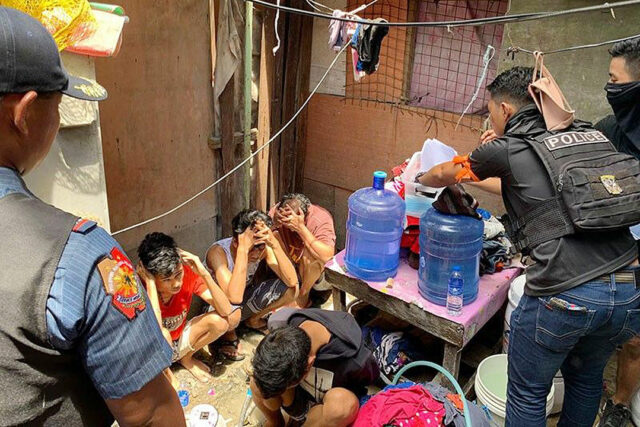
PHILIPPINE STAR/ GABRIEL BONJOC

By John Victor D. Ordoñez and Kyle Aristophere T. Atienza, Reporters

THE INTERNATIONAL Criminal Court (ICC) would probably prosecute President Rodrigo R. Duterte and his agents as soon as it resumes its investigation of the government’s deadly war on drugs, according to political analysts.

“Duterte and former national police chief Ronald M. dela Rosa will surely be charged,” Antonio Gabriel M. La Viña, a human rights lawyer and former dean of the Ateneo de Manila University’s School of Government, said in a Facebook Messenger chat.

“For now, based on what incoming National Security Adviser Clarita R. Carlos said, the next administration seems open to cooperating with the ICC. We need to be vigilant,” he added.

Ms. Carlos earlier said she was open to the ICC’s investigation of extralegal killings in Mr. Duterte’s anti-illegal drug campaign.

“We defer to the new administration,” Martin M. Andanar, Mr. Duterte’s spokesman said in a Viber message. He earlier said the ICC, which tries people charged with genocide, crimes against humanity, war crimes, and aggression should “let these efforts of the Philippine government run their course.”

ICC Prosecutor Karim Ahmed Khan at the weekend asked the international tribunal’s pre-trial chamber in a 53-page filing to reopen the probe months after it was halted upon the Philippine government’s request.

He said the chamber should issue an order on an “expedited basis.” It should “receive any further observations it considers appropriate from victims and the government of the Philippines,” he added.

“If the ICC is consistent in its pronouncements, it will probably have less compunction in investigating Duterte and his allies now,” Hansley A. Juliano, a former political science professor a studying at Nagoya University’s Graduate School of International Development in Japan, said in a Facebook Messenger chat.

“There’s no shortage of people in civil society and the Philippine Catholic Church who are invested in the proceedings so they will keep on pushing it.”

Filipino lawyers have been calling on the ICC to resume its probe of the anti-drug campaign, saying the Department of Justice (DoJ) was only looking at 52 deaths out of the tens of thousands killed.

Justice Secretary Menardo I. Guevarra on Sunday said the DoJ should have been given more time to produce results first, adding that Mr. Khan’s move to proceed with the investigation was premature.

Philippine prosecutors have filed charges in court against law enforcers in four cases and planned to probe 250 more of what could have been wrongful deaths in Mr. Duterte’s war on drugs, Mr. Guevarra told the United Nations Human Rights Council in February.

“This would mean the Duterte administration has failed to satisfy the ICC’s expectations on it acting on the necessary investigation on the war on drugs,” Marlon M. Villarin, who teaches political science at the University of Santo Tomas, said in a Viber message.

“This could be one of the litmus tests on the sincerity of the incoming administration of President-elect Ferdinand R. Marcos, Jr., with his campaign promise of making the government more transparent and accountable for the war on drugs not just domestically but internationally,” he added.

Mr. Marcos has named Mr. Guevarra solicitor general, the government’s chief lawyer.

Incoming Justice Secretary Jesus Crispin C. Remulla has said he would look into the DoJ’s initial review of the anti-illegal drug campaign.

The International Coalition for Human Rights said in March it would sanction the architects of Mr. Duterte’s war on drugs.

This was a follow-up on a report conducted last year by Investigate PH, an independent human rights group that alleged patterns of systemic human rights violations including crimes against humanity by the government.

In 2016, Mr. Dela Rosa as national police chief signed a circular that allowed police officers to visit the homes of suspected illegal drug personalities to persuade them to stop their drug-related activities.

Mr. Guevarra earlier said Mr. Duterte’s war on drugs was largely successful despite “excesses” committed by rogue cops.

He said the DoJ has been addressing these excesses through its drug war committee that probes reports of abuse or unnecessary force committed by cops during the operations.

An inter-agency committee formed 15 teams last year that probed extralegal killings and human rights violations.

‘TOO BUSY’
The Philippine Human Rights Commission said the Duterte government had encouraged a culture of impunity by hindering independent inquiries and by failing to prosecute erring cops involved in the government’s anti-drug campaign.

“Since the center of gravity is moving away from him to Marcos Jr., we are still waiting for the new order to become more apparent — and with it, to what extent will the Marcos Jr. administration be well disposed to the ICC,” Mr. Juliano said.

“We do not expect it to be cordial in any way, especially since the presence of incoming Vice-President Sarah Duterte-Carpio is presumably for that kind of continuity.“

But Western countries might not pressure Mr. Marcos enough to cooperate with the ICC probe because they are too busy dealing with new geopolitical conflicts including Russia’s invasion of Ukraine, Robin Michael U. Garcia, a political economy professor at the University of Asia and the Pacific, said in a Messenger chat.

Human rights will always be high on the agenda of the European Union (EU) “but it may be more inward-looking now because of its issues with Russia,” he said.

The EU, which has been monitoring the Philippines’ human rights situation under outgoing President Rodrigo R. Duterte, released a five-year roadmap in 2020 to send a  strong signal about its commitment to human rights.

“There’s a possibility that the EU might lessen the pressure since it has been dealing with pressing problems and might want to prioritize forging closer diplomatic ties with the new government,” Dennis A. Coronacion, who heads UST’s Political Science Department, said in a Viber message.

Mr. Garcia said the US could not afford to lose its alliance with the Philippines as it counters China’s influence in the Indo-Pacific region.

The Duterte government had said it would not cooperate with the ICC in its probe of the drug war given the country’s functioning justice system.

It has also argued that the ICC could not pursue the probe since the Philippines in 2018 withdrew from a statute that created the United Nations-backed tribunal — an argument that the Supreme Court rejected in a 2021 ruling. Withdrawing from the Rome Statute does not discharge a state party from the obligations it has incurred as a member, the court said.

“In any case, the country’s compliance with calls from the international community will also depend on the President-elect’s relationship with the Dutertes and his top aides,” Mr. Garcia said. “It might not be politically wise to create political enemies at the moment.”

Arjan P. Aguirre, who teaches political science at the Ateneo, said the Western community is aware now that Mr. Duterte had managed without pursuing closer ties with them.

“Marcos will follow that route,” he said in a Messenger chat.

He added that the incoming Philippine leader would likely ignore Western pressure to allow the drug probe because he is popular and the status quo is “more favorable to him.”

“The opposition is weak, Marcos is popular and yes, the status quo promises more stability to the administration,” he said. “They will certainly stick to the existing conditions.”


More than 4,600 had COVID in past week, says DoH

PHILIPPINE STAR/ MICHAEL VARCAS

CORONAVIRUS infections in the Philippines rose by 53% in the past week to 4,634 from a week earlier, the Department of Health (DoH) said in a bulletin on Monday.

Of the total for June 20 to 26, 14 patients or 0.30% were critical, it said. It added that 51 more patients were found to have died, although not one died on June 13 to June 26.

The agency said 391 or 14.9% of 2,628 intensive care unit (ICU) beds had been used as of June 26, while 4,034 or 18.1% of 22,251 non-ICU beds were occupied.

It added that 591 severe and critical coronavirus patients or 10.7% of total admissions were staying in hospitals.

The Health department said 70.36 million people had been fully vaccinated against the coronavirus as of June 26, while 14.95 million people have received booster shots. — Kyle Aristophere T. Atienza

Manila holds joint sea exercises with Japan, United States

SCREENGRAB FROM PHILIPPINE COAST GUARD FACEBOOK PAGE

THE PHILIPPINES, Japan and the United States held joint training exercises in towing and firefighting techniques this month using patrol vessels provided by Tokyo, the Japan Embassy said in a statement on Monday.

This should have improved the operational and rescue capabilities of the Southeast Asian nation’s coast guard, it added.

“The Japan Coast Guard’s Mobile Cooperation Team jointly provided technical guidance in towing and firefighting techniques by deploying the two 97-meter patrol vessels recently provided by Japan — BRP Teresa Magbanua and BRP Melchora Aquino — in order to enhance the operational and rescue capabilities of the Philippine Coast Guard,” it said.

The joint training was held on June 12 to 25, the second maritime law enforcement training among the three countries this year. The first was held in April.

Philippine Coast Guard personnel are expected to lead future courses, which is why the first half of the training focused on instructor development for 14 candidates and prepared them to plan, organize and present scenarios and tactics to a student audience, the Japanese Embassy said.

During the second phase, tactical instruction was provided for self-defense and detaining techniques.

The US and Japanese coast guards seek to provide capacity-building support to their Philippine counterpart, promising further collaboration in the future.

President Rodrigo R. Duterte on June 12 led the commissioning of a Coast Guard ship would patrol Philippine-claimed territories in the South China Sea, years after foreign policy experts started criticizing him for his government’s lack of presence in the waterway.

Mr. Duterte, 77, gave a salute to acknowledge the vessel as he formally allowed its commanding officer to start its official duty, the Philippine Coast Guard said.

The agency said the ship would roam around the country’s maritime jurisdictions, including the South China Sea in the west and Philippine Rise eastward.

The vessel, named after Filipina revolutionary Melchora Aquino, is one of the two largest white ships acquired by the Transportation department for the coast guard.

It is modeled after the Japan Coast Guard’s Kunigami-class vessel that has a maximum speed of 24 nautical miles per hour and endurance of not less than 4,000 nautical miles, according to the coast guard. — Alyssa Nicole O. Tan

Biden names team for inauguration of Marcos on June 30

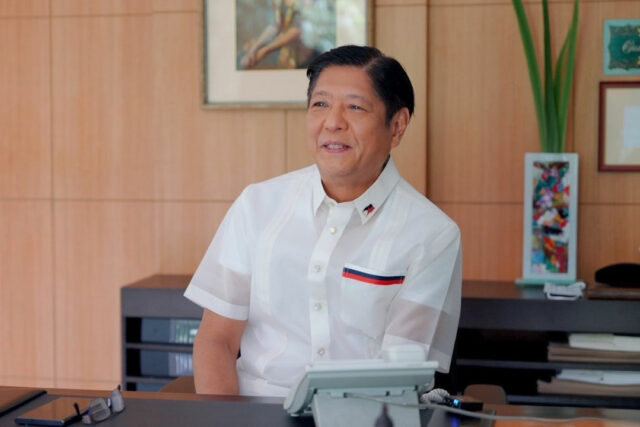
BONGBONG MARCOS FB PAGE

US PRESIDENT Joseph R. Biden has named a team that will attend the inauguration of Philippine President-elect Ferdinand R. Marcos, Jr. on June 30, the White House said on Monday.

US Second Gentleman Douglas Emhoff would lead the delegation, Mr. Biden’s office said in a statement.

US Chargé d’Affaires Heather Variava and US House Committee on Education and Labor chairman Bobby Scott would also be present at the event in Manila, it said.

Also attending the oath-taking are Office of Management and Budget Deputy Director Nani A. Coloretti, Admiral James A. Winnefeld, Jr., Special Assistant to the President and National Security Council Senior Director for East Asia and Oceania Edgard D. Kagan and US Executive Director to the Asian Development Bank Chantale Y. Wong.

Experts have said the US has stepped up efforts to boost its alliance with the Philippines as it counters China’s growing influence in the region. — Kyle Aristophere T. Atienza

Bayan challenges Marcos to address prices of fuel, goods in 1st presidential order 

PHILIPPINE STAR/ MIGUEL DE GUZMAN

A PROGRESSIVE coalition on Monday urged President-elect Ferdinand BongbongR. Marcos, Jr. to address the surge in fuel prices and its impact on basic goods in his first presidential order.   

The first executive order of the incoming Marcos regime should be related to suspending oil taxes and bringing down the prices of basic commodities,Bagong Alyansa Makabayan (Bayan) said in a statement.   

Bayan noted that two days before Mr. Marcos takes oath as the 17th Philippine president, there will be another oil price hike, severely affecting consumers, the transport sector and the cost of transporting basic goods such as food.”  

The people demand immediate economic relief,it said.   

Bayan, along with various opposition forces, will hold a major demonstration at a peoples park located just a few kilometers away from the inauguration venue in the capital Manila.  

Bayan said the protest will focus on these economic issues.   

More than 15,000 security forces will be deployed during Mr. Marcos’ inauguration on June 30.  

Bayan, meanwhile, slammed the Philippine police for asking protesters to instead hold online rallies on June 30. 

It is so hypocritical and stupid for the PNP (Philippine National Police) to call on groups to hold online protests instead of physical protests, when the State has sought to block our very presence online,it said.   

The Philippines’ telecommunications regulator recently asked internet service providers to block the websites of Bayan and several other organizations that the administration of outgoing President Rodrigo R. Duterte considers as enemies of the state.   

Even the space online is rapidly shrinking,said Bayan, which is among the fiercest critics of Mr. Duterte. Kyle Aristophere T. Atienza 

Lone opposition senator vows to push for higher agri sector budget 

THE LONE opposition senator vowed to push for a higher allocation for the agricultural sector in the national budget as she took her oath on Monday.   

As promised, we will facilitate the increase of budgets for agencies integral to our recovery initiatives,reelected Senator Ana Theresia RisaN. Hontiveros-Baraquel said, citing the need to address food security amid a possible shortage in corn, feeds, fish and pigs this year. 

Ms. Hontiveros also said she will be focusing on legislation that will help restore healthcare services disrupted by the coronavirus pandemic. 

The senator aims to file at least 20 economic- and health-related bills during the 19th Congress. These include measures on security of tenure, rights and welfare of informal and gig economy workers, and universal pension.  

Ms. Hontiveros also reiterated her call to use collections from excise tax and value-added tax on petroleum products to expand service contracting, so as not to stifle drivers’ income and have enough vehicles for commuters.” 

Outgoing Vice President Maria Leonor LeniG. Robredo, who administered the oath, called Ms. Hontiveros their “leader” as she is “now the highest elected official in the opposition.”  

We are your soldiers now, Sen. Risa. So, you can expect just like how you supported the entire Filipino people, you can expect the same support from us,” Ms. Robredo said in Filipino. Alyssa Nicole O. Tan 

ADVERTISEMENT
ADVERTISEMENT