Home Blog Page 6154

T-bills, bonds may fetch higher rates after central bank’s move

BW FILE PHOTO

RATES of government securities on offer this week are expected to rise following the Bangko Sentral ng Pilipinas’ (BSP) surprise hike on Thursday.

The Bureau of the Treasury (BTr) will offer P15 billion in Treasury bills (T-bills) on Monday, made up of P5 billion each in 91-, 182-, and 364-day debt papers.

On Tuesday, the BTr will auction off P35 billion in 10-year Treasury bonds (T-bonds) with a remaining life of nine years and 11 months.

“[This] week’s reissue of the FXTN 10-68 will be well received by the market bouncing off a good participation in last Tuesday’s auction,” the first trader said, noting the 10-year bonds could fetch yields ranging from 6.75% to 7%.

“We also saw that even with [Thursday’s] 75-basis-point (bp) hike, yields did not move higher proportionately, indicating that current yields present enough buffer from the tightening and some future rate hikes. Investors are also anticipating a possible peaking in CPI (consumer price index) for the Philippines given that we have seen oil prices relax the last few weeks,” the first trader added.

The second trader said the T-bills on offer on Monday could see their rates rise by 10-20 bps from those quoted at last week’s auction, while the 10-year papers may fetch yields within the 6.7-6.875% band to track secondary market levels.

“The seven-year auction last week was so strong that it improved sentiment for bonds. Moreover, prices of key commodities already bounced off their highs, so it also enhanced some demand for local bonds. And with all these monetary tightening measures, price pressures will be cushioned and should be a bond friendly catalyst on the foresight,” the second trader added.

Rizal Commercial Banking Corp. Chief Economist Michael L. Ricafort likewise said yields on the debt papers to be auctioned off this week could rise after the Philippine central bank’s decision to raise rates in an off-cycle review.

The BSP unexpectedly raised its benchmark interest rates by an all-time high 75 bps on Thursday and left the door open for further tightening amid growing risks to inflation, which already reached a near four-year high in June.

BSP Governor Felipe M. Medalla said the Monetary Board raised its key rate to 3.25%, effective immediately. Rates on the overnight deposit and lending facilities were also hiked by 75 bps to 2.75% and 3.75%, respectively.

Mr. Medalla said the “significant” hike was due to signs of “sustained and broadening price pressures” as well as spillover effects from aggressive tightening in other countries, such as the United States, amid global inflation concerns. 

The move was made ahead of the Monetary Board’s Aug. 18 review and follows the back-to-back 25-bp hikes done in May and June, bringing total increases for the year to 125 bps.

On Friday, Mr. Medalla said in an interview with Bloomberg Television that he would not rule out another interest rate increase in the August review, although the need for a 50-bp hike at that meeting is “much less now” following the 75-bp increase it fired off on Thursday.

Headline inflation rose by 6.1% year on year in June, the fastest in nearly four years and exceeding the central bank’s 2-4% target band for a third straight month. The average inflation rate in the first six months is 4.4%, still below the BSP’s full-year forecast of 5%.

At the secondary market on Friday, the 91-, 182-, and 364-day T-bills were quoted at 1.9413%, 2.6167%, and 2.8709%, respectively, based on the PHP Bloomberg Valuation Reference Rates published on the Philippine Dealing System’s website.

Meanwhile, the 10-year bond fetched a yield of 6.7941%.

Last week, the BTr raised just P13.16 billion from its auction of T-bills, lower than the P15-billion program, even with bids reaching P36.72 billion or more than twice the planned amount.

Broken down, the Treasury made a full P5-billion award of 91-day securities as the tenor attracted P24.56 billion in bids. The average rate of the tenor went down by 3.2 bps to 1.876%. Accepted rates ranged from 1.825% to 1.894%.

Meanwhile, the BTr raised just P4.1 billion from the 182-day debt papers out of the P5-billion program, even with total tenders reaching P7.05 billion. The tenor’s average rate went up by 29.9 bps to 2.907%, with the government accepting offers ranging from 2.825% to 2.95%.

Lastly, the government awarded only P4.06 billion in 364-day debt papers out of the P5-billion plan, with bids reaching P5.11 billion. The average rate of the one-year tenor climbed by 17 bps to 2.981%, with the yields on the awarded bids within the 2.8% to 3.143​​% band.

Meanwhile, the reissued 10-year papers to be offered on Tuesday were last auctioned off on June 21, where the BTr made a partial award of the fresh papers worth P34.892 billion versus the P35-billion program.

The bonds were awarded at a coupon rate of 7.25%, 30.59 bps higher than the 6.9441% quoted for the 10-year tenor at the secondary market before the auction. Rates bid by participants ranged from 6.95% to 7.37% for an average of 7.145%.

The Treasury wants to raise P200 billion from the domestic market this month, or P60 billion through T-bills and P140 billion via T-bonds.

The government borrows from local and external sources to help fund a budget deficit capped at 7.6% of gross domestic product this year. — Diego Gabriel C. Robles


A tikbalang, gigante, Ibong Adarna, and the Virgin Mary all make an appearance at wildly eclectic Bb. Pilipinas costumes fashion show

Graciella Sheine Lehmann (Oriental Mindoro) in a Tikbalang Costume by Paolo Ballesteros. — SCREENSHOTS FROM YOUTUBE.COM/BBPILIPINASOFFICIAL

ONE can find themselves cheering against their will during the Binibining Pilipinas National Costumes Fashion Show. It’s one of the events leading to the Grand Coronation Night on July 31 at the Araneta Coliseum, preceding the Parade of Beauties held at the Araneta Center. Organized by Bb. Pilipinas Charities, Inc. (under the Araneta Group), the pageant, with 40 candidates, will determine the country’s representatives for the following international pageants: Miss International, Miss Grand International, Miss Intercontinental, and Miss Globe.

Pageant fans from all over the country filled up the New Frontier Theater and brought whistles, vuvuzuelas, balloons, and lit-up signs to cheer for their favorite candidates. The energy was akin to that of an international football game (except everyone cheered on wore heels). This isn’t your ordinary fashion show, where staid audiences would clap and gasp when appropriate. There was a palpable energy in the crowd, with this reporter noting a vibration in the walls from all the screaming from the fans of at least one candidate.

The aspiring pageant queens (as they’re known in pageant circles) had at their arsenal a fashion industry happy to send a candidate abroad wearing one of their creations. Two designers were household names in the game for two different reasons: high society designer Renee Salud designed for Bb. No. 3, Ms. Taguig Diana Joy Pinto, and celebrity Paolo Ballesteros (the future host of Drag Race Philippines who happens to be a descendant of National Artist Fernando Amorsolo) designed for Bb. No. 7, Ms. Oriental Mindoro, Graciella Sheine Lehmann.

Here are my top ten picks for Bb. Pilipinas Best National Costume, with some help from the cheering crowd.

1.) Graciella Sheine Lehmann (Oriental Mindoro); Tikbalang Costume by Paolo Ballesteros

There is no question that we would have picked this for first place. The costume, based on a mythical Filipino half-horse, half-man monster has already made the rounds of social media and some major news outlets, and people next to this reporter during the show were already looking forward to seeing it. Big, white, and equine, sheer fabric formed the Tikbalang’s tail, with a structure forming the head rising from above Ms. Lehmann’s own head. The structure, matching a staff, resembles the twisted vines of a Balete tree, while pearls and rhinestones dripped all around the costume, down to Ms. Lehmann’s “hooves.” Ms. Lehmann gamely mimed a horse about to trot as she appeared on the runway, loud cheers preceding her as a wisp of the costume popped out while she was waiting in the stage’s wings.

2.) Herlene Nicole Budol (Angono, Rizal); Higantes Festival Costume by Patrick Isorena and Ebok Sausa Pinpino

Ms. Budol, a viral TV personality transformed into a beauty queen, went on the runway right after Ms. Lehmann. She was not to be upstaged by Ms. Lehmann’s gigantic costume, wearing a giant of a costume (literally) of her own. Based on her home province’s Higantes Festival, Ms. Budol went onstage dragging behind her a giant papier-mâché puppet, with a head sculpted after the face of 2018 Miss Universe Catriona Gray. In addition to this, she wore a cape which fanned out to reveal sea creatures. This cape rested above an orange catsuit with little golden fringes (making her resemble a shrimp), which she gamely shook as she shimmied — a reference to her stint in a gameshow where she was jokingly nicknamed “hipon” (a local word for shrimp; a Filipino joke for a person with a well-proportioned body and missing a face to go with it, the way one eats a shrimp and discards its head). Who’s laughing now?

3.) Gabrielle Camille Basiano (Borongan, Eastern Samar); Virgin Mary Costume by Ken Batino and Jevin Salaysay

Another costume that has made the social media and news outlet rounds, Ms. Basiano came out on the runway with her upper body encased in a frame, veiled by curtains. Her legs shaped to look like a classical pedestal, Ms. Basiano walked slowly on the stage as the previously wild crowd held its breath. A hush fell over the crowd as she slowly parted her curtains, unveiling her in a pose with her eyes raised up to heaven, such as in paintings of the Virgin Mary. Her fully revealed face was the crowd’s cue to scream and clap, this reporter included. The costume was inspired by the Padul-Ong festival of her home province, which tells the tale of a Lady in White (believed to be the Blessed Virgin) who visits the Hamorawan Spring.

4.) Cyrille Payumo (Porac, Pampanga); Aeta Magantsi Costume by Rich Sabinian and the Aeta Magantsi

There could be some raised eyebrows here for a possible case of cultural appropriation, but Ms. Payumo proudly named the indigenous Aeta Magantsi of Porac for making the ornaments of her dress. A paneled skirt had paintings of Aeta scenes, which she took off to reveal a dress embellished with bamboo pieces and butterfly sleeves made with indigenous fabric. The noise of Ms. Payumo’s fans created a vibration which one could feel in their seats.

5.) Yllana Marie Aduana (Laguna); Maria Makiling Costume by Jomar Peralta

Whistles, cheers, and buzzing called Ms. Aduana to the stage, who wore a forest-themed catsuit and a golden headdress. Forest creatures with bobbing heads surrounded her, as she dragged around her a miniature float depicting a sylvan scene, in homage to the fey guardian of Laguna’s most famous peak, Mt. Makiling.

6.) Anne Carres de Mesa (Batangas); Holy Cross of Alitagtag Costume by Odelon Simpao

Based on a 1595 relic found in Ms. De Mesa’s home province, gold baroque embroidery, rich crimson velvet, and intricate beading formed a backdrop for a gold cross and halo surrounding Ms. De Mesa. Gold links rained down from this halo, and it shimmered as her fans did not just cheer, but screamed for her as she walked down the runway.

7.) Ethel Abellanosa (La Union); Grapes Costume by Jeric Sayno

A vision in purple and green, with a flounced skirt and spherical decor that looked ready to burst, Ms. Abellanosa was dressed as a bunch of grapes to give credit to her home province, one of the few places in the country where grapes are grown —  a fact not forgotten by cheering fans.

8.) Jessica Rose McEwen (Floridablanca, Pampanga); Pinukpukan Festival Costume by Ken Batino and Jevin Salaysay

Pampanga’s Pinukpukan Festival honors many things: the local craft of making cooking utensils, the decorative metal art in the province, and St. Joseph. This one was also being whispered about by the pageant veterans sitting next to this reporter during the show, and it did not disappoint. Her fans shouted as she came out in a vision of silver, with the utensils of her hometown framing her face in a very, very high collar.

9.) Roberta Angela Tamondong (San Pablo, Laguna); Buko Festival Costume by Lanny Liwag

A crowd was chanting her name — “RO-BER-TA!” — as she stepped out on the runway. The ripples on the surface of the Seven Lakes of San Pablo were recreated in fabric to form her skirt, and techniques from the surrounding towns were used to make the dress, while green and white lattice formed the basket-shaped sleeves of the gown.

10.) Elda Louise Aznar (Davao del Sur); Sari Costume by Neil Patrick Jimlani

One of the staider entries to this list and on the show, Ms. Aznar looked tall in a green dress with golden embroidery. We would have picked another dress, honestly, but Ms. Aznar seems to be a crowd favorite, with people chanting her name early on in the show (as Bb. No. 6).

HONORABLE MENTION
Some dresses just didn’t make as much of an impact as they should have. We’re looking at you, Patricia Ann Tan (Masbate), who wore a rodeo-inspired dress with moving cows and horses (by Kennedy John Gasper). We also liked the Ibong Adarna dress of Jashmin Dimaculangan (by ER Stephen Alvarado), which had a cape that fanned out to show a rainbow, which a statement says is to honor the LGBTQ+ community. —  Joseph L. Garcia

MPTC still keen on CTBEX, NLEX-Cavitex Port link

THE Metro Pacific Tollways Corp. (MPTC) said it will “revive” some of its proposed road projects with the new chief of the Department of Public Works and Highways (DPWH), including the Cavite–Tagaytay–Batangas Expressway (CTBEX) and the Circumferential Road 3 (C3)-Anda Circle segment of the NLEX-Cavitex Port Expressway Link.

“We need to (sit down with the) new agency head, because it is something that we want to pursue and implement immediately,” MPTC Chief Finance Officer Christopher Daniel C. Lizo told reporters during a recent gathering, referring to the CTBEX project.

He said the company still holds the original proponent status for CTBEX, a 50.43-kilometer (km) tollway linking the Cavite-Laguna Expressway (CALAX) at Silang East Interchange to Tagaytay City and Nasugbu, Batangas.

The P25.24-billion project is expected to help alleviate congestion on Aguinaldo Highway and Sta. Rosa-Tagaytay Road, especially during peak periods and weekends.

On the C3 Road-Anda Circle segment of the proposed 15-km NLEX-Cavitex Port Expressway Link project, Mr. Lizo said: “We just need to revive the proposal with the new secretary (of the DPWH).” The DPWH is a member of the Toll Regulatory Board (TRB).

The project, which is now with the TRB, is originally a joint unsolicited proposal with the Manila-Cavite Expressway (CAVITEX) submitted to the DPWH in 2019 to extend the North Luzon Expressway (NLEX).

The P92-billion project has three sections: the 5.7-km C3 Road to Anda Circle, the 4.8-km connection from CAVITEX to Buendia Avenue, and the 4.6-km Buendia Avenue to Anda Circle.

NLEX Corp. President and General Manager J. Luigi L. Bautista said in April that the group was awaiting approval from the TRB for the implementation of the first section of the proposed project.

The NLEX-CAVITEX Port Expressway Link project, once completed, is expected to “stimulate development in Manila, Caloocan, Malabon and Navotas, as well as its surrounding areas,” the DPWH said on its website.

MPTC is the tollways unit of Metro Pacific Investments Corp., one of three key Philippine units of Hong Kong-based First Pacific Co. Ltd., the others being Philex Mining Corp. and PLDT, Inc.

Hastings Holdings, Inc., a unit of PLDT Beneficial Trust Fund subsidiary MediaQuest Holdings, Inc., has a majority stake in BusinessWorld through the Philippine Star Group, which it controls. — Arjay L. Balinbin

Backyard pig farming project launched in Sarangani province

PHILSTAR FILE PHOTO

FARMERS associations in Sarangani will begin backyard pig farming to help the industry recover from African Swine Fever (ASF), the Department of Agriculture (DA) said.

The Sarangani initiative is part of the Integrated Swine with Vegetable Production project, which aims to increase hog production and supplement farmer earnings in the seven towns of the province.

The government provided 154 native pigs to farmers with pig farming experience.

These farmers mainly cultivate rice and maize in Alabel, Glan, Kiamba, Maasim, Maitum, Malapatan, and Malungon. They typically earn P3,000 to P4,000 every cropping, including their wages from providing other agricultural services.

“Ensuring healthy stocks, the animals received vaccination against Classical Swine Fever (CSF), often known as hog cholera, deworming, vitamins, and secured veterinary health certificates before delivery,” the DA said.

The farmers associations will raise the animals for reproduction and implement a roll-over scheme, handing over swine offspring from the original stocks to the next-in-line beneficiaries until all the members can own pigs and operate their own swine projects.

“They will eventually sell piglets, fattened hogs, and pork meat within the neighboring barangays and municipalities. After the sows’ farrowing season, which is usually 4 to 6 cycles, the group will replace them by choosing among its piglets to sustain the project,” it added.

According to the DA, there have been no new cases of ASF in the province. — Luisa Maria Jacinta C. Jocson

Will the perfect men’s dress ever exist — and would men wear it?

SINGER Post Malone’s stylist Catherine Hahnhas come up with “a unisex dress that could be worn every day. To work, to school, to skateboard in, or on a date.” — PHOTO FORM HESHERWORLD.COM

MORE famous men are wearing dresses: from actor Billy Porter on the red carpet to singer-songwriter Harry Styles on the cover of Vogue. They have prompted much commentary, both positive and negative, leading fashion commentators to ask if frocks might become a regular part of men’s sartorial landscape.

At this year’s Met Gala, racing car driver Lewis Hamilton wore a white lace dress over a black suit and singer Troye Sivan wore a simple black gown. More recently, rapper Lil Nas X wore a purple suit with a matching train to the MTV Video Music Awards and a Cinderella-style gown at an earlier award ceremony.

The trend signifies a return to ancient sartorial norms, when more androgynous clothing was accepted and, indeed, required.

Such clothes were not “dresses” as we understand them today: the dress is a garment that has become indelibly “feminine.” But could skirts and dresses become mainstream garb for 21st century men beyond these celebrity trailblazers?

Our contemporary construct of masculinity is, of course, relatively recent. Until the early 20th century, boys and girls wore dresses until boys were “breeched” (put into breeches or “short trousers”) at around seven years old.

Pink was a manly color, and it was almost impossible to tell boy and girl toddlers apart.

Before the 15th century, much clothing for men and women was fairly androgynous, particularly outside Europe — where in many cultures this continues today.

Japanese kimono are robes with only subtle hints at gender difference. In parts of North Africa, the jellabiya — a long, loose robe perfect for the warm climate — is worn daily by men and women.

Ancient Egyptian men, including pharaohs, wore the schenti, a wrap skirt similar to a kilt. This garment was so practical and versatile it remained popular for over 2,000 years.

Ancient Greece and Rome saw universal wearing of the tunica, a simple gown that was shorter and looser for men, but constructed the same way for both sexes.

The elite wore longer chiton and toga, which could be more elaborately accessorized to indicate the wearer’s gender. In these societies, the higher a man was on the social ladder, the longer his gown.

Divided garments (not then known as “trousers”) were generally worn only by soldiers and the working class. To ancient Greeks and Romans, leg coverings were more representative of the barbarian than powerful, civilized men.

From 800 AD, bifurcated (divided, two-legged) styles slowly emerged in the Christian world, propagated by the medieval emperor Charlemagne as a way of linking physicality and aggression with new European concepts of “manliness.” Such garments later came to symbolize (male) control and authority.

This was a gradual process, however. In medieval Europe, men and women wore long, layered clothing and tunics until the slow advent of tailoring in the 1400s. Even armor, the most “macho” of male attire, could still feature a metal “skirt” pleated similarly to contemporary tunics.

From the 15th century on, shorter tunics took hold for men, beneath which they could wear hose or stockings and, later, breeches.

Aside from brief outlier trends, (for example the lampooned and short-lived “petticoat breeches”) men’s hemlines continued to move north.

The advent of stockings and a codpiece and, until the 1820s, relatively tight-fitting pants for men, acted as a non-verbal reminder of their political and economic power.

This was in stark contrast to the treatment of women’s legs, which as one writer put it in 1818: “although dressed, are […] immediately connected with parts which are not, and which decency strictly conceals from view.”

Women fought for a long time to wear trousers, making discreet strides in the adoption of bloomers as underwear in the 19th century. While gradually accepted as trouser-wearers in the early 20th century (and in the professional realm from the late 1960s), the same freedom of clothing choice has not been given to men.

For women, wearing trousers represented physical freedom, making certain jobs — and therefore, financial freedom — easier. Men do not have that same need, in a practical sense, to adopt dresses.

Arguably, a dress does not make any aspect of life easier, but it does allow an individual to express themselves in different ways. Restricting this suggests repression of far more than physical movement.

It could be argued that since the 18th century, (in the west at least), men have played second fiddle to women in terms of glamor and excitement in clothing. Contrary to popular belief, it was generally women who imposed what we now see as extravagant and restrictive sartorial customs, such as the cage crinoline. For many women, fashion was the one area of life over which they had some control.

During the 19th century, an era famously described by psychologist Carl Flugel as the “great male renunciation” of brilliant fashion, men had eye-wateringly little choice of garments compared to women. The monopoly of the (male) suit has perhaps been a result of this one-sidedness. Promoting dresses for men could redress the imbalance.

If dresses are to become a genuine part of menswear once again, we need first to establish what differences, if any, there will be with women’s. How will the fit be determined? How will they be worn?

This is not necessarily the same as producing androgynous or gender fluid clothes. It is about dresses that will allow men, who wish it, to still feel masculine — as trousers can make women feel feminine.

While fashion slacks were often made to conform to a woman’s body (putting aside utilitarian and wartime uniforms) there seem to be very few dresses made exclusively for the male physique.

Billy Porter’s velvet tuxedo gown worn to the 2019 Oscars was an exception. A hybrid male and female garment, it used black to create a link to contemporary womenswear, and men’s traditional evening wear. Crafted by designer Christian Siriano, it consisted of a tuxedo-style bodice with voluminous, ballgown skirt.

This dress was elite rather than mainstream fashion, created exclusively for Porter. Styles’ ethereal Gucci number on the Vogue cover is likewise hardly accessible to the everyday consumer, demanding a high level of confidence to pull off.

The same can be said of frocks and frock-spirations chosen by Carl Clemons-Hopkins at the 2021 Emmys and Queer Eye’s Jonathan Van Ness at the Creative Arts Emmys in 2018.

As Oscar Wilde put it when discussing women’s dress reform in the 1880s: “If the divided skirt is to be of any positive value, it must give up all idea of being identical in appearance with an ordinary skirt … [it must] … sacrifice its foolish frills and flounces.”

Perhaps men’s dresses should aim for that same end: not to masquerade as anything else, but to take on a life of their own as new, separate garments.

Examples such as Porter’s and Styles’ frocks prompt intrigued debate. Other examples of men wearing dresses are usually associated with transvestism or those undergoing gender reassignment.

Huge progress over the past few decades has made their visibility and acceptance far more widespread, along with gender fluid and queer identity becoming a regular part of the fashion landscape, thanks to designers such as Harris Reed, Telfar Clemens, and Charles Jeffrey Loverboy. Each, in their own way, are creating and championing fluid fashion, showing the world how it can be done.

However, we are not yet at the point where most men would consider a dress a viable option, or where a man wearing a dress would not provoke assumptions around sexuality or gender identity. We also seem to be at a crossroads in terms of how men in dresses are received by different communities.

A controversy arose earlier this year when cisgender man, the rapper Kid Cudi, performed on Saturday Night Live wearing a dress intended to pay tribute to Kurt Cobain. In 1993, Cobain had boldly donned a similarly patterned, but shorter frock on the cover of The Face magazine, attracting considerable backlash.

In 2021, wearing a fuller, longer, more classically “feminine” style, Cudi was met largely with praise. However, some commentators — particularly those from the LGBTQI community — felt his choice was nothing but a “costume” worn by a performer.

Some pointed out that what was a publicity stunt for him amounted to a “life and death” decision, for which trans people have been severely bullied. The reality is that however casually a man might wear a dress, and whatever his motivations for doing so, the choice is fraught with political, emotional, and social ramifications. It will be commented on and judged, positively or negatively.

Earlier this year, singer Post Malone’s stylist Catherine Hahn put the singer in a dress, another tribute to Cobain.

The success of this outfit inspired her to create “a unisex dress that could be worn every day. To work, to school, to skateboard in, or on a date.” The result is a calf-length, oversized plaid shirt that recalls 1990s grunge styles and certainly offers a fun, fresh, casual option for men.

However, it is still unisex, rather than aimed specifically at men. Its shirt-like cut makes it a familiar, non-threatening segue for those wishing to experiment with dresses. This style is the closest we have seen to a potentially mainstream, workable male frock option.

Dresses are likely to remain a novelty for many men, a defiant show of bravery and individuality akin to the female pioneers of the rational and aesthetic dress movements of the 19th and 20th centuries.

Mind you, during this pandemic, there has been a surge in male skirt designs by the likes of Burberry and Stefan Cooke.

Many of these take inspiration from the traditional “man skirt,” the kilt. But longer, calf-length, pleated and A-line examples have been championed too. More men may have felt comfortable experimenting with a skirt or dress during the privacy of lockdown.

The year 2020 was a seismic shift in life as well as fashion. But given the highly gendered and ingrained nature of clothing codes, it seems unlikely we will see men’s dresses go mainstream anytime soon.


Lydia Edwards is a Fashion historian at the Edith Cowan University in Western Australia.

LANDBANK launches P10-B loan facility for rural banks affected by typhoon

Land Bank of the Philippines (LANDBANK) has launched a lending program to aid the recovery of countryside financial institutions (CFIs) that were affected by typhoon Odette last year.

The bank’s loan program named Countryside Financial Institutions – Rehabilitation and Support to Typhoon Odette-Affected Areas or CFI-RESTORE aims to strengthen rural banks by providing additional capital for them to expand their operations and address the damage caused by the typhoon.

Loans secured via the program can also be used to provide credit for those affected by the typhoon.

“In the face of unprecedented financial challenges brought about by calamities, LANDBANK stands ready to assist CFIs to sustain their operations. This is part of our commitment to advance local recovery and help build more resilient communities nationwide,” LANDBANK President and CEO Cecilia C. Borromeo said in a statement on Sunday.

Under CFI-RESTORE, LANDBANK will support CFIs in six regions previously placed by the national government under a state of calamity due to typhoon Odette. These include MIMAROPA (Region IV-B), Western Visayas (Region VI), Central Visayas (Region VII), Eastern Visayas (Region VIII), Northern Mindanao (Region X), and CARAGA (Region XIII).

Borrowers can secure up to 85% of their actual need for permanent working capital and capital expenditure, and up to 90% for sub-borrowers’ agricultural loans and 85% for non-agricultural loans.

“An interest rate of 4% per year shall apply, fixed for the first three years and subject to repricing thereafter, and payable up to three years for working capital, ten years for capital expenditure, and ten years for term loan rediscounting,” the state-run bank said.

LANDBANK is also offering a loan restructuring plan under the program for CFIs with existing credit lines with the state-owned lender to help rehabilitate and restore their operational cash flow.

Eligible debtors for the program include rural, thrift and cooperative banks. The program will also cater to CFIs in areas placed under a state of calamity by their respective local government units.

LANDBANK’s net income in the first three months of the year soared by 141% to P13.2 billion from P5.48 billion a year earlier amid a one-time gain following its merger with United Coconut Planters Bank, as well as higher interest income from loans and investments. — K.B. Ta-asan

WeClean targets to acquire 100 stores by yearend

LAUNDRY service provider WeClean plans to acquire more laundry stores as part of its expansion initiative, which includes opening branches outside Metro Manila, a company official said

“At WeClean, we are targeting to acquire 100 laundries before the year ends so we are hiring more branch personnel, we offer minimum wage and pay all the mandatory benefits as we want them to feel happy and proud of working with us,” WeClean Head of Strategy Alejandro Gonzalez said in an e-mail interview.

“We are focused on opening up some new branches from scratch to apply all the knowledge we have accumulated during the last years so we can allocate the capital we raised faster and with lower risk,” he added.

The laundry provider is also looking to expand outside Metro Manila by next year, as well as out of the country in the future.

“We have already played the field in El Nido and Davao and we would like to go abroad to a Southeast Asian country,” he added.

WeClean is the first player of non-franchising laundromats in Metro Manila with 64 branches.

“We provide professional and good quality services at the lowest possible cost in clean and spacious locations,” Mr. Gonzalez said.

“The main idea is to provide this professionalized service to people who cannot afford to have a washing machine in-house and to become an essential activity into a customer rewarding experience,” he added.

During the pandemic, Mr. Gonzalez said the company experienced a decrease in revenues, which prompted it to adapt to the situation by offering courier services, among other innovations.

“As with every other business, we have experienced big changes due to the pandemic. Being a cleaning activity, it required additional effort to adapt our shops and services to the health measures we were forced to put into practice,” he said.

“We came up with the idea to start developing pickup and delivery services. We had already thought about it, but we felt it was a compelling part of the business at that moment,” he added.

The firm tapped different information technology companies and developers to design its app, which is soon to be released.

“We have continued to work on this aspect. Recently, we have become the first laundry business available in Grab, the delivery app, since we truly believe this is the general shift in the demand we are going to see in the upcoming months and years,” he added.

Mr. Gonzalez said that the laundry business in the Philippines is “scattered” as it is mainly run by small owners who have two to three shops at most. 

“It is a price-based competition market where everyone tries to be cost-efficient. Nevertheless, we are facing increases in utilities and supplies prices, so we expect to transfer it into final prices,” he said.

“The laundry business is a highly fragmented one, so we look for single spots at residential areas with a lot of traffic such as those within distance from high-rise condominiums or barangays populated by lower-middle and middle-income class,” he added.

Three years into the pandemic and amid eased mobility restrictions, Mr. Gonzalez said that the company is slowly returning to its pre-pandemic performance.

“We have seen after the elections and with the rainy season trying to settle down, the revenues are getting closer to the pre-pandemic situation, although there is still a long way to go,” he said.

“In general, a growing household consumption on the back of a burgeoning middle class will boost demand for laundry services, that is how we intend to keep on growing the business and become a giant,” he added. — Luisa Maria Jacinta C. Jocson

NIA opens P11.2-million service road for Bataan farmers

PHILIPPINE STAR/BOY SANTOS

THE National Irrigation Administration (NIA) said it completed and opened for users a 1.3-kilometer service road project worth P11.2 million for farmers in Bagac, Bataan.

The road serves an area of 57.31 hectares, benefiting 40 farmers of Saysain Farmers Irrigators Association (FIA) along with 20 families from a Gawad Kalinga village. 

“From the muddy and rough path before which (posed a) heavy burden on the Saysain FIA and on the Gawad Kalinga villagers, especially during the wet cropping season, this service road helps them transport goods and crops easier and faster,” the NIA said.

“This project will sustain the development in the area and help uplift the way of life of its farmers,” it added.

Construction began in September. It was implemented by the Pampanga-Bataan Irrigation Management Office.

“Goods were also given to the farmers and the residents of Gawad Kalinga village and their families at the end of the program,” NIA Administrator Ricardo R. Visaya added. — Luisa Maria Jacinta C. Jocson

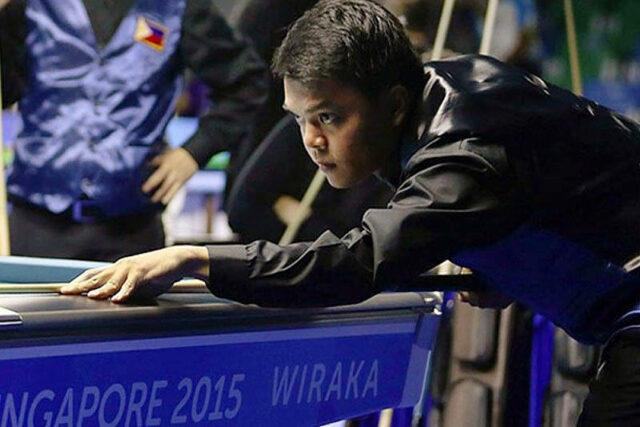
Biado, duathletes suffer painful setbacks in The World Games

Carlo Biado — PHILSTAR FILE PHOTO

Defeats keep Philippine haul to lone gold by Tsukii

THE Philippines suffered painful, harrowing defeats after cue artist Carlo Biado and duathletes Kim Mangrobang and Fer Casares fell by the wayside against the strong foreign challenge in The World Games in Birmingham, Alabama on Sunday.

Mr. Biado absorbed an 11-8 defeat to German Joshua Filler in the semifinals and then succumbed to Singaporean Aloysius Yapp in the battle for the bronze medal via the same score and wound up fourth.

The world pool champion failed in his bid to duplicate his fantastic golden effort in the last edition in Wrocław, Poland five years ago.

The pair of defeats came at the hands of Mr. Filler, a repeat of his win over Mr. Biado in the finals of the 2018 World Pool Championship in Doha, Qatar, and Mr. Yapp, who avenged his defeat to the Filipino in the finals of the US Open last year.

The loss to Mr. Filler hurt the most though as Mr. Biado was on the verge of seizing the lead and gaining momentum late in their semis showdown before a disastrous miscue cost him a chance for another mint.

With the duel tied at six racks apiece in their race-to-11 match, Mr. Biado connected on a 2-9 combination but saw the cue ball caroming back to the 2-ball that resulted to a scratch.

It proved catastrophic for Mr. Biado as Mr. Filler took advantage of it to snare five of the last seven racks.

That broke the back of Mr. Biado, who just couldn’t get his confidence back and fell to Mr. Yapp.

It was worse in duathlon as Mr. Casares finished 14th in the men’s division in an hour, 53 minutes and 57 seconds while Ms. Mangrobang was one of the 12 participants in the women’s side who were disqualified due to confusion caused by what national coach Ani de Leon-Brown described as a poorly officiated race.

The country was one of the many who filed a protest.

Meanwhile, Mr. Casares and Ms. Mangrobang will spearhead the squad in the mixed relay event on Monday.

The setbacks kept the country’s haul to a gold courtesy of karateka Junna Tsukii. — Joey Villar

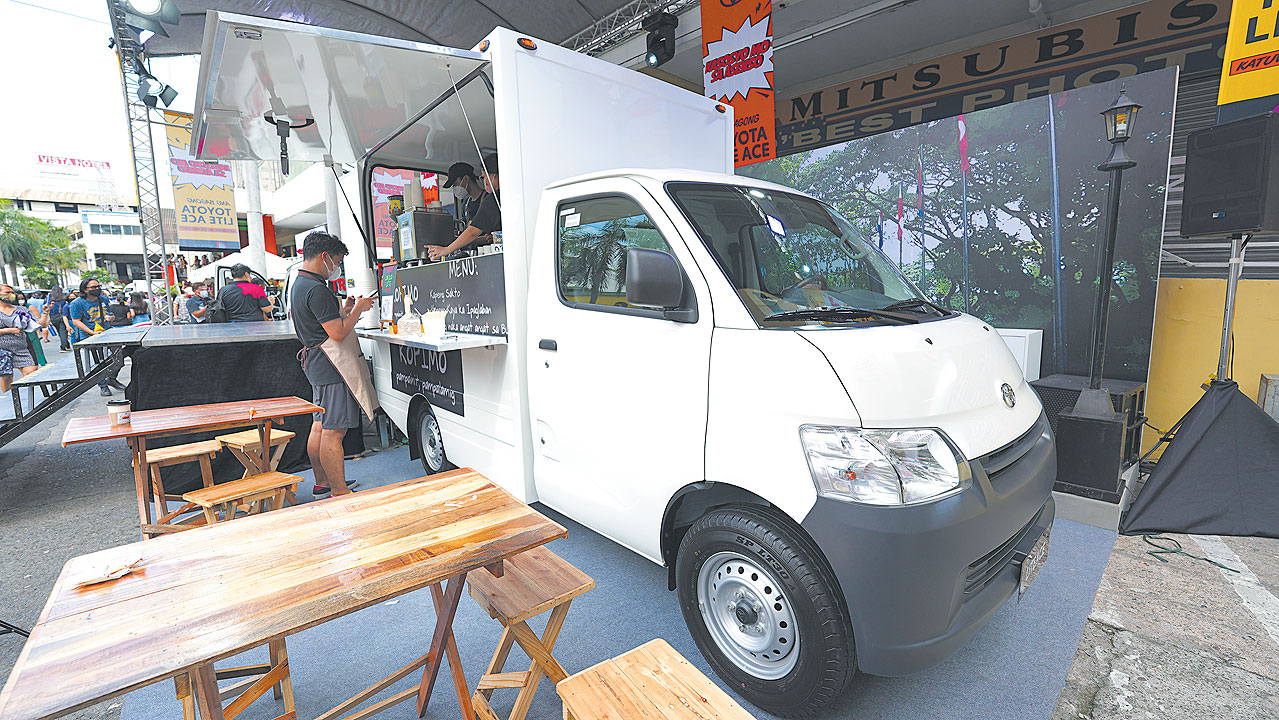
The MSME segment now has a Lite Ace up its sleeve

The Toyota Lite Ace is back as a no-nonsense, affordable mobility partner. — PHOTO BY KAP MACEDA AGUILA

Toyota Motor Philippines trots out a flexible workhorse

SURELY, many Filipino families have fond memories of the Lite Ace. By today’s yardstick, the Lite Ace of yore would have been a quintessential MPV. I speak of it in the past tense even if I do have rare sightings of that ’90s passenger van which was so aptly named because, well, it was exactly that — a smaller version of its Hiace sibling.

Last Friday, Toyota Motor Philippines resurrected the nameplate in a slightly different, more workmanlike guise — or, rather, guises. With the return of economic activity in the country as a result of looser COVID-19 restrictions, recovery (knock on wood) is being felt all around — and the timing of the Lite Ace arrival here is by no means happenstance. “We believe that the economy will steadily recover — especially MSMEs (micro, small, and medium enterprises),” said Toyota Motor Philippines Corp. (TMP) President Atsuhiro Okamoto to “Velocity,” after the unveiling of the Lite Ace at the Farmers Plaza in Araneta City, Cubao.

He continued, “We in Toyota haven’t covered the segment (yet) because there’s no appropriate vehicle model. So, we introduce this small commercial truck for MSMEs.”

You could say that the Lite Ace picks up where the hallowed Toyota Tamaraw left off, and TMP is now making sure that those who need it the most will have the ability to get the vehicle. In a release, TMP stated that “through Toyota Financial Services Philippines (TFSPH), (the company) is offering the all-new Lite Ace under unique financing packages that allow customers to acquire units under a weekly payment scheme with rates that go as low as P2,903.50 per month.”

Speaking to guests following the launch, Mr. Okamoto said, “It is our goal for the all-new Lite Ace to enable Filipino business owners to achieve success wherever they are, and whatever their needs… With lighter payment, easier maintenance, and reliability that will not let them down, the Lite Ace will allow business owners to focus on and enjoy the growth of their livelihood.”

Meanwhile, TMP said in a release that the Lite Ace “is also boosted by Toyota products’ signature QDR (Quality, Durability, and Reliability) that suits the demands of MSMEs needing the most returns out of their every investment. This also translates to minimal downtimes for the vehicle, ensuring business continuity and avoiding time and financial losses or extra expenditures for repairs.”

The allure of its friendly pricing — P570,000 for the Pickup Lite Ace (which boasts an open bed for “fast and flexible loading” and P655,000 for the Panel Van Lite Ace (“with [a] sliding enclosure for more secure cargo transport”) is surpassed only by its modifiability.

At the atrium area of the Farmers Plaza, a myriad of configurations for the Lite Ace were displayed: a coffee truck, ambulance, rice delivery pickup, shuttle, cable service vehicle, cargo van, barangay patrol vehicle, and delivery truck.

TMP promises to grow the lineup even more by bringing in the Aluminum Van and Utility Van variant by September. The units are manufactured in Indonesia, while local accredited third-party bodybuilders can be contracted to customize the units to the unique specifications of buyers, added Mr. Okamoto.

Powering the Lite Ace is Toyota’s 2NR-VE engine, an inline four-cylinder, 16-valve DOHC with dual VVT-i. With a swept volume of 1,496cc, the power plant generates 98ps (at 6,000rpm) and 134Nm (at 4,400rpm). It is mated to a five-speed manual transmission.

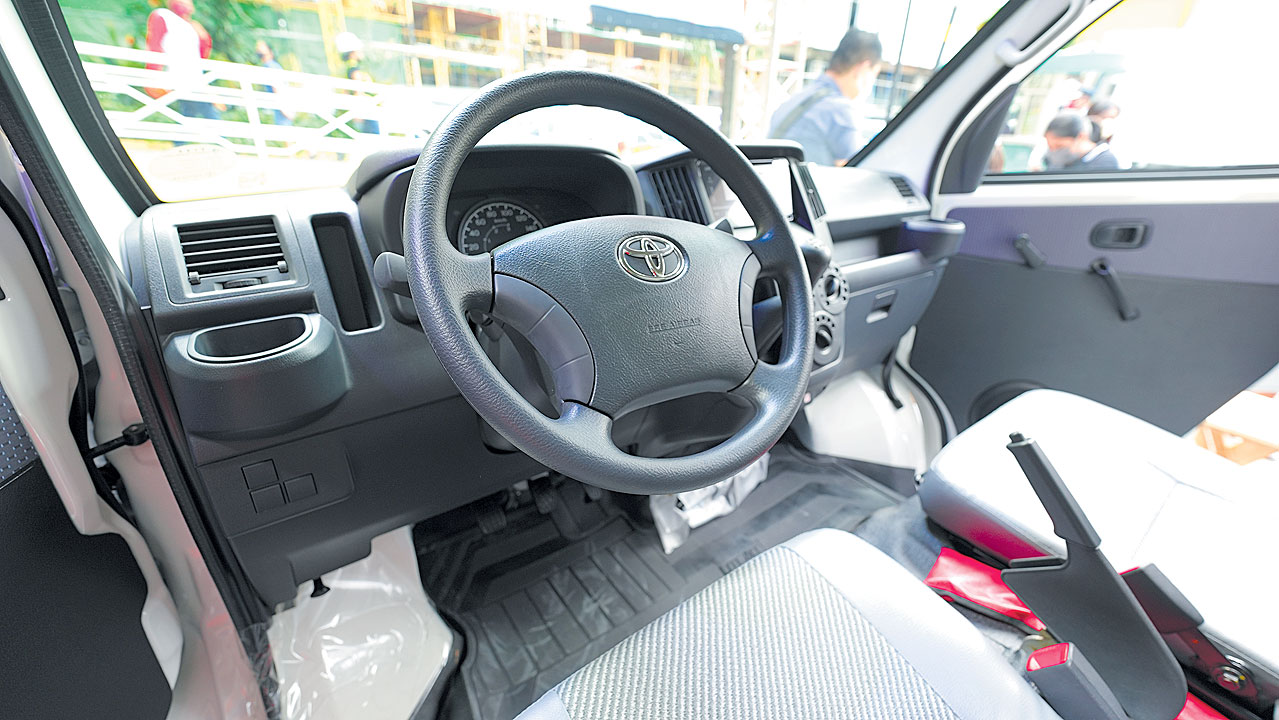
Significantly, this workhorse has accoutrements like electric power steering and an air-conditioning system. Safety features include SRS air bags, anti-lock brakes, and vehicle stability control (VSC) for the Panel Van. Coming exclusively in white exterior color, the Toyota Lite Ace is also packaged with free periodic maintenance for one year or 20,000 kilometers.

Mr. Okamoto admitted to this writer that even if “the supply situation is very unclear,” TMP expects to sell anywhere from 300 to 400 units of the Lite Ace a month. “Hopefully the supply situation improves in Q4,” he added, echoing the aspiration of auto brands that have all been challenged not just by the pandemic but various shortages and crises.

For more information, visit toyota.com/asenso for more information or any of Toyota’s 72 dealerships nationwide; download the myToyota app for Android or iOS, and follow Toyota Motor Philippines on Facebook and Instagram,
ToyotaMotorPH on Twitter, or Toyota PH on Viber for updates.

Greek vacation inspires new Escada collection

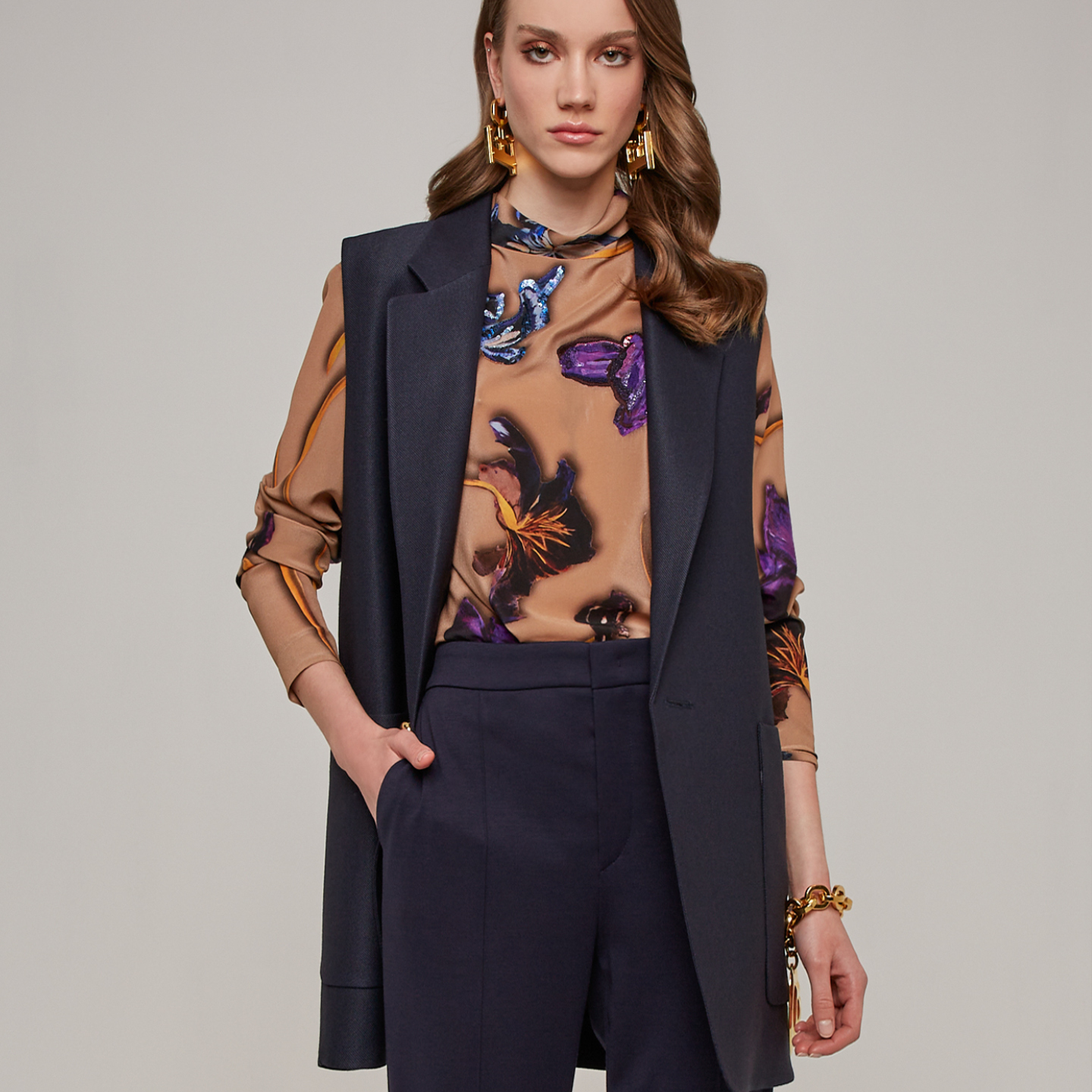
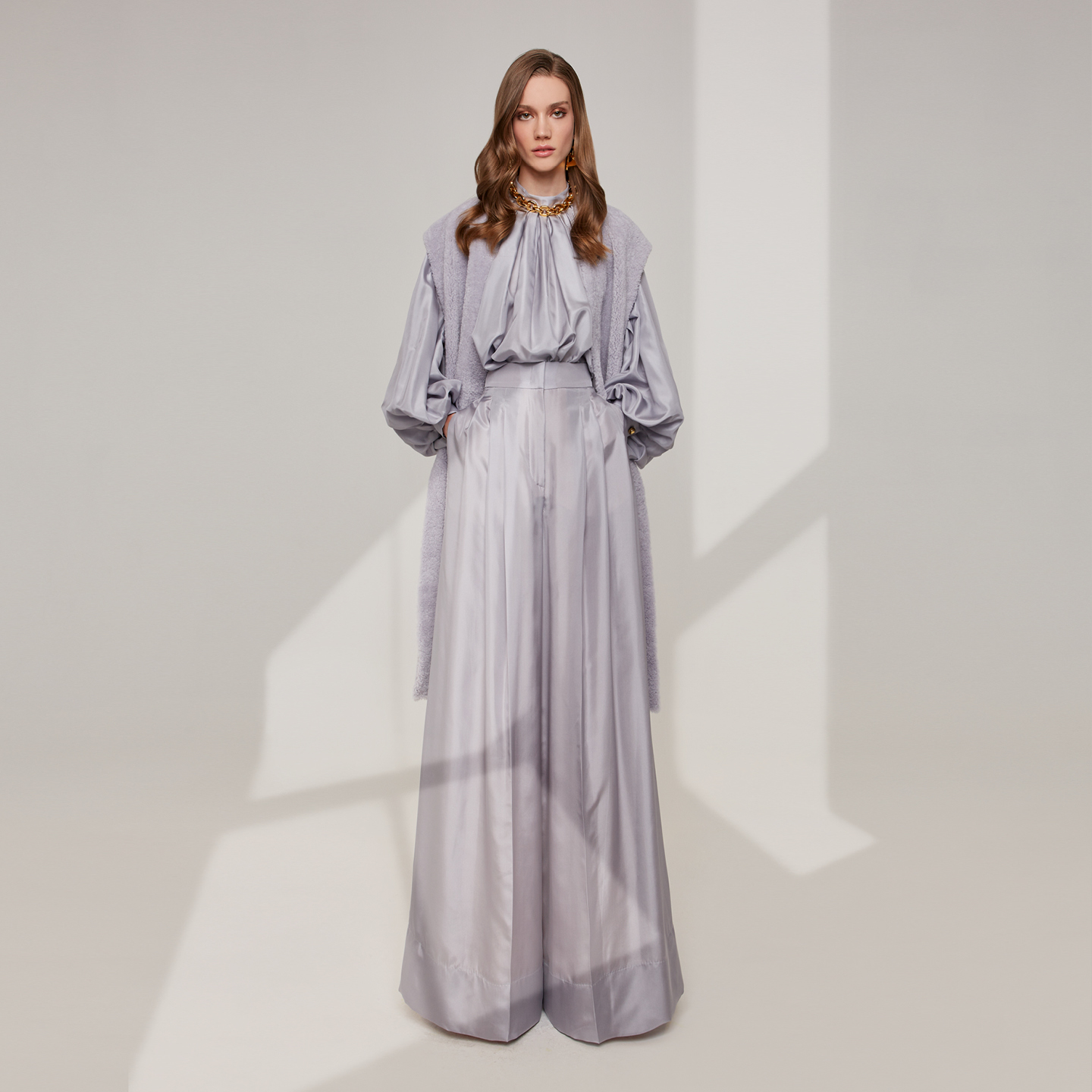
THE GLAMOROUS working woman’s wardrobe isn’t complete without pieces from Escada. A current line recently hit Manila stores, showing off a softening effect with the use of knits and soft colors.

The new collection is based on a Greek vacation, centered around three pillars: Smart Sophistication, Easy Elegance, and Evening Shine.

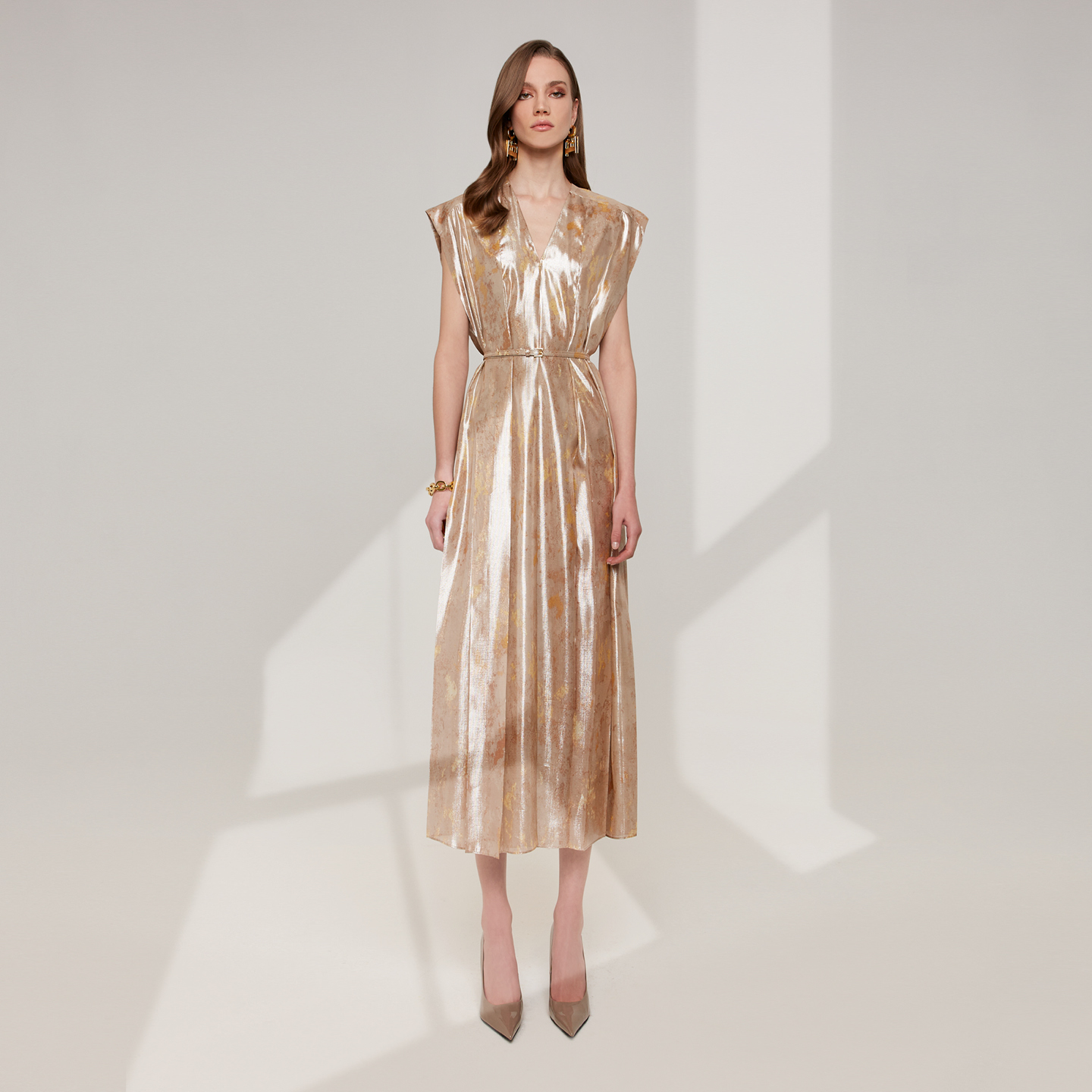
An easy daywear ensemble includes a knitted sweater over a copper-colored skirt, accessorized with a thick gold bracelet. A second suggestion is a coat over a matching dress, riotously decorated with orchids. The same orchid print, on a beige background, is seen as a top, accented by black trousers and a matching vest. No glamorous vacation is complete without a pair of palazzo pajamas, seen here in silver with a matching top with a relaxed silhouette and romantic puffed sleeves. More neutrals appear in the line, such as in a beige jacket flecked with gold. The gold motif reappears again in a dress with a cinched waist.

A taupe jacket with loose pants swimming around the wearer translates to daytime chic, especially when worn with the right accessories. Neutrals round out the collection, seen in a white pantsuit that’s hard to ignore in the office or the streets.

Escada is located at Greenbelt 5, Makati. For inquiries, contact the store at 0917-854-0192. — JLG

Government debt yields rise on surprise hike

YIELDS on government securities (GS) climbed last week after the Bangko Sentral ng Pilipinas’ (BSP) off-cycle move to raise benchmark interest rates by a hefty 75 basis points (bps).

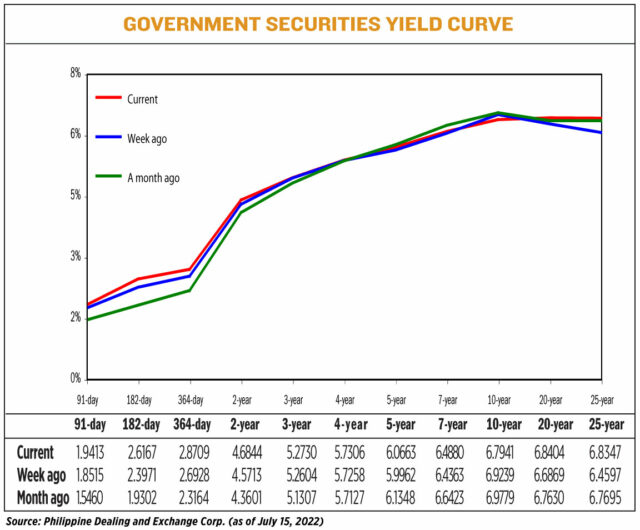
GS bond prices dropped as yields rose by an average of 10.35 bps week on week, based on PHP Bloomberg Valuation Service Reference Rates as of July 15 published on the Philippine Dealing System’s website.

Local GS yields increased almost across the board week on week on Friday except that on the 10-year papers, which declined by 12.98 bps to 6.7941%.

The rates at the short end of the curve went up, with the rates of the 91-, 182- and 364-day Treasury bills increasing by 8.98 bps, 21.96 bps, and 17.81 bps, respectively, to 1.9413%, 2.6167%, and 2.8709%.

At the belly, the two-, three-, four-, five-, and seven-year Treasury bonds saw their yields climb by 11.31 bps (4.6844%), 1.26 bps (5.273%), 0.48 bp (5.7306%), 7.01 bps (6.0663 %), and 5.17 bps (6.4880%), respectively.

Likewise, the 20- and 25-year debt jumped by 15.35 bps and 37.50 bps week on week to fetch 6.8404% and 6.8347%, respectively.

GS volume traded narrowed to P5.039 billion on Friday from P8.313 billion seen on July 8.

“GS yields increased following the off-cycle 75-bp rate hike announced by the BSP last week,” a bond trader said in an e-mail on Friday.

Despite the unexpected timing of the rate hike, its immediate effect on GS yields was muted as market participants deemed this as appropriate, the bond trader said.

“Market rates have not reflected the substantial rate hike immediately, but it could accelerate the increasing trend in short-term interest rates since the surprise move signaled that the BSP has turned aggressive in utilizing its key policy rates to arrest growing inflation worries,” said the bond trader.

“Yields likewise rose from growing market views of at least a 75-bp rate hike from the US Federal Reserve from the latest release of strong labor and inflation reports in June 2022,” the trader added.

The central bank, in a surprise move on Thursday, announced an immediate massive 75-bp hike in benchmark rates to help fight surging inflation. It was the largest increase on record and was the BSP’s first off-cycle action since April 16, 2020.

Headline inflation climbed to a near four-year high of 6.1% in June. This brought the first-half average to 4.4%, above the BSP’s 2-4% target but lower than its 5% forecast for this year.

Meanwhile, consumer inflation in the US surged by 9.1% in June, the largest in over four decades or since November 1981, bolstering bets that the Fed would raise interest rates by another 75 bps on July 26-27.

The bond trader expects local yields to continue moving up this week, still due to the BSP’s surprise rate hike and as expectations of elevated inflation reports from the euro zone and Japan may cause global monetary policy makers to be hawkish.

“However, potentially downbeat US housing and manufacturing reports could exert some downward pressure on bond yields,” the trader said.

UnionBank of the Philippines, Inc. Chief Economist Ruben Carlo O. Asuncion said he also expects the market to monitor the results of this week’s 10-year bond auction.

“Our traders expect the 10-year peso bond auction could fetch a rate between 6.9%-7.05% on upbeat demand consistent with secondary market bids for the same bond [in the previous] week,” he said.

On Tuesday, the Bureau of the Treasury will offer P35-billion reissued 10-year bonds with a remaining life of nine years and 11 months. — L.O. Pilar

ADVERTISEMENT
ADVERTISEMENT