Home Blog Page 6130

Doing good

400 volunteers put together 16,000 meal packs for the poorest of the poor

WHEN it comes to dining, not everything has to be fine, casual, or fast. Sometimes meal packs pack the most satisfaction, both nutritionally and spiritually.

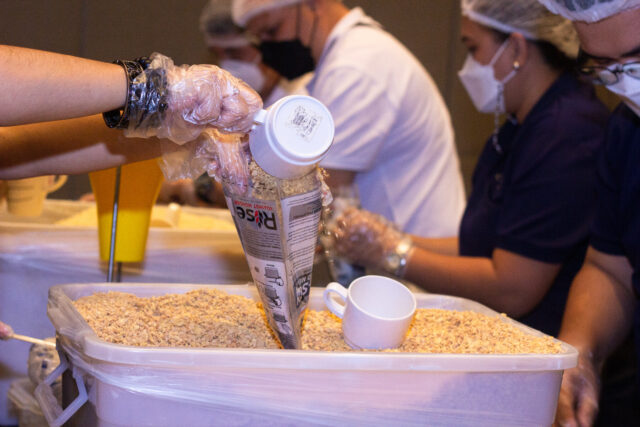
When International Care Ministries (ICM), in partnership with Rise Against Hunger Philippines, held a meal-packing event on July 14 at the Conrad Manila, 400 volunteers put together 16,000 meal packs. Stef Juan, PR Manager for International Care Ministries – Manila told BusinessWorld that they managed to garner 500 sign-ups for the event, but had to turn people away due to the sheer number of people who volunteered.

The meal packs consist of fortified rice mixed with textured vegetable protein and dehydrated vegetables, with four flavoring packs that will transform these into beef congee, chicken arrozcaldo (rice soup), ginataan (coconut milk porridge), and champorrado (chocolate-flavored porridge).

The posh venue for the event was explained by the fact that the Hilton Hotel group (under which Conrad Manila belongs) has a partnership with Rise Against Hunger. The group’s Hilton Effect Foundation is also a donor of the non-profit organization.

Jomar Fleras, Executive Director of Rise Against Hunger Philippines, explained the nutritional content of the meal packs. Each meal pack costs P100, and is able to feed either six adults or 12 children. “Soy contains more protein than meat,” said Mr. Fleras. Each meal pack also includes a packet of micro-nutrient powder, with 23 nutrients including Vitamins A, B, and C. “When we add the micro-nutrient powder, it assumes that the rest of the meals of the children will be sub-standard already.”

By this, Mr. Fleras means that while the food they might eat outside the program may not satisfy their required nutritional needs, the nutritional content of the meal packs will still help them reach their required nutrient intake. “We check their weight and their overall health,” said Ms. Juan, and this is done before and after the program.

These meal packs are distributed by ICM during its Transform program, which aims to change communities of the ultra-poor (individuals living on $0.50 a day, or about P25). While ICM serves the entire country, the 16,000 meals packed during the event will go to communities in Visayas and Mindanao. The Transform programs are held once a week for four months.

The meals are just a small part of ICM’s programs. Founded in 1992, the faith-based organization uses research and data for their poverty alleviation programs. “We’re faith based. Sometimes, faith-based organizations are ‘by feel,’” said Ms. Juan. “We do have that — but it’s tempered by research.”

Participants in their Transform program are given surveys prior to joining and after, which then helps the organization gauge their real needs, from concerns about health, hunger, clothing, sanitation, to other pressing matters. “Our approach is very business-like, data-driven; instead of more emotional and passionate,” she told BusinessWorld during an interview. “We also have passion — don’t get me wrong,” she said.

In 2018, their research was published in The Economist and the New York Times. They have helped cure 8,075 children of malnutrition, have supported 12,129 high-risk pregnancies, and helped treat 316,297 people for parasites in 2014-2021, according to their annual report. In the same report, their research yields the toll of living on or below $0.50 a day. In their communities (in Palawan, Kalibo, Iloilo, Bacolod, Dumaguete, Cebu, Bohol, Tacloban, Dipolog, Koronadal, General Santos, and Davao), 64% live in “cramped, unsafe homes” while 79% reported leaks in their homes; 65% do not have furniture, and 29% do not have electricity. Finally, 15% of these households have had a child die.

The Transform program uses community-based pastors to seek out the ultra-poor in these places. They are then given skills and financial literacy training, and healthcare support. The food packs, according to Ms. Juan, will be given during these training sessions, as well as during counselling sessions from the trauma caused by Typhoon Odette late last year.

ICM’s annual report said that they have seen a 16% increase in family life satisfaction in their communities, a 25% increase in the communities’ social safety net, and a 107% increase in income.

Ms. Juan however, has somewhat better metrics. She talks about a community of women who formed a savings group (one of the segments of Transform, which urges participants to save, then invest in a community business) together after their training. They were able to open their own business making bags, which are now ready for export (according to Ms. Juan, the savings group is now collectively worth P9 million). Other communities have learned how to make soap, figurines, or have invested in livestock and agriculture. “Our goal is that eventually, the community we leave behind will be able to continue the Transform program without us.”

“We look at their kids. Are they doing well in school?” she said, still in response to a question about how ICM knows its programs work. While their parents have usually not even finished their elementary schooling, some of their children are going off to college. “They have bigger dreams.”

To learn more about International Care Ministries, visit https://www.caremin.com. —   Joseph L. Garcia

Citicore secures 1-MW contract with JE Hydro and Bio Energy

CITICORE Renewable Energy Co. (CREC) secured a 1-megawatt long-term power supply contract with water management solutions provider JE Hydro and Bio Energy Corp. (JEHBEC).

The deal with CREC’s retail supply arm, Citicore Energy Solutions, Inc., was signed under the government’s Green Energy Option Program which allows end users to source their electricity needs from preferred renewable energy sources.

“Our shared vision in delivering more sustainable basic utilities to the Filipino people will help empower more communities and address the gaps in the water and energy supply situation across the country,” said Citicore Energy REIT Corp.’s (CREIT) President and Chief Executive Officer Oliver Y. Tan.

CREIT is a listed company whose market listing was sponsored by CREC.

Through the contract, CREC was assigned by JEHBEC to supply its power needs as the bulk water provider of Metropolitan Cebu Water District.

The power requirement will be supplied by CREC’s Solar Toledo, which is said to be the largest solar plant in the Visayas located in Toledo City, Cebu and one of the 10 solar facilities operated by CREC.

“From the design stage of our facilities, we already integrate resource conservation and environmental stewardship in developing studies and solutions for sustainable water systems. We further ensure our sustainability efforts by incorporating RE in our operations,” JEHBEC Chairman Joffrey E. Hapitan said.

Mr. Tan said that CREC’s continued expansion and diversification of its customer base is consistent with its long-term plan to increase renewable energy usage in the country and its goal of a net zero carbon future.

The company plans to grow its current capacity by five times to 1.5 gigawatts in the next five years through a steady pipeline of renewable energy sources available for offtake agreements with existing and new customers.

“CREC’s larger capacity and wider customer base will also augur well for CREIT, as most of these assets are programmed to be infused into the REIT [company] in the next five years, supporting a sustainable and growing revenue base,” added Mr. Tan.

At the stock market on Wednesday, CREIT’s shares increased by P0.01 or 0.42% to close at P2.38 apiece. — Justine Irish D. Tabile

Digital risks may weigh on PHL banks’ credit ratings — Fitch

TRUSTPAIR.COM

PHILIPPINE BANKS’ credit ratings, as well as those of lenders in the region, could face pressure from rising risks of cyberattacks due to an increase in digitalization in the sector, Fitch Ratings said.

A Fitch report on Asia-Pacific (APAC) banks’ technological risks published last month said increased digitalization in the sector due to the coronavirus disease 2019 (COVID-19) pandemic increases the risk of cyberattacks that could cause reputational damage and affect their viability ratings. The report was written by Fitch Asia-Pacific Financial Institutions Director Willie Tanoto and Associate Director Priscilla Tjitra.

“Banks across APAC have been digitalizing their service offerings at varying paces and the imperative to do so was accelerated during the COVID-19 pandemic when service channels overwhelmingly moved online. Faster adoption of digital banking presents new business opportunities and banks that managed the transition well have reinforced their business profiles compared with competitors,” Fitch said.

“However, increased digitalization also amplifies the technology-related operational risks that banks face, and can expose them to reputational damage that weighs on their franchises. Cases of technological failure in APAC since 2016 have shown the potential to transform into wider financial risks that have an adverse impact on bank ratings,” it said.

Fitch said while specific incidents of technological failures have not had an immediate impact on its ratings of banks in the region, this could change if these incidents and vulnerabilities recur or persist, as this could show a weakness in lenders’ risk management. 

“Technological failure events could have varying impact on banks according to the frequency and the severity of the incidents,” Ms. Tjitra said in a virtual interview with BusinessWorld.

“Direct impact on banks could arise from monetary compensations to customers or fines imposed by the regulators, while indirect costs could come from reputational damage. All of these could influence our assessment of a bank’s ratings,” she added.

Fitch Asia-Pacific Financial Institutions Director Tamma Febrian said in the same interview that the technological risks faced by Philippine banks are the same as those seen by other banks in the region.

“Externally, they are exposed to hacking incidents, phishing scams and ransomware, among others. Internally, some also have had a fair share of experience in dealing with system failures in the past, partly because they had to grapple with systems that are very outdated and not as scalable for use in the increasingly digital world,” Mr. Febrian said.

He said Philippine banks still need to improve the readiness and sophistication of their systems to combat the risks that come with increasing digitalization in the country.

INVESTMENTS IN TECHNOLOGY LAGGING
Mr. Febrian noted that lenders in the Philippines could face heightened risks as they are “a bit lagging” in terms of technology investments and only began to ramp up spending when the pandemic hit, compared with banks in countries like Singapore that have been doing it 10 or more years ago.

“But I think the banks are aware of these risks and shortcomings, and are taking appropriate actions to address them,” he said.

“BSP (Bangko Sentral ng Pilipinas) is similarly as invested in ensuring that cyber risks are being properly controlled and mitigated within the banking system, as evident, for example, from the latest requirement that asks banks to implement an automated and real time fraud-monitoring system,” Mr. Febrian added.

Ms. Tjitra said in emerging markets like the Philippines, rules on cyberattacks on banks are less strict compared with those in advanced economies.

“In terms of the regulatory implications, we noted that the rules and the supervisory actions taken in relation to banks’ tech operational issues in developed markets are more stringent than in emerging markets, including the Philippines, which are typically still evolving,” Ms. Tjitra said.

The analysts and the report cited recent cases of cyberattacks involving lenders in the Philippines, including a 2021 hacking incident involving BDO Unibank, Inc. and UnionBank of the Philippines, Inc., as well as the Bangladesh Bank heist in 2016 that involved Rizal Commercial Banking Corp. (RCBC). Bank of the Philippine Islands in 2019 also experienced some disruptions to its services due to issues encountered while upgrading its core banking system.

BDO and UnionBank faced sanctions from the BSP due to the 2021 online fraud incident where hackers stole about P1.2 million from more than 700 BDO clients. BDO also reimbursed affected clients.

Meanwhile, RCBC had to pay a P1-billion fine for lapses that enabled the cybercriminals to allegedly run off with $81 million from the account of Bangladesh Bank at the Federal Reserve Bank of New York and their transfer to four accounts registered under fictitious names at RCBC’s Jupiter Street branch in Makati City. The amount is the biggest ever monetary penalty imposed by the BSP on a lender.

The Fitch report also mentioned an incident experienced by banks in Southeast Asia, including those in the Philippines, in March 2020, where over 200 thousand credit card details were leaked. —  Keisha B. Ta-asan

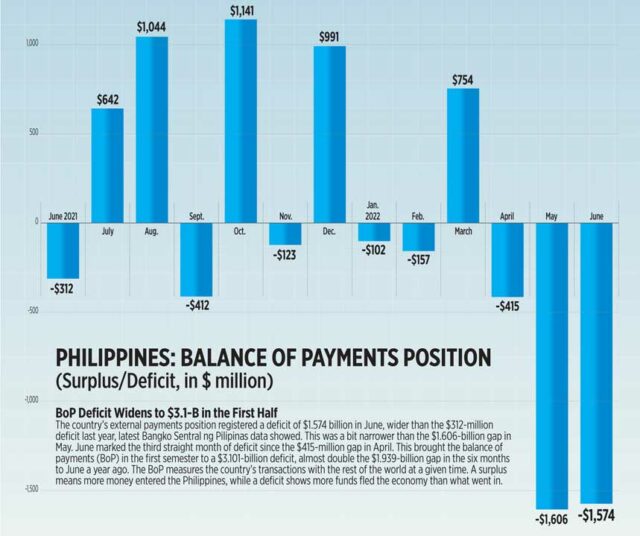
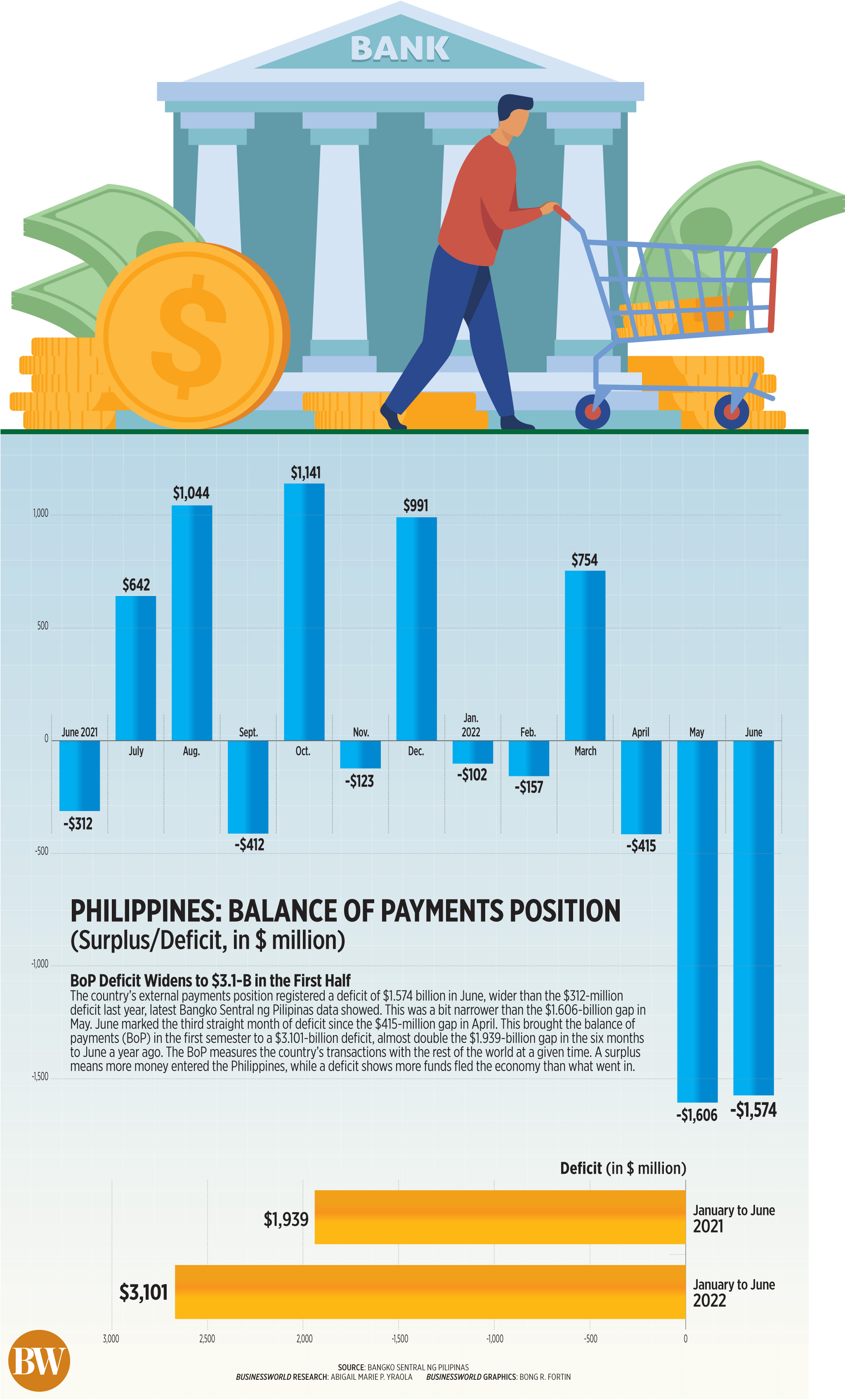
Philippines: Balance of payments position

THE PHILIPPINES’ balance of payments (BoP) position remained in a deficit for a third straight month in June, as more dollars flowed out of the country to pay for the government’s foreign debt. Read the full story.

Philippines: Balance of payments position

Asian Games rescheduled for next year in Hangzhou, China

A PIECE of good news greeted the Filipino athletes after learning that the Asian Games have been rescheduled from Sept. 23 to Oct. 8 in Hangzhou, China next year, or more than a year of its original date.

The Olympic Council of Asia on Tuesday confirmed the development after months of discussions with organizing Chinese Olympic Committee.

The quadrennial event was originally set Sept. 10-25 but was moved due to the coronavirus disease 2019 (COVID-19) pandemic.

“Yes it will push through next year and we are all excited because it was postponed,” Philippine Olympic Committee president Abraham Tolentino yesterday told The STAR.

The Tagaytay City Mayor said the games will still have 40 events and more than 480 gold medals at stake.

“No changes in the events, only there will be new athletes,” said Mr. Tolentino.

The country is confident it could improve on its four-gold, two-silver and 15-bronze haul for a 19th place finish in the last edition of the Asian Games in Jakarta, Indonesia four years ago.

The optimism comes from the country’s slew of world-class athletes like Tokyo Olympics gold medalist Hidilyn Diaz and a group of young promising lifters, world champion gymnast Caloy Yulo, the boxers, pole-vaulter EJ Obiena, and Asian Games skateboarding gold winner Margie Didal. — Joey Villar

Yields on term deposits rise after BSP rate hike

BW FILE PHOTO

YIELDS on the term deposit facility (TDF) of the Bangko Sentral ng Pilipinas (BSP) increased on Wednesday amid slightly weaker demand and after the central bank unexpectedly hiked benchmark interest rates last week.

Total bids for the central bank’s term deposits reached P321.566 billion on Wednesday, short of the P330-billion offer and also lower than the P385.602 billion in tenders recorded last week.

Broken down, the seven-day papers fetched bids amounting to P151.948 billion, lower than the P160 billion auctioned off by the BSP. It was also less than the P204.106 billion in tenders logged the previous Wednesday.

Banks asked for yields ranging from 2.75% to 3.69%, climbing from the 2.64% to 2.71% band seen a week ago. This caused the average rate of the one-week paper to rise by 56.21 basis points (bps) to 3.2459% from 2.6838% last week.

Meanwhile, demand for the 14-day term deposits amounted to P169.618 billion, below the P170-billion offering as well as the P181.493 billion in tenders recorded a week ago.

Accepted rates for the papers were from 2.775% to 3.72%, higher and wider than the 2.625% to 2.75% margin seen on July 13. With this, the average rate of the two-week paper increased by 61.82 bps to 3.3417% from 2.7235% in the prior auction.

The central bank has not auctioned 28-day term deposits for more than a year to give way to its weekly offering of securities with the same tenor.

The term deposits and the 28-day bills are used by the BSP to mop up excess liquidity in the financial system and to better guide market rates.

“The results of the auction show that there has been a partial pass-through of the policy rate to market rates amid ample overall liquidity in the financial system,” BSP Deputy Governor Francisco G. Dakila, Jr. said in a statement. “The weighted average interest rates of both tenors increased, reflecting the impact of the 75-bp hike in the policy interest rate on 14 July 2022.”

“Moving forward, the BSP’s monetary operations will remain guided by its assessment of the latest liquidity conditions and market developments,” Mr. Dakila said.

The BSP last week raised benchmark interest rates by an all-time high 75 bps in an off-cycle move and left the door open for further tightening amid growing risks to inflation.

BSP Governor Felipe M. Medalla said the Monetary Board’s “significant” hike was due to signs of “sustained and broadening price pressures” as well as spillover effects from aggressive tightening in other countries, such as the United States, amid global inflation concerns.

The hike was done outside of their scheduled policy meetings and was the first off-cycle increase since April 16, 2020. Following Thursday’s move, the BSP has now raised rates by a total of 125 bps this year and the key rate is now at 3.25%, matching the March 2020 level.

The BSP has become more aggressive as headline inflation reached 6.1% in June, the fastest in nearly four years. This brought the first-half average to 4.4%, above the central bank’s 2-4% goal but still lower than its 5% forecast for the year.

TDF yields were also higher amid hawkish signals from the US Federal Reserve, Rizal Commercial Banking Corp. Chief Economist Michael L. Ricafort said in a Viber message.

The Fed is widely expected to raise interest rates by at least 75 bps at its July 26-27 meeting to combat inflation, which quickened to a 40-year high of 9.1% in June. — Keisha B. Ta-asan

Reclaiming the throne

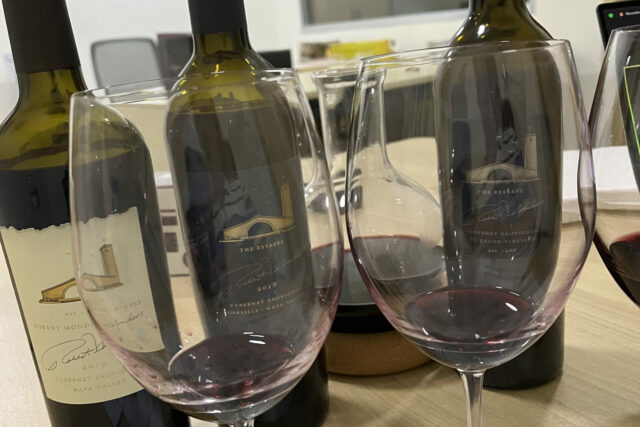
THREE wines during the virtual tasting event. — PHOTO BY SHERWIN A. LAO

ROBERT Mondavi Napa Valley Cabernet Sauvignon has been my go-to California wine ever since I started my wine career in the mid-1990s. The 1994 vintage was the very first Robert Mondavi Napa wine I had sometime in 1998, and several vintages later, this wine and this brand just simply resonate with me.

Robert Mondavi, the man, the legend, was truly the best ambassador of Californian wines to the world, and I would argue that he may have been the most influential and impactful individual by far who put Napa Valley — and Californian wines in general — on the world wine map.

I was, however, not a fan of using the Robert Mondavi name in other wine ranges, including Woodbridge, Coastal, and the Private Selection — all commercially successful, competing in the mid to lower priced broader California AVA (American Viticultural Area) mass-based segment. The Coastal range was eventually discontinued in the early 2000s and replaced by the Robert Mondavi Twin Oaks range.

I do understand that the Mondavi Napa Valley wines are on the pricier side (like every Napa AVA) and could not be an everyday indulgence, but the Robert Mondavi brand seemed to be best associated with only the premium Napa wine level and above. I guess I just had the Robert Mondavi brand on a pedestal so that any wine, like Woodbridge, that bears this legendary name but is of less than Napa quality, felt like a stain on the Mondavi brand’s luster.

This was the same way I felt with Rawson’s Retreat being under the Penfolds umbrella brand, until recently when Treasury Wine Estates, the company that owns Penfolds, rightfully took the Penfolds name out, and named this range simply “Rawson’s Retreat” sans the “Penfolds.”

NEW ROBERT MONDAVI CAMPAIGN
Recently, Constellation Brands, the company that owns Robert Mondavi wines, conducted a big regional media event and I was very elated to be at their “Robert Mondavi Winery Reimagined: Soul of Napa campaign” media launch. As the campaign’s title suggested, this one was all about the premium Mondavi wines that start at the Napa Valley AVA level. This was a virtual tasting event, and, ironically, I just wrote my sentiments about virtual wine tasting in my previous month’s column. But in fairness to this specific virtual tasting event, the concerns I raised in my column, while all relevant and valid still, were not in view. The Mondavi event was pulled off quite successfully despite the logistical challenge of sending three outstanding Napa wines to over 10 countries in the Asia-Pacific region and for an audience of at least 40 people.

Constellation Brands, a huge Fortune 500 liquor conglomerate and a New York Stock Exchange publicly listed company (listed as STZ and STZ.B) created quite a stir in the wine industry back in 2004 when they purchased the Robert Mondavi Winery for over $1.3 Billion. At the time of purchase, founder Robert Mondavi was already 91 years old. Robert Mondavi Winery remains the flagship premium wine brand of the Constellation Brands’ growing wine portfolio.

Robert Mondavi, founder of his eponymous winery, passed away in 2008 at the age of almost 95 years old. His legacy had lived on, and this “Robert Mondavi Reimagined: Soul of Napa campaign” is a tribute by Constellation Brands to inspire wine lovers to dream, do, share and celebrate founder Robert Mondavi’s spirit.

LABEL UPGRADE
I received three bottles of Robert Mondavi premium Cabernet Sauvignon wines: the Napa Valley (region), the Estates Oakville (sub-region), and the Reserve To Kalon (vineyard).

The first thing that jumped out from the new Robert Mondavi wines are the stylish labels. As part of the “transformation,” the new look Mondavi Napa Valley wine uses a cream-colored torn-paper label with gold fonts, gold accents, and the familiar winery façade. Quite noticeable too is the prominent signature of Robert Mondavi right in the front, which was not present in previous Mondavi Napa Valley wine labels.

Both the new Oakville and new Reserve labels went through a 180⁰ makeover. Both these new labels are much darker (literally …), sleeker, elegant and more polished than their respective old counterparts, though the similarity between the new Oakville and the new Reserve label is quite close and is mainly differentiated by the color of the sticker paper. The Estates Oakville uses gold font on Parisian-blue paper and the Reserve uses silver font on black paper. Both labels also bear the Robert Mondavi signature and the iconic winery symbol. The new labels befit Robert Mondavi’s unparalleled stature in this region.

These Mondavi bottles were sent to me on time for the virtual tasting and came in a beautifully crafted wine carrier box that not only contained the wines, but also included three stemless wine glasses, winery notes, and a collectible corkscrew. Mark de Vere, at Robert Mondavi Winery’s in-house Master of Wine guided all the participants via Zoom direct from Napa Valley in this virtual wine tasting event.

MY CUSTOMARY TASTING NOTES
(in order of tasting):

• Robert Mondavi Napa Valley Cabernet Sauvignon 2019 — this is the original wine that started it all, and until now it remains one of the most consistent Napa Valley Cabernet Sauvignons made, vintage after vintage. Made from 80% Cabernet Sauvignon and 20% other classic Bordeaux varietals — Merlot, Petit Verdot, Cabernet France and Malbec. “Choco-mint, vanilla, peppercorn spice, voluptuous, silky body, friendly tannins, and berry-laden finish.”

• Robert Mondavi The Estates Oakville Cabernet Sauvignon 2018 — this sub-Napa region of Oakville AVA is another go-to wine for upper-tier Napa wines. Oakville AVA is also where cult wines Screaming Eagle and Harlan Estate produce their ultra-expensive Napa wines. Made from 86% Cabernet Sauvignon with 14% from the four other Bordeaux varietals. “Opulent nose, cassis, black berries, warm pie nose, figs, very juicy on the palate, herbal with bitter-sweet tannins, flinty and long, luscious finish.”

• Robert Mondavi The Reserve To Kalon Vineyard Cabernet Sauvignon 2018 — this single vineyard To Kalon, from Oakville, Napa Valley is Mondavi’s main source of their best Cabernet Sauvignon grapes. To Kalon had been voted as North America’s best vineyard three times already and Robert Mondavi chose To Kalon to be the home of his winery in 1966. Made from 93% Cabernet Sauvignon, with 5% Cabernet Franc and 2% Petit Verdot. “Intense nose, a fruit bomb but with much more complexity, star anise, cinnamon bark, tobacco, mint, meatier and more textured on the palate, herbal and flinty with lovely lingering licorice finish.”

The Robert Mondavi wines have been given a very nice facelift and with the resources of Constellation Brands and the gifted winemakers behind this iconic Napa winery, Robert Mondavi is back to reclaim its throne as California’s BEST – a title they may not relinquish again with this new-found focus.

Robert Mondavi wines are available in the Philippines through Future Trade International. Those interested in these premium Robert Mondavi Napa wines can contact Eric Khan at federico.kahn@futuretradeinc.com.

The author is the only Filipino member of the UK-based Circle of Wine Writers (CWW). For comments, inquiries, wine event coverage, wine consultancy and other wine related concerns, please e-mail the author at wineprotege@gmail.com, or check his wine training website https://thewinetrainingcamp.wordpress.com/services/.

NLEX Corp. upgrades Subic Freeport Expressway

SUBIC FREEPORT EXPRESSWAY — NLEX

NLEX Corp. said on Wednesday that it is investing more in the enhancement of the Subic Freeport Expressway (SFEX) to make it safer for motorists.

“The P105-million worth of improvements, which include pavement surface upgrade, construction of ditch and slope protection, installation of guard rails, and application of hazard paint, intend to make the SFEX and its surrounding slopes safer for motorists,” the company said in an e-mailed statement.

The company aims to make its roads safe for all weather conditions.

“With these enhancements, we expect to further protect motorists from roadside hazards by strengthening the slopes and improving the drainage system and other safety features at the SFEX,” said NLEX Corp. President J. Luigi L. Bautista.

To recall, the company completed in February last year the SFEX capacity expansion.

“A total of 16.4 new lane kilometers, two new bridges, and a new tunnel were constructed as part of the P1.6-billion expansion project,” it said.

It also installed international standard LED lights, raised the elevation of the Maritan Highway-Rizal Highway-Tipo Road junction, and enhanced the area’s drainage system.

“This was constructed despite the pandemic in response to the need to accelerate business activities and facilitate the flow of goods and services between the economic zones in Clark and Subic,” the company said.

The company announced recently that it had allocated P1.2 billion for this year’s capital expenditures to improve customer experience.

NLEX Corp. is part of Metro Pacific Tollways Corp., the tollway unit of Metro Pacific Investments Corp. (MPIC).

MPIC is one of three key Philippine units of Hong Kong-based First Pacific Co. Ltd., the others being Philex Mining Corp. and PLDT, Inc.

Hastings Holdings, Inc., a unit of PLDT Beneficial Trust Fund subsidiary MediaQuest Holdings, Inc., has a majority stake in BusinessWorld through the Philippine Star Group, which it controls. — Arjay L. Balinbin

Coins.ph, Globe tie up for crypto transactions

MICHAEL FÖRTSCH-UNSPLASH

COINS.PH, a fiat and crypto wallet services provider in the Philippines, said on Wednesday it has partnered with Globe Telecom, Inc. for a new offering for its loyalty program Globe Rewards.

“Starting July 20, prepaid and postpaid subscribers can start exchanging rewards points in their new GlobeOne app for Bitcoin and cryptocurrency vouchers redeemable at Coins.ph,” the crypto wallet company said in an e-mailed statement.

Through the partnership, users can redeem rewards points and complete a crypto transaction without using their own money. The new feature on the Coins.ph application is called Redeem Crypto. Users must be “Level 2 verified” to redeem.

“The available denominations are P5, P10, P25, P50, and P100, each with a corresponding number of points required for redemption,” the company said.

The goal is to “empower Filipinos in their quest for financial freedom,” said Wei Zhou, CEO of Coins.ph.

“Customers can now take advantage of mainstream loyalty programs such as Globe Rewards for a low- or almost zero-risk approach to get started with their crypto journey.”

The company also said that it will be opening opportunities for enterprises to diversify their loyalty program offerings to “remain competitive and maximize their potential for growth.”

The platform gives access to 24 cryptocurrencies and crypto tokens, including BTC (Bitcoin), ETH (Ether), BCH (Bitcoin Cash), BAT (Basic Attention Token), XRP (Ripple), USDC (USD Coin), USDT (Tether), AAVE, AXS (Axie Infinity Shard), CHZ (Chiliz), GALA, KNC (Kyber Network Crystal v2), LINK (Chainlink), MATIC (Polygon), MKR (Maker), SAND (The Sandbox), SLP (Smooth Love Potion), UNI (Uniswap), and YGG (Yield Guild Games).

“Cryptocurrency values are highly volatile and prices may go up and down in real time. Buying Bitcoin and other cryptocurrencies carries a high level of risk and may not be suitable for everyone,” Coins.ph said. — Arjay L. Balinbin

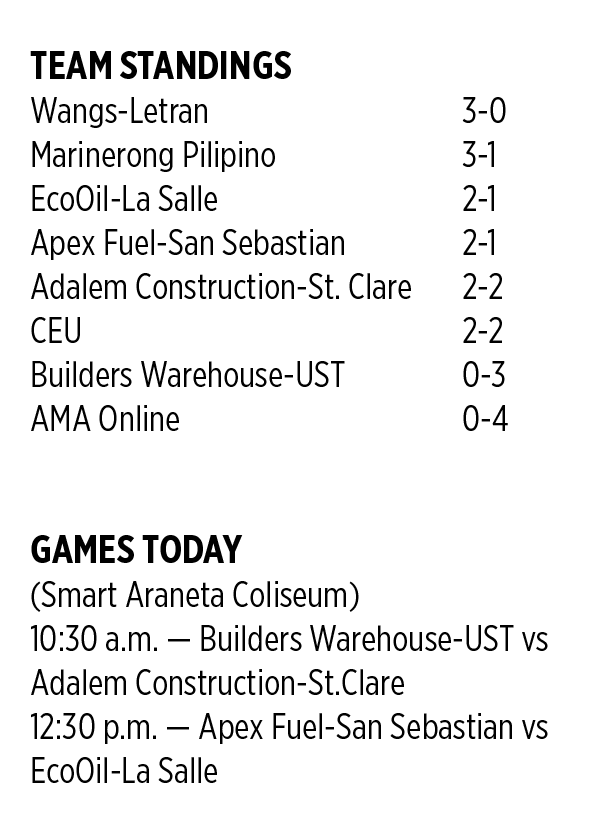
La Salle battles San Sebastian for top two finish

KNOCKING at joint third place, EcoOil-La Salle and Apex Fuel-San Sebastian figure in a crucial tiff to stay in the thick of the race for a top two finish and an outright semifinal berth in the PBA D-League Aspirants’ Cup today at the Smart Araneta Coliseum.

Game time is at 12:30 p.m. with the winner between the Green Archers and the Golden Stags gaining a share of second place with idle Marinerong Pilipino (3-1) behind unbeaten pacer Wangs Basketball @26-Letran (3-0).

La Salle, parading a formidable core led by UAAP Mythical Five member Michael Phillips, looms as a slight favorite but coach Derrick Pumaren is not keen on being complacent especially against the gritty wards of mentor Egay Macaraya.

The Golden Stags indeed are becoming a tough nut to crack even against an established La Salle program with a two-game win streak highlighted by a 40-point demolition of AMA Online, 93-53.

But more than trying to land an upset over the towering Green Archers that finished third in the UAAP Season 84, Mr. Macaraya sees this as a learning opportunity for his frontline.

Adalem Construction-St. Clare (2-2) eyes a bounce back win after a loss while Builders Warehouse-Santo Tomas (0-3) aims to break through in their separate outing at 10:30 a.m. — John Bryan Ulanday

Dining In/Out (07/21/22)

Kenny Rogers Roasters brings back chimichurri

KENNY Rogers Roasters is bringing back its famous chimichurri to the menu — not only with the roasted chicken but with more meat selections this time around. Kenny Rogers Roasters is now offering seven meat options. Apart from Chimichurri Roast, guests can also choose from their ribs, premium steak, burger steak, burger bun, Schublig sausage, and fish as protein options. Starting July 18, guests can have chimichurri in their Kenny Rogers Roasters favorites, which can be enjoyed solo or as a group. Kenny’s Solo B plate (starts at P290) comes with a portion serving of their choice of meat with chimichurri sauce, two side dishes, rice, and a muffin. A Group Meal (starts at P1,025) comes with a whole serving of their choice of meat with chimichurri sauce, four side dishes, four cups of rice, four muffins, and 1.5 liters of soda. Meanwhile, the All Chimichurri Group Meal (starts at P1,330) includes a quarter chimichurri roast, a half-slab of chimichurri ribs, one chimichurri Schublig sausage, one chimichurri burger steak, four side dishes, four cups of rice, four muffins, and 1.5 liters of soda. Completing the Chimichurri Festival are two new side dishes, which are offered for a limited time only: the baconized corn and chips & salsa. With every Solo Plate purchased of Chimichurri, Kenny Rogers Roasters will donate P1 to selected NGOs to support local farmers. The Chimichurri Farmvocacy is Kenny Rogers Roasters’ way of helping local farmers in today’s challenging time. The chimichurri dishes are available for dine-in, takeout, or delivery through www.kennyrogersdelivery.com.ph, hotline: 8-555-9000, or via Grab Food and Food Panda.

Shakey’s offers Spinach Pizza selection

SHAKEY’S Pizza launches its Spinach Pizza selection, featuring three flavors, and Spinach Roll-ups. Made with fresh spinach, the pizzas also come with either bacon, shrimp, or mushroom toppings.

Sheraton opens Pinas Muna Hub

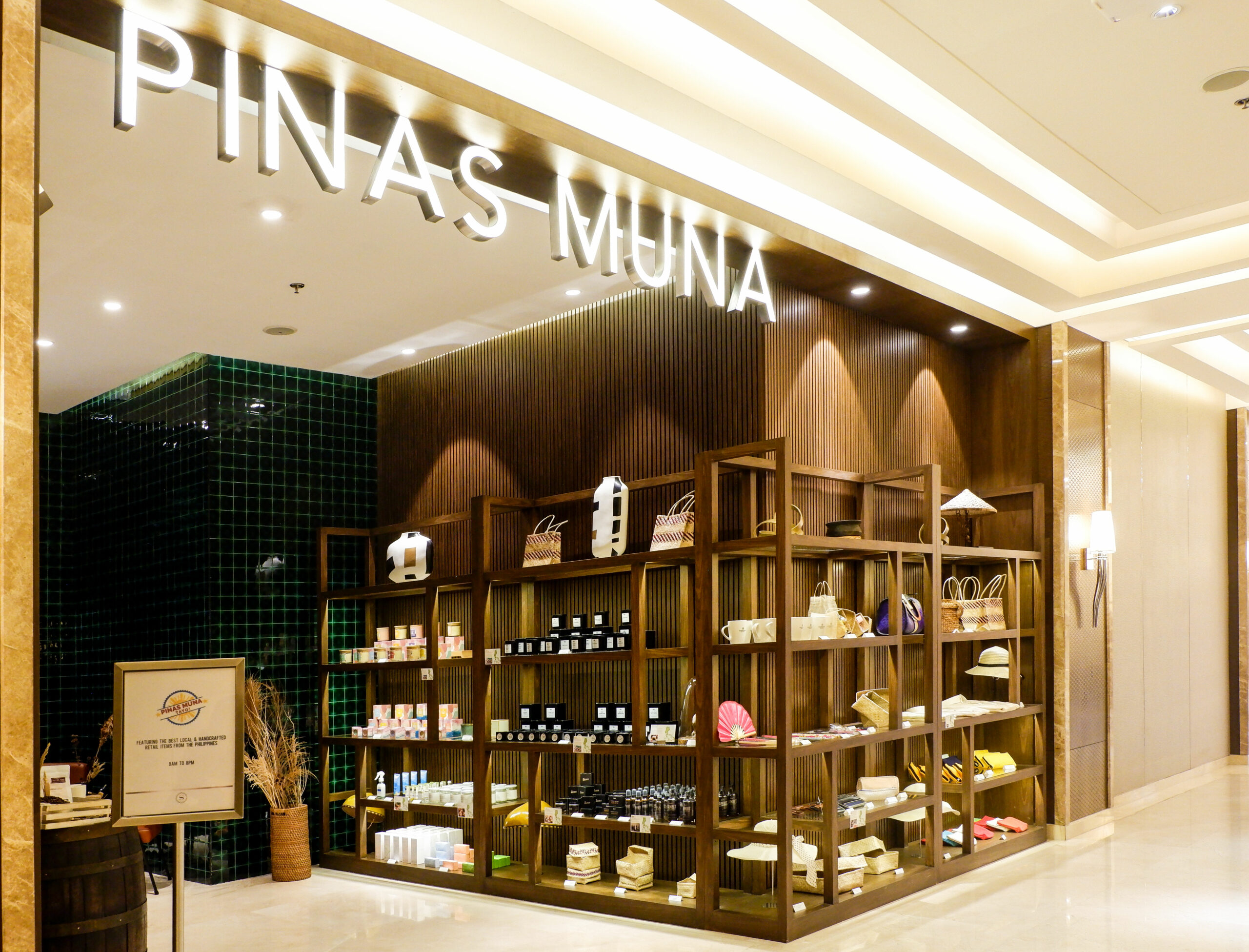
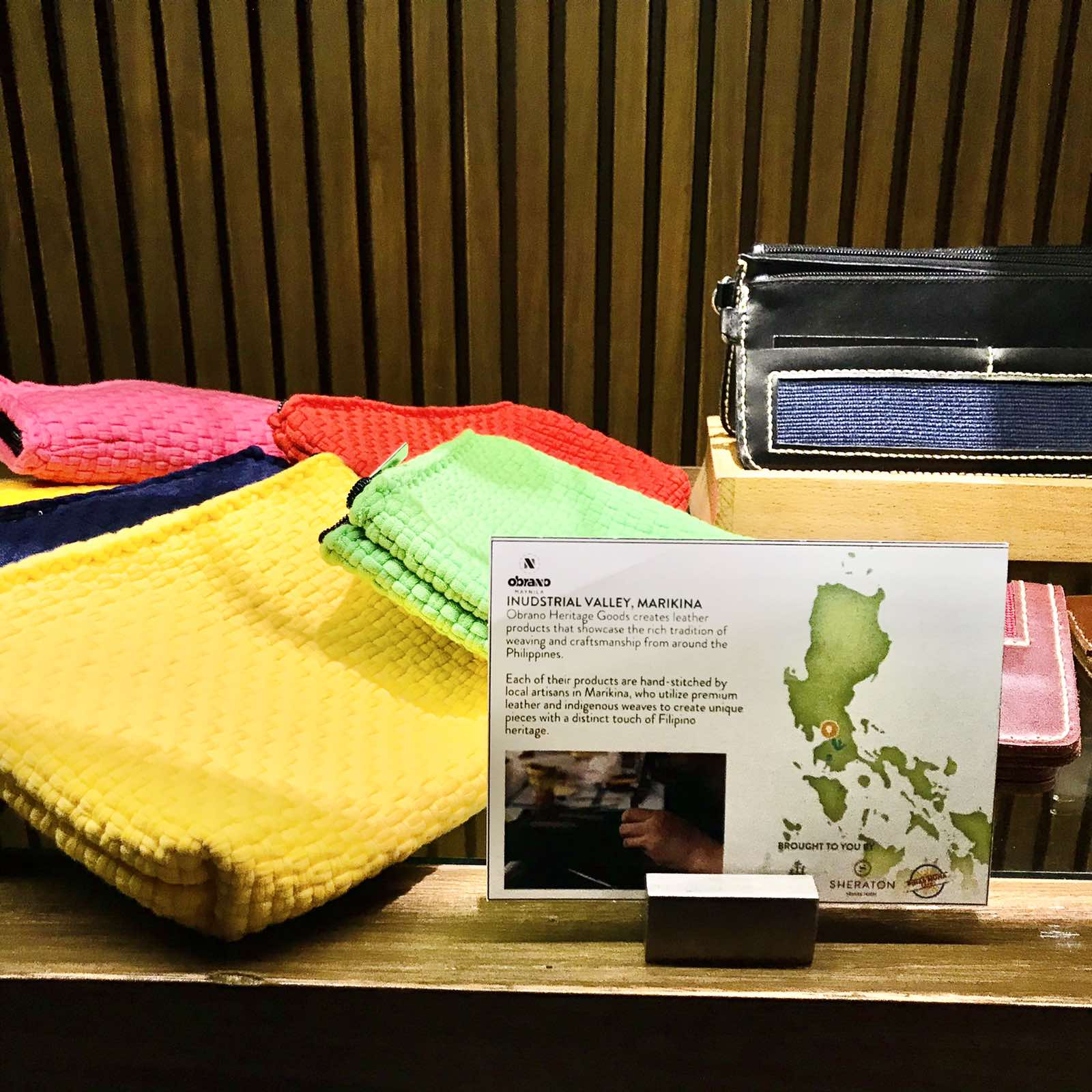
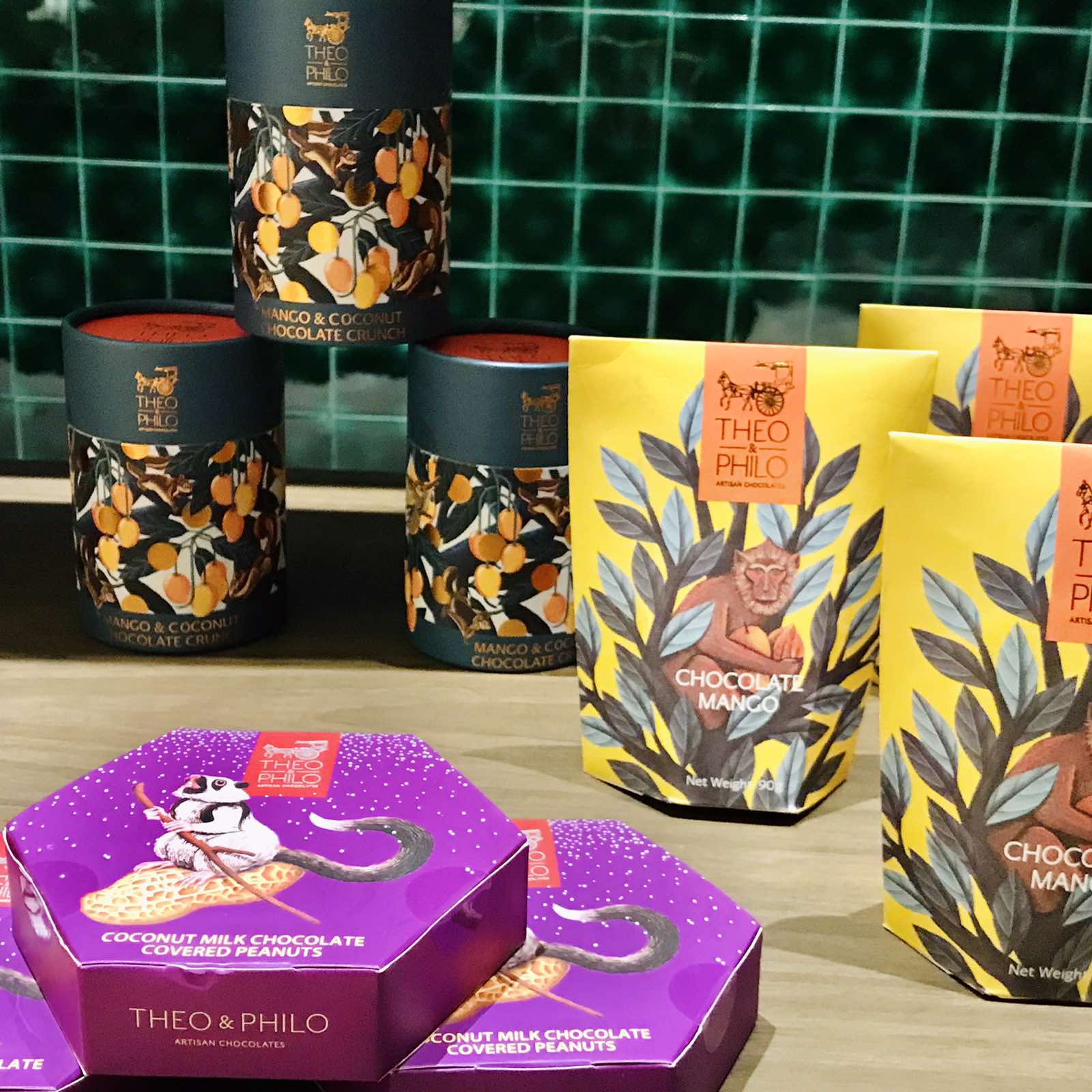
THE SHERATON Manila Hotel at the Newport Grand Wing in Resorts World Manila (RWM) has opened its first in-house souvenir shop that features all-Filipino fare. It is called the Pinas Muna Hub, and is filled to the brim with expertly crafted and locally made products, gift items, single-origin coffee, and a variety of delicacies. Located at the front and center of the hotel’s lobby, the Pinas Muna Hub is open daily from 8 a.m. to 8 p.m. The souvenir shop’s inventory includes a line of Filipino-signature Barong Tagalog and hand-woven pouches from Marikina, single-origin Hineleban Farms coffee, and award-winning Theo & Philo Artisan Chocolates among other available delicacies. For more information visit www.rwmanila.com.

Mekeni brings tocino to the US market

MEKENI Food Corp. has announced that they are bringing their tocino to the US market through Island Pacific Supermarket. Last January, Mekeni made their kikiam and fish balls available on the US West Coast also through its partnership with Island Pacific Supermarket, one of the area’s biggest Asian/Filipino supermarkets. For more information about their products, visit Mekeni’s official Facebook page at www.facebook.com/mekeniph.

FamilyMart now offers milk tea

FAMILYMART Tea Creations is the latest addition to the offerings of the Japanese convenience store brand’s local franchise, catering to the popularity of milk tea and other tea-based drinks in the country. Available in five variants, FamilyMart Tea Creations offers two types; milk tea, which comes in chocolate, wintermelon, and honeydew flavors, featuring tapioca pearls as sinkers; and fruit tea, which comes in grape and lychee flavors, and served with nata or coconut gel sinkers. Each 16 oz cup goes for P95 for the milk tea, and P80 for the fruit tea, while additional sinkers go for P18. The drinks are initially available at select stores (Udenna Tower, Market! Market!, and Science Hub in Taguig) from 10 a.m. to 8 p.m. for walk-in customers, but those in other areas can get their fix delivered via GrabFood.

Jollibee brings back JolliBots

THE ROBOT-themed Jolly Kiddie Meal toys are back. With its highly successful launch last February, Jollibee is bringing back the JolliBots starting July 16. Leading the pack is Jollibee who pops out of a Chickenjoy Bucket by retracting both arms and flipping its lid. Simply twisting and turning the upper corners of the Jolly Spaghetti box will reveal Hetty. A Jollibee Chocolate Sundae will reveal Twirlie from the robot cup — just split the ice cream portion and rotate the arms to extend the toy figure. Kids can complete the JolliBots experience with the robotized Jolly Crispy Fries and Yumburger. They have to flip the upper portions of the toys to reveal Popo and Yum, respectively. Each of the five collectible pieces are available with every purchase of a Yumburger (P82), Yumburger Meal with Drink (P102), Jolly Spaghetti (P97), Jolly Spaghetti Meal with Drink (P107), Burger Steak (P97), Burger Steak Meal with Drink (P114), Chickenjoy with rice (P129), or a Chickenjoy Meal with Drink (P144), each coming with its own Jolly Joy Box. Collectors can also get their hands on the complete set with a purchase of the six-piece Chickenjoy Bucket for P624.

How travel-friendly is the Philippine passport?

A Philippine passport holder can travel to 67 visa-free or visa-on-arrival locations out of 227 possible travel destinations. With this, it moved up three spots to 80th out of 199 passports in the third quarter release of the Henley Passport Index, which ranks passports according to the number of destinations their holders can access without prior visa. The Philippine passport tied with Cape Verde Islands and Uganda.

How travel-friendly is the Philippine passport?