Home Blog Page 6113

Live from New York: Bishop robbed of jewelry during livestreamed sermon

 – New York City police on Monday were hunting for thieves who burst into a Brooklyn church and brazenly stripped a bishop of the jewelry he was wearing while he was delivering his Sunday sermon as the service was livestreamed, officials said.

Bishop Lamor Whitehead of the Leaders of Tomorrow International Ministries was on stage when at least two men wearing dark clothing and face coverings entered the sanctuary, a video obtained by ABC affiliate WABC shows.

The thieves, who were brandishing at least one gun, can be seen walking up to the bishop, who promptly lies on ground. The robbers then appear to remove various items of jewelry from him before fleeing. It was unclear how many people were in the church at the time of the robbery.

The bishop said in a video posted on Instagram on Sunday that the robbers drove away in a White Mercedes.

New York City Mayor Eric Adams on Monday vowed to hunt down the thieves. “No one in this city should be the victim of armed robbery, let alone our faith leaders and congregants worshiping in a House of God,” Mr. Adams told the New York Daily News.

During a Facebook live on Monday, Mr. Whitehead offered a $50,000 cash reward to anyone who had information that would help the police investigation.

“Y’all don’t get to do that to my family and get away with it,” he said.

The bishop said the men took “hundred of thousands of dollars worth of jewelry.”

A spokesperson for the New York City Police Department told Reuters that the value of the jewelry taken was not immediately available.

Police said investigators are interviewing witnesses and reviewing video footage.

“My church is hurting,” Mr. Whitehead said. – Reuters

Crypto exchange Coinbase faces SEC probe over securities – Bloomberg News

Coinbase logo | https://www.coinbase.com/

The US Securities and Exchange Commission (SEC) is investigating whether Coinbase Global Inc improperly let Americans trade digital assets that should have been registered as securities, Bloomberg News reported on Monday.

In an emailed response, a Coinbase spokesperson told Reuters that the company does not list securities on its platform, while its legal head Paul Grewal said they looked forward in engaging with the SEC on the matter.

“We are confident that our rigorous diligence process — a process the SEC has already reviewed — keeps securities off our platform,” Mr. Grewal added.

The SEC‘s scrutiny has increased ever since the crypto trading platform expanded the number of tokens in which it offers trading, Bloomberg report added, citing two sources. (https://bloom.bg/3OyXrBk)

The U.S. securities regulator did not respond to Reuters’ request for a comment on the report.

The probe by the SEC‘s enforcement unit predates its investigation into an alleged insider trading scheme that was revealed last week.

In the first insider trading case involving cryptocurrency, US prosecutors had charged Ishan Wahi, a former product manager at Coinbase, for sharing confidential information about forthcoming announcements of new cryptocurrency assets that Coinbase would allow users to trade through its exchange.

In related civil charges, the SEC alleged that Mr. Wahi’s brother Nikhil Wahi and their friend Sameer Ramani purchased and sold at least 25 crypto assets for a profit, nine of which the agency identified as securities.

The SEC declined to confirm at the time whether it would pursue action against Coinbase for listing the tokens deemed securities in the complaint.

The cryptocurrency platform has previously asked the SEC to develop rules that work for digital asset securities. – Reuters

Pakistan’s digital ID card locks out millions

STOCK PHOTO | Image by Uzairmaqbool from Pixabay

 – After three years of repeated attempts to get her digital national identity card, Rubina – a woman from the Pakistani city of Karachi – decided to take her battle to court, winning a landmark victory.

Until then, Pakistanis had not been able to get the Computerized National Identity Card (CNIC) unless they presented their father’s ID card – an impossibility for many people, including those like Rubina who were raised by single mothers.

The card is vital to vote, access government benefits including public schools and healthcare, open a bank account or apply for jobs.

“I would turn up there, and be told to bring my father’s card,” said Ms. Rubina, 21.

“My mother raised me after my father abandoned us soon after my birth – how could I furnish his identity papers then?”

Ms. Rubina’s frustration drove her to file a petition at the high court in Sindh province, which in November ruled that the government agency that oversees the CNIC must issue her a card based on her mother’s citizenship record.

For Ms. Rubina, the decision meant she could apply to take over her mother’s job as an attendant in the state education department when her mother retired.

More widely, her case ends the effective exclusion of children of single mothers from the ID card scheme, said Haris Khaleeq, secretary-general of the Human Rights Commission of Pakistan (HRCP), a nonprofit.

“Without a CNIC, neither can any public service be accessed, nor can any banking transaction be conducted,” he told the Thomson Reuters Foundation.

“In short, one has no rights at all as a citizen.”

The agency in charge of the CNIC, the National Database and Registration Authority (NADRA), has said it is striving to reach people who have so far been excluded.

“The government has a clear policy that people who are supposed to be registered in the database will not be excluded,” said Salman Sufi, head of the prime minister’s Strategic Reforms Unit, which oversees the implementation of federal policy.


‘LIKE ALIENS’

Established in 2000, NADRA maintains the nation’s biometric database, and says it has issued some 120 million CNICs to 96% of adults in the nation of about 212 million people.

Each card comprises a 13-digit unique ID, a photograph of the person, their signature, and a microchip that contains their iris scans and fingerprints.

Yet millions of people in Pakistan, including women, transgender people, migrant workers and nomadic communities are still without a CNIC.

More than 1 billion people globally have no way of proving their identity, according to the World Bank.

While governments across the world are adopting digital ID systems they say are improving governance, the U.N. special rapporteur on human rights has said they exclude marginalized groups, and should not be a prerequisite for accessing social protection schemes.

A study of migrant workers in Karachi by HRCP last year showed that women were more likely not to have a CNIC, putting them at risk of destitution if their husband died or left the family.

Children whose parents are not registered are especially vulnerable, as they cannot get birth certificates, and are at greater risk of trafficking and forced labor, HRCP said.

It has recommended more mobile registration units and female staff to help register vulnerable groups, as well as simpler processes and less stringent documentation requirements, which also make it harder for immigrants to apply.

Only half of some 2.8 million Afghan refugees who have lived in Pakistan for decades are registered with the government. There is also a sizable population of unregistered Bengali, Nepali, and Rohingya immigrants in Pakistan.

“A majority of the Bengali-origin Pakistanis do not have CNICs and are living like aliens and illegal migrants in their own country,” Sheikh Feroz, a community leader, told a recent rally to demand CNICs.

NADRA – which has also helped set up digital ID systems in Bangladesh, Kenya and Nigeria – has said it has a dedicated registration department “especially for women, minorities, transgender and unregistered persons”.

The agency said it had several women-only centers, particularly in border provinces, “to overcome the socio-cultural barriers of women hesitating to deal with male staff”, and prioritizes senior citizens and the disabled.

Everyone will be provided an opportunity to get registered. No group based on their ethnicity, race or religion will be excluded,” said Sufi, from the Strategic Reforms Unit.


DATA THEFT

For those who have a CNIC, privacy violations are a risk.

The CNIC database is accessed by about 300 public and private service providers, from the tax department to the election commission to mobile service providers.

There have been several data breaches, which points to inadequate security, said Nighat Dad, a lawyer and executive director at the Digital Rights Foundation, a nonprofit.

“Women often complain of harassment after their personal information is leaked and is weaponized to blackmail them,” she said.

“Since there is no data protection law, there is no accountability even when personal data such as phone numbers are leaked,” she added.

Data breaches that expose personal data are particularly risky for vulnerable groups such as journalists, activists and religious and ethnic minorities, said Haroon Baloch, senior program manager at Bytes for All, a digital rights group.

“Citizens are not aware of the use of their biometric data,” he said. “The personal data attached with the biometric IDs can be misused, with serious privacy implications not just for the individual, but also their family.”

NADRA officials have rejected accusations that the data has been compromised, saying the database has a multi-layer security system “which makes hacking impossible”.

The government will roll out a data privacy policy “very soon”, said Sufi, with adequate safeguards for data protection, and “punishment in case of breach of privacy or data theft.”

For Ms. Rubina, who could not even get a COVID-19 vaccine without a CNIC, simply getting the ID is half the battle won.

“I am happy that others will not suffer like me,” she said. – Reuters

Walmart ‘train wreck’ profit warning sends shares down 10%

CORPORATE.WALMART.COM

 – Top US retailer Walmart Inc on Monday slashed its profit forecast as surging prices for food and fuel prompted customers to cut back on discretionary purchases, and its shares slid 10% in trading after the bell.

Shares of rivals including Target and Amazon.com also tanked after Walmart‘s warning, which signaled a “proverbial train wreck” for retailers, Burt Flickinger, managing director at Strategic Resource Group, said.

Walmart, a bellwether for the retail sector that caters to cost-conscious shoppers, said its full-year profit would decline 11% to 13%, compared to the 1% fall it previously forecast. It pledged to cut prices of clothing and general merchandise more aggressively than it did in May to reduce a spring backlog.

Excluding divestitures, full-year earnings per share are expected to drop 10% to 12%, the company said.

Neil Saunders, managing director of retail at GlobalData, called the warning a “cause for concern” for Walmart that highlighted the pressure on all retailers.

With prices for gasoline and food spiking, consumers are no longer clamoring for apparel, home goods, appliances and kitchenware, saddling retailers with mountains of inventory.

Inventories at general merchandise stores at the end of April were the highest since at least 2000, US Census Bureau data showed. Read full story

Supply-chain snafus and miscalculations around demand have added to problems. In May, Walmart said it was sitting on over $60 billion of inventory at the end of the first quarter and promised “aggressive” price cuts on items such as apparel. Read full story

On Monday, the company said it needed more price cuts to pare inventories.

Walmart is a lot more susceptible to the lower-income customer, and that lower-income customer is the one that is suffering the most under the higher inflation levels,” Edward Jones analyst Brian Yarbrough said.

In late May and June, Walmart‘s smaller rival Target trimmed its profit forecast twice in several weeks, announcing it was struggling with $15 billion in inventories and saying it would resort to “necessary” actions including cutting prices and canceling orders.

Both Walmart and Target are squeezing some suppliers to absorb higher costs. Read full story

“The increasing levels of food and fuel inflation are affecting how customers spend. … We’re now anticipating more pressure on general merchandise in the back half,” Doug McMillon, Walmart‘s chief executive, said in the statement on Monday.

Evidence of a consumer spending pullback is growing, and an update later this week on US economic growth may show output shrank in the April to June period for the second quarter in a row.

The US Federal Reserve, intent on curbing the fastest inflation in 40 years, is raising interest rates in part to curb spending across the economy.

Walmart on Monday said it now estimates adjusted earnings per share for the second quarter to decline around 8% to 9%, compared its previous outlook of flat to slightly up.

Walmarthowever, raised its forecast for growth in US comparable sales, excluding fuel, to 6%, mainly to account for the rise in food prices. It previously forecast growth of 4% to 5%. – Reuters

Philippine gambling revenue seen at pre-pandemic levels by 2026

REUTERS

MANILA – The Philippine gaming industry’s revenue is expected to recover to its pre-pandemic position by 2026 or even overtake this level, as player confidence slowly returns to the sector, a senior regulatory official said on Tuesday.

“Definitely there will be no more lockdowns but bringing back the confidence of players is hard,” Daniel Cecilio, licensing and regulatory group chief of state-run regulator Philippine Amusement and Gaming Corp, told Reuters.

The Southeast Asian country’s gross gaming revenues (GGR), the amount players wager minus winnings, hit a record P256 billion ($4.60 billion) in 2019, but casino operations were then halted by COVID-19 lockdowns, slashing revenue to around P100 billion in 2020.

Revenue picked up to P113 billion in 2021 and P39 billion in the first quarter of 2022, data from the gaming regulator showed.

By 2026, GGR might reach P256 billion or better, with land-based casinos seen contributing P146 billion, Cecilio said.

The regulator’s projection mirrors the recovery path of neighboring gambling hubs like Singapore and Macau, which is reeling from Beijing’s strict zero-COVID strategy.

The freewheeling Philippine gaming industry has attracted foreign and domestic companies to set up integrated casino-resorts, creating tens of thousands of jobs in the past decade.

In coming years, the sector’s recovery would be driven by pent-up demand and a return of confidence among domestic and foreign gamblers, Cecilio said.

There are 51 land-based casinos in the Philippines, including 38 operated by the gaming regulator and the rest privately owned, attracting high rollers from countries like China, Japan and South Korea.

Newport World Resorts, which owns the country’s first integrated casino-resort, expects its operations to return to pre-pandemic levels by 2023, faster than the broader industry.

“We are expanding our gaming areas to absorb junket groups that are coming,” Sandy Amida, senior director for gaming operations at Newport World Resorts in Manila, told Reuters. — Reuters

AIA Philippines offers same-sex beneficiary inclusion

The future is uncertain, and one must be prepared for anything. To make protection more inclusive, the country’s premier life insurance company, AIA Philippines, allows customers to enlist their same-sex partners as beneficiaries, as aligned with the Insurance Commission’s position on the matter.

With this update, AIA Philippines customers can enlist their partners as beneficiaries of their existing and future policies, regardless of their marital status. If the customer and beneficiary are married, they would need to submit a marriage certificate or other proof of marriage to be enlisted as a policy beneficiary.

“Everyone should have the means to protect their loved ones from life’s many risks, and expressing love and responsibility to those we care about should not be limited by how we identify as people. Our promise of helping people live Healthier, Longer, Better Lives is for all,” Kelvin Ang, AIA Philippines CEO said. “With these adjustments in place, our LGBTQ+ customers can protect their loved ones through AIA Philippines’ innovative offerings.”

If the couple is not yet married, same-sex partners may still be approved as beneficiaries if declared together with family members. Those who wish their partners to be sole beneficiaries may still be allowed on a case-to-case basis, requiring documents that show proof of their relationship. Customers may inquire with their AIA Philippines financial advisor for more details.

This inclusion pertains to active policies and products to be procured by customers in the future. Hence, whether you’re a current AIA PH customer or if you’re looking to invest in the future, you can enlist your same-sex partner as a beneficiary upon submission of the requirements. With this update, protection from life’s many uncertainties is no longer limited to heterosexual partners.

This update is in line with the Insurance Commission’s affirmation that any individual, regardless of gender identity, may designate any individual as a beneficiary, subject only to certain exceptions under the Civil Code.

Life is unpredictable, and no one knows what tomorrow may bring. And AIA Philippines is committed to ensuring that a healthier, longer and better life is available to all its customers no matter what.

Click here for more information about AIA Philippines, or here to visit the AIA Philippines Facebook page, email customerservice.ph@aia.com or call (02) 8528-2000 to know more.


Spotlight is BusinessWorld’s sponsored section that allows advertisers to amplify their brand and connect with BusinessWorld’s audience by enabling them to publish their stories directly on the BusinessWorld Web site. For more information, send an email to online@bworldonline.com.

Join us on Viber to get more updates from BusinessWorld: https://bit.ly/3hv6bLA.

BSP chief: Ready for adjustments, policy supportive of growth

REUTERS

MANILA – The Philippine central bank stands ready for further policy adjustments and its current monetary settings remain supportive of economic growth, Governor Felipe Medalla said on Tuesday.

Medalla, speaking at a forum on President Ferdinand Marcos Jr’s policy agenda, also said the domestic economy can absorb increases in policy interest rate. — Reuters

Cybersecurity leaders discuss data security in the 3rd ISOG I AM SECURE Metaverse Forum 2022

The Information Security Officers Group (ISOG), the leading information security professional organization in the Philippines, held the 3rd installment of its virtual “METAVERSE I AM SECURE” forum series on July 21. With the theme Traversing Beyond the Realm of Cyberspace, the forum focused on how information security professionals can prepare the privacy and security strategies as the industry pivots to the Metaverse.

ISOG President and Land Bank of the Philippines Chief Information Technology Security Officer Archie Tolentino encouraged colleagues in the industry to work together in exploring how to maximize the full potential of the Metaverse without putting users’ security at risk. “Our theme — traversing beyond cyberspace — encapsulates our goal of pursuing and promoting cybersecurity all while navigating the endless possibilities for digital transformation.”

The gathering of more than 500 local and international decision-makers, C-level executives, and cybersecurity experts was graced with the presence of National Privacy Commission Executive Director Atty. Ivin Ronald D.M. Alzona, the forum’s keynote speaker. Likewise, forum participants learned from the views and experiences of the guest speaker, Government Service and Insurance System, Chief Information Security Officer and Data Protection Officer, Jonathan Pineda.

Other experts who imparted their knowledge and experiences during the forum were Biswajit De, TREND MICRO Technical Manager for Southeast Asia; Ng Tock Hiong, VMWare Director for Specialist Solution Engineering, Networking & Security, Southeast Asia & Korea; Daniel Kwong, FORTINET Field Chief Information Security Officer Southeast Asia & Hong Kong Region; Chris Thomas, EXTRAHOP Senior Security Advisor; Steve Ledzian, MANDIANT Vice-President and Chief Technology Officer, Asia Pacific; and Yiftach Keshet, SILVERFORT Product Marketing Lead.

Hacktivism in the Metaverse and reimaganing its consumer impact, these were raised during, panel discussion, which allowed the panelist to present their insights on the challenges of the new technology, and engaged several questions from industry experts via the chat section of the virtual event. The panel discussion was moderated by SQrity Consulting Chief Executive Officer and President Ricson Singson Que and Pineda Cybersecurity President and Principal Consultant Justin Pineda.

“With the dawn of the Metaverse upon us, the principles of privacy and digital safety should be built in from the start. If we are guided by these overarching principles, then we will be better in discussing new challenges with these technologies as they come along,” said Chito Jacinto, ISOG Vice-President, and Forum Chairman.

Organized by XMS, the Metaverse 2022 Forum Series is one of the cybersecurity awareness programs of ISOG in partnership with Banko Sentral ng Pilipinas, Bankers Association of the Philippines, National Privacy Commission, and the Department of Information and Communications Technology. Media partners for this event are the Philippine Daily Inquirer, BusinessWorld, DIGI.PH, and Backend News.

The last leg of the ISOG Metaverse forum series will be held virtually on Sept. 1.

Since 2015, ISOG has been organizing programs and events to strengthen cybersecurity awareness and secure network infrastructure in the Philippines. For more details about ISOG and its campaigns, visit ISOG’s official website at www.isog-org.ph and socials at LinkedIn: ISOG (Information Security Officers Group), Facebook: ISOGPH, YouTube Channel: ISOG SUMMIT.


Spotlight is BusinessWorld’s sponsored section that allows advertisers to amplify their brand and connect with BusinessWorld’s audience by enabling them to publish their stories directly on the BusinessWorld Web site. For more information, send an email to online@bworldonline.com.

Join us on Viber to get more updates from BusinessWorld: https://bit.ly/3hv6bLA.

SM Supermalls welcomes you into a new era of change

The honest truth: No one came out of the COVID-19 pandemic in quite the same way. The pandemic was an isolating period of self-discovery, emotional growth, and life-altering realizations. It changed people, and in the process, it shaped the way so many of us view ourselves and the world around us.

Because of this, consumer tastes and behaviors have shifted. Where in a pre-pandemic world, people often spent on luxuries and experiences that allowed them to celebrate their accomplishments, studies show that consumers now want a different experience, one that is kinder and more embracing of the changes that each individual had gone through in the past 2 years. People are now prioritizing their personal wellness and supporting products and services that champion growth.

As consumer tastes have shifted, brands are starting to adapt to these changes. And true to its foundational commitment to make people happy, SM is ready with a host of new offerings as the entire brand is poised for a refresh this year.

“The history of SM Supermalls is one that has been built on innovation and change to serve the needs of millions of Filipinos,” says SM Supermalls President, Steven Tan. “We’ve been with our customers through their every milestone for almost four decades. And we are committed to always changing, always growing with our customers in the years and decades to come.”

SM Supermalls: Welcoming Every Change in You

SM continues to stay true to its mission to provide Filipino families with a fun and engaging in-mall experience so they can go home with a smile on their faces.


There will always be a plethora of experiences for each person who comes through SM’s doors. This is true for the various personalities that emerged during the pandemic; from eco-warriors and Plantitas to health buffs and sports personalities who embraced biking, healthy eating, and home gyms, and bakers and homemakers who turned their passion projects into small businesses.

“I believe that now more than ever, it is important to recognize the new changes to our world,” adds SM Supermalls President Steven Tan. “And people are continuing to grow as they invest in experiences that uplift their lives.”

Ushering the Future with the Transformation of SM Supermalls

In the next few months, Filipinos across Luzon, Visayas and Mindanao will get to experience the wellness-oriented and sustainability-driven transformation of SM Supermalls with a host of new and exciting activities. These include paw parks for pet moms and dads, al fresco dining areas for hangout groups, plant hubs for eco-enthusiasts, bike facilities for the growing cycling community, co-working spaces, experiential retail, blockbuster and larger-than-life cinema escapades and so much more.


As SM’s brand refresh campaign ushers in a newness to the Philippine mall experience, curious visitors, foodies, friends and families will have much to rediscover. So come on in, you’re always welcome here!

For more information, follow SM Supermalls on Facebook: https://www.facebook.com/smsupermalls to experience what’s new in any SM Supermall near you today!


Spotlight is BusinessWorld’s sponsored section that allows advertisers to amplify their brand and connect with BusinessWorld’s audience by enabling them to publish their stories directly on the BusinessWorld Web site. For more information, send an email to online@bworldonline.com.

Join us on Viber to get more updates from BusinessWorld: https://bit.ly/3hv6bLA.

Marcos vows tax system overhaul

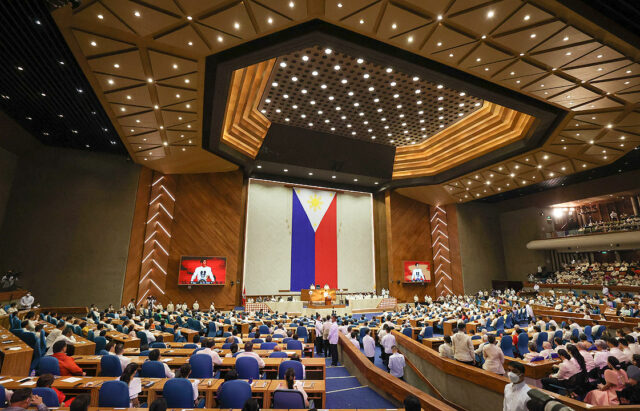
PRESIDENT FERDINAND R. MARCOS JR. delivered his first State of the Nation Address during the joint session of the 19th Congress at the Batasan complex in Quezon City, July 25. — PHILIPPINE STAR/KRIZ JOHN ROSALES

By Kyle Aristophere T. Atienza, Reporter

PHILIPPINE PRESIDENT Ferdinand R. Marcos, Jr. on Monday vowed to overhaul the tax system and unveiled a 19-point legislative agenda designed to spur growth and make the Philippines an investment destination, as the economy recovers from the coronavirus disease 2019 (COVID-19) pandemic.

Mr. Marcos began his first State of the Nation Address (SONA) with a promise to implement sound fiscal management and tax administration reforms to boost revenue collections.

“Our tax system will be adjusted in order to catch up with the rapid development of the digital economy,” Mr. Marcos told Congress on Monday, proposing a value-added tax on digital services, which would generate P11.7 billion in revenues if implemented in 2023.

The Marcos administration is targeting 6.5-7.5% gross domestic product (GDP) growth this year, and 6.5-8% GDP expansion through 2028.

Mr. Marcos pledged to bring down the poverty rate to 9% by the end of his term in 2028, and the National Government deficit-to-GDP ratio to 3%. The government also aimed to lower the debt-to-GDP ratio to less than 60% by 2025, and to attain upper middle-income status by 2024.

The President said the administration’s expenditure priorities will be realigned and spending efficiency will be improved to address the scarring effect of the pandemic and prepare the country for future shocks.

“Our country must become an investment destination,” he added.

LEGISLATIVE PRIORITY
Mr. Marcos identified 19 priority legislative measures, which included National Government rightsizing, budget modernization, and the last two remaining tax reform packages of the Duterte administration — the Real Property Valuation and Assessment Reform Act and Passive Income and Financial Intermediary Taxation Act.

The tax reform packages were approved by the House of Representatives during the 18th Congress, but failed to hurdle the Senate.

Like his predecessor, Mr. Marcos is also pushing for the passage of the proposed Government Financial Institutions Unified Initiatives to Distressed Enterprises for Economic Recovery (GUIDE) Act and the E-Government Act, which seeks to digitize the bureaucracy.

He urged Congress to approve bills creating the Virology Institute of the Philippines and the Department of Water Resources, calling for the  “ethical” planning of the country’s land and water resources.

As part of his thrust to pursue public-private partnerships, Mr. Marcos is pushing for amendments to the Build-Operate-Transfer Law.

Mr. Marcos said his administration would push for an enabling law for the natural gas industry and amendments to the Electric Power Industry Reform Act (EPIRA), which led to the privatization of the country’s energy industry.

The Philippine leader, who has pledged to facilitate a shift to renewables, also signaled his intent to review nuclear power — a plan that his late father and former president Ferdinand E. Marcos, Sr. started in the 1970s.

He also promised to accelerate infrastructure projects, such as airports and railways, and to go after firms that damage the environment.

Mr. Marcos proposed the establishment of a medical reserve corps and National Disease Prevention Management Authority, a Unified Military and Uniformed Services Personnel Separation, Retirement, and Pension Act; a National Defense Act, and a bill that would reinstate the mandatory Reserve Officers’ Training Corps.

AGRICULTURE
Mr. Marcos, who also heads the Agriculture department, bared his plans to revive the agriculture sector and to continue agrarian reform programs.

He promised to sign an executive order imposing a one-year moratorium on payment of land amortization and interest payments, which he said will help farmers increase their output.

Mr. Marcos also asked Congress to pass a law condoning P58.1 billion worth of loans of some 654,000 agrarian reform beneficiaries.

“Agrarian reform beneficiaries who are still to receive their awarded land under the comprehensive agrarian reform program shall receive it without any obligation to pay any amortization,” he said.

The President also pledged to distribute unused agricultural lands of the government to landless war veterans and their surviving families, retired military and police personnel, and college graduates with agriculture degrees.

“The call of the times is for the infusion of fresh and new blood in the agricultural sector. We need a new breed of farmers equipped with modern agricultural technology able to engage in sustained scientific farming that will not only increase farm yields, but also resilience in the face of climate change,” Mr. Marcos said.

ECONOMIC RECOVERY
“We will endure. Let our Filipino spirit ever remain undimmed,” Mr. Marcos said as he capped his speech that lasted over an hour. “The state of the nation is sound.”

Michael Henry Ll. Yusingco, a policy analyst, said it is now clear the focus of the new administration is economic recovery.

“The President has offered policy details this time around as well as a detailed plan. We also have a list of priority legislations,” he said in a Messenger chat. “As analysts, we now have something to work with, meaning something concrete to study.”

Leonardo A. Lanzona, who teaches economics at the Ateneo de Manila University, said the SONA seemed to focus on technological change and institutional reform, which are needed but are long term in nature.

Mr. Marcos also fell short of discussing the issues confronting the education sector, which needs to be prioritized amid the eroding quality of the labor force, Mr. Lanzona said.

In his SONA, Mr. Marcos vowed to protect the country’s territories but did not send a strong message against China’s aggression in Philippine-claimed areas in the South China Sea.  He also insisted his administration will have an independent foreign policy.

“I will not preside over any process that will abandon even one square inch of territory of the Republic of the Philippines to any foreign power,” he said.

As the pandemic continues, Mr. Marcos also vowed to build more health centers and hospitals across the country.

“I’m impressed that the President promised to overhaul the healthcare system. This was happily welcomed by the lawmakers in attendance, so there is reason to believe that they will work on this vigorously,” Mr. Yusingco said.

Hansley A. Juliano, a political economy researcher studying at Nagoya University’s Graduate School of International Development in Japan, said the SONA reflects the “technocratic agenda of the business allies of Marcos and his economic architects.”

“He acknowledges the economic issues faced by the country but for very understandable reasons, he is keeping the business-as-usual, macro-oriented projections over direct impact on people’s lives,” he added.

Mr. Juliano said contentious issues, including labor and indigenous peoples’ rights, will “once again be sidelined if not flat out ignored altogether in the governance.”

The President, despite his promise to improve the lives of Filipinos, did not touch on his human rights agenda, which experts said is necessary amid the shrinking space for civil societies.

“There is no mention of contentious areas such as political reforms, corruption, and human rights,” Arjan P. Aguirre, who teaches political science at the Ateneo de Manila University, said in a Messenger chat.


Business groups welcome Marcos’ economic promises, online VAT

PHILIPPINE STAR/KRIZ JOHN ROSALES

By Revin Mikhael D. Ochave, Reporter

LOCAL BUSINESS GROUPS welcomed President Ferdinand R. Marcos, Jr.’s plans for economic recovery, as well as the proposed legislative measures that include the imposition of a value-added tax (VAT) on digital transactions.

“We are glad his proposal to tax online transactions which will put online merchants on equal footing with in-store retailers on tax burdens. Big opportunity for new government revenue source and will level the playing field with traditional retailers,” Roberto S. Claudio, Philippine Retailers Association (PRA) vice-chairman, told BusinessWorld via mobile phone message.

In his first State of the Nation Address, Mr. Marcos pushed for a VAT on digital services, which he said would initially generate P11.7 billion in revenues if implemented in 2023.

British Chamber of Commerce Philippines Executive Director Chris Nelson said in a mobile phone interview that they are “very satisfied” with the plans of Mr. Marcos, adding this is a “good start.”

He said they welcomed Mr. Marcos’ pronouncement that there will be no further lockdowns to curb the coronavirus disease 2019 (COVID-19) infections.

“I think it is very good to hear that there will be no further lockdowns. It’s clear that those lockdowns had a significant impact on the economy. It’s good to hear that,” Mr. Nelson said.

Jose Maria A. Concepcion III, Go Negosyo founder and member of Mr. Marcos’ Private Sector Advisory Council, said in a Viber message that the private sector will be able to recover from the pandemic if there are no more lockdowns, which have disrupted business activity.

“We are grateful to President Marcos for his assurance that there will be no more lockdowns that will be imposed in the country. This is what the private sector and MSMEs need as it will allow for full recovery from the pandemic,” Mr. Concepcion said.   

The government’s implementation of a strict and prolonged lockdown to curb COVID-19 infections has been blamed for the Philippine economy’s record 9.6% contraction in 2020.

Makati Business Club (MBC) Executive Director Francisco “Coco” Alcuaz, Jr. said in a Viber message that the plans of Mr. Marcos for the agriculture sector are most welcome and long overdue.   

“Boosting loans, affordable inputs, and research and development will help end the plight of our disadvantaged farmers and fisherfolk,” Mr. Alcuaz said.   

Meanwhile, Tourism Congress of the Philippines (TCP) President Jose C. Clemente III expressed support for Mr. Marcos’ plan to build additional international airports.

“We support this statement and we do hope that with the plan to create and upgrade airports more effort and resources can be given to entice more international carriers to fly in while also making conditions more favorable for our country’s carriers to mount more flights,” Mr. Clemente said in a text message.

PHL below Asia-Pacific average in tax revenues

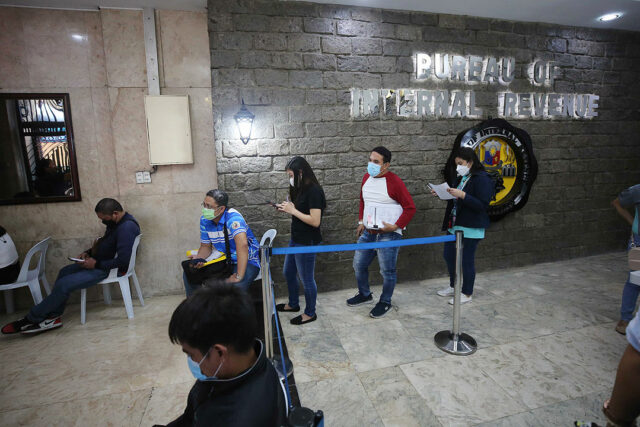
People line up to file their income tax returns at the Bureau of Internal Revenue office in Intramuros, Manila, April 18, 2022. — PHILIPPINE STAR/ RUSSELL A. PALMA

THE PHILIPPINES’ tax effort eased in 2020 due to the coronavirus disease 2019 (COVID-19) lockdowns, falling below the Asia-Pacific average, a study showed. 

The Philippines’ tax-to-gross domestic product (GDP) ratio stood at 17.8% in 2020, slightly lower than the 18.1% recorded in 2019, according to the Organisation for Economic Co-operation and Development (OECD) in a report released on Monday. 

The Philippines’ tax-to-GDP ratio was the fourth highest among eight Southeast Asian economies. 

Philippines’ tax effort eased in 2020

However, it was below the Asia-Pacific regional average of 19.1% in 2020, which was skewed by the above-average ratios of 12 of the 28 economies involved in the study. This includes Japan (31.4% in 2019), South Korea (28%), Vietnam (22.7%), Mongolia (21.2%), Cambodia (20.2%), and China (20.1%).

Taxes on goods and services were the main source of tax revenue in the Philippines, representing 7.3% of GDP, or 40.8% of the total taxes in 2020. This declined from 7.7% of GDP and 42.5% of the total logged in 2019 or before the COVID-19 pandemic.

Taxes on goods and services included contributions from value-added tax (VAT), which accounted for 21.1% of the total or 3.8% of GDP. This was also lower than the 23.6% of the total or 4.3% of GDP recorded the previous year.

The Philippines’ lower tax-to-GDP ratio can be attributed to the slowdown in economic activity as the government imposed among the longest and strictest lockdowns in the world to curb COVID-19 infections in 2020.

In 2020, the Philippine economy shrank by a record 9.6%.

In the Asia-Pacific region, revenues from taxes on goods and services also decreased in 20 other economies, but were still the top source of tax revenues in 2020, amounting to 50.6% of the total. The share of VAT was at 23.1%.

Meanwhile, tax revenues for income and profits in the Philippines was 6.4% of GDP in 2020, or 36.1% of total taxation. There were minimal increases from 2019, when it was also at 6.4% of GDP and 35.7% of the total then.

In 2020, corporate income tax revenue declined by 9.77% in the Philippines, while personal income tax revenue also fell by 6.3%.

The decline in corporate income tax collection was partly due to the approval of the Corporate Recovery and Tax Incentives for Enterprises (CREATE) Act, which lowered the corporate income tax rate from 30% to 25% to attract more investments and help companies weather the crisis.

In the Asia-Pacific region, corporate income tax accounted for 18.8% and personal income tax for 16% in 2020.

Tax revenues collected by the Philippine National Government accounted for 78.3% of the total in 2020, lower than the 80.6% in 2015. Local government units accounted for 5.9% of the total, while 15.7% came from social security contributions.

“Local governments in the Philippines have a narrow range of taxes under their jurisdiction, relying on property taxes and taxes on income and profits,” the OECD said.

The Philippines was also among six countries that sourced more than 15% of total tax revenues from social security contributions, accounting for 2.8% of GDP.

In Asia, social security contributions only had minimal contributions to total tax revenues at 6.3%.

In the Philippines, nontax revenue was at 2.3% of GDP in 2020, among the lowest in the Asia-Pacific region. This is despite 58% of nontax revenues coming from property-related income, the fifth highest among the 19 economies with available data.

The rest of nontax revenues in the Philippines were credited to miscellaneous and unidentified revenue (27.8%), sales of goods and services (14.1%), and grants (0.1%).

Revenues from taxes on property represented only 0.5% of GDP or 2.7% of total contributions.

In the region, property income accounted for over 30% of total nontax revenue in more than half the economies with available data.

Interestingly, the Philippines had among the highest revenues from environmentally related taxes in 2020 at 1% of GDP. About a third of these taxes were raised via taxes on energy. — Diego Gabriel C. Robles

ADVERTISEMENT
ADVERTISEMENT