Home Blog Page 602

Federal Reserve’s internal split puts spotlight on Powell’s rate guidance, dissents at meeting

A sign for the Federal Reserve Board of Governors is seen at the entrance to the William McChesney Martin Jr. building in Washington, D.C. — REUTERS

NEW YORK — The US Federal Reserve meeting this week is expected to be one of its most contentious in years, and investors are focused on how divided policymakers are over an expected interest rate cut and what Chair Jerome H. Powell signals about the path ahead.

Five of the 12 voting members of the Federal Open Market Committee (FOMC) have voiced opposition or skepticism about further easing, while three members of the Washington-based Board of Governors favor a cut.

The FOMC has not had three or more dissents at a meeting since 2019, and that has happened just nine times since 1990.

That split puts the dissents under a microscope as investors look for signals at the Tuesday-Wednesday meeting on the Fed’s policy direction and internal dynamics.

“The Fed seems to be more divided than it has been in a very, very long time, and just how divided will be of interest because that will give some sense of perhaps where the Fed might lean in the future,” said Michael Rosen, chief investment officer at Angeles Investments.

Mr. Rosen added that the uncertainty stems from the Fed’s challenge of balancing its twin goals of full employment and stable inflation.

Inflation, as measured by the personal consumption expenditures price index, met expectations on Friday, while US consumer sentiment improved in December. The reports didn’t change expectations for a cut this week.

Economic data on Thursday showed jobless claims fell to the lowest in more than three years, easing fears of a sharp labor market deterioration and feeding rate cut expectations. A Chicago Fed estimate suggested the unemployment rate held near 4.4% in November.

Markets are pricing in an 84% chance of a quarter-point cut at this week’s meeting, LSEG data show.

The Fed last lowered the policy rate on Oct. 29, to a range of 3.75%-4% from 4%-4.25%, the second consecutive 25-basis-point cut this year.

Mr. Powell later jolted markets when he said the likelihood of a cut in December was “not a foregone conclusion.” Stocks reversed gains after that comment, as many investors had priced a rate cut as a done deal.

With the Dow and S&P 500 each rising roughly two-tenths of a percent and the Nasdaq adding three-tenths of a percent.

Jeremiah Buckley, an equities portfolio manager at Janus Henderson, said the December meeting does not matter much for markets in the long term. “Certainly, there could be some short-term volatility, but what they do over the first half of 2026, I think, matters more than December,” he added.

Wall Street’s benchmark S&P 500 index has risen 16.6% so far this year. Tony Roth, CIO, Wilmington Trust, does not expect stocks to move much if the Fed delivers a cut.

“The Fed move is really baked in at this point. It’s really going to be just about the Fed guidance,” Mr. Roth said. “And I think they’re going to be pretty cautious. They’re going to talk about being data dependent.”

Complicating the Fed’s deliberations is a backlog of economic data. The 43-day government shutdown, the longest in history, delayed the November employment print until Dec. 16, after policymakers meet. The unemployment rate for October will remain unknown as the shutdown prevented the collection of data for the household survey used to calculate it.

Although somewhat dated, the Job Openings and Labor Turnover Survey data, due Dec. 9, would give markets a glimpse into October’s labor trends — especially layoffs — amid the current low-hiring, low-firing environment.

Some observers don’t believe the odds of a cut are as high as the markets imply, and are more interested in Mr. Powell’s statements and how close the policy vote is.

“We don’t think that anything is definite yet,” said David Seif, chief economist for developed markets at Nomura. “So, I definitely think the market is underpricing the risk that the Fed chooses not to cut at the December meeting.”

Mr. Seif said what would be interesting “particularly in the case of a cut, is how much dissent there is.” With four regional presidents rotating off, their stance will reveal how much independence they intend to assert and the pressure they’ll put on the Fed.

“Because it really signals not just what they’re willing to do against Chair Powell, but what they’re willing to do against Powell’s successor as chair. We’re really trying to figure out how much the model at the Fed is changing into a much simpler situation with one person, one vote.” — Reuters

Spain looking into possible lab leak angle after outbreak of swine fever

REUTERS

MADRID/BARCELONA, Spain  — The Catalonia regional government said it will investigate a research center outside Barcelona after Spain’s

Agriculture Ministry announced that recent swine fever outbreak could have been caused by a laboratory leak.

Spain, the European Union’s (EU) top pork producer, is trying to reassure trading partners after 13 wild boars tested positive for the virus in hills outside the city. The disease is harmless to humans but can be deadly for pigs and wild boars.

Genome sequencing by a Madrid lab showed the strain was “very similar” to one first detected in Georgia in 2007 and now widely used in research and vaccine development, the ministry said. Other cases in Europe belong to a different genetic group.

“The discovery of a virus similar to the one that circulated in Georgia therefore does not rule out the possibility that its origin may lie in a biological containment facility,” the Agriculture Ministry said.

Until now, Catalan officials suspected the virus had spread after a wild boar ate contaminated food, possibly a sandwich brought from abroad by a truck driver.

“The report suggests that it is possible that the origin of the virus is not in animals or animal products from any of the countries where the infection is currently present,” the ministry said.

It did not name any laboratories in its statement. But

Catalonia’s top agriculture official, Oscar Ordeig, said the regional government will open an investigation of the state-funded Center for Research in Animal Health (Cresa).

The center is located next to the Autonomous University of Barcelona and within the six-kilometer confinement area imposed by authorities after the outbreak. Mr. Ordeig said other laboratories could also be investigated.

The World Organization of Animal Health in 2017 designated Cresa as a research center into swine fevers.

The laboratory did not immediately respond to a request for comment but it told the news verification website Maldita.es it had found no evidence of being the source of the outbreak.

The “Georgia 2007” strain of swine fever spread to Armenia, Azerbaijan, Russia and Belarus and reached eastern EU states in 2014, according to the Organisation for Economic Cooperation and Development.

It reached China in 2018, causing huge losses. Chinese pig meat production dropped by 27% in 2019. — Reuters

Getting bZ for carbon neutrality

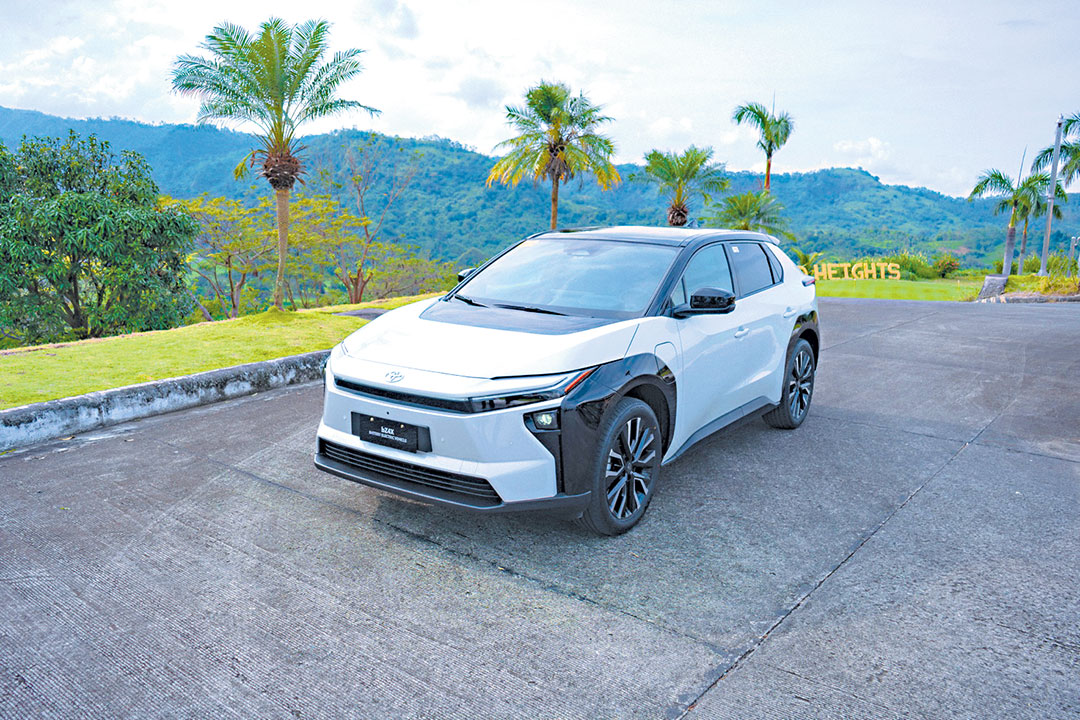
The Toyota bZ4X starts at a price of P2.699 million. In photo is the Platinum White Pearl Mica, P2.714 million. — PHOTO BY KAP MACEDA AGUILA

Toyota PHL enters full-electric segment

TO BE COMPLETELY honest, the battery electric vehicle party has been steadily growing in scale and volume in the country — particularly over the last years — with a “guest list” that includes legacy brands from Europe and the US, along with up-and-comers from China.

Even as the government’s imprimatur and encouragement has hastened consumer acceptance of the segment through policies and legislation like the EVIDA (Electric Vehicle Industry Development Act), there remain gaps (primarily in charging infrastructure) that have admittedly left some buyers at the doorway — unsure about entering the battery electric vehicle (BEV) space.

What cannot be ignored though is the pressing, very real issue of climate change. We’ve seen and felt the increasing intensity of typhoons and the resulting floods resulting from unmitigated air pollution — caused in no small part by the burning of fossil fuels (and, sadly, iffy or absent flood control projects). That means there is a pressing need to put a stop or at least curtail carbon emissions from traditional internal combustion engines. Enter the electrified vehicle — touted to be the savior and fullest expression of sustainable mobility. But Toyota’s multi-pathway essentially says that there are many ways to skin a cat.

Sought for a statement, Toyota Motor Philippines (TMP) President Masando Hashimoto told “Velocity,” “Toyota Motor Philippines fully supports the Philippine government’s carbon reduction goals, which aims to reduce greenhouse gas emissions by 75% by 2030.” He continued, “Since introducing the Prius HEV (hybrid electric vehicle) in 2009, Toyota has been continuously expanding the powertrain options available to customers in the country. In 2023, we introduced our first BEV, the Lexus RZ. Today, Philippine customers can choose from four vehicle types — gasoline, diesel, hybrid electric, and battery electric — to be their mobility partner, according to their lifestyle and location.”

APEX PREDATOR
Please allow me to digress. Have you noticed on nature documentaries how apex predators — such as sharks and lions — mostly appear unhurried and relaxed in their environments? They are not, cannot, will not be rushed to do anything. In fact, these lords of the land, sea, and air can sometimes appear downright bored. When they hunt though, the focus is unparalleled. It’s like there’s an unmistakable motor that activates them to seek out and home in on prey (or seize opportunities).

It’s tempting to draw parallels with how Toyota has seemingly exercised patience on its release in the BEV space. Timing is everything. While the Toyota Prius arrived ahead of its time in 2009 — well ahead, judging by the tepid response of the market then — Toyota saw that as a win to lay the groundwork for electrified. Fast-forward to today, and TMP has indeed cornered a hefty chunk of hybrid sales — 12,996 units year-to-date as of the end of September. We are told its share is around 34%. This builds on the “95% surge” the company (consolidating sales of Toyota and Lexus units) realized in xEV (electrified vehicle) sales in 2024.

As discussed before, Toyota (with particular focus on Toyota Motor Corp. Chairman Akio Toyoda) had been on the receiving end of criticism for not espousing a full-electric goal, to which he famously replied by explaining that the enemy is not a particular powertrain (internal combustion engine) but carbon itself. What Toyota is going for is an immediately deployable, viable solution, called the multi-pathway strategy. “(It’s about) providing customers with multiple options that fit their needs,” continued Mr. Hashimoto.

In case you missed the point, Toyota is not averse to the battery electric vehicle; it’s about timing.

A few days from today, Dec. 11 to be exact, TMP will formally enter its fully electrified era with the local launch of Toyota’s BEV, the bZ4X. This is a model that, according to Mr. Hashimoto, will “further evolve and advance the strategy toward the future, to contribute to carbon neutrality.”

TMP feels that market is ready; its electric-savvy is just right. Besides, amid the public charging infrastructure gaps I discussed earlier, BEVs are indeed part of Toyota’s “Beyond Zero” (pertaining to the reduction of emission) approach which includes xEVs, diversification of sustainable mobility solutions (which, yes, involve more efficient ICE-powered options), and intelligence as a function of mobility and data solutions toward route optimization and shared mobility, as explained by TMP Marketing Services Department Supervisor Mixie Flavier.

WHAT YOU’LL GET
Billed as a 2026 model, the bZ4X we get is the all-wheel-drive version, boasting a slew of updates and improvements to the current generation which first rolled out for the world in 2022. In case you’re wondering, “bZ” means “beyond zero,” “4” denotes the size (which is similar to the RAV4), and the “X” refers to its compact crossover quality.

The bZ4X is 4.69-m long, 1.86-m wide, and stands 1.65m. Its wheelbase stretches 2.85m, translating to decent cabin space within. Compare these numbers to the current-gen RAV4; they are indeed similar. The RAV4’s length, width, and height are 4.6m, 1.855m, and 1.685m, respectively; its wheelbase is 2.69m. This makes the bZ4X marginally larger, with a particular advantage in wheelbase measurement.

The five-seater is motivated by a dual motor system which drives all four wheels. It gets fellow developer Subaru’s X-Mode for greater traction in difficult conditions like snow and mud. Hooked up to a larger-capacity lithium ion battery (190Ahr), the system generates a total output of 343ps and 338Nm. Range, no doubt an important part of any BEV customer’s decision-making, has been enhanced in the bZ4X as well. “The goal of this minor-change (model) has generally been to improve on the range and charging speed,” said TMP Group Head for Product Planning Department Gab Palmes ahead of our exclusive media drive recently (with Top Gear Philippines and Carguide.ph). “From a range of around a high 300 (kilometers), it’s now 570 kilometers, mainly because of the new e-axle,” he added. Charging can be done via alternating current (Type 2, 22kW) or through higher-capacity direct current (CCS2, 150kW). Buyers get two free AC chargers — one meant to be installed at home, and another to be kept in the vehicle in case of an urgent need to juice up via an ordinary AC outlet. AC charging time will take around eight hours; DC (from 10% to 80% charge level) should take half an hour.

The AWD version of the bZ4X was chosen by Toyota as its initial release because it’s the flagship of the lineup, replied Mr. Palmes to a question from this writer. The company is still studying if it will bring in the front-wheel-driven version or other variants in the future.

Meanwhile, the Eco and aforementioned X-Mode, as well as the ventilated and heated front seats, are new additions to the updated model, per TMP Brand Management Professional Jerome Arcilla. The bZ4X, he added, also now comes with a digital rearview mirror plus dual wireless chargers in front. Two USB-C rear charging points are available (atop the two air-conditioning vents), to complement the two USB-C ports in front.

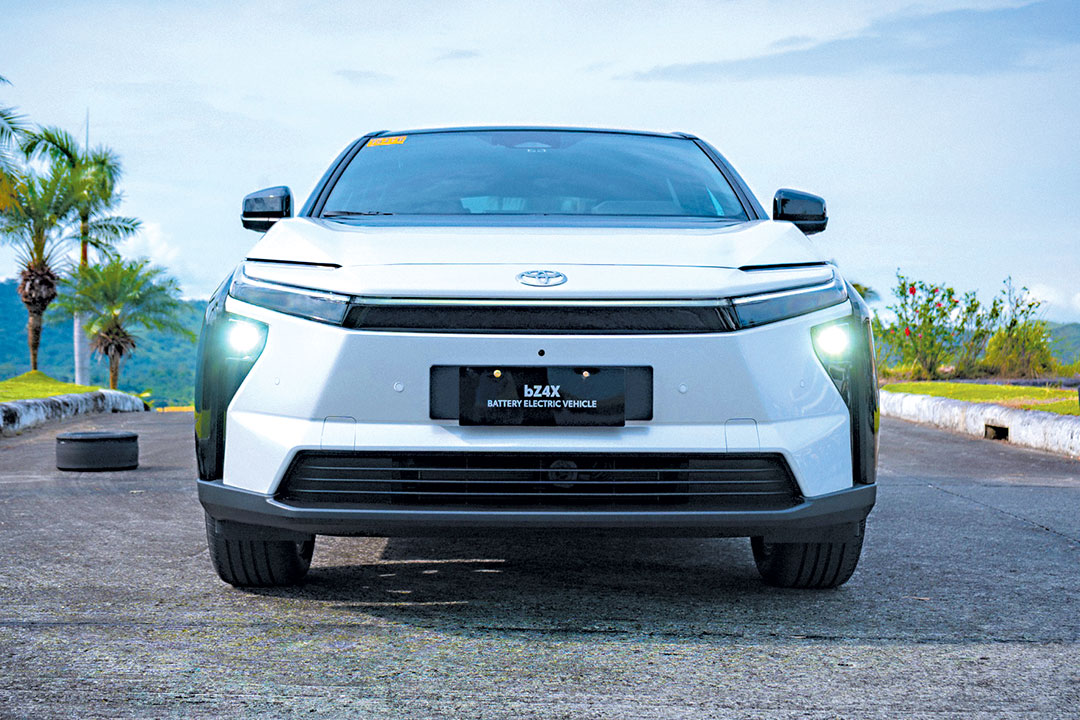
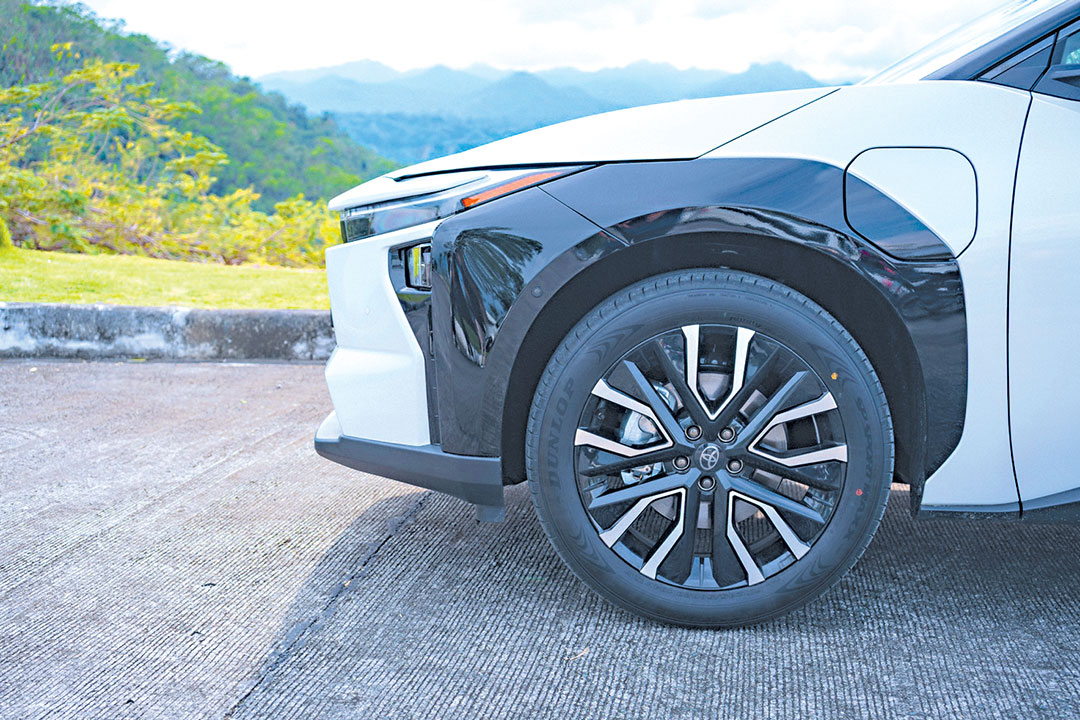
The bZ4X sports 235/50R20s affixed with ventilated disc brakes front and rear. The crossover receives MacPherson struts in front and double wishbone suspension in the back. The exterior lines and styling of the bZ4X are akin to the RAV4’s — unafraid of sharp angles and chiseled-looking surfaces. Its aerodynamically shaped front end calls to mind the Camry’s taut, squinting fascia, although the bZ4X has a closed-off grille, customary in BEVs.

HOW IT IS
We drove the bZ4X from Quezon City (specifically Toyota North EDSA) to Clark in Angeles, Pampanga. Suffice it to say that we arrived with more than 70% of charge. This is not a fair figure because we “idled” with air-conditioning on while making a protracted coffee pitstop on NLEX.

As with any electric vehicle, expect instantaneous pull when you press on the accelerator. The bZ4X doesn’t hesitate; it just zooms forward at your beck and call. See that gap on the right? Press on the “gas” and you’re there. Air-conditioning is brisk and adequate.

For those still wondering what life with a BEV is like, although I’ve never owned one (yet?), I did get to test a number of them over the years. I’d say the ownership experience and, well, use cases will vary with two things: how large the vehicle is and its range between charging sessions. But because there are fewer moving parts versus conventional ICE-powered vehicles, it stands to reason that preventive maintenance costs are much lower and spaced out farther.

The bZ4X cabin space is reasonable and comfortable, and the panoramic moonroof does help enhance the sense of space. I tried the rear row of seats, and the leg and elbow room proved adequate for my height (5’10”) and heft. Two adults of average height should be fine to stay here, plus a child maybe. I believe that two is the ideal number, especially since there’s a center armrest both can take advantage of. While the front seats get heating and ventilation (the latter more useful in our market, for sure), the rear seats only get heating.

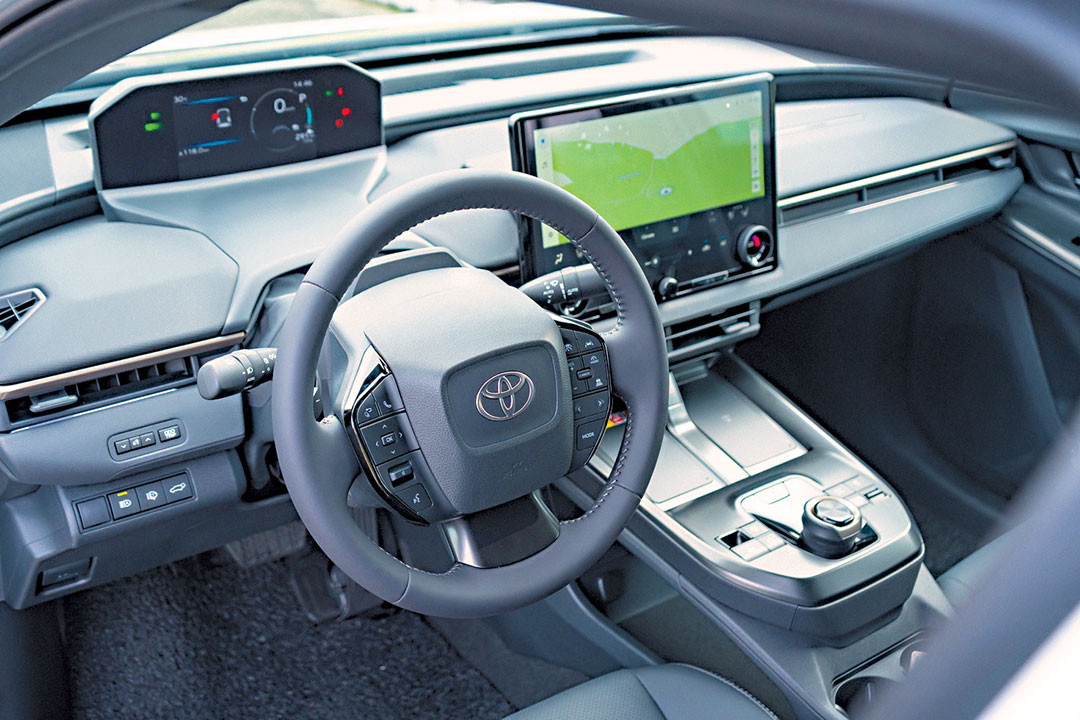
Behind the steering wheel, things are simple and uncomplicated, save for the actual tiller which has an abundance of buttons and switches. If you can overcome the learning curve, then you should be a master of your bZ4X in no time exactly because it’s much easier (and safer) to control matters on the wheel than have to reach for the screen or buttons. Having said that, it is a straightforward affair to get the vehicle going; the rotary knob which allows you to safely choose from among the customary P-R-N-D modes is easy to get familiar with.

Unlike some competitors which have done away with physical buttons and switches on the center console altogether, Toyota mercifully executes a healthy mix of digital and analog. One of my pet peeves is having to navigate touchscreens to get to climate settings. While the bZ4X does have these controls on its massive central screen, they are permanently set on the bottom portion of it. You don’t have to browse through layers of menus. There are also a couple of convenient temperature knobs which I’ve seen on current Lexus vehicles. Speaking of, the bZ4X shares bones with the similarly all-electric (albeit more luxurious) Lexus RZ.

One of the things we wondered about is the lack of a glove box in the bZ4X. It appears Toyota used that space to put in other components of the vehicle instead. But what you’ll get is a spacious central armrest/box that can open from either side. There’s also storage space underneath the center console where the dual wireless chargers are, along with two cup holders. That nook below is also where you can find two USB-C charging points previously discussed.

The digital instrument cluster is curiously pushed forward on the dashboard. While it’s legible, when the sunlight streams into the windshield, the display gets a little challenged by the gleam, as the free-standing display is bereft of a hood. You might also have to adjust the steering wheel height to ensure it does not obstruct your view of the cluster. Maybe Toyota engineers see this innovation as a compromise between traditional gauges and head-up displays.

WHO IS IT FOR?
Again, if you’re still on the fence getting a BEV for a myriad of reasons, the country’s mobility leader entering the segment surely speaks volumes. TMP — and all it stands for — is asking you to get those feet down this side of the fence where the air is cleaner.

And while there remain challenges and uncertainties about the viability of BEVs versus traditional ICE vehicles, the fact that Toyota is now offering it with the same QDR (quality, durability, and reliability) promise it makes on its whole lineup builds the case to go all-electric right now.

“The new bZ4X further evolves and advances this strategy toward the future, to contribute to carbon neutrality. Stay tuned for more from us,” concluded Mr. Hashimoto.

This is the sign you’ve been waiting for.

The Toyota bZ4X AWD comes in two-tone exterior colors and is priced as follows: Dark Blue Mica (P2.699 million), Platinum White Pearl Mica (P2.714 million), Emotional Red (P2.719 million), and Precious Metal (P2.719 million). For now, it will be available in the following TMP BEV dealers: Toyota Manila Bay, Toyota North EDSA, Toyota Pasig, Toyota Global City, Toyota Quezon Avenue, Toyota Alabang, Toyota San Fernando, Toyota Sta. Rosa, Toyota Makati, Toyota Commonwealth, Toyota Mandaue South (Cebu), and Toyota Mabolo (Cebu). For now as well, an additional two dealerships will feature DC and AC charging: Toyota Batangas City and Toyota La Union. Charging for Toyota customers is free at any of these establishments. “Please expect the list to grow,” said TMP Brand Management Professional Jerome Arcilla with a smile.

For more information, visit https://www.toyota.com.ph/bz4x. For reservations, go to https://www.toyota.com.ph/reservebz4x.


Protecting Filipinos against meningococcal disease

STOCK PHOTO | Image by Jcomp from Freepik

In October 2004, a hospital in northern Luzon began admitting a growing number of patients with fever, rashes, diarrhea, vomiting, neck rigidity, seizures, and other alarming symptoms. All were diagnosed with meningococcal disease. By the end of January 2005, 98 cases and 32 deaths had been recorded or a fatality rate of 33%.

In February 2005, the World Health Organization (WHO) confirmed an outbreak of serogroup A meningococcal disease in the Cordillera Administrative Region (CAR), marking the largest such outbreak in Philippine history.

Meningococcal disease is a rapidly progressive bacterial infection that can lead to meningitis or meningococcemia, a severe bloodstream infection. The outbreak stemmed from a hypervirulent Neisseria meningitidis strain that caused both conditions.

“The outbreak caused intense fear, panic, and public anxiety,” recalled pediatric infectious disease specialist Dr. Elizabeth Escaño-Gallardo during the Health Connect media forum. The memory of that period underscores a reality that remains relevant today. It means that when public health emergencies strike, preparedness, coordination, and trust in institutions determine whether lives are saved or lost.

As the country marks National Health Emergency Preparedness Day on Dec. 6, the outbreak offers lessons for strengthening the Philippines’ capacity to manage high-risk infectious diseases. Dr. Gallardo shared how local government health authorities, the medical community, Department of Health (DoH), and WHO came together to contain the meningococcal disease outbreak. She emphasized lessons gleaned from this successful multisectoral collaboration.

For one, clear, accurate, and timely communication emerged as a cornerstone of the response. In moments of uncertainty, transparent communication is not optional — it is a public health intervention. Authorities issued regular advisories that curbed confusion, reassured the public, and countered misinformation long before the era of social media amplification. This strengthened public trust, reduced panic, and enabled communities to act on verified guidance rather than rumors.

Preparedness also proved indispensable. Local governments, in coordination with community partners, executed outbreak response plans that ensured the availability of medical supplies, strengthened laboratory capacity, and mobilized trained health personnel. At that time, it was fortunate that the health sector had recently been conducting workshops for a possible severe acute respiratory syndrome (SARS) epidemic.

“We applied the principles and strategies we learned during the SARS training programs to deal with the meningococcal disease outbreak,” Dr. Gallardo recalled. The episode demonstrates that investments in preparedness for one health threat often enhance readiness for others.

Early recognition and prompt clinical response helped stop further transmission and reduce mortality. Widespread information campaigns increased community awareness of meningococcal symptoms, prompting individuals to seek early consultation. Hospitals also established referral pathways and emergency protocols that accelerated diagnosis and treatment. “The prompt and systematic response to suspected cases improved treatment outcomes and decreased mortality,” Dr. Gallardo noted. This reinforces the importance of well-funded local health systems and accelerated diagnostics.

Infection control practices were also rigorously implemented to protect healthcare workers and communities. Health personnel were required to wear face masks and personal protective equipment, while the public was instructed to observe preventive measures, including mask use and distancing. Community-based contact tracing, active surveillance, chemoprophylaxis for close contacts, and vaccination were swiftly executed. These actions underline that infection prevention and control are not simply a hospital protocol but a societal responsibility, requiring alignment across institutions and sectors.

Moreover, vaccination emerged as the strongest safeguard against invasive meningococcal disease, whose outbreaks remain unpredictable. Physicians began voluntarily vaccinating patients as early as November 2004, and vaccinated frontline workers.

By April 2005, the Health department conducted a mass immunization campaign covering about 300,000 CAR residents. “Vaccination is proven to prevent meningococcal disease and reduce the risk of outbreaks. It is especially important for high-risk groups such as young children and adolescents,” Dr. Gallardo stressed. The experience reinforces a fundamental public health principle: vaccination is not merely an individual choice but a collective defense that disrupts transmission and prevents community-level crises.

The Philippines has reaffirmed its commitment to the WHO Defeating Meningitis by 2030 Global Roadmap, which urges nations to make meningitis prevention, diagnosis, and treatment integral to national health strategies. The research-based pharmaceutical industry joined governments, civil society, and international partners in pledging support during the first High-Level Meeting to Defeat Meningitis in Paris in April 2024. These commitments must translate into concrete policy actions such as stronger immunization programs, wider vaccine access, improved surveillance systems, and sustained investment in emergency preparedness.

Defeating meningitis requires unified purpose and shared accountability. Parents who vaccinate their children, schools that foster awareness, journalists who communicate evidence-based information, healthcare providers who deliver timely care, and government leaders who champion equitable access to vaccines and medicines all contribute to a collective shield of protection. The meningococcal disease outbreak taught us that no sector can fight a fast-moving disease alone. But when all sectors act together, informed by science and guided by public interest, communities can be safeguarded and lives saved.


Teodoro B. Padilla is the executive director of Pharmaceutical and Healthcare Association of the Philippines, which represents the biopharmaceutical medicines and vaccines industry in the country. Its members are at the forefront of developing, investing and delivering innovative medicines, vaccines, and diagnostics for Filipinos to live healthier and more productive lives.

First Gen, Mindanao hospital sign renewable energy supply deal

CUMC.COM.PH

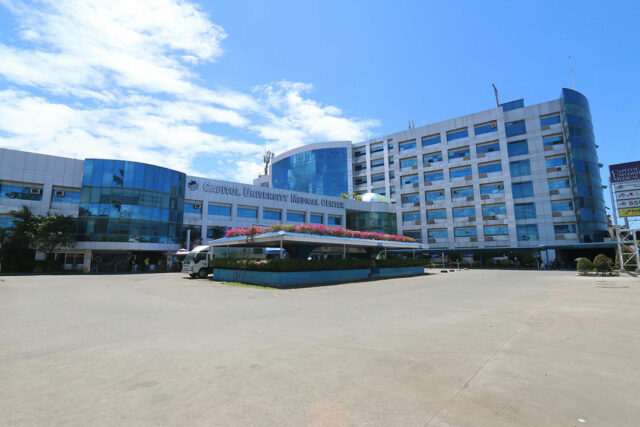
CAPITOL UNIVERSITY Medical Center, one of the largest private medical facilities in Mindanao, has partnered with power producer First Gen Corp. to use renewable energy (RE) to power its facilities.

In a statement over the weekend, First Gen said it would supply 900 kilowatts of geothermal power to support the electricity requirements of the 200-bed hospital, including its Kidney Institute and other specialty care units.

The RE supply will be sourced from the Mt. Apo Geothermal Plant in Cotabato, which is owned and operated by First Gen’s subsidiary Energy Development Corp.

“We are pleased to be the first medical center in Mindanao to be powered directly by geothermal energy that is also harnessed from Mindanao. We look forward to reaping the benefits of using renewable energy not just for helping the environment, but for doing our part to improve the health and well-being of Kagayanons,” Capitol University Medical Center President Rosalinda R. Deleste said.

The partnership is made possible through the Green Energy Option Program, which allows eligible power users with an average peak demand of at least 100 kilowatts to source renewable energy directly.

“Geothermal energy is ideal for hospitals, industries and other businesses that need reliable RE supply,” First Gen Chief Customer Engagement Officer Carlo L. Vega said.

First Gen currently holds more than 1,700 megawatts (MW) of RE capacity across over 22 geothermal, wind, solar and hydropower facilities.

Aside from the Mt. Apo geothermal plant, the company also owns and operates a 1.6-MW run-of-river mini-hydro facility in Manolo Fortich, Bukidnon that uses water flowing from the Agusan River.

First Gen is also set to roll out two additional hydropower projects: the 32-MW Bubunawan Hydro project in Libong, Bukidnon and the 40-MW San Isidro Hydroelectric Power Project in Cagayan de Oro.

In total, First Gen has an installed capacity of 3,696 MW across natural gas, geothermal, hydropower, wind and solar technologies. — Sheldeen Joy Talavera

Debt yields end lower on slower Nov. inflation

YIELDS on government securities (GS) traded at the secondary market closed mostly lower last week as slower November inflation bolstered rate cut prospects.

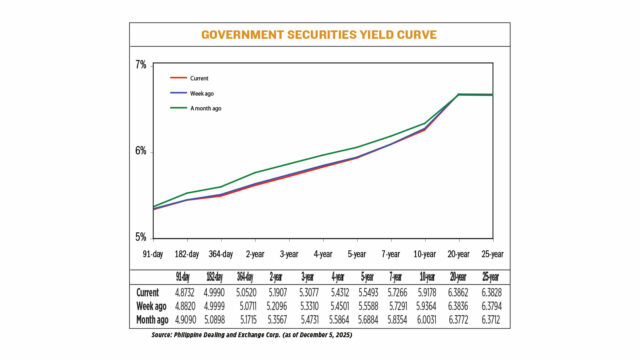
GS yields, which move opposite to prices, declined by an average of 1.04 basis points (bps) week on week, based on the PHP Bloomberg Valuation Service Reference Rates as of Dec. 5 published on the Philippine Dealing System’s website.

At the short end of the curve, yields on the 91-, 182-, and 364-day Treasury bills (T-bills) inched down by 0.88 bp (to 4.8732%), 0.09 bp (4.9990%), and 1.91 bps (5.0520%), respectively.

At the belly, rates also dropped across the board. Yields on the two-, three-, four-, five, and seven-year Treasury bonds (T-bonds) declined by 1.89 bps (to 5.1907%), 2.33 bps (5.3077%), 1.89 bps (5.4312%), 0.95 bp (5.5493%), and 0.25 bp (5.7266%), respectively.

Lastly, at the long end of the curve, the 20- and 25-year notes edged up by 0.26 bp and 0.24 bp to yield 6.3862% and 6.3828%, respectively. On the other hand, the 10-year bond saw its rate go down by 1.86 bps to 5.9178%.

GS volume traded declined to P43.06 billion on Friday from P91.27 billion a week prior.

Jonathan L. Ravelas, a senior advisor at Reyes Tacandong & Co., said yields mostly went down on demand for short-term papers amid expectations of subdued inflation that could lead to a fifth straight cut by the Bangko Sentral ng Pilipinas (BSP) this week.

“With inflation likely below 2%, the market is leaning dovish — favoring short-term paper and locking in rates before any policy shift,” Mr. Ravelas said. “Global cues like softer US yields and weak local GDP (gross domestic product) added buying pressure.”

“Demand for short-term government bonds remained strong [last] week, which helped push yields lower on the front end of the curve. With an expected policy rate cut approaching, investors continue to position in the short to medium parts of the curve where the benefits tend to be more immediate,” Lodevico M. Ulpo, Jr., vice-president and head of fixed-income strategies at ATRAM Trust Corp., said in a Viber message.

He added that concerns about larger bond supply next quarter affected longer tenors and kept the yield curve steeper.

“Despite this, longer-term bonds still find support as the market anticipates a more dovish stance from the BSP,” Mr. Ulpo said. “The latest 10-year auction also confirmed healthy demand for longer duration, posting a solid 4.3x bid-to-cover ratio, while overall government bond yields declined by 2-5 bps week on week.”

“Locally, the BSP noted that economic growth has softened, but also highlighted that inflation expectations remain stable. This combination strengthens the case for a 25-bp rate cut [this] week. Globally, weaker labor data has dominated sentiment, adding to expectations that the US Fed will also deliver another 25-bp cut during its upcoming policy meeting.”

Headline inflation slowed to 1.5% in November from 1.7% the month prior and 2.5% in the same month in 2024, the Philippine Statistics Authority reported on Friday.

This was a tad below the 1.6% median estimate in a BusinessWorld poll of analysts and was within the BSP’s 1.1-1.9% forecast for the month.

The November print brought the 11-month average to 1.6%, lower than the central bank’s 1.7% full-year forecast and 2-4% annual target.

“The outlook for inflation is generally benign, remaining well within the target range over the policy horizon… The Monetary Board likewise noted that the outlook for domestic economic growth has weakened. This outlook reflects in part the impact on business confidence of governance concerns about public infrastructure spending as well as lingering uncertainty from the external environment,” the central bank said in a statement on Friday.

“Going forward, the Monetary Board will continue to review newly available information and reassess the impact of prior monetary actions in light of evolving economic conditions and their implications for inflation and growth.”

Last week, BSP Governor Eli M. Remolona, Jr. said that Philippine GDP growth may only settle between 4% and 5% this year as the corruption scandal continues to limit government spending and weaken investor sentiment. This would be below the government’s 5.5-6.5% full-year goal.

He said this raises the odds of another rate cut at the Monetary Board’s meeting on Thursday (Dec. 11).

In October, the central bank lowered benchmark borrowing costs by 25 bps for a fourth meeting in a row to bring the policy rate to 4.75%. It has reduced benchmark rates by a total of 175 bps since it began its easing cycle in August 2024.

Meanwhile, markets are pricing in an 84% chance of a quarter-point cut at this week’s Fed meeting, LSEG data show, Reuters reported.

The Fed last lowered the policy rate on Oct. 29, to a range of 3.75%-4% from 4%-4.25%, the second consecutive 25-bp cut this year.

The Fed meeting this week is expected to be one of its most contentious in years, and investors are focused on how divided policymakers are over an expected interest rate cut and what Chair Jerome H. Powell signals about the path ahead.

Five of the 12 voting members of the Federal Open Market Committee (FOMC) have voiced opposition or skepticism about further easing, while three members of the Washington-based Board of Governors favor a cut.

The FOMC has not had three or more dissents at a meeting since 2019, and that has happened just nine times since 1990.

For this week, Mr. Ulpo said the market expects both BSP and Fed to cut rates by 25 bps this week, which would be positive for bonds.

“This easing path bodes well for fixed income, especially for RPGBs (Republic of the Philippines Government Bonds), supported by a favorable local macro backdrop and the latest inflation reading, which reinforces the likelihood of a more accommodative policy setting in the coming years,” he said. “Given these developments, we expect yields across the curve to drift lower.”

“Expect a steady to slightly bullish tone, especially if BSP signals a cut,” Mr. Ravelas added. — Heather Caitlin P. Mañago with Reuters

Brazilian robusta farmers invest in quality amid climate threats

STOCK PHOTO | Image by Jcomp from Freepik

SAO DOMINGOS DO NORTE, Brazil —  Amid the din of a chic coffee shop on Sao Paulo’s posh Oscar Freire Avenue, a barista pulls an atypical espresso. Extra creamy, with an aroma of cocoa nibs, the shot lacks the hallmark acidity prized in coffee made from the finest arabica beans.

That is because this premium espresso is made of 100% robusta beans, long derided in the coffee world as cheap filler better suited for instant coffee.

“It’s a coffee that makes a wonderful crema … and has much more chocolatey notes,” said Marco Kerkmeester, co-founder of the Santo Grao coffee chain, noting the appeal of a variety cheekily labeled “0% Arabica.”

As climate change threatens the arabica beans traditionally used in high-end brews, Brazilian robusta farmers are investing in harvesting and drying techniques to produce top-notch robusta that appeals to the most demanding consumers.

Brazil is the world’s second-largest robusta producer after Vietnam and top arabica grower. However, a 2022 study found that more than three quarters of Brazil’s best land for growing arabica coffee could become unsuitable by 2050 due to higher temperatures and drought.

With global coffee prices and consumption hitting record highs this year amid trade tensions and extreme weather, premium robusta beans also offer a way for roasters to lower the cost of espresso blends with more expensive arabica.

“My dad is from a mountainous region where they produce high-quality arabica coffee,” said Lucas Venturim, a coffee farmer some 500 miles away in Espirito Santo state, whose beans went into that espresso served on a corner of Oscar

Freire. “He never accepted that robusta coffee is bad just because it’s robusta.”

In the same spirit, the Specialty Coffee Association (SCA), which sets global specialty coffee standards, this year revised its evaluation course to appeal to would-be graders of both arabica and robusta beans. Now, anyone trained to assess top-notch coffee will be able to accurately describe and reward deserving brews, regardless of the species, or type of bean.

“We saw the writing on the wall,” said Kim Ionescu, SCA’s chief strategy development officer, citing growing consumer demand for premium robusta in Southeast Asia, for example. “It just seems like species is not the thing that we should use to define specialty or non-specialty.”

In 2026, SCA will begin to revise the lexicon of flavor descriptors used by coffee evaluators to include attributes associated with fine robusta, such as aromatic spice.

Brands like Nguyen Coffee Supply, which offers quality robusta from Vietnam, have already blazed a path in the US, while coffee shops from London to Berlin are showcasing robusta’s finer qualities.

The opportunity has kicked off a transformation in Espirito Santo, home to most of Brazil’s robusta production, which now prioritizes not just yield but the highest quality.

The state aims to produce 1.5 million 60-kg bags of specialty robusta annually by 2032, up from 10,000 currently, according to a presentation by the state agriculture secretariat seen by Reuters.

That amounts to about a tenth of the state’s current output, requiring wider adoption of the best post-harvest practices now common among arabica producers, according to Jose Roberto Goncalves, agricultural manager of Brazil’s top robusta co-op, Cooabriel.

In recent years, Cooabriel has participated in specialty coffee trade shows around the world.

While some growers once dried robusta beans indirectly with fire, where smoke and high temperature could negatively affect the taste, Cooabriel is teaching farmers the advantages of using modern dryers and careful sorting practices, Goncalves said.

Experts at state research agency Incaper and federal university IFES said they have seen a surge in robusta farmers looking to certify quantities of their beans as higher-priced specialty grade.

“If in the past robusta coffee was considered lower quality, that perception is changing,” said Douglas Gonzaga de Sousa, coordinator of the Center for Specialty Coffees of Espirito Santo.

The growing recognition of top-quality robusta in Brazil, along with historically high yields compared to arabica, has drawn more arabica farmers to try their hand with robusta – bringing their savvy to the variety.

Espirito Santo’s undersecretary for rural development, Michel Tesch, said the traffic is largely one-way.

“We don’t have people leaving robusta to produce arabica,” he said.

Cooabriel is expanding its robusta nursery in Espirito Santo to produce around 10 million saplings per year, from two million at present.

The rising quality of Brazilian robusta has translated into stronger demand and higher prices, said Marcio Ferreira, the head of national coffee exporter group Cecafe.

This year, the average price per bag of specialty Brazilian robusta surpassed $295 per 60-kilogram bag through October, more than double the average 2021 price, according to Cecafe data shared with Reuters. Robusta futures have risen over 80% since 2021 to around $4,370 per metric ton, while arabica futures grew by over 60% to $3.7254 per pound.

“Improving quality allows you to increase the percentage of robusta in blends around the world,” Ferreira said, adding that roasters are more openly noting the robusta qualities in their espresso blends as they pare back the share of arabica.

At the same time, specialty robusta is not trying to go toe-to-toe with arabica as a direct competitor, said Jordan Hooper, head of green coffee trading at Sucafina.

“The original approach to specialty robusta was to kind of try to compete with specialty arabica,” he said. “Now it’s like: robusta can be interesting in and of itself.”

Natalia Ramos Braga, the barista who pulled the all-robusta shot in Sao Paulo’s Santo Grao cafe, said Brazil is a natural hotbed for those tastes to evolve.

“People, especially here in Brazil, tend to prefer coffee with a fuller mouthfeel and a more bitter finish,” she said. “If someone prefers more bitterness and a fuller body, great, we have a coffee for that: robusta.” — Reuters

Style (12/08/25)


Lift aging away with Nuxe

NUXE introduces one of its most advanced anti-aging collections: the Merveillance LIFT range. It’s designed to restore firmness, smooth wrinkles, and bring renewed vitality to the skin through the power of botanical innovation. The ingredient is sourced from chlorella vulgaris, an ancient freshwater algae celebrated for its regenerative powers. Clinically proven to fortify the dermal-epidermal junction (DEJ), Merveillance LIFT also restores fullness, smooths wrinkles, and reinforces the skin’s natural resilience. At the heart of the line is the LIFT’s Firming Activating Oil-Serum with a 100% active texture. Three drops are enough for instantly smoother, more supple skin, with proven results of +32% firmness in just one month. Other products in the line include Firming Powdery Cream (firms and smooths while leaving a natural blur effect for a flawless finish), Lift Eye Cream (lightweight blur-effect cream that fades wrinkles, puffiness, and signs of fatigue), and a Concentrated Night Cream (overnight treatment that recharges the skin). Nuxe is exclusively distributed by Rustan Marketing Corp. and is available at Rustan’s, Beauty Bar, LOOK, Mitsukoshi, Rustans.com, Lazada, Shopee, and ZALORA.


Fendi releases Pre-Collection Spring/Summer 2026

FENDI’S Pre-Collection Spring/Summer 2026 — whose face is Taiwanese actor Joseph Chang — draws inspiration from the disco vibes of the vibrant 1980s, dancing through the party with relaxed jewel-toned layers and boyish silhouettes imbued with subtle craft. Mr. Chang is seen in a cashmere blouson over an oxford shirt and a vibrant blue sleeveless vest, paired with burgundy velvet trousers, brown leather Chelsea boots and the Fendi Baguette Soft Trunk bag adorned with the Falena print. He also wears a turquoise oxford shirt, a black corduroy denim jacket with white shearling details, and light-washed denim jeans, complemented by Fendi Fit low-top sneakers and a FENDI Flux Backpack in smooth leather and FF Nylon. The Fendi Pre-Collection Spring/Summer 2026 is now available in Fendi Boutiques worldwide and at fendi.com.


Converse unveils Stranger Things collab

WITH THE FIRST PART OF Netflix show Stranger Things final season now streaming, Converse is opening a gate straight to Hawkins with two limited-edition releases: the Chuck 70 and the Weapon, both loaded with details pulled directly from the show’s moments. The Converse x Stranger Things Chuck 70 arrives with all the show’s signature weirdness stitched, printed, and hidden across the sneaker. Its distressed canvas upper and a burnished midsole that channels late-’80s grit. The graphics read like Easter eggs for fans: an embroidered “Rockin’ Robin” call sign, liner art that drops the line “Beam Me Up This Place Sucks!,” a tongue print that whispers “Hellfire Lives,” and character-coded add-ons like the Hawkins Hawk lace jewel, a rubber chicken keychain, and Vecna-inspired laces. The Demogorgon All-Star ankle patch and “Upside Down” license plate tie it all together. The Converse x Stranger Things Weapon brings the same energy with a premium, distressed leather upper finished with sound-wave toe perforations. The colorway pays direct homage to the original 1980s Weapon archives, while newspaper-printed linings, Vecna and Mind Flayer sockliner graphics, and a Stranger Things-themed tongue label further solidify the connection to the series. Jewel details inspired by lunchboxes, recording signals, and Vecna himself turn the sneaker into a scavenger hunt of lore and hidden threats. The Stranger Things x Converse collab is now available in Converse Glorietta and www.converse.ph.


Melissa releases Fall/Winter collection

MELISSA ushers in the Fall/Winter 2025 season with Futura. Vegan and crafted from Melflex, the brand’s signature soft, flexible PVC, the collection’s heart are jelly shoes. The namesake Melissa Futura features a daring, utilitarian aesthetic and translucent platform sole with signature Mel Bubble technology. The best-selling Melissa Harper ballet flat now comes in a transparent brown for a versatile neutral option and a clear blue for a pop of color, while still featuring a soft foam insole and woven design. Melissa Pulse adds height and personality with its chunky, confident silhouette, while Melissa Possession Magic makes a statement with metallic finishes. The minimalist Melissa Layla kitten heel in jelly comes with a cushioned insole for all-day comfort. Classics are reimagined with fresh colors and details, like the Melissa Anastasia with its mule design, square toe, and subtle buckle straps. Crafted from injected EVA monoblock, the Melissa Free Fuzzy Platform gets a feminine bow accent. Melissa Beta becomes a fashion alert as the ballerina style evolves into laced flats that hug the ankles. In time for the holidays, it comes in a silver metallic hue, among others. Completing the lineup are functional accessories, including the transparent Melissa Cargo Bag with striking front pockets and structured design, wearable as a shoulder bag or crossbody; the Melissa Harper Bag, inspired by the brand’s monogram weave; and the versatile Melissa Heartbeat Pocket, perfect as a mini bag, charm, or attachment to carry smaller essentials. For children, Melissa introduces the Mini Melissa Hip Ballerina Baby, in vibrant hues of yellow and pink with flower and heart embellishments. Balletcore joins the baby lineup through the Mini Melissa Soft Ballerina, offering a cushioned insole and petal-inspired details. The Mini Melissa Ultragirl Fly III Baby and Mini Melissa Fly Sandal III are closed- and open-toed shoe options adorned with butterfly appliqués. A touch of whimsy comes with the Mini Melissa Dreamy Uni Bag, featuring a unicorn-inspired design. Arriving in the Philippines by early December, Melissa brings a dose of nostalgia with its Hello Kitty & Friends collaboration. Designed for all ages, the collection includes footwear, bags, and a charm with playful detailing and signature colors of red, pink, purple, black, and white. In the Philippines, Melissa is available in Clube Melissa stores in malls nationwide. Shop Melissa online at melissaphilippines.com, Lazada, Shopee, and Zalora.


Sperry’s 90th Anniversary Collection on Lazada

SPERRY’S 90th Anniversary Collection is available exclusively on Lazada’s LazMall throughout December. Its iconic boat shoe has been brought into the modern age with a slimmer, more modern silhouette. The Sperry Slim Boat’s key features: a 360° lacing system, wave siping outsole, and a premium leather upper. For more details on Sperry’s 90th Anniversary Collection, exclusively available on Lazada for a limited time, visit Sperry on LazMall.

Gateway Group opens MG Angeles

MG Angeles features its own electric vehicle charging station. — PHOTO FROM MG ANGELES

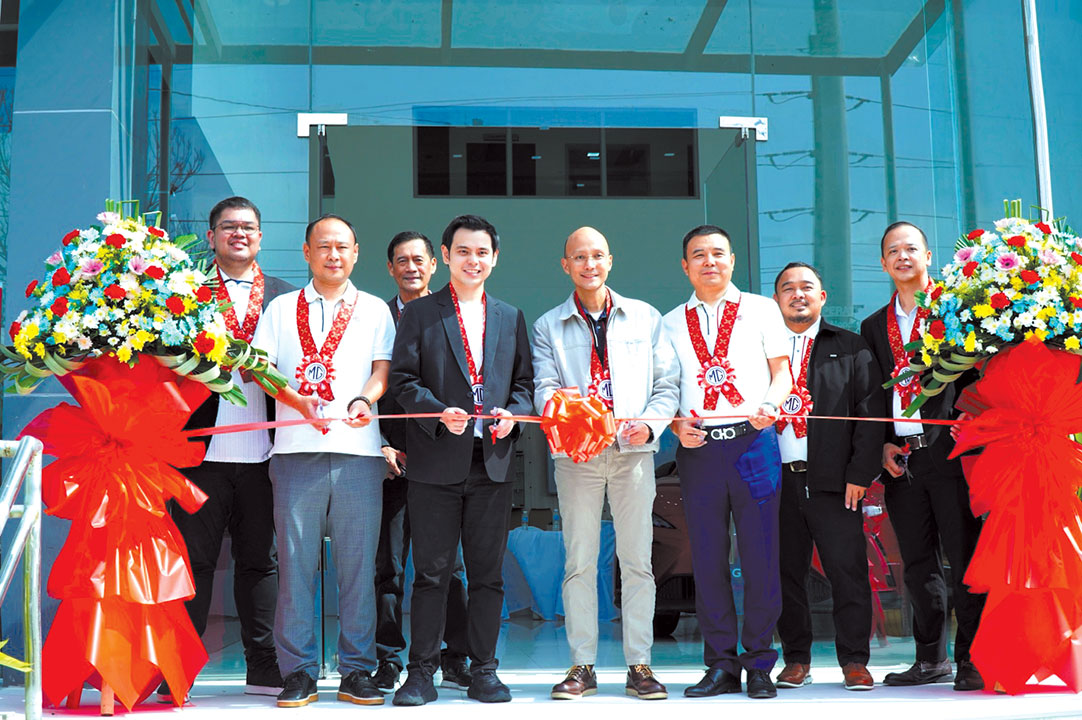
MG PHILIPPINES continues to expand its footprint here with the opening of Gateway Angeles. Operated by the Gateway Group, the dealership is located on the Fil-Am Friendship Highway in Barangay Pampang. In a release, Gateway Group said that MG Angeles is “strategically positioned to serve Pampanga and the neighboring areas with convenient access and top-tier automotive facilities.”

Leading the inauguration of the dealership were Gateway Group Executive Vice-President Michael Goho, SAIC Motor Philippines Sales and Business Development Director Jun Cajayon, and other Gateway and SAIC executives. With the opening of MG Angeles, the Gateway Group now manages nine MG dealerships nationwide. Angeles joins Batangas, Bohol, Butuan, Cebu, Dumaguete, Las Piñas, Marilao, and San Pablo. MG Angeles is a full 3S (sales, service, and spare parts) facility that features “a spacious and comfortable showroom,” and provides coffee and complimentary Wi-Fi to customers and guests in its relaxing lounge.

For electric vehicle owners, MG Angeles has a standalone MG electric vehicle charging station located conveniently just outside the showroom. MG Angeles said it “welcomes all MG vehicles past and present for preventive maintenance, diagnostics, repairs, warranty claims, and insurance assistance.

MG Angeles recommends booking a service appointment through its service hotline 0936-800-2659. For sales, call 0999-778-8602 or 0939-986-7212.

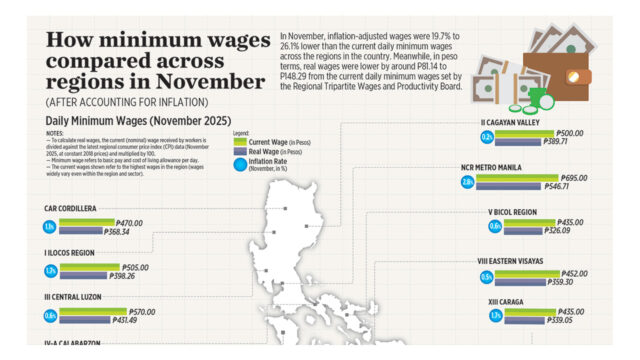
How minimum wages compared across regions in November

(After accounting for inflation)

In November, inflation-adjusted wages were 19.7% to 26.1% lower than the current daily minimum wages across the regions in the country. Meanwhile, in peso terms, real wages were lower by around P81.14 to P148.29 from the current daily minimum wages set by the Regional Tripartite Wages and Productivity Board.

How minimum wages compared across regions in November

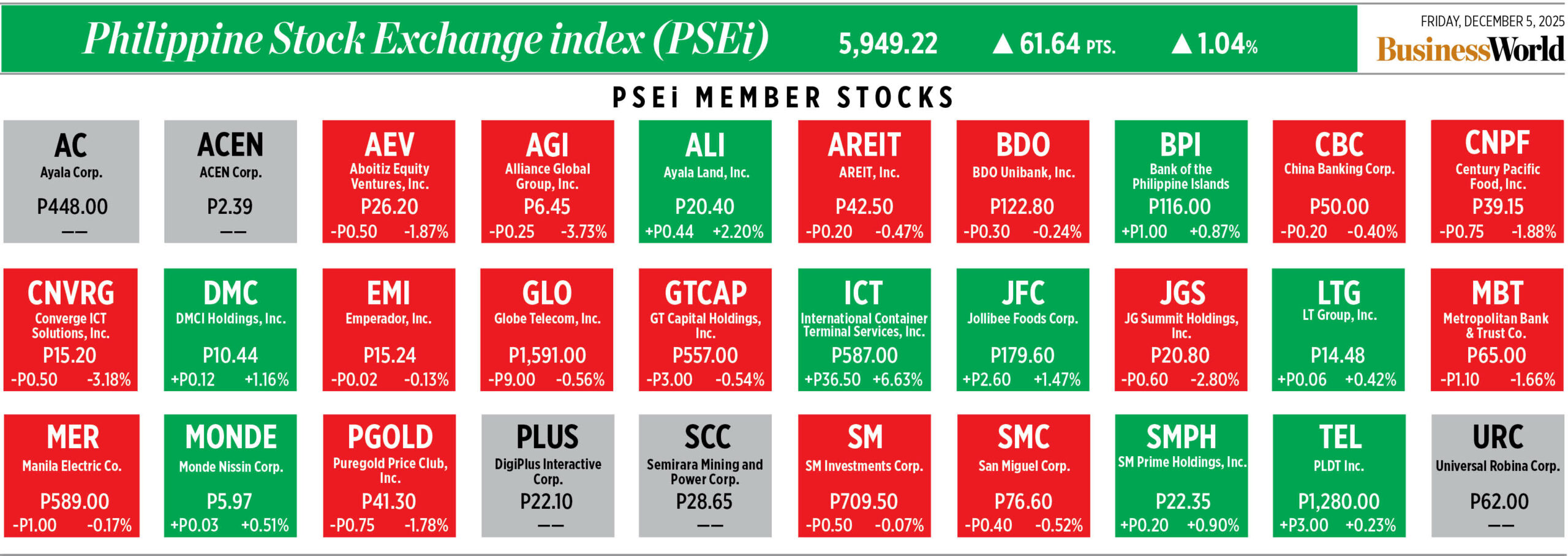
How PSEi member stocks performed — December 5, 2025

Here’s a quick glance at how PSEi stocks fared on Friday, December 5, 2025.


Stocks rebound on slower-than-expected CPI

REUTERS

PHILIPPINE STOCKS rose on Friday to return to the 5,900 level as slower-than-expected November inflation helped improve market sentiment.

The Philippine Stock Exchange index (PSEi) climbed by 1.04% or 61.64 points to close at 5,949.22, while the broader all shares index rose by 0.55% or 19.03 points to end at 3,477.68.

However, week on week, the PSEi decreased by 73.02 points from its 6,022.24 close on Nov. 28.

“Caution permeated during the week, although a slight reprieve was felt Friday, as November’s inflation print turned softer versus estimates,” online brokerage 2TradeAsia.com said in a note.

“The local market bounced back as investors cheered the Philippines’ November inflation rate which came in at 1.5%, declining from the prior month’s 1.7%,” Philstocks Financial, Inc. Research Manager Japhet Louis O. Tantiangco said in a Viber message on Friday. “The slowdown in the country’s inflation is seen to help in household consumption. It also gives the Bangko Sentral ng Pilipinas (BSP) more room to ease monetary policies.”

Philippine inflation eased more than expected in November due to a decline in food prices, the statistics agency said on Friday, giving the central bank policy room to maneuver, Reuters reported.

The consumer price index (CPI) rose 1.5% in November from a year earlier, below the previous month’s 1.7% rise and a 1.6% median forecast in a Reuters poll. That brought the year-to-date average to 1.6%, below the central bank’s target of 2% to 4%.

Last month’s slower inflation, driven by a 0.3% decline in food prices, may give the central bank flexibility when it reviews its policy on Dec. 11.

Bangko Sentral ng Pilipinas Governor Eli M. Remolona, Jr. said on Dec. 3 that the odds for another interest rate cut this week were higher with growth this year likely to settle between 4% and 5%, below a 5.5% to 6.5% target.

“The outlook for domestic economic growth has weakened,” the central bank said in a statement on Friday following the inflation data’s release.

The BSP has cut its policy rate at its past four meetings, taking it to a three-year low of 4.75%

Sectoral indices were split on Friday. Services jumped by 3.93% or 93.71 points to 2,476.34; property went up by 0.82% or 17.93 points to 2,202.49; and mining and oil rose by 0.47% or 66.39 points to 14,172.11.

Meanwhile, holding firms dropped by 0.45% or 21.07 points to 4,651.04; financials retreated by 0.15% or 2.99 points to 1,944.21; and industrials edged down by 0.07% or 6.72 points to 8,474.02.

Decliners outnumbered advancers, 95 to 83, while 69 names were unchanged.

Value turnover rose to P1.08 billion on Friday with 5.8 billion shares changing hands from P843.91 million with 6.54 billion issues traded on Thursday.

Net foreign selling went down to P598.26 million from P967.02 million. — with a report from A.G.C. Magno and Reuters

ADVERTISEMENT
ADVERTISEMENT