Home Blog Page 581

How Infrastructure and Housing Shape Cement Consumption in the Philippines

John Reinier H. Dizon, president and board member of the Federation of Philippine Industries, Inc., talks about Gross Domestic Product growth, infrastructure, and the other factors shaping cement demand in the Philippines.

Interview by Edg Adrian Eva
Video editing by Richard Mendoza

Driving Organizational Culture with Leadership Programs

A GCash executive talks about how the company’s leadership development programs shape resilient teams and a consistent organizational culture.
Interview by Almira Martinez
Video editing by Richard Mendoza

AnyMind Group secures wins at MMA SMARTIES™ Philippines 2025

The wins highlight the capabilities of POKKT, AnyMind Group’s mobile marketing platform, in delivering efficiency and effectiveness

AnyMind Group [TSE:5027], a BPaaS company for marketing, e-commerce, and digital transformation,  announced that it was awarded bronze for the “Gaming, Gamification & E-Sports” category and the “Brand Experience” category at the MMA SMARTIES™ Awards Philippines 2025. The awards recognize companies that have demonstrated outstanding innovation and technological excellence in driving effective business growth.

ENABLING COMPANY OF THE YEAR

This recognition follows a strong track record in recent years, including being named “Enabling Company of the Year,” underscoring AnyMind’s continued leadership in marketing, technology, and innovation.

The winning campaigns reflect AnyMind Group’s ability to deliver engaging, measurable, and culturally relevant experiences for consumer brands across the Philippines:

BRONZE

  • Brand Experience | Marketing ImpactMcDonald’s McSavers Sulit-Busog (MSB) Meals Online (in collaboration with McDonald’s Philippines and OmniCom Media)
  • Gaming, Gamification & E-Sports | Impact MediaKoko Krunch Gamified Tilt, Serve and Toss (with Nestlé and OpenMind Philippines)

“These awards validate our goal to combine creativity, data, and technology in ways that genuinely resonate with Filipino consumers. We are particularly proud of how our work across gamification, marketing impact and personalised experiences is helping brands connect faster and more meaningfully with their audience,” Mayi Baviera, country manager for the Philippines at AnyMind Group, said.


Spotlight is BusinessWorld’s sponsored section that allows advertisers to amplify their brand and connect with BusinessWorld’s audience by publishing their stories on the BusinessWorld Web site. For more information, send an email to online@bworldonline.com.

Join us on Viber at https://bit.ly/3hv6bLA to get more updates and subscribe to BusinessWorld’s titles and get exclusive content through www.bworld-x.com.

Philippines’ October jobless rate jumps to 5%

Jobseekers fill out application forms at a mall, Jan. 18, 2024. — PHILIPPINE STAR/EDD GUMBAN

The number of jobless Filipinos rose by about 570,000 to 2.54 million in October from a year earlier, even as overall employment increased by 460,000, the Philippine Statistics Authority (PSA) reported on Wednesday, underscoring persistent vulnerabilities in the labor market despite headline job gains. 

This brought the jobless rate to 5% from 3.8% in the previous month and 3.9% a year ago — close to the post-pandemic high posted in July, when unemployment hit 5.3% or 2.59 million people. 

PSA Undersecretary and National Statistician Claire Dennis S. Mapa attributed the rise in joblessness to recent typhoons, even as he cited “good signs,” including rising employment in the agriculture sector, which added 168,000 jobs from a year ago. 

“We saw an increase of 1.87 million in agriculture and forestry jobs quarter on quarter, with the biggest contributor being the growing of paddy rice, as the peak season for rice farming falls in the fourth quarter,” he added. 

The PSA’s latest labor-force survey showed that while many found work, a significant segment remains jobless — meaning economic improvements may not be reaching all sectors. 

Still, the increase in employed people — particularly those aged 15 and over — reflects underlying demand in industries like retail, construction and services. Such gains offer hope that economic activity is picking up ahead of the holiday season. 

Labor force participation rose to 63.6% in October from 63.3% a year earlier and 64.5% in September, the statistics agency said in a statement. 

In October, services accounted for the biggest share of total employment at 60.6%, followed by agriculture with 21.5% and Industry at 17.9%. 

Underemployment, which covers workers seeking more hours or better-paying jobs, was 12% compared with 12.6% a year earlier and 11.1% in September. — Erika Mae P. Sinaking 

US trade deal with Indonesia at risk of collapse, US official says

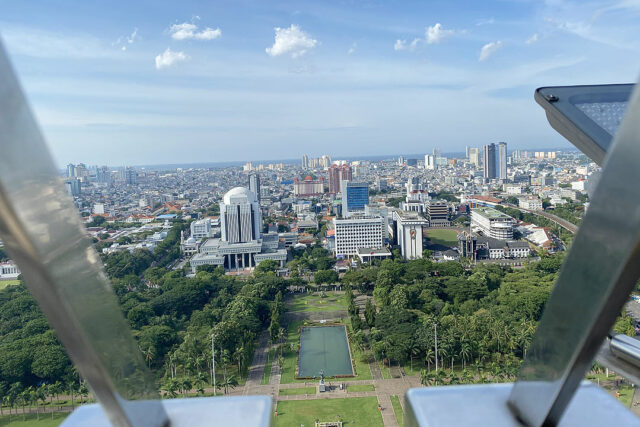
JAKARTA SKYLINE — the view from the top of the National Monument. — JOHN VICTOR D. ORDOÑEZ

WASHINGTON — A US trade agreement reached with Indonesia in July is at risk of collapsing because Jakarta has backtracked on several commitments it made as part of the deal, a US official said on Tuesday.

“They’re reneging on what we agreed to in July,” said the official, who spoke on condition of anonymity, giving no details about which specific commitments Indonesia was now questioning.

The two countries in July said Indonesia agreed to eliminate tariffs on more than 99% of US goods and scrap all non-tariff barriers facing American firms, while the US will drop threatened tariffs on Indonesian products to 19% from 32%.

US President Donald Trump first announced the deal on July 15, calling it “a huge win for our Automakers, Tech Companies, Workers, Farmers, Ranchers, and Manufacturers.”

But Indonesian officials have told US Trade Representative Jamieson Greer that Jakarta cannot agree to some binding commitments and wants to reframe them, the official said.

US officials believe that would lead to worse agreements for the United States than recent deals it has struck with two other Southeast Asian countries, Malaysia, and Cambodia, the official said, confirming details first reported earlier on Tuesday by the Financial Times.

The FT reported US officials believe Indonesia is “backsliding” on the elimination of non-tariff barriers on industrial and agricultural exports from the US as well as commitments to take action on digital trade issues.

No comment was immediately available from USTR.

US Treasury Secretary Scott Bessent last week told a New York Times DealBook event that Indonesia “was getting a little recalcitrant” on its trade deal with the United States, but did not elaborate. Malaysia, by contrast, had proven to be a good actor and had dropped thousands of line tariffs so trade between the US and that country was flowing much better.— Reuters

FDI inflows sink to over five-year low in September

STOCK PHOTO | Image Dmitry Berdnyk from Unsplash

NET INFLOWS of foreign direct investments (FDI) into the Philippines plunged to their lowest level in over five years in September, the Bangko Sentral ng Pilipinas (BSP) reported on Wednesday.

Based on preliminary central bank data, FDI net inflows fell by 25.8% to $320 million in September from $432 million a year ago. 

This marked the lowest monthly FDI inflow in more than five years or since the $313.79 million recorded in April 2020. 

Month on month, inflows sank by 60.62% from $514 million in August.

For the first nine months of 2025, FDIs dropped by 22.2% to $5.537 billion from $7.118 billion a year ago.

The BSP expects net inflows of FDI to reach $7.5 billion by year-end. — Katherine K. Chan

FDI net inflows slump to over 5-year low in September

US dollar banknotes are seen in this photo illustration taken Feb. 12, 2018. — REUTERS

Net inflows of foreign direct investments (FDI) into the Philippines plunged to its lowest monthly level in over five years in September, the Bangko Sentral ng Pilipinas (BSP) reported on Wednesday.

Based on preliminary central bank data, FDI net inflows fell by 25.93% to $320 million in September from $432 million a year ago.

This marked the lowest monthly FDI inflows in 65 months or since the $314 million recorded in April 2020.

Month on month, inflows sank by 37.7% from $514 million in August. — Katherine K. Chan

Venezuela’s Machado due to receive Nobel Peace Prize in defiance of travel ban

WWW.NOBELPRIZE.ORG

OSLO — Venezuelan opposition leader Maria Corina Machado is due to receive the Nobel Peace Prize in Oslo on Wednesday, in defiance of a decade-long travel ban imposed by authorities in her home country and after spending more than a year in hiding.

However, her current whereabouts are unknown and it is unclear whether she will be able to attend at all.

When she won the prize in October, Ms. Machado dedicated it in part to US President Donald Trump, who has said he himself deserved the honor.

President Nicolas Maduro, in power since 2013, says Mr. Trump is trying to overthrow him to gain access to Venezuela’s vast oil reserves and that Venezuelan citizens and armed forces will resist any such attempt.

FAMILY MEMBER COULD STEP IN
Ms. Machado, 58, is due to receive the award at a ceremony at Oslo City Hall in the presence of King Harald, Queen Sonja, and Latin American leaders including Argentine President Javier Milei and Ecuadorean President Daniel Noboa.

The ceremony starts at 1 p.m. (1200 GMT).

Should she not reach Oslo, the ceremony would still go ahead. When a laureate is unable to attend, a close family member usually steps in to receive the prize and deliver the Nobel lecture in place of the laureate.

On Tuesday, Ms. Machado did not appear at a scheduled press conference, with the Norwegian Nobel Institute saying in a statement it was unable to say “when and how she will arrive for the Nobel Peace Prize ceremony”.

“I know that she wants to come and that she is en route but that’s all I know,” said Kristian Berg Harpviken, the institute’s director and permanent secretary to the award committee.

“We will make sure that it’s a worthy ceremony that recognizes this year’s laureate, casting a spotlight on the situation in Venezuela and the importance democracy has for peace,” he told public broadcaster NRK.

US MILITARY STRIKES
Ms. Machado has aligned herself with hawks close to Mr. Trump who argue that Mr. Maduro has links to criminal gangs that pose a direct threat to US national security, despite doubts raised by the US intelligence community.

The Trump administration has ordered more than 20 military strikes in recent months against alleged drug-trafficking vessels in the Caribbean and off Latin America’s Pacific coast.

Human rights groups, some Democrats and several Latin American countries have condemned the attacks as unlawful extrajudicial killings of civilians.

Venezuela’s armed forces are planning to mount a guerrilla-style resistance or sow chaos in the event of a US air or ground attack, according to sources with knowledge of the efforts and planning documents seen by Reuters.

PRIZE ‘INTERNATIONAL VALIDATION’ OF ELECTION RESULT
In 2024, Ms. Machado was barred from running in the presidential election despite having won the opposition’s primary by a landslide. She went into hiding in August 2024 after authorities expanded arrests of opposition figures following the disputed vote.

The electoral authority and top court declared Mr. Maduro the winner, but international observers and the opposition say its candidate handily won and the opposition has published ballot box-level tallies as evidence of its victory.

Christopher Sabatini, a senior fellow for Latin America at Chatham House, said the Nobel prize had given “a strong signal of international validation … (of) the democratic results that had been forgotten”.

He told Reuters it had also elevated Ms. Machado to “a person that … the international community and the world can hang their hopes on,” he said.

“… Oftentimes democratic movements need a face. They need a story.”— Reuters

EU members agree to cut emissions by 90% by 2040 from 1990 levels

RAWPIXEL

THE EUROPEAN Union has reached a legally binding climate agreement to reduce greenhouse gas emissions by 90% by 2040 from 1990 levels, involving the purchase of foreign carbon credits to cover 5% of the cuts, the European Parliament said on Wednesday.

The agreement will require EU industries to cut emissions by 85% and, from 2036, EU nations to pay non-member countries to cut emissions on their behalf to make up the remainder.

The European Parliament and EU countries must each approve the target for it to become law – usually a formality that waves through pre-agreed deals.

The agreement goes beyond most other major economies’ emissions-cutting pledges. Still, the target fell short of that recommended by the EU’s climate change science advisers and was weaker than an original goal, reflecting disagreement between EU governments over the speed and cost of their green agenda.

“This agreement shows that climate, competitiveness and independence go hand in hand and sends a powerful message to our global partners. We agreed on a strong but realistic climate law,” spokesperson for EU climate commission Wopke Hoekstra said in a statement.

The target represented a political compromise after months of negotiations in which governments including those of Poland, Slovakia, and Hungary opposed deeper carbon dioxide cuts as too strenuous for domestic industries struggling with high energy costs, cheaper Chinese imports and US tariffs.

Other EU members, including the Netherlands, Spain, and Sweden, cited worsening extreme weather events and the need to catch up with China in manufacturing green technology as reasons for the lofty target.

To win over opponents, the EU also agreed to weaken other politically sensitive climate policies, such as by delaying the launch of a carbon price for fuel by one year to 2028.— Reuters

ADB approves $400-M loan to improve ease of doing business in the Philippines

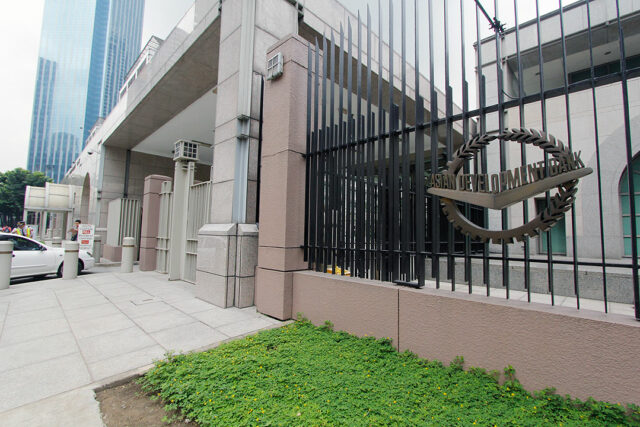
BW FILE PHOTO

THE Asian Development Bank (ADB) has approved a $400-million policy-based loan to support the Philippine government’s efforts to improve the ease of doing business in the country.

The multilateral lender approved the financing for the Business Environment Strengthening with Technology Program (BEST) Subprogram 1, which aims to help position the country as a leading investment hub in Asia and the Pacific, it said in a statement on Wednesday.

The BEST program supports private sector development reforms to streamline and improve the transparency of regulatory requirements and processes for businesses.

“The private sector is an important engine of growth and job creation. Their role in the country’s overall economic development cannot be overstated,” ADB Country Director for the Philippines Andrew Jeffries said.

The Ease of Doing Business and Anti-Red Tape Advisory Council said it can take up to 75 days for local firms and more than 100 days for foreign firms just to complete registration in the Philippines, slower compared to its regional peers.

The ADB was the second-biggest development partner of the Philippines in 2024 with $11.05-billion worth of 59 loans and grants. — Aubrey Rose A. Inosante

Russian bombers join Chinese air patrol near Japan as Tokyo-Beijing tie strains

RUSSIAN President Vladimir Putin shakes hands with Chinese President Xi Jinping during a meeting at the Kremlin in Moscow, Russia, March 20, 2023. — POOL VIA REUTERS

TOKYO/MOSCOW — Japan has scrambled jets to monitor Russian and Chinese air forces conducting joint patrols around the country, the Japanese defense ministry said late Tuesday, amid rising tensions between Tokyo and Beijing.

Two Russian Tu-95 nuclear-capable strategic bombers flew from the Sea of Japan toward the East China Sea to rendezvous with two Chinese H-6 bombers, and performed a “long-distance joint flight” in the Pacific, the ministry said.

Four Chinese J-16 fighter jets joined the bombers as they made a round-trip flight between Japan’s Okinawa and Miyako islands, it added. The Miyako Strait between the two islands is classified as international waters.

Japan also detected simultaneous Russian air force activity in the Sea of Japan, consisting of one early-warning aircraft A-50 and two Su-30 fighters, the ministry said.

Japanese Defense Minister Shinjiro Koizumi said in a post on X on Wednesday that the Russian and Chinese joint operations were “clearly intended as a show of force against our nation, which is a serious concern for our national security.”

Japan’s fighter jets “strictly implemented air defense identification measures,” Koizumi added.

Russian news agencies reported that the Russian-Chinese joint flight near Japan lasted for eight hours, citing Moscow’s defense ministry.

South Korea’s military also said on Tuesday that seven Russian planes and two Chinese planes had entered its air defense zone.

Japan said on Sunday that Chinese carrier-launched fighter jets aimed radar at Japanese military aircraft a day earlier, an account Beijing disputed.

Beijing’s rising military actions near Japan follow Japanese Prime Minister Sanae Takaichi’s comment last month that Tokyo could respond to any Chinese military action against Taiwan that also threatened Japan’s security.

China and Russia have been ramping up military cooperation in recent years elsewhere, conducting joint operations such as an anti-missile training on Russian territory and live-fire naval exercises in the South China Sea. — Reuters

ADB slashes Philippine growth forecasts for 2025, 2026

Christmas decorations are on sale at a market in Quezon City, Nov. 29. Photo by MIGUEL DE GUZMAN, THE PHILIPPINE STAR

By Aubrey Rose A. Inosante, Reporter

The Asian Development Bank (ADB) sharply cut its growth forecasts for the Philippines for this year and 2026, amid weak infrastructure spending due to corruption probe and natural disasters.

In its December Asian Development Outlook, the multilateral lender slashed its Philippine gross domestic product (GDP) growth forecast to 5% from 5.6% in September.

For 2026, the ADB trimmed its Philippine growth forecast to 5.3% from 5.7% previously.

These latest projections are below the government’s 5.5-6.5% target for this year, and the 6-7% growth goal for 2026 to 2028.

In its report released on Wednesday, the ADB said the lower growth prospects for the Philippines was “due to weak infrastructure spending amid investigations of publicly funded projects, and natural hazards.”

The Philippine economy expanded by a weaker-than-expected 4% in the third quarter, bringing nine-month growth to 5%, due to lower government spending on flood control projects amid investigations and stricter controls.

Data from the Department of Budget and Management showed expenditure on infrastructure and other capital outlays for the January-to-September period, declined by 10.7% to P877.1 billion from P982.4 billion a year ago.

“Low inflation and ongoing monetary easing should sustain domestic demand, supporting stronger growth in 2026,” the ADB said.

“However, uncertainties arising out of investigations of publicly funded infrastructure projects and weather-related disruptions pose downside risks,” it added.

The multilateral lender expects headline inflation to average 1.8% this year and 3% in 2026, unchanged from its September forecast.

This is slightly higher than the Bangko Sentral ng Pilipinas’ (BSP) 1.7% average forecast for this year, but lower than the 3.3% average forecast for 2026.

ADVERTISEMENT
ADVERTISEMENT