Home Blog Page 5805

UN fails to pass decree on Philippine human rights
PHILIPPINE STAR/ MIGUEL DE GUZMAN

THE UNITED Nations Human Rights Council dealt victims of human rights violations in the Philippines a serious blow by failing to pass a resolution that would ensure continued scrutiny of the country’s rights situation, Human Rights Watch said on Wednesday.

“The council will end its 51st session in Geneva on Oct. 7 without taking action on the Philippines, despite dire expressions of concern from the UN human rights office, civil society organizations and families of victims of abuses,” the global watchdog said in an e-mailed statement.

The 2020 Human Rights Council resolution on the Philippines required the UN Office of the High Commissioner for Human Rights to monitor and report on the Philippine rights situation through 2022.

A September report by the high commissioner’s office highlighted prevailing rights violations and recommended continued monitoring and reporting to the council.

But council member states and donor countries that supported the 2020 resolution and the ensuing Philippine-UN Joint Program did not press for a 2022 resolution, Human Rights Watch said.

“The UN Human Rights Council’s failure to act on the Philippines is devastating for both the victims of human rights abuses and civil society groups that seek to uphold basic rights,” said Lucy McKernan, Geneva director at Human Rights Watch.

“The end to council scrutiny of the Philippines reflects especially poorly on the European and other concerned governments, led by Iceland, that had banded together in 2020 to support a resolution and the UN Joint Program that sought real improvements on the ground,” she added.

The program was designed to institutionalize human rights reforms in the Philippines in the face of “catastrophic rights abuses” during the war on drugs started by then President Rodrigo R. Duterte in 2016.

“Instead of creating a commission of inquiry to investigate the thousands of extrajudicial killings, the Human Rights Council in 2020 settled on providing the Philippines ‘technical cooperation’ and ‘capacity building’ that, while valuable, did not advance accountability for grave crimes,” Human Rights Watch said.

The three-year program has not gotten beyond its preliminary phase, facing unnecessary obstacles from the Philippine government, including attempts to undermine civil society participation, it said. Without a commitment to the program from the administration of President Ferdinand R. Marcos, Jr. and the political backing offered by a Human Rights Council resolution, the UN Joint Program is unlikely to make much progress, it added.

“Since Marcos took office on June 30, there has been no letup in drug war killings or other human rights violations,” the watchdog said. The Third World Studies Center of the University of the Philippines has reported 90 drug-related deaths under the new government.

‘PROGRESS’
On Oct. 3, unidentified gunmen killed radio journalist Percival Mabasa, in Las Pinas City near the Philippine capital. He was the second journalist killed since Mr. Marcos became president.

But Justice Secretary Jesus Crispin C. Remulla said the Philippines is exerting efforts to improve its human rights situation.

During a meeting with Nada Al-Nashif, the United Nations (UN) Acting High Commissioner for Human Rights in Geneva on Tuesday, the Justice chief said the Southeast Asian nation would continue to engage constructively with the UN and international community, the Department of Foreign Affairs said in a statement posted on its website.

The Justice chief underscored progress in state efforts to strengthen domestic human rights mechanisms, it said. The UN official recognized government efforts to enhance accountability and ensure a human rights-based approach to drug control, it added.

Mr. Remulla cited state efforts to decongest jails with the release last month of more than 350 inmates including the sick and elderly.

With 215,000 prisoners nationwide, Philippine jails and prisons are overfilled more than five times their official capacity, making it the most overcrowded prison system in the world, according to the World Prison Brief. Many of the jails in the country fail to meet the minimum United Nations standards given inadequate food, poor nutrition and unsanitary conditions, according to Human Rights Watch (HRW).

Last month, the Office of the UN High Commissioner for Human Rights issued a report saying the Philippine probe into human rights violations in connection with its deadly drug war lacked transparency.

“Transparency and public scrutiny in investigative processes and outcomes remain a challenge,” it said in a 16-page report dated Sept. 6. 

Philippine Solicitor General Menardo I. Guevarra said last week the government would pursue legal remedies to block an investigation by the International Criminal Court (ICC) of the government’s anti-illegal drug campaign.

He earlier told the Hague-based tribunal that the alleged murders of drug suspects in police raids were not crimes against humanity because these were not “attacks against the civilian population.” — Norman P. Aquino and John Victor D. Ordoñez
Long-time Marcos aide totally out of his administration

PHILIPPINE STAR/KRIZ JOHN ROSALES

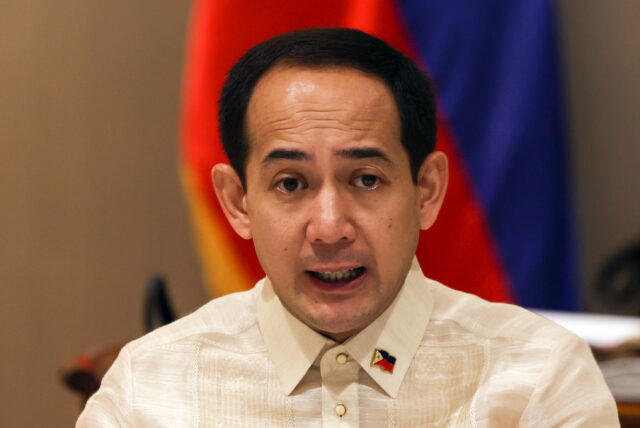
PRESIDENT Ferdinand F. Marcos, Jr.’s long-time aide on Wednesday said he had completely left the government, saying he wanted to spend time with his family.

“I confirm that I have completely exited the administration of President Bongbong Marcos, after having spoken to him at length about my wish to spend most of my time with my family,” ex-Executive Secretary Victor D. Rodriguez said on Facebook. It was “a very personal decision that was happily made.”

He quit as executive secretary amid a sugar fiasco in which some senators blamed him for failing to communicate his boss’ import policy. Several agriculture officials resigned after the president vetoed a Sugar Regulatory Administration order to import 300,000 metric tons of sugar amid rising prices and tight supply.

His replacement, Executive Secretary Lucas Bersamin on Tuesday said Mr. Rodriguez was no longer part of the Cabinet, adding that he wasn’t aware of a presidential order that made him presidential chief of staff.

Mr. Rodriguez earlier said he had resigned as executive secretary but would stay on as presidential chief of staff, a new position created through an administrative order supposedly signed by the president.

Mr. Marcos on Tuesday reappointed 10 Cabinet members whose nominations the Commission on Appointments bypassed last week.

The presidential palace later said Press Secretary Trixie Cruz-Angeles and Commission on Audit Chairman Jose C. Calida, who were not reappointed, have quit their jobs.

Information and Communications Technology Secretary Ivan John E. Uy and Election Commissioner Nelson J. Celis also were not reappointed.

Mr. Marcos likely chose not to reappoint them given congressional resistance, said Francisco A. Magno, who teaches political science and development studies at De La Salle University.

“This reflects the loss of trust by the chief executive in their continued stay in office,” he said in a Facebook Messenger chat.

People get appointed to government positions because the president trusts them, Jean Encinas-Franco, a political science professor at the University of the Philippines, said in a Messenger chat. “Qualifications are secondary.”

She said factions among Cabinet members are expected.

“Malacañang is a snake pit,” Antonio Gabriel M. La Viña, former dean of the Ateneo de Manila University School of Government, said in a Messenger chat. “It always has been regardless of the administration. Only the fittest, brightest, smartest and the most hardworking survive.”

In his post, Mr. Rodriguez noted his “continued silence” on issues, adding that all communications between him and Mr. Marcos were “absolutely privileged, something which I shall continue to honor.”

“I have been ridiculed, maligned and subjected to baseless and unfair commentaries on all conceivable platforms, but I take solace in the legal aphorism ‘Men in public life may suffer under a hostile or unjust accusation; the wound can be assuaged with the balm of a clear conscience,’” he said. “I will continue serving as a private citizen as best as I can. Let us support President Bongbong Marcos and the Philippines,” he added in Filipino.

Senate President and Commission on Appointments Chairman Juan Miguel F. Zubiri last week said they failed to tackle the appointments of the 15 for lack of time.

Lawmakers went on a monthlong break on Oct. 1. — Norman P. Aquino and Kyle Aristophere T. Atienza

MPIC’s Toledo willing to serve as Marcos’ press chief 

MALACANANG.GOV.PH

A METRO Pacific Investments Corp. (MPIC) executive on Wednesday expressed willingness to serve as press secretary under the Marcos administration.  

Who am I to decline? I would be humbled and it would be an honor and a privilege to serve under the Marcos administration,said Michael “Mike” T. Toledo, head of MPICs Government Relations and Public Affairs.  

Its not a question of interest but if public service calls for you to make sacrifices then who are you to say no?he said in a chance interview on the sidelines of a government-led multi-stakeholder forum, based on a transcript from the Malacañang Press Corps (MPC).  

Mr. Toledo currently chairs the Chamber of Mines of the Philippines and serves as chief operating officer of Silangan Mindanao Mining Co. 

He served as presidential spokesperson during the administration of former President Joseph E. Estrada.  

Mr. Toledo, former broadcaster Gilbert Cesar C. Remulla, and Transportation Undersecretary Cesar B. Chavez were shortlisted for the position of press secretary, according to reports last month.  

In a phone interview with Palace reporters, Mr. Chavez confirmed that an authorized personoffered him the press secretary post.   

I said Im not interested in the press office of the Malacañang,Mr. Chavez told reporters, based on a transcript from the MPC.  

Honestly, I think some people are more competent and able to handle the job,he added. Mentally, physically, emotionally, and professionally, they are more qualified than me.”  

Also on Wednesday, film director Paul D. Soriano, who played a key role during the presidential campaign of Mr. Marcos, confirmed to ABS-CBN News that he was also considered for the post, but he declined.   

MPIC is one of three key Philippine units of Hong Kong-based First Pacific Co. Ltd., the others being Philex Mining Corp. and PLDT, Inc.  

Hastings Holdings, Inc., a unit of PLDT Beneficial Trust Fund subsidiary MediaQuest Holdings, Inc., has a majority stake in BusinessWorld through the Philippine Star Group, which it controls. Kyle Aristophere T. Atienza

Justice dep’t says all hands on deck for investigation of broadcaster’s murder 

JOURNALISTS and activists light candles for killed Filipino radio journalist Percival Mabasa during an indignation rally, in Quezon City, Philippines, October 4, 2022. — REUTERS 

THE DEPARTMENT of Justice (DoJ) on Wednesday said an inter-agency investigation is underway for the killing of a radio broadcaster on Monday evening, which had been denounced by media groups, various sectors, and foreign governments. 

“We will look at all the facts relevant to the case because there’s really no room for this behavior,” DoJ Spokesperson Jose Dominic F. Clavano IV told CNN Philippines. “Hopefully, we will get to the bottom of this.” 

Radio journalist Percival Mabasa, 63, was killed by two assailants at the gate of a residential compound in Las Piñas, police said on Tuesday.  

His YouTube Channel, which had over 200,000 subscribers, showed he had been critical of former President Rodrigo R. Duterte and some policies of current officials. 

The Justice official noted that the country’s task force on media security will collaborate with other law enforcement agencies to investigate the killing. 

The task force was formed in 2016 under Mr. Duterte’s presidency. 

Senior Deputy Executive Secretary Hubert Guevarra told reporters on Tuesday that President Ferdinand R. Marcos, Jr. was “very concerned” over the shooting of the broadcaster. 

He added that the National Bureau of Investigation was also instructed to investigate the killing.  

The Philippine National Police has said it formed a special task force to lead the investigation.   

Las Piñas Police chief Jamie O. Santos earlier said that local police are not ruling out the possibility of Mr. Mabasa’s profession as a motive for his murder.  

The National Union of Journalists of the Philippines as well as the Foreign Correspondents Association of the Philippines have issued separate statements condemning the killing and calling for justice.  

On Tuesday evening, the embassies of the Netherlands, Canada, and France expressed concern over the journalist’s murder and media freedom in the Philippines.   

“Journalist killings strike at the very core of media freedom and can create a chilling effect that curtails the ability of journalists to report news freely and safely,” according to a joint statement posted by the Dutch and Canadian embassies and backed by the French embassy. John Victor D. Ordoñez

Senator asks Labor dep’t to partner with LGUs to penalize firms violating 13th month pay law

A SENATOR has asked the Department of Labor and Employment (DoLE) to partner with local governments to be able to penalize companies that fail to release the mandatory 13th month pay of workers.

Under Senator Raffy T. Tulfos proposal, local government units (LGUs) will get authority to withhold the annual business permit renewal of a company that violates the 13th month pay rules. 

Under existing labor guidelines, the benefit must be paid before Dec. 24.

Its almost the Christmas season. This is the time of the year where our workers hope to receive their 13th month pay. Instead, this does not happen because they are cheated by their employers,Mr. Tulfo said in Filipino during a Senate hearing on Tuesday.

Mr. Tulfo, a former broadcaster, said he had previously handled several related complaints from workers in his program. 

He said mere issuance of advisories from DoLE is not enough.

“As long as they (companies) are not hurt in the process, they will ignore that advisory, seeing that even with a law requiring 13th month pay, employers are still disobeying it,Mr. Tulfo said. They need to taste the consequences for them to take action. 

Business permit renewals are usually undertaken by local governments in January. Late application and approval is usually subject to financial penalties. Alyssa Nicole O. Tan

Solon calls for national ID contract termination if delay continues

PHILIPPINE STAR/ MICHAEL VARCAS

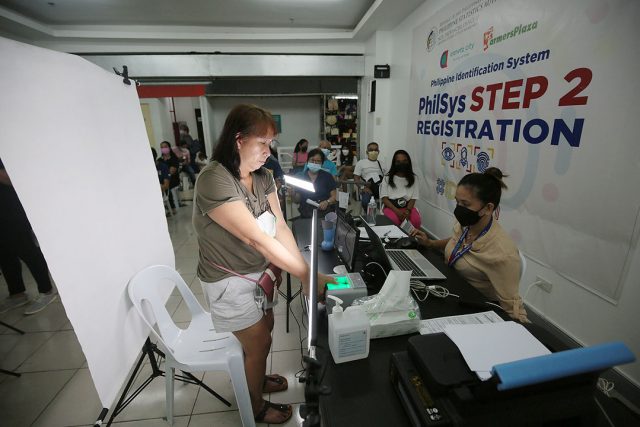
A CONGRESSMAN on Wednesday asked the administration to set a deadline and terminate the contract for national ID cards if the supplier fails to meet the target date. 

Northern Samar Rep. Paul R. Daza said President Ferdinand R. Marcos, Jr. should order a contract review that would be made public as well as look for a new head of the Philippine Statistics Authority, the lead implementing agency for the national ID program that started Oct. 2020. 

Whats important is that the President and National Economic and Development Authority (NEDA) Secretary Arsenio M. Balisacan come up with a deadline, lets say next month, and if they are not able to meet that deadline, then the contracts should probably be terminated,Mr. Daza, said in an interview with ABS-CBN News Channel. 

If it is really delayed despite having funding, then maybe the best thing to do is to terminate the contract.” 

Given the historical delays, the government would probably not meet the target of 92 million national ID cards delivered by June next year, he added.

Mr. Daza also suggested that the government should consider issuing digital IDs instead. 

I think the best thing they (the government) can do is to consider digital ID,he said. The trend all over the world is to have digital IDs, so that should have been done, because there’s about 80 million Filipinos with phones, and most have smartphones. 

He said printed IDs would be optional. 

During the House deliberations for NEDAs 2023 budget, Mr. Daza questioned why only P6.8 billion out of the P28.4 billion fund for the Philippine Identification System (PhilSys) or the National ID project had been used. Kyanna Angela Bulan

Bill proposes separate ministry for tourism in Bangsamoro

THE BANGSAMORO region’s pavilion at the 33rd Philippine Travel Mart held at the SM Mall of Asia on Sept. 30-Oct. 2 was recognized as Best Provincial/Regional Booth and won the People’s Choice Award. — BANGSAMORO GOV’T FACEBOOK PAGE

A PROPOSED law has been filed in the Parliament of Bangsamoro, an autonomous region in southern Philippines, to create a separate ministry for tourism, which is currently grouped with the trade and investment sectors. 

“The bill seeks to establish a separate ministry for tourism by dividing the Ministry of Trade, Investments, and Tourism (MTIT) into two ministries: the Ministry of Tourism and the Ministry of Trade and Industry,Parliament Member Amir S. Mawallil, who authored the measure, said in a statement on Wednesday. 

He said Parliament Bill No. 13, or An Act Creating the Ministry of Tourism, aims to bring focus to a sector that could generate employment and contribute to the regions economic development. 

Under this proposed measure, the Ministry of Tourism shall be the agency responsible for encouraging, promoting, and developing tourism as a major socio-economic activity to generate revenue and employment, as well as spreading the benefits of tourism across a wider segment of the Bangsamoro population,” Mr. Mawallil said. 

He noted that the Bangsamoro Autonomous Region in Muslim Mindanao (BARMM) offers unique attractions given its pristine land and sea resources,  and cultural diversity. 

The lawmaker said having an agency dedicated to tourism will help ensure that these sites will be sustainably developed.   

He also cited that the regions proximity to the Brunei Darussalam-Indonesia-Malaysia-Philippines East ASEAN Growth Area provides an added incentive to tourism investors. MSJ

Motorcycle taxi group seeks probe of Grab’s acquisition of MOVE IT

PHILIPPINE STAR/EDD GUMBAN

A GROUP of motorcycle taxi drivers has asked the House of Representatives to probe Grab Philippines acquisition of MOVE IT, saying appropriate regulations should first be established for such deals.    

What the driver groups want is for the pilot study under the Department of Transport (DoTr) that began three years ago with the purpose of drafting a law that governs the operation of motorcycle taxis be concluded first,ARANGKADA Riders Alliance National Chairman Rod Cruz said during a dialogue with Manila Rep. Joel R. Chua. 

Grab Philippines announced its acquisition of MOVE IT in August, which paves the way for its entry into motorcycle taxi operations. A company official has said they are confident that the deal is compliant with existing rules. 

However, the DoTr told a Senate committee hearing in September last year that the technical working group (TWG) overseeing the operations of motorcycle taxis has ordered the suspension of the Grab Philippines-MOVE IT partnership. 

The TWG, which includes the DoTr, Land Transportation Office, and the House of Representatives, is mandated to discuss the standards and capacities of a motorcycle and its driver for public transportation service. 

All riders and the riding public remain vulnerable until a law that defines proper rules and regulations is passed,Mr. Cruz said. And such underhanded moves, like the backdoor entry of Grab Philippines to the pilot program further places everyone at risk. 

Ariel E. Inton, founder of Lawyers for Commuters Safety and Protection, also said the acquisition was a backdoor entry into the pilot program. 

The front door would have been filing for accreditation, but if you recall, Grab Philippines withdrew its motorcycle taxi application years back and then surprised everyone by news that they have acquired MOVE IT,Mr. Inton said. Matthew Carl L. Montecillo

Lawmaker files bills on regional specialized hospitals

PHC.GOV.PH

A SENATOR has filed separate bills seeking to build specialized medical facilities in every region to improve healthcare access nationwide. 

Senator Robinhood “Robin” C. Padilla, who recently underwent a heart procedure, filed Senate Bill 1361 for the establishment of regional heart centers and SB 1362 for kidney and transplant institutes. 

“Filipinos living near the metropolis have a greater advantage in accessing specialized care from the Philippine Heart Center. Meanwhile, patients coming from rural provinces are to some extent deprived of the same quality of cardiac care that the specialty hospital provides,he said in a statement on Wednesday.

Heart disease topped the cause of death in the Philippines in 2021, accounting for 18% at 125,913 deaths, according to data from the Philippine Statistics Authority. 

Kidney failure cases, meanwhile, average 7,000 annually.

Benefit claims from the Philippine Health Insurance Corp. also indicate an uptrend in the incidence of kidney diseases in the past six years. 

The senator also filed a bill on Wednesday for the establishment of a Philippine Institute of Virology as a long-term solution against various viruses, including the coronavirus disease 2019 and its variants. 

“The establishment of a research and development institute under the Department of Science and Technology is a priority agenda to undertake diagnostics, therapeutics and vaccines, among others,Mr. Padilla said in a separate statement. 

The bill will also promote virology research ethics, biosafety and biosecurity; and strengthen the scientific and technological capabilities in virology and relevant disciplines. Alyssa Nicole O. Tan

DMW to strengthen education campaign on international treaties for foreign employers, Filipino workers

THE HEAD of the Department of Migrant Workers (DMW) on Wednesday cited several channels that can be tapped to strengthen the education campaign on international treaties among foreign employers and Filipino workers. 

DMW Secretary Susan V. Ople listed the potential instruments after Senate President Pro Tempore Lorna Regina LorenB. Legarda asked during the budget hearing how the newly established department plans to inform overseas workers about concurred conventions, including the Maritime Labor Protection, the Convention on Domestic Workers, among many others. 

Ms. Legarda said the department should have a communication scheme and a social media team to simplify the provisions of each agreement and how these affect overseas Filipino workers (OFWs). 

Ms. Ople said these information can be included in the following existing channels: video presentations that foreign employers are required to watch before contract signing; pre-departure orientation seminars for OFWs; and the employment contracts. 

Under Philippine law, international agreements are subject to legislative concurrence after executive ratification. 

The three tracks that you mentioned are precise and we will be happy if what we ratified and sponsored here would be operationalized and simplified in Filipino, not just in English, as well as other spoken languages like Ilocano, Bisaya, Hiligaynon, Bicolano, so they can understand,Ms. Legarda said.

Meanwhile, Ms. Ople asked the Senate to support and ensure swift concurrence to the International Labour Organization Convention 190 once it is ratified by the executive branch.

This is the convention against violence and harassment in the workplace,Ms. Ople said. The Labor department has submitted the complete documents on the convention to the Department of Foreign Affairs. 

Its the first international treaty to recognize the rights of everyone to a world of work that is free from violence and harassment,she added.

Ms. Legarda acknowledged the value of the treaty, saying the Philippines should not lag behind to acceding to that very important agreement, especially in the wake of so many reports of violence against Filipinos in the places where they live and where they work.Alyssa Nicole O. Tan

Construction workers party-list to provide legal aid in QC building accident 

THE GOVERNMENT should prosecute officials responsible for a building accident in Quezon City on October 4, where one worker died and 10 others were hurt, a congressman representing construction workers said on Wednesday. 

“We will task the free legal-aid lawyers and engineers to look into the matter so we can make the proper recommendations to the agencies concerned,Construction Workers Solidarity Party-list Rep. Edwin L. Gardiola said in a press release.  

We will ascertain whether or not there was workplace safety compliance.”  

Mr. Gardiola said out-of-court settlements that absolve those criminally liable in the incident will not equate to justice.  

We express our condolences to the family of Francis Anzures who died and the 10 others injured because of a workplace safety incident in a social housing project site, he said.   

The lawmaker urged the Department of Labor and Employment (DoLE) to thoroughly probe the incident.  

We will give free legal aid to defend the victims to get their cash aid and benefits from the contractors and different government agencies like DoLE, Employees Compensation Commission, PhilHealth and others,he said.  

The lawmaker noted that stricter implementation of safety standards and procedures is needed to prevent fatal accidents at construction sites. Kyanna Angela Bulan 

In harm’s way

PHILIPPINE STAR/ MIGUEL DE GUZMAN

Uganda is now battling an outbreak of the Ebola virus, which causes a severe and often fatal hemorrhagic fever in humans and other mammals like monkeys. The latest outbreak was said to be caused by the “Sudan strain,” which reportedly has no approved vaccine or drug treatment, the New York Times (NYT) reported. Scientists are beginning clinical trials only now.

In Zimbabwe, the NYT also reported, a measles outbreak killed more than 700 children and infected thousands of others. There is also a cholera outbreak, reportedly spreading fast, in Syria, and a similarly fast-moving outbreak of syphilis in Texas and the UK. Also in the UK, an outbreak of avian influenza or bird flu has been reported.

Meantime, polio, a disease once almost eradicated, continues to linger in New York State. While presently contained, the virus is seen as staying. Over in Ohio, the third known death of a person in the US with monkeypox was reported. And in Colonie, New York; and parts of Minnesota, Wyoming, Utah, Indiana, and Montana, outbreaks of bird flu have been reported.

In the Philippines, COVID-19 remains a problem, although the spread of the virus seems somewhat contained. However, the threat of monkeypox, polio, and other viruses remains. Moreover, dengue continues to be a major public health issue. Luckily, the Department of Health (DoH) bureaucracy continues to function effectively even without a permanent Secretary.

Nobody knows what the future holds. And no one can predict with certainty what the next pandemic will be and when. Crucial are the types of public health systems the world is putting in place for scientists to recognize early what and when new viruses arise, the threats they pose, the ways to mitigate their threats, and their treatment options. As with any viral outbreak, there is simply no way to avoid them. But the damage can be mitigated.

And this is where I call on our public officials to consider bigger public investments in biosurveillance systems, perhaps even to call on the private sector for urgent assistance. We need to further improve our situational awareness before and during public health emergencies, and this requires better monitoring of what is happening not only here but also abroad.

It takes only one sick patient on a plane, or a ship, to travel to the Philippines for a deadly virus to quickly spread. The COVID-19 virus proved this to be the case. And while effective monitoring at borders and ports of entry helps control the spread of disease, it is also question of knowing way ahead what to look out for and how. This way, appropriate systems and interventions can be put in place.

Knowing ahead, and thus allowing for time for preparation, is the crucial advantage given by effective biosurveillance. Delays in detection and response can mean life or death. After all, poor monitoring results in inadequate information, which can delay initial detection of a possible outbreak. Poor or delayed monitoring also prevents officials from making an informed decision on control efforts or interventions.

What hinders most control efforts is the simple lack of understanding about the underlying epidemiology of emerging or spreading viruses, noted a memo on US Health Security by public health expert Jennifer B. Nuzzo. In her memo to the US Congress, she noted that biosurveillance systems must “1.) rapidly alert and inform decision makers of potential incidents of national significance; 2.) continually provide critical updates as circumstances evolve; and, 3.) access information that answers decision makers’ questions about probable impacts of an event and the consequences of action/inaction.”

It is in this line that I take exception to the back-to-school mandate of the Department of Education (DepEd). Beginning this month, schools have started adding more face-to-face classes. And by November, all schools are seen shunning hybrid or flexible learning and going back to full-week face-to-face schedules.

With this back-to-school mandate, I will be less concerned with vehicular traffic and more worried about the risks to our children. Why the DepEd insists on making physical attendance mandatory for all escapes me, considering that the pandemic is far from over. While I understand that many children, particularly in public schools, lack facilities for online learning and thus find themselves falling behind, why insist on applying the same rule even to schools that have successfully adopted hybrid or flexible learning programs? This, I believe, is a step backward both for education and public health.

Exposure to the virus grows exponentially with back-to-school as it puts more people — students, teachers, parents, school administration and staff, among others — on the road and in public places and in public transportation daily. Physical distancing and disease surveillance becomes more difficult as more people troop to and from school five to six days weekly.

Moreover, monitoring already indicates to us the possibility of a new subvariant of COVID. “We’re not sure why there’s a resurgence in cases in Metro Manila. It could be a new subvariant because we’re also monitoring new subvariants in other parts of the world,” the Philippine Star quoted OCTA fellow Guido David as saying in The Chiefs over Cignal TV’s One News on Monday night. “In fact, in the UK (United Kingdom), they’re starting to see an increase again in cases. There could be a new subvariant causing that.”

He also noted that some schools had to go back to online classes because of clustering of COVID cases. “And when they get infections from schools, usually they bring it back to their households where the rate of transmission is very high. So, it could be partly an effect of the -ber months or face-to-face classes,” David added in a mix of English and Filipino.

The Star also reported that based on DoH data, about 4,000 COVID-19 cases could be reported daily by the end of October, or even higher if people will be less compliant with minimum public health standards. And this is from an average of just 2,288 cases daily for the period of Sept. 26 to Oct. 2. With this projected increase in cases, why go back-to-school now?

DepEd admits that some schools across the country have reported cases of students, teachers, and school personnel getting sick with COVID-19. But the DoH says COVID-19 transmission in schools is still manageable, even while it admits that it does not have the data on how many COVID-19 cases in schools have been reported since face-to-face classes resumed in August. And yet, while it projects the number of cases to rise yet again by the end of this month, it remains supportive of the DepEd’s back-to-school mandate.

Why fan the flames, so to speak, by insisting on returning to “normal” for all schools while the pandemic remains? As the DoH noted, it would “rethink” the policy only “if it comes to a time that cases will surge and hospital admission will be overwhelming.” Really? Should we still wait for that? Meantime, as we send all our children back to school physically, as required by DepEd, are we not deliberately putting them in harm’s way? They are school children, not the Marines.


Marvin Tort is a former managing editor of BusinessWorld, and a former chairman of the Philippine Press Council

matort@yahoo.com

ADVERTISEMENT
ADVERTISEMENT