Home Blog Page 578

BoI says Spain’s Grupo Enhol eyeing RE projects

A SPANISH energy firm is looking at the Philippines for renewable energy (RE) projects as it expands in the Asia-Pacific, the Board of Investments (BoI) said.

In a statement on Wednesday, the BoI said it met with officials from Grupo Enhol at an investment briefing organized by Philippine Ambassador to Spain Philippe J. Lhuillier.

“Grupo Enhol, which is expanding its operations in the Asia-Pacific region, is considering the Philippines for RE projects and related energy storage systems and energy infrastructure projects,” the BoI said.

The meeting was also attended by representatives from the Department of Energy, the Global Capability Center Council Philippines, and the Bureau of Internal Revenue.

“The meeting focused on presenting Philippine opportunities in RE and its value chain, global shared services capabilities, and government support and facilitation services for foreign investors,” the BoI said. — Justine Irish D. Tabile

New LEDAC priorities highlight accountability, digitalization

ARSENIO M. BALISACAN — PHILSTAR FILE PHOTO

THE Department of Economy, Planning, and Development (DEPDev) said four measures approved by the Legislative‑Executive Development Advisory Council (LEDAC) are focused on bringing about deeper accountability and mod-ernizing government.

In a statement on Wednesday, the DEPDev said the four additional measures to the Common Legislative Agenda (CLA) for the 20th Congress align with the Philippine Development Plan 2023-2028, “which seeks to deepen ac-countability, enhance trust in public institutions, and modernize government systems through digital technologies.”

Economy Secretary and LEDAC Secretariat Head Arsenio M. Balisacan said strengthening transparency and accountability is crucial to sustaining public trust.

“These priority bills will lay the foundation for long-term governance reforms that ensure public funds are protected, programs are delivered effectively, and systems remain open to citizens,” he said.

These priority bills are the proposed Anti-Dynasty Law, Independent People’s Commission Act, Party-list System Reform Act, and Citizens Access and Disclosure of Expenditures for National Accountability Act.

The CLA now has 48 priority measures, counting the four new bills.

The corruption scandal involving flood control projects has unleashed protests, slowed economic activity, and shaken investor confidence in the Philippines.

An independent commission is now investigating the allegations that government officials, legislators, and contractors received billions of pesos in kickbacks from such projects. — Aubrey Rose A. Inosante

Locator housing emerging as key differentiator in ecozone dev’t

ABOITIZECONOMICESTATES.COM

MORE economic zone (ecozone) developers are integrating locator housing to gain an edge over the competition, the Philippine Economic Zone Authority (PEZA) said.

“From our experience, we see more developers integrating dormitory and residential facilities in their ecozone projects,” PEZA Director General Tereso O. Panga said via Viber.

“Locator company executives and workers will benefit most from this setup, including employer companies that see these facilities as an imperative to ensure business continuity, especially during disasters,” he added.

He said housing is deemed a best practice in other countries with freeports and ecozones.

“For developers of township projects like Aboitiz, it is a must that they provide as well for residential facilities to make their ecozones more viable and competitive,” he added.

Aboitiz Economic Estates, the developer behind ecozones such as LIMA and TARI Estates, is also closely working with Aboitiz Land to integrate housing in its projects.

“With these two business units, we look forward to the integration of the full real estate offering. We will now be the Aboitiz real estate arm,” according to Farrah Nina L. Mayol, senior assistant vice-president for corporate branding and communications at Aboitiz Economic Estates.

“We see this integration as something that strengthens our organization more because we offer the full spectrum of real estate solutions,” she added.

Aboitiz Land currently has developments in Central Luzon, Southern Luzon, and Cebu.

“Our strategy moving forward is to build residential developments within the estate … to serve the residential needs of the estate,” she said.

“It could be houses and lots; we will also be building more workforce housing, because within our estates we serve around 1,000 employees, and those people need housing, so that will be the role of Aboitiz Land moving for-ward,” she added. — Justine Irish D. Tabile

Red onion MSRP raised to P150/kg as import costs rise

PHILSTAR FILE PHOTO

THE Department of Agriculture (DA) said it will raise the maximum suggested retail price (MSRP) for red onion to P150 per kilo from P120 previously, effective on Thursday, with higher import costs continuing to drive up market prices.

Suppliers are charging more for imported onion as the peso weakens against the dollar, it said.

The yellow onion MSRP, meanwhile, will stay at P120 per kilo. According to the DA, the yellow onion supply is stable, with P120 still allowing sellers to earn healthy margins.

In a statement, Agriculture Secretary Francisco P. Tiu Laurel, Jr. said: “The adjustment reflects market dynamics. I have received information from international sources and importers about increases in the prices of red onion from their origin,” noting that prices have risen for produce originating in China, India, and the Netherlands.

Mr. Laurel added that currency weakness has further amplified import costs. “The weakness of the peso is also part of the equation,” he said.

Mr. Laurel urged retailers and wholesalers to comply with the updated MSRP, particularly as demand is expected to rise during the holidays. “We are hoping everyone will cooperate to ensure stable prices and supply given the demand during the Christmas season,” he said.

Mr. Laurel also said the Philippines needs to diversify its onion sourcing, with China currently dominating supply.

“We do not want to be dependent on just one source,” he said, adding that the government is exploring alternative suppliers to build a more resilient and competitive supply chain.

According to the DA, all onion imports will cease by January, ahead of the domestic harvest in February, to protect farmers. This measure aims to prevent imported produce from depressing farmgate prices during the harvest. — Vonn Andrei E. Villamiel

USDA cuts output forecast for PHL rice, citing typhoon damage

PHILSTAR

THE US Department of Agriculture (USDA) said it reduced its estimate for Philippine milled rice production in marketing year 2025-2026 to 12.3 million metric tons (MMT), following typhoon damage to crops in November.

The revised estimate for the current marketing year is 2% lower than November’s projection of 12.6 MMT and down 1% from the year-earlier 12.37 MMT, the USDA said in a report.

The USDA’s marketing year starts in July and ends in June of the following year.

The USDA said the harvested area for the marketing year is projected at 4.7 million hectares, also 2% lower than the month-earlier estimate, and slightly below the year-earlier one. The yield estimate was downgraded 1% to 4.15 tons per hectare.

The USDA said initially favorable growing conditions were offset by heavy rainfall in early to mid-November brought on by Typhoon Fung-wong, known in the Philippines as Uwan.

“Torrential rains led to localized flooding in the northern Philippines’ major rice-producing provinces, most notably, Central Luzon and the Cagayan Valley. Combined, these two regions account for roughly a third of quarter four rice output,” the report said.

The USDA said the regions experienced widespread flooding, with early analysis indicating more than 250,000 hectares of rice fields inundated.

The USDA added that while rice can tolerate short periods of flooding, extended inundation during the crop’s advanced development stage is expected to weigh on fourth-quarter yields.

Meanwhile, the USDA also projects a decline in rice imports for the year, following the government’s temporary import ban.

In a separate report, the USDA estimated that Philippine rice imports this year will total 3.5 MMT, down from a revised estimate of 3.7 MMT in a previous report.

In August, the Philippines, the world’s top rice importer, announced a 60-day ban on rice imports starting September to assist farmers facing low farmgate prices. The ban was extended to the end of the year, with imports ex-pected to resume in January. — Vonn Andrei E. Villamiel

WESM rates dip in November on improved supply, lower demand

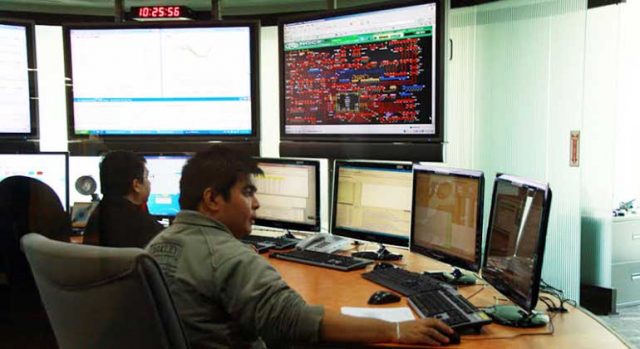
ELECTRICITY RATES on the Wholesale Electricity Spot Market (WESM) dipped in November as supply improved while demand fell, according to the Independent Electricity Market Operator of the Philippines (IEMOP).

IEMOP reported a decline of 12.4% in WESM rates system-wide to P3.98 per kilowatt-hour (kWh) in November compared to a month earlier.

Between Oct. 26 and Nov. 25, power supply improved 0.5% month on month to 19,998 megawatts (MW), while demand fell 2.7% to 13,507 MW.

“Across the grid, regional price movement followed similar trends,” according to Arjon B. Valencia, manager for corporate planning and communications at IEMOP.

On Luzon, spot prices dipped 11.1% to P3.52 per kWh due to higher supply and lower demand.

Available supply increased 1.9% to 14,050 MW, outpacing demand, which declined 1.8% to 9,598 MW.

“In the Visayas and Mindanao, prices also decreased, driven by a larger margin and drop in demand for the former, and supported by higher import volumes coming from the Visayas for the latter,” Mr. Valencia said.

The WESM rate in the Visayas fell 9.6% to P5.29 per kWh, with supply decreasing 0.1% to 2,418 MW and demand falling 7.5% to 1,797 MW.

IEMOP said spot prices in Mindanao fell 14.9% to P4.99 per kWh.

Available supply fell 4% to 3,532 MW while demand decreased 2.3% to 2,112 MW.

Mr. Valencia said the share of coal-fired power continued its downward trend to 53.6% from 56.5%.

IEMOP operates the WESM, where energy companies can buy power if their long-term contracted power deals prove inadequate for their needs. — Sheldeen Joy Talavera

Angara, Aguda still in Cabinet, Palace says amid fallout from graft scandal

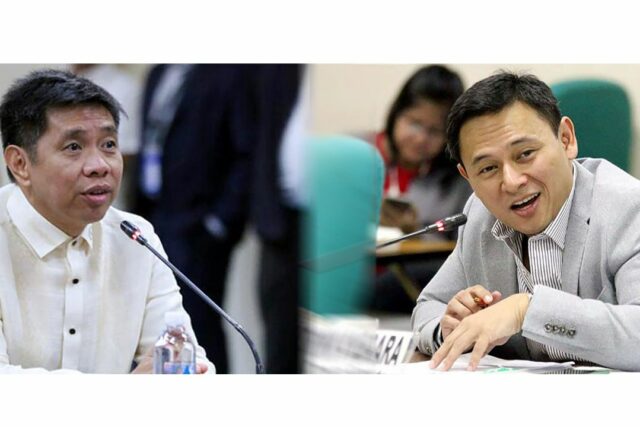
INFORMATION and Communications Technology Secretary Henry Rhoel R. Aguda and Education Secretary Juan Edgardo M. Angara -- BW file photo

THE Presidential Palace on Wednesday said Education Secretary Juan Edgardo M. Angara and Information and Communications Technology Secretary Henry Rhoel R. Aguda remain part of President Ferdinand R. Marcos, Jr.’s Cabinet, denying rumors that the two officials were set for removal over alleged links to the widening graft scandal in public works projects.

Palace Press Officer Clarissa A. Castro said both men attended Monday’s Legislative-Executive Development Advisory Council (LEDAC) meeting and separately briefed the President on their programs, countering claims that they were on the way out.

“They are not leaving because they were with us at the LEDAC meeting, and they also presented their projects during a private meeting with the President,” she told a news briefing in Filipino. “We deny the reports.”

Asked how Mr. Marcos views the performance of his Cabinet amid a string of resignations tied to the procurement controversy, Ms. Castro said he remains “content” with the officials who remain on board.

“We have witnessed successive calamities and storms, yet they remain in their posts and continue to assist our fellow citizens,” she said. “As long as they stay in their positions, his trust in them remains.”

She declined to say whether further dismissals or replacements are in the works. “At this time, we have no update to provide,” she said.

The administration has been trying to contain the fallout from a months-long probe into anomalies in flood control contracts, which has triggered suspensions, resignations and the freezing of assets linked to lawmakers and contractors.

The issue has deepened political fractures and complicated Mr. Marcos’ efforts to stabilize his team ahead of the 2026 budget cycle.

The first Cabinet reshuffle came in May 2025, when Mr. Marcos sought courtesy resignations from all Cabinet secretaries after the administration-backed senatorial slate suffered losses in the midterm elections.

The move led to the exit of Environment Secretary Ma. Antonia Yulo-Loyzaga and the reassignment of others, including Raphael M. Lotilla, who shifted from the energy portfolio to the Department of Environment and Natural Resources.

In July, Mr. Marcos disclosed what he described as collusion among lawmakers and contractors to secure billions of pesos in kickbacks from public works projects, triggering a second round of Cabinet changes.

The disclosure was followed by claims from Party-list Rep. Elizaldy S. Co, who alleged the President was tied to about P100 billion in questionable budget insertions for 2024 — an accusation Mr. Marcos has repeatedly rejected.

The President’s remarks in his fourth state of the nation address set off more departures. Public Works Secretary Manuel M. Bonoan resigned soon after, while Executive Secretary Lucas P. Bersamin and Budget Secretary Ame-nah F. Pangandaman stepped down “out of delicadeza” after accusations raised by resigned lawmakers.

Mr. Marcos then tapped former Finance chief Ralph G. Recto as his executive secretary and appointed Frederick D. Go to lead the Finance department. Ms. Pangandaman was replaced by Budget Undersecretary Rolando U. Toledo as officer-in-charge while deliberations on the 2026 spending plan proceed.

Mr. Angara has been accused of inserting questionable projects into past national budgets during his time in the Senate, while Mr. Aguda faces allegations involving irregular procurement practices among his staff.

Under Mr. Aguda’s watch, 19 government websites were defaced in protest-linked cyberattacks in September, though he said there was “no evidence of a data breach.”

Both Cabinet members have denied all the allegations. — Chloe Mari A. Hufana

EDSA rehab set for 2026 as agencies finalize plan

PHILIPPINE STAR/WALTER BOLLOZOS

METRO MANILA’S traffic agency on Wednesday said it would meet with National Government officials on Dec. 17 to finalize plans for the long-delayed rehabilitation of Epifanio de los Santos Avenue (EDSA), as the administration moves to revive the project in 2026 after resolving issues that stalled earlier efforts.

The Department of Public Works and Highways (DPWH) and Department of Transportation have signaled their intention to begin the overhaul by next year, Metropolitan Manila Development Authority (MMDA) Chairman Romando S. Artes told a virtual news briefing.

He said the MMDA is preparing its own schedule and coordination plan, noting that the problems that disrupted past rehabilitation attempts have largely been settled.

He said the MMDA met last week with Transportation Secretary Giovanni B. Lopez and Public Works Secretary Vivencio B. Dizon to “iron out the details” of the renewed push. “We’ve addressed [the issues]. We will announce the details on Dec. 17.”

The EDSA rehabilitation is expected to be among the most disruptive but essential infrastructure projects in Metro Manila.

The 23-kilometer highway handles more than 400,000 vehicles a day, and agencies are racing to align engineering plans, utility relocations and traffic management plans to avoid the delays that hampered earlier attempts.

The DPWH said it expects to start initial repairs by January 2026. Officials stressed this would be the first phase of work rather than the full rehabilitation.

Mr. Dizon on Tuesday said the government aims to identify “a faster method” of repair to speed up completion and reduce disruptions.

Under the revised plan, the department is also looking to trim the estimated P15-billion project cost while seeking partners to help deliver the work.

The rehabilitation now includes improvements for pedestrians, such as wider sidewalks, expanded walkways and better access for persons with disabilities.

The traffic agency, meanwhile, is grappling with one of the worst surges on record. Vehicle volume on EDSA reached about 450,000 a day in the first two weeks of December.

Mr. Artes said adjustments include clearing alternate routes, working with transport officials to extend train and bus operations and urging the public to shift to mass transit.

He said last week’s six-hour gridlock along Marcos Highway stemmed from simultaneous mall sales, uncoordinated truck bans and enforcement operations that blocked lanes.

The MMDA has since met with local governments in the area and will conduct an inspection to unify traffic measures. More enforcers will be deployed, with cities committing additional support. — Chloe Mari A. Hufana

Political analysts seek swift institutionalization of ICI

Ongoing flood-control works continue in Binondo, Manila. — PHILIPPINE STAR/RYAN BALDEMOR

ANALYSTS are calling on Congress to quickly pass legislation institutionalizing the Independent Commission for Infrastructure (ICI), citing the need for a permanent, empowered body to probe corruption in government infrastructure projects.

Arjan P. Aguirre, a political science lecturer at the Ateneo de Manila University, said the ICI must be carefully structured to protect its autonomy and ensure it can effectively carry out its mandate.

“In its current form, the ICI lacks the power and independence needed to investigate and enforce accountability in the flood control controversy,” he said in a Facebook Messenger chat.

The commission was created through Executive Order No. 94 amid a scandal involving lawmakers and public works officials accused of siphoning billions from flood control projects.

The ICI, created by an executive order, can gather information and coordinate with agencies but cannot compel testimony, override court orders or initiate prosecutions.

Separate bills in the Senate and House of Representatives propose giving it subpoena, contempt and freeze-order powers, while investigations will cover all national and local infrastructure projects, from education to disaster resilience.

Reports must be issued within 30 days of investigation, with inquiries completed in 60 days.

Michael Henry Ll. Yusingco, a fellow at the Ateneo Policy Center, urged civil society to support the commission and pressure courts to ensure transparency.

Strong witness and whistleblower protections, multi-year funding and public reporting are also essential to maintain independence and public trust, analysts said.

Critics, including Bagong Alyansang Makabayan Chairman Teodoro “Teddy” Casiño, argue the ICI is redundant, as the Ombudsman already has investigative authority. “The ICI was just there to assuage the people’s anger; it does not really impact investigations,” he said.

Ombudsman Jesus Crispin C. Remulla noted the ICI is supposed to be temporary. “It has only a month or two left, after which all work can be turned over to the Ombudsman,” he said.

Analysts said timely passage of the institutionalization bill, paired with adequate funding, safeguards and inter-agency coordination, is critical to addressing public discontent and ensuring meaningful accountability in govern-ment infrastructure projects. — Adrian H. Halili and Erika Mae P. Sinaking

Marcos will not certify 2026 budget as urgent

Philippine President Ferdinand Marcos Jr. meets with US President Donald Trump (not pictured), in the Oval Office at the White House in Washington, DC, July 22, 2025. — REUTERS/KENT NISHIMURA

MALACAÑANG on Wednesday said President Ferdinand R. Marcos, Jr. would not certify the 2026 General Appropriations bill as urgent, marking the first time he has withheld such certification since assuming the presidency in 2022.

Palace Press Officer Clarissa A. Castro said lawmakers are close to completing the national spending plan.

“Not this time because they’re almost done, and as far as we know, they will be submitting the enrolled copy of the bill before Christmas,” she told a news briefing in Filipino.

The national budget sets the government’s funding priorities for critical sectors and strategic programs. Malacañang last week urged Congress to fast-track the measure, emphasizing that Mr. Marcos does not want a reenacted budget, which occurs when the previous year’s General Appropriations Act remains in effect until a new budget is passed.

Congress is deliberating on the 2026 budget, with a bicameral conference committee scheduled for Dec. 11-12. Lawmakers aim to approve the bill by Dec. 16, with the President targeting a Dec. 29 signing.

Transparency concerns have emerged after allegations of billions of pesos in unprogrammed insertions in this year’s spending plan, reportedly made behind closed doors by a “small committee” during the bicameral stage.

To boost oversight, Mr. Marcos ordered bicameral proceedings to be livestreamed, and the Senate has directed that all 2026 budget materials, including transcripts, hearings and briefings be made publicly available online, aiming to ensure greater transparency and accountability in government spending. — Chloe Mari A. Hufana

Chinese trader cited in contempt

THE Senate agriculture committee on Wednesday cited Chinese trader Shi Chaoqun in contempt for allegedly lying about having no government contacts who had helped him smuggle agricultural products into the Philippines.

Senator Francis Pancratius N. Pangilinan said Mr. Shi’s explanation was insufficient, while Senator Erwin T. Tulfo accused him of lying under oath about how he was able to run a trading business in the country despite not speaking Filipino and claiming to have no local contacts.

“We are being fooled. He says he conducts business here, but he is Chinese, and he insists he has no local contact,” Mr. Tulfo said.

Speaking through an interpreter, Mr. Shi said he never communicated with government offices. “I cannot communicate with them. How do I communicate with them if I don’t need them?” he asked.

Authorities earlier tagged Mr. Shi as a lessee of a freezer in a Cavite cold storage facility raided for storing allegedly smuggled frozen goods. — Adrian H. Halili

Pediatric bone marrow transplant ward at PGH to open in 2026, furnished by Genteelhome

The special pediatric ward in PGH will be furnished with customized pieces by Genteelhome. — EDG ADRIAN A. EVA

A charity bone marrow transplant ward for pediatric patients is set to open at the Philippine General Hospital (PGH) in June 2026, according to the I Want To Share Foundation (IWTS) on Wednesday. The rooms are being furnished by local furniture company Genteelhome to help young patients recover in a comfortable environment.

Construction of the ward began in October and will feature four fully equipped medical rooms, specifically designed to meet the special needs of children undergoing bone marrow transplants.

“These rooms are designed to protect patients whose immune systems are extremely fragile,” Sheila B. Romero, IWTS founder, said during a partnership event with Genteelhome.

The ward will follow strict infection control protocols, including HEPA-filtered air systems and carefully planned layouts to allow health workers to operate efficiently, Ms. Romero said.

The country’s first charity bone marrow transplant ward, she said, aims to provide free or subsidized transplants at PGH for over 600 children with blood-related disorders who require the procedure.

Its construction funding came from the IWTS and will be operated by PGH.

During the event, it was announced that the ward will be furnished by Genteelhome to provide children with a more comfortable experience during their weeks of recovery. The furniture brand donated customized and movable pieces, including chaise lounges and chairs, that can be adjusted to the patients’ needs.

“Through this initiative, we hope to bring comfort to these children in their fight against cancer,” Genteelhome founder Katrina Blanca de Leon said during the event.

Aside from the ongoing construction of the ward, Ms. Romero shared updates on IWTS’ other cancer initiatives. The Cancer Helpline for pediatric patients, first teased last year, is now in training for around 100 doctors, nurses, and barangay health workers in Bacoor, Cavite, and Sta. Rosa, Laguna.

Also, the IWTS charity gala last August raised P88 million, which will be allocated to the second phase of the bone marrow transplant ward and the acquisition of 50 pieces of medical equipment for PGH’s Cancer Institute.

IWTS is a Philippine-based charity organization dedicated to helping children with cancer by providing access to treatments, financial aid, survivorship programs, and other forms of support.— Edg Adrian A. Eva

ADVERTISEMENT
ADVERTISEMENT