Home Blog Page 564

Two-time champ San Beda coach Escueta sees third and fourth title

THE San Beda University Red Lions, just a day after claiming a 24th NCAA senior basketball championship and reestablishing itself as the greatest in the grand old league, is not done yet.

“There’s a third and fourth coming,” said San Beda coach Yuri Escueta when asked what will happen after he sealed his second championship as mentor of the Benedictine school.

Mr. Escueta wasn’t even joking.

He knew he would have enough materials to walk his talk.

Never mind that he would lose two key cogs in that memorable championship run in valiant skipper Yuki Andrada and Finals MVP winner Bryan Sajonia, who will both play in the PBA after their college sojourn.

And one of those important pieces San Beda will have come next season is super rookie Agjanti Miller, who had already committed to return the red-and-white squad next season that quashed nasty rumors of a potential transfer to other schools.

“I wouldn’t do this with anybody else,” said Mr. Miller, who posted the most points and made the Mythical First Team in NCAA Season 101.

“If we’re able to run it back here in the NCAA, I’ll run it back,” he added.

Another key part should be Nygel Gonzales, who was clutch and outplayed Colegio de San Juan de Letran’s own fantastic neophyte in Titing Manalili in the finals series including Game Two where the former poured in all his 19 points in the second half that helped seal the deal.

“I’m just happy to help my team win a second championship. We’re hoping for a third,” said burly guard from Lipa, Batangas. — Joey Villar

Wushu star Agatha Wong extends her reign in taijiquan-taijijian for her sixth gold

CHONBURI — Worry not Team Philippines, Agatha Wong got your six.

The Pinay wushu star who’s been dominating the region since 2017 gave Team Philippines a smashing triumph in the late morning sessions — a welcome change after the long wait for gold until dusk the past three days — in the 33rd Southeast Asian (SEA) Games.

A five-time winner in the four previous SEA Games, Ms. Wong was in her element again, delivering a dazzling performance in the culminating sword part of the women’s taijiquan-taijijian event to extend her reign and put that glowing sixth mint in her bag.

With her combined 19.556 points built around a rock-solid 9.773-point performance in the taijiquan last Saturday and a strong 9.783 closeout in Sunday’s taijijian, Ms. Wong bested her challengers and ensured the playing of the “Lupang Hinirang” by noontime at the Rattha Prasasan Bhakdi Building in Bangkok.

It was a sweet victory for Ms. Wong, who’s now splitting her time between her athletic career and med school.

“This has been the hardest year for me,” said the comely six-time SEAG gold medalist, who delivered Team Philippines’ 16th gold overall in the Thailand meet.

“I really just tried to do my best because it’s not everyday you get an opportunity to represent your country. So now that ended my year with a gold medal, I’m really happy.”

Though winning many times over, Ms. Wong admitted having doubts pre-competition.

“Every time I go to the SEA Games, I feel like I’m going to lose. When I flew to Bangkok I was really scared but I trained really hard and I gave it my all. Now I’m going home a champion so it’s very emotional for me,” she said.

Complementing Ms. Wong’s gold were shooter Michael Angelo Fernandez (men’s individual 10m Air Pistol) and jet ski bets Anton Nicolas Ignacio (Mixed Runabout 1100 Stock) and Anton Nicolas Ignacio (Mixed Runabout 1100 Stock) who earned a silver each.

As of 6 p.m. (Manila time), the Philippines toted a 16-23-55 collection for sixth overall.

Gilas Pilipinas Men launched its title-retention bid in Group A in the strongest terms possible, clobbering Malaysia, 83-58, at the Nimibutr Stadium.

Its women’s counterparts clinched a ticket to the semifinals after posting its second straight victory at the expense of Singapore, 92-59, to top Group B.

In Chonburi province, Tokyo Olympics weightlifting champ Hidilyn Diaz missed out on the podium, placing fourth in the women’s 58kg class with 200 kgs (90kg snatch and 110kg clean and jerk).

Olympians Chris Nievarez and Joanie Delgaco, meanwhile, put themselves in position for rowing’s medals after making strong runs during Sunday’s preliminaries at the Royal Thai Navy Rowing and Canoeing Training Center in Rayong.

Mr. Nievarez, a veteran of Tokyo, ranked second in the men’s single sculls heats at 8:27.130 behind Indonesia’s Memo (8:25.130) to advance to the finale.

Mr. Delgaco, who rowed in Paris, teamed up with Kristine Paraon in clocking third in the women’s double sculls heats behind counterparts from Vietnam (8:17.719) and Thailand (8:19.428) to advance.

Zuriel Sumintac, Reine Art Poblete, Romnel John Acosta, Edgar Ilas, Daryl Pangantao, and Kenneth James Lantong also moved on to the gold medal race in the lightweight men’s quadruple sculls after coming in fourth in the heats (7:34.716).

The finals will be held on Dec. 16.

“We have a good (medal) chance in two out of three,” coach Ed Maerina told The STAR.

Meanwhile, the Philippine U22 booters gun for a historic trip to the men’s football finals and a guaranteed silver medal today as they battle Vietnam in the semis at the Rajamangala Stadium in Bangkok.

The gritty Filipinos are in the KO stages for the first time since the famous fourth-place finish of Norman Fegidero and Co. in 1991 at home and with a victory at 3:30 p.m. (4:30 p.m. Manila time), can register they best finish ever at the Games.

If they get past the Vietnamese, the charges of Garrath McPherson will battle either host Thailand or Malaysia for the gold. If not, they will still get a shot at a breakthrough medal in the battle for third on Thursday. — Olmin Leyba

ERC proposes over P10/kWh cap for offshore wind auction

REUTERS

THE ENERGY REGULATORY Commission (ERC) has proposed P10.3859 per kilowatt-hour (kWh) as the ceiling price to guide participants in the fifth green energy auction round (GEA-5) for offshore wind next year.

The green energy auction reserve (GEAR) price will be used in the auction for fixed-bottom offshore wind projects, which will have an installation target of 3,300 megawatts (MW).

At a briefing last week, ERC Director for Market Operations Service Sharon Ocampo-Montañer said the commission took into consideration some proposed offshore wind projects in Manila Bay, San Miguel Bay, Guimaras Strait, and southern Mindoro in setting the price.

“We have also considered the costs of various wind turbine suppliers,” she said.

The GEAR price serves as the maximum price in pesos per kWh, which will guide bidders during the auction.

The public can comment on the proposed GEAR price for offshore wind energy by Dec. 19. The ERC will conduct public consultations on Jan. 5 and 6.

“This auction for offshore wind is a milestone in achieving the Philippine Energy Plan set by the DoE,” ERC Chairmann Francis Saturnino C. Juan said.“This technology will be first in the country with total potential capacity of more than 68 gigawatts.”

GEA-5, the first auction dedicated solely to offshore wind projects, is expected to take place within the first half of 2026.

The Philippines is hoping to start generating offshore wind power by 2028 in the course of diversifying its energy sources and reducing dependence on fossil fuels.

It expects offshore wind to play a key role in achieving the target of increasing renewable energy’s share in the power mix to 35% by 2030 and 50% by 2040. — Sheldon Joy Talavera

New charges detract from mission to make RE affordable — advocacy group

BW FILE PHOTO

THE ENERGY transition cannot come at the expense of consumers, who are being made to pay fees that cut the risk for renewable energy (RE) developers, according to Partners for Affordable and Reliable Energy (PARE).

“PARE supports the country’s shift to clean and renewable energy (RE), but these measures should move the Philippines toward a just, affordable, and participatory energy transition, not create new financial burdens for consumers,” PARE Chief Advocate Officer Nic Satur, Jr. told BusinessWorld.

The Energy Regulatory Commission (ERC) recently approved the application of the National Transmission Corp. (TransCo) to collect the green energy auction allowance (GEA-All).

The GEA-All rate of P0.0371 per kilowatt-hour will appear as a separate line item in the customers’ electricity bills starting January next year.

The amount will be charged to all on-grid electricity end-users to fund the incentives of new RE projects being awarded under the green energy auction system. This has been expected to generate P5.7 billion worth of payments.

GEA-All will support RE projects involving solar, wind, hydropower and integrated RE facilities with battery storage.

Winning RE projects are awarded 20-year power supply contracts, ensuring long-term, stable revenue for their power generation output.

Meanwhile, the ERC also approved another TransCo application for a feed-in tariff allowance (FIT-All) of P0.2011 per kilowatt-hour (kWh), a reduction from the P0.2073 per kWh currently being charged.

FIT-All is a uniform charge that has been long being paid by consumers to support emerging RE technologies.

Payments for GEA-All and FIT-All are administered by TransCo. As the administrator, TransCo is tasked with filing applications before the ERC to determine the annual rate.

“For us consumers, particularly low-income households and those in rural or missionary areas, any additional charge or hidden cost related to Green Energy Auctions, new transition funds, or compliance with transition targets can worsen already rising electricity prices and squeeze budgets at a time of increasing food, transport, and housing costs,” Mr. Satur said.

ERC Chairman and Chief Executive Officer Francis Saturnino C. Juanhas  said that the incentives are meant to support the entry of new capacity in the Wholesale Electricity Spot Market (WESM).

“With the additional capacity, it will reduce the quantity that needs to be competed over in the WESM. It effectively pushes the demand curve, so the resulting price at the WESM will go down,” he said. — Sheldon Joy Talavera

Garment, textile growth seen at 2-5% in 2026 amid US tariff concession hopes

REUTERS

EXPORTS of garments, textiles, and apparel are expected to grow between 2% and 5% next year as the government negotiates a lower tariff with the US and as the industry explores new markets.

Foreign Buyers Association of the Philippines President Robert M. Young said exports this year were “surprisingly good” because of advance deliveries that were meant to cushion the impact of the US reciprocal tariff.

“Revenue is expected to hit $1 billion from around $800 million in 2024,” he said in a statement over the weekend.

He expects growth to continue next year as the government continues to negotiate a lower reciprocal tariff and exemptions.

“They are still asking for some adjustments, and they are trying to talk to Washington about decreasing the 19% (tariff), as President Trump did with three countries. Some were even reduced to zero,” he said.

“I hope we can also have that kind of treatment, and if that happens, that will be the best thing for us,” he added.

He said the industry has been exploring other markets, including the European Union, the Association of Southeast Asian Nations (ASEAN), Canada, and Australia.

“They are banking on the opening of new markets through free trade agreements (FTAs),” he said.

“We are requesting more FTAs because I think among the ASEAN countries, we have the least number of FTAs,” he said.

However, the group is seeking government subsidies to help offset the rise in input costs and make the industry’s products more competitive.

“We were asking for some subsidy for power and labor costs as well. We were talking to the Department of Labor and Employment people also to give us some leeway,” he said, noting that the industry is hoping for breaks like tax deductions.

“With all these things that could come into play, we hope to lower our FOB (free on board) cost,” he added.

He said that with government assistance and more FTAs in place, the industry can return in two to four years to the $5-billion export level of 10 to 15 years ago.

“When we say $3 billion to $5 billion in three or four years’ time, we are looking forward to some textile factories being established in the Philippines, (which will reduce) our fabric cost,” he added. — Justine Irish D. Tabile

Philippine third-quarter external debt tops $149 billion in new record

South Korean won, Chinese yuan and Japanese yen notes are seen on US 100 dollar notes in this file photo illustration. — REUTERS

OUTSTANDING external debt hit a new record of $149.093 billion in the third quarter, up 6.8% from a year earlier, the Bangko Sentral ng Pilipinas (BSP) reported.

The third-quarter total was 0.1% higher compared to the quarter earlier at $148.873 billion, which had been the previous record.

The central bank called debt levels “broadly stable.”

“The marginal quarter-on-quarter increase was underpinned by heightened engagement of nonresident investors in the domestic capital markets,” the central bank said in a statement late on Friday.

External debt refers to all types of borrowing by residents from nonresidents.

The BSP said net repayments totaled $764.56 million during the period, while valuation adjustments amounted to $442.5 million as the dollar strengthened.

In the third quarter, the peso weakened against the dollar to between the P56 and P57 level, averaging P57.2501 at the end of September.

As of September, foreign debt was equivalent to 30.9% of gross domestic product (GDP), lower than the 31.2% share posted at the end of June.

“Metrics show that the external obligations remained manageable, supported by solid economic conditions and prudent policies,” the BSP said.

Public sector debt hit $96.298 billion in the third quarter, accounting for the bulk of the country’s external obligations.

National Government debt amounted to $90.602 billion, followed by government banks with $5.696 billion and the BSP $3.91 billion.

Japan granted the most loans to the Philippines with $16.059 billion, followed by China with $4.353 billion and the US with $3.36 billion.

The borrowing mix was composed mainly of dollar-denominated debt ($105.675 billion) and yen debt (the equivalent of $11.388 billion).

Meanwhile, the private sector took out $52.796 billion in loans in the third quarter, up 0.07% from a year earlier.

In the third quarter, short-term external debt based on the remaining maturity concept (STRM) stood at $27.16 billion. STRM debt is composed of loans with original maturities of one year or less plus amortization on medium- and long-term accounts falling due within the next 12 months.

“This level remains well-covered by the country’s gross international reserves of $109.06 billion, providing 4.01 times cover for short-term obligations,” the BSP said.

Meanwhile, the central bank added that resident borrowers’ lower principal and interest payments pulled the debt service ratio down to 8.5% at the end of September from 11.5% a year earlier and 8.7% in the previous quarter. — Katherine K. Chan

ADB preparing over $4 billion in lending to Philippines in 2026

BW FILE PHOTO

THE Asian Development Bank (ADB) is committed to providing more than $4 billion in loan financing to the Philippines in 2026, targeting transportation, health, and education programs.

“We have a pipeline of around $4 billion for lending to the Philippines. That’s ODA, Official Development Assistance lending,” ADB Country Director for the Philippines Andrew Jeffries told reporters on the sidelines of an event on Dec. 11.

Earlier, ADB President Masato Kanda said the bank’s co-financing is expected to exceed $5 billion this year, and is now preparing around $15 billion in assistance to the Philippines over the next three years.

The ADB was the second-biggest development partner of the Philippines in 2024 with 59 loans and grants worth $11.05 billion.

“We have a pipeline of projects for next year that we need to agree on with the Department of Finance and Department of Economy, Planning, and Development,” Mr. Jeffries said.

“We have a robust set of projects in transport, health, education, and public financial management. A number of them for next year and going on into the future,” he said.

These projects are new, and some are carryovers, including mega projects such as the Bataan-Cavite Interlink Bridge (BCIB) project and the North-South Commuter Rail line.

“They’re so large, and they take many years to construct; the loans are in phases. I think we have some future phases of some of our large projects as part of that number for next year,” he said.

The planned 32.15‑kilometer BCIB, a $3.91‑billion project spanning the mouth of Manila Bay, will link Bataan and Cavite. It is expected to strengthen regional economic integration and spur development.

The ADB, co-financing the project, approved a $2.11-billion loan for the bridge in 2023. The government is responsible for the remaining $664.23 million.

The Department of Public Works and Highways has said the BCIB project will be operational by 2030.

For 2025, Mr. Jeffries said the two projects, the Marine Ecosystems for Blue Economy Development Program Subprogram 1 and the $400-million financing for the Business Environment Strengthening with Technology Program (BEST) Subprogram 1, were the last loans to be approved.

Both projects were approved on Dec. 9, he said.

The approved $500-million policy-based loan support for the Philippine blue economy, announced on Dec. 11, aims to improve the resilience of coastal communities.

Meanwhile, the $400-million BEST program will boost the government’s efforts to improve the ease of doing business in the Philippines.

Mr. Jeffries warned that a weaker peso poses an inflation risk next year, while the Bangko Sentral ng Pilipinas (BSP) rate cuts should give private firms some relief at a time of sluggish investment.

“One risk is if the peso continues to go down against the dollar or foreign currencies more generally, making imports more expensive. So that could have an effect on the overall inflation of imported goods,” he said.

The peso slid to a record low of P59.22 to the dollar on Dec. 11, beating the previous all‑time weak close of P59.17 set on Nov. 12.

The ADB’s December Asian Development Outlook, released last week, projected Philippine headline inflation to average 1.8% this year, slightly above the BSP’s 1.7% forecast.

Inflation averaged 1.6% in the first 11 months of 2025, according to the Philippine Statistics Authority.

“(Inflation) is quite low, and that gives them room to lower interest rates, which means lowered borrowing costs for private companies, which can promote investment. Investment has gone down,” Mr. Jeffries said.

The BSP has lowered key borrowing costs by a total of 200 basis points (bps) since it began easing in August last year, including a 25‑bps cut at its Dec. 11 meeting as the outlook for domestic growth continued to soften.

BSP Governor Eli M. Remolona, Jr. said the central bank may trim rates by another 25 bps next year to conclude its easing cycle.

He also ruled out any off‑cycle or jumbo move, warning such a move could send the wrong signal to markets and risk further eroding confidence by appearing “desperate.”

The lower borrowing costs could help offset the drag that corruption imposes on public and private investment, Mr. Jeffries said.

A corruption scandal involving substandard or nonexistent flood control projects has triggered protests, slowed economic activity, and dampened investor confidence in the country. — Aubrey Rose A. Inosante

Taiwan official backs AI-driven modernization of Philippine harbors

ICTSI

By Kenneth Christiane L. Basilio, Reporter

THE Philippines needs to tap artificial intelligence (AI) in port management to modernize its harbors while also easing traffic to help streamline shipping activity, an official of the company running Taiwan’s Kaohsiung port said.

Monique Chang, director of the Port of Kaohsiung, which is managed by Taiwan International Ports Corp., said last week that it is not too late for the Philippines to catch up by upgrading its ports to world‑class standards.

Ms. Chang made the remarks in the context of broader efforts by Manila and Taipei to boost economic connectivity.

Kaohsiung in southern Taiwan has adopted advanced automation and AI technologies, which have helped ease harbor congestion.

“If the government and port companies cooperate to address these gaps, they could be closed quickly,” Ms. Chang said on the sidelines of a port development forum in Kaohsiung, Taiwan’s main port city.

Taiwan and the Philippines aim to deepen economic ties, with Taipei seeking to participate in developing Philippine ports to bolster trade connectivity as Taiwan seeks to make its supply chains more resilient.

Taiwan officials have told BusinessWorld that Taipei is pursuing industry expansion and deeper economic ties with Manila in the face of their shared security concerns.

Kaohsiung port offers many technology learning opportunities for the Philippines, Josephine M. Napiere, acting manager of the Philippine Ports Authority (PPA) operations department, told BusinessWorld on Thursday.

“What we have… is not fully automated yet,” she added

Ms. Chang said Taiwan made major investments in port infrastructure decades ago.

“There’s lots of government subsidies in port construction work,” she said “That’s what supports port construction, to make it advanced.”

Congestion is a problem for Philippine ports, she added.

“If the traffic can’t adjust, that would impact logistics performance, and that would have a big effect on global trade,” Ms. Chang said.

In terms of land traffic, Metro Manila is one of the most congested cities, ranking ninth‑worst globally in the 2024 TomTom Traffic Index.

“Our area is really limited,” Ms. Napiere said. “If our roads were properly planned, then goods could move around quickly.”

She said a national plan should be developed to streamline road infrastructure leading to and from ports to ensure seamless connectivity.

Meanwhile, Ms. Chang said that harnessing AI could also lead to significant port improvements in the Philippines.

“Port management and logistics operations involve a lot of moving parts,” she said, citing the importance of a seamless process from ship entry into harbors to warehouse management.

“AI is a huge thing, but here’s a lot of different systems and different operations for their application,” Ms. Chang said.

Philippine ports have a digitalization plan, Ms. Napiere said, which is awaiting approval of the PPA board.

GOCC subsidies fall more than 25% in October

DEPARTMENT OF AGRICULTURE HANDOUT

SUBSIDIES for government-owned and -controlled corporations (GOCCs) fell 25.47% year on year in October, the Bureau of the Treasury (BTr) reported.

The BTr said budgetary support to state-run firms amounted to P8.92 billion in October, retreating from the year-earlier level of P11.968 billion.

Month on month, GOCC subsidies fell 3.08%.

State-owned firms receive monthly subsidies from the National Government to support their daily operations if their revenue is insufficient.

In October, the National Irrigation Administration received P6.274 billion in subsidies or 70.34% of the total. It also topped the subsidy list in the 10-month period with P34.031 billion.

The Philippine Fisheries Development Authority was granted P843 million in October, and the National Food Authority P790 million.

Also on the subsidy list were the Philippine Heart Center (P184 million), the National Kidney and Transplant Institute (P124 million) and the Philippine Children’s Medical Center (P115 million).

Other GOCCs obtaining subsidies less than P100 million were the National Dairy Authority (P86 million), the Philippine Coconut Authority (P76 million), the Light Rail Transit Authority (P74 million), the Philippine Rice Research Institute (P67 million), the Intercontinental Broadcasting Corp. (P64 million), the Lung Center of the Philippines (P59 million) and the Cultural Center of the Philippines (P34 million).

Also receiving subsidies were the Philippine Institute for Development Studies (P27 million), the Center for International Trade Expositions and Missions (P20 million), the People’s Television Network, Inc. (P18 million), the Metropolitan Waterworks and Sewerage System (P14 million), the Philippine Institute of Traditional and Alternative Health Care (P11 million), the Aurora Pacific Economic Zone and Freeport Authority (P10 million), the Development Academy of the Philippines (P9 million), the Southern Philippines Development Authority (P7 million), the Philippine Center for Economic Development (P5 million), the Philippine Tax Academy (P5 million) and the Zamboanga City Special Economic Zone Authority (P4 million).

Receiving no subsidies were the Land Bank of the Philippines, the Small Business Corp., the National Electrification Administration, the National Housing Authority, the National Power Corp., the Philippine National Railways, the Bases Conversion Development Authority, the Philippine Crop Insurance Corp., the Philippine Health Insurance Corp., the Philippine Reclamation Authority, the Power Sector Assets and Liabilities Management Corp., the Subic Bay Metropolitan Authority, the Sugar Regulatory Administration, the Tourism Infrastructure and Enterprise Zone Authority and the Tourism Promotions Board.

As of October, GOCC subsidies stood at P88.374 billion, down 24.6% from a year earlier. — Katherine K. Chan

Tax conversations with C-Suites

IN BRIEFS

• Businesses are reframing compliance from a regulatory obligation into a strategic driver of trust, transformation and transparency, enabled by deeper collaboration with regulators.

• AI-driven automation is reshaping tax governance by reducing manual workload, enhancing accuracy and enabling agility, while requiring continuous upskilling to keep pace with regulatory and technological change.

• Digital payments and integrated platforms are modernizing the tax experience, positioning fintech as a key partner in streamlining tax administration and supporting a future-ready, digitally enabled tax ecosystem.

As regulations shift and consumers grow more exacting, businesses are reconsidering how they handle compliance. What was once treated as a routine requirement has become a cornerstone of trust, transformation and transparency. Companies are beginning to treat compliance as a strategic function, using technology and changes in workplace norms to strengthen their operations and bolster confidence.

This was the central theme of the Conversation with C-Suites panel at the 4th SGV Tax Symposium held on 23 October 2025. With the theme “From Compliance to Confidence: Trust, Transformation and Transparency,” the discussion brought together C-Suites from IBM Philippines, Inc., Microsoft Philippines, Inc. and Maya Bank, Inc., as panelists to articulate how artificial intelligence (AI) and digitalization are reshaping tax governance, planning and compliance.

AI: THE GAME-CHANGER FOR TAX COMPLIANCE
As businesses embrace AI and automation, technology is no longer optional but a strategic imperative. Charlene Ang, ASEAN Regional Tax Manager at IBM, shared how IBM Watson X is revolutionizing tax processes and compliance. At IBM, the use of AI has freed up significant workforce hours by eliminating routine tasks in preparing tax returns and reducing human error through elimination of manual tasks such as data entry, form preparation and invoice scanning. As IBM gears up to automate its tax preparation processes, this shift will allow it to redirect valuable resources to strategic initiatives rather than repetitive compliance tasks.

Ang expressed her optimism about the Bureau of Internal Revenue’s (BIR’s) rollout of the Electronic Sales Reporting System, which she believes will further enhance transparency and accountability for both the BIR and the private sector. She emphasized that proactive collaboration and advocacy for the timely release of regulations are also critical, given the resource-intensive nature of implementing automation and system upgrades. She said innovation, combined with collaboration, can turn tax compliance from a regulatory obligation into a driver of efficiency, transformation and transparency.

AGILITY AND UPSKILLING: TOOLS FOR AUTOMATION
Transitioning into a digitally driven future, businesses can succeed by having the ability to adapt quickly, leverage emerging technologies and foster a culture of continuous innovation.

Sharing her insights at the Conversation with C-Suites, Cherry Kua, GP Controller, Statutory and Tax Lead of Microsoft Philippines, underscored that staying agile and consistently upgrading skills in line with digitalization must be a key capability for tax professionals. To stay up to date with changes in tax legislation and implementing regulations, Kua uses AI to monitor key issuances. This has helped her identify what is critical and what should be implemented.  At Microsoft, AI automates financial reconciliations and key financial reports, resulting in significant time savings and enhanced efficiency. For Kua, the ability to analyze large datasets and adapt to constant regulatory changes is now a non-negotiable skill for efficient tax teams.

DRIVING DIGITAL PAYMENTS: FINTECH’S ROLE
Tax compliance in the Philippines is undergoing a digital revolution, and fintech players are already at the forefront. Kristoffer Rada, Head of Corporate Affairs at Maya, discussed how fintech is reshaping the tax payment experience by working closely with government agencies to simplify the process. The goal is to make paying taxes seamless, eliminating the need for taxpayers to wait in long lines at Revenue District Offices (RDOs).

Digitizing government services enable secure, seamless transactions. Soon, payments to the BIR and the Bureau of Customs (BoC) may be accessible on a unified platform. This demonstrates how fintech can go beyond being just a payment processor but also a strategic partner in modernizing tax administration to deliver a faster, easier and more transparent compliance experience.

SHAPING THE FUTURE-READY TAX ECOSYSTEM
As businesses accelerate digitalization, modernizing tax administration has become an urgent priority. Ang, Kua and Rada acknowledged the private sector’s responsibility to support this shift, not only as a key pillar of the economy but also a major contributor to the government’s revenue collection. While the government advances its mandate toward digitalization, the panelists agreed that businesses must invest in employee education and emerging technologies, foster readiness for AI adaptation and maintain proactive collaboration with the regulators. This alignment will pave the way for faster, seamless adaptability to the government’s digitalization efforts, ultimately driving trust, transformation, and transparency.

In summary, the discussions at the Tax Symposium underscored that trust, transformation and transparency are redefining tax compliance. With AI, digitalization and upskilling at the forefront, business can move beyond mere compliance towards confidence. Enabling innovations that build trust, leveraging upskilled engagement and strengthening government collaboration will help shape a future-ready tax ecosystem that drives sustainable growth and resilience for all.

This article is for general information only and is not a substitute for professional advice where the facts and circumstances warrant. The views and opinions expressed above are those of the author and do not necessarily represent the views of SGV & Co.


Jaclyn Ordoñez and Virly Jane Tiare are Tax Senior Managers, while Grace Desuasido is a Tax Manager at SGV & Co.

Philippines told to fast-track security deals after recent water cannon attack

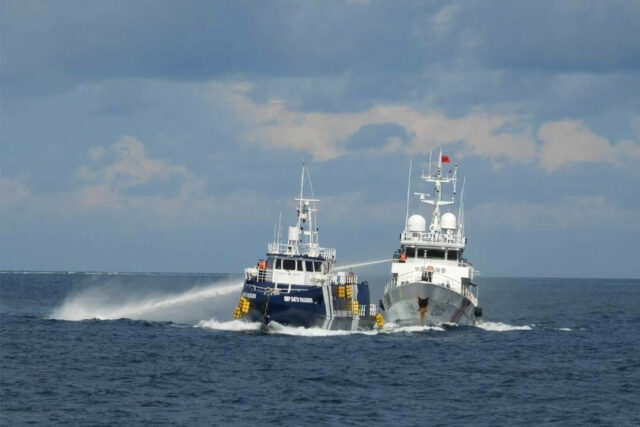
FILE PHOTO of a China Coast Guard vessel fires a water cannon at the BRP Datu Pagbuaya near Thitu Island, in the latest flare-up between Manila and Beijing in the disputed South China Sea. — PCG

By Kenneth Christiane L. Basilio, Reporter

A PHILIPPINE senator on Sunday called China’s coast guard use of water cannons against Filipino fishers at a disputed South China Sea shoal last week as escalatory, urging the government to fast-track security agreements with other nations to widen Manila’s web of allies.

Senator Risa N. Hontiveros-Baraquel said the Philippine Coast Guard (PCG) should deploy more vessels to accompany fishers in the South China Sea to prevent further harassment at sea.

“Our fisherfolk must not be left defenseless,” she said in a statement. “This escalating violence must compel our government to immediately fast-track defense treaty negotiations with like-minded countries.”

“China seems intent on getting what she wants at the cost of not only our territories, but also our people,” she added.

The Chinese Embassy in Manila did not immediately reply to a Viber message seeking comment.

Manila’s coast guard on Saturday said that three Filipino fishermen were wounded as two fishing vessels suffered “significant damage” when China Coast Guard ships used water cannons near Sabina Shoal.

“This is an escalation beyond the usual water cannoning of PCG vessels,” House Deputy Minority Leader and Party-list Rep. Leila M. de Lima said in a separate statement. “This is utterly outrageous and deeply concerning.”

“They could do it again, so the government cannot simply ignore or let this pass,” she added.

Sabina is among the several maritime features that has been at the center of lingering tensions due to contesting claims between the Philippines and China in the South China Sea. Both have traded accusations of escalating tensions following incidents involving water cannon blasts and sideswipes between vessels.

Beijing lays sovereignty nearly the entire waterway under its “nine-dash line” claim that also overlaps with the claims of Vietnam, Malaysia, Indonesia and Brunei.

Philippine and Chinese ships last year have sparred near the contested feature widely seen as a crucial rendezvous point for resupply missions to Filipino marines stationed at the aging ship-turned-outpost BRP Sierra Madre in Second Thomas Shoal. Sabina lies 150 kilometers west of Palawan province.

“We must urgently strengthen all maritime and defense capabilities as much as we can, as soon as we can,” Ms. Hontiveros said.

Manila had stepped up its efforts to push back against China’s sweeping sea claims by expanding its web of alliances beyond the US, its longstanding treaty ally. It has forged visiting forces agreements with Australia, New Zealand, and most recently, Canada, alongside a similar deal with Japan.

Talks on a visiting forces pact with France and the United Kingdom are under way, all while the Philippines pursues a military modernization program that includes acquiring advanced warships, missile systems and fighter jets.

The Philippines should consider recalibrating its South China Sea strategy to better meet evolving challenges in the waterway, said Chester B. Cabalza, founding president of Manila-based think tank International Development and Security Cooperation.

“This cycle of water cannons… shows that we have a gap in our response with China Coast Guard,” he said in a Facebook Messenger chat. “We must expect a new strategy from our coast guard on this.”

Anti-political dynasty bill seen as ‘almost cautious’ to break the system, analysts say

BW FILE PHOTO

By Chloe Mari A. Hufana, Reporter

THE PHILIPPINES’ long-delayed attempt to ending political dynasties risks amounting to little more than a symbolic gesture unless it meaningfully disrupts family-based succession in power, analysts said over the weekend, as President Ferdinand R. Marcos, Jr. urged lawmakers to prioritize the passage of such the measure.

Ederson DT. Tapia, a political science professor at the University of Makati, said the proposed anti-political dynasty bill, filed by House Speaker Faustino G. Dy III and House Majority Leader Ferdinand Alexander A. Marcos III, both scions of political families, appears deliberately cautious — a sign, he said, of the political constraints imposed by a Congress dominated by dynastic interests.

“When I read the anti-political dynasty bill, my reaction was not excitement but recognition,” Mr. Tapia said via Facebook Messenger. “The language felt careful, almost cautious, as if written with a clear awareness of the institution it must pass through.”

Political dynasties have long shaped Philippine politics, with power concentrated in families that dominate national and local offices through successive or simultaneous terms.

House Bill (HB) No. 6771, filed last Dec. 10, seeks to bar spouses and relatives up to the fourth civil degree of national or local officials from running for office in the same legislative district, province or city.

It defined a political dynasty as the concentration of elective power among relatives. A “political dynasty relationship” includes spouses, direct ascendants or descendants, siblings, and relatives up to the fourth civil degree, whether legitimate or not.

Under the measure, if an individual holds or seeks a national office, their spouse and relatives, as defined, would be barred from running for any elective national position.

The same restriction would apply at the district, provincial, city, municipal and village levels. Candidates would also have to submit a sworn statement to the Commission on Elections affirming they have no such political dynasty ties.

During a Legislative-Executive Development Advisory Council meeting last week, the President “ordered” both chambers of Congress to prioritize a bill that, to an extent, prohibits political dynasties, despite being a member of one himself.

According to Mr. Tapia, HB 6771, in its current form, reads more as an opening move than a structural intervention.

While the measure breaks Congress’ longstanding silence on dynasties, symbolism alone is insufficient if it fails to alter how political power is reproduced, he noted.

“The real measure of seriousness is simple,” Mr. Tapia said. “Does it meaningfully disrupt family-based succession, or does it merely regulate it in a way that leaves the system intact?”

Hansley A. Juliano, a political science lecturer at the Ateneo de Manila University, said the measure, as currently written, does little to address how dynastic power is sustained in practice.

“In the current version, we do not see [many] changes,” Mr. Juliano said via Facebook Messenger, noting how political families have historically relied on placeholders and “seat warmers” to maintain control despite formal restrictions.

He pointed to recent political arrangements in Cavite and Pasig as examples. In the province of Cavite, the Remulla family backed then-governor Erineo “Ayong” S. Maliksi against the Revillas before later sidelining him when he sought to establish an independent political base.

In Pasig City, the Discaya family initially served as political stand-ins for the displaced Eusebio clan before becoming central figures in flood control infrastructure controversies.

“Unless we follow the logic of dismantling assets and networks (the way an antitrust law breaks up a monopoly or a conglomerate), we will not see much here,” Mr. Juliano added.

‘QUIET DILUTION’
Mr. Tapia said the larger constraint remains in Congress itself. With the legislature dominated by political families, sweeping reform is more likely to be weakened quietly than rejected outright.

“What usually follows is not open resistance, but quiet dilution,” he said. “Definitions narrow. Exemptions expand. Enforcement softens.”

As a result, the bill should not yet be seen as a turning point, Mr. Tapia said. Its significance will depend on whether it sustains a deeper reckoning with political dynasties as a structural choice rather than a cultural accident.

“If it opens that conversation and refuses to close it too early, it matters,” he said. “If it allows us to declare reform without real disruption, then it becomes part of the problem it claims to address.”

Although numerous measures to ban political dynasties have been filed over the past decades, Congress has yet to pass such a law nearly 40 years after the 1987 Constitution required it.

Even if the House passes an anti-political dynasty measure, it faces an uphill battle in the Senate, where about a third of lawmakers are siblings from entrenched political families — including the Tulfos, Cayetanos, Villars and Estrada-Ejercito — raising questions about whether the chamber can impartially approve a law that could limit their own influence.

Malacañang said the presidential “order” to prioritize such a measure comes as he saw how dynasties abused government resources amid a widening graft scandal in the country.

Mr. Marcos, the son and namesake of a late president who ruled the country for two decades, exposed a massive corruption scheme during his fourth State of the Nation Address last July.

He alleged high-ranking government officials colluded with government contractors to receive billions of pesos in kickbacks from public work projects, particularly in flood mitigation plans.

“What the President wants is for the power of the people to be strengthened, not that of a few abusive politicians,” Palace Press Officer Clarissa A. Castro told a news briefing in Filipino last week.

She noted Mr. Marcos wants the Filipino public to be able to choose leaders based on merit and not on family names.


ADVERTISEMENT
ADVERTISEMENT