Home Blog Page 561

PHL firms urged to embed ESG to attract investors

STOCK PHOTO | Image from Freepik

By Alexandria Grace C. Magno

PHILIPPINE COMPANIES need to integrate environmental, social and governance (ESG) practices into their core operations to remain competitive and attract both local and international investors, an analyst said.

This includes reducing emissions, improving social impact and strengthening governance, along with adopting transparent ESG reporting aligned with global standards.

“By aligning their operations with global ESG standards and adopting transparent ESG reporting practices, companies can enhance their credibility and attractiveness to both international investors and customers,” ESGpedia Vice-President Jozsef Acabo said in an e-mailed reply to questions.

He added that global investors increasingly consider ESG ratings when making investment decisions, giving companies with strong ESG performance a competitive edge.

Locally, firms that demonstrate robust ESG practices are more likely to secure sustainability-linked loans and other green financing options offered by Philippine banks. Overseas, international funds and institutional investors now heavily factor ESG performance into their decision-making.

“As a result, Philippine companies with strong ESG practices stand a better chance of attracting foreign investment,” Mr. Acabo said.

“There is a growing recognition that companies with strong ESG practices are better positioned to manage long-term risks, particularly in areas such as climate change and regulatory compliance,” he added.

This trend mirrors a wider investor shift viewing ESG as a value-creation strategy rather than mere compliance.

Mr. Acabo said aligning disclosures with established reporting frameworks such as the Global Reporting Initiative, Sustainability Accounting Standards Board (SASB) or the Task Force on Climate-related Financial Disclosures (TCFD) could enhance the credibility of Philippine companies among overseas investors.

Companies that adopt these standards signal a commitment to transparency and responsible operations, which might also help them manage long-term risks, particularly in climate change and regulatory compliance.

Mr. Acabo noted that global market shifts are adding urgency. Europe’s Carbon Border Adjustment Mechanism (CBAM) will impose levies on embedded emissions starting January 2026, while Southeast Asian markets like Singapore and Malaysia are raising expectations for low-carbon suppliers.

Companies in these regions may face direct carbon tax costs and will increasingly seek suppliers with proven low-carbon footprints to manage their exposure.

“Filipino suppliers that are advanced in their sustainability practices and have proper documentary proof of their sustainability efforts can stand out and remain competitive, while avoiding higher costs from levies,” he said.

The Philippine Exporters Confederation, Inc. earlier said even companies not exporting directly to Europe must comply with CBAM if they are part of the supply chain.

Philippine exporters need to familiarize themselves with the mechanism to remain competitive in global markets. ESG adoption, therefore, is not just a compliance issue but a strategic step for companies aiming to secure international contracts and partnerships.

“Philippine companies can distinguish themselves in the global market by embedding strong ESG practices into their core operations,” Mr. Acabo said.

“As sustainability becomes a central criterion for investors and customers worldwide, businesses that integrate responsible practices are positioned to meet increasing demand for sustainable products and services,” he added.

Unified lending ID system rollout on hold as SEC evaluates CIC’s platform

BW FILE PHOTO

THE SECURITIES and Exchange Commission (SEC) is studying if it will use the Credit Information Corp.’s (CIC) existing unified lending identification (ULI) platform or set up its own system with the help of a private sector partner as part of its efforts to deter predatory lending.

“We were also informed by the CIC that they can also perform the same task. So, we are now evaluating whether we will use the existing platform of the CIC, or we will really have to pursue the ULI,” SEC Commissioner Rogelio V. Quevedo told reporters on the sidelines of an event on Tuesday.

He said that they are evaluating what the CIC can provide and expect to complete this assessment by the end of the month.

At a Senate hearing in October, the SEC said it plans to introduce the ULI system to simplify credit access and curb predatory lending and abusive collection practices.

Mr. Quevedo earlier said the ULI would use verified data to ease credit access amid challenges in the implementation of the national ID system.

Last week, he said the initial target for ULI rollout was Dec. 1, but the CIC informed the SEC that they have the necessary information and technology needed for the system.

“The priority is always to coordinate with government agencies and, in this case, a government-owned and -controlled corporation, the CIC,” Mr. Quevedo said.

“I’m still hoping that CIC can provide what the SEC needs. But if they are slow, then we proceed with the earlier plan to harness the private sector.”

The SEC earlier said that they received 5,415 complaints of unjust collection practices involving online lenders and financing companies. — Alexandria Grace C. Magno

The hard truth behind the US-Indo Pacific strategy

RAWPIXEL

By Mihir Sharma

MOST of the world knows how to respond to the US’ new National Security Strategy. As my colleague Marc Champion has written, Russia loves it. Liberal Europeans are dismayed, and the Gulf monarchies overjoyed.

In the rest of Asia — and what, until now, Washington has called the Indo-Pacific — the dominant emotion is uneasiness. There are words, phrases, and entire sections in the document that are exactly what we want to hear. But the underlying worldview is at odds with its rhetoric.

The strategy promises that the US will build a military capable of deterrence in the First Island Chain and the Taiwan Strait, and an insistence that the South China Sea cannot be controlled by any one actor. There is a promise to defend “global and regional balances of power,” and to fight “predatory” economic practices.

The Indo-Pacific shares all these priorities, and many are relieved that the second Trump administration has taken the trouble to restate them. And yet there’s disquiet, because some of these commitments look like they have been grafted on to a strategy that could push American policy in a fundamentally different direction.

This is a startlingly ideological document even by the standards of today’s Washington. It extends MAGA domestic obsessions — the border, DEI, climate denialism — beyond America’s shores. US soft power is listed as one of its greatest assets, without the recognition that illiberalism and xenophobia erode its value daily.

But MAGA’s most dangerous export, as far as the security of the Indo-Pacific is concerned, is its distaste for the liberal order.

America might not always have lived up to its ideals, but since the Second World War, it has defined its role in the world around promoting them — defending the practice of liberal democracy and evangelizing the benefits of global norms. They include shared prosperity, for both Americans and the citizens of partner nations.

It is here that the 2025 National Security Strategy (NSS) makes its most impactful break with the past. The security and stability of the Indo-Pacific may remain a stated priority, but not because freedom and openness will enrich the region and keep it loyal to the rules-based order that benefits Americans more than anyone else. Instead, a much narrower and more fragile link is being drawn, between deterring China and Trump-era economic priorities: Big Tech profits, the securing of global resources, and a “rebalanced” global economy that forces production back onshore.

This link could snap at any time — particularly if Trump is deceived into thinking that cooperation with Xi Jinping won’t cost the US in the short run, while confronting Beijing’s designs in Asia might. He’s certainly being tempted down that path: Nvidia Corp. being granted permission to sell high-end chips to China is not a good sign. Trump has said it’s “good business,” as long as the federal government gets a 25% cut. A short-term revenue boost is sufficient to risk America’s tech leadership, apparently. How can we take the solemn pronouncements in the NSS seriously?

The president’s mercantilist instincts are well-known. This piece of paper reminds us that he also believes in another throwback theory, that of spheres of influence. The strategy states that “the outsized influence of larger, richer, and stronger nations is a timeless truth of international relations.”

A revanchist Russia won’t be the only beneficiary of this belief. China is larger, richer, and stronger than anyone else in its region; why not permit it a sphere of influence in Asia, if it gives Trump an economic deal “better” than his predecessors could extract? Beijing might break that promise later, but by then it will be some other administration’s problem.

Over the past few decades, a bipartisan consensus had developed in Washington that China was a systemic rival, and not just another economic challenger. But those running policy in the second Trump term are arguing from different premises. It’s centered on domestic economic considerations and not to preserve the world order. They do not fear the loss of global leadership; they might even welcome the dissolution of current economic arrangements. All they want is to contain the economic shocks accompanying China’s rise.

Written into the silences in this document is an unpalatable truth: An establishment in Washington that intimidates large companies, that conscripts tech into politics, that guards its domestic markets and weaponizes its trade will hardly see the Chinese system as an ideological threat.

This is what unnerves Asian capitals. One day soon, MAGA’s ideologues and populists may decide that granting Beijing overlordship of Asia will not affect jobs or profits in the US. From that day on, they will not lift a finger in defense of the Indo-Pacific.

BLOOMBERG OPINION

From cash counters to clicks: The digital shift in Philippine remittances

FREEPIK

By Heather Caitlin P. Mañago

FOR MILLIONS of Filipinos, sending money home no longer means standing in long queues. Digital remittance platforms have transformed the process into a few taps on a smartphone — making financial services accessible to families across the archipelago and the world.

With the Philippines embracing digital change, the way families send and receive remittances are being transformed.

Visa’s Money Travels: 2025 Digital Remittances Adoption Report highlights global trends in how people send and receive money, pinpointing key areas for growth. The report also explores the reasons behind remittance use and examines consumer perceptions of digital transaction security.

According to the report, digital remittance adoption in the Philippines continues to grow, with most people preferring digital apps for transactions. About 74% of senders and 66% of receivers use digital apps, making them the dominant method. The second most common approach is sending money digitally from a physical location.

Banks and regulators, including the Bangko Sentral ng Pilipinas (BSP), are collaborating to ensure the digital shift promotes financial inclusion. Both emphasize that education and infrastructure are critical to success.

“This can start with the promotion of financial literacy through continuous programs to educate all Filipinos on digital services, including PDOS (Pre-Departure  Orientation Seminars), and Filipino Community Events abroad,” said Rizal Commercial Banking Corp.’s (RCBC) Transaction Banking Group.

It also stressed the need for “developing tailored products — specifically user-friendly, affordable digital offerings for Overseas Filipino Workers (OFWs) and those with limited digital literacy.”

The BSP had a similar sentiment, noting that it continues to promote financial inclusion and broaden access to digital financial services nationwide, with particular emphasis on underserved rural and regional communities.

These initiatives include interoperable electronic payment streams like PESONet and InstaPay, QR-based systems, and low-cost Basic Deposit Accounts (BDAs) designed for unbanked Filipinos.

In terms of integrating digital remittance services into their platforms, banks are embedding digital remittance options into mobile apps and web platforms.

“Philippine banks are integrating digital remittance services primarily by offering multiple online channels that are accessible via web and mobile platforms,” RCBC explained.

Ruben Carlo O. Asuncion, chief economist at Union Bank of the Philippines, said that banks are partnering with global payment networks to enable instant transfers and introducing hybrid solutions that start digitally but allow cash-out options — meeting the needs of both tech-savvy users and those who prefer traditional methods.

The BSP complements these efforts by supporting digital banks and e-wallets.

“Digital banks and e-wallets have broadened financial access by offering streamlined paperless account opening, instant credit options, and mobile-based financial services,” the BSP noted, citing the surge in e-wallet accounts to 393.6 million in 2023 from 257.5 million in 2022.

USER EXPERIENCE
In Visa’s report, users cited ease of use and strong security as the main benefits of digital remittances, with nearly half of senders and over half of receivers emphasizing convenience.

“User experience can drive adoption by positioning the bank as the one-stop shop for all OFW transactions,” RCBC said.

They emphasized the need for apps that allow clients to manage accounts and send remittances in one place.

They added that this also involved creating dependable, user-friendly financial tools tailored for OFWs, migrants, and their beneficiaries.

Mr. Asuncion suggested simplifying interfaces, integrating multilingual support and adding features like “biometric authentication and automated currency conversion” to make transactions faster and more intuitive.

Safety, privacy, and speed were also consistently cited as an advantage.

Security perceptions strongly favor digital apps, which are widely considered safe for both sending and receiving funds. In contrast, physical remittance methods are viewed as less secure, with only 3% to 6% perceiving them as safe across the Asia Pacific.

“Ensure that effective security measures are in place,” RCBC advised.

It emphasized that banks must prioritize strong security measures such as encryption, multifactor authentication, and fraud detection to safeguard user data and transactions.

Equally important is maintaining transparency in operations to foster customer trust.

“This means clear communications on fees and exchange rates and Terms & Conditions, adherence to [government] compliance and regulatory requirements related to remittance, and reliable customer service support.”

Meanwhile, “the BSP is strengthening its regulatory environment to ensure those expectations will consistently be met,” the central bank said, referencing Circular No. 1195 on timely redress mechanisms and Circular No. 1198 on safeguarding customer funds.

It added that “guided by the National Payment Systems Act (NPSA) and the National Retail Payment System (NRPS) Framework, the BSP requires all operators of payment systems (OPS) and payment service providers (PSPs) to register and operate under sound governance, effective risk management, and strong consumer protection standards.”

Despite these advantages, high fees remain the biggest pain point. For digital transactions, 43% of senders and 30% of receivers report concerns about costs. Physical remittances face similar issues, with 45% of senders and 29% of receivers citing high fees as a problem.

Mr. Asuncion suggested “innovations like blockchain-based transfers, partnerships with local e-wallets, and tiered pricing models” to lower costs.

Meanwhile, RCBC emphasized transparency. Stating that banks should “provide a definitive breakdown of the remittance charges” to reduce dissatisfaction and encourage loyalty.

At the same time, “the BSP issued Memorandum No. M-2024-015 to provide guidance to BSP supervised institutions (BSIs) on setting fees for electronic payment services.”

This aimed to ensure pricing remains fair, accountable, and transparent, aligned with the principles of the NRPS Framework and the Financial Consumer Protection Act.

“These measures will help ensure that pricing remains responsive to market dynamics, technological advancements, and evolving consumer needs,” said the BSP.

UNDERSTANDING REMITTANCE BEHAVIOR
Visa’s research showed 76% and 82% of Filipinos send and receive remittances once per year.

The primary reason for sending money were unexpected needs, accounting for 41% of Filipino respondents, while 39% of Filipino’s cited receiving regular remittances.

Contrary to the report, RCBC said most OFWs send remittances monthly.

“Once a month for their family’s monthly allowances/expenses, extra sending twice a year for tuition and Christmas allowance of the family,” RCBC clarified.

It added that digital financial services should ensure 24/7 access for emergency remittances and enable real-time transfers for regular ones, while technical and support teams work to prevent downtime and transmission issues.

This pattern highlights the need for flexible, event-driven financial products and reliable platforms for both emergency and regular transfers.

“This can be seen as a strong indicator that while digital channels are trusted, there remains room to make them part of everyday financial behavior,” the BSP added.

The BSP is expanding digital payment use cases, such as merchant transactions, transport fares, bills, and government disbursements so Filipinos can rely on them for everyday financial needs, not just occasional ones.

THE ROAD AHEAD
Looking ahead, sending and receiving of remittances are projected to decline over the next twelve months with 7% and 44%, respectively, staying relatively flat to 2024.

“While this is a global standpoint, the remittance business in the Philippines is increasing,” said RCBC.

To sustain engagement, they recommend “lowering or waiving front-end and back-end remittance fees, offering better exchange rates, and potentially waiving any associated taxes.”

It stated this would keep Filipinos, especially those working abroad, using trusted remittance channels.

“In parallel, the BSP is advancing initiatives that make cross-border payment systems faster, cheaper, and more transparent.”

An example of this is participating in Project Nexus, a Bank for International Settlements-led initiative to link domestic instant payment systems, aiming to make cross-system transactions faster and more efficient.

“In April 2025, the five founding central banks — India, Malaysia, the Philippines, Singapore, and Thailand — incorporated Nexus Global Payments (NGP) in Singapore to operationalize the scheme while the BSP remains to be involved the ongoing Project Nexus Phase 4,” said the central bank.

In Santa’s bag

WE’VE only got about a handful of days before Christmas, and we’re rounding up a list of gifts suited for various categories, depending on who’s getting them. Happy shopping!


SKINCARE

Dermorepubliq’s holiday bundles

Local skincare brand Dermorepubliq is releasing holiday-ready bundles featuring bestselling formulations. The Vitamin C & 1% Retinol Morning + Night Set (Sensitive Skin) is best for someone who wants brighter, smoother, well-rested skin (P798). This targets dullness, uneven tone, early signs of aging, and acne without overwhelming sensitive skin. The Advanced Acne and Oil Control Kit is best for teens, students, or anyone dealing with breakouts (P1,146). This unclogs pores, controls excess oil, calms inflammation, and helps shrink stubborn blemishes. The Advanced Clarifying and Brightening Kit at P1,366 has a gentle cleanser, Ultra Whitening Toner, a Niacinamide + Tranexamic Acid + Alpha Arbutin serum, and the brand’s signature 7-Oil spot treatment. It clears breakouts and fades dark marks while giving skin a more even, radiant look. The Advanced Brightening Kit at P1,217 has the Ultra Whitening Toner, brightening serum, and 15% Vitamin C. It targets dark spots, uneven texture, and dullness. The Hydration Kit is for anyone with dry, stressed-out, or barrier-damaged skin. At P1,227, it has the soothing Aloe + Snail toner, a HA + Snail serum for moisture layering, and a Ceramide cream to strengthen the skin barrier. Dermorepublic products are available on Shopee, Lazada, TikTok, and physical stores at SM Masinag and SM Tanza.

Cult favorite Melano CC

Japan’s favorite vitamin C skincare, Melano CC, has officially arrived in the Philippines. Cambert (PILIPINAS), Inc. has brought Melano CC’s cult-favorite formulations and signature J-Beauty philosophy here: science-backed, gentle, and designed for real results. Under the Rohto-Mentholatum group, Melano CC has gained status across Japan and over 15 countries, thanks to its approach to brightening — no gimmicks, no 12-step routine, just high-performing Vitamin C delivered in formulas that work with the skin, not against it. Vitamin C’s effects on skin include protection from damaging environmental factors, fading dark spots and post-acne marks, and boosting skin’s overall glow. The line includes the Vitamin C Brightening Enzyme Face Wash; Vitamin C Brightening Lotion designed for normal to combination/oily skin; and the Vitamin C Brightening Essence which blends pure L-Ascorbic Acid, 3-O-Ethyl Ascorbic Acid, and other high-performing derivatives in a stabilized, airtight system. Melano CC can be found at Mitsukoshi Mall, and online via Lazada and Shopee on the official Mentholatum store.


SNEAKERS

Winter Red for a Converse Christmas

The most recent iteration of Converse’s SHAI 001 is Winter Red, a colorway rooted in Shai Gilgeous-Alexander’s hometown of Hamilton, Ontario. Inspired by the winterberry — a plant that thrives in harsh conditions — Winter Red symbolizes resilience, endurance, and the mindset that has carried Shai and the Oklahoma City Thunder to an NBA championship. The upper features a striking University Red, accented with sharp green along the zipper. Shai’s signature logo appears on the tongue and insole, while the Star Chevron anchors the heel, reflecting Converse Basketball’s identity. Performance remains core: radial traction ensures multidirectional control, forefoot Zoom Air delivers responsive energy return, and an over-lasted midsole provides grounded stability. The Converse SHAI 001 WINTER RED is available in the Philippines at converse.ph, Converse Glorietta, Foot Locker Greenhills and Foot Locker Glorietta.

PUMA’s new Speedcat Lux Collection

PUMA recently introduced the Speedcat Lux Collection. Debuting in sleek colorways, the drop has a distinctive metallic grey design that sets the tone for the collection. The lineup includes the new Speedcat Ballet (P5,500) that evokes the chic feel of ballet flats, with an updated strap closure, alongside the Speedcat OG (P7,500), shaped after the original, archival 1999 Speedcat. The PUMA Speedcat Lux Collection is now available in the Philippines at PUMA stores, PUMA.com, and select retailers nationwide.


CLOTHES

Old Navy’s Holiday collection

This season, Old Navy introduces its Holiday collection, featuring cozy, colorful, and matching outfits to give including Jingle Jammies (matching family pajamas with festive prints for kids, adults, and even pets), Holiday Sweaters (classic knits and modern pops of color), Bounce Fleece (ultra-soft, lightweight fleece that’s warm, breathable, and perfect for layering), Cloud Comfy Activewear (ultra-soft, breathable, go-dry moisture-wicking performance fabric), Ultra-Soft Fleece Blankets, pet bandanas and sweaters, scarves and beanies. The reopened Old Navy Bonifacio High Street store in Taguig’s BGC also features a giant gift box photo area, encouraging families and friends to capture their holiday moments in true Old Navy style. Kids can drop their letters to Santa at the dropbox in-store or sing at the karaoke station. Old Navy has branches at Bonifacio High Street, One Ayala Mall, Shangri-La Plaza, and Rustan’s Makati.

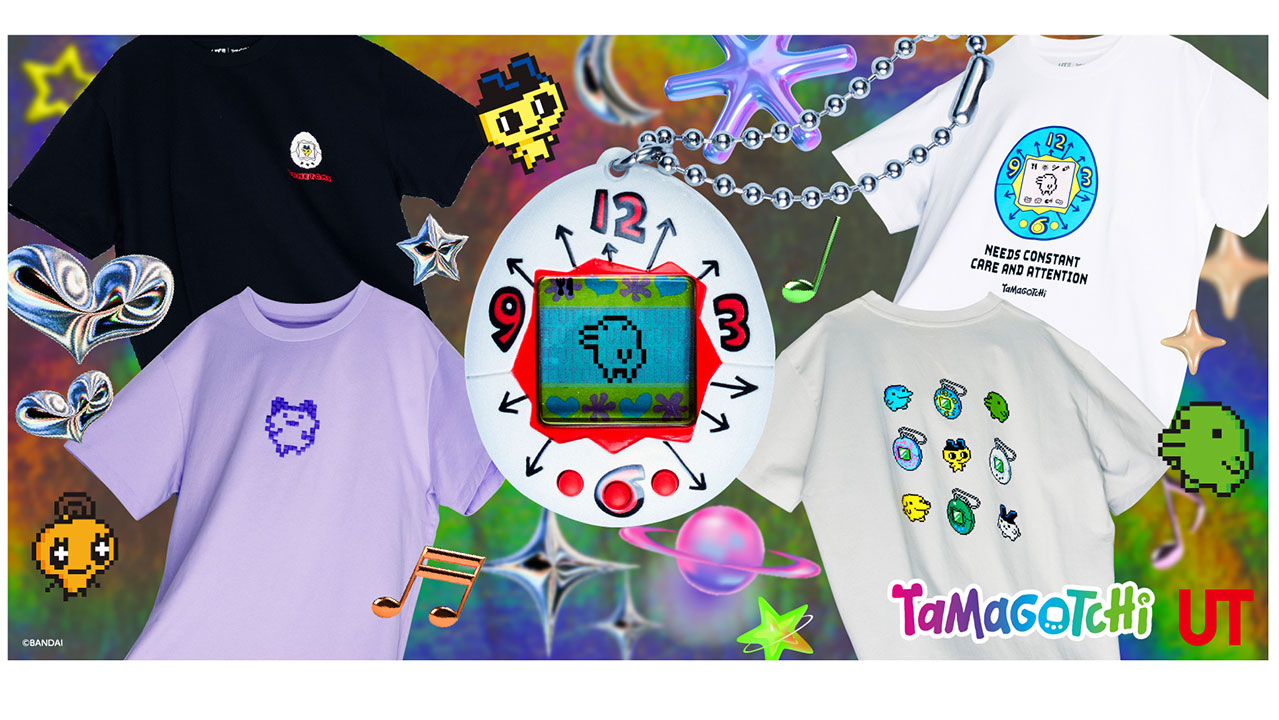
New UT collab marks 30th anniversary of Tamagotchi

Uniqlo has launched a new UT (Uniqlo T-shirt) collaboration collection featuring the digital world of Tamagotchi, the virtual pet. The collection includes four women’s T-shirt designs which were inspired by the pixel art of the original Tamagotchi. A special website (https://www.uniqlo.com/ph/en/special-feature/cp/ut/tamagotchi) also includes UT original mini-games to enjoy. Designs include one featuring the first Tamagotchi, one with a simple Tamagotchi logo over the chest (while the back has a lineup of colorful pixelated Tamagotchi), one with an embroidered design of Mametchi (who can only be encountered by those who have carefully raised their Tamagotchi), and another with Mametchi with a white Tamagotchi.


APPLIANCES

Get SharkNinja at pop-ups

SharkNinja has opened its newest pop-up stores in TriNoma (Level 2) and GH Mall (3F). The brand focuses on three main categories. Ninja Kitchen stocks the Ninja CREAMi that turns ordinary ingredients into creamy desserts and the Ninja SLUSHi for making refreshing options. Shark Home has vacuums like the Shark CleanSense IQ, engineered to detect and tackle dirt with precision. Shark Beauty has the Shark FlexStyle, a powerful hairstyler that transforms from a dryer to a curler, giving salon-quality results from the comfort of home.

New fish import rules aim for digital traceability, IUUF enforcement boost

PHILSTAR FILE PHOTO

THE Department of Agriculture said its new rules for importing fish and fishery products will introduce digitized supply chain traceability and strengthen safeguards against illegal, unreported, and unregulated fishing (IUUF).

Fisheries Administrative Order (FAO) No. 275, signed by Agriculture Secretary Francisco Tiu Laurel, Jr. on Nov. 24, requires imported fish to be documented at various stages of the supply chain, from entry ports to warehouses and domestic distribution points.

This traceability provision allows authorities to verify the movement of products and ensure they are sourced, handled, and transported according to regulatory norms.

“(Traceability) facilitates the knowledge regarding the identity, history, and source of a product or of material contained within a product. It also facilitates knowledge regarding the destination of a product or any ingredients contained within it,” according to the order.

According to FAO 275, the Bureau of Fisheries and Aquatic Resources will digitize the tracking system within one year, enabling easier monitoring and effective enforcement against supply chain irregularities.

To strengthen IUUF compliance, FAO 275 also requires that imported wild-caught fish carry a catch certificate issued by the competent authority of the exporting country. The catch certificate requirement helps ensure that only legally caught fish enters domestic markets.

This measure is designed to align the Philippines’ fish import regulations with international agreements, including the Food and Agriculture Organization’s Port State Measures Agreement, targeting IUUF by regulating port access for foreign fishing vessels.

FAO 275 also retains existing rules on fish imports. All consignments remain subject to border and post-border inspections and random and risk-based sampling. Shipments must also meet packaging, labeling, transport temperature, and hygiene standards. — Vonn Andrei E. Villamiel

Vena Energy secures funding for 300-MW Ilocos solar project

FREEPIK

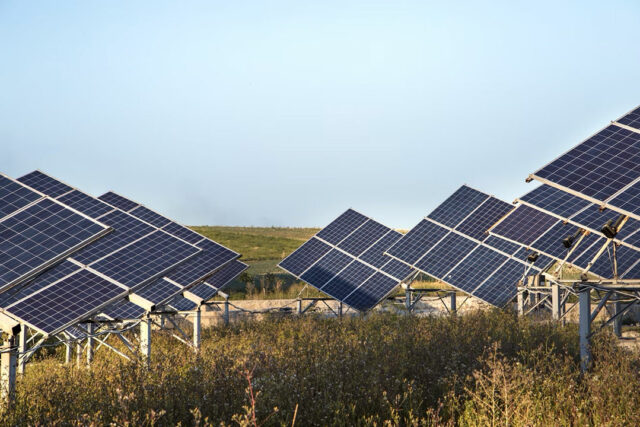
SINGAPORE-BASED Vena Energy has obtained full financing from a group of international banks for its 300-megawatt (MW) solar project in Ilocos Norte, marking the first US dollar-denominated project financing in the Philippines’ renewable energy sector funded solely by foreign lenders.

The company announced last week that the Opus Solar Energy project in Paoay has reached financial close, though it did not disclose the funding amount.

The participating banks were BNP Paribas (Singapore), Crédit Agricole Corporate and Investment Bank, (Singapore), DBS Bank Ltd., Intesa Sanpaolo S.P.A., (Hong Kong), MUFG Bank Ltd. (Singapore), Standard Chartered Bank (Singapore) Ltd. and Sumitomo Mitsui Banking Corp.

“As the first US dollar-denominated project financing in the Philippines’ renewable energy sector funded entirely by international banks, this transaction underscores Vena Group’s leadership to mobilize cross-border capital at scale to accelerate the country’s clean energy transition,” Vena Group Chief Investment Officer Simone Grasso said in a statement.

Vena said the transaction sets a model for future renewable energy financing in the country and strengthens its position as a regional player in large-scale green projects.

The ground-mounted solar facility is expected to supply power to about 445,000 households. A filing with the Department of Environment and Natural Resources places the project cost at roughly P15 billion.

The project is part of the government’s 2023 Green Energy Auction Program, which targets delivery by 2026.

Vena Energy, based in Singapore, runs six renewable power plants in the Philippines with a combined capacity of 330.8 MW across Negros Occidental, Rizal, Leyte, Ilocos Norte and Bukidnon. — Sheldeen Joy Talavera

BSP securities fetch lower yields

BW FILE PHOTO

YIELDS on the Bangko Sentral ng Pilipinas’ (BSP) one-month securities dropped further on Friday as the offer was oversubscribed for a third straight week.

The 28-day BSP bills attracted bids amounting to P132.25 billion, above the P90 billion auctioned off but slightly lower than the P137.421 billion in tenders for the same offer volume on Dec. 5. The central bank made a full P90-billion award of the securities.

Accepted yields for the one-month tenor were from 4.7125% to 4.89%, wider and lower than the 4.9% to 4.99% band fetched the previous week. This brought the weighted average accepted rate of the 28-day papers to 4.8298%, down 11.63 basis points from 4.9461% a week prior.

The BSP has not auctioned off the 56-day bills for over a month or since Nov. 3. The central bank uses the BSP securities and its term deposit facility to mop up excess liquidity in the financial system and to better guide short-term market rates towards its policy rate.

The BSP bills also contribute to improved price discovery for debt instruments while supporting monetary policy transmission.

In August, BSP Governor Eli M. Remolona, Jr. said they are gradually shifting away from the issuance of short-term papers to manage liquidity as they want to boost activity in the money market.

The central bank started auctioning off short-term securities weekly in 2020, initially offering only a 28-day tenor and adding the 56-day bill in 2023.

Data from the central bank showed that around 50% of its market operations are done through its short-term securities. — K.K. Chan

Corruption and state capture

FREEPIK

In corruption studies, a field largely unheralded in the Philippines, there is a concept with growing global impact that has not drawn much attention yet in the country: state capture. Corruption studies expert Daniel Kaufmann defines state capture as “the undue influence by members or groups in the economic and political elite in shaping the rules of the game: morphing and distorting the laws, policies, regulations and institutions of the state to their own advantage at the expense of society.”

The Philippines has been rocked by scandals of grand corruption over the past few decades and is now confronted with a flood control scam said to be the biggest corruption scandal in the country’s history. Has the scale and level of corruption in the Philippines reached that of state capture? If so, what is the relationship between corruption and state capture?

The idea of the Philippine state being “captured” or “captive” is not really new, but characterizations of such capture have usually been subsumed to broader characterizations of the state as being “weak,” “soft,” “patrimonial,” or “anti-development.”

Temario Rivera described the Philippine state as being “a weak state” that is a captive of “dominant social classes and powerful political families and clans.” Jose Abueva portrayed the Philippines as “a ‘soft state’ dominated and perpetuated by the political and economic elite,” specifically “‘rent-seeking’ oligarchs,” and “rich and powerful politicians and their families.”

Paul Hutchcroft characterized the Philippines as a “patrimonial oligarchic state” — a weak state preyed on by “a powerful oligarchic class that enjoys an independent economic base outside the state, yet depends upon particularistic access to the political machinery as the major avenue to private accumulation.” While agreeing with Hutchcroft, Walden Bello argued that the Philippines’ weak state was manipulated as well by powerful external forces — the US, the International Monetary Fund, and the World Bank.

At the global level, corruption studies scholars started studying “state capture” as a specific and significant area of focus at the turn of the millennium. Joel Hellman, Geraint Jones, and Kaufmann introduced the concept in a study of transition economies in Eastern Europe and the former Soviet Union, in which “oligarchs who ‘capture the state’” increasingly drew their attention.

The concept of state capture has evolved. From an initial focus on non-state actors capturing the state, some attention has turned to state actors being captors as well. “Very powerful non-state and state actors,” notes Kaufmann, “often collude in capturing the rules of the game.” Moreover, the concept has been applied to many more countries, including some democratizing countries or even resilient democracies.

In the very first global report of the State Capture Index (SCI), released in September last year, the Philippines had a percentile rank of 65.4 in 2020-2022, with the scoring ranging from 0 (no capture) to 100 (full capture). The SCI measures state capture based on three indicators: corrupt and captured rule of law; captured political access and policy; and capture enabling environment. The Philippines was classified in category 4 (50-75 percentile), not the sixth and worst category (90-100 percentile).

The SCI has come up with a less damning assessment of state capture in the Philippines than many political scientists. While Rivera, Abueva, Hutchcroft, and Bello characterize the Philippine state in different ways, they all agree in categorical terms that it has been captured by the country’s economic and political elites (with Bello adding external forces as well). Nonetheless, the SCI attests that state capture has a grip on the country at least to a certain extent.

Reversing state capture in the Philippines is not as daunting a task as in category 6 countries, such as Russia, Equatorial Guinea, and Turkmenistan — all closed autocracies where opposition and criticism are thoroughly suppressed.

What is distinctive about the Philippines is that the entrenchment of the political elite has come about not through autocracy but through the proliferation and “fattening” of political dynasties.

As in other “captured” states, corruption and state capture in the Philippines mutually reinforce one another. Oligarchs and corrupt public officials engage in rent creation and extraction. Through the intercession of corrupt politicians, the government creates rent through laws or policies granting licenses, subsidies, monopolies, quotas, protection, and other privileges to the limited resource, and oligarchs are given preferential access. The oligarchs share the rent extracted with public officials through bribes or kickbacks. Part of these end up in the electoral campaign chests of corrupt politicians who then resort to patronage and vote-buying to win elections.

Corruption weakens state institutions. Bribes, kickbacks, budget insertions, and overpriced or ghost projects all chip away at state institutions, producing dynasty-infested national and local governments and a politicized and inefficient bureaucracy, as well as promoting a culture of impunity. Corruption expands the influence of oligarchs and dynastic politicians in the making of laws, budgets, and appointments that advance and protect their private interests. By systematically gaining control of institutions, policies and resource flows, they eventually succeed in shaping the very rules of the game — state capture.

State capture, in turn, perpetuates and deepens corruption. Once corrupt politicians gain dominance in the policymaking process, they produce laws that ensure greater rent access for predatory businessmen; budget frameworks that enable more insertions and discretionary funds; low transparency standards; and weak audit powers. Big corporate interests capture regulatory agencies; monopolies and cartels prosper. Dynastic politicians turn public office into a family asset instead of a public trust. State capture renders corruption no longer risky, as corrupt officials further weaken or even subvert the courts. Instead of being episodic, corruption becomes systemic. Instead of being a crime, it turns into a mode of governance. At certain times, bribes become superfluous, as state capture simply generates policies and institutions that benefit oligarchic and dynastic interests.

While the Philippines is yet far from falling into SCI’s category 6, it has to watch out. State capture in the Philippines has been worsening — up from a percentile rank of 58.5 in 2011-2013. More scams and the continued spread and “fattening” of political dynasties will deepen state capture.


Nathan Gilbert Quimpo, who has retired from teaching Political Science and International Relations at the University of Tsukuba, Japan, taught an online course on “Corruption” at the Ateneo de Manila University last year and earlier this year. He is now based in Amsterdam, the Netherlands.

Luvpark’s smart parking app aimed at easing motorists’ struggles

From left: Luvpark Vice-President and Chief Operating Officer Leeroy Livias Shoko, President and CEO Charles Anthony M. Dumancas, and General Manager Cathrina Y. Dumancas

By Jomarc Angelo M. Corpuz, Special Features and Content Writer

A new Filipino-made app seeks to simplify parking among motorists.

Luvpark, developed by President and CEO Charles M. Dumancas and Vice-President and Chief Operating Officer Leeroy L. Shoko, was recently introduced at a media round table on Nov. 29, in Makati City.

“Our cloud-based mobile parking application is smart and intuitive, so through our app, drivers now can instantly view in real time parking availability before even going to their destination,” Mr. Dumancas shared.

According to 2024 data from the Land Transportation Office and the Philippine Statistics Authority, the country logged approximately 14.56 million registered vehicles — a figure expected to climb even higher in the coming years.

In response to this growing demand, Luvpark seeks to ease every motorist’s parking experience by integrating technology, convenience, and a user-centered experience into one seamless mobile app.

Available in Google Play and the App Store, Luvpark finds available parking near its users’ location, complete with details such as the site’s open hours, the number of slots still available, parking rates, whether valet parking is offered, as well as the type of surface the cars will be parked in.

However, the app’s services are only available in select buildings and properties in Metro Manila, like Quezon City, Ortigas, Pasig, Mandaluyong, and Makati, as well as in some facilities in other urban areas, including Cavite, Rizal, Bulacan, and Bacolod.

“We are inviting LGUs (local government units) who are experiencing traffic in their areas, malls, parking operators, hospitals, condo developers or condo associations, and property owners who have underutilized spaces to integrate with our Luvpark management parking solution, because if there are more sites that integrate with Luvpark, this is truly when Filipino drivers can really experience the convenience of our technology,” Mr. Dumancas said.

According to Mr. Shoko, all the features found in the Luvpark app are customer-driven with the clear understanding of the needs of our existing and future customers. As a customer himself, he adds his key to understanding the daily routine of motorists for us to tailor our solutions to have an impact.

“This isn’t technology for the sake of technology. It’s tech that understands your routine, your frustrations, and your need for convenience. Luvpark is here to make sure parking becomes the easiest part of your day,” he says.

Luvpark is set to officially launch in the first quarter of 2026.


SparkUp is BusinessWorld’s multimedia brand created to inform, inspire, and empower the Philippine startups; micro, small and medium enterprises (MSMEs); and future business leaders. This section will be published every other Monday. For pitches and releases about startups, e-mail to bmbeltran@bworldonline.com (cc: abconoza@bworldonline.com). Materials sent become BW property.

Rate cuts, US tariffs, corruption mess steer markets in Q3

BW FILE PHOTO

By Isa Jane D. Acabal

POLICY EASING by the Bangko Sentral ng Pilipinas (BSP), tariffs imposed by the United States, and the ongoing flood control corruption scandal shaped the country’s financial markets in the third quarter, analysts said.

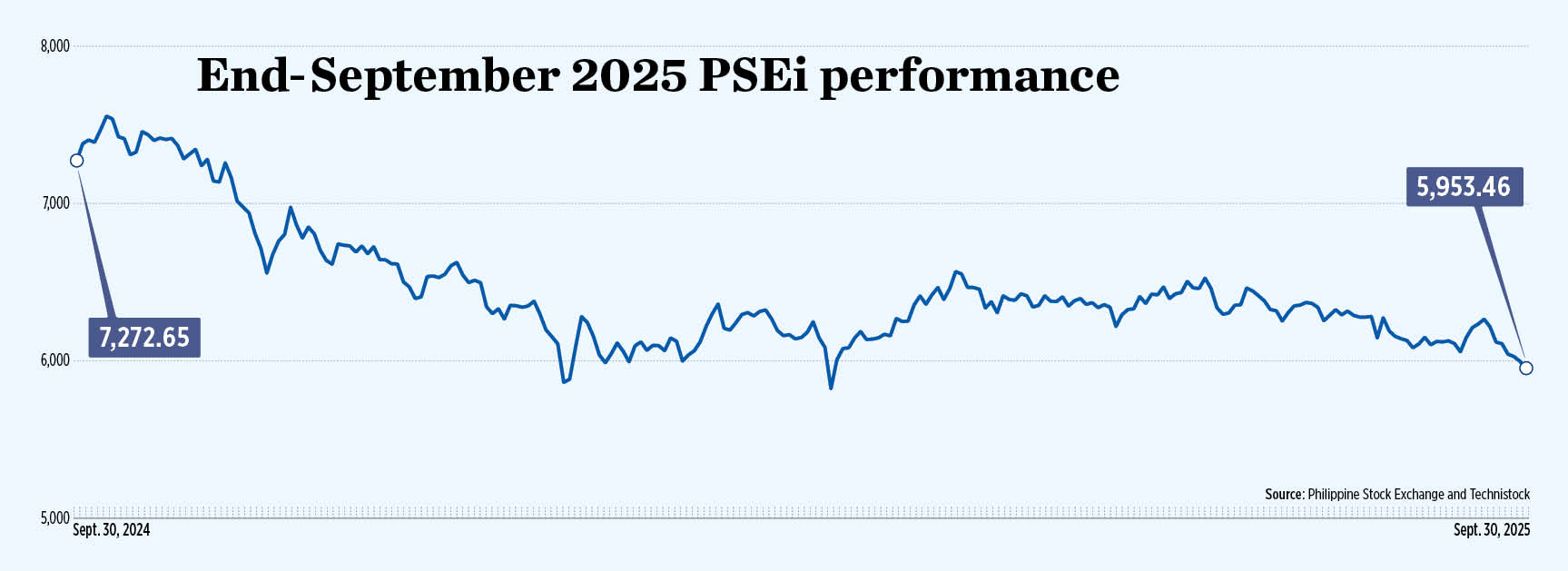
The Philippine Stock Exchange index (PSEi), the country’s barometer for the stock market, closed at 5,953.46 in the third quarter, down by 18.1% from 7,272.65 in the same quarter last year.

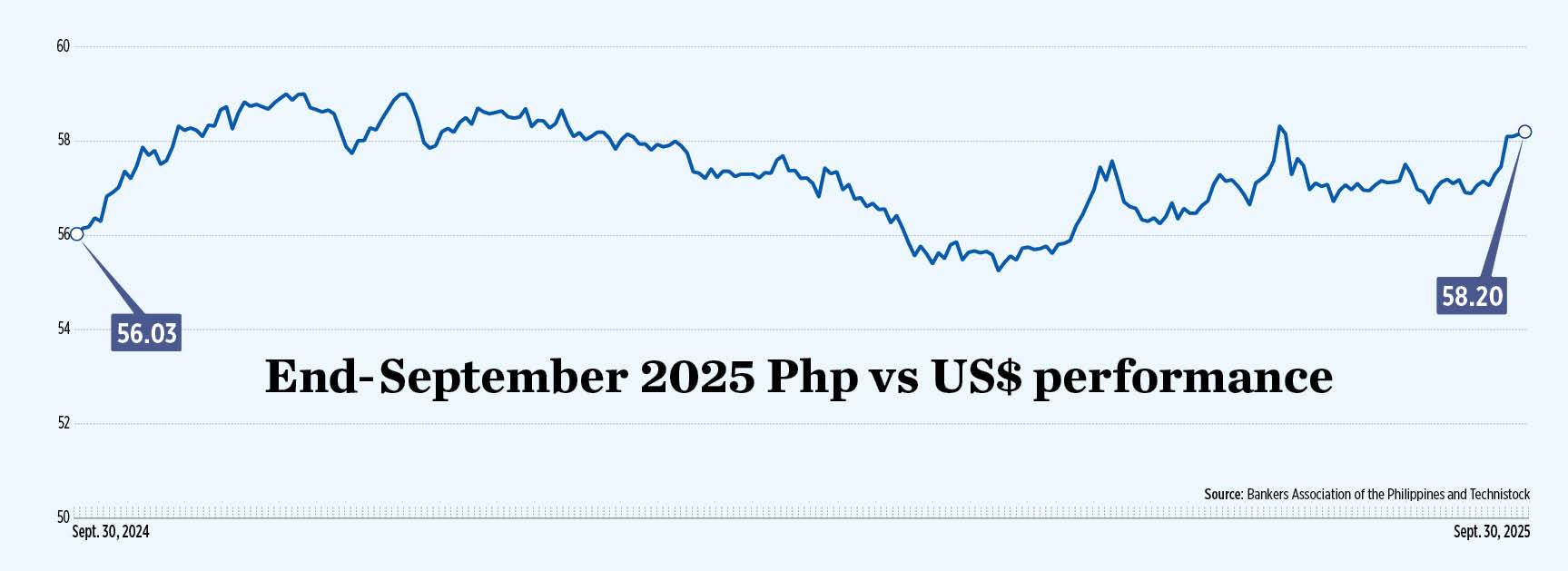
On the other hand, the peso appreciated by 3.9% to P58.20 against the dollar as of end-September from P56.03 a year ago, according to data from the Bankers Association of the Philippines.

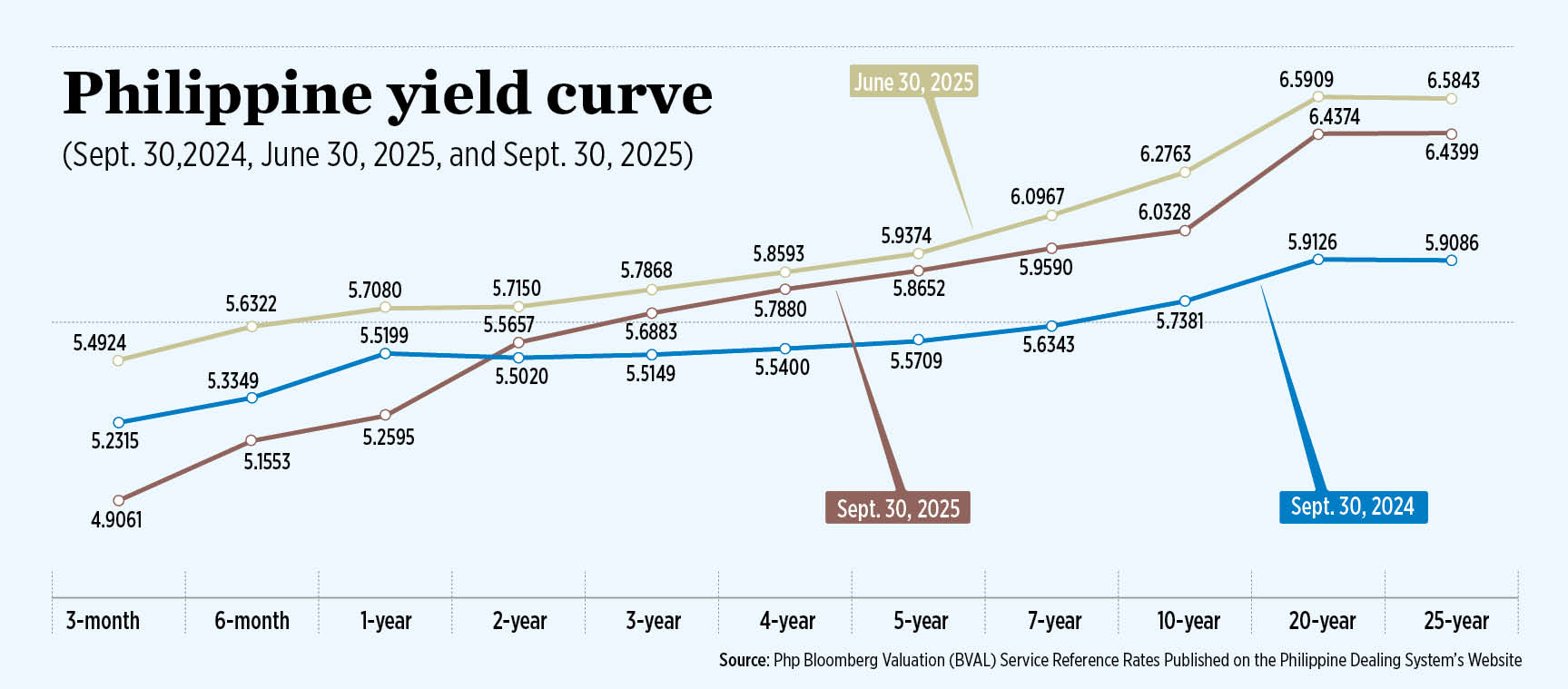
Yields on government securities rose by an average of 2.59 basis points (bps) year on year, based on the PHP Bloomberg Valuation (BVAL) Service Reference Rates published on the Philippine Dealing System’s website as of Sept. 30.

The BSP’s shift to a more dovish stance reflected in its consecutive rate cuts influenced the performance of domestic markets during the period, according to analysts.

Just last week, the central bank slashed again its policy rate by another 25 bps, bringing the key rate to over three-year low of 4.5%. It also signaled that the easing cycle nears its end.

It has so far trimmed borrowing costs by two full percentage points since it began its easing cycle in August last year.

“Reduced borrowing costs incentivized capital formation and supported investment momentum and economic activity, despite external headwinds and domestic governance concerns,” the central bank said in an e-mailed reply to questions.

According to the BSP, the present interest rate environment helped in credit expansion and in maintaining stability in the domestic financial markets.

“What we saw from this easing cycle was a ‘A Tale of Two Cities’ in Q3 — the local stock market was tepid while the bond market received much interest,” Marco Antonio C. Agonia, an economist from the University of Asia and the Pacific, said in an e-mail.

Mr. Agonia said the response in local equities was muted because market players anticipated the rate cuts, contrary to the local secondary market where “participants scrambled to lock in yields within the easing cycle.”

For economist Reinielle Matt M. Erece of Oikonomia Advisory and Research, Inc., the markets’ reaction to the key rate reduction was anticipated, with bond yields already factoring in the move, leading to their decline.

However, he said equity markets continued to move sideways due to investors’ concern about corruption, global trade tensions, and weaker currency.

Sharing the same sentiment, Nicholas Antonio T. Mapa, chief economist of Metropolitan Bank & Trust Co., said in an e-mail that the BSP’s policy easing would help support moderating growth momentum amid uncertainty.

“Almost everyone was expecting BSP to retain their dovish stance given target consistent inflation and expectations for growth momentum to stay challenged,” he said.

Despite the rate cuts, Mr. Mapa said investors remain cautious given persistent concerns about the economic and geopolitical outlook for the Philippines.

In the third quarter, the Philippine economy grew 4%, a sharp slowdown from the 5.5% growth in the second quarter and the 5.2% logged in the same period in 2024.

Government spending increased by 5.8% in the third quarter, slowing down from 8.7% in the previous quarter, but faster than the 5% growth recorded in the same period last year.

This followed after the delays and controversies surrounding flood-control infrastructure projects.

“The ongoing infrastructure spending controversy exerted downward pressure on investor sentiment and domestic market performance,” according to the BSP.

On the same note, Mr. Agonia said the ongoing flood control scandal soured investors’ mood in the stock market.

“While trade uncertainties weighed on investors’ minds in the first half of the year, governance issues became the defining brush stroke for the Q3 picture,” he said, adding that a definite action is needed to regain investors’ optimism.

He noted that the US Fed’s September rate cut boosted the PSEi, but gains were short-lived as new revelations about the flood-control scandal emerged.

US TARIFFS
The 19% US tariff imposed on most Philippine goods, effective Aug. 7, also affected markets during the period.

“The heightened uncertainty over the implementation of US tariffs weighed on domestic investor sentiment during the quarter,” the BSP said.

Based on the central bank’s Business Expectations Survey, business sentiment became less optimistic in the third quarter amid global headwinds from higher US tariffs, geopolitical tensions, and weaker external demand.

For Mr. Agonia, the tariff announcement alleviated some of the uncertainty that had weighed market players in the previous quarters concerning the implementation of US tariffs.

“Markets seemed to react positively to the definite and comparatively lenient tariff stance given to the Philippines,” Mr. Agonia said.

Meanwhile, for Pantheon Macroeconomics Chief Emerging Asia Economist Miguel Chanco, the confirmation of the US tariff midway through the quarter “was neither here nor there in terms of market impact” primarily because exports are a minor factor for the country’s economic growth.

“For the most part, the Philippines is one of the ‘winners’ in the global tariff setup so far, even though its rate ended up being slightly higher than the one first proposed in Liberation Day,” he said.

For Mr. Mapa, the ongoing US tariffs weighed on the country’s overall growth, a key concern for investors.

However, “although traders and exporters remain wary over developments on the global trade front, concern appears to be shifting to domestic growth concerns more than to US tariff policy,” Mr. Mapa added.

Mr. Agonia said other challenges for financial markets in the third quarter included the “ghost month,” bad weather, and slight peso depreciation.

Meanwhile, supportive factors included “benign domestic inflation, within-expectations Q2 gross domestic product (GDP) growth, and good Q2 corporate earnings,” he added.

KEY FACTORS TO MONITOR
Heading into the fourth quarter, Mr. Chanco sees further rate cut expectations as markets continue to face pressure based on domestic factors.

“As things stand, our base case is that the Board will cut again in December and in early-2026 by a total of 50 bps (two more 25-bps cuts),” he said.

Mr. Agonia said the country’s financial markets could see cautious gains, supported by the seasonal holiday boost and catch-up government spending.

On the same note, Rizal Commercial Banking Corp. Chief Economist Michael L. Ricafort said markets expect a seasonal rise in remittances and peso conversions to fund the Christmas spending in the latter part of the fourth quarter, a pattern observed for decades.

He also anticipates further rate cuts by the US Fed and the BSP in the coming months, amid benign inflation, to remain an offsetting positive factor for the economy.

FIXED-INCOME MARKET
BSP: The bond market is expected to be supported by the low-interest rate environment, easing global monetary conditions, and robust demand from domestic investors.

Agonia: Relatively low inflation and a more dovish BSP should see the bond market flourishing into Q4 and onwards. Volatility in the US markets may encourage investors to flock to the Philippine bond market.

Erece: Expectations of continuous rate cuts can drive market rates downwards. Furthermore, concerns about economic slowdowns may also drive demand for debt securities over equities to lock in consistent profit through interest rates.

EQUITIES
BSP: Ongoing concerns over public spending on flood control projects weigh down market sentiment. However, slower global trade and the sustained strength of the US dollar are likely to influence foreign investment into equities.

Ricafort: Further improvement in ESG (environmental, social, and governance) compliance by the government and some listed companies may be needed for the PSEi to break out higher from the familiar range of 6,000-7,000 seen for more than 13 years already, particularly the government’s anti-corruption measures and further elevating governance standards.

Agonia: Local equities may continue to be lukewarm, especially as analysts scale down their Q3 GDP growth forecasts. Despite this, some factors guarding the downside may include benign inflation, healthy employment figures, potentially strong Q3 corporate earnings, and some holiday remittance relief for the peso-dollar rate.

Erece: A potential year of loss can be anticipated given disappointing economic growth, persistent external headwinds, and weak public sector credibility.

FOREIGN EXCHANGE MARKET
BSP: Concerns over US fiscal sustainability, US trade policy measures and risks to the US Fed’s stability and independence could weaken the US dollar and support the peso. However, ongoing geopolitical tensions, notably in the Middle East, may prompt safe-haven demand for the dollar and put depreciation pressure on the peso. Domestically, the peso could find support from steady macroeconomic fundamentals and resilient FX inflows from BPO revenues, tourism, and Overseas Filipino Workers’ remittances.

Ricafort: Still relatively benign local inflation data tends to fundamentally support the peso exchange rate with more purchasing power for the local currency.

Agonia: The holiday remittance wave may also provide relief for the peso-dollar rate towards the P57-P57.5 range. However, a potential BSP rate cut in December and a larger Q4 trade deficit could add to some depreciation pressure moving forward.

Erece: The recent corruption scandals can drive confidence on the country down. Thus, inducing capital outflows and less demand for the peso. These events can cause the peso to depreciate. Despite a dovish Fed, if investor sentiment overwhelms the foreign exchange effects of monetary policy, the Peso may continue to depreciate. However, I think the BSP will prevent the currency from reaching P60 levels through their own interventions.


Disney’s Zootopia 2 set to join $1-billion box office club

WALT DISNEY Animation Studios’ Zootopia 2 is on track to surpass $1 billion at the global box office, the company said on Friday, as the sequel continues its strong run in international markets.

The film, which revisits the bustling animal metropolis of Zootopia, features returning characters Judy Hopps, a rabbit police officer voiced by Ginnifer Goodwin, and her fox partner Nick Wilde, voiced by Jason Bateman.

The duo embarks on a new adventure that blends humor and social themes, echoing the formula that made the original a hit.

Zootopia 2 opened strongly over the US Thanksgiving weekend, giving Hollywood a boost at the start of the critical holiday season.

The film’s runaway success has been fueled by an extraordinary reception in China, where Zootopia 2 dominated the box office during its opening weekend, accounting for roughly 95% of all ticket sales nationwide.

The original Zootopia also became China’s most popular foreign animated film when it was released in 2016.

The performance offers welcome relief for theater operators hoping for packed cinemas through Christmas, traditionally the second-busiest moviegoing period of the year. Global box office receipts have yet to return to the pre-pandemic levels seen in 2019. — Reuters

ADVERTISEMENT
ADVERTISEMENT