Home Blog Page 5578

ABB sees greening of PHL power grid driving sales of equipment used by utilities

PHOTO FROM ABB FACEBOOK PAGE

ENGINEERING company ABB Ltd. said Philippine investments in decarbonizing its power grid are driving sales of equipment used by utilities, including battery energy storage systems (BESS) that optimize the operations of some renewable sources of energy.

“Our focus is more on the utilities; we are an active vendor of all those medium-voltage requirements,” Allan B. Bonagua, product marketing director at ABB said at a briefing Friday.

ABB, a Swedish-Swiss conglomerate, specializes in industrial, automation, and electrical equipment in the Philippines

Roman Gvritishvili, product marketing manager for medium-voltage instrument transformers and sensors, said the company hopes to help the Philippines decrease its carbon emissions by introducing solutions for measuring and monitoring current and voltage in medium-voltage power systems.   

Mr. Bonagua said ABB is planning a regional launch of its medium-voltage sensors in the Philippines next year.

“When it comes to power generation, we’ve been working with several companies. We are a big supplier of battery energy storage systems,” Mr. Bonagua said.

In 2021, ABB supplied SMC Global Power Holdings Corp. with an 80-megawatt (MW) energy storage project.

Barbette Atienza-Soliven, communications manager for ABB Philippines, said the company’s goals include helping make electricity distribution more sustainable. — Ashley Erika O. Jose

10 LGUs sign on to program to build 1 million new homes a year

PHILSTAR FILE PHOTO

LOCAL government units (LGU) from Cebu, Bohol and Oriental and Occidental Mindoro signed up to the Pambansang Pabahay para sa Pilipino program, which targets the construction of 1 million homes a year, the Department of Human Settlements and Urban Development (DHSUD) said.

The 10 new participants are Mandaue City, Bohol province, Tagbilaran City, the Municipality of Panglao and six towns in Oriental and Occidental Mindoro. 

The number of LGUs that have signed the Memorandum of Understanding with the DHSUD is currently at 28.

The Philippine housing backlog has been estimated at 6.5 million units.

Housing Secretary Jose Rizalino L. Acuzar, said the LGU role in the program includes “conceptualization… identification of beneficiaries and…sustaining the program,” he said in a statement Sunday.

LGUs will also help the DHSUD identify idle government land that can be tapped for the housing program.

Mr. Acuzar said that DHSUD is working to expand access to mortgages and structure the housing loans to make the dwellings more affordable.

DHSUD has asked Congress to support its P36 billion-a-year plan for interest subsidies in order to make mortgages more affordable. — Justine Irish DP Tabile

DMCI Mining bats for carbon credit scheme

REUTERS

DMCI Mining Corp. said it proposed that the government adopt a carbon credits framework to help offset the continued use of fossil fuels.

DMCI Mining President Tulsi Das C. Reyes said the company met with the Environment department to make the proposal.

“We don’t have a framework for carbon credit in the Philippines. We were burning a lot of fossil fuels. There’s no commercial value to that, there’s no story to that. We’re not doing this type of protection of trees. I think it is about time the Philippines becomes a leader in that,” Mr. Reyes said in a briefing last week.

Mr. Reyes said that the national greening program of the Department of Environment and Natural Resources (DENR) could be the foundation for the carbon credit framework, by providing an avenue tor emitters to offset their continued use of fossil energy.

The national greening program seeks to restore denuded forests, making it a possible candidate for companies seeking offsets.

“We would like to help the DENR with Marubeni., our partner. Marubeni (a Japanese trading company) has a global framework and they’ve done it in other countries before. If you use the national greening program, that is already a good foundation,” Mr. Reyes said.

“All the transnational players need the carbon credits. If you don’t have that, that is just one less opportunity to win this out. I think within the next six years, you’ll see improvements in that space and we need it now,” he added.

DMCI Mining is a unit of DMCI Holdings, Inc. — Revin Mikhael D. Ochave

A question of trust: Revocable or irrevocable?

The pandemic introduced a tectonic shift of perspective about wealth planning, changing from “it’s never too late to plan” to “it’s never too early to plan.” As people become more cognizant of their own mortality, they have also become more pragmatic because, as Dr. Susan David, award-winning Harvard Medical School psychologist and named one of the world’s most influential management thinkers, aptly said, “Life’s beauty is inseparable from its fragility.” Given this change in mindset, one favored tool for wealth planning is a Trust — a malleable tool even with the backdrop of the particularly challenging and sometimes complex compulsory heirship rules in the Philippines.

A Trust is primarily a fiduciary relationship between a person called a Trustor or Settlor and a Trustee. The Trustor sets up a Trust, i.e., putting assets in a Trust or under the name of a Trustee. The Trustee is a person or entity appointed by the Trustor to take care of the assets placed in the Trust on behalf of or for the benefit of the Beneficiaries named in the Trust. As the Trustor is trusting the Trustee to take care of assets in favor of designated beneficiaries, the Trustee has a fiduciary obligation to the Trustor. Fiduciary obligation here means that the Trustee’s responsibility is not just within the level of a “good father of the family;” the Trustee should handle the Trustor’s and beneficiaries’ interests with the highest meticulous care. They hold a duty to preserve good faith and the trust reposed upon them.

A TRUST AS A WEALTH OR ESTATE PLANNING TOOL
Employing a Trust is similar to writing a Last Will and Testament but without the burden of a costly, cumbersome and possibly protracted probate proceeding. Under Philippine rules, a Last Will and Testament has to be probated or have its legal validity recognized before a court. Because a probate proceeding is a judicial process in our jurisdiction, it will require lawyer’s fees and may result in considerable delays in the distribution of the benefit to the heirs.

It is in the Trust Deed or Trust Agreement that the Trustor should put all their instructions as regards who should be benefited, when they should be benefited, what they will get (if hard assets), how much (if cash), and what conditions the beneficiaries must fulfill to be entitled to the income and/or principal of the Trust. In all of these, the Trustor must bear in mind the concept of “legitime” or the minimum entitlement under the law of compulsory heirs, which cannot be burdened with any condition.

Once the Trustor passes away, the Trustee simply implements the distribution to the heirs/beneficiaries in accordance with the instructions of the Trustor. In most Trust arrangements, the Trustor is free to appoint a Protector or Overseer (usually a close and trusted family friend) who is tasked to see to it that the Trustee will perform all of its fiduciary obligations to the letter.

REVOCABLE OR IRREVOCABLE?
When deciding whether the Trust should be revocable or irrevocable, the following points should be considered:

Generally, the substantial terms and conditions of an Irrevocable Trust (e.g., addition or subtraction of named beneficiaries) can no longer be changed. In a Revocable Trust, the Trustor can change the terms and conditions of the Trust for whatever reason. There is more flexibility for the Trustor in a Revocable Trust in terms of control over the assets in the Trust and in adding or removing beneficiaries.

Transfers of assets to an Irrevocable Trust is essentially a donation, attracting a donor’s tax of 6%. This means that assets transferred to an Irrevocable Trust are no longer part of the estate of the Trustor and will no longer be subject to the 6% estate tax upon the passing of the Trustor. Therefore, the decision to set up an Irrevocable Trust is also a choice between paying a 6% donor’s tax at today’s value or paying the 6% estate tax based on the prevailing value later. This is particularly crucial for real property assets to be passed on to the next generation since the appreciation in value of real estate, especially those in prime locations, is unbelievably exponential.

On the other hand, assets transferred to a Revocable Trust are still considered assets of the Trustor, such that upon the Trustor’s demise, the assets in a Revocable Trust will still be subject to 6% estate tax as donor’s tax was not paid during the transfer of assets to the Revocable Trust.

Assets transferred to an Irrevocable Trust are also protected from creditors of both Trustor and beneficiaries, subject to certain rare exceptions. This also means that assets in an Irrevocable Trust are protected from future in-laws. This is the complete opposite in the case of assets transferred to a Revocable Trust, as future in-laws can potentially acquire assets from the Trustor’s family line due to Philippine compulsory heirship rules or other contingencies like annulment. This is also the reason why an Irrevocable Trust is very useful in wealth planning if the Trustor intends for specific assets not to cross family lines. For example, an Irrevocable Trust can shield shares of stock in a family-owned corporation if it is the family’s policy not to allow in-laws from owning shares in the family corporation to prevent potential complexity to the family dynamics.

In an Irrevocable Trust, as long as the title to the assets is in the name of the appointed Trustee, estate tax will not apply even if any of the beneficiaries passes away since none of the latter own any assets in the Trust. This means that several generations of estate tax can be saved for as long as the corpus of the assets remain in the Irrevocable Trust. This benefit is not present in a Revocable Trust arrangement as assets from a Revocable Trust are distributed to beneficiaries upon the death of the Trustor.

An Irrevocable Trust can also be used for wealth replenishment or “reforestation” if used in combination with life insurance. The fund of an Irrevocable Trust can be used to insure the life of the beneficiaries, and name the Trustee of the Irrevocable Trust as custodian of the proceeds of the life insurance policy for the benefit of or on behalf of the next generation. As long as the designation of the intended beneficiaries is irrevocable, the beneficiaries of the policy will get the proceeds tax-free. This cycle can be repeated in every generation to replenish the fund in the Trust.

This arrangement is also useful when the intended beneficiaries of the life insurance policy are minors, suffering from any physical or mental disabilities and require life-long care, or when the parents believe that the beneficiaries would not be able to handle their own finances. Appointing a Trustee to manage, grow and control the periodic distribution of the funds would be ideal. However, when the named beneficiary of a life insurance policy is the Revocable Trust, the proceeds of the life insurance policy will be subject to estate tax, since a Revocable Trust has no personality distinct and separate from the Trustor.

In a blog article, “Are trusts on your radar for succession planning?” Michael Parets, EY EMEIA Private Tax Desk Leader, offered other insights about Trust as wealth planning tool, such as choice of jurisdiction and the presence of laws recognizing Trusts; the domicile and citizenship of intended beneficiaries; the competence and reputation of the Trustee; and of course, the expertise of the tax advisor.

FUTURE-PROOFING WITH TRUST
A Trust is not just a planning tool for the wealthy, but a viable wealth management tool for everyone who wishes to future-proof their assets for their heirs. In addition, we should remember that while there is certainly a cost in planning, there is a potentially higher cost in doing nothing – not just in tax, but more importantly, in maintaining peace and harmony within the family.

This article is for general information only and is not a substitute for professional advice where the facts and circumstances warrant. The views and opinion expressed above are those of the author and do not necessarily represent the views of SGV & Co.


Jules E. Riego is the Business Tax Services (BTS) Leader of SGV & Co. and the EY Asean BTS Leader.

Daily Philippine infections may hit 3,000 — OCTA

By Kyle Aristophere T. Atienza, Reporter

DAILY coronavirus infections in the Philippines could hit as many as 3,000 when Filipinos celebrate the Christmas holidays next month, according to a research group.

The country might record 2,000 to 3,000 daily coronavirus cases in December, OCTA Research Group fellow Fredegusto P. David said in a Facebook Messenger chat. “On Saturday, our daily cases already hit 1,874,” he said, citing a recent increase in infections.

OCTA also expects a significant increase in severe and critical cases. “It will lead to an increase in numbers but I don’t expect hospitals to become full or even exceed 30% of hospital care utilization rate,” he added.

Globally, the weekly coronavirus cases decreased by 5% during the week of Nov. 14 to 20 from a week earlier, with more than 2.4 million new cases reported, the World Health Organization (WHO) said in a weekly report released on Nov. 22. Weekly deaths fell by 13% to 7,800 it said.

Earlier this month, Mr. David told BusinessWorld that daily infections in the Philippines could fall to fewer than 500.

The Philippines posted 8,004 coronavirus infections for Nov. 14 to Nov. 20, with a daily average of 1,143 cases.

Mr. David had said daily cases in the country might rise if there were threats from new subvariants of the coronavirus.

Last week, health authorities said they had detected the first 14 cases of BQ1, a new Omicron subvariant.

In a statement on Saturday, the Department of Health (DoH) said new coronavirus disease 2019 (COVID-19) variants and subvariants were expected.

“They will naturally emerge with continued transmission. Limiting the spread of COVID-19 and ensuring updated protection through vaccination is the definite way to prevent this emergence,” it said.

DoH said Filipinos should learn to live with the virus in the “new normal,” noting that “variants will continue to emerge.” “We have to start demystifying variants. Viruses naturally mutate with continued transmission — this is a natural occurrence.”

The agency said the country’s healthcare use rate remained low and the country is safe from the BQ1 subvariant threat.  The WHO  first declared Omicron as a variant of concern on Nov. 26, 2021.

Within four weeks, Omicron waves were felt across the world, replacing the highly contagious Delta as the dominant variant, the WHO said in a statement on Nov. 25.

It said that by March 2022, almost 90% of the global population had antibodies against the COVID-19 virus, whether through vaccination or infection. Still, Omicron caused a less severe disease than Delta on average.

While vaccines reduced the impact of Omicron vaccine effectiveness against infection, disease, hospitalization and death waned over time, it said.

“However, protection against hospitalization and death have remained high, preventing millions of people from dying.”

Health officer-in-charge Maria Rosario S. Vergeire said the Philippines should boost its local and international surveillance and data-sharing systems to ensure that the emergence of variants is “always captured, studied and used to update COVID-19 vaccines.”

All coronavirus vaccines remained effective in preventing severe and critical COVID-19, as well as death regardless of the variant, she said.

The country seeks to increase its vaccination rate and booster uptake amid the possible entry of more deadly variants and subvariants. 

The government is set to hold a three-day vaccination campaign on Dec. 5 to 7. To broaden the campaign, it has been coordinating with other organizations such as the Chinese community, malls, fast-food restaurants and private doctors.

The Philippines has fully vaccinated 73.71 million people, according to DoH data. About 21 million people have received booster shots.

The United States will donate $5 million (P284 million) to boost the Philippines’ vaccination drive, the White House said last week.

The US government said it would also invest $8 million to strengthen its global health security partnership with the Philippines to “help prevent avoidable outbreaks, detect health threats early and respond rapidly and effectively when outbreaks occur.”

Analysts back call to scrap billions of pesos of intel funds

BW FILE PHOTO

By Alyssa Nicole O. Tan, Reporter

THE PHILIPPINE Congress should scrap billions of pesos worth of confidential and intelligence funds of agencies not involved in national security or law enforcement, political analysts said at the weekend, citing tight fiscal space.

“Senator Aquilino Martin D. Pimentel III rightly pointed out that there are agencies which, by virtue of their mandates, aren’t entitled to receive intelligence funds,” Zyza Nadine Suzara, executive director at the Institute for Leadership, Empowerment and Democracy said in a Viber message.

“There also appears to be lack of prudence in terms of the budget levels for the confidential and intelligence funds,” she added, noting that half of the P9.3-billion budget went to the Office of the President.

“What for? Beyond the issue of mandate and purpose, we should consider the fact that the fiscal space is tight.” “Fiscal prudence dictates that the government should have the right priorities as ordinary Filipinos suffer from the effects of the coronavirus and inflation on the economy,” she added.

The Senate on Wednesday realigned more than P170 million worth of agencies’ intelligence funds as it passed its version of  2023 budget bill.

The chamber, which is dominated by allies of President Ferdinand R. Marcos, Jr., did not touch his office’s P4.5-billion intelligence and confidential funds, as well as the P500 million allotted to Vice-President Sara Duterte-Carpio’s office.

“To be clear, these cuts are no more than a quarter measure to appease public sentiment on confidential and intelligence funds,” Terry L. Ridon, a public investment analyst and convenor of think tank InfraWatch PH, said in a Facebook Messenger chat.

“This even puts the Legislature on a slippery slope. If it can cut some portions of the funds in agencies that never had these funds in the first place, what stops them from removing all of it?”

Senator Juan Edgardo M. Angara, who heads the finance committee, earlier defended the president’s intelligence budget, saying many agencies do not share intelligence information.

“Government agencies do not operate in separate silos, and information and data sharing are obligations of agencies to ensure efficient public service,” Mr. Ridon said.

He added that some agencies that were given intelligence budgets never had any need for these funds because their mandate never dealt with state secrets, national security and executive privilege.

A bicameral conference committee composed of representatives from the Senate and House of Representatives met on Friday to thresh out details of the 2023 General Appropriations bill.

The House would probably accept the Senate’s P170-million realignment, Ms. Suzara said.

“This is because Vice-President Sara Duterte gave a political signal to reallocate the confidential funds lodged in the budget of the Education department,” she said. “The House doesn’t stand to lose anything from the reallocation of the funds unlike allocations for parochial and patronage-driven interests.”

Mr. Ridon expects congressmen to take issue with the token reduction of confidential funds of several agencies. “Not because it seeks larger cuts, but more because House leaders might use this matter to curry favor with the president and insist on a full restoration of the confidential budgets,” he said.

Senators slashed P120 million of intelligence funds from the Education department, P20 million from the Office of the Ombudsman, P19.2 million from the Justice department, Senator Juan Edgardo M. Angara told the plenary last week.

They also cut the Foreign Affairs department’s intelligence budget by P5 million, the Social Welfare department by P2 million and other executive offices by P6 million. The amounts were moved to the agencies’ maintenance and operating expenses.

“It would have been best to have converted the entirety of confidential and intelligence funds to specific line items in agencies that truly needed more funding such as social services, housing or education infrastructure,” Mr. Ridon said.

Prosecute higher ranking police officers involved in drug war killings, rights lawyer tells gov’t

PHIIPPINE STAR/ EDD GUMBAN

THE PHILIPPINE government should prosecute higher ranking police officers who could be responsible for wrongful deaths in former President Rodrigo R. Duterte’s deadly drug war, according to a human rights lawyer.  

“The recent Caloocan court ruling is a sigh of relief since at least someone was held accountable for one of the thousands of drug-related killings,” Ephraim B. Cortez, president of the National Union of Peoples’ Lawyers, said in a Viber message. 

“However, it’s the ordinary policemen that were held accountable not the responsible officers responsible for the implementation of the anti-drug campaign,” Mr. Cortez added.  

Justice Secretary Jesus Crispin C. Remulla did not immediately reply to a Viber message seeking comment.  

The Caloocan City Regional Trial Court Branch 122 convicted a cop for torturing two teenagers and planting firearm ammunition, packets of marijuana leaves and crystal meth at the crime scene. He was sentenced to reclusion perpetua or up to 40 years of jail time. 

In 2018, government prosecutors filed charges before the Caloocan court against two policemen involved in the killings of 19-year-old Carl Angelo M. Arnaiz and 14-year-old Reynaldo KulotD. De Guzman.  

The other cop died of hepatitis in 2019 while in detention. 

The court ruled that the two cops had the motive to plant ammunition on the teenagers to support their story of a shootout after Mr. Arnaiz supposedly robbed a taxi driver. 

Mr. Cortez noted that while the convicted cop ranked a police officer 1, the lowest among uniformed personnel of the Philippine National Police serves his sentence, his superiors have not been brought to justice.   

They are scot-free while their men are facing all the charges,he said.   

At least 25 policemen have been charged with murder in connection with Mr. Duterte’s anti-illegal drug campaign, Mr. Remulla told the United Nations Human Rights Council this month.  

An inter-agency task force on extralegal killings had investigated at least 17,000 cops, he noted.  

Carl and Kulot were just 2 of the thousands of victims of drug-related killings. In all of these cases, none of the (top-level) perpetrators have been identified, investigated and prosecuted, thereby fostering impunity,Mr. Cortez said.    

Justice Undersecretary Hermogenes T. Andres earlier said the Department of Justice is confident with evidence in seven ongoing drug war cases.  

Mr. Cortez said the government should also encourage the families of drug war victims to come out and file cases.  

The Justice chief has said many of the cases involving erring cops lack witnesses since many families decide not to testify.  

At least 6,117 suspected drug dealers had been killed in police operations, according to data released by the Philippine government in June last year. Human rights groups estimate that as many as 30,000 suspects died.  

“The cases will only prosper if there is proper police investigation to guarantee the presentation of evidence,” Mr. Cortez said.   

“Without an honest-to-goodness investigation, the perpetrators will not be identified and prosecuted.” John Victor D. Ordoñez

DoT offers help to local governments on developing more parks, open spaces

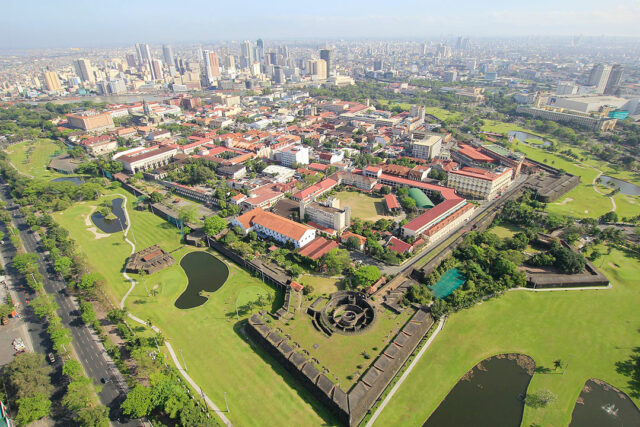
Local tourists listen to a free guided tour in Rizal Park by teacher PJ Del Rosario, also known as The Traveling Salakot, with support from the National Parks Development Committee. — NPDC

TOURISM Secretary Christina Garcia-Frasco has instructed her departments attached agencies to provide assistance to local governments on developing more parks and open spaces in line with efforts towards sustainable development for the industry.   

The Department of Tourism (DoT) extends its full support to the efforts of the national parks as well as our attached agencies to continue to develop the culture of tourism, which includes the continued development of our parks not only here in the National Capital Region but also all over the Philippines,Ms. Frasco said during last weeks opening of the 1st Philippine Parks Congress at the Rizal Park in Manila.   

She noted an earlier directive to agencies to reach out to local governments as well as the private sector to provide continued opportunities for tourism product development. 

Among the DoTs attached agencies are the Tourism Infrastructure and Enterprise Zone Authority, National Parks Development Committee (NPDC), Nayong Pilipino, and the Intramuros Administration.  

Nayong Pilipino Foundation Executive Director Gertie Duran-Batocabe said parks and green spaces should become part of the better normal. 

As you all know, the COVID-19 pandemic has triggered important conversations about the importance of urban green spaces and how those should be designed to benefit the health and well-being of the local population not just to promote sustainable development for our community, but also to attract tourists and enhance the tourism experience,Ms. Batocabe said.  

The DoT said urban park visitors have reached over three million from January to November 2022, an almost 50% increase from 1.5 million visitors in 2021, based on NPDC data.  

NPDC Executive Director Cecille Lorenzana Romero, meanwhile, said they will also be lobbying for a law that will set up an agency focusing on parks and open spaces.   

While there’s still momentum and support for the development of more parks nationwide, now is also the time to push for legislation to create an authority for parks and open spaces that will be truly national in scope and can provide guidelines to our LGUs (local government units),Ms. Romero said.   

The 1st Philippine Parks Congress focused on urban areas, with the aim of jumpstarting the establishment of a national framework for the development of parks and green spaces. MSJ

IOM study aims to integrate climate change impact to peacebuilding work in Bangsamoro

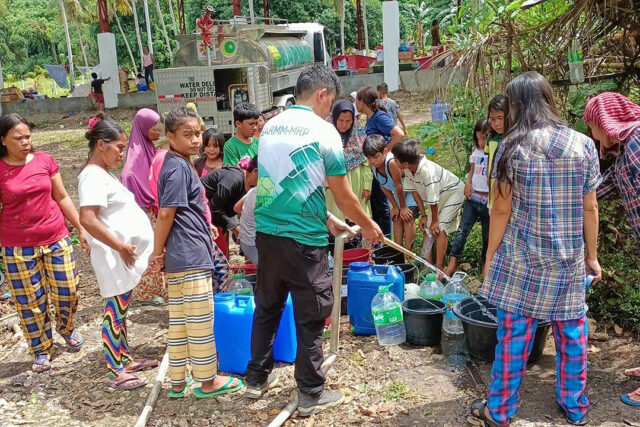
RESIDENTS of Datu Odin Sinsuat, Maguindanao del Norte displaced in the aftermath of severe storm Nalgae, locally named Paeng, collect water distributed by the Bangsamoro government through the Ministry of Social Welfare and Development in this Nov. 4 photo. — BARMM-MSSD

THE UNITED Nationsmigration agency is doing a study that aims to enhance climate change resilience in conflict-prone areas in the Bangsamoro region in southern Philippines.   

The research project, supported by the United Kingdom (UK) government, will engage communities in building evidence on links between conflict and climate change, which will be integrated into peace programs and policies, the UNs International Organization for Migration (IOM) said in a press statement.   

This is a milestone for the UK and the Bangsamoro Government as our first initiative to integrate climate change and peacebuilding objectives into local climate action and resilience-building in a conflict-affected context,British Deputy Head of Mission to the Philippines Alistair White said in the statement.   

Parts of the Bangsamoro Autonomous Region in Muslim Mindanao (BARMM), was among the areas severely affected by severe tropical storm Nalgae, locally named Paeng, which struck the Philippines in late October.   

The regional government reported 62 deaths, mostly in the town of Datu Odin Sinsuat in Maguindanao Del Norte due to a landslide that buried a village, while 13 others remain missing. Another 39 people were injured.   

More one 280,000 in the BARMM have been displaced by landslides and floods, according to IOM.   

There are three pilot areas for the study. These are: Marawi City in in Lanao del Sur, and the towns of Shariff Aguak and Mamasapano in Maguindanao del Sur.  

The project brings together the knowledge and experience of local stakeholders, shedding light on the increasingly emerging risks that affect communities left behind in the BARMM,said IOM Chief of Mission in the Philippines Tristan A. Burnett.   

IOM hopes that the evidence and best practices identified during this project will help guide the BARMM and conflict-affected communities to mainstream adaptation and mitigation strategies to climate change,Mr. Burnett said.  

Some studies have shown that climate emergencies can increase security risks by aggravating pre-existing socioeconomic and environmental vulnerabilities, the UN migration agency said.   

Bangsamoro Planning and Development Authority Director General Mohajahirin T. Ali, for his part, recognized the projects contribution to BARMM during the crucial transition periodand in supporting efforts for sustainable peace and development in the region.  

The autonomous region, set up in 2019 following the passage of Republic Act No. 11054 or the Bangsamoro Organic Law, is under a transition period until 2025. Marifi S. Jara

Solon seeks probe of rabies control program’s failure to reach targets

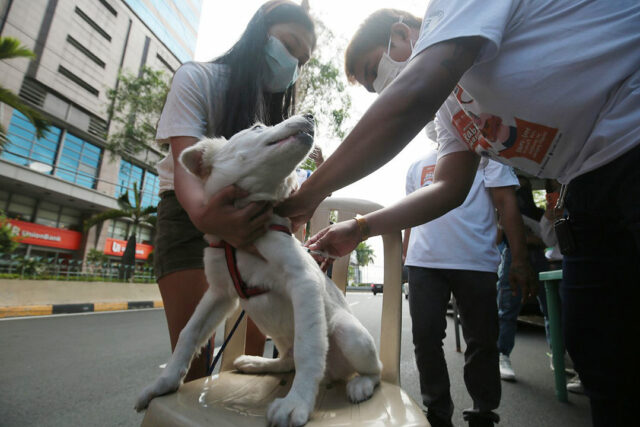
PHILIPPINE STAR/ MICHAEL VARCAS

A RESOLUTION to investigate the governments rabies control program has been filed at the House of Representatives, noting a 37% surge in deaths due to rabies this year.  

The NRPCP (National Rabies Prevention and Control Program) has missed its targets to eliminate human rabies by 2020 and to declare the Philippines rabies-free by 2022, despite ample funding of between P500 million to P900 million every year,Quezon City Rep. Marvin C. Rillo, who filed House Resolution 462, said in a statement on Sunday. 

We want the NRPCPs failure investigated, with a view to recommending stronger corrective measures to finally eliminate human deaths from rabies in the country,he added.  

Rabies is a vaccine-preventable disease mostly transmitted through an animal bite.  

The NRPCP was established under the Anti-Rabies Law of 2007 to prevent and control rabies infection by providing and promoting accessible vaccines and rabies education and awareness to the public.   

It also seeks to promote responsible pet ownership.  

The lawmaker cited data from the Health department showing that 322 Filipinos died due to rabies from January to Nov. 5 this year, a jump from the 235 in the same period in 2021.  

Department of Health records also showed that rabies infections had a case fatality rate of 100%, mostly caused by unvaccinated dogs.  

The World Health Organization also considers rabies a deadly disease such thatonce clinical symptoms appear in humans, rabies is virtually 100% fatal.  

Mr. Rillo also cited that state-run Philippine Health Insurance Corp. (Philhealth) paid P180 million for animal bite treatment claims in 2021, up by 22% from P148 million the previous year.  

From January to June, Philhealth spent P92.6 million to pay for 32,598 claims. Alyssa Nicole O. Tan

MPIF delivers healthcare services to Siargao coastal communities

MPIC

A GROUP of medical professionals recently visited Siargao to provide free healthcare services through Metro Pacific Investments Foundation, Inc.s (MPIF) Health It Up! project.   

The beneficiaries of the project are mainly fisherfolk and residents of coastal communities who serve as partners in MPIFs coastal and marine resource protection program called Shore it Up.  

We realized that a healthy environment involves healthy stewards ably taking care of our oceans natural resources,MPIF President Melody M. del Rosario said in a statement.  

MPIFs commitment to our partner sites nationwide goes beyond environmental and socioeconomic impact and now promises to bolster the health and wellbeing of its people as part of a healthy ecosystem in the years to come, Ms. Del Rosario said.   

MPIC, the corporate social responsibility arm of infrastructure conglomerate Metro Pacific Investments Corp. (MPIC), partnered with Makati Medical Center Foundation for the Siargao medical mission held Nov. 18-19.  

Forty doctors, nurses, and medical practitioners participated in the project, providing general and specialized medical services.   

This public-private partnership between MPIF, MakatiMed Foundation, the LGUs (local government units) and the Armed Forces of the Philippines is built upon our mutual purpose to help those who need it most, when they need it most,said MakatiMed Foundation President Victor L. Gisbert.  

Basic life support training was also held for 42 recruits of the Hospital-in-a-Bike project, an initiative of the MakatiMed Foundation and Department of Tourism to boost emergency medical response in different parts of the country.   

MPIC is one of three key Philippine units of First Pacific, the others being Philex Mining Corp. and PLDT, Inc.  

Hastings Holdings, Inc., a unit of PLDT Beneficial Trust Fund subsidiary MediaQuest Holdings, Inc., has a majority stake in BusinessWorld through the Philippine Star Group, which it controls. MSJ

Rule of law, authoritarianism, and civil society

DAN KIRK FORMENTERA-UNSPLASH

The Asia Liberty Forum interview with Professor Raul Fabella

(Part 2)

(This is the second part of the interview with Prof. Raul Fabella conducted by Romeo Bernardo that was the culminating activity of the “Asia Liberty Forum” in Manila on Sept. 29-30, presented by The Atlas Network (https://www.atlasnetwork.org/) and the Foundation for Economic Freedom or FEF (https://www.fef.org.ph/). Through panel discussions, break-out sessions, the Asia Liberty Awards Dinner, and other events, attendees heard from leaders from across the continent about the challenges and opportunities ahead for liberal democracy. The second part of the interview follows below.)

Romeo Bernardo (RB): Rule of law is almost always cited as a lynchpin of economic freedom. For example, the index of the Heritage Foundation lists it as No. 1, followed by government size, regulatory efficiency and market openness.

The UN Charter and the Universal Declaration of Human Rights, defines such to include right to life and liberty, freedom from slavery and torture, freedom of opinion and expression, the right to work and education, and many more, without discrimination.

Your thoughts please on such a broad definition of human rights vs. the narrower one espoused in writings of some authors — and practiced in some authoritarian regimes, especially ones which have been quite successful in bringing millions of their people out of poverty, trading off limitations on political liberties — e.g. China, Vietnam. Arguably even Singapore.

RF: Rule of Law and inclusion/inequality: Acemoglu and Robinson’s monumental opus (Why Nations Fail) argues that economic liberalization in the form of thin definition of rule of law (protection of property rights and enforcement of contracts) is the lynchpin of long-term sustained growth. Thus, economic liberalization is conducive to improved inclusion (as poverty reduction shown in the People’s Republic of China [PRC]) as growth reduces poverty (Burnside and Dollar, 2000). However, the reduction in poverty incidence does not preclude the violation of the thick definition of rule of law as including respect for basic human rights (the treatment of Uighurs in PRC comes to mind).

Barro and Salai-Martin (2004, Economic Growth) were the first to point out that whereas economic liberalization significantly associates with economic growth, political liberalization has at best a little and negative association. This suggested a tradeoff and a spirited backlash. In the new world of the 21st century, well-being has many more dimensions than monetary income: environmental sustainability, shared well-being and resilience, etc., all of which can be attenuated on the way to higher per capita.

The tension spikes when the tradeoff is couched in terms of basic human rights: Did the so-called social contract to attenuate political space in exchange for economic space pay off? Depends upon the criteria of validity. If economic space means economic convergence with the high-income economies and lower poverty incidence, East Asia and PRC are evidence of its payoff.

Was it worth the lives lost or crippled? Was the Tiananmen Square Massacre in China a fair price to pay for 600 million graduating out of poverty? This is a question of the Sphinx!

There is, however, a strong evidence-based consensus that the race to the top of the per capita income ladder has scarred the environment, sometimes irretrievably; that climate change has a human agency footprint. Incidentally, the scars are worse for the previous socialist bloc than for market economies. Social unrest can follow norm violations in these other dimensions despite or because of rising income which also changes public values and perception. Finally, the carbon footprint of energy-impoverished Filipinos is so small you would need a microscope to see it.

RB: In recent years, there seems to be a drift away from liberal regimes that espouse market-based solutions (economic freedoms) towards authoritarian regimes from both the right and the left, everywhere globally. To what extent is this being driven by income inequalities and the failure of governments to address poverty and create jobs with globalization and tech change? Notable examples in developing countries are: to the right Brazil, and to the left, Colombia, Chile, Bolivia. (In the west, the USA is poster boy No. 1, and from the news earlier this week — Italy seems to have turned neo-Fascist!). Is Philippines at any risk at risk of being next? What conditions promote these?

RF: There is a great deal of debate and interest on how Francis Fukuyama (End of History) — that liberal democracy is the future of humanity — got it wrong. Is income inequality the culprit: possibly, but more salient in the literature is the loss of accustomed and expected entitlements (falling wages, potential loss of jobs from new entrants, threats to accustomed cultural matrix and social contracts from growing diversity, etc.), which can happen with or without growth in inequality. James Scott (Moral Economy of the Peasants, 1976) noted that peasants in East Asia tended to resort to violence when their accustomed standards (food intake, say) are attenuated, especially after adverse climate and harvests and the shares of the landowners do not adjust to accommodate as dictated by the moral economy. So, both inequality cum rigidity and broken expectations are indicted.

RB: I like much of what you have written in the past on the role of civil society and organizations like FEF. What can we in FEF (and similar like-minded institutions) do to help improve social welfare and preserve economic freedoms? How do we help ensure that we don’t suffer the reversals and drift to illiberal regimes, both left and right, as had happened in other developing countries?

RF: On the role of Civil Society and incremental market liberalization reforms: Most reform battles in the Philippines involve market liberalization. The reflex response of Philippine political actors to economic difficulties is to find scapegoats among market actors such as the profiteers, oligarchs, foreign investors and speculators. The normal state response is to ban or restrain market exchanges and let government take over: thus the old NFA (National Food Authority, a state monopoly in imports of rice), the OPSF (the Oil Price Stabilization Fund, a state monopoly in imports of petroleum), ban on land ownership over five hectares (CARP, the Comprehensive Agrarian Reform Program), ban on mining and forestry activities; the Agri-Agra law (restraint on bank allocation), blam[ing] oligarchs for nature-triggered water shortages, etc. The Philippine economic saga from the 1990s is one of slow and spasmodic extrication from the straitjacket the state has imposed on the market.

On FEF engagements: Economic liberalization is where civil society has had the most impact. FEF has been leading the charge to economic liberalization: rice import liberalization, PSA (amended Public Service Act) law allowing foreign participation in more economic activities, free patent law allowing faster grant of titles to patent holders and now allowing consolidation by lifting the five-hectare ownership ceiling and facilitating farm consolidation in the food production sectors. As in Deng’s China, market liberalization is very inclusive in the sense of poverty reduction although it may raise income inequality. The advantage of FEF over other business clubs (MAP or Management Association of the Philippines, MBC or the Makati Business Club, etc.) is that its membership/fellows is not limited to representatives of businesses and firms but also include academics, independent researchers, and public intellectuals.

Note: (i) the relationship between tech revolution/social media and polarization/inclusion is murky and already heavily covered and discussed in many other local and global fora; added insight may be hard to offer; and, (ii) the response to social cost of illiberal politics and economy is imbedded in the discussion above.

RB: Economic freedom metrics typically include size of government. As a former Finance undersecretary, I have often wondered whether this is appropriate for a developing country like the Philippines with low tax to GDP ratios and under invests in public goods, especially education and health? In our case we have slipped to the bottom in global rankings on literacy and numeracy, and, not coincidentally, among those who spend least for basic public education. What do you think?

RF: Barro and Salai-Martin also used size of government as regressor for growth and found that the sign of association is negative. Their interpretation was that it was a proxy for corruption: the more government the more corruption. This interpretation jibes with the weak institution narrative: weak governance tends to throw money and government administration at perceived problems leading to higher government budgets, waste, and corruption. And the allocation of these state resources is skewed towards the squeakiest wheels, fast burn explosions that threaten Armageddon now.

Unfortunately, neglect of education and human capital infrastructure is a slow burn issue and gets the least attention. And when allocation is increased for education, it supports the same tired formula: more classrooms, more teachers, and more textbooks which result in the same more illiteracy. V. Fabella (2017, “Political-Economic Determinants of Education Reform: Evidence and Interest Group and Student Outcome,” European Journal of Political Economy) has shown that in the battle for reforms in education, access reforms (more classrooms and textbooks) normally trump quality reforms (better trained and motivated teachers) due especially to the opposition of the teachers’ union. In our case, a mortal sin: we can never access exam results of national high school exams to compare quality of high school education outcomes.

RB. I much enjoyed and learned from your book Capitalism and Inclusion Under Weak Institutions that came out in 2018. It was also the subject of our FEF Paderanga Valera lecture that year. Would you care to talk about it in the remaining time we have?

RF: On Capitalism and Inclusion: My thesis in the book is that under weak institutions, a greater role of markets is more inclusive defined as poverty incidence. This flies in the face of Piketty (2011) who showed that capitalism or market economics in affluent well-run economies militates against inclusion defined as income inequality. For low-income countries, poverty incidence is the more compelling metric of success. Poverty incidence in the Philippines is highest in the rural areas where the government has effectively vetoed the role of markets for land and finance.


Romeo L. Bernardo was finance undersecretary from 1990-1996. He is a trustee/director of the Foundation for Economic Freedom, the Management Association of the Philippines, and the FINEX Foundation. He is the principal Philippine Adviser of Globalsource Partners (globalsourcepartners.com). He also serves as a board director in leading companies in banking and financial services, telecommunication, energy, food and beverage, education, real estate, and others.

romeo.lopez.bernard @gmail.com

ADVERTISEMENT
ADVERTISEMENT