Home Blog Page 5533

DENR plans to update small-scale mining rules

WIKIMEDIA COMMONS

THE Department of Environment and Natural Resources (DENR) said it hopes to remove “outdated” rules for small-scale miners after announcing a review of a 1991 law governing that segment of the industry.

“We will be undertaking a comprehensive review of the existing legal framework (for) mining — this will be the first area that the department will be reviewing. We are undertaking review of certain laws, they are somewhat outdated as you know,” Environment Secretary Ma. Antonia Yulo-Loyzaga said in a briefing on Wednesday. 

Ms. Yulo-Loyzaga said the department is looking in particular to update Republic Act 7076 or the People’s Small-Scale Mining Act of 1991.

“We are looking very closely in this Small-Scale Mining Act and what needs to be done to update it. We’re hoping that some of the large companies can help us with the social protection and environmental protection side for the small-scale miners,” she said.

Ms. Yulo-Loyzaga said the DENR is looking to “revitalize” the mining sector as minerals will be critical for the economic recovery, adding that “responsible mining” must be viewed in the context of “what mining can deliver to a country’s development.”

She said that the department hopes to announce the priority areas for review, which will take place over the next six months.

Ms. Yulo-Loyzaga said that to date there are 53 “Minahang Bayan” areas open to small-scale miners, mostly in the Cordillera and Davao regions.

“These are where we need to concentrate because as you know there are needs as far as the Minahang Bayan process is concerned, especially in the protection of our small-scale miners. There’s also an aspect to environmental protection because as you know small-scale miners are only allowed to use certain artisanal tools,” she said.  

Minahang Bayan are designed to regulate the small-scale mining industry by defining the areas they are allowed to operate observing DENR guidelines.

“At this point, for this very, very much needed is collaboration and close cooperation with the local government,” Ms. Yulo-Loyzaga said.  

She said that the DENR is looking at expanding discussions with the Department of the Interior and Local Government and local chief executives regarding the operation of Minahang Bayan areas. — Ashley Erika O. Jose

Export development plan expected early next year

ICTSI

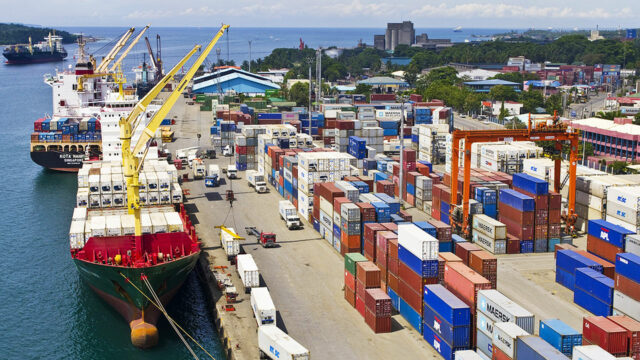
THE Philippine Export Development Plan (PEDP) is expected to be released by early next year following completion of a review by the government, the association of exporters said.

Sergio R. Ortiz-Luis, Jr., Philippine Exporters Confederation, Inc. (Philexport) president, told reporters on the sidelines of the National Export Congress 2022 in Pasay City on Wednesday that the PEDP 2023-2028 is still being reviewed by the Department of Trade and Industry (DTI).

In November, Philexport said in a statement that the PEDP 2023-2028 was targeted to be launched by Dec. 7 at the National Export Congress 2022.

“There were changes, and there is a new (Trade) Secretary. Even the people reviewing the plan were changed,” Mr. Ortiz-Luis said.

“Once the DTI’s review is done, it will be approved by the Export Development Council (EDC) for release. We expect the release of the PEDP by early next year,” he added.

Trade Secretary Alfredo E. Pascual chairs the EDC.

The 2018-2022 PEDP set an export target of $122.3 billion-$130.8 billion by 2022.

According to Mr. Ortiz-Luis, the export industry is hoping to hit exports of $120 billion to $130 billion for both goods and services in the next two years.

“We are eyeing $120 to $130 billion. That was the original target from two years ago. It was not met. What we had was $87 billion (export level) last year. Hopefully, we can meet $100 billion this year. We faced delays due to the effects of the coronavirus disease 2019 (COVID-19) pandemic in shipping and the supply chain,” Mr. Ortiz-Luis said.

Cielito F. Habito, Brain Trust, Inc. chair and PEDP planning facilitation team leader, said in his presentation that the industry can generate $240.5 billion worth of export earnings by 2028 if the PEDP 2023-2028 is implemented.

“We are seeing that it is possible, if we all do things together and do it right, to get $240.5 billion in export earnings by 2028. It is possible if we do things right,” Mr. Habito said.

Mr. Habito, a former socioeconomic planning secretary, said various steps must be undertaken to hit the target, like intensifying trade promotion, marketing, and design innovation; pursuing active membership in regional and bilateral preferential trade arrangements; pursuing export market diversification; attracting and retaining domestic and foreign investment; and supporting export infrastructure requirements in terms of power, water and irrigation, transport and logistics, and telecommunications.

Mr. Habito also recommended more export financing, the consolidation of small producers, and a skills-matching program for exporters’ human resource needs, among others.

“We need to attract those big-ticket, global firms. We need to ensure steady and reliable supply of these raw materials for manufacturing. We need to have clustering and cooperation. Responsible mining and processing of minerals to complete our value chains is also important,” Mr. Habito said.

“We’d like to think that PEDP will be aggressive, inclusive, innovative, integrative, and regenerative. With the whole nation rallying behind the PEDP, we can make it happen,” he added.

Mr. Pascual added: “Both public and private sectors are called on to work together to unlock the country’s unrealized export potential of $49 billion a year. We need to push this potential and achieve sustainable and inclusive industrialization.”

“In 2020 and 2021, over 3,000 exporters managed to grow despite the global trade slump. Of this number, 403 exporters in 2020 managed to increase their export sales by more than $1 million compared to their previous year; this number almost doubled to 742 in 2021,” he added. — Revin Mikhael D. Ochave 

Philippines signs deal to prepare agencies to tap climate financing

PHILIPPINE STAR/ MICHAEL VARCAS

THE Department of Finance (DoF) said it has signed an agreement with the Global Green Growth Institute (GGGI) to prepare government financial institutions and agencies to tap the Green Climate Fund (GCF) for project financing.

“This program will bolster the country’s capacity in planning, accessing, delivering and monitoring climate finance through this new global financial mechanism for climate adaptation and mitigation,” Finance Secretary Benjamin E. Diokno said in a statement on Wednesday.

The agreement is known as the GCF Readiness Program, which is set to launch next year.

The program includes training on GCF for National Government agencies and government financial institutions such as the Development Bank of the Philippines (DBP) and the Land Bank of the Philippines (LANDBANK).

The agreement includes technical assistance in developing a project pipeline for the GCF, the DoF added.

GGGI Philippines Country Representative Juhern Kim said the agreement will allow the Philippines to gain better access to international climate finance.

“GGGI Philippines will help the country translate adaptation and mitigation opportunities into well-crafted project proposals that will unlock doors of international climate finance,” Mr. Kim added.

The GCF has nearly $11 billion in approved climate funding.

The DoF and GGGI are also planning to launch another GCF readiness project that aims to develop projects in collaboration with the DBP and the LANDBANK.

“Investing in climate adaptation and mitigation activities is essential in alleviating poverty, reducing inequality, and promoting a low carbon and green economy,” Mr. Diokno said.

“Navigating new climate finance processes can be challenging, particularly for organizations with limited experience in international funding models. This readiness project will play an instrumental role in terms of providing technical assistance, project development, capacity building, and institutional strengthening,” he added. — Luisa Maria Jacinta C. Jocson

Digitalization of finance seen supporting inclusivity goals

FREEPIK

THE digitalization of financial services is expected to reduce the ranks of the underserved, including rural residents, micro-businesses, and women, according to a report on Southeast Asian digital financial services issued by the World Economic Forum.

“Access to finance is not uniform among ASEAN’s digital generation. Among those who sought credit support, nearly half could not access formal sources of lending. Some 28% of those who needed loans did not get any and almost a fifth had to rely on family and friends, cooperatives and other informal lenders,” the report said.

The survey found that women (65%) were more likely to adopt digital finance apps than men (59%).

One in five women was found to need loans from financial technology (fintech) sources, making the industry the second most important source of formal borrowing after commercial banks.

Overall, women had less access to financial services compared to men. Only 22% of women who needed loans actually received credit from commercial banks, compared to 28% of men.

There were also fewer women (19%) using advanced financial products compared to men (24%). However, the survey indicated that women were adopting digital finance apps (65%) at a higher rate than men (59%).

“It is notable that only 22% of women who needed loans actually received credit from commercial banks, as compared to 28% of men. Online lending services seem to be playing their role in filling in financial needs of ASEAN women, promoting women’s further participation in the digital economy,” the report added.

Meanwhile, micro-business owner respondents said that better access and use of financial services allowed them to upgrade and expand their current businesses, ranked equally with managing cash flows and expenses.

“Compared to other respondents, business owners also placed higher emphasis on the potential to attract new customers and suppliers and ease supplier and customer dispute resolutions when having better access to financial services. Interestingly, these functions go beyond what is traditionally viewed as the function of a financial service provider and also underscore how financial services have evolved,” the World Economic Forum said. — Luisa Maria Jacinta C. Jocson

Nomura Global Markets upgrades 2023 view on PHL growth to 4.3%

PHILIPPINE STAR/MICHAEL VARCAS

THE PHILIPPINES is expected to post gross domestic product (GDP) growth of 4.3% in 2023 the face of a widening current account deficit and still-elevated inflation, Nomura Global Markets Research said.

Nomura Global was upgrading a previous estimate issued in August of 3.6%, though the projection still suggests the Philippines will fail to meet its official GDP estimate of 6-7% by a wide margin.

In a research note issued by analysts Euben Paracuelles, Charnon Boonnuch, and Rangga Cipta on Wednesday, Nomura Global said: “Amid a global growth downturn, we do not see domestic demand being as resilient as in the past, and hence overall economic performance is likely to weaken significantly, particularly in the first half of 2023.”

Nomura Global expects the current account deficit to hit the equivalent of 6.3% of GDP this year and remain high at 4.4% in 2023.

It also forecasts exports to contract next year due to a sharp global slowdown with recessions expected in Europe and the US.

Rising prices of food imports will also continue to have a significant impact next year, it said.

“We believe the emergence of protectionist measures, with a growing list of countries implementing food export bans, will still disproportionately affect large food importers such as the Philippines. With still no end in sight on the conflict in Ukraine, we continue to assume prices of fertilizer and feedstock will remain high, boosting imports further,” Nomura Global said.

The current account deficit was at $7.9 billion in the second quarter, higher than the year-earlier $1.3-billion deficit, as the trade in goods deficit widened.

In the first half, the current account deficit blew out to $12 billion from $1.3 billion a year earlier.

The Bangko Sentral ng Pilipinas (BSP) expects a current account deficit of $20.6 billion — equivalent to 5% of GDP — this year.

“Importantly, we expect private consumption growth to ease to 5% from 8.1%, as pent-up demand fades and rising inflation hurts household purchasing power,” Nomura Global said.

Amid soaring prices of oil and food imports, headline inflation is expected to remain above the BSP’s 2-4% target in 2023. Nomura Global sees inflation to average 5.8% in 2022 and 4.2% next year.

Moreover, second-round effects will still be evident in the first half of 2023, with Nomura Global citing the transport fare adjustments made in October. Petitions for higher wages from workers are also increasing.

“As a result, we expect core inflation to remain elevated at around 5.9% year on year in (the first half of) 2023, before easing to around 3.1% in (the second half),” Nomura Global said.

Inflation of 8% last month was the highest in 14 years, or since the 9.1% posted in November 2008, the Philippine Statistics Authority said on Tuesday. — Keisha B. Ta-asan

British pork shipments to PHL up 41% in first nine months

REUTERS

PORK imports from the UK rose 41% in the first nine months, according to the British Agriculture and Horticulture Development Board (AHDB).

 AHDB Senior Export Manager Susan Stewart said during a recent meat trade mission organized by the British Chamber of Commerce Philippines (BCCP) that UK pork shipments to the Philippines during the period amounted to 28,000 tons.

 “From January to September 2022, UK pork exports to the Philippines (posted a) 41% increase by volume. From 2020 to 2021, there was a strong demand for British pork (in) the Philippines,” Ms. Stewart said.

 BCCP estimates indicate that UK pork exports to the Philippines hit 25,299 tons in 2021, up 216%. — Revin Mikhael D. Ochave

‘Mine’ it right: Revisiting guidelines for online businesses

If there are any silver linings from the COVID-19 pandemic, one would probably be the public’s increased enthusiasm for making use of technology in their daily lives. For the retail industry, we have seen the transition of consumers from shopping in physical stores to checking-out or “mine-ing” in online shops. Even now that the COVID restrictions have been relaxed, many still seek the convenience and advantages of purchasing online.

To protect the rights and interests of consumers online, several government agencies, particularly the Departments of Trade and Industry (DTI), Agriculture (DA), Health (DoH), Environment and Natural Resources (DENR), as well as the Intellectual Property Office of the Philippines (IPOPHL) and the National Privacy Commission (NPC), issued Joint Administrative Order (JAO) No. 22-01. This JAO is also known as the Guidelines for Online Businesses Reiterating the Laws and Regulations Applicable to Online Businesses and Consumers.

JAO No. 22-01 reminds online businesses of their responsibilities to build trust in e-commerce and to always protect and uphold the interest of consumers by complying with all Philippine laws, rules, and regulations. It also indicates the liabilities of online businesses, e-commerce platforms and e-marketplaces, as well as responsibilities of government agencies and remedies available to consumers.

As we are nearing the holiday season, when consumers tend to do more online shopping in preparation for the festivities, let us revisit some of the key points of JAO No. 22-01, which addresses the usual concerns in online transactions:

Applicable laws — The laws applicable to physical or offline businesses are, as far as practicable, equally applicable to online businesses.

Product information — Online businesses must provide easily accessible, complete, and correct information about their goods and services, and adhere to fair advertising and marketing practices. This includes information about the products’ quality, style, shape, size, color, condition (new, unused, repackaged, second-hand), quantity or availability, truthful price advantage (discounts), authorized trademark, authenticity, etc.

Price transparency — Online businesses must ensure transparency and openness regarding prices, including any additional costs, such as customs duties, currency conversion, shipping, delivery, taxes, service/processing fees, and convenience fees.

Price tag placement — product listings by e-retailers or merchants on marketplaces/platforms must contain the price(s) of the products/services in pesos and must display payment policies, delivery options, returns, refunds and exchange policy, and other charges, if applicable. The total price must be clear, updated and accurate to avoid misleading online consumers. The “DM is key” practice, requiring the customer to direct-message before a price is given, is considered a violation of the Price Tag Law.

Data Privacy — Personal information collected by online sellers, merchants or e-retailers may be obtained and retained only for legitimate purposes. All personal information must be secured with reasonable and appropriate security measures to guard against use for purposes other than what the consumer has consented to.

Defective products and services — Under Republic Act No. 7934 or the Consumer Act of the Philippines, online sellers, like other tradesmen, bear the liability of the manufacturer, producer, and any importer of the defective products when (a) it is not possible to identify or there is no clear identification of the manufacturer, builder, producer or importer of the product supplied; or (b) the online sellers do not adequately preserve perishable goods.

Regulated or prohibited products — For regulated goods, online businesses must exhibit the corresponding license or permit number as prescribed by the applicable government agencies. On the other hand, online sellers may in no case be allowed to sell or distribute goods and services specifically prohibited by law.

Review and cancellation options — Online businesses must offer options to allow consumers to review their transactions prior to final purchase and to cancel or withdraw from confirmed transactions in appropriate circumstances. I would like to emphasize the words “in appropriate circumstances” as bogus buyers (buyers who don’t pay for their purchases) and joy reservers (buyers who keep on reserving items but will not actually buy it) are also not tolerated by the law. Under the JAO, fraudulent acts both by online businesses and consumers are to be dealt with in accordance with existing penal/special laws.

Non-proliferation of fake online reviews — online businesses may neither restrict the ability of consumers to make critical or negative reviews of goods or services, nor spread wrong information about competitors.

Consumer complaints — DTI implements a “No Wrong Door Policy,” which means that any consumer complaint filed with the DTI, whether the subject matter falls under its jurisdiction, is to be accepted for appropriate assistance, subject to the limitations imposed by law. Online consumers may file complaints with the DTI via walk-in, consumer care hotlines, and written complaints. However, the consumer may opt to seek resolution with the online business first before resorting to intervention by the DTI or any other regulatory agency.

Electronic messages as court evidence — Communications of online sellers, merchants, e-retailers, and consumers, whether done via social media, e-commerce platforms, or any other form of electronic communications using an electronic device, qualify as electronic data messages. Screenshots of such electronic communications may be used as evidence to prove a fact or establish a right in administrative or judicial proceedings, subject to rules issued by the Supreme Court.

While the government extends efforts to regulate online businesses, we as consumers must also do our part and exercise caution with our online transactions. As an avid online shopper even before the pandemic, let me share some personal protocols before I purchase from any online shop for the first time: (1) do some background checks about the online shop before confirming a transaction; (2) choose cash on delivery mode of payment, if applicable, otherwise, use regulated payment channels; (3) never share or input on apps/websites any bank or financial information unless you have fully established the authenticity of the shop and the security of the payment gateway used; and (4) opt for trusted delivery channels rather than meetups.

Well then, are we now set to make some “bad decisions”? I mean, happy shopping!

The views or opinions expressed in this article are solely those of the author and do not necessarily represent those of Isla Lipana & Co. The content is for general information purposes only, and should not be used as a substitute for specific advice.


Nestine Buisan is a manager at the Tax Services department of Isla Lipana & Co., the Philippine member firm of the PwC network.

nestine.p.buisan@pwc.com

South China Sea Code of Conduct still ‘very far’ from completion

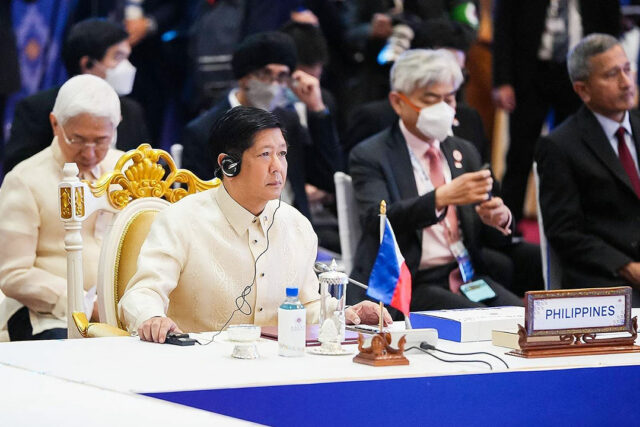
PRESIDENT Ferdinand R. Marcos, Jr. during the 25th ASEAN-China Summit. — OFFICE OF THE PRESS SECRETARY

By Alyssa Nicole O. Tan, Reporter

AN AGREEMENT between China and the 10-member Association of Southeast Asian Nations (ASEAN) on a Code of Conduct in the South China Sea remains far from being finalized, a Philippine diplomat said on Wednesday, despite the second reading of the draft nearing conclusion.

“Honestly, I think we are still very far from concluding this document,” Foreign Affairs Deputy Assistant Secretary and Executive Director for ASEAN Affairs Noel M. Novicio told a press conference.

“ASEAN member states and China are negotiating this very seriously, very delicately. I think we are at least about to conclude the second reading of this significant document,” he added.

Mr. Novicio explained that a second reading meant the second round of negotiations, with the parties going line by line on the provisions of the document.

“We have finalized the preambular part of this document, but I’d like to inform you that there is an unwritten agreement among ASEAN member states and China that nothing is finalized until everything is finalized,” he said.

“The second reading means that we have completed the second round of the whole text, but it doesn’t mean that we have agreed on the text,” he added.

The 11 countries did not set a deadline for completing the proposed code of conduct, which is expected to serve as a framework for rules and standards for maritime peace and stability.

“We are confident that, of course, the negotiations will proceed next year, but I’d like to emphasize that it is a very delicate undertaking,” Mr. Novicio said. “We’re taking it very seriously. We are consulting with our experts.”

Consultations for the adoption of the South China Sea Code of Conduct began in 2013. It took about six years before the first round of negotiations reached its end and kicked off second reading negotiations.

“That document… when it is concluded, when it is finalized, I think it will be one of the most significant contributions of ASEAN in the maintenance of peace and stability in the South China Sea,” Mr. Novicio said.

The diplomat said the long process could be attributed to the need to consider the position of several nations in terms of interpretation and application.

“There are 11 countries negotiating a very important document, so you have to consider all the positions of the 11 countries. Of course, there are significant positions, core national interests being put on the table,” he said.

“For the Philippines, we look at a CoC (code of conduct) that should be based on international law… We hope that we will have a very good document that will be in accordance with international law, especially the 1982 UNCLOS (United Nations Convention on the Law of the Sea),” he said.

The South China Sea is a major global shipping route. Several countries have overlapping territorial claims, including the Philippines, Indonesia, Brunei, Malaysia, Taiwan, Vietnam and China.

Romualdez says Marcos to sign 2023 budget after Dec. 14 Brussels trip 

SPEAKER Martin G. Romualdez during the opening of the 19th Congress at the House of Representatives in Quezon City on July 25, 2022. — PHILIPPINE STAR/KRIZ JOHN ROSALES

HOUSE Speaker Martin G. Romualdez on Wednesday said the 2023 national budget will be signed into law as soon as President Ferdinand “Bongbong” R. Marcos returns from this Brussels trip on Dec. 14.

“That is the most important piece of legislation, and we’ve tackled it, we’ve dispatched, and we [will proceed] now with our draft,” Mr. Romualdez told reporters during a social gathering on Wednesday.

“We hope that this would really add to the success of the presidency [and its] prosperity,” said Mr. Romualdez, a cousin of the president.

Congress ratified on Monday the Bicameral Conference Committee report on the proposed P5.268-trillion national budget for 2023.

Legislative leaders said they were hoping that the president will sign it into law before Congress goes on Christmas break on Dec. 17.

Mr. Marcos will be attending the Association of Southeast Asian Nations-European Union Summit in Brussels on the 14th.

Next year’s spending plan under the 2023 General Appropriations Act includes funds for financial assistance to targeted sectors, aid for people in crisis situations, free tuition and assistance to poor patients in government hospitals, among others.

The 2023 national budget also has a P3.5-billion funding for COVID-19 vaccine procurement, classified as an unprogrammed appropriation to give the Department of Health flexibility to use it for other health emergencies if necessary.

Opposition lawmakers expressed disappointment over the restoration of the P10-billion budget for the National Task Force to End Local Community Armed Conflict (NTF-ELCAC), an ad hoc body under the Office of the President.

The P150-million confidential and intelligence funds for the Department of Education was also reinstated after it was questioned during budget deliberations. — Beatriz Marie D. Cruz

Justice chief promises concrete actions on UN joint rights program

JUSTICE SECRETARY JESUS CRISPIN REMULLA — PHILIPPINE STAR/KRIZ JOHN ROSALES

JUSTICE Secretary Jesus Crispin C. Remulla vowed to take more concrete actions on human rights issues as the Philippines continues to work with the United Nations (UN) on addressing concerns raised by the international agency.

Mr. Remulla led the United Nations Joint Program (UNJP) Steering Committee meeting on Dec. 5, where technical working groups were formed to tackle human rights issues in the country, the Department of Justice (DoJ) said in a statement.

“I trust that all the implementing partners mutually share these commitments and thus we’ll be working together to realize our shared vision of human rights and real justice for all,” he said during the meeting held at the Manila Hotel.

The UN mechanism aims to focus on capacity-building on human rights protection in the country.

The government and the UN resident coordinator in the Philippines signed the UNJP.

The Justice department plans to link its website to the UNJP’s page to complement the information on the country’s human rights programs.

A separate social media page is also being planned on the partnership.

Mr. Remulla earlier said at least three UN special rapporteurs would visit the country to help develop these programs and bolster the country’s forensics capabilities.

The Philippines accepted 200 recommendations from the UN Human Rights Council, including investigating extralegal killings and protecting journalists.

Mr. Remulla said the Philippines has responded to more than half of the recommendations and would address the remaining 89 “in due course.”

More than 30 member-states of the UN Human Rights Council have urged the Philippines to do something about extralegal killings and human rights abuses in connection with the government’s drug war.

The UN Rights Committee has said the government should cooperate with the International Criminal Court’s probe of the anti-drug campaign.

The UN Office of the High Commissioner for Human Rights has said the country’s probe of human rights abuses in the drug war lacked transparency.

At least 6,117 suspected drug dealers had been killed in police operations, according to data released by the Philippine government in June last year. Human rights groups estimate that as many as 30,000 suspects died. — John Victor D. Ordoñez

Labor group stages protest vs sovereign wealth fund

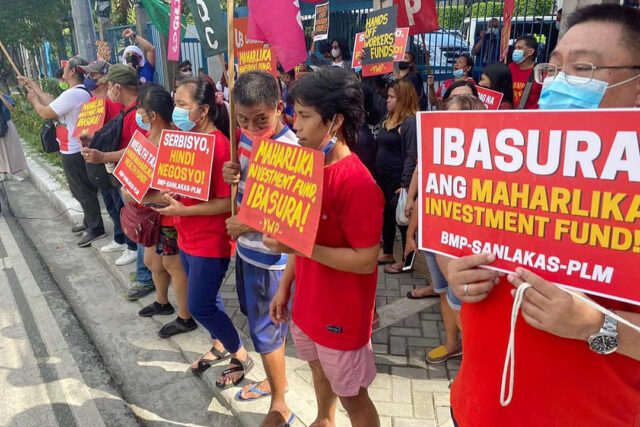
BMP FACEBOOK PAGE

A LABOR group on Wednesday staged a protest against a proposal to establish a sovereign wealth fund, which would source capital from state-run pension funds.  

The Bukluran ng Manggagawang Pilipino (BMP), in a statement, said the government should not gamble funds meant to benefit both private and public sector workers, including minimum-wage earners.  

“The Social Security Systems (SSS) funds came from the blood, sweat and tears of millions of workers, and we are worried this will be wasted through the Maharlika Investment Fund,” BMP Chairperson Leodegario “Ka Leody” de Guzman was quoted as saying during the demonstration held in front of the SSS main office in Quezon City.  

The SSS covers private sector workers while civil servants are under the Government Service Insurance System (GSIS).   

He said the government should instead focus on helping micro, small, and medium enterprises and developing local businesses.  

House Bill 6398, filed on Monday, seeks to set up a sovereign wealth fund called Maharlika Wealth Fund, with a P250-billion initial investment that will come from the two pension funds and government-owned banks.  

In a separate statement on Wednesday, GSIS President and General Manager Jose Arnulfo A. Veloso said the measure would bolster economic activity and provide funding for critical infrastructure projects in the country.  

“We can cherry-pick the investments that will suit our risk parameters and credit risk management parameters that will allow our GSIS employees to benefit from all these,” he said.  

GSIS has pledged to provide P125 billion for the wealth fund.  

Mr. De Guzman, on the other hand, asked in Filipino: If it is true that the plan is to grow the funds of the SSS with consideration for the benefits of its members, the government should not gamble on this big risk.John Victor D. Ordoñez

Student group slams mandatory ROTC push

THE COLLEGE Editors Guild of the Philippines (CEGP) on Wednesday rejected a bill that would make military training mandatory in tertiary schools and disguising that intent by using the term National Citizens Service Training Program (NCSTP).  

In a statement, the alliance of collegiate student publications said the measure is a “hidden push” for the Reserve Officers’ Training Corps (ROTC) program, which is currently optional under a two-semester national service course.   

“The bill is belittling the critical thinking of the youth and they won’t be fooled by this push for ROTC,” CEGP National Spokesperson Melanie Feranil said in Filipino.  

“Historically, the youth movement has always been at the forefront of the struggle for freedom and liberation and we will continue fighting against the mandatory ROTC push,” she added.  

House Bill No. 6468, authored by House Speaker Martin G. Romualdez, was approved on Tuesday by the committee on technical and higher education.  

Under the measure, the government would “enhance the capacity of its citizens to mobilize and perform their constitutional duty to render personal military or civil service to the [country] in times of calamities and disasters, national or local emergencies, rebellion, invasion or warthrough the training program.  

A Senate counterpart bill was filed on Nov. 28, which seeks to reinstitute a two-year voluntary advance ROTC program at the tertiary level.  

The ROTC requirement was abolished in 2002 after Republic Act 9163 established the National Service Training Program.  

Moves to abolish the compulsory military training program were prompted by the murder of a private university student who spoke out on corruption within the ROTC system involving students paying off military training officers to skip the requirement.  

“We will not forget the killing, the hazing, harassment, red-tagging and all other violence on our fellow youth in the past,” Ms. Feranil said. “We will not allow fake nationalism.” John Victor D. Ordoñez

ADVERTISEMENT
ADVERTISEMENT