Home Blog Page 549

How Asia’s Gen-Z is losing out to China’s $1-trillion surplus

STOCK PHOTO | Image by maia crimew from Unsplash

By Karishma Vaswani

CHINA’s new economic model is putting the future of Asia’s Gen-Z at risk.

The continent is home to some of the world’s most trade-oriented economies and rode globalization to lift the lives and livelihoods of hundreds of millions. But it’s now being hit by a double whammy: an export base that has come under growing pressure from a flood of cheap goods from China, unquestionably the dominant power in the region, and US President Donald Trump’s trade war.

It’s frustrating a generation already struggling because of stagnant wages and soaring living costs. They’re having to face the reality that the manufacturing jobs that powered prosperity for their parents are becoming harder to find, even as the white-collar ladder is increasingly crowded for university graduates, too.

China has doubled down on manufacturing to sustain growth as domestic demand stalls and the property sector continues to drag. The annual trade surplus is now more than $1 trillion, despite a deepening plunge in shipments to the US. Exports are swamping neighboring economies and stirring resentment abroad. French President Emmanuel Macron has warned that the European Union may take strong measures if Beijing fails to address the imbalance.

Southeast Asia and other countries in the Global South are absorbing a disproportionate share. The members of the Association of Southeast Asian Nations are particularly vulnerable as their own low-cost markets are struggling to compete with the scale of China’s output. Import curbs and other measures have done little to stop the flow.

The pain is concentrated in labor-intensive industries that hits younger workers. Around 60 textile factories have closed in Indonesia since 2022, leading to the loss of an estimated quarter-million jobs, according to a recent report from the Lowy Institute, a Sydney-based think tank. The Indonesia Fiber and Filament Yarn Producer Association has estimated another half-million are at risk in 2025, effectively wiping out one of four jobs in the sector in a matter of years.

Indonesia, Southeast Asia’s biggest country, with more than 280 million people, isn’t the only one affected. Thailand recorded roughly 2,000 factory shutdowns last year; officials cited cheap Chinese imports as a major factor. These are the entry-level manufacturing jobs that traditionally absorbed young people, narrowing their most reliable path into the middle class.

It doesn’t stop at low-end production. The US-China Economic and Security Review Commission warns that China’s overcapacity is now reshaping markets far beyond textiles and toys. It’s leaping ahead in advanced industries — from electric vehicles and batteries to pharmaceuticals and robotics — backed by state financing and an aggressive industrial policy.

Economists David Autor and Gordon Hanson argue that the phenomenon known as China Shock 2.0 could be even more disruptive than the first. That era took place between 1999 and 2007 and upended America’s economy, leading in part to the loss of nearly a quarter of all US manufacturing jobs.

The political consequences of the new China shock are already emerging. In parts of Asia, younger voters are angrier and more skeptical of their leaders and economic elites. China’s export surge is not the sole cause, but risks intensifying pressures on governments.

That anger was on display on the streets of Indonesia, Timor-Leste, and the Philippines this summer, as a generation fed up with rampant corruption, nepotism, and a lack of jobs led to protests, demanding more accountability. In Nepal, young angry people opposed to graft forced the government out of power in early September.

Beijing is aware of these problems, and may not want to upset the economic stability of its neighbors. The region is already reeling from Trump’s tariffs — and this presents an ideal opportunity for China to further its influence. Recent official meetings have made a veiled reference to the uncertainty overseas, calling for “better coordination between domestic economic work and an international economic and trade battle.” Party leaders have vowed to “act without delay” to develop new growth engines.

There are bright spots. Exports from Southeast Asia to the US rose about 23% year on year in September, with Vietnam and Thailand leading, Lowy notes. Much of this is companies diversifying their production from China because of geopolitical tensions. But that growth still isn’t necessarily translating into secure jobs for young workers.

Simply blocking Chinese imports is unlikely to work, because of how crucial they’ve become in the region’s supply chains. More credible responses would focus on helping domestic firms find new markets and become more efficient, coordinating regional trade defenses rather than acting alone, and expanding retraining and income support for displaced workers. Without policies that ensure that Gen-Z shares in the benefits of trade, economic frustration risks hardening into political volatility.

China’s new economic model may be stabilizing growth at home. But it’s exporting uncertainty across Asia’s labor markets. No amount of cheap goods will make up for that.

BLOOMBERG OPINION

M Pioneer’s SafeTrip travel insurance now available on Maya app

MAYA GROUP has partnered with M Pioneer Insurance Inc. to offer travel insurance via its app.

M Pioneer’s comprehensive travel insurance product called SafeTrip is now available inside the Maya app under the partnership, which they said was built on Maya’s digital-first platform and the insurer’s application programming interface-ready infrastructure.

Maya’s “mini-app” architecture allows for real-time policy issuance, it said.

“As we broaden financial health offerings beyond savings, credit and investments, insurance becomes an important pillar to address,” said Shailesh Baidwan, Maya Group president and Maya Bank co-founder. “Travel continues to grow, and SafeTrip brings critical protection directly into the Maya app, making it simple for Filipinos to safeguard themselves from unexpected costs, wherever they go.” 

“Partnering with Maya allows us to bring insurance closer to Filipinos in the way they already live — digital, on-demand, and accessible,” said James Quin, president of M Pioneer. “Maya’s ecosystem gives us the ability to distribute protection products at scale, reaching customers faster and more efficiently than traditional channels ever could.”

SafeTrip covers emergency medical treatment, evacuation, repatriation, flight delays, baggage issues, and trip cancellations, among others.

Maya added that it will offer more insurance products on its platform soon.

“As consumers look for affordable, convenient and instantly accessible options, digital platforms like Maya are emerging as the most practical way to bring insurance directly into everyday financial behavior.”

Maya Group or Maya Innovations Holdings, Pte. Ltd., formerly Voyager Innovations Holdings, Pte. Ltd., is the parent holding company of Maya Philippines, Inc. and Maya Bank, Inc.

Maya Philippines is registered with the Bangko Sentral ng Pilipinas (BSP) as an electronic money issuer, remittance and transfer company, operator of payment system, and virtual asset services provider, while Maya Bank is one of the six BSP-licensed digital banks in the country.

Meanwhile, M Pioneer is jointly owned by Pioneer Insurance & Surety Corp. and Manila Electric Co.

The nonlife insurer’s earned premiums stood at P537.43 million in 2024, the latest data from the Insurance Commission showed. It also booked a net income of P211.47 million last year.

The Philippine insurance industry’s combined premium income rose by 13.25% year on year to P372.08 billion as of end-September 2025.

As a result, insurance penetration, or the contribution of insurance premiums to gross domestic product, went up to 1.85% as of September from 1.74% in the same period last year.

Insurance density, or the average spending of each individual on insurance, rose by 12.3% to P3,267.91 per capita from P2,910.10 a year prior.

PLDT Inc. is Maya Innovations’ main shareholder. Hastings Holdings, Inc., a unit of PLDT Beneficial Trust Fund subsidiary MediaQuest Holdings, Inc., has a majority stake in BusinessWorld through the Philippine Star Group, which it controls. — BVR

SMIC pushes sustainability for MSMEs with free online course

PHILSTAR FILE PHOTO

OVER 100,000 micro, small and medium enterprises (MSMEs), suppliers, and partners are expected to benefit from an online sustainability reporting course sponsored by SM Investments Corp. (SMIC), as transparency and sustainability disclosures become increasingly important to business operations.

In an e-mailed statement, SMIC said it partnered with nonprofit organization Global Reporting Initiative (GRI) to roll out a free e-learning bridge course on sustainability reporting targeted at MSME owners, suppliers, and business partners within its network.

The self-paced course introduces key concepts on sustainability and climate-related issues, the business value of sustainability reporting, and practical guidance on how smaller firms can begin integrating these practices into their operations.

SMIC said it will make the course available across its ecosystem of more than 100,000 MSMEs, suppliers, and partners.

“We want to deepen understanding beyond the stories and behind the data, to empower our colleagues in the industry — and now our MSME partners — to create real business value,” SM Investments Consultant and Head of Investor Relations and Sustainability Timothy Daniels said.

The course was formally introduced during a recent workshop for publicly listed companies held in Taguig City.

Mr. Daniels said sustainability reporting has evolved into both a responsible business practice and a strategic tool for Philippine companies, noting that MSMEs account for more than 99% of registered businesses in the country.

Founded in 1997, GRI develops sustainability reporting standards that are widely used by organizations globally to disclose their economic, environmental, and social impacts.

GRI Standards consist of universal, sector-specific, and topic-based benchmarks designed to enhance transparency and stakeholder engagement.

“Through capability-building programs like this, we extend sustainability beyond our organization and help ensure it becomes a shared practice across industries,” Mr. Daniels added.

SMIC has diversified interests across banking, property development, and retail, with retail formats that include supermarkets, department stores, specialty stores, and minimarts.

SMIC reported a 6% increase in nine-month consolidated net income to P64.4 billion.

At the local bourse on Tuesday, shares in SMIC declined by 0.78% or P5.50 to close at P700 apiece. — Beatriz Marie D. Cruz

Victorias Milling income slides 12.6% on higher costs

PHILSTAR FILE PHOTO

VICTORIAS MILLING Co., Inc. (VMC) reported a 12.64% drop in attributable net income to P1.35 billion for the fiscal year ended August, as rising operating costs offset revenue gains.

In a regulatory filing on Tuesday, the listed sugar miller said net income fell from P1.55 billion a year earlier.

Total revenue increased 11.48% to P12.68 billion from P11.38 billion in the previous fiscal year.

Revenue from sales rose 19.89% to P10.54 billion from P8.79 billion, while revenue from services declined 17.12% to P2.14 billion from P2.59 billion.

Other income, which includes storage and handling fees, interest income, and investments, grew 16.98% to P356.83 million from P305.05 million.

VMC’s cost of sales and services climbed 13.04% to P10.78 billion from P9.54 billion, which the company attributed to “elevated raw material costs and overall increased manufacturing expenses.”

Operating expenses also rose 31.92% to P876.27 million from P664.24 million, driven by higher taxes and licenses — particularly from stock dividend issuance — as well as higher professional fees, representation, research and development, and retirement benefit costs.

Shares of VMC last traded at P2.01 apiece on Dec. 15. — Vonn Andrei E. Villamiel

Florence cathedral managers fall prey to €1.5-million e-mail fraud

PETAR MILOŠEVIĆ/COMMONS.WIKIMEDIA.ORG

ROME — Italian police said on Thursday they had broken up an international criminal organization that had swindled some 30 million ($35.2 million) from victims including the cultural body that manages Florence’s artistic monuments.

Prosecutors in the northern city of Brescia issued warrants for the arrest of 10 people including Italian, Nigerian, Albanian, and Chinese nationals accused of money laundering and issuing false invoices.

They launched the investigation after the Opera di Santa Maria del Fiore, a non-profit organization that manages Florence cathedral and other city landmarks, reported that it had been the victim of an e-mail scam.

Intercepting e-mail correspondence, criminals posed as the company that carried out restoration and conservation work for the Opera and received nearly 1.8 million from it, a police statement said.

Authorities managed to retrieve about 300,000, leaving the organization short of almost 1.5 million.

Their broader investigation uncovered a growing ring of loan-sharking and money laundering by Chinese criminal organizations in Italy, said Brescia’s Chief Prosecutor Francesco Prete.

“Chinese money laundering is taking on worrying dimensions because we can’t understand what the source of the cash supply is,” he said at a news conference.

None of the people arrested or being sought by police were named. — Reuters

Revisiting the BIR LoA

STOCK PHOTO | Image by Rawpixel.Com from Freepik

At a time where every peso in public funds is scrutinized, one piece of paper has recently received the ire of the public eye: the Bureau of Internal Revenue’s (BIR) Letter of Authority (LoA). While the LoA is viewed as a mere piece of paper, it must be remembered that this document emanates from the Bill of Rights enshrined in the 1987 Constitution, particularly the right of all persons to due process of law.

The LoA is the first document issued to commence the audit of a taxpayer. The LoA is the BIR’s primary legal document that authorizes revenue officers to examine a taxpayer’s books and records, and to issue an assessment of the correct amount of tax due.

To be valid, the LoA must contain a specific period. It must also contain the tax types subject to review, and the names of the revenue officers authorized to conduct the audit. Section 6 of the National Internal Revenue Code (Tax Code) provides that the LoA must be issued by the Commissioner of Internal Revenue or his duly authorized representative. Previously, a revenue officer had 120 days to examine the taxpayer’s books. Today, Revenue Memorandum Order No. 82-2022 imposes a 180-day period from the issuance of the LoA for regular taxpayers, and 240 days for large taxpayers.

Section 6 should be read in conjunction with Section 228 of the Tax Code. Section 228 contains the procedure for protesting an assessment and lists the due process requirements to be afforded by the Commissioner or his duly authorized representative to each taxpayer.

Section 228 strictly requires that the taxpayer must first be notified of the findings through a preliminary assessment notice (PAN). Within 15 days from the receipt of the PAN, the taxpayer may file a response. If the taxpayer fails to respond, the Commissioner may proceed to issue an assessment, which is the formal letter of demand/final assessment notice (FLD/FAN). The FLD/FAN may be protested administratively by filing a request for reconsideration or reinvestigation within 30 days of its receipt. In case of a reinvestigation, the taxpayer shall have 60 days from the filing of the protest, to submit all relevant supporting documents, otherwise, the assessment shall become final.

Before Section 228 of the Tax Code, Philippine tax audits operated without a clear framework. The 1939 Tax Code, and later PD 1158, did not require the BIR to issue a PAN, to state the facts and law of an assessment, or to decide protests within a fixed period. Assessment procedures were largely administrative and discretionary. This all changed with the enactment of the 1997 Tax Reform Act. Aligned with the 1987 Constitution, Section 228 requires the BIR to provide written notice to the taxpayer stating the factual and legal basis of which an assessment is made. Section 228 clearly provides that a PAN that fails to state the law and the facts shall be void. These requirements were implemented through Revenue Regulations No. 12-99, which formalized the PAN to FAN process and detailed the protest mechanism. Later amendments, such as Revenue Regulations No. 18-2013, strengthened the duty to clearly state facts and law in assessments.

The Secretary of Finance issued regulations requiring that a notice of informal conference be held even prior to the issuance of the PAN. Beginning in 2020, this informal conference process was renamed a notice of discrepancy (NoD). The NoD is issued prior to the PAN, and gives the taxpayer 30 days from the receipt of the NoD to address the revenue officers’ discrepancy findings.

Effectively, from the issuance of the LoA, a taxpayer is afforded three stages to react: the NoD stage, the PAN stage, and the FLD/FAN stage. In Avon v. Commissioner (G.R. No. 201398-99, Oct. 3, 2018), the Supreme Court held that all stages of the audit are part of due process. Each stage should give both the taxpayer and the BIR the opportunity to settle the case at the earliest possible time without needing a final assessment notice. However, this purpose is not served if the BIR should fail to act or consider the taxpayer’s explanations. Throughout the audit process, due process must be observed. Ultimately, the Commissioner’s Final Decision on Disputed Assessment must clearly state the facts, law, rules, or jurisprudence on which it is based.

While the Tax Code, regulations and jurisprudence have clarified the stages of tax audits, it may however be observed that further legislation is necessary to protect the due process rights of taxpayers.

For instance, there is no law listing the requisites and standards for a taxpayer to be subjected to a LoA. As a result, there is news of taxpayers receiving successive LoAs, for several taxable years, without proper justification. A 2003 Revenue Memorandum Order disclosed that the BIR uses data taken from third-party matching information to determine discrepancies on sales and purchases. Another matter to be clarified is the audit process by which an assessment is prepared. Discrepancy findings based on a mere comparison of the taxpayer’s financial statements and returns are speculative.

As discussed above, Section 6 of the Tax Code defines who can issue the LoA. Section 228 provides for the manner for protesting the assessment arising from the LoA. As the LoA is now being scrutinized, this may also present an opportunity to revisit the need for legislation on who are proper subjects of the LoA, and the procedure and standards in exercising the power to audit a taxpayer.

The views and opinions expressed in this article are those of the author. This article is for general information and educational purposes, and is not offered as, and does not constitute legal advice or legal opinion.


Jennifer Rose O. Tapia is an associate of the Tax department of the Angara Abello Concepcion Regala Cruz Law Offices.

PayPal files for bank charter in lending push

PAYMENTS FIRM PayPal said on Monday it has applied to establish a bank in the United States, as companies rush to capitalize on a friendly regulatory environment under the Trump administration.

The San Jose, California-based company has filed with the Utah Department of Financial Institutions and the Federal Deposit Insurance Corp. to form an industrial loan company.

The move reflects a broader push by fintech and crypto companies to seek bank charters to expand their business.

If approved, the move will help PayPal to strengthen its lending offerings to small businesses in the US as well as reduce its reliance on third parties.

“Securing capital remains a significant hurdle for small businesses striving to grow and scale,” said PayPal Chief Executive Officer (CEO) Alex Chriss.

“Establishing PayPal Bank will strengthen our business and improve our efficiency, enabling us to better support small business growth and economic opportunities across the US.”

PayPal also plans to offer interest-bearing savings accounts to customers. The company has provided over $30 billion in loans and capital since 2013, it said.

Since President Donald J. Trump took office earlier this year, there has been a spurt in bank charter applications as regulators usher in a deregulatory regime and take a more pro-growth line.

Last week, the Office of the Comptroller of the Currency granted crypto giants including Ripple and Circle preliminary approval to establish national trust banks, a major move that could further integrate digital assets into the banking system.

PayPal has selected Mara McNeill to serve as PayPal Bank’s president. She comes with over two decades of experience in banking and commercial lending, and has previously served as the CEO of Toyota Financial Savings Bank.

Bloomberg News reported the development earlier in the day. — Reuters

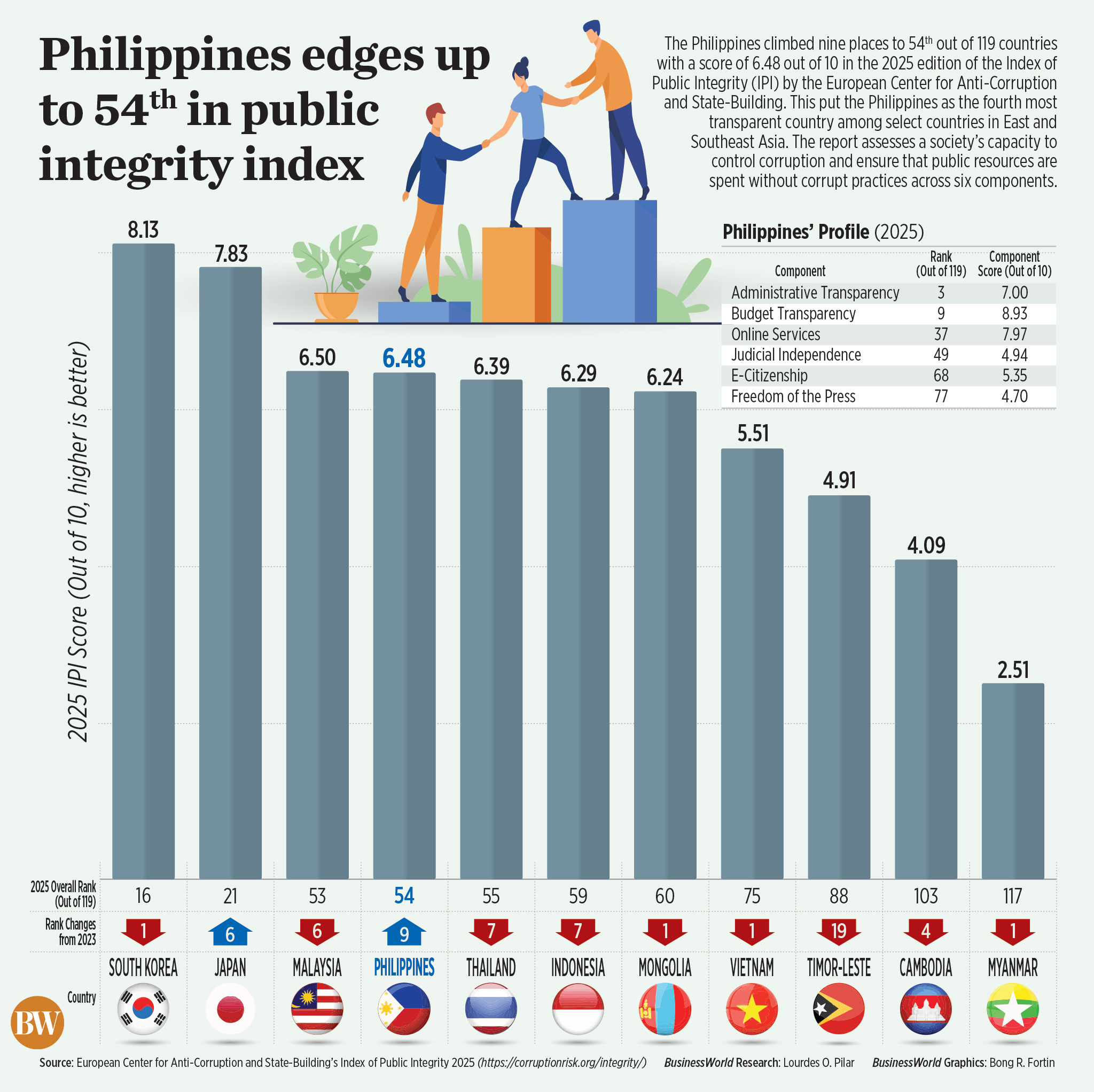
Philippines edges up to 54th in public integrity index

The Philippines climbed nine places to 54th out of 119 countries with a score of 6.48 out of 10 in the 2025 edition of the Index of Public Integrity (IPI) by the European Center for Anti-Corruption and State-Building. This put the Philippines as the fourth most transparent country among select countries in East and Southeast Asia. The report assesses a society’s capacity to control corruption and ensure that public resources are spent without corrupt practices across six components.

How PSEi member stocks performed — December 16, 2025

Here’s a quick glance at how PSEi stocks fared on Tuesday, December 16, 2025.


Philippines, US stage joint sail in SCS after China’s ‘inhumane’ actions

The US deployed the USS Robert Smalls (CG-62) during the 10th Philippine-US Maritime Cooperative Activity, reinforcing combined naval presence and freedom of navigation in the South China Sea, Dec. 15. — ARMED FORCES OF THE PHILIPPINES FACEBOOK PAGE

THE Philippines and the US held a joint sail in the contested South China Sea (SCS) on Monday, Manila’s armed forces said on Tuesday, just days after China’s use of water cannon injured three Filipino fishermen — an act the Defense chief described as “inhumane.”

In a statement on Tuesday, the Philippine armed forces said three A-29B Super Tucano turboprop warplanes and FA-50 fighter jets joined the drills alongside the Philippines’ missile frigate BRP Miguel Malvar, while the US deployed its guided-missile cruiser USS Robert Smalls, a maritime surveillance plane and a helicopter.

The joint sails demonstrated the “shared commitment of the Philippines and the US to uphold a rules-based Indo-Pacific region,” the Philippine military said in a statement.

The joint naval drills came shortly after the Philippines accused China’s coast guard of endangering the lives of Filipino fishers near a contested maritime feature in the South China Sea. This also followed the 9th Philippine-US Maritime Cooperative Activity, held just last Dec. 9-10.

China’s coast guard fired water cannons at Philippine fishing boats at Sabina Shoal on Friday, injuring three Filipino fishermen and damaging two vessels, Manila’s coast guard said.

On Monday, the US voiced support for the Philippines, condemning what it called Beijing’s increasingly coercive behavior in the waterway.

Manila and Washington are long-time allies, with their security ties anchored on a 1950s Mutual Defense Treaty that obligates both nations to come to each other’s aid in case of an armed attack in the Pacific, including the South China Sea.

Philippine officials have described China’s activities as coercive and escalatory, while Beijing maintains that its patrols and enforcement measures are legitimate actions to defend its sovereignty.

‘DANGEROUS AND INHUMANE’
In a separate statement on Tuesday, Philippine Defense Secretary Gilberto C. Teodoro, Jr. said the actions taken by Chinese maritime forces against Filipino fishermen at Escoda were “dangerous and inhumane,” adding that Manila has “indisputable sovereignty” over the feature.

Sabina Shoal lies about 150 kilometers west of the Philippine province of Palawan.

China asserts rights over nearly the entire South China Sea through its so-called nine-dash line, a claim that overlaps with those of the Philippines, Vietnam, Malaysia, Indonesia and Brunei.

A United Nations-backed arbitration ruling in 2016 voided China’s sweeping claims, though Beijing has refused to recognize the decision.

“China’s claims of indisputable sovereignty over the feature are illegal and unfounded,” Mr. Teodoro said.

The Chinese Embassy in Manila did not immediately reply to a Viber message seeking comment.

Its foreign ministry on Monday said the measures taken were necessary to safeguard its territorial sovereignty.

“Water cannoning, aggressive maneuvering and the cutting of anchor lines resulting in physical injuries of Filipino civilians are wholly inconsistent with the duty of all States to ensure the safety of human lives,” said Mr. Teodoro.

The Philippines will keep supporting Filipino fishermen catching fish in the South China Sea, he added, saying the government would be taking “appropriate diplomatic and legal measures” after the Friday incident.

Philippine Foreign Affairs Secretary Ma. Theresa P. Lazaro, through Palace Press Officer Clarissa A. Castro, earlier said the Philippine government would deliver a demarche to the Chinese Embassy in Manila on Monday.

The Southeast Asian nation has increasingly leaned on multinational cooperation to shore up its military capabilities, and it has held multiple joint drills with allies throughout the country as part of its efforts to boost its defenses amid increasing Chinese assertiveness in the South China Sea. Kenneth Christiane L. Basilio

Bicam to tackle other agencies’ budgets amid DPWH deadlock

PCOO

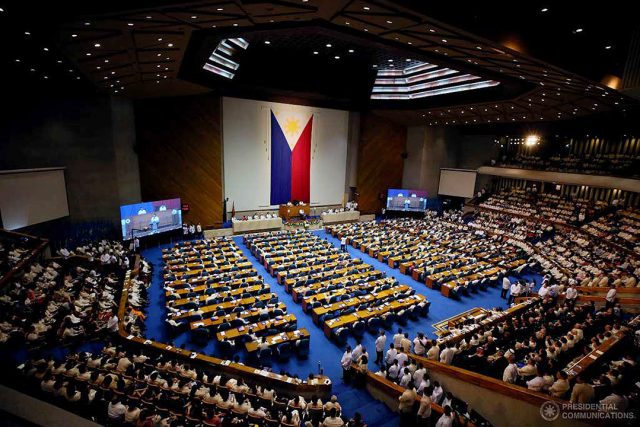
LAWMAKERS will tackle the budgets of other agencies as the bicameral conference committee (bicam) remained deadlocked over funding for the Public Works department, a senator said on Tuesday.

Senator Sherwin T. Gatchalian, who heads the Senate Finance committee, said the bicameral panel will tackle “other agencies” as he awaits analysis on the proposed funding restoration for the Department of Public Works and Highways (DPWH).

“We will skip the DPWH first,” he told reporters in Filipino. When asked if the panel is still in deadlock, he said “for now.”

The impasse stems from the P45-billion cut to the DPWH budget, with senators firm on keeping the billions of pesos it cut from the DPWH’s budget for next year, while congressmen warned that failing to restore funding could lead to economic losses.

The rift between the two chambers of Congress comes as the Dec. 22 deadline nears to reconcile differing versions of next year’s spending plan, a step required before ratification and transmittal to Malacañang for President Ferdinand R. Marcos, Jr.’s approval.

Despite the delay, Mr. Gatchalian dismissed concerns about a reenacted budget, saying “there’s still time.”

“We just have to hasten discussions,” he said.

Malacañang on Tuesday said President Ferdinand R. Marcos, Jr. remains firmly opposed to a reenacted 2026 national budget.

Palace Press Officer Clarissa A. Castro said the administration, along with Congress, is working within the remaining time to ensure the budget is passed, underscoring concerns that a reenacted budget would stall government projects.

Mr. Marcos aims to sign the spending bill by yearend.

The Department of Finance has also warned that delays in approving a new budget could slow public spending and disrupt key programs, Ms. Castro noted.

“Everyone knows — all of us, including Congress — that the President does not want a reenacted budget,” she told a Palace briefing in Filipino. “So, with the time remaining, we know that everything possible must be done to ensure the budget does not end up being reenacted. The President is opposed to that.”

She said there is no information at this time on whether Mr. Marcos has directly reached out to House and Senate leaders to urge closer coordination.

The Budget department defines a reenacted budget as “a situation where the previous year’s GAA (General Appropriations Act) is extended and remains in effect for a preceding year until such time Congress passes a budget bill into law.”

‘INSUFFICIENT’ DATA
The DPWH on Tuesday acknowledged it had given lawmakers “insufficient” pricing data on its construction materials database, which senators used as a basis to cut the agency’s budget by P45-billion due to overpricing concerns.

“To address this, the DPWH has submitted additional, project-category-based data that incorporates key variables such as hauling distances and localized market behaviors, resulting in a more realistic basis for funding,” it said in a letter to Senator Gatchalian.

Mr. Gatchalian said the Senate is reviewing the updated data provided by the DPWH. “Let’s look at the data… because they said the costing list did not include logistics costs.”

Public Works Secretary Vivencio B. Dizon on Sunday urged lawmakers to restore the funding cut, warning that slowing state spending could further weigh on economic growth.

The Philippines’ economy expanded 4% in the third quarter, easing amid a multibillion-peso kickback scandal that has dampened what was once one of Asia’s fastest‑growing economies. — Kenneth Christiane L. Basilio and Chloe Mari A. Hufana

Alleged Bondi gunmen visited Philippines, BI confirms

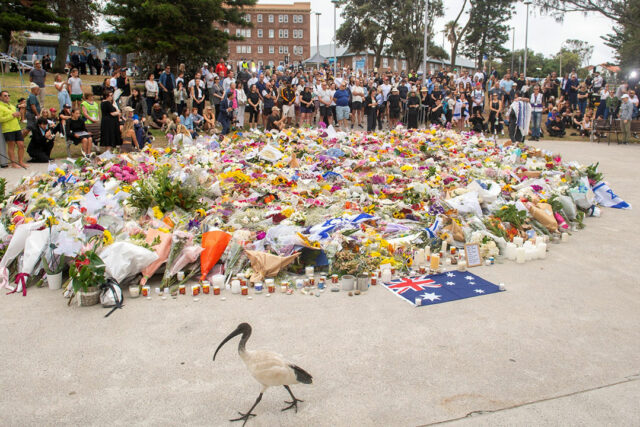
People gather at the floral tribute at Bondi Beach to honor the victims of a mass shooting targeting a Hanukkah celebration on Sunday at Bondi Beach in Sydney, Australia. — REUTERS

THE Philippines’ Bureau of Immigration (BI) on Tuesday confirmed that two Indian nationals allegedly behind the shooting at the Bondi Beach incident in Sydney, Australia, had entered and later departed the Philippines last month.

Sajid Akram, a 50-year-old man, and his 24-year-old son, Naveed Akram, arrived in the Philippines on Nov. 1, on a flight from Sydney, immigration spokesperson Dana Krizia M. Sandoval told reporters over Viber.

“Both reported Davao as their final destination. They left the country on November 28, 2025 on a connecting flight from Davao to Manila, with Sydney as their final destination,” she added.

Australian authorities reported that at least 25 people remain hospitalized following Sunday’s mass shooting at Bondi Beach, with 10 in critical condition, including three children who were attending a Hanukkah event at Australia’s most famous beach when the attack occurred.

The older Mr. Akram was shot dead at the scene, while his son was taken to a hospital for treatment.

In a separate message to reporters, the National Bureau of Investigation (NBI) spokesman Palmer U. Mallari said the agency, through its Counter Terrorism Division, has motu proprio initiated an investigation without waiting for a formal request from Australian authorities.

Mr. Mallari added that the NBI is actively coordinating with the BI, the Armed Forces of the Philippines, and the agency’s regional and district offices to backtrack the activities of the two suspects who were confirmed to have traveled to the Philippines from Nov. 1 to 28, particularly in Davao and potentially nearby areas. Davao is located in southern Philippines, on the island of Mindanao. Meanwhile, the National Security Council (NSC) said there is no indication so far that the visits posed a security threat, as it validates reports.

In a statement on Tuesday, the NSC said it has no confirmed information suggesting the individuals’ travel to the Philippines was connected to any security risk, adding that the matter is not considered a serious or immediate concern at this time.

“Standard security, immigration, and counterterrorism protocols remain fully active, with coordination ongoing with Australian authorities,” it added.

The Department of Foreign Affairs earlier said there were no confirmed Filipino casualties in the mass shooting.

The Philippine Consulate General in Sydney is also coordinating with Australian authorities to determine whether any Filipino nationals were affected by the incident.

Sydney police described the attack, which occurred during Hanukkah, the Jewish festival of lights, as a terrorist incident, making it Australia’s deadliest mass shooting in nearly three decades.

Reuters added that Australia’s federal government is reviewing the country’s gun laws after police said Sajid Akram, one of the alleged gunmen, was a licensed firearm owner with six registered weapons.

Authorities clarified on Tuesday that Mr. Akram obtained his gun license in 2023, correcting an earlier statement that said it was issued in 2015. — Erika Mae P. Sinaking and Chloe Mari A. Hufana

ADVERTISEMENT
ADVERTISEMENT