Home Blog Page 5488

Daphne Oseña-Paez appointed Malacañang press official

SCREENGRAB FROM OPS FB PAGE

A FORMER news reporter and television host has been appointed to the Office of the Press Secretary, joining for the first time on Tuesday a regular Malacañang press briefing. 

At the briefing streamed live on Facebook, Acting Press Secretary Cheloy Velicaria-Garafil introduced Daphne Oseña-Paez as the new “Malacañang press briefer,” who will give weekly updates on President Ferdinand R. Marcos, Jr.’s activities and other government programs.  

“I am very honored to be communicating the message and programs of this administration, of course, in an accurate and effective way and I will do my best,” Ms. Paez told reporters during the briefing. 

Ms. Paez was also appointed as a goodwill ambassador for the United Nations International Children’s Emergency Fund (UNICEF) in 2019. 

The newly appointed press official started out as a news reporter for ABS-CBN and then moved on to hosting various lifestyle shows on the One News Channel.  

She studied at the University of Toronto where she graduated with a degree in Art History and Urban Studies.  

“My role is to amplify the message of the government to you (reporters), my partners,” Ms. Paez said. John Victor D. Ordoñez 

Senate bill granting 13th month pay to all government workers filed 

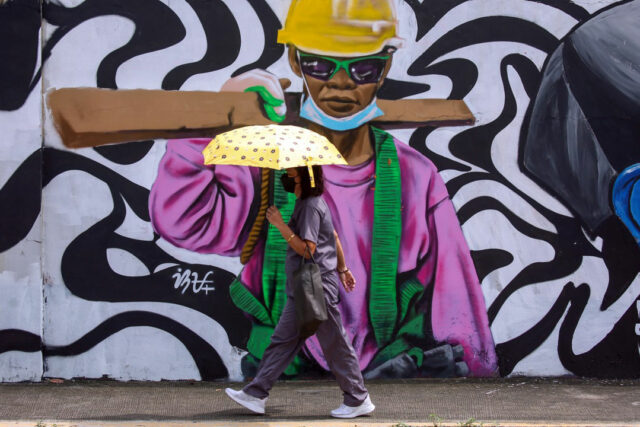
A mural in Paco, Manila is seen on May 16, 2022. — PHILIPPINE STAR/KRIZ JOHN ROSALES

A SENATOR has filed a bill that will grant 13th month pay to all government employees, including those under the contract-of-service scheme or job order arrangement.  

“Their work is as heavy as the work of the regulars,Senator Ramon B. Revilla, Jr., who chairs the Senate Committee on Civil Service, Government Reorganization and Professional Regulation, said in Filipino in a statement on Tuesday.   

No doubt, they are also as hardworking as other government employees. So, it is appropriate that we also give them the benefits that regular employees receive,” he added.  

Under Senate Bill 1621, filed on Dec. 14, the minimum amount of 13th month pay for contractual or job order personnel must not be less than half of their monthly salary.  

Mr. Revilla cited data from the Inventory of Government Human Resources which showed that as of June 30, there were 2.46 million government workers, with 26% or 642,077 job order and contract of service personnel.   

A similar bill was previously filed by Senator Mark A. Villar. Alyssa Nicole O. Tan 

Senator proposes scholarship for law students who will work in gov’t 

SENATOR Rafael RaffyT. Tulfo has filed a bill seeking to establish a program providing free tuition and other school fees for law students who will be required to work for government after they pass the bar exam.   

The measure requires the establishment of a Free Legal Education Program in all state universities and colleges with a law program for students who will meet the qualifications.  

Scholars under Senate Bill 1610 or the Free Legal Education Act of 2023, filed on Dec. 14, will be required to render return service for two years at the Public Attorneys Office or any government agency in need of lawyers.    

The requirement to render return service in the public sector shall pave the way for a sustainable human resource deployment in the public sector that is critical for the nation’s justice system,Mr. Tulfo said in the bills explanatory note. 

Government academic institutions will be mandated to create a mechanism ensuring that the provisions of the proposed law, relative to tuition and other school fees subsidy, will not apply to students with the financial capacity to pay for their education.  

One of the reasons for lack of access to justice in the Philippines is the shortage of practicing lawyers (in government),Mr. Tulfo said in a statement on Tuesday, citing that there are currently about 2,500 clients for every lawyer, far from the ideal ratio of 250:1.   

The senator noted that many law students, especially those from poor families, are unable to complete their studies as costs reach up to P98,000 per semester in top private legal educational institutions.  

Tuition fees in state universities can cost up to P30,000, excluding all living expenses and other necessities.  

Mr. Tulfo said law students, who are already bachelors degree holders, are not eligible for scholarships under the Universal Access to Quality Tertiary Education Act of 2017. Alyssa Nicole O. Tan

House minority seeks probe on US-funded biolabs 

DA.GOV.PH

THE HOUSE minority bloc has called for an investigation on United States-funded biolaboratories of the agricultural department to ensure that these are not being used to advance geopolitical objectives.  

Three lawmakers filed on Tuesday House Joint Resolution No. 16, calling for an investigation on foreign-funded biolaboratories of the Department of Agriculture (DA), including an animal-disease diagnostic laboratory worth $643,000 funded by the US Defense Threat Reduction Agency (DTRA), a combat support agency under the US Department of National Defense (DoD). 

The task of civilian cooperation on bilateral agricultural concerns lies within the US Department of Agriculture (USDA), not with the agencies within the US DoD,says the resolution filed by House Deputy Minority Leader France L. Castro, Gabriela Party-list Rep. Arlene D. Brosas, and Kabataan Party-list Rep. Raoul Danniel A. Manuel. 

The project referred to is the Regional Animal Disease Diagnostic Laboratory (RADDL), located at Paraiso, Tarlac City. It was constructed in September 2020.  

According to the resolution, the DTRA must disclose whether there are unspecified military objectives in funding the laboratory or other laboratories in the future, as well as disclose the extent of its involvement.   

The resolution also called to investigate foreign-funded non-profit EcoHealth Alliance for also funding biolaboratories in the Philippines.  

“These projects should also be viewed on the current moves to expand the areas of the Enhanced Defense Cooperation Agreement (EDCA) and may also pose a threat to our national security as well as infringe on our sovereignty,” said Ms. Castro, who represents the ACT Teachers Party-list.  

In 2017, the DA implemented the Enhancement of the Biosafety and Biosecurity Capabilities at the Department of Agriculture Veterinary Diagnostic Laboratories or the BSS Project, in partnership with the DTRA, to create a strong and functional animal disease diagnostic laboratory network, as stated in a 2019 department order.  

The US Embassy in Manila and the DA did not immediately respond to requests for comment via Viber. Beatriz Marie D. Cruz 

Krog is cycling future in road race; De Kam at pool hikes mint to four

SPRINTER Leonelyn Compuesto of Masbate on the track of the Quirino Stadium in Bantay, Ilocos Sur claiming her third gold. — PSC

ILOCOS SUR — Philippine cycling’s future, at least in women’s road race, is secured.

Maritanya Krog of Caloocan emerged with the worthiest performance in the sport as she ruled the girls’ road race and completed a three-gold sweep of the event in the Philippine Sports Commission’s Batang Pinoy here.

Ms. Krog, 13, clocked 58 minutes and 16.725 seconds in claiming her third gold that came after her dominating efforts in criterium Sunday and individual time trial the next day.

If she could put in the work, Ms. Krog, in a few years, could have a shot at making the national team just like her elder siblings Rex and Mathilda and possibly replicate golden efforts of Southeast Asian Games gold winners Marella Salamat and Jermyn Prado.

“It’s my dream to compete in the SEA Games,” said the ninth-grader from Baesa High School, whose grandfather Luis Lucas raced in the fabled Marlboro Tour in the 80s.

As worthy as Ms. Krog’s glorious effort on the road were performances by Julian Lowers De Kam of Lucena at the pool and sprinter Leonelyn Compuesto of Masbate on the track of the Quirino Stadium in Bantay.

Mr. De Kam, 15, was unshakeable in the 400-meter freestyle where he timed in 4:26.03 to hike his total to four mints while Ms. Compuesto was indomitable in the 400m where she clocked 1:00.63 in claiming her third gold.

Mr. De Kam scooped up gold in 1500m free, 100m butterfly and 200m free days before while Ms. Compuesto came into yesterday’s feat with the 200m and 4x100m relay gold already in the bag.

Ms. Compuesto could join the quadruple gold club and sprint treble if she could snare the gold in the century dash today.

Also emerging triumphant in road race were Davao del Norte’s Gwen Stefani Ponio (girls 14-15) and Pangasian’s Jerick Cabael (boys’ 13-and-under).

In online tungal event in pencak silat, Cavite’s Moh Al-Zhemier Jajurie and Khateleen Chua topped the singa boys and grils for seven to nine years old as well as Taguig’s Lorenz Gabriel Miranda (pre teen boys 10-12), Capiz’s Carille Jeannine Diestro (pre teen girls 10-12), Angeles’ Roderick Von Elman, Jr. (junior boys 13-15) and Aklan’s Mae Jizmundo (junior girls 13-15).

Striking gold in online taekwondo were Vigan’s Zandra Nichole Quitoriano (cadet female black fin-fly), Laguna’s Nina Maritenne Eguaras (cadet female black bantam-feather), Baguio’s Leane Raid Siddayao (cadet female black light-welter), Lipa’s Stefanie Jianne Kimberly Leones (cadet female black light middle-middle).

Antique’s Honey Mendoza (cadet female black light heavy-heavy), General Santos’ Troy Sumanday (cadet male black fin-fly), Tanauan’s Julian Ethan Sebastian Lantican (cadet male black bantam-feather) and Pasig’s Dale Anton Fontarum (cadet male black light-welter.

Lapu Lapu, meanwhile, made a killing in arnis following a seven-gold harvest courtesy of Athena Kate Sapio (girls traditional single weapon 7-9), Jarolyn Ycoy (girls traditional espada y daga 7-9), Clarence Prado (girls traditional single weapon 10-12), Charity Tana (girls traditional espada y daga 10-12), Jack Noah Abatayo (boys traditional single weapon 10-12), Johnniel Barral (girls traditional single weapon 13-15) and Jomel Tana (boys traditional single weapon 13-15).

Winners in virtual wushu were Quezon City’s Racven Joshua Fernandez (male elementary chang quan), Angel Polo (female elementary chang quan) and Aliyah Jay Romero (female elementary broad sword), Manila’s Jason Ryan Cheung (male elementary short weapon) and Vicson Tan (male long weapon elementary cudgel), Tacurong’s Richsen Arzly Roman (female elementary straight sword) and Davao’s Jhianna Henrietty Celi (female long weapon). Joey Villar

Blue Eagles reclaim the UAAP crown with help from ‘The Buffaloes’

A BEVY of protagonists could be credited to this championship run but ‘The Buffaloes’ — unheralded and all — deserved the Blue Eagles’ caps, too, as the unsung heroes that made it happen for the return of UAAP crown to Loyola. —

HARD and loud, the then high-flying Ateneo Blue Eagles tripped crashing back to the ground in an end of a three-year reign at the hands of new king University of the Philippines just last May.

All signs pointed to a transition of power — a changing of the guard — in the UAAP echelon following a downfall of the once impenetrable, mighty Blue Eagles dynasty in a bloody Battle of Katipunan with the Fighting Maroons as the expected heir ruler for the years to come.

Apparently, those doubts and questions were all the motivation needed by Ateneo to reclaim the crown and restore order only seven months after being dethroned.

And to achieve redemption, the Blue Eagles had to do things they’ve never done before while sitting comfortably on the throne without any legitimate resistance in the past.

“It’s very welcome to be back on top. I don’t want to say it was a surprise, but I think this team had to work harder than the previous versions of Blue Eagle champions. We did things that we’ve never done before,” said Tab Baldwin as Ateneo got the better of UP in another thrilling winner-take-all duel this time, 75-68, to win UAAP Season 85.

In Season 84 despite a stronger roster, the Blue Eagles surrendered their crown in a heartbreaking, nerve-wracking defeat at the buzzer following JD Cagulangan’s game-winner for UP, which ended its 36-year drought in the process.

Ateneo regrouped, even with a young squad with Ange Kouame, Dave Ildefonso and BJ Andrade as the only key holdovers, and regained its footing before slowly but surely spreading its wings and taking flight. Like an eagle in the sky, they covered all the bases and prudently plotted their attack before discovering “The Buffaloes” that somehow served as the key in hunting down the Fighting Maroons later on.

“We call them “The Buffaloes”. You can’t imagine the roles they played every day, every practice,” said Mr. Baldwin, referring to Ateneo’s stringers led by Jacob Lao and Inand Fornillos that would simulate every play of their opponents all season long, especially of UP.

“They simulated every opponent and they didn’t even run our stuff in practice. They would dedicate themselves to that. We never did that before and it’s because we felt so powerful and so strong that we sort of discounted our opponent. And this year, we didn’t believe that,” he added.

From Finals MVP Kouame to Andrade to Ildefonso and to more, a bevy of protagonists could be credited to this championship run but “The Buffaloes” — unheralded and all — deserved the Blue Eagles’ caps, too, as the unsung heroes that made it happen for the return of UAAP crown to Loyola.

“Never have I ever coached a championship team where it was truer that every single player (in and outside the roster) deserves a piece of that trophy. They will not be heralded so I can’t laud them enough and I will leave it up to their great teammates. Look what they did,” concluded Mr. Baldwin. — John Bryan Ulanday

Ginebra, Bay Area aim for killer blows at embattled Magnolia and San Miguel

BARANGAY GINEBRA’S JUSTIN BROWNLEE — PBA MEDIA

Games Today
(MOA Arena)
3 p.m. — Magnolia vs Ginebra
5:45 p.m. — Bay Area vs San Miguel

UNLESS Magnolia and defending champion San Miguel do something about it in today’s Game 4, it may well be Barangay Ginebra and Bay Area battling for PBA Commissioner’s Cup gold.

Armed with a 2-1 lead in the best-of-three series, the Gin Kings aim the killer blow at the embattled Hotshots at 3 p.m. while the Dragons take a second crack at finishing off the defiant Beermen at 5:45 p.m. as semifinal action shifts to the MOA Arena.

With the Hotshots on the ropes, Ginebra’s multi-titled coach Tim Cone said this is the best opportunity to dispose of their “Manila Clasico” rival once and for all.

“We’re going to try our best, putting all eggs in a basket and go at it in Game 4,” said Mr. Cone, whose troops are gunning for their sixth finals appearance with resident import Justin Brownlee.

“Obviously, we don’t want to go to (a deciding) Game 5. Many things can happen in a Game 5. We’ll try to go out and see what we can do in Game 4,” he added.

The Hotshots are hoping to have Paul Lee back for this survival mission after playing only two minutes last time due to fever and headache. Mr. Lee said the two-day break in-between the third and fourth matches should be enough to “recover and prepare.”

Meanwhile, the Dragons try again after seeing their 3-0 sweep bid foiled by San Miguel Beermen’s 98-96 nail-biter last Sunday.

This breakthrough win emboldened the Beermen further as they continue to fight for their lives against the powerful guest team from Hong Kong.

“They beat us three times (before) — in the eliminations and the first two games of the finals — and the Game 3 win is an indication that Bay Area is beatable. As long as we play hard, we play as a team on both ends, come up with a good game plan and execute it, I think we have a good chance of beating them,” he added.

The Final Four sudden death, if necessary, will be played on Friday.

Game 5 or no Game 5, the best-of-seven finals will blast off on Sunday also at the MOA Arena in a “Christmas Day” treat for the fans, per commissioner WIllie Marcial. — Olmin Leyba

UAAP standouts plotting next moves after Season 85

ATENEO’S Dave Ildefonso is headed overseas while other UAAP standouts are still plotting their next moves after a thrilling end of the UAAP Season 85 men’s basketball tournament.

Mr. Ildefonso, following a championship for the Blue Eagles to end his illustrious collegiate career, said he’s already committed to play abroad but chose not to reveal where and what team yet. Multiple reports disclosed that his destination is the Suwon KT SonicBoom in the Korean Basketball League, where his former Ateneo teammate SJ Belangel is playing with the Daegu Kogas Pegasus.

Carl Tamayo is reportedly receiving feelers from the Japan B. League teams but reiterated that it’s not on his mind right now in the aftermath of defeat as University of the Philippines relinquished its crown to Ateneo, 75-68, in the winner-take-all Game 3.

Meanwhile, graduating players Ange Kouame of Ateneo and UP’s Zavier Lucero will go under the knife before deciding where to go next. Mr. Kouame, also the Gilas Pilipinas naturalized player, has been braving a partial ACL tear and meniscal sprain injury all year long while Mr. Lucero suffered an ACL tear injury in Game 2 of the just-concluded finals.

They were given a fitting sendoff in Game 3 at the Smart Araneta Coliseum with Mr. Kouame hoisting the Finals MVP while Mr. Lucero, limping and all, managed to shoot a technical freethrow in the last 0.7 second.

As early as last week, Adamson’s Jerom Lastimosa admitted he also has offers to play abroad while University of the East’s Luis Villegas will take his sweet time deciding including a plan to join the PBA Draft. — John Bryan Ulanday

Wild card entry

A wild card entry to any major tournament is akin to a lottery prize. There are only eight up for grabs, and organizers are, with reason, typically thorough with their assessment on possible recipients. Which, for all intents, is why as many shakes of the head as nods have met the decision of Tennis Australia to award one to Venus Williams. Worthiness is such a subjective criterion that factors involved in its consideration can and do differ vastly depending on perspective.

To be sure, Williams deservers no small measure of recognition for her contributions to the sport. There can be no discounting the extent of her success since she turned professional 28 years ago. And while she cannot count a singles title Down Under among her Grand Slam triumphs, she does boast of five doubles championships at Melbourne Park. Add to this the fact that her resurgence half a decade ago featured a run to the final in the Australian Open, and it’s easy to see why officials of the tournament have been only too willing to spread the welcome mat for her.

That said, there is the flipside, predicated on Williams’ inability to mount any challenge regardless of opponent. Frankly, she hasn’t been close to competitive since the turn of the decade, managing to claim victories in just two matches. Given her poor record in recent memory, and it’s fair to figure that she will once again be one and done in the first major stop of 2023. Little wonder, then, that not a few quarters believe the wild card given her will be put to better use by countless other players.

The discretion is, of course, Tennis Australia’s, and it clearly valued Williams’ gravitas as an ambassador to the point of welcoming her with open arms. It may be too much to expect her to stay around until the second week, but, hey, no one can say she isn’t trying. She has always left everything on the court, and she always will.


Anthony L. Cuaycong has been writing Courtside since BusinessWorld introduced a Sports section in 1994. He is a consultant on strategic planning, operations and human resources management, corporate communications, and business development.

Ilocos Norte leads in poverty reduction: IT-BPM and tourism will lead the way

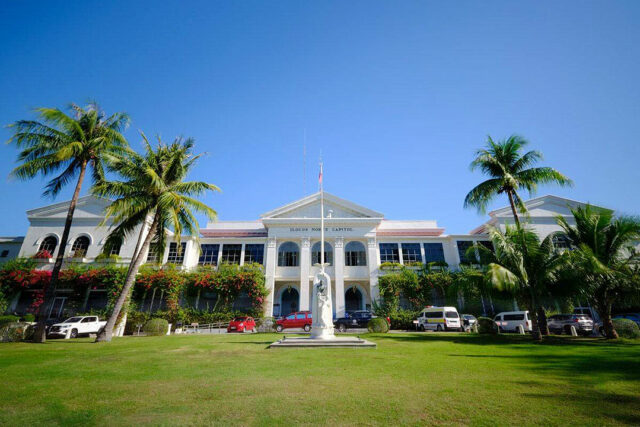
ILOCOSNORTE.GOV.PH

(Part 2)

Laoag and the surrounding areas have been identified by the leaders in IT-BPM (information technology-business process management) in their most recent strategic planning exercise as one of the next-tier cities to locate BPO (business process outsourcing) enterprises in both the voice and non-voice sectors, thus giving rise to the growth of the real estate and construction industries.

Ilocos Norte was launched as one of the digital cities in the Philippines, handpicked by the IT and Business Processing Association of the Philippines, the Department of Information and Communications Technology (DICT), and leading property consultants Leechiu Property Consultants.

The IT-BPO services identified are customer care, technical support, travel services, and telemarketing in the voice sector. In non-voice, the existing or potential locators are in financial and accounting, analyst, transcriptionists, human resources, and business-to-business customer support. As an undersea telecom cable is expected to be built from the US to the town of Pagudpud, Laoag can position itself to be one of the leading candidates for the location of data centers which can generate thousands of jobs for its annual supply of some 1,400 college graduates in a work force of 580,000 with a literacy rate of 98%.

A most exciting possibility for Ilocos Norte was presented by Alex Aquino, a top executive of a communications technology company based in Singapore, about how it can position itself to be one of the leading sites for data centers in the Southeast Asian region.

There are now 11 in-service international submarine cable systems connecting the Philippines, and another five transpacific subsea cables under construction, including ADC, Apricot, Bifrost, Cap-1, and SEA-H2X. A newly announced Asia Link Cable (ALC) has two landing stations in the Philippines, and a still unannounced system expected to be in service by the end of 2025 has potentially four landing points in the Philippines. Recent geopolitical developments and resource constraints in other countries have made the Philippines the new International Submarine Cable Hub in the Asia-Pacific region.

Fortunately for Ilocos Norte, one of these submarine cables, owned by Amazon and META, will be landing in Pagudpud, the famous beach resort in Ilocos Norte. The powerful internet connections that will be made possible by these cables will surely attract data centers to locate in Laoag and surrounding areas. Already there are three possible sites prepared to receive these data centers, i.e., the Fort Ilocandia Tourism Economic Zone, the VENVI IT Hub, and the VYV IT Hub. I am sure that some of the large real estate developers like Megaworld, Ayala Land, Federal Land, and many others can be motivated to build their own IT-centered communities in Laoag.

Additionally, the Mariano Marcos State University (MMSU) is the first Special Economic Zone Institute (SEZI) in the entire Philippines. This high-quality state university can be expected to significantly increase the number of IT professionals that will be needed by the data centers.

As is true of the entire nation in which services account for some 70% of GDP, Ilocos Norte has high potentials in consumer services, healthcare services, educational institutions at all levels, hospitals and other healthcare institutions, and research institutes. Already there are three international BPO enterprises; three telecommunications companies; two national real estate developers; eight energy and utilities companies; five national and two transnational cargo and courier companies; three transnational power generators; one national, six provincial, and 11 private healthcare facilities; one state and one private university; three national and local private colleges; 111 hotels and resorts and 222 alternative lodging facilities; over 322 restaurants and food establishments; over 36 financial institutions; and over 40 national and 30 transnational consumer services. There are opportunities for investments in higher learning institutions; healthcare services; research institutes in biotechnology, life sciences, and pharmacy; and additional investments in retail, food and beverage, and transportation services.

The greatest potential in the services sector for Ilocos Norte, however, is in hospitality or tourism. In a presentation made by Dr. Maria Cherry Lyn Rodolfo, the leading tourism economist in the country, during the investment forum cited above, the following data illustrate the potential for both domestic and foreign tourism as the economy recovers from the pandemic: In 2019, there were over 3.8 million tourist arrivals, 90% local and 10% foreign in Ilocos Norte. Total tourism receipts were P14.8 billion. The region contains some 4,104 rooms for tourists, having experienced an 8.5% annual growth in tourism capacity. From 2012 to 2019, there was a total increase of tourism traffic of 1,394%.

The province has many tourism assets including 155.37 kilometers of coastline in nine coastal towns. Among the 25 Most Beautiful Beaches of the World listed by World Travel and Leisure in 2021 was Saud Beach in Pagudpud. In 2018, Ilocos Norte was ranked the Best Tourism-Oriented Province in the Philippines. There exist very well-organized tourism industry associations in the province. As regards the human resources pool, some 15% of college graduates in the province specialized in tourism and hospitality management in 2019 while some 30% of tech-voc graduates were in hospitality-related courses.

Ilocos Norte has a very diversified tourism portfolio. Although the beaches are the main attractions, especially for the tourists coming from Northeast Asia, the product portfolio consists of cruise and nautical tourism, sun and beach, cultural, nature and adventure, bike tours, gastronomy, and birdwatching (Paoay Lake National Park, Mt. Kalbario-Patapat National Park, and Adams). Viewed from another angle, Ilocos Norte has a polycentric resource-based development framework. Tourism zones can be based on “golden sun tourism” which comprises the northern tourism district, coastal tours, and energy areas; or on aquapolis, i.e., port tour, logistics, marine tourism and coastal tourism; ecopolis, i.e., nature tourism, ecotourism park, protection and production and mineral clusters; and acropolis, i.e., mountain tourism and agritourism.

As regards geography, the greatest advantage is that it is the gateway to the Philippines for the rich tourists from such Northeast Asian countries as South Korea, China, Japan, and Taiwan. In 2019, the top five markets of the Philippines for foreign tourists were South Korea, China, the USA, Japan, and Taiwan. Arrivals for foreign tourists were 98% by air. The Laoag International Airport has certain advantages in attracting the tourists from the Northeast Asian countries. It can accommodate Airbus 320/321 and Boeing 737-800 planes, is open to both charter and commercial planes. There are clusters of rooms within close proximity, which is critical in the value chain of charter operations. Ilocos Norte offers a diverse portfolio of gastronomy, nature-based and adventure, marine/coastal, cultural/heritage, and rural and farm tourism. It would be logical that efforts to attract foreign tourists to Ilocos Norte should focus on the Taiwanese, Chinese, South Korean, and Japanese travelers. In many ways, Ilocos Norte should be for these rich “tiger” economies what Spain is to the Northern European countries. Its beaches like those in Pagudpud should be swarming with Northeast Asian tourists in the same way that the Costa Brava and Costa del Sol of Spain attract millions of Germans and Scandinavians yearly.

Since tourism is one of the most powerful engines of employing people, especially in the countryside where the tourist attractions usually are located, I can already be certain that before the end of the Marcos Jr. administration, the poverty incidence of Ilocos Norte will be zero.


Bernardo M. Villegas has a Ph.D. in Economics from Harvard, is professor emeritus at the University of Asia and the Pacific, and a visiting professor at the IESE Business School in Barcelona, Spain. He was a member of the 1986 Constitutional Commission.

bernardo.villegas@uap.asia

Ensuring transparency and public participation in the budget process

FREEPIK

Not known to many is that data show that the Philippines actually has one of the most transparent budgets in the world.

Results of the Open Budget Survey (OBS) 2021 show that Philippines scored 68 out of 100 in budget transparency, placing the country at 19th place out of 120 countries.

Compared to our previous score, we went down eight notches from our ranking in 2019, when we got a score of 76 and ranked 10th. Despite this, we still maintained our over-all lead in the survey in Southeast Asia.

Conducted by the independent group International Budget Partnership (IBP), the Open Budget Survey is considered to be the world’s only independent, comparative, and fact-based research instrument that looks into public budgets.

It measures aspects of governance and accountability through three key aspects: transparency of how public resources are raised and spent, the opportunities for public participation in budget policy decisions, and oversight by independent legislatures and audit institutions.

Transparency measures the ability of the public to be able to access information on how the government raises and spends resources. A score of 61 and above indicates that a country is likely publishing enough material to support informed public debate on the budget.

However, the OBS study also reveals that in terms of public participation — opportunities for the public to engage during the various cycles of the budget process — the Philippines only scored 35 out of 100.

These numbers show that while data on the national budget is available, public participation remains poor.

And then, there is the issue of actually understanding what these numbers and data mean, even though the information is available. This is still a challenge to many civil society organizations, more so, to ordinary Filipinos.

In a speech during the presentation of the OBS Survey results for 2021, IBP’s Open Budget Initiatives Program Officer Suad Hasan highlighted the need for the Philippine government to establish opportunities to engage the public more actively in the budget process and to disclose more and better information on budgets, debt, and fiscal risks.

Consequently, in the recent Pilipinas Conference organized by the Stratbase ADR Institute, Budget Secretary Amenah Pangandaman pushed for open government and digitalization, saying these will pave the way to more energized citizen participation in governance.

Among the Department of Budget and Management’s priorities is to establish a Civil Society Organizations (CSO) Desk that will serve as one of the avenues to build the capacities of CSOs to enable more meaningful engagement and participation in the budget process.

The DBM is also pushing for a Budget and Treasury Management System that will enable efficiency and transparency in the government’s financial transactions. It will, eventually, allow the public to know in real-time how the national budget is being utilized.

The agency is also reviving Project DIME: Digital Imaging Monitoring Evaluation, where the public will be able to see, also in real-time, how much of the government projects in their areas have been completed and how long it will take to finish the project.

Moreover, La Salle Institute of Governance senior fellow Prof. Francisco Magno, who serves as the OBS independent expert for the Philippines, also recognized the importance of digitalization for budget transparency, as it can provide the public with important, comprehensive, and timely information in just a few clicks.

Stratbase fully supports the government’s efforts to ensure more meaningful public participation in the budget process.

These reforms are happening at a time when having a transparent, accountable, and responsive budget is most important. Survey data show that Filipinos are struggling with the increase in the prices of basic commodities, given that the pandemic is still in our midst.

The national budget, funded by taxpayers’ money, is the government’s most powerful tool that can help alleviate the lives of ordinary Filipinos. It can provide healthcare to the sick, jobs to those who are looking for sources of livelihood, and education and skills to those who want a better future.

Furthermore, financial institutions, investors, researchers, and many policy stakeholders agree that having open budget systems and practices will not only ensure efficiency in public spending, but these are necessary to hold the government accountable in its management of public funds.

Filipinos work hard to earn money to provide for the needs of their family. A big part of their earnings goes to the government in the form of value-added tax when they buy basic commodities and as personal income tax from their monthly salary.

This is why when government officials steal, they are stealing the hard-earned money of ordinary Filipinos. Instead of helping those in need, corruption leads to higher costs and reduced access to services, including health and education.

A recent Pulse Asia survey showed that 36% of Filipinos believe that controlling corruption will benefit the country’s economic recovery and development, while 22% believe it will improve the plight of ordinary citizens.

With the President’s recent signing into law of the P5.268 trillion General Appropriations Act for 2023, there is a need to ensure that public funds are allocated properly and are responsive to the needs of the people.

There is a need to institutionalize data transparency and meaningful citizen participation in the budget process.

Finally, we citizens must hold our leaders accountable for how they use the people’s funds.


Victor Andres “Dindo” C. Manhit is the president of the Stratbase ADR Institute.

Java without java? The crisis brewing in coffee

MATH-UNSPLASH

IN COFFEE COUNTRY, people don’t need an extra shot to recognize their future is tough. On an iconic Indonesian island, powerful forces are eroding an industry that not only helped caffeinate the world, but provided livelihoods for generations and had a significant historical role as a template for economic development. It’s not outlandish to contemplate Java without java.

Climate change has been central to the good times and instrumental to coffee’s discouraging prognosis in Indonesia, the world’s fourth-biggest producer. Crop shortfalls around the globe drove an epic advance last year in the price of beans, a rally that’s cooled in recent months along with retreats in commodity prices. Folks along the coffee chain don’t like the omens. The long-term challenges they describe aren’t limited to Indonesia. The travails are shared, to degrees, by Brazil, Vietnam, and Colombia. Ultimately, they will be felt by urbanites in New York, Tokyo, London, anywhere lattes and mocha are a staple of social and professional life — or just surviving a weekend with young kids.

During a visit to the area around Banyuwangi in eastern Java, retailers and farmers shared their concerns: rising temperatures, unpredictable weather, inconsistent bean quality, deteriorating soil. A paper cited in August by Bloomberg Opinion projected that land suitable for coffee-growing would shrink dramatically by 2050, with the most highly suited regions declining by more than 50%, as the planet warms.

Given the drink’s huge — and still growing — popularity, the math is punishing. “Nearly every coffee production area on Earth is already experiencing increases in weather variability, which pose major threats to both plants and people,” according to a strategy document from World Coffee Research, an organization comprising coffee companies that was formed in 2012 to boost innovation. An important part of the solution has to be the development of more climate resistant varieties. But this shouldn’t just be driven by industry: the nations with the most to lose — the majority are developing economies — need to recognize the importance not just to commerce, but social stability and the environment. It’s one thing to say farmers should simply move to higher ground. Who buys the space for them? And what happens to communities already there?

There are also laments that young Javanese aren’t interested in working the land, and instead prefer the air-conditioned comfort of offices a two-hour flight away in Jakarta. Or college in one of Indonesia’s large cities. Anywhere other than their rural homes. Given the diminishing prospects for the industry, it’s a wonder any youths remain at all.

Adi Susiyanto is one who stayed. Fixing me a pour-over of the robusta variety late one morning, Adi, a barista at roadside café Sarine Kopi, told me he knows something is wrong. He has lived around Banyuwangi all his life and reckons climate change is slowly but surely reshaping life in the area. “The quality of the coffee used to be consistently good,” he said. “Now, it’s all up to the weather.” Nurul Hidayah, a fifth-generation farmer, shares the foreboding as she tries to dry beans in her front yard. “It rains for much longer nowadays.”

Irfan Anwar, head of the Association of Indonesian Coffee Exporters and Industries, prefers to see the mug as half full. Sure, production in the country faces substantial threats, though it’s a similar story in several countries. The challenge of climate change isn’t unique to Indonesia, he says, and meantime, demand is holding up. “We are not looking for problems,” he added.

They’ll find him, and his counterparts, nonetheless. Early projections of a bumper Brazilian crop in 2023 are unlikely to materialize. The Latin American giant is facing the inverse of Indonesia’s affliction: rainfall that is significantly below the historical average. Brazil has also contended in recent years with heavy frosts that ravaged crops. In Vietnam, harvests are disappointing and stockpiles are falling. Hanoi has gone so far as to warn cultivators desperate for an income against switching to durians.

Whatever fundamental changes are coming to coffee in Indonesia, don’t be surprised if they presage broader implications. The beverage is intimately tied to the economic, social, and political history of the country. Coffee bushes and drinking arrived in the late 1600s through Dutch merchants, according to Jean Gelman Taylor’s Indonesia: Peoples and Histories. East India Company officials began planting seeds around the site of present-day Jakarta, giving plants to Javanese provincial chiefs who ordered farmers to harvest beans in order to pay taxes, she wrote. Coffee became a fixture of early transportation and warehouse systems. Supplies and cultivation were managed to reflect, and influence, market trends in Amsterdam, the commercial center of the colonial power. An entire fiscal system and networks of patronage fashioned trends in rural migration, finance, diet, and even the evolution of sex work.

The natural environment has wreaked havoc before: In the 19th century, a virus spread among coffee plants and prompted a shift from arabica beans to the tougher, and more bitter tasting, robusta variety. The bulk of Indonesia’s coffee today is robusta, though arabica, a smoother blend, can also be found on the hillsides around Banyuwangi, jostling for space with rubber, chili, and potato plants. Rising temperatures suggest renewed vulnerability to disease.

WCR, whose members include Starbucks Corp., Tim Hortons, and JDE Peet’s, is working with nations including Indonesia to develop varieties that can shore up production over coming decades. “It has to happen now,” Jennifer Vern Long, the group’s chief executive officer, said in an interview. “We couldn’t even wait another year.” Under the breeding program, seeds with new genetic combinations are being shipped this month. “Any of the seeds could be a winner,” she said.

The world has a vital stake in seeing coffee, as we have come to know it, survive. It’s not just about agriculture or preserving some sepia-tinged version of rural life. Coffee is deeply ingrained in finance, politics, and the social structure of 21st century society. For Indonesia, it’s more elemental than that. The big fiscal subject in Jakarta these days is the ambitious plan for a $34 billion new capital city carved out of forest in eastern Borneo. Why can’t a fraction of that sum be set aside to bank on the future of a commodity that’s older than the Republic of Indonesia itself?    

The pressures were enough to make Hariyono, a farmer who like many Indonesians goes by one name, invest in history. He inherited the business from his father and thought seriously about giving up the caffeine game around 2010 in favor of rearing goats. After talking over family legacy with his dad, Hariyono decided to add a working coffee museum to the site. When I called on him at Kampong Kopi Lego, preschoolers watched as staff melted beans in pans over fire pots.

Pouring us cups, Hariyono fretted about the rich heritage — good and ill — that stands to be lost. As vital as the weather is, there’s more to it than rain or shine. “The young don’t want to be coffee farmers, they don’t see the profit,” he complained. “I want them to know a very basic fact, that we are one of the main producers in the world. That knowledge shouldn’t be lost. That’s my mission.”

Java sans its namesake drink? A distinct possibility, Hariyono says, though he tries to be optimistic. “Maybe I am a little bit crazy.”

BLOOMBERG OPINION

ADVERTISEMENT
ADVERTISEMENT