Home Blog Page 54

Wellness manufacturing firm to open P500-M facility in Tarlac ecozone — PEZA

VICTORIAINDUSTRIALPARK.COM

THE Philippine Economic Zone Authority (PEZA) said a wellness manufacturing firm is looking to set up a P500-million facility within Victoria Industrial Park (VIP) in Tarlac, which will generate 290 local jobs.

The agency on March 30 finalized a registration agreement with Goodfield International Trading Corp. as a domestic market enterprise, it said in a statement on Tuesday.

The Goodfield facility will specialize in the production of essential oils, liquid and bar soaps, candles, diffuser oils, and reed diffusers, PEZA said.

The registration agreement was inked by PEZA Director General Tereso O. Panga and Goodfield President Melissa Yeung-Yap, who is also the chief executive officer of VIP.

“This registration reflects our drive to support Tatak Pinoy industries — empowering local manufacturers, lowering the cost of medicine, uplifting communities, and strengthening the Philippines’ position in the global value chain,” Mr. Panga said.

PEZA said that the company has partnered with Tarlac State University and Tarlac Agricultural University to support researchers and boost collaborations with local farmers and indigenous groups.

The facility’s location, VIP, is a 30-hectare industrial park in Tarlac specializing in medical devices, pharmaceuticals, and manufacturing. Its developer is Greenstone Pharmaceutical HK, Inc., the company behind Filipino ointment brand Katinko.

The PEZA-registered park is located near the Tarlac-Pangasinan-La Union Expressway in Central Luzon.

VIP, which is gearing for an expansion of up to 100 hectares, is looking to welcome high-value locators and create more jobs to support the local industry.

“The ecozone (economic zone) is fully ready to welcome high-value locators, sustain rapid growth, and provide Filipino enterprises the opportunity to showcase world-class talent, expand capabilities, and create more quality jobs in line with the goals of the Tatak Pinoy Act,” PEZA said.

Both PEZA and VIP are looking to entice more wellness-driven locators in its economic zones, the agency said, which align with its pharmazone guidelines and the Food and Drug Administration’s regulatory enhancements. — Beatriz Marie D. Cruz

Davao del Sur now bird flu-free

PHILSTAR FILE PHOTO

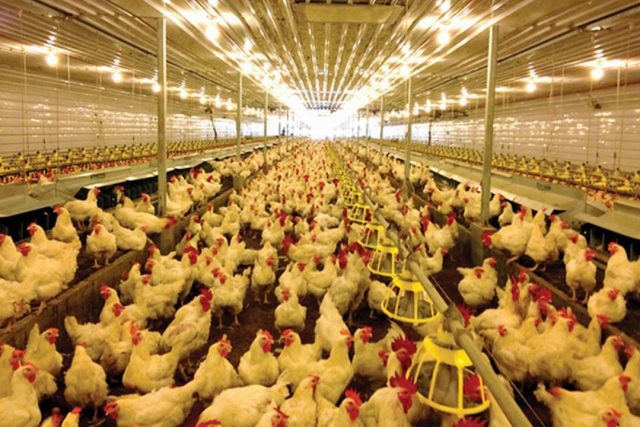
THE Department of Agriculture (DA) has declared Davao del Sur free from avian influenza following the containment of a lone outbreak late last year.

In a statement on Tuesday, the DA said the province met all requirements to regain its disease-free status after a November 2025 case of highly pathogenic avian influenza subtype H5 in a backyard duck farm in Magsaysay town.

The department said authorities implemented rapid response measures, including depopulation of affected birds, disinfection, movement controls, and intensified surveillance, in coordination with the DA Regional Field Office XI and the Bureau of Animal Industry.

Monitoring within 1-kilometer and 7-kilometer control zones yielded negative results for influenza type A virus, indicating no further spread, the DA said.

According to the department, the declaration is consistent with guidelines of the World Organisation for Animal Health, which allow areas to regain avian influenza-free status at least 28 days after containment and surveillance confirm the absence of infection.

“Declaring Davao del Sur avian influenza-free is not just a technical milestone — it is a critical step in securing our food supply, restoring investor confidence, and protecting the livelihoods of our poultry farmers,” Agriculture Secretary Francisco P. Tiu Laurel, Jr. said in the statement. — Vonn Andrei E. Villamiel

Iconic Lion’s Head along Kennon Road gone from public view

BAGUIO CITY — Authorities have installed tarpaulins in front of the Lion’s Head along Kennon Road to enforce stricter traffic rules, though raising concerns over its effects on tourism and local livelihood.

This came after a directive from Interior Secretary Juan Victor C. Remulla to curb vehicle stops and roadside photo opportunities, which officials say contribute to congestion along the busy mountain highway, a major entry point for visitors to the city.

But Baguio lawmaker Mauricio G. Domogan said picture-taking itself should not be banned, stressing that existing safety measures are already in place and that broader traffic management solutions should instead be instituted.

Mayor Benjamin B. Magalong clarified that tourists are still allowed to take photos, but vehicles are strictly prohibited from stopping near the landmark, emphasizing that the policy targets traffic flow rather than tourism activities.

The restriction since the Holy Week raised concerns among vendors near the site, who rely heavily on tourist foot traffic, with some warning that reduced stops could significantly affect their income.

The instituted measure also highlights the delicate balance between traffic management and sustaining Baguio’s tourism-driven economy. — Artemio A. Dumlao

Baguio, PDRF ink deal on climate resilience, water management

BAGUIO CITY — The Baguio City government and the Philippine Disaster Resilience Foundation (PDRF) signed over the weekend a memorandum of agreement to strengthen climate action, community resilience, and sustainable water management through 2029.

Mayor Benjamin B. Magalong said the partnership establishes a framework for Integrated Water Resources Management (IWRM) covering April 1, 2025 to March 31, 2029.

The agreement centers on the Building Resilience Through Inclusive Development and Gender Equality (BRIDGE) project, which aims to boost community resilience through risk mapping and climate-resilient water technologies, while improving local policies and building capacity for gender-responsive disaster management.

Under the agreement, PDRF will lead implementation by providing technical support, training, and private sector linkages, as well as mobilizing funding with support from the government of Canada. The city government will oversee alignment with its development plans and provide logistical support.

Mr. Magalong welcomed the partnership, noting Baguio’s recent designation as a resiliency hub by the United Nations Office for Disaster Risk Reduction, but stressed that water resource challenges remain a key concern.

PDRF President René Meily said the BRIDGE program aims to make Baguio more livable through climate adaptation, disaster risk reduction, and improved water management. — Artemio A. Dumlao

Three Abra villages reject exploration bid

SALLAPADAN, Abra — Three barangays in Sallapadan town in Abra have rejected a proposed mining exploration project, marking an early assertion of Indigenous Peoples’ rights during the Free, Prior and Informed Consent (FPIC) process.

Barangays Bilabila, Saccaang, and Naguilian voted against the application of a mining firm, becoming the first communities in Sallapadan town to formally register their rejection of the project.

The FPIC process requires the consent of Indigenous communities before any activity can proceed in their ancestral domains, giving them the authority to decide on projects that may affect their land, livelihood, and environment.

Consultations in six other barangays are set for April 7 and 8, which will determine the overall position of the town on the mining proposal.

The early rejection came amid claims that individuals allegedly linked to the company tried to persuade residents, while community members expressed hope that other villages will also stand firm in protecting their ancestral lands. — Artemio A. Dumlao

PSEi up in cautious trade before Trump deadline

BW FILE PHOTO

PHILIPPINE STOCKS inched up on Tuesday as the market maintained a cautious stance while awaiting developments in the Middle East conflict.

The benchmark Philippine Stock Exchange index (PSEi) climbed by 0.16% or 9.54 points to close at 5,957.87, while the broader all shares index went up by 0.39% or 13.17 points to end at 3,350.16.

“The local market traded sideways as investors digested the Philippines’ March inflation rate which came in at 4.1%, exceeding the government’s 2%-4% target. In the end, however, bargain hunting prevailed, causing the local bourse to have a positive close,” Philstocks Financial, Inc. Research Manager Japhet Louis O. Tantiangco said in a market note.

Oil price shocks due to the Middle East war caused Philippine headline inflation to quicken to its fastest pace in 20 months in March, settling at 4.1% from 2.4% in February and 1.8% in the same month last year.

This was above the 3.8% median estimate in a BusinessWorld poll of 18 analysts and the central bank’s 3.1%-3.9% forecast for the month.

“The second half of trading buoyed the market barely in positive territory following mixed signals from Trump, which put investors on their toes as they await definitive actions that could push the global markets in either direction,” AP Securities, Inc. said in a market note.

Global stocks wavered on Tuesday, while oil prices edged above $110 per barrel as the looming deadline imposed by US President Donald J. Trump for a deal with Iran threatened escalation in the Middle East and spooked investors, Reuters reported.

Markets have been rattled since the US-Israeli war on Iran broke out at the end of February, with Tehran effectively closing the Strait of Hormuz, a key global oil transit chokepoint, that has spurred inflation worries.

While investors have pinned their hopes on a resolution to the war, the talks so far have yielded no progress, with Mr. Trump imposing a Tuesday night deadline for a deal to be reached.

Most sectoral indices closed higher on Tuesday. Mining and oil jumped by 1.85% or 301.34 points to 16,572.80; financials rose by 0.58% or 10.91 points to 1,885.43; holding firms advanced by 0.57% or 26.84 points to 4,658.96; and services climbed by 0.32% or 8.72 points to 2,699.96.

Meanwhile, property went down by 0.33% or 6.63 points to 1,981.44, and industrials retreated by 0.13% or 11.39 points to 8,773.43.

“DigiPlus Interactive Corp. was the day’s index leader, jumping 5.44% to P15.88. Century Pacific Food, Inc. was the worst index performer, dropping 3.45% to P32.20,” Mr. Tantiangco said.

Advancers outnumbered decliners, 120 to 76, while 65 names closed unchanged.

Value turnover climbed to P5.82 billion on Tuesday with 1.27 billion shares traded from the P5.55 billion with 816.79 million issues that changed hands on Monday.

Net foreign selling decreased to P992.33 million from P1.05 billion in the previous session. — Alexandria Grace C. Magno with Reuters

Investment pledges expected to be ‘sluggish’ due to Iran war

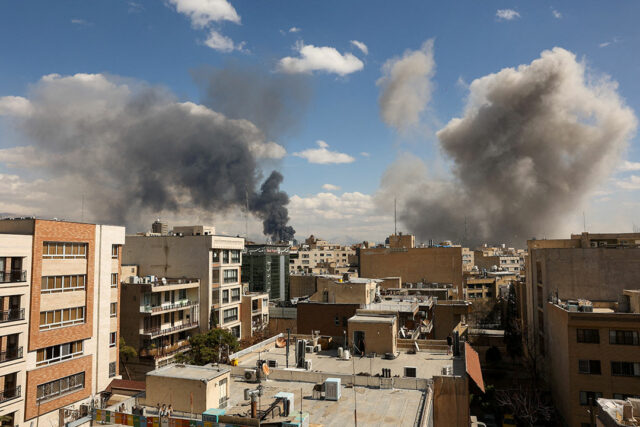
Smoke rises following an explosion, after Israel and the U.S. launched strikes on Iran, in Tehran, Iran, March 1, 2026. — MAJID ASGARIPOUR/WANA VIA REUTERS

SLUGGISH investment activity is expected to be one of the consequences of the fighting in the Middle East, Trade Secretary Ma. Cristina A. Roque said.

Speaking to reporters late Monday, Ms. Roque said investment will “definitely… be affected” because of the crisis. “Everything will be at a stand still.”

“If this continues, we expect sluggish (investment pledges,)” Ms. Roque added.

When asked if the government is ready to amend its export and investment approvals targets, she said: “Definitely, we will have to meet regarding that… But for now, our main priority is to maintain food prices… to at least keep them stable.”

The DTI (Department of Trade and Industry) was projecting BoI (Board of Investments) investment approvals of P1 trillion this year, which falls below the P1.75-trillion target in 2025.

BoI-approved investments hit P1.56 trillion last year, falling short of the 2025 target and 4% lower than the record P1.62-trillion 2024 approvals.

One possible offsetting factor could be renewable energy (RE) investments, which could receive a boost from high oil prices, Ms. Roque said.

“(We expect a) jumpstart from RE pledges (and) electric vehicles,” she noted.

According to the BoI data, the energy industry, which includes RE, accounted for the largest share of approved investments at P22.4 billion, or 47.7% of the total, in the first two months of 2026.

In the first two months, the BoI approved P47 billion worth of investments for 35 projects, up 338% from a year earlier.

The DTI is assigning a lower priority to foreign travels to attract investment, Ms. Roque said, adding that “making sure everything is stable here” is the top agenda item.

On the export side, the target was set at between $110.8 billion and $113.4 billion this year, according to government estimates, downgraded from the previous target of $163.6 billion.

Last year, exports rose 15.2% to $84.41 billion in 2025 from $73.27 billion in 2024.

John Paolo R. Rivera, senior research fellow at the Philippine Institute for Development Studies, said the ongoing war in the Middle East may dampen investor sentiment in the coming months. 

“We may see some moderation or normalization in approvals in the coming months, rather than a sharp slowdown,” he said via Viber.

Despite external uncertainties, investments in strategic sectors like RE are likely to stay resilient, Mr. Rivera added.

Rizal Commercial Banking Corp. Chief Economist Michael L. Ricafort said global trade disruptions could weigh on the growth of exports and investment approvals.

“Since some FDIs (foreign direct investments) are export-oriented; foreign investment approvals could slow down as well to adjust to the weaker demand in the Middle East and other parts of the world,” he said via Viber. — Beatriz Marie D. Cruz

No disruptions to P20 rice logistics despite higher fuel prices — DA

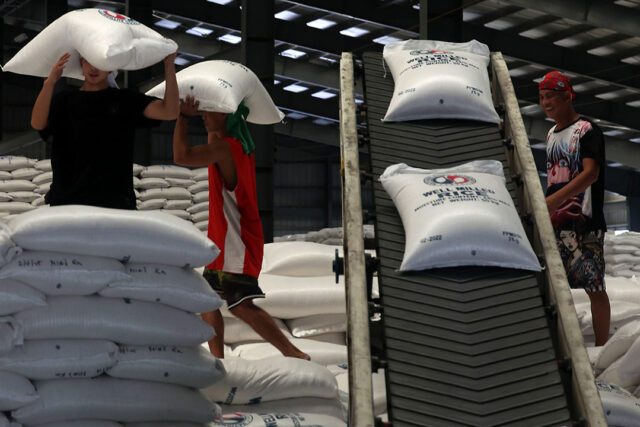
PHILIPPINE STAR/MIGUEL DE GUZMAN

THE Department of Agriculture (DA) said it does not expect any disruption to deliveries of rice for its P20-per-kilo rice program despite rising fuel prices that have increased logistics and transportation costs.

Genevieve E. Velicaria-Guevarra, assistant secretary for agribusiness, marketing, and consumer affairs, said the program had sufficient logistical funding to absorb such cost increases.

“While we acknowledge that the recent rise in fuel prices has increased transportation and logistics costs, the P20 rice program was designed with adequate logistical allotments to address these operational requirements,” she told BusinessWorld via Viber.

The DA has said the program was allocated P23 billion in 2026, with the aim of serving 15 million qualified beneficiaries by the end of the year.

Ms. Guevarra said that while higher fuel costs “may have affected the timeframe” for utilizing the program’s budget, the DA does not expect an impact on the continuity of operations.

The DA added that rice deliveries to Kadiwa centers and other accredited distribution outlets nationwide are proceeding as scheduled. — Vonn Andrei E. Villamiel

Negros legislator bats for 15% ethanol in gasoline

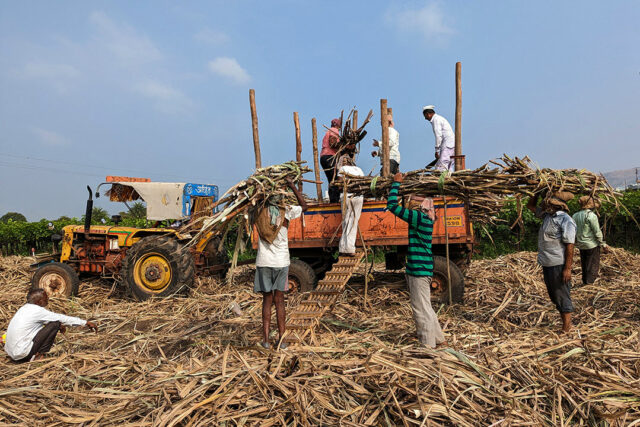
REUTERS

A NEGROS OCCIDENTAL legislator urged the government to increase the ethanol blend in gasoline to 15% (E15) from the current 10% (E10), citing supply security and the benefits to the domestic sugar industry.

In a statement on Tuesday, the province’s 5th District Rep. Emilio Bernardino L. Yulo said raising the blend from 10% to 15% could help cushion the impact of rising fuel prices and support demand for domestically produced bioethanol.

The Biofuels Act of 2006 requires that all liquid fuels for use in motors and engines be blended with biofuels. Since 2012, gasoline has been sold as a 10% bioethanol blend, known as E10.

Mr. Yulo said increasing the blend to E15 would raise the ethanol component and expand the demand for bioethanol, primarily derived from molasses.

“Increasing the ethanol blend from E10 to E15 can create stronger domestic demand for sugarcane-based ethanol and provide a needed market for sugar byproducts at a time when our farmers are under tremendous pressure and the general public is reeling from rising prices,” Mr. Yulo said.

The House Committee on Agriculture had been looking into sugar millgate prices, which recently fell to about P2,000 to P2,100 per 50-kilogram bag, below estimated production costs of roughly P2,500.

In the statement, Mr. Yulo said the Philippines has 14 accredited bioethanol plants with a combined installed capacity of 508 million liters per year, although effective output is estimated at 396 million liters annually.

Around 80% of the country’s molasses supply is also used for ethanol production, according to US Department of Agriculture estimates.

Mr. Yulo said government support will be needed to expand production capacity, including incentives for fuel-grade ethanol. He also said ethanol imports could be considered to supplement supply, provided they do not displace domestic production.

He called on the departments of Energy and Agriculture, along with the Sugar Regulatory Administration, to study the feasibility of increasing the blend and to ensure that any policy shift would benefit domestic producers and consumers. — Vonn Andrei E. Villamiel

Round 5 of RE auctions attracts nine bids

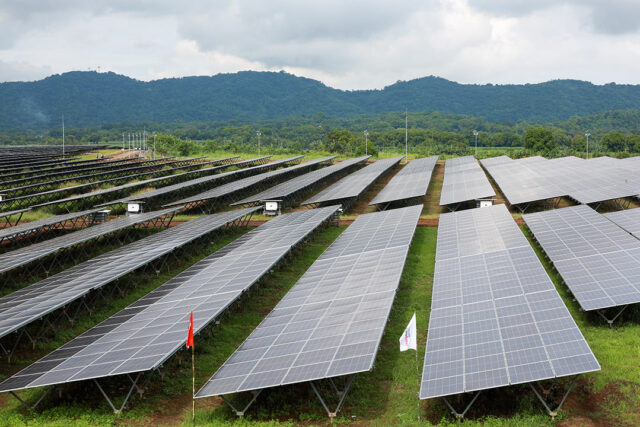
WORLDBANK.ORG

NINE valid bids for development projects that could generate at least 42 megawatts were received in the fifth auction round for pre-determined renewable energy (RE) resource areas, the Department of Energy (DoE) said.

In a statement on Tuesday, the DoE said the open and competitive selection process (OCSP) round attracted bids for six sites.

The OCSP is a mode for the selection and award of RE contracts particularly for pre-determined areas (PDAs) offered by the DoE through a bidding process. PDAs refer to locations with potential RE resources that are suitable for further development.

Following the opening of bids, the OCSP Review and Evaluation Committee has moved to endorse these to the legal, technical, and financial evaluation  stage.

The DoE said all nine bid submissions were found complete with the documentary requirements and shall proceed to detailed evaluation upon payment of the prescribed fees.

The bids cover the 6.70-megawatt (MW) Guinoba-an No. 1 and 2.90-MW Guinoba-an No. 2 projects in Albay, the 8.3-MW Pacu-an Hydroelectric Power Projects in Negros Oriental, the 25-MW Southern Leyte Geothermal power project, the Cabusao wind project in Camarines Sur and the San Isidro wind project in Samar. The last two projects have capacities that are yet to be determined.

The potential power projects are expected to contribute to the Philippines’ goal to increase RE share to 35% by 2030 and 50% by 2040.

The government expects RE investments to strengthen long-term energy security in the face of periodic disruptions due to conflicts in the Middle East.

“Expanding renewable energy capacity is one of our key strategies to strengthen the Philippines’ energy independence as tensions in the Middle East continue to affect global markets,” Energy Secretary Sharon S. Garin said.

In the first two months, the Board of Investments approved 35 projects worth P47 billion. Of the total, the energy industry, which includes RE, accounted for the largest share at P22.4 billion or 47.7%.

The DoE said the energy investment approvals signal sustained investor confidence in the energy transition.

“Our response is two-pronged: we are managing immediate risks while accelerating long-term structural reforms,” Ms. Garin said.

Around 1,471 MW of committed renewable and energy storage projects are expected to be injected onto the grid within the month.

“Every additional megawatt of renewable energy we bring online strengthens our ability to withstand global volatility,” Ms. Garin said. “This is how we convert investment momentum into real energy security: more stable supply and greater resilience.” — Sheldeen Joy Talavera

Investments granted ‘green lane’ treatment hit P6.4T at end-March

Solar panels are seen in Batangas in this file photo. — PHILIPPINE STAR/NOEL B. PABALATE

ABOUT P6.43 trillion worth of projects have been approved for expedited processing via the “green lane” certification system as of March, the Board of Investments (BoI) said on Tuesday.

The BoI reported that 244 projects worth P6.43 trillion have been granted a green lane certification as authorized by Executive Order No. 18.

Many of these projects are focused on renewable energy (RE) and related infrastructure, Trade Secretary and BoI Chairman Ma. Cristina A. Roque said in a statement.

About 171 projects involving investment of P5.79 trillion are in the pre-development stage; 46 projects worth P359.64 billion are under construction; and eight projects valued at P6.99 billion are in the pre-operation stage.

The BoI noted that 19 projects worth P266.85 billion are operational, covering industries like RE, digital infrastructure, and energy.

“Accelerating their implementation is important to help address energy supply requirements, stabilize costs, and support continued economic activity,” Ms. Roque said.

“This is why streamlining permitting and improving coordination across agencies remains a priority,” she added.

Executive Order No. 18, which created the Green Lane program, streamlined the processing of permits and clearances for investments deemed strategic. 

Beneficiaries of the initiative include Nanchao Renewable Energy Corp.’s 100-megawatt Pasuquin Solar Power Project in Ilocos Norte, which received a decision from the Energy Regulatory Commission in four months, compared to the usual nine-month processing time.

“The DTI and BoI expect the Green Lane Initiative to support the timely implementation of investments in key sectors, contributing to job creation, improved infrastructure, more reliable energy supply, and enhanced access to essential services,” it said. — Beatriz Marie D. Cruz

Clark Dev’t Corp. on track to hit P12.35-B investment goal

CLARK Development Corp. (CDC) said it is on track to meet its target of P12.35 billion in investment pledges this year, even in the face of the disruptions caused by the Middle East crisis.

“For 2026, our commitment to the GCG (Governance Commission for GOCCs) is P12.35 billion worth of investments,” Noelle Mina D. Meneses, CDC vice-president for the business development and business enhancement group, said at a briefing late Monday.

“We’re very happy that just after the first quarter, the CDC signed P9 billion to P10 billion worth of investment (pledges),” she said.

Ms. Meneses said this head start could allow CDC to “exceed our targets this year.”

The CDC suspended its P1 per liter fuel royalty for two months starting April 1 to ease the impact on Clark Freeport locators of rising fuel costs.

CDC President and Chief Executive Officer Agnes VST Devanadera said it “does not waive government revenues and retains regulatory oversight within the zone, but (the freeze on royalties is) intended to help ease operating costs and support business continuity.”

She also noted that Petron Corp. has agreed to ensure fuel supplies for Clark locators based on a prioritization system, with talks ongoing with other suppliers.

Petron’s allocation system classifies locators into essentials, support services, and others, CDC said.

Locators have been encouraged to adopt work-from-home arrangements; install solar panels on their rooftops; adopt net‑metering and distributed energy programs; and consider electric vehicle options, CDC said.

Last month, CDC signed a P4.4-billion deal with Korean developer Luxia Corp. to develop a mixed-use property within Clark Freeport.

This high-end development will include hotel and serviced apartments for the growing meetings, incentives, conferences, and exhibitions market. — Beatriz Marie D. Cruz

ADVERTISEMENT
ADVERTISEMENT