Home Blog Page 5213

China cautions West over fueling war
REUTERS

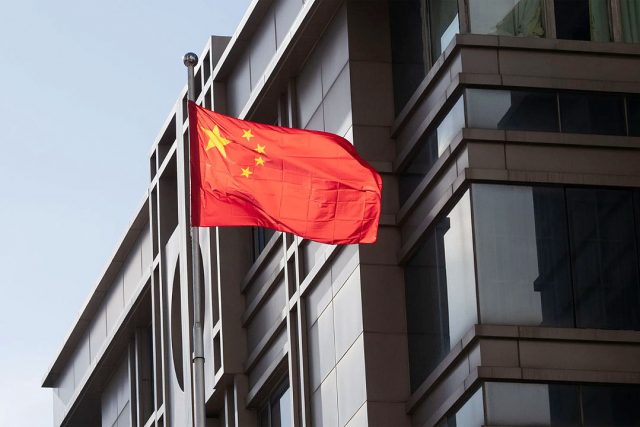
BEIJING — China is “deeply worried” that the Ukraine conflict could spiral out of control, foreign minister Qin Gang said on Tuesday, and called on certain countries to stop “fueling the fire” in an apparent dig at the United States.

Beijing, which last year struck a “no limits” partnership with Moscow, has refrained from condemning Russia’s invasion of Ukraine. The United States has warned of consequences if China provides military support to Russia, which Beijing says it is not doing.

“China is deeply worried that the Ukraine conflict will continue to escalate or even spiral out of control” Mr. Qin said in a speech at a forum held at the foreign ministry.

“We urge certain countries to immediately stop fueling the fire,” he said in comments that appeared to be directed at the United States, adding that they must “stop hyping up ‘today Ukraine, tomorrow Taiwan’”.

“We stand firmly against any form of hegemony, against any foreign interference in China’s affairs.”

Mr. Qin’s comments came as Russia’s news agency TASS said China’s top diplomat Wang Yi was due to arrive in Moscow on Tuesday and ahead of a “peace speech” President Xi Jinping is expected to deliver on Friday, the anniversary of the Ukraine invasion.

Also on Tuesday, China released a paper on the Global Security Initiative (GSI), Xi’s flagship security proposal which aims to uphold the principle of “indivisible security,” a concept endorsed by Moscow.

Russia has insisted that Western governments respect a 1999 agreement based on the principle of “indivisible security” that no country can strengthen its own security at the expense of others.

On Monday, Mr. Wang called for a negotiated settlement to the Ukraine war during a stopover in Hungary.

The same day, US President Joseph R. Biden made a surprise visit to Kyiv in a show of solidarity, promising $500 million worth of military aid to Ukraine and additional sanctions against Russian elites to be unveiled in full this week.

Beijing has refrained from condemning Moscow’s operation against Ukraine or calling it an “invasion” in line with the Kremlin, which describes the war as a “special military operation” designed to protect Russia’s own security.

Russia’s Feb. 24 invasion of Ukraine has triggered one of the deadliest European conflicts since World War II and the biggest confrontation between Moscow and the West since the 1962 Cuban Missile Crisis.

‘LETHAL WEAPONS’
The United States casts China and Russia as the two biggest nation-state threats to its security. Mr. Xi has stood by Russian President Vladimir Putin, resisting Western pressure to isolate Moscow.

US Secretary of State Antony Blinken warned on Saturday that the United States was very concerned China is considering providing “lethal assistance” to Russia, which he told Mr. Wang “would have serious consequences in our relationship.”

“There are various kinds of lethal assistance that they are at least contemplating providing, to include weapons,” Mr. Blinken said in an interview with NBC News, adding that Washington would soon release more details.

The European Union’s top foreign affairs official Josep Borrell on Monday warned against China sending arms to Russia, saying it would be a “red line,” echoing statements from other European foreign ministers attending a meeting in Brussels.

Any Chinese weapons supplies to Russia would risk a potential escalation of the Ukraine war into a confrontation between Russia and China on the one side and Ukraine and the US-led NATO military alliance on the other.

Beijing has repeatedly accused Washington of escalating the conflict by supplying weapons to Ukraine. On Sunday during a meeting with Mr. Blinken on the sidelines of the Munich Security Conference, Mr. Wang said the US “should promote a political solution to the crisis, instead of adding fuel to the fire”. — Reuters


How Biden’s trip to Kyiv was kept secret — but not from Russia

US President Joseph R. Biden and Ukraine’s President Volodymyr Zelensky visit Saint Michael’s cathedral in Kyiv, Ukraine Feb. 20, 2023. — REUTERS

WASHINGTON — President Joseph R. Biden by all accounts was having a quiet weekend at the White House, joining his wife Jill Biden for dinner at a restaurant on a rare outing in Washington on Saturday.

But behind the scenes, officials at the White House and other agencies were planning intensively for Mr. Biden to make an unannounced trip to Kyiv to show solidarity with Ukraine days before the one-year anniversary of Russia’s invasion.

After months of planning, Mr. Biden on Friday decided to go ahead with the trip, according to the White House.

White House officials said Mr. Biden was taken to Joint Base Andrews outside of Washington and departed at 4:15 a.m. (0915 GMT) on Sunday aboard an Air Force jet, accompanied by a handful of aides. A scaled-back news media presence went along with him: just one reporter and a photographer instead of his usual media pool.

The president flew overnight to the United States’ Ramstein Air Base in Germany. The plane was refueled and he flew on to Rzeszow in southeastern Poland. After a one-hour drive, he arrived in Przemysl, a city along the Poland-Ukraine border.

Mr. Biden then boarded a train and traveled 10 hours to Kyiv. By then it was Sunday night, and Mr. Biden’s train traveled in the dark with a heavy security presence on board.

The train came to a stop at the Kyiv-Pasazhyrsky station in the Ukrainian capital at roughly 8 a.m. local time (0600 GMT) on Monday. The area around the platform had been cleared and the US ambassador to Ukraine, Bridget Brink, awaited Mr. Biden and his staff.

“It’s good to be back in Kyiv,” Mr. Biden said after stepping off the train.

US national security adviser Jake Sullivan, who accompanied the president, said US officials did notify Russian officials that Mr. Biden would be traveling to Kyiv. “We did so some hours before his departure for deconfliction purposes,” he told reporters on a conference call, declining to provide more details.

Mr. Sullivan said the trip had “required a security, operational, and logistical effort from professionals across the US government to take what was an inherently risky undertaking and make it a manageable level of risk.”

Residents of Kyiv live under the constant threat of Russian missile and drone attacks. 

After his visit, Mr. Biden got back on the train for the trip to Przemysl. After arriving there, he made his way to Warsaw. — Reuters

Italy faces drought alert as Venice canals run dry

Tourists walk on a bridge as a gondolier rows his gondola near St. Mark’s Square in Venice, Italy, April 2, 2019. — REUTERS

MILAN — Weeks of dry winter weather have raised concerns that Italy could face another drought after last summer’s emergency, with the Alps having received less than half of their normal snowfall, according to scientists and environmental groups.

The warning comes as Venice, where flooding is normally the primary concern, faces unusually low tides that are making it impossible for gondolas, water taxis and ambulances to navigate some of its famous canals.

The problems in Venice are being blamed on a combination of factors — the lack of rain, a high-pressure system, a full moon and sea currents.

Italian rivers and lakes are suffering from severe lack of water, the Legambiente environmental group said on Monday, with attention focused on the north of the country.

The Po, Italy’s longest river which runs from the Alps in the northwest to the Adriatic has 61% less water than normal at this time of year, it added in a statement.

Last July Italy declared a state of emergency for areas surrounding the Po, which accounts for roughly a third of the country’s agricultural production and suffered its worst drought for 70 years. “We are in a water deficit situation that has been building up since the winter of 2020-2021,” climate expert Massimiliano Pasqui from Italian scientific research institute CNR was quoted as saying by daily Corriere della Sera

“We need to recover 500 millimeters in the north-western regions: we need 50 days of rain,” he added.

Water levels on Lake Garda in northern Italy have fallen to record lows, making it possible to reach the small island of San Biagio on the lake via an exposed pathway.

An anticyclone has been dominating the weather in western Europe for 15 days, bringing mild temperatures more normally seen in late spring.

Latest weather forecasts do however signal the arrival of much-needed precipitation and snow in the Alps in coming days. — Reuters

$3.7-B UK mass action vs Facebook over market dominance rejected — for now

Meta Platforms Inc. Chief Executive Officer Mark Zuckerberg. — REUTERS

LONDON — Facebook on Monday temporarily fought off a collective lawsuit valued at up to 3 billion pounds ($3.7 billion) over allegations the social media giant abused its dominant position to monetize users’ personal data.

However, a London tribunal gave the proposed claimants’ lawyers up to six months to “have another go” at establishing any alleged losses by users.

Meta Platforms, Inc, the parent company of the Facebook group, faces a mass action brought on behalf of around 45 million Facebook users in Britain.

Legal academic Liza Lovdahl Gormsen, who is bringing the case, says Facebook users were not properly compensated for the value of personal data they had to provide to use the platform.

Her lawyers last month asked the Competition Appeal Tribunal to certify the case under the UK’s collective proceedings regime – which is roughly equivalent to the class action regime in the United States.

But the Tribunal ruled on Monday that Lovdahl Gormsen’s methodology of establishing any losses suffered by Facebook users needed “root-and-branch re-evaluation” for the case to continue.

Judge Marcus Smith did, however, give Lovdahl Gormsen’s lawyers six months to “file additional evidence setting out a new and better blueprint leading to an effective trial”.

A spokesperson for Meta said the company welcomed the decision and referred to its previous statement that the lawsuit is “entirely without merit”.

A spokesperson for Lovdahl Gormsen declined to comment. — Reuters

Russian gas out, renewables in? Europe clings to green goals

NORD STREAM AG

LONDON — After Russia invaded Ukraine a year ago, European nations faced an onslaught of crippling new challenges – including working out how to swiftly replace the Russian gas that supplied 40% of their energy needs and kept families warm in the winter.

A year later, use of dirtier fossil fuels such as coal has expanded to help fill the gap, governments have spent billions subsidizing heating bills as gas companies reap record profits, and countries are competing to build terminals to import gas from new suppliers, from the United States to Qatar and Nigeria.

But Europe also quietly produced more electricity from renewable sources than from gas last year, for the first time, according to European Commission President Ursula von der Leyen.

The European Union (EU) Green New Deal – aimed at making the bloc carbon-neutral by 2050 – has held together through the Ukraine shock, while fresh plans to slash dependency on Russian fossil fuels by 2027, using renewables and energy efficiency, are advancing.

“The good news from this crisis, if there is any, is that it has brought European leaders closer together. Europe’s energy policy is more coherent than ever and more ambitious,” said Ani Dasgupta, president of the US-based World Resources Institute.

The Ukraine conflict, meanwhile, has sent shockwaves through global energy markets, with higher prices raising questions in regions planning to use more gas, including Asia, about whether that is the right answer for the future, energy experts say.

Fatih Birol, executive director of the International Energy Agency, believes the Ukraine war may mark a fundamental shift in how countries in Europe and beyond judge their energy security – and could spur a new acceleration on renewables in response.

“Energy markets and policies have changed as a result of Russia’s invasion of Ukraine, not just for the time being but for decades to come,” Birol argued in his agency’s annual energy outlook, published in October.

“Government responses around the world promise to make this a historic and definitive turning point towards a cleaner, more affordable and more secure energy system.”

POLITICAL PRIORITY
One key change as a result of the Russian invasion is that energy concerns have moved dramatically up the European political agenda, said Jonathan Stern, a long-time energy researcher at the Oxford Institute for Energy Studies.

“Energy has become an immediate voter issue – unlike climate change,” he said in an interview. “Voters are having to pay more money, voters are concerned if they’ll get their energy – and politicians know elections are never more than a couple of years away.”

Soaring gas prices helped push the average inflation rate across the EU to a record high of 11.5% in October 2022, as expensive food and fossil fuel-based fertilizers stoked the cost of living and hiked concerns over food security.

But European gas prices have dropped as much as 85% since peaking last summer, easing some of the pressure.

Still, Raphael Hanoteaux, a policy advisor on gas politics for climate and energy at think-tank E3G, said the energy crisis had placed issues such as how to ramp up renewables and increase energy efficiency, while reducing fossil-fuel use, “front and center of not only the climate debate but the security debate”.

Continuing price volatility in gas markets – as the conflict in Ukraine drags on and Russia reorients its exports towards Asia – is a huge worry for European governments that have spent nearly 800 billion euros ($853 billion) subsidizing home and business energy bills, and are wondering how long they can keep it up, he added.

Without Russian gas, “it’s way more profitable to build wind and solar capacity than to scramble to Qatar or Azerbaijan to secure fossil fuels”, Hanoteaux said in an interview.

Faced with tough choices, the Netherlands, Germany and France all are looking at shifts such as phasing down gas-powered heating in buildings and boosting installation of renewables – though solar and wind are still far more widely used for electricity production than heating.

EU commissioners also have debated mandatory cuts in gas and electricity use. “We’re now discussing things that were impossible months ago,” Hanoteaux noted.

Not all countries are on board, though. Hungary, for one, has said it expects Russian gas to remain important to its energy supply, noting it would be happy to sign new long-term deals with Moscow.

BARE COFFERS
One big question is how to pay for a much-needed surge in renewables at a time when government coffers and borrowing capacity are depleted after the COVID-19 pandemic and extensive spending on subsidies to keep homes warm this winter.

Many governments have long insisted they lack fiscal space to swiftly ramp up green energy to deal with climate change – nonetheless, in Europe, they have found huge amounts nearly overnight to subsidize energy bills and tackle the pandemic, Oxford’s Stern noted.

Now, however, after battling years of multiple crises, many are in a worse position to afford the renewables that – if invested in years ago – would have helped avert the current crisis, he said.

Once installed, renewable power is far cheaper in the long run. But the investment needed between 2021 and 2050 for a full transition to renewable power in Europe is estimated at $3.8 billion.

“This is the conundrum,” Stern said. “Although everyone keeps saying renewables are the cheapest form of energy now, which is correct, you still need to spend money now to get them – money you would have had if this (gas) crisis hadn’t happened.”

DASH FOR GAS
Despite a cash shortage, many European countries have been rushing to build gas import terminals to boost supplies – and a lack of coordination means huge over-capacity is now in the pipeline, said Greig Aitken of Global Energy Monitor.

“A lot has been done in panic,” he said, adding that “the general consensus is what is being planned is extremely excessive and inappropriate”.

At the same time, some European governments are considering shortening often lengthy siting processes to put new clean energy capacity in place, which could draw in more private investment, he noted.

And some states are talking about boosting nuclear power capacity, a move Oxford’s Stern finds “bizarre” given the projects require “massive” government subsidies and every one in Europe is “miles over budget and way over its supposed timeline”.

Meanwhile, efforts to add renewable energy capacity fast are being held back by market shortages of key minerals needed for things like battery storage systems, analysts warned.

Overall, virtually all European countries are behind schedule on their pledges to cut emissions to net zero – but the events of the past year have convinced most that “they need to try harder”, Stern said.

“The whole thing has become more difficult – but more urgent,” he said. “I believe the net effect is going to be positive.” — Reuters

Pacific islanders head to Australia for jobs as climate fears grow

REUTERS

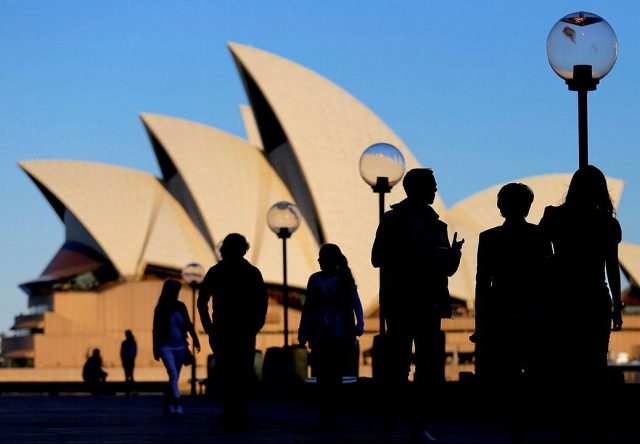
SYDNEY — Over the years, Claire Anterea has waved goodbye to numerous friends and family members as they left the Pacific island nation of Kiribati for jobs in regional powerhouse Australia. She had never considered joining them – until now.

Australia will introduce a permanent residency option for Pacific islanders this year, and has also expanded its short-term labor program – part of the country’s wider efforts to counter China’s growing influence in the region.

Anterea, 43, a climate activist, said the residency offer had led her to consider a permanent move to Australia as she grows increasingly concerned about her country’s long-term future due to rising seas caused by climate change.

“If our people are affected by sea level rise, we don’t have a place to go,” Anterea told the Thomson Reuters Foundation by phone from her home in Kiribati’s capital, Tarawa.

“This life for me is good, but what about my daughter? For the sake of my child, I want to migrate and to get a job and contribute to a new home,” she added.

Sea level rise could cover more than half of the low-lying Tarawa atoll’s land by 2100, threatening more than 60% of its population, according to the Intergovernmental Panel on Climate Change (IPCC).

While such forecasts raise the specter of a wave of climate migration in decades to come, for the meantime policymakers in island nations fear Australia’s efforts to court migrant workers could fuel a “brain drain” of skilled people.

Pacific workers can earn up to four times as much in Australia or New Zealand, said Richard Curtain, a leading Pacific labour mobility researcher.

That makes the offer of even temporary work an attractive prospect in countries like Fiji where youth unemployment surged to 37% in 2020, according to the Asian Development Bank (ADB).

SKILLED PROFESSIONALS
The mass departure of skilled professionals, especially digital workers, is a worrying trend, Fiji’s Deputy Prime Minister Manoa Kamikamica said earlier this month.

“This is a matter of great concern to our nation, as the loss of highly skilled professionals in the IT sector can have serious implications for our economic growth and competitiveness,” he told a conference.

Samoa’s industry and labour minister, Leatinu’u Faumuina Wayne So’oialo, voiced similar concerns in November.

Almost a quarter of Fiji’s population lived abroad in 2019, while about 12% of Samoa’s workforce participated in labour schemes in Australia or New Zealand last year, according to an ADB report in December.

Many are highly qualified workers seeking better job opportunities overseas, posing a problem for small island countries that have been struggling for years to retain a skilled workforce, said Curtain, who has researched brain drain in the Pacific region at the Australian National University.

Remittance payments sent home from migrant workers on the short-term Pacific Australia Labour Mobility (PALM) scheme are the upside, he added.

Some 35,000 Pacific migrant workers on the PALM program – many of them seasonal laborers such as fruit pickers – sent more than $64 million in remittances to the region last year, according to Australian government figures.

In both Tonga and Samoa, remittances were the equivalent of about 40% of each country’s gross domestic product (GDP) in 2022, ADB research showed.

Australia’s Department of Foreign Affairs and Trade (DFAT), which runs the PALM scheme, said workers gain experience, skills and savings that can help boost the economy of their home countries.

“We do not want to deprive the Pacific of its workforce and will ensure the scheme delivers a skills dividend for our region,” a DFAT spokesperson said in emailed comments.

CLIMATE MIGRATION PATHWAY?
Aiming to “strengthen Australia’s ties with the Pacific family”, the new Labor government pledged in 2022 to increase PALM workers to 35,000 by June, a target already hit, and launch a ballot for the new Pacific Engagement Visa (PEV) in July to let 3,000 Pacific Islanders become permanent residents annually.

Like New Zealand’s visa ballot, which was introduced in 2002, Australia’s PEV will only be open to Pacific Islanders with a formal job offer in Australia.

Some experts say the PEV program should also be treated as a climate migration pathway, with priority given to people from the most vulnerable island nations such as Kiribati and Tuvalu.

“This is quite urgent. We see Australia as the leader in our Pacific region so they should focus on improving the pathways for our people in climate-threatened communities,” said Akka Rimon, who was Kiribati’s foreign affairs secretary in 2013 and researches labour migration and climate displacement at the Australian National University.

The DFAT spokesperson said the government would prioritize “countries with limited permanent migration opportunities to Australia”, and the number of visas available for each Pacific island was still being determined.

Without serious and rapid action to tackle climate change, about 216 million people globally could be forced to move within their own countries by 2050, according to the World Bank.

But for people from small, low-lying island nations relocating overseas may be their only option.

For islanders like Anterea, such concerns mean moving abroad sooner – rather than later – appears increasingly tempting.

“People are really fighting to get their opportunity to go and work overseas because it’s a good income. They are thinking about the future of their children. They want their family to have a better life,” she said. — Reuters

G7 finance chiefs to meet on Feb 23 to discuss measures against Russia

G7 LEADERS (from left) Australia’s Prime Minister Scott Morrison, German Chancellor Angela Merkel, South Africa’s President Cyril Ramaphosa, South Korea’s President Moon Jae-in, British Prime Minister Boris Johnson, US President Joseph R. Biden, France’s President Emmanuel Macron, and Canadian Prime Minister Justin Trudeau attend a working session during G7 summit in Carbis Bay, Cornwall, Britain, June 12. — LEON NEAL/POOL VIA REUTERS

TOKYO — Financial leaders of the Group of Seven (G7) will meet on Feb. 23 to discuss measures against Russia that will put pressure on it to end the Ukraine war, Japan’s Finance Minister Shunichi Suzuki said on Tuesday.

Japan will chair the meeting of finance ministers and central bank governors from the G7 nations in the Indian city of Bengaluru. The meeting will come almost a year since Russia invaded Ukraine, calling it a “special military operation”.

The war has raged on despite a slew of punitive measures G7 and other countries have taken against Russia.

“Support for Ukraine and sanctions against Russia will be the main topics of discussion,” Suzuki told a news conference. “We will continue to closely coordinate with G7 and the international community to enhance the effect of sanctions to achieve the ultimate goal of prompting Russia to withdraw.”

Japan chairs G7 ministerial meetings this year in the run-up to the May 19-21 summit meeting of G7 leaders in Hiroshima. The G7 comprises Britain, Canada, France, Germany, Italy, Japan, and the United States.

The G7 meeting will be followed later in the week by a broader gathering of G20 financial leaders from the world’s major economies, which will be hosted in Bengaluru by India, which has the G20 presidency.

The Ukraine war and the global economy are expected to be the focus of the G20 talks.

It will discuss inflation that has been heightened by Russia’s war, energy and food prices, and support for emerging market economies facing debt problems. A failure to tackle emerging market debt could lead to a financial crisis, a senior Japanese official said earlier.

“By contributing to discussions on these problems, we are hoping to produce significant results that will lead to stable and sustainable global growth,” Suzuki said. — Reuters

Belarus to form 100,000-150,000 strong volunteer military force

JAY REMBERT-UNSPLASH

Belarusian President Alexander Lukashenko said on Monday he had ordered the formation of a new volunteer territorial defense so everyone knows how to “handle weapons” and be ready to respond to an act of aggression and keep public order in peacetime.

“The situation is not easy. I have said more than once: every man – and not only a man – should be able to at least handle weapons,” Lukashenko said at the meeting of his Security Council.

“At least in order to protect his family, if needed, his home, his own piece of land and – if necessary – his country.”

Lukashenko, who allowed Russia to use Belarus to send troops into Ukraine a year ago, has often said his army would fight only if Belarus was attacked. He has also said the “experience” in Ukraine necessitates additional defense.

“In case of an act of aggression, the response will be fast, harsh and appropriate,” Lukashenko said on Monday.

Defence Minister Viktor Khrenin said the territorial defense force will have 100,000-150,000 volunteers, or more if needed. The paramilitary formation will be ideally in every village and town.

The country’s professional army has about 48,000 troops and some 12,000 state border troops, according to the 2022 International Institute for Strategic Studies’ Military Balance.

A pariah in the West, Lukashenko, Europe’s longest-serving ruler who has led Belarus for 28 years, depends on Russia politically and economically, and Russian President Vladimir Putin’s support helped him survive mass pro-democracy protests in 2020.

The dependence has fanned fears in Kyiv that Putin would pressure Lukashenko to join a fresh ground offensive and open a new front in Russia’s invasion of Ukraine.

“The elements of the Cold War: arms race and nuclear blackmail by the leaders of individual Western states have returned to the contemporary international agenda,” Lukashenko said on Monday.

The European Union, the United States and others have imposed billions of dollars’ worth of sanctions on the ex-Soviet state over its support for Russia’s war against Ukraine.

On Monday, US President Joe Biden made a surprise visit to Kyiv to send a message of “enduring support” for Ukraine and announce further military aid for the army of Ukrainian President Volodymyr Zelenskiy. — Reuters

The Junior Philippine Institute of Accountants – De La Salle University brings back ‘EXCEED2023’

Ready for a momentous chapter in EXCEED history?

EXCEED2023 brings with it the comeback of the much-awaited hybrid setup. Hailed as the nation’s biggest business and accounting convention, EXCEED2023 is anchored on the theme “Empowering Business Visionaries, Defying Socio-Economic Uncertainties.” It acknowledges deeply-seated lulls in the nation’s systems and sets forth a collective defiance of conscious effort that is sure to open doors to future emerging industries. 

Participants from De La Salle University (DLSU) will be able to attend the Plenary and Symposium on March 11, 2023 at the Teresa Yuchengco Auditorium by purchasing a ticket worth P200, while Non-DLSU participants can gain access to the event by purchasing a ticket worth P320. Both tickets are inclusive of the convention kit and lunch for non-DLSU participants.

Meanwhile, the Simultaneous Classes will be held on March 18, 2023 via Zoom. Access for this event will be FREE for both DLSU and Non-DLSU participants.

Join us in defying limits by accessing these links:

Application Kit: bit.ly/EXCEED2023ConventionApplicationKit

Application Form for DLSU Participants: bit.ly/EXCEED2023InternalAppForm

Application Form for Non-DLSU Participants: bit.ly/EXCEED2023ExternalAppForm

See you there, future business leaders!

BoP posts $3-billion surplus in Jan.

US dollar banknotes are seen in this illustration taken July 17, 2022. — REUTERS

THE PHILIPPINES’ balance of payments (BoP) position swung to a surplus in January from a deficit a year ago, reflecting the proceeds of the government’s global bond issuance, the Bangko Sentral ng Pilipinas (BSP) said on Monday.   

Data released by the BSP showed a BoP surplus of $3.08 billion in January, a reversal of the $102-million deficit in January 2022. The January figure was also significantly higher than the $612-million surplus in December 2022.

This was also the largest BoP surplus in 26 months or since the $4.24-billion surfeit in December 2020.

Philippines: Balance of payments position“The BoP surplus in January 2023 reflected inflows arising mainly from the National Government’s net foreign currency deposits with the BSP, which include proceeds from its issuance of ROP (Republic of the Philippines) Global Bonds, and net income from the BSP’s investments abroad,” the central bank said in a statement.

In January, the Philippines raised $3 billion from the Marcos administration’s second US dollar bond issuance. The government sold $500 million worth of the 5.5-year notes, $1.25 billion worth of the 10.5-year papers, and $1.25 billion worth of the 25-year sustainability bonds.

Security Bank Corp. Chief Economist Robert Dan J. Roces said the higher inflows of remittances from overseas Filipino workers (OFWs) was also a key factor in the higher BoP surplus.

“OFW remittances are a significant source of foreign exchange for the Philippines and have been relatively resilient despite the pandemic,” Mr. Roces said.

Cash remittances coursed through banks jumped by 3.6% to a record high of $32.54 billion last year, latest BSP data showed. It exceeded the $31.42 billion recorded in 2021.

“Another possible factor is some recovery in exports. As global trade recovers from the pandemic and China reopens, demand for Philippine-made goods may have increased, leading to higher export revenues and inflows of foreign exchange,” Mr. Roces said.   

In December, the value of merchandise exports fell by 9.7% to $5.67 billion, while imports also declined by 9.9% to $10.26 billion. This brought the trade-in-goods deficit to $4.6 billion in December, narrower than the $5.12-billion gap a year earlier.

Mr. Roces said the resumption of international and local tourism also contributed to the surplus, as there could be an increase in foreign exchange earnings from tourism-related activities.   

At its end-January level, the BoP surplus reflects a final gross international reserve of $100.7 billion, up by 4.8% from $96.1 billion a month earlier.

The country’s dollar reserves are enough to cover 6.2 times the country’s short-term external debt based on original maturity and 4.1 times based on residual maturity. It is also equivalent to 7.6 months’ worth of imports of goods and payments of services and primary income.

The BoP gives a glimpse into the country’s transactions with the rest of the world. A deficit means more funds left the country, while a surplus shows that more money came in.

“Looking ahead, FDI (foreign direct investment) inflows may also contribute to the BoP as the Philippines continues to offer investment incentives and maintain a relatively open investment environment, based on the pledges gathered by our businessmen and the National Government as well, so this could lead to inflows of foreign exchange,” Mr. Roces said.   

FDI inflows into the Philippines plunged 43.6% year on year to $793 million in November.

Rizal Commercial Banking Corp. Chief Economist Michael L. Ricafort said the country’s BoP position could be supported by the continued growth in dollar inflows such as remittances, business process outsourcing revenues, FDI, foreign tourism receipts, among others.   

The BSP projects the BoP position to reach a $5.4-billion deficit by the end of 2023, which is equivalent to -1.3% of the gross domestic product. The BoP position ended 2022 at a $7.26-billion deficit. — Keisha B. Ta-asan

BSP may continue rate hikes amid stubborn inflation

REUTERS

THE PHILIPPINE central bank may continue hiking interest rates to a peak of 6.5% in the first half as inflationary pressures persist, analysts said.

“At Fitch Solutions, we now think that interest rates in the Philippines will peak at 6.5%, upwardly revised from our previous forecast of 6%,” Fitch Solutions Country Risk & Industry Research said in a report on Monday.

Last week, the Monetary Board raised the key interest rate by 50 basis points (bps) to a near 16-year high of 6%. The rates on the overnight deposit and lending facilities were also increased to 5.5% and 6.5% respectively.

“The latest decisions were mainly driven by concerns over persistently high inflation, and we think that the BSP’s tightening cycle will continue into the first half to tame inflationary pressures,” Fitch Solutions said.

In a note, Nomura Global Markets Research Chief ASEAN (Association of Southeast Asian Nations) Economist Euben Paracuelles and analyst Rangga Cipta said they now expect the BSP to deliver two 25-bp hikes at its March and May meetings, to bring the terminal rate to 6.5%.

Nomura also pushed back the timing of BSP rate cuts to the first quarter of 2024, from fourth quarter of 2023 previously.

“This implies, in our view, that BSP will look to ensure inflation has become further entrenched within its 2-4% target, and so it will take longer to unwind some of its policy rate hikes. We therefore now revise our policy rate forecast to 6.50% by end-2023 (from 5.50%) and to 5.50% by end-2024 (from 4.50%), which implies we now expect only 100 bps of total rate cuts (from 150 bps),” Nomura said.

The BSP’s latest rate hike came after inflation quickened to a 14-year high of 8.7% in January, from 8.1% in December. It marked the 10th straight month inflation was above the BSP’s 2-4% target range.

In a separate note, MUFG Global Markets Research said it expects the BSP to hike to “at least” 6.5% in 2023 “with some chance of more rate hikes in the coming months.”

“The central bank sent out a ‘higher for longer’ message due to runaway inflation, seeing broad pressures and upside risks to upwardly adjusted forecasts,” it added.

Due to the unexpectedly high January print, the BSP revised its full-year inflation outlook to 6.1% in 2023 from 4.5% previously; and 3.1% in 2024, from 2.8% previously.

Fitch Solutions also revised its average inflation forecast to 6.5% this year, from 5.4% previously, as price pressures are taking longer to peak.

“Looking ahead, second-round effects from utilities price hikes will remain a key source of upside price pressure. Additionally, food inflation could rise even further still. The impact of food supply disruptions caused by adverse weather conditions may have yet to run its cost,” Fitch Solutions said.

“(We) now think that inflation will remain above the BSP upper target celling of 4% throughout 2023.”

According to Nomura, inflation may decline in the coming months and may only average 5.6% this year, below the BSP’s 6.1% forecast.

“This is premised on our view that the same month-on-month pickup in headline inflation in January is unlikely to be exceeded or even repeated, given that this has exceeded the month-on-month increases since the start of the Russia/Ukraine conflict,” Nomura said.

Month on month, inflation climbed to 1.7% in January from 0.3% in December. Stripping out seasonality factors, month-on-month inflation rose by 1%.

However, Nomura warned that “if inflation momentum accelerates, it could mean more sizeable rate hikes by BSP.”

Once the key rate hits 6.5% in the first half, Fitch Solutions said the BSP will likely keep interest rates on hold throughout the rest of the year due to an eventual stabilization of global monetary conditions and a shift to supporting the economy.

“An eventual stabilization of global monetary conditions will set the stage for BSP to leave rates on hold… We think that the US Fed is likely near the end of its tightening cycle… This will help reduce the need for the BSP to lean towards aggressive rate hikes to defend the peso going forward,” it said.

The think tank said the BSP will eventually shift to supporting the economy, as it sees gross domestic product (GDP) growing by 5.9% this year, slower than the 7.6% in 2022.  

Fitch Solutions’ 5.9% Philippine GDP projection is slightly below the government’s 6-7% full-year target.

Meanwhile, Nomura sees the Philippine economy growing by 5.5% in 2023, before expanding by 6.3% in 2024.

“We believe GDP growth is likely to moderate, given export growth is slowing amid the global downturn, while domestic demand is also looking less resilient than last year, in our view, given price pressures remain high, which ultimately hurts household purchasing power and therefore consumer spending,” Nomura said. — K.B.Ta-asan

Philippines counts cost of teenage pregnancies

Pregnant teenagers wait in line for a free pre-natal checkup at a clinic in Tondo, Manila, Aug. 31, 2012. — REUTERS

By Kyle Aristophere T. Atienza, Reporter

TACLOBAN CITY — Christine Homeres Villanueva, 16, and her 19-year-old husband were among the hundreds of thousands of young Filipinos who had to drop out of school due to early teenage pregnancy.

Ms. Villanueva, who lives in the central Philippine province of Southern Leyte, got pregnant last year and is expected to give birth in March.

“I almost lost hope when we found out that I was pregnant,” she said by telephone. “I was thinking of my future and the challenges of raising my child.”

Teenage pregnancy poses serious threats to Philippine economic growth particularly on its labor force, according to experts from the World Health Organization (WHO) and the United Nations (UN).

One out of 10 births in the Southeast Asian nation are from mothers under the age of 19, Leila Joudane, country representative of the UN Population Fund, said at the launch of a campaign against teen pregnancy in the central Philippine city of Tacloban on Monday.

The Philippines is estimated to lose P33 billion a year due to adolescent pregnancy, which the Philippine government considers a national priority, she told a news briefing. Foregone income of teenage girls who get pregnant is P83,000 a year.

“When she gets pregnant early, she would earn much less than people who continue to study,” Ms. Joudane said. “The issue of adolescent pregnancy  affects her potential future.”

The Philippine Health department, WHO, UN and Korea International Cooperation Agency launched a campaign against teen pregnancy in Samar and Southern Leyte — two poor provinces in Eastern Visayas, which has one of the highest teenage pregnancy rates in the country.

The $1-million program targets 275,538 adolescents and will train 150 health service providers, 150 public school teachers and 360 local government units in 20 towns in these provinces.

The Philippines faces a learning crisis that experts say threatens the Filipino labor force, which is struggling to compete in the global market.

“Adolescent pregnancy is not only a health and education problem but also an economic development issue,” UN Philippine Resident Coordinator Gustavo Gonzalez told the briefing.

He said adolescent pregnancy is a combination of trauma, costs and losses.

“From a health perspective, adolescent pregnancy brings up complications. It is costing the health system,” he said. “There are economic losses because [they are] an important part of the human capital of the Philippines that cannot be fully integrated into the labor market.”

Mr. Gonzalez said teen pregnancy is among the major factors why the Philippines’ female labor force participation rate is among the lowest in Southeast Asia.

He said a massive campaign against teen pregnancy is a development investment because it can improve human capital.

Health department officer-in-charge Maria Rosario S. Vergeire said adolescent pregnancy could result in poor social and economic outcomes “for both the adolescent mother and her child.”

Adolescent mothers are more likely not to finish high school or college and are likely to be unemployed, she told the briefing, citing a UN Population Fund study.

“More importantly, the poor outcomes also extend to their children, who are also more likely to have poor nutrition and education outcomes,” she said. “This has effects not just on the individual, but on society as a whole.”

The UN body said the Philippines would benefit from its younger demographic structure — one of three Filipinos are below 18 years.

But the window opportunity that the demographic dividend brings may be lost if Filipinos are not able to care for their sexual and reproductive health and their families, it said.

DATA PROBLEM
“Those who have been previously pregnant as teenagers are more likely to become pregnant again as teenagers, making them less likely to join the labor force,” Education Assistant Secretary Dexter A. Gablan said.

Live births among those aged 10 to 14 between 2016 and 2021 increased by 11%, according to the Philippine Statistics Authority. 

There were 2,299 births from the age group in 2021, higher than 2,113 in the previous year.

Teenage pregnancies fell to 5.4% in 2022 from 8.6% in 2017, according to a 2022 survey by the local statistics agency.

Among teens aged 15 to 19 years who have been pregnant as of 2022, the highest percentage was recorded among those aged 19 years at 13.3%, it said. “This was followed by women aged 18 years at 5.9% and women aged 17 years at 5.6%.”

Ms. Vergeire said there might be a problem with the data since the country has struggled with COVID-19 for almost three years now.

“A lot could have been detected if we were in normal times,” she said. “But we were in abnormal times.”

She said authorities should verify the accuracy of the data, adding that the government should find out whether the pandemic had an impact on the reporting of teenage pregnancies in recent years.

Ex-President Rodrigo R. Duterte issued an executive order in 2021 to make the fight against teenage pregnancy a national priority.

He ordered all government agencies to identify and implement “practicable” interventions to ease adolescent pregnancies, including sex education, employment opportunities for young people and health promotion through media.

Mr. Gablan said the Education department has been enforcing sex education in public schools, which requires “upskilling teachers” and making the program appropriate for various regions.

He said the agency is looking at hiring more guidance counselors and health workers to boost access of young mothers to health services in schools.

The Department of Health and its partner agencies the UN and WHO seek to expand their pilot program in Eastern Visayas to other parts of the country.

Ms. Villanueva, the expectant mother, said she plans to study again after giving birth.

“We want them to complete their basic education because this will enable them to once again regain confidence,” Mr. Gablan said. Alternative modes of learning will give young parents the opportunity to continue their education, he added.