Home Blog Page 5214

All you should know about SIM Registration Act

There are only a few months left before the government’s deadline for SIM (subscriber identity module) registration.

All SIM card owners must register their SIM cards under Republic Act No. 11934 or what is now commonly known as the SIM Registration Act (SRA) before using them for mobile internet, calls, and texts.

All SIMs, including those used for mobile phones, prepaid Wi-Fi kits, and other devices, whether they are in card or electronic form, must be registered. A SIM won’t be activated and users won’t be able to use it if they are not registered by April 26.

According to the government, the law exists to safeguard consumers against nefarious practices that have been prevalent with unregistered SIM cards, including scams, smishing, and other forms of online and mobile fraud.

Because criminals can use prepaid SIMs without registering any of their personal information, it makes them more elusive to law enforcement and they are enabled to continue their illegal activities anonymously and avoid detection.

As such, all SIM users, both current and new, are required to register their SIMs with their current carriers.

Any SIM cards that have just been purchased after Dec. 27, 2022 are automatically deactivated and need to be registered before a telco company may activate them.

All SIMs supplied by telcos, authorized distributors, or resellers are required by law to be in a deactivated condition and only become active if the SIM buyer registers the SIM on one of the recognized registration platforms. Existing subscribers must register their SIM cards on these platforms based on the Law’s permitted registration period.

In the case of minors, SIMs must be registered in their parent or legal guardian’s name.

The SIM will be permanently canceled if existing users are unable to register it before the deadline. This means that they will not be able to use text, call, data, or other mobile services on that SIM, with all load and active promotion registrations becoming void.

For the registration process, new and existing SIM users are required by the Law to provide Philippine telco providers their personal information, such as name, date of birth, sex, present or official address, as well as supporting documentation such government-issued IDs like passports, driver’s licenses, or the Philippine Identification Card.

The telcos then must verify the submitted information, maintain a database with these information, and process the information only for the purposes of SIM activation or deactivation.

For foreigners, they may only use their registered SIMs for 30 days, but may avail of longer period by submitting an approved extended visa to their respective Public Telecommunications Entity (PTE). Foreign SIM end-users may register their SIMs using their passport and/or visa.

Concerns

Given that the SIM Registration Act will mean a massive data collection effort, there are many who voiced their concerns about what the government and telcos will do with the information.

Privacy Commissioner John Henry Naga raised concerns that might imply misuse of data such as notices and tick boxes on telcos’ websites asking for users’ consent to use their personal data for marketing, profiling, or sharing with third-party partners.

“Telcos must ensure the secure, ethical, and responsible handling of data, especially in all data processing being conducted in compliance with the SIM Registration Act,” Mr. Naga told reporters.

“Their obligation to comply with the SIM Registration Act comes hand in hand with ensuring that data privacy and protection is upheld. Such includes the implementation of mechanisms that would allow the assurance to its data subjects that the data being collected are for the purposes of the SIM Card Registration,” he added.

The National Privacy Commission (NPC), in general however, supports the purpose of intention of the law, citing that it can help “prevent the proliferation of various and evolving electronic communication-aided criminal activities.”

“The NPC is fully aware that implementing a SIM card registration system will entail a massive collection of personal data. Hence, there is a strong need to develop a technology-neutral approach and to future-proof the proposed legislation to achieve its intended purpose, in a manner that respects the rights and freedoms of the data subjects,” the commission said in a statement.

The commission added that it has urged the Philippine Senate and House of Representatives to take the proportionality principle and data minimization procedures into consideration when drafting the rules governing social media providers and authorized resellers.

Essentially, in order to mitigate security threats and data breaches that could result from excessive collecting and faulty or inappropriate data monitoring techniques, the NPC suggested mechanisms must be put into place.

“The NPC recommended that the burden to determine the SIM card buyer’s identity should not fall on retailers who may not have the necessary know-how or resources to properly verify the identity of data subjects and the authenticity of the identification cards that will be presented,” the commission said.

“Delegating it to these retailers may result in overcollection and improper or inadequate monitoring and security practices.”

The NPC also advised against using a central server or database due to the higher risk of a security compromise. This suggestion was since accepted in the legislation, which mandates that the PTEs or designated government organizations maintain their own databases. Telcos are only permitted to process, activate, or cancel a SIM or subscription using the database.

On the registration front, Infrawatch PH, a public policy think tank, recently expressed worry over the slow registration of SIM cards, stating that at the current rate, just 69.52% of all customers may be registered by the deadline.

“In other words, this means the removal of at least 51.5 million subscribers by the April [26,] 2023 deadline,” Infrawatch PH Convenor Terry L. Ridon said in a letter sent to the NTC dated Feb. 7.

Mr. Ridon stated that given the “deeply concerning” pace, telecommunications businesses may advocate for modifications to the implementing rules and regulations to speed up registration. According to him, the government shouldn’t permit registration shortcuts since they are stipulated by Republic Act. No. 11934.

“Allowing changes in registration procedure and requirements will defeat the purpose of the SIM Card Registration Act, particularly the wisdom of Congress to fight online scams and spams, and other malevolent activities undertaken through digital means,” said Mr. Ridon.

Progress

As of Feb. 8, the Department of Information and Communications Technology (DICT) has recorded 30.01 million SIM registrations since the process began on Dec. 27, only 17.76% of the 168.98 million subscribers nationwide.

“We are seeing good progress in terms of the registered subscribers, and we look forward to how this will translate to a safer and more secure digital communications in the coming days,” DICT Secretary Ivan John E. Uy said in a press release.

“The SIM registration in remote areas is intended to ensure that we are reaching out in areas with limited telecommunication or internet access to assist them in registering their SIMs. The DICT’s Free Wi-Fi sites will serve as the hubs for SIM registration in geographically isolated and disadvantaged areas,” DICT Spokesperson and Undersecretary Anna Mae Yu Lamentillo said. — Bjorn Biel M. Beltran
StackLeague kicks off third season

By Chelsey Keith P. Ignacio, Special Features and Content Senior Writer

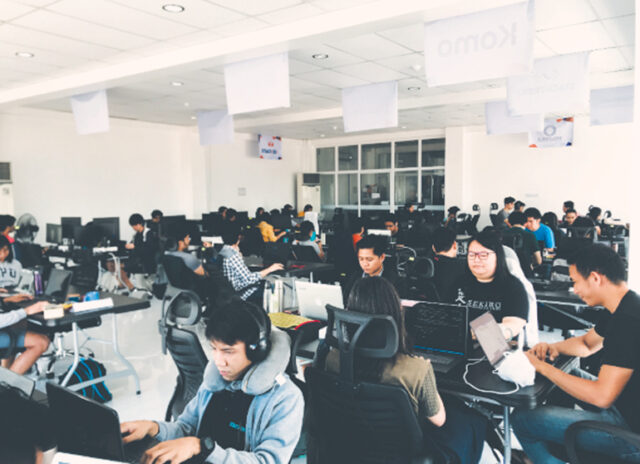
The programming skills of StackLeague challengers are being put to the test once more as the country’s largest online programming league returns for its third season.

Launching the new season last Feb. 10 at Microsoft Philippines, StackLeague is back to present participants with a chance to win cash prizes, career opportunities, access to exclusive events, and get nationwide recognition.

StackLeague is open to everyone who holds programming knowledge. For its third season, StackLeague is split into two divisions, the Pro League and Student League. Professionals who have graduated or are already working in the industry could partake in the Pro League. This season, they are offered career growth, professional networking, and job opportunities.

Meanwhile, the Student League is open for students from grade school up to college, with access to scholarship grants, mentorship, and internship opportunities offered to them.

To join the programming league, interested participants simply need to sign up at StackLeague’s website and start taking on the challenges. The league has three challenger levels, which include Bronze, Silver, and then Gold. As players conquer more challenges, they gain more points and elevate their ranking.

Cash prizes await challengers when they level up, rewarding P100 for Bronze and another P100 for Silver, and P300 when they reach Gold. Additionally, unlocking a level rewards challengers with access to special giveaways, exclusive events, and opportunities.

Furthermore, for this season, StackLeague gives a chance for Silver and Gold players to earn more points with a player versus player competition. In the PVP Mode, players in the aforesaid levels can challenge other players and bet on points, and the winner will take all.

And given the two divisions this season, StackLeague will reward two sets of Weekly Top 10 players who accumulated the highest points of the week. The Weekly Top 10 will receive P500 each. Also, all weekly winners will be automatically invited to the StackLeague Playoffs monthly qualifier, where there are nine monthly qualifier rounds.

The Top 10 highest-ranked players from each division at the end of StackLeague Season 3 will get cash awards, media recognition, and special prizes.

StackLeague is powered by StackTrek’s fully automated talent analytics and assessment platform, which evaluates eight fundamental programming areas including Simple Expression, Parsing and Regex, Standard Library Usage, Algorithms, Control Structures, Error Handling, Data Structures, and Object-Oriented Programming. The programming languages supported in StackLeague are JavaScript, Java, Python, C#, and PHP.

Aside from the programming tournament, StackLeague also has an ambassador program that rewards the participants who will go beyond the competition itself through the referral program and blog writing. The StackLeague Ambassador of the Month will get P3,000 plus a StackLeague shirt, while the Ambassador of the Year will get P20,000 and a StackLeague jacket.

The official scoring of StackLeague has commenced on Feb. 12. Meanwhile, the StackLeague Playoffs will run from March to November; the finals week will take place in December. StackLeague will announce the Mid-Season Rankings in June, and all grand winners of StackLeague Season 3 will be announced on Dec. 9.

Supported by technology companies Microsoft, AWS, GCash, Deltek, Viber, and Accenture as well as online recruitment companies JobStreet, Kalibrr, and Workbank, StackLeague is on a mission to develop programming leaders who inspire a nation into coding. More than 20,000 challengers take part in the league.

SIM registration steps for individual users and businesses

As we live in a world where technology is central to our lifestyles, cybersecurity is essential in preventing unauthorized access to digital technology, including computers, networks, applications, and software data. It is becoming more crucial for users and businesses alike to be aware of the potential threats that can virtually attack them.

According to the British Standards Institution (BSI), in addition to ensuring the protection of information, cybersecurity can also improve security management and arrangements, enhance credentials for business, and enable fast recovery in future cyberattacks.

“Cybersecurity is now an issue for every organization across the world, of every size and focus. It has moved from a technical specialism to a mainstream concern for individuals, businesses, and the government. Businesses are more reliant on data and the rapid speak of high-speed wireless internet connections has increased the risk of data leaks and demand for protection,” BSI said.

As of today, one of the most common frauds known is cyber fraud, where personal and financial information online is being contaminated by other individuals anonymously. Criminals can use prepaid SIMs (subscriber identity modules) without registering personal information, making it possible for them to commit cyber attacks easily. Thus, the Philippine government is implementing the SIM Registration Act, to protect consumers against cyber attacks, including cyber threats, identity fraud, financial theft, and more.

Under Republic Act No. 11934 or the SIM Registration Act, all users are required to register their SIM supplied by telecommunication companies for their electronic devices. This law applies to local and foreign individuals and business enterprises who utilize SIM cards obtained in the Philippines for their operations.

According to the law, within 180 days from the effective date of the policy, which falls on Dec. 27, 2022, all existing subscribers must register their SIM with their respective Public Telecommunications Entity (PTE). Whereas, newly purchased SIM cards require immediate registration to activate texting, calling, and data services.

To register, users are required to register through the links that the PTEs will be providing. After being redirected to the website, end-users will be asked to input their mobile and serial numbers followed by the necessary information, such as full name, date of birth, gender, address, etc.

End-users will also be required to present valid government-issued identification (ID) cards to verify their identity. Do keep in mind to double-check all information before submitting the registration form. Lastly, end-users will receive a confirmation text saying that the registration form has been successfully submitted, which will serve as certification of registration.

For minor subscribers, the SIM registration must be named after the minor’s parent or guardian with their consent.

Foreign registrants are required to register their full name, nationality, passport number, and Philippine address. They should also present the following documents: passport, proof of their address in the Philippines, and a return ticket to their home country.

In addition to individual subscribers, business enterprises are also required to register. Companies are required to submit documents according to their service provider.

Globe users must submit the following documents: Securities and Exchange Commission Certificate of Registration, Board Resolution, and Special Power of Attorney. Smart users, meanwhile, are required to submit the full name of the authorized signatory, the business name, and the business address of the company.

Failure to register beyond the date

According to the SIM Registration Law, failure to register the SIM on or before the deadline, which falls on April 26, leads to automatic cancelation, which means the end-user will not be able to make and receive calls, and unable to access their One-Time Password (OTP), which is a standard for security purposes in many platforms, including banking and media applications. In addition, end-users cannot access the SIM’s data services and online connectivity, which may prevent them from using applications and websites that require an internet connection. All load balances will also be lost if the SIM is deactivated.

Data privacy

Regarding data privacy, the law prioritizes safety measures for all personal information among end-users, abiding by the Department of Information and Communications Technology’s (DICT) cybersecurity rules and regulations to ensure safety and protection at their end. All of the information of the end-user will be kept confidential and will be strictly used for SIM registration, activation and deactivation purposes only. For confidentiality, disclosing the information is prohibited but can only be done by a subpoena with proof that a certain mobile number is engaged in a crime.

For instances of the need for a change of information, loss of SIM, or death of the end-user, it must be reported to the PTEs and they must be informed as soon as possible and record those changes in their database. But, if cyberattack cases occur, the incident should be reported to the DICT within 24 hours.

Addressing digital divide

With the accelerating digital economy, it is not a surprise that the SIM Registration Act will be utilizing the digital platform to make registrations quicker and easier, especially with the huge amount of end-users nationwide. While the SIM registration is done digitally, however, it might cause concern for end-users with little to no internet access and a slow internet connection. Thus, government agencies and PTEs will be facilitating and conduct the SIM registration in remote locations.

The SIM Registration Act’s primary goal is to reduce cybercrime in disrupting the lives of many Filipinos. The registration of SIM cards is expected to provide security, as well as to recognize crime activities easily. The SIM card registration also ensures a secured verification of a person’s identity, which means online transactions can be made easier since the identification of the person has already been verified and confirmed. — Angela Kiara S. Brillantes

DoST-TAPI Technopreneurship Programs begin call for proposals

The commercialization and marketing arm of the Department of Science and Technology (DoST) is opening its programs for pre-commercialized projects of startups and institutions and for tech-based micro, small, and medium enterprises (MSMEs).

Earlier last week on its official Facebook page, DoST-Technology Application and Promotion Institute (DoST-TAPI) announced the opening of its call for proposals for its two Technopreneurship Programs, namely the Technology Innovation for Commercialization (TECHNiCOM) Program and the Venture Financing Program (VFP).

As the commercialization and marketing arm of DoST, TAPI awards grants, provides venture financing, and renders technical services to all types of inventors and innovators throughout their technology development journey.

The agency said in its announcement that the Technopreneurship Programs provide opportunities for innovators and entrepreneurs in the country to refine their technologies, field and market test their product or service, finance the raw materials they need to produce their goods, and expand their operations and grow their business.

TECHNiCOM particularly provides multimillion grants to pre-commercialization projects involving technologies with market potential, and it fast-tracks the market readiness of locally-developed innovations and technologies.

Eligible proponents for this program are academic institutions, including state universities and colleges (SUCs) and private higher education institutions (HEIs); DoST and other public research and development Institutions (RDIs); and startup companies.

To qualify, SUCs, HEIs, and RDIs should not have their previous R&D funded, managed, or monitored by any of the DoST Sectoral Councils. Startups, meanwhile, must be operating for at least one year and less than seven years; must be registered as a corporation; and must have received funding and is duly endorsed by a DoST Sectoral Council, such as the Philippine Council for Industry, Energy, and Emerging Technology Research and Development (PCIEERD), Philippine Council for Agriculture, Aquatic and Natural Resources Research and Development (PCAARRD), or the Philippine Council for Health Research and Development (PCHRD).

In addition, the technology of the proponents must reach Technology Readiness Level 4, under which a low fidelity or rough prototype of the technology is available and an application for the prototype is identified and tested.

Core to a project that will be admitted by TECHNiCOM are substantial technology refinement activities, including commercial protoyping, pilot-scale or scaled-up testing, and technology validation, among others. Adding business development activities are also encouraged to ensure a successful market launch.

TECHNiCOM does not cover the following activities: food formulation, unless it is a functional food product designed for a specific health-related problem or industry solution; purely establishment of facilities; discovery, development of new products, the establishment of proof of concept, and basic research; technologies for extension purposes and not commercialization (e.g., farming/breeding techniques, management protocols, etc.); technologies without previously conducted and documented R&D output; and technologies ready for commercialization/market entry (request is geared for commercial production/manufacturing and expansion).

More information about the TECHNiCOM Program can be found on https://tinyurl.com/TECHNiCOMCallPage. The proposal document for a TECHNiCOM proposal can be accessed at https://tinyurl.com/TECHNiCOMProposalForm2023.

The VFP, on the other hand, provides a financing mechanism for commercialization projects involving mature technologies of tech-based MSMEs. Featuring up to P2 million worth of financing, the program helps enterprises meet their customer demands and expand their businesses.

Eligible proponents for VFP are tech-based MSMEs with 60% Filipino ownership and that are either corporations, partnerships, sole proprietors, or cooperatives in operation for at least three years. Moreover, as tech-based MSME eligible proponents are either a holder of an active intellectual property (IP) filing, an adopter of technology generated or funded by the DoST, a previous or current DoST beneficiary, or a technology licensee. Beneficiaries of the department’s Small Enterprise Technology Upgrading Program, or SETUP, from the department’s regional offices are also encouraged to apply.

Eligible proponents should also currently be in the commercialization phase and not in the discovery or pre-commercialization phase.

MSMEs interested in securing a license for a DoST-generated technology may also be supported by VFP.

More information about VFP can be found at https://tinyurl.com/VFPCallPage2023. The proposal document for VFP can be accessed at https://tinyurl.com/VFPProposalForm2023.

The deadline for submitting proposals, both for TECHNiCOM and VFP, is on Mar. 31 at 5 p.m.

Proponents who need help in completing a proposal or consultation on a potential project can prepare a draft proposal and book a consultation with DoST-TAPI by visiting https://tinyurl.com/REGISTERConsultationWriteshop.

Details of our Call for Proposals can also be accessed through this link: http://www.tapi.dost.gov.ph/call-for-proposals

DoST-TAPI will also give stakeholders a walkthrough of the two Technopreneurship Programs on its online “TechnoBYAHE” orientation sessions on Feb. 20 at 2 p.m. and on Feb. 21 at 10 a.m. Only 500 attendees will be accommodated on each day. Those interested to attend may register in the following links: https://tinyurl.com/TechnoBYAHERegisterFeb20 for Feb. 20 and https://tinyurl.com/TechnoBYAHERegisterFeb21 for Feb. 21.

SIM card registration as a global practice

Cellphones or smartphones are one of the technologies most of us use throughout the day, from the moment we wake up until we sleep. This rectangular block or pad of screen has enabled us not just to communicate, but also to work, shop, transact, and amuse ourselves within the tap of our fingers. Such tasks are made possible not just by the in-built technologies in every phone, but also by a tiny physical card, the subscriber identity module card, more known as the SIM card.

However, this small chip can lead users to be victimized by scams, frauds, and other cyberattacks, which gave rise to the demand for registering SIM cards before they can be fully used for texts, calls, and mobile data, to name a few.

The Department of Justice’s Office of Cybercrime, for instance, found that last year the amount of scam texts Filipinos have been receiving was increasing, alongside reports on cybercrimes made through mobile texts and calls.

“In fact, our Office of Cybercrime has received a total of 4,899 reports of harassment or unlawful debt collection from online lending companies for the years 2020 up to December 2022, wherein the harassment was usually done through mobile phone calls and SMS,” Justice Secretary Jesus Crispin C. Remulla said in a statement.

In order to fight such increasing cybercrime and protect Filipinos’ personal data and information, the Philippine government has implemented the SIM Registration Act, where users are required to register their SIM cards.

After being signed by the President signed last Oct. 10 and becoming effective since last Dec. 27, the SIM Registration Act now requires users to register their existing SIM card within the next 180 days, while new SIM cards cannot be used unless they are registered.

According to virtual private network (VPN) service ExpressVPN, SIM card registration is significant in preventing illegal activities, including fraud and identity theft. Yet, it still imposes certain concerns among people, for instance the disappearance of anonymity and breach of data privacy.

Atlas VPN, another VPN service company, noted that SIM card registration allows telecommunication companies to collect and store information about SIM card users. Also, the personal information of SIM card users can be shared with governmental organizations if necessary, and users can also be verified within the government database. With this, SIM card registration systems are expected to reduce fraud and make it easier to identify such crimes and their criminals.

According to the Access to Mobile Services and Proof of Identity report by the Groupe Speciale Mobile Association (GSMA) in 2021, there are 157 countries (not yet including the Philippines) where mandatory prepaid SIM registration policies are in place.

The SIM card registration basically requires users to provide personal information, including their full names, home addresses, national identification (ID) numbers, or even photographs.

According to GSMA, as of early 2021, 93% of prepaid SIM cards are in countries where proof of identity is required for mandatory SIM registration.

“Proof of identity allows an individual to have a SIM card registered in their own name and, particularly for the underserved, to have access to a plethora of empowering mobile services,” noted the association in its report.

According to ExpressVPN countries like Australia, Cambodia, Costa Rica, Ecuador, Georgia, Hong Kong, Kenya, Myanmar, Nepal, Slovakia, Sri Lanka, and Uruguay, SIM card registration requires ID cards, including a driver’s license, passport or other valid government-issued ID cards. The registration will also ask the users to provide the necessary information, like the users’ full name, birth date, address, or even their gender.

Some countries also apply biometrics, where the users’ fingerprint or face scans will be used as a form of verification and authentication. According to identity-oriented website Identity Week, biometric registration legislation currently exists in countries such as: Afghanistan, Bahrain, Bangladesh, Benin, Pakistan, Peru, Saudi Arabia, China, Nigeria, Oman, Singapore, Tajikistan, Tanzania, Thailand, Uganda, and United Arab Emirates. In addition, Mexico authorized the use of biometrics registration for mobile phone subscribers in 2021.

According to biometrics software and services company Aware, stronger authentication methods are made possible by biometric technology, consisting of human body measurements and calculations and quickly taking hold across industries, especially in business enterprises. In addition, biometrics is considered a safer identity verification method. Biometrics can be used as an alternative to identification cards in some countries.

For instance, Mobile Telecommunication Company (MTC) in Namibia has been using a biometric system as a safety measure to register their SIM card users. According to MTC Chief Human Capital and Corporate Affairs Officer Tim Ekandjo, in addition to the requirement of asking the users to provide their basic information, they also incorporated biometric data, where the users’ fingerprint and facial recognition will be used. Despite the criticisms, the company insisted that biometric data is essential in order to generate the digital identity of the users for added safety protocols.

“This information is safely stored on our cloud, and our requirement for this information is in line with the draft Namibia Data Protection Bill, and it adheres to the EU General Data Protection Regulation and the AU Convention on cybercrime and data. It is also important to note that we already have so many companies taking customers’ biometric data, so this is nothing new, and most of our costumers appreciate the fact that we have gone the extra mile to protect them from cybercrime,” he was quoted as saying in a report from BiometricUpdate.com of market research supplier and consultancy Biometrics Research Group, Inc.

While other countries implemented SIM registration as a prerequisite, countries such as Canada, the United Kingdom, the United States, Croatia, Cyprus, Czech Republic, Estonia, Finland, Iceland, Latvia, Lithuania, Malta, New Zealand and Serbia do not require the registration of SIM cards. — A.K.S. Brillantes

Economists raise inflation forecasts

A Trade department official checks prices of canned goods in a supermarket in Sampaloc, Manila, Feb. 16. — PHILIPPINE STAR/EDD GUMBAN

PRIVATE SECTOR economists raised their inflation outlook for this year through 2025 after the faster-than-expected January print, with most economists expecting the Bangko Sentral ng Pilipinas (BSP) to begin trimming rates only next year.

Based on the results of the BSP’s survey of private economists in February, the average inflation forecast of analysts for 2023 jumped to 6% from just 4.9% in the January survey.

Economists’ mean inflation forecast for 2024 and 2025 also climbed to 4% (from 3.7% previously) and 4.1% (from 3.6%).

“Analysts expect inflation to remain above the upper-end of the government’s target range in 2023 given the higher-than-expected January 2023 inflation print, as well as due to demand-side price pressures and supply shocks,” the BSP said in its latest Monetary Policy Report. 

Headline inflation accelerated to a fresh 14-year high of 8.7% in January, from 8.1% in December. January also marked the 10th consecutive month inflation was above the BSP’s 2-4% target range.

“Risks to the inflation outlook remain tilted to the upside due to the continued recovery of domestic demand, alongside high prices of goods and services due mainly to supply-related concerns and second-round effects,” the central bank said.

“The BSP’s monetary policy actions are expected to cool down inflation, especially in the second half of 2023,” it added.

Last week, the Monetary Board raised borrowing costs by another 50 basis points (bps) to tame inflation, bringing the key rate to 6%, the highest in nearly 16 years or since May 2007 when it stood at 7.5%.

The central bank on Thursday raised its average inflation forecast for 2023 to 6.1%, from 4.5% previously. This is beyond the BSP’s 2-4% target range, and faster than the 5.8% full-year inflation in 2022.

The BSP also hiked its 2024 inflation projection to 3.1% from 2.8%.

“The upside risks to inflation include high prices of goods and services, including oil and food, due to supply-related concerns attributed mainly to weather disturbances and geopolitical tensions such as the ongoing Russia-Ukraine war,” the BSP said.

Some analysts also cited the recovery of private consumption and government spending, peso depreciation, rising inflation expectations as other upside risks to the outlook.

Data from the Philippine Statistics Authority (PSA) showed private consumption expanded by 7% in the fourth quarter last year, slightly slower than 8% in the third quarter and 7.5% a year earlier. For 2022, household consumption rose by 8.3% from the year prior.

Government spending also rose by 3.3%, better than 0.8% in the third quarter but slower than 7.8% a year earlier. State spending growth eased to 5% in 2022 from 7.1% a year earlier.

The BSP noted that higher transport fares are a likely source of second-round effects from rising oil prices, citing the recent moves to hike fares for the Light Rail Transit (LRT) Line 1 and 2. There are also proposals to raise fares for the Metro Rail Transit (MRT) Line 3. 

“Meanwhile, only a handful of analysts mentioned possible downside risks to inflation such as base effects; heightened uncertainty on the recovery of the global economy; slow reopening of China; and existing non-monetary measures by the National Government that are expected to help boost food supply and temper domestic prices,” the BSP said.

SLIM PROBABILITY
Based on the probability distribution of the forecasts provided by 18 out of 24 analysts, the BSP said there is a 97% chance that inflation will exceed the 2-4% target range. There is only a slim or 1.9% probability (from 10.3% previously) that average inflation will settle within the target band.

For 2024, the probability that inflation will fall within the target band declined to 57.9% (from 65.3%).

For 2025, there is a 63.7% chance (from 73.4%) that inflation will settle well within the target band, the BSP said.

Meanwhile, most analysts anticipate the Monetary Board to continue tightening policy rates by 25 bps to 250 bps this year.

Analysts only expect the BSP to start trimming rates by about 25 bps to 250 bps in 2024, before further cutting rates by up to 100 bps in 2025.

There were 24 respondents in the BSP’s survey of private sector economists this month. The survey was conducted from Feb. 7 to Feb. 14. 

The BSP measures inflation expectations by analyzing the inflation forecasts of households, business managers, and private sector economists, as well as the reasons they cite to support their individual forecasts. 

According to the BSP’s consumer expectations survey in the fourth quarter of 2022, more households expect inflation to accelerate in the first quarter 2023 (17.6%), and the next 12 months (9.5%).

The central bank also keeps track of business expectations through its quarterly survey. The results showed that nearly 90% of business managers from the industry, construction, services, and retail trade sectors expect inflation to exceed the 2-4% target this quarter, and the next 12 months.

In a study last year, the BSP said that private sector economists have more accurate forecasts than firms and households. — Keisha B. Ta-asan

More ‘aggressive’ fight vs inflation needed — DoF

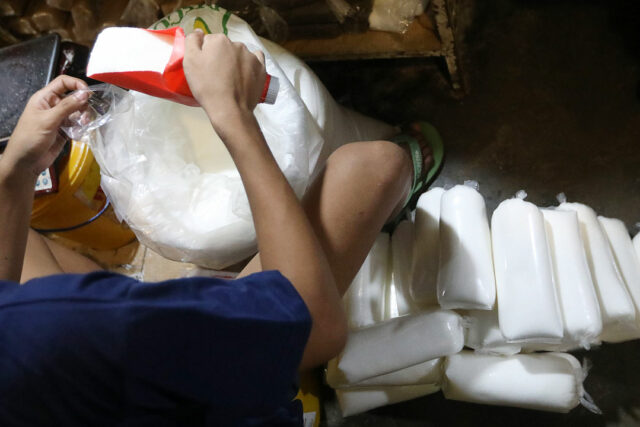
A vendor places sugar in plastic bags for sale. — PHILIPPINE STAR/EDD GUMBAN

THE EXECUTIVE department, particularly local government units (LGUs), should be more “aggressive” in the fight against inflation that is expected to remain elevated this year, Department of Finance (DoF) Secretary Benjamin E. Diokno said.

“The monetary authorities have done their part; the Executive department, including LGUs, have to do more, be more aggressive and focused. In the fight against inflation, monetary policy is not the only game in town,” Mr. Diokno said in a Viber message to reporters on Saturday.

His statement comes after the BSP on Thursday raised its benchmark policy rate by 50 basis points (bps) to a nearly 16-year high of 6%. The BSP had also signaled more rate hikes at its next meetings to cool red-hot inflation.

Inflation soared to a fresh 14-year high of 8.7% in January, as food prices continued to rise amid supply issues. This prompted the BSP to upwardly revise its average inflation forecasts for 2023 and 2024 to 6.1% (from 4.5%) and to 3.1% (from 2.8%), respectively.

“If the Executive department succeeds in controlling the sources of inflation on the supply side more effectively, there will be less reason for monetary authorities to raise policy rates,” Mr. Diokno added, citing the need to implement direct, non-monetary measures to address supply issues and bring down food prices.

He noted that since January 2022, the BSP has raised rates by 400 bps, compared with 250 bps for India, 225 bps for Indonesia and only 100 bps for Thailand and Malaysia.

Mr. Diokno said that the government is planning to form a technical working group (TWG) to assess the supply and demand conditions of key food commodities.

“This responsibility should be taken away from vested groups. This will help ensure timely actions to avert short-term upticks in food prices,” he added.

The TWG will consist of representatives from the DoF, Department of Agriculture, Department of Budget and Management, National Economic and Development Authority, and Department of Trade and Industry.

While additional imports of food items such as sugar and onions will stabilize prices, Mr. Diokno said there should be efforts to ensure these imported goods “reach the intended markets as soon as possible.”

“Local authorities should facilitate, not impede, the movement of essential food items to the intended markets. Restricting free movement of essential food items is one sure way of prolonging inflationary pressures,” he said.

The Finance chief said the Bureau of Customs must release food imports “with the same sense of urgency that we have given the importation of COVID-19 (coronavirus disease 2019) vaccines.” — Luisa Maria Jacinta C. Jocson

PHL likely to hit 6-7% growth target this year

PHILIPPINE STAR/WALTER BOLLOZOS
The Philippine economy is expected to expand with the government’s 6-7% growth target this year. — PHILIPPINE STAR/WALTER BOLLOZOS

By Keisha B. Ta-asan, Reporter

THE “CONTINUED NORMALIZATION” of post-pandemic mobility will help the Philippine economy expand within the government’s 6-7% target this year, but slower growth is likely in 2024, the Bangko Sentral ng Pilipinas (BSP) said.

“GDP (gross domestic product) growth is projected to settle within the DBCC’s (Development Budget Coordination Committee) target of 6-7% for 2023, but economic headwinds could result in slower GDP growth in 2024,” the BSP said in its latest Monetary Policy Report (MPR).   

“The full-year growth forecast for 2023 was adjusted upward from the previous MPR. Meanwhile, the growth forecast for 2024 is lower compared to previous round, reflecting weaker global prospects and the impact of cumulative policy rate adjustments of the BSP,” it added.   

While the central bank does not give its exact growth forecasts, the DBCC targets 6.5-8% GDP growth in 2024.

According to the central bank, the economy will be “driven by growth in the industry sector as manufacturers signal increased production plans as the economy reopens further.”   

Based on data from the Philippine Statistics Authority (PSA), the service sector expanded by 9.8% in the fourth quarter last year, while the industry sector grew by 4.8%. Annually, services jumped by 9.2%, and industry expanded by 6.7%.

Better labor market conditions, higher demand for tourism, and greater economic activity due to the resumption of face-to-face classes are seen to boost growth in the services sector, the BSP said.   

“Moreover, the implementation of the Corporate Recovery and Tax Incentives for Enterprises (CREATE) Law, Financial Institutions Strategic Transfer (FIST) Act, and the second tranche of the reduction in personal income taxes could help further bolster the domestic outlook in 2023-2024,” it added.

Meanwhile, the overall balance of supply and demand conditions, as reflected by the output gap, is expected to “remain broadly neutral” in the near term.   

“Estimates from the BSP’s Policy Analysis Model for the Philippines (PAMPh) indicate that the output gap is estimated to be slightly positive in early 2023, reflecting the sustained economic expansion in 2022,” the central bank said.   

The economy grew by 7.6% in 2022, exceeding the government’s 6.5-7.5% target, and the fastest growth since 1975.

“Thereafter, the output gap is seen to remain in broadly neutral territory as the impact of policy interest rate adjustments takes hold on the economy. A projected slowdown in global growth owing in part to tightening monetary conditions across countries could likewise dampen aggregate demand,” the BSP said.   

The Monetary Board last week increased the benchmark policy rate by 50 basis points (bps) to 6%, the highest in nearly 16 years. Rates on the overnight deposit and lending facilities were also increased to 5.5% and 6.5%, respectively.

According to analysts, higher interest rates could drag economic growth slower this year.

“Rate hikes always impact growth not just in the short run but in the medium term as it caps investment outlays and limits the increase in potential output,” ING Bank N.V. Manila Senior Economist Nicholas Antonio T. Mapa said in a Viber message.   

“Such moves are designed to combat mainly demand side pressures and will only help bring down prices by snuffing our growth momentum,” Mr. Mapa said.   

He added that the Monetary Board will still need to hike borrowing costs this year as inflation remains high, while fiscal authorities deploy more measures to improve local supply.   

BSP Governor Felipe M. Medalla last week said the Monetary Board may deliver a 25-bp or 50-bp rate increase at its next meeting on March, with inflation as the primary concern.   

Inflation, which is now running at a 14-year high of 8.7% in January, is expected to average by 6.1% this year before easing to 3.1% in 2024.   

Monetary authorities, which have raised rates for a total of 400 bps since May 2022, will next meet on March 23.    

“However, it is still possible to achieve the economic/GDP growth targets as the economy reopens further towards greater normalcy,” Rizal Commercial Banking Corp. Chief Economist Michael L. Ricafort said in a Viber message.

According to Mr. Ricafort, the robust economic recovery could still “overshadow” the risks of higher inflation, rising interest rates, and a looming global recession.

PCCI presses Senate on RCEP ratification

A Philippine flag is seen in this file photo. — PHILIPPINE STAR/EDD GUMBAN

THE PHILIPPINE Chamber of Commerce and Industry (PCCI) pressed the Senate to ratify the Regional Comprehensive Economic Partnership (RCEP), as it would provide “unparalleled opportunities for Philippine businesses and prime the country for further economic growth and development.” 

In a statement on Sunday, the PCCI said that it sent a letter to Senate President Juan Miguel F. Zubiri asking for the RCEP’s ratification so that the business sector could maximize the opportunities offered by the free trade agreement (FTA). 

“We cannot afford to miss out on the RCEP. Non-joining will disadvantage our exports in the world’s fastest-growing area. Furthermore, it is detrimental to our goal to bring in foreign investments as investors would rather look at an RCEP signatory country to obtain preferential treatments among the RCEP countries,” PCCI President George T. Barcelon said.

He said the government should make sure there are enough safeguards to address the concerns of the agriculture sector.

“Countries which have ratified the RCEP agreement are already seeing increases in their overall trade in just one year after its entry into force in early 2022,” Mr. Barcelon said.   

The RCEP involves the 10 member countries of the Association of Southeast Asian Nations (ASEAN), Australia, China, Japan, New Zealand, and South Korea. It seeks to open trade by eliminating 90% of tariffs among the participating economies, while the other tariffs would be gradually reduced within a 20-year period.

The RCEP was ratified by then-President Rodrigo R. Duterte in September 2021, but the previous Senate did not give its concurrence due to concerns over the free trade deal’s impact on the agriculture sector.

President Ferdinand R. Marcos, Jr., who concurrently serves as the Agriculture secretary, earlier urged the Senate to ratify the RCEP.

“If we want to eradicate poverty, we have to be integrated economically in trade and investment but you cannot do that, unless you’re competitive, unless you are attractive enough to businesses,” Anthony A. Abad, Trade Advisory Services chief executive officer and Abad Alcantara and Associates senior partner, told BusinessWorld via call.

“And the ones making the decisions on doing trade or investment with a country within RCEP are in the business or the companies so it’s a business decision,” he added.

The Philippines may face dire consequences if it does not become part of the RCEP.

“You can be isolated within this market. We will be bypassed again for investment and trade because we don’t have this agreement in place and they will always prioritize every other country,” Mr. Abad said.

The RCEP entered into force for Australia, Brunei Darussalam, Cambodia, China, Japan, Laos, New Zealand, Singapore, Thailand and Vietnam on Jan. 1, 2022. South Korea, Malaysia and Indonesia have also ratified the RCEP.

The Senate is currently debating the country’s accession to the free trade agreement.

Senate Minority Leader Aquilino Martin “Koko” L. Pimentel III, who chaired the Senate Foreign Affairs Committee during the last Congress, told BusinessWorld in a Viber message that “the real benefit is if we take advantage of the access to their markets and start producing goods which they find desirable and would patronize.”

Retired Pampanga State Agricultural University professor Roy S. Kempis, in a Viber message to BusinessWorld, said the RCEP will help the country get rid of “inefficient producers in the agriculture, manufacturing and service sectors.”

The country’s accession to the RCEP, Mr. Kempis said, is “long overdue.”

“We want to access their market, not be the market for their goods,” Mr. Pimentel said. “But in getting that access, we have to reciprocate and allow access to our market.”

John Paolo R. Rivera, an economist at the Asian Institute of Management, told BusinessWorld in a Viber message that the RCEP can be seen as “a tool to compel local industries to upgrade and be competitive.”

“Protection of local industries is okay, but no amount of protection can stop competition and our local industries must be ready for world-class production,” he added. “RCEP is a mega FTA. Readiness is as important as protectionism.” — Revin Mikhael D. Ochave and Alyssa Nicole O. Tan

Durex wants us to talk about sex

SOME of the offerings from Durex.

AS WE close out Valentine’s Week (it was last Tuesday), Durex reminds us all to have safe sex.

On Feb. 16, condom brand Durex invited guests to Poblacion’s Dr. Wine for the “What’s Your Pleasure?” Valentine Quiz Night, which led guests to answer questions based on sex. Many of the questions came from a regional study by Durex that surveyed 300 Filipinos, which led to insights such as 64% of Filipinas seeking more satisfaction in bed, or that 76% of women desire to have more foreplay.

“We want to normalize the conversations about sex and pleasure. This is why we do these things,” said Camille Taguba, Brand Manager of Durex Philippines. “We have a lot of products to enhance your pleasure, to let you explore your pleasure with your partner — or with yourself.”

Ms. Taguba also discussed their new campaign, #ComeTogether, which used the data from their regional survey about unequal sexual pleasure between the sexes. “We feel like everyone is entitled to pleasure,” she said.

This isn’t the first educational activity for Durex: it apparently has a rolling caravan that gives sex education talks at universities and communities (such as BPO offices). “We’re working with agencies who do have partnerships with the Department of Health (DoH) to drive (sex) education in universities,” Ms. Taguba said. “(We’re) driving condoms as an everyday essential.”

“In these types of events, in the key moments like Valentine’s Day, we want to equip them to be ready for sexual education,” she said. These “key moments” (which according to her, reflect spikes in sales) include Women’s Month (March) and Pride Month (June). “Sex occasions and condom usage during this period (Valentine’s Day) are very high,” she said.

Ms. Taguba said that in the ASEAN region, the Philippines has the lowest penetration rate for condom usage. This could be reflected in the increased rate of new HIV (Human Immunodeficiency Virus) infections in the Philippines. In A Briefer on the Philippine HIV Estimates 2020 by the DoH Epidemiology Bureau (DoH-EB), it counts that there had been a 237% increase in annual new HIV infections from 2010 to 2020, giving the Philippines the fastest growing HIV epidemic in the Asia-Pacific region. “If the rapid increase in new infections is sustained, the estimated number of people living with HIV will triple by 2030 and reach over 330,000,” the briefer warns.

Ms. Taguba explores maintaining a balance when it comes to being a brand — and a brand involved in a public health issue. “It’s about the brand’s purpose as well, of unleashing your true sexual self,” she said. Ms. Taguba explains the importance of brands like theirs jumping on to topics like sex. “With the Philippines specifically, it’s very taboo. It’s like a sin to talk about it,” she said in a mixture of English and Filipino. “But we want to let people know that it’s normal for you to experience these things, to want pleasure in your life.”

“But you need to be protected.”

Durex products are available in all leading stores nationwide and on Lazada and Shopee. — Joseph L. Garcia

Local shipbuilders seek tax perks, funding access

PHILSTAR FILE PHOTO

By Justine Irish D. Tabile, Reporter

DOMESTIC shipping businesses are seeking the government’s help to support the projected rebound of the maritime industry from the pandemic through tax incentives and accessible funding.

“If they can give incentives to foreign ship businesses, bakit hindi nila ibigay sa (why can’t they give the same to) local shipbuilders?” said Gaudencio C. Morales, president of the Philippine Association of Coastal and Inland Water Ferries, Inc., on the sidelines of the Expo Maritime Philippines 2023 on Thursday.

Separately, Worldwide Maritime Operations Co. President and Chief Executive Officer Rachelle B. Lopez said: “We are very positive about the maritime industry after the pandemic. And this is why the domestic owners are asking help from the government to help them rebound.”

“What we are asking for is some support from the government in terms of our taxes and loans,” she added.

During his presentation, Mr. Morales asked the government to incentivize the shipbuilding and ship repair (SBSR) industry by establishing a special economic zone (SEZ).

“So ’yung mga i-import na materials na duty-free, doon na babagsak. Tapos ’yung mga local buyers doon na bibili (This should be where the duty-free imported materials will be co-located. And this is where the local shipbuilders will buy from),” Mr. Morales said.

Mr. Morales also said that by establishing an SEZ, the government can help in easing the process of getting imported raw materials and help the local shipbuilders avoid importation taxes.

Kung mawawala itong taxes, makagagawa ako ng vessel ng less costly (If these taxes will be removed, I will be able to build a less costly vessel). They can just provide us incentives so that our tax duties will be lessened,” he said.

In terms of getting funding, Ms. Lopez said that the company had asked various banks and lending institutions in helping startup shipbuilders.

“We talked with several banks to help them to be one of the allies of the [domestic shipping owners]. Na sana kahit papano pagbigyan naman nila (That somehow, they will give these small businesses a chance),” Ms. Lopez said.

Mr. Morales said that the government should immediately implement the 2022 Strategic Investment Priority Plan which will put shipbuilding on the list of investment priorities under the Corporate Recovery and Tax Incentives for Enterprises Act or the CREATE law.

Investment priorities under the CREATE law can have incentives such as income tax holidays, special corporate income tax, enhanced deductions, duty exemptions, and value-added tax exemptions.

“I have a good outlook for the domestic maritime industry. This is the best time to invest and enter the SBSR industry because of the supply and demand,” Mr. Morales said.

“The demand of shipyards for SBSR is big. Marami ngayong pila ng mga barko na naghihintay ng berth para maka-drydock (There a lot of ships that are waiting to berth for dry docking) which is a requirement of Marina,” he added, pertaining to Maritime Industry Authority.

Kung malaki ang demand for drydocking sa shipyards, maganda ang (If the demand for drydocking in the shipyards, then we can have a positive) outlook for the industry,” he added.

All about EV6

Positioned as ‘the ideal electric vehicle for executives,’ the Kia EV6 is a premium crossover SUV that boasts tech, good styling, and oodles of space. — PHOTO BY KAP MACEDA AGUILA

Kia is bringing in its first all-electric contender

OVER THE LAST month or so, you might have caught a glimpse of a vehicle (chances are it was on EDSA headed for Manila, or from Manila to BGC), and you just couldn’t make out what it was.

That was exactly what happened to several traffic enforcers, who had the eagle eyes to spot its plate number and realize that it was supposed to be “coding” the day STAR Motoring Editor Manny de los Reyes and myself took the out for a preview. We were among a batch of media and online content creators given the key fob to the Kia EV6 — set to be the first all-electric vehicle from the Korean brand to make it to the Philippines.

The first MMDA enforcer was a rather brash fellow on the corner of Taft and EDSA who, upon being told that it was an electric vehicle, chose to go with the line, “Wala pang memo sa min tungkol diyan (We haven’t received the memo about it).” Even a schoolkid would know, of course, that electric vehicles in all iterations and stripes, under the implementing rules and regulations of Republic Act No. 11697 (more commonly known as the Electric Vehicle Industry Development Act or EVIDA, which lapsed into law in the second quarter of last year), are exempt from the longstanding UVVRP or Unified Vehicular Volume Reduction Program.

The enforcer looked irritated after delivering his spiel, but clearly knew we were in the right. He waved us off and, voila, another enforcer waved to us like an eager K-pop fan. Repeat explanation, ad nauseam. In the absence of identifying plates devoted to electrified vehicles, I suppose this will be the lot of all you hybrid/EV owners out there, and I commiserate.

But the tide has begun to turn. One could argue that, for the first time, government, legislature, and the private sector are finally coming together in a meaningful way — especially with the recent approval of the zero tariff on electric vehicles. So, obstinate traffic enforcers aside, prospects are on the up and up for EVs and their fans.

I mean, one gander at the Kia EV6 should imbue you with all the positive vibes you need. Sleek, svelte, and unique, the EV6, first and foremost, looks good — the true face of the future for Kia and many brands on that inevitable path to electrification.

Kia is positioning the EV6 as a crossover, and it certainly has the heft to justify this classification as a sedan/SUV. Its large wheelbase which, at 2,900mm is even longer than the Sorento’s 2,815mm, translates nicely to great space for passengers within. I tried sitting in the rear bench, and it gives oodles of wiggle room — especially since it’s bereft of a hump on the floor to accommodate the traditional propeller shaft. Manny said he thinks the EV6 looks like a sport wagon like the five-door Mazda 3, or a “sporty five-door hatchback.”

Providing grunt is a 77.4-kWh lithium-ion-battery-powered permanent magnet synchronous motor which submits 229ps and 350Nm. Kia Philippines provides the relevant numbers for charging, saying that “normal AC (charging)” from 10% to full via an 11-kW charger will take seven hours and 20 minutes. Using a 50-kW DC fast charger, the battery will get from 10% to 80% in 73 minutes; an even more powerful 350-kW charger will get you to this state in a mere 18 minutes. The caveat though is that you should use these high-capacity DC chargers sparingly as they will degrade your battery more quickly when employed often.

The sole variant, to be made available to the public on March 21, is the EV6 GT Line. Expected to be priced below P4 million, the vehicle is being positioned for executives. This is a good idea and makes perfect sense for now, since EVs are still nascent — as our interviewee on the next page so aptly put it. Because of the price premium over conventional internal-combustion-engine-powered options, not to mention EV misconceptions and anxieties, EVs (pure EVs, as opposed to hybrids) are largely the domain of early adopters.

Manny agrees with the choice of target market. “It’s wheelbase length makes it the same or even longer than some mid-size executive sedans,” he said. “It’s a decent and very comfortable — even as a chauffeur-driven car.”

Speaking driving and being driven, Manny and I took turns at the wheel and in the front passenger seat, and we came away with similar impressions. We found the suspension system firm, but not harsh. “It’s a trademark of most European cars,” he said. And therein also lies one of the qualities of this Kia — it looks like a Euro vehicle, and that’s a good thing. It’s not luxurious, but certainly premium, Manny added. Indeed, you don’t get a feeling that you’re being shortchanged in terms of build quality and materials used. Kia engineers and designers definitely put a lot of thought to conjuring up the EV6.

I’ll add “futuristic” to the mix. An unbroken upright floating screen, which houses the 12.3-inch all-digital multi-function display and an instrument cluster, juts up from a textured dash. A single-louver A/C vent design runs underneath from the right-center vent to the passenger-side vent. Most everything can be controlled via the infotainment screen; no surprise there. But what may surprise drivers is the lack of a traditional gear shifter, which is supplanted by a rather unsexy but straightforward rotary knob. The engine, er, motor on-off button lies to its north.

Manny commented on how it was also the first time he saw a one-piece floormat the runs from the driver’s side to the front passenger’s. This underscores how much legroom is available for front occupants as well.

Back to driving impressions, we expected loads of torque on demand (this being an EV, after all), and the EV6 did not disappoint. But it’s still a little weird to not feel any harshness even when you heavy-foot the throttle. What NVH?

As we savored the EV6 experience, I also took the chance to direct some salient questions to our longtime STAR Motoring editor and BusinessWorld columnist. Is the country truly ready for electrification, I posed. “I think the prevailing issue is still range anxiety for a lot of EV buyers or prospective EV buyers. Having driven (the EV6) from Taguig to Manila and back, we only consumed less than 10% battery. It should have enough to bring it to Baguio and charge once you get there, then drive back.”

EV ownership is “really easy,” he added. “You just have to be a little more careful with the planning of your driving, but as far as running out of battery juice is concerned, there really should not be any problem — especially if you use it for the day-to-day office commute. It can do Monday to Friday straight without any charging at all.”

Okay, so if we can comfortably shelve range anxiety, are EVs are at a level where more people can comfortably buy them? “That’s the second issue. I would even put that issue first because the cost is still high,” replied Manny. “Then again, the EV6 in particular is not exactly an entry-level vehicle; it’s actually a premium one. The price comes with it and it’s not just because the technology is new. Yes, it’s expensive, but as far as the EV6 is concerned, it reflects the premium-ness of the vehicle.

“The entry-level EVs in the market now — the ones costing between P1.7 and P1.9 million are the ones that could ideally be priced lower; even the hybrids. They shouldn’t be costing that much more than their ICE-powered counterparts. The premium should be minimal — not P300,000 or half a million more.”

True. After all, the natural tendency for car buyers is to look across models and brands where they can get the most bang for their buck. The price tag for a sedan EV might, say, be even more than a mid-size, ICE-powered SUV. People will most likely go for the SUV.

“I would say that a government subsidy would be beneficial, especially for the non-luxury, non-premium hybrids and EVs to enable more of the market to experience the benefits of this new technology,” Manny continued. “I think that’s the best start because they did it in so many other markets abroad and it helped put more hybrids and EVs into the hands of new customers and drivers.

When we arrived back in Taguig, with myself at the wheel, there was still 409 km of charge on the EV6. Its recuperative properties, like in other EVs, allow for the transformation of kinetic energy developed when the vehicle is coasting or when braking, back into electricity which is used to charge the battery. Thus, when you look at the displayed range, that is only a nominal, real-time snapshot which can change depending on your driving habit or the terrain.

Since Kia Philippines teased the public with an EV6 preview at the Philippine International Motor Show last year, I’ve waited to get my hands on its wheel. Now that I’ve done so and seen the electric vehicle’s breadth of values, I can’t wait to know the final price tag — just as I can’t wait for more traffic enforcers to know what EVs are about.

Hope you finally got the memo, bud.

ADVERTISEMENT

ADVERTISEMENT