Home Blog Page 5187

CreditSights: Smart closure order to have limited impact on PLDT

CREDIT analyst CreditSights said it expects the closure notice on Smart Communications, Inc.’s Makati office to have limited impact on parent firm PLDT Inc. as the telecommunications giant has stable credit fundamentals.

“We agree with PLDT that the physical padlocking of Smart’s headquarters is unlikely to materially affect operations,” CreditSights said in a report.

In a press release on Monday, the Makati City local government unit (LGU) said that it had issued a closure order against Smart for operating without a business permit since 2019 and for owing the city P3.2 billion in franchise tax covering January 2012 to December 2015.

The case goes back to 2016 when the Office of the City Treasurer assessed that the company supposedly owes the local government more than P3.2 billion in franchise tax over four years.

The Makati LGU requested Smart to submit a breakdown of revenues and business taxes paid in all branches nationwide. Smart declined the request, citing a lack of jurisdiction by the LGU.

The telecommunications company filed a petition for review before the Makati Regional Trial Court Branch 122 to seek nullification of the notice of assessment.

The Makati court ruled in favor of the city government, a decision that was upheld in an appeal filed before the Court of Tax Appeals. The company is yet to elevate the case to the Supreme Court.

According to CreditSights, there had been no notable instances of large Philippine corporations being shut down due to unpaid taxes.

“PLDT also affirmed that there was no tax evasion at play, and that the dispute involved an incorrect assessment of taxes payable. Considering the quantum of unpaid taxes is relatively low at P3.2 billion, we believe PLDT may prioritize restoring operational normalcy over negotiating lower tax liabilities,” it said.

However, CreditSights said that the issue could have some damage to PLDT’s reputation after just being hit by its P48-billion budget overrun.

“Coupled with the recent US securities class action lawsuit (which we think has limited material operational impact but could hurt PLDT’s reputation), we believe corporate governance flaws could remain an overhang on the company,” it added.

On Wednesday, Smart said that it has submitted to the Makati City Office of the City Treasurer the documents requested by the city government.

In a press release, PLDT’s wireless unit said the requested documents pertain to the company’s outstanding local taxation issues with the Makati City LGU

“The submission of the documents is part of ongoing discussions between the company and the Makati City LGU who both aim to arrive at a resolution to the matter at hand,” the company said.

Hastings Holdings, Inc., a unit of PLDT Beneficial Trust Fund subsidiary MediaQuest Holdings, Inc., has a majority stake in BusinessWorld through the Philippine Star Group, which it controls. — Justine Irish D. Tabile


AIA Philippines completes acquisition of MediCard

AIA PHILIPPINES has completed its acquisition of MediCard Philippines, Inc. after getting all the required regulatory approvals.

The insurer on Wednesday announced that it closed its acquisition of the health maintenance organization after receiving approvals from the Insurance Commission and the Philippine Competition Commission.

“With AIA Philippines and MediCard coming together, we will be in the best position to capture opportunities that will help us remain the leading brand that addresses the protection, long-term savings, and healthcare needs of Filipinos This will go a long way towards the fulfillment of our Purpose of helping more people live Healthier, Longer, Better Lives,” AIA Philippines Chief Executive Officer (CEO) Kelvin Ang said in a statement.

“We are excited at the work ahead as part of AIA Philippines, where we will be able to further expand our propositions, allowing us to address the ever-growing needs of our customers. Filipinos can expect MediCard to provide broader, more efficient and more effective health coverage and care services in the future,” MediCard President and CEO Nicanor Cesar Bruno “Nicky” S. Montoya said.

AIA Group Ltd. announced in September 2022 that it will buy 100% of MediCard Philippines shares.

It said Mr. Montoya will continue to lead MediCard as CEO following the transaction.

The company did not disclose the value of the acquisition.

AIA Philippines had P276.73 billion in assets and recorded a net worth of P72.21 billion at end-2021, serving almost 800,000 individual policyholders and nearly 800,000 insured group members.

It booked a premium income of P16.03 billion in 2021, based on Insurance Commission data.

Meanwhile, MediCard Philippines provides health insurance and healthcare services to more than 920,000 members across corporate and individual plans.

It also has almost one million members and over 54,000 accredited doctors in over 1,000 hospitals and clinics nationwide. — A.M.C. Sy

Talaba Grill Festival makes a comeback in Zamboanga Sibugay

PHOTO BY BONG SANTISTEBAN

THE TALABA Grill Festival returned to Zamboanga Sibugay after a decade-long hiatus, and this year, the organizers introduced the province’s first-ever Lechon Festival, which was held on Feb. 26. The Talaba Grill Festival is a celebration of the province’s abundance of talaba or oysters, which is a significant part of the region’s culture and economy. The festival featured a 500-meter long grill set up around the Capitol grounds in capital town Ipil where more than 20 tons of talaba were distributed to everyone who joined the festival. The festival was part of the two-week long celebration of the province’s 22nd founding anniversary on Feb. 24. For the Lechon Festival, organizers said that over 100 lechons — roast pigs — from different parts of the province were served for everyone.

Mega Global names new chief executive as founder steps down

MICHELLE TIU LIM-CHAN

CANNED sardines manufacturer Mega Global Corp. has named a new chief executive officer as the company inaugurated its P1-billion manufacturing plant in Sto. Tomas, Batangas on Wednesday.

During the plant’s launch, Mega Global Founder William Tiu Lim announced that he is stepping down as the company’s chief executive and will be replaced by Michelle Tiu Lim-Chan, who served as chief operating officer.

“We would like our children, our younger generations, to take over… effective today,” he said during the launch. He will remain as the board chairman.

Mega Global’s new facility currently has one operational manufacturing line with a daily production capacity of 300,000 cans.

The Batangas plant is the company’s first plant in Luzon and its third in the country after the two Zamboanga plants. Its construction was announced in November 2020.

According to Mega Global Chief Growth and Development Officer Marvin Tiu Lim, there are still two additional production lines to be placed in the new plant.

“Currently we only have one line here and then we ordered another two lines coming. It’s not yet here. That will beef it up to 900,000 [cans], plus in Zamboanga, we have 2.4 million cans. But this is just a capacity, this all depends on the fish catch,” he said.

He said that Mega Global is eyeing an 18% sales increase this year after posting the same growth rate last year. He did not provide specific figures.

He said the company is banking on increased distribution and increased output with the new manufacturing plant, and the introduction of new products to reach its sales target.

“The drivers would be increased distribution, increased productivity in terms of production because of our new plants, new products that we will be producing and selling to the market and beefing up our sales team, beefing up our distribution system, investing in more down-line operations meaning developing grassroots distribution, making sure that our products are accessible to more and more Filipinos,” Mr. Lim said.

Mr. Lim said that Mega Global is expecting an improved supply of tamban used in production following the end of the closed fishing in Zamboanga.

“Last year, there’s a big shortage of tamban,” he said. “[From] Nov. 30 to March 1, there is the closed fishing season so that the fish can reproduce. We’re hoping that this season will be good and fish will be abundant so we can lower the price, provide better fish and make sure that availability is there,” Mr. Lim said.

“We’re very hopeful fish catch will be better both in Zamboanga and in the Bicol region. Hopefully, we’ll be able to provide more stocks,” he added.

The new plant is under Mega Global’s subsidiary, Mega Prime Foods Inc., which is in charge of the parent firm’s sales and distribution.

Meanwhile, Ms. Tiu Lim-Chan said that the plan for Mega Global to have an initial public offering (IPO) is still in the works. The company previously said that it aims to conduct an IPO by 2025.

“We are in the process to be IPO-able. Definitely, we want to make our company IPO-able. No definite timetable. It is in the works,” she said.

Trade Secretary Alfredo E. Pascual told reporters in a separate interview that Mega Global’s Sto. Tomas facility was registered under the Board of Investments on Feb. 28, which allows it to avail of fiscal incentives such as an income tax holiday under Republic Act No. 11534 or the Corporate Recovery and Tax Incentives for Enterprises Act. — Revin Mikhael D. Ochave

PHL banks’ outlook ‘stable,’ Moody’s says

BW FILE PHOTO

THE Philippine banking industry will remain “stable” for the next 12 to 18 months as the country’s economic recovery will support the sector, Moody’s Investors Service said on Wednesday.

The global debt watcher, however, warned that the lagged impact of policy rate hikes by the Bangko Sentral ng Pilipinas (BSP) is a key risk to economic growth.

In a report dated March 1, Moody’s said it has a “stable” outlook for the Philippine banking sector, in line with expectations across most of Asia-Pacific.

A “stable” outlook means Moody’s assessment of rated local lenders would likely be steady in the next 12 to 18 months. Moody’s currently rates eight lenders in the country, accounting for about 67% of the sector’s total assets as of end-September 2022.

“We maintain a ‘stable’ outlook for the Philippines’ banking system. The country’s economic recovery will support banks’ operating environment and limit growth in problem loans,” Moody’s said.

It said the operating environment of Philippine banks will benefit from the country’s strong gross domestic product (GDP), which is seen to grow by 6.2% annually in 2023-2024 as pandemic-related restrictions further ease.

“While this marks a slowdown from 7.6% in 2022, the Philippines’ growth rate will remain one of the highest in Asia, supported by strong growth in domestic consumption. The lagged impact of rate hikes, as well as subdued capital investment by the private sector are key risks to the country’s economic growth,” Moody’s said.

The BSP raised its benchmark interest rate by 50 bps at its first policy meeting of the year, bringing the key rate to 6%, the highest in nearly 16 years.

It has increased interest rates by a total of 400 bps since May 2022 to tame inflation, which rose to 8.7% in January, the quickest since November 2008.

“While rises in interest rates will enable banks to raise rates on loans with floating rates, this will be offset by increases in demand for term deposits that offer higher rates than savings deposits,” Moody’s said.

“Further, increased competition for funding amid reduced liquidity as a result of monetary tightening will drive up term deposit costs more than increases in lending rates,” it said.

As a result, Philippine banks’ net interest margins will be broadly stable this year and loan loss provisions, which declined in 2022, will remain high at current levels, it added.

Banks’ asset quality will also be steady this year after improving in 2022, Moody’s said.

“The quality of loans to large conglomerates, among which bank loans are heavily concentrated, will be stable as their revenue and earnings improve in line with economic growth. Large borrowers should be able to absorb a moderate increase in interest rates,” it said.

“The quality of retail loans and loans to small and medium-sized enterprises, which deteriorated significantly during the pandemic, is showing signs of stabilization.”

However, rapid growth in retail loans and rising borrowing costs will likely lead to greater asset risks, but banks will have sufficient buffers against loan losses provided by high levels of loan loss provisions, Moody’s said.

Funding conditions will also be stable, it added.

“Banks’ loan-to-deposit ratios will gradually rise to pre-pandemic levels as loan growth accelerates as a result of the economic recovery and deposit growth slows amid tighter liquidity,” the debt watcher said.   

“However, banks will still have sufficient deposits to cover loan growth. Further, we expect the central bank to remain proactive in providing liquidity to the system to prevent any near-term liquidity stress that can result from a sudden change in economic conditions.”

The credit rater expects the government to prioritize systemic stability and provide strong support for banks when needed.

Banks in the Philippines and 12 other economies got a “stable” outlook. Bangladesh, China, and Pakistan received a “negative” outlook.

The Philippines holds a “Baa2” sovereign rating — a notch above minimum investment grade — with a “stable” outlook from Moody’s, which was affirmed in September last year. — Keisha B. Ta-asan

Vivant energy unit to acquire solar power facility in Bulacan 

CEBU-BASED Vivant Corp. said its unit Vivant Energy Corp. executed a sale and purchase agreement with Cleantech Global Renewables, Inc. for the acquisition of a solar power plant in Bulacan with a target capacity of 22-megawatt peak and ancillary facilities.

In a stock exchange disclosure on Wednesday, Vivant Energy said its recently acquired project company, San Ildefonso Alternative Energy Corp. (SIAEC), had signed the agreement and a deed of absolute sale with Cleantech.

“Our investment in SIAEC is in line with our goal to increase our renewable energy portfolio to 30% by 2030,” Vivant President Emil Andre M. Garcia said in a media release.

Vivant said $10.93 million of the $15.5 million purchase price was already paid. The remaining amount will be allocated for the payment of the development fees and related expenses.

Last month, Vivant announced that its board approved in December 2022 the acquisition of the project company that will own and operate the solar power plant facility in Bulacan.

Vivant Energy said that it signed a share sale and purchase agreement with Cleantech to acquire its 1.25 million shares in SIAEC.

“We will continue to look for opportunities, not just in solar but also in other technologies as part of our thrust to support countrywide development and improve everyday living in our communities,” he added.

The transaction is expected to increase Vivant’s renewable energy capacity.

The SIAEC project is expected to generate about 30 gigawatt-hours per year, which translates to a 18,000-ton carbon dioxide reduction. — Ashley Erika O. Jose

Dining In/Out (03/02/23)

FACEBOOK.COM/MARCOPOLOORTIGASMANILA

Kurobuta Nights at Marco Polo Ortigas Manila

EVERY Friday of March, Marco Polo Ortigas’ Cucina restaurant will be focusing on Kurobuta dishes. Kurobuta, also known as the Wagyu of Pork, is a world-renowned meat that’s sought after for its tender, juicy, and flavor-rich profile. The hotel is partnering with Esguerra Farms, where Berkshire pigs are raised in a stress-free environment. “The ethical and sustainable farming methods we use are key factors in contributing to the unique marbling of the pork, giving it the distinct pure flavor that only Kurobuta has,” said Louie Roque, CEO of Esguerra Farms, in a statement. A variety of Kurobuta dishes will be featured in Cucina’s Friday lunch and dinner spread for the entire month of March. These include Kurobuta loin with tomato sauce, Kurobuta bacon, Slow braised pork collar with dill and garlic, Tomahawk Kurobuta, Roasted jowl, and Filipino favorites made with pork, among others. The spread is available at P2,680 net for dinner. Cucina is the hotel’s all-day restaurant located on the 24th floor, with an open interactive kitchen featuring a buffet and a la carte menus. For more information and updates, visit marcopolohotels.com, like Marco Polo Ortigas Manila on Facebook, and follow @marcopolomanila on Instagram. For reservations, call 7720-7777.


Tiong Bahru Philippines continues to expand

TIONG Bahru Philippines recently opened its 6th branch in Alabang Town Center, bringing the Michelin-starred Tiong Bahru Hainanese Boneless Chicken Rice to more people in the metro. It is set to open its 7th branch in Eastwood in Quezon City this month. Tiong Bahru Philippines, the franchise of the Singapore hawker known for its Hainanese chicken, is co-owned by Kathryna Yu-Pimentel, the wife of Senate Minority Leader Aquilino “Koko” Pimentel III. Coming from the quaint village of Tiong Bahru in Singapore, it opened its first international franchise in the Philippines in 2019. The Tiong Bahru Hainanese Boneless Chicken was a Michelin Bib Gourmand awardee for five years from 2017, 2018, 2019, 2021, and 2022. Bib Gourmand is Michelin’s category for restaurants that give the best value for money.


Newport World Resorts is cool for the summer

ALL throughout the month at Newport World Resorts, grab a drink or tuck into classic Filipino desserts that bring a chill vibe while waiting for the official start of summer. Signature Filipino comfort food restaurant, Silogue at the Newport Garden Wing, offers its own Buko Halo-Halo and Pinoy Ice Scramble dessert specials. The cold theme crosses over next door at the Victoria Harbour Cafe with the Mango Bubble Supreme, a sweet blend of mango milkshake and crushed graham crackers with a tapioca pearl topping. Love for mangoes even makes its way to Holiday Inn Express Manila-Newport City with the Passionate Mango Smoothie, a creamy mix of fresh mango, vanilla ice cream and passion fruit syrup. Cool down at the Garden Wing Cafe with a Mixed Fruit Drink of fresh ripe mango, watermelon, and pineapple. Then head up to Happy 8 for a Tropical Elixir that is made of different fresh melons topped with soda to make it more refreshing. Watch the sun go down while sipping on a crisp drink at the Newport Grand Wing’s Casa Buenas. Grab a Golden Hour specialty mix of grenadine, orange juice, mango, and lime soda, any time of day. When the sun goes down, happy hour begins. Start light with an Eastern Fizz Ginger Sake at Ginzadon. Then head on over to El Calle Food and Music Hall for the new Calle Cooler, a blended cocktail of tequila, triple sec, fresh cucumber, mint, and lime juice. End the night of drinks on a sweet note with the Ruby Summer Breeze, a concoction of rum, Midori melon liqueur, with a dash of soda, available at the Newport Garden Wing’s Bar 360 and the Newport Grand Wing’s The Grand Bar and Lounge.


Pancake House celebrates 49 years

PANCAKE House is now celebrating its 49th year in the business. What started as a humble North American-inspired diner has turned into a classic family restaurant that has served comfort food for generations. Now it is coming out with special offers for its birthday season. For the occasion, its Feel Good Rewards Card has been redesigned, with the brand’s signature fuschia pink accented by its pancake icon. The card is for free for every P500 purchase. When using the card, customers get a 10% discount for P600 purchases in all Pancake House stores, free pancakes on the customer’s birthday month, and a free House Specials Set A upon registration. More deals are set to come for the Feel Good Rewards Card members this year. Known as a dine-in restaurant, it now goes online with the launch of its very own Lazada online store. Get exclusive deals when buying their exclusive Lazada voucher coupons and presenting them when dining in the nearest Pancake House store. The following promotions will run until March 31: Plant-Based Classic Favorites powered by The Vegetarian Butcher, Chicken Taco and Pasta Choose Any Two for only P399, Chicken Taco and Pasta All-You-Can Weekends for P399 every Friday to Sundays of March, and the Chicken Box Set that serves a feast of four for P999. Visit any Pancake House nationwide to check out these specials or have them delivered by calling 888-79000 or ordering online through delivery.pancake house.com.ph, GrabFood, Foodpanda, Pick.a.Roo, Mangan, OrderMo, and Booky delivery.


Kenny Roger’s Roasters launches new Grilled Salmon

KENNY Roger’s Roasters is now serving Grilled Salmon, the latest addition to its Fish Collection Menu. In time for the Lenten season, this healthy dish is made with a special marinade, with hints of lemon and garlic, and a garnish of lemon pepper bits. The Grilled Salmon meal is served with garlic rice, a Corn Muffin, and a choice of two side dishes for P450. The Grilled Salmon is available in all Kenny Roger’s Roasters stores nationwide. For delivery, place an order at www.kennyrogersdelivery.com.ph, via Hotline: 8-555-9000, or by ordering via Grab Food, and Food Panda.


Support local farmers at Landers Farmers’ Market

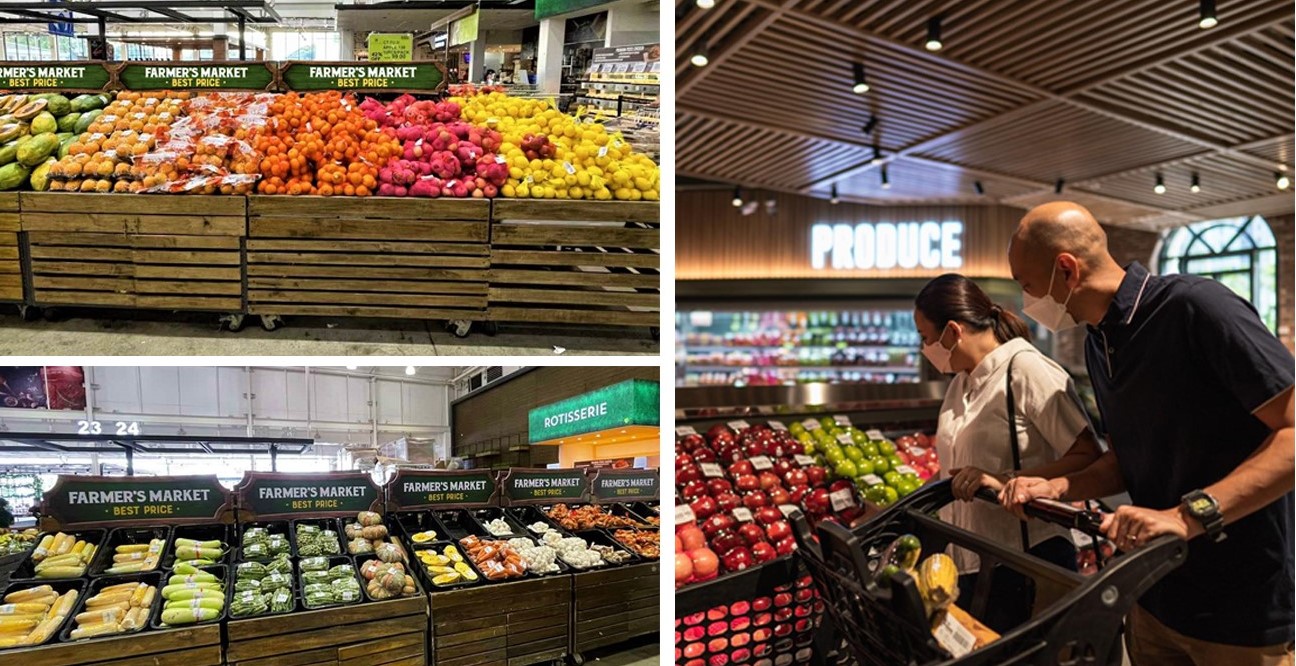
LANDERS Superstore supports local producers with its Farmer’s Market. Occupying a central space in all their stores’ Fresh section, the Farmer’s Market features an expansive selection of high-quality local produce sourced straight from farms across the country — from fresh strawberries and lettuce from the North to juicy pomelos and pineapples from the South. Since its introduction in the stores, the initiative has helped countless of Landers’ partner farms gain new consumers for their harvests, resulting in a steady, sustainable income especially at the height of the pandemic. Landers believes that protecting the stability and success of these farms will greatly contribute in securing food stability for everyone in the years to come. Landers members also benefit from this arrangement because they can enjoy their favorite fruits and vegetables at a more affordable price. Reducing the middlemen, traders, and retailers that the produce goes through allows the store to price them reasonably and give fair compensation to the farmers at the same time. During the pandemic, Landers also launched the “Share the Hope” campaign to help small business owners sustain their businesses by giving them a space where they can sell their products at Landers Superstore branches. Landers stores are open from 9 a.m. to 9 p.m. Shoppers can also buy fresh produce online at www.landers.ph. For more information about Landers Superstore’s exclusive offerings, visit http://landers.ph/.

Security Bank profit up 53%

SECURITY BANK/BW FILE PHOTO

SECURITY BANK Corp.’s net income rose by 53% to P10.6 billion in 2022, driven by growth in its core businesses.

In the fourth quarter alone, its net income was at P2 billion, the bank said in a disclosure to the local bourse on Wednesday

Return on shareholders’ equity rose to 8.42% from 5.57% a year ago, while return on assets improved to 1.37% from 1.02%.

The bank’s financial statement was not available as of press time.

“We are encouraged by the underlying growth of the economy as it reopens and rebuilds. Our strong performance for 2022 reflects the fact that Security Bank is fully engaged to support our retail, wholesale, and small- and medium-sized enterprise clients,” Security Bank President and Chief Executive Officer Sanjiv Vohra said in a statement.

“We will sustain that intensity for 2023 as we help clients navigate the current inflationary environment and geopolitical uncertainties,” Mr. Vohra said.

The bank’s net interest income rose 7% to P29.2 billion. It booked a net interest margin of 4.23%, down from 4.43% in the previous year.

Net loans grew 12% to P503 billion, driven by both wholesale loans and retail loans, which grew by 10% and 16%, respectively. Retail loans made up 24% of the total.

“The growth in retail loans was driven by home loans, which grew 21%, and credit cards, which rose 34%. On a sequential quarter-on-quarter basis, net loans increased by 4%, with retail loans up 5% and wholesale loans up 4%,” Security Bank said.

The bank’s gross nonperforming loan (NPL) ratio declined to 2.95% in 2022 from 3.94% in the previous year. Its NPL reserve cover ratio climbed to 101% from 93% previously.

It said it set aside P2.8 billion as provisions for credit and impairment losses last year, lower by 46% from the P5.3 billion recorded in 2021.

On the funding side, total deposits grew 16% to P606 billion. Time deposits went up 34%, while low-cost savings and demand deposits increased 10% year on year and account for 58% of total deposits.

Meanwhile, total revenues grew 8% to P39.6 billion.

Total non-interest income increased 11% to P10.4 billion.

Service charges, fees and commissions grew 17% to P5.3 billion amid an increase in earnings from credit card, deposit and capital markets fees.

Other non-interest income excluding securities trading gains and fee income rose 40% to P5.1 billion, driven mainly by foreign exchange income, recovery on charged-off assets and profits from assets sold.

Meanwhile, operating expenses were 8% higher, driven by investments in manpower and technology.

Cost-to-income ratio was at 57.8%.

Security Bank’s capital adequacy ratio was 16.6%, while its common equity Tier 1 ratio was at 16.1%.

Total assets increased to P842 billion last year, up 20% from a year earlier.

The bank has 316 branches and 596 automated teller machines in the country to date.

Security Bank shares dropped by 3.70% or P3.80 to close at P99 apiece on Wednesday. — L.M.J.C. Jocson

National Government fiscal performance

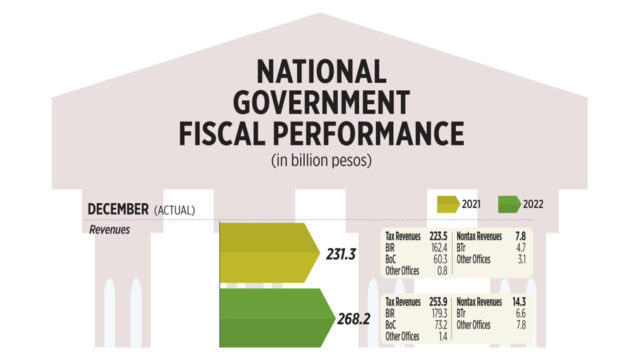
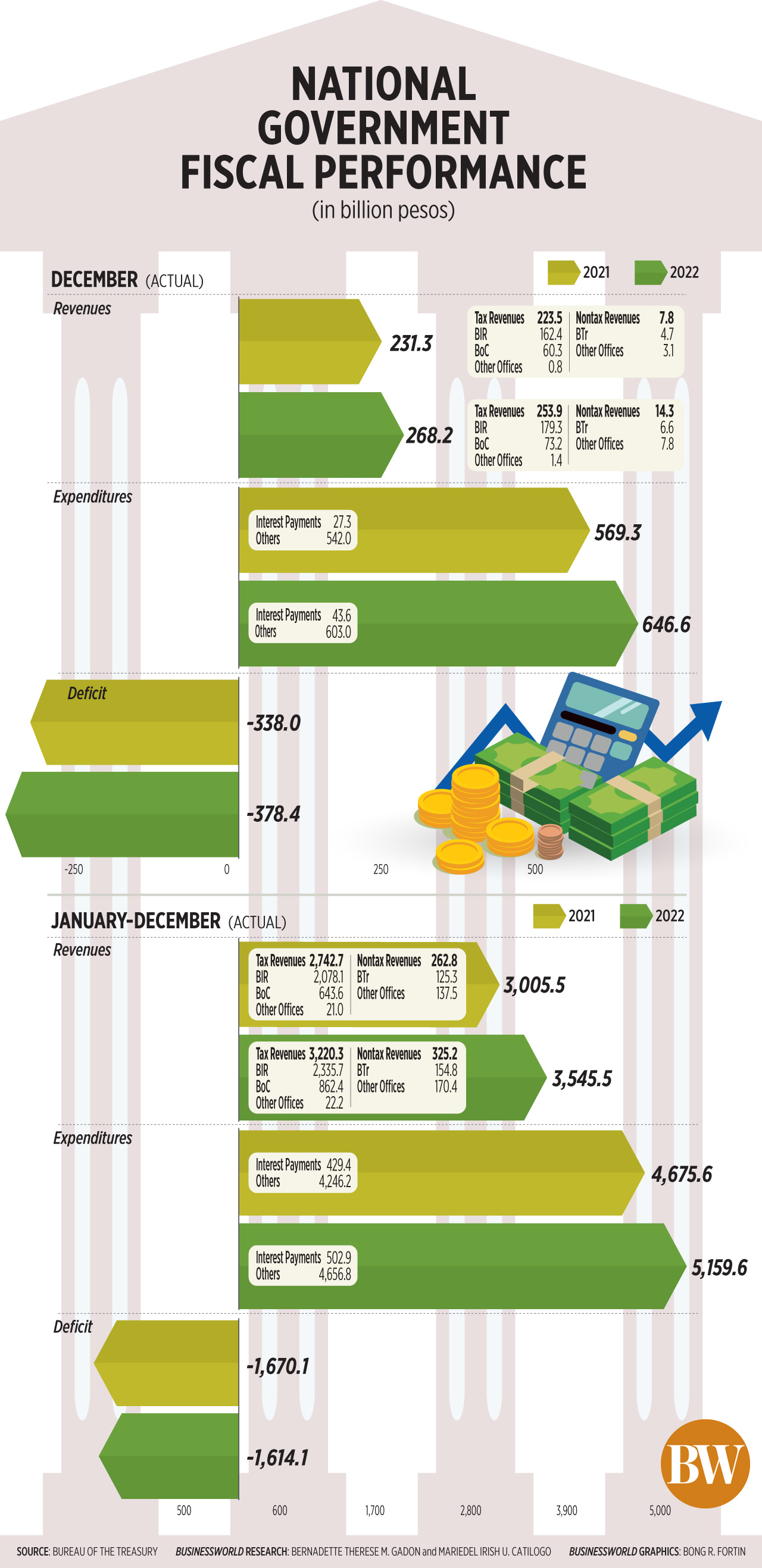
THE NATIONAL Government’s (NG) fiscal gap narrowed year on year to P1.61 trillion in 2022, but exceeded the budget deficit ceiling. Read the full story.

National Government fiscal performance

Ransomware attacks likely to rise this year, Kaspersky warns

EXTENDED detection and response (XDR) solutions can help protect users against cyberattacks, as attempts to steal data via ransomware are expected to increase this year, cybersecurity company Kaspersky said.

Cybersecurity experts, speaking at a Feb. 28 event held by Kaspersky, recommended XDR solutions for improved visibility, better protection, and faster response time for such attacks.

XDR solutions don’t only deal with known malware, but also the grey area of lesser-known and unknown threats, according to Victor Chu, Kaspersky’s head of systems engineering of Southeast Asia for enterprise cybersecurity.

He added that these solutions correlate data at all layers and across all components of a company’ information technology infrastructure while using analytics to detect and analyze possible threats.

Mr. Chu said ransomware attacks have become more sophisticated. Its current iteration, Ransomware 3.0, inflicts wider financial and reputational damage among companies by also alerting their stakeholders, their customers, and the press about the cyberattack to force these firms to pay the ransom.

“Triple extortion is what targeted attacks are all about,” he said.

He said attackers shame companies and then sell their data to cybercriminals if they do not pay up.

A 2022 study by Kaspersky found that almost all (82.1%) business executives in Southeast Asia opt to pay the ransom demanded by these cybercriminals. Almost half (47.8%) also said they paid the ransom as soon as possible in exchange for immediate access to their business data.

“We highlight ransomware because it’s becoming very entrepreneurial,” said Yeo Siang Tiong, Kaspersky’s general manager for Southeast Asia, noting that ransomware-as-a-service has become prevalent.

He cited as an example a ransomware-as-a-service provider called Lockbit, which employs targeted attacks against enterprises and other organizations. Among its known victims are an IT service provider, a private school in Malaysia, and a food manufacturer in Singapore.

“Malicious actors, like the Lockbit ransomware group, invest considerable time in up-front intelligence gathering to determine who they will target, how they will target them, and the optimal timing of their attack. Modern targeted ransomware groups are set to disrupt more enterprises in Southeast Asia if we are not equipped enough to nip them in the bud,” Mr. Tiong said.

“Lots of organizations are running from behind,” he added, but noted “there is always a solution for everyone.”

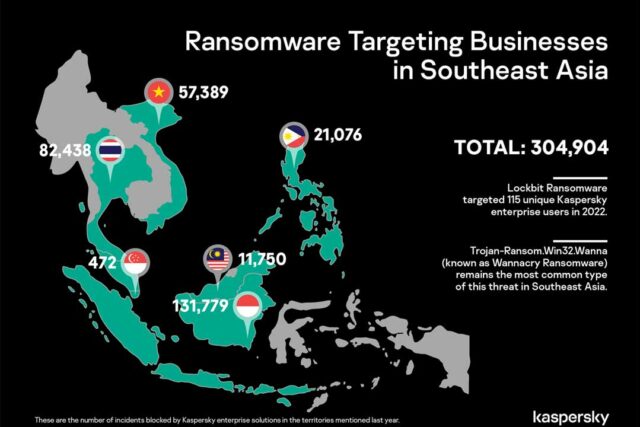
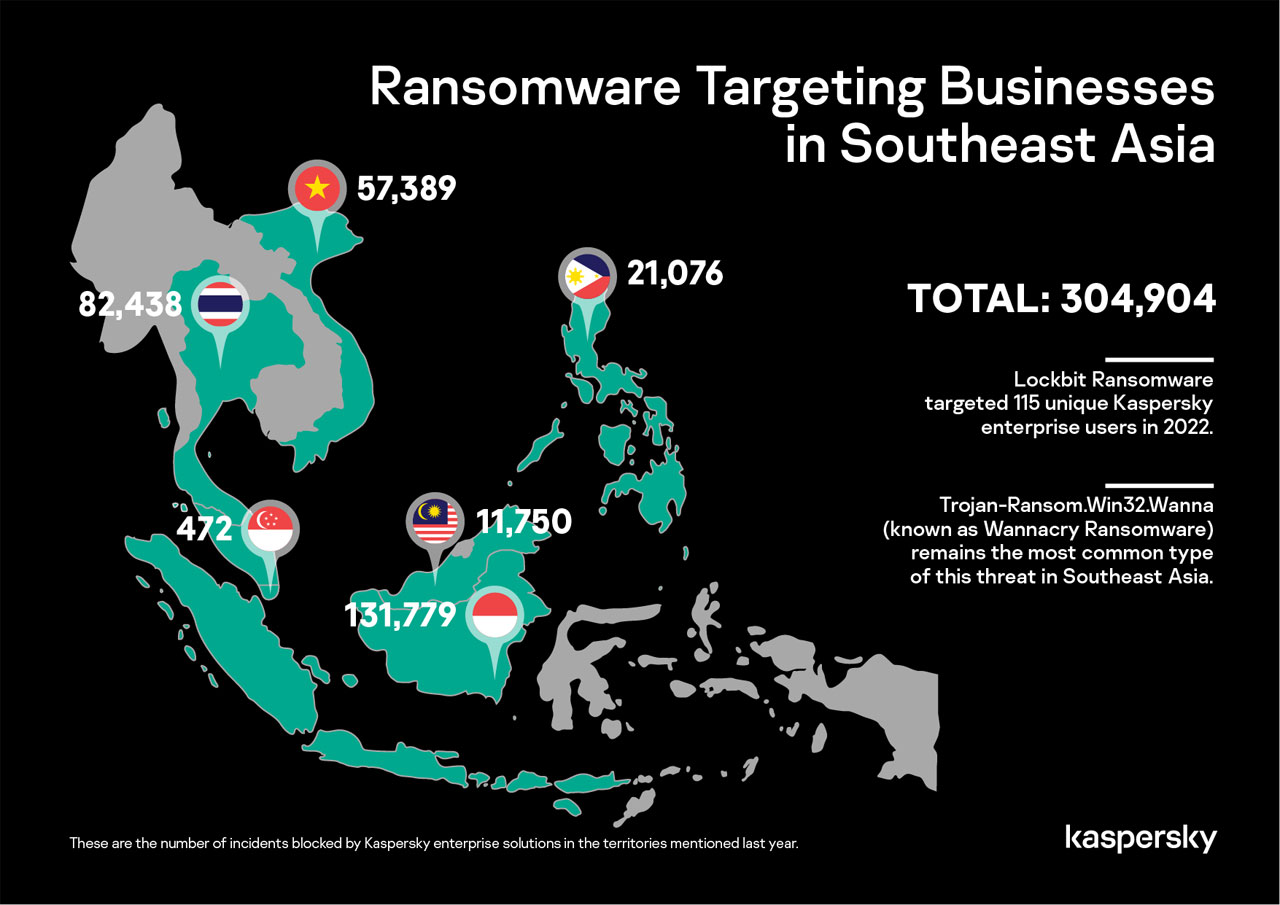
A total of 304,904 ransomware attacks targeting businesses in Southeast Asia in 2022 were blocked by Kaspersky’s business solutions, the company said.

Indonesia recorded the highest number of incidents foiled by Kaspersky’s business-to-business solutions (131,779), followed by Thailand (82,438), Vietnam (57,389), the Philippines (21,076), Malaysia (11,750), and Singapore (472). — Patricia B. Mirasol

The Michelin Guide has lost some of its star power

By Tyler Cowen, Bloomberg Opinion

The announced closing of Rene Redzepi’s Noma restaurant in Copenhagen attracted a lot of attention, but a broader trend is still playing itself out: Michelin-starred restaurants simply aren’t what they used to be, in my view, nor is the Michelin experience.

It started with the pandemic and the collapse of dining-related travel. Japanese customers in particular were important supporters of the Michelin experience, and until the last few months they hardly went abroad. A lot of the tourist business for Michelin-starred dining will undoubtedly come back — but the excitement is gone, and many people are comfortably ensconced in their new habits of home cooking, takeout, and quick meals on the road.

A second trend working against Michelin is the continuing rise of interest in Asian food in the West. There are plenty of excellent, Michelin-starred restaurants in Japan and Singapore, but in Europe and the US Asian restaurants exist largely outside of the network of Michelin rankings. If you want to explore regional cuisine from India or China, for example, you can put your Michelin guide aside.

A Michelin exploration, perhaps during a trip to Europe, used to be a way to find culinary novelty. I had my all-time favorite meal at the Tokyo Pierre Gagnaire (it has only two stars), and have been to more than 120 Michelin-starred restaurants over the years. Now I need not venture beyond the Washington suburbs to sample new dishes from the Chennai region of India or Wuhan, China.

And then there is the spread of the Michelin brand. There are now Michelin guides for many US cities, which has caused the brand to lose some exclusivity. Michelin has awarded stars to 24 restaurants in the Washington area, for instance. I like many of these places, but I suspect Michelin is grading on a curve.

Social media are another part of the market evolution. Instagramming your meal is a popular pastime, and it suits some restaurants better than others. A lot of people, understandably, are reluctant to pull out their camera phones in a haute Parisian establishment, whereas they will gladly do so in a creative and more casual spot for Indian nouvelle cuisine in London or Singapore. El Bulli (now closed) and Noma have been amazingly good at attracting publicity and inducing pilgrimages, but apart from the very top of the market, Michelin-starred restaurants are operating at a publicity disadvantage.

Another factor working against Michelin is growing time pressure — especially among its well-to-do customer base. Many Michelin-starred dining experiences are slow, and the fixed-price menus often are designed to take up the entire evening, especially if paired with wine. But people are increasingly busy, and the smart phone’s pull of texts and posts and tweets is only getting stronger. And maybe, because of the pandemic, we all want to stretch our legs more often. Speaking for myself, I am much less interested in the three-hour meal than I used to be.

The decline of alcohol consumption in many parts of the world may also be bad for the Michelin experience. Marijuana use, by contrast, is up, and that of course encourages snacking at home.

Finally, there are the restaurateurs themselves: Running a top-level Michelin-starred restaurant may not, in the long run, be the best business model for a celebrity chef. The hours are grueling, and even minor slips are penalized by the critics. Once you are famous, why not fly around the world, accepting commissions from the very wealthy to cook at their private events? You can travel, work less, and avoid the glare of media attention. This is often the more lucrative path, and it helps you avoid burnout. You can also sell food products online, as the Noma group is planning on doing.

If Michelin-starred dining is losing some of its allure, it’s not all bad. The Michelin system is based on a fairly strict hierarchy and on the notion that the critic can compare restaurants across a relatively small number of dimensions. It inhibits innovation as much as it supports it, as chefs realize they might be penalized if they stray too far outside the box.

Michelin stars aren’t going away. But they are now just another part of the culinary and media landscape. These days it’s easy to find a food critic or website whose tastes match yours fairly closely. That website may even be called “Michelin,” and there’s nothing wrong with that — just don’t expect everyone else to follow suit. — Bloomberg

Pilipinas Shell secures P9-B loan 

BW FILE PHOTO

PILIPINAS Shell Petroleum Corp. has secured a P9-billion loan from two local banks that it will use to reduce its exposure to short-term market volatilities, the listed company announced on Wednesday.

In its regulatory filing, Pilipinas Shell said the loan has a five-year term and is evenly split between Bank of the Philippines Islands (BPI) and Metropolitan Bank & Trust Co.

Pilipinas Shell said that with the loan, “it benefits from the low interest rate for its cash requirements.” Its execution of another loan with BPI also renews an existing five-year loan with the bank maturing on March 8.

Pilipinas Shell is planning to grow its local presence by adding 40 to 60 service stations per year until 2025. As of mid-2022, the company has 1,100 service stations in the Philippines.

Aside from its target expansion, Pilipinas Shell also intends to develop its fifth medium-range import terminal this year.

The company has set its 2021-2025 strategy, which includes sustainability goals such as the promotion of clean and renewable energy.

In January, Pilipinas Shell signed a tripartite memorandum of agreement with the Department of Energy and Shell Energy Philippines, Inc. to conduct a study on electric vehicle charging stations powered by renewables.

Pilipinas Shell is primarily engaged in the refining, importation, and marketing of petroleum products.

At the local bourse on Wednesday, shares in the company closed 0.12% lower to P16.98 apiece. — Ashley Erika O. Jose

ADVERTISEMENT
ADVERTISEMENT