Home Blog Page 5180

SpaceX rocket carries multinational crew toward space station

REUTERS

 – Two US astronauts, a Russian cosmonaut and a United Arab Emirates astronaut were safely on their way to the International Space Station (ISS) on Thursday, as their SpaceX ship neared a planned rendezvous with the orbiting laboratory, NASA said.

The autonomously flying SpaceX Crew Dragon capsule was due to reach the space station and dock to the platform shortly after 1:15 a.m. EST (0615 GMT) on Friday, nearly 25 hours after launching from NASA’s Kennedy Space Center in Cape Canaveral, Florida.

Control over the spacecraft will be handed off from SpaceX mission control near Los Angeles to NASA’s Johnson Space Center in Houston once the Crew Dragon is ready to dock with the ISS.

The four-man team is expected to spend six months aboard the ISS conducting more than 200 experiments and technology demonstrations, ranging from research on human cell growth in space to controlling combustible materials in microgravity.

Some of the research will help pave the way for future long-duration human expeditions to the Moon and beyond under NASA’s Artemis program, its successor to Apollo, the US space agency said.

The mission, designated Crew 6, is the sixth long-duration ISS team SpaceX has flown for NASA since the private rocket venture founded by billionaire Elon Musk began sending American astronauts to orbit in May 2020. Musk is CEO of electric car maker Tesla and social media platform Twitter.


SUBMARINER AND ENGINEERS

The latest crew was led by Stephen Bowen, 59, a onetime U.S. Navy submarine officer who has logged more than 40 days in orbit as a veteran of three Space Shuttle flights and seven spacewalks. Fellow NASA astronaut Warren “Woody” Hoburg, 37, an electrical engineer, computer science expert and commercial aviator designated, was making his first spaceflight.

The Crew 6 mission also was notable for its inclusion of UAE astronaut Sultan Alneyadi, 41, only the second person from his country to fly to space and the first to launch from U.S. soil as part of a long-duration space station team.

Rounding out the four-man Crew 6 was Russian cosmonaut Andrey Fedyaev, 42, who like Alneyadi is an engineer and spaceflight rookie designated as a mission specialist for the team.

Fedyaev is the second cosmonaut to fly aboard an American spacecraft under a renewed ride-sharing deal signed in July by NASA and the Russian space agency Roscosmos, despite heightened tensions between Washington and Moscow over Russia’s invasion of Ukraine.

The Crew 6 team will be welcomed aboard the space station by seven current ISS occupants – three NASA crew members, including commander Nicole Aunapu Mann, the first Native American woman to fly to space, along with three Russians and a Japanese astronaut.

Those seven are expected to end their mission and depart the space station this month. Four will return in the SpaceX Dragon they rode to orbit in October, and three others will ride home in a Russian Soyuz spacecraft flown empty to the ISS last week to replace one that sprang a coolant leak while docked to the station in December.

The Crew 6 launch came 72 hours after an initial liftoff attempt was scrubbed in the final minutes of countdown early on Monday due to an irregular flow of engine-ignition fluid. NASA said the system worked perfectly after a clogged filter was replaced and the lines purged.

The launch ultimately unfolded with hardly a hiccup. But a faulty sensor was also detected on one of 36 switches connected to a dozen grappling hooks used to latch the nose of the crew capsule to the ISS, but there is enough redundancy in that system that no problems with docking or closing the nose cone are anticipated, NASA and SpaceX officials said.

The launch and rendezvous fell exactly on the four-year anniversary of SpaceX‘s first uncrewed “Demo-1” test flight of a Dragon spacecraft to the ISS and back in 2019. – Reuters

Several countries ban Brazilian beef as mad-cow probe goes on

STOCK PHOTO | Image by PDPhotos from Pixabay

 – The Brazilian Agriculture Ministry said on Thursday that Thailand, Iran and Jordan have temporarily suspended imports of beef from Brazil while authorities investigate a case of madcow disease in an animal from Para State, according to a statement sent to Reuters.

The ministry also confirmed that Russia has halted imports from Para state after the discovery of a mad cow disease case there.

Thailand, Iran and Jordan “have temporarily suspended beef imports from all over Brazil and Russia has introduced an embargo on beef exported from Para,” the ministry said. In addition, Brazil has suspended beef exports to China to fulfill terms of a trade agreement.

There is only one meatpacking plant in Para authorized to sell beef products to Russia, it added.

Brazil is investigating a case of bovine spongiform encephalopathy (BSE) on a nine-year old male animal from Para state. Discovery of the case, communicated on Feb. 20, triggered a self-imposed ban on Brazilian beef sales to China.

The animal was destroyed, and tests are pending to determine whether it developed the classic form of the disease or was an atypical case, which can occur spontaneously in all cattle populations and does not depend on ingestion of prion-contaminated feed.

Classic BSE is considered more serious because it involves contamination by the prion protein, and could trigger wide trade bans.

Russia’s suspension had been previously reported by local newspaper Valor Economicowhich said the ban was enforced on Wednesday and covers live animals, fresh and processed meat and by-products.

Andrey Yurkov, Russia’s agricultural attaché in Brazil, declined to say whether the Russian ban may be lifted if the Brazilian government confirms the case is atypical, according to the Valor report.

Brazilian beef trade groups Abiec and Abrafrigo did not immediately respond to requests for comment. – Reuters

Two firms to build data centers in Luzon after talk with Marcos

Philippine President Ferdinand R. Marcos, Jr. has welcomed plans to build two hyperscale data centers in Luzon.

The proposed establishment of the two data centers in Tarlac province and New Clark City by ENDEC Development Corp. and Diode Ventures, LLC was “a result” of Mr. Marcos’ roundtable discussion with businessmen in New York in September last year, the Presidential Communications Office said in a press release on Thursday.

“This is important for us. We’re left behind when it comes to digitalization. That’s why the push for data centers, fiber optics and satellite is one of our priorities,” Mr. Marcos told ENDECGROUP, Inc. Managing Director William Johnson in a meeting at the presidential palace.

The president said the projects would enable the Philippines to catch up with other countries in terms of digitalization.

According to the Palace, ENDEC committed to starting the project in the first quarter of 2024.

The company will work with a local renewable energy firm for the project’s electricity requirements, the Palace said.

The company vowed to use 100% renewable energy sourced from solar, wind and hydro to sustain the projected 700 MW monthly power consumption of its data centers.

“According to ENDEC, it would secure separate energy sources to ensure that the country’s power grids will not be affected by its operation,” the PCO said.

Hyperscale data centers are massive business-critical facilities built by companies with vast data processing and storage needs.

In September, ENDECGROUP, Inc. and Diode Ventures, LLC joined a roundtable meeting on digital infrastructure during Mr. Marcos’ visit to New York.

ENDEC Development Corp., a subsidiary of ENDECGROUP, Inc., is the main developer of the projects, the Palace said.

It added that Diode Ventures, LLC, a subsidiary of the global company Black & Veatch (BV), is the development partner of ENDEC Development Corp. — Kyle Aristophere T. Atienza

PHL slumps in economic freedom index

PHILIPPINE STAR/EDD GUMBAN
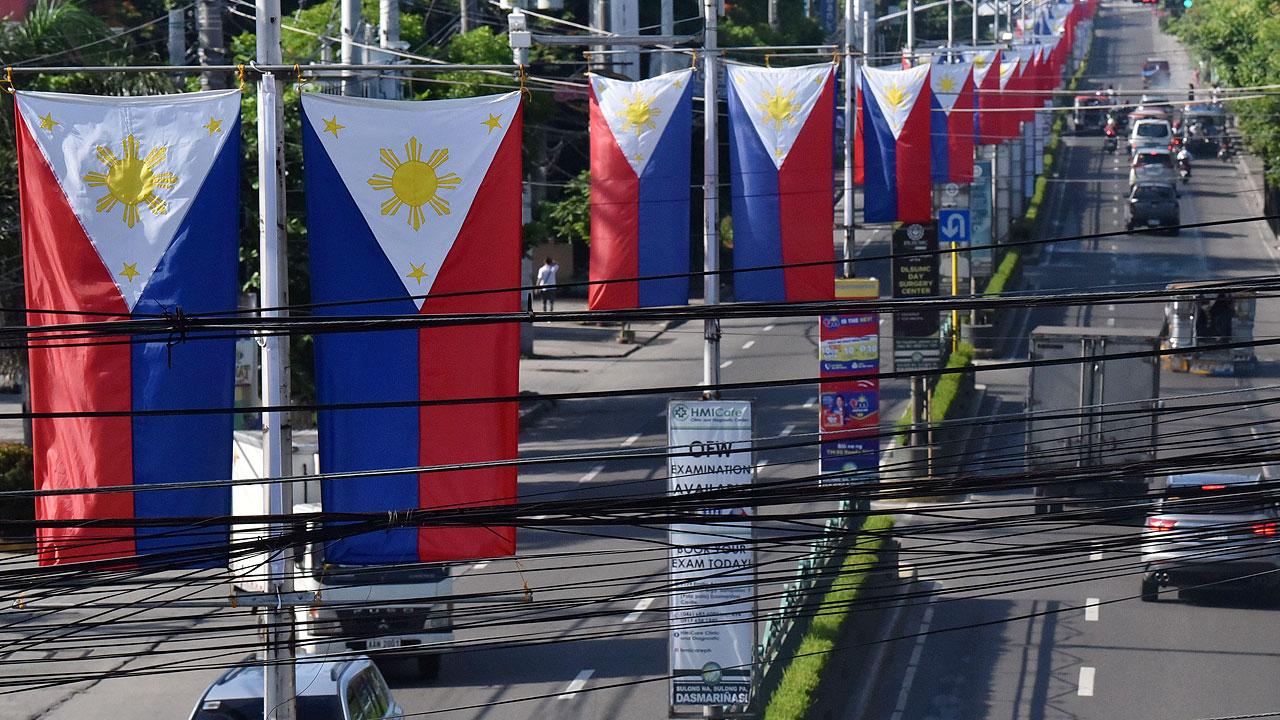
The Philippine economy slipped nine spots to 89th out of 176 countries in the economic freedom index by The Heritage Foundation. — PHILIPPINE STAR/EDD GUMBAN

By Revin Mikhael D. Ochave, Reporter

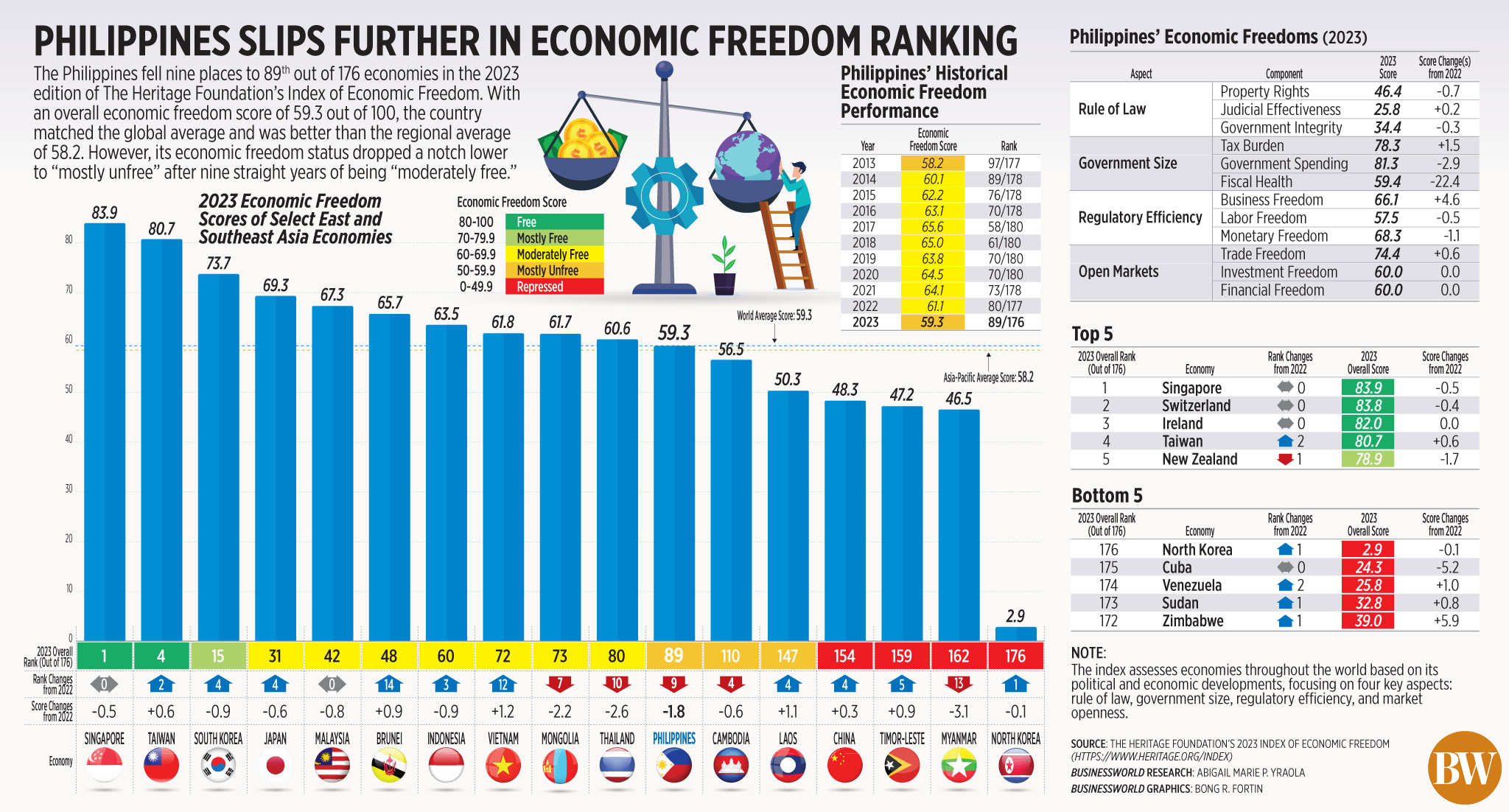
THE PHILIPPINE ECONOMY is now considered “mostly unfree” as it dropped nine spots in the latest economic freedom ranking by US-based think tank The Heritage Foundation.

In the 2023 Index of Economic Freedom report, the Philippines slumped to 89th out of 176 countries with a score of 59.3, 1.8 points lower than a year ago. Its economic freedom score is approximately the world average.

Last year, the Philippines ranked 80th out of 177 countries with a score of 61.1.

Philippines slips further in economic freedom ranking

The country’s latest ranking is now equivalent to an economic freedom status of “mostly unfree,” after being “moderately free” for nine straight years.   

The Philippines’ economic freedom ranking has declined for a third straight year, after placing 73rd in 2021 and 80th in 2022. It stood at 70th place in 2019 and 2020.   

Singapore was the world’s freest economy, followed by Switzerland, Ireland, Taiwan, and New Zealand.   

Among 39 Asia-Pacific countries, the Philippines ranked 18th, lagging behind Malaysia (42th), Indonesia (60th), Vietnam (72nd) and Thailand (80th).

The Heritage Foundation said the Philippine government pushed for legislative reforms to improve the entrepreneurial environment and generate more jobs.

“Overall progress has been gradual. There are institutional challenges that need to be overcome. Despite some progress, corruption continues to undermine long-term economic development,” it said.

The index analyzes economies using four key aspects: rule of law, government size, regulatory efficiency, and market openness.

“The overall rule of law is weak in the Philippines. The country’s property rights score is below the world average; its judicial effectiveness score is below the world average; and its government integrity score is below the world average,” the Heritage Foundation said.

Under the regulatory efficiency, the Philippines improved its score for business freedom but saw a decline in scores for labor and monetary freedom.

The Heritage Foundation noted that the Philippine business regulatory environment has generally been streamlined.

“The time and cost involved in dealing with licensing requirements have been reduced. The labor market remains structurally rigid, but regulations are not particularly burdensome,” it added.

For market openness, the Philippines logged a higher score for trade freedom, while scores for investment and financial freedom were unchanged.

“The financial sector is dominated by banking and relatively stable, but capital markets are underdeveloped,” The Heritage Foundation said.

Sought for comment, University of Asia and the Pacific (UA&P) Senior Economist Cid L. Terosa said the country’s economic freedom ranking could be improved by addressing the rule of law concerns.

“The Philippines is woefully below the world average. Although judicial effectiveness has improved, property rights and government integrity fared poorly. This means that a clearly specified and well-enforced structure of property rights continues to be a challenge for the country, and that wavering public trust in government continues to erode the legitimacy and credibility of the government,” Mr. Terosa told BusinessWorld in an e-mail interview.

The government’s efforts to pursue digitalization will also help improve transparency and reduce corruption, he added.

Mr. Terosa said the Philippines should improve its scores in regulatory efficiency and open markets after the passage of key economic reforms such as the amendments to the Foreign Investment Act, Retail Trade Liberalization Act, Public Service Act, and the Corporate Recovery and Tax Incentives for Enterprises Act.

He said participation in the Regional Comprehensive Economic Partnership (RCEP) trade deal will improve the country’s economic freedom ranking as it is “an indication of the government’s desire to strengthen and facilitate trade and investment, research and development, technology transfer, and public-private partnerships.”

Touted as the world’s largest free trade agreement, the RCEP is set to take effect for the Philippines around May. It includes Australia, China, Japan, South Korea, New Zealand and members of the Association of Southeast Asian Nations.

Ebb Hinchliffe, American Chamber of Commerce of the Philippines (AmCham) executive director, said that the country’s ranking was not a surprise due to economic challenges.   

“This news is saddening but not surprising since our economy has been badly affected by the coronavirus disease 2019 (COVID-19) pandemic, high foreign debt and regional disturbances. However, the chamber remains optimistic about the future of the Philippines,” Mr. Hinchliffe said in a Viber message. 

Mr. Hinchliffe said digitalization of government processes would address corruption and mitigate bribery.

“We recognize that corruption seems to be a mainstay in the Philippines — but so is the world, and it can surely be discouraging for potential investors. AmCham firmly supports measures that would strengthen accountability, transparency, and promote checks and balances in all public offices,” he said.

The passage of laws on ease of doing business, freedom of information and the creation of the Anti-Red Tape Authority “signifies that the government is serious about eliminating corruption,” Mr. Hinchliffe said.

Calixto V. Chikiamco, Foundation for Economic Freedom president, told BusinessWorld in a Viber message that the Philippines’ economic freedom ranking would improve if it amends some provisions of the 1987 Constitution.   

“Remove the Filipino First and Filipino Only provisions in the (1987) Constitution because it will improve fair competition and enhance choice,” Mr. Chikiamco said.   

On Feb. 28, a bill containing the procedures for Charter change via a hybrid constitutional convention passed on second reading at the House of Representatives.   

Resilient consumption seen to drive growth

Boxes of sweet rice cake are displayed at a store in Binondo, Manila, Jan. 17. — PHILIPPINE STAR/WALTER BOLLOZOS

THE PHILIPPINE ECONOMY is expected to expand by 5.8% this year as consumer spending remains resilient, ANZ Research said.

In a note on Thursday, ANZ Research said it raised its gross domestic product (GDP) forecast for 2023 “because the strength in private consumption will be partially offset by weaker fiscal spending and global demand.”

ANZ Research’s 5.8% GDP growth projection is higher than its previous estimate of 5%, but still below the government’s 6-7% full-year target.

“The improved outlook for private consumption growth raises the bar for Philippine growth in 2023, considering that it accounts for around 73% of the overall GDP,” it said.

Private consumption jumped by 8.3% year on year in 2022, helping fuel GDP growth of 7.6%.

In the fourth quarter of 2022, domestic consumption rose by 7%, slower than 8% in the third quarter and 7.5% a year earlier. While private consumption growth eased in the last three quarters, ANZ Research said this was still faster than the average run-rate of 6.2% between 2016 and 2019.

“Our analysis shows that private consumption is still hovering below its pre-pandemic trend, with further room for expansion. The underlying drivers of private consumption can likely delay the impact of rising price pressures and even aggressive monetary policy tightening by a few quarters,” it said.

Inflation quickened to a 14-year high of 8.7% in January, from 8.1% in December. The Bangko Sentral ng Pilipinas (BSP) sees inflation averaging 6.1% this year, faster than the 5.8% average in 2022.

Since May 2022, the BSP has raised borrowing costs by 400 basis points (bps), bringing the benchmark rate to a near 16-year high of 6%.

However, higher economic growth may reinforce risks to inflation, prompting ANZ Research to hike its forecast to 5.9% this year from 5.1% previously.

“A stronger growth-inflation mix, however, could prolong the monetary policy tightening cycle more than currently anticipated,” it said.

ANZ Research said it expects two 25-bp hikes at the BSP’s next two meetings in March and May.

“However, any surprise in the inflation data for February could prompt a higher hike of 50 bps by the central bank at their next policy meeting.”

Earlier this week, the BSP said inflation likely settled within the 8.5% to 9.3% range in February.

If realized, February would mark the 11th straight month that inflation would exceed the BSP’s 2-4% target range. The upper end of the forecast or 9.3% would be the fastest pace recorded in more than 14 years or since the 9.7% recorded in October 2008.

The Philippine Statistics Authority is scheduled to release the February inflation data on March 7, while the Monetary Board is set to review policy on March 23.

SLOWDOWN TO TAKE TIME
ANZ Research said some consumption indicators showed consumer spending has already weakened, but it expects the actual slowdown to take some time.

For instance, the BSP consumer expectations survey showed the consumer confidence index slipped to 21.7 in the fourth quarter of 2022 from 33.4 in the previous quarter. The survey also showed buying intentions have dropped to multi-year lows. 

“However, it may take a few more quarters before such intentions are actualized, in our view. As long as households’ financial conditions remain healthy, monetary policy transmission will likely be less effective than desired, despite the BSP’s aggressive rate hikes,” ANZ Research said.

It also noted that consumer loan growth remained stable, despite rising interest rates.

“Generous wage hikes in 2022 more than offset the increase in inflation, boosting purchasing power… The increase in household income has enabled consumers to replenish savings without cutting back on consumption,” it said. 

Central bank data showed outstanding loans by big banks rose by 10.4% year on year to P10.71 trillion in January. However, the pace of growth was the slowest in nine months.

Household debt also remained manageable despite strong demand for bank loans.

“According to our estimates, households’ debt-to-GDP ratio likely edged up to 12.1% in the fourth quarter of 2022, from 10.1% in the third quarter. This figure is among the lowest compared with other economies in the region and does not appear to be a source of immediate concern for consumers,” ANZ Research said. 

“In short, Filipino household finances are sufficiently healthy for a step-up in consumption this year.” — Keisha B. Ta-asan

BSP sets June 30 deadline for full adoption of QR Ph

A vendor accepts payment from a customer using Maya QR at a public market in Tagbilaran City, Bohol. The Bangko Sentral ng Pilipinas (BSP) launched the Paleng-QR Ph initiative to help public market vendors accept cashless payments using the QR Ph, the country’s standard for QR payments. — COMPANY HANDOUT

THE BANGKO SENTRAL ng Pilipinas (BSP) gave banks and financial institutions until June 30 to fully adopt the national quick response (QR) code standard, also known as QR Ph, in a bid to accelerate digitalization.  

In a memorandum signed by BSP Deputy Governor Mamerto E. Tangonan on Feb. 23, the central bank said all BSP-supervised financial institutions (BSFIs) and payment service providers (PSP) are required to fully adopt QR Ph.

“All PSPs deploying non-QR Ph codes, which is also referred to as proprietary QR codes, for payment services shall be allowed to transition to the QR Ph until 30 June 2023,” the BSP said.

“Beginning 01 July 2023, all proprietary QR codes for payments services shall be disabled and shall no longer be available to the public,” it added.   

QR Ph is the country’s QR code standard, which gives customers of banks and nonbank electronic money issuers a quick and secure way to pay, as well as transfer and receive funds.

The BSP said payment service providers on the receiving end should disable any transactions via non-QR Ph codes. Appropriate notification should be used to inform payors of an unsuccessful transfer. 

Meanwhile, internet platforms and mobile apps of PSPs will no longer support scanning of non-QR Ph codes. 

The BSP said this in line with its mandate to ensure safe, efficient, and reliable operations of payment systems in the country, pursuant to Republic Act (RA) No. 11127 or the National Payment Systems Act.   

In 2019, the BSP and the Philippine Payments Management, Inc. (PPMI) launched the QR Ph, which is used for digital person-to-person (P2P) transfers and person-to-merchant (P2M) payments through the InstaPay rail.

“All PSPs deploying QR Ph-enabled payment services to merchants or businesses shall require such merchants or businesses to display and utilize the QR Ph codes in their payment acceptance,” the BSP said.

PSPs were also required to provide product training for their client merchants, specifically the features and benefits of QR Ph. This is to ensure that store cashiers and managers will be able to guide customers on the use of the national standard code and enable clients to maximize its benefits, the BSP said.   

All participating PSPs in the InstaPay rail were also required to submit a notarized certification of deployment of QR-enabled payment services. They are required to submit the certification to the BSP not later than 30 days from the date of the memorandum.   

The BSP said it may take regulatory action to ensure compliance of BSFIs and PSPs. If any certificates submitted to the BSP were found untrue, the firm concerned may face sanctions.

As of end-January, there were 36 and 18 financial institutions participating in the P2P and P2M facilities, respectively. 

Latest data from the central bank showed the value of transactions done through InstaPay grew by 37.3% year on year to P347.96 billion as of end-January.

In 2022, the volume of InstaPay transactions jumped by 27.7% to 51.55 million from 40.37 million in 2022.

InstaPay is a real-time, low-value electronic fund transfer facility for transactions up to P50,000 and is most useful for remittances and e-commerce. It is one of the automated clearing houses launched in December 2015 under the central bank’s National Retail Payment System, together with PESONet.   

The central bank has been encouraging the use of QR technology as a convenient and safe payment solution, as it aims to turn half of the volume and value of payments into digital form this year.

The BSP launched a Paleng-QR program in key cities around the country to help public market vendors accept cashless payments using the QR Ph. — Keisha B. Ta-asan

Bloomberry turns around with P5-billion income

BW FILE PHOTO

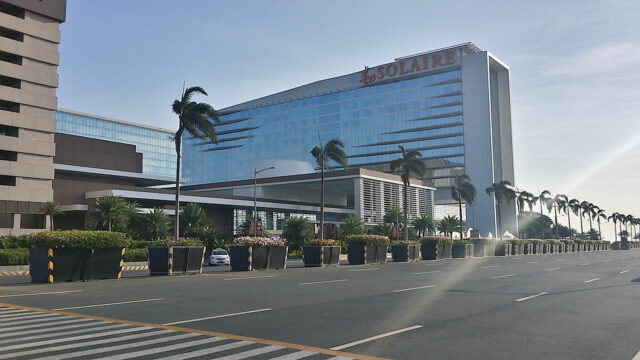
SOLAIRE operator Bloomberry Resorts Corp. posted an attributable net income of P5.17 billion for 2022, a reversal of the past two year’s losses, as its gaming business bounced back strongly.

“2022 was a positive year of recovery for Bloomberry as Solaire benefited from a strong rebound in local demand across all business segments,” Enrique K. Razon, Jr., Bloomberry chairman and chief executive officer, said in a press release on Thursday.

In 2021 and 2020, the company suffered a net loss of P4.22 billion and P8.31 billion, respectively.

Based on the casino-resort operator’s financial report, its topline last year reached P38.81 billion, an increase of 76.5% from P21.97 billion in the previous year, mostly contributed by its gaming business.

“Our gaming revenues hit 84% of pre-pandemic levels, propelled by the domestic-focused mass table games and EGM (electronic gaming machines) segments where revenues have already reached 100% of 2019 pre-pandemic levels,” Mr. Razon said.

Bloomberry’s gaming revenue increased by 72% to P32.21 billion from P18.73 billion in the previous year. Its gross gaming revenues (GGR) increased by 80.1% to P50.11 billion from P27.63 billion previously.

“Solaire’s VIP rolling chip volume, mass table drop, and slot coin-in were P481.7 billion, P38 billion, and P307.9 billion, representing year-over-year increases of 96%, 54%, and 91%, respectively,” the company said.

Meanwhile, revenues for non-gaming businesses — hotel, food and beverages — contributed P3.26 billion, while retail and other businesses made up P3.34 billion.

Its consolidated operating costs and expenses were also higher by 32.95% to P28.12 billion from the P21.15 billion of the previous year.

The company, reported consolidated earnings before, interest, tax depreciation, and amortization (EBITDA) of P14.31 billion, or more than double of the previous year’s P5.21 billion.

Additionally, the company’s Korean business trimmed its net loss to P544 million from P1.32 billion in 2021 when it was closed.

For the fourth quarter of 2022, the company earned P1.1 billion, reversing the previous year’s P1.3-billion net loss. Its consolidated year-on-year net revenue increased by 75% to P11.6 billion.

GGR for Solaire grew by 84% to P14.7 billion, contributed by VIP tables at P4.7 billion, mass tables at P4.4 billion, and EGM GGR at P5.6 billion.

The company’s EBITDA grew to P3.9 billion from P1.9 billion in the previous year.

“While we celebrate our success in 2022, we keep our eyes on the future as we ramp up construction activity at Solaire Resort North in Quezon City. We are excited to launch this new offering by the first quarter of 2024,” Mr. Razon said.

On the stock market on Monday, shares in Bloomberry declined by 0.32% or P0.03 to P9.40 apiece. — Adrian H. Halili

MPTC unit taps Chinese company for CAVITEX C5 link

A UNIT of Metro Pacific Tollways Corp. (MPTC) signed a deal with a China-based company to start constructing the second phase of the Manila-Cavite Expressway (CAVITEX) C5 Link Segment 2.

In a press release, MPTC said that its subsidiary Cavitex Infrastructure Corp., the concession holder for CAVITEX, inked a partnership with China Road and Bridge Corp. for the project which they aim to start within the first quarter.

“This is something we cannot do alone, hence our search for a contractor that would be up for the task — delivering world-class quality infrastructure for our motorists within our timeline,” Cavitex Infrastructure President and General Manager Raul L. Ignacio said.

C5 Link Segment 2 is a 1.9-kilometer (km), two-by-three expressway that will connect CAVITEX Coastal Road from Parañaque Toll Plaza to Sucat through the R-1 interchange.

The segment is expected to reduce the travel time to Sucat Road from CAVITEX R-1 by 10 minutes.

“The CAVITEX C5 Link is a vital segment of the Manila-Cavite Toll Expressway Project, so far, we managed to open 3.8-km  segments 3A1 and 3A2 to the motoring public, serving more than 16,000 vehicles daily,” Mr. Ignacio said.

CAVITEX C5 Link Segment 2 is targeted to be opened to the public before the year ends.

Meanwhile, segment 3-B of the C5 Link, from Sucat to E. Rodriguez, is set to begin its construction by the third quarter of 2023.

In its entirety, the C5 Link project encompasses a 7.7-km, two-by-three-lane expressway that will connect CAVITEX R2 to C5 Road in Taguig.

The project is expected to serve 40,000 vehicles per day, reduce travel time to Makati and Taguig from Parañaque City, Las Piñas City and Cavite province by 45 minutes, and decongest traffic in the metro.

MPTC is the tollways unit of Metro Pacific Investments Corp., which is one of three key Philippine units of Hong Kong-based First Pacific Co. Ltd., the others being Philex Mining Corp. and PLDT Inc.

Hastings Holdings, Inc., a unit of PLDT Beneficial Trust Fund subsidiary MediaQuest Holdings, Inc., has a majority stake in BusinessWorld through the Philippine Star Group, which it controls. — Justine Irish D. Tabile

Earnings, tamed prices seen to lift stocks in 2023

BW FILE PHOTO

CORPORATE earnings growth and expectations that inflation will ease after hitting its peak in the first quarter will drive the Philippine stock market’s growth in 2023, analysts said.

“Overall, we’re bullish for 2023 in terms of valuation for the PSEi (Philippine Stock Exchange index). I think there are a lot of aspects to sway investors to start buying. We’re looking at earnings growth driven by real estate, conglomerates, and financials, so practically the majority of the sectors will perform,” Michael Gerard D. Enriquez, president and chief investment officer of Sun Life Investment Management and Trust Corp., said during the BusinessWorld Insights forum on Tuesday.

Mr. Enriquez said that the stock market’s attractiveness to investors will hinge on key economic data.

If inflation starts to peak, then the Bangko Sentral ng Pilipinas’ (BSP) policy rate is likely nearing its terminal value soon, he said, adding that he is expecting a terminal rate near 6.25% or a hike of another 50 basis points (bps).

“That would bring the PSEi to be attractive again when rates start to normalize,” Mr. Enriquez said.

In an earlier statement, the BSP said that inflation likely settled within the 8.5% to 9.3% range in February. If realized, this would mark the 11th consecutive month that inflation would exceed the BSP’s target range.

Mr. Enriquez described inflation as a game changer for the equities market as it is a leading indicator that investors are looking out for.

“Probably in March, we will start to see a decline in inflation towards mid of this year. Probably we’ll see the BSP starting to be more dovish on their rhetoric. That is something where the market will move higher,” he said.

The central bank hiked borrowing costs by 50 bps on Feb. 16, bringing the key policy rate to its near 16-year high of 6%. After delivering a total of 400 bps since May 2022, monetary authorities are set to review the policy rate on March 23.

“If we help improve local investor participation, then disruptions created by the global market will be addressed,” Mr. Enriquez said.

Mr. Enriquez placed the PSEi’s end-2023 base target at 7,843.77, while in a bull market, it could end the year at 10,257.75. The benchmark index declined by 43.14 points or 0.65% to close at 6,556.20 on Tuesday.

Meanwhile, financials and power are among the sectors that are seen to lead this year’s growth.

“I think the most popular stocks right now are the banks,” COL Financial Group, Inc. First Vice-President April Lynn C. Lee-Tan said.

Ms. Lee-Tan said that power companies are expected to grow in 2023.

“For power, definitely positive given our tight supply situation and the economy is still growing, so that is good,” she added.

Separately, Philstocks Financial, Inc. estimated in a report the PSEi to end within the 7,350 to 8,050 levels or up by 11.9% to 22.6% from its end-2022 close of 6,566.39.

Philstocks expects corporate earnings growth “to be driven by good revenues as spending in the economy is seen to be supported by healthy disposable incomes. This could be tempered, however, by inflation, which is expected to remain elevated this year.” — Ashley Erika O. Jose

Fewer companies are listing due to regulatory requirements — analyst

COMPANIES are hesitant about holding an initial public offering (IPO) due to the tough regulatory requirements set by the Philippine Stock Exchange, Inc. (PSE), an analyst said.

During BusinessWorld Insights on the stock market’s outlook, April Lynn Lee-Tan, COL Financial Group, Inc. chief equity strategist, told forum participants on Tuesday that interest in going public is high, but companies are put off by regulatory requirements.

“We’re not seeing more companies list. I think the regulatory requirements are quite difficult,” Ms. Lee-Tan said.

She said companies that are keen to list would need to undergo auditing from big firms, shelling out a large amount of money in the process.

“Right now, a lot of companies would like to list, but one of the requirements for them is to be audited by big audit firms,” she said, adding that the process could cost them “millions of pesos.”

“And it’s also very expensive for companies to be listed. This is one of the issues that are facing companies that would want to list,” she added.

Additionally, she said that companies are not initially in favor of the valuation given to them by the market and how it would compare with existing listings.

She said investors would prefer investing in companies with lower single-digit price-earnings (P/E) ratios than a company with double digits. However, companies are not willing to compromise due to the lower valuation, she said.

The PSE earlier announced that it would host a series of masterclasses aimed at equipping companies with the necessary resources for a potential IPO.

Its Learn IPO Strategies and Tactics (LIST) class is exclusively for companies engaging in the PSE’s listing program.

“PSE LIST was designed for companies that may start the paperwork on their listing applications anytime,” Ramon S. Monzon, PSE president and chief executive officer, said in a press release.

“We want the officers of these companies to be better equipped during the IPO application process by getting pertinent information directly from the regulators,” he added.

The PSE said that more than 40 companies are registered with its Listing Engagement and Assistance Program that are considered eligible and are prepared to conduct an IPO. — Adrian H. Halili

A play on what it means to be a man

TOPICS about manhood and masculinity that are deemed taboo and vulgar are the focus of Dicktalks, a theatrical production of V-Roll Media Ventures that premieres in mid-April.

Directed by Phil Noble, the play takes inspiration from Eve Ensler’s popular The Vagina Monologues which broke many taboos when it premiered in 1996. Dicktalks includes open and intellectual discourse by those who identify as male — either by birth or choice.

The people behind production company V-Roll Media Ventures thought of producing an out-of-the-box project in their third year. Mr. Noble and V-Roll’s CEO and Creative Director Eboy Valdez Vinarao, Jr. came up with the play’s concept over coffee when the country was still under tight restrictions from the coronavirus pandemic.

“We are new. We are unknown. And at this day and age wherein lahat ay pinag-uusapan na sa (everything is now talked about on) social media. We need to create something that is strong, brave, and bold,” Mr. Vinarao said in a press conference on Feb. 22 at the Mowelfund Film Institute in Quezon City.

The play revolves around five different yet relatable men — a teenager, a trans man, a sex worker, a metrosexual, and an old man. The characters are played by Jake Cuenca, Gold Aceron, Mikoy Morales, Archi Adamos, and Nil Nodalo.

Twenty-four-year-old actor and model Gold Aceron says he wants to learn more as an actor with exploring live theater.

Gusto ko pa kasing matuto pa lalo. Ang alam ko sa teatro mas iba siya, iba ’yung atake. (I want to learn more. Acting for theater is different and the approach is different),” Mr. Aceron said.

Nil Nodalo said that the play is an opportunity to give representation to transmen like him. He hopes “to share awareness on our community,” adding that there are not many transmen actors.

Movie and television actor Jake Cuenca returns to live theater whenever there is an opportunity. His last stint was with The Sandbox Collective and 9 Works Theatrical’s staging of Duncan McMillan’s Lungs in 2018.

“Every time I have the time to go back to theater, gagawin ko talaga (I will really do it),” Mr. Cuenca said. “Why I accepted the play was to remind myself kung bakit ko ginagawa ang ginagawa ko (why I do what I do). It’s because I’m an actor. It’s this continuous challenge… so that I can get better.”

Written by Ara Vicencio and Benj Cruz Garcia, the script went through numerous revisions and critiquing for a well-balanced storytelling. Mr. Vinarao said that the male writer wrote from the point of view of the actual male experience, and a female writer included insights from the female perspective.

“I don’t want to offend anyone ang gender anyone. We want to be sensitive in telling stories,” Mr. Noble said. “Pag-uusapan natin ang lalaki, ano ang kinalaman ng lalaki sa lipunan at sa kababaihan, [at kung] ano ang pagkalalaki. (We’ll talk about men, how they relate to society and to women, and what masculinity is).”

The play will have performances on April 15, 16, 18, 19, 20, 21 and 23 at the Carlos P. Romulo Auditorium (RCBC Theater) in Makati City. Tickets for DickTalk will be available at https://premier.ticketworld.com.ph/; prices range from P2,000 to P3,650. — Michelle Anne P. Soliman

AirAsia says 2023 forward bookings surpass 2022 tally

NEWSROOM.AIRASIA.COM

AIRASIA Philippines said forward bookings so far this year have risen past the total guests it flew last year amid strong demand for travel to popular local and international destinations.

In a press release on Tuesday, the low-cost carrier said as of end-February, forward bookings until December 2023 have tripled the 500,000 guests flown from its hubs in the Philippines in 2022.

AirAsia said it saw an increase in forward bookings to local destinations such as Bohol, Boracay, and Puerto Princesa. There has also been a rise in bookings to Bangkok, Osaka, Tokyo, and Incheon.

In line with the strong travel demand, the airline has been expanding its on-ground crew to support the growth in flight bookings.

“With the resumption of our ASEAN (Association of Southeast Asian Nations) destinations and flight frequency expansion, which greatly contributes to our overall load factor, AirAsia Philippines is continuously expanding our roster of flight and on-ground crew to accommodate the projected travel demand growth among Filipino travelers this 2023,” AirAsia Communications and Public Affairs Head Steve F. Dailisan said.

For the past two months, AirAsia said it has processed an initial 260 new hires. Last year, the airline hired 600 new flight and ground crew amid headwinds.

“To delight more guests to book their flights early, AirAsia Philippines is kicking off the month of March with the 3.3 Travel Fest which offers a one-way base fare for as low as P33 to local destinations,” the company said.

These one-way base fare promos include destinations such as Bacolod, Cagayan De Oro, Tacloban, Cebu, and Davao.

Meanwhile, the airline will also be offering one-way base fares as low as P1,033 to Hong Kong, Macao, Taipei, Kaohsiung, Guangzhou, and Shenzhen. — Justine Irish D. Tabile

ADVERTISEMENT
ADVERTISEMENT