Home Blog Page 5061

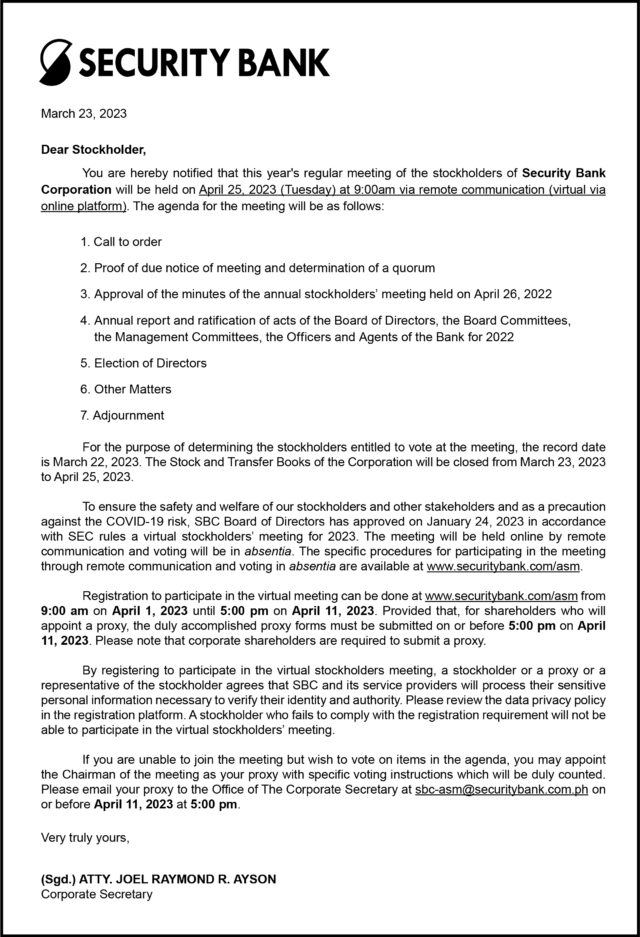
Security Bank Corp. to hold stockholders’ meeting via remote communication on April 25


Spotlight is BusinessWorld’s sponsored section that allows advertisers to amplify their brand and connect with BusinessWorld’s audience by enabling them to publish their stories directly on the BusinessWorld Web site. For more information, send an email to online@bworldonline.com.

Join us on Viber at https://bit.ly/3hv6bLA to get more updates and subscribe to BusinessWorld’s titles and get exclusive content through www.bworld-x.com.

Sojitz opens Geely dealership in Rosario, La Union 

SOJITZ G AUTO Philippines Corp. (SGAP) has inaugurated a new Geely dealership in Rosario, La Union as part of its ongoing expansion in the country.

In a statement on Wednesday, SGAP said the opening of Geely La Union, located along McArthur Highway, marks its 36th dealership in the Philippines and the first dealership opening for 2023.

SGAP is the official distributor of Geely in the country.

Geely La Union, operated and managed by the Laus Group of Companies, spans 1,327 square meters and can feature six vehicles in its showroom and accommodate six cars in its service shop. The Laus Group also operates Geely Bacolor in Pampanga.

“Laus Group of Companies also plans to complement Geely La Union with a satellite showroom which will be located in Baguio City which will also be operating in the months to come,” SGAP said.

The new dealership is expected to boost the Chinese brand’s presence in the Ilocos Region, in addition to Geely Dagupan.

“We are very excited to have the 2nd outlet that Laus Group of Companies operate this time.  Geely La Union will be the latest in the wave of dealerships we’ve inaugurated in the past three years, making Geely cars accessible to more people,” SGAP President and Chief Executive Officer Yugo Kiyofuji, said.

“We see this as a continuing momentum for the brand as we work to expand our vehicle lineup this year and bring in another model that will be a game changer yet again,” he added.

In 2022, Geely Philippines posted a 52% increase in vehicle sales after it sold 9,302 units, equivalent to a 2.65% market share. The company’s top-selling model is its Coolray subcompact crossover with 4,370 units sold. — Revin Mikhael D. Ochave

Musk, experts urge pause on training AI systems more powerful than GPT-4

DANIEL OBERHAUS-FLICKER

ELON MUSK and a group of artificial intelligence experts and industry executives are calling for a six-month pause in training systems more powerful than OpenAI’s newly launched model GPT-4, they said in an open letter, citing potential risks to society and humanity.

The letter, issued by the nonprofit Future of Life Institute and signed by more than 1,000 people including Mr. Musk, Stability AI Chief Executive Officer (CEO) Emad Mostaque, researchers at Alphabet-owned DeepMind, as well as AI heavyweights Yoshua Bengio and Stuart Russell, called for a pause on advanced AI development until shared safety protocols for such designs were developed, implemented, and audited by independent experts.

“Powerful AI systems should be developed only once we are confident that their effects will be positive and their risks will be manageable,” the letter said.

The letter also detailed potential risks to society and civilization by human-competitive AI systems in the form of economic and political disruptions, and called on developers to work with policy makers on governance and regulatory authorities.

The letter comes as EU police force Europol on Monday joined a chorus of ethical and legal concerns over advanced AI like ChatGPT, warning about the potential misuse of the system in phishing attempts, disinformation, and cybercrime. Mr. Musk, whose carmaker Tesla is using AI for an autopilot system, has been vocal about his concerns about AI.

Since its release last year, Microsoft-backed OpenAI’s ChatGPT has prompted rivals to accelerate developing similar large language models, and companies to integrate generative AI models into their products.

Sam Altman, CEO at OpenAI, hasn’t signed the letter, a spokesperson at Future of Life told Reuters. OpenAI didn’t immediately respond to request for comment.

“The letter isn’t perfect, but the spirit is right: we need to slow down until we better understand the ramifications,” said Gary Marcus, an emeritus professor at New York University who signed the letter.

“They can cause serious harm… the big players are becoming increasingly secretive about what they are doing, which makes it hard for society to defend against whatever harms may materialize.” — Reuters

You’ve read the scary headlines — but rest assured, your cookware is safe

OPENCLIPART-VECTORS/PIXABAY

“ARE nonstick pans toxic”? “Can aluminum cookware cause dementia?” “Are my scratched pans still safe?” That’s just a sample of a few worrying headlines about the safety of our pots and pans recently.

These stories often crop up in the media, and it’s easy to see why. We use our cookware every day. We want it to be safe. So, are these concerns legitimate?

Good news for those who worry: the main chemical of concern used to make nonstick pans has been phased out. And aluminum is not linked to dementia.

If you are shopping for new kitchenware, you’ll find there’s now a lot of choice in material, such as cast iron, stainless steel, copper, non-stick, and ceramic. By and large, they are all safe.

The choice over which is best depends on what type of cook you are, not on the health risks from the material.

Nonstick pans are very popular because food is less likely to stick to their coating. That means you need less oil. They’re also easier to clean than, say, cast iron pans.

Most nonstick pans are coated with Teflon, the brand name for polytetrafluoroethylene (PFTE), though some are now being made with a titanium-ceramic coating.

If you’ve looked into cookware health risks, nonstick pans usually feature at the top of the list. That’s due to concerns about their use of “forever chemicals” such as PFTE.

“Forever chemicals” is the common phrase for per- and poly-fluoroalkyl substances (PFAS), a family of man-made chemicals based on carbon-fluorine bonds.

These chemicals became notorious after the 2019 film Dark Waters, which tells the story of an American town contaminated with the forever chemical perfluorooctanoic acid (PFOA).

The concern many have about nonstick cookware is because before 2013, PFOA was used to make Teflon. But it’s been a decade, and this is no longer the case. Even when PFOA was used in pans it posed little risk, and neither does Teflon.

Forever chemicals have been around since the 1940s, used in Teflon as well as food packaging, waterproof textiles, and firefighting foams. There are very real concerns about firefighting foams, which have caused widespread environmental pollution, particularly on army bases and firefighting training facilities in Australia. People affected have launched legal action over contamination, worried over potential links to cancer, liver damage, and lowered immunity in children.

So why are forever chemicals like PFTE safe in our cookware?

Two reasons: stability and concentration.

Teflon is stable in cookware, even when heated to the temperatures commonly used in cooking. It begins to deteriorate if heated over 260°C when it may release polymer fumes but most people don’t fry their dinner at 260°C .

Not only that, the concentration levels of these chemicals in your kitchen and the environment are far lower than those found to cause health effects. Heavily contaminated sites are very different to your well-manufactured pots and pans.

If your non-stick pan is scratched, it may be a good idea to replace it but you aren’t going to get a damaging dose of PFAS from dinner.

There’s no strong evidence supporting fears aluminum exposure can cause any kind of dementia, including Alzheimer’s disease.

So where did the idea come from?

In 1965, scientists discovered that feeding rabbits very high levels of aluminum produced changes in the rabbits’ brains resembling Alzheimer’s. This was later proven to be incorrect.

There have also been reports the brains of some people with dementia had high levels of metals such as aluminum. But no-one has found a link.

That’s probably where this myth came from. Even though there’s no credible evidence for this, it’s led some people to avoid aluminum cookware — and even drink cans.

That’s a shame, as aluminum cookware heats up very rapidly and is lightweight and cheap. There have been issues with plain aluminum reacting to acidic and alkaline foods, or warping in the heat. You can largely avoid these — and put any residual health concerns to rest — by choosing anodized aluminum cookware.

Copper is famously gorgeous. There’s something about seeing burnished copper cookware twinkling on the shelf. But it’s not all aesthetics — copper is an excellent conductor of heat and tends to heat the pot or pan evenly. That’s useful for delicate dishes requiring fine temperature control. It’s why you’ll often see copper pans used by professional chefs.

What about your health? If you eat food laced with high levels of copper, you can get nausea, vomiting, and even liver damage. But that’s not going to happen from your pots or pans — you’ll get trace elements at best. (You also need small amounts of copper as an essential nutrient).

And most copper cookware has a non-reactive lining like stainless steel or tin, preventing traces of copper from getting into food.

Cast iron, stainless steel, and ceramic cookware are all good options, as they’re usually durable, non-reactive, and easy to clean.

Downsides? Cast iron is heavy and may not heat evenly. Some ceramics can be damaged quite easily, though most modern varieties are very strong.

In cheap stainless-steel pans, nickel and other metals could potentially leach out of the pan and into your meal but it’s very unlikely unless the manufacturer is cutting corners and using low-quality stainless steel.

By and large, all three are good choices if they are from reputable manufacturers.

We’re often bad at assessing risk. The more we hear about an alleged risk, the more dangerous we tend to think it is — even when the actual risk is low. Fear of chemicals — chemophobia — is common but many of these fears are unnecessary. The painkiller you took for your hangover was a chemical, as is the fuel in your car.

In short, your cookware is safe. Enjoy your dinner. — The Conversation via Reuters Connect

Oliver A.H. Jones is a Professor at the RMIT University.

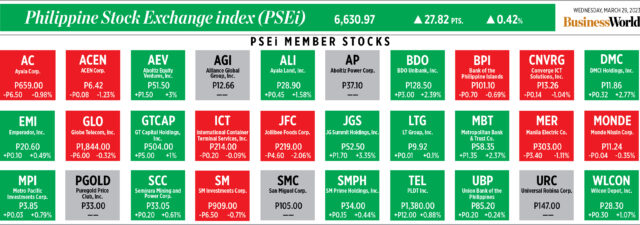
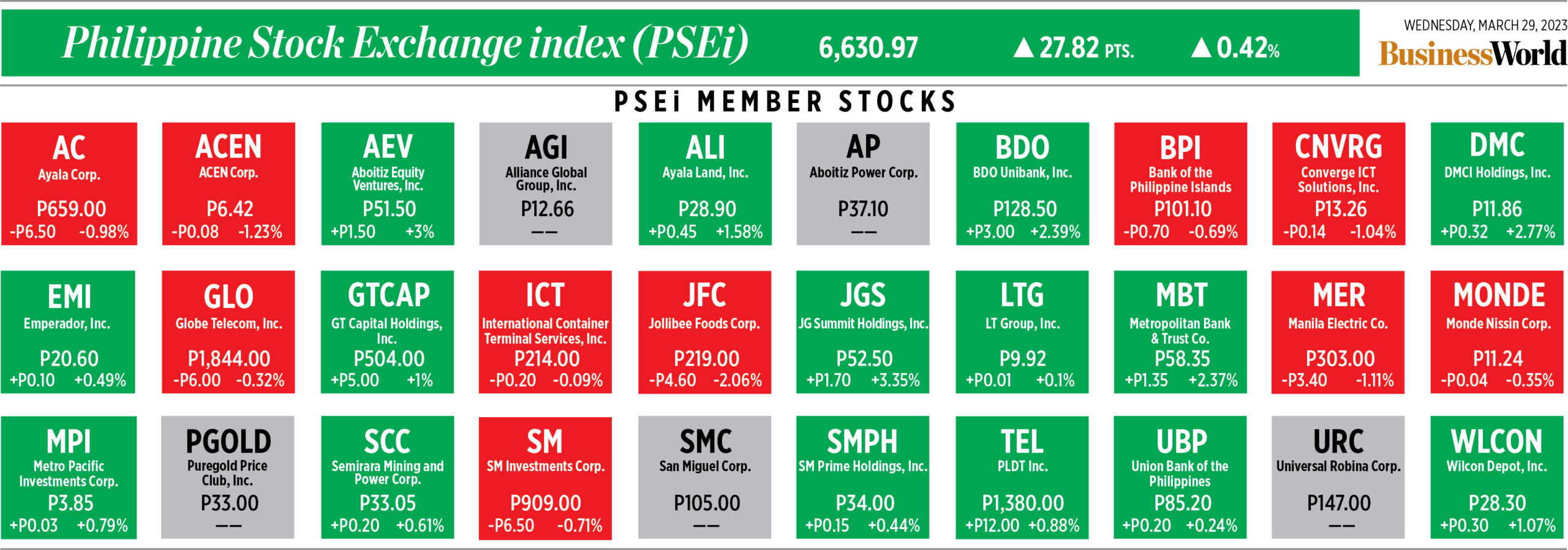
How PSEi member stocks performed — March 29, 2023

Here’s a quick glance at how PSEi stocks fared on Wednesday, March 29, 2023.


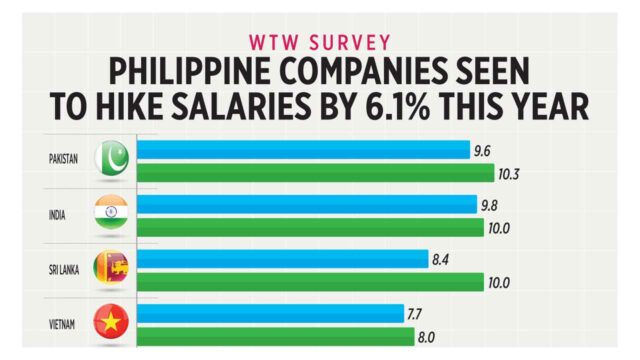
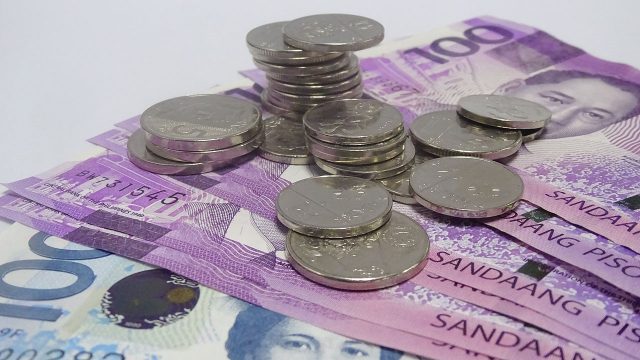
Philippine companies seen to hike salaries by 6.1% this year

Companies in the Philippines are projecting an overall average salary increase of 6.1% in 2023, according to the Salary Budget Planning Report by global advisory, broking and solutions company WTW. This was a bit higher than the actual 5.8% salary hike in 2022. The projected average salary rise in the country is the ninth highest out of the 26 Asia-Pacific markets included in the report.

Philippine companies seen to hike salaries by 6.1% this year

Apple launches ‘buy now, pay later’ service in US

STOCK PHOTO | Image by matcuz from Pixabay

APPLE, Inc. on Tuesday launched its “buy now, pay later” (BNPL) service in the United States, a move that threatens to disrupt the fintech sector dominated by firms like Affirm Holdings and Swedish payments company Klarna.

The service, Apple Pay Later, will allow users to split purchases into four payments spread over six weeks with no interest or fees, the company said. It will initially be offered to select users, with plans of a full roll-out in the coming months.

Users can get loans between $50 and $1,000 for online and in-app purchases made on iPhones and iPads with merchants that accept Apple Pay, according to the company.

More than 85% of U.S. retailers accept Apple Pay, the company said.

“Apple Pay Later will absolutely wallop some of the other players. Other companies would’ve taken a look at Apple’s announcement today because they are an ubiquitous name. This will take a bite out of the market share of other players,” said Danni Hewson, head of financial analysis at AJ Bell.

BNPL firm Affirm’s shares fell more than 7%, while PayPal closed about 1% lower.

In 2020, pandemic-related lockdowns turned shoppers to online payment platforms, bolstering demand for fintech companies offering BNPL services, especially to millennials and Gen Z customers.

Digital payments behemoths including PayPal and Block. Inc. have expanded into the sector through acquisitions, while Affirm went public in a multibillion dollar listing.

The sector’s fortunes have since turned as rising interest rates and red-hot inflation dampened purchasing power and forced consumers to tighten their purse strings.

“We expect Apple to tread cautiously, especially in this macro environment,” said Christopher Brendler, analyst at D.A. Davidson, alluding to its decision to not use a partner and underwrite, fund, and collect on the loans directly.

Apple Pay Later is enabled through the Mastercard Installments program, the company said, adding that Goldman Sachs was the issuer of the Mastercard payment credential. — Reuters

Italy wages war on lab-grown food in drive to protect tradition

DEBBY HUDSON /UNSPLASH

ROME — Italy’s government on Tuesday approved a bill banning the use of laboratory-produced food and animal feed as it aims to safeguard the country’s agri-food heritage, its agriculture minister told a news conference after a Cabinet meeting.

If the proposal is passed by parliament, Italian industry will not be allowed to produce food or feed “from cell cultures or tissues derived from vertebrate animals,” the bill seen by Reuters said.

A breach of the rules could result in fines of up to 60,000 euros ($65,022).

“Laboratory products in our opinion do not guarantee quality, well-being and the protection of our culture, our tradition,” said Minister Francesco Lollobrigida, a senior member of Prime Minister Giorgia Meloni’s right-wing Brothers of Italy party.

Ms. Meloni’s nationalist administration has pledged to shield Italy’s food from technological innovations seen as harmful, and renamed the agriculture ministry the “ministry for agriculture and food sovereignty.”

Agriculture lobby Coldiretti praised the move against “synthetic food,” saying a ban is needed to safeguard home production “from the attacks of multinational companies.”

The bill stipulates that factories where violations occur can be shut down and producers may lose their right to obtain public funding for up to three years.

ANGRY REACTIONS
The initiative angered organizations supporting the development of “cell-based” agricultural products across Europe, as well as animal rights groups.

“The passing of such a law would shut down the economic potential of this nascent field in Italy, holding back scientific progress and climate mitigation efforts,” said Alice Ravenscroft, head of policy at the Good Food Institute Europe.

Food companies’ network Cellular Agriculture Europe said Italy was limiting options for consumers who are concerned about animal welfare and the environmental impact of their food choices.

Anti-vivisection group LAV called the bill “an ideological, anti-scientific crusade against progress.” It said lab-meat, which is produced from the cells of living animals, represented a good alternative to intensive breeding and slaughtering.

The ban on cell-based meat is not the only initiative from Ms. Meloni to block non-conventional food from being served on Italian tables.

Last week, she said the government was preparing a rush of decrees to introduce information labels on products containing or derived from insects, amid a debate on the use of cricket flour.

“People must be able to make an informed choice,” she wrote on Twitter. —  Reuters

TDF yields rise as market awaits next policy moves of Fed, BSP

BW FILE PHOTO

YIELDS on the central bank’s term deposits went up on Wednesday, with the market waiting for more clues about the next policy moves of the US Federal Reserve and the Bangko Sentral ng Pilipinas (BSP) after last week’s rate hikes.

Tenders for the BSP’s term deposit facility (TDF) amounted to P299.539 billion, going beyond the P240 billion on the auction block as well as the P282.80 billion in bids for a P280-billion offering a week earlier.

Broken down, bids for the seven-day term deposits amounted to P173.232 billion, higher than the P140 billion auctioned off by the BSP and the P168.448 billion in tenders seen for the P180-billion offer last week.

Banks asked for rates ranging from 6.55% to 6.7124%, narrower than the 6.49% to 6.77% band recorded the previous week. This caused the average rate of the papers to increase by 4.11 basis points (bps) to 6.6563% from 6.6152% last week.

Meanwhile, the 14-day papers attracted bids worth P126.306 billion, higher than the P100-billion offering as well as the P114.352 billion in tenders a week ago.

Accepted rates for the tenor were from 6.572% to 6.6985%, narrower than the 6% to 6.6994% margin seen on March 22. With this, the average rate of the two-week term deposits went up by 1.84 bps to 6.6574% from 6.639% previously.

The BSP has not offered 28-day term deposits for more than two years to give way to its weekly auctions of short-term bills with the same tenor.

The term deposit facility and the one-month securities are used by the BSP to gather excess liquidity in the financial system and to better guide market rates.

TDF yields rose after the widely expected rate increases from the Fed and the BSP last week, Rizal Commercial Banking Corp. Chief Economist Michael L. Ricafort said in a Viber message.

“Markets recently priced in a possible +0.25 Fed rate hike or pause on the next rate-setting meeting on May 3, 2023 that could be matched locally on May 18, to maintain comfortable interest rate differentials to help stabilize the peso and overall inflation,” Mr. Ricafort added.

The Fed last week raised interest rates by 25 bps to the 4.75%-5% range, but said it could consider a pause soon due to turmoil in the US banking system. However, Fed Chair Jerome H. Powell kept the door open for further rate increases if necessary.

The US central bank has hiked rates by 475 bps since March 2022.

Meanwhile, the BSP last week increased borrowing costs by 25 bps as inflation remains elevated, bringing its key rate to 6.25%.

Since May 2022, the central bank has raised rates by a total of 425 bps.

BSP Governor Felipe M. Medalla earlier said that if March inflation eases further from February’s 8.6%, the Monetary Board may no longer raise borrowing costs at its next meeting.

March inflation data will be released on April 5. — Keisha B. Ta-asan

PSEi extends climb on Fed, BSP rate cut hopes

BW FILE PHOTO

PHILIPPINE SHARES closed higher on Wednesday on hopes of monetary policy easing by the US Federal Reserve and the Bangko Sentral ng Pilipinas (BSP) amid expectations of easing inflation.

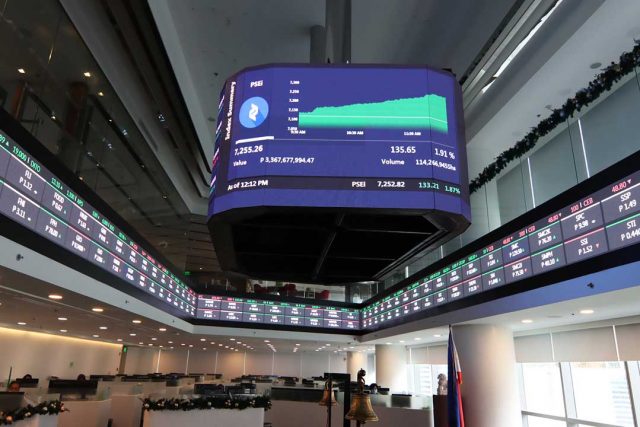
The bellwether Philippine Stock Exchange index (PSEi) increased by 27.82 points or 0.42% to close at 6,630.97 on Wednesday, while the broader all shares index rose by 9.80 points or 0.27% to end at 3,529.66.

“The market is on the eve of a gradual recovery as Fed and BSP interest rate cut hopes fuel return of risk-on mood. Inflation is expected to temper this month from peaks early this year,” First Metro Investment Corp. Head of Research Cristina S. Ulang said in a Viber message.

The Fed last week raised interest rates by 25 basis points (bps) to the 4.75%-5% range, but Fed Chair Jerome H. Powell said they could consider a pause soon due to turmoil in the US banking system. Still, he kept the door open for further increases if necessary.

The US central bank has hiked rates by 475 bps since March 2022. Its next review is on May 2-3.

Meanwhile, the BSP last week increased borrowing costs by 25 bps as inflation remains elevated, bringing its key rate to 6.25%.

Since May 2022, the central bank has raised rates by 425 bps.

BSP Governor Felipe M. Medalla earlier said that if March inflation eases further from February’s 8.6%, the Monetary Board may consider a pause at its next policy meeting on May 18.

March inflation data will be released on April 5.

“Philippine shares managed to close higher even as investors became wary that higher interest rates could tip the economy into a recession, even as Wall Street tried to move past this month’s regional banking crisis,” said Regina Capital Development Corp. Head of Sales, Luis A. Limlingan in a Viber message.

“On the economic front, traders are awaiting the latest pending home sales data that’s set to release Wednesday after the open,” Mr. Limlingan added.

On Tuesday, the Dow Jones Industrial Average fell 37.83 points or 0.12% to 32,394.25; the S&P 500 lost 6.26 points or 0.16% to 3,971.27; and the Nasdaq Composite dropped 52.76 points or 0.45% to 11,716.08.

Back home, almost all sectoral indices closed higher on Wednesday, except for industrials, which fell by 54.04 points or 0.56% to 9,492.48.

Meanwhile, financials rose by 20.17 points or 1.13% to 1,800.32; property went up 14.29 points or 0.51% to close at 2,797.17; holding firms increased by 26.66 points or 0.41% to close at 6,449.73; mining and oil climbed by 34.16 points or 0.31% to 10,970.47; and services gained 0.18 point or 0.01% to end at 1,649.31.

Value turnover surged to P13.01 billion on Wednesday with 2.29 billion shares changing hands from the P5.34 billion with 911.1 million issues traded on Tuesday.

Decliners outnumbered advancers, 100 versus 76, while 55 names closed unchanged.

Net foreign buying went up to P2.70 billion on Wednesday from the P725.13 million seen on Tuesday. — A.H. Halili

Peso ends unchanged vs dollar amid mixed sentiment

BW FILE PHOTO

THE PESO was unchanged against the dollar on Wednesday after the greenback steadied and amid mixed investor sentiment.

The local currency closed at P54.45 versus the dollar on Wednesday, steady from Tuesday’s finish, data from the Bankers Association of the Philippines’ website showed.

The peso opened Wednesday’s session steady at P54.45 per dollar. Its intraday best was at P54.35, while its worst showing for the day stood at P54.52 versus the greenback.

Dollars traded fell to $1.112 billion on Wednesday from the $1.639 billion recorded on Tuesday.

“The peso was unchanged due to mixed signals amid investor optimism from easing concerns on the global banking sector and lingering recession risks,” a trader said in an e-mail.

First Citizens BancShares, Inc. agreed to buy all of failed lender Silicon Valley Bank’s deposits and loans on Monday.

The peso’s movement on Wednesday reflected the dollar’s, which steadied after recent declines, Rizal Commercial Banking Corp. Chief Economist Michael L. Ricafort said in a Viber message.

The dollar edged up against most major peers on Wednesday, steadying after recent declines, and gaining sharply against the yen which was volatile as the end of the Japanese fiscal year approaches, Reuters reported.

The dollar index, which tracks the currency against six peers, gained 0.15% to 102.64. It has fallen for the past two sessions, and is set for a 2.1% monthly fall, a victim of the market ructions induced by problems in the banking industry.

The yen remained volatile in the run-up to the end of the Japanese fiscal year on Friday. The dollar touched a one-week high and was last up 0.8% to 131.99 yen, while the euro gained 0.6% against the yen to 142.9.

The dollar had dropped 0.5% against the yen the previous day, when it uncharacteristically moved in the opposite direction to long-term US Treasury yields, which have been rising as calm returns to markets.

Mr. Ricafort added that mixed US economic data also affected peso-dollar trading.

US consumer confidence unexpectedly increased in March despite recent financial market turmoil that sparked the collapse of two regional banks, but Americans continued to expect inflation to remain elevated over the next year.

The Conference Board’s consumer confidence index rose to 104.2 this month from a reading of 103.4 in February. The cutoff date for the survey was March 20, 10 days after California-based Silicon Valley Bank collapsed. New York-based Signature Bank failed on March 12.

Economists polled by Reuters had forecast the index would be at 101.0. The rise in confidence contrasted with a deterioration in sentiment reported earlier this month by the University of Michigan. It was driven by consumers under the age of 55 and households with annual income of $50,000 and more.

The survey places more emphasis on the labor market. The share of consumers viewing jobs as “plentiful” fell, while the proportion saying jobs were “not so plentiful” rose. But the share of those saying jobs were “hard to get” dipped to the lowest level since April 2022.

The survey’s so-called labor market differential, derived from data on respondents’ views on whether jobs are plentiful or hard to get, fell to a still-high 38.8 from 40.7 in February, remaining consistent with a tight labor market.

For Thursday, the trader said the peso may strengthen on the back of month-end dollar flows.

The trader and Mr. Ricafort expect the peso to move between P54.35 and P54.55 against the dollar on Thursday. — A.M.C. Sy with Reuters

MIAA says domestic air travel has topped pre-pandemic level

PHILIPPINE STAR/ MIGUEL DE GUZMAN

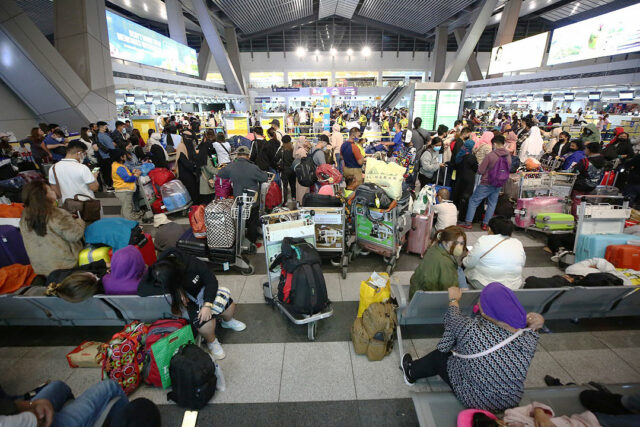
DOMESTIC TRAVEL through Ninoy Aquino International Airport is at between 113% and 115% of pre-pandemic levels, the Manila International Airport Authority (MIAA) said.

MIAA Senior Assistant General Manager Bryan Andersen Y. Co said on the sidelines of a media briefing on Wednesday that carriers have weighted their operations towards serve the domestic market because international borders have not yet fully opened or have imposed restrictions that discourage travel.

“I think (domestic passenger traffic is) around 113%-115% already… it has surpassed even pre-pandemic levels. This is because domestic borders were the first to open. Our airlines deployed their aircraft (to favor) domestic operations,” Mr. Co said.

He added that passenger traffic at Manila’s gateway airport is projected to hit 42 million in 2023, still below pre-pandemic levels. It would, however, be well above the 2022 level of close to 31 million.

According to MIAA’s annual report for 2019, the last full year before the pandemic shut down air travel, passenger traffic that year was just over 48 million.

Final totals “will depend on how the other borders will open up. China has been aggressive in opening up, so we are looking at 40-42 million,” Mr. Co said.

Passenger traffic for the first two months of 2023 hit 7.1 million, MIAA said. Aircraft movements for the period — the total of takeoffs and landings — are at 43,782.

For the upcoming Easter holidays, MIAA General Manager Cesar M. Chiong said MIAA is expecting passenger traffic of around 1.2 million starting Saturday. 

“This is actually almost the same as the pre-pandemic levels. At 1.2 million, we average 120,000 passengers a day,” Mr. Chiong said.

“We are looking at a 10-day (peak travel period). But sometimes, we hit 125,000. Yesterday we had about 118,000; sometimes we reach 135,000-140,000 passengers a day,” he added.

Mr. Chiong said that it is possible to hit 140,000 or more passengers at the height of the Easter travel period, “depending on the loads of the airlines but I know that the airlines are preparing for this surge as well,” he said.

Mr. Co said that the expected passenger volume during the Easter break is double the year-earlier level.

“We are going to process around 120,000 to 140,000 passengers per day. I think around April last year, we were just processing half of that. So, at least double of last year,” he said.

Total passenger volume between April 7 and April 19 in 2019 was 1.68 million. Passenger traffic was 935,090 in the same period in 2022.

Travelers during the Easter break were advised to be at the terminals at least three hours before the expected time of departure for international flights, and at least two hours before for domestic flights.

Airlines were also advised to open their check-in counters early if possible, to avoid long queues. — Justine Irish D. Tabile

ADVERTISEMENT
ADVERTISEMENT