Home Blog Page 5020

Heroes or villains: Short sellers’ role in the US bank crisis

REUTERS/David 'Dee' Delgado

As First Republic Bank‘s share price fell by double-digits in the aftermath of the collapse of Silicon Valley Bank last month, some people close to the San Francisco-based lender were worried short sellers were exacerbating its travails, according to a source familiar with the situation.

Investors who wager shares in a company will fall were increasing bets on First Republic’s stock when it was already taking a beating, making it difficult for the bank to recover its value, according to the source.

Short interest in First Republic indeed increased as turmoil in the banking sector intensified, although measures varyThe percent of shares borrowed — the basic mechanism of a short bet — was minimal to start the month but increased to between 7% and 37% by March 31, according to various data provider calculations, versus averages between 3% and 5% across all stocks.

Two of the banks that shut down last month, Silicon Valley Bank (SVB) and Signature Bank, showed a similar pattern: short interest increased as their stock started to fall, at varying degrees of intensity.

Problems at US regional banks grew last year, as rapidly rising interest rates slashed the value of some banks’ holdings in long-term assets such as home loans and government bonds. Some lenders were also challenged by exposure to cryptocurrency and technology companies. The underlying issues exploded last month when depositor flight spiraled out of control and regional lenders across the board saw their shares hit.

How much short sellers contributed to the downward spiral reprises the debate about whether so-called shorts are market watchdogs or opportunistic investors who profit from others’ misery. In the case of the banking crisis, a review of data and interviews with short sellers and their critics show, the answer may be both.

“The shorts in the months before the collapse were accurately warning the markets…that the bank (SVB) was being dangerously mismanaged,” Dennis Kelleher, President and CEO of Better Markets, a nonprofit industry group in Washington, DC, said in an email. “The problem is once that collapse happened, shorts with various motives started targeting other banks.”

Some short sellers have been public about their negative views on banks but reject suggestions that they are to blame for the problems.

Short-seller Jim Chanos wrote in a March 13 client letter seen by Reuters that investors had known about the underlying balance sheet problems that brought down SVB since last summer. But it was only when the bank, which his fund was short, “abruptly tried, and failed, to raise capital … that anyone cared.”

First Republic and Mr. Chanos declined to comment. Signature and SVB did not respond to requests for comment.


CONTROVERSIAL PRACTICE

Short selling is a controversial practice, blamed in the financial crisis of 2008 for adding to the pain; it was temporarily bannedalbeit with little impact. Some high profile short sellers were later celebrated as making prophetic calls about the US housing market.

The crisis of confidence in US regional banks started when shares of SVB plunged and depositors fled after it announced plans on March 8 to raise capital to fill a nearly $2 billion hole from the sale of securities.

The Santa Clara, California-based lender was taken over by regulators on March 10, in turn dragging down the shares of other regional lenders. New York’s Signature failed on March 12, and First Republic lost more than 80% of its market value by mid-March.

As the crisis accelerated, JPMorgan Chase & Co equity analysts wrote on March 17 that short-sellers were “working collectively to drive runs on banks,” and venture capitalist David Sacks asked on Twitter whether “scurrilous short sellers” had used social media to exacerbate depositor flight from SVB.

JPMorgan and Sacks did not respond to requests for comment.

Even so, interviews and public postings show at least some short sellers had placed bets against regional banks well before the crisis hit.

These included: William C. Martin, who shorted SVB in January 2023; Nate Koppikar of Orso Partners, who shorted SVB in early 2021; Barry Norris of Argonaut Capital Partners, who shorted SVB in late 2022; John Hempton of Bronte Capital Management, who shorted Signature in late 2021; and Marc Cohodes, who shorted Silvergate Bank in November 2022, according to interviews with Reuters.

Porter Collins, co-founder of hedge fund manager Seawolf Capital, said he saw how rising interest rates would likely hit banks and, in early 2022, shorted SVB, Signature, First Republic, Silvergate and Charles Schwab Corp..

“There were warning signs,” he said, “that were pretty easy to see for those who looked.”

Schwab and Silvergate did not respond to requests for comment.


SHORT POSITIONS

Such early short sellers, however, were in the small minority. Shorts represented only about 5% of SVB’s stock float as of March 1, according to data tracker S3 Partners, with First Republic at around 3% and Signature at 6%. That compares to an average of about 4.65% across all stocks, per S3.

Data from S&P Global Market Intelligence and ORTEX, who use different methodologies, have similar numbers showing SVB, First Republic and Signature with relatively low overall short levels before the crisis.

Short positions increased over March, although the measures vary, per the three data providers. On First Republic, the percentage of shares on loan peaked at between 7% and 39% last month, while SVB peaked at between 11% and 19%, and Signature peaked between 6% and 11%.

Regardless, short positions in most regional banks were nowhere near some highly shorted stocks like electric carmaker Tesla Inc, which hit around 25% as recently as 2019, and GameStop Corp, which surged past 100% of shares in 2020, according to Refinitiv data.

An exception was Silvergate, a cryptocurrency-focused lender, which for months faced an unusually high level of short interest compared to other banks – above 75% by the time it said it would wind down operations on March 8.

S3’s Ihor Dusaniwsky said the overall increase in shorts on US regional banks during March was an “extraordinarily small” part of overall sector trading; the declines were driven by regular stock holders selling their shares.

“The shorts are not driving the stock price,” Mr. Dusaniwsky said. “People are saying that the tail is wagging the dog. It’s certainly not the case in most of these names.”

Short-sellers scored regardless: overall short bets in US regional banks gained $4.76 billion in March, up 35% on an average short interest of $13.4 billion, according to S3. – Reuters


BSP pause likely if April inflation eases

Local and foreign tourists are seen in Puka Beach in Boracay, Aklan, April 6, 2023. — PHILIPPINE STAR/MIGUEL DE GUZMAN

THE PHILIPPINE central bank may consider pausing its monetary tightening next month if April inflation does not accelerate, its governor said on Sunday.

Bangko Sentral ng Pilipinas (BSP) Governor Felipe M. Medalla said in a telephone message to Reuters that a pause in interest rate increases was possible “if the April CPI (consumer price index) is not higher than the March CPI.”

Mr. Medalla said a “zero or negative month-on-month inflation” may also support the case for a rate hike pause.

Philippine headline inflation eased for a second consecutive month in March to 7.6% from 8.6% in February. For the first quarter, inflation averaged 8.3%, still higher than the BSP’s 6% full-year forecast.

Since May 2022, the Monetary Board raised key interest rates by 425 bps, bringing the benchmark policy rate to a near 16-year high of 6.25%.   

Some analysts said the BSP may still raise the benchmark interest rate to as high as 6.75% to quell persistent second-round effects as core inflation remains elevated.

However, core inflation quickened to a fresh 22-year high of 8% last month from 7.8% in February.   

“In our view, Bangko Sentral ng Pilipinas is likely to see this pickup as a sign of more persistent second-round effects and is therefore a concern,” Nomura Chief ASEAN (Association of Southeast Asian Nations) Economist Euben Paracuelles and analyst Rangga Cipta said in a note. 

Despite easing headline inflation, Nomura still expects the central bank to hike borrowing costs by 25 basis points (bps) at each of its next two meetings on May 18 and June 22 before pausing. This would bring the key policy rate to 6.75%.

“We think the pickup in core inflation in March will leave BSP uncomfortable with the inflation outlook, with second-round effects likely to be deemed as more persistent and therefore provide scope for a further monetary policy response,” Nomura said.

Nomura noted Philippine core inflation was broad-based, as price increases quickened in items such as household equipment, restaurants, communication services, recreation and personal services.

Following the release of inflation data, the BSP said it is prepared to adjust its policy stance as necessary to tame price pressures and prevent more second-round effects from emerging.

“In our view, this signals a cautious tone and doesn’t clearly suggest BSP is already considering a pause, especially in reference to the risk of ‘additional’ second-round effects, which were evident in the core inflation pickup,” Nomura said.

Nomura also expects the BSP to begin cutting its policy rate starting March, with a total of 125 bps to bring the rate to 5.5% in 2024.

It projects inflation to average 5.8% this year, before easing to 3.1% in 2024.

“Our forecast continues to pencil in a trajectory, in which headline inflation has already peaked, but will moderate only slightly to 6.9% year on year in the second quarter, before dropping further to 3.2% in the fourth quarter, which would see it back within BSP’s target, partly due to base effects,” Nomura said.

Month-on-month inflation will not decline until July, it added.

“The downside risks posed by the lower-than-expected outturn in March is, in our view, offset by recent increases in global crude oil prices, which are likely to have had an immediate impact on retail fuel prices,” Nomura said.

Global oil prices spiked earlier this month following the announcement by the Organization of the Petroleum Exporting Countries and their allies including Russia of further output target cuts of around 1.16 million barrels per day from May through the rest of the year.

“Monetary authorities will be looking for prices to fall outright, and not just a deceleration in year-on-year inflation. Thus, with core remaining sticky, there is an upside risk for the BSP to continue tightening should data support it,” Security Bank Corp. Chief Economist Robert Dan J. Roces said.

Unless core inflation eases in April or weak first quarter economic growth will be reported on May 11, Mr. Roces said the BSP will continue its tightening cycle by another 25 bps on May 18.

“We do think, however, that the monetary authorities have done enough; with the peso relatively behaved, loan growth beginning to weaken, and an inflation trajectory on track to decelerate, the BSP may still pause at the current 6.25% policy rate, with rate cuts to take place only in the second quarter of 2024,” he said.

Meanwhile, Pantheon Chief Emerging Asia Economist Miguel Chanco said that core inflation may stabilize by April, which adds weight to the view that the Monetary Board will consider a pause in May.

“Headline disinflation should continue over the remainder of this year, with the mean-reversion in food inflation likely to remain the biggest drag, followed by continued disinflation in oil price-sensitive sub-indices,” Mr. Chanco said.

He said full-year inflation will settle at 5.4%, below the BSP’s 6% average forecast for this year.

“Our baseline implies that inflation will return to the BSP’s 2%-to-4% target range in October, at the earliest… (Core inflation) should show some much-needed stability by the time (Monetary Board) members next meet,” Mr. Chanco said. — Keisha B. Ta-asan and Reuters

Debt service bill declines in January

THE NATIONAL GOVERNMENT’S (NG) debt service bill dropped by 78% in January, as interest and amortization payments declined, Bureau of the Treasury (BTr) data showed.

According to the BTr, the government paid P47.831 billion for debt servicing in January, 77.8% lower than the P215.838 billion paid in the same month in 2022.

Month on month, debt service payments declined by 84.2% from P302.125 billion in December.

In January, the bulk or 98.2% of debt servicing went to interest payments.

Interest payments fell by 28% to P46.97 billion during the month, from the P65.551 billion in January 2022.

Broken down, interest paid on domestic debt dropped by 34.7% to P26.647 billion in January, from P40.792 billion a year ago.

Interest on foreign debt likewise decreased by 17.9% to P20.323 billion in January from P24.759 billion a year ago.

Domestic debt consisted of P21.865 billion in fixed-rate Treasury bonds, P3.575 billion in retail Treasury bonds and P757 million in Treasury bills.

Meanwhile, overall amortization payments plunged by 99.4% to P861 million in January from P150.287 billion in the same month a year ago.

The BTr settled P3 million with domestic lenders and P858 million to foreign creditors.

Rizal Commercial Banking Corp. Chief Economist Michael L. Ricafort said in a Viber message that the decline in debt payments was mainly due to the budget surplus recorded in January.

In January, the budget balance swung to a surplus of P45.75 billion. The last time the government recorded a budget surplus was in April 2022, with P4.94 billion.

“Government tax revenue collections improved as the economy reopened towards greater normalcy, while disciplined government spending curtailed government expenditures,” Mr. Ricafort said.

“Maturities of government securities also relatively lower in January, thereby fundamentally leading to lower government debt servicing,” he added.

Debt servicing could also rise in the next few months.

“For the coming months, government debt servicing could increase in view of larger maturities of government securities up to April,” Mr. Ricafort said.

Finance Secretary Benjamin E. Diokno earlier said the government plans to launch a retail dollar bond offering this month.

For 2023, the government programmed debt payments to reach P1.6 trillion, 23.3% higher than last year’s P1.298-trillion program.

In 2022, actual debt service payments reached P1.293 trillion, up 7.4% year on year.

The government borrows from external and local sources to fund a budget deficit capped at 6.1% of gross domestic product (GDP)this year.

For 2023, the government plans to borrow P2.207 trillion. Of the total, P1.654 trillion will be sourced domestically and the remaining P553.5 billion will be borrowed from external sources.

At the end of February, outstanding debt hit a record high of P13.75 trillion.

The country’s debt-to-GDP ratio stood at 60.9% as of end-December, still above the 60% threshold considered manageable by multilateral lenders for developing economies.

The government aims to trim the debt-to-GDP ratio to less than 60% by 2025, and to 51.5% by 2028. — Luisa Maria Jacinta C. Jocson

Rejecting ICC probe could deter economic partnerships — analysts

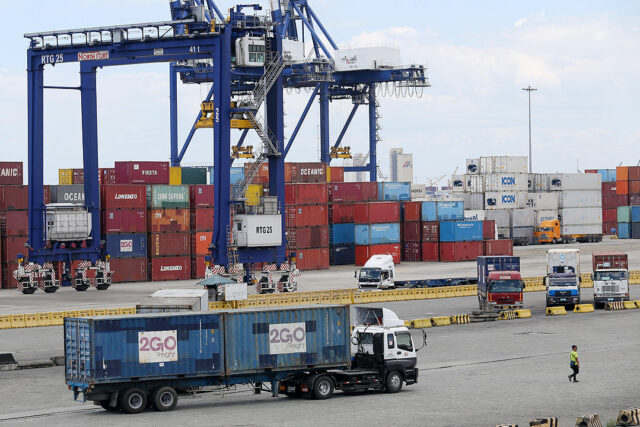
Trucks enter the port area in Manila. — PHILIPPINE STAR/EDD GUMBAN

THE PHILIPPINE GOVERNMENT’S continued rejection of the International Criminal Court (ICC) probe of its deadly drug war could deter other countries from pursuing economic partnerships with the Philippines, according to experts.

“If most incumbent government officials have negative international press, the assumption is it deters confidence from international trading partners,” Hansley A. Juliano, a political economy researcher studying at Japan’s Nagoya University’s Graduate School of International Development in Japan, said in a Facebook Messenger chat.

The ICC in January reopened its probe of former President Rodrigo R. Duterte’s campaign against illegal drugs, saying it was not satisfied with the government’s efforts to probe human rights abuses.

The Hague-based tribunal on March 28 rejected the Philippine government’s plea to suspend the probe into the deadly drug war.

President Ferdinand R. Marcos, Jr. has called the ICC’s probe a threat to Philippine sovereignty, saying the it does not have authority to look into the reported human rights abuses.

Mr. Duterte had canceled the Philippines’ membership in the tribunal in 2018. Mr. Marcos said the Philippines would not rejoin the ICC, saying the Philippines has a functioning justice system.

“(Mr. Marcos’) rejection of further cooperation with the ICC will expose him as an unreliable economic partner, interested only in exacting economic benefits while rejecting values deemed important by various international partners,” Terry L. Ridon, a public investment analyst and convenor of think tank InfraWatch PH, said in a Facebook Messenger chat.

He said other economic partners may see the President’s commitment to the rule of law and human rights as mere lip service, in light of country’s non-participation in the ICC probe.

Mr. Ridon said the Philippines is at risk of losing its trade perks under the European Union’s (EU) Generalized Scheme of Preferences Plus (GSP+).

The EU makes GSP+ preferences and trade relations subject to Philippine adherence to a number of international conventions on human rights, labor rights, environmental protection, and illegal fishing, among others.

The European Parliament in February last year passed a resolution asking the Philippines to act on human rights abuses or face losing trade perks under the GSP+.

The arrangement, which will expire by yearend, allows the duty-free entry of 6,274 Philippine products to Europe.

Mr. Juliano also warned the Philippines’ investment grade credit ratings may be affected.

“Credit scores may also suffer if governance policies change and it affects international confidence,” he added.

The Philippines currently has a “BBB+” investment grade rating with “stable” outlook from S&P Global Ratings, and a “Baa2” rating with “stable” outlook from Moody’s Investors Service. It also has “BBB” rating with “negative” outlook from Fitch Ratings.

“If the Philippines persists with its present stand, it paints a negative picture of the issue of impunity in the country and may deter foreign engagement in the Philippines,” Ephraim B. Cortez, president of the National Union of Peoples’ Lawyers (NUPL), said in a Viber message.

Justice Secretary Jesus Crispin C. Remulla earlier told the United Nations Human Rights Council the Philippines could probe erring officials without the ICC’s help.

A delegation of EU lawmakers visited the Philippines in February to discuss the country’s human rights situation.

Hannah Neumann, vice chairwoman of the European Parliament subcommittee on human rights, told a press briefing in February that the EU wants to see the Philippines rejoin the ICC to reinforce its commitment to human rights. She said the human rights situation is better now under Mr. Marcos.

“The President cannot hope to further raise his international prestige if he rejects international human rights mechanisms such as proceedings in the International Criminal Court,” Mr. Ridon said.

Carol Claudio, the executive assistant of Presidential Communications Office chief Cheloy Velicaria-Garafil, did not immediately reply to a Viber message seeking comment. — John Victor D. Ordoñez

Would you like an Amorsolo with that sofa?

B&B Italia mixes furniture with Filipino masters in exhibit

WE’RE SURE you’ve looked at an artwork in a museum and wished you could put it in your home at least once. An exhibit at the B&B Italia showroom in BGC works out that fantasy for you.

For the month of April, Amorsolos, HR Ocampos, Orlinas, a few Zobels, and many more pieces by National Artists and Philippine masters will be sharing space with luxury couches, tables, and beds, in an exhibit called Art and Space: Series 2.

Some pieces from B&B Italia start at P900,000, but next to an Amorsolo, it seems like a small price to pay. Everything on the floor will be on sale — including the art, which had been sourced from art galleries and private collectors.

The artworks and the furniture were pieced together and styled by Glenn Cuevo. “I have the cities of Milan, Copenhagen, Paris, and Tokyo to thank for the stimulating dose of international design,” he said during a speech at the exhibit’s opening on March 30.

The artists have been divided into several rooms: The Amorsolo Room features two Amorsolos that share space with the Bend Sofa, the Pianura Small Table, and the Pochette Armchair. Arturo Luz and Lao Lianben works hang above the Blitz Table by Mario Bellini. Only 100 of these have been made, and No. 7 is in the Philippines. The work of contemporary artist Jigger Cruz hangs next to the Camaleonda sofa and the Mini Papilio chair. Another showroom shows a sprinkling of works by Ang Kiukok, HR Ocampo, Fernando Zobel, more works by Arturo Luz, Annie Cabigting, and Juvenal Sansó.

This is the second time the furniture brand is mounting Art and Space. “Usually for B&B Italia, we display our products in a normal setting, when we have our furniture on display,” said Holly Quiec, Senior Business Manager for Focus Global Inc., which distributes B&B Italia in the Philippines. “You’ll be able to appreciate our furniture better because it’s in a setting where you can picture it in your home, not just in a showroom.”

The exhibit is ongoing at the B&B Italia Manila showroom at the Twenty-Four Seven McKinley Building, BGC, Taguig until April 30. For inquiries, appointments, or private tours, contact B&B Italia Manila through 8705-9999, through Facebook (@bebitaliamanila), Instagram (@bebitaliamanila), or the website (bebitaliamanila.com). — Joseph L. Garcia

Beyond lamps and paint colors

Interior decorators and interior designers are not the same

WHILE it’s easy to think that interior design is all about choosing the right lamp or the right color of paint, the industry is much more complex than that. The Philippine Institute of Interior Designers (PIID) is holding the first Manila Interior Design Summit from April 10 to 12, with additional events on April 16, precisely to educate the public about the nature of their work.

The event includes exhibitions, galas, and an art walk, but taking precedence are the various talks. These include GRN META: Metamorphosis of Green Spaces Design Symposium at the Maybank Performing Arts Theater in BGC on April 10 to 12, and the Grammar of Movement lecture by architect, interior designer, and visual artist Carlo Calma on April 16. The final event on the list is a performance of Ballet Philippines’ Diyosa, directed by Mr. Calma, to be staged at the Theatre at Solaire on April 16.

GRN META, the main event, is a seminar for interior designers, architects, and allied professions focusing on strategies and best practices for designing the future in a sustainable manner. It explores the key principles of sustainable design, such as minimizing waste, reducing energy consumption, and using environmentally friendly materials, and how these principles can be applied in interior design and architectural projects. The seminar also emphasizes the importance of collaboration between different designers of the built environment, suppliers, and stakeholders in creating sustainable and innovative design solutions.

Maria Victoria “Ivy” Almario, interior designer and National President of PIID, said during a press conference in Quezon City on March 28 that the organization celebrates its 59th anniversary this year. “PIID was the only one who successfully lobbied that we are licensed interior designers. It’s very important. The ‘IDr.’ in front of our names is hard-won, and the envy of all other practitioners in the region.”

Paolo Castro, executive director of Manila Interior Design Summit, said, “There’s a difference between interior decorators and interior designers. Designers are the licensed ones. We have our board exam.”

Last year, Ms. Almario sent a letter out about unlicensed interior design practitioners. “It is now our purview, to review and receive complaints from our members about non-licensed practitioners being called Interior Designers in shelter publications and on social media platforms,” the letter said. “May we enjoin you to help us in our efforts to address this matter by asking that due diligence is done prior to using the initials ‘IDr.’ as an appendage to a name of a featured creative? Not all interior design creatives can use that title ‘IDr.,’ only those who took pains to study for the Board Licensure Exams and successfully pass it may use it. Others are simply addressed as Interior Decorators. It’s a small effort but the impact, psychologically brings a lot of relief to our PIID members.”

During the press conference, Ms. Almario discussed the importance of making the distinction. “Ask a hobbyist to design a casino. Or a hospital. Or a university. That is when the big guns need to go out. There’s lights, safety — you are liable to investors materiality. This is when you hire professional interior designers. Especially in this game, where sustainability is a foregone conclusion. We want to have the best, so that 20, 30, 40 years from now, the edifice; or the built environment that they conceptualize, still stands.”

During the press conference, PIID Board Member Eric Castor also said that the PIID is part of the resource organization in revising the National Building Code. “Our National Building Code needs to be updated,” he said.

“Interior designers who are licensed are investments in design,” said Ms. Almario.

For more information on registration to the summit, follow the Manila Interior Designer Facebook page at facebook.com/mids.piid and on Instagram at instagram.com/mids.piid. One may also contact the organization through mids.piid@gmail.com.  Joseph L. Garcia

Elevated inflation seen to affect telco, ICT companies’ earnings

STOCK PHOTO | Image by David Arrowsmith from Unsplash

THE PROFITABILITY of telecommunications and information and technology (ICT) companies could take a hit from the impact of elevated inflation on consumers’ purchasing power and increased competition, analysts said.

Listed telco companies PLDT Inc. and Globe Telecom, Inc. recorded lower results for 2022, while Converge ICT Solutions, Inc. posted a small gain amid a 32% drop in the fourth quarter of 2022.

Other listed ICT companies — DITO CME Holdings Corp. and Philippine Telegraph and Telephone Corp. — have yet to disclose their full year 2022 results.

Analysts expect these firms to be challenged by elevated prices, subscriber identity module (SIM) registration and saturated markets, resulting in a moderate growth outlook for the sector.

“Earnings-wise, the ICT was above expectations at 58%, while the three telcos — Globe, PLDT, and Converge — averaged flat. Onwards, with the telco industry maturing and with elevated domestic inflation, telcos face tougher competition to gain market share and thus earnings outlook is challenged,” First Metro Investment Corp. Head of Research Cristina S. Ulang said in a Viber message.

“ICT will be resilient and remain on the growth path earnings-wise, despite global recession risks given its strategically located businesses worldwide and expansion thrust,” Ms. Ulang added.

China Bank Securities Corp. Research Analyst Stephen Gabriel Y. Oliveros likewise said in an e-mail that he expects the telco sector’s performance to be “challenged” as high inflation dents consumers’ purchasing power.

“For the broadband business, we may see some moderation in growth as sustained data demand from enterprises are met with expectations that the residential postpaid broadband market is nearing saturation,” Mr. Oliveros said.

“Meanwhile, we are keeping an eye on the launch of prepaid fiber as this may buoy growth prospects of the residential fixed broadband space,” he added.

In March, Converge announced the launch of its prepaid fiber product called Surf2Sawa, which allows subscribers to use unlimited fiber Internet connection at 25 megabytes-per-second speeds for as low as P50 per day or P700 for 30 days.

“As for the legacy wireless business (call and text, mobile data), we think that growth will be driven mainly by mobile data,” Mr. Oliveros said.

“Furthermore, we remain on the lookout on how the mandatory SIM registration will impact the growth trajectory over the near term. We think that the SIM registration exercise will allow telcos to better tailor their service offerings to active subscribers, possibly leading to revenue windfall down the line,” he said.

Key themes for the industry include companies’ deleveraging efforts through capital recycling, such as tower sales, and the “utility maximization” of existing infrastructure assets, Mr. Oliveros added.

In 2022, Pangilinan-led PLDT booked a 60.2% decline in its attributable net income to P10.49 billion from P26.37 billion in 2021. This came amid the 6% increase in its consolidated revenues to P205.25 billion in 2022, from the P193.26 billion it booked a year earlier.

Meanwhile, Ayala-led Globe’s core net income was 9.8% lower at P19.17 billion in 2022 from P21.25 billion in 2021 due to a 3.8% rise in its top line to P157.98 billion in 2022 from P152.26 billion a year ago.

Converge was the sole telco company to record income growth in 2022, with a 3.9% rise in its profit to P7.44 billion. Its revenues likewise climbed to P33.7 billion in 2022, up by 27.3% from the P26.48 billion a year earlier. — Justine Irish D. Tabile

Far from the ‘ludicrously capacious’: What the fashion of Succession tells us about the show — and about society

IMAGINE if the person you’re dating invites you to their great-uncle’s birthday party. This is not just any family gathering. The great-uncle in question is a billionaire and the party is at their New York City penthouse. To fit in, you wear your best dress and carry your most expensive handbag — a large, four-figure Burberry tote.

Unbeknown to you, your Burberry tote is a major fashion faux pas. It immediately distinguishes you as someone who is not part of this super elite. It is not the price tag or brand that has betrayed you: it’s the size of the bag.

This is what unfolded in a scene from the season-four premiere of HBO’s Succession. While attending patriarch Logan Roy’s birthday, Cousin Greg is mercilessly mocked by Tom Wambsgans for his date’s “ludicrously capacious” handbag. Bridget’s handbag, Tom scoffs, is “monstrous” and “gargantuan.”

The biting humor between Tom and Greg is an entertaining and engaging feature of Succession. In this scene, however, their repartee reveals much about the power structures within elite society.

While many would consider Bridget’s Burberry tote the epitome of luxury and elegance, the functionality of bag and its iconic check pattern was entirely gauche to the Roys.

The size of the bag implied Bridget did not have staff catering to her every whim. She must carry everything she needs for the day with her. According to Tom Wambsgans, this includes her lunch (implying she can’t afford to dine at restaurants) and appropriate shoes for the subway (indicating she doesn’t have a driver).

This is a stark comparison to Shiv Roy, who is rarely seen with a bag or any accessory except her phone. Unlike Bridget, Shiv is not plagued with the stresses of life. She has people for that.

The iconic Burberry tartan that covered Bridget’s bag was also, according to Tom, an “enormous faux pas.” Visible brand names and patterns have become associated with people who try to emulate wealth but are not familiar enough with elite society to understand its sartorial nuances. The upper elite favor quiet but luxurious fashions.

This style is often referred to as the old money aesthetic.

Since the early 20th century, the old money aesthetic has been a symbol of wealth and privilege. Characterized by polo shirts, chinos, and a knit sweater over the shoulders, this style romanticizes country club, yacht, and equestrian cultures. Think Ralph Lauren and the Kennedys.

The old money aesthetic is also deeply entwined with notions of nobility.

Historically, royals and aristocrats were considered superior to all others. This social hierarchy was enforced by laws that regulated what people could wear based on their class. Clothing was an immediate visual representation of social standing and power. In 16th-century England, only kings, queens and dukes were allowed to wear gold cloth. If you weren’t part of the nobility, you weren’t allowed to wear crimson or blue.

Dressing above your station had serious ramifications. Henry VIII’s Acts of Apparel made it illegal for anyone except “The King and his Family” to wear purple. In 1513, one of Henry’s noblemen defied this law to signal his own claim to the English throne. Not long after, Henry had him executed for treason.

In more recent times, the nobility’s penchant for tailored jackets, woolen sweaters and tweeds have become reflective of a leisure class who are exempt from work. The innate historical connection between dress and class has resulted in these items becoming inseparable from notions of social superiority. They are seen as timeless, stylish, and sophisticated.

The intrinsic connection between dress and social superiority is regularly deployed in TV shows like Succession. Costume is an important tool by which creators can demonstrate hierarchy between characters. While almost all the characters in Succession belong to the wealthy upper class, they are clearly not equal.

Cousin Greg’s date, Bridget, is wealthy enough to afford a four-figure bag. Its size and loud pattern, however, mark her as nouveau riche and tawdry.

Tom’s mockery of Bridget is somewhat ironic, given he too was ridiculed for his sartorial inferiority. Tom always presents a polished, buttoned-up appearance in designer suits and ties. This is contrasted against Kendall and Roman, who rarely wear ties, often pair suits with sports shoes and baseball caps and, in more recent episodes, have favored a combination of jeans, T-shirts, and blazers.

Tom’s refined and agreeable appearance reflects his eagerness to please Logan and secure position in the family. When mocking his suit in season two, the Roy children allude to this desperation and reaffirm his status as less than their own.

The costumes of the Roy family situate them firmly at the top of the social elite. They are often in cashmere knitwear and tailored blazers. When in the country, caps and Barbour jackets are in keeping with their casual, conservative, old-money appearance.

Unlike those outside the family, they don’t need to impress anyone. Their clothing denotes a stealth wealth, and its historical significance infers social superiority.

Next time you tune into Succession, pay close attention to subtleties in the characters’ costumes. They reveal much about the fabric of society. — The Conversation via Reuters


Grace Waye-Harris is a PhD Candidate in History at the University of Adelaide.

AirAsia pays $2.1B in pandemic refunds

ISABEL LEE-UNSPLASH

LOW-COST CARRIER AirAsia has paid $2.1 billion or 98.4% of the refund claims it received since the start of the coronavirus pandemic in March 2020.

“Efforts to settle the remaining balances are ongoing as the airline strives to rebuild its operations back to normalcy,” the company said in a statement on Sunday.

The carrier has launched a new refund tracking feature on its Super App and website, which will allow guests to get the detailed status on their refunds. These will be available once guests input the case number of their refunds under the “My Case” tab.

The airline has also rolled out a new live call feature in its application for real-time call assistance, allowing guests to speak directly with a human agent during their Ask Bo Live Chat interaction for immediate resolution of their concerns.

Ask Bo is an AI-powered concierge launched in February this year for all guests within the Capital A lines of businesses. Capital A Bhd, formerly known as AirAsia Group, is an investment holding company with a portfolio of travel and lifestyle businesses.

“The enhancements introduced are part of an exciting line of features, tools, and applications AirAsia plans to release over time,” said Kesavan Sivanandam, chief airport and customer experience officer of AirAsia Aviation Group.

“As for the refund tracking feature, we have made the process easier and more transparent for our guests. We acknowledge that there are guests who are frustrated with the lack of visibility in our refund process. We aim to put our guests at ease and give them peace of mind,” he added.

AirAsia said the service will be available in English, Bahasa Melayu, Chinese, Thai, and Bahasa Indonesia with more languages eyed to be added in the future, including Tagalog. — J.I.D. Tabile

Style (04/10/23)


SSI’s exclusive offers for Spring

THE SSI Group, Inc. steps into a stylish spring with exclusive discounts. From April 9 to 16, fashion-forward shoppers at Nine West can enjoy up to 30% off on select regular items and extra 15% off on sale items, whether the perfect pair of heels or a trendy handbag. From April 9 to 11, shoppers who buy two or more regular items from Armani Exchange can get their hands on a 15% discount on the total purchase. Kurt Geiger gives a 20% discount on select footwear. Steve Madden offers a 15% discount on selected merchandise. For London-born brand Dune, known for its shoes and bags, avail of the 20% off on regular items and additional 10% on sale items. Superga’s iconic footwear can be anyone’s trusty companion as it offers 15% discount on regular items. SSI’s Easter 2023 offers are available via SSI’s Customer Service team The Specialist, brand stores, Trunc.ph, and Rustans.com. Also, My SSI Life app members can enjoy exclusive discounts of up to 10% off from Dashing Diva and Max&Co.; there are 15% discounts as well from Polo Ralph Lauren and Hamley’s. Payless also offers P1,000 off with a minimum spend of P5,000. For more information and updates, visit www.ssilife.com.ph or follow @ssilifeph on Instagram and Facebook.


Sperry, Brooks Brothers collaborate on preppy boat shoe

ICONIC shoemaker Sperry teams up with another paragon of American fashion, Brooks Brothers, to create a limited-edition boat shoe that melds both of their sartorial sensibilities and craftsmanship. Sperry has taken their most iconic silhouette, the Authentic Original 2-Eye Boat Shoe and added a kiltie treatment of leather strips across the vamp for a sophisticated, yet stylish look. Handcrafted in Maine by artisans in Rancourt, the shoe features materials like full-grain leather and lambskin. The Sperry x Brooks Brothers Authentic Original 2-Eye Kiltie is available for P8,995 at Sperry’s official webstore www.sperry.com.ph and selected Sperry retail stores nationwide.


Longchamp goes glamping for Spring-Summer 2023

FOR SPRING-SUMMER 2023, Longchamp is inspired by glamping — glamorous camping. The collection explores two contrasting yet complementary ambiances. The first takes inspiration from nature, travel, and authenticity. In this section of the collection, Longchamp Creative Director Sophie Delafontaine uses natural materials, including linen, cotton, and silk, while the color palette draws nuances of tan, beige and ecru from the trees, flowers and earth. The second ambiance plays with contrast in a more festive, glamorous, sporty spirit. The collection includes the Le Pliage Cuir bag embellished with metal rivets, which mirror not only the lights of the party, but also the lurex and sequins of the collection. Carrying over the energy of the day, the Epure line is interpreted in a joyful gradation of tie-dye sunrise shades. Ms. Delafontaine envisions the Spring-Summer 2023 collection as a series of combinations between two ambiances, in which fabrics, prints and colors are playfully mixed and match. “You can twist sequins with stripes. You can twist a metallic leather mini-skirt with a two-tone knit crop top and a leather jacket with glitter polka dots. That’s the essence of the daring and dynamic Longchamp woman.” The collection is accompanied by an array of leather goods, which range from elegantly understated to eye-catching. Longchamp has, for instance, reimagined its iconic Roseau bag in cotton and linen embellished with polka dots, and energized its new Box-Trot line with zesty lemon and candy-pink colorways. Meanwhile, new formats make their debut: a small vanity case and a mini hand-held bag. Simple, stylish accessories provide the finishing touch — witness denim baseball caps with the Longchamp racehorse logo — while avant-garde sunglasses take inspiration from snow and water sports. The shoe collection, meanwhile, welcomes new sneakers, clogs and Le Pliage Re-Play sandals. In an unexpected summer collaboration, Fatboy x Longchamp present an inflatable armchair in recycled polyester featuring an outside pocket with a cowhide leather flap from the emblematic Le Pliage bag. This limited edition in eye-popping shades nods to the key codes of the season. Longchamp is exclusively available at Rustan’s Makati, Rustan’s Shangri-La, Rustan’s Cebu, Greenbelt 5, and Rustans.com.

MGen eyes to expand renewable energy portfolio

MERALCO POWERGEN Corp. (MGen) is planning to expand its renewable energy (RE) portfolio, with a new project likely to begin construction by the second half of the year.

“We hope we will be able to add. Our target is 1,500 [megawatts] and we expect some major expansion projects in the next six months to a year,” Jaime T. Azurin, president and chief executive officer of MGen, told reporters at the sidelines of a March 30 event.

MGen, the power generation arm of listed electric distribution utility Manila Electric Co. (Meralco), is targeting to build 1,500 megawatts (MW) of renewable energy projects by 2030.

“The 1,500 MW, that is attributable, that is operational. We hope we will be able to start construction of the next one by the middle of this year or third quarter. You will hear about us constructing our pipeline projects. So, almost there,” he added.

Mr. Azurin did not disclose the capacity of the project they are targeting to start building this year, but added that this “will not be the 50-60 MW but bigger projects.”

He said that MGen expects to reach 200 MW of RE capacity by the end of this year.

“After Baras, we will be at 200 MW,” Mr. Azurin said, referring to the 75-MW-alternating current (MWac) solar project in Baras, Rizal, which he said the project is expected to be completed within this month.

“We’re already in testing, so it will be commissioned already,” he added.

MGen Renewable Energy, Inc. or MGreen, the renewable energy subsidiary of MGen, inaugurated its 68-MWac solar plant with Vena Energy in Ilocos Norte on March 30.

Meralco’s controlling stakeholder, Beacon Electric Asset Holdings, Inc., is partly owned by PLDT Inc. Hastings Holdings, Inc., a unit of PLDT Beneficial Trust Fund subsidiary MediaQuest Holdings, Inc., has an interest in BusinessWorld through the Philippine Star Group, which it controls. — A.E.O. Jose

Uniqlo launches innerwear for women of any age, size, and lifestyle


JAPANESE global apparel retailer Uniqlo introduces LifeWear for Her, a lineup of innerwear for women fit for any age, size, and lifestyle. Launched March 29, LifeWear for Her is now available in all Uniqlo stores nationwide.

The line is meant to grow with women as they take on key events of their lives, from fitting their first bra, to trying on practical wear for school, to purchasing pieces for maternity support.

“Undergarments set the basis of comfort,” said Kelly Go, co-founder and managing director of Auro Chocolate, a cacao and chocolate products producer. “That’s the underpinning of every outfit. If you’re uncomfortable there… You’d be fidgeting the whole day,” she said at the LifeWear for Her launch.

“I wear the comfiest clothes in the office, but I still want to look professional,” said Jacqueline Yuengtian Gutierrez, co-founder and CEO of Filipino brands Happy Skin Cosmetics and BLK Cosmetics. “It inspires people if you wear something nice. It inspires the people around you to also do that,” she added at the same event.

The products in the lineup are:

* Wireless Bra (3D Hold). Uniqlo’s original three-dimensional cup structure is now available in more cup sizes for an improved fit. The seamless design stays hidden under outer layers.

* Wireless Bra (Relax) (Plunging Lace). This wireless bra has a relaxed and unrestrictive fit for a natural outline. Its strap adjusters are made for comfort and are complemented by soft and stretchy lace.

AIRism Ultra Seamless Shorts (Hiphugger). These have a hip-hugging design and are made with smooth UNIQLO’s AIRism fabric with quick-drying technology.

* AIRism Ultra Seamless Shorts (High Rise Brief). Made with breathable AIRism fabric that actively wicks moisture and heat from the skin, it is improved by the fabric of the gusset, which is gentle on the skin.

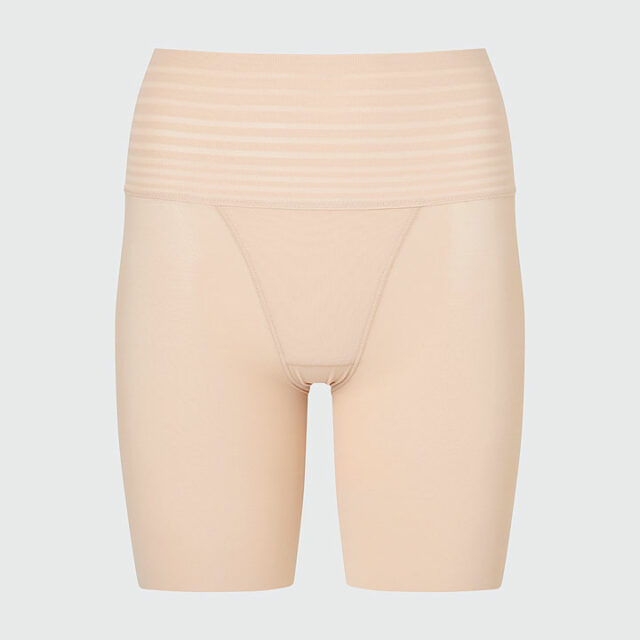
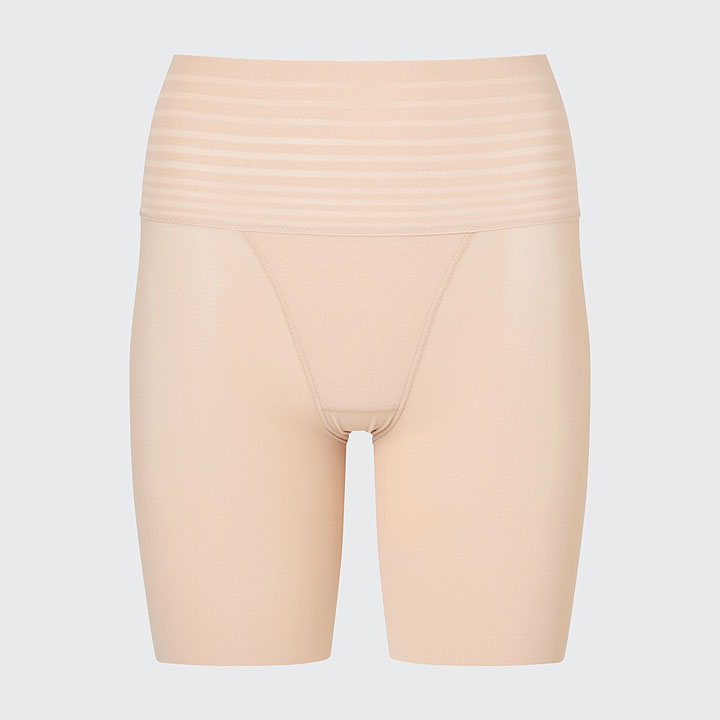
* AIRism Body Shaper Non-Lined Half Shorts (Smooth). This garment shapes the waist. It is soft, snug, and uses AIRism technology for stay-fresh comfort. Women can choose between the smooth version and the support version, which uses various knitting techniques for additional tummy control and to give the thighs a sleek silhouette.

AIRism Absorbent Sanitary Shorts (Hiphugger). Meant to be used during a woman’s period, the Sanitary Shorts are lightweight and can absorb up to 20 ml of moisture. The central part of the crotch has an absorbent double layer for added protection. The crotch panel also has two wings for use with sanitary napkins. The body is likewise made with AIRism technology, with odor-control features and water-resistant fabric. It has a low-rise hip-hugger style, with seamless hems that have no fabric edges. — Patricia Mirasol