Home Blog Page 5021

Foxmont’s latest report tracks progress of Philippine innovation

A key highlight of Foxmont’s Philippine Venture Capital report is that Philippine venture capital surpassed projections last year as 2022 continued to show steady deal flow in the Philippines despite a global slowdown in deal activity. — Foxmont Capital Partners Philippine Venture Capital Report 2023

By Bjorn Biel M. Beltran, Special Features and Content Assistant Editor

The opportunities of digital technology continue to bear fruit for the Philippines, as the most creative Filipino visionaries push beyond old conventions and reshape entrepreneurship in the 21st century.

The Philippines ranked 59th globally on the Global Innovation Index by the World Intellectual Property Organization, scoring best on the innovation pillars of Business sophistication (ranked 39th worldwide) and Knowledge and Technology output (ranked 41st worldwide).

The report noted that, for its comparative level of development for lower middle-income economies, the Philippines’ record of innovation is particularly impressive. When compared to its peers, the Philippines has one of the fastest rates of innovation catch-up.

In fact, the Philippines has risen more than 20 places in the region’s rankings over the past decade, making it one of the countries with the most progress on innovation.

This was no less in display in 2022, when the presence of strong provincial-based startups became more visible. Venture capital firm Foxmont Capital Partners invested in its first two provincial based startups due to this visibility: in Peddlr, a digital ledger and point-of-sales app from Catbalogan, Samar; and in Colourette, a direct-to-consumer beauty brand from Pampanga.

In its Venture Capital Report, Foxmont noted that despite being largely driven by domestic consumption, there remains a noticeable gap in aspirational consumer products in the Philippines.

The mass market is dominated by household brands that have been around for decades, and the upscale market largely turn to luxury brands made in the west. But the Philippines has not yet begun to cater to the young population that is rapidly becoming middle class.

Foxmont observed that some domestic direct-to-consumer (D2C) brands have stepped in to fill this void, offering a middle ground between the high-end and low-end consumer goods.

There is sizeable potential for expansion in the D2C market in the Philippines, especially now that direct-to-consumer brands are striving for an omni-channel presence.

According to the report, leading Philippine e-commerce websites have experienced consistent annual revenue growth since 2019. Even though gross merchandise value (GMV) has increased on one of the most popular Philippine e-commerce platforms, local brands continue to account for a larger percentage of revenue.

D2C is experiencing a similar uptick to the rest of e-commerce as the space continues to expand. It is increasingly becoming clear that consumers prefer to buy directly from companies rather than from middlemen like bookstores and department stores, as the majority of seller growth is coming from D2C brands.

Since e-commerce is constantly changing and reshaping the way consumers shop, the direct-to-consumer sector can only grow in the future.

Social commerce, or ecommerce bolstered by the use of social media, has also opened up a new space for D2C brands to sell in a much more interactive way. Shoppers can take advantage of social commerce’s personalized, interactive features to peruse and buy wares that speak directly to their interests and needs. Since direct-to-consumer brands can now sell on the same platforms as their customers, the entire buying and selling process has become much more natural and streamlined.

Colourette, for instance, took advantage of social commerce to build its customer base, and the brand has seen considerable growth (154% month-on-month) since the launch of their TikTok Shop. Their revenue post launch has also sustained its growth at around 157% versus pre-launch revenue.

One example of how D2C brands are growing through social media trends was when Colourette went live on Tiktok from 9 p.m. to 12 a.m. during 11.11 and sold one Colourtint per second within those three hours of live selling.

“Because Colourette is a community-centric brand, social commerce has greatly impacted how we engage with our community. First off, it has made the buying process much faster and easier for our customers. Prior to social commerce, consumers had to navigate away from their social media platform to purchase specific products – a disjointed experience that often led to client fallout,” Colourette founder Nina Ellaine Dizon-Cabrera said.

“More importantly, social commerce has paved the way to more authentic and organic relationships between our brand and our consumers. Community-building and social commerce work hand in hand and one can’t be successful without the other. For Colourette, we’re elated to reap the benefits of both and enjoy the best of both worlds.”

Although brand engagement is still developing, the trend is clearly in the direction of deeper connections with the intended demographic. Brands’ objectives have shifted as they seek to increase customer loyalty in light of the new capabilities afforded to them by modern technology, such as live selling, direct chats with sellers, and the rise of Gen Z marketing tactics like brands making personal TikTok accounts and content more relatable to the youth.

The power of social commerce is greater than ever, and the most personable brands will surge ahead in the new era of competition.


Study reveals women dominate sari-sari store ownership in PHL

A study conducted by startup Packworks, in partnership with sociocultural research company Fourth Wall, has brought to light the prevalence of women’s ownership of sari-sari stores in the Philippines.

Based on the data obtained from Sari IQ, Packworks’ business intelligence tool, 75% of the thousands of sari-sari stores analyzed are owned by women. The report also identified that only 20%, are male-dominated, and 5%, are unknown.

Sari-sari stores are small retail shops commonly found in residential areas across the Philippines, selling a wide range of consumer goods, from food and beverages to household items.

Packworks Head of Data Andres Montiel highlights the significant role of women in the grassroots economy of the Philippines. “The high percentage of sari-sari store ownership by women shows that Filipinas virtually control much of the local economy,” he said.

Since about 70% of manufactured goods are transacted in sari-sari stores, women’s domination of sari-sari store ownership puts them in a position to make a difference in the country’s economic life. However, economic sectors must open their doors to women, as women’s labor participation in some industries is still low. Institutions must also empower women by boosting skills training initiatives to ensure they can participate fully in the country’s economic growth.

According to Fourth Wall’s Research Director, John Brylle Bae, “The primary reason for women’s domination of sari-sari stores lies in the very origin and nature of sari-sari stores themselves. Families set up sari-sari stores to augment the resources of the household. Thus, sari-sari stores are always intertwined with the needs of the home. In the Filipino context, the role of the [mother] is to manage the home, including addressing and managing the household’s needs.”

DoST-PCIEERD grants TBI accreditation to College of Saint Benilde’s innovation hub

Benilde HiFi TBI Team at the kick-off held at the Grand Hall of the World Palace Hotel in Davao City. From left: Incubation Manager and OIC-Director Paul Pajo, Partnership Advancement Director Robin Serrano, Center for Intellectual Property Management Director Atty. Janice Tejano, Partnership Advancement Officer Patricia Go-Manere, Incubation Coordinator Alex Abear and Entrepreneur-in-Residence Camille Albarracin. — www.benilde.edu.ph/dost-awards-accreditation-and-grants-benilde-1st/

The Department of Science and Technology-Philippine Council for Industry, Energy, and Emerging Technology Research and Development (DoST-PCIEERD) recently ranked the De La Salle-College of Saint Benilde Hub of Innovation for Inclusion (HiFi) 1st among 27 universities and colleges to receive a Technology Business Incubator (TBI) grant.

Through this award, Benilde HiFi is now classified as an accredited TBI, with the shared goal to promote technopreneurship by nurturing financially viable business startups into sustainable operations. This initiative will be able to develop entrepreneurs, create jobs and promote public-private partnerships in regional economic development.

DoST-PCIEERD received a total of 89 applications from diverse Higher Education Institutions (HEIs) around the country, which underwent the meticulous screening by a panel of industry experts.

To be admitted to the TBI program, learning institutions should have active research and development. They must possess facilities that may be tapped by future startups. They should likewise have existing partnerships with business schools, industry associations or private organizations. They should also offer entrepreneurship or technopreneurship programs.

Ateneo de Manila University and Philippine Women’s College of Davao placed 2nd and 3rd, respectively. The Central Philippine University in Iloilo landed 4th, while the University of the Philippines Baguio clinched 5th.

Benilde HiFi will announce the lineup of activities for the next two years, which includes Benilde Trailblazer Startups that cover Human Centered Design Thinking and Benilde Prize Metaverse Hackathon. There will be workshops on Project Curation, Crowdfunding, Acceleration and Incubation Bootcamps on social innovation, intellectual property and new product and enterprise development.

A series of Social Innovation Talks (SITalks), Benilde Alumni Technopreneur (BEAT) Awards, IP Innovation Challenge, PDGII – Taft Love Open House and La Salle Social Innovation Townhall are likewise slated.

“With the DoST team working with us, we foresee more active participation by our students and faculty with HiFi, and would rev up the interest of the industries and communities we work with and serve,” Partnership Advancement Director and TBI Principal Investigator Robin Serrano noted.

“We will be able to directly support our incubation initiatives with the funds from the grant,” he added. “The recognition will enable us to bring in more supporters and believers in HiFi as well as our schools and programs involved in its initiatives.”

Inflation likely slowed in March — poll

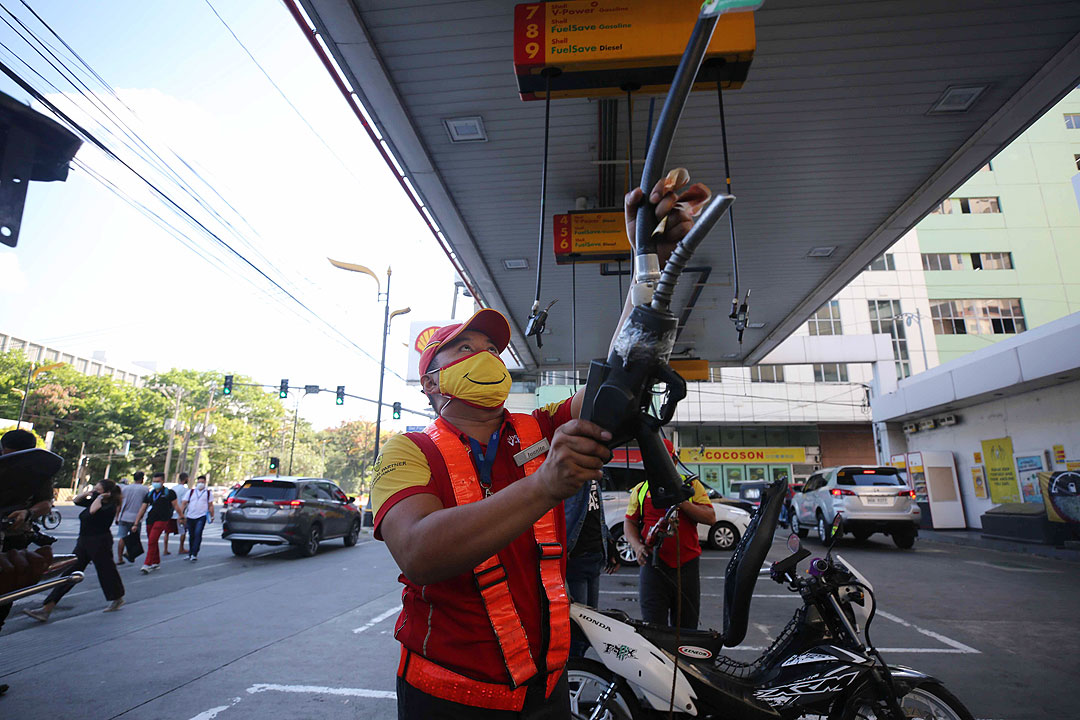
An attendant is seen working at a gas station in Manila. — PHILIPPINE STAR /RUSSELL PALMA
An attendant is seen working at a gas station in Manila. A rollback in pump prices may have contributed to easing price pressures during March, the central bank said. — PHILIPPINE STAR /RUSSELL PALMA

By Keisha B. Ta-asan, Reporter

INFLATION likely further slowed in March amid lower pump prices and a drop in prices of some food items, analysts said.

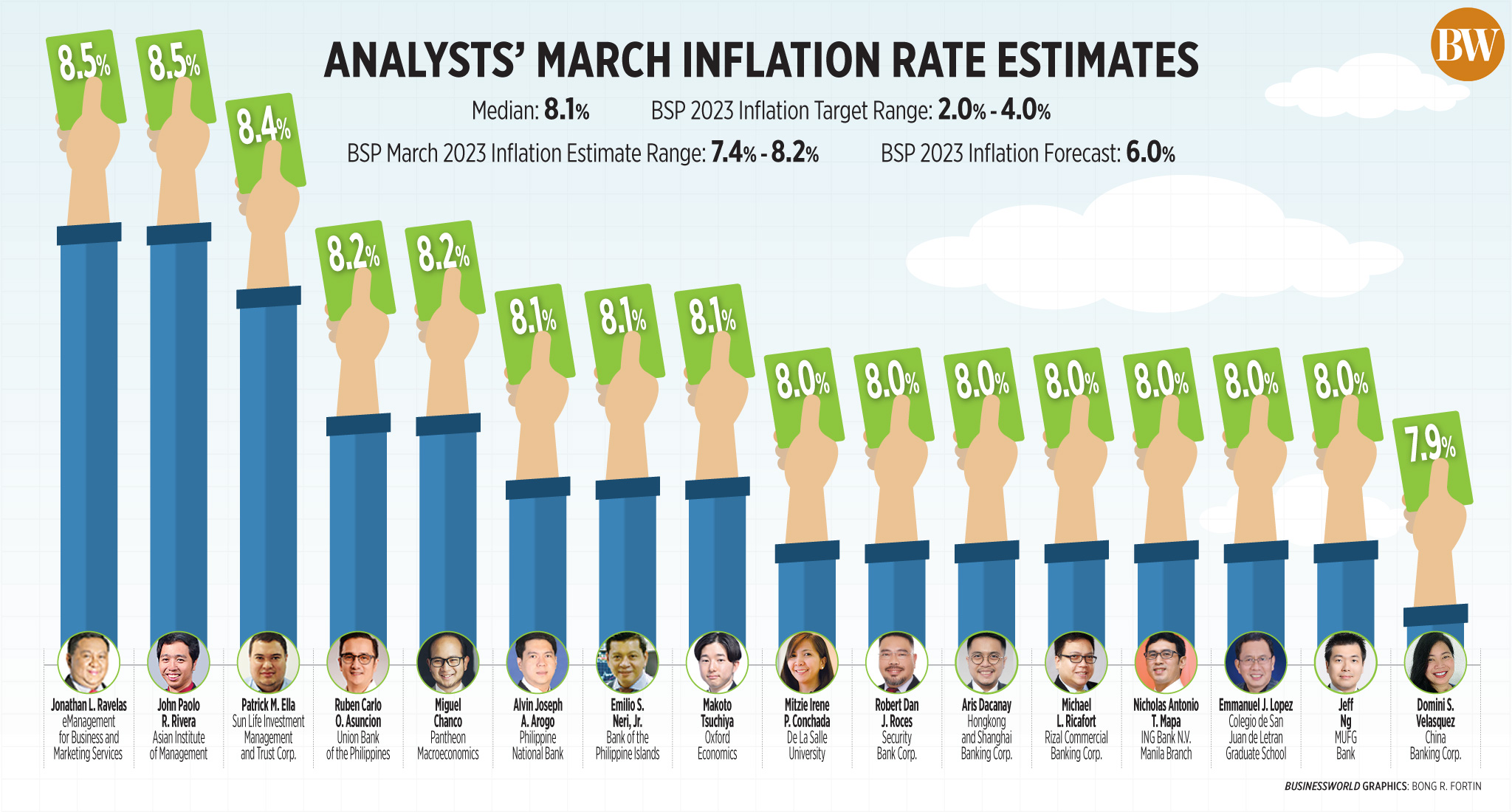
A BusinessWorld poll of 16 analysts yielded a median estimate of 8.1% for March inflation, near the upper end of the 7.4% to 8.2% forecast given by the Bangko Sentral ng Pilipinas (BSP) last week.

If realized, the median estimate will be slower than the 8.6% in February, but much faster than the 4% print in March 2022.

Analysts’ March inflation rate estimates

March would mark the 13th straight month that inflation surpassed the BSP’s 2-4% target range.

The Philippine Statistics Authority (PSA) will release the latest consumer price index (CPI) data on April 5 (Wednesday).    

“We expect CPI inflation to slow to 8.1% in March, primarily on the back of lower energy prices,” Oxford Economics assistant economist Makoto Tsuchiya said in an e-mail.

Fuel retailers lowered pump prices in March. For the month, pump price adjustments stood at a net decrease of P0.65 a liter for gasoline, P1.75 a liter for diesel, and P3.25 a liter for kerosene. 

“The impact of non-monetary interventions to tame inflation should have also been evident (in March),” Hongkong and Shanghai Banking Corp. economist for the Association of Southeast Asian Nations (ASEAN) Aris Dacanay said in an e-mail.

The government earlier this year approved the importation of 21,000 metric tons of onions, which helped bring down the price of red onions to P143 per kilogram (kg) in March from P535 per kg in January, Mr. Dacanay said.

He also noted the drop in prices of some vegetables like eggplants and Chinese cabbages in March.

China Banking Corp. Chief Economist Domini S. Velasquez said prices of eggs also went down as the avian flu remains contained, while fish prices slipped as the fishing season resumed. However, this may be offset by the rising prices of rice and meat, she added.

“Other commodities showed mixed performance for the month. Electricity in Meralco-serviced (Manila Electric Co.) areas are up due to high generation charges brought about by the shutdown of Malampaya,” she said.

Meralco hiked the overall rate to P11.4348 per kilowatt-hour (kWh) in March from P10.8895 per kWh a month ago due to an increase in generation charge.

The generation charge went up by P0.4636 to P7.3790 amid the maintenance shutdown of the Malampaya gas production facility from Feb. 4 to 18. Power plants supplied by Malampaya ran on more expensive alternative fuels to ensure continuous power supply during the two-week shutdown.

Ms. Velasquez said the higher generation charge in April and the looming El Niño may continue to drive up utility rates.

Philippine National Bank (PNB) economist Alvin Joseph A. Arogo said the lagged and second-round impact of higher prices from last year has not faded, but base effects will “play a big role” for the rest of the year.

Since March 2022, headline inflation has been above the 2-4% target range.

Mr. Tsuchiya also said inflation may continue to slow given easing supply-side pressures on food and energy, as well as softening domestic demand.

Union Bank of the Philippines, Inc. Chief Economist Ruben Carlo O. Asuncion said he does not expect a rapid disinflation this year. His full-year inflation forecast is 7.1%, higher than the BSP’s 6% average forecast.

“We see food to remain elevated primarily due to supply constraints and will not be remedied by the BSP’s hiking interest rates,” Mr. Asuncion said.

Ms. Velasquez said core inflation is still expected to remain elevated at around 7.8% in March, before “slowly trending downwards.”

“Moreover, prices of some food commodities seem to be moving upwards, rice and meat in particular. We are still awaiting greater non-monetary interventions to make sure food prices are brought down,” she added.

Core inflation, which discounted volatile prices of food and fuel, quickened to 7.8% in February from 7.4% in January, the fastest pace in over 22 years.

Security Bank Corp. Chief Economist Robert Dan J. Roces said core inflation may remain high if not flat in the next two months “as this responds with a lag from broader price effects.”

“Given these, the BSP will remain cautious as risks remain. With the next policy meeting in May, the central bank will have two months’ worth of data to consider as to its next move,” Mr. Roces said.

“We do think it has done much of the heavy lifting, and monetary policy can only do so much. Thus, we think there is a higher chance that it may decide to pause at the current policy rate,” he added. 

The BSP has raised rates by a total of 425 basis points (bps) since May 2022, bringing the policy rate to 6.25% — the highest since 2007.

“If we’re right, and inflation continues to fall in the coming months before the BSP Monetary Board meets next in May, then I suspect that they will have enough confidence to hit the pause button on its tightening cycle,” Miguel Chanco, chief economist for emerging Asia at Pantheon Macroeconomics, said in an e-mail.

For Mr. Dacanay, inflation will remain well above the BSP’s 2-4% target range.

“We expect the BSP to whip out another 25-bp hike (to 6.5%) at the next Monetary Board meeting before eventually pausing its tightening cycle,” he said.

The Monetary Board’s next policy review is on May 18.

Loan growth eases for third month in a row 

A view of a bank building in Manila, July 1, 2014. — REUTERS/ROMEO RANOCO

LOANS DISBURSED by big banks slowed for a third consecutive month in February, reflecting the impact of rising borrowing costs and base effects.

Outstanding loans by big banks grew by 10% to P10.69 trillion in February from P9.72 trillion a year earlier, preliminary data from the Bangko Sentral ng Pilipinas (BSP) released late on Friday showed.

The loan growth in February is a tad weaker than the 10.4% growth in January. This is also the slowest credit growth in 11 months or since the 8.9% print in March 2022.

Month on month, outstanding universal and commercial bank loans, net of reverse repurchase placements (RRPs), eased slightly by 0.2%, the BSP said.

“Sustained credit and ample liquidity will continue to support robust domestic demand,” the central bank said in a statement.   

Borrowings to residents, net of RRPs, jumped by 9.9% in February, slowing from the 10.2% growth in January.

Lending for production activities rose by 8.7% in February, slightly lower than the 9.2% expansion in the prior month.

This was driven by faster growth in loans for key sectors such real estate activities (3.8% in February from 3.5% in January), financial and insurance activities (12.5% from 5.6%), mining and quarrying (13.4% from 4.8%), and financial and insurance activities (12.5% from 5.6%).

Slower growth was seen in loans for manufacturing (8.3% in February from 10.5% in January), wholesale and retail trade, repair of motor vehicles and motorcycles (9.2% from 10.4%), information and communication (18.6% from 21.4%), and manufacturing (8.3% from 10.5%).

BSP data also showed a decline in loans for accommodation and food services (-3.4%), and education (-5.8%).

Meanwhile, consumer loans climbed by 21.2% in February, a tad faster than the 20.3% growth in January.

Credit card loans grew by 29.4% in February, slower than the 30.7% in January. On the other hand, salary-based general purpose consumption loans grew by 69.3%, faster than the 67% in the prior month.

Borrowings for motor vehicles contracted by -1.3%, improving from the -4.4% seen in January.

Rizal Commercial Banking Corp. Chief Economist Michael L. Ricafort said slower lending growth may be due to the rising interest rates and higher inflation. As a result, consumers, businesses, and other institutions now face bigger borrowing costs.

To curb inflation, the central bank has raised borrowing costs by 425 basis points (bps) since May last year. This brought the benchmark rate to 6.25% — the highest in nearly 16 years.     

Mr. Ricafort also noted the easing credit growth may be due to “some normalization of the base or denominator from lower base effects” in 2021.   

M3 SLOWS FURTHER
Despite slower lending growth, money supply expanded by 6% year on year to P16.1 trillion in February from the revised 5.6% rise in January.

Money supply, or M3, is considered as the broadest measure of liquidity in an economy.   

Month on month, M3 rose 0.7%, the BSP said in a separate statement.

In February, domestic claims rose 11.6%, slightly faster than the revised 11.4% in January.

Net borrowings of the central government expanded by 17.4%, quickening from the 16.5% rise in the prior month.

Net claims on the central government increased by 17.4% in February, faster than the 16.5% in January, Claims on the private sector jumped by 9.9%%, a tad quicker than January’s revised 10.7%. 

Meanwhile, net foreign assets (NFA) declined by 3.1% in February, worsening from the 1% contraction in January.

“The NFA of banks declined mainly on account of higher bills payable. Similarly, the BSP’s NFA position fell by 2.3% in February,” the BSP said.

“Looking ahead, the BSP will continue to ensure that domestic liquidity conditions remain consistent with the prevailing stance of monetary policy in keeping with the BSP’s price and financial stability objectives.” — Keisha B. Ta-asan

PHL banks maintain optimistic outlook for next 2 years — survey 

Peoples walk past automated teller machines in Makati City, June 23, 2016. — REUTERS

PHILIPPINE BANKS expect to post double-digit growth in assets, loans, deposits, and net income in the next two years despite the current high inflationary environment and a looming global economic slowdown, the Bangko Sentral ng Pilipinas (BSP) said. 

Results of the BSP’s Banking Sector Outlook Survey (BSOS) for the first semester of 2022 showed banking industry leaders maintained a positive growth outlook on their operations.

“The overall outlook for the banking system remained buoyant amid the slowdown in global economic activity and increasing commodity prices in the first half of 2022, following tightening in global financial conditions and the ongoing geopolitical tensions between Russia and Ukraine,” the BSP said.   

Survey respondents include presidents, chief executive officers, country managers of all universal and commercial banks (U/KBs) and thrift banks, 80 rural and cooperative lenders, and two digital banks that account for 97% of the total assets of the banking industry as of end-December 2021.

Respondents were asked about their growth outlook, risk assessment, and business strategies within a two-year period. The survey is part of the BSP’s surveillance toolkit to help improve the banking system’s resilience.

“Majority of surveyed banks shared a stable outlook of the banking system in the next two years. This optimism was coupled with expectations of double-digit growth in assets, loans, deposits, and net income,” the BSP said.

However, the latest survey showed about 67.9% of banks see a stable banking system, which is lower than the 76.3% in the previous survey.

Around 32.1% of the banks expect a stronger sector in the next two years, significantly more than the 5.4% in the prior survey.

None of the respondent banks forecasted a weaker banking system for the two-year period.

Most lenders expect their assets to grow between 10% and 15%, while digital banks projected asset growth up to more than 20%.   

“The expansion in bank assets was expected to be largely in the form of credit growth to further support the country’s financing needs,” the central bank said.   

About 78.9% of banks anticipate double-digit growth in their loan portfolio for the next two years, higher than the 72.7% seen in the prior survey.

Universal banks surveyed said they would want to focus on the manufacturing, wholesale and retail trade, and consumer finance sectors in the next two years.   

BSOS results also showed banks have a more optimistic outlook on their profitability, with 77.9% of respondents seeing double-digit growth in net income, higher than the 74.4% in the previous survey.

Better loan quality is also expected in the next two years due to the economy’s recovery and a rebound in credit activity. About 52.4% of banks expect their nonperforming loan (NPL) ratio to exceed 5%. This is a lower number compared with the 58.9% of respondents in the previous survey.

As of January, the industry’s NPL ratio stood at 3.28%, lower than the 4.14% in January 2022.

Half of the banks surveyed also anticipate an NPL coverage ratio of 51% to more than 100% in the next two years.

By banking group, the NPL ratio projection of universal and commercial banks shifted to within the range of greater than 2-3% from above 3% in the previous year. Most U/KBs also see their NPL coverage ratio to be at least 75% to more than 100%.   

“Digitalization of products and services was identified as a top strategic priority of banks in the next two years,” the central bank said.   

According to the BSOS, majority of banks are already improving their digital capabilities. Banks also identified deposit operation as the most important area of focus, followed by payment systems.   

Due to the increasing digitalization of financial transactions, banks are aware that risks to cybersecurity may arise.

Most of the respondent banks said it is important to continually monitor against threats, and that a reliable information technology department would ensure quick response to security incidents.   

“Banks have also invested in updated security tools, performed periodic vulnerability assessments, and enhanced their security framework, among others,” the BSP said.   

Meanwhile, banks said the top risks to their operations are asset quality and credit risks.

Respondents are also wary of macroeconomic, operational risks, and cybersecurity threats, the survey’s results showed.

To protect their respective banks against internal and external shocks, lenders said they are strengthening their risk governance framework, the BSP said.     

“The Philippine banking system sustained its resilient and robust performance amid the lingering effects of the COVID-19 (coronavirus disease) crisis alongside the tightening of global financial conditions,” the BSP said.   

“Moving forward, the BSP will continue to adopt prudential measures that will strengthen corporate and risk governance in banks as well as promote responsible innovation and mainstream sustainable finance. All these are intended to foster a resilient, dynamic, and inclusive financial system that is supportive of sustainable economic growth.” — Keisha B. Ta-asan

Gov’t urged to bolster seafarer training after EC decision

A job seeker fills out a form at a booth, belonging to a recruiter of seafarers, in Manila, April 13, 2009. — REUTERS/ROMEO RANOCO

THE PHILIPPINE GOVERNMENT should bolster its efforts to improve the training of Filipino seafarers after the European Commission’s (EC) decision to continue recognizing certificates issued by the Philippines to Filipino seafarers, a labor group said on Sunday.

“Now we want the government to work earnestly to ensure that all the deficiencies noted by the (EC) in the country’s seafarer training and education training are truly addressed,” Sentro ng mga Nagkakaisa at Progresibong Manggagawa Secretary-General (SENTRO) Josua T. Mata said in a Viber message.

The EC on Friday said it acknowledged the country’s efforts and “constructive” cooperation to improve the system for training and certifying seafarers.

“Based on the answers of the Republic of the Philippines and on all available information, the Commission has concluded that the measures taken demonstrate concrete progress and improvement as regards the compliance with the requirements of the Standards of Training, Certification and Watchkeeping for Seafarers and Code,” the EC director-general said in a letter dated March 31 addressed to the Maritime Industry Authority (MARINA) Administrator Hernani N. Fabia.

However, the EC official noted that there were still deficiencies in the Philippines’ system of training seafarers.

Last year, the EC said that almost 50,000 Filipino seafarers working in European vessels could lose their jobs if the Philippines does not address its deficiencies.

In a statement on Sunday, Malacañang said the decision showed the country complied with international standards of training seafarers.

“With this decision, a crisis of monumental proportions has just been averted,” Migrant Workers Secretary Maria Susana V. Ople was quoted, saying the jobs of about 50,000 Filipino seamen have been saved.

The Palace also noted that the Philippine government has been recognized at the European Union (EU) level for its maritime education, training, and certification programs since 2002.

During a news forum on Saturday, Transportation Spokesman Joni Gesmundo said the government will continue to address deficiencies in the country’s seafarer training program.

“The Maritime Industry Authority (MARINA) is taking steps to address deficiencies in maritime training schools to see if the education and equipment in these schools are sufficient,” he said in Filipino.

Mr. Gesmundo said the Philippines has yet to be given a deadline to meet EU seafaring standards.

The European Maritime Safety Agency raised issues regarding the country’s compliance with EU standards following an inspection in March 2020.

A year later, the EC warned the Philippine government that it would withdraw recognition of Filipino seafarers’ certificates if it did not address deficiencies in training Filipino seafarers.

“We hope this will spur the institutions to continue on this track and not let off now that this threat has been averted,” Francesco Gargiulo, chief executive officer of the International Maritime Employers Council (IMEC), said in a WhatsApp message sent to reporters.

IMEC is an international employers’ organization that operates more than 11,200 vessels that employs more than 290,000 seafarers in more than 60 countries, according to the organization’s website.

SENTRO’s Mr. Mata also said the government should also address seafarers’ concerns regarding exorbitant fees and allegations of corruption in some training institutions.

The Philippines is the world’s main source of maritime manpower, representing 25% of global seafarers. Seafarers sent $6.71 billion in remittances last year. — John Victor D. Ordoñez

MGen unit plans to export RE from Indonesia to Singapore 

MGEN RENEWABLE ENERGY, INC. (MGreen) is planning to build a renewable energy (RE) plant in Indonesia to export and supply renewables to Singapore.

“We are right now looking into hopefully exporting renewables from Indonesia to Singapore because we have a Singapore plant,” Jaime T. Azurin, president and chief executive officer of Meralco PowerGen Corp. (MGen), told reporters last week.

MGreen is the renewable energy subsidiary of MGen, the power generation arm of listed electric distribution utility Manila Electric Co. (Meralco).

MGen owns 58% of PacificLight Power Pte. Ltd., which owns and operates a combined cycle turbine power plant in Jurong Island, Singapore.

Mr. Azurin explained that MGen has been eyeing Singapore because of its recognized electricity demand, which is not matched by the island’s limited land area. Meanwhile, the outer islands of Indonesia are only about “20 to 30 kilometers away” from Singapore.

“When you lay down the cable going to Singapore there will be issues, where is the jurisdiction from the Singapore government? We have been trying to develop that for the past years and hopefully, within the year something will come out of it,” he said.

Mr. Azurin said MGen is hoping to get an export permit from the Indonesian government for the project.

“It is very meticulous because you are passing through a cross border,” he said.

Mr. Azurin did not disclose the capacity of the power plant but he said it would be a “sizeable capacity” composed of solar power and battery because the undersea cable is expensive.

“Submarine cables are expensive, it has to be more than 300 megawatts (MW),” he said.

He noted that while the plant is not yet built, it will be owned by Pacific Light in partnership with an Indonesian company as an Indonesian license is also needed.

Meralco’s controlling stakeholder, Beacon Electric Asset Holdings, Inc., is partly owned by PLDT Inc. Hastings Holdings, Inc., a unit of PLDT Beneficial Trust Fund subsidiary MediaQuest Holdings, Inc., has an interest in BusinessWorld through the Philippine Star Group, which it controls. — Ashley Erika O. Jose

San Miguel says LNG shipment starts in April

SAN MIGUEL Global Power Holdings Corp. expects liquefied natural gas (LNG) shipment to arrive within this month.

“The vessel that will be filled with LNG has arrived,” San Miguel Corp. (SMC) President Ramon S. Ang told reporters on Friday on the sidelines of the inauguration of San Miguel Global Power’s battery energy storage systems (BESS) in Limay, Bataan.

Mr. Ang said the import terminal will start its commissioning this week and its operations to begin within a month. He said the terminal’s capacity can supply power up to 1,200 megawatts (MW) ahead of further developing it to bring 1,300 MW more or a total of 2,500 MW.

The initial 1,200-MW capacity is expected to be available next month, with the additional capacity set to be ready next year, he added.

Meanwhile, a source at SMC unit San Miguel Global Power said the country can expect to receive its first LNG shipment by mid-April.

“This will be used to commission the Batangas LNG terminal in Batangas Bay, near Manila, which will be the country’s first operational LNG import terminal,” the source said, adding that the shipment will be used to fuel the 1,200-MW Ilijan natural gas power plant.

Data from San Miguel Global Power’s website show that the import terminal has a planned combined cycle gas plant in Batangas City’s lijan and Dela Paz Proper.

In November last year, the Department of Energy said that two LNG projects are expected to start operations in 2023.

Linseed Field Power Corp., a unit of Atlantic Gulf & Pacific Co., said that it had completed the conversion of a vessel into a floating storage unit for gas.

First Gen Corp., through its subsidiary FGEN LNG Corp., said its LNG terminal will also be completed by the first quarter of 2023.

Linseed will serve as the operator of the LNG re-gasification facility that will be rented by San Miguel Global Power’s South Premiere Power Corp.

Meanwhile, San Miguel Global Power inaugurated its 90-megawatt-hour (MWh) BESS facilities in Limay, Bataan last Friday.

“Our BESS facilities will support the country’s power grid by storing excess power from existing plants, and injecting this power back, when and where it is needed, within milliseconds, ensuring power quality is stable, and reaches users all over the country,” Mr. Ang said.

Mr. Ang said the SMC group now has about 640-MWh BESS facilities operating nationwide, spread across 32 stations. The company is targeting to add about 360 MWh by yearend.

“With battery energy storage, we can solve the problem with most renewable energy sources, which is intermittency, due to the irregularity or seasonality of solar and wind power sources. Over the next couple of years, we estimate the integration of up to 5000 MW of renewable power into the grid, due largely to our BESS facilities,” he added. — Ashley Erika O. Jose

Upson says IPO draws significant  participation of foreign investors

UPSON International Corp. had significant institutional investor participation from foreign funds during its offer period from March 21 to 27, a company official said.

“We are happy to note that we had a healthy participation of institutional investors, with a significant majority of investors from foreign funds which is a strong testament to their confidence in our company,” said Upson President and Chief Executive Officer Arlene Louisa T. Sy in a statement over the weekend.

Upson is set to offer its shares on April 3 in an initial public offering (IPO) that could raise up to P1.65 billion for its store network expansion.

According to its final prospectus, the company will offer about 625 million common shares with an over-allotment option of 62.5 million common shares. These are priced at P2.40 apiece.

The company estimates net proceeds from the IPO to be at P1.42 billion, which will be used to fund its store network expansions and to improve its supply chain and logistics.

It plans to open 250 stores from 2023 to 2027, or an additional retail space of 25,000 square meters.

For the year, the company seeks to open 50 stores within the National Capital Region and key cities in Luzon, Visayas, and Mindanao.

“We believe that to maintain our market leadership and for a stronger presence, this will be attained by further establishing stores nationwide. Having a robust nationwide network also helps sustain our customers’ top-of-mind recall of our brands,” Ms. Sy said.

The company tapped First Metro Investment Corp. as the issue manager, bookrunner and joint lead underwriter of the IPO.

Meanwhile, RCBC Capital Corp. was also tapped as a joint underwriter.

Upson is an information technology retailer with about 200 stores nationwide as of September 2022. — Adrian H. Halili

Executive sedan standard-bearers

The seventh-generation BMW 7 makes its debut. — PHOTO BY KAP MACEDA AGUILA

ICE-powered or pure electric? Have the BMW 7 your way

THERE WAS a play on the number seven last week by SMC Asia Car Distributors Corp., local distributor of BMW vehicles. Surely, the company is hoping the number proves auspicious. Consider that the seventh generation of the BMW 7 was unveiled on the night of March 27. Not only that; its alter-ego — an all-electric iteration appropriately called the i7 — was simultaneously revealed.

The importance of the nameplate cannot be overstated. It is the flagship model of BMW, the pinnacle sedan that now again seeks to embody the best the German car maker has to offer. The 7 also comes at a crucial time when the country — and, verily, the world — continues to come out of the doldrums caused by the COVID-19 pandemic. No less than San Miguel Corp. President and COO Ramon Ang came to the launch and delivered a speech. Also in attendance were BMW Group officials led by Asia Managing Director Lars Nielsen and Corporate Affairs and Sustainability Director Preeti Gupta, who had flown in from Singapore.

Mr. Ang spoke of the “special significance” of the launch. “It represents the changing face of luxury, and how a century-old heritage brand such as BMW has constantly evolved as we progress into the future. Luxury is not just about comfort, convenience, and status. Rather, it has become more about experience, value, and emotion,” he declared.

BMW Philippines is coming off a year of growth as it registered sales of 1,160 units in 2022 — up from 920 the previous period. Still, SMC Asia Cars Distribution Corp. President Spencer Yu remains very pragmatic. “We’re lucky last year that we had the cars, and our competitors did not,” he told members of the media a day after the launch. “This year is anyone’s guess.”

Replying to a question from “Velocity,” Mr. Yu said that while the firm forecasts growth, year-to-date numbers versus the same period in 2022 are down — a byproduct of a “perfect storm” of logistics issues and such. But things are happily starting to turn, which gave BMW Philippines and the BMW Group Asia the confidence to pull the trigger on the 7 in the first place.

The latest all-new version of the 7, as it should, further pushes the notion of luxury. It is, after all, the flagship nameplate of the German luxury car maker. In a release, BMW said that the 7 “focuses on the individual and (his/her) personal attitudes, needs and emotions. In addition to presence, elegance and exclusive premium quality, there is a progressive approach characterized by innovations that directly enhance the user experience, provide wide-ranging connectivity, and set benchmarks in sustainable production.”

BMW Philippines chose to bring in the in-line-six-powered 7 — specifically, the 735i Pure Excellence trim. A TwinPower Turbo with three liters of swept volume resides under the long hood. The gas-sipping power plant is complemented with a 48V mild hybrid system. The output numbers are a generous 286hp and 425Nm, and these are accessed through an eight-speed Steptronic Sport Automatic transmission which is said to hurtle the 7 from a standstill to 100kph in 6.7 seconds.

The mild hybrid system “(enables) more comfortable operation of the auto start/stop function (and) generates torque of 200Nm and an output boost of up to 9kW (12hp), depending on the driving situation.”

“The all-new BMW 7 Series is our most important product introduction to date. It is the sum of true innovation in design, comfort, technology, and overall performance. This sedan redefines luxury motoring and brings it to greater heights. As always, this model is our blueprint for what the future of BMW will look like, which will be very exciting,” Mr. Yu continued.

Speaking of the future, it is perhaps embodied even more decisively in the first-ever i7, which takes its place with the iX and iX3, BMW’s all-electric options available here. The i7 banners the fifth-generation BMW eDrive technology, comprised of “highly integrated drive units at the front and rear axles that bring together the electric motor, power electronics and transmission within a single, very compact housing, plus the accompanying charging technology and high-voltage battery.” The BMW 735i Pure Excellence is priced at P8.99 million and comes with a comprehensive five-year warranty.

The i7 xDrive60 boasts of an electrically excited synchronous motor, which dispenses with the use of permanent magnets — opting, rather, for a “precisely controllable electrical feed that sets the rotor in motion rather than fixed permanent magnets.” This means that “critical rare earth metals” are not used, consistent with BMW’s globally declared aspiration for sustainability.

The electric all-wheel-drive sedan boasts two motors. The one motivating the rear wheels outputs 230 kW/313hp; the one spinning the front submits 190 kW/258 hp. Maximum system output peaks at 400kW/544hp and 745Nm. This, says BMW, translates to a sprightly standstill-to-100kph time of 4.7 seconds. The WLTP-tested power consumption rate is 18.4kWh-19.6kWh per 100 kilometers, for a range of 590 to 625 kilometers — nothing to sneeze at. Its electronically limited top speed is 240kph.

The 7 receives another interpretation of BMW’s signature elements, it’s twin circular headlights and (sometimes controversial) kidney grille. In a speech, Mr. Nielsen said that the company wanted to give its specific lines a more distinct look. For instance, the aforementioned grille of the 7 no longer looks similar to the 5 Series.

The front fascia of the 7 Series comes as standard with Adaptive LED Headlights with High-beam Assistance. The lighting arrays are clearly divided into two areas: a slim strip of lights higher up collects the daytime driving lights, sidelights, and turn indicators; low-beam and high-beam headlights are in the dark lower units “chiseled deep into the front apron.”

On its side, the 7 Series, reports BMW, boasts “virtually flush-fitted side windows with invisible seals.” Long doors (with soft-close function) of the executive mover makes for easier ingress and egress for the rear passengers. To the rear, the 7 also reflects a divided surface structure, featuring thin LEDs.

Meanwhile, the i7, according to Mr. Yu, “not only fulfills (BMW Philippines’) promise of further stimulating the premium car segment by bringing more electrified options to the Philippines, it is also the most future-forward car BMW has ever made.”

Its version of the kidney grille dispenses with openings as it does not have an engine to cool, is fully enclosed to optimize airflow. It also sports the logo of the BMW i sub-brand. Telltale blue touches, like in the surrounds of the BMW emblem, further indicate its fully electric nature.

Along with a complement of digital accoutrements and tech showpieces, the 7 models debut the so-called BMW Interaction Bar “as a new breed of control/operation and design element.” Extending the width of the instrument panel and into the door panel trim, this crystalline surface structure with backlighting incorporates touch-sensitive control panels for adjusting the ventilation and climate control, activating the hazard lights, and opening the glove compartment.

The BMW i7 xDrive60 Pure Excellence BEV, priced at P10.39 million, tucks in a five-year BMW factory warranty, eight-year high-voltage battery warranty, and six-year BMW Service Inclusive warranty. For now, the model is made available at “authorized BMW i retailers,” namely RSA Motors Libis and RSA Motors Greenhills.

In an exclusive interview with this writer, Mr. Nielsen spoke about the lingering “issues when it comes to supplies such as semiconductors.” The global challenge, largely brought about by the pandemic and its deleterious effects, is something many industries are still grappling with.

“This is something we cannot rule out,” he continued. “We still have a waiting time for deliveries of the i7 in several markets — less so for the petrol version. But, in general, we’ve had a lot of success for the new 7 Series. We’re starting to get them right on time, as customers are obviously demanding it.”

The key, he said, is to stagger the model release. “We have a staggered rollout. We don’t roll out in a market, and have no supply. That makes very little sense. Spencer (Yu) can confirm that he has cars on the way.” Interestingly, the i7 has not launched in all markets under BMW Group Asia.

So why the Philippines?

“We already have electric vehicles in the Philippines, so we see that it’s working,” maintained the executive. “Number two, the Philippine government has stated that it wants this. There’s a way forward. This, we know from around the world, is a key component of ensuring success. No single brand is capable of building up a market like this; that doesn’t work. (Authorities have to be) hand-in-hand with the industry to make life as easy as possible for the customers.

“We’re seeing now, compared to Europe and certain parts of the US previously, the ramp-up pace in Southeast Asia is now running very fast. In Europe it took years; here we’re talking in some places about a year — getting legislation in place, building infrastructure. That’s very important in this context.”

Maynilad’s service areas to still experience water interruptions

BW FILE PHOTO

CUSTOMERS in areas served by Maynilad Water Services, Inc. will continue to experience water service interruptions as supply remains inadequate, a company official said.

“Right now, we’re only getting around 2,150 million liters per day (MLD) at the Novaliches portal. We should be getting 2,400 MLD because at that volume, we won’t have service interruptions,” Jennifer C. Rufo, head of Maynilad’s corporate communications, said in a Viber message on Saturday.

Ms. Rufo said the issue right now is not so much the demand but the availability of adequate supply.

She added that the current production of Maynilad’s treatment plants in the south is at 230 MLD, or higher than the previous weeks’ when raw water at Laguna Lake had higher turbidity levels.

“But it’s still lower than the ideal 280-300 MLD because we’re still intensifying the cleaning of our facilities’ filters following the prolonged high turbidity episode at Laguna Lake,” she said, adding that the target is to revert to normal output by mid-April.

On Friday, the National Water Resources Board (NWRB) raised the water allocation for the Metropolitan Waterworks and Sewerage System (MWSS) to 50 cubic meters per second (CMS) from the current 48 CMS from April 1 to 15, 2023.

“NWRB did not grant the request of Maynilad through the MWSS that the allocation be increased to 52 CMS,” Maynilad said in a separate statement issued on Friday.

Leonor C. Cleofas, MWSS administrator, told BusinessWorld by phone on Sunday that the allocation granted by the NWRB will allow the La Mesa and Ipo dams to recover and support the water supply needs of Metro Manila.

Ms. Cleofas said that MWSS had directed Maynilad to maximize the production of its Putatan water treatment plants.

“At 50 CMS, we expect that the volume of raw water flowing to the Novaliches portal in Quezon City will still be at reduced levels. Given this, the current daily water service interruptions will remain in place, but the interruption schedules to be implemented starting April 1, 2023 have been adjusted to account for the full suspension of the cross-portal sharing arrangement between Maynilad and Manila Water,” Maynilad said.

Ms. Cleofas said that Maynilad had been directed to schedule water service interruptions only at night.

However, Ms. Rufo said that Maynilad cannot limit interruptions to nighttime with its current allocation.

Meanwhile, Ms. Cleofas reiterated that despite the current water service interruptions, water supply remains sufficient.

She added that MWSS and Maynilad are expected to meet on Monday to discuss and monitor the current water supply and demand situation.

Asked whether MWSS will impose fines on Maynilad, Ms. Cleofas said: “It’s the regulatory office, they are looking at it.”

Maynilad, a concessionaire of the MWSS, serves the cities of Manila, except portions of San Andres and Sta. Ana. It also operates in Quezon City, Makati, Caloocan, Pasay, Parañaque, Las Piñas, Muntinlupa, Valenzuela, Navotas, and Malabon.

It serves the cities of Cavite, Bacoor, and Imus, and the towns of Kawit, Noveleta, and Rosario in Cavite province.

Metro Pacific Investments Corp., which has a majority stake in Maynilad, is one of three Philippine units of Hong Kong-based First Pacific Co. Ltd., the others being Philex Mining Corp. and PLDT Inc. 

Hastings Holdings, Inc., a unit of PLDT Beneficial Trust Fund subsidiary MediaQuest Holdings, Inc., has an interest in BusinessWorld through the Philippine Star Group, which it controls. — Ashley Erika O. Jose