Home Blog Page 4974

Peso rebounds amid improving outlook on China

BW FILE PHOTO

THE PESO recovered against the dollar on Thursday after China’s central bank kept its policy rate unchanged for the eighth straight month, resulting in an improved outlook for the Chinese economy.

The local currency closed at P56.02 versus the dollar on Thursday, strengthening by 19 centavos from Wednesday’s P56.21 finish, data from the Bankers Association of the Philippines’ website showed.

The local unit opened Thursday’s session at P56.31 per dollar, weaker than its Wednesday close. Its intraday best was at P56, while it dropped to as low as P56.40 versus the greenback.

Dollars traded went down to $1.08 billion on Thursday from the $1.236 billion recorded on Wednesday.

“The peso rebounded from market optimism after the People’s Bank of China held its policy rates unchanged, boosting hopes for the Chinese economy,” a trader said in an e-mail.

China kept its benchmark lending rates unchanged for the eighth straight month on Thursday in line with expectations, as the economic recovery reduced the need for any immediate monetary support, Reuters reported.

The one-year loan prime rate (LPR) was kept at 3.65%, while the five-year LPR was unchanged at 4.30%.

In a Reuters poll of 30 market watchers conducted this week, 27 predicted no change to either rates.

The peso also strengthened on the back of weakening oil prices, Rizal Commercial Banking Corp. Chief Economist Michael L. Ricafort said in a Viber message.

Oil prices slid about 2% on Wednesday, with Brent futures for June delivery falling $1.65 or 2% to settle at $83.12 a barrel.

West Texas Intermediate crude (WTI) for May delivery fell $1.70 or 2.1% to settle at $79.16, while the June WTI contract, which becomes the US front-month at the end of trading on Thursday, also lost 2.1% to settle at $79.24.

Those were the lowest closes for both benchmarks in two weeks or since March 31, erasing most of the price gains since the surprise oil output cut announced on April 2 by the Organization of the Petroleum Exporting Countries, Russia and other allies in the OPEC+ group.

Mr. Ricafort added that the balance of payments (BoP) surplus hitting a two-month high of $1.27 billion in March from the $754-million surfeit a year earlier also supported the peso.

Data released by the Bangko Sentral ng Pilipinas on Wednesday showed that the March surplus was an improvement from the $895-million deficit seen in February.

It was also the biggest monthly BoP surplus since the $3.08-billion surfeit in January.

Philippine financial markets will be closed on Friday for a regular holiday in observance of Eid’l Fitr. —A.M.C. Sy with Reuters

Court upholds conviction of bank manager at center of $81-M heist

GIORGIO TROVATO-UNSPLASH

THE PHILIPPINES’ Court of Appeals has upheld the conviction of a former Rizal Commercial Banking Corp. (RCBC) manager for money laundering in connection with the $81-million Bangladesh Bank cyber-heist in 2016.

The appellate court’s First Division rejected the appeal of ex-bank manager Maia Santos Deguito, who was convicted by a regional trial court for eight counts of money laundering, based on a Feb. 6 order released on April 19.

“In light of the above conclusions, there is no doubt that the prosecution was able to prove that Deguito is guilty of eight counts of violation of Section 4f of Republic Act No. 9160, as amended,” it said. “The court finds no need to further discuss the other issues raised by the parties.”

Ferdinand S. Topacio, who lawyers for Ms. Deguito, did not immediately reply to a text message seeking comment. He had called her indictment “a travesty of justice of the worst kind.”

Hackers in February 2016 sent fraudulent requests for almost $1 billion from the Bangladesh central bank’s account at the Federal Reserve Bank of New York, mostly intended for accounts in Manila-based RCBC.

The US central bank and intermediary banks blocked many of the transfer orders, but $81 million made it to accounts with fake names at RCBC. Most of the funds were laundered in Manila’s loosely regulated casino industry.

In January 2019, a Makati trial court found Ms. Deguito guilty of money laundering in connection with one of the world’s biggest cyber-heists in modern history.

She was sentenced to four to seven years in prison for each of the eight counts of money laundering, more than year after her indictment by government prosecutors. She was fined $109 million.

Ms. Deguito was the manager of the RCBC branch in Jupiter, Makati where a portion of the $81 million stolen by hackers from Bangladesh Bank was deposited in accounts under fictitious names.

The appellate court said the former bank manager conveniently turned a blind eye on the suspicious accounts opened for the sole purpose of receiving illegally obtained money.

It said she could not downplay her participation since she had an extensive banking career that provided her with knowledge of the bank’s processes.

“Without doubt, the prosecution was able to prove beyond reasonable doubt that the inward remittances credited to the Jupiter accounts on Feb. 5, 2016 were proceeds derived from hacking or crackling, an unlawful activity,” it added.

The Department of Justice cleared casino boss Kim Wong and junket operator Weikang Xu of any wrongdoing in 2017, without explaining why.

Mr. Wong returned almost $15 million of the stolen funds.

Local remittance firm Philrem Service Corp. had denied charges that it was used to launder the money. Prosecutors said the firm had escaped criminal charges after its owners showed proof that they had alerted authorities about the suspicious transactions.

RCBC was fined a record P1 billion ($18 million) by the Philippine central bank for failing to prevent the movement of the stolen money through its bank.

A top Bangladeshi investigator has said he suspected some IT technicians from the Dhaka-based bank had helped the hackers carry out the heist. — J.V.D. Ordoñez

Philippine privacy agency to probe police data leak

CHARLESDELUVIO-UNSPLASH

THE NATIONAL Privacy Commission (NPC) on Thursday said it would look into a reported data breach of police records and information on people who work or applied for employment in law enforcement in the Philippines.

In a statement, the agency said it would meet with the Philippine National Police (PNP), National Bureau of Investigation (NBI), Bureau of Internal Revenue (BIR) and Civil Service Commission (CSC) on Thursday to discuss the data leak.

“As your data privacy authority, the NPC is fully committed to protecting personal information and assures the public that we will not leave a stone unturned in getting to the bottom of this alleged breach,” Privacy Commissioner John Henry Naga said.

“We would also like to have this opportunity to remind those who process personal data that they concomitantly have the duty to protect the data they collect.”

In a report posted on the vpnMentor website on Tuesday, cyber-security researcher Jeremiah Fowler said more than 1.2 million police records and 800 gigabytes of information on people who work or applied for employment in law enforcement in the Philippines were publicly available on a database.

He said government agencies should conduct a comprehensive forensic audit of the exposed data.

Albay Rep. and House ways and means committee chairman Jose Maria Clemente S. Salceda said the NBI should scrap the police clearance requirement after the data breach.

“If you are involved in some crime, we can probably get your data easily anyway,” he said in a statement on Thursday.

“Rather than putting ordinary law-abiding citizens through the hassle and expense of clearances, as well as the risk of data breach, why don’t we normalize due diligence among employers?”

In a separate statement, Internal Revenue Commissioner Romeo D. Lumagui, Jr. assured that there was no breach at the agency.

“The bureau has initiated response protocols to keep its database protected,” he said. “We are now in close coordination with the authorities and other government agencies to assist in mitigating the reported breach.”

The database also contained documents on tax identification numbers of law enforcers, which was available for at least six weeks, according to the report.

Mr. Fowler said exposed police records could allow criminals to blackmail members of law enforcement, among other criminal schemes. — 

In a report on April 17, global cyber-security firm Kaspersky said web attacks targeting entities in the Philippines rose to 492,567 in 2022 from 382,940 a year earlier.

The country placed third worldwide in ransomware payments in 2021, with local organizations spending an average of P1.6 million, according to cyber-security firm Sophos.

The Philippines ranked 23rd out of 250 countries that were most affected by data breaches, with 523,684 leaked accounts in the third quarter of 2022, virtual private network service provider Surfshark said in a report on Oct. 28.

In December, the Privacy Commission said it would work with the Cybercrime Investigation and Coordinating Center to come up with countermeasures to combat cyber-crime and data breaches.

“The NPC will continue to work closely with the PNP, NBI and other concerned agencies to ensure that appropriate actions are taken to prevent similar incidents from happening in the future,” it said.

Meanwhile, the Department of Information and Communications Technology (DICT) said it was doubling down on its investigation of the breach.

The National Computer Emergency Response Team (NCERT) started its probe after receiving links to an Azure blob storage containing sample photos of IDs, including PNP and NBI clearances, from a security researcher on Feb. 22, DICT said in a statement.

The security researcher did not disclose to the team the source of the data and what information asset had been compromised.

“The information sent by the security researcher is identical to what was reported by Jeremiah Fowler and which has since been credited by recent news reports,” DICT said.

The NCERT provided an incident report on the breach to both PNP and NBI on March 3 to 23, it added.

“The DICT considers the incident a grave concern that threatened the confidentiality, integrity and privacy of user data.,” it said. “The department assures the public that investigation on the matter is under way.”

“The department would like to remind all government agencies to increase their cyber-security measures and to coordinate with the DICT for further capacity building in this area,” it added. — John Victor D. Ordoñez

Philippines frees 580 inmates in effort to decongest jail system

PHILIPPINE STAR/ MIGUEL DE GUZMAN

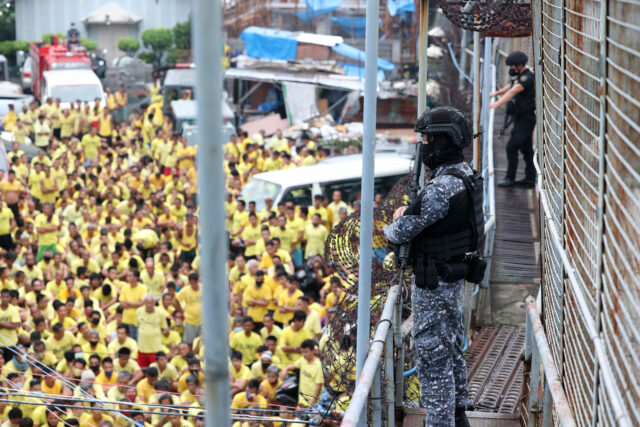
THE PHILIPPINE Bureau of Corrections (BuCor) on Thursday released 580 more inmates from the national penitentiary and local prisons as part of efforts to decongest the country’s jails.

At a livestreamed ceremony of their release, jail chief General Gregorio Pio P. Catapang said 353 of the inmates were released on parole, 61 were acquitted, while other inmates had completed their prison sentences.

He said the freed prisoners would be given certificates of discharge from the national penitentiary, grooming kits and transportation allowances.

“We have a nice future here at BuCor,” Mr. Catapang said in Filipino. “We can decongest our prisons in five years.”

Justice Secretary Jesus Crispin C. Remulla earlier told the United Nations Human Rights Council he seeks to release 5,000 inmates by June.

Many of the country’s jails fail to meet the UN’s minimum standards given inadequate food, poor nutrition and unsanitary conditions, according to Human Rights Watch

At the same event, Mr. Remulla said the government would continue prison reforms to allow ex-convicts to contribute to society.

He said recent reforms in criminal prosecution would help decongestion, such as ensuring that only cases with a reasonable certainty of conviction would be pursued by state prosecutors.

Last month, the Department of Justice (DoJ) lowered the bail for poor Filipinos to half of the recommended bail or P10,000, whichever is lower.

“We still have a lot of problems here at the DoJ and Bureau of Corrections, but we are fixing our justice system,” he said in Filipino.

Mr. Remulla told the United Nations (UN) Rights Council on March 1 the government had cut the number of inmates more than four times to about 50,000 last year from the 2021 level. He added the government had released 4,124 inmates since he assumed office on July 1.

“The approach of our new administration is a whole-nation, all-government solution to every step of the criminal justice process,” according to a copy of his UN speech sent by his office. “No longer shall our penal code be used, abused or weaponized.” — John Victor D. Ordoñez

Private hospitals ready to support rollout of 2nd booster shots  

A RESIDENT receives a COVID vaccine booster shot at a health center in Manila on April 20 following the Department of Health’s go signal for a second booster jab to the general population. — PHILSTAR/EDD GUMBAN

PRIVATE hospitals are ready to support the Department of Healths (DoH) rollout of coronavirus vaccine second booster shots to the general adult population, the sectors association head said on Thursday.       

“We will follow whatever is instructed to us by the DoH and we hope we will be given the opportunity to serve and extend our help, Jose Rene De Grano, president of the Private Hospitals Association of the Philippines, told a televised briefing in Filipino.  

Last week, the DoH gave the green light for the general population to get their second booster jab after the Food and Drug Administration and other health authorities approved the proposal. 

The department on Tuesday said it had approved the guidelines for the general population rollout.   

Priority for a fourth vaccine dose was given to health workers, senior citizens and those with conditions that made them vulnerable to the virus.  

The daily average of coronavirus infections in the Philippines rose by 23% to 341 cases on April 10 to 16 form a week earlier, the DoH said in a bulletin on Monday.  

Despite the slight uptick in cases, Health-officer-in-charge Maria Rosario S. Vergeire said the DoH will not bring back the mask mandate yet.  

The OCTA Research Group on Wednesday said the nationwide positivity rate, or the people who tested positive for the coronavirus, increased to 8.5% from 7.6% week on week. John Victor D. Ordoñez

Hontiveros denounces appointment of SRA officer-in-charge 

A SENATOR slammed the appointment of Agriculture Senior Undersecretary Domingo F. Panganiban as officer-in-charge of the Sugar Regulatory Administration (SRA), citing the need to hold him accountable for irregular sugar importations earlier this year.  

For Malacañang and Panganiban, it appears that crime really does pay it even rewards,Senator Ana Theresia RisaN. Hontiveros-Baraquel said in a statement on Thursday. 

In any other government, Panganiban would already be suspended and the subject of multiple criminal and administrative investigations for his issuances which openly violate existing laws and enable the formation of a government sponsored sugar cartel in the country,she said.  

Large shipments of sugar were brought in via the Port of Batangas earlier this year and were released on Mr. Panganibans authority. The arrival date of the shipments was not covered by a new or earlier SRA orders.    

Mr. Panganiban had defended that he acted based on a directive from the Office of the Executive Secretary citing the need to import sugar to help address the impact of rising food prices on inflation.  

The lawmaker called Mr. Panganibans designation to the SRA top post an epitome of impunity.”  

What sort of message do we hope to send here to our fellow government employees, to our farmers, to our consumers by rewarding corruption instead of punishing it?she said.  

If left unchecked, large-scale smuggling and outright corruption in the selection of importers will be just the beginning,she said.  

The senator added that the SRA under Mr. Panganiban will continue to deny requests by industries to procure their own sugar supplies and justify the high prices of sugar being forced on consumers and businesses alike.Beatriz Marie D. Cruz 

CoA flags Cavite industrial estate developer for failing to move on with abolition 

PHILIPPINE STAR/MICHAEL VARCAS

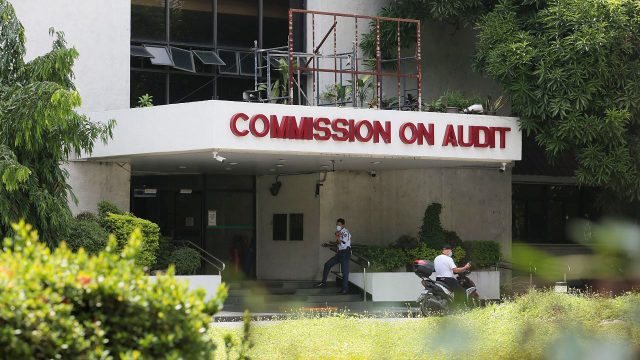
THE COMMISSION on Audit (CoA) flagged a Cavite industrial estate developer for failing to make progress on its abolition after a directive from the Office of the President last year, racking up expenses worth P28.64 million.  

In its 2022 report dated March 23, state auditors said the closure of First Cavite Industrial Estate, Inc. (FCIEI) has not been started,resulting in the non-liquidation of assets, non-settlement of liabilities, and continued incurrence of expenses accumulating to P28.64 million.  

The FCIEI was registered with the Securities and Exchange Commission in 1990 and began as a joint venture project of the National Development Company (NDC), Marubeni Corp., and Japan International Development Organization Ltf., a corporation established by KEIDANREN (Japan Business Federation).   

It was formed to develop the NDCs property in Dasmariñas, Cavite in southern Luzon into an industrial estate and economic zone. It was able to sell all its designated lots to locators in 1995 but the complex was not completed.   

The FCIEI was ordered for abolition on June 23, 2022 through Memorandum Order No. 62 of the Office of the President.  

Given that the intention of the FCIEI to undertake another development project did not materialize, the abolition of the company was recommended, and was approved in principle in 2015, with the condition that the FCIEIs liabilities, particularly to the Philippine Economic Zone Authority (PEZA) are settled,the memorandum order is quoted in the audit report.  

CoA recommended that the FCIEI coordinate with the technical working group (TWG) created under the memorandum order to fast track and immediately start with the legal processes covered by the abolition of a government-owned and -controlled corporation (GOCC).  

The TWG is composed of representatives from the NDC, PEZA, and the Governance Commission for GOCCs. 

FCIEI had assets worth P7.33 million in 2022, and unsettled notices of disallowances amounting to P220,933. Beatriz Marie D. Cruz

CAAP aims to top pre-pandemic passenger traffic with Davao airport expansion   

CAAP

THE CIVIL Aviation Authority of the Philippines (CAAP) is eyeing a five-million annual passenger traffic at the Davao International Airport with the P700-million terminal expansion project that is planned to start in July. 

CAAP-Davao Area Manager Rex A. Obcena said the target is higher than the 4.2 million passengers recorded in 2019, considered as the banner year.  

We hope to be able to entice more international stakeholders and airlines to come in and consider Davao as a key destination,he told the AFP-PNP Press Corps media forum Wednesday.   

There are now an average 35 daily flights at the airport, including international flights served by Singapore Airlines and its subsidiary Scoot, and Qatar Airways.  

Before the coronavirus pandemic lockdown in March 2020, there were several other international services to and from Davao City, including Hong Kong by Cathay Dragon, Quanzhou by Xiamen Air, and Manado by Garuda Indonesia.  

Mr. Obcena said the current average daily passenger movement is about 9,500 to 10,000, or around 3.6 million annually since restrictions were eased in mid-2021.  

It is not within the 2019 pre-pandemic level, but with the improvements we have now and revitalizing the civil aviation sector, air transport, we are anticipating a very rosy 2024 and beyond,he said.  

The airport, also known as the Francisco Bangoy International Airport, has been undergoing terminal facilities upgrade, which is expected to be completed by mid-May.    

That is a very minor improvement, specifically in the check-in area but the project includes the replacement of the escalator and elevators, and so far, the civil and architectural works in front probably 80% (complete) and its about to finish,he said.  

The P700-million terminal expansion project, on the other hand, will primarily be for international operations.  

Contract bidding is underway and give or take within the month towards early May, we hope that there will be a qualified bidder already,he said. Maya M. Padillo

CoA orders Mapandan Water District to pay loans, halt tariff rate hike 

MAWADI.GOV.PH

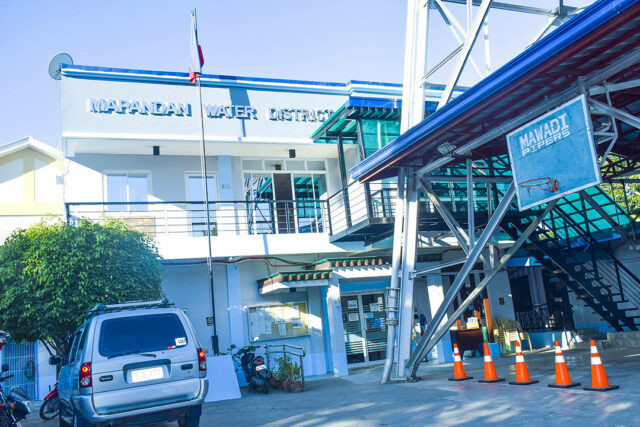
STATE AUDITORS ordered the Mapandan Water District (MAWADI) in Pangasinan to settle its outstanding loan balance to a government agency as well as include a portion of its lot in its transfer certificates of title.  

In a report dated April 13, the Commission on Audit (CoA) said MAWADI did not settle its outstanding loan balance with the Local Water Utilities Administration (LWUA) of P24.6 million as of Dec. 31, 2022.”   

CoA recommended that the management pay all its loan obligations with the LWUA to avoid legal actions against the District.” 

The state-owned MAWADI entered into a joint venture with private company PrimeWater Infrastructure Corp. in 2019, with the aim of improving and expanding water and septage services in Mapandans 15 villages.   

PrimeWater imposed a water rate increase, which state auditors said did not go through public consultations and was not supported with the computation of the recoverable and prudent costs, thus, prejudicial to the interest of the public.”   

CoA recommended that MAWADI advise PrimeWater to immediately stopimplementing the higher rates pending review and approval by LWUA.  

CoA also said that four parcels of lot of the District costing P3.76 million were not covered by Transfer Certificates of Title,making the absolute ownership and valuation of the properties not ascertained, posing risks of claims by other parties.”  

The audit team has discussed the observations and recommendations with the managementon Feb. 1 and that the comments incorporated in the report were appropriate,CoA said.  

MAWADIs assets amounted to P86.63 million in 2022 but has unsettled disallowances of P522,348.59. Beatriz Marie D. Cruz

Coca-Cola PHL expands recycling program to Laguna 

COCA-COLA PHL PHOTO

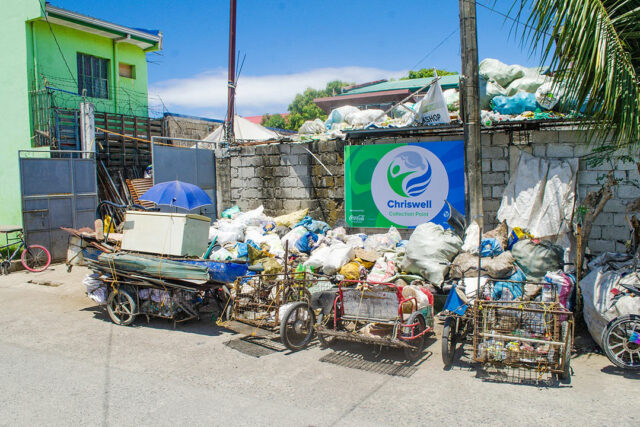
COCA-COLA Beverages Philippines, Inc. has expanded its recycling program to Laguna province in partnership with social enterprise Plastic Bank Philippines.  

In a statement on Thursday, the beverage company said they have rolled out their Ecosystem Impact Program in Laguna following initial implementation in Cavite since 2021.  

It said nine new partner shops have come on board, adding to a total of 15 recyclable wastes collection branches within Coca-Cola Philippines and Plastic Bank’s program areas. More partners in Laguna are expected to join in the coming months.   

Plastic Bank sets up collection and recycling ecosystems in communities to prevent ocean-bound plastic waste. It has an online app that shop owners can use to track collections and share their waste collection impact online.  

Furthermore, over 160 new waste collection members have joined the Plastic Bank ecosystem, bringing the total number of members to 600. These new additions to the ecosystem have helped scale the collection of the Program,Coca-Cola said.  

Under the program, partner junk shops and other organizations are given access to tools and equipment for efficient waste collection, such as sacks, branch uniforms, weighing scales, and shop signages.  

The Coca-Cola Philippines and Plastic Bank Ecosystem Impact Program works directly with individuals in the informal waste sector and micro, small and medium enterprises like junk shops to create collection and recycling ecosystems in communities that help prevent plastic waste from going into the ocean,the company said.   

Waste collection members get an above-market rate for collected plastic, which is convertible to cash or digital tokens that can be used for health, work and life insurance, and social and fintech services.  

Plastic pollution is a major crisis that affects all life on Earth. It requires the collective effort of all humanity to address this issue,Plastic Bank Chief Supply and Countries Officer Gidget Velez said in the statement.   

The Philippines passed in 2022 the Extended Producer Responsibility (EPR) Act, which holds companies responsible for managing the impact of their product packaging over the full life cycle. 

Marcos issues order to expedite rollout of offshore wind projects

ELECNOR

PRESIDENT Ferdinand R. Marcos, Jr. has signed an executive order (EO) directing the Department of Energy (DoE) to draft a framework that will expedite the rollout of offshore wind (OSW) projects.

Executive Order No. 21, released on Thursday, calls for a fast-track approval process for offshore wind proponents as they apply for licenses and permits.

“There is a need to adopt a whole-of-government approach by streamlining and expediting the approval process by the permitting agencies… and eliminate unnecessary delays in every stage of an offshore wind project,” the President said in the EO.

The DoE was ordered to establish a policy and administrative framework to efficiently develop the OSW resources.

The Department of the Interior and Local Government has also been required to submit to the DoE a complete list of permits required by all local government units.

Citing the Philippine Energy Plan 2020 to 2040, Mr. Marcos said the government seeks to raise renewable energy’s contribution to the power mix from 22% to 35% by 2030, and eventually to 50% by 2040.

In February, the Energy department said it has awarded 55 offshore wind service contracts with a combined capacity of 40.68 gigawatts. — John Victor D. Ordoñez

PHL to seek $350-million China loan for preliminary Bataan-Cavite bridge works

DPWH

THE PHILIPPINES is seeking a $350-million loan from the Beijing-based Asian Infrastructure Investment Bank (AIIB) to fund the first phase of the Bataan-Cavite Interlink Bridge project.

“Phase one of the project will finance a segment of the civil works component involving the navigation bridges, marine and land viaducts, and approach roads,” the AIIB said on its website.

The project connects Bataan and Cavite through a 32-kilometer-long bridge consisting of two long-span navigation bridges, 24-kilometers of marine and land viaducts, and five kilometers of approach roads.

It also includes a ramp connecting Corregidor Island, which sits at the mouth of Manila Bay, to the bridge.

Public Works and Highways Secretary Manuel M. Bonoan has said that the project is estimated to cost P175 billion.

Construction is set to begin in the latter part of 2023 with an expected completion time of five years.

“The project will be co-financed with the Asian Development Bank as lead co-financier, and the project’s environmental and social (E&S) risks and impacts are being assessed in accordance with ADB’s safeguard policy statement,” the AIIB said.

It noted that the project will involve involuntary resettlement that will likely be “significant.” It will also require mitigation measures for its environmental and social management plan and land acquisition and resettlement plan.

The AIIB said that the project will “contribute to efficiency improvements of road travel in Bataan, Cavite, and the National Capital Region (NCR).” — Luisa Maria Jacinta C. Jocson

ADVERTISEMENT
ADVERTISEMENT