Home Blog Page 4895

Spain’s Acciona keen on more water, transportation projects

SPANISH infrastructure company Acciona aims to secure more contracts from the government’s transportation and water treatment projects, its regional official said.

“Yes, definitely, we are looking at transportation rails and the big transportation projects that will be launched by the administration of the Philippines,” Acciona Southeast Asia Regional Director Ruben Camba told BusinessWorld.

“We are also looking at water projects. There are different water projects happening in Manila and the rest of the country and we think that water is very important to the Philippines,” he said.

He added that Acciona is “very keen” to see more public-private partnership (PPP) projects in the market, which he said is another target for the company to explore.

When asked if the company is interested in the Metro Rail Transit lines 10 and 11, Mr. Camba said: “Yes. We are really interested in looking at railways. When we say transportation, we mean roads, bridges, railways, ports. So those are key points that we will be looking at.”

At present, the company has been awarded three transportation projects and one water treatment project. These projects are package 2 of the South Commuter Railway (SCR) project, the Cebu cable-stayed bridge, the Malolos-Clark Railway project, and the Putatan II brackish water treatment plant.

Meanwhile, the company is targeting the groundbreaking for the 7.9-kilometer elevated railway from Blumentritt to San Andres Bukid in Manila that has three stations — España, Sta. Mesa, and Paco — of the SCR.

“I think the groundbreaking will be definitely this year,” Mr. Camba said.

Assuming that everything will be ironed out, including the acquisition of the right of way, the project could be completed in four years, he said.

The package was awarded to the joint venture between Acciona Construction Philippines, Inc. and D.M. Consunji, Inc.

Meanwhile, Mr. Camba said that public-private partnerships and support from the government and multilateral banks could further boost the infrastructure sector.

“The drivers have to be government investments supported many times by multilateral banks and the PPP working altogether,” he said.

He noted that the government is cautious about managing the ratio of its debt to the gross domestic product (GDP), while the private sector invests only in projects suitable to them.

“If you want to meet the targets of development, you need to invest at least 5% to 6% of the total GDP [to infrastructure development],” he said.

Mr. Camba said the private sector could not cover the entire infrastructure spending, with only a portion of it under PPP projects.

“The rest will be government efforts to develop the country’s infrastructure. And that’s what other countries do,” he said.

He said that Acciona has a bullish outlook on the infrastructure market in the Philippines.

“I think there’s a lot of work and we’ll need to overcome the challenges,” he said. “If you see how the Philippines has dramatically invested in it, that’s very positive news.”

“If the past administration and this administration will be keeping that pace and if we will see continuous effort, the Philippines in 2040 is going to be dramatically different to the Philippines in 2020,” he said.

“We are very bullish. We want to be here helping the country in doing the infrastructure,” he added.

On Friday, Acciona and more than 200 public and private sector leaders gathered for the company’s first “Health and Safety Day” in the Philippines, which aims to promote the prevention of occupational accidents, diseases and deaths.

“What we will try is to show new technologies and ways of managing safety. The overarching idea is to have a safe environment at work,” Mr. Camba said. — Justine Irish D. Tabile

New series on HBO GO in May

HBO Go will be premiering reality shows, new series, and series finales this month. The new series White House Plumbers premieres on May 2, taking the audience behind the scenes of the Watergate scandal as Nixon’s political operatives, E. Howard Hunt and G. Gordon Liddy, accidentally topple the presidency. The series stars Woody Harrelson, Justin Theroux, Lena Headey, Judy Greer, Domhnall Gleeson, Toby Huss, Ike Barinholtz, and Kathleen Turner. Another series, The Challenger: Battleground, premieres May 17. In this Emmy-nominated series, 12 of the best male and female fighters from around the world descend to the island of Langkawi to live and train together as they fight it out in a brutal knockout competition. Lizzo: Live In Concert and Love, Lizzo start showing on May 11. Love, Lizzo is a Max Original documentary that shares the story behind the musician’s humble beginnings to her meteoric rise, with an intimate look into the moments that shaped her rise to fame, success, love, and international stardom. Lizzo: Live In Concert is the culmination of Love, Lizzo, filmed during the singer’s The Special Tour at the Kia Forum in Inglewood, California. The concert features the three-time Grammy-winning star, her band, and special guests Cardi B, SZA, and Missy Elliott. Lastly, Reality premieres on May 30. On June 3, 2017, 25-year-old former American intelligence specialist Reality Winner was confronted by FBI agents arriving at her home to question her suspected role in the mishandling of classified information. Based on true events, the film’s dialogue is taken from the transcript of their tense conversation. The film stars Sydney Sweeney, Josh Hamilton, and Marchánt Davis. There are also a couple of series finales this month: Love & Death Season 1 on May 25, and Succession Season 4 on May 29.


Jackson Wang music videos out

SINGER and performer Jackson Wang has released the new video for his single “Slow” with Grammy-winning artist Ciara. The music video is directed by Daniel “Cloud” Campos and features choreography from Mykell Wilson. The video showcases Wang and Ciara uniting to display a fusion of their respective styles, creating choreography that features intricate footwork, sharp isolations, and powerful dynamics. Earlier this year, he released his latest single “Cheetah,” following his performances at this year’s Coachella Valley Music and Arts Festival. The track’s jazz-infused rhythm is produced by Jacob Ray and MAX. The accompanying music video is directed by Jackson Wang and Sean Lew. Mr. Wang is currently performing the North American dates for his first tour as a solo act, the MAGIC MAN World Tour. The limited six-city tour wraps up on May 11 in New York. Later this year, Mr. Wang will embark on additional dates across South America. For more information, visit tour.jackson-wang.com.


Dream Theater performs in QC this week

DREAM Theater will be performing live at the Smart Araneta Coliseum in Quezon City for the Top of the World Tour concert on May 4. The American progressive metal rock band is composed of James LaBrie (vocals), John Petrucci (guitars), Jordan Rudess (keyboards), John Myung (bass), and Mike Mangini (drums), The show starts at 8 p.m.  In 2019, the two-time Grammy nominated quintet embarked on a sold-out tour in support of both their albums Distance Over Time and the 20th anniversary of Scenes from a Memory, which they planned to stretch into the next year. The global COVID-19 pandemic foiled those plans. During the pandemic, the band kept the music going, creating a new studio album highlighted in their current world tour.


Metro Manila’s 1st Disc Golf Course opens

THE NAYONG Pilipino Foundation (NPF), in partnership with the Disc Golf Association of the Philippines (DGAP) launched the Nayong Pilipino Disc Golf Course with an inaugural tournament at Entertainment City, Parañaque last week. Disc golf, also known as Frisbee golf, is played much like traditional golf, only instead of a ball and clubs, players use a flying disc. The trees, shrubs, and terrain changes located in and around the fairways provide challenging obstacles for the golfer. NPF Executive Director Gertie Duran-Batocabe said the agency hopes that the opening of the new sports attraction will spark new interest in emerging sports.


Pump priming Philippine property

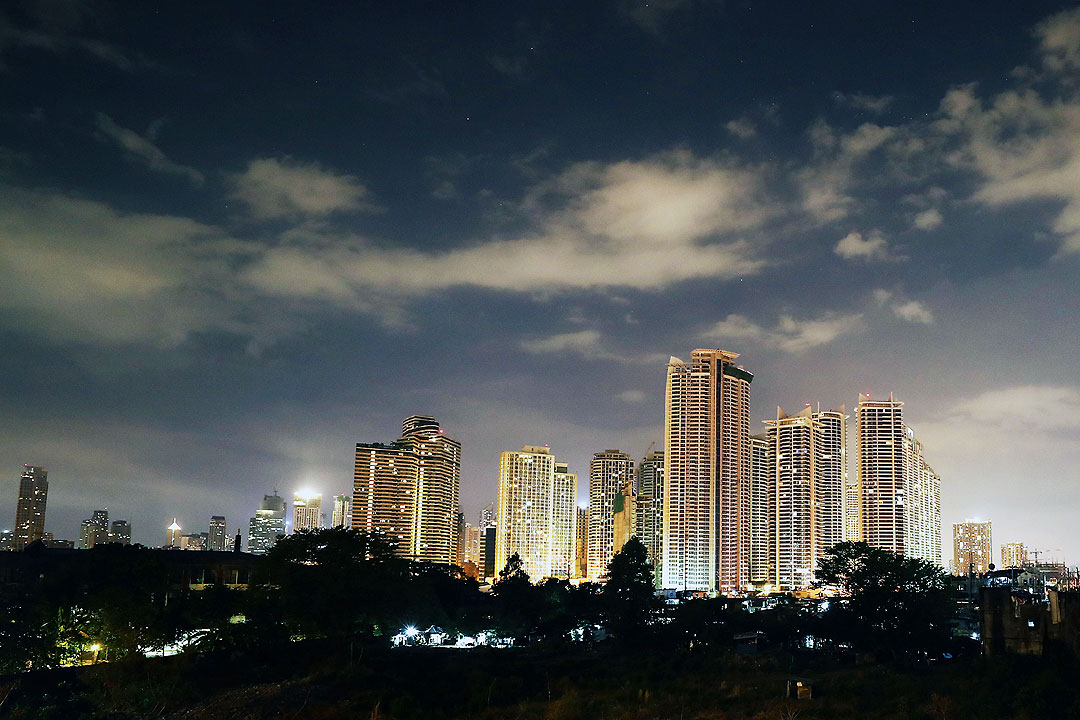
PHILIPPINE STAR/MIGUEL DE GUZMAN
THE property sector is one of the key segments of the Philippine economy. — PHILIPPINE STAR/MIGUEL DE GUZMAN

By Joey Roi Bondoc

THE Philippine property sector is highly cyclical and is susceptible to periods of expansion, overbuilding and a subsequent crash and price correction. The period from 2017 to 2019 highlighted the sector’s strengths, with substantial office space take up complemented by an aggressive demand for condominium units across Metro Manila.

The property sector is one of the key segments of the Philippine economy. It has tremendous multiplier effects which bode well for the country.

Sub-segments such as office, residential, hotel, retail, and industrial are the sector’s major planks. Attracting more foreign investments into these sub-sectors is crucial to raising the Philippines’ stature as a major property investment in the Asia-Pacific region and ensuring that the country remains on the radar of foreign property investors.

Prior to the pandemic, the Philippines was gradually being positioned as a key property investment destination in the region. As a result, we saw more foreign property firms partnering with local developers in building several office, residential, retail, even township projects.

In fact, at Colliers Philippines, we were busy presenting Philippine property market updates to foreign firms that were planning to either develop residential communities with local players or enter growing property segments such as leisure, industrial, and retail.

In our view, the international partnerships will only make the property landscape in the Philippines more competitive. Overall, more local and foreign brands result in greater competition which should ultimately benefit Filipino investors and end users.

But due to the pandemic, major investment decisions were paused. Due diligence screenings were either extended or cancelled and the country’s potential to become a major investment hub in Asia was curbed by the coronavirus disease 2019 (COVID-19).

It is interesting to note that the country is finally recovering after major economic disruptions in 2020 and 2021. Colliers Philippines believes that there are several factors that will help the Philippines become an attractive investment destination in Asia-Pacific over the near to medium term.

IMPROVING INFRASTRUCTURE NETWORK
Massive infrastructure spending committed by the current administration should benefit the property sector in general.

The annual infrastructure allocation of 5% to 7% of the country’s annual GDP, as recommended by the World Bank, should support the Philippine economy’s expansion post-COVID and buoy the property market.

Colliers Philippines sees this ramped up spending on public projects supporting the continued development of satellite communities outside of Metro Manila.

These integrated communities offer a better value proposition than standalone projects since they offer mixed-use developments. We believe that this feature makes integrated townships a more attractive option for investors.

More business process outsourcing (BPO) tenants will also gravitate toward integrated communities as they offer a better living and working environment.

With an improving economy and support from the government, Colliers sees the Philippines enticing more foreign players to develop more master planned communities in the country.

We project more joint venture deals between major foreign developers and Philippine property firms moving forward.

ECONOMY TILTED TO THE UPSIDE
The Philippine economy posted its fastest pace of growth in more than 40 years in 2022. This is a positive signal for the property market which, over the past decades, mirrored the boom-bust cycle of the country’s economic output.

This economic expansion should support the positive net take-up of office space in 2023 and the continued rebound in Metro Manila’s pre-selling and secondary residential markets.

An aggressive stance taken by the National Government in attracting manufacturing investments should result in greater absorption of industrial space across the country.

Personal consumption-led economic growth should also spur retail and hotel demand. To cash in on the sustained growth, developers should line up more projects in key growth areas outside of Metro Manila, including Pampanga, Bulacan, Tarlac, Cavite, Laguna, Cebu, Bacolod, Iloilo, Davao, and Cagayan de Oro.

WHAT TO EXPECT
Macroeconomic prospects look bright for Philippine developers. Colliers Philippines believes that property firms, investors, and end-users should be quick in reaping the low hanging fruits from the property segment’s rebound.

There’s no doubt that the Philippines remains on the radar of foreign property firms. The government, meanwhile, should ensure that the Philippines remains attractive by implementing reforms such as improving business registration process, curbing corruption, continued infrastructure implementation, and upskilling the workforce.

Implementing these reforms is crucial in ensuring that the Philippines remains on the investment radar of foreign businessmen. We should send a clear message that the Philippines, including its property sector, is open for business.

Overall, Colliers Philippines believes that foreign firms’ entry into the domestic market should result in a more dynamic and diversified property sector which should eventually benefit Filipino end users and investors.

Opportunities abound and only the agile stakeholders will be able to capture the property sector’s gains. The Philippine property has finally turned a corner, and no one wants to be left behind.


Joey Roi Bondoc is the research director at Colliers Philippines.

ENEX looks at joining Meralco power auction

ACEN Corp. said its subsidiary ENEX Energy Corp. is looking to participate in Manila Electric Co.’s (Meralco) power auction.

“We have a joint venture, which is a 1,100 megawatts (MW) gas-fired plant that is under development in Batangas. That is in very advanced stages of development and we believe it can participate in the upcoming CSP (competitive selection process) of Meralco for instance,” Eric T. Francia, president and chief executive officer of ACEN, said in a media briefing last week.

Mr. Francia, who is also the chairman of ENEX, was referring to Batangas Clean Energy, Inc. (BCE), which is a 50-50 joint venture between ENEX and Gen-X Energy LLC, a subsidiary of Blackstone, Inc.

“The BCE team continues to execute on the project and is currently awaiting a competitive selection process in order to secure a customer offtake contract,” he said.

BCE is developing the 1,100 MW or 1.1-gigawatt natural gas-fired power plant in Batangas Bay, Batangas City.

ENEX, formerly ACE Enexor, Inc., is involved in the exploration and production of crude oil and natural gas, while ACEN has recently affirmed its commitment to transition the company’s power generation portfolio to full renewables by 2025.

“This is a clarification that while ACEN has supported ENEX to help develop this joint venture company, ACEN has already committed to only invest in 100% renewables. I just want to make it clear that it is not the intent of ACEN to invest in the construction equity of a gas-fired power plant,” Mr. Francia said.

This means, according to Mr. Francia, that ENEX and its partner will have to source for the capital once the project gets to a financial close.

“We are not yet in financial close. We would like the project to win a long-term contract,” he said, adding that BCE is working on a long-term fuel supply contract.

“We hope that the BCE project will be able to contribute to the much-needed capacity in the Luzon power grid,” Mr. Francia said.

Mr. Francia said the group is eyeing a reasonable pass-through mechanism and given the “immense volatility” of fuel prices, it would require reasonable long-term contracts that would enable investments.

“It is still yet to be determined where the particular source of funding will come from but we have various sources for that, notwithstanding the fact that ACEN will not be the source of construction equity,” he said.

Mr. Francia said the country needs reliable baseload power generation, which at this point could come “realistically” from gas-fired power plants.

“So, I think, realistically, for us to really address the country’s energy needs… we would need a combination of RE (renewable energy), energy storage and new gas-fired power plants,” he said.

BCE’s natural gas-fired thermal project is expected to commence operations by 2026. — Ashley Erika O. Jose

Rates of T-bills, bonds may rise further

BW FILE PHOTO

RATES of Treasury bills (T-bills) and Treasury bonds (T-bonds) on offer this week could continue to rise as investors want yields at par with benchmark borrowing costs and amid still-elevated inflation.

The Bureau of the Treasury (BTr) will auction off P15 billion in T-bills on Tuesday, made up of P5 billion each in 91-, 182-, and 364-day papers.

On Wednesday, it will offer P25 billion in reissued 10-year T-bonds that have a remaining life of five years and eight months.

T-bill rates could go up by 10 basis points (bps), while T-bond yields could settle within the 5.85% to 6% range, a trader said in a Viber message.

The trader said investors want higher returns as the Bangko Sentral ng Pilipinas’ (BSP) policy rate remains above T-bill and T-bond yields, and as inflation is expected to remain above the 2-4% target.

The Philippine central bank has increased borrowing costs by 425 bps since May 2022 to help bring down elevated inflation. Its policy rate is now at 6.25% — the highest in nearly 16 years.

BSP Governor Felipe M. Medalla last month said if inflation eased further in April, the Monetary Board could consider pausing its tightening cycle at their May 18 review.

The BSP last week said April inflation likely settled within the 6.3-7.1% range, slower than the 7.6% in March.

If realized, the consumer price index would surpass the BSP’s 2-4% target for the 13th consecutive month.

Still, the lower end of the forecast range would match the 6.3% in August 2022 and would be the slowest print in 10 months or since June last year, when it stood at 6.1%.

April inflation data will be released on Friday.

“The upcoming Treasury bill auction yields could again be higher, in view of the latest and continued week-on-week increase in the comparable short-term PHP BVAL (Bloomberg Valuation Service) yields, as they moved closer to the local policy rate at 6.25%,” Rizal Commercial Banking Corp. Chief Economist Michael L. Ricafort likewise said in a Viber message.

“The upcoming six-year Treasury bond auction yield could be similar to the comparable six-year PHP BVAL yield at 5.97% (little changed week on week),” Mr. Ricafort added.

At the secondary market on Friday, the 91- and 182-T-bills went up by 17.14 bps and 9.30 bps week on week to end at ​​5.8194% and 6.012%, respectively, based on the PHP BVAL Reference Rates data published on the Philippine Dealing System’s website.

Meanwhile, the 364-day T-bill inched down by 0.56 bp week on week to end at 6.1419%.

The five-year bond, the benchmark tenor closest to the remaining life of the T-bonds on offer on Wednesday, was quoted at 5.9571% at the secondary market on Friday.

Mr. Ricafort added that T-bill and T-bond rates may rise as markets expect the US Federal Reserve to raise rates by another 25 bps at their May 2-3 policy meeting.

The Fed in March hiked borrowing costs by 25 bps to the 4.75% to 5% range.

Since March 2022, the US central bank has increased rates by a total of 475 bps.

Last week, the Treasury raised just P10.572 billion from its offer of T-bills, lower than the P15-billion program, even with total bids reaching P17.553 billion.

Broken down, the Treasury borrowed just P2.607 billion from the 91-day T-bills, with tenders reaching only P4.417 billion or below the P5-billion plan. The average rate of the three-month paper rose by 31.90 bps to 5.869%, with accepted yields ranging from 5.745% to 5.95%.

The BTr likewise raised only P3.236 billion via the 182-day debt papers versus the P5-billion program, despite bids reaching P6.146 billion. The average rate of the six-month T-bill went up by 18.10 bps to 5.993%. Accepted yields were from 5.89% to 6.15%.

Lastly, the government made a partial P4.729-billion award of the 364-day securities, short of the P5-billion plan, even as demand for the tenor stood at P6.99 billion. The one-year paper was awarded at an average rate of 6.209%, rising by 13.60 bps, with accepted rates ranging from 6.10% to 6.25%.

On the other hand, the reissued 10-year T-bonds to be auctioned off on Wednesday were last offered on Aug. 9 last year, when the government raised P35 billion as planned. The bonds fetched an average rate of 5.791%, with accepted rates at 5.7% to 5.874%.

The Treasury wants to raise P175 billion from the domestic market this month, or P75 billion via T-bills and P100 billion via T-bonds.

The government borrows from local and foreign sources to help fund its budget deficit, which is capped at 6.1% of gross domestic product this year. — AMCS

King Charles’ coronation to include invitation to public to swear allegiance

KING Charles’ coronation on Saturday will include an invitation to the public to swear allegiance to the monarch and to his heirs and successors, the Archbishop of Canterbury’s office said, as it published the liturgy to be used for the event.
The invitation to people to make their homage by participating in a “chorus of millions of voices” was listed among the new elements of an ancient ceremony in a statement from Archbishop of Canterbury Justin Welby’s office.

That part of the liturgy reads: “All who so desire, in the Abbey, and elsewhere, say together: I swear that I will pay true allegiance to Your Majesty, and to your heirs and successors according to law. So help me God.”

In other firsts, the service will include other languages associated with the British Isles — a prayer in Welsh and a hymn in Welsh, Scottish Gaelic and Irish Gaelic — and female bishops will be able to participate, the statement said.

Charles, who became monarch of the United Kingdom and 14 other realms on the death of his mother Queen Elizabeth II in September, is due to be crowned on May 6 at London’s Westminster Abbey in a ceremony full of pomp, pageantry and religious significance.

“This Coronation celebrates the traditions of over 1,000 years,” Mr. Welby said on Twitter. “It also features new and revised texts and other elements, and the participation of people of all ages and many faiths and backgrounds – as we look forward together with hope.”

The new parts will reflect the theme of serving others and represent and celebrate the country’s diversity, with members of other faiths set to play an active role in the service for the first time, Mr. Welby’s office said.

In the latest details it has released on the event, Buckingham Palace said on Saturday Charles will wear robes of crimson and purple silk velvet that were once worn by his grandfather King George VI at his own coronation in 1937. — Reuters

New stores set to open at Shangri-La Plaza mall

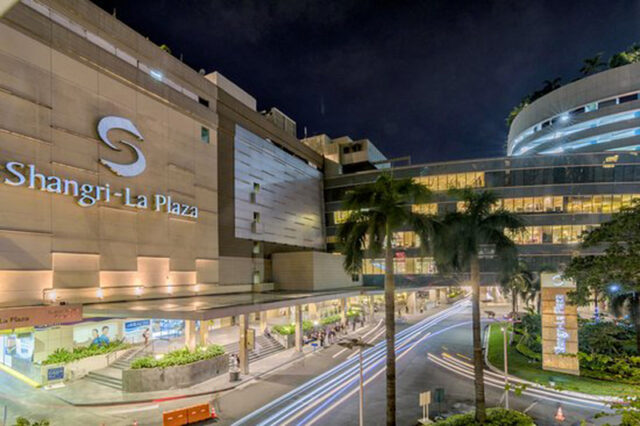
NEW stores are set to open at the Shangri-La Plaza mall in Ortigas Center, Mandaluyong. — COMPANY HANDOUT

SEVERAL new stores and restaurants are set to open at the Shangri-La Plaza mall in the next few months, as the mall undergoes a makeover.

Shang Properties said in a statement that a United Colors of Benetton shop, a Lego Certified Store and Muji Coffee will soon open at the mall’s East Wing.

TGI Fridays, Bulgogi Brothers, and Teppanya are also set to start serving customers.

Puma will set up its Forever Faster concept store at the Main Wing with its array of performance-focused and sport-inspired lifestyle categories.

The Main Wing will also be home to the Travel Club+, a large concept store targeting travelers.

Also opening at the Main Wing are Raging Bull Burgers and Bakehouse, while La Creperie will be expanded. Café Lyon, Wine Story, and Healthy Shabu Shabu will move to new locations at the mall.

Shang Properties has started a planned makeover of the shopping mall.

Joy R. Polloso, Shang Properties executive vice-president for retail and commercial, said the mall makeover will open up more spaces.

“It’s a good change that we believe will make shopping, dining, and entertainment experiences at Shangri-La Plaza even better. We are dedicated to continuously enhancing and improving the community we serve right here in the Shang Estate, and the guests who come from far and wide to enjoy what the mall offers,” she said in a statement.

A portion of Level 1 Main Wing will be streamlined to allow guests to navigate the mall more easily. This will include the previous location of the National Book Store, which will have a pop-up store at Level 3.

“Streetscape will be closed for the duration of the project, though mall guests need not be concerned as routes and the main driveway of Shang, as well as designated parking areas will not be affected,” the company said.

Tax appellate court partially grants Maersk’s refund claim

CTA.JUDICIARY.GOV.PH

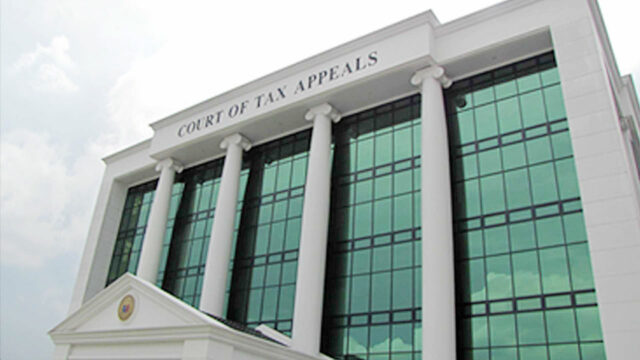
THE COURT of Tax Appeals (CTA) has granted part of Maersk Global Services Centres (Philippines) Ltd.’s tax refund claim in the amount of P34.61 million representing its excess input value-added tax (VAT) for the taxable year 2015.

In a 25-page petition made public on April 28, the CTA said the shipping firm was able to comply with invoicing requirements under the Tax Code.

In a 2021 decision, the CTA granted Maersk’s claim in the amount of P34.5 million and disallowed P1.84 from its initial claim due to an alleged lack of evidence to substantiate its claim.

“The courts cannot impose any additional requirement that is not provided for by law or merely required by any of the parties to the transaction for the latter’s convenience,” according to the ruling penned by Associate Justice Roman G. Del Rosario.

The tribunal noted the firm’s receipts do not need to be signed by a buyer or client for them to be valid, adding the purpose of a signed receipt is only for the convenience of the seller.

“It is clear that the purpose of the signature is for the buyer to acknowledge the receipt of the goods delivered by the seller,” it said.

The tax court also affirmed the firm’s disallowed zero-rated sales worth P213.64 million due to discrepancies found in the official receipts. It said receipts did not show that they were traced to zero-rated sales.

Under the Tax Code, taxpayers that engage with foreign firms doing business outside the Philippines are entitled to zero-rated sales that do not translate to output tax.

The term “zero-rated sale” must be written on the taxpayer’s official receipts.

The commissioner of internal revenue argued that Maersk’s claimed input tax should have been directly traced to its zero-rated sales for its claim hold ground, which the court disagreed with.

“Nowhere is it stated in Section 112 (A) of the National Internal Revenue Code of 1997 does input tax claimed must be directly attributable to the taxpayer’s zero-rated sales.”

Under Section 112 (A) of the Tax Code, input tax subject to a tax refund claim must not have been applied against output tax.

“It must be stressed that compliance with all the VAT invoicing requirements provided by tax laws and regulations is mandatory.” — John Victor D. Ordoñez

PHL financial system ‘resilient’ amid offshore bank issues

THE Philippine financial system remains resilient despite issues affecting the global banking sector, the World Bank said.

“The financial system remains resilient, as banks are overall well-capitalized, with sufficient capital and liquidity buffers, and no material exposure to recently failed banking institutions,” it said in its Philippines Monthly Economic Developments report.

Financial markets across the globe were sent on edge after the collapse of the Silicon Valley Bank and Signature Bank in the United States, which marked one of the biggest banking failures since the financial crisis in 2008.

A crisis of confidence also hit Credit Suisse, which resulted in a state-led rescue by its Swiss rival UBS Group.

The World Bank said that the Philippine financial sector’s resilience comes from its improved asset quality, as its nonperforming loan (NPL) ratio has returned to pre-pandemic levels.

Data from the central bank showed the banking industry’s gross nonperforming loan ratio increased to 3.31% in February from 3.28% in January.

However, it was lower compared with the 4.24% print in February 2022.

Total NPLs, which are unpaid loans for more than 90 days, fell by 13% year on year to P411.19 billion as of end-February from P472.66 billion in the comparable year-ago period.

Bank profitability has also continued to show “considerable improvement,” the World Bank said.

“As of the fourth quarter, return on assets, return on equity, and net interest margin were higher than their pre-pandemic levels. The system-wide liquidity of the banking sector remains broadly adequate,” the lender said.

Bangko Sentral ng Pilipinas (BSP) Governor Felipe M. Medalla previously said that Philippine banks do not have exposure to the US banks that failed.

Mr. Medalla said this was due to banks’ foreign currency deposit units’ assets being mostly loans and Philippine dollar bonds and sovereign bonds of countries with high credit ratings.

The BSP also earlier said that it is “prepared to withstand possible shocks.”

The central bank said it has implemented structural reforms, such as the adoption of risk management standards and prudential limits and requirements and strengthened its surveillance mechanisms and coordination efforts to ensure the safety of banks. — L.M.J.C. Jocson

In Air, Michael Jordan’s silence speaks volumes about the marketing of Black athletes

THE FILM Air, which tells the story of Nike’s signing of Michael Jordan, isn’t actually about Michael Jordan at all.

It’s about the beauty of design and the seduction of marketing. It’s about power suits, purple Porsches and Rolexes. It’s about white men languishing through midlife crises who salivate over the branding potential of a star basketball player.

As for Jordan? Audiences just see his back as he strolls into the Nike offices and his hands as he admires the Air Jordan prototype — but never his face. In the entire film, he utters only three words.

Much has been made about Michael Jordan’s representation or lack thereof in Air.

How could a film about one of the most famous Black men in the world obscure his presence?

The film’s true power is its ability to convey an unnerving truth about the sneakers’ mystique: Jordan’s athletic ability was crucial to the success of Nike and Air Jordan; not so much his face — and definitely not his words.

In this way, Air becomes the story of how a struggling company created one of the most successful brands in the world on the back of a Black body, a tale as old as the nation itself.

In 1983, Nike’s marketing director, Rob Strasser, wrote an internal memo explaining the importance of using star athletes to sell their products: “Individual athletes, even more than teams, will be the heroes; symbols more and more of what real people can’t do anymore — risk and win.”

This memo appeared during a turbulent period for Nike. The company had gone public in 1980 with a listless opening. In 1984, the company posted its first losing quarter and initiated a monthlong wave of layoffs employees called the “St. Valentine’s Day Massacre.”

Who would be that hero? The ailing shoe company sought a body brimming with transcendent talent, a superhuman athlete.
Enter the Chicago Bulls’ Michael Jordan, of whom Boston Celtics legend Larry Bird once said, “I think he’s God disguised as Michael Jordan.”

During the summer of 1984, Nike shoe designer Peter Moore and Strasser gathered in the Washington, D.C., office of Jordan’s agent, David Falk.

In a scene authors Rodrigo Corral, Alex French and Howie Kahn detail in their 2017 book, Sneakers, Falk, after exchanging pleasantries, looked to Strasser and said, “Rob, I’ve got an idea. I want to marry Michael to your airbag technology.”

Nike had developed its air cushions in 1977. It involved infusing the midsoles of shoes with pockets of pressurized gas to absorb shock, but the company was having a difficult time marketing it.
Falk then paused for dramatic effect, before uttering, “Air Jordan.”
In 1985, Nike released the first Air Jordan sneaker. A year later, Nike sold US$100 million worth of Air Jordan shoes and apparel, boosting the company’s profits to $59 million from only $10 million the year before.

After 38 years and 37 iterations of their flagship line of basketball shoes, Jordans have become a transcendent cultural talisman memorializing Michael Jordan’s career and basketball’s influence on American life — but also, his labor.

Today, Nike is worth a staggering $200 billion. Meanwhile, the Jordan brand, which was spun off into its own company in 1997, brings in billions of dollars per year, of which Jordan pockets 5%.
I’m writing a book that explores the intimate connections between sneakers and Blackness. In it, I argue that the Black body’s long history of objectification and commodification undergirds the branding, mass consumption and culture of sneakers.

What Air does better than anything else is to unbox a provocative, sobering truth about Jordans’ meteoric rise: They are cast as literal extensions of Black bodies. They represent the literal molding of a Black man’s feet, with their vulcanized rubber, leather and laces encapsulating Black athletic greatness and cool.
Finally figuring out how to sell Nike’s airbag technology was the other side of Air’s recipe for success.

In truth, Nike Air was a curiosity. It was unstable and unreliable. But runners became enamored with the idea of a cushioning technology they couldn’t see and much less understand. People knew they loved the sensation of Air even though the “how” remained a mystery.

The seemingly simple concept of explaining Air had eluded the company. In an interview with journalist Scoop Jackson, Bruce Kilgore, Nike designer responsible for the Air Force 1, articulated the difficulty of taking the air midsole from idea to execution to market: “How do you take something inherently unstable and put [it] into [a basketball shoe] that is all about stability?”

But six years after the development of the air midsole, David Falk cracked the code of Nike’s transparent, little black box: Don’t market the technology. Market the body that wears it.

This marketing ploy to shift the attention of consumers from mundane pockets of polyurethane to on-court performances, while indeed innovative, centers an incredibly old tradition of Americans seeing Black bodies as being spectacularly convertible to profit.

Air Jordans romanticize an American wistfulness for the stoic and branded Black workhorse. John Henry, the legendary steel driver, was a hero, and so, too, is Jordan. For Black bodies — Jordan and Henry, but also athletes like Damar Hamlin, who suffered a near-fatal injury during an NFL game in early 2023 — heroism is articulated through the hypnotizing anthem of toil and exhaustion.

Sports provide an easy cover for the perpetuation of this myth. Disgraced sports commentator Jimmy “The Greek” Snyder once said, “The Black is a better athlete to begin with … They can jump higher and run faster.”

How far removed is the marketing of Air Jordans from the words of Jimmy the Greek?

As the voiceover in the first Air Jordan television ad proclaims, “Who says man was not meant to fly?”

Before Nike’s dominance, brands like Pony, Converse and Adidas were popular on street corners and basketball courts around the country — a history told by DJ and author Bobbito Garcia in his 2003 book, Where’d You Get Those?

Nike and the Air Jordan, however, represented a watershed moment in which this bubbling market of “sneaker fiends,” as Garcia calls them, went mainstream. Through artful placement in Black films — specifically Spike Lee’s Do the Right Thing — with an assist from Michael Jackson and hip-hop culture and music, the Air Jordan line transformed sneakers into one of the most important footwear items and fashion brands the world has ever witnessed.

Nike would go on to feature scores of other Black athletes in its ad campaigns, and the names of these heroes ring off the tongue sharp and proud like a trumpet’s blare: Bo Jackson, Penny Hardaway, Kobe Bryant, Venus and Serena Williams, Lebron James.

None of this would be possible without Nike’s big bet on Jordan.
So why does a film give Michael Jordan, the man who had so much to do with Nike’s success, so little to say?

I believe the answer is as uncomfortable as it is simple: Michael Jordan isn’t the film’s subject, but its object.

In one of the film’s more memorable scenes, Nike marketing executive Sonny Vaccaro, played by Matt Damon, goes to visit the Jordan family in Wilmington, North Carolina.

When he arrives, he greets James, Michael’s father, before being passed off to the real decision-maker: Deloris Jordan, the matriarch of the Jordan clan. Viola Davis portrays Deloris with a drowning depth. Every utterance and glance simmers.

“Five generations of Jordans are buried in these forests,” she announces as she sits with Vaccaro in their backyard. She’s polite but distant. Her piercing eyes know to be wary of unannounced visits from white men in shiny cars. Everyone wants a piece of her son, and it’s her job to keep him whole.

In the film, before unveiling the Air Jordan 1 to Vaccaro and Strasser, Peter Moore, played by Matthew Maher, describes the shoe: “It has the logic of water, like shoe was always here, like it always existed.”

What Moore cannot know is how right he really is. Deloris Jordan and those five buried generations have always been here.
The Black body, from America’s inception, has always been there, as cotton and as sugar, ripe for the picking. — The Conversation via Reuters Connect

A. Joseph Dial is a Disco Network Postdoctoral Research Fellow at Purdue University.

Reaching your financial goals fuss-free is now possible with Singlife’s new and innovative products

Investment with insurance coverage is now within reach for every Juan and Maria in just a few taps in GCash

Singlife Philippines launched two more innovative products on GCash: Cash for Goals and Ready, Set, Grow. Both products are designed to make investing as simple, convenient, and flexible as possible—so anyone can start using it to achieve their financial goals. And because Singlife is digital only, therefore giving the customer direct control, all of the money is invested ensuring maximizing the return on investment.

Start small and go as big as you can!

You can start with as little as PHP 750 per month on Ready, Set, Grow, and PHP 1,000 per month on Cash for Goals – ideal plans to start the discipline of setting aside money for later. And when you’re ready, you can increase your monthly investments or decide to save for a longer period.  It’s up to you.

Fees are minimized to grow your money faster

Singlife does not charge entry fees. The company believes that this money can be better used to grow your money faster. 100% of your money is invested. Others can charge 20%-30% of your premiums to pay for coffee meetings, leatherette policy folders, and incentives for salespeople.

Best fund managers in the country

Your investments are managed by some of the most awarded investment managers in the country – Metrobank Trust Group and Atram. These institutions have a long history in the market and are experts in finding the best deals and in ensuring that the risks and returns of the funds are managed according to expectations.

Freedom and flexibility

You can change your monthly investment amount anytime, pause it for a couple of months, withdraw from your investments either fully or partially, or add money whenever you like.  You can do all of this through your GCash app—no need for lengthy forms and painful calls or meetings with an agent.

“Singlife provides customers with a better way to save, plan, and protect their financial future,” said Rien Hermans, CEO, Singlife Philippines. “We developed Cash for Goals and Ready, Set, Grow to help customers achieve their financial goals easier, faster, and to make this a good experience. With these products more people will be able to save a substantial amount that brings their dreams within reach.”

With Singlife Philippines’ new investment-linked insurance products on GCash, achieving financial goals has never been easier. Click on the links provided to learn more about Cash for Goals and Ready, Set, Grow, or go to GCash, GInsure, then go to Goals.


Spotlight is BusinessWorld’s sponsored section that allows advertisers to amplify their brand and connect with BusinessWorld’s audience by enabling them to publish their stories directly on the BusinessWorld Web site. For more information, send an email to online@bworldonline.com.

Join us on Viber at https://bit.ly/3hv6bLA to get more updates and subscribe to BusinessWorld’s titles and get exclusive content through www.bworld-x.com.

KMC to open 2 new sites this month

KMC SOLUTIONS is planning to open two new flexible office developments this month, after inaugurating its latest site in SM North EDSA Tower 1, Quezon City last week.

In a statement, KMC said its flexible office facility will open at Jollibee Tower along Emerald Avenue, Pasig City on May 18. It will have 741 seats over 1,869 square meters (sq.m.) of floor space.

The new KMC facility located in Lexmark, Cebu Business Park will open on May 25. It will have 1,215 seats over 5,590 sq.m. of floor space.

KMC’s new site in SM North EDSA Tower 1 has 553 seats across 2,449 sq.m. of floor space. It offers hot desks with retractable outlets, a pantry, mind and body training room, shower facilities, and an ice cream machine.

“Our new office layouts are sensitive to the changing nature of work, with flexible solutions that allow for truly collaborative, meaningful professional engagement. We cater to individuals that need space to express themselves, employees who work best from the sofa, or people that need the structured surroundings of a more traditional office,” Gian Reyes, vice-president of marketing at KMC Solutions, said in a statement.