Home Blog Page 478

Live music for the next 5 months


The concerts of 2026, so far

THIS YEAR has a lot in store for music lovers, with local and international acts populating the live concert lineup. Filipinos can expect performances from hitmakers, indie artists, rock stars, rappers, and balladeers all throughout the year.

Here is a rundown of live music performances to look forward to (and to block off on your calendar for) over the first five months of 2026, so far.

JANUARY
Air Supply’s 50th anniversary tour
Jan. 11, 24, 25, 27

Australian rock duo Air Supply will stage four concerts in the Philippines for their 50th anniversary tour. The venues are: City of Passi Arena in Iloilo on Jan. 11, Jose Rizal Coliseum in Laguna on Jan. 24, Aquilino Pimentel International Convention Center in Cagayan de Oro on Jan. 25, and Waterfront Cebu City Hotel and Casino in Cebu on Jan. 27.

Wendy of Red Velvet’s W:EALIVE
Jan. 17

Korean solo artist Wendy, previously the vocalist of K-pop group Red Velvet, will be performing at the New Frontier Theater in Quezon City on Jan. 17. The concert is part of her first-ever world tour.

RIIZE’s RIIZING Loud
Jan. 17

K-pop group RIIZE will be holding a concert in Manila as part of their concert tour across Asia. It will take place at SM Mall of Asia Arena on Jan. 17.

Colde’s BLUEPRINT+
Jan. 17

South Korean singer‑songwriter and music producer Colde will return to Manila this January. The Manila leg of his BLUEPRINT+ tour will be held at the Music Museum, Greenhills Shopping Center, in San Juan City.

1st.One’s UNA
Jan. 18

P-pop boy group 1st.One’s UNA Asia tour will be kicking off in Quezon City this January. The concert will take place at the SM North EDSA Skydome on Jan. 18.

Day6’s The DECADE
Jan. 24

South Korean rock band Day6 will come to Manila for their 10th anniversary world tour called The DECADE. It will be held on Jan. 24 at the SM Mall of Asia Arena, Pasay City.

The Lumineers’ Automatic World Tour
Jan. 26-27

American alternative folk band The Lumineers will return to the Philippines to stage a two-night show at the New Frontier Theater in Quezon City. Their return to the country is part of their world tour.

Wisp’s If Not Winter
Jan. 28

American shoegaze artist Wisp is returning to the Philippines for a show at the SM North EDSA Skydome in Quezon City. The Asia tour celebrates If Not Winter, her latest album released in August 2025.

Bryan Adams’ Roll with the Punches
Jan. 31

Canadian singer-songwriter Bryan Adams will hold another Manila concert on Jan. 31 at the SM Mall of Asia Arena, Pasay City. It is part of his Asia tour.

FEBRUARY
Men I Trust’s Equus Tour
Feb. 1

Canadian indie trio Men I Trust is returning to the Philippines following their Wanderland 2023 performance. This time, they will perform at Filinvest Tent, Alabang, on Feb. 1 for their Equus tour.

Samm Henshaw’s It Could Be Worse…
Feb. 3

At Teatrino Greenhills in the Greenhills Shopping Center in San Juan City, British soul singer-songwriter Samm Henshaw will be taking the stage for the Manila leg of his It Could Be Worse… Asia tour.

GIVÉON: Dear Beloved, The Tour to Manila
Feb. 4

American hitmaker Giveon will be bringing his Dear Beloved, The Tour to Asia, with a Philippine stop at the New Frontier Theater, Cubao, Quezon City. The show will highlight his hits like “Heartbreak Anniversary.”

KZ Tandingan, TJ Monterde’s
In Between
Feb. 6-9

Filipino singer-songwriters KZ Tandingan and TJ Monterde are teaming up for a concert in February. For four nights, from Feb. 6 to 9, they will bring their best hits to the Smart Araneta Coliseum in Quezon City.

Wolfgang’s The Reunion concert
Feb. 7

Filipino rock band Wolfgang is returning onstage for the 30th anniversary of their debut album, Wolfgang. Founding members Basti Artadi, Manuel Legarda, and Wolf Gemora will reunite at the New Frontier Theater in Quezon City, for the Feb. 7 show.

Underoath’s Underoath Live in Manila
Feb. 12

American metal/rock band Underoath will be coming to the Philippines for the first time in February. Their concert is set to take place at the SM North EDSA Skydome in Quezon City on Feb. 12.

Josh Groban’s GEMS World Tour 2026
Feb. 18

Renowned American singer-songwriter Josh Groban is slated for a Feb. 18 concert at the SM Mall of Asia Arena in Pasay City. It marks his third time performing in the Philippines.

Cavetown’s Running With Scissors Tour
Feb. 18

The Running With Scissors concert in Manila will be English indie musician Cavetown’s first time in the Philippines. Taking place at the New Frontier Theater in Quezon City, the show is part of his world tour.

Maki’s KOLORCOASTER
The Concert: One More Ride
Feb. 21

Filipino singer-songwriter Maki is bringing his KOLORCOASTER concert series to Quezon City’s Smart Araneta Coliseum. Known for the hit song “Dilaw,” Maki will perform more of his hits at the venue on Feb. 21.

Kim Sejeong’s Tenth Letter
Feb. 21

South Korean singer and actress Kim Sejeong is celebrating her 10th anniversary with a concert tour, which has a Manila leg on Feb. 21 at the New Frontier Theater in Quezon City.

Chen’s Arcadia tour
Feb. 28

Fans of Korean group EXO’s vocalist, Chen, will want to catch his Arcadia solo tour stop in Manila this February. It is set to take place at the FYM Hall, EVM Convention Center, in Quezon City.

VXON’s Kalawakan concert
Feb. 28

To open the year, P-pop boy group VXON is mounting a concert, Kalawakan, at the SM North EDSA Skydome in Quezon City. It marks the group’s first-ever concert.

MARCH
ONE OK ROCK’s DETOX
March 4

The Japanese rock band ONE OK ROCK will hold a concert this March, marking their fourth show in the Philippines. Their DETOX Asia tour will be coming to the SM Mall of Asia Arena, Pasay City.

Peabo Bryson’s The Golden Touch tour
March 8

Contemporary balladeer Peabo Bryson is returning to Manila in March for The Golden Touch tour. His concert will take place at The Theatre at Solaire in Parañaque City.

NCT Wish’s Into the Wish tour
March 14

Korean group NCT Wish is bringing their tour to the Philippines. The Manila stop will be at the New Frontier Theater in Cubao, Quezon City.

ATEEZ’s In Your Fantasy tour
March 14

K-pop boy group ATEEZ is returning to the Philippines for their In Your Fantasy tour. The Manila concert will take place at the Smart Araneta Coliseum, Quezon City.

Central Cee’s Can’t Rush Greatness
March 16

British rapper Central Cee will be bringing his world tour to Manila in March. Slated for March 16 at the Smart Araneta Coliseum, it marks his first-ever concert in Manila.

SEVENTEEN’s New_ world tour
March 21

South Korean boy group SEVENTEEN will be in the country in March for their world tour, New_, with a Manila stop on the 21st. The venue will be the Philippine Sports Stadium in Bulacan.

APRIL
Treasure’s Pulse On tour
April 18

K-pop boy group Treasure is set to have a concert in the Philippines in April. It will take place at the SM Mall of Asia Arena in Pasay City, as part of their Pulse On world tour.

IVE’s Show What I Am world tour
April 25

K-pop girl group IVE will be bringing their Show What I Am world tour to the Philippines in April. The Manila stop is part of their first wave of shows, with the venue set to be the SM Mall of Asia Arena.

MAY
Playback Music Festival
May 8-9

The Playback Music Festival, known as the Philippines’ punk, rock, and emo festival, will be held over two days in two cities: at the SM Mall of Asia Arena in Pasay City on day one, and at the Waterfront Hotel in Cebu City on day two. It will feature Faber Drive, The Red Jumpsuit Apparatus Dashboard Confessional, and other punk, rock, and emo performers.

Pixies 40 in Manila
May 10

At the Filinvest Tent in Alabang, Muntinlupa City, 1980s alt-rock band the Pixies will be celebrating their 40th anniversary with a show in the Philippines. Pixies 40 in Manila is part of their world tour. — Brontë H. Lacsamana


SEC sukuk guidelines may boost investor pool

BW FILE PHOTO

THE SECURITIES and Exchange Commission’s (SEC) proposed revised guidelines on sukuk issuance are expected to deepen the Philippine capital market by broadening the range of investment instruments and drawing in more domestic and global investors, an analyst said.

“This would help develop the local capital markets, especially with more diversity in terms of investment instruments and tapping more investors locally and internationally,” Michael L. Ricafort, chief economist at Rizal Commercial Banking Corp., said in a Viber message.

Sukuk consists of equal-value certificates that represent undivided ownership interests in underlying assets, investments or projects structured in accordance with Shari’ah principles, which prohibit interest and emphasize asset-backed financing and risk-sharing.

In November, the SEC released the second exposure draft of its proposed sukuk guidelines, setting out a regulatory framework for issuance and disclosure in the Philippines. The draft places emphasis on Shari’ah compliance, transparency and investor protection.

Under the proposed rules, sukuk offered to the public must be registered with the SEC and may be listed, traded and settled in line with the rules of a SEC-registered exchange, fixed-income market or other organized trading platforms.

Eligible issuers include listed and nonlisted stock companies, the National Government and its agencies, local government units, government-owned and -controlled corporations and Bangko Sentral ng Pilipinas-supervised banks including Islamic banks.

Special Purpose Entities may also issue sukuk under exemptions provided by the Securities Regulation Code.

The SEC said special purpose entities must be incorporated and registered in compliance with existing regulations and may be formed separately from originators solely for sukuk issuance, asset holding on behalf of investors and adherence to international standards including Shari’ah principles.

Mr. Ricafort said the proposed framework could widen both the investor and issuer base by opening access to major markets in the Middle East, Asia and other regions with strong demand for Shari’ah-compliant instruments.

“It would also give issuers more options to raise funds, especially through these specialized investment instruments,” he said.

The draft guidelines allow various Shari’ah-compliant sukuk structures, including sukuk ijarah, which is based on asset sale and leaseback arrangements; sukuk murabahah, involving cost-plus financing; and sukuk istisna, which is typically used to fund manufacturing or construction projects.

Other permitted structures include sukuk wakalah bil istithmar (agency-based investment), sukuk mudarabah (profit-sharing) and sukuk musharakah (joint ownership). Any additional structures would require SEC approval and full documentation to ensure compliance with Shari’ah principles.

The SEC also requires issuers to establish a Shari’ah Committee or appoint a Shari’ah adviser to certify that sukuk structures, assets and transactions comply with Shari’ah rules and to oversee ongoing monitoring and audits throughout the life of the sukuk. — Alexandria Grace C. Magno

The end of the Marcos political dynasty is near

PPA POOL/MARIANNE BERMUDEZ

A month before Ferdinand “Bongbong” Marcos, Jr. was to be inaugurated as the 17th president of the Philippines, his sister, Senator Imee Marcos, expressed the hope that the family would finally be given the platform to “clarify” the legacy of their father. She bared, “We have been there; the truth is our return to the Palace is not that important. What is most important to us is our name, the family name that has become so controversial and so difficult at times to bear. The legacy of my father is what we hope will be clarified at last.”

At his inauguration as president, Ferdinand Marcos, Jr. said: “I once knew a man who saw what little had been achieved since independence in a land filled with people with the greatest potential for achievement, and yet they were poor. But he got it done. Sometimes, with the needed support. Sometimes, without. My father built more and better roads, produced more rice than all administrations before his.”

In his conversation with World Economic Forum President Borge Brende in Davos, Switzerland, in January 2023, President Ferdinand Marcos, Jr. said: “I was determined not to go into politics. I could see the sacrifices he had to make to do a good job. But after we came back from the United States, after exile, the political issue was Marcos. And for us to defend ourselves politically, somebody had to enter politics and be in the political arena so that not only the legacy of my father but even our own survival required that somebody go into politics.”

So, that was what his entry into politics was all about — to defend the legacy of his father and themselves politically, not to serve the people. Bongbong has told the Filipino people how great his father was. He must also tell the whole world. After all, the Guinness World Record attributes to his father the record for “the greatest robbery of a government.”

The Marcos family has had the platform to clarify the legacy of the patriarch for three years now, but all they have said about the widespread corruption and rampant abuse of human rights with which their father’s martial law regime is associated is that it is “all political propaganda.” That is no clarification.

The widespread corruption during the Marcos Regime is supported by testimonies of their father’s own accomplices in the plunder of the national coffers and by documentary evidence. The rampant abuse of human rights is also backed up by the accounts of surviving victims of torture and by the admission of guilt by some of the violators of human rights.

What Ferdinand Marcos, Sr. had done can no longer be undone. His deeds are history. The family name Marcos will remain controversial and difficult to bear, as Imee intimated.

The entry of Imee and Bongbong into the political arena to ensure the family’s own political survival only brings about the final exit of the Marcos dynasty from the national political scene.

Bongbong ran on a campaign of national unity, a subtle way of telling the electorate to forget the corruption and brutality of his father’s regime and to think of the reprise of the Golden Era that his father supposedly brought about. Upon his election, his sister Imee said “I think now is the time to show what we can still do for the country.”

But for most of his years as president, Marcos Junior has introduced no major policy initiatives, nor launched a comprehensive all-inclusive plan for economic transformation.

The P20 per kilo of rice was a major campaign promise. He vowed to recommend a price cap for rice and task government agencies to serve as middlemen in the procurement of harvests. To this day, the P20 per kilo of rice is still not available in the local markets. Regularly milled rice at the markets in Metro Manila sells for P36 to P42 per kilo. Well-milled rice is priced at P40 to P46 per kilo.

In September 2022, President Marcos Jr. vowed that his administration would build, under the Philippines’ Pambansang Pabahay Para sa Pilipino (4PH) program, at least one million low-cost housing units every year until his term ends in 2028 — or a total of six million units. But challenges punctured the overblown promise. As of late 2025, there is no definitive figure for the total number of houses completed and turned over to beneficiaries as many projects are still under construction.

The program’s initial target of six million units by the end of his term has been revised. The current focus is on a target of 3.2 million units by 2028.

In a press conference on Dec. 18, he said it will be an unhappy Christmas for those involved in the flood control corruption mess. “I know their cases will be done before Christmas. The cases filed against them are complete and they will be jailed. They will not have a Merry Christmas,” the President said in Filipino.

While he did not explicitly name any lawmaker, the extremely infuriated citizenry assumed that Senators Francis Escudero, Joel Villanueva, and Jinggoy Estrada were among those he referred to as the three have been prominently implicated with the flood control grand scam. Christmas passed but no senator or congressman was jailed.

The latest Social Weather Stations (SWS) survey, conducted from Nov. 24 to 30, 2025, shows that Bongbong has a net trust rating of -3%. I expect the next SWS survey will show Bongbong’s trust rating to have gone into a free fall.

As for his sister Senator Imee Marcos, she self-destructed during the Iglesia Ni Cristo (INC) rally in November last year when she accused Bongbong and his wife, Liza, of using illegal drugs. Critics saw it as a “desperate move” designed to destabilize the government amidst ongoing anti-corruption protests. Senator Panfilo Lacson, who questioned the motive behind such a public family dispute, found her act of publicly discrediting her own brother in front of a massive crowd “un-Filipino.”

Political scientists opined that Imee’s “big miscalculation” eroded her political base. Marcos loyalists reportedly felt betrayed, believing that if she could turn on her brother, she could very well betray political allies.

Political pundits saw her emotional behavior of crying when she was putting her brother down as juvenile, utterly unbecoming of a senator, and most inappropriate in a rally that called for “accountability, transparency, and justice.” Because of that childish behavior, the INC decided to cut short its scheduled political three-day rally.

The Marcos political dynasty will disappear permanently from the national landscape when the respective terms of office of President Bongbong Marcos and Senator Imee Marcos end — June 30, 2028 for the former, June 30, 2030 for the latter.


Oscar P. Lagman, Jr. has been a keen observer of Philippine politics since the mid-1950s.

House bill seeks to allow scrutiny of foreign currency deposit accounts

US dollar banknotes are seen in this photo illustration taken Feb. 12, 2018. — REUTERS

A BILL seeking to allow authorities to look into foreign currency deposits suspected to be involved in illegal activities was filed in the House of Representatives last month.

House Bill No. 6902 seeks to allow authorities to examine foreign currency deposit accounts in “exceptional” cases involving impeachment, bribery or dereliction of duty of government officials, or where the funds are the subject of court proceedings.

It also proposes to remove their exemption from governmental processes.

The bill seeks to amend the deposit secrecy provisions under Republic Act (RA) No. 6426 or the Foreign Currency Deposit Act of the Philippines as amended by Presidential Decrees Nos. 1034, 1035, and 1246.

Under the law, all foreign currency deposits are absolutely confidential, with the only exception to secrecy being when there is written permission of the depositor, preventing authorities from examining accounts that may be tied to crimes or needed in trial. These funds are also exempt from attachment, garnishment, or any other order or process of any court, legislative body, government agency or any administrative body.

These provisions were meant to help encourage the inflow of foreign funds into Philippine banks to boost lending and investment activity and stimulate the economy.

The bill’s proposed exemptions are already in RA 1405 or the Law on Secrecy of Bank Deposits.

The bill’s authors, Party-list Reps. Antonio L. Tinio, Sarah Jane I. Elago and Renee Louise M. Co, said in the measure’s explanatory note that the special protections provided by the Foreign Currency Deposit Act are now “obsolete” as there is no longer a lack of foreign currency in the domestic financial system amid the regular inflow of funds via remittances and other traditional sources.

“Furthermore, recent history has shown how the absolute and unqualified secrecy of foreign currency deposits, and their exemption from government orders and processes, is exploited to cloak financial transactions by individuals and entities involved in illegal activities,” they added. “For instance, government officials, including those conferred with immunity from suit during their incumbency and removable only through impeachment, may make use of foreign currency deposits to amass ill-gotten wealth.”

“If this bill is enacted into law, foreign currency deposits will, in these respects, enjoy the same level of protection as deposits in the national currency.”

Congressmen had earlier approved a bill amending the decades-old RA 1405 to provide regulators stronger oversight to monitor financial institutions and prevent cases of insider abuse or illegal funding activities.

The International Monetary Fund said in a December report that the Philippines should amend its deposit secrecy laws to enhance the BSP’s supervisory powers and support its efforts to combat money laundering and terrorist financing. — Kenneth Christiane L. Basilio

Developers urged to revamp aging offices to boost take-up

A VIEW of buildings in Makati City. — PHILIPPINE STAR/MICHAEL VARCAS

By Beatriz Marie D. Cruz, Reporter

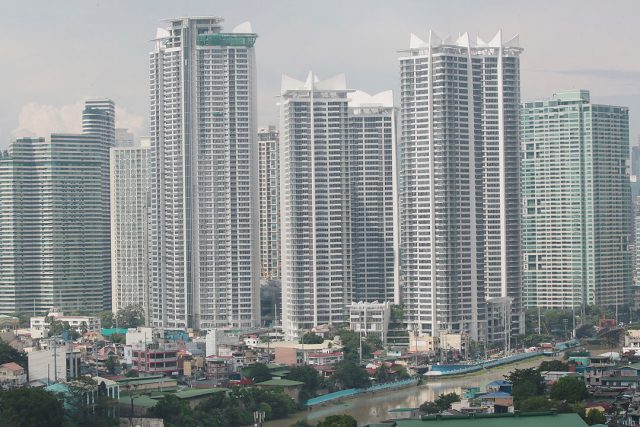
OFFICE DEVELOPERS with aging buildings should invest in redevelopments and green upgrades to sustain tenant demand, as occupiers increasingly favor higher-quality workspaces, property consultants said.

“Older buildings do not necessarily require full redevelopment to remain competitive,” Mikko Barranda, director for commercial leasing at Leechiu Property Consultants, said in an e-mailed reply to questions.

“Submarkets like Makati central business district and Ortigas Center, which have a higher concentration of aging office stock, will increasingly require thoughtful repositioning strategies to defend both occupancy and rental levels,” he added.

In Makati alone, about 320,000 square meters of vacant office space sits in buildings aged 20 years and older, according to Leechiu’s fourth-quarter property market report.

Consultants said this segment faces the strongest pressure as tenants reassess space requirements and operating costs.

Mr. Barranda said developers could preserve appeal by upgrading lobbies, elevators and common areas, while improving air-conditioning efficiency and building systems. These measures can help narrow the gap with newer offices without requiring a complete rebuild.

Sustainability upgrades are also becoming more important as tenant requirements evolve. Developers are gradually adopting green building certifications as occupiers place greater weight on environmental and workplace standards.

Certifications drawing tenant interest include the Philippine Green Building Council’s Building for Ecologically Responsive Design Excellence, the International Finance Corp.’s Excellence in Design for Greater Efficiencies and the International WELL Building Institute’s WELL Health-Safety Rating.

“We’re observing flight to quality by tenants from aging assets to newer quality-grade buildings,” Janlo C. De Los Reyes, head of research and strategic consulting at JLL Philippines, said in a Viber message. “Landlords can address this by investing in their buildings to help retain and attract tenants.”

Joey Roi H. Bondoc, director and head of research at Colliers Philippines, said proposed legislation could help accelerate redevelopment activity.

The Condominium Redevelopment bill seeks to set clearer rules for maintaining, repairing and redeveloping condominium projects, including office buildings.

“If passed into law, it would provide an easier process for tearing down old condominiums and redeveloping them,” he said by telephone.

Several measures have been filed in Congress, including House Bill No. 2286 and Senate Bill Nos. 235, 922 and 1442, though these remain pending at the committee level.

Avatar: Fire and Ash reaches $1 billion in global ticket sales

JAMES CAMERON’S science-fiction fantasy Avatar: Fire and Ash has surpassed $1 billion in global box office proceeds, the director’s fourth film to cross that threshold.

The film, which returned audiences to the visually stunning planet of Pandora, has brought in $1.03 billion in worldwide ticket sales, Walt Disney Studios said on Sunday.

Fire and Ash is the third movie in the Avatar series, which has earned a combined $6.35 billion globally. The movie picks up where the second film, Avatar: The Way of Water, left off — with characters Jake (Sam Worthington) and Neytiri (Zoe Saldaña) mourning the loss of a son.

“These movies consistently draw audiences to the movie theater,” said Paul Dergarabedian, Comscore head of marketplace trends, who noted that the visually stunning 3D films are “tailor made” for watching in theaters.

The first film in the franchise, Avatar, which opened in 2009 and brought in $2.9 billion in ticket sales worldwide, becoming the highest-grossing movie ever in absolute dollars, according to Comscore, although it’s behind the 1939 classic Gone With the Wind if box office returns are adjusted for inflation and average ticket prices over the decades.

Thirteen years later, in 2022, Avatar: The Way of Water opened, grossed more than $2.3 billion globally, and won an Oscar for best achievement in visual effects.

The latest installment, released in time for the holiday season, racked up $306 million in the US and Canada, and $777.1 million internationally, Disney reported.

Mr. Cameron’s first billion-dollar blockbuster was Titanic, released in 1997, which has brought in nearly $2.3 billion, worldwide. Reuters

Manila Water unit expands sewer coverage in Boracay

LAURENTIU MORARIU-UNSPLASH

BORACAY ISLAND Water Co., Inc. (Boracay Water), a noneast zone unit of Manila Water Co., Inc., has expanded its sewer network on Boracay Island, raising wastewater treatment capacity in the country’s top beach destination.

In a statement on Monday, Boracay Water said it has laid additional sewer lines in the village of Balabag and parts of Yapak through the Yapak Bypass Project to address rising wastewater management requirements in the area.

The expansion allowed the utility to accommodate wastewater flows from both Yapak and Balabag, increasing the number of connected accounts to 178 as of October last year from 30 at the end of 2024.

Boracay Water also reported that 230 households have linked up to the sewer system under its free sewer connection program, part of efforts to encourage compliance with environmental regulations.

These initiatives lifted sewer coverage on the island to 67% from 61%, resulting in a higher volume of wastewater being collected and treated at the company’s sewer treatment facilities.

“By expanding our sewer network, we not only help maintain the pristine condition of Boracay for tourism but also give customers assurance that their wastewater is properly treated,” Boracay Water Acting General Manager Joanna Paz I. Intas said in the statement.

“This means cleaner surroundings, improved public health and a safer environment for residents and visitors alike,” she added.

Under the Philippine Clean Water Act and the Sanitation Code of the Philippines, properties within 100 meters of an available sewer line must connect to the system.

Boracay Water operates under Manila Water Philippine Ventures, the noneast zone unit of Manila Water, and serves as a concessionaire of the Tourism Infrastructure and Enterprise Zone Authority.

The company took over operations in 2010 and has led efforts to rehabilitate and upgrade the island’s water supply and wastewater infrastructure after years of environmental strain from rapid tourism growth. — Sheldeen Joy Talavera

10 facts about global oil production and exports in 2025

The quick US invasion of Venezuela and capture of its president, Nicolas Maduro, was big news last week. Mr. Maduro was president from 2013-2025 and during his term, the Venezuelan economy and GDP size (at PPP values) shrank, from $561 billion in 2013 to around $224 billion in 2025. Despite this, Venezuela is a giant in the oil industry.

In this piece, I will highlight a number of facts about Venezuela and the international oil industry. I will also discuss the latest merchandise exports data. Here we go.

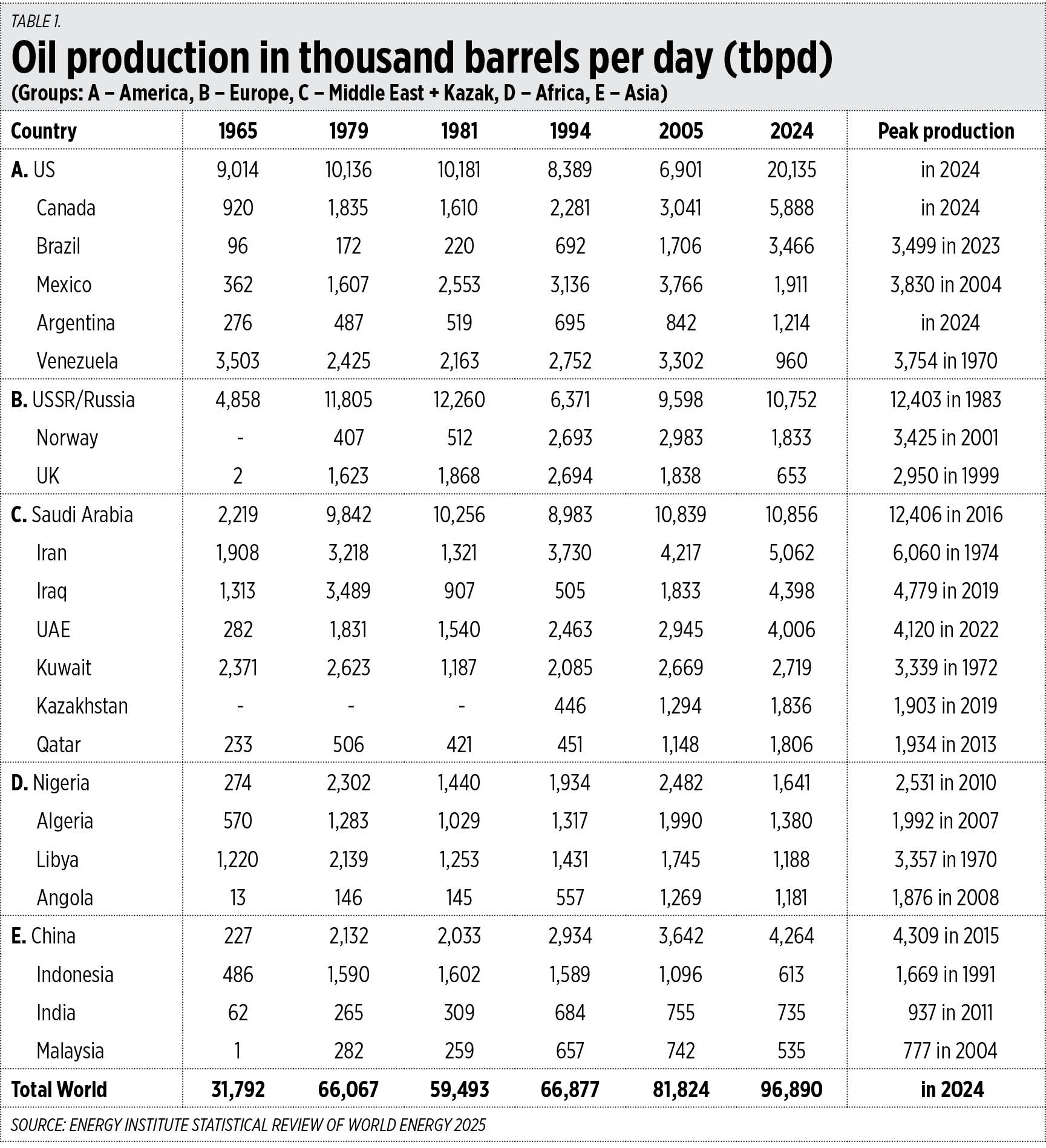
1. Venezuela was the third larger oil producer in the world since the 1940s. In 1965 it produced 3.5 million barrels per day (mbpd), the third largest producer after the US and the USSR. But this production shrank to only 0.96 mbpd in 2024 and around 0.94 mbpd in 2025.

In proven oil reserves, Venezuela is number one in the world with 303 billion barrels (bb), followed by Saudi Arabia with 267 bb, Iran with 209 bb, Canada with 163 bb, and Iraq with 145 bb (source: OPEC).

2. The US is the largest oil producer in the world, with 20.1 mbpd in 2024 and above 20 mbpd in 2025. The second to fifth largest producers are Saudi Arabia, Russia, Canada, and Iran.

3. South America is now producing more oil, led by Brazil, Argentina, and, surprisingly, Guyana. Guyana had no oil production at all until 2018, then it produced 0.62 mbpd in 2024 and is projected to have produced 1 mbpd in 2025. Venezuela, now to be run by the US according to President Donald Trump, can expect to see oil-gas production ramp up starting this year.

4. China continues to slowly expand its oil production with 4.26 mbpd in 2024 and projected production at 4.32 mbpd in 2025.

5. Global oil production keeps rising despite anti-fossil fuel campaigns by the climate establishment and many UN organizations — from 31.8 mbpd in 1965 to 81.8 mbpd in 2005, 96.9 mbpd in 2024 and projected at 106 mbpd in 2025 (see Table 1).

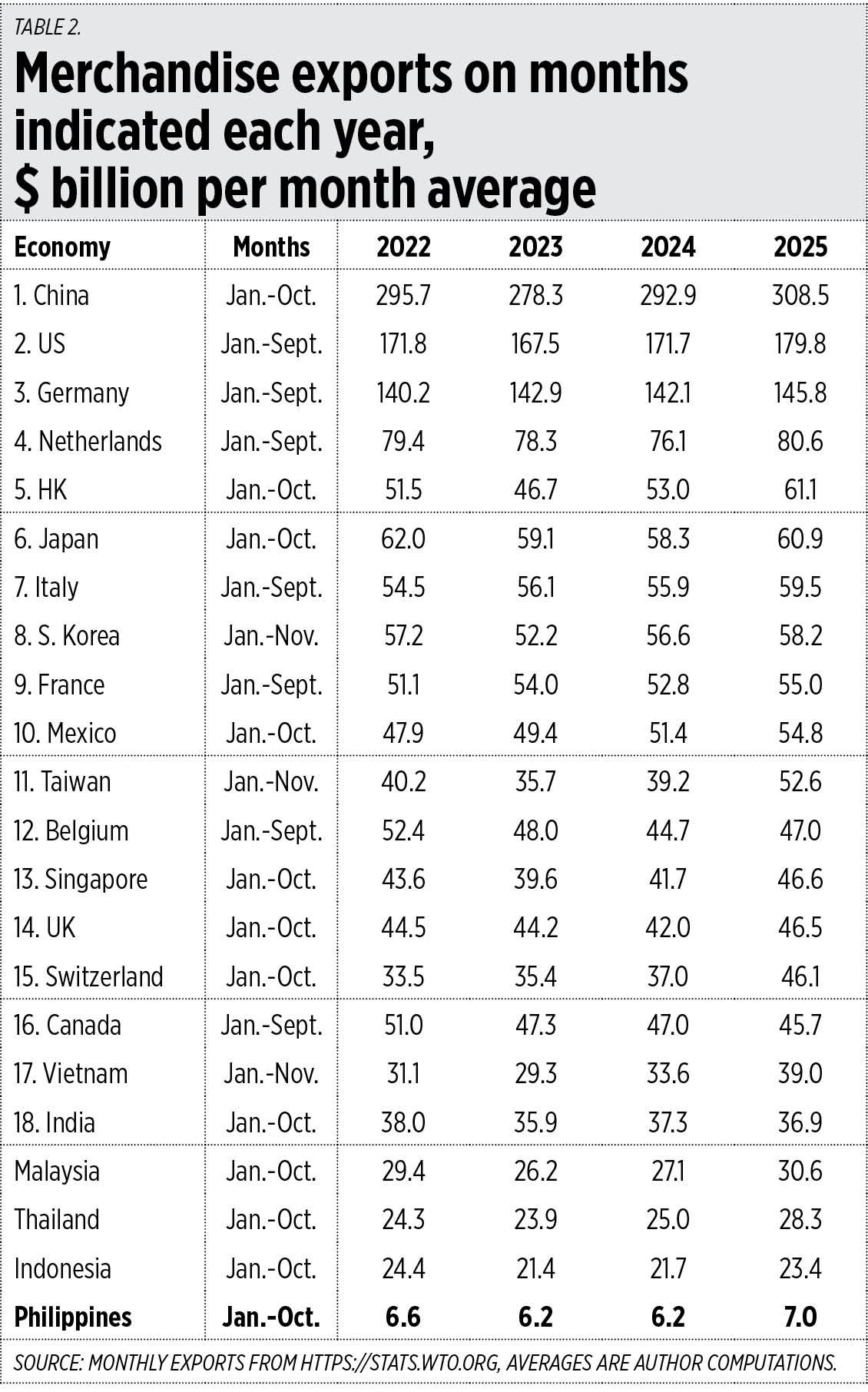
6. In global merchandise trade, China’s exports in 2025 of $308 billion/month is equivalent to the total exports of the US + Mexico + Canada + Brazil combined at $309 billion/month.

7. Hong Kong overtook Japan, Italy, and South Korea in 2025 to become the 5th largest exporter in the world. Singapore overtook the UK and Canada in 2025 to become the 13th largest exporter in the world.

8. Taiwan has made the largest exports leapfrog. In 2025 it overtook five countries — Belgium, Singapore, the UK, Switzerland, and Canada to become the world’s 11th largest exporter. Vietnam made second largest exports leapfrog. In 2025 it overtook India, Spain ($36 billion/month), and Russia ($34 billion/month) to become the world’s 17th largest exporter.

9. US exports were flat from 2022 to 2024, then saw an expansion of $8 billion/month in 2025 which may not be due to product competitiveness but the result of moves by many countries to placate Trump so that he would reduce US tariffs on products from those countries.

10. Exports from Germany, the Netherlands, the UK, and France were almost flat from 2022 to 2025, while Belgium experienced a decline (see Table 2).

The Philippines should integrate more economically with our Asian neighbors, especially China, Hong Kong, Taiwan, Japan, and Vietnam. They are big sources of our imports, foreign direct investments, and tourism. They are also destinations for our exports and skilled workers. The Philippines’ chairmanship of the ASEAN in 2026 should help attain this.

Our foreign and defense policies should be consistent with our trade, investment, and tourism policies. War mongering vs China should be tamed.


Bienvenido S. Oplas, Jr. is the president of Bienvenido S. Oplas, Jr. Research Consultancy Services, and Minimal Government Thinkers. He is an international fellow of the Tholos Foundation.

minimalgovernment@gmail.com

Peso slides to near one-month low on flight to safety amid Venezuela turmoil

BW FILE PHOTO

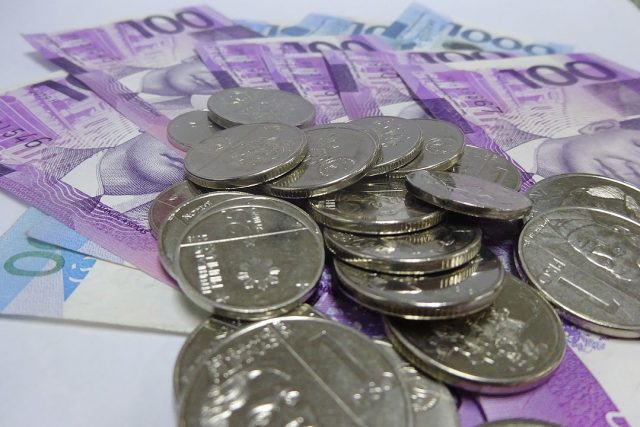
THE PESO dropped to a near one-month low on Monday, sinking back to the P59 level, as players flocked to safer assets following the United States’ attack on Venezuela.

The local unit fell by 28.9 centavos to close at P59.13 versus the greenback from its P58.841 finish on Friday, data from the Bankers Association of the Philippines showed.

This was its weakest close since its P59.21 finish on Dec. 10.

The peso opened Monday’s trading session weaker at P58.888 versus the dollar. Its worst showing was its closing level of P59.13, while its intraday best was at P58.85 against the greenback.

Dollars traded rose to $929 million from $699.13 million on Friday.

“The local currency weakened significantly from safe-haven dollar demand following the abrupt ouster of Venezuelan President Nicolas Maduro, which is highly expected to influence the global oil market,” the first trader said in an e-mail.

“The dollar-peso traded higher to close at its intraday high of P59.13 on renewed demand for safe-haven assets amid heightened geopolitical tensions, and after Economy Secretary Arsenio M. Balisacan said the peso will trade between P58 and P60 per dollar from 2026 until 2028,” the second trader said in a phone interview.

The dollar started the first full trading week of 2026 with a broad rally, Reuters reported. Currency traders largely looked past the United States’ weekend raid in Venezuela and the capture of Mr. Maduro, focusing instead on a slate of US macroeconomic indicators due this week that could be crucial in steering Federal Reserve policy.

The dollar advanced 0.3% to $1.1682 per euro, after earlier touching its strongest level since Dec. 10 at $1.1672.

It climbed to as high as 157.295 yen, 0.7951 Swiss franc and C$1.37771, all of which were the highest levels since Dec. 22.

Investors held their nerve on Monday after President Donald J. Trump said the US would take control of the oil-producing nation.

While Washington has not made such a direct intervention in Latin America since the invasion of Panama in 1989, Mr. Trump’s threats against Colombia and Mexico highlighted the aggressive shift in US policy and brought geopolitical perils back to the fore for financial markets at the start of the year.

For investors, Mr. Trump’s actions in Venezuela have also raised uneasy questions about their implications for China’s posture towards Taiwan and whether Washington might push more aggressively for regime change in Iran.

For Tuesday, the first trader said the peso could rebound on expectations of slower December inflation.

The first trader sees the peso moving between P58.90 and P59.15 per dollar, while the second trader sees it ranging from P58.80 to P59.20. — A.M.C. Sy with Reuters

Havitas Properties to enter affordable housing segment

AYAHILLSBATANGAS.COM

HAVITAS PROPERTIES, INC. plans to enter the affordable housing segment this year with the launch of a residential project in Quezon province, according to its chief executive officer (CEO).

The project will target the “dollar-earning demographic,” including overseas Filipino workers and local digital nomads, Havitas Properties President and CEO Jonathan F. Caro said in an e-mailed reply to questions.

“These are the ones continuing to drive housing demand, which our company is getting into by 2026,” he added.

Havitas has focused on leisure and resort-style developments catering to the high-end market. In February last year, the company launched Aya Hills, a two-hectare resort-style townhouse development.

The developer is backed by director Michael G. Tan, son of tycoon Lucio C. Tan, Sr. and president and chief operating officer at Asia Brewery, Inc.

This year, Havitas is scheduled to launch a seaside leisure-themed development in San Juan, La Union.

Its broader project pipeline includes income-generating vacation homes and mid-rise residential condominium projects, according to information posted on its website.

Despite its planned move into the affordable housing segment, Havitas will continue to focus on wellness-oriented developments, which Mr. Caro said remain in demand among high-end buyers investing in luxury real estate.

Data from property consultancy firm Colliers Philippines showed that only 5% and 3% of unsold residential units come from the upscale and luxury segments, respectively. Units in these categories typically cost P12 million and above, indicating relatively tight supply.

“Wellness real estate will be one of the bright spots in 2026, where the high net-worth market will combine their work with leisure,” Mr. Caro said.

The Global Wellness Institute defines wellness real estate as residential, commercial or institutional properties designed to support the health and well-being of occupants. The institute expects this segment to grow at an average 15.8% from 2023 to 2028, based on its latest report.

Demand for wellness-focused developments would also be supported by the continued expansion of the local tourism industry, Mr. Caro said, citing the importance of sustained collaboration between the government and private sector to support long-term growth. — Beatriz Marie D. Cruz

Battleship Potemkin at 100: How the Soviet film redrew the boundaries of cinema

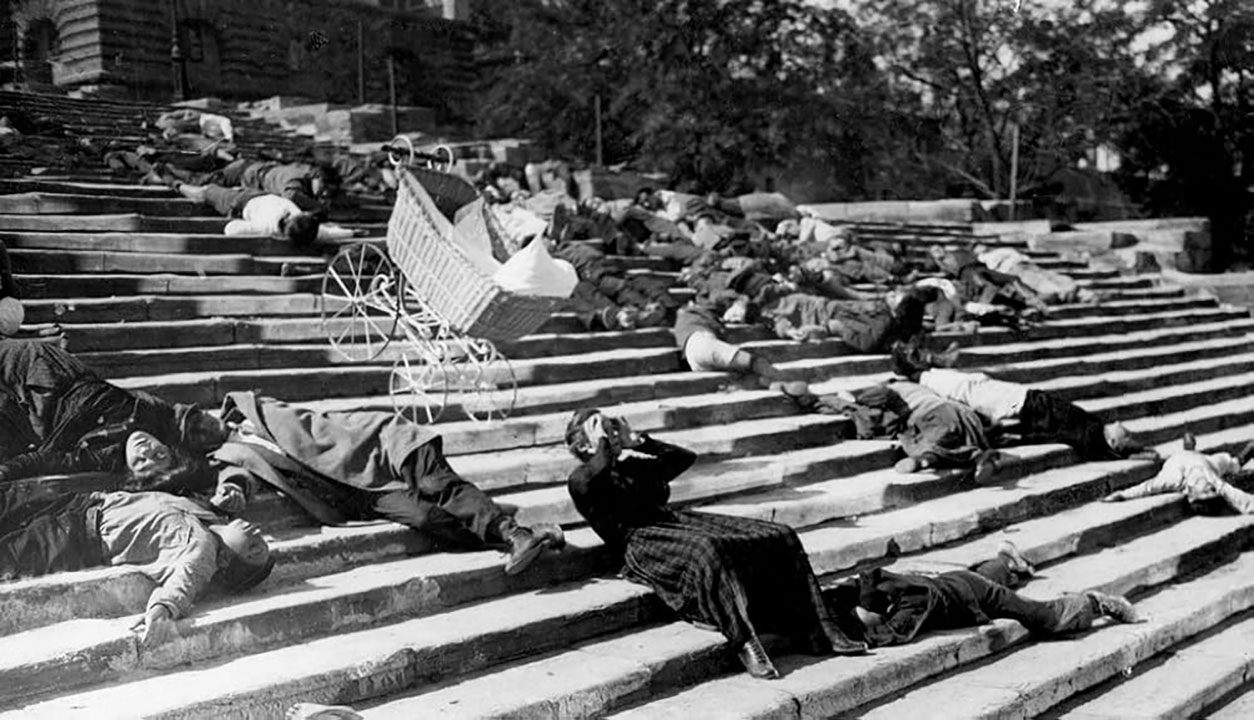
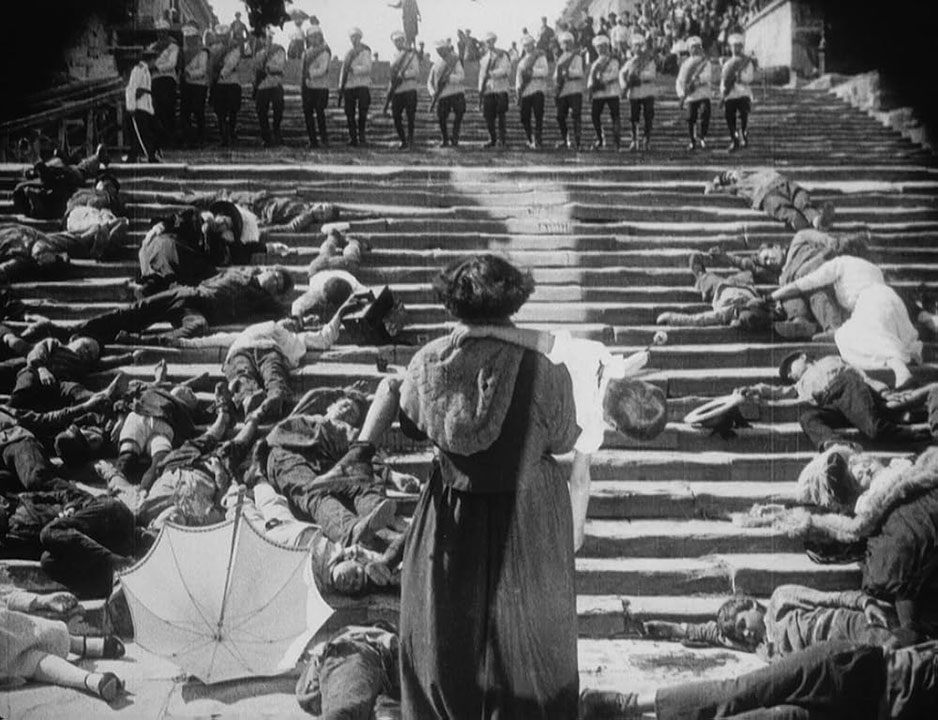
Scenes from Battleship Potemkin (1925)

PEOPLE CROWD together in the sun. All smiles and waves. Joyous.

Pandemonium erupts. Panic hits like a shockwave as those assembled swivel and bolt, spilling down a seemingly infinite flight of steps.

Armed men appear at the crest, advancing with mechanical precision. We are pulled into the chaos, carried with the writhing mass as it surges downward. Images sear themselves on the retina. A child crushed underfoot. A mother cut down mid-stride.

An infant’s steel-framed pram rattling free, gathering speed as it hurtles downward. A woman’s glasses splinter, skewing across her bloodied face as her mouth stretches open in a soundless scream.

I’ve just described one of the most famous sequences in the history of film: the massacre of unarmed civilians on the steps of Odessa. Instantly recognizable and endlessly quoted, it is the centerpiece of Sergei Eisenstein’s masterpiece, Battleship Potemkin, which turned 100 in December.

A NEW FRONT FOR CINEMA
Battleship Potemkin redrew the boundaries of cinema, both aesthetically and politically.

It is a dramatized retelling of a 1905 mutiny in the Black Sea Fleet of the Imperial Russian Navy — a key cresting point in the wave of profound social and political unrest that swept across the empire that year.

The first Russian revolution saw workers, peasants, and soldiers rise up against their masters, driven by deep frustration with poverty, autocracy, and military defeat.

Although the tsar remained in power, the discord forced him to concede limited reforms that fell far short of what had demanded.

The impetus for the historical mutiny on the Potemkin was a protest over rotten food rations. Eisenstein emphasizes this in his film, lingering on stomach-churning close-ups of maggots crawling over spoiled meat.

When the sailors refuse to eat the putrid rations, they are accused of insubordination and lined up before a firing squad. The men refuse to gun down their comrades and the crew rises up, raising the red flag of international solidarity as they symbolically nail their colors to the mast.

A sailor called Vakulinchuk, who helped lead the uprising, is killed in the struggle. Sailing to Odessa, the crew lays his body out for public mourning and the mood in the city becomes increasingly volatile. Support for the sailors swells, and the authorities respond with lethal force, sending in troops and prompting the slaughter on the Odessa Steps.

The Potemkin fires on the city’s opera house in retaliation, where military leaders have gathered. Soon after, a squadron of loyal warships approaches to crush the revolt. The mutineers brace for battle, but the sailors on the other boats choose not to fire. They cheer the rebels and allow the Potemkin to pass in an act of comradeship.

At this point Eisenstein departs from the historical record: in reality, the 1905 mutiny was thwarted and the revolution suppressed.

POLITICAL MYTH-MAKING
Battleship Potemkin was commissioned by the Soviet State to commemorate the 20th anniversary of the revolution.

The new Bolshevik administration viewed cinema as a powerful tool for shaping public consciousness and Eisenstein — then in his late 20s and gaining attention for his radical theater work — was tasked with creating a film that would celebrate the origins of Soviet power.

Eisenstein initially planned a sprawling multi-part film canvasing the revolution’s major events, but faced production constraints. He turned instead to the Potemkin, a story which allowed him to depict oppression, collective struggle, and the forging of revolutionary unity in a distilled form.

The finished piece was less a literal history lesson than a highly stylized piece of political myth-making.

When Potemkin was presented at Moscow’s Bolshoi Theater in December 1925 the invited spectators, a mix of communist dignitaries and veterans of the abortive 1905 mutiny, punctuated the screening with bursts of wild applause — none more ecstatic than when the battleship’s crew unfurl the red flag, hand-tinted a vivid red on the black and white film.

CELEBRATED — AND BANNED
Battleship Potemkin was a global sensation. Filmmakers and critics hailed it as truly groundbreaking. Charlie Chaplin declared it “the best film in the world.”

Yet its impact also made it feared. Governments recognized the volatile political charge running through its images. In Germany it was heavily cut, and in Britain it was banned. Even so, prints continued to circulate, and the film’s reputation only grew.

Eisenstein’s growing international status did little to protect him at home. As the 1920s gave way to the 1930s, the tides of Stalinist cultural policy began to turn sharply against him. Eisenstein’s approach was profoundly out of step with the new aesthetic of Socialist Realism, which demanded clear narratives, heroic characters, and unambiguous political messaging.

Where his signature technique, montage, was dynamic and dialectical, Socialist Realism insisted on straightforward storytelling and easily digestible moral lessons. As a result, Eisenstein found himself accused of obscurity, excess, and political unreliability.

Several of his projects were halted; others were taken out of his hands altogether. Those he did complete were admired, but none matched the impact of Battleship Potemkin.

A century on, its vision of oppression, courage, and collective resistance still crackles with an energy that reminds us why cinema matters. — The Conversation via Reuters Connect


Alexander Howard is a Senior Lecturer, Discipline of English and Writing, at the University of Sydney.

PAL named most punctual airline in Asia-Pacific for 2025

PHILIPPINEAIRLINES.COM

FLAG CARRIER Philippine Airlines (PAL) was named the most punctual airline in the Asia-Pacific region for 2025, posting an on-time arrival rate of 83.12%, according to global aviation analytics firm Cirium.

“This achievement reflects the discipline, professionalism and teamwork of our entire organization, particularly our frontline teams who operate our flights safely and reliably every day,” PAL Holdings, Inc. President and Chief Operating Officer Lucio C. Tan III said in a statement on Monday.

On-time performance measures the share of flights arriving at the gate within 15 minutes of their scheduled time. PAL said punctuality remains a core commitment to passengers, supported by close coordination across flight operations, engineering, airport services and ground handling.

“The recognition comes as Asia-Pacific carriers continue to navigate capacity pressures and complex operational challenges. Philippine Airlines remains focused on sustaining strong operational performance and further strengthening reliability,” the company said.

Cirium’s November 2025 monthly report also ranked PAL first among Asia-Pacific airlines after it logged an 84.67% on-time arrival rate for the month. The airline completed 96.31% of its 9,739 scheduled flights during the period.

PAL Holdings reported a 33.58% increase in attributable net income to P9.03 billion for the first nine months of 2025, supported by higher passenger revenues. At the local bourse on Monday, shares in the company closed unchanged at P3.80 each. — Ashley Erika O. Jose