Home Blog Page 4750

Nurses awaiting licensing eyed for gov’t hospital work

PHILIPPINE STAR/ MIGUEL DE GUZMAN

THE Department of Health (DoH) will consider allowing nursing graduates still awaiting licensing to work in government hospitals, the new Health Secretary said on Thursday.

“We have several nurses that haven’t passed the board examinations and don’t have a licenses. In the government, you cannot work without a license, but I’m willing to take them if they have a diploma,” newly appointed Health Secretary Teodoro J. Herbosa told ABS-CBN News Channel. 

Under the proposal, nursing graduates will be given time — possibly five years — to take and pass the licensure examination while employed, Mr. Herbosa said.

“I’ll make them eligible so if you have a diploma from an accredited school, I’ll give you a period of time to pass it. This is same in the US, (which accepts) board-eligible nursing graduates. They give them five years to pass the exam,” he said.

He said that the DoH might even invest in mentoring graduates to pass the board exam.

Mr. Herbosa said he still needs to consult with the Professional Regulation Commission whether the law needs to be revised before unlicensed nursing graduates can be employed.

Government hospitals have a shortage of about 4,000 nurses, Mr. Herbosa noted.

“Board-eligible (nursing graduates find work) as flight attendants in big airlines, I see them in call centers,” he said. “They should be… taking care of sick people, they should be (practicing in) rural areas.”

About 40% to 50% of nurses in private hospitals have quit in the past two years due to dissatisfaction with salaries, the Private Hospitals Association of the Philippines, Inc. has said.

While acknowledging the right of health workers to leave the country to pursue opportunity, Mr. Herbosa said the government should address their concerns to encourage them to stay.

“The right to a better life is embodied in our Constitution. If a nurse wants to go abroad to get a salary that I cannot give, I shouldn’t stop that person because I should look at why I cannot pay the same amount,” he said. “I will (pursue solutions) to make them stay.”

As of December, the monthly salary for nurses in private hospitals averaged P12,000, while those working in the public sector were receiving an average of P35,097, according to Filipino Nurses United. — Kyle Aristophere T. Atienza

Proposal to NEDA will serve as ‘baseline’ for privatizing NAIA; meeting with unsolicited proponents due next week

NINOY AQUINO INTERNATIONAL AIRPORT (NAIA) Terminal 3 — PHILIPPINE STAR/MIGUEL DE GUZMAN

THE Department of Transportation (DoTr) said the proposal to privatize the Ninoy Aquino International Airport (NAIA) currently with the National Economic and Development Authority (NEDA) will serve as the “baseline” for the levels of investment the government expects to be sunk into the international gateway.

Transport Undersecretary for Aviation and Airports Roberto C.O. Lim said in a briefing on Thursday that the government could issue a bid invitation by September should NEDA approve, adding that an unsolicited proposal for NAIA submitted by a consortium has yet to be evaluated.

“We are just about to start studying the unsolicited proposal, as it is a very comprehensive proposal and it also needs to comply with the requirements stipulated in the Build-Operate-Transfer law,” he said.

“We will be meeting (the consortium behind the unsolicited proposal) next week with some preliminary questions …. Clearly, the unsolicited proposal is not identical to the basic terms and conditions that we have submitted to NEDA, (which sets) a baseline for what we believe are the investments needed for the public-private partnership for NAIA,” he added.

In April, the Manila International Airport Consortium, consisting of six Philippine conglomerates and Global Infrastructure Partners (GIP), submitted an unsolicited proposal valued at P100 billion.

The consortium is composed of Aboitiz Infracapital, Inc., AC Infrastructure Holdings Corp., Asia’s Emerging Dragon Corp., Alliance Global – Infracorp Development, Inc., Filinvest Development Corp., JG Summit Infrastructure Holdings Corp. and GIP, an investment fund.

The DoTr and the Manila International Airport Authority also submitted a solicited proposal to privatize the airport last week which will involve capital investment of P141 billion.

Once NEDA approval is obtained, Mr. Lim said, the government could publish the invitation to bid and participate in the privatization exercise by September.

“If we get NEDA approval, let’s say in a month or in a month and a half, by September we can publish the invitation and those who want to participate can acquire the kit that will define what (they will) need to do and to submit,” Mr. Lim said.

Mr. Lim said on Wednesday that the privatization of the NAIA could kick off by the first quarter of next year.

“If we are to use an aggressive timeline, I think we can have a result announced, the selection of winning bidder, by the first quarter of next year,” he said.

“Remember, there is a long process of selection; there is a tech assessment and there will be negotiations. This is an estimate we believe is doable,” he added.

Mr. Lim said that the DoTr has yet to talk with any private group for the solicited proposal as it is still waiting for the approval of NEDA.

“For the solicited mode, we have not yet talked to anybody because we are waiting for the NEDA to give its approval so that we can prepare the comprehensive kit that will be available when we publish in the newspaper an invitation for public bid for the concession of NAIA,” he said.

The public-private partnership project will make operations at the airport more efficient, said Mr. Lim.

“It can lead to a faster rate of investment in modernizing the facility so that we can really introduce the innovations and the technology that are needed just for NAIA to level up along with our neighbors’ airports,” he said. — Justine Irish D. Tabile

Tuna industry fears freeze on vessel monitoring could trigger European sanctions

BW FILE PHOTO

THE tuna industry said the government needs to lift the suspension of an order requiring monitoring devices on commercial vessels, in order to avert a ban on Philippine tuna by the European Union (EU).

In a statement, the Philippines Tuna Handline Partnership (PTHP) said that the suspension order may affect the status of Philippine tuna, after the industry was recently awarded the Marine Stewardship Council (MSC) certification.

“Ours are the first ever fishery in the Philippines to be certified under the MSC standard, an achievement that is in line with President Marcos’ goal of bringing prosperity and self-sufficiency to our nation,” Atenogenes B. Reaso, chairman of the Gulf of Lagonoy Tuna Fishers Federation, Inc., said.

“We are worried that the suspension of vessel monitoring measures to ensure transparency in fisheries will put our tuna exports at risk,” he added.

The EU requires preferred trading partners to comply with a number of international treaties, including one restricting Illegal, Unreported, and Unrestricted Fishing.

The PTHP earned its first MSC certification in October 2021 after a decade of compliance with international best practices.

In March, the Palace suspended the Vessel Monitoring Measures (VVM) for commercial fishing vessels under Fisheries Administrative Order (FAO) No. 266 in a memorandum signed by Executive Secretary Lucas Bersamin.

The memo directed the Department of Agriculture’s Bureau of Fisheries and Aquatic Resources (BFAR) “to hold in abeyance the implementation of FAO No. 266 nationwide, pending the final resolution over its constitutionality by the Supreme Court.”

FAO No. 266 requires that no fishing activity take place without complying with the vessel monitoring measures set by BFAR and local government units.

“This issue is very concerning. Our exports and those of other fish processors will be affected should the Philippines be red or yellow carded once again,”according to Jinky Rabano of the Philippine Association of Tuna Processors, Inc.

Environmental group Oceana reiterated its concern that the Philippines may face another yellow card warning from the EU, the country’s biggest market for fish and seafood products.

“VMM is also a tool specifically required to be established in our country to ensure the sustainable use of our marine resources,” Oceana Acting Vice-President Rose Liza Osorio said.

“This recent move by the government suspending the vessel monitoring rules contravenes not just our own law but even our commitments under various international agreements to ensure transparency and traceability,” she added.

The Philippines was issued a yellow card by the EU in 2014, which was lifted after the passage of Republic Act No. 10654 or the Amended Fisheries Code. — Sheldeen Joy Talavera

PHL to seek $300-million AIIB loan for financial inclusion projects

REUTERS

THE PHILIPPINES is seeking a $300-million loan from the Asian Infrastructure Investment Bank (AIIB) to fund financial inclusion projects, the Beijing-based bank said.

The AIIB said on its website that the loan will help the Philippines leverage its national ID system to expand financial inclusion and expand the digital payments ecosystem.

The program also aims to reduce inequalities in women’s access to finance.

The AIIB said the loan will be co-financed by the Asian Development Bank.

The Philippines is seeking to update the National Strategy for Financial Inclusion 2022-2028 with gender-focused targets, as well as the approval of the Financial Consumer Protection Act and other key legislation.

The financing will also support the Rural Bank Strengthening Program with targeted programs for female entrepreneurs.

AIIB also noted an Insurance Commission circular requiring the collection of sex-separated data to ensure effective inclusion of women in microinsurance.

The loan will also support a Department of Trade and Industry program to compile a database of women-owned and -led micro-, small-, and medium-sized enterprises.

The inclusion programs also support expanded financial services in Muslim Mindanao through the creation of a Shari’ah Supervisory Board. The loan will also fund capacity-development activities for Islamic banking.

The loan supplements a program which began in October 2018 to scale up the use of digital financial services, and another in August 2020 which sought to implement a national identity system and strengthen consumer protection and literacy. — Aaron Michael C. Sy

NFA: Rice given to teachers passes quality checks

DEPED.GOV.PH

THE National Food Authority (NFA) said the rice distributed as an allowance to teachers has passed quality tests, after a legislator alleged that the grain was of poor quality.

In a statement late Wednesday, the NFA’s Central Luzon (Region III) office said laboratory tests found the rice to be “edible, in good condition, and safe for human consumption.”

The regional office added that it has not received complaints about the rice.

On Tuesday, House Deputy Minority Leader and ACT Teachers’ Party-list Rep. France L. Castro said she wants an investigation of reports that rice distributed in Nueva Ecija, Mindoro, Bacolod City, and Zamboanga del Norte was “inedible.”

She said the rice was supposed to be distributed last year. Many teachers have yet to receive their rice allowances despite being asked to sign an acknowledgement receipt, she said.

The NFA Region III office said rice is typically released after being certified as being of good quality and exact weight by a receiving agency.

“The focal person of each agency-beneficiary is requested to witness the actual rice issuance to confirm the quality and exact quantity in bags and in weight based on the provided number of qualified agency-beneficiaries,” it said.

NFA Administrator Roderico R. Bioco said the procedure for releasing rice also involves laboratory analysis to ensure quality and safety.

“We have distributed (over) 300,000 sacks and so far, we received no requests for replacement or verified complaints,” he said.

The agency noted that any smells may be the result of the period of storage for some rice held by the NFA as buffer stock.

In an administrative order signed by President Ferdinand R. Marcos, Jr., in December, all government employees, including public school teachers, are entitled to a one-time rice allowance.

The Department of Budget and Management released P1.18 billion for the program in April.

Members of the Makabayan bloc in Congress called for an investigation into the allegations via House Resolution 1082 filed on Wednesday. — Sheldeen Joy Talavera

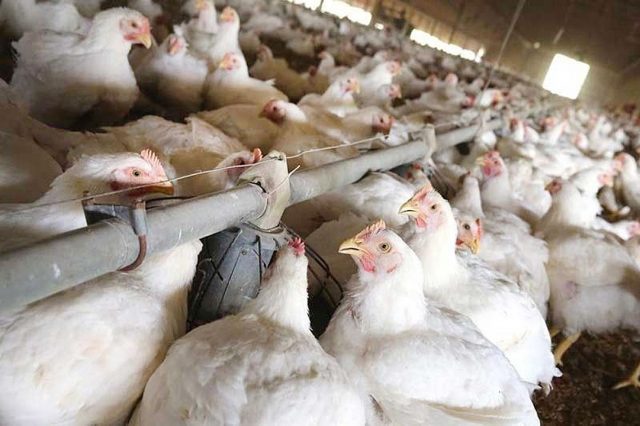
Ban on US, Dutch poultry imports lifted

PHILSTAR FILE PHOTO

THE Department of Agriculture (DA) has lifted a ban on poultry products from the US state of Minnesota as well as the Netherlands, after birds there were declared free of H5N1 Highly Pathogenic Avian Influenza (HPAI).

In a separate memorandum order, the DA once again allowed the entry of domestic and wild birds and their products including poultry meat, day-old chicks, eggs and semen from both locations.

“Based on the evaluation of the Department of Agriculture (DA), the risk of contamination from importing poultry meat, day-old chicks, egg and semen is negligible,” according to the orders, signed by Senior Undersecretary Domingo F. Panganiban.

The ban on imports from Minnesota was imposed by former Agriculture Secretary William D. Dar on April 7, 2022, which also covered the US states of Missouri, South Dakota, North Dakota, and Iowa, following the confirmation of outbreaks there by the National Veterinary Services Laboratories.

Philippine and American veterinary authorities agreed in 2016 that “a state-wide ban shall only be imposed if there are three or more countries affected with HPAI in one state.”

Meanwhile, the poultry ban on the Netherlands was issued on Nov. 12, 2021 based on a report submitted to the World Organization for Animal Health (WOAH) on Oct. 28, 2021 of an outbreak in Zeewolde, in the Dutch province of Flevoland.

The temporary ban also covered live cattle, meat products, and processed animal proteins derived from cattle. This specific ban was lifted on March 28 after the Netherlands was declared free of mad cow disease.

The DA procedure for lifting bans is based on official self-declaration reports sent to the WOAH and supporting documents submitted by the US Department of Agriculture’s Animal and Plant Health Inspection Service.

“All import transactions of the above commodities shall be in accordance in existing rules and regulations of the DA,” the memo said.

Meat Importers and Traders Association President Emeritus Jesus C. Cham said that “any additional origins that become approved will add to the supply, not only for meat traders but as well for meat processors.”

“We continue to exhort the government to adopt the regionalization principles of the World Organization for Animal Health and approve more origins,” he said in a Viber message. — Sheldeen Joy Talavera

Philippine fast-track decarbonization seen costing $133 billion until 2040

STOCK PHOTO | Image by Insung Yoon from Unsplash

THE PHILIPPINES will need $133 billion until 2040 to implement an accelerated timeline for decarbonization, the World Bank said.

In a presentation, Feng Liu, World Bank senior energy specialist and infrastructure program leader for the Philippines, said the accelerated decarbonization scenario assumes annual reductions in carbon dioxide emissions of at least 80% by 2040 and projects electricity demand growth to be level with the current policy scenario (CPS).

CPS refers to the government’s ambitions for improving energy efficiency while also developing e-mobility and ramping up renewables on the supply side.

“The accelerated decarbonization as we described will require doubling capital investment in the power sector, almost all of the incremental investment going to variable renewable energy, particularly solar and wind,” he said.

The World Bank said that in order for the Philippines to build a foundation in the next five years for its energy transition, it must increase the number of utility-scale solar and wind projects in order to bring variable renewable energy sources to a tipping point.

Mr. Feng said that the Philippines should also pursue a liquefied natural gas (LNG) program to ensure reliable power supply while increasing the system’s flexibility for integrating renewables.

Among the recommendations by the World Bank are: prioritizing planning and investment in transmission capacity and grid flexibility; establishment of a framework to allow the early retirement of coal-fired plants and use of an appropriate carbon pricing to level the playing field between renewables and fossil fuels while generating revenues.

“A cleaner energy future is expected to be more affordable, given the savings in fuel costs and the global trends of declining costs related to deploying and integrating solar and wind power, enhancing the competitiveness of the economy,” the World Bank said in a report.

Energy Secretary Raphael P.M. Lotilla said the government’s clean-energy ambitions highlight the need for modernized transmission infrastructure.

“The government will facilitate the upgrading and modernization of the transmission and distribution lines to support an efficient transition to cleaner energy,” Mr. Lotilla said.

Mr. Lotilla said that to achieve the energy transition, the government must resolve transmission congestion by “adding transmission lines or avoiding subsidies that cause the build-up of excess capacity.”

“I pose the challenge for our development partners therefore to be up to speed in delivering the needed transmission capabilities,” Mr. Lotilla said.

Energy Undersecretary Rowena Cristina L. Guevara said that the Philippines is in a “mad rush” to put up generating capacity to meet increasing demand.

Ms. Guevara said that with the growing population, the Philippines is now relying on renewables to ensure energy security.

“I would say well, solar is going to need an energy storage system such that it can do the work as baseload. But you know, we have several types of renewable energy available,” she said.

Ms. Guevara said hydropower and geothermal plants can take up baseload duties in order to aid the transition away from coal-fired plants. She added that LNG, which is being put forward as a transition fuel, will also play a crucial role.

“Like Ilijan (a gas-fired power plant in Batangas) started running 600 megawatts (MW) today (Thursday). It will reach 1,200 MW by June 9,” she said, noting that decreasing the system’s carbon footprint will require replacing such plants. “But we know for a fact that there are technologies available.”

The Ilijan power plant is deemed vital to the power supply. Its gas contract with operators of the Malampaya field expired in June 2022. The reopening of Ilijan comes after the successful delivery of LNG fuel.

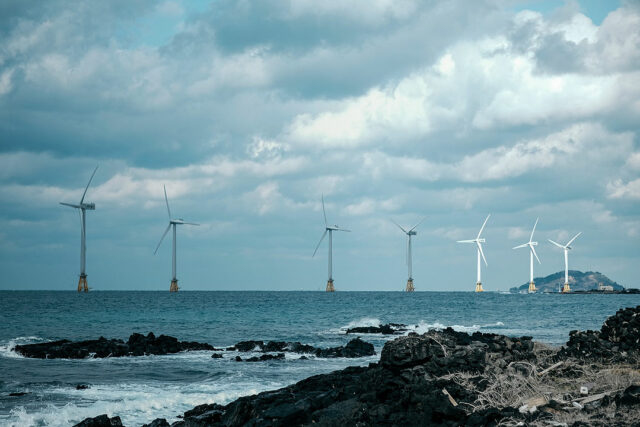
The Department of Energy (DoE) said it is planning to conduct an auction for offshore wind and other renewable projects in 2024.

According to service contract awardees, “Next year would be a good time for them. So, we plan to hold an auction that includes offshore wind by next year,” Ms. Guevara said.

The DoE is set to conduct the second round of green energy auctions by June 19, with 118 qualified companies expected to bid for 11,600 MW in renewable energy capacity.

Last month, the department said it awarded 65 offshore wind contracts with a combined potential capacity of 51.23 gigawatts, which it deemed sufficient to supply future energy demand.

Under the Philippine Offshore Wind Roadmap, the Philippines has an estimated potential capacity of 178 GW from offshore wind resources. This is expected to help achieve the target of increasing the share of renewables to 35% of the energy mix by 2030 and 50% by 2040. — Ashley Erika O. Jose

BPO industry signs skills-upgrade partnership with StackTrek 

REUTERS

THE Information Technology and Business Process Association of the Philippines (IBPAP) said it signed a partnership agreement with global training company StackTrek to improve its workforce’s digital and artificial intelligence (AI) skills.

The IBPAP said in a statement on Thursday that the National IT Talent partnership with StackTrek will focus on “embedding training” for industry-relevant skills into the curriculum and internship programs of higher education institutions.

“In what could be an AI-driven economy, proactive collaboration is crucial to empower the Filipino talent, enabling them to flourish in roles that involve higher-value work,” IBPAP President and Chief Executive Officer Jack Madrid said.

IBPAP said the partnership will lead to the establishment of an AI and Programming Academy; the StackLab which will establish AI research and development units and deliver AI software applications to clients; and the AI Executive Education Program.

“The partnership between StackTrek and IBPAP represents a groundbreaking collaboration that will help the Philippine IT-BPM industry seize the tremendous economic opportunity presented by AI,” StackTrek Chief Executive Officer Bill Yuen said.

“We believe that with our combined expertise, resources, and vision, we can empower individuals and organizations to embrace AI, redefine business landscapes, and drive the industry forward,” he added.

For 2023, the IBPAP set a target of 1.7 million full-time employees (FTEs) and $35.9 billion worth of revenue. Last year, IBPAP grew revenue by 10.3% to $32.5 billion with FTEs rising 8.4% to 1.57 million. — Revin Mikhael D. Ochave

ERC orders distributors to explain higher-than-approved power charges

MOREPOWER.COM.PH

THE Energy Regulatory Commission (ERC) has issued show-cause orders against some distribution utilities (DUs) for charging more than authorized power generated under emergency power supply agreements (EPSAs).

In an advisory posted on Wednesday, the ERC reminded DUs that they can only procure EPSAs after a declaration of force majeure.

ERC Chairperson and Chief Executive Officer Monalisa C. Dimalanta said that the advisory was meant to clarify the procedure for procuring emergency supply.

“We observed from our records that some DUs signing EPSAs are implementing rates that do not comply with the DoE (Department of Energy) circular stating that the EPSA rate cannot be higher than the latest ERC-approved tariff for the same technology in the area. We have issued show-cause orders to some DUs because of this,” Ms. Dimalanta said in a Viber message on Thursday.

Ms. Dimalanta did not identify the DUs other than to say that they include Manila Electric Co. (Meralco).

Meralco signed EPSAs with AboitizPower Corp. to partly cover the 670-megawatt capacity it lost from South Premiere Power Corp.

“To avoid these situations, the advisory is issued so that the DUs will implement the correct rate and file their EPSAs without delay so we can authorize the proper rate for them,” she said.

In its advisory, the ERC also ordered EPSAs to be filed immediately upon signing, adding that such deals are not eligible for subsidies like the Universal Charge for Missionary Electrification for Small Power Utilities Group areas. — Ashley Erika O. Jose

New defense chief assures cautious reforms in pension scheme for MUP

PHILIPPINE STAR/EDD GUMBAN

By Kyle Aristophere T. Atienza and Keisha B. Ta-asan, Reporters

NEW Defense Secretary Gilbert C. Teodoro on Thursday assured that reforms in the pension system for military and uniformed personnel (MUP) will be implemented gradually, with consideration for the interests of both beneficiaries and the government coffers.   

Mr. Teodoro made the statement after being asked to comment on warnings that there could be a mass exodus of enlisted personnel from the military, police, and other uniformed forces should the government push through with its plan to implement mandatory contributions for the pension fund.

Speaking to Palace reporters, Mr. Teodoro said that having come from the financial sector prior to his new post, he understands the need to adopt changes in the MUP pension system cautiously.

“Because I also came from the financial sector, this would not happen abruptly,” he said in Filipino.

“We will just lessen the bleeding, as the government calls it, until the system becomes self-sustaining,” he added.

Mr. Teodoro earlier said President Ferdinand R. Marcos, Jr.’s first marching order for him is to resolve issues concerning the MUP pension.

He guaranteed that financial risk management standards will be applied to protect the MUP contributions.

“The financial sector knows that, that there should be governance standards,  prudential standards, proper risk management, proper audit, transparency,” he said, adding that management of the pension fund should be subject to the central bank’s monitoring.

The Government Service Insurance System (GSIS), which handles the pension fund for civil servants, said on Thursday that the MUP fund will be kept separate.    

Speaking to around 300 Philippine National Police (PNP) officers and at least 1,000 online participants during the government’s second round of consultations, GSIS Senior Vice President George S. Ongkeko said the GSIS will only manage the MUP funds.

“The GSIS will ensure there will be no co-mingling of funds, so do not worry. The GSIS manages various funds, and in all of those funds, we make sure there is no co-mingling,” Mr. Ongkeko said in Filipino, based on a statement from the Department of Finance.

The government is looking to start requiring all active MUP and new recruits to contribute to their pensions starting next year.

National Treasurer Rosalia V. De Leon told reporters in a Viber message that the GSIS will be a trust fund manager, but a committee composed of the Department of Finance, Department of Budget and Management, Office of the President, and the GSIS will oversee the fund.

“There will be separate account for the MUP as well as sub funds for different MUP services,” Ms. De Leon said, adding that they will monitor the respective contributions and disbursements for members.

“MUPs will not be GSIS members,” she added.

MORE DISCUSSIONS
DoF Undersecretary Maria Luwalhati C. Dorotan Tiuseco said the government is looking forward to have more discussions to address other concerns and details.

“Rest assured that we would be more than willing to talk in smaller groups if needed so we can better explain the proposals,” she said.

Meanwhile, PNP Lieutenant General Michael John Dubria said the police would remain “open to further discussions.”

“It is a fact that the President himself intended for this project,” he said. “(Everyone) hopes for the best, for the good of the economy, the nation, and the welfare of all.”

In a note, GlobalSource analysts Romeo L. Bernardo and Maria Christine Tang said the changes in the MUP pension reform may help improve tax administration.

“DoF officials are now doing the rounds of consultation with MUPs and the likely outcome would be a set of more modest changes that will reduce the annual drain on the budget and slow the growth of pension liabilities,” they said.   

Finance Secretary Benjamin E. Diokno in late March warned of a possible “fiscal collapse” should the government fail to reform the MUP pension system, noting that the government has set aside P120-130 billion for the pension program for this year alone.

He said the amount that the government allocates for the pension of retirees from the security sector is much bigger than the funds being earmarked for the maintenance and operating expenditures of the whole Armed Forces of the Philippines (AFP).

Under the current setup, the pension of retired personnel increases by 100% when the salary of the incumbent personnel is doubled. The average monthly pension of a military personnel is around P40,000.

Military or uniformed personnel who choose to retire after 20 years of service can already receive a pension since there is no minimum “pensionable” age, Mr. Diokno said. Some personnel even get recruited at the age of 20 so they can retire by 40.

Earlier this month, Mr. Marcos Jr.  said the MUP pension fund would be depleted in the next five to six years if the present setup continues.

The Defense department, on the other hand, had previously warned that should the government push through with its plan to reform the MUP pension, an estimated 70% to 80% of the military’s enlisted soldiers may retire early.

The MUP pension program covers members of the AFP, PNP, Bureau of Jail Management and Penology, Bureau of Fire Protection, Philippine Public Safety College, Coast Guard, and Bureau of Corrections.

The proposed MUP pension reform is among the legislative priorities of the Marcos administration. It is still pending at the committee level in both chambers of Congress.

“I hope that as soon as possible, Congress will act on it and the President will sign it,” Mr. Teodoro said, noting that his agency is at the same working with various sectors for the proposal.


Teodoro asks China to be ‘magnanimous’ in relations with PHL

DEFENSE SECRETARY GILBERTO C. TEODORO, JR. — DND

THE PHILIPPINES’ relations with China are more than just their sea disputes, Defense Secretary Gilbert C. Teodoro said on Thursday, and asked Beijing to be “magnanimous” as they nurture trade and partnerships in other sectors.

“Relations between the two countries are not mono-dimensional. There are other relationships that we need to build up,” he told a Palace news briefing.

Mr. Teodoro said that the Philippines is still a “net importer” and China is a major export destination. 

“China is a big market for this country and we have realized that, and I think the United States realizes it too.”

China is the Philippines’ largest trade partner, with the two countries’ total trade amounting to $2.54 billion in February. Philippine exports to China hit $611.59 million in February, while its imports from the Asian “superpower” reached $1.93 billion.

Foreign policy experts have said boosting trade with China would unlikely temper its expansive activities in Philippine waters in the South China Sea, citing Manila’s relationship with Beijing under the former administration. 

Former President Rodrigo R. Duterte led a foreign policy pivot to China when he took office in 2016. He had been criticized for gambling Philippine territories to appease China in exchange for investment pledges that only few had materialized.

The Philippines’ relationship with China has become more complicated after a China Coast Guard (CCG) ship used a military-grade laser in February to harass a Philippine ship supporting a rotation and resupply mission of the Philippine Navy in the Second Thomas Shoal, which is within the Philippines’ exclusive economic zone. 

Beijing said the CCG action was intended for navigational safety. 

A near-collision incident between a CCG ship and a Philippine patrol vessel carrying journalists was also reported last April 23.

Mr. Teodoro said that China, as a stronger country, has the “bigger obligation to be magnanimous and show trust, and to earn the trust of the Filipino people by conforming its activities to recognized norms of international law.”

He cited the 1980s United Nations Convention on the Law of the Sea (UNCLOS), which China has invalidated, and the 2016 arbitral award that favored Manila in its territorial dispute with Beijing. 

“We are talking about the arbitral award. It has already been stated by our two past presidents that our rights and territory are defined by UNCLOS and it has been stated too that this cannot be frittered away or bargained away by passages of administration or passage of time,” Mr. Teodoro said.

“It is not only important to take into consideration what the specifics of the arbitral tribunal said, but the process by which it was done. It was done by an independent arbitral tribunal of experts in International Law, where had China participated, it would have had a chance to demonstrate its legal position in a fair and impartial proceeding,” he added. — Kyle Aristophere T. Atienza

De Lima supporters say bail plea denial an injustice

SENATOR Leila de Lima attends the hearing at Regional Trial Court Branch 204 in Muntinlupa City on Nov. 4, 2022. — PHILIPPINE STAR/RUSSELL PALMA

SUPPORTERS of former Senator Leila M. De Lima, one of ex-President Rodrigo R. Duterte’s staunchest critics, said a trial court’s recent denial of her plea to post bail is an injustice and reflects the continuing human rights violations in the Philippines. 

“Every day of her continuing detention, just like that of the more than 700 political prisoners at present, is a day of injustice against her,” Cristina E. Palabay, secretary general of human rights group Karapatan, said in a Viber message.

Ms. Palabay said the former lawmaker has been incarcerated for six years on politically motivated charges by the Duterte administration.

United States Senator Richard Joseph Durbin on Thursday said Ms. De Lima should not spend another minute in jail on what he called “bogus” charges.

“This is a tragic decision and a sad day for human rights champions in the Philippines,” he tweeted.

Senator Ana Theresia N. Hontiveros-Baraquel said Ms. De Lima deserves a speedy trial provided under the Constitution.

“Again, for the sixth year in a row, this ruthless tide of injustice against Leila must stop, and the trumped-up charges immediately dropped,” she said in a statement.

In a statement late Wednesday, Ms. De Lima said her lawyers will file a motion for reconsideration to raise the issue of the credibility of inmate witnesses.

“I am of course disappointed,” said the former lawmaker. “But with a clean conscience, I cannot and will not lose hope.”

A Muntinlupa trial court rejected Ms. De Lima’s motion for bail, saying it could not overlook the testimonial evidence against her.

She is being tried for allegedly conspiring to commit illegal drug trading during her term as justice secretary, based on testimony provided by inmates from the national penitentiary.

In an order made public on Thursday, the trial court’s administrator gave the tribunal nine months to decide on the case, considering that it has been pending for six years.

“Under the trial court’s rules, whether the evidence of guilt is strong or not should be determined summarily, and does not need a full-length trial,” Ephraim B. Cortez, president of the National Union of Peoples’ Lawyers, said in a Viber message.

The Muntinlupa court dismissed a separate illegal drug trafficking case against Ms. De Lima and her former aide on May 12, citing reasonable doubt.

The former senator originally faced three illegal drug cases. The tribunal dismissed her first case in 2021.

Last year, the Ombudsman cleared her and her former aide of bribery charges for lack of evidence. — John Victor D. Ordoñez

ADVERTISEMENT
ADVERTISEMENT