Home Blog Page 4733

Agri trade deficit widens to $2.81 billion in Q1
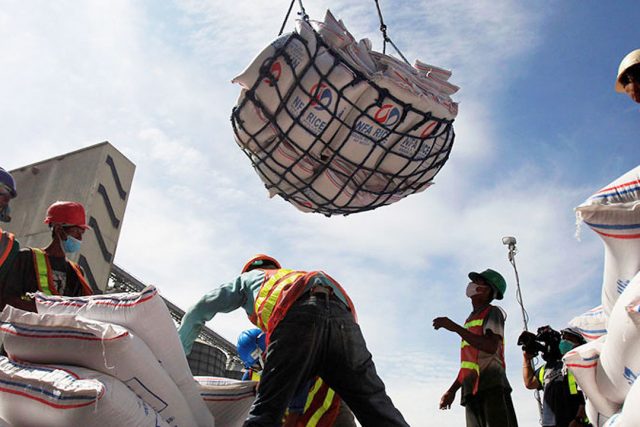
REUTERS

THE trade deficit in agricultural goods expanded 10.2% year on year to $2.81 billion in the first quarter, with plunging exports significantly outweighing a decline in imports, according to the Philippine Statistics Authority (PSA).

In a report, the PSA said overall trade in agriculture — or the sum of exports and imports — fell 8.6% to $5.90 billion during the quarter, a reversal from the 30.7% gain posted a year earlier.

Agricultural imports, which accounted for 13.9% of imports overall, dropped 3.3% to $4.50 billion in the first quarter. The decline in agricultural exports was even greater — 20.8% to $1.55 billion. Agricultural exports accounted for 9.2% of all exports.

The top agricultural export commodity group was edible fruits and nuts; peel of citrus fruit melons, which were valued at $439.51 million or 28.4% of the farm export total.

Agricultural products shipped to ASEAN hit $165.42 million, with tobacco and manufactured tobacco substitutes the top exports.

Malaysia was the country’s top export market within ASEAN, accounting for $52.58 million or 31.8% of overall farm exports to the region.

“Exports of agricultural goods to EU member countries in the first quarter of 2023 reached $380.74 million, which contributed 18.7% to the country’s total value of exports to EU member countries,” the PSA said.

The Netherlands was the top buyer of Philippine agricultural goods from within the European Union (EU), purchasing $180.77 million and accounting for 47.5% of exports to the region.

Among the commodity groups, animal or vegetable fats and oils and their cleavage products; prepared edible fats; animal or vegetable waxes were the top agricultural exports to the EU.

Cereals accounted for the largest share of agricultural imports at 21%, valued at $916.94 million.

In the three months to March, agricultural imports from the Association of Southeast Asian Nations (ASEAN) were valued at $1.47 billion, accounting for 15.5% of total imports.

Indonesia remained the top source of imports from within ASEAN, accounting for $412.51 million.

“The country’s agricultural imports from EU member countries amounted to $411.51 million or a share of 19.8% to the total value of imports in the first quarter of 2023,” the PSA said.

Within the EU, Spain was the top supplier of agricultural goods with imports worth $93.93 million, accounting for 22.8% of overall farm imports.

Meat and edible meat offal topped the list of imports from the EU.

“Lower global commodity prices in recent months amid risk of recession in the US, which is the world’s largest economy, after aggressive Fed rate hikes since 2022 to bring down/better manage inflation, partly led to the year-on-year decline in both agricultural exports and agricultural imports,” Rizal Commercial Banking Corp. Chief Economist Michael L. Ricafort said in a Viber message.

However, he noted that both agricultural imports and exports may still improve due to improved weather. “The onset of the rainy season with no large storm damage so far should help boost agricultural exports.” — Sheldeen Joy Talavera


National Tax Allotment for LGUs to exceed P871 billion in 2024

BW FILE PHOTO

THE National Tax Allotment (NTA) to be set aside for local government units (LGUs) in 2024 was pegged at P871.38 billion, the Department of Budget and Management (DBM) said.

“The fiscal year (FY) 2024 NTA level is P51.12 billion or 6.23% higher than the FY 2023 NTA share of LGUs,” the DBM said in a budget memorandum.

NTAs are the share given by the National Government (NG) to LGUs out of the take from all national taxes.

The size of the NTA varies each year because it represents a 40% share of the NG revenue total from three years prior. The 2024 NTA was thus based on NG revenue from 2021, the second year of the pandemic.

The 6.23% gain on the 2023 NTA, which was taken from 2020 NG revenue, reflects the economy’s recovery between the first and second years of the pandemic.

The LGU total is 43,670, consisting of 83 provinces, 148 cities, 1,486 municipalities and 41,953 barangays.

Municipalities are entitled to an NTA of P295.47 billion, followed by cities (P201.22 billion), provinces (P200.42 billion), and barangays (P174.28 billion).

Calabarzon (Cavite, Laguna, Batangas, Rizal, and Quezon) has been allotted P103.1 billion, followed by Central Luzon (P84.83 billion), the Western Visayas (P68.58 billion), the Central Visayas (P61.58 billion) and the National Capital Region (P52.55 billion).

Apart from the NTA, some LGUs are also entitled to special shares from the proceeds of taxes such as excise taxes on Virginia tobacco cigarettes, excise taxes on burley and native tobacco products, gross income taxes paid by all businesses and enterprises within the economic zones, among others.

“The NTA… shall first cover the cost of providing basic services and facilities, particularly those devolved by the NG, before applying the same for other purposes,” the DBM said.

LGUs are also required to appropriate at least 20% of their NTA on development projects and at least 5% of their estimated revenue from regular sources to their Local Disaster Risk Reduction and Management Fund.

The 2024 budgets of LGUs must also include programs and projects that prioritize gender and development, senior citizens and persons with disabilities, combating AIDS, and protecting children. — Luisa Maria Jacinta C. Jocson

Maharlika bill clear on excluded investments — Drilon

THE bill setting up the Maharlika Investment Fund (MIF) expressly bars government pension funds and the health insurance system from investing in the sovereign wealth fund’s projects, former Senate President Franklin M. Drilon said.

Mr. Drilon, who is also a former Justice Secretary, said in a statement that the bill specifically bars investments by the Social Security System (SSS), the Government Service Insurance System (GSIS), the Philippine Health Insurance Corp. (PhilHealth), the Home Development Mutual Fund (Pag-IBIG), the Overseas Workers Welfare Administration (OWWA), and the Philippine Veteran Affairs Office (PVAO) Pension Fund.

“The intention is crystal clear. Funds held in trust by the government, through these GOCCs (government-owned and -controlled corporations), cannot be invested in the MIF,” he said. “The prohibition is absolute and leaves no room for ambiguity.”

Legislators had initially proposed in early versions of the Maharlika bill to mobilize capital from the GSIS and SSS as seed money for the MIF.

The Congress-approved version — completed in late May — bars government pension funds and health insurers from providing funding to the MIF.

Recently, Finance Secretary Benjamin E. Diokno and National Treasurer Rosalia de Leon clarified that while SSS and GSIS are prohibited from investing in the Maharlika Investment Corp., the entity controlling the MIF, they can still invest in its projects.

Mr. Drilon said that “what the Congress directly prohibits cannot be done indirectly… Let’s avoid making pronouncements that undermine this prohibition and sidestep the intent of Congress.”

Mr. Drilon said the government should respect the boundaries and legislative intent established by Congress regarding the prohibition, warning that the Boards of these GOCCs could be held liable if they invest in the MIF or in any of its activities.

According to the Congress-approved bill, agencies “providing for the social security and public health insurance of government employees, private sector workers and employees, and other sectors and subsectors, such as but not limited to the SSS, GSIS, PhilHealth, Pag-IBIG Fund, OWWA, and PVAO Pension Fund shall be absolutely prohibited, whether mandatory or voluntary, to contribute to the capitalization of the Maharlika fund.”

Mr. Drilon said that the funds held in trust by the government through the GOCCs that handle pension funds are different in nature from dividends generated by the state-owned banks, which eventually served as major sources of capitalization for the wealth fund.

 “It is important to note that the funds held in trust by the government, through these GOCCs, are not of the same nature as the funds of the Bangko Sentral ng Pilipinas and other state-run banks,” he said. “These funds held in trust are not dividends. They are funds from private contributions.”

The MIF bill was approved by senators on May 31 and immediately adopted by the House of Representatives.

It requires the Land Bank of the Philippines and the Development Bank of the Philippines to contribute P50 billion and P25 billion, respectively, to the fund. The National Government must also contribute P50 billion.

Funds from the Philippine Amusement and Gaming Corp. and proceeds from privatization and transfer of government funds may also be used.

The bill also requires the central bank to surrender 100% of its dividends to the fund in its first two years. Its contribution drops to 50% after that period, with the remainder to be deposited in a special account for the bank’s capital buildup.

Lawyer and public investment analyst Terry L. Ridon urged GOCCs that handle pension funds to “enact policy guidelines and standards relating to project participation in the MIF,” citing the still undetermined risk of investing in future MIF endeavors. 

“In project-based participation, the pension funds can make their own determination on how to manage risk when undertaking a project,” he said via Facebook Messenger. “In fact, the funds can choose to not participate in MIF projects at all.”

Senator Mark A. Villar, one of the bill’s proponents, last week said that the implementing rules and regulations for the bill will provide clarity on which entities can participate in the Maharlika fund’s projects.

“There is a possibility that the SSS, GSIS, and the others will be part of an investor syndicate together with the Maharlika investment entity,” policy analyst and lawyer Michael Henry Ll. Yusingco said via Messenger.

“This means of course that the project involved is one permitted by all their charters,” he said. “What kind of project this would be will have to be determined and evaluated on its own merits and whether allowed by the charters of the investing financial institution.” — Kyle Aristophere T. Atienza

DoE may impose up to P100M in fines for RPS violations

THE Department of Energy (DoE) said it will impose penalties of up to P100 million for violating the rules governing its Renewable Portfolio Standards (RPS) scheme.

“This guidelines shall be liberally construed to carry out the objectives of the RE (Renewable Energy) Act and other renewable energy laws, rules and regulations, and to obtaining a just and expeditious settlement or disposition of administrative cases,” the DoE said in a draft circular issued on June 13. 

Energy Assistant Secretary Mylene C. Capongcol said the DoE hopes to finalize the circular in about two months.

“The draft policy is still (subject to) public consultation until July 12. We just had the first leg (on Wednesday); usually it takes two months to promulgate due to discussions and deliberations on the comments received, but if there is not much comment, the promulgation will be earlier,” Ms. Capongcol said in a Viber message.

The draft bars participants from not complying with or violating the RPS rules or the guidelines set by the DoE.

“A fine ranging from a minimum of P100,000 to P100 million or twice the amount of damages caused or costs avoided for non-compliance, whichever is higher, or both, (will be imposed) upon the discretion of the court,” it said. 

The draft circular tasks the DoE with designating a composite team to handle and review complaints and violations. 

It said that all administrative action resulting from any violation of the RPS rules will be filed with the RPS composite team within four years from the date of the violation or upon the initiative of the RPS composite team within one year from the date of the discovery of the violation.

In separate department circulars signed on May 23, the DoE issued amendments to the RPS for both on-grid and off-grid areas.

The DoE said on-grid power suppliers must expand the share of RE in their output to 2.5% starting in 2023, from the current 1%.

It also requires off-grid participants to accelerate their green energy transitions by reducing their dependence on fossil fuel by hybridization or use of alternative technology.

Separately, the DoE also created a performance assessment and audit team to oversee the operations of the transmission network provider and system operator.

Signed by Energy Secretary Raphael P.M. Lotilla on June 8, the department said the circular aims to establish a comprehensive and sustainable mechanism.

Calls have emerged for a performance audit of the National Grid Corp. of the Philippines  following the tripping of transmission lines on May 8, raising red and yellow alerts over the Luzon power grid.

“The PAA (performance assessment audit) shall serve as basis for the DoE or the ERC (Energy Regulatory Commission) to recommend to Congress any actions to be taken in respect of the franchise of the TNP (transmission and network provider) and SO (system operator), and as basis for Congress to act upon such recommendations,” it said.

The DoE also said the PAA will serve as the basis for the DoE, ERC and other agencies in developing policies to ensure reliable and affordable electricity.

“The PAA shall provide the basis for the ERC’s enforcement of an incentive and penalty system that ensures accountability of the TNP and SO in performing its mandate in ensuring the security and reliability of the grid while allowing non-discriminatory access to all grid users,” it added. — Ashley Erika O. Jose

PHL being positioned for major role in game dev’t industry 

PIXABAY

THE Department of Trade and Industry (DTI) said the Philippines could occupy a strong position in the game development industry, after game companies obtained export orders at a recent conference.

“We are confident that with sustained initiatives to develop and promote Philippine capabilities in game development, the Philippines can position itself as a major player in the game development sector globally,” Trade Assistant Secretary Glenn G. Peñaranda said in a statement.

Five Philippine game developers signed export orders worth up to $1.67 million and generated 71 trade leads after 26 business-to-business meetings at the Nordic Game 2023 conference in Malmö, Sweden on May 23-26.

These companies were GameOps, Inc., Neun Farben Corp., Mata Technologies, Inc., Seaversity, Inc., and Taktyl Studios. Their participation in Nordic Game 2023 was organized by the DTI’s Export Marketing Bureau, the International Trade Center (ITC), and the Game Developers Association of the Philippines.

Mr. Peñaranda said the developers participating in Nordic Game 2023 were also supported by the ARISE Plus Philippines project funded by the European Union.

He added that preparations are now ongoing to join Gamescom 2023 in Cologne, Germany in August.

The ARISE Plus Philippines project seeks to improve the country’s trade performance, competitiveness, and economic integration. The ITC supports Philippine firms via training on export marketing and establishing market linkages with Europe and other markets. — Revin Mikhael D. Ochave 

Task force organized to contain animal diseases

REUTERS

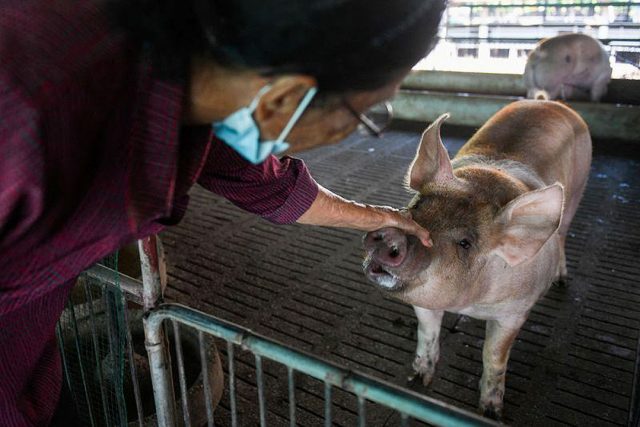
THE Department of Agriculture (DA) said it organized a special task force to detect and contain emerging transboundary animal diseases.

In a special order dated June 13, the DA said the task force will be a vehicle for strengthening collaboration between government and the private sector in managing animal diseases.

The special task force will be chaired by DA Assistant Secretary for Regulations Paz J. Benavidez II and co-chaired by United Broiler Raisers’ Association (UBRA) President Elias Jose M. Inciong.

Members include assistant secretaries Noel A. Padre, Arnel V. De Mesa, Kristine Y. Evangelista, as well as Bureau of Animal Industry Director Paul C. Limson.

The task force also includes representatives from the agriculture industry like UBRA Chairman Gregorio A. San Diego, National Federation of Hog Farmers, Inc. President Chester Warren Y. Tan, and Pork Producers Federation of the Philippines President Rolando E. Tambago.

Jesus G. Edullantes, president of the Provincial, City and Municipal Veterinarians’ League of the Philippines, was also designated a task force member.

The special task force has been tasked to work with the Department of Interior and Local Government (DILG) in drafting resolutions that will “harmonize guidelines of the national and local governments” in managing animal diseases.

An inter-agency task force will also be formed in cooperation with the departments of Health (DoH), Environment and Natural Resources (DENR), Trade and Industry, the DILG and the Philippine National Police for monitoring and managing of the animal transboundary diseases.

The task force also has a mandate to work with the DoH and DENR in rolling out the proposed Pandemic Fund and Livestock Infrastructure Modernization and Enhancement Program, as well as to monitor price and production levels of livestock and poultry. — Sheldeen Joy Talavera

MIAA sets three-year timeline for NAIA facility upgrades

PHILSTAR FILE PHOTO

THE Manila International Airport Authority (MIAA) said it expects to complete upgrades to the facilities of the Ninoy Aquino International Airport (NAIA) within three years.

“We are taking steps and exploring all ways possible to achieve our deliverables based on our established priorities,” MIAA Officer-in-Charge Bryan Andersen Y. Co said in a statement.

The MIAA said that it is currently expediting major rehabilitation projects and improvements to the passenger processing systems at the airport.

Among the upgrades are the replacement of passenger boarding bridges and chillers, work on taxiways, the expansion of surveillance coverage, and the digitization of operations and passenger systems.

“The MIAA sees the completion of these major projects in 24 to 36 months’ time,” it added.

The NAIA operator is currently working on additional toilets at Terminals 1, 2 and 3, and is planning to construct six more immigration counters, increasing the total to 36.

By December, the MIAA is planning to complete the construction of an immigration annex featuring six four-man counters.

The annex is expected to serve as the processing area for overseas Filipino workers, persons with disabilities, senior citizens, and diplomats.

The MIAA is also studying ways to minimize congestion points at the airport.

“The removal of the initial security checkpoints in the terminals has proven to be a welcome relief to travelers,” the MIAA said. — Justine Irish D. Tabile

Priority status urged for NAIA solicited proposals

NINOY AQUINO INTERNATIONAL AIRPORT (NAIA) Terminal 3 — PHILIPPINE STAR/MIGUEL DE GUZMAN

THE Department of Transportation (DoTr) needs to assign a higher priority to solicited proposals for modernizing Ninoy Aquino International Airport (NAIA), transportation experts said.

In a statement on Wednesday, think tank Infrawatch’s Convenor, Terry L. Ridon, said solicited proposals are more likely to consider the public interest.

“The public interest, particularly reasonable terminal fees, is as important as government revenue in public-private partnerships (PPPs) such as airport operations,” Mr. Ridon said in a statement on Wednesday.

“For context, the Manila International Airport Consortium’s (MIAC) revised unsolicited offer of $3.8 billion or P210 billion is almost 50% higher than the DoTr’s recent pronouncement that NAIA’s rehabilitation will cost around P141 billion,” he said.

“In order to properly reflect the public interest in NAIA rehabilitation proceedings, the Transport department should opt to proceed with a solicited bid and reject MIAC’s unsolicited proposal,” he added.

In a briefing last week, Transport Undersecretary for Aviation and Airports Roberto C.O. Lim said that the DoTr and Manila International Airport Authority’s joint solicited proposal submitted to the National Economic and Development Authority (NEDA) will serve as the baseline for the levels of investment the government expects for the airport’s modernization.

“If the private consortium has submitted an initial unsolicited proposal that is almost 30% less than the DoTr’s cost assessment, and thereafter submitting a more expensive amended proposal, it can only mean that both parties have entirely different perspectives on how the airport rehabilitation should proceed. But it is government that should decide with finality which rehabilitation areas should be prioritized,” Mr. Ridon added.

Mr. Lim said that the DoTr hopes to publish the invitation to bid and participate in the rehabilitation exercise by September.

The DoTr is waiting for the solicited proposal to obtain approval from NEDA before it talks to any private group.

“Competitive bidding ensures the best price for both the government and public, as future terminal fees will be dependent on the actual project cost after a winning bidder is selected,” Mr. Ridon said.

“This is unlike an unsolicited proposal in which terminal fees are ultimately dependent on the approved project cost of a project proponent. In the case of NAIA rehabilitation, a solicited bid should ensure cheaper terminal fees by at least 30% if DoTr’s P141-billion cost pronouncement holds,” he added.

Transportation expert Rene S. Santiago said that the unsolicited proposal will make the airport vulnerable to legal challenge.

“Solicited is the best option from a public policy standpoint. Also, most practical as unsolicited route is vulnerable to legal challenges that could derail NAIA modernization,” Mr. Santiago said in a Viber message.

In April, the MIAC, composed of Aboitiz Infracapital, Inc., AC Infrastructure Holdings Corp., Asia’s Emerging Dragon Corp., Alliance Global – Infracorp Development, Inc., Filinvest Development Corp., JG Summit Infrastructure Holdings Corp. and Global Infrastructure Partners submitted an unsolicited proposal for the rehabilitation of NAIA.

The previously submitted proposal involved a capital investment of P141 billion which includes the upfront payment to the government and committed investments in new facilities and technology. — Justine Irish D. Tabile

Farmers back SGS role in deterring smuggling

BOC

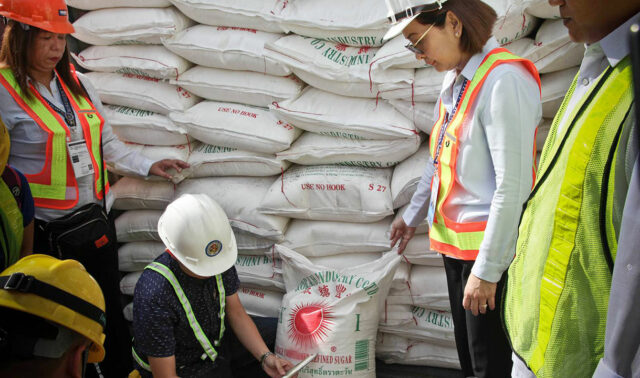
A FARMERS’ organization expressed support on Wednesday for a government plan to expand the role of Switzerland’s Société Générale de Surveillance SA (SGS) in curbing the smuggling of agricultural goods.

In a statement, Leonardo Q. Montemayor, former Agriculture secretary and chairman of the Federation of Free Farmers, said the SGS formerly operated in the Philippines until its overseas pre-shipment inspection and clearance functions reverted to the Bureau of Customs (BoC) in 2000.

“Since then, smuggling of farm and fisheries products has grown by leaps and bounds. This has caused tremendous financial losses to the government and the agricultural sector, and has compromised the health and safety of consumers,” he said.

He said that a “reputable” pre-shipment inspection company “can be very helpful in addressing the persistent undervaluation and misdeclaration of agricultural imports, which is resulting in tens, if not hundreds of billions of lost customs collections every year.”

Last month, President Ferdinand R. Marcos, Jr., the concurrent secretary of Agriculture, said he is considering pre-shipping inspection of imported agricultural commodities to curb smuggling, following a meeting with SGS executives.

SGS maintains a local unit, SGS Philippines, Inc.

Mr. Marcos said pre-shipment schemes streamline the import process by allowing early payments of duty prior to the arrival of the shipments.

Mr. Montemayor asked Mr. Marcos and Finance Secretary Benjamin E. Diokno to amend the implementing rules and regulations of Republic Act No. 10845 or the Anti-Agricultural Smuggling Act of 2016.

The amendments should empower the Department of Agriculture (DA), in coordination with the BoC and other agencies, to file complaints against alleged smugglers of agricultural goods, he said.

Mr. Montemayor noted that the DA has seized P2.2 billion worth of agri-fishery products and filed 49 cases against suspected smugglers under the newly created anti-smuggling unit led by Assistant Secretary James A. Layug, despite the “limited funding and manpower and legal ambiguities about the DA’s power.” — Sheldeen Joy Talavera

Coconut industry eyes levy funds for mill construction

CHEN MIZRACH-UNSPLASH

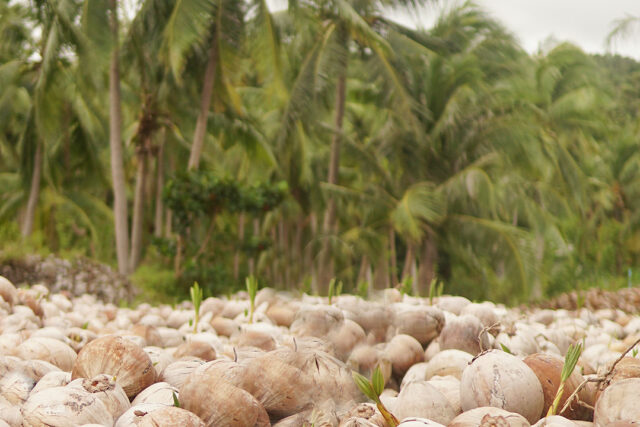
THE coconut industry said it is seeking to build mills to process oil from white copra with money provided by the trust fund which was capitalized from coconut levy assets.

“The industry should focus on updating its marketing strategies, including packaging and labeling, to avoid being left behind by competitors,” Francisco Rubio, founder and chief executive officer of Green Life Coco Products, Inc. said in a statement.

White copra is a higher-value product that can be used to make cooking oil, body care products, virgin coconut oil (VCO), and biodiesel.

The Philippine Council for Agriculture and Fisheries (PCAF) National Sectoral Committees (NSC) on Coconut conducted its second-quarter consultation with the industry, which brought up the lack of marketing and processing interventions by the government.

NSC Chairman Charles R. Avila said the Philippine Coconut Authority must upgrade marketing plans for the commodity, which he described as vital.

“Start thinking about how you will handle the marketing side because the worst part of any successful production is when you don’t know where to bring it and sell it,” he said.

In 2021, former President Rodrigo R. Duterte signed Republic Act No. 11521 or the Coconut Farmers and Industry Trust Fund Act, which put coconut levy assets into a trust fund that will finance rehabilitation and modernization projects for the industry.

Under the law, the Bureau of the Treasury is required to transfer P10 billion immediately to the trust fund, P10 billion in the second year; P15 billion in the third year; P15 billion in the fourth year; and P25 billion in the fifth year.

Farmers are allowed to tap the trust fund to develop the industry, but fund use is guided by the Coconut Farmers and Industry Development Plan (CFIDP).

Mr. Rubio has informed the committee that the establishment of white copra oil mills is listed as a priority activity in the CFIDP.

In a media conference on Wednesday, Floreliz P. Avellana, a division chief at PCAF, said a resolution is being prepared on mill investments.

“The resolution… will be sent to the Senior (Agriculture) Undersecretary and (the funds) should be coming from the levy fund for more processing plants. We are still working with the resolution but definitely that is one of the suggestions of the committee on coconut,” she said. — Sheldeen Joy Talavera

Floating solar, offshore wind investment rules due out soon

REUTERS

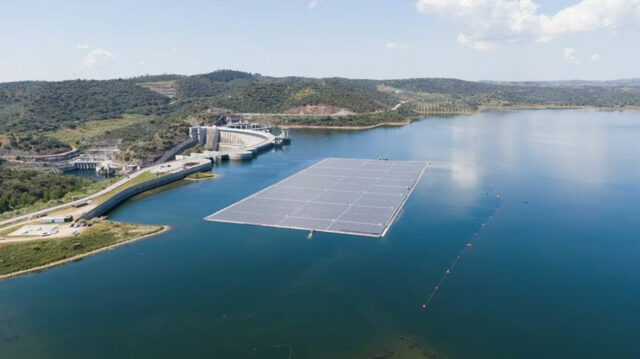
THE Department of Environment and Natural Resources (DENR) said it is working with the Department of Energy (DoE) to come up with guidelines designed to accelerate investment in floating solar and offshore wind projects.

“This is an ongoing process and although interim guidelines will shortly be released, we expect to continue the refinement towards the end of the year,” Environment Secretary Ma. Antonia Yulo-Loyzaga said on Wednesday at a conference organized by the Management Association of the Philippines.

Ms. Yulo-Loyzaga said that the DENR is also studying the implications of the transition to renewable energy systems on the mining industry, “specifically, the requirement for copper, nickel and cobalt,” metals widely used in renewable energy systems.

Ms. Yulo-Loyzaga said that these metals are essential for infrastructure, turbines, storage systems, batteries and electric vehicles.

“These requirements have both national and geostrategic implications and require the next level of strategic foresight, net assessment and direction setting,” she said.

In May, the DoE issued implementing guidelines for Executive Order 21, which expedites the process for issuing permits for offshore wind energy projects.

Meanwhile, the DENR said that it is fully committed to reducing greenhouse gas (GHG) emissions by 75% for the 2020-2030 period.

Ms. Yulo-Loyzaga said about 2.71% of the GHG target is unconditional, focused on agriculture, waste, industry, and transport, and energy, while the rest of the target will depend on foreign assistance.

“We are now working with development partners to enhance both substance and implementation of these policies and in bolstering the technical capacity of the CCC (Climate Change Commission),” she said.

Ms. Yulo-Loyzaga said that the DENR is also working with the private sector to explore innovation and nature-based solutions.

Nature-based solutions include the protection and development of grassland, wetland, and coastal zones, as well as greater agricultural sustainability to reduce greenhouse gas emissions. — Ashley Erika O. Jose

Shifting to non-VAT registration

Registered export enterprises (REEs) that have transitioned from the Income Tax Holiday (ITH) regime to the 5% Gross Income Tax (GIT) regime are generally required to change their registration status from value-added tax (VAT) to non-VAT. This is because the 5% special tax rate is in lieu of all other taxes, including VAT. 

Of course, only those REEs that have no other activities subject to 0% or 12% VAT are required to change their registrations to non-VAT. Such a change may come with consequences that would cause the REE’s management to decide to maintain the status quo. On the other hand, this change may actually provide some relief to qualified REEs.    

In today’s article, I would like to share some tax and regulatory considerations when shifting an REE’s registration to non-VAT after they fall under the 5% GIT regime.

First, the REE’s VAT registration will be canceled. As such, the REE will no longer be required to comply with the requirements associated with being a VAT-registered taxpayer such as the submission of quarterly VAT returns and the corresponding summary list of sales, purchases, and imports.

Also, the cancellation of the VAT registration triggers the cancellation and replacement of the VAT invoices or official receipts with a new set of non-VAT invoices or official receipts. In case the REE is using a Computerized Accounting System (CAS), the REE must update its CAS (as well as the system’s BIR registration) so that its computer-generated books of account, invoices and receipts will be compliant with the reports, invoices or receipts suitable for non-VAT taxpayers.

Second, as clarified in Revenue Memorandum Circular (RMC) No. 152-2022, shifting to non-VAT will not subject the REE to Percentage Tax since REEs are only required to file and pay the corresponding tax due in their respective Annual or Quarterly Income Tax Returns (BIR Form No. 1702/1702Q).

However, REEs should note that there might be a need to revert to being VAT-registered or to apply for VAT as an additional tax type for potential transactions that they may enter into in the future, like the sale or disposal of used equipment or assets.

Based on RMC 24-2022, the sale, transfer or disposal of previously VAT-exempt imported capital equipment, raw materials, spare parts, and accessories, by a non-VAT- registered export enterprise observing a 5% GIT regime is VAT-exempt.

Further, according to PEZA Memorandum Circular No. 2005-032, the sale of production rejects and seconds, recovered waste and scrap materials and supplies that have undergone processing or have been used in production or processing activity, are covered by the applicable income tax incentive (i.e., 5% GIT in lieu of national and local taxes).

So, this would mean that the non-VAT-registered REE need not revert to being VAT-registered in order to accommodate the above-mentioned transactions.

Nonetheless, I hope that the authorities also provide additional rules or clarifications as to the treatment of other transactions incidental to an REE’s registered activities (e.g., REE’s sale or disposal of damaged or obsolete assets which were previously acquired locally at 0% VAT) and provide alternative means of payment of applicable taxes (if not covered by 1702/1702Q), without the need to revert to being a VAT-registered taxpayer.

Third, shifting registration to non-VAT will not affect the REE’s entitlement to VAT zero-rate incentives on local purchases. Non-VAT REEs can enjoy VAT Zero Rating on local purchases until the end of their incentive period. This is subject to the requirement of securing an annual VAT Zero Rating Certificate from the Investment Promotion Agency (IPA) administering the REE’s incentives.

Fourth, the VAT passed on by VAT-registered suppliers on purchases which are not directly and exclusively related to the Non-VAT REE’s registered activity can be charged to cost or expense. In this case, the VAT attributable to expenses which are not considered indispensable to the registered activity but nonetheless considered direct costs, can be claimed as a deduction from revenue to arrive at Gross Income.

Would this be the same if the qualified REE opted to remain VAT-registered even if no sales subject to 12% VAT are forthcoming?

To me, there’s an advantage in shifting to non-VAT in this case. A VAT-registered REE cannot claim as a deduction the input VAT mentioned in the above scenario because the VAT-registered REE’s export sales are classified as a VAT Zero-rated sales transaction. If the sales are subject to VAT (0% or 12%), the related VAT on purchases cannot be treated as expenses.

Moreover, since the purchases are not directly and exclusively related to the REE’s sales activity, and the REE is under 5% GIT, the related input VAT will not be recoverable through a claim for refund under the existing VAT rules.

In comparison, a non-VAT REE’s export sales are classified as a VAT-exempt transactions under Section 109 1(O) of the Tax Code. As such, the VAT passed on to the non-VAT REE can be claimed as costs or expenses.

Given that the input VAT cannot be claimed as deduction or refund, it makes sense to change the registration of the REE to non-VAT.

Last, upon the expiration of the REE’s incentives, it is expected to deregister from its IPA and change its registration to a VAT-registered taxpayer.

Deregistration is a tedious process, and may even require the non-VAT taxpayer to pay VAT for any assets disposed of. Thus, I hope the authorities provide simplified rules, policies and guidelines so that, when that time comes, the eventual reversion to VAT would be easier.

The views or opinions expressed in this article are solely those of the author and do not necessarily represent those of Isla Lipana & Co. The content is for general information purposes only, and should not be used as a substitute for specific advice.


Delila Dayag is an assistant manager at the Tax Services department of Isla Lipana & Co., the Philippine member firm of the PwC network.

+63 (2)8845-2728

delila.l.dayag@pwc.com

ADVERTISEMENT
ADVERTISEMENT