Home Blog Page 4628

Rate cuts eyed if inflation falls below 4%

INFLATION slowed to 5.4% in June from 6.1% in May as price pressures on food and transport eased. — PHILIPPINE STAR/EDD GUMBAN

By Keisha B. Ta-asan, Reporter

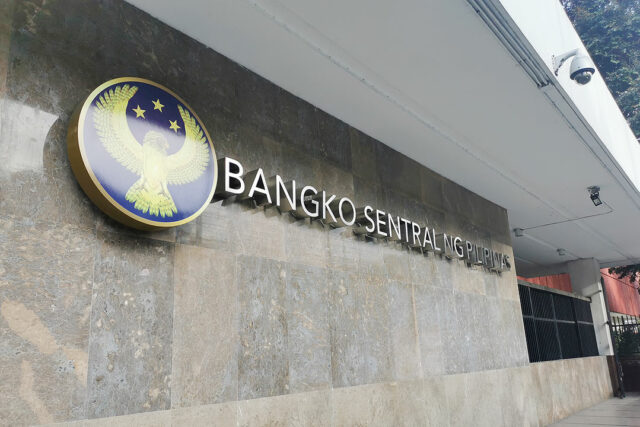
INTEREST RATE CUTS may be on the table this year if inflation falls below 4% by October, the new Bangko Sentral ng Pilipinas (BSP) governor said.

BSP Governor Eli M. Remolona told reporters on Wednesday evening the slower-than-expected inflation in June “somewhat” supports an extended pause in interest rate hikes.

Inflation eased for a fifth straight month in June to 5.4% from 6.1% a year ago. It was below the 5.5% median estimate in a BusinessWorld poll last week, and at the low end of the BSP’s 5.3-6.1% forecast.

June also marked the 15th straight month that inflation exceeded the BSP’s 2-4% target.

“The 5.4% (inflation) is one number. It’s not a trend necessarily. We’ll see, we’ll look at the data,” Mr. Remolona said.

BSP Deputy Governor Francisco G. Dakila, Jr. said inflation would likely fall within the 2-4% target by October.

Asked if the June figure gives the BSP confidence to extend its pause, Mr. Remolona replied: “Yes. The data suggest that, but you know the BSP is an inflation-targeting central bank. That means it’s structurally hawkish when it comes to inflation.”

He noted that the extended pause in tightening gives the central bank more time to assess the impact of aggressive rate hikes.

In June, the Monetary Board kept the key policy rate at a near 16-year high of 6.25% for a second straight meeting. Since March 2022, the BSP has raised borrowing costs by 425 basis points (bps) to tame inflation. 

For the first six months of the year, inflation averaged 7.2%, still above the BSP’s 5.4% full-year forecast.

As to other factors that may prompt a rate cut this year, Mr. Remolona said the BSP would look at economic performance and future policy decisions of the US Federal Reserve. 

“We’ll do [the cut] one meeting at a time. But in doing it one meeting at a time, we’ll also look forward to what we might do down the road,” he said. “We’re not looking at just one policy rate. We’re looking at a path of the policy rate.”

Ser Percival K. Peña-Reyes, director of the Ateneo Center for Economic Research and Development, said the BSP governor had to balance his messages so as not to signal any possibilities that might prematurely affect the market.

“The BSP might continue to extend its policy pause for the rest of the year, while closely monitoring domestic and external factors that may impact inflation and growth,” he said by phone call.

ING Bank N.V. Manila Senior Economist Nicholas Antonio T. Mapa said Mr. Remolona would likely remain data dependent and wait for more evidence before making a decision. 

“He will be looking at both domestic (local inflation) and international (Fed) developments to make his decision, which is how any good central banker would carry out inflation targeting,” he said in a Viber message.   

Mr. Mapa noted that it is better to remain data-dependent than to stick with one particular strategy, regardless of how the data turn out. 

“For now, the latest data have been moving in a way that supports the former governor’s pause and we believe Mr. Remolona will extend this pause for as long as domestic inflation slows and the Fed refrains from adjusting policy aggressively,” he said. 

Then-BSP Governor Felipe M. Medalla earlier said it would be unwise to cut policy rates faster than the US Federal Reserve, because it may cause volatility in the foreign exchange market.

“Mr. Remolona also made it clear that despite this guidance, he stands ready to act accordingly should domestic or international developments move in a way that alters the narrative,” Mr. Mapa added.

Meanwhile, Pantheon Macroeconomics Chief Emerging Asia Economist Miguel Chanco said in a note that inflation in the Philippines could return to the 2-4% target by September.

“(This would) open the door for the 50-bp worth of rate cuts we expect in the fourth quarter,” he said.

The BSP’s next policy-setting meetings are scheduled for Aug. 17, Sept. 21, Nov. 16 and Dec. 14.

Mr. Chanco noted that core inflation should also be less of an issue at the Monetary Board’s meeting in November.

Core inflation further eased to 7.4% in June from 7.7% in May. Year to date, core inflation has averaged 7.7%.

EO streamlines permits for digital infrastructure

PHILIPPINE STAR/ MICHAEL VARCAS

PRESIDENT Ferdinand R. Marcos, Jr. has ordered government agencies to simplify the permitting process for telecommunications and internet infrastructure projects.

However, an analyst warned that Executive Order (EO) No. 32 may be challenged at the local level because it may impede the autonomy of local government units (LGU) to implement policies they deem important.

“To ensure the continuous development of digital infrastructure in the Philippines, there is a need to institutionalize a set of streamlined guidelines for the issuance of permits, licenses and certificates for the construction of telecommunications and internet infrastructure,” according to the order.

The Private Sector Advisory Council (PSAC) and Anti-Red Tape Authority (ARTA) earlier urged Mr. Marcos to issue an EO reducing the red tape in securing permits for digital infrastructure projects.

The EO compels all LGUs and government agencies to follow the guidelines in streamlining the permitting process for the construction and operation of shared telecommunication towers, as well as the installation of poles, cables and facilities for telecommunications and internet.

Under the order, the only national or local permits or clearances required for telco and internet infrastructure projects are the following: 

• Building permit issued by the Office of the Building Official;

• Height clearance permit from the Civil Aviation Authority of the Philippines (CAAP); and

• Community clearances including those issued by homeowners’ associations.

However, certain clearances from government agencies may be required, such as an environmental compliance certificate (ECC) if the proposed project is within an environmentally critical area; a special use agreement in protected areas; and free and prior informed consent for projects within an ancestral domain.

A land use conversion clearance from the Department of Agrarian Reform, as well as clearances from the Laguna Lake Development Authority, Philippine Economic Zone Authority and Palawan Council for Sustainable Development may also be required for applicable projects.

Companies applying for building permits, barangay or locational clearance do not need to secure resolutions from the city council (Sangguniang Panlungsod) and village council (Sangguniang Barangay), as well as the ECC if the proposed site is outside an environmentally critical area.

There is also no need to get a certificate of safety evaluation from the Health department and Food and Drug Administration, or a copy of the provisional authority issued by the National Telecommunications Commission.

The EO also mandates all cities and municipalities to set up one-stop shops for construction permits.

All covered government agencies and LGUs are enjoined to implement zero backlog policy in all applications for permits and clearances covered by the latest order.

A technical working group (TWG) on telecommunications and internet infrastructure should come up with the EO’s implementing rules within 60.

“While the new EO builds upon the previous administration’s commitment to reduce bureaucratic delay in the emerging tower sector, the President should reconsider its impact on the autonomy of LGUs to implement policies they deem important within their jurisdictions,” said Terry L. Ridon, convenor of infrastructure think tank InfraWatch.PH.

The order may be perceived as a “heavy-handed pronouncement” impeding the autonomy of LGUs, which is protected by the Constitution, he said in a Facebook Messenger chat.

“The EO may then be challenged by any LGU whose power within their jurisdiction will be severely limited,” he said, noting that the government should ensure that infrastructure projects do not affect its housing commitments to affected urban poor families.

“In other words, the President should focus on further limiting the processing time given to agencies in deciding applications for the issuance of various permits and licenses,” Mr. Ridon said.

Telecommunication companies welcomed the order, including Converge ICT Solutions, Inc., which said the presidential directive is “aligned with the private sector’s push for the creation of policies and programs promoting the development of digital infrastructure and services.”

“We believe EO 32 will empower us in further improving our facilities and allow us to respond to our customers faster,” Converge Chief Executive Officer Dennis Anthony H. Uy said in a statement. — Kyle Aristophere T. Atienza

Gov’t agencies ordered to strengthen efforts vs money laundering

BW FILE PHOTO

MALACAÑANG ordered all relevant government agencies to implement plans and programs in the fight against money laundering, terrorism financing and proliferation financing, as the Philippines seeks to exit the Financial Action Task Force’s (FATF) “gray list” by January 2024.

President Ferdinand R. Marcos, Jr. signed Executive Order No. 33, which updated the National Anti-Money Laundering, Counter-Terrorism Financing, and Counter-Proliferation Financing Strategy (NACS) for 2023-2027.

The order also expanded the national committee’s coverage to include activities related to combatting proliferation financing.

Proliferation financing involves raising or moving funds and other economic assets for the proliferation of weapons of mass destruction.

“The adoption of an updated NACS will strengthen existing measures to improve the effectiveness of the country’s anti-money laundering, counter-terrorism financing and counter-proliferation financing (AML/CTF/CPF) regime and allow the Philippines to exit the FATF gray list,” according to the order.

The Anti-Money Laundering Council (AMLC) welcomed the executive order, saying this shows the government’s “strong high-level political commitment” to strengthen efforts against “dirty money.”

“The NACS 2023-2027 provides strategic direction and coordinated efforts in addressing the remaining International Cooperation Review Group (ICRG) action plan items to exit the FATF gray list,” the AMLC said.

Last month, the FATF kept the Philippines under its gray list of countries under increased monitoring for money laundering and terrorism financing risk.

“All relevant government agencies, including supervisors, regulators, law enforcement/intelligence agencies and prosecutors are directed to formulate and implement relevant strategy plans and programs to execute the NACS 2023-2027, and to swiftly implement the ICRG action plans,” the AMLC said.

The strategy seeks to address the Philippines’ deficiencies identified in international AML/CTF assessments; boost mechanisms to identify, investigate, and prosecute terrorism financing and money laundering; enhance and implement the framework on proliferation financing of weapons of mass destruction.

It also seeks to promote transparency and ensure access to beneficial ownership information by competent authorities; enhance risk-based supervision of financial institutions and designated nonfinancial businesses and professions; and promote AML/CTF awareness of government agencies and the public.

The order expands the NACS which was first adopted by the Duterte administration.

The Philippines has been in the FATF’s gray list since June 2021, due to strategic deficiencies in countering money laundering, terrorist financing and proliferation financing.

The Marcos administration recently included bills seeking to relax bank deposit secrecy rules and to regulate the use of financial accounts on the list of priority legislative measures targeted for Congress’ approval by December. — K.A.T.Atienza

Central bank launches overnight reference rate

Bangko Sentral ng Pilipinas main office in Manila. — BW FILE PHOTO

THE BANGKO SENTRAL ng Pilipinas (BSP) launched on Thursday an overnight reference rate that will serve as the market’s reference amid the phaseout of the London Interbank Offered Rate (LIBOR).   

Now published on the BSP’s website, the overnight rate (ON) uses the secondary market rate on the 28-day BSP bill as a reference to compute its ON equivalent.   

“This starts a broader initiative to enhance the BSP ON Reverse Repurchase (RRP) Agreement facility. Once the enhancements are fully completed, the new rate from the RRP facility will become the ON reference rate,” the central bank said in a statement on Thursday.

The United Kingdom’s Financial Conduct Authority and the International Exchange Benchmark Administration, the administrator of LIBOR, stopped publishing rates for overnight, one-month, three-month, six-month and 12-month tenors on June 30.

Some LIBOR rates also stopped being published after Dec. 31, 2021.

LIBOR is being phased out as a reference rate after it was manipulated before and during the 2008 global financial crisis.

LIBOR was used by banks and financial institutions to set how much it costs to borrow from one another. The rate is used to set prices for financial products such as mortgages, credit cards, derivatives and other loans, with over $370 trillion tied to it globally at its peak.

These enhancements for the BSP ON RRP Agreement facility will encourage banks to actively manage liquidity, according to the central bank. This includes changing the auction window from 4 p.m. to 11 a.m.   

In line with its mandate, the BSP can either absorb excess or augment gaps in market liquidity through its open market operations. That main tool is the RRP facility based on the policy rate, which stands at 6.25%. 

“The expected result of these improvements is a variable rate from the ON RRP facility that would be more responsive to changing market conditions,” the BSP added.   

In 2020, the central bank issued BSP Memorandum No. M-2020-083, which required financial institutions to report their LIBOR-related exposures. It wanted proper identification of exposures to ensure that the cessation of LIBOR does not disrupt banks’ operations.

Meanwhile, the BSP said in a separate statement it would be accepting all bids at the auction for the ON RRP facility starting on July 14.   

“This is in line with the transition from a fixed-rate fixed-volume to a fixed-rate full-allotment auction and then, to an eventual variable-rate auction,” the BSP said.   

“This refinement to monetary operations is another step in the BSP’s efforts towards a more flexible approach to managing liquidity in the financial system,” it added. — K.B.Ta-asan with Reuters

Century Pacific Food allots P3.5B for expansion

PO-LED Century Pacific Food, Inc. is allocating up to P3.5 billion for the year’s capital expenditure (capex) to expand its business segments, its top official said on Thursday.

“We will be spending between P3 [billion] to P3.5 billion this year in capex because we are expanding capacity in a number of our business units,” Century Pacific Food Executive Chairman Christopher T. Po said during the company’s virtual annual stockholders’ meeting.

Mr. Po said that this year’s capex was more than the company’s usual P2 billion to P2.5 billion allocation.

This year’s capex will be allocated mainly for the company’s meat, pet food, coconut, and other businesses, including its packaging manufacturing segment, Mr. Po added.

“All that means is that we are putting our shareholders’ capital to good use and finding high returns on investment. They should contribute to our future growth in the coming years,” he said.

In line with this, Century Pacific Food expects to attain double-digit top line growth this year.

“Moving to the present, halfway through 2023, the sky hasn’t fully cleared. Uncertainties still remain. Nonetheless, management is working towards double-digit growth for our top line, supported by resilient demand,” Mr. Po said.

He said initially, the company had given a range for this year’s growth. But given some consumer headwinds in the first half, “we are probably going to be on the bottom end of that range,” he said, placing top line growth at “closer to [about] a 10% to 11%.”

He said the company is also expecting a mid to high-level single-digit growth in net income this year.

“Profits are on their way to improving as cost pressures ease,” he said.

For the first quarter, the company reported an attributable net income of about P1.5 billion, up 6.4% from P1.41 billion in the same period last year.

Consolidated revenues rose by 13% to P15.62 billion from P14.8 billion in the prior year mainly driven by the performance of its business units.

The majority of the company’s top line figure is contributed by marine, meat, milk, and other emerging segments such as pet food, coconut, and plant-based alternatives.

Revenues from the branded business segment during the three-month period grew by 7% year on year.

Century Pacific Food owns brands and household consumer names such as Century Tuna, 555, Argentina, and Birch Tree.

Its subsidiaries include Snow Mountain Dairy Corp., General Tuna Corp., Century Pacific Agricultural Ventures, Inc., and Century Pacific Food Packaging Ventures, Inc.

On Thursday, its share price declined 0.98% or 25 centavos to close at P25.25 at the stock exchange. — Adrian H. Halili

AirAsia launches flights to Tokyo from Cebu hub

NEWSROOM.AIRASIA.COM

LOW-COST carrier AirAsia Philippines launched thrice-weekly flights to Narita, Japan through the Mactan-Cebu International Airport.

“AirAsia’s mission has always been about democratizing air travel by offering bang-for-the-buck deals,” said AirAsia Philippines Communications and Public Affairs Head Steve F. Dailisan in a statement.

He said the airline is giving more convenience to travelers “by opening more gateways in the country that will allow guests to directly fly to international destinations.”

Narita is AirAsia’s fourth international destination directly flying out from the Mactan-Cebu International Airport. The other three destinations are Kuala Lumpur, Seoul, and Taipei.

“AirAsia plans on expanding its operations in Cebu, making it a convenient gateway for travelers from the south,” the airline said in a press release.

At present, the airline is also flying directly to Narita in Tokyo, Japan via the Ninoy Aquino International Airport daily.

Previously, the carrier committed to increasing its flight frequencies and destinations not only at the Manila airport but also at Clark International Airport and Kalibo International Airport.

The airline said that this could be achieved as the company plans to beef up its current fleet, which is expected to comprise 21 aircraft by the end of the year.

Next year, the carrier is also looking at the delivery of bigger planes, which are the A330s and some A321s.

Meanwhile, AirAsia said it was not among the local airlines called by the Department of Transportation (DoTr) to reduce flight frequencies.

Mr. Dailisan said, “[W]e have been compliant with our on-time performance and have effectively managed flight disruptions.”

“In fact, we are requesting for additional slots from the Manila Slot Committee during the winter season starting October to address the strong demand during this period,” he added.

In an interview on Tuesday, DoTr Undersecretary for Aviation and Airport Roberto C.O. Lim said discussions with the airlines pointed to reducing and spreading out flights as a temporary solution amid the flights affected by the global supply disruption of aircraft spare parts.

“There have been reductions already. I think further reductions may have to be done at least on a temporary basis so that the punctuality of service will improve and there will be less disruption to the experience of the riding public,” Mr. Lim said.

Mr. Lim also said air passengers could also expect more delays in July and Against due to red lightning alerts. He said with the onset of the rainy season, red lightning alerts “have become more unpredictable and frequent due to climate change.”

“That, too, is a challenge that we’re addressing together with the airlines,” he said. “There is a frequent discussion with the airline so that we can be responsive to these changing business conditions.” — Justine Irish D. Tabile

ACEN clears infusion to units

ACENRENEWABLES.COM

ACEN Corp.’s board has cleared the Ayala-led energy company’s equity infusion in two international units, and the corporate guarantees to another subsidiary’s fundraising.

In a stock exchange disclosure on Thursday, ACEN said its board had approved on July 5 an equity investment of about $70 million in subsidiaries ACEN International, Inc. and ACEN Renewables International Pte. Ltd.

The energy company also said another subsidiary, which it identified as ACEN Cayman, will raise $352 million to fund its payment obligations after board approval of the issuance of corporate guarantees for the debt facilities.

Meanwhile, ACEN announced the appointment of Jonathan P. Back as chief finance officer of the company effective Jan. 1, 2024.

This came as its current finance chief, Maria Corazon G. Dizon, is set to retire on Dec. 31.

Mr. Back serves as ACEN’s chief strategy officer and will remain to hold his current position while taking the finance post starting next year.

ACEN has set an aggressive target of 20 gigawatts (GW) of attributable renewable energy capacity by 2030.

To date, the company has a pipeline of 18 GW of pipeline projects across the region. The company has around 4,200 MW of attributable capacity spread across the Philippines, Vietnam, Indonesia, India, and Australia.

ACEN is also aiming to roll out its 8-GW portfolio of clean energy projects in the Philippines by 2030.

At the local bourse on Thursday, shares in the company shed six centavos or 1.12% to end at P5.29 apiece. — Ashley Erika O. Jose

Cinemalaya 2023 finds a new home in PICC

ANG DUYAN NG MAGITING by Dustin Celestino

Feature-length selection now includes documentary and animation films

DESPITE the renovations being done at the main building of the Cultural Center of the Philippines (CCP), the 2023 edition of the Cinemalaya Independent Film Festival returns this August with screenings of full-length and short feature films in competition, this time at the nearby Philippine International Convention Center (PICC).

The festival’s 19th year, which has the theme “ilumiNasyon,” will feature 10 full-length films and 10 short features from Aug. 4 to 13 at various venues around the PICC.

“We wanted to retain the unique community spirit of Cinemalaya. We hoped to find a venue that would give a similar creative vibe as if you were moving in the CCP main building,” said Margarita Moran-Floirendo, CCP President, during a press conference on July 5 at the PICC Meeting Room 5, now dubbed the Bulwagang Palma.

Thus, the PICC became their choice due to its history, having hosted the Manila International Film Festival in the 1980s.

Chris B. Millado, Cinemalaya’s festival director, added that the “brutalist sibling of CCP” was a no-brainer for them to consider.

“It’s the same National Artist for Architecture (Leandro V. Locsin) who designed the CCP Main Building founded in 1969 and the PICC founded seven years later in 1976,” he said. 

Meanwhile, this year’s theme, “ilumiNasyon,” reflects the festival’s goal to “challenge filmmakers and audiences beyond just skimming the surface and take deep dives to illumine the depths.”

“These might inform, reshape, and challenge the way we think through and experience this work in progress called the nation,” said Mr. Millado.

In addition to being part of the first Cinemlaya Film Lab held virtually, this year’s full-length films received P1-million each from the CCP and the Film Development Council of the Philippines (FDCP), amounting to a total grant of P2 million.

The 10 full-length films in this year’s film festival are:

Ang Duyan ng Magiting by Dustin Celestino

The film is a collection of interwoven stories about life and violence in the Philippines, following a college professor, a university chancellor, a social worker, a police chief, two students, two mothers, and a lawyer.

Award-winning actress Dolly de Leon, who plays the social worker in the film, told BusinessWorld that despite her success outside of the country, she wishes that “all Filipinos, from average moviegoers to government authorities, can fully support Philippine cinema.”

“Films such as this one show that we have so much to offer,” she said.

For director Dustin Celestino, Ang Duyan ng Magiting is “a contemplation and a meditation on the agony of an entire nation.”

As If It’s True by John Rogers

In the film, fading social media influencer Gemma, played by Ashley Ortega, and struggling musician James, played by Khalil Ramos, exploit each other in a not-so-fake relationship.

“We had a great experience shooting this film and I hope everyone enjoys it as well,” Mr. Ramos said at the sidelines of the press conference.

According to director John Rogers, the story is “a simple premise of a friends with benefits kind of situation, but in the lens of internet fame and influencer culture.”

Bulawan nga Usa (Golden Deer) by Kenneth De la Cruz

The film by Iloilo-based filmmaker Kenneth De la Cruz follows a man who embarks on a soul-stirring journey to a mystical mountain to look for the golden deer. Instead, he develops a friendship with a mountain boy.    

“We’ve previously concentrated on Manila filmmakers, but when we open our eyes to the stories told by those further up in Luzon and down in Visayas and Mindanao, you realize that Manila is not the Philippines,” Jose Javier Reyes, Cinemalaya’s main competition and monitoring chair, told members of the press.

When asked if diversifying the competition films had to be intentional, Mr. Reyes said that it wasn’t the case and that “regional filmmakers are just that good.”

Gitling by Jopy Arnaldo

The film follows a Filipina translator, played by Gabby Padilla, and a middle-aged Japanese director, played by Ken Yamamura, who test the limits of language and understanding while creating a film’s subtitles.

Director Jopy Arnaldo said that words and language being able to deceive and confuse people is what inspired him to make Gitling.

“In a world where we undervalue the voices of others, mostly focusing on our own in a conversation, I wanted to make a film that explores the act of genuine understanding between people,” he said.

Huling Palabas by Ryan Espinosa Machado

The film follows Andoy, a 16-year-old boy in search for his long-lost father whose life changes when two movie-like characters appear in his hometown.

“Just like the movies, Andoy must decide whether to conclude his years-long search for his father with a bang or with a whimper,” the synopsis reads.

Set in 2001 in a town in Romblon, during a time of transition from VHS to VCD, the film is director Ryan Machado’s way of capturing the stories of his community and drawing from his personal experiences.

Iti Mapukpukaw by Carl Joseph E. Papa

In the film, Eric is a man who lives a rather normal life working as an animator in the Philippines. However, he doesn’t have a mouth.

As a Filipino-Ilocano rotoscope animated film, Iti Mapukpukaw is the first animated film to be included in the feature-length competition.

“The whole point is how good the proposal is regardless of genre. We are not judging based on genre but based on content and promise,” said Mr. Reyes, when asked why the selection committee decided to accept the animated film.

For director Carl Joseph E. Papa, the film is personal, even more so than all his previous animation. With it, he aims to prove that animation is “a visual form that can do stories that live-action films do.”

Maria by She Andes

Maria, a common given name to a Filipina, is the title of this documentary which focuses on three women named Maria after the bloodbath of Duterte’s drug war.

“In 2016, Duterte’s drug war left 26,000 to 30,000 families, fatherless or husbandless. The wives and mothers of the killed victims are left trying to meet both ends for their families,” the synopsis reads.

Director She Andes said that she wanted Cinemalaya to be a platform for their stories since the festival has become a major voice in the local social landscape.

“I’ve observed that majority of women filmmakers in the Philippines are documentary filmmakers,” she said at the press conference. “I often ask why; maybe because we have more sensitivity to issues of the world.”

Rookie by Samantha Lee and Natts Jadaone

A romantic comedy centered on an LGBTQ+ couple, this film follows Ace at her new school and her journey joining the volleyball team and falling for the team captain Jana.

Rookie is about “the moments in our life that shape us… about how the lessons and the people from our younger days come together to help make us into a person,” according to director Samantha Lee.

“Ultimately it’s about how society is still very much rigged against women but we continue to play to win anyway,” she told the media.

Tether by Gian Arre

The film is about an arrogant playboy and a timid young woman who discover that any kind of pleasure or pain they inflict on themselves can be felt simultaneously by the other person.

“We may not be tied to another person the same way Kate and Eric are in the film, but we remain tethered to relationships that we can’t fully abandon,” said Gian Arre, director of the film.

It also tackles “abuse, self-harm, suicide, sexual awakening, the subversion of gender roles, and the helplessness of becoming a victim.”

When This Is All Over by Kevin Mayuga

A film is about a disconnected, desperate guy who forges a deal with a group of privileged misfits to plan a secret party at the height of a global pandemic.

According to director Kevin Mayuga, it’s about people who have the chance and the privilege to escape reality.

“I was never acutely aware of my privilege more so than when the pandemic hit. While I was fortunate enough to be comfortable, countless others were struggling and literally fighting for their lives,” he said.

He harnessed that guilt in making this film, which portrays an exaggerated class divide.

For more details on the film festival, visit the CCP and Cinemalaya websites and social media pages. — Brontë H. Lacsamana

 

SHORT FEATURE FILMS 

The 10 short feature main competition films received P100,000 each from FDCP. They are: 

Ang Kining Binalaybay kag Ambahon ko Para sa Mo (These Rhymes and  Rhythms Meant For You) by Kent John D. Desamparado, about a grandfather and a child who share final moments before they go their separate ways.   

Golden Bells by Kurt Soberano, which follows a young Chinese-Filipino boy who learns the trade from his father so he can maintain the family business for love and legacy.  

Hinakdal (Condemned) by Arvin Belarmino, about a zombie family whose isolated life is disturbed by a human being attempting to steal their livestock.  

Hm Hm Mhm by Sam Villa-Real and Kim Timan, is centered on a young woman’s touch that breathes life into a dollhouse where an all-too-familiar story replays. 

Kokuryo: The Untold Story of Bb. Undas 2019 by Diokko Manuel Dionisio, about the search for the person who stole the cash prize from a gay beauty pageant, testing the friendship between two transgender women.  

Makoko sa Baybay (I Am Going to the Beach) by Mike Cabarles, about two brothers who hope to find the sea creature that killed their mother. 

Maudi nga Arapaap (Last Dream) by Daniel Magayon, where a night shift nurse’s action of dumping her mother’s possession attracts Batibat’s wrath.  

Sibuyas ni Perfecto (Perfecto’s Onion) by Januar Yap, which follows an aging man who realizes he missed doing one very important thing while delivering spices and vegetables. 

Sota (Horse Caretaker) by Mae Tanagon, about two horse caretakers who struggle to make ends meet amid the low-wage employment in the horse racing industry. 

Tong Adlaw nga Nag-Snow sa Pinas (The Day It Snowed in the Philippines) by Joshua Caesar Medroso, centers on two young boys facing a world of violence and abuse amid their fondness for snow and Samurai movies. 

FILM SCREENINGS 

The Cinemalaya films will be screened from Aug. 4 to 13 at three meeting rooms : Cinema Rizal (as Meeting Room 1 has been renamed for the film festival), Cinema Bonifacio (Meeting Rooms 2 and 3), and Cinema Felipe (Meeting Room 4). The opening and closing films have yet to be announced. 

Fringe events and talks will be held at Cinema Palma (Meeting Room 5), while exhibitions and filmmakers’ profiles will be on display at the PICC’s Executive Lounge.  

The festival will also have its mainstay sections: Retrospective, featuring winning films of past Cinemalaya editions; Best of the Festivals, which shows the best films from other local festivals; Visions of Asia, featuring award-winning Asian and Netpac films; Premieres, for never-before-screened films; and Dokyu, for award-winning documentaries.  

The Gawad CCP Para sa Alternatibong Pelikula at Video, considered the longest-running independent film competition in Southeast Asia, will once again showcase films in Short Feature/Narrative, Experimental, Documentary, and Animation categories. They will be screened from Aug. 5 to 7 at the CCP Tanghalang Ignacio B. Gimenez (CCP Blackbox Theater).  

The films in the main Cinemalaya feature-length and shorts competitions will be screened concurrently in partner cinemas around Metro Manila: Ayala Malls Manila Bay, Glorietta in Makati, and Trinoma in Quezon City. The awards night will be held at the PICC on Aug. 13.   

Regional screenings around the country will follow at a later date, according to the organizers.  

CCP artistic director Dennis N. Marasigan said at the press conference that Cinemalaya is arranging for free shuttles for easy access to the CCP-PICC complex, with Buendia Avenue as the pick-up point. 

He added that to address long-standing issues like the long queue for tickets and the lack of seats for guests, every ticket bought will now have a corresponding seat number. 

Ticket prices are P300 for regular audience members, P200 for students, and P240 for senior citizens, PWDs, and government employees. The FIC (Films in Competition) pass costs P2,500 for a set of 12 films: 10 full length and two sets of shorts. The all-access festival pass is P3,500.  

Full screening schedules have yet to be announced. For more details, visit the CCP and Cinemalaya websites and social media pages.Brontë H. Lacsamana


Aren’t you glad you used Dial?

HARRISON FORD in Indiana Jones and the Dial of Destiny (2023)

MOVIE REVIEW
Indiana Jones and the Dial of Destiny
Directed by James Mangold

HARRISON FORD in Indiana Jones and the Dial of Destiny (2023)

INDIANA JONES AND THE DIAL OF DESTINY feels like your last high school class reunion, where you spot old faces and gossip about missing ones. Oh look, Harrison Ford, with his Traveler hat! Yanking out his leather whip! Oh look John Rhys-Davies as Sallah! Driving a yellow cab! Oh and isn’t that —? Yes it is now time to shut up, we aren’t meant to spoil anything (that’s a job for TikTok).

Was Antonio Banderas as Renaldo part of the original series? No, but he’s such a warmly grizzled presence we should grant him honorary membership anyway. Was Toby Jones as Basil Shaw? No, but he’s a crucial part of a flashback sequence so he’s in on a pass. Was Phoebe Waller-Bridge as Basil’s daughter (and Indy’s goddaughter) Helena? No, but she’s part of the newer generation meant to draw us into this creaky franchise; she gets a shiny fresh badge all her own.

Is someone missing? Yes, but not anyone on-camera; Steven Spielberg handed directing reins for the first time down to James Mangold, a filmmaker I’ve always considered more adept at drama (Heavy, Copland) than action (3:10 to Yuma; The Wolverine) though apparently he much prefers mixing genres (Logan).

For the record, not a fan of Logan; it comes up with an interesting premise (mutant superhero nearing end of his career), doesn’t quite follow through on said premise (yet another anti-mutant conspiracy plot confronting yet another superpowered foe when what we really want to see is Logan confronting his estranged mutant superpowered daughter — one physically or mentally taking down the other, preferably the latter). More, Mangold is a competent director of actors and teller of tales — he knows all about emotional beats and dramatic resonance — but can’t quite give the film the editing rhythm or visual style that would elevate it beyond its genre.

Same here: Spielberg’s absent, and we miss his gift for intricate Rube Goldberg sequences, the way disparate elements can fall apart and fall together in surprising, often hilarious ways — I’m thinking of the opening to Temple of Doom (arguably his best Indy movie) where a diamond, a poisoned glass of champagne, and a blonde in red glitter singing Noel Coward in Mandarin all join in an intricate dance to create a delight of a musical/chase sequence. Anything goes, all right, or at least do here.

You don’t get that in this picture, though Indy toppling library stacks comes somewhat close. There’s a foot chase on a train at night, and while the moonlight gives everything a lovely silver sheen, some of the long shots of men running atop the cars look awkwardly digitized. Ford was reportedly de-aged for this opening but I strangely didn’t mind much, the process having improved a bit since Scorsese inflicted it on Robert De Niro and Joe Pesci in The Irishman and Gareth Evans put a barely live Carrie Fisher in his Rogue One; at least Ford here doesn’t look (quite) like a boiled blankfaced lobster. More perturbed by the fact that the chase feels exhausting rather than inventive, lacks the snap, crackle, and pop that Spielberg might have brought to the party. In Tangiers there’s a fast-paced pursuit involving a car (later two cars) and a tuktuk (later two tuktuks) but the mayhem is so confusingly shot and edited you can’t keep track of what’s chasing what, who’s driving who, in what direction, and why — a pity because some of the stunts look genuinely impressive, if not dangerous. There’s so little set-up and the payoff’s so quickly brushed aside that none of it really registers. 

Talk about brushing things aside (skip this paragraph if you haven’t seen the movie!): Mads Mikkelsen’s Jurgen Voller is meant to be a villainous Nazi, yet one of many in Indy’s career, and leaves a trail of dead bodies in his wake, but Indy seems oddly unfazed. Oh, he pauses to bend over a murdered colleague or two, but — is he really in that much of a hurry to recover the stolen Archimedes’ dial or does he really not care about his university workmates? Either way it would be nice to hear his thoughts on the subject. Later Banderas makes an appearance as the gregarious Reynaldo, and we eagerly wait to see how his character might develop, but Voller cuts those expectations short as well. Ford as Indy looks suitably dismayed, and later snaps at goddaughter Helen for being so callously exultant, but quickly forgets about it as they move on to the adventure’s next chapter. I’d especially like to hear his thoughts on this man’s passing, at least in one of the several quieter downtime moments when they’re in a train or boat or plane and there’s little else to do; Indy may not care about his New York co-workers but Reynaldo talks and acts like he’s known Indy a long time, that they’ve shared plenty of adventure together. You’d think Indy would be more affected by his passing.

Getting back to my chief complaint: we don’t have Spielberg we have Mangold, so the chases or fights or other kinds of action are basically filler material to put the “action”” in a supposed action movie. I would have imagined the better decision would have been to lean into Mangold’’s strengths and just cut out as much of the action as possible, maybe emphasize Indy’s doddering senior-citizen status and all; the bad back, the steelplated knees, the nine bullet wounds. Have him do stunts that an 80-year-old can believably do (bookcases yes, maybe some walking-stick fencing) and leave most of the running and leaping to Helen and her young pickpocket/car-thief/sidekick Teddy Kumar (Ethann Isidore). Indy can complain about “damned kids” and maybe discuss his digestive issues in detail — the chronic constipation, the occasional bouts of diarrhea thanks to a diet of worms and bugs and expired mystery meat.

And Indy can grouse all he likes about his son Mutt. Yes, we’ve heard about how actor Shia LaBeouf has real-life issues with anger management, instability, substance abuse; that’s actually not a problem but a perfect way to introduce the character. Mutt popping up in Indy’s life strung out on drugs would be the archetypal 1960s thing to do, not to mention a more interesting issue than Archimedes’ dial with all its “mysterious powers” (my unpopular opinion is that “mysterious powers” have been done to death in these movies. In Raiders they’re an elaborate imitation of the wraiths that flit about Bald Mountain in Disney’s Fantasia (which itself was inspired by Murnau’s masterpiece Faust)); in Temple of Doom they’re limited to a brief attempt at open-heart surgery (a hilarious metaphor for George Lucas’ divorce proceedings, and yet another reason why I like this second installment best, despite the racism); in The Last Crusade it’s the relatively restrained image of a lonely armored figure guarding a collection of cups for hundreds of years (one of several reasons this is my second favorite of the franchise); in Kingdom of the Crystal Skull it’s a giant digitally rendered saucer rising to the air, sucking up most of the movie’s budget in its wake. Besides, the dial turns out to have a hidden purpose devised by Archimedes that’s radically different from anything Voller or Indy might have anticipated, or even desired.

Couldn’t Mutt and Indy hash out their absent father/rebel son issues on some college campus, in the middle of an anti-war demonstration — have Mutt race around in a love bug and Indy do wheelies on a wheelchair while both evade the campus police? Couldn’t they practice free love in some Greenwich Village crash pad, come together over a bong, maybe? What we get — including the last-minute surprise guest who, yes, was a genuine regular in the original series — works out fine, is actually fairly moving thanks to Mangold’s skill with drama and light comedy (the closing scene based on a routine from the original Raiders), but the finale comes after a lot of wearying big-budgeted battles and largely digitized bloodshed. The movie that lives in my mind rent-free plays more to everyone’s strength, and sounds a helluva lot more fun.

SEC warns vs four more unregistered entities

THE Securities and Exchange Commission (SEC) has warned the public against four more unregistered entities asking for investments from the public.

In separate advisories, the commission identified the entities as Dairy Farmers of America (DFA), Reigns Profit Sharing, PNJS Profit Sharing, and Infinity Success Trading.

The SEC said the DFA had been impersonating and misappropriating the logo of the Dairy Farmers of America, Inc., which is a national milk cooperative in the United States, as it solicits unauthorized and illegal investments from the public.

“The fraudulent DFA has not been issued a primary license to operate as a corporation, one-person corporation (OPC), or as a partnership,” the SEC said.

The regulator said the entity has been enticing the public through its website, which is actively promoted in social media by accounts identified as Mariana Canoy TV, DFA Investments, and Mariana Canoy YouTube channel.

The legitimate Dairy Farmers of America denied any affiliation with the fraudulent entity including its website, and social media account, it said.

The commission said investors are promised a return on investment ranging from 3% to 66% for an initial investment of P100 to P10,000 after 30 days. It also offers a referral commission of about 16%.

The SEC also warned the public against Reigns Profit Sharing, which is also identified as Josan Paluwagan or Benta Slots.

The entity has been enticing the public through social media by offering investments at a minimum of P1,000, which can net 70% to 120% after 30 days.

The commission, likewise, warned about PNJS Profit Sharing, which has been offering investments at a minimum amount of P1,000 and promising earnings of as much as 1.9% a day.

It added that the entity is registered under the Department of Trade and Industry as PNJS Finance/Variety-Store and Online Shop.

Meanwhile, Infinity Success allegedly deals in foreign exchange and crypto trading and may expand to casino junket operations, according to the SEC.

It promises investors through social media and its website a 40% return on investment after seven days with a minimum investment of P500 to P100,000.

Upon the SEC’s investigations, all four entities are found to be unauthorized to solicit investments from the public.

Under the Securities Regulation Code, companies are required to register with and secure a license from the commission.

The regulator also identified the entities as offering Ponzi schemes, which involve the promise or offer of profits that are sourced from the investments made by others.

Additionally, the Financial Products and Services Consumer Protection Act prohibits investment fraud, which is any form of deceptive solicitation of investments from the public. — Adrian H. Halili

Coco Lee, Hong Kong-born singer-songwriter, dies at 48 after suicide attempt

FIRST CHINESE voice heard at the Academy Awards: CoCo Lee — COCO LEE OFFICIAL WEBSITE

HONG KONG-BORN American singer Coco Lee died at 48 on Wednesday following a suicide attempt that left her in a coma, Lee’s two sisters, Carol and Nancy Lee, said in a statement posted on Instagram and Facebook.

Ms. Lee died in Queen Mary Hospital in Hong Kong, where she had been living.

“Although, Coco sought professional help and did her best to fight depression, sadly that demon inside of her took the better of her,” the statement said.

“On 2 July, she committed suicide at home and was sent to the hospital. Despite the best efforts of the hospital team to rescue and treat her from her coma, she finally passed away on 5 July, 2023,” the statement said.

Lee’s career spanned around 30 years. Among her most notable performances were voicing of the female warrior Mulan in the Mandarin-language version of Disney’s Mulan and performing the Oscar-nominated song “A Love Before Time” from the film Crouching Tiger, Hidden Dragon.

She was born in Hong Kong in 1975 and was the youngest of three children of a Hong Kong Cantonese mother and Malaysian father.

Ms. Lee was hugely popular in China and Taiwan, especially in the late 1990s and early 2000s, and her death prompted an outpouring of grief in both and wall to wall news coverage in Taiwan.

One of the most read hashtags on her death generated 200 million readings on China’s Twitter-like Weibo microblogging site.

“Will miss you forever. Miss your beautiful singing, your hearty laugh and your pretty smile,” wrote one Chinese fan.

Ms. Lee’s father passed away before she was born, and by the age of nine her mother had moved Lee and her sisters to the United States, to San Francisco.

After graduating high school in 1992, she was offered a recording contract in Hong Kong with Capital Artists, eventually leading her to depart from her studies at the University of California, Irvine, to focus on her music career.

In 1996, Lee signed with Sony Music Entertainment and her debut album, Coco Lee, became the best-selling album of that year in Asia.

It wasn’t long before Lee gained fans in both Asia and the United States, which began her path to new collaborations and English-language songs.

She recorded 18 studio albums and appeared in three films, most notably Lee Xin’s Master of Everything and No Tobacco by Stanley Kwan.

In 2011, Ms. Lee married Bruce Rockowitz, a Canadian businessman who is the former CEO of the Hong Kong supply chain company Li & Fung. He survives her, as do her sisters and two stepdaughters. — Reuters

Megawide aims to close PH1 acquisition by July 27

MEGAWIDE Construction Corp. expects the closing of its acquisition of property developer PH1 World Developers, Inc. before the end of this month.

“Subject to the stockholders’ approval, the signing of the agreement is expected to take place on July 12 [and] subject to the fulfillment of the conditions precedent under the agreement, the closing of the acquisition is expected to take place on July 27,” Megawide said in a regulatory filing on Thursday.

On Wednesday, Megawide’s board of directors approved the acquisition of PH1 from the company’s affiliate, Citicore Holdings Investments, Inc.

The transaction involves the acquisition of 100% capital stock or 579.46 million shares of PH1 for P5.2 billion or P8.97 apiece in line with the fairness opinion report of FTI Consulting Philippines, Inc.

It will be through a share purchase agreement and will be conducted through the sale of Citicore shares in PH1 to Megawide via a cash transaction.

“At the parent level, the acquisition will be considered as an investment in a subsidiary while at a consolidated level, it will be a line-by-line take-up,” it added.

According to the company, the acquisition is still subject to shareholder approval at the company’s annual stockholders’ meeting on July 12.

Megawide said the transaction had been cleared by the Philippine Competition Commission via a confirmation letter of noncoverage and would comply with the Securities and Exchange Commission’s (SEC) rules on related-party transactions of publicly listed companies.

“The company will submit an advisement report to the SEC no later than 3 days from execution of the agreement,” it added.

The construction company said the acquisition of the property developer is part of its strategy for “forward integration.”

“The company acknowledges that real estate development is a natural progression for construction companies. Such forward integration to real estate is expected to create more value within the Megawide group,” it said.

PH1’s portfolio is composed of condominium and residential projects such as The Hive in Taytay Rizal, My Enso Lofts in Quezon City, and Modan Lofts Ortigas Hills at Ortigas Ave. Extension.

In 2022, PH1 booked P66.78 million in net profit, more than eight times its P7.91 million income in 2021.

PH1’s top line likewise rose to P599.78 million in 2022, up by 92% from P311.7 million the earlier year.

On the stock exchange on Thursday, shares in Megawide surged 11 centavos or by 3.34% to P3.40 each. — Justine Irish D. Tabile

ADVERTISEMENT
ADVERTISEMENT