Home Blog Page 4317

A Haunting in Venice is Kenneth Branagh’s 20th film — what do we make of his prodigious output?

IN AN essay on Kenneth Branagh, screenwriter Scott Frank recalls meeting the future star and director of his screenplay Dead Again (1991) and wondering “why the guy would want to direct a loopy, film noir thriller like mine?”

He goes on to say “the answer became abundantly clear: Kenneth Branagh wants to do everything.”

Branagh has not shaken this compulsion. A Haunting in Venice, his 20th film as director, opens in Australia today (It is also showing in the Philippines this week. — Ed.). It is his third appearance as Agatha Christie’s Belgian sleuth Hercule Poirot; his first based on a Christie source not previously adapted for film (1969’s Hallowe’en Party); and fifth “loopy” thriller following the Poirots, Dead Again and Sleuth (2007).

It is par for the course for Branagh: dabbling across genres, putting fresh spins on well-worn material, and following in the footsteps of British acting and filmmaking luminaries.

Over his first two decades in film, Branagh’s signature work was Shakespearean, beginning with his 1989 directorial debut, Henry V.

In this respect, he followed in the footsteps of Laurence Olivier, whose directorial debut was his wartime Henry V (1944), and Orson Welles, another wunderkind with Shakespearean credentials.

Olivier and Welles created three Shakespeare films apiece. Branagh has, so far, directed five: Henry V, Much Ado about Nothing (1993), Hamlet (1996), Love’s Labour’s Lost (2000) and As You Like It (2006).

He portrayed Iago in Oliver Parker’s Othello (1995), helmed In The Bleak Midwinter (1995) – the story following a semi-professional troupe staging Hamlet – and starred as the Bard himself in All is True (2018). Even Branagh’s self-aggrandizing autobiography opens each chapter with lines from Shakespeare.

In addition to courting association with Shakespeare, Branagh’s choices cultivated association with his stage and screen precursors. Like Olivier, he has played both Henry V and Hamlet. Branagh even portrayed Olivier in My Week with Marilyn (2012).

In playing Poirot, Branagh followed the footsteps of British acting luminaries such as Albert Finney, Peter Ustinov, and David Suchet.

He positions himself alongside luminaries, casting actors like Derek Jacobi, Paul Scofield, Judi Dench, and John Gielgud in his films.

As the director of the Sir Kenneth Branagh Archive, Mark Thornton Burnett, notes, Branagh “deployed seasoned figures from the Royal Shakespeare Company to authenticate his entry into a sacrosanct arena.”

He canonized himself rather than waiting to be canonized.

It worked. Now an elder statesman, he recited Shakespeare scored to Elgar at the 2012 Olympic opening ceremony and lends gravitas to the films of Christopher Nolan.

To Branagh’s credit, he has parodied his upstart crow status, for instance in his role as Gilderoy Lockhart in the Harry Potter films.

While his Shakespearean films position Branagh as a classicist, his genre-hopping around those films is eclectic. He directed thrillers Dead Again and Sleuth, the dramedy Peter’s Friends (1992), and Mary Shelley’s Frankenstein (1994).

My PhD, completed in 2009, considered Branagh’s self-fashioning through Shakespeare, little anticipating in the subsequent 13 years he would direct films as disparate as Marvel’s Thor (2011), the Tom Clancy action movie Jack Ryan: Shadow Recruit (2014), Disney’s Cinderella (2015), the intimate All is True, children’s fantasy Artemis Fowl (2020), his Poirot trilogy, and autobiographical Belfast (2021).

From a cynical perspective, Branagh has made overtures to commercial filmmaking. Alternately, as Frank suggested, Branagh really does “want to do everything.”

Branagh genre-hopped even within his Shakespeare films. His dramatic entrance in shadow in Henry V evokes Darth Vader; his arrival on horseback in Much Ado about Nothing summons The Magnificent Seven (2016); the musical numbers in Love’s Labour’s Lost echo classic Hollywood musicals.

Hamlet, in particular, invites association with Hollywood epics. At 242 minutes, it was the longest commercial release since 1963’s Cleopatra, the first 70mm British production since 1970’s Ryan’s Daughter, and shot by Lawrence of Arabia’s focus-puller Alex Thomson.

The film’s palatial wintry setting recalls Doctor Zhivago, as does Julie Christie’s casting as Gertrude. Charlton Heston’s casting evokes his popular biblical epics. Placing Hamlet’s “How all occasions” soliloquy before intermission mirrors Gone with the Wind’s famous pre-intermission speech.

Branagh’s staging of Hamlet’s “To be or not to be” monologue even suggests Taxi Driver, where anti-hero Travis Bickle likewise fantasizes dangerous courses of action before a mirror.

While Branagh’s Shakespearean output links him to high culture, his dabbling across genres and homages to classic films show him to be a pop culture connoisseur.

Branagh is a maximalist whose precursors are, in some respects, Ken Russell and Richard Lester: directors with idiosyncratic and irreverent relationships to British heritage cinema who were unafraid to take creative swings.

Like Branagh, Russell was tongue-in-cheek in grappling with the canon (D.H. Lawrence, Elgar, Mahler, Liszt, Tchaikovsky, Byron, and the Shelleys), but far more subversive.

Like Branagh, Lester was an energetic, lively filmmaker who dabbled in Hollywood superhero fare (Superman II and III) and populist classic literature (his Musketeers films and Robin and Marion), but far more counter-cultural.

Joe Wright is arguably Branagh’s contemporary and successor. He too has a penchant for long tracking shots (see Atonement’s Dunkirk sequence and Henry V’s post-Agincourt march); delivers spry, earthy takes on canonical material (Pride and Prejudice); and is unafraid of genre fare (Hanna), postmodern approaches (Anna Karenina), or looking silly (Pan).

Branagh is, ultimately, an important figure who traverses mediums, roles, genres and tastes. Though varying wildly in quality — Rotten Tomato scores for his directorial features range from 8% for Artemis Fowl to 98% for Henry V — his output showcases a quite remarkable straddling of genres and production scales, seemingly hidden in plain sight. — The Conversation via Reuters Connect

Benjamin Kooyman is a Learning Adviser at the Australian National University.

AirAsia Philippines wants more airport slots to expand market

REUTERS

AIRASIA PHILIPPINES is aiming to expand its domestic market by 20% next year as the low-cost carrier targets more airport slots.

“Additional slots will allow AirAsia to flourish in Visayas and Mindanao especially since we also plan to grow our domestic market by 20% in 2024,” Steve F. Dailisan, head for communications and public affairs at AirAsia Philippines, said in a media release.

More airport slots will also allow the company to revive flights to Zamboanga, Dumaguete, and General Santos City, and increase flight frequency in Cagayan De Oro, Mr. Dailisan said.

“This, in turn, will give AirAsia the upper hand to continue to provide the best value airfares and best travel deals as we continue to democratize air travel for everyone,” he said.

An airport slot is a permit issued to airlines by the airport’s administration to allow them the use of takeoff and landing facilities.

Transportation Secretary Jaime J. Bautista said unutilized slots were a result of the pandemic, giving rise to flight limitations and prompting the transfer of slots to airlines that are willing to use them.

He added that the Transportation department would assess the availability of slots together with the Manila International Airport Authority and the Civil Aviation Authority of the Philippines before giving the available slots to AirAsia.

Speaking during the budget briefing of the Department of Transportation, Senator Juan Miguel F. Zubiri said that “equal distribution” of unutilized slots must be given to airlines that can immediately operate them.

In a separate media release, Malaysian multinational company Capital A Berhad said it is targeting to fully reactivate the low-cost airline’s 204 aircraft after a new agreement with its long-term partner and engine provider, CFM International.

“After over two years of Covid, we are seeing the light at the end of the tunnel. We have made enormous strides in bringing back our planes and restarting our operations, balancing a mismatch of the cost of 204 planes and the revenue of flying 143 planes on average this year,” Capital A Chief Executive Officer Anthony Francis Fernandes said in a statement on Thursday.

Capital A is the parent firm of AirAsia Philippines.

It said CFM’s continued efforts to enhance fleet stability have allowed the company to fully reinstate its full fleet across the group.

“We have brought back 175 planes. CFM’s fleet stability support brings a vital catalyst for us to return to full activation,” Mr. Fernandes said.

“We look forward to fourth-quarter results when we’re going to see the real performance of AirAsia with the full fleet,” he added.

The company said it would capitalize on the reinstatement of its fleets and expand to more than 300 aircraft in the next five years. — Ashley Erika O. Jose

FEU’s full-year net income climbs 24% 

BW FILE PHOTO

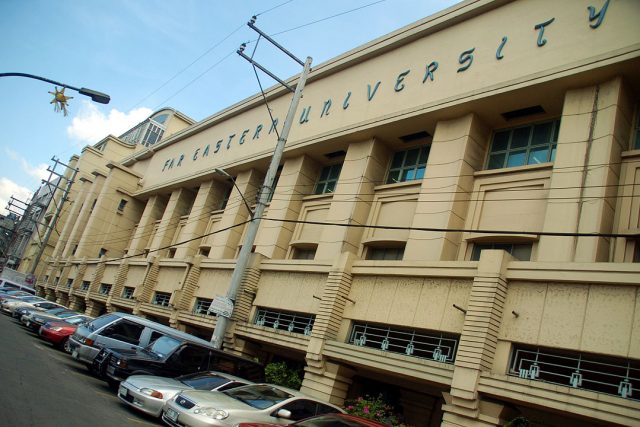
LISTED educational company Far Eastern University, Inc. (FEU) has recorded a 24% jump in its attributable net income for its fiscal year that ended in May on the back of higher revenues.

In a stock exchange disclosure on Thursday, FEU said its bottom line improved to P1.87 billion from P1.50 billion a year ago, with total revenues rising 20% to P4.94 billion from P4.13 billion previously.

“Educational revenues grew by 20% mainly on account of the increase in student population, with a favorable mix as a significant portion of the new students were in tertiary. There was no tuition fee increase for the third straight year,” the company said.

FEU said the group served more students during the year because of the strong first-semester enrollment.

“Operations reflected a post-pandemic environment wherein all related student activities and services delivered were done mostly on-campus,” it added.

According to the company, it had a student population of 50,281 in the first semester of the school year (SY) 2022-2023, higher than the 44,550 in SY 2021-2022.

“The first semester has the highest number of students enrolled. For the second semester, the enrollment is approximately 90% of the first semester’s enrollment, while the midyear term is the lowest at an approximate of 33%,” FEU said.

Meanwhile, FEU said it is optimistic that it will maintain its “strong financial position” and sustain its “sound operating results.”

The company added that it expects an increase in student population for SY 2023-2024.

“The group is positive on the favorable effect on its operations of the country’s positive economic developments, however, still cautious with the factors that might curb faster economic growth,” it said, citing inflation, global geopolitical uncertainties, and the looming effect of the El Niño phenomenon, which is expected to hit the country at the later part of the year.

Shares of FEU were last traded on Sept. 12 when they closed unchanged at P560 apiece. — Revin Mikhael D. Ochave 

USA Today is now hiring a Beyoncé reporter after posting a Taylor Swift job

BEYONCÉ —(BEYONCE.COM)

FIRST it was Taylor Swift. Now it’s Beyoncé.

Fresh off a job ad for a reporter to cover Swift and her Eras tour, Gannett Co. has posted a second role to “chronicle the music, fashion, cultural and economic influence of Beyoncé” for USA Today and The Tennessean.

In addition to inspiring delirious levels of delight in Swifties and the BeyHive — as the artists’ die-hard fans are known — the two superstar musicians are also exerting an outsize force over the American economy.

That’s because the typical Swiftie spends $1,500 to attend a concert, including costs for tickets, hotels, flights, and food. Members of the BeyHive are estimated to spend even more during the ongoing Renaissance tour: about $1,800 for the total experience. In all, their spree is seen having boosted third-quarter American gross domestic product by $5.4 billion.

Policy makers, economists at major banks and financial-markets commentators are all taking notice.

The two new jobs offer similar pay and benefits: They are remote, and the reporters will earn between $21.63 and $50.87 an hour. That’s about $100,000 annually at the higher end of the range, based on a 40-hour work week.

Perhaps the biggest perk: The reporters will need to travel internationally as they follow the stars.

“Our role is to cover the newsmakers who Run the World, influence our society, impact lives and create positive change,” Gannett Media Chief Content Officer Kristin Roberts said in a statement.

Prospective candidates will need to make a choice though: Swift or Beyoncé. The two jobs aren’t meant to be done by a lone reporter.

“We have two positions open. One for each artist,” a Gannett spokesperson said. — Bloomberg

Family of late US billionaire agrees to return looted Cambodian artefacts

JUSTICE.GOV

THE FAMILY of late American pipeline billionaire George Lindemann has agreed to return 33 looted artefacts to Cambodia, according to the US Attorney’s Office, a decision described as “momentous” by the Southeast Asian country.

The collection includes statues of deities, angels, and demons from the 10th and 12th centuries from Koh Ker, the ancient capital of the Khmer kingdom, and from the famous Angkor Wat temple, the US Attorney’s Office for the Southern District of New York said on Tuesday.

In a statement it said the family’s decision to return the artefacts was voluntary. Lawyers for the Lindemann family did not immediately respond to a request for comment.

Cambodia’s archaeological sites suffered widespread looting during civil conflicts from the 1960s to 1990s and its government has spent years pursuing the return of antiquities, some of which it says are on display in American museums.

The United States repatriated 27 smuggled antiquities to Cambodia in 2021, including Hindu and Buddhist statues valued at about $3.8 million and last year returned 30 more including several that were more than 1,000 years old.

The artefacts that were held by the Lindemann family are expected to be repatriated later this year, said Bradley Gordon, a lawyer advising Cambodia on the repatriations and head of its investigation team.

He said he understood the Lindemann family had paid more than $20 million for the artefacts.

Cambodia’s Ministry of Culture and Fine Arts in a statement said the Lindemann family’s decision to return the artefacts set “an excellent and proper example for other museums and private collectors.”

In a June speech to the American Chamber of Commerce, two months before becoming Cambodia’s leader, Prime Minister Hun Manet said the antiquities were national treasures and more than just historical relics.

“They are the blood in our veins and the soul in our hearts that forge the identity of being Khmer… our heritages define who we are and who we will be,” he said.

US authorities have been spent more than a decade working on locating artefacts from Cambodia and have so far repatriated 65. In 2019, art dealer Douglas Latchford was indicted for wire fraud and other crimes related to selling looted Cambodian artefacts, but the charges were dismissed after his death. — Reuters

Adaptability deemed key as AI sweeps workplace

REUTERS

ARTIFICIAL INTELLIGENCE (AI) has heightened the importance of worker adaptability, according to employment-focused social media platform LinkedIn Corp.

A new report from LinkedIn said that 76% of professionals in the Philippines anticipate a ‘significant’ change to their jobs next year from AI.

The platform noted that 57% report that they are overwhelmed by the magnitude of change AI brings to their job, and 41% have expressed worries they will fall behind.

However, 69% have expressed an intent to learn more about the technology but not knowing where to start.

“This is undoubtedly an era of change with generative AI gaining more prominence in the workplace,” Atul Harkisanka, head of growth markets and country lead for the Philippines at LinkedIn, said in a statement.

LinkedIn noted that 55% of Philippine professionals have admitted to using generative AI in their jobs, with 47% trying out tools such as ChatGPT, an AI chatbot.

“Our study shows that over 8 in 10 (85%) professionals in the Philippines believe it is likely that AI will be an ‘invisible teammate’ in the next five years,” he added.

“With their time freed up, many are looking to invest in themselves by learning new skills, focusing on more creative and strategic work, and growing their professional networks, all of which are strong career boosters. — Miguel Hanz L. Antivola

NGCP secures regulatory nod on ancillary services

BW FILE PHOTO

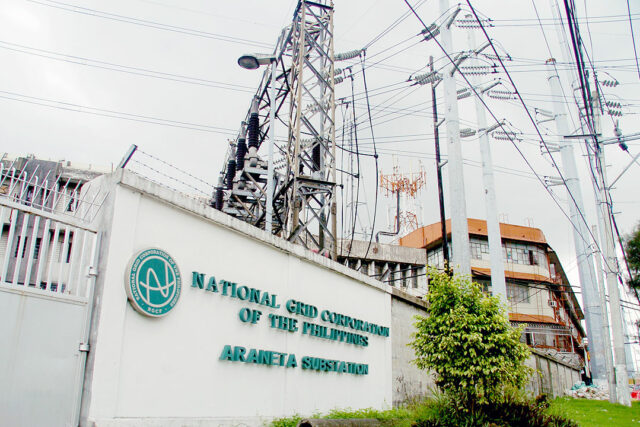
NATIONAL GRID Corp. of the Philippines (NGCP) has obtained provisional authority from the Energy Regulatory Commission (ERC) to implement two ancillary service procurement agreements (ASPAs).

In separate filings, the grid operator said the ERC approved ASPAs for two battery energy storage systems (BESS) that it forged with Universal Power Solutions, Inc. (UPSI).

In notices of resolution both dated Aug. 15, ASPAs covered each of UPSI’s 20 megawatt-rated capacity BESS located in Maco, Davao de Oro and in Malita, Davao Occidental.

According to Republic Act No. 9136 or the Electric Power Industry Reform Act of 2001, ancillary services are “necessary to support the transmission of capacity and energy from resources to loads while maintaining reliable operation of the transmission system in accordance with good utility practice and the Grid Code.”

According to NGCP’s two filings, the rate to be paid by the company as ancillary service (AS) cost should be passed on to its customers in accordance with the approved ancillary services-cost recovery mechanism.

The ERC directed NGCP to optimize the economic and technical dispatch of the available ancillary capacity, wherein it should schedule a mix of hourly AS capacity, “at the least cost,” for a reserve needed to maintain the power quality of the grid. — Sheldeen Joy Talavera

Unions push ‘transition fund’ for tech-displaced workers

BW FILE PHOTO

By John Victor D. Ordoñez, Reporter

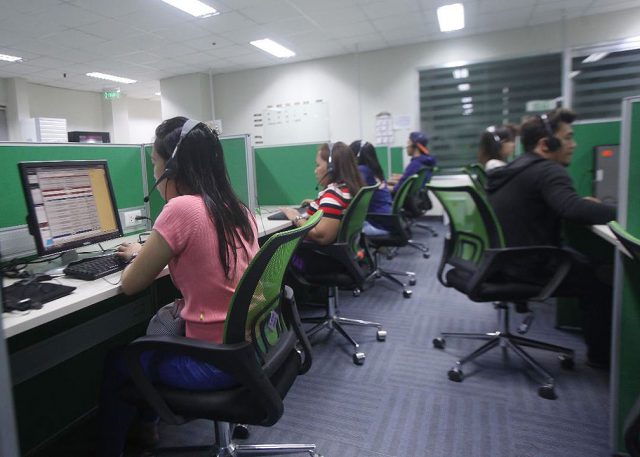
THE GOVERNMENT needs to harness new technology and offer more digital jobs to improve productivity and enhance job quality, but it also needs to ensure that the transition is fair to workers facing potential displacement, a labor group said.

“The government must allocate a Just Transition Fund to ensure human-centered and worker-friendly solutions… via massive reskilling and upskilling, to seize new employment opportunities for green jobs and digital jobs,” Carlos Miguel S. Oñate, legislative officer of the Trade Union Congress of the Philippines, told BusinessWorld in an e-mail.

Job quality worsened in July as the underemployment rate, which measures employed workers actively looking for more work or longer hours, hit a 20-month high of 15.9% from 12% in June, the Philippine Statistics Authority said last week.

Unemployment rose to 4.8% that month from 4.5% in June, which brought the number of jobless to 2.27 million.

“Digital transformation ushers in new, higher quality, and more meaningful jobs through improved productivity due to modern technology,” Mr. Oñate said.

He reiterated the need for more public-sector jobs, adding that the government must bolster partnerships with the private sector.

In a July report, the Asian Development Bank (ADB) said the Philippines should use education technology to bridge the skills gap or risk job losses due to the rapid advance of technology.

The ADB cited the need to develop technical and vocational education training programs to boost the workforce’s competitiveness.

The Philippines ranked 80th out of 133 countries in the Institut Européen d’Administration des Affaires’ (INSEAD) Global Competitive Index 2022. INSEAD evaluated how countries and cities grow, attract and retain talent.

On Sunday, the Department of Labor and Employment (DoLE) said it recently held a strategic planning workshop with workers and employers to set goals for a labor roadmap it had presented to the Cabinet last month.

The DoLE said the results of the consultation will guide the labor and employment plan’s implementation over the next five years.

The employment plan aims to upgrade worker skills, raise the quality of teachers, and modernize training institutions, Labor Secretary Bienvenido E. Laguesma told an employer conference last month. It also details a comprehensive social protection program for workers.

At a Senate hearing on DoLE’s proposed budget for 2024 on Sept. 1, Mr. Laguesma said workers and employers will have oversight power over its program to create sustainable jobs and ensure social protections.

President Ferdinand R. Marcos, Jr., in his second address to Congress, urged government agencies to continue improving the employability of the workforce.

“The government must be at the forefront of uplifting the lives of millions trapped in poverty through decent work for all,” Mr. Oñate said.

Jessica Chastain and Peter Sarsgaard bring Hollywood to TIFF amid strikes

PETER Sarsgaard and Jessica Chastain in a scene from Memory. IMDB.COM

TORONTO — Actors Jessica Chastain and Peter Sarsgaard brought Hollywood glamour to the Toronto International Film Festival (TIFF) for their family drama Memory amid strikes that have kept most celebrities off the carpets.

The film received an interim agreement from the Screen Actors Guild (SAG) and the American Federation of Television and Radio Artists (AFTRA), allowing the stars to promote their work at a festival that’s been mostly star-less due to the ongoing writers’ and actors’ strikes.

Mr. Sarsgaard joins the North American premiere of the film after taking the prize for best actor at the Venice Film Festival, which marks the start of the awards season and regularly throws up big favorites for the Oscars.

Memory is a drama about Ms. Chastain’s character, Sylvia, trying to overcome the abuse of her past while struggling to build a future. For director Michel Franco, the story is important because it centers on people who are often ignored in society.

“It came from my need to shine a light on broken people,” he said. “These are mature characters that seem to have no opportunity to be happy.”

For Mr. Sarsgaard, who plays a man with early-onset dementia named Saul, the film is about connection and working through trauma.

“This type of movie is to connect people back with … what it’s like to be a human being, in whatever way that is,” he said.

Sylvia and Saul build an unlikely relationship after he follows her home from a high school reunion, leading the characters to confront their past.

“There is a way out of trauma through love,” said Ms. Chastain, and she hopes this film helps the audience realize that in their own lives. — Reuters

First Gen, Ceneco forge power supply deal

LOPEZ-LED First Gen Corp. said it had signed an agreement to supply power to Central Negros Electric Cooperative (Ceneco) for 10 years.

In a media release on Thursday, the company said its subsidiary Energy Development Corp. (EDC) will provide an additional 20 megawatts (MW) for Ceneco’s baseload power supply requirement starting by the fourth quarter.

First Gen Vice-President Carlos Lorenzo L. Vega said the company’s relationship with Ceneco “is one that has been strengthened over time by mutual respect and trust.”

“We’ve shared so much and weathered through many storms — literally and figuratively. And we’re still here trying to do something good for our stakeholders. And now more than ever, I feel like our relationship in terms of value is highlighted,” he said.

According to the company, it has been supplying power to the cooperative at a contracted demand of 20 MW since 2011. The new contract brings the total demand for renewable energy supply to 40 MW.

In June, EDC announced its plan to drill two new exploration areas next year in a bid to expand its geothermal power generation capacity.

First Gen has said that it is targeting to grow its renewable energy portfolio to up to 13 gigawatts (GW) by 2030 from the current capacity of more than 3.4 GW.

At the local bourse on Thursday, shares of First Gen dropped by P0.54 or 2.82% to close at P18.62 apiece. — Sheldeen Joy Talavera

Green bond issuances in PHL reach $2.8M in last 10 years

THE PHILIPPINES issued $230,000 worth of green bonds last year, data from the International Finance Corp. (IFC) and Amundi showed.

The rise in green and sustainability markets in Asian countries outside China are “likely to be further strengthened by recent policy efforts,” IFC and Amundi said in their “Emerging Market Green Bonds” report.

“Following the publication of a taxonomy for the region, several countries are in advanced stages of developing their own guidelines or classification systems detailing which economic activities qualify for environmental or sustainable investment,” it added.

Among Association of Southeast Asian Nations countries with available data, Indonesia issued the highest volume of green bonds ($2.58 million), followed by Malaysia ($250,000), the Philippines, and Vietnam ($40,000).

From 2012 to 2022, the cumulative volume of green bonds issued by the Philippines amounted to $2.8 million.

The IFC and Amundi said green bonds and other sustainable debt instruments are key to “ensuring enough capital is channeled from international investors toward funding the energy transition in emerging markets.”

“Demand for funding to finance energy transitions as developing-country governments and corporates pursue environmental goals set by the Paris Agreement will drive growth in issuance of green, social, sustainability, and sustainability-linked (GSSS) bonds,” the report said.

IFC and Amundi’s forecast is that green bond issuances in emerging markets outside China will grow by 14% this year, before easing to about 11% in 2024.

Last year, global GSSS bond issuances fell 13%, the first annual decline, indicating the “fragility of private investment flows.”

The report said governments and multilateral institutions must make it a priority to boost the GSSS bond market in developing countries.

“The asset class is crucial for channeling private investment toward green transitions and the need for this type of funding is especially acute in emerging markets where fiscal resources are scarcer than in developed economies. Failure to underpin these markets will leave them struggling to meet climate targets,” it said.

It also called to address “greenwashing,” which means that issuers wrongly state the extent a project or activity meets the sustainability criteria.

Central banks will also be key to pushing financial markets to support the green transition.

“In terms of monetary policy, they could also face a challenge to price stability from ‘greenflation,’ or the rising prices associated with overhauling economies and implementing green transitions. In any case, they will need to incorporate climate risks into regulatory and supervisory frameworks,” the report said.

“These, in turn, could shape the data disclosure and risk management practices required by regulators of the financial institutions that they supervise. In addition, they could also actively support the greening of economies by adapting their lending operations, collateral frameworks, and asset purchase programs to favor green assets, thereby underpinning GSSS demand,” it added.

IFC and Amundi said financial technology (fintech) can also enhance the development of GSSS issuance in emerging markets by “improving transparency, enhancing data collection, and enabling comparability across markets.”

“This would increase these markets’ appeal to international money managers as they assess potential allocations for their funds,” it said. — L.M.J.C. Jocson

North Korea’s newfound confidence is a dangerous thing

THOMAS EVANS-UNSPLASH

THE SPLIT IN THE GLOBAL COMMUNITY over Ukraine and China has been a gift to North Korea. It is increasingly clear that Pyongyang has been emboldened by the formation of a new anti-US bloc, prompting it to reach out to Beijing and Moscow.

The reignited closeness between North Korea and Russia this week — as evidenced by the luxury armored train carrying Kim Jong Un to a meeting with Vladimir Putin — is a natural partnership. It’s being called a summit of the “anti-West,” a hangover from the Cold War. There is an important difference: Beijing is in the background but is a much bigger player in this reshaped geopolitical triangle.

Sharing handshakes and denouncing “imperialism,” the two leaders of these isolated states drew each further into the other’s orbit. The face-to-face meeting may have ended with few details of what was discussed, but it is just the start of their renewed cooperation. And it is a common enemy that has drawn them closer.

Washington’s aggressive alliance building in the Asia-Pacific, which resulted in the trilateral US-Japan-South Korea Summit in August, has been seen by North Korea as an unwelcome sign of even more American military might in its backyard. For Russia, this is an opportunity to reach out to a disgruntled partner that it recognizes could do with a little help in the form of food and energy supplies to evade sanctions that have crippled its economy, especially since the pandemic.

The US needs to point much more loudly at what this bond means for the rest of us. Reprimands from the White House are disingenuous. It has already signaled these closer ties are unwelcome, and has talked about the repercussions and heavy price Pyongyang will pay if it continues.

But no one is listening, and the US is distracted. Chief among its preoccupations is countering Beijing, what policymakers see as the US’s single most important existential dilemma. Yet ignoring the Pyongyang threat is foolish. Denuclearization negotiations have stalled and sanctions aren’t working.

Despite being among the poorest countries in the world, North Korea still spends nearly 20%-30% of its gross domestic product on its military. It is also developing weapons at an unprecedented rate, with some estimates saying it now has over 100  nuclear warheads, and has the ability to launch an attack on South Korea, and on US forces based there.

The threat of a nuclear-armed North Korea is now a reality and not something that the Biden administration can stall away by defaulting to more sanctions. Kim was joined by two guests at a recent military parade in Pyongyang, Russia’s Defense Minister Sergei Shoigu, and Li Hongzhong, a member of the Communist Party of China’s 24-member Politburo. This new love triangle is what he is betting on “to end its isolation with strengthened partnerships that will enable a bigger breakout,” as Jonathan Corrado, director of policy for the New York-based Korea Society writes.

That’s not a hidden ambition. In a speech to the Supreme People’s Assembly in September last year, the North Korean leader declared: “The change from a unipolar world advocated by the US into a multipolar world is being accelerated significantly.”

As it so often does, North Korea fired two suspected short-range ballistic missiles on Wednesday ahead of Kim and Putin’s tête-à-tête — this time, perhaps, less as a threat to its neighbors than to celebrate. Pyongyang has already fired 26 ballistic missiles and two space rockets so far this year. In 2022, it fired more than 70 ballistic missiles, a record for the state.

It’s telling that, for now at least, Beijing is the least unpredictable of the triumvirate. But it is not clear how long that might last. China under Xi Jinping has turned inward, and increasingly unknowable. That is dangerous. Both Pyongyang and Moscow are growing more desperate and volatile, one weighed under by the burden of sanctions, the other because of a war that has been dragging on far longer than it had anticipated. There is evidence to show that all three countries are increasing their nuclear arsenals.

The nine nuclear-armed states — the US, Russia, the UK, France, China, India, Pakistan, North Korea, and Israel — have continued to modernize their arsenals and many used or tested new weapons systems last year, according to the latest report from the Stockholm International Peace Research Institute (SIPRI) released in June.

“We are drifting into one of the most dangerous periods in human history,” said Dan Smith, director of SIPRI. “It is imperative that the world’s governments find ways to cooperate in order to calm geopolitical tensions, slow arms races.”

The idea of a nuclear conflict between the countries that are united against the US and its allies isn’t some distant possibility. It’s the most real and plausible scenario seen in decades. North Korea’s role makes it even more urgent. How we prevent that is shaping up as one of the biggest geopolitical challenges policymakers are facing today.

BLOOMBERG OPINION

ADVERTISEMENT
ADVERTISEMENT