Home Blog Page 4246

Convergent platforms for food and beverages in Asia

This year’s Food Ingredients Asia, Vitafoods Asia convene F&B, nutraceutical industries in Thailand

By Adrian Paul B. Conoza, Special Features and Content Editor

Every single food, drink, medicine, and other edible product we intake is made up of several ingredients and components. Some of these improve the quality of the produce; some provide an alternative to usual ingredients; some provide nutrients that benefit our bodies; and some enhance our experience with these products in terms of flavor or aesthetics.

Such suppliers comprise the wide food and beverage (F&B) and nutraceutical industries, big industries in the world’s largest continent as well as in the Southeast Asian region. Testifying to this vastness are two trade exhibitions that were simultaneously held in Bangkok, Thailand last month.

Food Ingredients Asia Thailand (Fi Asia Thailand), considered “the leading event for Southeast Asia’s F&B community,” and Vitafoods Asia, touted as “Asia’s leading nutraceutical event,” took up over 45,000 square meters of space in Queen Sirikit National Convention Centre (QSNCC) from Sept. 20 to 22.

Rungphech Chitanuwat, regional portfolio director for ASEAN and country general manager for the Philippines at Informa Markets (the organizer of the two events) shared that Fi Asia Thailand and Vitafoods Asia seek to bring together buyers and suppliers more conveniently in a single location, alongside exploring the latest trends and innovations in the F&B and nutraceutical industries.

“The aim is to get producers to source at the show, buying the ingredients. But… if [attendees] don’t have [a] business [but] have the agricultural products, they can come to the show to see what is happening with their commodities,” she told the Philippine media who covered the exhibits.

Dr. Chutima Eamchotchawalit, governor of the Thailand Institute of Scientific and Technological Research, noted that aside from opening networking opportunities, the two exhibits open doors for sharing knowledge and innovations within the said industries, as well as exploring points of collaboration in achieving sustainable development goals.

“Food Ingredients Asia and Vitafoods Asia are set up to be a platform for sharing scientific knowledge; latest technology developments; and networking between researchers, professors, entrepreneurs, and those interested in food and nutraceutical product development,” she said during the opening ceremony for the two events last Sept. 20.

Innovation-driven potential

Moreover, Ms. Chitanuwat added, both events give Southeast Asia an opportunity to showcase the potential of its resources to be maximized into ingredients.

“Our countries in ASEAN mostly are agricultural countries, so we have an abundance of resources,” she said. “What we have to do is to encourage and promote the utilization of these resources. This is exactly where ingredients can play a role.”

“We need research and innovation to develop the commodities to multiply their value,” she added.

Supamas Isarabhakdi, Thailand’s Minister of Higher Education, Science, Research, and Innovation, also stressed that F&B and nutraceuticals can further wield research and innovation to improve how they serve consumers.

“Science, research, and [technology] are becoming more important for today’s food production and development,” Ms. Isarabhakdi said during the opening ceremony, adding that through these three the food industry can be transformed from merely manufacturing mass products to innovating products that cater to consumer’s transforming needs.

Manu Leopairote, chairman of Informa Markets Thailand, also notes that these industries should innovate by embracing evolving consumer behavior, which has increasingly focused on health, safety, and sustainability.

“Food and nutraceutical ingredients directly impact the final product quality, safety, and price. They need not only add value to manufacturers but also to consumers — [for instance by] reducing fat and sugar content — without sacrificing taste and texture,” he said.

Expansive platform for F&B ingredients

Covering the full spectrum of food, beverage, natural, and health ingredients, Fi Asia Thailand filled QSNCC’s ground floor with over 600 exhibitors coming from, among others, color; bakery, egg, and dairy products; edible fats and oils; emulsifiers, firming agents, and food acids; and flavorings and seasonings sectors.

Some of the notable exhibitors in Fi Asia Thailand, among others, include a producer of non-dairy creamers designed for beverages like milk tea and coffee; a rice flour manufacturer with a solution that claims to preserve the crispiness of fried chicken for up to four hours; and a company said to have innovated emulco, a formulation of food flavoring, coloring, and emulsifier, that is widely applicable for bakeries and confectioneries.

A main highlight of Fi Asia Thailand was the special pavilions that highlighted certain segments in the industry, namely the Beverage Ingredients (Bi) Pavilion, Natural Ingredients (Ni) Pavilion, and Health Ingredients (Hi) Pavilion.

There were also pavilions showcasing products from specific markets, such as China, Japan, Malaysia, Thailand, India, Indonesia, Taiwan, Ireland, the European continent, and the United States (US).

Aside from the main exhibition, Fi Asia also hosted numerous technical presentations and conferences from its exhibitors and partners, each delving into emerging trends, practices, and innovations pertaining to F&B.

A spotlight was also shone on startups in Thailand as both student-led, and small and medium enterprises joined Fi Asia’s Start-up Innovative F&B Products Competition. Among the winners of the competition is a product called MUU: Cow’s Milk Made Without Cows. Such milk, MUU explains, is done by fermenting special microbes and then purifying them to formulate milk proteins into dairy products.

Showcasing growing nutraceuticals space

At the lower ground level of QSNCC, meanwhile, Vitafoods Asia highlighted Asia’s growing nutraceuticals industry, which is segmented into dietary supplements, functional beverages, and functional foods.

This exhibit highlighted four key sectors in the nutraceutical supply chain — namely ingredients and raw materials; contract manufacturing and private label; services, equipment, and packaging; and branded finished products — with its over 400 exhibitors.

Notable exhibitors include a supplier of label-friendly excipients and coatings for tablets and capsules of natural supplements; another that transforms native collagen from raw materials into bioactive collagen peptides that have numerous applications for the health of the skin, joints, and bones, to name a few; and a company producing an extract from the ashwagandha herb that has been clinically proven to help reduce stress, improve cognitive function, enhance quality of sleep, and increase endurance, among others.

Alongside these booths, the Main Stage and NutraFocus booths held sessions that explored the latest trends and cutting-edge ingredients in the nutraceutical industry. There were also dedicated spaces for certain ingredients and innovations, such as the Omega-3 Resource Centre, Probiotics Resource Centre, New Ingredients & New Products Zone, and Innovative Health Hub. International pavilions also represented countries like the US, Belgium, Japan, Spain, Taiwan, Korea, and China.

Thailand is considered one of the biggest markets for nutraceuticals in the Asia-Pacific region, as the Thai Ministry of Commerce reported sales of $3.5 billion across the nutraceuticals industry back in 2019. Zooming out to the region itself, nutraceuticals are expected to grow their compound annual growth rate by 7.5% from 2020 to 2025, with a value of $140 billion. China, Indonesia, and Japan are projected to be the three biggest consumer markets in the region.
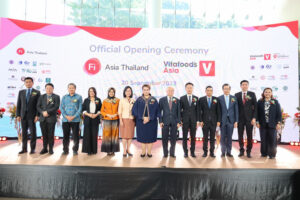
Key officials from Thailand and Southeast Asia opened Fi Asia Thailand and Vitafoods Asia last Sept. 20. Among the guests of honor is Department of Trade and Industry Undersecretary Blesila A. Lantayona (fourth from left in photo).

Philippines’ place in international market

The Philippines was represented by both the government and the private sector as visitors in the two exhibits.

From the government side, the delegation was led by Blesila A. Lantayona, Department of Trade and Industry’s (DTI) undersecretary leading the Regional Operations Group. She also graced the opening ceremony together with other key officials in Thailand and Asia.

She shared after the ceremony that the DTI is looking into how the two trade events can benefit the Philippine food industry, from suppliers of raw materials to buyers who seek to expand their network of suppliers.

“We have to see what the market really requires and what are the opportunities for our MSMEs,” Ms. Lantayona said.

The Philippine delegation was also looking for technologies showcased during the events that can be adopted into the country, particularly those involving the transformation of raw materials into products that do not compromise their quality (i.e., keeping okra green even after it is dried).

“[Thailand is] quite advanced in terms of science, technology, and innovation, converting raw materials particularly food into value-added materials or finished products,” she observed.

She added that while the technology is “already there,” several problems such as acquisition, cost, and availability are hindering the adoption of those in the country.

Representatives from Philippine pharmaceutical companies were also present. Benson Sian, chief executive officer and founder of Nattural Quality Corp., shared that the exhibitions inspire companies like theirs to benchmark themselves in light of the current landscape and rethink how they can further position their products to serve their markets better.

“I’d like to know where we are in relation to all other products, and this gathering provides us that opportunity to learn,” Mr. Sian shared during the first day.

Mr. Sian also shared that for Filipino brands, particularly in their industry, to become competitive in the international space, they have to work hard in effectively positioning their products.

“We have an asset. We have over 10 million Filipinos overseas,” he continued. “They’re not just OFWs. They’re decision-makers; they’re influencers and potentially [evangelists] of Filipino products. That’s something we can be proud of.”

Mr. Sian also sees potential even here at home, particularly in industries like business process outsourcing, with whom Nattural can partner in promoting health supplements to support better lifestyles and, in turn, helping professionals prolong their careers.

“Health has a lot of bearing on the sustainability of one’s career,” Mr. Sian stressed.

The next Fi Asia event is set to be held in Jakarta, Indonesia next year, while the next edition of Vitafoods Asia is still intended to be held in Thailand.
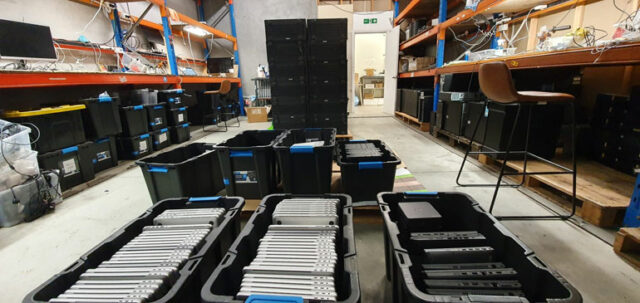

ZOLO to bring sustainable, secure tech recycling solution to the Philippines

By Chelsey Keith P. Ignacio, Special Features and Content Senior Writer

Technologies are being incorporated in nearly every aspect of people’s lives at present. From connecting to other people, working or learning, or even availing services such as banking and healthcare, a lot of activities can now be undertaken in the digital space. Even so, physical devices are needed to access these digital services. And with more innovations rapidly emerging, many old technologies are being discarded to make room for new ones.

However, this could result in a problem with electronic waste (e-waste). The generated waste stream from thrown out electrical and electronic equipment hold hazardous and valuable materials, according to the United Nations (UN). In its Global E-Waste Monitor from 2020, the UN reported that the Philippines is among the top producers of e-waste in Southeast Asia, with an estimated 3.9 kilogram of e-waste per capita in 2019.

But this record was before the pandemic. In 2020, the coronavirus disease 2019 (COVID-19) crisis spurred digital transformation amid the restricted mobility to curb the situation. As such, many organizations and people began to further embrace digital technologies.

Amid the rise of reliance on such devices, an opportunity was generated to come up with a recycling solution to deal with unused technologies, particularly in households in Australia. This led to the development of tech recycling startup ZOLO there in 2020.

“In light of COVID, the demand for technology and the fact that there isn’t really a solution for households as to what to do with old technology. We started the business from that insight, and that propelled us to explore it a bit further,” ZOLO CEO and Founder Franz Phillip Siasat told BusinessWorld in an interview.

Started out with a Facebook campaign to encourage Australians to declutter for good and going house to house in Sydney to gather these old technologies, ZOLO has grown as a purpose-led startup trusted by brands such as Canva, Dyson, and Bank Australia for tech recycling.

“What we have established here in Australia, we have created a solution for businesses to get rid of their tech in a way that’s sustainable, secure, and good for the company as well,” said Mr. Siasat.

ZOLO will soon extend such a service to the Philippines by setting up a tech recycling facility in Santa Rosa, Laguna this year. By introducing its tech recycling solution to the country, the startup could create several benefits both for Filipino businesses and communities.

The startup contributes to sustainability by employing a circular approach, that is by refurbishing technology to give it a new life instead of ending up in the landfill. And for security, it uses a military-grade data destruction process to ensure that these old technologies would have their data deleted and unable to be retrieved.

It also came up with a platform for companies’ information technology teams to deal with their e-waste. The Zolo Single Touch streamlines this management for businesses by simply uploading their e-waste inventory, and then Zolo handles the rest of the complex processes.

The software also comprises a feature where businesses could have a look at their environmental impact, including real-time data on e-waste averted from landfills and an estimate of carbon emissions prevented, among others.

Businesses could benefit further through the rebate program that allows them to maximize the value of their eligible old devices, which could be spent for procuring new technologies.

“It’s an Australia first; it’s a Philippine first as well. So, I’m excited to launch that, and some of the partners that we have in the Philippines are very excited to introduce that to their teams as well.” Mr. Siasat said.

In addition, as its tech recycling solution supports businesses, ZOLO also enables further accessibility to technology among other people.

“What we’re passionate about and what works for us as a business as well is creating opportunities for other people to have access to technology. And that’s by working with companies, securing their old tech, and recycling it in a way that creates a platform for other people to be able to access technology in a more cost-effective way,” Mr. Siasat said.

Still, the ZOLO Founder never would have imagined that they would help solve the digital divide problem if he were to be asked years before.

“But I think that’s the beauty behind the platform that we’ve built, and also the market that we’ll soon be operating in, which is in the Philippines,” he said. “[There are] plenty of opportunities to implement new solutions to potential problems that we could solve as a company because that’s the most important thing for us.”

“Whilst we are a business, we use our platform and business to be a force for good, and that’s kind of our approach as well when we work with other partners,” he continued.

Mr. Siasat said he looks forward to building partnership and community, and creating something that can engage the community as ZOLO will soon kick off its operations in the Philippines.

Plant-based food startup Green Rebel to enter Philippine market

Green Rebel founders Max Mandias (left) and Helga Angelina Tjahjadi (right)

Green Rebel, an alternative protein startup founded in Indonesia that offers whole-cut plant-based meat and dairy-free cheese options, announced its expansion into the Philippines, marking a significant step towards its mission of revolutionizing the Asian plant-based dining landscape.

The company’s innovative approach focuses on crafting mouth-watering plant-based meat and chicken, as well as melting dairy-free cheese and condiments — delivering delicious and sustainable alternatives to traditional animal-based products.

Green Rebel, co-founded in 2020 by long-time vegans Helga Angelina Tjahjadi and Max Mandias, who also own Burgreens, Indonesia’s largest plant-based eatery chain, is driven by a powerful philosophy of providing healthy, affordable, and delicious plant-based meals to Asian consumers seeking flexitarian (flexible vegetarian) and plant-based alternatives.

By encouraging individuals to embrace healthier and greener choices, Green Rebel not only caters to diverse dietary preferences but also fulfills its commitment to reducing the negative impact of traditional animal agriculture on the environment.

Green Rebel offers a diverse range of plant-based products including Asian-inspired dishes such as Beefless Rendang, Chick’n Karaage, Chick’n Satay, to Cheddar Cheeze, and Asia’s first whole-cut steak made from plants.

With a wide range of products, Green Rebel takes pride in using wholefoods ingredients, such as shiitake mushrooms in its beefless range, non-GMO soy in its chicken category, and cashew in its dairy-free cheese & sauces.

All Green Rebel products are high in protein, rich in fiber, lower in saturated fat, and free from cholesterol. The meats are developed specifically for different Asian culinary applications and the flavored products are authentically Asian. All ingredients are sustainably sourced from the region with natural herbs from Indonesia.

In addition to its roots in Indonesia and successful expansion into the Philippines, Green Rebel has firmly established its presence across various Asia-Pacific regions, including Singapore, Malaysia, South Korea, and most recently, Vietnam.

As part of its expansion strategy, the company is working diligently to establish partnerships with various grocery stores, supermarkets, and select food service outlets in the country. Since it recognizes the importance of building a sustainable and efficient supply chain that can properly meet the increasing demand for plant-based alternatives, Green Rebel actively looks for partnerships and collaborations with local partners and stakeholders in the Philippines namely Santan by AirAsia; Tierra Café; Haribowl Vegetarian Kitchen; retailers Berdelish Imus Vegan Store, The Vegan Grocer, and real food; and e-commerce platforms EVE Grocer, Berdeeats, Mayani, and Vegore.

“According to ‘Charting Asia’s Protein Report’ — Southeast Asian countries like Indonesia and the Philippines will only be able to decarbonize by ending supply chain deforestation (importing soy and corn from Brazil and Argentina for animal feed), stopping the growth of animal protein consumption by 2030, and transitioning to alternative protein to 60% of total protein volume by 2060.

“Green Rebel’s venture into the Philippine market marks a significant milestone in our mission to create a more sustainable, healthy, and delicious future for all,” said Ms. Tjahjadi, adding that working with local partners can make plant-based food easily accessible across the country.

In alignment to its vision across Asia, Green Rebel hopes to give Filipinos accessible and healthy alternatives to their usual diets, as well as to offer several benefits which can positively impact their lives. Most notably, the plant-based meals and products offer a healthier alternative to traditional meat-based diets.

By promoting plant-based eating, Green Rebel can contribute to reducing health issues such as obesity, heart disease, and diabetes. Filipinos who adopt a more plant-forward diet may experience improved overall well-being and better nutritional intake.

Betterteem touts AI-enabled solution that can predict employee resignations in advance

As an artificial intelligence (AI)-enabled predictive platform, Betterteem Technologies, Inc. is on a mission to help Philippine business process outsourcing (BPO) companies mitigate unwanted employee resignations using AI, which is causing over $1 billion dent in the industry’s annual revenue.

With its recent graduation from Techstars in Israel, Betterteem has secured funding to further develop its technology to address a major talent pain point that impacts the growth of BPO companies in the Philippines.

“Our technology allows operation and human resource (HR) leaders to anticipate employee resignations before they happen,” said Founder and CEO Bo Discarga. “We digest massive amounts of employee data from the existing data of our client’s HR system, such as compensation, performance reviews, and individual job function, and their demographics, enabling us to deliver our prediction of people heading for the door.”

AI has the potential to assume a pivotal role in improving employee experience and predicting attrition volumes, thereby enhancing resource demand planning. AI can detect early indicators of employee dissatisfaction, resignation intents, and recommend training requirements, enabling proactive intervention.

Now operating in the Philippines and South Korea, Betterteem is greatly focusing on mitigating unwanted employee resignations in the Asia-Pacific region. Betterteem AI concentrates on launching features and technologies that are focused on arming operation and HR leaders with data and insights that enable them to understand the underlying drivers of unwanted resignations in their organizations and model the results of the actions they are planning to take.

With a free trial, an AI-enabled technology, and an employee benefits app, Betterteem is helping BPO companies enhance employee experience, and predict unwanted resignations, resulting in improved employee retention.

500 Global closes US$143 million across early-stage and growth vehicles for SEA

Venture capital firm 500 Global announced earlier in September the successful close of US$143 million across its largest Southeast Asian early-stage fund to date, 500 Southeast Asia III, L.P. (500 SEA III), and its growth investment vehicle for Southeast Asia. The new early-stage and growth vehicles demonstrate the team’s commitment to supporting founders in Southeast Asia from pre-seed to pre-IPO.

Limited partners (LPs) across its early-stage and growth investment vehicles include a sovereign wealth fund, public and private pension funds like Khazanah Nasional Berhad; Kumpulan Wang Persaraan (Diperbadankan), or KWAP; and Employees Provident Fund (EPF). A university endowment, family offices of prominent global investors, and portfolio companies valued at over US$1 billion from 500 Global’s first Southeast Asia early-stage fund have invested as LPs as well.

500 SEA III is 500 Global’s third Southeast Asia-focused early-stage fund, with each successive fund having nearly doubled in size since 2014. Originally targeted for US$75 million, 500 SEA III closed at US$100 million with over half of the fund coming from returning LPs.

The early-stage fund will focus on investing in businesses and AI-enabled technologies that advance rural digitalization, sustainable cities, human and machine productivity, healthcare, food security and financial inclusivity. 500 SEA III aims to invest in 100 pre-seed to Series A startups, providing first checks between US$250,000 and US$500,000 across Malaysia, the Philippines, Vietnam, Thailand, Singapore, and Indonesia.

Hazman Hilmi Sallahuddin, chief investment officer of Malaysia’s KWAP, said that its investment in 500 Global began in the latter’s early days through its second Southeast Asia early-stage fund.

“500 Global has since grown considerably in strength to a multi-stage investment platform and remains instrumental in securing co-investment opportunities for KWAP,” he said. “We are encouraged by its efforts in developing the regional venture capital ecosystem, and look forward to the successes that our ongoing collaboration will bring in optimizing KWAP’s investment returns.”

Dato’ Amirul Feisal Wan Zahir, managing director of Khazanah Nasional Berhad, added that in line with their fund’s Future Malaysia Program they are “excited about their potential to facilitate the market expansion of startups via their Southeast Asia platform, with the anticipation of creating new global champions.”

500 Global’s past Southeast Asia investments have included US$5 million-US$20 million checks in Series C to D rounds of portfolio companies such as Carousell, Carsome, and, most recently, eFishery. Also, 500 Global has in the past invited their LPs to co-invest alongside them in select opportunities. The team is expanding its growth investing capabilities with the new vehicle.

“We have seen our platform produce a pipeline of high-quality growth stage opportunities which we can underwrite with the added diligence of knowing the companies and founders over the years,” Vishal Harnal, managing partner at 500 Global, shared. “While we developed our growth stage capability investing over the years, we have also added resources and new partners in line with our aim to support founders from pre-seed to pre-IPO.”

Christine Tsai, CEO and founding partner of 500 Global, added that their firm, with a global portfolio of over 2,800 companies across more than 80 countries, believes that founders in Southeast Asia will benefit from “one of the few truly global venture platforms with deep local roots and in-market expertise.”

“We’re confident that with access to insights, connections, and capital, this can help the next generation of Southeast Asian founders build global tech giants,” she added.

Watsons Playlist Concert: A night of feel-great music, community, and milestones

In an unforgettable night of music, the Watsons Playlist Concert made history as it brought together three of the Philippines’ biggest music sensations in a single concert. The concert featured Ben&Ben, SB19, and Zack Tabudlo, and it was nothing short of a success. Fans and the community alike are still rejoicing in the aftermath of this concert.

Ben&Ben

The energy on stage was palpable, and fans relished the excitement. The highlight of the night was the first-ever live performance of “MAPA,” a heartwarming song that struck a chord with everyone present.

SB19

To make the event truly exceptional, Watsons went the extra mile to engage the audience with interactive segments. From sponsored segments, to engaging artist merch giveaway challenges, fans were not only spectators but active participants in the experience.

Zack Tabudlo

This concert once again showcased Watsons’ commitment to providing exciting experiences for its customers. Beyond its outstanding range of products, Watsons continues to foster a sense of community among its patrons, going beyond the traditional role of a retail brand.  The Watsons Playlist Concert, an exclusive event for Watsons Club Members, is their way of saying thank you to the community and rewarding them for their support.

With the success of this musical event, fans can’t wait to see what Watsons has in store for them next. Stay tuned for more exciting offerings from Watsons and keep the feel-great vibes alive!

In the words of the concertgoers, “This was a night to remember,” and “I’m already looking forward to the next Watsons event.”.


Spotlight is BusinessWorld’s sponsored section that allows advertisers to amplify their brand and connect with BusinessWorld’s audience by enabling them to publish their stories directly on the BusinessWorld website. For more information, send an email to online@bworldonline.com.

Join us on Viber at https://bit.ly/3hv6bLA to get more updates and subscribe to BusinessWorld’s titles and get exclusive content through www.bworld-x.com.

Slight inflation uptick seen in Sept.

Philippine annual inflation in September is expected to settle within the range of 5.3% to 6.1%, the Bangko Sentral ng Pilipinas said. — PHILIPPINE STAR/EDD GUMBAN

By Keisha B. Ta-asan, Reporter

INFLATION likely quickened in September due to pump price hikes, higher electricity rates, and the peso depreciation against the dollar, analysts said.

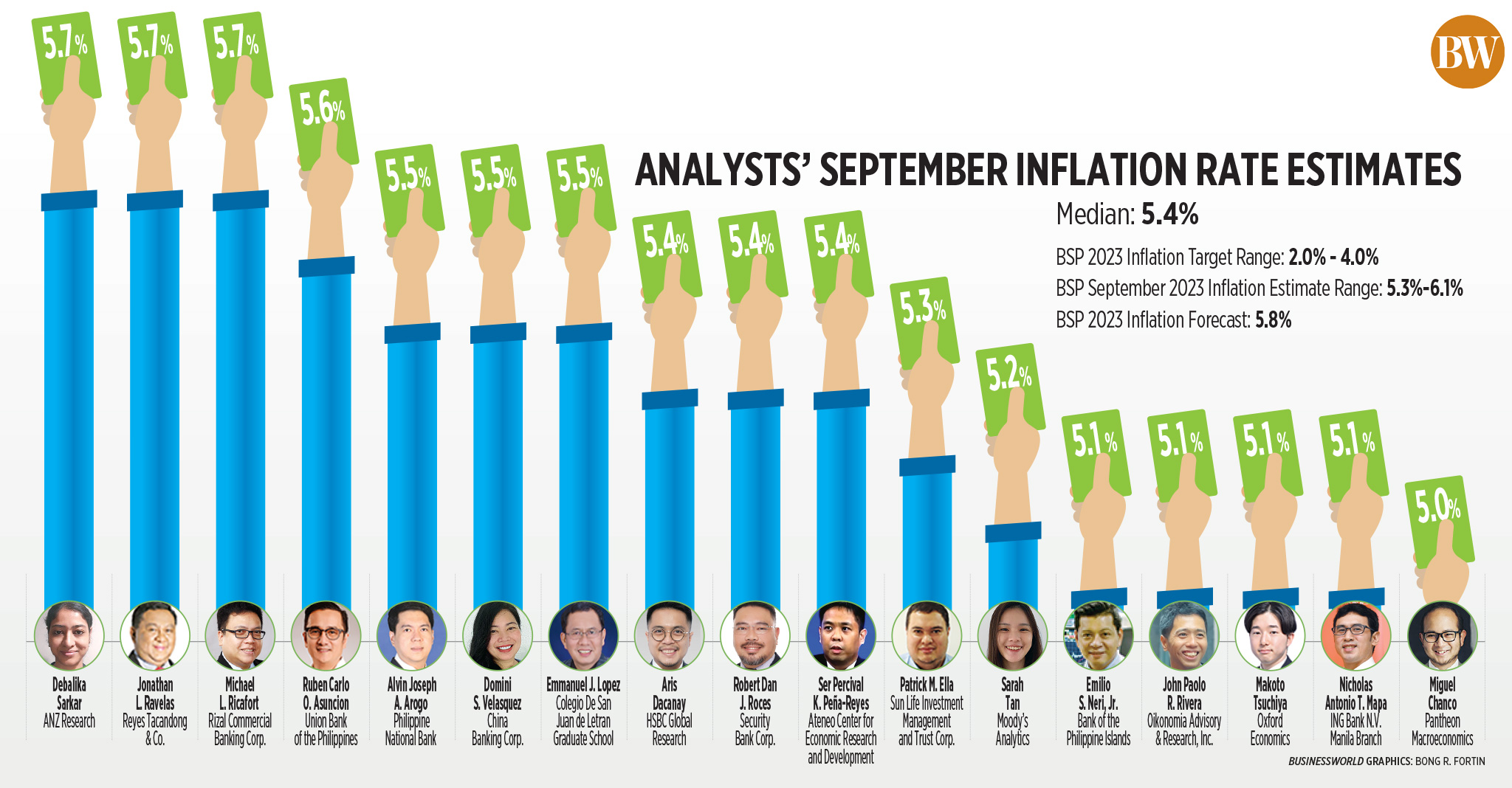
A BusinessWorld poll of 17 analysts yielded a median estimate of 5.4% for September inflation, at the low end of the 5.3-6.1% forecast of the Bangko Sentral ng Pilipinas (BSP).

If realized, September inflation would be  slightly faster than the 5.3% print in August, but lower than 6.9% in the same month in 2022. It would also be the highest print in four months or since 6.1% in June.

Analysts’ September inflation rate estimates

Inflation in September will likely breach the central bank’s 2-4% target range for the 18th straight month.

The Philippine Statistics Authority (PSA) is scheduled to release the latest consumer price index (CPI) data on Oct. 5 (Thursday).

“Higher prices of fuel, electricity, and key agricultural commodities, as well as the peso depreciation are the primary sources of upward price pressures in September,” the BSP said in a statement on Friday.    

“Meanwhile, lower rice and meat prices could contribute to downward price pressures for the month,” it added.     

In September alone, oil companies raised pump prices for gasoline by P2.50 per liter, diesel by P3.90 per liter, and kerosene by P0.80 per liter.

Customers of Manila Electric Co. (Meralco) saw higher electricity bills in September after the overall rate went up by P0.5006 per kilowatt-hour (kWh) to P11.3997 per kWh.   

HSBC economist for ASEAN (Association of Southeast Asian Nations) Aris Dacanay said electricity rates rose more than 4% in September, reflecting the higher energy import bill due to the depreciation of the peso against the dollar.

The peso finished trading at P56.575 per dollar on Friday, gaining 40.5 centavos from its previous close of P56.98. In September alone, the peso has slightly strengthened by two centavos or 0.03% from its Aug. 31 finish of P56.595.

However, China Banking Corp. Chief Economist Domini S. Velasquez said higher electricity rates from Meralco may have been offset by lower rates in other provinces like Batangas, Pampanga, and Bohol.

She noted that prices of fish and fruits remained elevated last month and increases in cooking gas prices may have also added to upward inflationary pressures in September. 

Cooking gas prices rose by P6.65 per kilogram in September, marking the second straight month of price hikes.

“On a positive note, rice and vegetable prices, which were the primary drivers of food inflation in August, eased due to the mandated rice price cap and relatively favorable weather (i.e., no strong typhoons this month),” Ms. Velasquez said.

Sarah Tan, an economist from Moody’s Analytics, noted that rice prices have cooled due to the imposition of a price ceiling in early September. The spike in rice prices was one of the main drivers of inflation in August.

“Notably, the average price of locally produced regular milled rice in Metro Manila has fallen about 20% from its end-August peak,” Ms. Tan said.

Starting Sept. 5, the Marcos administration imposed a price ceiling of P41 per kilo for regular milled rice and P45 per kilo for well-milled rice.

Meanwhile, core inflation may have settled at 5.9% in September, Ms. Velasquez said.

If realized, this would be lower than the 6.1% print in August. It would also be the first-time core inflation fell below the 6% level since the 5.9% print in October 2022. 

“We won’t be surprised if higher oil prices have spilled over to core (inflation) already,” Bank of the Philippine Islands Lead Economist Emilio S. Neri, Jr. said.

For the rest of the year, ANZ Research economist Debalika Sarkar said global oil prices may remain elevated amid tight supply.

“While some effort has been made to stabilize domestic food prices, domestic retail pump prices continue to adjust to global oil price movements,” she said. “The low oil inventory also implies a faster pass-through in the absence of adequate fiscal controls.” 

Ms. Sarkar said another round of transport fare hikes, which may be implemented in November, could further add upward pressure on inflation.

“Overall, we do not see the monthly inflation print falling back below 4% year on year this year,” she said.

The BSP earlier said it still sees inflation falling within the 2-4% target in November, but raised its average inflation forecast for 2023 to 5.8% (from 5.6% previously).

Philippine National Bank economist Alvin Joseph A. Arogo said it is still possible for the headline print to fall within the target by fourth quarter if inflation will not accelerate past 5.5% in September.

“However, the risk to this view is elevated due to El Niño, typhoons, oil production cuts, and prolonged Russia-Ukraine war,” Mr. Arogo said.

On the other hand, Patrick M. Ella, economist at Sun Life Investment Management and Trust Corp., said inflation may return to the 2-4% target range by the first quarter next year instead, and not in the fourth quarter as previously expected.

A surge in consumer spending ahead of the holiday season in the fourth quarter may put the 2-4% target range out of reach, Colegio de San Juan de Letran Graduate School Associate Professor Emmanuel J. Lopez said.

Barring any new shocks, Ms. Velasquez said inflation is still on track to return to the 2-4% target band in the fourth quarter.

“Hence, we think that the BSP can still keep its policy rate on hold at 6.25% this year, especially if third-quarter GDP (gross domestic product) comes out weaker than anticipated,” she said.

The PSA will release the third-quarter GDP data on Nov. 9.

The Monetary Board has kept its key interest rate at 6.25% for a fourth straight meeting last month. This was after it hiked policy rates by 425 basis points from May 2022 to March 2023.

Ms. Velasquez noted that recent supply shocks to inflation could be addressed by non-monetary measures.

“However, we are cognizant that another rate hike in November is a live possibility if the peso weakens further given another Fed rate hike,” she added.

The US Federal Reserve earlier signaled it would keep rates higher for longer, even as it opted to keep the target Fed funds rate unchanged at 5.25-5.5% at its meeting last month.

The Fed’s next meeting is from Oct. 31 to Nov. 1, while the BSP is scheduled to discuss policy on Nov. 16.

Retail dollar bond sale may exceed $1 billion

A person shows U.S. dollars at a currency exchange store in Manila, Philippines, October 21, 2022. — REUTERS

By Luisa Maria Jacinta C. Jocson, Reporter

THE GOVERNMENT’S retail dollar bond (RDB) sale will likely exceed $1 billion amid strong demand, the Bureau of the Treasury (BTr) said.

“We’re seeing the demand, we’re close to the $1 billion initially that we targeted. We are confident that until next week we’ll be able to raise more than $1 billion,” BTr Officer-in-Charge Sharon P. Almanza said in a briefing on Friday.

The government on Wednesday raised $611.2 million from the auction of its onshore retail dollar bonds. The minimum issue size of the offer was set at $200 million.

This is the Philippines’ second retail dollar bond issuance, but the first under the Marcos administration. In 2021, the Philippines raised $1.6 billion from its maiden retail dollar bond offering.

Finance Secretary Benjamin E. Diokno said on Friday that it is possible to upsize the offer due to the high demand.

“Actually, the initial offering was $200 (million), because we really wanted to limit our indebtedness. But you know, demand is close to a billion as of (Friday)… and maybe we can even raise (the size) because this bond is considered domestic, so that’s okay. We have some leeway in domestic borrowing,” he said in mixed English and Filipino.

Ms. Almanza noted the government has not completed its domestic borrowing program this year, “so we can still accommodate even if we reach the $1 billion during the offer period.”

The government is planning to borrow P2.207 trillion this year. Broken down, this consists of P1.654 trillion from domestic sources and P553.5 billion from foreign sources.

In the first seven months, gross domestic borrowings reached P1.17 trillion, data from the BTr showed.

Ms. Almanza said the government may possibly cut short the offer period for the bond offering. “As we said during the launch, it’s possible that we may (cut), but for now, there is no plan to,” she said in mixed English and Filipino.

The offer period for the RDBs started on Sept. 27 and is scheduled to end on Oct. 6. The issue date is on Oct. 11.

The five-and-a-half-year bonds fetched a coupon rate of 5.75%. It was also awarded at rates ranging from 5% to 5.75%, bringing the average to 5.509%. The bonds are also payable every quarter until its maturity on April 11, 2029.

SUKUK BONDS
Meanwhile, the government is planning to launch Sukuk bonds before the end of the year.

“We’ll go back to the Middle East to sell our Sukuk bonds. At the end of November,” Mr. Diokno said.

The offer size for the bonds is “more or less, initially $1 billion,” he added.

Ms. Almanza said that the minimum denomination for the Sukuk bonds is at least $200,000.

Mr. Diokno noted that these are not retail bonds and will mainly be for institutions.

“As of today, we have chosen our lead managers, six. So I think that will complete our borrowing,” he added.

Also Mr. Diokno said that the government’s planned Euro bonds will likely be launched by next year.

“We were going around, there is demand for Euro bonds,” he added.

In April 2021, the government raised €2.1 billion from a triple-tranche offering of euro-denominated bonds.

ADB earmarks $4B for PHL lending program for 2024

BW FILE PHOTO

THE ASIAN Development Bank (ADB) is allocating as much as $4 billion worth of loan financing for the Philippines annually starting next year through 2029 to support its development projects.

ADB Country Director for the Philippines Pavit Ramachandran said the multilateral lender is looking to earmark between $3.5 billion and $4 billion for the lending program in 2024.

“This year, we’re looking at about anywhere from $3.5 billion to $4 billion in terms of our lending. Next year, we expect a similar allocation and a lot of this is on infrastructure, not only urban mobility and connectivity, but also flood resilience,” he told reporters on the sidelines of a forum last week.

For next year’s lending program, Mr. Ramachandran said they already know which projects will be included.

“We just have to lock in the exact amounts and timelines with the government,” he added.

Mr. Ramachandran said the $3.5 billion to $4 billion range would likely be the earmarked lending program per year under the ADB’s new Country Partnership Strategy (CPS) from 2024 to 2029.

“I think we’re looking at that being the lending. It’s also consistent with what we’ve been doing now for the last two or three years, because these are large, complex infrastructure projects but also some budget support mixed in on some strategic areas. That will be about 30% of the overall program, the share of budget support (then) the remainder will be largely project investments,” he said.

The ADB is currently working on its CPS 2024-2029 for the Philippines. The current partnership strategy for 2018-2023 focuses on “policy reforms, institutional capacity development, and financing investments that promote high and inclusive growth.”

Mr. Ramachandran said the new CPS will likely be released by the second half of 2024, adding that consultations are currently ongoing.

The CPS will also have a strong focus on climate change and social protection.

“There will be a climate resilient infrastructure pillar, this is very much aligned with the flagship projects. We are supporting the preparation and development of a number of these on urban mobility, flood resilience, and connectivity,” Mr. Ramachandran said.

He said the ADB is supporting the Philippines’ transition to upper middle-income country by investing in health, education and social protection projects.

“We’re really trying to ramp up private sector engagement, both PPPs (public-private partnerships) which are very much part of the government’s agenda as well, in terms of delivery of infrastructure programs, but also dedicated private sector investment in green energy, digital development, and affordable housing,” Mr. Ramachandran said.

The ADB’s 2023 lending program is focused on eight projects and programs, four of which are policy-based loans aimed to support post-pandemic business recovery, reforms in the agriculture sector, and inclusive finance.

Before the end of the year, Mr. Ramachandran said he is hopeful that the $1.95-billion loan for the Bataan-Cavite Interlink Bridge Project will be approved by the ADB board.

“We are making good progress with it, one of the projects is of course the Bataan-Cavite interlink bridge over Manila Bay… we are trying to have it approved, it’s on a tight timeline,” he said.

Data from the ADB showed that the 32-kilometer bridge will “provide a permanent road link between the provinces of Bataan and Cavite, the key missing link in the road network of the National Capital Region, Central Luzon and Calabarzon regions.”

Mr. Ramachandran also noted that the ADB is working on supporting the government’s 197 infrastructure flagship projects (IFPs).

Meanwhile, the World Bank approved $600 million worth of financing for the Philippines to support the government’s digitalization efforts.

The multilateral lender said the country’s first Digital Transformation Development Policy Loan aims to support digital infrastructure policies, expand financial inclusion and boost growth of digital services.

“Greater adoption of digital technology can improve the efficiency and transparency of government services, empowering individuals who were previously far away from decision-making centers,” Ndiamé Diop, World Bank country director for the Philippines, said in a statement. Luisa Maria Jacinta C. Jocson

DBCC set to review macroeconomic assumptions

REUTERS

THE DEVELOPMENT Budget Coordination Committee (DBCC) is expected to review its macroeconomic and fiscal program assumptions at its next meeting, taking into consideration government underspending and lower growth forecasts from multilateral lenders.

Finance Secretary Benjamin E. Diokno told reporters on Friday that the DBCC will see if growth targets need to be changed after the economic performance in the first semester.

In the first half, gross domestic product (GDP) growth averaged 5.3%, lower than the government’s 6-7% target.

“There are some changes from the Asian Development Bank (ADB) and World Bank, so we will review the growth targets, where we are on inflation, and then of course we will also review (government) underspending,” he said in mixed English and Filipino. 

Multilateral agencies recently downgraded its Philippine growth projections after GDP grew by 4.3% in the second quarter, its slowest growth in over two years. The weaker-than-expected second-quarter expansion was partly driven by the 7.1% contraction in government spending.

The ADB recently lowered its Philippine growth outlook to 5.7% this year from 6% previously. The ASEAN+3 Macroeconomic Research Office (AMRO) also cut its GDP projection for the Philippines to 5.9% from 6.2% previously.

The World Bank is set to release its East Asia and Pacific Economic Update today (Oct. 2).

Asked if the DBCC will likely revise targets, Mr. Diokno said “there is always a chance, based on the most recent information.”

“Well, I think the general sentiment, at least based on my conversation with the World Bank, (is that) globally every country is being downgraded, but the good news is the Philippines will remain to be the fastest growing in this part of the world. We beat China, we beat Vietnam and Indonesia. Our growth is still faster,” he added.

The DBCC, which last met on June 9, is scheduled to hold another meeting before the end of the year.

Mr. Diokno also noted that a team from the International Monetary Fund (IMF) is conducting its Article IV Consultation mission for the Philippines since Sept. 21. A press briefing is scheduled on Oct. 3 (Tuesday).

The IMF earlier said it may revise its growth outlook for the Philippines, after slower-than-expected second-quarter GDP expansion.

The National Economic and Development Authority (NEDA) earlier said GDP has to expand by at least 6.6% in the second half to be able to meet the government’s 6-7% target.

Meanwhile, Mr. Diokno said the DBCC will also review its fiscal program since some key tax measures may not be approved by Congress in time for implementation in 2024.

“There are many measures that may not be passed this year, but there are some measures that will, so we will review (that). We do that every quarter,” he added.

For example, the Department of Finance’s (DoF) proposed junk food tax currently has no sponsor at the Senate and House of Representatives.

Mr. Diokno said he does not expect the junk food tax proposal to be passed this year.

“We will just rely on those bills that are likely to be passed. For example, single-use plastics (and) digital payment, that will go through,” he added.

In June, the DoF announced it was pushing for a tax on junk food and an increase on the tax on sweetened beverages. It earlier said that the combined measures could yield P76 billion in revenue in the first year of implementation.

Revenues from the junk food tax alone could generate around P20 billion, according to the department.

The government set its deficit ceiling at P1.499 trillion this year, equivalent to 6.1% of GDP. Its fiscal program this year is set at P3.729 trillion in revenues and P5.228 trillion in disbursements. — Luisa Maria Jacinta C. Jocson

Megawide’s NAIA move hinged on partner, control

By Revin Mikhael D. Ochave, Reporter

MEGAWIDE Construction Corp. has tied its decision on whether to bid for the P170.6-billion upgrade of the country’s biggest international airport to finding a partner and taking a majority stake in a project consortium.

“If there is no partner, then no. If there is a partner, then we will see. If Megawide is just a minority in a consortium, then no,” Megawide Chairman and Chief Executive Officer Edgar B. Saavedra told reporters at the sidelines of a launch event in Quezon City last week.

The rehabilitation of the aging Ninoy Aquino International Airport (NAIA) aims to improve the facility’s annual passenger capacity to at least 62 million from 35 million. The deadline for bid submission is on Dec. 27.

“We want to be a significant (owner) because otherwise our value will be put to waste,” Mr. Saavedra added.

Manuel Louie B. Ferrer, Megawide vice-chairman, said the company had yet to acquire bid documents for the NAIA project. 

“We’re not yet sure if we will participate. Maybe we won’t (participate) because the parameters are quite stringent,” Mr. Ferrer said.

“We haven’t acquired the bid documents so we don’t know the details. We haven’t decided yet,” he added.

Despite this, Mr. Saavedra said Megawide is willing to engage with the winning bidder for any construction requirements of NAIA’s rehabilitation.

In December 2020, the proposal for NAIA’s rehabilitation under a partnership between listed infrastructure firm Megawide and Bangalore-based GMR Infrastructure was rejected due to operational and financial viability issues.   

In 2017, the Megawide-GMR duo secured the contract to build the new terminal building of the Clark International Airport, which was handed over to the government in January 2021.

Megawide and GMR Airports International BV also formed the GMR-Megawide Cebu Airport Corp. joint venture that previously managed the Mactan-Cebu International Airport.

In December last year, Megawide completed the sale of the airport venture to Aboitiz InfraCapital, Inc.

In August this year, the government opened the public bidding for the public-private partnership to upgrade and operate NAIA. The contract term up for bidding is 15 years and is extendable by another 10 years.

Some of the potential bidders for the NAIA rehabilitation are San Miguel Corp., Manila International Airport Consortium, and Turkish infrastructure firm Cengiz Insaat Sanayi ve Ticaret A.S.

In the first half, Megawide logged P363.16 million in attributable net income, a reversal of the P125.68 million net loss a year ago. The company’s total revenues surged 52.4% to P11.16 billion from P7.32 billion last year.

PH1 World Developers sets P11-B projects

REAL ESTATE company PH1 World Developers, Inc. (PH1WD) launched two projects valued at P10.6 billion in the greater Manila area, bolstering its horizontal and vertical property portfolio.

“Through our newest projects, you will see what PH1WD is about — disruption. We will challenge industry conventions and set new standards in property development,” PH1WD President Gigi G. Alcantara said during the launch event in Quezon City on Friday.

The new projects are the Northscapes San Jose Del Monte, a horizontal housing in Bulacan, and Modan Lofts Ortigas Hills, a high-rise development in Taytay, Rizal. 

“We promise disruption and, with our DNA of innovation, we bring you developments that give you extra: extra space, extra convenience, and extra value,” Ms. Alcantara added.    

PH1WD’s parent, listed infrastructure firm Megawide Construction Corp., will be in charge of the design and construction of the two projects.   

Northscapes San Jose Del Monte is a 337-unit development with an estimated sales value of P1.9 billion. It marks PH1WD’s foray into the horizontal housing segment.   

According to PH1WD, North-scapes San Jose Del Monte covers a land area of more than 46,000 square meters (sq.m.). The property will feature technologies such as SolarSave solar panels, ResiShade tinted windows, and Tropicool insulated walls.   

The units are the single-attached Elia, the townhouse end-unit Salana, and the middle unit townhouse called Alba. All will have two storeys with three bedrooms each and are priced from P3 million to P8 million.   

All units will be equipped with 2.25-kilowatt solar panels, while streetlights and amenities will be solar-powered.   

“Landscapes San Jose Del Monte is our foray into horizontal development. We want to show that a sustainable, green lifestyle is accessible to every Filipino at any market segment. Not only that, through Megawide’s engineering technologies such as precast, we can ensure higher quality, consistency, and durability in terms of construction,” PH1WD Landscapes General Manager Eric Gregor Tan said.   

Meanwhile, PH1WD’s Modan Lofts Ortigas Hills has an estimated sales value of P8.7 billion. It will feature 986 residential units in a lot area of about 16,500 sqm.   

The available spaces are studio, one-bedroom, and two-bedroom units priced from P5 million to P10 million.   

According to the company, Modan Lofts will feature its AddLoft technology, which allows more space across the units.   

“AddLoft increases the total volume of livable space by up to 38% through a specific loft structure that maximizes the high ceilings of each unit,” PH1WD Assistant Vice-President for Project Development Spike Ching said.   

“It offers residents the freedom to customize their living spaces and maximize functionality in each unit based on their needs and lifestyle,” he added.   

Meanwhile, PH1WD announced that it has a horizontal development project in the pipeline situated in Trece Martires, Cavite. The company is also looking at projects in the Visayas, particularly in Cebu.

For its next vertical development, the company disclosed the location to be in Pasig City.   

Megawide Chairman Edgar B. Saavedra said during the launch event that more projects are in the pipeline for PH1WD.   

“Right now, we have three projects but we still have another three in the pipeline. We will be launching by end of the year or first quarter next year. In real estate, you cannot book the revenue until the completion. A lot of these projects are in the initiation phase. Most of them will start recognizing the revenue by 2025 or 2026,” Mr. Saavedra said.   

Mr. Saavedra said the capital expenditure for the six projects is more than P20 billion.   

He also hinted at the possibility of PH1WD conducting an initial public offering by 2026, as well as not hitting less than P3 billion in earnings before interest, taxes, depreciation, and amortization by 2025.   

“By 2025 or 2026, we (PH1WD) will be bigger than Megawide in terms of bottom line. Eventually, PH1WD will be the biggest contributor to Megawide,” Mr. Saavedra said.   

In July, Megawide shareholders approved the 100% acquisition of PH1WD’s capital stock as part of the listed firm’s efforts to tap the properties market and provide affordable housing for below-middle-income or middle-income levels.

Other PH1WD projects include vertical developments such as The Hive Residencies in Taytay, Rizal as well as the My Enso Lofts condo in Quezon City. — Revin Mikhael D. Ochave

ADVERTISEMENT
ADVERTISEMENT