ABU DHABI – Major oil and gas company chiefs held discussions with heavy industry bosses on Sunday in the United Arab Emirates in an effort to agree a firm commitment to reduce carbon emissions ahead of a United Nations climate summit next month.
The COP28 summit is scheduled to take place in Dubai between Nov. 30 and Dec. 12.
It is seen as a crucial opportunity for governments to accelerate action to limit global warming with reports so far showing countries are off track to meet promises to limit the rise in global temperatures to 1.5 degrees Celsius.
“What we have done today is something quite unprecedented in the COP process, to bring together both the demand and supply side in terms of emissions,” Adnan Amin, COP28 chief executive officer, told Reuters.
Amin said the aim was to get major industry players to make decarbonization commitments that would help limit global warming.
“We are hoping to reach this agreement before COP28 and then to align on how best this will be positioned at the COP.”
PART OF THE CONVERSATION
The gathering brought together CEOs from more than 50 companies from the oil and gas sector – the supply side – and the aluminum, steel and cement industries – the energy demand side.
The meeting, convened by COP28 president Sultan al-Jaber, was attended by U.S. Climate Envoy John Kerry and tackled issues such as commercializing hydrogen, scaling up carbon capture technologies, methane elimination and increasing renewable energy, a statement by COP28 said.
The United Arab Emirates’ president of the conference, Jaber, has said the oil and gas industry needs to be part of the conversation on climate change. He has urged the energy industry to achieve net-zero emissions by or before 2050 and to accelerate an industry-wide commitment to reach near-zero methane emissions by 2030.
The inclusion of oil and gas representatives is a far cry from the 2021 U.N. climate change summit in Scotland, where energy companies complained they were shut out of the event.
Ahead of COP28, countries remain divided between those demanding a deal to phase out planet-warming fossil fuels and nations insisting on preserving a role for coal, oil and natural gas.
“If the oil and gas industry signs up to decarbonization agreements and methane abatement that is a huge contribution to the debate,” Amin said.
“It will be the first COP that we can measure the carbon that we are taking off the table.”
Jaber, who is also head of UAE state oil giant ADNOC, was a controversial pick to lead the climate summit because his country is an OPEC member and a major oil exporter. – Reuters
Good design offers numerous benefits, including its potential to enhance daily life, boost business efficiency, empower marginalized groups, and improve public spaces, according to an expert.
In this B-Side episode, Nina Santamaria, principal designer of interior design firm Grupo Santamaria, talks to BusinessWorld senior reporter Joseph L. Garcia about the benefits of good design for business, how lives can be transformed through well-planned spaces, and designing for marginalized communities.
TAKEAWAYS
Design cultivates joy
Ms. Santamaria defined good interior design as “use (of) a space that allows you to be the best version of yourself.”
She gave an example of a mother bonding with her children in the kitchen. “You want to enjoy finding what you need easily,” she said. “You want to talk to your kids while you’re cooking? How we will design your kitchen will enable you to do that,” she said, citing elegant solutions like kitchen islands that will allow for easier flow (instead of having a conventional stovetop and work area facing a wall). “That changes the game.”
Designing for business
A well-designed, efficient space reflects a tight ship. “In retail or in offices, good design will really help your business,” she said.
“It’s space planning.” For example, a reception area is sometimes just an afterthought, but she said, “If your clients come inside the room and they don’t know who to talk to, that’s already a turn-off. They’ll leave.”
“You’ll have a better impact on your buyers or your customers.”
Designing for the marginalized
Grupo Santamaria has planned a series of seminars this year to raise funds for renovating spaces occupied by Resources for the Blind and Children’s Joy Foundation as a way to celebrate its 20th anniversary. These sectors, often overlooked in design considerations, pose unique challenges, she said.
“The satisfaction of appreciating interior design is mostly visual,” she said. “We forget that component of ease of movement; ease of flow.”
She said that for many of the visually impaired, they still retain their other senses. “If you’re impaired visually, you have all these senses that we would like to address. It’s really a lot of touch and movement,” she noted.
For her, well-designed spaces for persons with disabilities means, “You need to be able to encourage independence as much as possible.” For the visually impaired, this means designing paths, furniture that aids in self-assistance, the reduction of sharp edges and corners, and tactile markers to aid them when moving from one space to another.
As for the indigent children from the foundation, Ms. Santamaria said that children from the ages of about three to ten have needs in their spaces that they share with children across the world, in all walks of life. “They need to have their own space,” she said. “It’s really healthier for kids, for their own development, to have a sort of (space), whether it’s just a curtain dividing the room or their own little desks where they can express their personalities.”
The purpose of interior design in public life
On a personal note, she said that a well-designed space achieves its purpose “if it makes you feel what you imagine your ideal self would be, then that’s a good space.”
How then do we apply that to the concept of nationhood? In a country riddled with bureaucracy — with old buildings that creak and crack, how does the Filipino become their ideal self? Ms. Santamaria, for example, spoke about the experience of paying taxes in a government office. “If you’re forced to fall in line in such a dirty place with no proper speaker system, and people haggling you…there’s no proper line — you’ll feel really shitty.”
“If you design it in such a way where you’re respecting the taxpayer by providing them with a well-lighted space, proper lines, a nice waiting area, an efficient speaker system…you’ll feel like you’re respected.”
The Archax by Tsubame Industries | photo source: https://tsubame-hi.com/the-archax/
YOKOHAMA, Japan – Tokyo-based start-up Tsubame Industries has developed a 4.5-metre-tall (14.8-feet), four-wheeled robot that looks like “Mobile Suit Gundam” from the wildly popular Japanese animation series, and it can be yours for $3 million.
Called ARCHAX after the avian dinosaur archaeopteryx, the robot has cockpit monitors that receive images from cameras hooked up to the exterior so that the pilot can manoeuver the arms and hands with joysticks from inside its torso.
The 3.5-ton robot, which will be unveiled at the Japan Mobility Show later this month, has two modes: the upright ‘robot mode’ and a ‘vehicle mode’ in which it can travel up to 10 km (6 miles) per hour.
“Japan is very good at animation, games, robots and automobiles so I thought it would be great if I could create a product that compressed all these elements into one,” said Ryo Yoshida, the 25-year-old chief executive of Tsubame Industries.
“I wanted to create something that says, ‘This is Japan’.”
Yoshida plans to build and sell five of the machines for the well-heeled robot fan, but hopes the robot could one day be used for disaster relief or in the space industry.
Yoshida became interested in manufacturing at an early age, learning how to weld at his grandfather’s ironworks and then going on to found a company that produces myoelectric prosthetic hands. He said he is eager to keep Japan’s competitive edge in manufacturing alive.
“I hope to learn from previous generations and carry on the tradition,” he said. – Reuters
LONDON (Thomson Reuters Foundation) – Unlike most 27-year-olds, Chung Ching Kwong does not want any of her life shared on social media.
Both her and her loved ones’ safety and freedom are at stake, said Kwong, who left Hong Kong in 2020 to avoid arrest for her pro-democracy work after China imposed a sweeping national security law that year.
With hundreds of thousands of residents leaving the city since 2020, rights groups say the government is shifting its online monitoring to Hong Kongers abroad in an attempt to stifle their activism.
In July, Hong Kong police ramped up pressure on eight dissendents – some of whom are now residing in Australia, Britain and the U.S. – issuing arrest warrants for alleged national security violations and offering bounties of HK$1 million ($127,876) for each arrest.
Activists overseas said they – and those around them – are increasingly having to tighten their digital security and self-censor by limiting their social media use and avoiding public appearances online or offline to protect themselves and their loved ones.
“It’s quite exhausting … ‘Okay what do they know? What should I avoid talking about on social media or online?’ You become quite paranoid about what they can deduce from whatever you post online,” said Kwong, who now lives in Europe.
Kwong said she has been doxxed – her phone number leaked online – and threatened several times while working on pro-democracy campaigns in Europe in 2020.
She worries about repercussions for her family back home and has cut contact with relatives after one of them was questioned by police last year about Kwong’s work.
“It makes me feel quite bad. It feels like you’re putting people around you in danger even though they have nothing to do with your work,” said Kwong, who works for the Inter-Parliamentary Alliance on China, a global group of legislators.
A spokesperson for the Hong Kong police said that “in conducting any operation, Police will act on the basis of actual circumstances and according to the law.”
The government did not respond to requests for comment.
BOUNTY
Until last year, Anna Kwok was largely unknown to her fellow Hong Kongers and the city’s police.
Now the Hong Kong native is one of eight overseas-based activists with a bounty for her arrest, targeted for calling out human rights violations in the global financial hub after China implemented its national security law.
“After the bounty was announced, I received private messages from Hong Kongers telling me they cannot like or share my posts anymore. They know the regime is paying attention so they did not want to leave any traces.”
The 26-year-old in 2022 became the executive director of the Hong Kong Democracy Council, a U.S.-based pro-democracy group that has called for sanctions against Hong Kong government officials, among other campaigns.
Since the bounty was announced, Kwok – who is the youngest and only woman on the list – said online harassment, threats of sexual violence and hacking attempts have skyrocketed.
“There are a lot of different kinds of threats. People would even send me messages saying that they wanted to rape me,” Kwok, who left the harbour city in 2020, told the Thomson Reuters Foundation.
After cutting contact with relatives for security reasons, Kwok saw in news reports that her parents in Hong Kong were also recently taken in by police for questioning.
INCREASED ONLINE ATTENTION
Maya Wang, associate Asia director at Human Rights Watch, said the authorities are “using any means” to suppress pro-democracy activism in the diaspora.
Wang said that “(Hong Kongers) are feeling the increased attention by the authorities. People have always been very careful about revealing information about themselves … but their level of sensitivity and fear has increased.”.
“The authorities are using any means to get to them through intimidating families that are still (in Hong Kong), as well as observing the networks of people and surveilling conversations within the diaspora,” she added.
Beijing has used similar tactics to track young Uyghurs living overseas who are increasingly using social media to campaign against forced labour in China’s northwestern Xinjiang province, home to the Uyghur Muslim minority.
Hong Kong was once considered a bastion of freedoms on China’s doorstep, enjoying a separate and independent judicial system from China under a “one country, two systems” arrangement when it returned from British to Chinese rule in 1997.
China says Hong Kong’s 2020 national security law was needed to restore order after months of pro-democracy protests rocked the city in 2019. Since then, most of the democratic opposition has been jailed or exiled.
Hong Kong authorities say the security law has brought stability, and that the eight “absconders” including Kwok, by asking foreign powers to impose sanctions on Hong Kong amongst other activities, continue to endanger national security.
‘TRANSNATIONAL REPRESSION’
Kwok said she is most concerned about the majority of ordinary Hong Kongers inside and outside of the city who no longer feel safe to even repost, share or like pro-democracy messages because of the security law.
“We used to be able to gauge how many supporters we had, what kind of strategies would be effective,” she said.
“But now, we don’t have that indicator anymore because people do not dare to even like a post. I think it really hinders our ability to correctly and accurately assess the current situation in Hong Kong and what the masses are really thinking about.”
For Hong Kong researcher Michael, nearly every decision he makes – from the institutions he is associated with, public appearances to online posts – is calculated and stems from the “real risk” that he is being watched and tracked, even though he lives overseas in Europe.
“This is why self-censorship is sort of annoying and very real. We don’t know where the line is, we have to figure it out for ourselves,” said Michael, who used a pseudonym to protect his identity. “That is part of transnational repression.”
“It’s like trying to dodge infrared, you can’t see it. Repression is not just the ‘in your face’ kind of repression. Much of it is invisible and that does not change when you’re abroad.” – Reuters
TOKYO – Japan’s move to bar most used-car sales to Russia slammed the brakes on a trade nearing $2 billion annually that had boomed in the shadow of sanctions over Ukraine elsewhere, according to trade data and market participants.
In early August, Japan’s government banned exports of all but subcompact cars to Russia, cutting off a lucrative backchannel in trade in used Toyotas, Hondas and Nissans for a network of brokers and smaller ports, especially Fushiki, an export hub on the Sea of Japan.
While wiping out Russia’s biggest source of used cars, the sanctions have driven down prices for second-hand cars in Japan and left brokers scrambling to send vehicles to other regions, especially right-hand drive markets in New Zealand, Southeast Asia and Africa.
Russia’s demand for second-hand cars from Japan jumped sharply after global automakers, including Toyota, pulled back from operations following Moscow’s invasion of Ukraine.
By last year, with sanctions elsewhere tightening, Russia was buying more than a quarter of Japan’s used-car exports for an average price of almost $8,200. That was more than double the price in 2020, when Russia took about 15% of Japan’s used-car exports.
Those sales had been on track to top $1.9 billion for all of 2023 before Japan imposed its own tougher sanctions, trade data show.
More than half of the 303,000 used cars imported by Russia in the first eight months of the year came from Japan, according to figures from Russian analytical agency Autostat.
That compared to sales of 606,950 new cars of mainly Russian and Chinese brands over the same period, Autostat data showed.
Toyama-based SV Alliance, a two-year-old car export business, had been part of the wartime boom that sent an average of some 6,500 used-cars to Russia every month through July from Japan’s Fushiki. The port is about 800 km (500 miles) from Russia’s Vladivostok, within two day’s sailing for a cargo ship.
“Business is down about 70% and we’ve had to let a couple of people go because there isn’t enough work,” said Olesya Alekseeva, a logistics coordinator at SV Alliance.
CHEAPER CARS FOR RECYCLERS
Japan has been a leading used-car exporter for decades. A system of mandatory inspections pushes the cost of maintaining used cars higher for customers in Japan. Financing costs for new car purchases, by contrast, are low.
The result: an export industry that has sent hundreds of thousands of cars on the road from Malaysia to Mongolia and Pakistan to Tanzania that were first purchased in Japan.
Takanori Kikuchi, a director for automotive trade policy at Japan’s Ministry of Economy, Trade and Industry, said the government was “watching to see what kind of an impact” the new sanctions would have.
Japan had originally banned exporting luxury vehicles to Russia in April last year. It added a prohibition on the export of heavy trucks in June.
Under the new sanctions, dealers are still allowed to export smaller cars, such as the Toyota Yaris or the Honda Fit, to Russia.
Element Trading, a used-car dealer in Niigata prefecture that borders Toyama, has seen the share of Russia in its business slide from a peak of above 50% to below 20%, chief executive Wataru Nishiwaki said.
The number of used cars on offer surged more than 20% in August from a year earlier, while average vehicle selling prices posted a 7% drop, preliminary data from auto auction house USS showed.
The price decline was welcomed by some. Battery recycling firm 4R Energy has seen a “significant” tailwind from declining used-car prices, including the Nissan Leaf, said chief executive Yutaka Horie.
Lower prices give the joint venture between Nissan and trading house Sumitomo wider opportunity to secure supplies, he said. – Reuters
This year’s Food Ingredients Asia, Vitafoods Asia convene F&B, nutraceutical industries in Thailand
By Adrian Paul B. Conoza, Special Features and Content Editor
Every single food, drink, medicine, and other edible product we intake is made up of several ingredients and components. Some of these improve the quality of the produce; some provide an alternative to usual ingredients; some provide nutrients that benefit our bodies; and some enhance our experience with these products in terms of flavor or aesthetics.
Such suppliers comprise the wide food and beverage (F&B) and nutraceutical industries, big industries in the world’s largest continent as well as in the Southeast Asian region. Testifying to this vastness are two trade exhibitions that were simultaneously held in Bangkok, Thailand last month.
Food Ingredients Asia Thailand (Fi Asia Thailand), considered “the leading event for Southeast Asia’s F&B community,” and Vitafoods Asia, touted as “Asia’s leading nutraceutical event,” took up over 45,000 square meters of space in Queen Sirikit National Convention Centre (QSNCC) from Sept. 20 to 22.
Rungphech Chitanuwat, regional portfolio director for ASEAN and country general manager for the Philippines at Informa Markets (the organizer of the two events) shared that Fi Asia Thailand and Vitafoods Asia seek to bring together buyers and suppliers more conveniently in a single location, alongside exploring the latest trends and innovations in the F&B and nutraceutical industries.
“The aim is to get producers to source at the show, buying the ingredients. But… if [attendees] don’t have [a] business [but] have the agricultural products, they can come to the show to see what is happening with their commodities,” she told the Philippine media who covered the exhibits.
Dr. Chutima Eamchotchawalit, governor of the Thailand Institute of Scientific and Technological Research, noted that aside from opening networking opportunities, the two exhibits open doors for sharing knowledge and innovations within the said industries, as well as exploring points of collaboration in achieving sustainable development goals.
“Food Ingredients Asia and Vitafoods Asia are set up to be a platform for sharing scientific knowledge; latest technology developments; and networking between researchers, professors, entrepreneurs, and those interested in food and nutraceutical product development,” she said during the opening ceremony for the two events last Sept. 20.
Innovation-driven potential
Moreover, Ms. Chitanuwat added, both events give Southeast Asia an opportunity to showcase the potential of its resources to be maximized into ingredients.
“Our countries in ASEAN mostly are agricultural countries, so we have an abundance of resources,” she said. “What we have to do is to encourage and promote the utilization of these resources. This is exactly where ingredients can play a role.”
“We need research and innovation to develop the commodities to multiply their value,” she added.
Supamas Isarabhakdi, Thailand’s Minister of Higher Education, Science, Research, and Innovation, also stressed that F&B and nutraceuticals can further wield research and innovation to improve how they serve consumers.
“Science, research, and [technology] are becoming more important for today’s food production and development,” Ms. Isarabhakdi said during the opening ceremony, adding that through these three the food industry can be transformed from merely manufacturing mass products to innovating products that cater to consumer’s transforming needs.
Manu Leopairote, chairman of Informa Markets Thailand, also notes that these industries should innovate by embracing evolving consumer behavior, which has increasingly focused on health, safety, and sustainability.
“Food and nutraceutical ingredients directly impact the final product quality, safety, and price. They need not only add value to manufacturers but also to consumers — [for instance by] reducing fat and sugar content — without sacrificing taste and texture,” he said.
Expansive platform for F&B ingredients
Covering the full spectrum of food, beverage, natural, and health ingredients, Fi Asia Thailand filled QSNCC’s ground floor with over 600 exhibitors coming from, among others, color; bakery, egg, and dairy products; edible fats and oils; emulsifiers, firming agents, and food acids; and flavorings and seasonings sectors.
Some of the notable exhibitors in Fi Asia Thailand, among others, include a producer of non-dairy creamers designed for beverages like milk tea and coffee; a rice flour manufacturer with a solution that claims to preserve the crispiness of fried chicken for up to four hours; and a company said to have innovated emulco, a formulation of food flavoring, coloring, and emulsifier, that is widely applicable for bakeries and confectioneries.
A main highlight of Fi Asia Thailand was the special pavilions that highlighted certain segments in the industry, namely the Beverage Ingredients (Bi) Pavilion, Natural Ingredients (Ni) Pavilion, and Health Ingredients (Hi) Pavilion.
There were also pavilions showcasing products from specific markets, such as China, Japan, Malaysia, Thailand, India, Indonesia, Taiwan, Ireland, the European continent, and the United States (US).
Aside from the main exhibition, Fi Asia also hosted numerous technical presentations and conferences from its exhibitors and partners, each delving into emerging trends, practices, and innovations pertaining to F&B.
A spotlight was also shone on startups in Thailand as both student-led, and small and medium enterprises joined Fi Asia’s Start-up Innovative F&B Products Competition. Among the winners of the competition is a product called MUU: Cow’s Milk Made Without Cows. Such milk, MUU explains, is done by fermenting special microbes and then purifying them to formulate milk proteins into dairy products.
Showcasing growing nutraceuticals space
At the lower ground level of QSNCC, meanwhile, Vitafoods Asia highlighted Asia’s growing nutraceuticals industry, which is segmented into dietary supplements, functional beverages, and functional foods.
This exhibit highlighted four key sectors in the nutraceutical supply chain — namely ingredients and raw materials; contract manufacturing and private label; services, equipment, and packaging; and branded finished products — with its over 400 exhibitors.
Notable exhibitors include a supplier of label-friendly excipients and coatings for tablets and capsules of natural supplements; another that transforms native collagen from raw materials into bioactive collagen peptides that have numerous applications for the health of the skin, joints, and bones, to name a few; and a company producing an extract from the ashwagandha herb that has been clinically proven to help reduce stress, improve cognitive function, enhance quality of sleep, and increase endurance, among others.
Alongside these booths, the Main Stage and NutraFocus booths held sessions that explored the latest trends and cutting-edge ingredients in the nutraceutical industry. There were also dedicated spaces for certain ingredients and innovations, such as the Omega-3 Resource Centre, Probiotics Resource Centre, New Ingredients & New Products Zone, and Innovative Health Hub. International pavilions also represented countries like the US, Belgium, Japan, Spain, Taiwan, Korea, and China.
Thailand is considered one of the biggest markets for nutraceuticals in the Asia-Pacific region, as the Thai Ministry of Commerce reported sales of $3.5 billion across the nutraceuticals industry back in 2019. Zooming out to the region itself, nutraceuticals are expected to grow their compound annual growth rate by 7.5% from 2020 to 2025, with a value of $140 billion. China, Indonesia, and Japan are projected to be the three biggest consumer markets in the region.
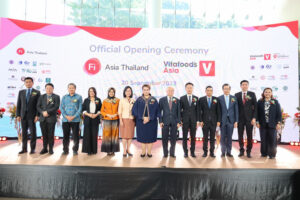
Key officials from Thailand and Southeast Asia opened Fi Asia Thailand and Vitafoods Asia last Sept. 20. Among the guests of honor is Department of Trade and Industry Undersecretary Blesila A. Lantayona (fourth from left in photo).
Philippines’ place in international market
The Philippines was represented by both the government and the private sector as visitors in the two exhibits.
From the government side, the delegation was led by Blesila A. Lantayona, Department of Trade and Industry’s (DTI) undersecretary leading the Regional Operations Group. She also graced the opening ceremony together with other key officials in Thailand and Asia.
She shared after the ceremony that the DTI is looking into how the two trade events can benefit the Philippine food industry, from suppliers of raw materials to buyers who seek to expand their network of suppliers.
“We have to see what the market really requires and what are the opportunities for our MSMEs,” Ms. Lantayona said.
The Philippine delegation was also looking for technologies showcased during the events that can be adopted into the country, particularly those involving the transformation of raw materials into products that do not compromise their quality (i.e., keeping okra green even after it is dried).
“[Thailand is] quite advanced in terms of science, technology, and innovation, converting raw materials particularly food into value-added materials or finished products,” she observed.
She added that while the technology is “already there,” several problems such as acquisition, cost, and availability are hindering the adoption of those in the country.
Representatives from Philippine pharmaceutical companies were also present. Benson Sian, chief executive officer and founder of Nattural Quality Corp., shared that the exhibitions inspire companies like theirs to benchmark themselves in light of the current landscape and rethink how they can further position their products to serve their markets better.
“I’d like to know where we are in relation to all other products, and this gathering provides us that opportunity to learn,” Mr. Sian shared during the first day.
Mr. Sian also shared that for Filipino brands, particularly in their industry, to become competitive in the international space, they have to work hard in effectively positioning their products.
“We have an asset. We have over 10 million Filipinos overseas,” he continued. “They’re not just OFWs. They’re decision-makers; they’re influencers and potentially [evangelists] of Filipino products. That’s something we can be proud of.”
Mr. Sian also sees potential even here at home, particularly in industries like business process outsourcing, with whom Nattural can partner in promoting health supplements to support better lifestyles and, in turn, helping professionals prolong their careers.
“Health has a lot of bearing on the sustainability of one’s career,” Mr. Sian stressed.
The next Fi Asia event is set to be held in Jakarta, Indonesia next year, while the next edition of Vitafoods Asia is still intended to be held in Thailand.
By Chelsey Keith P. Ignacio, Special Features and Content Senior Writer
Technologies are being incorporated in nearly every aspect of people’s lives at present. From connecting to other people, working or learning, or even availing services such as banking and healthcare, a lot of activities can now be undertaken in the digital space. Even so, physical devices are needed to access these digital services. And with more innovations rapidly emerging, many old technologies are being discarded to make room for new ones.
However, this could result in a problem with electronic waste (e-waste). The generated waste stream from thrown out electrical and electronic equipment hold hazardous and valuable materials, according to the United Nations (UN). In its Global E-Waste Monitor from 2020, the UN reported that the Philippines is among the top producers of e-waste in Southeast Asia, with an estimated 3.9 kilogram of e-waste per capita in 2019.
But this record was before the pandemic. In 2020, the coronavirus disease 2019 (COVID-19) crisis spurred digital transformation amid the restricted mobility to curb the situation. As such, many organizations and people began to further embrace digital technologies.
Amid the rise of reliance on such devices, an opportunity was generated to come up with a recycling solution to deal with unused technologies, particularly in households in Australia. This led to the development of tech recycling startup ZOLO there in 2020.
“In light of COVID, the demand for technology and the fact that there isn’t really a solution for households as to what to do with old technology. We started the business from that insight, and that propelled us to explore it a bit further,” ZOLO CEO and Founder Franz Phillip Siasat told BusinessWorld in an interview.
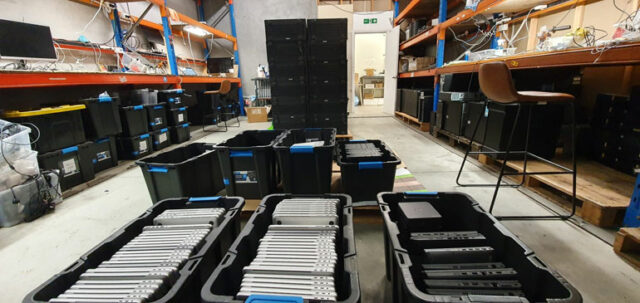
Started out with a Facebook campaign to encourage Australians to declutter for good and going house to house in Sydney to gather these old technologies, ZOLO has grown as a purpose-led startup trusted by brands such as Canva, Dyson, and Bank Australia for tech recycling.
“What we have established here in Australia, we have created a solution for businesses to get rid of their tech in a way that’s sustainable, secure, and good for the company as well,” said Mr. Siasat.
ZOLO will soon extend such a service to the Philippines by setting up a tech recycling facility in Santa Rosa, Laguna this year. By introducing its tech recycling solution to the country, the startup could create several benefits both for Filipino businesses and communities.
The startup contributes to sustainability by employing a circular approach, that is by refurbishing technology to give it a new life instead of ending up in the landfill. And for security, it uses a military-grade data destruction process to ensure that these old technologies would have their data deleted and unable to be retrieved.
It also came up with a platform for companies’ information technology teams to deal with their e-waste. The Zolo Single Touch streamlines this management for businesses by simply uploading their e-waste inventory, and then Zolo handles the rest of the complex processes.
The software also comprises a feature where businesses could have a look at their environmental impact, including real-time data on e-waste averted from landfills and an estimate of carbon emissions prevented, among others.
Businesses could benefit further through the rebate program that allows them to maximize the value of their eligible old devices, which could be spent for procuring new technologies.
“It’s an Australia first; it’s a Philippine first as well. So, I’m excited to launch that, and some of the partners that we have in the Philippines are very excited to introduce that to their teams as well.” Mr. Siasat said.
In addition, as its tech recycling solution supports businesses, ZOLO also enables further accessibility to technology among other people.
“What we’re passionate about and what works for us as a business as well is creating opportunities for other people to have access to technology. And that’s by working with companies, securing their old tech, and recycling it in a way that creates a platform for other people to be able to access technology in a more cost-effective way,” Mr. Siasat said.
Still, the ZOLO Founder never would have imagined that they would help solve the digital divide problem if he were to be asked years before.
“But I think that’s the beauty behind the platform that we’ve built, and also the market that we’ll soon be operating in, which is in the Philippines,” he said. “[There are] plenty of opportunities to implement new solutions to potential problems that we could solve as a company because that’s the most important thing for us.”
“Whilst we are a business, we use our platform and business to be a force for good, and that’s kind of our approach as well when we work with other partners,” he continued.
Mr. Siasat said he looks forward to building partnership and community, and creating something that can engage the community as ZOLO will soon kick off its operations in the Philippines.
Green Rebel founders Max Mandias (left) and Helga Angelina Tjahjadi (right)
Green Rebel, an alternative protein startup founded in Indonesia that offers whole-cut plant-based meat and dairy-free cheese options, announced its expansion into the Philippines, marking a significant step towards its mission of revolutionizing the Asian plant-based dining landscape.
The company’s innovative approach focuses on crafting mouth-watering plant-based meat and chicken, as well as melting dairy-free cheese and condiments — delivering delicious and sustainable alternatives to traditional animal-based products.
Green Rebel, co-founded in 2020 by long-time vegans Helga Angelina Tjahjadi and Max Mandias, who also own Burgreens, Indonesia’s largest plant-based eatery chain, is driven by a powerful philosophy of providing healthy, affordable, and delicious plant-based meals to Asian consumers seeking flexitarian (flexible vegetarian) and plant-based alternatives.
By encouraging individuals to embrace healthier and greener choices, Green Rebel not only caters to diverse dietary preferences but also fulfills its commitment to reducing the negative impact of traditional animal agriculture on the environment.
Green Rebel offers a diverse range of plant-based products including Asian-inspired dishes such as Beefless Rendang, Chick’n Karaage, Chick’n Satay, to Cheddar Cheeze, and Asia’s first whole-cut steak made from plants.
With a wide range of products, Green Rebel takes pride in using wholefoods ingredients, such as shiitake mushrooms in its beefless range, non-GMO soy in its chicken category, and cashew in its dairy-free cheese & sauces.
All Green Rebel products are high in protein, rich in fiber, lower in saturated fat, and free from cholesterol. The meats are developed specifically for different Asian culinary applications and the flavored products are authentically Asian. All ingredients are sustainably sourced from the region with natural herbs from Indonesia.
In addition to its roots in Indonesia and successful expansion into the Philippines, Green Rebel has firmly established its presence across various Asia-Pacific regions, including Singapore, Malaysia, South Korea, and most recently, Vietnam.
As part of its expansion strategy, the company is working diligently to establish partnerships with various grocery stores, supermarkets, and select food service outlets in the country. Since it recognizes the importance of building a sustainable and efficient supply chain that can properly meet the increasing demand for plant-based alternatives, Green Rebel actively looks for partnerships and collaborations with local partners and stakeholders in the Philippines namely Santan by AirAsia; Tierra Café; Haribowl Vegetarian Kitchen; retailers Berdelish Imus Vegan Store, The Vegan Grocer, and real food; and e-commerce platforms EVE Grocer, Berdeeats, Mayani, and Vegore.
“According to ‘Charting Asia’s Protein Report’ — Southeast Asian countries like Indonesia and the Philippines will only be able to decarbonize by ending supply chain deforestation (importing soy and corn from Brazil and Argentina for animal feed), stopping the growth of animal protein consumption by 2030, and transitioning to alternative protein to 60% of total protein volume by 2060.
“Green Rebel’s venture into the Philippine market marks a significant milestone in our mission to create a more sustainable, healthy, and delicious future for all,” said Ms. Tjahjadi, adding that working with local partners can make plant-based food easily accessible across the country.
In alignment to its vision across Asia, Green Rebel hopes to give Filipinos accessible and healthy alternatives to their usual diets, as well as to offer several benefits which can positively impact their lives. Most notably, the plant-based meals and products offer a healthier alternative to traditional meat-based diets.
By promoting plant-based eating, Green Rebel can contribute to reducing health issues such as obesity, heart disease, and diabetes. Filipinos who adopt a more plant-forward diet may experience improved overall well-being and better nutritional intake.
As an artificial intelligence (AI)-enabled predictive platform, Betterteem Technologies, Inc. is on a mission to help Philippine business process outsourcing (BPO) companies mitigate unwanted employee resignations using AI, which is causing over $1 billion dent in the industry’s annual revenue.
With its recent graduation from Techstars in Israel, Betterteem has secured funding to further develop its technology to address a major talent pain point that impacts the growth of BPO companies in the Philippines.
“Our technology allows operation and human resource (HR) leaders to anticipate employee resignations before they happen,” said Founder and CEO Bo Discarga. “We digest massive amounts of employee data from the existing data of our client’s HR system, such as compensation, performance reviews, and individual job function, and their demographics, enabling us to deliver our prediction of people heading for the door.”
AI has the potential to assume a pivotal role in improving employee experience and predicting attrition volumes, thereby enhancing resource demand planning. AI can detect early indicators of employee dissatisfaction, resignation intents, and recommend training requirements, enabling proactive intervention.
Now operating in the Philippines and South Korea, Betterteem is greatly focusing on mitigating unwanted employee resignations in the Asia-Pacific region. Betterteem AI concentrates on launching features and technologies that are focused on arming operation and HR leaders with data and insights that enable them to understand the underlying drivers of unwanted resignations in their organizations and model the results of the actions they are planning to take.
With a free trial, an AI-enabled technology, and an employee benefits app, Betterteem is helping BPO companies enhance employee experience, and predict unwanted resignations, resulting in improved employee retention.
Venture capital firm 500 Global announced earlier in September the successful close of US$143 million across its largest Southeast Asian early-stage fund to date, 500 Southeast Asia III, L.P. (500 SEA III), and its growth investment vehicle for Southeast Asia. The new early-stage and growth vehicles demonstrate the team’s commitment to supporting founders in Southeast Asia from pre-seed to pre-IPO.
Limited partners (LPs) across its early-stage and growth investment vehicles include a sovereign wealth fund, public and private pension funds like Khazanah Nasional Berhad; Kumpulan Wang Persaraan (Diperbadankan), or KWAP; and Employees Provident Fund (EPF). A university endowment, family offices of prominent global investors, and portfolio companies valued at over US$1 billion from 500 Global’s first Southeast Asia early-stage fund have invested as LPs as well.
500 SEA III is 500 Global’s third Southeast Asia-focused early-stage fund, with each successive fund having nearly doubled in size since 2014. Originally targeted for US$75 million, 500 SEA III closed at US$100 million with over half of the fund coming from returning LPs.
The early-stage fund will focus on investing in businesses and AI-enabled technologies that advance rural digitalization, sustainable cities, human and machine productivity, healthcare, food security and financial inclusivity. 500 SEA III aims to invest in 100 pre-seed to Series A startups, providing first checks between US$250,000 and US$500,000 across Malaysia, the Philippines, Vietnam, Thailand, Singapore, and Indonesia.
Hazman Hilmi Sallahuddin, chief investment officer of Malaysia’s KWAP, said that its investment in 500 Global began in the latter’s early days through its second Southeast Asia early-stage fund.
“500 Global has since grown considerably in strength to a multi-stage investment platform and remains instrumental in securing co-investment opportunities for KWAP,” he said. “We are encouraged by its efforts in developing the regional venture capital ecosystem, and look forward to the successes that our ongoing collaboration will bring in optimizing KWAP’s investment returns.”
Dato’ Amirul Feisal Wan Zahir, managing director of Khazanah Nasional Berhad, added that in line with their fund’s Future Malaysia Program they are “excited about their potential to facilitate the market expansion of startups via their Southeast Asia platform, with the anticipation of creating new global champions.”
500 Global’s past Southeast Asia investments have included US$5 million-US$20 million checks in Series C to D rounds of portfolio companies such as Carousell, Carsome, and, most recently, eFishery. Also, 500 Global has in the past invited their LPs to co-invest alongside them in select opportunities. The team is expanding its growth investing capabilities with the new vehicle.
“We have seen our platform produce a pipeline of high-quality growth stage opportunities which we can underwrite with the added diligence of knowing the companies and founders over the years,” Vishal Harnal, managing partner at 500 Global, shared. “While we developed our growth stage capability investing over the years, we have also added resources and new partners in line with our aim to support founders from pre-seed to pre-IPO.”
Christine Tsai, CEO and founding partner of 500 Global, added that their firm, with a global portfolio of over 2,800 companies across more than 80 countries, believes that founders in Southeast Asia will benefit from “one of the few truly global venture platforms with deep local roots and in-market expertise.”
“We’re confident that with access to insights, connections, and capital, this can help the next generation of Southeast Asian founders build global tech giants,” she added.
In an unforgettable night of music, the Watsons Playlist Concert made history as it brought together three of the Philippines’ biggest music sensations in a single concert. The concert featured Ben&Ben, SB19, and Zack Tabudlo, and it was nothing short of a success. Fans and the community alike are still rejoicing in the aftermath of this concert.
Ben&Ben
The energy on stage was palpable, and fans relished the excitement. The highlight of the night was the first-ever live performance of “MAPA,” a heartwarming song that struck a chord with everyone present.
SB19
To make the event truly exceptional, Watsons went the extra mile to engage the audience with interactive segments. From sponsored segments, to engaging artist merch giveaway challenges, fans were not only spectators but active participants in the experience.
Zack Tabudlo
This concert once again showcased Watsons’ commitment to providing exciting experiences for its customers. Beyond its outstanding range of products, Watsons continues to foster a sense of community among its patrons, going beyond the traditional role of a retail brand. The Watsons Playlist Concert, an exclusive event for Watsons Club Members, is their way of saying thank you to the community and rewarding them for their support.
With the success of this musical event, fans can’t wait to see what Watsons has in store for them next. Stay tuned for more exciting offerings from Watsons and keep the feel-great vibes alive!
In the words of the concertgoers, “This was a night to remember,” and “I’m already looking forward to the next Watsons event.”.
Spotlight is BusinessWorld’s sponsored section that allows advertisers to amplify their brand and connect with BusinessWorld’s audience by enabling them to publish their stories directly on the BusinessWorld website. For more information, send an email to online@bworldonline.com.
Join us on Viber at https://bit.ly/3hv6bLA to get more updates and subscribe to BusinessWorld’s titles and get exclusive content through www.bworld-x.com.
Philippine annual inflation in September is expected to settle within the range of 5.3% to 6.1%, the Bangko Sentral ng Pilipinas said. — PHILIPPINE STAR/EDD GUMBAN
By Keisha B. Ta-asan, Reporter
INFLATION likely quickened in September due to pump price hikes, higher electricity rates, and the peso depreciation against the dollar, analysts said.
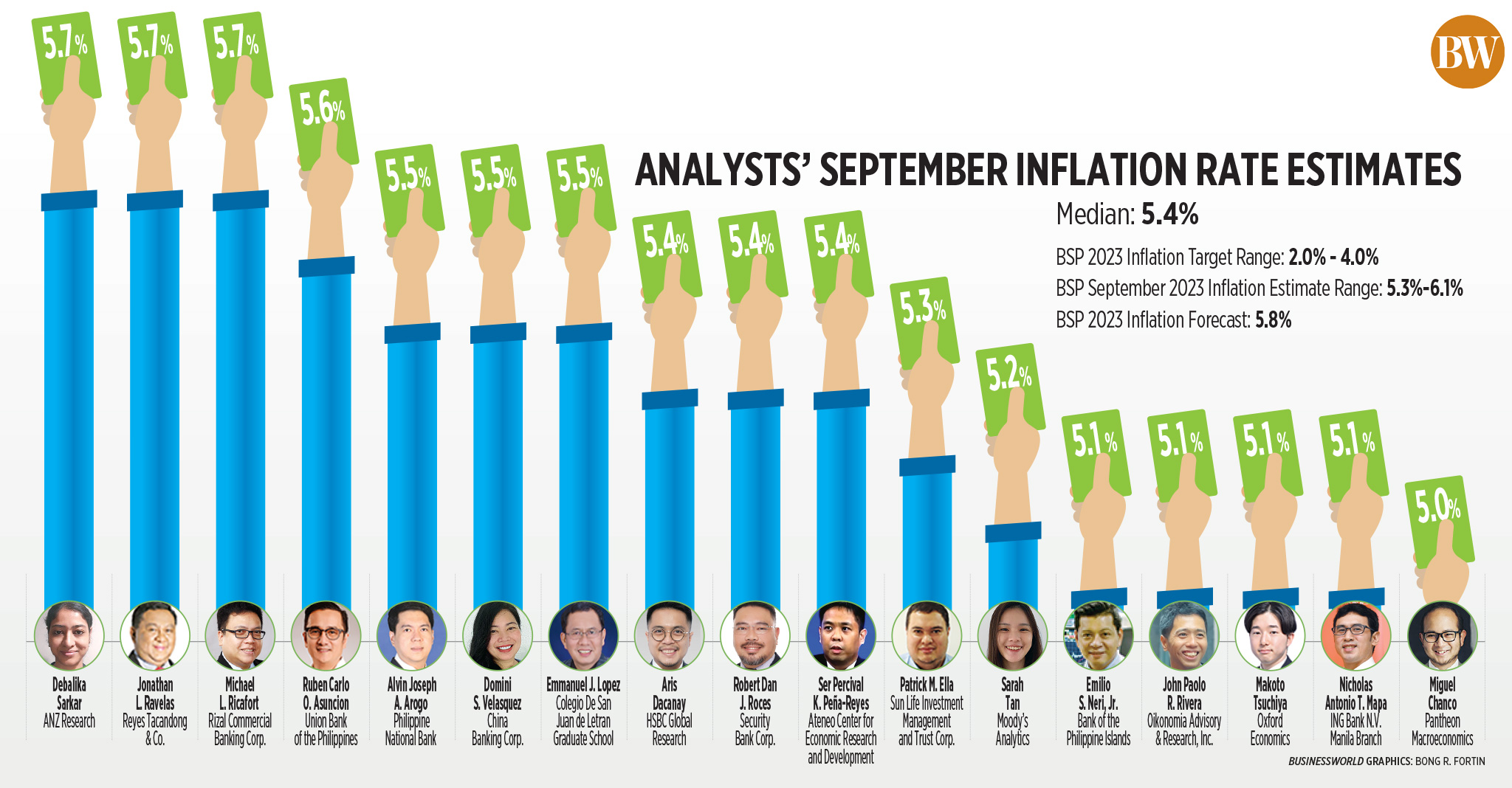
A BusinessWorld poll of 17 analysts yielded a median estimate of 5.4% for September inflation, at the low end of the 5.3-6.1% forecast of the Bangko Sentral ng Pilipinas (BSP).
If realized, September inflation would beslightly faster than the 5.3% print in August, but lower than 6.9% in the same month in 2022. It would also be the highest print in four months or since 6.1% in June.
Inflation in September will likely breach the central bank’s 2-4% target range for the 18th straight month.
The Philippine Statistics Authority (PSA) is scheduled to release the latest consumer price index (CPI) data on Oct. 5 (Thursday).
“Higher prices of fuel, electricity, and key agricultural commodities, as well as the peso depreciation are the primary sources of upward price pressures in September,” the BSP said in a statement on Friday.
“Meanwhile, lower rice and meat prices could contribute to downward price pressures for the month,” it added.
In September alone, oil companies raised pump prices for gasoline by P2.50 per liter, diesel by P3.90 per liter, and kerosene by P0.80 per liter.
Customers of Manila Electric Co. (Meralco) saw higher electricity bills in September after the overall rate went up by P0.5006 per kilowatt-hour (kWh) to P11.3997 per kWh.
HSBC economist for ASEAN (Association of Southeast Asian Nations) Aris Dacanay said electricity rates rose more than 4% in September, reflecting the higher energy import bill due to the depreciation of the peso against the dollar.
The peso finished trading at P56.575 per dollar on Friday, gaining 40.5 centavos from its previous close of P56.98. In September alone, the peso has slightly strengthened by two centavos or 0.03% from its Aug. 31 finish of P56.595.
However, China Banking Corp. Chief Economist Domini S. Velasquez said higher electricity rates from Meralco may have been offset by lower rates in other provinces like Batangas, Pampanga, and Bohol.
She noted that prices of fish and fruits remained elevated last month and increases in cooking gas prices may have also added to upward inflationary pressures in September.
Cooking gas prices rose by P6.65 per kilogram in September, marking the second straight month of price hikes.
“On a positive note, rice and vegetable prices, which were the primary drivers of food inflation in August, eased due to the mandated rice price cap and relatively favorable weather (i.e., no strong typhoons this month),” Ms. Velasquez said.
Sarah Tan, an economist from Moody’s Analytics, noted that rice prices have cooled due to the imposition of a price ceiling in early September. The spike in rice prices was one of the main drivers of inflation in August.
“Notably, the average price of locally produced regular milled rice in Metro Manila has fallen about 20% from its end-August peak,” Ms. Tan said.
Starting Sept. 5, the Marcos administration imposed a price ceiling of P41 per kilo for regular milled rice and P45 per kilo for well-milled rice.
Meanwhile, core inflation may have settled at 5.9% in September, Ms. Velasquez said.
If realized, this would be lower than the 6.1% print in August. It would also be the first-time core inflation fell below the 6% level since the 5.9% print in October 2022.
“We won’t be surprised if higher oil prices have spilled over to core (inflation) already,” Bank of the Philippine Islands Lead Economist Emilio S. Neri, Jr. said.
For the rest of the year, ANZ Research economist Debalika Sarkar said global oil prices may remain elevated amid tight supply.
“While some effort has been made to stabilize domestic food prices, domestic retail pump prices continue to adjust to global oil price movements,” she said. “The low oil inventory also implies a faster pass-through in the absence of adequate fiscal controls.”
Ms. Sarkar said another round of transport fare hikes, which may be implemented in November, could further add upward pressure on inflation.
“Overall, we do not see the monthly inflation print falling back below 4% year on year this year,” she said.
The BSP earlier said it still sees inflation falling within the 2-4% target in November, but raised its average inflation forecast for 2023 to 5.8% (from 5.6% previously).
Philippine National Bank economist Alvin Joseph A. Arogo said it is still possible for the headline print to fall within the target by fourth quarter if inflation will not accelerate past 5.5% in September.
“However, the risk to this view is elevated due to El Niño, typhoons, oil production cuts, and prolonged Russia-Ukraine war,” Mr. Arogo said.
On the other hand, Patrick M. Ella, economist at Sun Life Investment Management and Trust Corp., said inflation may return to the 2-4% target range by the first quarter next year instead, and not in the fourth quarter as previously expected.
A surge in consumer spending ahead of the holiday season in the fourth quarter may put the 2-4% target range out of reach, Colegio de San Juan de Letran Graduate School Associate Professor Emmanuel J. Lopez said.
Barring any new shocks, Ms. Velasquez said inflation is still on track to return to the 2-4% target band in the fourth quarter.
“Hence, we think that the BSP can still keep its policy rate on hold at 6.25% this year, especially if third-quarter GDP (gross domestic product) comes out weaker than anticipated,” she said.
The PSA will release the third-quarter GDP data on Nov. 9.
The Monetary Board has kept its key interest rate at 6.25% for a fourth straight meeting last month. This was after it hiked policy rates by 425 basis points from May 2022 to March 2023.
Ms. Velasquez noted that recent supply shocks to inflation could be addressed by non-monetary measures.
“However, we are cognizant that another rate hike in November is a live possibility if the peso weakens further given another Fed rate hike,” she added.
The US Federal Reserve earlier signaled it would keep rates higher for longer, even as it opted to keep the target Fed funds rate unchanged at 5.25-5.5% at its meeting last month.
The Fed’s next meeting is from Oct. 31 to Nov. 1, while the BSP is scheduled to discuss policy on Nov. 16.








 Expansive platform for F&B ingredients
 Showcasing growing nutraceuticals space