Home Blog Page 4230

Rare Aztec ritual offerings put on display in Mexico exhibit

REUTERS

MEXICO CITY — A museum exhibit displaying Aztec ritual offerings dug up from underneath downtown Mexico City opened on Friday in a first-ever showcase that offers new insight into pre-Hispanic art and religious practices.

The artifacts, all crafted from wood, include finely carved masks, sculpted scepters believed to have been wielded by ancient gods, and weapons that were buried with sacrificed animals dressed as deities and warriors, both male and female.

Reuters gained exclusive access to the exhibit at the Mexican capital’s Templo Mayor Museum before it opened.

Most of the pieces on display were excavated from the ruins of the Aztecs’ holiest shrine, now adjacent to the museum. Many were found in sealed stone boxes, buried over five centuries ago.

“These are very fragile objects, very delicate,” said exhibit curator Maria Barajas, standing next to a lineup of small carved masks. “(Many) of them show warriors that died in battle,” she said. “You can see their eyes are half open, even the mouth is open.”

Most wooden artifacts quickly decompose and can only withstand the test of time with constant temperature and moisture levels, Ms. Barajas said.

Preserving them involves replacing the remaining moisture inside the wood with synthetic sugars so the artifacts do not disintegrate, a process that can take up to a year. The exhibit’s displays are also equipped with strict humidity controls.

Traces of original paint can still be seen on some of the artifacts, including a piece carved from copal resin that features wooden adornments painted in blue and depicting a mythical helper of the Aztec rain god Tlaloc. It holds a serpent scepter evoking the crack of lightning on one side, and a tiny water jug on the other.

“When they wanted to make it rain, (they) break the jars with the scepter and the water pours out,” said exhibit curator Adriana Sanroman, who is also head of restoration for the ongoing Templo Mayor excavations.

Another pair of scepters include tiny life-like hands that Ms. Sanroman says belonged to the god of death, Mictlantecuhtli.

“This is a god that’s (usually shown) in a state of partial decomposition, partially fleshless, and so he carries body parts here and there,” she said.

Along with the latest additions, the exhibit also features well-known Aztec wooden masterpieces on loan from other museums, including an exquisitely carved drum and a life-size sculpture depicting the god of pulque, the Aztecs’ favorite alcoholic drink.

Even though the Aztecs were known as fierce warriors before falling to Spanish invaders and their native allies in 1521, only one original Aztec sword survives.

The sword, also on display in the exhibit, is a flat wooden club with a groove where razor-sharp obsidian — a type of volcanic glass — would have been wedged in.

Stressing the artifacts’ fragility and scarcity, museum director Patricia Ledesma said the new exhibit gives a glimpse into an ancient world where wood was routinely transformed into high art.

“This allows us to begin to realize the sheer magnitude of all the marvelous things pre-Hispanic hands could do with this material.” — Reuters

Globe aims to use renewables for more facilities

GLOBE Telecom, Inc. said it targets to shift more of its facilities to renewables as part of the company’s commitment to sustainability.

“We do have a target in terms of which sites we can enroll in GEOP (green energy option program). This year, we enrolled seven or eight sites, next year we are targeting seven or more cell towers,” Raymond Aguilar, Globe vice-president for enterprise and corporate management, told reporters on the sidelines of the Globe Energize 2023 event on Tuesday.

Launched in 2018, GEOP is a voluntary policy mechanism that allows users consuming at least 100 kilowatts to source power from qualified electricity retailers supplying renewable energy.

So far, Globe has 26 facilities that are powered by renewable energy (RE), Mr. Aguilar said.

“Since 2019, we’ve been transitioning our corporate sites into RE. Since then, we have transitioned around 26 sites to RE. This 26 includes facilities and cell towers,” he said.

The listed telecommunications company said it would continue pursuing climate action strategies such as its target to cut greenhouse gas emissions by 50% by 2030 and achieve net zero by 2050.

Earlier, Globe said its other RE-powered sites are located in Makati, Quezon City, Caloocan, Taguig, Mandaluyong, San Juan, Manila, Marikina, Cavite, Laguna, Batangas, Tarlac, and Cebu. — Ashley Erika O. Jose

HMO industry posts P1.19-B net loss in the first semester

BW FILE PHOTO

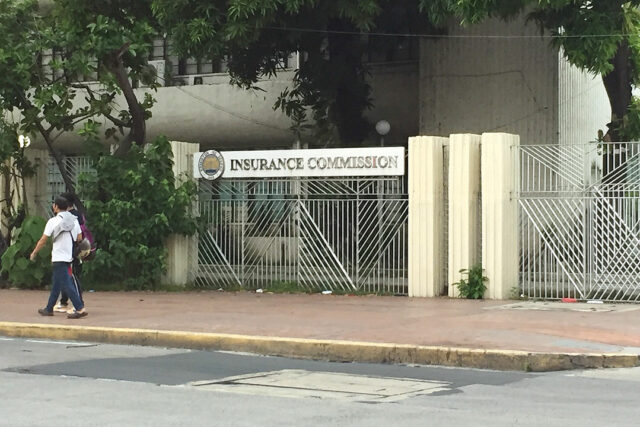
THE HEALTH maintenance organization (HMO) industry posted a P1.19-billion net loss in the first semester, data from the Insurance Commission (IC) showed.

The net loss recorded in the period was a reversal of the industry’s P1.18-billion net profit in the same period last year, IC data based on the unaudited interim financial statements submitted by 28 out of 29 HMOs showed.

The HMO industry’s net loss came even as total revenues rose by 14.71% year on year to P32.14 billion from P28.02 billion. Of the total, fees from memberships, enrollees, and administrative services comprised P31.21 billion, up 12.98% from P27.63 billion a year ago.

Total capital stock rose by 21.12% to P5.65 billion from P4.67 billion.

Benefits and claims paid out by the industry increased by 32.69% to P26.22 billion at end-June from P19.76 billion in the same period last year.

Total expenses increased by 24.1% to P33.32 billion from P26.84 billion previously.

Meanwhile, the sector’s invested assets dropped by 25.51% to P18.68 billion from P25.08 billion.

The total assets of HMO companies went down by 2.92% to P61.76 billion at end-June from P63.61 billion last year.

Meanwhile, total liabilities went up by 3.88% to P51.45 billion from P49.52 billion.

The industry’s total equity dropped by 26.83% year on year to P10.31 billion from P14.09 billion last year.

Of the 29 active HMOs, 11 posted net losses in the first half, the IC data showed.

Meanwhile, Aveda Managed Care, Inc. booked a net income of P81.12 million in the first half to lead the industry, followed by Philhealth Care, Inc. with P31.42 million. Health Maintenance, Inc. posted net earnings worth P16.28 million, Wellcare Health Maintenance, Inc. had P16.05 million, and Life & Health HMP, Inc. booked a net income of P12.58 million. — AMCS

Uniting Philippine society in securing our maritime interests

A PHILIPPINE COAST GUARD personnel cuts the rope connecting the floating barrier that was installed by the Chinese near the Scarborough Shoal in the South China Sea, in an undated handout photo released on Sept. 25, 2023. — PHILIPPINE COAST GUARD/HANDOUT VIA REUTERS

Accounts of the audacity of the Chinese in our territorial seas are becoming all too familiar. Last week we heard about how the Chinese Coast Guard put floating barriers in the waters off Panatag Shoal. We noted with relief that our officials decisively ordered the removal of these barriers.

This was not the first such incident this year. In February, the Chinese pointed a military-grade laser at one of our boats, causing a Philippine Coast Guard (PCG) officer to temporarily go blind. In August, they fired water cannons at our vessels that were on a resupply mission to the BRP Sierra Madre off Ayungin Shoal. Notwithstanding widespread condemnation from Philippine officials and other countries, succeeding resupply missions to the Sierra Madre remained marked by the menacing maneuvers of Chinese boats. And then, toward the end of August, China released a “new standard map” that used a 10-dash line to lay claim to vast areas of the South China Sea, including the West Philippine Sea. This completely disregards the 2016 ruling of the Permanent Court of Arbitration that China’s nine-dash line has neither legal nor historical basis.

These gray zone operations perpetrated by an expansionist, hegemonically ambitious, and antagonistic state are being addressed through a combination of initiatives — by our own defense forces, collaboration with other sectors in Philippine society, and through cooperation with like-minded states that respect the rules-based international order.

But these are not all.

Reports of the destruction of our coral reefs are equally alarming. They very clearly demonstrate the need to do something not only to defend our territorial integrity, but to secure our marine resources for this generation and those that will come after. The PCG has confirmed that Philippine coral reef systems, specifically the Rozul Reef and Escoda Shoal, have suffered great damage owing to destructive activities by foreign agents. We can now add coral harvesting as a manifestation of an expansive, aggressive, and rogue agenda that threatens peace, stability, and ecological balance in our waters.

I take heart in the comprehensively articulated vision of our National Security Policy Framework: “A free, resilient, peaceful and prosperous maritime and archipelagic nation, at peace with itself and its neighbors, enabled and protected by a reliable defense and public safety system.” Certainly, this covers our concerns about our coral reefs, with its implications on biodiversity, ecological balance, and climate change resiliency. Illegal coral harvesting as well as artificial island building are just some of the non-traditional security challenges, which we must learn to address through unconventional, innovative, and science-driven means.

A Stratbase-commissioned survey done by Pulse Asia in late 2022 reveals what Filipinos feel are the important reasons to strengthen our ability to defend and protect our seas: “To protect marine resources and the environment in Philippine territory” (53%), and “To protect the rights of peoples in the coastal communities” (22%).

This, I believe, provides a solid basis for the attention now being given to a wider range of maritime security issues, that include territorial integrity and sovereignty, but also environmental sustainability. The pronouncement of our government leaders — President Ferdinand Marcos, Jr., for instance, said that only the national interest will dictate the government’s foreign policy, and various officials have condemned China’s acts in the West Philippine Sea — strike at the heart of our patriotism. We must protect and defend what is ours and reject any attempts by others to encroach upon our territory that had already been established as ours alone. More than this, we must also be aware that in these seas lie our future, our symbiosis with nature, and the sustainability of all marine life in our territory.

Clearly, this is a responsibility not restricted to government leaders. Our pursuit of maritime security highlights the need for a whole-of-society approach, because each actor and group have its own expertise that it brings to the table. Partnerships are not only desirable; they are necessary.

A week ago, the Stratbase ADR Institute held a forum that delved on how to implement a comprehensive Philippine maritime framework to advance the rule of law. Scientists and academics, policy makers, members of the military and of the diplomatic community joined us as we pieced together the various crucial components of maritime security that must be everybody’s business.

For example, we learned that scientists are putting resources to good use as they do their best to build a solid scientific foundation and body of knowledge about our seas. We were updated on the current efforts being undertaken by the scientific community as well as their policy recommendations. We were apprised of how exactly the military is responding to threats not only to our territorial integrity but also to our marine environment. We listened to the many ways we can learn from our international partners like Australia on how to build a resilient and sustainable future.

Indeed, the state, the private sector, and civil society all have their respective roles in this whole-of-Philippine society approach. The state and the private sector can undertake public-private partnerships on critical projects. Government and civil society organizations can collaborate to address human security issues and urgent national concerns. The private sector and civil society, for their part, can focus on investment-led and job-generating growth. Academics of course are using their expertise in ensuring that policies and other decisions have a sound empirical basis. The media can help by bringing the issue and clarifying it so that ordinary Filipinos would have greater awareness and knowledge of just how high the stakes are.

As we watch the news or read the papers and see yet newer reports of incursions into our precious seas, may we remember that the solution lies not in the military alone. Marine security is a civilian issue as well because it challenges and threatens our way of life. Our sustainable future hinges on what we do about this today.


Victor Andres “Dindo” C. Manhit is the president of the Stratbase ADR Institute.

Live Aid the musical coming to London decades after fundraising extravaganza

OLDVICTHEATRE.COM

LONDON — Live Aid, the transatlantic concert that raised millions for famine relief in Ethiopia, is being turned into a stage musical that will premiere at London’s Old Vic next year, the theater said on Monday.

Organized by rockers Bob Geldof and Midge Ure almost 40 years ago, Live Aid was watched by an estimated 1.5 billion people.

“If this musical encourages just one person to have a positive impact for the better, then it will be a job well done,” Mr. Geldof said in a statement on The Old Vic website.

He said he had watched the production develop. “I’m looking forward to seeing it… it better not be shit!” the famously outspoken singer turned campaigner turned entrepreneur added.

Just For One Day written by author John O’Farrell and directed by Luke Sheppard, will run at The Old Vic from Jan. 26 to March 30, 2024. The theater said the production had permission from the Band Aid Charitable Trust, which will get 10% from the sale of each ticket.

“For those of us who were around in the ’80s, Saturday 13 July 1985 I’m sure will be one of those days that is forever etched in our memories,” Old Vic artistic director Matthew Warchus said. “We all remember where we watched Live Aid, who we watched it with, and the pure amazement at the feat that was unfolding before our eyes.”

The show will feature songs by Bob Dylan, David Bowie, Queen, The Who, Paul McCartney, Elton John, The Boomtown Rats and others who appeared at the concert that was held simultaneously at London’s Wembley Stadium and the John F. Kennedy Stadium in Philadelphia.

It came the year after Mr. Geldof and Mr. Ure called in a choir of pop stars to record the Band Aid single “Do They Know It’s Christmas?” to raise money to help people caught up in the famine spreading in Ethiopia. — Reuters

AboitizPower: Focus on affordability and reliability in energy transition

ABOITIZPOWER.COM

RELIABILITY and affordability of power should be the priority in the transition to renewable energy, Aboitiz Power Corp.’s (AboitizPower) finance chief said, while calling for an upgraded electricity transmission grid to attract investments.

“The realistic pace to do transition is underscored by the available technology that allows you to do it in a reliable and affordable way. Given what is available today, we believe what is realistic is a practical and gradual approach that will allow for technology development,” AboitizPower Senior Vice-President and Chief Finance Officer Liza Luv T. Montelibano said in a media release.

“If we really want to hasten the transition, a lot of the support has to go into [the] development of technology. Once it’s economically viable, I think the rest will fall into place,” she added.

As the country shifts to renewable energy, liquefied natural gas would serve as a transition fuel in the near term to gradually displace coal, Ms. Montelibano said.

She said that “the existing capacities play the role of buying time to keep the grid stable, so that renewable and low-carbon technologies can develop.”

Meanwhile, Ms. Montelibano said that there is a critical task to develop the energy transmission sector as “there is no transition without transmission.”

“Delayed transmission projects have plagued the industry for a long time. We have a history of stranded capacities because the transmission was not there [due to a] long development cycles,” she said.

She added that the country’s power grid should be upgraded to “accept more variable renewable energy without compromising the stability of the whole power system.”

AboitizPower has a 10-year growth strategy of growing its renewable energy assets to reach 4,600 megawatts by 2030.

“The next goal for AboitizPower is to [further expand] its megawatts and to shift its portfolio mix to 50:50 [thermal and renewables] by end-decade, very much aligned to what the energy trilemma is trying to address in terms of security, equity, and sustainability,” Ms. Montelibano. — Sheldeen Joy Talavera

Central bank deploys more coin deposit machines across Luzon

BW FILE PHOTO

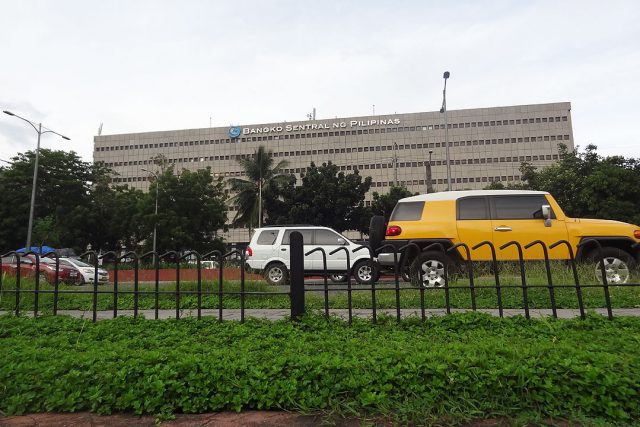
THE BANGKO SENTRAL ng Pilipinas (BSP) has deployed more coin deposit machines (CoDMs) across Luzon, bringing the total to 19, closer to its target of 25 units this year.

The BSP said on its website that it has deployed a total of 19 units in different retail establishments across Metro Manila and nearby provinces.

These units are located in SM City Taytay, SM City Grand Central, SM City Marilao, SM City Fairview, SM City North Edsa, SM City San Lazaro, SM Megamall, SM City Bicutan, SM Bacoor, SM Southmall, SM Sucat, and SM Hypermarket FTI.

More machines were also deployed in Robinsons Place Metro East, Robinsons Place Novaliches, as well as Robinsons Galleria.

The BSP has collected over P87.4 million worth of coins since the launch of its CoDMs in June, it said.

Over 20,000 transactions were recorded in the past three months. The coins deposited into the machines were mostly credited to customers’ e-wallets, while the rest was exchanged for shopping vouchers, the central bank said.

The BSP began deploying CoDM units in June this year in partnership with Filinvest Lifemalls Corp., Robinsons Supermarket Corp., and SM Retail, Inc. Two units were initially deployed at the SM Mall of Asia, one in Robinsons Place Ermita, and one in Festival Mall in Muntinlupa City.    

The value of coins deposited in CoDMs may be credited to the depositor’s e-wallet account or converted into a shopping voucher for over-the-counter transactions.

All denominations of the BSP Coin Series and New Generation Currency Coins Series are accepted by the CoDM. Unfit and demonetized coins, foreign currency, and foreign objects are rejected by the machine and returned to the depositor.

BSP Deputy Director of the Greater Manila Regional Office Jann Ryan D. Jose said in a television interview last month that the machines were launched to help improve the circulation of the currency.

“Based on data as of April 2023, about 39 billion pieces of coins are in circulation. About 19 billion pieces of these coins are lower denominated currency such as centavos,” he said in Filipino. “So, there’s a lot of coins in circulation, but they are not being circulated properly.” 

He added that the public must be careful about using the coin deposit machines, as some foreign objects can cause the units to jam. 

“If we want the BSP to extend [the time for the project], we should use the machines properly and regularly use our coins. We’re encouraging all Filipinos to further support the BSP’s coin recirculation programs,” he said.

Mr. Jose added that the project will run for two years, and the BSP will assess the effectiveness of the machines in recirculating currency. — K.B. Ta-asan

How FX intervention lost its taboo in Asia

8PHOTO-FREEPIK

YOU KNOW the dollar is brawny when intervention isn’t whispered or inferred, but spoken plainly. That’s now the case in parts of Asia, where, despite the fashionable chatter about decoupling, the greenback’s vigor is proving uncomfortable.

Interest-rate increases are a tried, though painful, method of stemming the retreat in regional currencies that’s caused by the Federal Reserve’s hawkishness. The yen lost 3.4% last quarter and closed in on the level that prompted the Ministry of Finance to wade into the market almost a year ago, while Indonesia is trying to attract foreign money into the rupiah. The Philippines isn’t disguising an aversion to the peso weakening much beyond P57 per dollar.

While Fed officials have expressed no real conviction about a further hike, they are emphasizing borrowing costs will be tight for longer. This isn’t
great for Asian bankers, who would prefer an approach to managing the local fallout that doesn’t smother growth.

The global economy is cooling and policymakers are wary of overdoing the tightening. That leaves wading into the market as a risky but plausible alternative. Once a fairly standard response to displeasing exchange-rate developments, the practice fell from favor prior to the pandemic. State transactions aimed at influencing the exchange rate’s direction have subsequently lost some of their taboo.     

It’s often asserted that intervention is bound to fail. There are, however, circumstances where it can be useful. The key to a good outcome is about more than knowing when to buy. Goals must be clear, and broader economic policy aligned. Without the latter, a satisfactory denouement can be elusive.

If the objective is to turn a pronounced exchange-rate decline into a sustained rally, intercession isn’t ideal. If the aim is slow things down and make bears think twice about their bets, then a tactical win by the government is possible. Even then, Asian authorities will probably need help from a friend called Jerome Powell. The Fed should make crystal clear that it’s done with hikes and repeat that message until enough people understand. New York Fed President John Williams took a crack during prepared remarks on Friday, but the point deserves amplification.

It’s worth looking at the case of the Philippines. Manila’s actions around a year ago, when the dollar was on a tear, are instructive. Rarely does a nation whose currency is under siege spell out a specific level that’s a no-go zone. But that is what Manila did, drawing a line at P60 per greenback. The specificity was surprising; not even big economic powers with reserve currencies like the eurozone, the UK, Japan, or even China, are so blunt.

The peso wasn’t alone in having a rough time. Japan bought yen for the first time in a generation, Switzerland abandoned an experiment in negative interest rates, while a collapse in the British pound destroyed a prime minister. The P60 line held. Was the Philippines particularly astute or did the archipelago just get lucky?

An under-rated speech by then-Fed Vice Chair Lael Brainard on Sept. 30, 2022, may have been crucial. Brainard, now the top economic adviser to President Joe Biden, acknowledged the risks of financial instability. She reiterated the Fed house view that inflation was too high and more hikes were needed, but emphasized “proceeding deliberately.” She foreshadowed the Fed’s switch from half-point and three-quarter-point increases to 25-basis point increments. The dollar calmed down, and 2023 was forecast to be relatively quiet.

But it hasn’t worked out that way. What is the Philippines response? Officials are signaling purchases of the peso at around P57 per dollar. The central bank isn’t dismissing the chance of an out-of-cycle rate hike. This might not eventuate, but holding out the prospect isn’t harmful to constraining the currency.

That’s why the yen was undercut when Bank of Japan Governor Kazuo Ueda spent his Sept. 22 press conference walking back remarks he made to the Yomiuri newspaper in early September. The interview was interpreted as an effort to support the currency by suggesting an end to negative rates as soon as December.

Japan is mostly out of the foreign exchange (FX) business these days after being active in the 1990s and early 2000s. There’s no surer sign that the “I” word is in the air than the appearance of Eisuke Sakakibara, the former top international bureaucrat at the Ministry of Finance. He earned the nickname “Mr.  Yen” for MOF’s willingness to intervene on his watch. Sakakibara told Paul Jackson of Bloomberg News that authorities will probably try to tough out this moment, provided the yen doesn’t slip to, say, ¥155 to the dollar.

The most interesting part of the interview was his view of what would turn the situation around. You guessed it: A shift in the Fed’s stance after the Federal Open Market Committee’s meeting in December, coupled with a possible rise in Japanese rates next year. That combination would open the door to a rally toward 130. Until then, it’s the Fed’s rate and everyone else must bear it. The grin is optional.

BLOOMBERG OPINION

From disaster to solution: Startup takes on climate change with intel platform

CUSTOMERS' OPERATIONS CENTER with Resilience Suite powered by Komunidad. — KOMUNIDAD.GLOBAL

By Miguel Hanz L. Antivola, Reporter

EFFECTIVE disaster management requires access to real-time data and a swift means of disseminating critical information — a realization that entrepreneur Felix R. Ayque had in the aftermath of Super Typhoon Yolanda, which wreaked havoc in Eastern Visayas in 2013.

Fast forward to 2021, and that realization turned into a solution called Komunidad, a software-as-a-service company specializing in weather and environmental intelligence services.

With Komunidad’s resilience suite, businesses and government units can tap into real-time climate data and localized early warnings. This data and analytics software equips them with the tools to monitor and anticipate climate-related risks and natural hazards, from typhoons to heatwaves, according to the company.

The mission was clear: to confront the challenges posed by climate change head-on, armed with actionable data, Mr. Ayque, founder and chief executive officer of Komunidad, said in an interview with BusinessWorld.

Situated in the Pacific Ring of Fire, the Philippines faces a multitude of natural hazards.

“If you are in the Philippines, you would focus on climate resilience in day-to-day operations like typhoons and flooding,” said Mr. Ayque, an information technology developer who has worked with various weather agencies.

“It could also be for long-term reporting purposes, client risk assessment, power demand forecasting, physical risk assessments, and even sustainability reporting,” he added, highlighting various industry use cases.

“For us, it’s mostly about using what is needed and what is best available.”

For the government, support for communities is crucial as only a small portion, or 36%, of Filipino households are fully prepared for natural disasters, according to a 2017 study by the Harvard Humanitarian Initiative.

Mr. Ayque also noted that providing social impact lies at the core of Komunidad, which is reflected in its name — mapping out resilience with adaptation and mitigation through technology.

Komunidad leverages sophisticated technology, including artificial intelligence, as a backend solution to deliver information through simpler channels like predictive alert text messages.

This approach ensures that critical climate data reaches a diverse audience, including farmers and fisherfolk, empowering them to make informed decisions in the face of environmental challenges, according to Mr. Ayque.

As the sole player in an emerging market, the company faces unique challenges, he also said.

“We believe that we already have enough data to become climate resilient, but using that data is the issue — we are not connected,” he said.

“We have a lot of bureaucracy in terms of connecting that data; there is no agency bridging the gaps,” he added.

The situation highlights the pressing need for efficient data management and sharing mechanisms. To achieve this, Mr. Ayque calls for collaboration between the government and the private sector.

“This is how we see the collaboration: governments improve the science and invest in infrastructure, but the private sector tailors solutions to industries, individuals, or whoever would benefit from it,” Mr. Ayque said.

EXPANSION
Recognizing that the ability to withstand natural disasters is a unique strength of Filipinos, Mr. Ayque saw an opportunity to export this talent.

“We believe that this is the best export of Filipino talent, being climate resilient,” he said. “We believe that we are the best to tell the world that we know all these things.”

The company has established an office in Singapore, strategically positioning itself to tap into the global market. It also plans to expand in Europe.

Presently, the company serves 24,000 villages in India and supports 1,500 farmers in Cambodia. “With that reach, we are very happy that it came naturally to us,” Mr. Ayque said.

Mr. Ayque also expressed optimism in the mainstream adoption of the climate tech market, bringing the hopeful trademark of the Filipino to the world at large.

“Having more players market even in this industry is better for the planet and for the world,” he said on embracing competition, overcoming climate vulnerabilities, and fueling public environmental consciousness.

Beyoncé’s concert film to be distributed globally by AMC

EN.WIKIPEDIA.ORG
EN.WIKIPEDIA.ORG

A FILM based on US pop star Beyoncé’s hit Renaissance World Tour is set to be distributed globally by a unit of AMC Entertainment, the company said, as cinema chains look to fill content gaps stemming from Hollywood strikes.

Beyoncé’s film is a theatrical production of the singer-songwriter›s global tour this summer, spanning 57 concerts across 40 cities in North America and 14 across Europe.

The film follows a similar release by pop superstar Taylor Swift, whose Eras Tour concert film will be distributed in cinemas in North America starting Oct. 13, and worldwide this month.

The concert films provide cinema chains such as AMC, Cinemark, and Cineplex, with high-profile titles to help fill gaps caused by a prolonged strike by actors and writers in Hollywood.

Renaissance: A Film By Beyoncé is set to play in the United States, Canada, and Mexico beginning Friday, Dec. 1, 2023, AMC said, adding that additional global cities would be announced later. — Reuters

INAEC secures top performance-based certification

INAEC Aviation Corp. has obtained ISBAO Stage-3 certification, the company said on Tuesday, claiming to have become the only air transport operator in the Philippines to receive such status.

“ISBAO was perfect for us to be able to benchmark ourselves and measure our improvements over Stage 1, 2, and 3 and be able to compare ourselves to the best international operators in the world. It was a way for us to look ourselves in the mirror and say that, ‘yes, we are a safe operation,’” Benjamin Jay R. Lopez, president of INAEC said.

ISBAO, or International Standard for Business Aircraft Operations, is an industry code of professional operational standards for the global aviation sector that was developed by the International Business Aviation Council.

The air transport operator said it secured the certification after it was able to prove that its management system is sustained and supported via a “continual improvement process.”

The Stage 3 of ISBAO accreditation is deemed to be the highest level in performance-based assessment.

“This entailed an in-depth examination of the systems, procedures, and processes of INAEC’s aircraft operations in relation to its safety management systems and the ISBAO program,” INAEC said.

“One of the additional results of our Stage 3 recognition is that it allows us in INAEC to have a platform of confidence to grow our business not just locally but even internationally. It’s a message not just to us, but even companies like us in the Philippines, that we can be world-class,” Mr. Lopez said. — Ashley Erika O. Jose

RBA pauses rates for 4th month as Bullock’s debut signals continuity

REUTERS

SYDNEY — Australia’s central bank held interest rates steady on Tuesday for a fourth month and showed no urgency to hike again, although it repeated a warning that further tightening might be needed to bring inflation to heel in a “reasonable timeframe.”

Wrapping up its October policy meeting, the first chaired by Governor Michele Bullock, the Reserve Bank of Australia (RBA) held rates at 4.10%, and said recent data were consistent with inflation returning to its 2-3% target over time with output and employment still growing.

Markets and economists had wagered on a steady outcome after a batch of economic data — including inflation, retail sales and job vacancies — did not materially change the interest rate outlook.

The Australian dollar slumped to a fresh 11-month low of $0.6315 after the rate decision, while markets moved to slightly reduce the chance of a hike in November to 36%, compared with 44% before.

A number of economists had looked for some change in the governor’s statement under Ms. Bullock, but it remained almost identical to the previous meeting and suggested the new central bank chief isn’t inclined to rock the boat.

“There was really very little in today’s statement, nothing really new in the statement. It is clear the tightening bias remains, but it is also clear given it’s been four steady rate decisions in a row that the hurdle to hike further is pretty high,” said Su-Lin Ong, chief economist at RBC Capital Markets.

“I don’t think Michele Bullock is all that different to Philip Lowe… They don’t really want to have to tighten any more and they’re prepared to tolerate a slower return to within target inflation.”

Ms. Bullock stressed that inflation, while still too high, is projected to come down and economic growth remained below trend despite the slightly stronger-than-expected first half outcome.

“Some further tightening of monetary policy may be required to ensure that inflation returns to target in a reasonable timeframe, but that will continue to depend upon the data and the evolving assessment of risks,” Ms. Bullock said.

Over the month, inflation ticked up as expected due to petrol prices, job vacancies tumbled from historically high levels and consumer spending stayed subdued, suggesting the rate hikes so far are working to cool demand in the economy.

Q3 INFLATION TEST
Some economists have penciled in a rate hike in November depending on the result of the third-quarter inflation report.

“Looking ahead, the September quarter inflation figures due this month will weigh heavily on the next meeting of the RBA Board,” said Pradeep Philip, head of Deloitte Access Economics.

“All eyes will be on whether every inflation data point is a nail for the RBA interest rate hammer.”

Overseas, a surge in global bond yields is also tightening financial conditions, lessening the pressure on central banks to hike further.

Indeed, global central banks, led by the US Federal Reserve, have started to slow their sweeping tightening campaign as inflation has come off alarmingly high levels. Yet, markets are betting that interest rates will stay higher for longer, with no rate cuts priced in next year for the RBA.

The RBA has jacked up interest rates by a whopping 400 basis points since May last year, and the latest assessment is that it sees a credible path where inflation can return to the bank’s 2-3% target band in late 2025 with the cash rate at 4.1%. — Reuters

ADVERTISEMENT
ADVERTISEMENT