Home Blog Page 3836

Peso may trade at P54-P57 this year on monetary easing bets

PHILSTAR FILE PHOTO

THE PESO is seen moving within the P54 to P57 level against the dollar this year amid expectations of monetary policy easing at home and in the United States, and with markets watching oil prices to anticipate inflation trends.

The local currency closed at P55.37 versus the dollar on Friday, appreciating by 11 centavos from Thursday’s P55.48 finish, data from the Bankers Association of the Philippines’ website showed.

Dec. 29 was the last trading day for 2023. For the year, the peso appreciated by 38.5 centavos or 0.7% from its P55.755-per-dollar close at end-2022.

Meanwhile, week on week, the peso gained three centavos from its P55.40 close on Dec. 22.

The peso appreciated against the dollar this year amid the decline in global crude oil prices, Rizal Commercial Banking Corp. Chief Economist Michael L. Ricafort said in a Viber message.

Easing crude prices could reduce the country’s oil import bill and narrow the country’s trade deficit, as well as help bring down inflation towards the Bangko Sentral ng Pilipinas’ (BSP) 2-4% target, Mr. Ricafort said.

For this year, the peso could trade between P54 and P57 versus the dollar, with oil price movements and their effect on inflation to be a main trading driver, he said.

The US Federal Reserve and the BSP’s possible rate cuts this year amid expectations of slowing inflation will also affect foreign exchange trading, he added.

BSP Governor Eli M. Remolona, Jr. last month said the central bank is unlikely to deliver any benchmark interest rate cuts in the next few months and is leaning towards keeping borrowing costs higher for longer.

The BSP will only begin policy easing if inflation settles within a “comfortable” range or the midpoint of its 2-4% target band, Mr. Remolona said.

The central bank raised borrowing costs by a total of 450 bps from May 2022 to October 2023, bringing the policy rate to a 16-year high of 6.5%.

Meanwhile, the US central bank last month kept borrowing costs unchanged at 5.25-5.5% for the third straight time. This was after it hiked policy rates by 525 bps from March 2022 to July 2023.

Markets expect the Fed to begin easing its policy stance as early as March, with investors penciling in cuts worth up to 150 bps this year.

“Despite persistence of current account deficits, more peso strength can be seen in 2024 as global easing cycles typically underpin EM (emerging markets) currency gains,” Bank of the Philippine Islands Lead Economist Emilio S. Neri, Jr. said in a Viber message.

The BSP will likely “cap the peso’s appreciation” and keep it at the P54 level as the difference between the Fed and the BSP’s key rates begin to widen, Mr. Neri added.

Still, the peso could climb to the P53 level if the Fed cuts earlier and by bigger increments than market expectations, Mr. Neri added.

For this week, Mr. Ricafort said the peso could trade between P55.20 and P55.70 per dollar. — AMCS

Stocks may rebound this year as rates go down

PHILIPPINE STAR/KRIZ JOHN ROSALES

PHILIPPINE SHARES may rise this year as a robust economic outlook and expectations of monetary policy easing could lift market sentiment, analysts said.

The Philippine Stock Exchange index (PSEi) ended at 6,450.04 on Dec. 29, the last trading day of 2023. This was down by 116.35 points or 1.8% from its 6,566.39 finish at end-2022.

The market took a “rollercoaster ride” in 2023, China Bank Capital Corp. Managing Director Juan Paolo E. Colet said in a Viber message.

“We peaked in January, trended down in February, went into a sideways pattern from mid-March to August, cratered and ultimately hit the year’s intraday bottom on the last day of October, after which the index staged a strong rally,” Mr. Colet said.

Still, even after a weaker year for the Philippine stock market, the PSEi may rebound this year and could even climb to as high as 7,500, Mr. Colet said.

“We expect Philippine equities to do well in 2024, primarily on the back of better macroeconomic data and a dovish shift in monetary policy. Other factors that could attract funds to the stock market are capital markets reforms as well as significant progress in steps to liberalize the economic provisions of the Constitution,” he said.

The Bangko Sentral ng Pilipinas (BSP) is widely expected to begin cutting benchmark interest rates this year to keep a healthy differential with the US Federal Reserve.

However, BSP Governor Eli M. Remolona, Jr. last month said the central bank is unlikely to cut borrowing costs in the next few months and is leaning towards keeping rates higher for longer.

The central bank raised benchmark interest rates by a total of 450 basis points from May 2022 to October 2023, bringing the policy rate to a 16-year high of 6.5%.

The index could retest the 6,700 to 7,000 levels this year, Rizal Commercial Banking Corp. Chief Economist Michael L. Ricafort added in a Viber message.

“The PSEi could rebound in 2024 and could be positively affected by and play catch up with the bullishness in the United States and other major global stock markets,” Mr. Ricafort said. 

“For early 2024, there is a good chance for start of the year gains amid the possible tail end of the Santa Claus rally on Wall Street,” he said. 

However, investors could remain cautious during the first trading week of the year amid a lack of catalysts, Philstocks Financial, Inc. Senior Research Analyst Japhet Louis O. Tantiangco said in a Viber message.

December inflation data to be released on Friday could drive trading in the coming days, he said.

“An inflation print lower than the preceding month’s 4.1%, especially one which is near the lower end of the BSP’s 3.6-4.4% forecast range, may spur positive sentiment in the market. However, one which is faster than the preceding month may weigh on the local bourse,” Mr. Tantiangco added.

He put the PSEi’s support at 6,400 and resistance at 6,700 for this week. — R.M.D. Ochave

PEZA broadening search for economic zone investments

THE Philippine Economic Zone Authority (PEZA) said it is seeking “nontraditional” countries of origin for economic zone investments.

Ang strategy kasi ng PEZA is how we can diversify ’yung basket of eggs natin (PEZA’s strategy is how we can diversify our basket of eggs). It cannot be reliant on one country alone so we’re reaching out to non-traditional sources,” PEZA Director General Tereso O. Panga told reporters last week.

He added that PEZA will also seek to ride the wave of Middle Eastern countries making clean energy investments.

“That’s why we’re looking into the Middle East (which is) veering away from fossil-based investments, so they want to diversify. And it cannot be just for the Middle East,” Mr. Panga said.

The Philippines had recently allowed full foreign ownership of renewable energy (RE) projects, as authorized by the Department of Energy’s Circular No. 2022-11-0034.

This had triggered an increase in RE investment. Foreign ownership of renewable projects was previously limited to 40%.

Mr. Panga said that the “China plus one” approach taken by investors seeking to diversify their manufacturing sites will be the main driver for the growth of PEZA investments in 2024.

He added that PEZA is in continued talks with China-based investors. “That’s one way we can mitigate the impact and the ones coming here are also industry leaders in their own right.”

Last week, PEZA said it is likely to take in P170 billion in investment for 2023, which would exceed its P154.77-billion target. — Adrian H. Halili

ERC says rules for retail power consumer choice programs to be out soon

ROBERT LINDER-UNSPLASH

THE Energy Regulatory Commission (ERC) and the Department of Energy (DoE) are preparing to release omnibus rules on consumer choice programs in the retail electricity market.

“We have included the green energy option program” in the consumer-choice rules, Chiara Angela LB. Blanco, division chief of ERC’s Contestable Market Division, told reporters last week.

The Energy department is hoping to release the circular outlining the rules early this year, she said.

Ms. Blanco said that the proposed guidelines will cover all the rules under the Retail Competition and Open Access (RCOA), Retail Aggregation Program, and Green Energy Option Program (GEOP), which she said are “consumer choice programs.”

“All of those — eligibility, procedures, licensing, magna carta for the rights of the retail customers — so that we will have a sole reference for the retail market,” she said.

The timetable for the release of the omnibus rules was meant to align with the implementation of RCOA, Retail Aggregation Program, and GEOP in Mindanao, which was originally targeted for Dec. 26, 2023.

Qualified contestable customers, or end-users consuming at least 500 kilowatts (kW) a month, may choose their own power suppliers through the RCOA scheme, as stipulated in the Electric Power Industry Reform Act of 2001.

Under the aggregation program, two or more electricity end-users or all end-users within a contiguous area can be treated as a single contestable customer.

Meanwhile, GEOP allows users consuming at least 100 kW of power to source power from accredited retail energy suppliers which generate electricity from renewables.

The DoE seeks to establish a Wholesale Electricity Spot Market in Mindanao which will help facilitate the implementation of policy mechanisms that promote competition and consumer empowerment, which are currently available only in Luzon and the Visayas grid.

Ms. Blanco said input from focus group discussions has been taken into consideration in drafting the rules. — Sheldeen Joy Talavera

End-September net external liability position widens

Bangko Sentral ng Pilipinas main office in Manila. — BW FILE PHOTO

THE Philippines’ net external liability position widened at the end of September due to a decline in the central bank’s reserve assets, the Bangko Sentral ng Pilipinas (BSP) said late Friday.    

Preliminary data released by the BSP indicated that the international investment position (IIP) was a net external liability of $50 billion at the end of September, as against a net liability of $49.6 billion at the end of June. 

Year on year, the IIP was 62.1% wider against the net external liability of $30 billion a year earlier.

“This development was driven mainly by the 1% contraction in external financial assets, offsetting the 0.7% decline in external financial liabilities,” the BSP said in a statement.

The IIP is an indicator of the value and composition of a country’s financial assets and liabilities. It gauges an economy’s external exposure in financial assets and liabilities.

The central bank reported that external financial assets fell 1% to $227.9 billion at the end of September against $230.3 billion at the end of the previous quarter.

The BSP attributed the decline in financial assets to the combined decreases in reserve assets ($98.1 billion as of September from $99.4 billion as of June), portfolio investments ($32.5 billion from $33.5 billion), and other investments ($26.9 billion from $27.5 billion).  

“The lower level of reserves was attributed to the National Government’s payments of its foreign currency debt obligations, coupled with the downward adjustments in the valuation of the BSP’s foreign currency-denominated reserves (or non-gold reserves) and gold holdings,” the BSP said. 

“In addition, the residents’ net withdrawal of their investments in foreign debt securities, and net repayment of loans by nonresidents to the local banks also contributed to the lower total outstanding level of external financial assets during the review period,” it added.

Some 43% of the external financial assets are reserve assets held by the BSP. Other sectors held $92.6 billion (40.6%) during the same period, while banks kept $32.9 billion (14.4%).

Meanwhile, external financial liabilities fell 0.7% to $277.9 billion at the end of September compared with the end of June.

Residents’ outstanding foreign portfolio investments stood at $80.7 billion at the end of September, 5.2% lower from the previous quarter.

“This development emanated mainly from the decline in nonresidents’ net investments in equity securities (by 6.2%) and debt securities (by 4.5%) amid global slowdown and high interest rate environment, which weighed down on investment activity, coupled with downward valuation adjustments during the period,” the BSP said.

“This decline, however, was muted partly by the 3.8% growth in residents’ outstanding foreign loans to $67.2 billion from $64.7 billion,” the central bank added.

The BSP has hiked benchmark interest rates by 450 basis points from May 2022 to October 2023 to fight inflation. This has brought the key policy rate to 6.5%, the highest in 16 years.

Other sectors accounted for 60.9% or $169.3 billion of the country’s total external financial liabilities at the end of September. The rest were held by the National Government and banks, with financial liabilities worth $70.4 billion (25.3%) and $34.5 billion (12.4%), respectively.

The BSP held 1.4% of all external financial liabilities at $3.8 billion, which were mostly in the form of Special Drawing Rights. — Keisha B. Ta-asan

Insurance program launched to cover ‘strategic’ gov’t assets

PHILSTAR FILE PHOTO

THE Bureau of the Treasury (BTr) has launched the National Insurance Indemnity Program (NIIP) to provide cover for “strategically important” government assets, starting with school buildings, the Department of Finance said.

“I commend the BTr for successfully implementing the NIIP. Safeguarding our national assets is crucial to ensure the safety and readiness of the projects delivered by this administration for the Filipino people. This is just one of the many immediate actions we are taking to bolster our country’s financial resilience. We are starting the year strong and well-prepared as we expect the realization of many more high-impact infrastructure projects under the leadership of President Ferdinand R. Marcos, Jr.,” Finance Secretary Benjamin E. Diokno said in a statement on Monday.

The NIIP aims to assist the government in financing the recovery from unexpected losses due to disasters such as typhoons and earthquakes.

It also aims to ensure access to funding post-disaster for reconstruction.

The insurance was arranged by the Government Service Insurance System (GSIS), which took a portfolio approach to mitigate risk and maximize the available funding for premiums.

“I am excited to see this program finally come to fruition. This is just one of the many programs the BTr implements to enhance our resilience against disasters. Our vulnerability to natural disasters makes it imperative for us to act now and implement solutions that would help us become more resilient and recover faster,” Monetary Board Member and former National Treasurer Rosalia V. de Leon said.

Ms. De Leon also led the development of the NIIP during her term as Treasurer.

“We are glad to start the year strong with one of our flagship programs — the NIIP, finally in place. The program will provide financial protection for our schools in the event of disasters. We are also grateful to the GSIS who continues to be our partner in finding appropriate solutions to protect government assets against unforeseen losses,” BTr Officer-in-Charge Sharon P. Almanza said.

The 2024 pilot program of the NIIP covers 132,862 Department of Education school buildings nationwide.

The GSIS previously set aside P843.11 billion to provide fire, lightning, and natural catastrophe insurance cover for public school buildings for one year starting Jan. 1, 2024. — Aaron Michael C. Sy

Mid-December well-milled rice prices average P54.68 a kilo

PHILIPPINE STAR/KRIZ JOHN ROSALES

THE national average retail price of well-milled rice in late December was P54.68 per kilogram (kg), according to the Philippine Statistics Authority (PSA).

Rice prices rose 0.97% during the Dec. 15 to 17 period, which the PSA calls the second phase of December, compared with prices between Dec. 1 and 5, or the first phase.

The PSA reported that Calabarzon (Cavite, Laguna, Batangas, Rizal and Quezon) posted the highest average retail price, with well milled rice selling for P58 per kg.

At the low end during the period was Ilocos Region with rice prices at P50.37 per kg.

It said regular-milled rice averaged P49.38 per kg, or 1.13% higher compared to the first phase.

Caraga region posted the highest average price at P50.64 per kg, while Western Visayas was lowest at P44.08 per kg.

The PSA reported that the national average retail price for refined sugar was P90.19 per kg.

For the second phase of December, prices in Eastern Visayas were the highest, with sugar hitting P102.92 per kg.

Prices in the Bangsamoro Autonomous Region in Muslim Mindanao were the lowest at P82.05 per kg.

Brown sugar averaged P79.52 per kg for the period.

The PSA reported that Calabarzon had the highest retail price for brown sugar at P88.86 per kg, while Zamboanga Peninsula posted the lowest at P71.87 per kg.

Pork kasim (shoulder) averaged P322.72 per kg.

The highest retail price was reported in Northern Mindanao at P367.22 per kg, while Central Visayas posted the lowest at P284.5 per kg.

Pork liempo (belly), on the other hand, averaged P340.65 per kg during the second phase.

Davao Region had the highest price at P373.9 per kg, while Cagayan Valley posted the lowest at P292 per kg. — Adrian H. Halili

National Gov’t gross borrowing up 28.2% in Nov. as domestic debt surges

BW FILE PHOTO

THE National Government’s gross borrowing rose 28.2% year on year in November, as domestic debt continued to grow in the double digits.

The Bureau of the Treasury reported that gross borrowing rose to P125.462 billion in November from P97.865 billion a year earlier.

Gross domestic debt surged 59.4% to P121.020 billion in November. This accounted for 96.46% of total borrowing during the month.

Domestic debt consisted of P100 billion in fixed-rate Treasury bonds, P6.02 billion in Treasury bills, and P15 billion in tokenized bonds.

The Philippines issued P15 billion or $270 million in a maiden offering of tokenized bonds earlier in November.

Meanwhile, external debt dropped 80% to P4.44 billion, consisting of new project loans. There were no program loans and global bonds recorded for the month.

For the 11-month period, gross borrowing declined 0.14% to P2.101 trillion.

Domestic borrowings rose 1.9% to P1.64 trillion during the 11 months. This accounted for 78.1% of total borrowing for the period. 

Fixed-rate Treasury bonds accounted for P1.155 trillion of domestic debt, followed by retail Treasury bonds (P252.091 billion), Treasury bills (P145.717 billion), retail onshore dollar bonds (P71.78 billion), and tokenized bonds.

Meanwhile, external debt as of November fell 6.6% to P460.756 billion.

This consisted of P187.573 billion in program loans, P163.607 billion in global bonds, and P109.573 billion in new project loans.

Rizal Commercial Banking Corp. Chief Economist Michael L. Ricafort said higher borrowing in November was due to elevated inflation, which increased government expenditure.

Headline inflation grew to 4.1% in November, falling from 4.9% in October and 8% in November 2022. This was the weakest inflation reading in 20 months, but it was still above the 2-4% target band for a 20th consecutive month. 

Mr. Ricafort said that elevated interest rates also drove borrowing costs higher.

The Bangko Sentral ng Pilipinas (BSP) kept interest rates steady in November, after it delivered a 25-basis-point (bp) off-cycle rate hike in October. The benchmark interest rate stood at a 16-year high of 6.5%.

Since May 2022, the central bank has raised borrowing costs by a cumulative 450 bps.

Mr. Ricafort said easing inflation amid declining global crude oil prices would support possible local policy rate cuts this year, which could reduce debt servicing and temper additional government borrowings.

A BusinessWorld poll of 13 analysts last week yielded a median estimate of 4% for December inflation. This is also within the 3.6% to 4.4% forecast given by the BSP last week.

If realized, December would finally hit the BSP’s 2-4% target range after 20 straight months of above-target inflation readings. It would also mark the slowest pace since the 3% in February 2022.

The Philippine Statistics Authority will release inflation data for December on Friday, Jan. 5.

This year, the National Government plans to borrow P2.207 trillion, consisting of P1.654 trillion from domestic sources and P553.5 billion from foreign creditors. — Keisha B. Ta-asan

Transfer pricing considerations for intercompany loans

As each delicate strand of Christmas light is taken down from the walls, each Christmas ornament is undecked from the halls, and each Christmas tree is carefully dismantled and boxed up, we officially bid a fond farewell to the 2023 holiday season. And as the final pages of the 2023 calendar turn, we find ourselves at a crossroads, reflecting on our experiences during the past year and eagerly anticipating the upcoming journey that awaits us in 2024.

Like the way families gather to celebrate and strengthen their bonds during the holidays, the advent of a new taxable year also brings the need for entities under the same corporate umbrella to collaborate and plan their business operations, organizational goals, and financing strategies ahead of the upcoming year. Perhaps an ever-present concern during such planning is the financial transaction requirements within a corporate group, including the appropriate interest rate and terms and conditions to be implemented to ensure that intercompany loans are negotiated at arm’s length.

Worry not. The Bureau of Internal Revenue (BIR) issued Revenue Audit Memorandum Order (RAMO) No. 1-2019 which includes a chapter prescribing guidelines on testing the arm’s length nature of interest payment transactions.

Further, the Organization for Economic Cooperation and Development (OECD) issued its final transfer pricing guidelines on financial transactions in February 2020. This marks the first time the OECD has laid out specific transfer pricing guidelines relating to intercompany financial transactions.

In this edition of Let’s Talk TP, we discuss the key factors to consider in determining whether intercompany financial transactions are carried on at arm’s length.

DELINEATION OF FINANCIAL TRANSACTIONS
Our previous article “The real deal: Delineating transactions in transfer pricing,” discussed the concept of “substance over form” and how the economic and factual substance of transactions matter over their legal form in determining the arm’s length price for controlled transactions between associated enterprises. This concept holds true when it comes to intercompany loans.

The RAMO and OECD guidelines highlighted that evaluating whether a financial transaction is carried out at arm’s length does not only entail determining if the interest rate implemented is at arm’s length. It also involves determining whether a prima facie loan can indeed be regarded as a debt transaction or if it can be construed as a contribution to equity. This will ultimately have tax consequences to the parties involved since the corresponding interest income or interest expense recognized may be partially or fully disallowed for taxation purposes if it can be determined that the debt transaction is, in essence, a capital contribution.

In one instance cited by the RAMO regarding the re-characterization of a financial transaction, an investment in a related party in the form of interest-bearing debt is not expected to be structured in the same way had it been conducted at arm’s length given the economic circumstances of the lending company. In this case, it is appropriate for the transaction to be characterized according to its economic substance, and the loan may be treated as a capital subscription.

Now, it is critical to know the following economically relevant characteristics which are useful indicators in accurately delineating intercompany advancement of funds according to OECD: (a) presence or absence of a fixed repayment date; (b) obligation to pay interest; (c) right to enforce payment of principal and interest; (d) status of the funder in comparison to regular corporate creditors; (e) existence of financial covenants and security; (f) source of interest payments; (g) ability of the recipient of the funds to obtain loans from unrelated lending institutions; (h) the purpose of the loan and business strategy; and (i) the purported debtor’s ability to repay on the due date or to seek a postponement.

The RAMO also defined the steps to be undertaken by the taxing authority in testing the nature of loan transactions which are performing analysis of the need for the debt, confirming that the loan actually occurred, testing the arm’s length nature of the debt-to-equity ratio, testing interest rate of loans with affiliated parties, determination of arm’s length price; and applying the corresponding adjustments.

INTEREST RATE BENCHMARKING ANALYSIS
The determination of the arm’s length interest rate ultimately requires the identification of comparable transactions. In our previous articles, we discussed how the Comparable Uncontrolled Price method (CUP method) compares the price and conditions of products or services in a controlled transaction (i.e., between related parties) with those of an uncontrolled transaction (i.e., between unrelated parties). The OECD noted that the CUP method may be easier to apply to loan transactions than any other type of transactions due to the widespread existence of markets for borrowing and lending between independent borrowers and lenders. The arm’s length interest rate for a tested loan can be benchmarked against publicly available data for other borrowers with the same credit rating for loans with sufficiently similar terms and conditions and other comparability factors.

According to the RAMO, testing the interest rate of intercompany loans involves the comparison of such rates with those commonly used by independent parties, which are usually calculated from a particular interest rate (i.e., BSP, LIBOR, SIBOR, USOR, or JISOR) plus a certain amount based on the credit rating of the borrower.

Based on the foregoing, the question now arises: Is it acceptable to merely use the interest rates published by Bangko Sentral ng Pilipinas (BSP) and other independent financial institutions as valid benchmark for interest rate of intercompany loans?

Note that the OECD emphasized several factors to consider in determining the appropriate comparable interest rates such as the similarity of the terms and conditions of the transaction, the credit rating of the borrower and other economic factors.

In fact, the OECD acknowledges that comparability adjustments may be required due to the varying features of debt instruments. Characteristics that usually increase the risk for the lender, such as long maturity dates, absence of security, subordination, or application of the loan to a risky project, will tend to increase the interest rate. Characteristics that limit the lender’s risk, such as strong collateral, a high-quality guarantee, or restrictions on future behavior of the borrower, will tend to result in a lower interest rate.

Going back to the question, interest rates published by BSP, and other independent financial institutions can be used as benchmark but are subject to comparability adjustments as discussed by the OECD.

In case that there are no comparable uncontrolled transactions which could reasonably be used as benchmark, the OECD suggests that the cost of funds approach may serve an alternative to price intra-group loans. This approach considers the following borrowing costs borne by the lender when raising funds to be lent: (a) expenses incurred in arranging and servicing the loan; (b) a risk premium to account for the various economic factors inherent in the proposed loan; and (c) a profit margin, which will generally include the lender’s incremental cost of the equity required to support the loan.

Keep in mind, however, that the cost of funds approach should be applied by considering the lender’s cost of funds relative to other lenders operating in the market. Lenders cannot simply charge based on their cost of funds. It requires consideration of the options realistically available to the borrower as well. A borrowing entity would not execute a loan priced under the cost of funds approach if it could obtain the funding under better conditions by entering an alternative transaction.

The OECD also clarified that opinions issued by independent banks stating the interest rate the bank would apply were it to make a comparable loan to that particular entity are not sufficient evidence of an arm’s length transaction. Such practice deviates from the arm’s length approach to comparability since it is not based on the comparison of actual transactions.

DEBT CAPACITY ANALYSIS
In addition to delineating the transaction and determining the arm’s length interest rate, it’s also important to demonstrate that the borrower would have been able to raise a similar quantity of debt from independent lenders.

The creditworthiness of the borrower is one of the main factors independent moneylenders take into consideration when entering into a loan agreement. Even on a personal level, you wouldn’t extend a loan to a person you know is not financially capable of paying you back or has a history of failing to meet payment obligations, wouldn’t you? Thus, it is imperative to assess the credit quality of the borrower in a controlled transaction.

An independent lender will usually carry out a thorough credit assessment of the potential borrower to enable the lender to identify and evaluate the risks involved and to consider methods of monitoring and managing these risks. Such credit assessment includes understanding the structure and purpose of the loan, determining the source of repayments, and analyzing the borrower’s cash flow forecasts and the strength of its balance sheet.

Remember, the ultimate objective of the arm’s length principle is to ensure that a transaction is carried out as if it were entered into by independent parties. Hence, the related party lender is expected to perform a thorough credit assessment of the related party borrower, as if it were an independent financial institution.

TAKEAWAY
Holiday seasons may come and go, but as businesses continue to expand beyond global borders, the intricate webs of intra-group financial transactions are here to stay. And as we usher in a new taxable year, taxpayers must approach transfer pricing considerations on intercompany loans with a proactive mindset.

The RAMO and OECD provide detailed transfer pricing guidelines to ensure that financial transactions are carried out at arm’s length. It is prudent that taxpayers prepare transfer pricing documentation containing the necessary information to establish that the terms and conditions of their intercompany loans are at arm’s length. Although not yet prevalent in Philippine tax audits, transfer pricing issues relating to financial transactions are looming on the horizon and are something to watch out for in the future.

Let’s Talk TP is an offshoot of Let’s Talk Tax, a weekly newspaper column of P&A Grant Thornton that aims to keep the public informed of various developments in taxation. This article is not intended to be a substitute for competent professional advice.


Patrick Manuel R. Olarte is a manager from the Tax Advisory & Compliance division of P&A Grant Thornton, the Philippine member firm of Grant Thornton International Ltd.

pagrantthornton@ph.gt.com

Powerful earthquake jolts Japan; residents told to evacuate coast

CHRIS BARBALIS-UNSPLASH

TOKYO — A powerful earthquake struck central Japan on Monday, triggering warnings for residents to evacuate some areas on its west coast, knocking out power to thousands of homes and disrupting flights and rail services to the affected region.

The quake with a preliminary magnitude of 7.6 triggered waves of around 1 meter along parts of the Sea of Japan coast with a larger wave expected, public broadcaster NHK reported.

The Japan Meteorological Agency (JMA) has issued tsunami warnings for the coastal prefectures of Ishikawa, Niigata and Toyama, marking the first major warnings since the March 2011 earthquake and tsunami that struck northeastern Japan.

A major tsunami warning means there is a possibility of waves of more than 3 meters (9.84 ft).

Russia also issued tsunami warnings in its far eastern cities of Vladivostok and Nakhodka.

Some houses have been destroyed and army units have been dispatched to help with rescue operations, top government spokesperson Hayashi Yoshimasa told reporters, adding that authorities were still assessing the extent of the damage.

More strong quakes in the area, where seismic activity has been simmering for more than three years, could occur over coming days, JMA official Toshihiro Shimoyama said.

In comments to the press shortly after the quake struck, Prime Minister Fumio Kishida also warned residents to prepare for more disasters.

“Residents need to stay on alert for further possible quakes and I urge people in areas where tsunamis are expected to evacuate as soon as possible,” Kishida said.

“Run!” a bright yellow warning flashed across television screens advising residents in specific areas of the coast to immediately evacuate their homes.

Images carried by local media showed a building collapsing in a plume of dust in the coastal city of Suzu and a huge crack in a road in Wajima where panicked-looking parents clutched their children. The quake also jolted buildings in the capital Tokyo, some 500 km from Wajima on the opposite coast.

More than 36,000 households had lost power in Ishikawa and Toyama prefectures, utilities provider Hokuriku Electric Power 9505.T said.

High speed rail services to Ishikawa have been suspended while telecom operators Softbank and KDDI reported phone and internet service disruptions in Ishikawa and Niigata, according to their websites.

Japanese airline ANA turned back planes headed to airports in Toyama and Ishikawa, while Japan Airlines cancelled most of its services to Niigata and Ishikawa regions and authorities said one of Ishikawa’s airports was closed.

NUCLEAR PLANTS
Japan’s Nuclear Regulation Authority said no irregularities have been confirmed at nuclear power plants along the Sea of Japan, including five active reactors at Kansai Electric Power’s Ohi and Takahama plants in Fukui Prefecture.

Hokuriku’s Shika plant in Ishikawa, the closest nuclear power station to the quake’s epicentre, had already halted its two reactors before the quake for regular inspections and saw no impact from the quake, the agency said.

The 2011 earthquake and tsunami killed nearly 20,000 people and devastated towns and nuclear meltdowns in Fukushima.

Another quake, known as the Great Hanshin Earthquake, hit western Japan in 1995, killing more than 6,000 people, mainly in the city of Kobe.

Monday’s quake struck during the Jan. 1 public holiday when millions of Japanese traditionally visit temples to mark the new year.

In Kanazawa, a popular tourist destination in Ishikawa, images showed the remnants of a collapsed torii gate strewn at the entrance of a shrine as anxious worshippers looked on.

Kanazawa resident Ayako Daikai said she had evacuated to a nearby elementary school with her husband and two children soon after the earthquake hit. Classrooms, stairwells, hallways and the gymnasium were all packed with evacuees, she said.

“I also experienced the Great Hanshin Earthquake, so I thought it would be safest to evacuate,” she told Reuters when contacted by telephone.

“We haven’t decided when to return home yet.” — Reuters

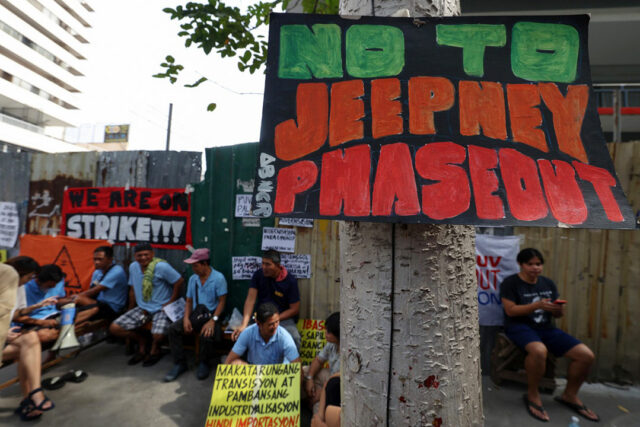
Jeepney drivers, operators declare more strikes vs transport program

JEEPNEY drivers sit on the sidewalk in Manila as they continue their three-day strike on Tuesday against franchise consolidation under the government’s Public Utility Vehicle Modernization Program, which effectively phases out commuter jeepneys. — PHILIPPINE STAR/EDD GUMBAN

By Jomel R. Paguian

GROUPS of jeepney drivers and operators have vowed to wage more transport strikes as a response to the government’s refusal to abandon its Public Utility Vehicle Modernization Program (PUVMP), which they have petitioned against before the Supreme Court.

Transport groups Pinagkaisang Samahan ng mga Tsuper at Operators Nationwide (PISTON) and Manibela said they will stage nationwide strikes throughout this month, persisting until the modernization project is repealed.

“This January 2024, we will continue our strikes to fight for the rights of jeepney drivers and operators,” PISTON national president Mody T. Floranda, speaking in Filipino, told BusinessWorld on the sidelines of a year-end protest against franchise consolidation under the PUVMP in Manila last Friday.

Days before the New Year, the Land Transportation Franchising Regulatory Board (LTFRB) issued new guidelines permitting unconsolidated public utility vehicles (PUVs) to operate until Jan. 31, 2024 — a month-long grace period beyond the Dec. 31, 2023 consolidation deadline.

However, jeepney drivers and operators argued that a grace period is not the solution they are asking for.

For Dionie Dayola, Jr., a PUV terminal operator with over 60 traditional public utility jeepney (PUJ) units plying the Agoncillo-Guadalupe route, the LTFRB’s announcement is meaningless as the threat of losing their franchise still looms.

“Sure, we may run our jeepneys until the end of the month, but we will choose to participate in strikes instead to rally against the impending phaseout,” he said in Filipino.

Edmund Urba, a jeepney driver plying the Pasig-Marikina route, said a one-month grace period is not enough. Speaking in Filipino, he said in an interview: “That is nothing; the right to work should be a lifetime guarantee, not just for a month.”

“If this system continues, we will persist in doing strikes,” he added.

Mr. Urba mentioned that the government’s commitment to offering jeepney drivers a fixed salary rate and social welfare benefits, similar to regular employees, is inadequate to support their families, as they still have to cover the costs of modern jeepney units, which amount to at least P2 million in installments.

Rogelio Armando, a jeepney driver plying the Alabang-Taguig route, said joining strikes is his only option to keep his job. In an interview, he said in Filipino: “At the age of 54, no company will hire me for work. I would rather strike to fight for our livelihood.”

Speaking on behalf of commuters, pro-labor coalitions said they will support transport strikes even if they lead to more challenging commuting conditions.

“If the government does not junk the modernization project, nothing will stop the jeepney drivers from going on strikes,” Federation of Free Workers (FFW) vice president Julius H. Cainglet said in Filipino. “Even if they do strikes every day, we will support them.”

For the labor group Confederation for Unity, Recognition and Advancement of Government Employees (COURAGE) phasing out traditional jeepneys will harm employees who will need to pay higher fares in modern PUV units while commuting to work.

“The one-month grace period is a joke. That plan still does not heed the demands of jeepney drivers and commuters,” COURAGE secretary general Manny Baclagon told BusinessWorld in a separate interview.

Congressmen to prioritize bills on tax refunds, lower tax on stock transactions

By Beatriz Marie D. Cruz, Reporter

THE HOUSE of Representatives is set on prioritizing the approval of proposed changes to the Corporate Recovery and Tax Incentives for Enterprises (CREATE) law as well as stock transaction taxes this year to streamline the country’s current tax system.

“President Ferdinand R. Marcos, Jr.’s explicit instruction, as reiterated to me recently, is to do it (CREATE law amendments) without delay,” Albay Rep. Jose Ma. Clemente S. Salceda, head of the House Ways and Means Committee, said in a Viber chat.

“The aim is to solve VAT (value-added tax) issues once and for all, reduce the contact between government and investors to a necessary minimum, rollback the Fiscal Incentives Review Board, and make our enhanced deductions more competitive,” Mr. Salceda said.

Even as congressmen have yet to debate on the measure in the plenary, the CREATE MORE (CREATE to Maximize Opportunities for Reinvigorating the Economy) bill is seen by business groups as a means to streamline the current tax refund system and help attract more foreign investments.

Mr. Salceda also sought the passage of the proposed Capital Markets Efficiency Promotion Act.

“This will reduce the stock transaction tax from 0.6% to 0.1%, reduce the non-resident alien dividend tax to 10% from 25%, and institute a corporate pension scheme similar to the Roth IRA plans in the US,” he said.

The committee is also looking to boost non-tax revenues, particularly on reclamation, Mr. Salceda said.

“I am already in touch with my colleagues in the Committee on Defense and we will move to have reclamation projects as a sustainable source of funding for strategic defense, especially towards maritime defense,” he said.

Lawmakers are also looking forward to the passage of the proposed pension reform for military and uniformed personnel (MUP), which is currently undergoing deliberations in the Senate.

“We expect to be able to ratify the bill for Mr. Marcos to sign by the end of Quarter 1, 2024,” Mr. Salceda said.

If enacted into law, the MUP pension reform measure could reduce unfunded liabilities of the pension system to P3.4 trillion from P9.6 trillion.

The House Committee on Agriculture and Food, on the other hand, seeks to monitor food supply and prices throughout the year, according to its chairman, Quezon Rep. Wilfrido Mark M. Enverga.

“We will also ensure that the interventions for farmers are delivered in a timely manner to address our own production capacity,” Mr. Enverga said in a Viber message.

The agriculture panel will also prioritize the approval of a bill establishing the country’s coffee industry.

Pasig Rep. Roman T. Romulo, who heads the House Basic Education Committee, said it will prioritize the approval of the Expanded Government Assistance to Students and Teachers in Private Education Act (E-GASTPE) to include kindergarten and elementary school students.

It will also pursue House approval of a bill seeking to make senior high school optional under the proposed Education Pathways Act. Both measures are still pending in the committee of Mr. Romulo.

In addition, the panel is pushing the proposed Expanded Career Progression for public school teachers, which is yet to undergo plenary debates. It also called for the passage of a bill, promoting mental wellness of students, which is pending in the Senate.

“We also intend to exercise our oversight functions on laws (e.g., inclusive education) that have passed and the reforms for functional literacy,” Mr. Romulo said via Viber.

Congress, currently on holiday break, will resume its regular sessions on Jan. 22.