Home Blog Page 383

Tsunami threat forces villagers to high grounds

COTABATO CITY — Hundreds of families in the adjoining Lebak and Kalamansig towns in Sultan Kudarat relocated and slept in highland areas the past two nights for fear of tsunami after tremors jolted both areas and other parts of Central Mindanao on Tuesday and early Wednesday.

Radio reports on Thursday stated that Kalamansig Mayor Ronan Eugene C. Garcia signed last Wednesday a directive for barangay officials and personnel of their Municipal Disaster Risk Reduction and Management Office to cooperate in evacuating residents of 11 coastal areas in the municipality to highlands in anticipation of a possible tsunami after the tremors.

The 11 seaside enclaves, Santa Clara, Pag-Asa, Datu Ito Andong, Nalilidan, Dumangas Nuevo, Santa Maria, Cadiz, Sangay, Paril, Baliwasan and Poblacion, are home to mixed Muslim, Christian and ethnic non-Moro Teduray communities.

Classes in all schools in Lebak and Kalamansig have also been suspended since Tuesday as an emergency contingency measure of the local government units in both towns after the series of earthquakes shook both areas, causing panic among residents.

Both Lebak and Kalamansig and nearby barangays in what is now Datu Blah Sinsuat town in Maguindanao del Norte and other beachfront areas fronting the Moro Gulf were badly devastated by a tsunami, more than 10 feet high, following an intensity 8 earthquake of undersea origin, on Aug. 16, 1976.

Many buildings in Cotabato City, now capital of the Bangsamoro Autonomous Region in Muslim Mindanao, were destroyed then.

The disaster left more than 8,000 villagers in coastal areas in the provinces of Sultan Kudarat, Maguindanao del Norte, Lanao del Sur, Lanao del Norte and in Zamboanga Del Sur and in its capital, Pagadian City, dead. — John Felix M. Unson

NCR domestic workers to get P800 monthly pay hike

MACROVECTOR/FREEPIK

DOMESTIC WORKERS in the National Capital Region (NCR) are set to receive a salary adjustment after the regional wage board approved an P800 increase in their minimum monthly pay.

The Regional Tripartite Wages and Productivity Board – National Capital Region raised the monthly minimum wage for kasambahays to P7,800, up from the previous rate of P7,000. The increase was effected via Wage Order No. NCR-DW-06.

The Department of Labor and Employment announced the adjustment in a social media post on Thursday, noting that the new rate will take effect 15 days after formal publication.

The wage adjustment applies to all domestic workers across Metro Manila, covering those on live-in or live-out arrangements. The order specifically covers general househelps, nannies, cooks, gardeners, and those performing laundry services.

The increase does not cover other service providers, family drivers, or individuals performing domestic work on an occasional or sporadic basis.

The decision followed a public hearing held on Jan. 12.

“After a thorough review and evaluation of the results of the public hearing, existing socio-economic conditions in the region, the needs of the domestic workers and their families, as well as the employers’ capacity to pay, the Board deemed it necessary to increase the prevailing minimum wage rates for domestic workers,” the National Wages and Productivity Commission said.

The last increase for NCR domestic workers took effect on Jan. 4, 2025 as authorized by Wage Order No. NCR-DW-05, which had set the rate at P7,000. — Erika Mae P. Sinaking

Agusan del Norte, Bohol port expansion contracts awarded

JUANCHO TALILI/PPA

THE Philippine Ports Authority (PPA) said it awarded contracts for the Jagna Port expansion in Bohol and the Nasipit Port upgrade in Agusan del Norte.

In separate notices of award dated Jan. 19, the port regulator said the joint venture of UKC Builders, Inc. and Evenpar Construction and Development Corp. secured the P525.97-million contract to upgrade and expand Nasipit Port, while MRBII Construction Corp. was awarded the P435.85-million contract to expand Jagna Port.

The Nasipit and Jagna upgrade projects must be completed within 660 calendar days, the PPA said.

Nasipit Port handles both international and domestic operations, including the export of agricultural products.

It serves roll-on/roll-off (RoRo) vessels operating from Bohol, Cebu, and Manila. It also handles non-RoRo vessels from Manila, Dumaguete, Tacloban, Iloilo, Surigao, and Cagayan de Oro.

According to the PPA, in 2024, Nasipit handled 850,729 metric tons of cargo. The port posted annual average volumes of 1.10 million metric tons since 2015.

The PPA said the port is expected to handle 1.56 million metric tons of bulk cargo, container volume of 74,072 twenty-foot equivalent units, and 480,589 passengers by 2034.

Jagna Port handled 167,337 metric tons of cargo in 2024, the PPA said, as well as 382,978 passengers.  Jagna is expected to handle 282,648 metric tons of cargo and 433,026 passengers by 2034. — Ashley Erika O. Jose

PHL seeking  $305 million from World Bank to fund DTI-led project to raise SME productivity

REUTERS

THE PHILIPPINES will seek a $305 million from the World Bank to support small and medium enterprise (SME) investments in productivity and quality upgrades, with approval targeted for 2027.

The Philippines COMPETE for SMEs project is estimated to be approved by Feb. 25, 2027, according to a document uploaded to the bank’s website on Jan. 21. The implementing agency is the Department of Trade and Industry (DTI).

The project cost is $330 million, with $25 million to be funded by the government.

The World Bank said the project is designed to help SMEs “export and integrate in global and domestic value chains through investment finance, quality certification, and market connections.”

SMEs account for 63% of total employment in the Philippines and contribute 36% of gross value-added, the bank added.

It also noted constraints on SMEs like the lack of skills, quality certifications, market intelligence, and business connections, as well as long-term finance.

SMEs are also disproportionately affected by gaps in Philippine infrastructure, with 209 of 704 technical testing and analysis firms lacking an accredited personnel certification body.

“Consequently, Filipino conformity assessments lack international recognition, forcing firms to seek services abroad — often at higher cost and longer times,” the World Bank said. — Aubrey Rose A. Inosante

World Bank urges more investment in primary healthcare to boost economy

NICHOLAS MALAGA, CNU INTERN/PHILSTAR FILE PHOTO

ECONOMIES in the Asia-Pacific should invest in enhancing their primary healthcare services to avert productivity losses from chronic diseases which serve as a drag on economic growth, the World Bank said.

In a report released earlier this month, the World Bank noted that East Asia and Pacific countries are facing growing cases of noncommunicable diseases (NCDs), often affecting working-age individuals.

“While people are living longer and economies continue to grow, the rising prevalence of diabetes, hypertension and heart disease threatens to undermine these gains,” World Bank Vice-President for East Asia and Pacific Carlos Felipe Jaramillo said during the launch of the report on Thursday in Jakarta, Indonesia. “These conditions affect individuals in their most productive years.”

Aakash Mohpal, World Bank senior economist for health, nutrition and population, who is also one of the report’s authors, said NCDs are evolving into an economic problem and not just a health concern.

According to the World Bank, every dollar invested into the primary healthcare system translates to $16 in economic gains by improving health, productivity and jobs.

“Improved primary healthcare is critical for sustained growth in East Asia and the Pacific,” World Bank East Asia and Pacific Chief Economist Aaditya Mattoo said. “By investing in prevention, embracing innovation, and strengthening community-level health services, EAP countries create new opportunities for economic progress and improve the quality of life across the region.”

The bank also noted that other countries in the region could emulate the strategies of Indonesia and the Philippines, who outsource primary healthcare services from the private sector.

“(I)n the Philippines, we are supporting the creation of integrated primary healthcare networks, which also have upgraded and digitally enabled health facilities to build a much more resilient foundation for routine services, as well as for emergency responses,” according to Caryn Bredenkamp, practice manager for health, nutrition, and population for East Asia and Pacific at the World Bank.

Governments and the private sector should invest in early prevention and detection of NCDs, the bank said.

The World Bank also urged East Asia and Pacific nations to give primary healthcare providers the necessary infrastructure, tools, and skills to tackle NCDs, enhance care quality through monitoring and rewarding providers for strong outcomes, and ensure primary healthcare affordability, or even grant free access for low-income individuals.

“Finally, inform, nudge and incentivize people to adopt healthier lifestyles including by seeking preventive care,” it added. —  Katherine K. Chan

Rice retail prices fall in early Jan.; meat up

Workers load sacks of flour in a delivery truck in Manila, July 11, 2022. — PHILIPPINE STAR/ MIGUEL DE GUZMAN

THE retail price of rice declined year on year in early January, while meat and galunggong (round scad) prices increased, according to the Philippine Statistics Authority (PSA).

During the Jan. 1-5 period, which the PSA calls the first phase of January, the national average retail price of regular milled rice declined 10.54% year on year to P43.39 per kilo. The first-phase price was higher than the P42.10 average during the second phase of December (Dec. 15-17) and the P41.38 average a month earlier.

The highest average retail price of regular milled rice in the first phase of January was recorded in the Bangsamoro Autonomous Region in Muslim Mindanao at P49.12 per kilo, down from the P50.71 reported a year earlier.

The lowest retail price of regular milled rice in early January was reported in the Cagayan Valley at P36.49 per kilo, down from P43.38 a year earlier.

Meanwhile, the retail price of bone-in fresh pork averaged P315.18 per kilo in the first phase of January, up 2.88% from a year earlier. The national average is slightly higher than the P314.72 recorded in the second phase of December and P314.41 a month earlier.

The retail price of dressed chicken averaged P213.88 per kilo in the first phase of January, up 0.79% from a year earlier. The average retail price for the period is also higher than the P212.40 during the second phase of December and P210.67 a month earlier.

Galunggong prices rose 12.7% year on year to P252.15 per kilo in the first phase of January. The average price of the staple fish rose from P249.11 in the second phase of December and P244.90 a month earlier. — Vonn Andrei E. Villamiel

PCC approves proposal by water refilling businesses to resolve price-fixing probe

A WATER refilling station in Barangay H-2, Dasmariñas City, Cavite. — PNA PHOTO BY GIL CALINGA

THE Philippine Competition Commission (PCC) said it approved a proposal by an association of water refilling station operators to resolve an investigation into price-fixing.

“The commission found that the written proposal adequately addressed the concerns raised in its earlier directives and has instructed the enforcement office to monitor the association’s compliance,” the PCC said in a statement late Wednesday.

The PCC found the group to have been coordinating pricing for certain water products.

“Such conduct raised concerns under Section 14(a)(1) of the Philippine Competition Act (PCA), which prohibits agreements among competitors to fix prices,” the PCC said.

“The parties were directed to cease the practice and subsequently opted to submit a settlement proposal under the PCC Rules of Procedure, which allows matters to be resolved prior to a final decision,” it added.

Under the approved settlement, the association committed to not engage in coordinated pricing and make independent pricing and business decisions.

“The settlement also includes compliance-oriented measures such as public communication of their commitment to fair competition, cooperation with the PCC, participation in competition law education activities, and support for advocacy initiatives,” it said.

PCC Chairman Michael G. Aguinaldo said the settlement addresses harm to consumers and market distortions caused by price-fixing.

“By securing the commitments to cease anti‑competitive conduct and actively support our advocacy, we aim to restore fair competition and ensure that consumers benefit from competitive pricing and quality service,” he said. — Justine Irish D. Tabile

Reforms helping PHL maintain investor interest — EU

REUTERS

THE reforms being undertaken by the Philippine government to address corruption are helping improve the domestic investment climate, the European Union (EU) ambassador said.

“Current efforts on good governance and fighting corruption do help a lot to keep the investment climate good,” Massimo Santoro, ambassador of the EU delegation to the Philippines, said on Thursday.

“We very much welcome the current efforts being made by the government on good governance and fighting corruption and ensuring accountability because this is exactly what… maintains investors here,” he added.

He said investors, in general, wish to have predictability, which makes accountability an enabler for attracting new commitments.

“It has a direct impact on the investors’ interest if you want them to continue to stay. So far, we do look at this positively… we will continue supporting any additional action intended to ensure accountability,” he added.

He said the recent economic reforms introduced by the government are also helping attract investors, particularly those from the EU.

“Recent economic reforms and investment liberalization efforts are often cited as evidence that the Philippines is serious about improving its investment climate,” he said.

“This is a good positive signal to European investors. We also hope that this momentum will translate into increased investment flows in the coming year, contributing again to job creation, technology transfer, and development of sustainable and high-value industries,” he added.

However, he noted that further liberalization and effective implementation of the economic reforms will play a big role in attracting more investment.

“Further opening of the market and the implementation of the very good legislative reforms that have been adopted, in general terms, are the enablers for more investors to come,” he added.

He said the sectors Europeans are interested in investing include the green economy, the digital sector, and the service sector.

Norwegian Ambassador to the Philippines Christian Halaas Lyster said that there is strong interest from his country in the maritime sector, renewable energy, the circular economy, and agriculture.

TRADE
Trade in merchandise between the Philippines and the EU grew 3% year on year to 8.3 billion euros in the first half of 2025.

“The growth is particularly encouraging for both sides, taking into account the global uncertainties … and the challenging international trade environment,” Mr. Santoro said.

“I mentioned it already last time. The figures are good, but trade still remains below its full potential, in particular when we compare to regional partners,” he added.

To achieve its full potential, he said the Philippines and the EU must conclude the negotiations for a free trade agreement (FTA).

“It is not only about tariff reduction. The FTA will establish a stable, predictable, rules-based framework for trade and investment between the EU and the Philippines,” he added.

He said that there has been significant progress in the negotiating teams’ text-based discussions.

“The aim is to conclude as quickly as possible, but of course without any compromise of substance and for quality for the agreement,” he added.

The negotiating teams have so far held four full rounds since negotiations were restarted in 2024, while they held smaller-format meetings to discuss specific topics.

“We plan to have our next full round at the beginning of March … We are putting in place, together with our Philippine counterparts, all that is needed to have this done quickly,” he added.

On Thursday, the European Chamber of Commerce of the Philippines, in partnership with DivinaLaw and the Board of Investments, published the Doing Business in the Philippines Guidebook. — Justine Irish D. Tabile


AI-powered platform for Filipino blue-collar workers launched

KONEKBUHAY.COM

A recruitment platform for Filipino blue-collar workers, powered by Artificial Intelligence (AI), was launched on Thursday, aiming to transform and streamline the sector’s fragmented hiring process.

Called KonekBuhay, the platform is designed for recruiters and employers seeking a faster, more structured way to screen and identify blue-collar workers, jobs typically associated to manual labor or skilled trades.

The platform said in a statement that it is poised to transform the long-overdue blue-collar hiring process in the country, as many organizations still rely on fragmented and manual recruiting methods, stalling productivity.

“Blue-collar workers are critical to business operations, yet they’re still hired through outdated methods and systems,” said Emman Dela Cruz, chief executive officer and co-founder of KonekBuhay.

“KonekBuhay is here to uplift these workers by giving them better access to opportunities and better jobs, while helping recruiters become more productive and intentional in how they hire people,” he added.

Through the platform, recruiters can organize and track applicants across multiple job openings in a single system, giving them better visibility and control at every stage of the hiring process.

It also integrates AI technology, which recruiters can use to review resumes, filter candidates, and generate reports, streamlining the hiring process.

For applicants, the platform has a Smart Resume feature that enables them to maintain a single, updated digital profile for multiple job applications.

The Philippine Statistics Authority (PSA) uses the Philippine Standard Occupational Classification (PSOC) to statistically classify different occupational groups of the working population, including the military workforce.

More than one-quarter, or 25.56% of the Philippine workforce belong to “elementary occupations,” jobs that require simple and routine tasks, according to the 2018 PSA report.

Meanwhile, 13.5% belong to skilled agricultural, forestry, and fishing occupations, 5.3% are service and sales workers, and the largest group, 62.3%, are wage and salary workers.

The country’s employment rate stood at 95.6% in November 2025, translating to 49.26 million employed Filipino workers. This figure slipped from 96.8% year-on-year but showed a slight improvement from 95% in October.

KonekBuhay said that it has begun onboarding recruiters and companies nationwide. Interested organizations may visit konekbuhay.com to learn more about the platform. — Edg Adrian A. Eva

Eala is all set as PHL becomes part of women’s pro tennis circuit

ALEX EALA — PHILIPPINE STAR/RUSSELL PALMA

AND there’s the formality.

Alexandra “Alex” Eala is all set for her first-ever home tournament when she spearheads the historic Philippine Women’s Open (PWO) on Jan. 26 to 31 at the Rizal Memorial Sports Complex Tennis Center in Manila on the heels of a historic main draw debut in the Australian Open (AO) in Melbourne.

No less than the Filipina wunderkind confirmed her participation on Thursday right after landing at the Ninoy Aquino International Airport Terminal 3 with a grand welcome from the Philippine Sports Commission and the Philippine Tennis Association.

“Yes, I will be playing next week. I’m looking forward to it and I hope people can show up and support the Pinays,” beamed Ms. Eala on the WTA 125-level tourney as the country becomes a part of the women’s pro tennis circuit at last.

“It’s a huge milestone in Philippine tennis, and I think it’s a big deal for all of us Filipina tennis players.”

Ms. Eala, as early as the hosting announcement last year, was listed as a wildcard entry in the 32-player main draw but her availability in the PWO had been up in the air since then, owing to her AO campaign.

For a far bigger achievement not only for her but also for Philippine tennis, Ms. Eala could have not been available in the PWO with a deep AO run at least by the third round but she unfortunately absorbed an early boot.

At No. 49 in the Women’s Tennis Association (WTA) as the first Filipina ever to enter the world’s Top 50, Ms. Eala bowed to No. 99 Alycia Parks of the United States, 6-0, 3-6, 2-6, in the singles first round.

It’s the same fate in the doubles for Ms. Eala with Brazilian partner Ingrid Martins (WTA doubles No. 80), exiting with a 6-7 (3-7), 6-2, 3-6 defeat to Japan’s Shuko Aoyama (WTA doubles No. 52) and Poland’s Magda Linette (WTA singles No. 50 and doubles No. 140) in the opener.

Ms. Eala, according to the live WTA ranking, is at No. 44 for a potential new-career best despite the early AO exit barring any major shake-up for the players in front and behind her, leading to the PWO.

Now at home as one of the top-ranked players, hopes are high for Ms. Eala especially with a bigger Filipino crowd, who has been supportive of her WTA Tour stops anywhere in the world. Tickets, in fact, have already been sold out until the final day as per the organizers.

The PWO, where she’s joined by compatriots Stefi Aludo and Tenny Madis, will serve as Ms. Eala’s fourth tournament this season after the ASB Classic in Auckland, New Zealand, the Kooyong Classic in Melbourne and the AO.

She reached the final four in Auckland, her third WTA semis appearance ever, and was given the Evonne Goolagong Cawley trophy in Kooyong as the 2026 exhibition champion following a 6-3, 6-4 mastery of Paris Olympics silver medalist and 2024 Wimbledon semifinalist Donna Vekic of Croatia.

At stake for Ms. Eala — winner of two girls doubles Grand Slams as a former world junior No. 2 including the 2020 AO with Indonesian pal Priska Madelyn Nugroho — in Manila is her second WTA title after a breakthrough championship in the Guadalajara Open in Mexico last year that served as one of her springboard to a historic Top-50 world ranking.

But that would be easier said than done, especially with a stacked cast ready to neutralize her homecourt edge led by the top two seeds in world No. 42 Tatjana Maria of Germany and No. 46 Wang Xinyu of China along with No. 59 Janice Tjen of Indonesia, No. 63 Solana Sierra of Argentina, No. 72 Ms. Vekic, No. 76 Kimberly Birrell of Australia and No. 84 Camila Osorio of Colombia among the few.

A total of 24 listed players in the PWO including Ms. Eala also saw action in the AO, making it a star-studded and ultra-competitive slugfest as the country eyes to be a staple stop for the WTA Tour from here on with an expected bid for a higher 250-level tourney next year.

After the PWO, Ms. Eala will head back overseas for the rest of the WTA Tour starting with a qualifying round ticket in the Mubadala Abu Dhabi Open on Feb. 1 to 7 in the United Arab Emirates. — John Bryan Ulanday

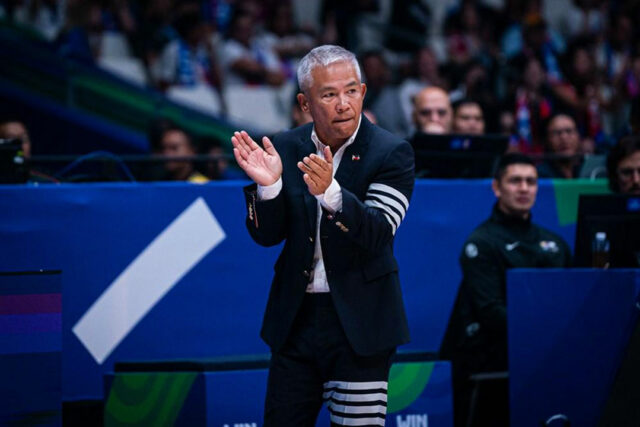
TNT braces for SMB adjustment in game two of Philippine Cup Finals

CHOT REYES — FIBA

Game on Friday
(Ynares Center-Antipolo)
7:30 p.m. – San Miguel Beermen vs TNT*
*TNT leads series, 1-0

EVEN if it was a winning performance, TNT’s errors in the PBA Season 50 Philippine Cup finals opener were so glaring that it was the first thing coach Chot Reyes pointed out post-game.

“We cannot survive on 19 turnovers,” said Mr. Reyes as he rued the Tropang 5G’s erratic ways that led to 25 extra points for San Miguel Beermen (SMB) and marred their 96-91 verdict.

“We got to improve that for the next game,” he added ahead of TNT’s bid to make it 2-0 in the race-to-four Last Dance against a Beermen crew hell-bent on a strike back on Friday at the Ynares Center-Antipolo.

Behind a strong defensive and hustle effort led by veteran Kelly Williams, TNT buried SMB to an early 19-point hole. The proud defending champions unleashed a massive comeback in the second half and came close to the Game 1 steal before Mr. Williams and his mates extinguished the threat with clutch endgame plays.

“In the huddle, I said, you know, we defended well. They’re not scoring on the half court set. They’re just scoring off our turnovers. We keep giving the ball to the other team. So I said, every time we make a defensive stop, we need to make sure that we get a shot. Whether we make it or miss it, doesn’t matter as long as we don’t turn it over. And that’s the story,” said Mr. Reyes.

The protagonists go into 7:30 p.m. second match wiser from the lessons of the opening tiff.

“We can’t be content at all against San Miguel. We know they’re going to come back strong, make adjustments so we have to make sure we come out with the same energy, the same togetherness and I think we’ll be fine,” said Mr. Williams who anchored TNT’s tough stance against June Mar Fajardo and Co. with 15 points, nine rebounds and three assists.

Despite the Game 1 heartbreaker, the Beermen still feel good about their chances in the series.

“I know our team has grit. We’re not just going to lay down. We’re not just going to go away. We’ll be ready,” said Mo Tautuaa who backstopped Mr. Fajardo with 22 and led their fightback with 13 third-quarter markers.

SMB took solace in the fact that it finished Game 1 stronger, 55-43, after getting thoroughly dominated by TNT in the first 24 minutes, 36-53. — Olmin Leyba

Time to right the ship

The 2025-26 season began with promise for the Knicks. They opened with purpose, banked early wins, collected the NBA Cup, and looked to have aligned ambition with execution. Unfortunately, the arc now appears to have flattened. Although still firmly in the Eastern Conference mix, they’ve become increasingly unsure of themselves; they appear to be searching for traction where there was once momentum. Madison Square Garden habitués have noticed the players’ inability to be collectively productive with consistency.

The low point came against the Mavericks the other day. Down by 30 at halftime, the Knicks were met with boos on their home floor. There was no tactical adjustment to hide behind, no officiating gripe to point to as an excuse. In the aftermath, head coach Mike Brown admitted there was little to say; the scoreboard had already delivered the message. For a roster built on toughness and defensive pride, the silence was louder than any diatribe in the locker room.

For captain Jalen Brunson enough was enough. The Knicks’ ninth setback in 11 outings necessitated a players-only meeting in which he did not mince words. Accountability had to come from within, he argued. They needed to fully commit to standards they claim to value. The onus was not on the brain trust in the sidelines. Systems provide guidance, but culture has to be enforced by those on the floor.

Workhorse Josh Hart echoed the sentiment with the bluntness that has defined his tenure. He spoke of soul searching, of habits that had slipped into disrepair and no longer matched identity. His critique was an indictment of effort and attention, areas that tend to separate contenders from pretenders. The numbers underscore the cause of the unease; stagnant offense has accompanied leaking defense. To be sure, there remains time to right the ship. Nonetheless, there can be no discounting the swoon.

The fans, often caricatured as impatient, have shown clarity, not demanding perfection but expecting commitment. Brunson and Karl-Anthony Towns acknowledged as much, recognizing that the noise from the stands mirrors the questions they are asking as well. At 25 and 18, the Knicks are neither broken nor secure. That said, they sit in a narrow band where a sense of urgency is required. Taken in this context, the meeting drew a line. What follows will determine whether their campaign resumes its climb or settles into mediocrity, remarkable only for a promise that never quite held.


Anthony L. Cuaycong has been writing Courtside since BusinessWorld introduced a Sports section in 1994. He is a consultant on strategic planning, operations and human resources management, corporate communications, and business development.