Home Blog Page 382

Stocks continue to decline on US tariff concerns

REUTERS

PHILIPPINE STOCKS dropped for a fourth straight session on Wednesday as negative sentiment on Wall Street amid tariff jitters spilled over to the local market.

The benchmark Philippine Stock Exchange index (PSEi) went down by 0.35% or 22.76 points to close at 6,330.10, while the all shares index declined by 0.28% or 10.12 points to finish at 3,596.69.

“The local bourse extended its decline amid weakening global markets, driven by Trump’s tariff imposition, which kept investors on their toes to further assess their next move,” AP Securities, Inc. said in a market note.

“The local market dropped again amid the negative cues from Wall Street caused by worries over the US’ tariff threats against selected European countries as it tries to get Greenland,” Philstocks Financial, Inc. Research Manager Japhet Louis O. Tantiangco said in a Viber message.

Lingering global uncertainty fueled cautiousness that caused stocks to end lower, but the peso’s rebound against the dollar helped cap the slide, Luis A. Limlingan, head of sales at Regina Capital Development Corp., said in a Viber message.

The peso jumped by 19.4 centavos to close at P59.261 per dollar on Wednesday as the greenback was also hit by trade war concerns.

All three major Wall Street indexes ended Tuesday with their biggest one-day drops in three months, in a broad sell-off triggered by concerns that fresh tariff threats from President Donald J. Trump against Europe could signal renewed market volatility, Reuters reported.

The S&P 500 lost 143.15 points or 2.06% to end at 6,796.86 points; while the Nasdaq Composite gave up 561.07 points or 2.39% to 22,954.32. The Dow Jones Industrial Average fell 870.74 points or 1.76% to 48,488.59.

The reinjection of tariff threats into global markets harkens back to April’s “Liberation Day,” when Mr. Trump’s levies on global trade partners pushed the S&P 500 to near bear market territory.

Sectoral indices were mixed on Wednesday. Services dropped by 0.63% or 16.40 points to 2,552.29; industrials retreated by 0.58% or 52.62 points to 8,999.21; and financials decreased by 0.47% or 10.18 points to 2,116.35.

Meanwhile, mining and oil jumped by 4.64% or 800.84 points to 18,055.78; property rose by 0.2% or 4.60 points to 2,301.02; and holding firms climbed by 0.14% or 7.17 points to 5,035.85.

“Aboitiz Equity Ventures, Inc. was the day’s top index gainer, climbing 3.11% to P31.50. DigiPlus Interactive Corp. was the main index laggard, falling 5.96% to P14.20,” Mr. Tantiangco said.

Decliners beat advancers, 108 to 85, while 66 names closed unchanged.

Value turnover went down to P6.87 billion on Wednesday with 1.21 billion shares traded from the P7.13 billion with 1.22 billion issues that changed hands on Tuesday.

Net foreign buying decreased to P252.82 million from P303.41 million. — Alexandria Grace C. Magno with Reuters

Philippines and China intensify Code of Conduct talks amid SCS tensions

BW FILE PHOTO

THE Philippines and China have stepped up discussions to finalize a Code of Conduct (CoC) for the South China Sea (SCS), Chinese Ambassador Jing Quan said on Tuesday, as Manila assumes the chairmanship of the Association of Southeast Asian Nations (ASEAN) this year.

“Both sides hope to accelerate negotiations on the Code of Conduct in the South China Sea,” he said in a speech delivered in Manila. “Consultations are becoming more frequent and more intensive.”

The CoC, first pledged in 2002, aims to manage disputes in the strategically critical waters, which serve as a corridor for trillions of dollars in annual trade.

But progress has been slow, with legal, political and strategic differences among ASEAN members and China repeatedly delaying the process. The next round of negotiations is scheduled for the first quarter.

Mr. Jing cited the importance of keeping communication channels open and avoiding actions that could escalate tensions while a legally binding framework is being drafted.

“Even if we cannot reach a solution quickly, it’s essential for us to keep communication channels open, refrain from provocative or confrontational actions and prevent tensions from escalating,” he said.

Diplomats on both sides have already reached preliminary consensus on a roadmap for the next stage of dialogue and negotiation, he added.

The South China Sea remains one of the region’s most volatile flashpoints. China has expanded its presence despite a 2016 ruling by a United Nations-backed arbitral tribunal that voided its sweeping claims over the waters.

The dispute involves overlapping claims from the Philippines, Vietnam, Malaysia, Brunei, Indonesia and Taiwan.

Mr. Jing also called for a measured diplomatic approach, underscoring the long-term importance of managing differences.

“There are maritime disputes between China and the Philippines, which in recent years have become more pronounced,” he said. “I believe that China and the Philippines have the ability and wisdom to properly manage our differences.”

Chester B. Cabalza, founding president of think tank International Development and Security Cooperation, said the renewed dialogue indicates a “more mature and responsible” approach to bilateral relations.

“If this is the diplomatic track that Beijing wants to pursue with Manila, we will see stronger, more stable ties moving forward,” he said via Facebook Messenger.

However, China has maintained nonnegotiable claims in the South China Sea and resists any CoC provisions that might weaken its control or invite international oversight, analysts said.

Beijing’s proactive engagement in finalizing the CoC would be in its interest, said Josue Raphael J. Cortez, a lecturer on diplomacy at De La Salle-College of St. Benilde.

Finalizing a legally binding Code of Conduct would not only ensure regional stability but also improve China’s perception among ASEAN countries, he said.

“Consensus decision-making, a key parcel of the ASEAN Way, is still the process through which the bloc will be able to achieve the final agreement, which takes time,” Mr. Cortez said.

The Philippines has sought to accelerate CoC negotiations as ASEAN chairman to strengthen its diplomatic influence and enhance regional security.

Manila has been advocating for a framework that balances China’s interests with those of smaller claimants, providing legally binding rules for maritime conduct, dispute resolution and conflict prevention.

Beijing and Manila have clashed repeatedly in recent years in contested waters. Chinese Coast Guard vessels have fired water cannons at Philippine fishing boats, and such incidents underscore the high stakes of reaching a CoC that both sides can respect.

Mr. Jing stressed that pending a final agreement, both nations must avoid provocative actions. — Adrian H. Halili

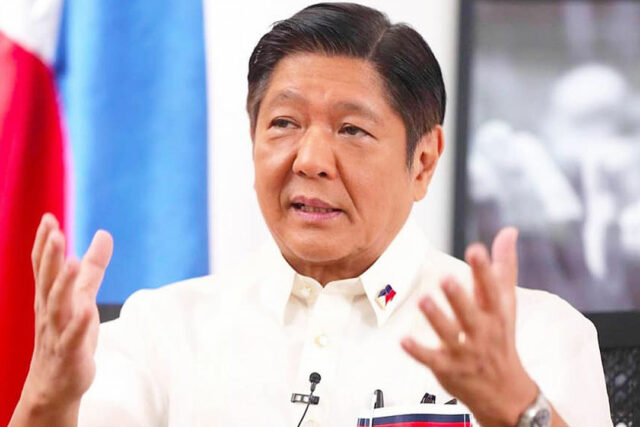
Marcos ouster case sent to Speaker’s office for action

PRESIDENT FERDINAND R. MARCOS, JR. FACEBOOK PAGE

By Kenneth Christiane L. Basilio, Reporter

THE impeachment complaint against President Ferdinand R. Marcos, Jr. has been referred to the Speaker’s office, the House of Representatives secretary-general said on Wednesday, as another group prepared a separate bid to oust him.

In a statement, House Secretary-General Cheloy E. Velicaria-Garafil said her office had sent the first complaint seeking Mr. Marcos’ ouster to the Office of Speaker Faustino “Bojie” Dy III on Tuesday, a day after it was filed.

“Pursuant to established procedure, the Office of the Secretary-General has transmitted the verified impeachment complaint… for appropriate action,” she said.

Mr. Marcos is facing an impeachment complaint over allegations he profited from anomalous infrastructure contracts, with a minority congressman endorsing on Monday a complaint by a lawyer that cited five grounds for removal, including three directly tied to the multibillion-peso graft scandal.

Ms. Garafil said her swift referral of the complaint to Mr. Dy’s office was meant to ensure it is handled in a procedurally proper manner and to avoid infirmities.

“Upon receipt of any impeachment complaint, the Office of the Secretary-General ensures that the document is properly entered, recorded and forwarded to the proper office, emphasizing that the initial step is meant to preserve order and due process,” she said. 

Ms. Garafil’s quick submission of the complaint against Mr. Marcos starkly differs with the handling of Vice-President Sara Duterte-Carpio’s case, who was impeached in February 2025 after more than one-third of lawmakers signed the bill in a single day.

Complaints against her had been filed as early as December 2024 but were not immediately forwarded to then-Speaker Ferdinand Martin G. Romualdez.

Meanwhile, a coalition of civil society groups plan to file a separate impeachment complaint against Mr. Marcos, citing betrayal of public trust as a ground for his removal.

Under the 1987 Constitution, impeachment can be pursued for culpable violation of the Constitution, bribery, graft and corruption, other high crimes or betrayal of public trust.

A complaint requires endorsement from at least one-third of House members before it can be sent to the Senate, which sits as an impeachment court.

“The impeachment is based on the systematic and large-scale plunder of public funds through a scheme of presidential and congressional ‘allocations’ for pet projects in the national budget, the unprecedented abuse of unprogrammed appropriations to fund even more anomalous infrastructure projects and the system of kickbacks,” Renato M. Reyes, Jr., president of Bagong Alyansang Makabayan, said in a statement.

Several officials, politicians and private contractors have been accused of pocketing funds meant for public works projects in the flood-prone nation. 

“All those involved must be held accountable, starting from the top,” he said. The complaint will be endorsed by three opposition lawmakers at the House and will be filed by workers, farmers and anti-corruption activists.

“We expect that this verified complaint will be transmitted to the Speaker and included in the order of business, and not be excluded in favor of what many are saying is a weak first complaint intended to shield the President,” Mr. Reyes said.

The Constitution bars Congress from initiating more than one impeachment proceeding against the same official within a single calendar year, and a lawmaker has warned the first complaint might be intended to trigger the ban amid what he described as weak arguments to back the President’s removal from office.

Arjan P. Aguirre, an associate political science professor at the Ateneo de Manila University, said the first complaint might be a political move by administration allies to pre-empt possible impeachment bids against Mr. Marcos.

“The filing appears less substantive and more performative, giving the strong impression that it was undertaken primarily for publicity rather than for serious legal or constitutional accountability,” he said in a Facebook Messenger chat.

Mr. Reyes said they would file their impeachment bid against Mr. Marcos as they were “concerned with the one-year ban.”

“Since the first complaint… was already transmitted to the Speaker, the same complaint can be referred to the Justice committee when session resumes on Monday, thus triggering the one-year ban,” he said in a Viber message.

Impeachment bids that will be filed this year could test a Supreme Court ruling in July last year that tightened rules on proceedings. The court said due process and fairness must apply at every stage of the process.

VP Duterte faces plunder, malversation charges before Ombudsman

VICE PRESIDENT SARA DUTERTE-CARPIO FACEBOOK PAGE

FORMER Senator Antonio F. Trillanes IV and a civil society group filed plunder, graft and malversation complaints against Vice-President (VP) Sara Duterte-Capio on Wednesday, asking the Office of the Ombudsman to investigate allegations they said could support the filing of an impeachment case.

In a 41-page complaint, Mr. Trillanes and members of The Silent Majority urged the Ombudsman to conduct a “swift and timely investigation and case buildup” into 23 counts of alleged plunder, malversation, graft and other high crimes attributed to Ms. Duterte.

“The verified complaint is being filed to request the honorable Office of the Ombudsman to conduct a formal investigation against Vice-President Duterte for the possible filing of a recommendation by this honorable office for Congress to initiate impeachment proceedings against her,” the complainants said.

They also asked the Ombudsman to recommend to the House of Representatives the filing of impeachment charges, and to pursue criminal cases should probable cause be found.

Israelito P. Torreon, a lawyer for the Duterte family, did not immediately respond to a request for comment. Ruth B. Castelo, an Office of the Vice-President (OVP) spokesperson, also did not immediately reply to a Viber message seeking comment.

Civil society leaders filed plunder complaints against Ms. Duterte in December over the alleged misuse of P612.5 million in confidential funds allocated to her and the Department of Education (DepEd), which she led from 2022 to 2024.

The latest complaint expands the allegations to include Ms. Duterte’s term as mayor of Davao City.

According to Jocelyn “Jozy” Marie Acosta, founder of The Silent Majority, the filing consolidates earlier complaints and introduces allegations based on audit reports, affidavits and public records.

These include the alleged plunder and malversation of P650 million in confidential funds from the OVP and DepEd; the plunder of P2.7 billion in confidential funds during her time as Davao City mayor; and graft and malversation involving about P8 billion worth of overpriced laptops procured during her tenure at DepEd.

The complaint also cited more than P12 billion in Commission on Audit disallowances at DepEd, P7 billion in unliquidated cash advances and the construction of only 192 classrooms out of a reported target of more than 6,000.

It further alleged the nondeclaration of more than P2 billion in bank deposits and other assets in Ms. Duterte’s statements of assets, liabilities and net worth.

Included in the filing is a sworn affidavit executed in November by Ramil L. Madriaga, described in the complaint as a former intelligence operative and campaign worker allegedly assigned by former President Rodrigo R. Duterte to Ms. Duterte during her vice-presidential campaign.

Mr. Madriaga said he was repeatedly instructed by Ms. Duterte’s security chief at the OVP to deliver large sums of money drawn from confidential funds of the OVP and DepEd to various people, according to the complaint.

The complaint further said Mr. Madriaga identified some recipients as people linked to illegal drug trafficking and Philippine Offshore Gaming Operators.

The complainants said the affidavit, along with other evidence, “bolsters and substantiates” their claims that the Vice-President committed plunder and malversation of public funds, which they argued constitute impeachable offenses.

Under the Constitution, impeachment proceedings must be initiated by the House of Representatives and tried by the Senate. — Erika Mae P. Sinaking

BSP briefs Marcos on economic outlook

BW FILE PHOTO

THE Bangko Sentral ng Pilipinas (BSP) briefed President Ferdinand R. Marcos, Jr. on the country’s economic outlook as the central bank signaled that it is nearing further policy easing.

Mr. Marcos met with BSP Governor Eli M. Remolona, Jr. in Malacañang on Tuesday to discuss the central bank’s recent interest rate cut and prospects for economic growth, the Presidential Communications Office (PCO) said on Wednesday.

The PCO did not say whether the meeting also covered the peso’s recent weakness against the dollar. The local currency closed at P59.261 a dollar, strengthening by 19.4 centavos from its P59.455 finish on Tuesday, data from the Bankers Association of the Philippines showed.

The peso has been trading around the P59 level since controversy erupted over anomalous flood control projects, with its weakest close so far at P59.46 on Jan. 15.

Malacañang has said there is no need for the BSP to intervene in the foreign-exchange market despite the peso’s weakness, adding that authorities are closely monitoring currency movements.

In December, the BSP lowered its benchmark policy rate by 25 basis points to 4.5%, down from 4.75% in October 2025 — the lowest level in more than three years.

The rate cut came as the Philippine economy faced headwinds from a multibillion-peso corruption scandal that disrupted public spending and dampened growth.

The BSP expects economic expansion to remain modest through the first half, before rebounding in 2027 with support from earlier monetary easing, the PCO said.

The country’s gross domestic product (GDP) grew 4% in the third quarter of 2025, the slowest in more than four years. Economic Secretary Arsenio M. Balisacan attributed the slowdown largely to reduced infrastructure outlays after the flood control controversy.

Mr. Balisacan said full-year growth for 2025 likely settled at 4.8% to 5%, below the government’s 5.5% to 6.5% target. Official full-year GDP data for 2025 will be released on Jan. 29.

The Development Budget Coordination Committee has also lowered its growth projections, setting targets of 5% to 6% for 2026 and 5.5% to 6.5% for 2027.

Despite the downgrade, the World Bank expects the Philippine economy to recover over the next two years. It said private consumption is likely to strengthen if inflation stays low, employment remains steady and easier monetary policy brings down borrowing costs, encouraging households and businesses to spend and invest. — Chloe Mari A. Hufana

AMLC freezes terror-linked assets

THE Anti-Money Laundering Council (AMLC) has ordered to freeze the assets of a group and three individuals said to be linked to terrorist activities in the country.

In a statement on Wednesday, the AMLC said it issued an immediate sanctions freeze order for the said assets after the Anti-Terrorism Council (ATC) identified its owners as terrorists operating in the Philippines.

Among the terrorists subject to the resolution were Daulah Islamiyah-Hassan Group’s leader Muhammad Mohamad Solaiman/Sulaiman, otherwise known as Ustadz Mohammad Usman, who was killed in a military operation in Maguindanao last month.

The AMLC likewise froze the assets of Kalasan People’s Center for Environmental Concerns, Inc., Virgil “Bards/Bardz/Vards” P. Estrada and Maria Aleli De Guzman-Abrazado, also known as Cita Managuelod, Mila, Sola, Karen, Rasi, Valentina or Maggy.

According to the AMLC, the resolutions were issued in line with ATC’s Resolution No. 82, series of 2025, the Terrorism Financing Prevention and Suppression Act (TFPSA) of 2012 and Republic Act No. 9160 or The Anti-Money Laundering Act of 2021, as amended. The freeze orders took effect on Jan. 16.

The AMLC instructed all relevant covered institutions to file a suspicious transaction report within five days from Jan. 21 covering all prior financial transactions of the said terrorists.

Meanwhile, the council noted that owners of the frozen assets may pursue remedies provided under the Anti-Terrorism Act of 2020, its implementing rules and regulations (IRR), as well as the TFPSA and its IRR. — Katherine K. Chan

Leviste says he did not receive DoE’s P24-B fine notice

BATANGAS Rep. Leandro Antonio L. Leviste on Wednesday rejected blame over the multibillion-peso fine imposed by the Energy department on numerous delayed energy projects, saying the notice was not sent to a company he owned.

Mr. Leviste said the Energy department’s P24-billion fine for delayed projects was sent to SP New Energy Corp. (SPNEC) and not Solar Philippines Power Project Holdings, Inc., but stopped short of saying that SPNEC should shoulder it.

“It was not Solar Philippines Power Project Holdings that received the letter about the said fine, but SP New Energy Corp.,” he said in a media briefing in Filipino. “I can categorically say that none of my companies received a letter stating there was a P24-billion penalty, and that it was SPNEC which received the letter.”

An SPNEC representative, reached for comment, reiterated the company is not liable for the Department of Energy’s (DoE) multibillion-peso penalty.

The dispute over liability arose after Energy Secretary Sharon S. Garin last week said Solar Philippines would be fined for delays in delivering nearly 12,000 megawatts (MW) of renewable energy. The DoE terminated 33 of its service contracts, accounting for around 64% of more than 18,000 MW of potential capacity.

Mr. Leviste said he had paid other fines imposed by the DoE. “We already paid other penalties… just recently… about P70 million.” — Kenneth Christiane L. Basilio

Year-end approval eyed for UHC bill

SENATOR Ana Theresia Hontiveros-Baraquel spoke to members of the media during the “Kapehan sa Senado” briefing, Jan. 21. — PHILIPPINE STAR/RYAN BALDEMOR

THE Senate Health Committee is eyeing the passage of a measure expanding benefits under the Universal Health Care (UHC) law within the year, its chair said on Wednesday.

Senator Ana Theresia N. Hontiveros-Baraquel, who heads the committee, said the proposed amendments to Republic Act No. 11223, the UHC law could clear the upper chamber before yearend.

“It’s possible. The important thing is to begin deliberations and sustain a good pace,” she told a news briefing.

Among the proposed amendment of lawmakers are the expansion of benefits under the UHC, allowing public-private partnerships, creating a UHC Coordinating Council for better implementation, and easing premiums under the Philippine Health Insurance Corp. (PhilHealth).

The committee chair added that she will convene a congressional oversight panel to tackle possible amendments to the law.

“We will evaluate how the Universal Health Care Law has been implemented so far,” Ms. Hontiveros said.

“The Congressional Oversight Committee will also have input on the Universal Health Care Law, as well as our budget engagements later this year, related to the Department of Health (DoH) and PhilHealth,” she added.

Proposed amendments to the UHC Act have been identified as among President Ferdinand R. Marcos, Jr.’s priority measures for the 20th Congress.

Meanwhile, Ms. Hontiveros said that two other healthcare bills would likely be approved for third and final reading once Congressional session resumes next week.

These include Senate Bill No. 1510, the Health Outreach for Seniors and Indigent Patients (HOSIP), and Senate Bill No. 1513, Lupus Prevention and Treatment Bill, according to the senator.

Ms. Hontiveros said that the proposed HOSIP bill would allow the government to provide assistive devices, including wheelchairs to senior citizens and the poor directly to their homes; while the Lupus Prevention Bill seeks to create a program under the DoH to detect lupus or other autoimmune diseases, alongside coverage on the testing and detection of the disease under PhilHealth. — Adrian H. Halili

Filipino athletes get incentives

PRESIDENT Ferdinand R. Marcos, Jr. and First Lady Louise Araneta-Marcos pose for a selfie with Filipino athletes who competed in the 33rd Southeast Asian Games during a ceremony at the Foro de Intramuros in Manila on Wednesday. — NOEL B. PABALATE/PPA POOL

THE Office of the President (OP) on Wednesday granted cash incentives to Filipino Southeast Asian Games (SEA Games) medalists as President Ferdinand R. Marcos, Jr. underscored his administration’s moves to improve sports development in the Philippines.

“We are expanding grassroots and youth sports programs, we are adding needed facilities, and we are further strengthening support for athletes participating on the global stage,” he said in Filipino during the homecoming celebration for the 33rd SEA Games athletes in Manila City.

Team Philippines bagged a total of 277 medals (50 gold, 73 silver and 154 bronze), placing sixth overall in the biennial games held in Thailand last Dec. 9-20, 2025.

The OP will match the cash incentives granted to the athletes under Republic Act No. 10699, the National Athletes and Coaches Benefits and Incentives Act, which provides P300,000 for gold medalists, P150,000 for silver medalists and P60,000 for bronze medalists.

Athletes who won competitions apart from the SEA Games will also receive P10,000 each from the OP.

“We know that no amount can truly compensate for your sacrifices, but please accept this as a symbol of the Filipino people’s tribute and gratitude for your heroism,” Mr. Marcos said. — Chloe Mari A. Hufana

DICT mulls lifting Grok AI ban

THE Department of Information and Communications Technology (DICT) is studying the possible lifting of the ban on Grok, the generative artificial intelligence (AI) chatbot developed by X.AI Corp. (xAI), following the company’s commitment to implement safeguards that would prevent the generation of inappropriate content.

“We will meet with them, and once we are satisfied with the protections and safeguards in place. We will unblock access to Grok,” DICT Secretary Henry Rhoel R. Aguda said in a media briefing on Wednesday.

Last week, the DICT, through its Cybercrime Investigation and Coordinating Center (CICC), ordered the National Telecommunications Technology (NTC) to block and take down access to Grok in the Philippines.

This came after a growing number of users took advantage of Grok AI to generate inappropriate content, deepfake, and threats involving minors and women.

“Upon initial communications, Grok AI has committed that they will fix their system to prevent these unwanted features,” said Undersecretary and CICC Acting Executive Director Renato A. Paraiso.

Mr. Aguda said the agency, together with the NTC, is set to meet with representatives of xAI to unblock its access.

“They committed to prevent these unwanted features, in particular, Grok’s capability to create pornographic content, especially child pornography,” Mr. Paraiso said.

He said the agency is now working with representatives of xAI to assess what mechanisms should be implemented to prevent the misuse of AI in generating such content.

The agency is also working on a policy measure that would require users in the country to have their accounts verified.

The DICT said the proposal is now under consultation and that it will meet with the National Privacy Commission and incumbent telecommunications players to seek comments on the possible implementation of user account verification, which will allow easier tracing in cases of AI misuse online.

“We are cognizant of the fact that there are a lot of issues involved in terms of the right to freedom of speech, the right to express their thoughts. But we have to balance this with the need for security as well as protecting, of course, women and children and the ones who are most vulnerable,” it said. — Ashley Erika O. Jose

Bangsamoro must align with NG

PHILIPPINE STAR/KRIZ JOHN ROSALES

PRESIDENT Ferdinand R. Marcos, Jr. urged the Bangsamoro government to align closely with national programs and streamline regulations to attract investment, saying the autonomous region has a rare opportunity to build a more efficient system of governance from the ground up.

Speaking at the seventh foundation anniversary of the Bangsamoro Autonomous Region in Muslim Mindanao (BARMM) on Wednesday, Mr. Marcos said the region’s development plans were “very much aligned” with those of the national government (NG), encouraging local leaders to tap existing state programs to accelerate growth.

“Take advantage of those national programs to bring it here to Bangsamoro. And that way, if we work together there is a synergy,” he said at the Shariff Kabunsuan Cultural Complex in Cotabato City, adding that cooperation between Manila and the Bangsamoro government would remain a priority of his administration.

The President said the creation of BARMM marked a historic milestone not only for Muslim Mindanao but for the country as a whole, underscoring that dialogue and unity had proven essential to achieving lasting peace.

The Bangsamoro Organic Law, enacted in 2018, laid the foundation for self-governance in the region, which was formally inaugurated months later under a transitional authority.

Mr. Marcos pointed to visible improvements in Cotabato City and a shift in public sentiment as signs that peace was beginning to yield positive changes.

He called on regional leaders to expand livelihood programs, raise living standards and prioritize social welfare, pledging continued support from the national government.

Looking ahead to the first regular elections in the region, Mr. Marcos said the polls should allow residents to freely express their aspirations and help entrench democratic, accountable leadership.

The President said BARMM holds an advantage over other levels of government because it is still shaping its institutions.

“You are creating a government on a blank sheet of paper,” he said, warning against replicating layers of regulation that have slowed business activity elsewhere. Investors, he added, are drawn to ease of doing business — simple registration processes, reasonable fees and predictable rules.

Mr. Marcos said he was optimistic about the prospects of the nearly 4.5 million residents of the Bangsamoro region, expressing confidence that sustained peace would translate into broad-based prosperity.

BARMM, the only parliamentary form of government in the country, is set to conduct its first elections on March 30, but still needs Congress’ power to enact a law to change the initial date of election of Oct. 30, 2025.

The Supreme Court struck down Bangsamoro Autonomy Act (BAA) Nos. 77 and 58 for violating legal and procedural requirements, ruling that BAA No. 77 was enacted after the election period had begun and contained district configurations that failed to meet contiguity rules under the Bangsamoro Organic Law.

It also clarified that voiding BAA No. 77 did not reinstate BAA No. 58, leaving no valid districting law and preventing Commission on Elections (Comelec) from preparing for elections involving over 2.25 million voters.

The Court ordered the Bangsamoro Parliament to pass a new, valid districting law and directed Comelec to continue election preparations no later than March 31, 2026. — Chloe Mari A. Hufana

Ex-DPWH engineer under ‘protective custody’ due to security concerns

CONGRESSMEN quiz former Public Works engineers Henry Alcantara, JP Mendoza and Brice Ericson Hernandez at a House of Representatives hearing investigating bogus flood control projects. — PHILIPPINE STAR/MIGUEL DE GUZMAN

STATE WITNESS Henry C. Alcantara has been transferred to the Witness Protection Program (WPP) under the Department of Justice (DoJ) from Senate custody, the agency confirmed on Wednesday.

According to Acting Justice Secretary Fredderick A. Vida, the dismissed Department of Public Works and Highways (DPWH) engineer is now under “protective custody” due to security concerns linked to his cooperation with the government investigations over the anomalous “ghost” flood control and infrastructure projects.

“Yes, he is officially under the protective custody of the Witness Protection Program of the Department of Justice,” Mr. Vida told reporters. He added that further details could not be disclosed for security reasons.

Under Republic Act No. 6981, the Witness Protection, Security, and Benefit Act, the DoJ provides protective custody to witnesses of serious crimes, offering benefits that include secure housing, security protection, immunity from criminal prosecution related to their testimony, livelihood assistance, among others.

Mr. Vida said that Mr. Alcantara remains available to cooperate with congressional inquiries, if his testimony is required. In a letter dated Jan. 21 to Senate President Vicente C. Sotto III, Mr. Vida assured that Mr. Alcantara “shall fully cooperate with the Senate of the Philippines should his presence be required by the Blue Ribbon Committee.”

“The end goal here is cooperation. That is why they are admitted to the program — because they are cooperating with the government,” he told reporters.

He added that discussions are still ongoing regarding possible protection for three other state witnesses — Gerard P. Opulencia, Sally N. Santos, and Roberto R. Bernardo. — Erika Mae P. Sinaking