Home Blog Page 3739

Sara unveils DepEd’s digitalization program
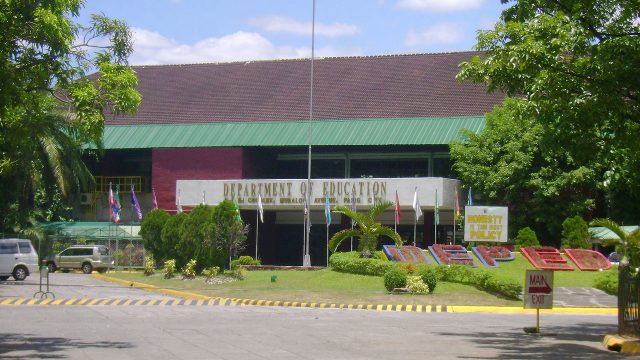
PHILSTAR FILE PHOTO

VICE PRESIDENT and Education Secretary Sara Duterte-Carpio unveiled a program that seeks to digitalize public schools nationwide and cited the gains of a pilot curriculum put in place last year to address the cut in learning competencies at an annual event attended by the President on Thursday.

“We will pursue full digitization and interconnectivity of all DepEd (Department of Education) offices and schools,” Ms. Duterte-Carpio said at the Basic Education Report 2024 at a hotel in Pasay City, where she also launched her department’s Digi-Ed (Digital Education) 2028 program.

In attendance, sitting beside her on the stage, was President Ferdinand R. Marcos, Jr.

Also addressing the event, Mr. Marcos mentioned the pilot run of the DepEd’s recalibrated curriculum — the Matatag K-to-10 program in 35 schools — and cited the need to continually train and upskill teachers.

“Teachers are incubators of ideas. Teachers are innovators. So as we move forward, let us keep the teachers as the standards for learning competencies,” he said in his speech after Ms. Duterte-Carpio’s address.

Moments earlier, the Vice President said the DepEd also vowed to build more classrooms and boost teaching skills but underscored the importance of the Digi-Ed 2028 program.

“This will be our flagship program to banner our commitment to adaptability and technological advancement,” she said.

Under the program, DepEd will ensure internet connectivity in schools, harness the potential of technology to advance teaching and learning methods, and pursue large-scale assessments using computer-based methodologies.

While 69% of DepEd schools nationwide have access to internet connectivity, “the truth is that most are limited only to faculty Rooms,” said Ms. Duterte-Carpio, noting talks with internet providers to boost teachers’ and learners’ Wi-Fi access.

Digi-Ed also pushes for the creation of electronic versions of textbooks.

“To leverage digital technology, we have started consultations with various publishers to facilitate the provision of electronic textbooks,” Ms. Duterte-Carpio said, noting that winning bidders in the procurement of textbooks for the so-called Matatag K-10 Curriculum will be required to “provide us with electronic copies that learners may access anytime.”

She said the agency will also promote the responsible and ethical use of technology, “especially with the world exploring Artificial Intelligence in both teaching and learning.”

Under the new jargon, DepEd will build a one-stop “online/offline platform open to teachers, learners and parents.” It will house all digital learning resources and applications in a bid to make learning and teaching materials “accessible” even in times of calamities.

“The portal also seeks to connect multiple DepEd systems in order to provide real-time education statistics and information to our stakeholders.”

Ms. Duterte said DepEd also seeks to “close the gap” in physical infrastructure,” vowing to prioritize schools that have makeshift or temporary classrooms and calamity-stricken areas with many unfunded calamity-damaged school buildings.

The agency will also focus on the construction of medium-rise school buildings in priority areas “with high classroom shortage but with limited buildable space,” she added.

The so-called Matatag curriculum that was launched last year cut down learning competencies down to around 3,600 from over 11,000 to prioritize literacy, numeracy, and socio-emotional skills, which are all deemed “foundational” by DepEd.

It is being piloted in 35 schools nationwide, including sites in Cordillera Administrative Region, Metro Manila, Ilocos Region, Cagayan Valley, Central Visayas, Soccsksargen, and Caraga.

Earlier this month, ACT Teachers Party-list said the government, through the years, has failed to implement a significant salary increase that is at par with the living wage.

The current DepEd leadership has remained “silent on the pleas of teachers and employees,” it said.

Ms. Duterte, in her report, said the agency has already “engaged the World Bank to provide us with a study on teacher salary.”

“We will continuously strengthen teacher support through Professional Development Programs for educators and school leaders, as well as training for teaching reading across grade levels,” she pledged. — Kyle Aristophere T. Atienza


China moves to double maritime militia presence at Mischief Reef

Chinese dredging vessels are purportedly seen in the waters around Mischief Reef in the disputed Spratly Islands in the South China Sea in this still image from video taken by a P-8A Poseidon surveillance aircraft provided by the United States Navy May 21, 2015. — U.S. NAVY/HANDOUT VIA REUTERS/FILE PHOTO

CHINA has increased its maritime militia presence at Mischief Reef in an apparent attempt to block a regular resupply mission by the Philippines to its troops stationed in the wreckage of a World War II ship grounded on Second Thomas Shoal, a think tank said on Thursday.

Most of China’s maritime militia vessels have been deployed to Mischief Reef, “where the Qiong Sansha Yu fleet is up from 14 last week to 35 now,” Raymond Powell, lead of Project Myoushu at the Gordian Knot Center for National Security Innovation, said in an X message.

He said China may be boosting its presence there until after the Philippines’ next resupply mission to Second Thomas Shoal, in which a World War II-era ship was grounded in 1999 to assert Philippine presence following China’s seizure of Mischief Reef in the Spratly Islands in 1995.

The United States-based think tank at the weekend China had “major maritime rotation” across the South China Sea as it deployed at least 27 Qiong Sansha Yu-class ships south into the Spratly Islands and east into Scarborough Shoal.

The movement was seen just days after the Philippines and China convened their eighth Bilateral Consultation Mechanism (BCM) meeting in Shanghai and agreed yet again to deescalate tensions through friendly talks.

On Monday, the Philippine military said it had postponed a resupply mission to BRP Sierra Madre because Unaizah Mae 1, one of its indigenous boats used for the activity, experienced “technical difficulty.”

“So, until such time that we determine that that vessel going to be used is seaworthy,” its spokesperson, Colonel Francel Margareth Padilla said. “That’s the time that we can reschedule another mission.”

During a resupply mission in early December, the wooden boat experienced “reckless and dangerous harassment at close range” and was rammed by a Chinese Coast Guard vessel. Philippine military chief Romeo Brawner, Jr. was onboard at that time.

A News5 report on Tuesday, which cited an unnamed senior military official, said the AFP had “dropped food, water and other supplies” from a plane to troops stationed on BRP Sierra Madre, which is manned by over a dozen troops. — Kyle Aristophere T. Atienza

SC, UN expert discuss freedom of expression issues

REPRESENTATIVES of media groups, artists, and freedom advocates hold up placards of emojis to champion freedom of expression during a press conference at a restaurant in Quezon City on Tuesday, ahead of the official visit in Manila of UN Special Rapporteur on Freedom of Expression and Opinion Irene Khan. — PHILIPPINE STAR/MICHAEL VARCAS

By John Victor D. Ordoñez, Reporter

THE SUPREME COURT (SC) and the United Nations (UN) Special Rapporteur for Freedom of Opinion and Expression Irene Khan met on Wednesday to discuss the importance of the Philippine Judiciary’s role in upholding the rule of law in cases involving free speech.

“We fully appreciate that the special rapporteur understands that there is always a balance between expression and security,” Senior Associate Justice Mario Victor F. Leonen said in a statement on Thursday.

“We have also in some of our cases already acknowledged that there may be differences in the regulation of hate speech and also performative speech from declaratory speech,” he added.

Ms. Khan is in the country for a 10-day visit that will take her to meetings with state officials, civil society groups, and human rights experts to discuss current policies and efforts to uphold the freedom of expression.

She met with Philippine Justice officials on Wednesday where they discussed the effective enforcement of laws and prosecution to safeguard members of the media.

The High Court justices also updated the UN official on the government’s implementation of Office of the Judiciary Marshals, which will manage a body that will ensure the protection of members of the Judiciary and court personnel from attacks.

Meanwhile, the Presidential Task Force on Media Security Executive Director Paul M. Gutierrez said the government and members of civil society need to work on ensuring a free and open civic space to allow transparency and accountability.

“The government remains steadfast in its efforts to foster an environment where anyone can freely express their opinion without fear,” he said during the country’s task force on media security welcome dinner for Ms. Khan on Tuesday.

VP Sara top choice for president in 2028 — poll

PNA PHOTO BY ALFRED FRIAS

By Kyle Aristophere T. Atienza, Reporter

VICE PRESIDENT Sara Duterte-Carpio is the top choice of most Filipinos for the 2028 presidential election, according to a recent poll, despite questions on the use of her secret funds and her silence on China’s incursions into maritime territories of the Philippines.

In a nationwide survey of 1,500 adults conducted by WR Numero last month, which was released late Thursday, Ms. Duterte-Carpio garnered a 36% voter preference.

She was also the top choice of Filipinos who are first-time voters (43%), likely voters (33%), non-participating registered voters (38%), and unregistered eligible voters (28%), the survey found.

Ms. Duterte-Carpio, who is also serving as Education secretary, was followed by Senator Rafael T. Tulfo at 23% and former Vice President Leni Robredo at 9%.

The list also includes Senator Maria Imelda “Imee” Marcos who garnered 7% voter preference, former senator Emmanuel “Manny” D. Pacquiao and Senator Robin C. Padilla at 5%, and Senator Ana Theresia Hontiveros-Baraquel and House Speaker Martin G. Romualdez at 1%.

The remaining 14% were undecided, WR Numero said.

House lawmakers in early October moved to strip Ms. Duterte-Carpio’s offices of 2024 confidential funds worth P650 million, after a report indicating that she spent 125 million in secret funds in December 2022. Amid the backlash, she eventually withdrew her request for such funds.

Still, the country’s second-highest official has not yet made any comment on China’s aggression within the Philippines’ exclusive economic zone in the South China Sea since taking office in June 2022.

El Niño rice damage tops P700K

REUTERS

THE EL NIÑO weather pattern has, so far, wrought damage to rice farms in Zamboanga del Norte amounting to P717,500, initial reports reaching the Department of Agriculture (DA) said.

“The damage and losses were incurred at vegetative stages of rice,” the DA’s bulletin issued on Thursday said, noting that a total of 22.3 hectares and 22 farmers were adversely affected in the region.

Earlier, the Philippine Atmospheric, Geophysical and Astronomical Services Administration (PAGASA) reported that a strong El Niño is currently affecting the Philippines and projected to last until the second quarter, bringing dry spells to 63 provinces.

A strong and mature El Niño is ongoing and is expected to continue through January-February 2024. Majority of global climate models suggest that El Niño will likely persist until the March-April-May 2024 season with a transition to ENSO-neutral (El Niño-Southern Oscillation) in the April-May-June 2024,” the DA said.

Weather conditions that are classified as neither El Niño nor La Niña are considered to be an ENSO-neutral occurrence.

To mitigate further losses in crops, the DA said that it would continue to monitor weather conditions and actual ground situations.

The department will also validate vulnerable areas and identify the interventions for farmers affected.

The promotion of drought-resistant crops and crop management information was also disseminated to local producers, it added. — Adrian H. Halili

China visa center opens in Makati

CHINA’S embassy in Manila opened a new visa application center in Makati City, which it expects to grow the number of Filipinos touring China.

“This new visa center, with its perfect location, a spacious reception hall, first-class facilities, sufficient reception capacity, and a professional management team, will greatly enhance the efficiency and experience of visa processing,” Chinese Ambassador to the Philippines Huang Xillian said in his speech at the new visa center, a copy of which was sent to reporters via Viber.

He said slightly more than 200,000 Chinese nationals visited the Philippines last year.

In 2019, 1.3 million Chinese visited the Philippines, Mr. Huang said, citing Chinese government data. Globally, China has set up 100 overseas visa application centers in 52 countries.

“My embassy has worked tirelessly to improve visa processing capacity and service quality despite a shortage of personnel among other bottlenecks,” he said.

“The exchange of personnel is a crucial basis for enhancing mutual understanding, deepening cooperation in various fields such as economy, trade, and culture, and sharing development opportunities between China and the Philippines,” he added. — John Victor D. Ordoñez

Camp Abubakar dev’t plan set

COTABATO CITY — Mayors of towns around the erstwhile main enclave of the Moro Islamic Liberation Front (MILF) in Maguindanao del Norte have united to push for Malacañang’s 20-year development plan that aims to transform the area into an economic hub.

Presidential Peace Adviser Carlito G. Galvez, Jr., and Brig. Gen. Eric A. Macaambac of the Navy’s 1st Marine Brigade joined local officials and representatives of the Bangsamoro regional government in the unveiling of the Master Development Plan for Camp Abubakar (MDCA) in Barira town last Wednesday.

Parang Mayor Cahar P. Ibay, speaking on Thursday on behalf of fellow local chief executives of nine municipalities, expressed their support to “help hasten its implementation.”

He affirmed their common sentiments that the MDCA would make a positive impact on the lives of Maranaw, Iranun and Maguindanaon residents, particularly those in agricultural enclaves around Camp Abubakar.

Bangsamoro Autonomous Region in Muslim Mindanao (BARMM) Chief Minister Ahod B. Ebrahim, also chairman of the MILF’s central committee, said the regional government will partly bankroll the housing projects for Moro villagers residing around Camp Abubakar, whose center is in Barangay Tugaig, Barira.

BARMM’s Labor Minister Muslimin G. Sema, who is chairman of the Moro National Liberation Front, told reporters on Thursday that he will urge MNLF representatives in the 80-seat Bangsamoro parliament to sponsor a resolution committing support for the Camp Abubakar development plan.

Since the enclave is surrounded by the municipalities of Kapatagan and Butig in Lanao del Sur; Buldon, Barira, Matanog, Parang, Sultan Mastura and Sultan Kudarat in Maguindanao del Norte; and Pigcawayan in Cotabato, a number of mayors have grouped themselves into the Iranun Peace and Economic Council to see the MDCA through, said Mr. Ibay.

Now a “peace zone,” Camp Abubakar lies on the Lanao del Sur and Maguindanao del Norte provinces. It was established in the 1980s by MILF founder Salamat Hashim and covers over 20,000 hectares.

The MDCA aims to transform the area into an economic hub and the Marines, the Police Regional Office-Bangsamoro Autonomous Region, and the Army’s 6th Infantry Division are committed to its implementation, according to Mr. Galvez. — John Felix M. Unson

Bill on medicine vouchers filed

REUTERS

A BILL seeking to provide vouchers for the purchase of medicines has been filed before the House of Representatives with the aim of tending to the needs of poor families identified under a community-based monitoring system.

House Bill No. 9797 aims to establish the Comprehensive Medicine Voucher Program under the Department of Health (DoH) to benefit also the informal sector workers and families not covered by the National Health Insurance Program, and other vulnerable groups like indigenous people with no medical insurance or access to health services.

“The proposed measure seeks to incrementally address this long-standing problem,” Party-list Rep. Wilbert T. Lee said in a statement on Thursday.

The Philippine National Formulary, an office under the DoH, must establish an accreditation system of private pharmacies and healthcare providers to ensure that a wide range medicines are available to the public.

“A big portion of the population, particularly the marginalized and vulnerable sectors, still face challenges in accessing essential health services due to financial constraints,” Mr. Lee said in the bill’s explanatory note.

During a House committee hearing last week, lawyer Romulo B. Macalintal said senior citizens are not granted discounts when purchasing vitamins and mineral supplements as it is not included in the implementing rules and regulations (IRR) of the Expanded Senior Citizens Act of 2010 (Republic Act No. 9994).

The DoH must also pay pharmacies for the vouchers in 30 days. Pharmacies also have the option to avail the amount payable to them by the government in their gross income tax compliance if certified by the Health department.

Funds to implement the medicine voucher program will be included in the budget of the DoH, the Official Development Assistance (ODA), the National Government’s share from the income of the Philippine Amusement and Gaming Corp. (PAGCOR), as well as the Philippine Charity Sweepstakes Office’s (PCSO) mandatory contributions, charity fund, and net of documentary stamp tax payments.

Those found issuing or forging false medicine prescriptions, acting or aiding as a dummy to an unqualified beneficiary, dispensing fake medicines, and refusing to issue medicines amid the presentation of a legitimate voucher will be penalized.

“No Filipino should suffer from a disease and lose one’s life only because they are unable to pay for necessary medical care or cannot afford to buy the needed medicine for their treatment,” Mr. Lee said. — Beatriz Marie D. Cruz

FAO says mango industry can take lead in raising food export competitiveness

FRUTAS DELIVERY FACEBOOK PAGE

By Adrian H. Halili, Reporter

THE PHILIPPINES needs to make greater use of its mango industry in expanding agricultural exports, the United Nations Food and Agriculture Organization (FAO) said.

“The Philippine mango has a real competitive advantage. It is known globally, it is well reputed for the quality of the product,” FAO Country Representative for the Philippines Lionel Henri Valentin Dabbadie told BusinessWorld.

“When it comes to international trade the Philippines has been done more as an importer than an exporter in recent years,” he added.

The Department of Agriculture (DA) has said that it is preparing to increase exports of agricultural good, and is in the process of drafting of a Philippine Agricultural Export Development Plan.

Agricultural exports declined 13.3% to $1.61 billion during the third quarter, accounting for 8.2% of total exports, according to the Philippine Statistics Authority.

Agriculture Secretary Francisco P. Tiu Laurel, Jr. has proposed the revival of mango exports to Japan, which had imposed stricter quality standards on Philippine fruit imports.

The DA said mango exports to Japan declined sharply since 2011 with Philippine producers having to meet upgraded sanitary and phytosanitary standards.

“The Philippines however does not have the best conditions for this, you have disasters, no big land to cultivate mangoes. That is why you need to focus on where you have competitive advantage and what products can compete,” Mr. Dabbadie said.

He added that the Philippines should grow mangoes with an eye towards meeting export market standards.

Mr. Dabbadie said that the FAO is working with the government to implement its One Country One Priority Product initiative.

The project aims to identify and prioritize essential agricultural products which have growth potential and the promise making farmers more prosperous.

“Especially mangoes. This what we are working on with the government,” he said.

The Philippines exported 12,548 metric tons of mangoes in 2023, according to the Bureau of Plant Industry. This was valued at about P2.9 billion.

BCDA to build 10,000 housing units in Clark

NEW CLARK CITY

THE Bases Conversion and Development Authority (BCDA) said it is completing a deal for the construction of 10,000 housing units in Clark ahead of the amendments to its charter.

In a recent briefing, BCDA President and Chief Executive Officer Joshua M. Bingcang said the project will be pursued via a joint venture contract with the Department of Human Settlements and Urban Development (DHSUD).

“We are about to finalize a deal with the DHSUD under Secretary Jose Rizalino L. Acuzar and a big local developer to build the first 10,000 units,” Mr. Bingcang said.

According to Mr. Bingcang, the three parties have signed a memorandum of understanding for the vertical housing project at an estimated initial cost of P10 billion.

“What we are waiting for are the details because we want to make sure that the housing… is not an eyesore or far from what we have envisioned for New Clark City,” he said.

“What the developer wants is to do it via a joint venture so that the risk is spread out to parties with the means and capability to handle the risk,” he added.

The DHSUD initially requested 100 hectares of land, but the BCDA has identified a 10-hectare site, for which the developer has submitted a design adapted to the new dimensions.

Set for groundbreaking this year, the residential project is expected to rise in New Clark City in Bamban, Tarlac.

“What will happen is should this housing project proceed ahead of the legislative arrangements we are pursuing, we’ll make sure that there will be a provision in the contract to make it convertible from leasehold into freehold,” Mr. Bingcang said.

The BCDA is currently seeking amendments to its charter which will allow the agency to convert 5% of its economic zones for disposal to freehold buyers, as against the current charter which only allows leasehold residential deals.

“The challenge of building housing inside is the leasehold limitations. Under the law, Clark and Subic and the rest of the economic zones are (allowed to pursue) leasehold arrangements,” he added.

He said that there is a need to address the housing needs of Clark as more than 138,000 people working in the economic zone, most of whom live outside it.

“One way to address the issues in leasehold is… working right now with the Congress to convert certain land into freehold but specifically targeting residential segments,” he said.

“It needs an amendment to our charter… Speaker Ferdinand Martin G. Romualdez is one of the proponents of (a freehold bill) and now it’s in the Senate,” he added.

In August, the House approved on third reading House Bill 8505 which seeks to amend Republic Act No. 7227 or the Bases Conversion and Development Act of 1992.

The Senate version of the bill is currently pending at committee and is set for approval on second reading by the end of the month.

The BCDA has said that the amendment will free up 1,856 hectares of land, which can potentially generate P451.26 billion-P1.45 trillion in revenue.

“If we are able to raise funds from the sale of some land, we will raise enough revenue for the government which can address the pension problem of the military,” Mr. Bingcang said.

“That is part of our proposal to earmark certain revenues of the BCDA to be sourced from sale of lands to address military pension issues, because that’s one of the biggest headaches of the government right now,” he added.

The amendment will give the BCDA 1,500 hectares of land in Clark to convert to freehold status, which can hold up to 750,000 housing units. — Justine Irish D. Tabile

World Bank proposes to restructure Cebu BRT project following delays

PHILSTAR FILE PHOTO

THE World Bank has proposed to restructure its financing package for the Cebu Bus Rapid Transit (BRT) project, citing delays in implementation.

In a document uploaded on its website, the bank said that the restructuring will involve revisions to the allocation of the loan proceeds; revisions to the results framework; an additional extension of the project closing date; and a change of selected project activities to keep within the scope of what was agreed during the project’s mid-term review.

“The project faced further delays after the first restructuring due to frequent staff turnover and delays in budget allocations and protracted procurement processes for services, goods and works,” it said.

“However, in the last 18 months, the project achieved notable progress and has been receiving the highest attention and commitment from all levels of the government. The project continues to remain relevant,” it added.

The World Bank Board first approved the $228.5-million project in 2014.

The package includes an International Bank for Reconstruction and Development loan worth $116 million; a $25-million grant from the Clean Technology Fund; counterpart financing by the Philippine government worth $30 million; and parallel financing amounting to $57.7 mill ion from the Agence Française de Développement (AFD).

The Department of Transportation has said that the launch of the full operations for the BRT has been pushed back to 2027.

The project’s last restructuring in 2021 extended the facility’s closing date by two years.

“After this first restructuring in June 2021, the project made some progress in ensuring appropriate deliverables from key consultants, but this momentum was soon lost,” it said.

It said that delays in implementation were mainly due to the “inability of the client to maintain sufficient capacity in the early years of the project, absence of regular allocations from the annual budget, which, in turn, delayed the procurement of and/or payments to the key consultants.”

However, it noted that the project performance “notably improved” when the Marcos administration assumed office in July 2022.

“Furthermore, the World Bank and AFD informed the government that a request for a second extension could be considered for completion of the activities as per the adjusted scope/design as agreed during and since the mid-term review,” it said.

“Since then, the project closing date was extended for the second time and third time respectively on June 30, 2023, and Sept. 30, 2023, essentially to allow the Government of the Philippines to secure necessary internal approvals before submitting request for restructuring to reflect the current scope/design of the project as discussed during and since the mid-term review,” it added.

The restructuring proposed to extend the project closing date to Sept. 30, 2026 from Jan. 30, 2024 previously in order to “complete delayed civil works and operationalize bus services that will allow achievement of the project development objective.”

The project cost was also proposed to be increased to $309.3 million, with the government now providing counterpart financing worth $112 million and the AFD committing $56.3 million.

Other proposed changes include the extension of the deadlines for compliance with the covenants on institutional and implementation arrangements; revision of the scope of operating costs; revisions to the results framework; reallocations between disbursement categories. — Luisa Maria Jacinta C. Jocson

Talent retention seen as top employer challenge in 2024

STOCK PHOTO | Image by Yibei Geng from Unsplash

EMPLOYERS will need to rethink their job offerings amid increasing voluntary turnover, estimated at 15.9% last year, risk and employment consultancy WTW said.

Patrick Marquina, WTW’s head of work & rewards for the Philippines, said that the labor market continues to shift despite inflation declining.

“Voluntary turnover and attrition continued to increase and reached 15.9% in 2023 compared to 14.2% in 2022,” he said.

“The typical reasons cited for leaving were better pay and growth opportunities, relocation or family migration and flexible work arrangements or work-life balance,” he added.

Mr. Marquina said that the increasing number of voluntary departure is likely to continue in 2024.

“Employers in the Philippines will continue to face significant talent challenges including the attraction and retention of key talent,” he said.

“Winning the talent race will require employers to stay focused on balancing the entire package of rewards they offer, both monetary and non-monetary, in order to remain competitive and align with employees’ needs and wants,” he added.

A compensation survey conducted by WTW found out that companies in the Philippines project an overall median salary increase of 5.7%, which was also the actual salary increase last year.

“The average salary increase has also continued to rise steadily over the last few years since the pandemic,” WTW said.

“However, inflationary pressure and concerns over a tight labor market continue to influence factors on salary budget planning,” it added.

The study found that workers in biopharma and life sciences, financial services, outsourcing, consumer products, and technology are projected to have salary increases higher than the 5.7% projected median salary across all industries.

Projected salary increases in financial services and outsourcing are at 6%, consumer products and retail trade 5.9%, and biopharma and life sciences 5.8%. 

Meanwhile, projected salary increases in the real estate, construction and engineering, and manufacturing sectors are 5.7%.

MILLENNIALS AND GEN Z
In terms of changing work dynamics, WTW said that it expects millennials and Gen Z to form 80% of the country’s workforce by 2025, after the Gen Z workforce grew 100% last year.

In 2023, the Gen Z workforce accounted for 19.9% of the labor force from 10% in 2022.

“With the significant workforce changes in the Philippines, employers are now being challenged to rethink their work models, optimize organizational structures and forecast people resources needed to operate,” WTW said.

In its research, WTW said that the employers are currently doing three things to address the changes in the workforce such as in digitalization, working conditions, and alternative talent sources.

“Two in five employers, or 44%, said that they are expecting greater use of technology and automation,” it said.

Meanwhile, a third of the 44% of the employers said that they are redesigning jobs to reallocate work between employees and new technologies.

However, only 14% of the respondents said that they are prepared for the use of alternative talent sources.

Mr. Marquina said that the changing work environment can involve “a range of interrelated people, business and operational risks.”

“Organizations that have effectively managed the risk accompanying work transformation are more likely to report outperforming their peers than those that have not when it comes to financial performance, employee retention and productivity,” he said. — Justine Irish D. Tabile

ADVERTISEMENT
ADVERTISEMENT