Home Blog Page 3718

Gov’t fully awards reissued three-year T-bonds

BW FILE PHOTO

THE GOVERNMENT made a full award of the reissued Treasury bonds (T-bonds) it offered on Tuesday at a higher average rate ahead of the fourth-quarter and full-year gross domestic product (GDP) growth report.

The Bureau of the Treasury (BTr) raised P30 billion as planned via the reissued three-year bonds it offered on Tuesday as total bids reached P62.434 billion, or more than twice the amount on the auction block.

The bonds, which have a remaining life of two years and 11 months, were awarded at an average rate of 6.007%, with accepted yields ranging from 5.95% to 6.05%.

The average rate of the reissued bonds rose by 10.7 basis points (bps) from the 5.9% quoted for the papers when they were first offered on Jan. 3. It was likewise 0.7 bp above the 6% coupon for the series.

The average yield was 6.9 bps above the 5.938% seen for the same bond series but 0.4 bp lower than the 6.011% quoted for the three-year bond at the secondary market before Tuesday’s auction, based on PHP Bloomberg Valu-ation Service Reference Rates data provided by the Treasury.

“The higher rates reflected local optimism ahead of the Philippine GDP report tomorrow,” a trader said in an e-mail on Tuesday.

Economic growth may have slowed in the fourth quarter of 2023, putting the full-year average below the government’s target, analysts said.

Philippine GDP likely expanded by 5.7% in the October-to-December period in 2023, based on a median forecast of 20 economists polled by BusinessWorld, slower than the revised 6% growth in the third quarter and the 7.1% expansion in the same period in 2022.

The same poll showed GDP growth may have averaged 5.5% in 2023, missing the Development Budget Coordination Committee’s 6-7% target.

If realized, the estimate for 2023 would be below the 7.6% expansion in 2022 and the slowest since the 9.5% contraction in 2020.

The Philippine Statistics Authority will release fourth-quarter and full-year 2023 GDP data on Wednesday.

T-bond rates rose in line with secondary market levels amid expectations of policy easing by the US Federal Reserve this year, Rizal Commercial Banking Corp. Chief Economist Michael L. Ricafort added in a Viber message.

The US central bank raised borrowing costs by 525 bps from March 2022 to July 2023, bringing the fed funds rate to 5.25-5.5%.

This week, the Federal Open Market Committee is holding its first policy review for this year. Markets widely expect policy makers to keep rates steady for the fourth straight meeting.

The Fed in December surprised the market with its dovish tilt, projecting 75 bps of interest rate cuts in 2024, sparking a blistering year-end risk rally, with traders pricing in easing as early as March, Reuters reported.

But since then, a slate of strong economic data, sticky inflation and pushback from central bankers have led markets to significantly dial back their expectations.

Markets now expect a 47% chance of a Fed rate cut in March, the CME FedWatch tool showed, down from 88% a month earlier. They currently anticipate 134 bps of cuts in the year, compared with 160 bps of easing a month ear-lier.

The BTr plans to raise P210 billion from the domestic market this month, or P60 billion via T-bills and P150 billion through T-bonds.

The government borrows from local and foreign sources to help fund its budget deficit, which is capped at 5.1% of gross domestic product this year or P1.39 trillion. — A.M.C. Sy with Reuters

Meralco announces substation upgrade in Bulacan

Source: Meralco

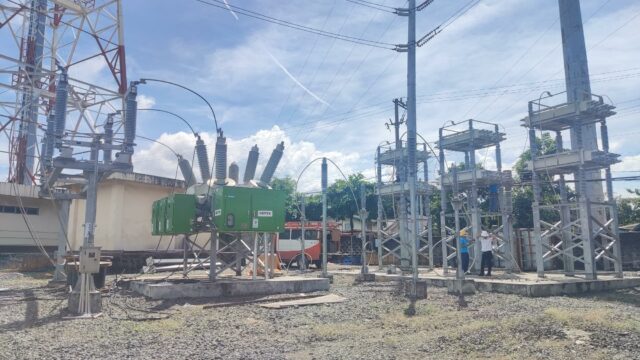
MANILA Electric Co. (Meralco) has installed a 115-kilovolt (kV) capacitor bank at its Duhat Substation in Bocaue, Bulacan, aiming to ensure a reliable electricity supply for customers in the province, the power distribution company announced on Tuesday.

The energization of the capacitor bank improves voltage regulation and system efficiency, as well as reduces system loss, Meralco said in a statement.

It helps prevent the risk of power interruption arising from the growing problem in the system, specifically due to the deficiency of megavolt-ampere reactive (MVAR) in the areas of Bocaue, Bulacan, and other adja-cent municipalities, the company added.

The project involves the installation of a 50-MVAR, 115-kV 63-kilo-ampere power circuit breaker, and other ancillary equipment.

In May last year, Meralco energized its 115-kV gas-insulated switchgear substation in Laguna, developed in partnership with European design company STMicroelectronics, Inc. (STMI).

Situated inside the Light Industry and Science Park, the substation was designed to facilitate the upgrading of STMI’s electric service.

Meralco’s controlling stakeholder, Beacon Electric Asset Holdings, Inc., is partly owned by PLDT Inc.

Hastings Holdings, Inc., a unit of PLDT Beneficial Trust Fund subsidiary MediaQuest Holdings, Inc., holds an interest in BusinessWorld through the Philippine Star Group, which it controls. — Sheldeen Joy Talavera

Arts & Culture (01/31/24)


MCAD exhibit inspired by gaming

THE MUSEUM of Contemporary Art and Design (MCAD) Manila presents the exhibit “30 Lives” from Jan. 31 to March 31. The exhibit title is derived from the extra 30 lives that video players get after entering the “Konami code” (up, up, down, down, left, right, left, right, B, A, Start) in a console’s controller. It presents the various ways in which people engage in the world of play and game, or gaming, as the contemporary world now calls it. Play is a space that we occupy temporarily, as are games, the latter governed by more formal rules. Both are diversions from the everyday, and this interim from reality — whether occupying a physical space (such as a basketball court) or a mental space (such as a board game or video game) — becomes a site where critique, and even subversion, can be constructed. The exhibition features works of Harun Farocki, Lu Yang, Heecheon Kim, Ikoy Ricio, and Miguel Inumerable. Also featured are games developed by students of the Interactive Entertainment and Multimedia Computing program of the De La Salle-College of Saint Benilde. MCAD Manila is at the G/F of the Design + Arts Campus of the De La Salle-College of Saint Benilde. Free to the public, the museum opens Tuesdays to Saturdays, 10 a.m. to 6 p.m.; and Sundays from 10 a.m. to 2 p.m., except holidays. To book a visit, go to https://www.mcadmanila.org.ph/visit.


Rama, Hari returns for ARDP’s 2024 dance season

AFTER a highly acclaimed 2023 run, Rama, Hari returns onstage by popular demand, opening the 2024 season of Alice Reyes Dance Philippines (ARDP). The production is the only collaboration that features the work of five National Artists: Alice Reyes for the direction and choreography, Ryan Cayabyab for the music, Bienvenido Lumbera for the libretto, Salvador Bernal for the production design, and Rolando Tinio for the English lyric translations. The production, which has both singers and dancers portraying each role, features singers Arman Ferrer and Vien King and dancers Richardson Yaado and Ejay Arisola as Rama; singers Karylle Tatlonghari, Shiela Valderrama-Martinez, and Nica Tupas and dancers Monica Gana and Katrene San Miguel as Sita. There will be 2 and 7:30 p.m. shows from Feb. 16 to 18 and Feb. 23 to 25 at the Samsung Performing Arts Theater in Circuit, Makati. Reserve tickets via TicketWorld or ardancephilippinesinc@gmail.com.


Artistespace to hold Blanco family exhibit

ON JAN. 31, the Belmont Hotel will open the exhibit “Hiraya: The Legacy of the Blanco Family,” curated by Artistespace, and done in partnership with the Blanco Family Museum. In observance of National Arts Month, the exhibit recognizes the Blanco family’s four decades of contributing to promoting arts and culture. The exhibit — which showcases works by Jose Glenn Blanco, Noel Blanco, Michael Blanco, Joy Blanco, Alejandro, Jan Blanco, Gay Blanco, and Peter Paul Blanco — will help raise funds for Habitat for Humanity’s Bahay Ni Juan Project. It will run from Jan. 31 to Feb. 29.


Alice in Wonderland-inspired dance play on bullying

ADA, Lundag sa Hiwaga, a full-length play which delves into teenage bullying, self-empowerment, and resilience through a tale of mythical Philippine folklore creatures, will be staged starting Feb. 1. Inspired by Alice in Wonderland, the dance performance follows high school student Ada, who faces day-to-day intimidation from her once close friend after an incident during a seemingly innocent game. Her life takes a positive turn after she stumbles upon a magical realm which is inhabited by mythological beings such as the bakunawa (a serpent-like dragon), diwata (fairies), duwende (dwarfs), and kapre (tree demon). The 90-minute production features De La Salle-College of Saint Benilde Dance Program students. It is written by Jay “BJ” Crisostomo IV, directed by Madonna Tinoy and Mycs Villoso, and produced by Nina Anonas. Ada, Lundag sa Hiwaga will have performances from Feb. 1 to 3, 1 and 6 p.m., at the 5F Theater of the Benilde Design + Arts Campus, 950 Pablo Ocampo St., Malate, Manila. Tickets are available for P600. Learn more at https://www.facebook.com/benildearts.


Sustainable indigenous crafts championed in exhibit

THE BRITISH COUNCIL and the Forest Foundation Philippines celebrated the culmination of the Woven Networks program through the opening “ReSTORYation: Weaving Creators, Communities and Connections,” an exhibit mounted at the College of Home Economics (CHE) Museum in the University of the Philippines Diliman (UPD). Woven Networks supported grantees who worked across different forest landscapes and islands in the Philippines such as Isabela, Bukidnon, Samar, Leyte, and Palawan. The exhibit showcases bamboo fabrics woven by Isabela’s Indigenous Enabel Craft and their partner social enterprise Panublix. Grantee Emmanuelle Andaya also worked with the Kalandang Higaonon Weavers in Bukidnon, also called Peace Weavers, while woven products from Samar and Leyte done in collaboration with British-Filipino designer Diana Auria are also on display. The exhibit runs until March 11 at the UP CHE Costume Museum, UPD. Tours are also available; e-mail UP CHE Costume Museum at checostumemuseum.upd@up.edu.ph for reservations.


Met’s permanent collection unveiled in new exhibit

AFTER holding a series of stand-alone exhibits since moving to its new location at Bonifacio Global City (BGC) from its long-time home along Roxas Blvd. in Manila, the Metropolitan Museum of the Philippines’ will again show items from its own collection in the new exhibit, “Histories and Horizons: The Metropolitan Museum of Manila Permanent Art Collection.” It includes paintings, sculptures, drawings, prints, assemblages, some photographs, and a couple of video art pieces. The exhibit looks at history not as a concluded past but as interpretations of events in the past that continue to influence the present. The exhibition will open on Feb. 1 at the 3F North Gallery of the Metropolitan Museum in Bonifacio Global City.

Sarah Jessica Parker, husband Broderick play troubled couples on London stage

PLAZA SUITE-THESAVOYTHEATHER.COM

LONDON — Sex and the City star Sarah Jessica Parker is making her debut in London’s West End alongside her husband Matthew Broderick — in a play where they portray three troubled couples.

That might sound like a challenge for a husband-and-wife team, but Ms. Parker and Mr. Broderick told Reuters they enjoyed appearing together in Neil Simon’s comedy Plaza Suite.

“It’s very easy to work together I find… She’s so good, so that helps,” Mr. Broderick said after a gala performance on Sunday night, attended by actors Martin Freeman and Marisha Wallace alongside other celebrities.

Plaza Suite was set to open in New York in spring 2020 but the curtains came down when the COVID-19 pandemic hit. It opened in 2022 and has now moved to London’s Savoy Theatre.

“I think we understand now what it is… in the beginning it seemed daunting and potentially a catastrophe before we ever did it because there was so much to figure out together,” Ms. Parker said.

“I wasn’t concerned about him, I was more concerned about me. But we sort of have a language as we all do in the cast and the company. It’s great, I think also especially being here it’s nervous making… but to have somebody that you feel so happily reliant upon, it’s made it very comforting.”

Both are no strangers to the stage. Ms. Parker made her Broadway debut aged 11. Ferris Bueller’s Day Off star Mr. Broderick has two Tony Awards and last performed in London in 2019.

The play, which opened this month and has had mixed reviews, runs until April 13.
Asked how it felt to bring the show to London, Ms. Parker said: “Thus far okay… it’s been really lovely, it’s been fun. And I think we’ve both been very touched by the reception of the audience. They’ve been so spirited and enthusiastic it’s been really wonderful.” — Reuters

Hann Resorts brings Banyan Tree to New Clark City

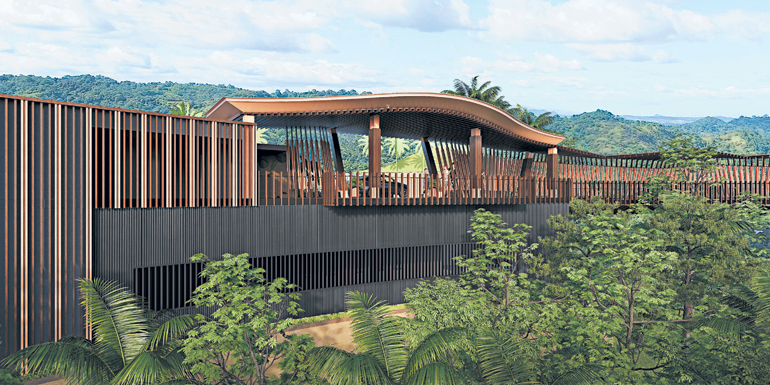
The Banyan Tree Main Building is an eco-luxury structure featuring a central swimming pool, a health club, a tropical garden spa offering a signature rainforest hydrothermal experience, a Banyan Tree Gallery showcasing local and handmade crafts, and an award-winning Thai restaurant called Saffron.

Banyan Tree Hospitality Group collaborates with Hann Resorts to redefine luxury in the Philippines

Banyan Tree, one of the premier and most well-known hospitality groups in Asia, is set to debut its first resort within the expansive 450-hectare HANN RESERVE in New Clark City, Tarlac. Banyan Tree’s entry into the Philippines signifies a ground-breaking collaboration with Hann Resorts to create a distinguished experience in the country.

HANN RESERVE, the second brand in the portfolio of Hann Resorts is the master-planned luxury integrated resort development in New Clark City, Tarlac. Nestled in lush greenery and mountains of Capas and Bamban, it promises to be a haven of tranquility, offering a resplendent fusion of luxury, sustainability, and cultural richness. It is strategically positioned just a 15-minute drive from the Clark International Airport and a convenient two-hour drive from Manila.

The estate is set to become the epitome of sophisticated living, featuring exclusive PGA-affiliated player development facilities, three 18-hole championship golf courses, clubhouses, a mixed-use commercial center, premium villas and residences, a 10-hectare public park, and a collection of luxury resorts.

Guided by the principles of ecological sustainability and cultural sensitivity, the architecture of Hann Reserve draws inspiration from the vibrant heritage of the Philippines, specifically those of the provinces of Tarlac and Pampanga.

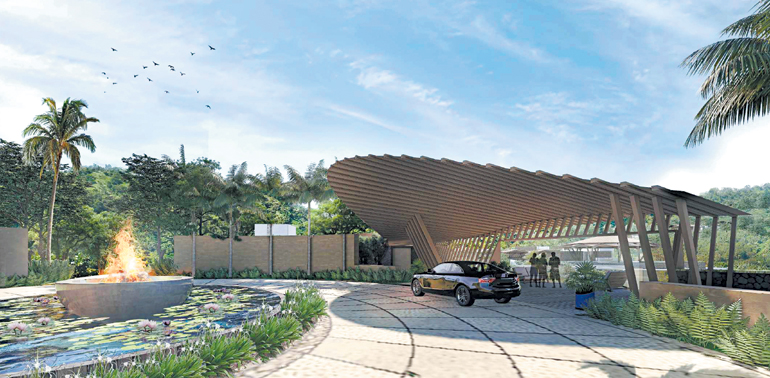
The integrated resort development seamlessly blends eco-friendly and sustainable materials to create architectural marvels that harmonize with the surrounding landscape.

Hann Reserve is a game-changer for luxury travel in the Philippines. With the breathtaking beauty of New Clark City as our backdrop and the synergy of Hann Resorts with Banyan Tree as the driving force, we are proud to present a landmark development that offers an unparalleled golfing and leisure experience for discerning travelers of all kinds,” said Dae Sik Han, chairman and chief executive officer (CEO) of Hann Resorts.

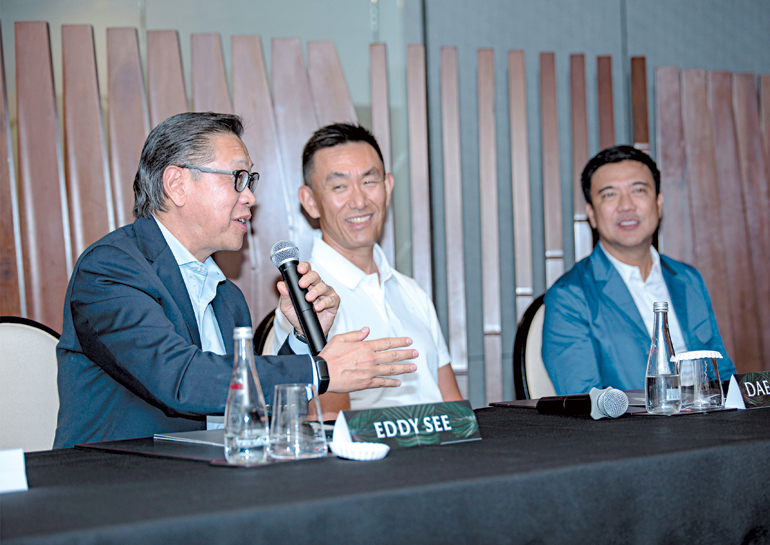
Eddy See, CEO of Banyan Tree Group, similarly echoed his excitement. “Although people associate Banyan Tree with luxury, one of the key things that is very important is the sense of emotion — the sense of feeling connected to the place through experiences that evoke memories that you will always remember for many years to come. Sense of place is very fundamental concept for any Banyan Tree development, and we have found it in Hann Reserve,” he said.

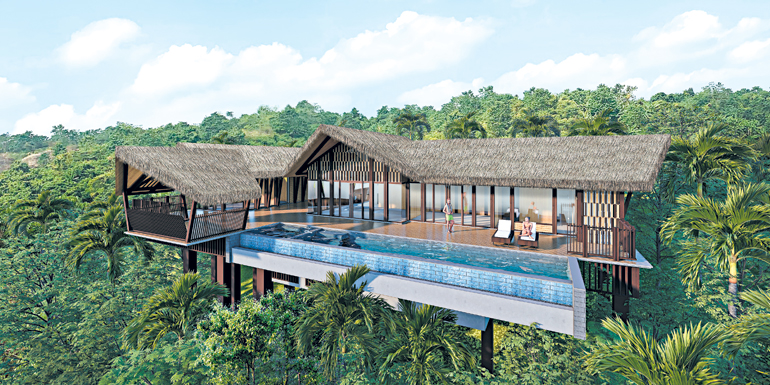
The high-end villas will come with alfresco relaxation areas, plunge pools, sun decks and inviting indoor living spaces.

Banyan Tree New Clark City will feature fifty high-end pool villas designed in its signature nature-integrated style. Each villa, spanning a spacious 106 square meters, is a sanctuary of its own, featuring alfresco relaxation areas, plunge pools, sun decks, and inviting indoor living spaces.

Guests will also have access to leisure facilities including a central swimming pool, health club, and a tropical garden spa offering the signature rainforest hydrothermal experience.

The Arrival Area seamlessly integrates landscaping, native flora, and eco-friendly architecture.

A Banyan Tree Gallery will retail local and handmade crafts, adding a touch of local flavor to the resort experience. Dining options will be diverse, including the Group’s award-winning Thai restaurant, Saffron, alongside dedicated event spaces for special occasions.

At the core of its design, Banyan Tree aims to deliver an immersive experience that celebrates the natural landmarks of Pampanga and Tarlac, prominently featuring Mt. Arayat and Mt. Pinatubo.

Banyan Tree and Hann Resorts will create a genuinely inclusive community at the heart of the project by prioritizing the employment of qualified locals and indigenous people of Tarlac and Pampanga, from construction to day-to-day operations.

The design of Banyan Tree New Clark revolves around principles that are ecological yet naturally luxurious, where we express our respect for the local environment through creative design, architecture and green building practices. We also preserve the cultural integrity of the land and its people by exerting conscientious effort to preserve indigenous flora and fauna,” said Neki Liwanag, vice-president of Hann Phils. for Real Estate and Property Development.

STRATEGIC PARTNERSHIP FOR UNMATCHED EXCELLENCE

As part of a long-term strategic partnership agreement between Accor and Banyan Tree Group signed in 2016, Banyan Tree New Clark City will be co-managed by Banyan Tree Group and Accor. It will be the country’s first example of Banyan Tree’s renowned dedication to well-being and sustainability alongside Accor’s expertise in managing world-class hospitality establishments.

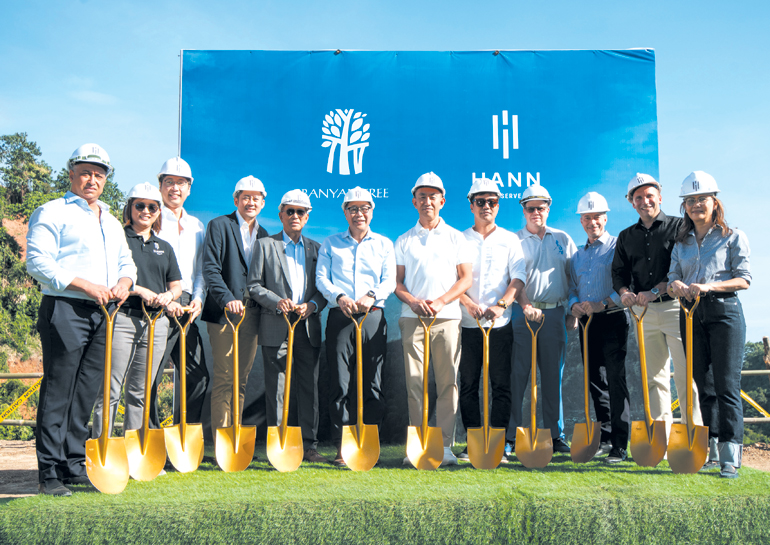
The grand unveiling of Banyan Tree New Clark City took place with a ceremonial groundbreaking attended by key industry leaders and dignitaries including Banyan Tree CEO Eddy See, Ennismore Senior Vice-President Francois Baudin, Hann Resorts Chairman and CEO Dae Sik Han, together with Ennismore Regional Vice President of Operations Sylvain Pasdeloup, Accor Vice-President for Development Chris Cho, BCDA Chairman Delfin Lorenzana, and Tarlac Gov. Susan Yap. The ceremony was then followed by an intimate press briefing for the local press, as well as a celebration attended by Department of Tourism (DoT) Undersecretary Shereen Gail Yu-Pamintuan and BCDA President Jake Bingcang.

Tourism Undersecretary Shereen Gail Yu-Pamintuan graced the press briefing following the groundbreaking of Hann Reserve.

Following the ceremony, an intimate press briefing for the local media and a celebration at Swissotel Clark brought together prominent figures, including DoT Undersecretary Shereen Gail Yu-Pamintuan and BCDA President Jake Bingcang, among others.

The event underscored the shared vision and commitment of the partners to create an iconic destination that will redefine luxury travel in the Philippines.

We are excited for this development as we have always believed that Central Luzon can be one of the premier tourist destinations in the country. Tourists are seeking more authentic experiences and this is exactly what Banyan Tree is all about,” Ms. Yu-Pamintuan.

The press briefing was attended by key officials from Banyan Tree Group, Hann Resorts and BCDA, among others.

For BCDA’s part, Mr. Bingcang said: “It is something that will not only make Clark very proud but the entire country as well, as it will be the first of its kind in the Philippines. Rest assured that we at BCDA will provide full support to make sure Hann Reserve finds success in this big vision for the country.”


Spotlight is BusinessWorld’s sponsored section that allows advertisers to amplify their brand and connect with BusinessWorld’s audience by enabling them to publish their stories directly on the BusinessWorld website. For more information, send an email to online@bworldonline.com.

Join us on Viber at https://bit.ly/3hv6bLA to get more updates and subscribe to BusinessWorld’s titles and get exclusive content through www.bworld-x.com.

Tires to treasure: Upcycling business transforms discarded inner tubes to bags

By Miguel Hanz L. Antivola, Reporter

CHAMPIONING an eco-ethical upcycling enterprise takes resourcefulness, creativity, and innovation to sustain operations, according to entrepreneur Lyndon Ecuacion.

When Mr. Ecuacion and his wife were immersed in island backpacking in the 2000s, they sought dry compact bags to protect the cameras and electronic equipment they brought with them on their trips.

Due to limited availability back then, they fashioned their own bags from tires scattered on beachsides, which gave the couple an idea for a new venture.

“By 2010, malls started banning plastic use, and the push of the government was more on environmental consciousness,” Mr. Ecuacion, co-founder of Siklo Pilipinas, said in an interview with BusinessWorld.

This inspired them to grow their resourcefulness for business, he added.

Mr. Ecuacion scouted for discarded innertubes from neighboring vulcanizing shops, used his exposure in factory production, and modified five secondhand sewing machines to accommodate retail offerings.

“I wanted to learn the line production myself,” he said. “I needed to know how to do it myself, so I can teach our future workers.”

“But I also needed to have the machines’ components fabricated just for it to work because rubber was sticky, unlike leather that slips,” he added.

They finally set up a stall at a community weekend market in 2012, which built a patronage that encouraged them amid challenges in handling the unconventional bag material.

“Our crude work was always sold out. The response was good,” Mr. Ecuacion said.

INNERTUBE BENEFITS

Mr. Ecuacion saw a unique opportunity to reap the benefits and make another life out of what was considered waste material.

He noted innertubes’ heat tolerance, pliability, and durability as the main advantages of the material. “It also catches the attention of people. It makes them curious.”

“But it also had quirks that made it ‘imperfect,’” Mr. Ecuacion added, noting that each bag is uniquely handmade.

To bridge that gap and build market confidence, Siklo Pilipinas offered lifetime support and a warranty of two years for each bag.

GROWTH

However, Mr. Ecuacion noted that the business grew over the years by primarily banking on design trends and the growing public’s environmental consciousness, without much marketing spend.

“We just did casual promotion because repeat customers spread the word,” he added on having a basic online presence via website and social media.

Siklo Pilipinas has survived for over a year — having upcycled over 30 tons of discarded tire innertubes, regularly employing seven workers, and sustaining a demand for corporate giveaways and some exports.

“We aren’t business experts; everything is usually just hit or miss,” Mr. Ecuacion said.

“Whatever comes our way, we just find solutions and don’t deal too much on projections,” he added.

UPCYCLING OUTLOOK

For Mr. Ecuacion, relying on his creative aptitude is the key to sustaining the business.

“I’m always excited to create something, although not everything works,” he said. “We welcome failure like a puzzle that needs to be solved.”

This kind of thinking is needed, especially in an upcycling venture, he added, which is vital to support the growth of the circular economy in the country.

Circular economies minimize waste and promote sustainable use of resources.

“We welcome competition because it fosters growth [of the upcycling industry],” he said on inviting more players to join the market.

After receiving invitations throughout the years, Mr. Ecuacion and his wife eye the formation of a local upcycling organization in the Philippines to be on par with the events and initiatives of other countries.

What’s ahead for the Philippine economy

Image from Freepik

The Philippines has been regarded as one of the fastest-growing economies in Southeast Asia. With its abundant natural resources, strategic location, and resilient workforce, the country has ample growth opportunities in various sectors.

According to S&P Global Market Intelligence, the Philippines economy has continued to show strong recovery, with GDP growth strengthening to a pace of 5.9% year on year in the third quarter of 2023.

However, the Philippine government has revised down its growth target for 2024 to 6.5%-7.5% from the 6.5%-8.0% range due to inflation and tepid consumer spending weighing on the economy. Despite this, the Asian Development Bank (ADB) forecasts the Philippine economy to grow by 6.2% in 2024, underpinned by rising domestic demand, a recovery in services, and rising public infrastructure spending.

A similar report from the S&P Global Market Intelligence revealed that the Philippines is projected to grow rapidly over the next decade, with total GDP increasing from US$440 billion in 2023 to US$800 billion in 2030, and is expected to become one of the Asia-Pacific region’s one trillion-dollar economies by 2033.

In line with this, consumer spending is expected to remain strong as employment continues improving and remittances remain steady. The ADB emphasizes that public investment and private spending will support economic growth, with infrastructure developments and sustainability initiatives expected to boost consumption, jobs, and investment.

Investment priorities

The country is currently making significant efforts to increase investments in both human and physical capital to aid economic growth. The strong labor market, continued public investments, and recent investment policy reforms are expected to have positive effects that could stimulate private investment and drive domestic demand.

However, one of the major challenges in achieving a sustainable economic growth is the infrastructure gap as it limits the country’s competitiveness and productivity. The infrastructure deficit in the Philippines encompasses transportation, energy, water, and digital connectivity.

The lack of adequate and modern infrastructure not only impedes the day-to-day lives of citizens but also acts as a bottleneck for economic activities. Traffic congestion, frequent power outages, water scarcity, and limited internet access hinder productivity and investment, challenging the nation’s overall economic potential.

The digital divide is yet another facet of the infrastructure gap. Unequal access to the internet and outdated telecommunications infrastructure hinders the participation of remote and underserved communities in the digital economy.

According to the International Monetary Fund (IMF), the Philippines needs to expand its infrastructure push to become an upper middle-income country and reduce poverty. In 2024, the country aims to maintain high infrastructure spending at 5%-6% of the annual GDP.

In a statement, Department of Budget and Management (DBM) Secretary Amenah F. Pangandaman said that the government has allocated P1.3 trillion in the FY 2023 National Budget to sustain the “Better, More” program, which includes investments in roads, flood control infrastructure, local infrastructure development, buildings, and railways.

On the other hand, the private sector participation in infrastructure projects is important for filling the financing gap and making progress in infrastructure development. In fact, the government has implemented the Public-Private Partnership (PPP) Code, which aims to generate additional funds to cover the country’s P23-trillion infrastructure gap.

The PPP Code is designed to create a rules-based, transparent, and efficient PPP framework, allowing the transfer of capital costs and financial risks to the private sector while giving the private sector the opportunity to gain profit. This move is expected to help the Philippines catch up with its Asian neighbors in terms of foreign direct investments and infrastructure development.

Energy crisis is also a major hindrance in achieving economic growth as the Malampaya natural gas fields, which provide 30% of Luzon’s energy consumption, are expected to be depleted by 2024-2025. Unfortunately, the country is behind schedule in developing solutions, and an additional 52 gigawatts of power capacity will be needed by 2045.

Despite the country’s considerable potential for renewable energy, there is a significant portion of the population without reliable access to electricity. Remote islands and rural areas often face difficulties in connecting to the centralized power grid, leading to energy poverty. As of 2022, the country’s energy mix is composed of coal (31%), natural gas (4.2%), renewable energy (32.7%), and oil-based solutions (32.2%).

However, the government has allowed a full ownership of renewable energy projects, including the exploration, development, and utilization of solar, wind, hydro, and ocean or tidal energy resources. They also envisioned increasing the renewable energy (RE) share in the supply mix to 35% by 2030 and 50% by 2050, presents a significant opportunity for private sector investment in RE. Hence, the Philippines has set its sights on increasing energy efficiency, adopting new technologies, and developing resilient and climate-proof energy infrastructure with the private sector, international donors, and development partners to achieve its ambitious energy transition goals is the country.

Subsequently, companies are recognizing the potential for profit in sustainable ventures while contributing to national goals of reducing carbon emissions. They have started to look for ways to incorporate sustainability into their business models, including investing in renewable energy, reducing waste and emissions, and adopting sustainable practices throughout their operations.

Philippine corporations are taking advantage of solar and wind power to reduce their reliance on fossil fuels. They are also adopting new technologies and practices to reduce the amount of waste they produce and the emissions they generate. For example, some companies are using biodegradable packaging materials, while others are implementing recycling programs to reduce the amount of waste they send to landfills.

Companies are also investing in research and development to improve the efficiency and effectiveness of renewable energy systems, which is leading to new breakthroughs in the industry.

Furthermore, the growth in the renewable energy sector is not only contributing to a cleaner environment but also fostering economic development through job creation. Renewable energy companies are hiring engineers, technicians, and other skilled professionals to design, build, and maintain renewable energy systems.

Challenges in sustaining growth

Alongside these growth opportunities, nonetheless there are challenges and risks that need to be addressed, including the potential slowdown in major advanced economies, geopolitical tensions, inflation stickiness, a global economic slowdown, and high inflation.

Inflation, in particular, could impact the cost of doing business and consumer purchasing power, requiring strategic measures and policy adjustments to maintain economic stability. The ASEAN+3 Macroeconomic Research Office (AMRO) has projected that inflation for 2024 will settle at 3.6%, falling within the government’s target of 2% to 4%. The Bangko Sentral ng Pilipinas has also expressed concerns about missing the inflation target in 2024, worrying about the risks that are tilting to the upside, which could further push inflation above the target range.

It is thus important for the government and relevant stakeholders to mitigate risks towards creating a favorable environment for sustained economic growth. — Mhicole A. Moral


Build bigger, better, bolder — railways

FLORIAN VAN DUYN - UMSPLASH

AT the Philippine Infrastructure Summit held on Nov. 23, 2023, Undersecretary Cathy Fong of the Department of Finance (DoF) also highlighted the improvements in the new Public-Private Partnership (PPP) Code of the Philippines. She cited the integrated, simpler, and streamlined processing that will make the approval time shorter and that ensures sustainability of projects since the new Code protects the proponents from any substantial changes in policies and legal requirements that may result from changes in the Administration. From feedback that we got from the series of roadshows we conducted in Madrid and Barcelona in April and November of last year, one of the major complaints of investors who have had experience doing business in the Philippines was precisely the unsettling changes in policies and legal requirements affecting FDIs with every new Administration over the last 20 years or so.

These uncertainties that potential foreign investors faced especially hounded the railway sector where there were constant changes in policies from one Administration to another. No wonder, as Senator JV Estrada said in his Keynote Speech, in the latest available Global Competitiveness Report, we ranked 102nd out of 141 countries, with the score of 41.5 out of 100 in terms of our Transport Infrastructure. Among the Asian counties, the Philippines received the lowest rated railway service with the score of 2.5, ranking 86th out of 101 countries globally. Meanwhile, on the ground, this results in long lines at terminals, and congested roads. As we experienced during the Christmas season of 2023, Filipino commuters have suffered untold troubles in traffic jams, congested terminals, and other inconveniences while traveling because of an inefficient transport system.

Senator Estrada referred to a most relevant quote that gives light to the woes of Filipino commuters. He cited Gustavo Petro, President-elect of the Republic of Colombia: “A developed country is not a place where the poor have cars. It’s where the rich use public transportation.” Those who have visited the richest country in Southeast Asia, Singapore, know exactly what this means. In his presentation, the Senator gave the assurance that the present Administration has a very well-defined mass transport long-term plan. A slide in his Power Point presentation showed a growth triangle that will be the basis of a railway transport plan for the most populous island of the Philippines, Luzon. In this vision of a growth triangle, an entire mass railway transport system will emanate from a triangle connecting the Bataan-Subic Freeport in Central Luzon to Tutuban in the National Capital Region, forming a triangle by connecting with the Batangas Port in Calabarzon. This is in line with a study undertaken by the Center for Research and Communication (CRC) in partnership with USAID, more than 10 years ago identifying the Batangas Port as a replacement of the Manila Port as the gateway from Luzon to the rest of the Philippines and the rest of the world. The equivalent port in the Visayas is Iloilo, and in Mindanao it is Cagayan de Oro which has an advantage over Davao because of its greater geographical accessibility to sea transport.

The Philippines has a long way to go to be able to match the railway systems of Indonesia and Vietnam which already have functioning bullet trains for rapid mass transit. It would be ideal, as shown in Senator Estrada’s Power Point presentation, if part of the rail system going from La Union province in the north to Sorsogon in the south could already incorporate some bullet trains. These can be constructed by some of the prospective investors from Spain, Japan, and South Korea which have a great deal of experience in constructing rapid transit systems. Similar railway systems are being programmed for the island of Panay, and the second largest island in the archipelago, Mindanao.

It is a pity that the active participation of China in building a modern railway system in Mindanao has been canceled for political reasons. The Better Mass Transport Plan prepared by the Government already envisioned a Mindanao Railway Project (MRP) system connecting Zamboanga City in western Mindanao to Tagum City, Davao City, and Digos City in eastern Mindanao. The MRP is vital to make this second largest island, which is very well endowed with agricultural resources, the main food basket for both the domestic and foreign markets.

There is hope, however, that Japan can replace China as the main funding source for the MRP as recently announced by House Assistant Minority Leader Johnny Pimentel, who represents the second congressional district of Surigao del Sur and is a member of the House committee on flagship programs and projects. There is already a precedent: the Japan International Cooperation Agency (JICA) is already providing the Philippine Government with low-interest ODA to fund the Metro Manila Subway. Phase 1 of the MRP is projected to cost P83 billion and would involve the construction of a 102-kilometer train line linking Tagum City, the provincial capital of Davao del Norte, with Digos City, the provincial capital of Davao del Sur, through Davao City. Japanese consumers would benefit from more efficient transport in these areas because they are the sources of significant exports to Japan of bananas and pineapple products.

An integral part of the Mass Railway Transit Plan is to convert major railway stations into Economic Hubs that would include the components of a self-contained urban center such as areas for housing, a business district, a commercial area, an industrial estate, and an agri terminal.

It cannot be repeated too often that manufacturing is not the only route to the full industrialization of a country. Industry also encompasses infrastructure, construction, public utilities, and mining. Even if we continue to lag behind our East Asian neighbors in the manufacturing sector, we can still be a highly industrialized nation if we fully implement the Master Plan Priorities presented by Senator Estrada in his Keynote Address.

These priorities have been clearly outlined by the Marcos Jr. Administration: the Transport and Logistics Infrastructure Program; the Energy Infrastructure Program; the Water Resources Infrastructure Program; the Information and Communications Technology (ICT) Infrastructure Program; the Social Infrastructure Program; the Agri-Fisheries Modernization and Food Logistics Infrastructure Program; and Asset Preservation and Maintenance Strategies.

The view of the Department of Public Works and Highways was presented by Undersecretary Maria Catalina E. Cabral, Undersecretary for Planning and PPP Service. From her we get a more micro view of the Strategic Infrastructure Programs aligned with the Philippine Development Plan (PDP) 2023 to 2028.

There are three strategic objectives of the PDP: 1.) a Traffic Decongestion Program; 2.) Seamless and Inclusive Connectivity via National and Local Linkages; and, 3.) Resilient and Sustainable Communities. Under first objective, the following are the necessary construction projects: a.) high-standard highways and expressways; b.) by-pass and diversion roads; and, c.) flyovers, interchanges and underpasses. For the second objective, the following must be addressed: a.) the Daang Maharlika Highway (N1); b.) the inter-island linkage bridge program; c.) gaps and missing links along national roads; d.) nautical highway network; and, e.) convergence programs with the Departments of Tourism, Transport, Trade and Industry, and Agriculture.

Hopefully this last objective can make a significant contribution to the effective performance of the task assigned recently to Secretary Frederick Go. He is assisting President Ferdinand Marcos, Jr. ensure that the policies and programs of the various agencies directly involved in economic development are in synch with one another. This is so that the Philippines can effectively attract foreign direct investments (FDIs) into the infrastructure sector — it has the potential of drawing in $15 billion to $20 billion of foreign equity funds.

A frequent complaint I get from potential foreign investors is that sometimes they get the impression that the right hand of the government does not know what the left hand is doing. This is why I fully support the creation by President Marcos Jr. of this new super-agency headed by Secretary Go.
(To be continued.)


BERNARDO M. VILLEGAS has a Ph.D. in Economics from Harvard, is professor emeritus at the University of Asia and the Pacific, and a visiting professor at the IESE Business School in Barcelona, Spain. He was a member of the 1986 Constitutional Commission.
bernardo.villegas@uap.asia

Early David Hockney pool painting California headed for auction

DAVID Hockney’s California (1965) - CHRISTIES.COM

LONDON — An early work by British artist David Hockney, a painting depicting his well-known pool motif and not seen in public for more than 40 years, is headed for auction with an estimate of around $20 million.

Mr. Hockney, 86, painted California, showing two naked figures in an outdoor swimming pool, in 1965 after his first trip to Los Angeles and it has been held in a private collection since 1968.

The painting, last seen in public in 1979, is a highlight of auction house Christie’s “20th/21st Century: London Evening Sale” on March 7. It is listed with “a price on request,” with an estimate in the region of £16 million ($20.37 million).

“This is one of the earliest examples (of Hockney’s pool paintings),” Tessa Lord, a senior specialist and director of the post-war contemporary department at Christie’s London, told Reuters at a press preview on Thursday.

In 2018, Mr. Hockney’s 1972 piece Portrait of an Artist (Pool with Two Figures) sold for $90.3 million, setting a then record for the highest price ever paid at auction for a work by a living artist.

“There is a lot of crossover between the two works but also we’ve seen since that world record price in 2018 a real broadening of the market for David Hockney,” Ms. Lord said.

“We have sold works from the Paul Allen estate over the past few years, which in particular shone a light on his later practice, his landscapes and what we’re coming to feel is a real international recognition amongst collectors of Hockney’s contribution to 20th and 21st century art, and a real drive to seek out the best examples of his practice.”

California will go on a touring exhibition to Paris and New York next month before returning to London to go on public view before the sale. — Reuters

Globe reports decline in blocked spam, scam messages in 2023

GLOBE Telecom, Inc. on Tuesday said it saw a reduction in blocked spam and scam bank-related text messages in 2023, attributing it to intensified collaboration with major banks and financial institutions.

In a media release, Globe reported a 73.7% decrease, blocking 21.9-million bank-related spam and scam text messages in 2023 compared to 83.39 million messages in the previous year.

“This milestone encourages us to continuously enhance our security measures for the protection of our customers,” said Anton Reynaldo Bonifacio, Globe’s chief information security officer.

Globe said that its partnership with the Bankers Association of the Philippines covers 45 major banks and key players in the finance sector, focusing on data and intelligence sharing to combat fraud.

The telecommunications company has invested $20 million to bolster its blocking system and enhance detection of spam and scam text messages, Globe noted.

Operating a 24/7 security operations center, Globe filters out unwanted messages, including app-to-person and person-to-person text messages from both international and domestic sources, it said.

On Tuesday, shares in the company rose by P28 or 1.65% to close at P1,728 apiece at the local bourse. — Ashley Erika O. Jose

Lost Klimt painting on the block in Austria after London record

A GUSTAV KLIMT painting thought to have been lost for almost a century will be put on the auction block in Vienna, months after another work by the avant-garde artist set a record in London.

The assessed value of Portrait of Fräulein Lieser is €30 million to €50 million ($32.7 million to $54.5 million), according to the Kinsky auction house, which will accept bids on April 24 in the Austrian capital.

The sale follows the record $108 million paid for Klimt’s Lady with a Fan by Sotheby’s in June, the most valuable artwork to sell at auction in Europe.

“It’s incredibly well preserved, in almost unblemished original condition,” said Claudia Mörth-Gasser, head of the modern art department at Kinsky, who verified the work and presented it Thursday at a press conference in Vienna. “It’s been well handled for more than a century.”

The painting was last seen in 1925 at an exhibit in Vienna, before disappearing. The current owners — whom Kinsky declined to identify — have legally possessed the work since the 1960s, according to Kinsky’s Ernst Ploil, who investigated the ownership and provenance of the work.

While there’s a “hole in the ownership record,” the painting isn’t claimed in any of the restitution lists filed by families who suffered property expropriation under the Nazis, Mr. Ploil said. “There’s been no attempt to find or exert ownership over the painting,” he added.

Potential bidders will be able to view the painting over the next several months in Germany, Hong Kong, Switzerland and the UK. One of the final works created by Klimt before his death in 1918, no Central European painting of “even approximate importance” has been available for decades, according to the auction house. — Bloomberg

The EU and the Indo-Pacific: Partners for a more stable and prosperous world

PEXELS-PIXABAY-163064

AT the start of 2024, Europeans are of course deeply concerned by the ongoing Russian war of aggression against Ukraine and by the conflict that has broken out again in the Middle East. However, we are not forgetting the broader picture: the center of gravity of the world’s economy has shifted to the Indo-Pacific region, with close to 50% of the world’s GDP and 60% of the world’s population. Peace and stability in this region are crucial for Europe and the world.

In recent years, the European Union (EU) has worked steadily to improve its cooperation with the region, in particular by becoming in 2020 a strategic partner of the Association of Southeast Asian Nations (ASEAN), launching its Indo-Pacific strategy in 2021, holding a successful EU-ASEAN Summit in 2022, and adopting the Samoa Agreement with Pacific countries in 2023. We will accelerate the path in 2024.

The economic links between the EU and the Indo-Pacific region have reached an impressive level, unimaginable 40 years ago. Maritime routes in the region have become the arteries of the world: every day 2,000 ships transport goods across the Indian Ocean and the South China Sea to Europe and back. However, the security environment is deteriorating. Major tensions are rising, from the South China Sea to the Taiwan Strait, the Korean peninsula, and the Red Sea. There is less trust among the main global and regional players; less respect for international law and multilateral agreements; force and coercion are on the rise. We are at risk of going back to a world where “might makes right.”

The EU intends to counter this trend. Multilateral solutions and regional approaches are in our DNA and we will always defend international law, including the United Nations Convention on the Law of the Sea (UNCLOS) and the non-proliferation regime. To defend the rules-based world order, we want to cooperate more closely with our partners committed to multilateralism in the Indo-Pacific region.

The EU maintains regular security and defense dialogues with China, Japan, India, Australia, South Korea and other nations. However, our cooperation increasingly extends beyond dialogue to concrete and operational activities.

Under our Strategic Partnership with ASEAN, security cooperation is also becoming more and more a major component. We are participating with members of ASEAN in regional navy exercises and the navies of our Asian partners are cooperating with us in Operation Atalanta, near the Horn of Africa. These are good examples of what we can do together.
To go further, we propose to use our member states’ advanced capabilities to become a “smart security enabler,” helping to build the capacities of our partners in the region on maritime security, cybersecurity, counterterrorism and foreign information manipulation and interference.

We need each other to help stabilize this world. The challenges we are facing do not allow us any other way than to cooperate closely to help avoid conflicts and ensure respect for international law. To protect freedom of navigation, EU member states are already increasing their deployments between the EU and the Indo-Pacific. The region can count on us as a reliable partner.

On the economic side, Russia’s aggression against Ukraine has shown us the high cost of the EU’s excessive dependency on Russian gas. We are therefore focusing on improving the EU’s economic security by reducing this type of excessive dependency. However, this does not mean closing our borders. On the contrary, it should lead to developing our economic ties with many countries in the Indo-Pacific region, in order to de-risk our economy and diversify our supply chains.

In this context, the EU has recently signed a free trade agreement with New Zealand and negotiations are ongoing with India, Indonesia, and Thailand. We are engaging also with Japan, South Korea, Singapore, and India to ensure stable and diversified supply chains in the field of digital technologies and have proposed to our Indo-Pacific partners to work together on the sustainable extraction and processing of critical raw materials, necessary for green and digital transitions.

The EU also wants to cooperate more actively with Indo-Pacific countries towards a green and sustainable future. The Green-Blue Alliance with the Pacific islands is helping to strengthen their climate resilience. Together with our G7 partners, we have also agreed to Just Energy Transition Partnerships with South Africa, Indonesia, and Vietnam and the European Investment Bank is already investing €500 million to accelerate Vietnam’s green transition in a way that benefits both people and the planet.

In short, we are well aware of the crucial importance of the EU’s engagement with the Indo-Pacific region. We are demonstrating it with a Pacific Day in the European Parliament on Feb. 1, highlighting our burgeoning cooperation with our Pacific island partners. The next day, our 3rd Indo-Pacific Ministerial Forum will bring together Foreign Ministers from the region and the EU. We will then hold our biennial EU-ASEAN ministerial meeting.
In a world of geopolitical turbulence and great power rivalry, these three high-level meetings illustrate the strong and shared interest that the EU and the Indo-Pacific countries have to cooperate more closely in order to enhance their security, prosperity, and resilience.


Josep Borrell Fontelles is the high representative of the European Union for Foreign Affairs and Security Policy and vice-president of the European Commission.

ADVERTISEMENT
ADVERTISEMENT