Home Blog Page 361

Sugar industry calls for curbs on artificial-sweetener imports

FREEPIk

THE Department of Agriculture (DA) said the sugar industry is lobbying for curbs on artificial sweeteners because they are crowding out domestically produced sugar from the market.

“We have received a manifesto asking the government to regulate the import and use of artificial sweeteners and other sugar substitutes. (We) will surely work on this, as this is an extraneous force affecting the demand for locally produced sugar,” Agriculture Secretary Francisco P. Tiu Laurel, Jr. was quoted as saying in a statement.

The DA said a policy framework was initiated together with the Sugar Regulatory Administration (SRA) to closely monitor imports of sugar substitutes and to better understand their impact on the market.

SRA Administrator Pablo Luis S. Azcona has flagged a sharp rise in imports of artificial sweeteners and sugar substitutes, which he said are equivalent to more than 500,000 metric tons of raw sugar.

He said these substitutes have diluted demand for domestically produced sugar and contributed to weak prices.

Mr. Laurel has said the Department of Health may also be asked to review the public health implications of widespread use of intense sweetening agents. — Vonn Andrei E. Villamiel

New designers connect to roots for CSB fashion show

KABSAT by Elmar Pascua — BENILDE.EDU.PH

OVER 90 young designers showed off their work at Sinulid, the graduation fashion show of De La Salle-College of Saint Benilde’s (DLS-CSB) Fashion Design and Merchandising (FDM) students. A lot of the standout collections took inspiration from their roots, showing how their past might influence their future in fashion (and if they someday make it big, ours).

The show, held at the PNB Financial Center in Pasay, was themed “Awanggan,” an archaic Filipino term for “infinity.” The show was divided into three parts: Takipsilim (twilight), Hating-Gabi (midnight), and Bukang Liwayway (dawn).

There are two collections that we felt really stood out: Elmar Pascua’s Kabsat and Shagami Felizco’s Walang Tamad sa Quezon.

Kabsat, the Ilocano word for sibling, showed massive white dresses on the runway: expertly draped and gathered to create billowing silhouettes. One gown had a hood lined with native woven material; another had a collar made of native woven fans. The lookbook says that it drew inspiration from traditional weddings from the province, and uses vintage inabel sourced from his mother’s siblings. The billowing techniques are inspired by table skirting techniques used at these provincial weddings.

In Walang Tamad sa Quezon (Nobody’s Lazy in Quezon), we saw a giant basket used as body armor over a gown, and a large, beaded, ruff-style collar with beads hanging around it, reminiscent of Quezon’s Pahiyas Festival. The last dress in this collection showed a trailing train made out of woven banig (grass-woven mat). The collection pays tribute to Quezon’s forgotten hand-beading tradition, as seen in the ruff and a terno beaded with wood.

We also liked Joaquin Rubio’s Paparazzi, Press, and Power, a commentary on celebrity culture. A red and black tuxedo, reminiscent of Yves Saint Laurent’s Le Smoking, was covered in strips of film, while a dress was made using velvet ropes used to separate fans from stars. The final outfit was a newsprint catsuit. “It’s a reminder that chasing fame comes at a price. Some learn to play the game, while others get played,” said Mr. Rubio.

Jennica Aquino took on a dark theme as well, with a collection called Eyes on Me, an exploration of facial dysmorphia. Hand-beaded faces and beaded eyes covered a cocktail dress, while distorted faces were painted on a more drab outfit.

Ecce Homosexual by Justin Hernandez explores his relationship with religion as influenced by his gender. “Ecce Homosexual, I unwaveringly declare, inspecting the scars of a gay kid admonished by a religion he wished to embrace. The language of couture documents the unexplored limbo that exists between Catholicism and homosexuality,” he said in the lookbook. The collection, with white drapery, and a flesh-toned dress (that looks like a distortion of the Crucified Christ) takes on the appearance of unfinished Greek marbles.

Efflorescent Dreams by Alliyah Camporendo uses fabric to create living flowers, such as in a sculpted dress covered in fake petals, wrapping around its wearer’s head.

Finally, we were amused by Chloe Uy’s Flowing Within — she manipulated fabric to appear like water (a spinning applique was a bonus).

Ionica Abrahan-Lim, program chair of the Benilde Fashion Design and Merchandising program, said in an interview that part of their strengths as a fashion program include their textile manipulation lessons (“We don’t just ask our students to buy retail”) and their facilities. They’ve been using software that allows students to create patterns and place them on an avatar to predict what their clothes would look like, bypassing several stages of manual testing. Also, after graduation, they allow their graduates to come back and use the facilities to create. “They can go back to school and develop their ideas and new concepts. The mentoring is still there.”

She also noted the collaborative nature of their design courses: “When we’re doing the curriculum, it’s not just fashion design,” she said. “In the end, you will see that mix of architecture, or interior, or industrial design.” — Joseph L. Garcia

Premium intent

The Denza logo sits on the grille of the B5 SUV. Curiously, it looks like a stylized tie, perhaps to reflect the more upmarket qualities of its vehicles. — PHOTO BY KAP MACEDA AGUILA

With Denza, BYD goes back to the well for more

By Kap Maceda Aguila

IT’S ALWAYS a good idea to go back to the proverbial well, particularly if it has proven to be a giving one. That’s exactly what Chinese automotive juggernaut BYD hopes to do – stepping up its business in the Philippines with the introduction of its luxury auto marque Denza, set for a public debut on February 27.

Obviously buoyed by its sterling year-round sales performance in 2025 (to the tune of 26,122 units) – allowing the ACMobility-distributed new energy vehicle (NEV) specialist to leapfrog to third place in overall auto sales in the country – BYD is now once again stepping up to the plate. This time, it’s taking aim at the premium segment.

Denza was born as a joint venture with Daimler AG when it was first introduced in May 2010. BYD eventually took increasing control of the brand, fully owning it by September 2024. In the same year, Denza began the exportation and selling of its cars overseas. Notably, vehicles of other premium BYD brands Yangwang and Fangchengbao are rebranded into Denza for this purpose.

In a prepared statement, BYD Asia-Pacific Auto Sales Division General Manager Liu Xueliang noted, “Across (the region), we’ve seen strong momentum for Denza as more markets embrace premium new energy vehicles. That experience gives us confidence in the Philippines, where consumers are increasingly sophisticated and (are) ready to engage with a brand that combines intelligent technology with refined design and comfort.”

BYD and Denza recently held a formal recognition ceremony of its initial dealer partners at the the soon-to-fully-open Denza Makati on Chino Roces Avenue. Speaking through a translator, Mr. Xueliang shared, “Many people ask me why the EV industry has been growing so fast in the Philippines.” The executive maintained that in the Southeast Asian region, no one could have predicted the speed by which the Philippines has begun to adopt electrified mobility. That’s why Denza’s entry as a “premium, high-tech,” and electrified auto brand makes sense to BYD leadership.

“The Philippine market is advancing rapidly and is ready for a new expression of premium. Our responsibility as brand leaders is to introduce Denza in a way that reflects local expectations while staying true to its global standards,” joined BYD Philippines Country Head Adam Hu, who now double-hats as Denza Philippines country head as well.

He added, “We hope that more Filipino consumers will understand, know, and love BYD as a brand. Since its founding, Denza has focused on maturing… sustainability in the new energy vehicle sector. To meet the diverse needs of the Philippine market, we have a full range of the product lineup covering MPVs, SUVs, sedans, and sports cars… high-end new energy vehicle (NEV) solutions for every scenario with differentiated positioning.”

For its debut, Denza Philippines has three initial partners in ACMobility (through ACMobility Premium Dealership, Inc.), operating Denza Alabang and Denza Cebu; Harmony New Energy Auto Service (Philippines) Ltd. Corp. for Denza Makati; and E-Vantage for Denza Greenhills.

If you’ve been paying attention, ACMobility, the local exclusive distributor of BYD in the Philippines, is not going to add Denza to the portfolio of brands it directly handles. This time, BYD itself, through BYD Philippines, has a direct hand in both importation and distribution.

Asked by this writer on the timing of Denza’s entry, BYD Singapore, Philippines, and Brunei Managing Director James Ng said that they believe the success of BYD here is a “very strong foundation (upon which) to introduce Denza,” and that company leadership is counting on the strong reputation BYD already has for its technology and innovation.

Addressing our question on how they expect to challenge the premium legacy brands already here, Mr. Xueliang said, “We’re not here to compete.” What they want is for Filipinos to experience a diversified product NEV lineup from the mass to premium markets through both BYD and Denza. “The best tech must be enjoyed by more people. This is why we’re bringing in so many vehicles to the Philippines… (Through Denza) we want to make the luxury market enjoy and feel our NEVs.”

There’s an opportunity, he continued, in the luxury segment because there are relatively fewer NEV solutions there – something that Denza can capitalize on. “(Additionally), we aim to break the traditional luxury car (mold),” added the executive.

Mr. Hu later announced the “key models” slated for initial release. The Denza D9 is positioned as a “benchmark household and commercial MPV that balances comfort and practicality.” Two SUVs will also be sold, the Denza B5 and B8, “for consumers who pursue outdoor adventures, fun and high-end quality… (combining) strong off-road performance with luxurious intent.”

While Denza Philippines hasn’t given the official indicative pricing on these forthcoming releases, we obtained the following from a well-placed source: The D9 is expected to be priced at around P4.5 million, the B5 at P3.8 million, and the B8 at P5 million and P5.4 million for its two variants.

ERC looks into Solar Para Sa Bayan amid questions on permits and fees

PHILSTAR FILE PHOTO

THE Energy Regulatory Commission (ERC) has launched an investigation into Solar Para Sa Bayan Corp. (SPSB), a social enterprise founded by businessman-turned-politician Leandro L. Leviste, over allegations of unauthorized operations and collecting fees without approval.

In a statement on Saturday, the ERC said it had issued show-cause orders to SPSB to clarify concerns stemming from consumer complaints and reports that the company has been operating in Paluan, Occidental Mindoro, and other off-grid areas without securing the necessary regulatory approvals.

The permits include an authority to operate and certificates of compliance for its generation facilities.

SPSB was granted a 25-year congressional franchise in 2019, allowing it to construct, install, and operate distributed energy resources and microgrids in remote and unviable areas.

However, the ERC said that the franchise law itself requires SPSB to comply with applicable regulatory approvals, particularly concerning the rates it will charge its customers.

ERC Chairperson and Chief Executive Officer Francis Saturnino C. Juan said that charging electricity rates without regulatory approval is a “mortal sin” for a regulated entity.

He added: “Adhering to both ERC regulations and franchise conditions is essential when operating and charging consumers as a regulated entity.”

Mr. Leviste has yet to respond to BusinessWorld’s request for comment.

In a radio interview last month, Mr. Leviste said that SPSB’s franchise had been “ipso facto revoked” since the company ceased operations in 2022.

He cited government red tape and regulatory hurdles as the reasons the company did not launch its planned projects.

However, Mr. Juan said the alleged violations still warrant investigation.

“Despite reports suggesting that SPSB has already ceased operations, the seriousness of the violation still justifies an investigation, as any penalties that may be imposed can still be enforced against SPSB and its assets,” he said.

The ERC added that it would ensure due process is observed when evaluating explanations and submissions from the parties involved. — Sheldeen Joy Talavera

Our moralistic paradigm of development

STOCK PHOTO | Image by Macrovector from Freepik

By Cesar Ilao III

THE ARREST of Bong Revilla this January was met with public celebration. After months of investigations into the flood control scandal, there was a palpable sense of relief: finally, someone — a “big fish” — had been caught. Memes circulated, and many took this as a sign of the wheel of justice spinning.

This reaction is understandable. But it also reveals something deeper about how Filipinos talk about politics, and fundamentally, development.

The most common way we do so is not economic, technological, institutional, or political. It is moral.

When long-standing structural reforms are proposed, whether amending the economic provisions of the Constitution, reforming political parties, or improving the efficiency and transparency of laws and regulations, the pushback is familiar, both from prominent academics and politicians: “Hindi ’yan ang tunay na problema (That is not the real problem).

The real problem, we are told, is that Filipinos are morally deficient. If only leaders were honest. If only voters were wiser. If only citizens behaved better, we wouldn’t be in this mess.

This moral diagnosis has been repeated so often to the point of being “common sense.” It is echoed in slogans that once dominated our politics: “daang matuwid,” “kung walang korap, walang mahirap”(“straight path,” “if there is no corruption, there is no poverty”).

These phrases are rhetorically powerful because they frame development as a matter of virtue. Poverty persists because someone is corrupt. In this sense, our development discourse resembles religious evangelism, perhaps a legacy of our Catholic heritage. True to its Zoroastrian roots, such talk divides the world neatly into the “righteous” and the “wicked.”

But what this paradigm consistently misses is a basic social science insight: corruption, like all other human behavior, does not occur in a vacuum. As institutional economist Douglass North famously notes, human behavior responds to incentives, constraints, and rules.

The “rules of the game” — formal rules such as laws, constitutions, and regulations — gradually reshape behavior. Because politics and economics exist only through human interaction, they are sustained by the rules participants follow and reinforce.

People do not act on values alone, nor are values otherworldly. They act according to what the rules reward and penalize. Over time, incentivized behavior hardens into habit, and habits pass for virtue or vice.

Consider elections. The moralist sees voters who support the “wrong” candidate as bobotante* — misguided at best, immoral at worst. Case closed. But a systems thinker asks questions: What kind of political system and digital landscape produce personality-based voting?

In a country without strong, programmatic parties, credible campaign finance enforcement, or a fast and reliable justice system, voters rationally gravitate toward name recall, patronage networks, and perceived access to power. Calling this a moral failure may feel cathartic, but it explains nothing. It solves nothing.

And what of the economy? Many industries remain dominated by the same names and faces. Our instinctive response is moral condemnation, labeling them “evil” or “selfish” capitalists, instead of calling for laws that open markets to competition. We beg for subsidies from the same government we denounce as corrupt, inefficient, and incompetent, and then act surprised when it uses the same rigged system to steal. Does this not resemble a toxic relationship? One repeatedly hopes an abusive partner will change without taking steps to alter the underlying dynamic.

While we spent the last four decades calling for moral renewal, our neighbors have been pushing technological and economic frontiers to their limits.

Take China. As Yuen Yuen Ang shows in his book, China’s Gilded Age, its long boom occurred not because corruption disappeared, but because it evolved into forms that did not stifle investment and enterprise. Beijing’s high-profile anti-corruption campaigns have focused less on purifying the system than on disciplining its excesses, curbing the most destabilizing abuses while preserving the institutions that sustain economic integration and development.

Vietnam, meanwhile, weathered one of Southeast Asia’s largest fraud scandals: the Vn Thnh Phát case, involving the embezzlement of about $12.4 billion, or roughly 3% of its GDP (by comparison, our own flood control scandal, at around $2 billion, appears modest). Yet the episode did not spell apocalypse. On the contrary, Vietnam still recorded growth of over 8% in 2025 and is now pursuing double-digit expansion through sustained investments in infrastructure, trade, and institutional reform.

In Malaysia, the 1MDB scandal exposed the misappropriation of about $4.5 billion in public funds (still higher than our recent scandal) under former Prime Minister Najib Razak, who has since been sentenced to prison. The episode triggered renewed institutional reforms precisely because it revealed systemic weaknesses, not because Malaysians suddenly rediscovered virtue.

The uncomfortable lesson for the moralist is that development often depends not on eliminating imperfections, but on preventing them from becoming fatal.

These countries are not in denial about corruption (nor is this piece supportive of it). They simply refuse to treat it as the main cause of stagnation. Their economic and political institutions, though not a spotless lamb, are resilient enough to absorb scandals while continuing reforms. In contrast, the Philippines, with its fragile economy, weak industrial base, poor education system, and underperforming tourism sector, suffers finishing blows from corruption controversies, leaving little room for sustained progress. Unfortunately, we still refuse to accept that the EDSA Revolution, for all its good intentions, left behind legal and institutional legacies that have since become obstacles to reform.

We see and experience these rules-based barriers daily. Our justice system allows cases to drag on for years, lowering the expected cost of wrongdoing. Our regulatory agencies are often slow and vulnerable to bribery because of unclear mandates and opaque processes. Meanwhile, we have a constitution that allows political leaders to run without adequate education, competence, or clear party-based advocacy. These are design failures. But thankfully, design solutions do not presuppose a Great Awakening. They are measurable, scalable, and actionable.

Policy reforms are more feasible — and ultimately more effective — than “appeals to the heart.” Take the Konektadong Pinoy bill, for example. By loosening barriers to entry, it weakens the grip of a few dominant telecom players who have long controlled the price and quality of internet services.

A moralistic critique would end by condemning these firms as selfish or evil. But a systems view recognizes that their dominance was enabled by the rules of the game. The steady decline in internet prices and improvements in service following liberalization show that rewriting the rules outperforms moral condemnation in solving real-world problems.

Why emphasize the distinction? Because our moral paradigm has produced a peculiar political outcome: a perpetual search for pure-hearted messiahs. For decades, we have waited for the incorruptible leader who will finally save the country. And once this rare figure leaves office after their three- or six-year term, the old order quickly reasserts itself. Each election turns into a moral crusade, with every disappointment only deepening cynicism.

It is hardly surprising that moralism also breeds helplessness among its followers. By framing politics as a cosmic battle between good and evil, it suggests that ordinary citizens can do little but wait, hope, or eventually leave (“wala nang pag-asa sa Pilipinas”).** It reduces policies into catchy slogans while flattening complex trade-offs into virtue tests. Moralism is emotionally satisfying but prone to despair when salvation fails to arrive.

A systems mindset is less glamorous. It is technical, incremental, and often counterintuitive. It does not promise heroes nor saints, nor an eschatological utopia. It assumes, as public choice theorists and the framers of the American Constitution did, that politicians are not angels. Like all of us, they have their interests. Effective rules and institutions are designed to manage these realities, not pray them away.

This mindset understands politics not as a morality play but as a continuous negotiation among competing interests. Its goal is modest but enduring: make doing good easier and doing bad harder. Align private incentives with public outcomes. Increase business competition, increase transparency, speed up enforcement, and strengthen feedback mechanisms.

Until we move beyond our moralistic paradigm of development, we will continue playing the waiting game. As the saying goes: “If we wait until we are ready [in our case, our leaders to be ‘renewed within’], we will be waiting for the rest of our lives.”

* Bobotante — A portmanteau of “bobo” or stupid and “botante” or voter.

**The Philippines is hopeless.


Cesar Ilao III is a researcher and communications specialist for the Foundation for Economic Freedom (FEF). He is a lecturer at the University of the Philippines and was formerly a researcher at Monash University, Australia.


Style (02/02/26)

LEGO.COM

New Lego Botanicals bloom for Valentine’s

WITH the campaign “This Valentine’s, Keep It Fresh,” Lego is turning Valentine’s gifting into something hands-on and memorable. This month Lego introduces 2026 novelties that expand the collection beyond traditional bouquets: Lego Botanicals Daisies, Peace Lily, Tulip Bouquet, and the statement-making Flower Wall. Alongside these new sets, favorites like the Bouquet of Roses and Bouquet of Pink Roses offer a fresh take on traditional Valentine’s florals, while lighter arrangements such as the Bouquet of Pretty Pink Flowers, Flower Bouquet, and Wildflower Bouquet lend a softer, more contemporary feel. For those looking for a graphic, design-led twist, the collection also features Lego Art Love which doubles as a home accent. The Lego Group brings these blooms to life at the SM Mall of Asia Main Mall Atrium from Feb. 9 to 16. There will be immersive displays, hands-on builds, and Instagram-worthy setups. A weekend in-store caravan runs from Feb. 8 to March 1 at selected stores across Metro Manila. Shoppers can enjoy up to 25% off selected products. For more information, visit www.lego.com or follow official Lego stores online such as bankeebricks.ph, Lazada, and Shopee.


Anko marks Love Month with gift ideas, workshops

THIS LOVE MONTH, Australian home and lifestyle brand Anko is positioning itself as the one-stop shop for gifts to celebrate Valentine’s Day. Anko Club members can also join exclusive in-store workshops where they can create personalized keepsakes and handmade cards. Among the suggestions are items to celebrate the occasion at home (from glasses to tablecloths, to vases for flowers), to gifts (think trinket bowls and boxes for rings, keys, and everyday accessories). There are mugs for coffee lovers, pans and trays for loved ones who cook, and much more including things to treat yourself with. Meanwhile, keep the kids busy with the Anko Club’s Valentine’s Card Making Workshop, offered every weekend this February (2-5 p.m.), at Anko’s Glorietta, TriNoma, Ayala Malls Manila Bay, and Ayala Malls Feliz branches. Anko Club members can also join an exclusive Galentine’s Workshop at Anko TriNoma on Feb. 14 at 4 p.m., featuring a Make Your Own Galentine’s Card activity in collaboration with the Weekend Watercolor Circle, plus a special Arrange Your Own Bouquet session. Anko Club members who shop at Anko Trinoma that day between 2-5 p.m. and spend a minimum of P500 can enjoy free candle calligraphy to personalize their favorite Anko candles. To join these workshops, download the Anko app and sign up for the Anko Club at anko.com/anko-club.

Debt yields go down on weak GDP data

YIELDS on government securities (GS) traded in the secondary market declined last week as below-target Philippine gross domestic product (GDP) growth last year raises the odds of further easing by the Bangko Sentral ng Pilipinas (BSP).

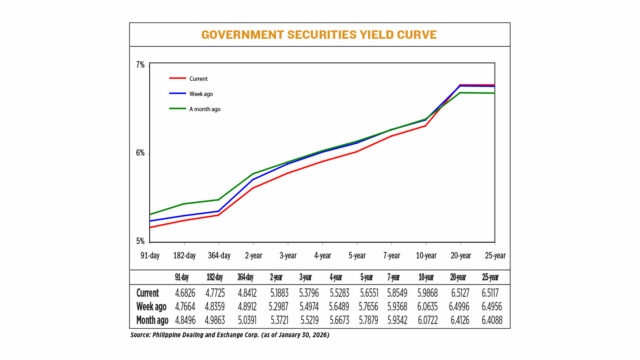
GS yields, which move opposite to prices, went down by 7.14 basis points (bps) on average week on week, based on PHP Bloomberg Valuation Service Reference Rates data as of Jan. 30 published on the Philippine Dealing System’s website.

At the short end of the curve, yields on the 91-, 182-, and 364-day Treasury bills (T-bills) dropped by 8.38 bps, 6.34 bps and 5 bps week on week to 4.6826%, 4.7725% and 4.8412%, respectively.

Similarly, at the belly, rates fell across all tenors. Yields on the two-, three-, four-, five-, and seven-year Treasury bonds (T-bonds) went down by 11.04 bps (to 5.1883%), 11.78 bps (5.3796%), 12.06 bps (5.5283%), 11.05 bps (5.6551%), and 8.19 bps (5.8549%), respectively.

At the long end, yields ended mixed. The rates of the 20- and 25-year debt papers went up by 1.31 bps (to 6.5127%) and 1.61 bps (6.5117%), respectively, while the 10-year bond went down by 7.67 bps to fetch 5.9868%.

GS volume traded on Friday reached P118.3 billion, higher than the P102.98 billion recorded a week earlier.

Yields declined almost across the board as weaker-than-expected Philippine GDP growth bolstered expectations of a BSP rate cut this month, a bond trader said in an e-mail.

“Local bond movements were mainly driven by the weaker GDP print, which signaled a sharper loss of growth momentum than expected. Markets took this as increasing the likelihood that the BSP may need to provide policy support sooner, leading to a rally in bonds, with yields declining and the front end outperforming,” Lodevico M. Ulpo, Jr., vice-president and head of Fixed Income Strategies at ATRAM Trust Corp., said in an e-mail.

“The weak growth data has shifted market focus toward downside economic risks, reinforcing expectations that domestic monetary policy could become more supportive. This creates a continued downward bias in local rates, especially for shorter tenors that are more sensitive to policy expectations.”

Philippine GDP expanded by 3% year on year in the fourth quarter, slowing from 5.3% in the same quarter in 2024 and the revised 3.9% print in the third quarter of 2025.

In 2025, the economy grew by 4.4%, much weaker than the 5.7% print in 2024. This was the weakest pace in five years or when GDP contracted by 9.5% in 2020. Excluding the pandemic, it was the slowest growth since the 3.9% expansion in 2011.

This was also below the government’s 5.5%-6.5% target and was weaker than market expectations, as a BusinessWorld poll yielded a median estimate of 4.2% for the October-to-December period and 4.8% for 2025.

Analysts said the disappointing GDP outturn gives the BSP room to lower rates further to help prop up domestic demand to spur economic recovery.

BSP Governor Eli M. Remolona, Jr. said before the GDP data release that the Monetary Board would consider the economy’s performance when they meet to review their policy settings on Feb. 19, but a weak growth print wouldn’t automatically mean further easing.

The central bank has cut benchmark borrowing costs by a cumulative 200 bps since it began its easing cycle in August 2024, with the policy rate now at 4.5%.

Mr. Ulpo added that the US Federal Reserve’s decision to pause its own easing cycle last week and “still firm tone” partially offset the yield rally, particularly at the long end.

“However, the Fed’s cautious stance suggests that global easing may be gradual, which could temper the pace of yield declines locally. Longer-dated bonds may remain more influenced by global rate movements than domestic factors,” he said.

Last week, the Fed held rates steady after lowering its benchmark rate to 3.5%-3.75% last year, Reuters reported. Interest rate futures markets stuck with anticipating two rate cuts in 2026, with the likely next reduction in June, after the new chair takes over.

For this week, the market’s focus will be on the release of January Philippine inflation data on Thursday (Feb. 5), as this could affect the BSP’s policy decision this month, the bond trader said.

“Philippine inflation remains key, as it determines how much room the BSP has to ease. A stable inflation backdrop would reinforce the growth-driven case for lower yields,” Mr. Ulpo added.

He said GS yields could also be affected by this week’s T-bond offering. On Tuesday, the Treasury will auction off P30 billion in reissued seven-year bonds with a remaining life of four years and 11 months.

“Attention will be on the five-year bond auction, which will test demand in the belly of the curve and could influence near-term yield movements depending on the strength of participation.” — Abigail Marie P. Yraola

Rice retail price down, meat up in mid-January

PHILIPPINE STAR/WALTER BOLLOZOS

THE retail price of rice declined year on year in mid-January, while meat and galunggong (round scad) prices increased, according to the Philippine Statistics Authority (PSA).

During the Jan. 15-17 period, which the PSA calls the second phase of January, the national average retail price of regular milled rice declined 9.56% year on year to P43.52 per kilo.

The second-phase price was higher than the P43.13-per-kilo average during the first phase of January (Jan. 1-5) and the P42.10 average a month earlier.

The highest average retail price of regular-milled rice in the second phase was recorded in the Bangsamoro Autonomous Region in Muslim Mindanao at P50.06 per kilo, down 0.72% from a year earlier.

The lowest retail price of regular milled rice was reported in the Cagayan Valley at P36.70 per kilo, down 13.5% from a year earlier.

Meanwhile, the retail price of bone-in fresh pork averaged P314.04 per kilo in the second phase of January, up 1.5% from a year earlier. The national average declined from the P315.44 per kilo recorded in the first phase of January and P314.72 a month earlier.

The retail price of dressed chicken averaged P213.35 per kilo in the second phase of January, up 1% from a year earlier. The average retail price for the period was lower than the P213.72 per kilo recorded during the first phase of January, but higher than the P212.40 a month earlier.

Galunggong prices rose 11.32% year on year to P251.35 per kilo in the second phase of January. The average price of the staple fish declined from P252.75 in the first phase of January and increased from P249.11 a month earlier. — Vonn Andrei E. Vilamiel

New Geely PHEV to be unveiled in Q1

Geely Motor Philippines said it will continue to espouse a diversified electrification strategy across its global lineup — PHOTO FROM GEELY MOTOR PHILIPPINES

GEELY IS slated to introduce here a plug-in hybrid electric vehicle (PHEV) – known internally as EX5 EM-I –within the first quarter of the year as the company continues to grow its electrified lineup.

The EX5 EM-I has recently been spotted in camouflage at local ports and customs areas, signaling that units have already entered the country ahead of its official reveal. The EX5 EM-I is positioned as balancing electric driving capability with extended range flexibility. In global markets, the model is reported to feature a combination of electric-only driving for daily commutes and a hybrid system suited for longer trips, addressing common concerns around charging access and range limitations.

“This positioning places the EX5 EM-I in direct consideration alongside other PHEVs currently competing in the compact-to-midsize, electrified segment, where buyers are increasingly looking for alternatives that offer both fuel efficiency and adaptability to unpredictable driving conditions,” said Geely Motor Philippines in a release, and maintained that, compared to pure electric vehicles, PHEVs like the EX5 EM-I are often favored in dense urban environments such as Metro Manila, where traffic, flooding, detours, and varied daily routes make charging-dependent mobility less predictable.

Geely is taking a “diversified electrification strategy” across its global lineup, combining battery-electric, plug-in hybrid, and internal combustion powertrains to meet different market needs. According to the company, this multi-path approach allows it to introduce products that align more closely with real-world usage rather than relying on a single electrification solution.

The Philippine introduction of the EX5 EM-I is expected to be part of Geely’s broader product roadmap following its transition to direct local operations. The company has indicated that additional new models across various segments and powertrain types are in the pipeline as it continues to strengthen its presence in the country.

Manila office tenants favor flexible, cost-efficient spaces — Colliers

PHILSTAR FILE PHOTO

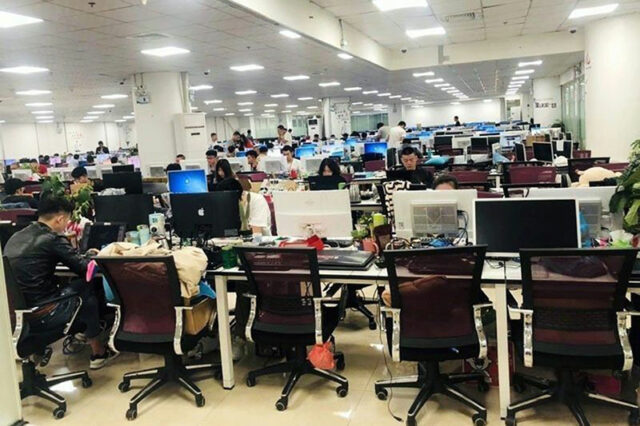
METRO MANILA’S office developers are being urged to focus on flexible and cost-efficient office spaces as more multinational firms shift to hybrid work, according to property consultancy Colliers Philippines.

“Occupiers are increasingly focused on capital preservation, balance sheet flexibility, and reduced execution and delivery risk. As a result, operating expenditure (opex)-led workspace solutions where costs are spread predictably over time are gaining traction,” Melissa Mabanta, assistant manager for office service — landlord representation at Colliers, said in a report.

She noted that multinational companies are moving toward Grades A and B+ offices that prioritize flexibility, faster move-ins, and cost predictability, as firms’ planning cycles have shortened to between six and 18 months.

Colliers added that the rise of hybrid work has pushed occupiers to favor ready-to-occupy and built-to-suit offices.

“As the Philippine office market matures, value is increasingly defined not just by location or rental rates, but by speed to market, operational readiness, and risk mitigation,” Ms. Mabanta said.

Previously, office occupiers invested in longer lease terms and fit-outs, information technology infrastructure, and project management. In central business districts, fit-out costs typically range from P45,000 to P70,000 per square meter (sq.m.), Colliers said.

It also noted that challenges in traditional office leasing, such as design, permitting, procurement, and construction delays, have become a “major friction point” for occupiers.

“While Metro Manila vacancy rates remain elevated compared to pre-pandemic levels, leasing inquiries are increasingly driven by quality, readiness, and flexibility rather than sheer size,” Colliers said.

In the first nine months of 2025, Metro Manila’s office vacancy stood at 19.8%, Colliers said in its Third-Quarter Property Market Report.

Office vacancy in the region is projected to rise slightly to 19.9% in 2026, before declining steadily to 19.2% in 2028, the consultancy added.

In Metro Manila, traditional occupiers transacted an average of 830 sq.m. of space, while third-party operators and government tenants occupy about 1,500 sq.m., equivalent to roughly a whole floor. Shared services sector tenants occupy larger spaces of around 3,000 sq.m., or about two or more floors. — Beatriz Marie D. Cruz

Hypertension: Why prevention and early treatment save lives

STOCK PHOTO | Image from Freepik

Hypertension may be silent, but its consequences are not. Early detection and timely treatment can prevent heart attacks, strokes, and kidney failure.

As the country observes Philippine Heart Month, it bears repeating that high blood pressure or hypertension is the single most important risk factor for heart disease and stroke, two of the leading causes of death among Filipinos. Often called the “silent killer,” hypertension typically has no symptoms, yet its consequences can be devastating. Left undetected and uncontrolled, it can lead to heart failure, kidney disease or kidney failure, vision loss, and erectile dysfunction, among other complications.

Hypertension develops due to a mix of non-modifiable and modifiable risk factors. These include family history and advancing age, as well as physical inactivity, an unhealthy diet, overweight or obesity, smoking, and chronic kidney disease. Because many of these risks are preventable or manageable, hypertension is not just a medical condition, it is a public health issue that demands early action.

The scale of the problem is sobering. The most recent Philippine Heart Association survey, PRESYON-4, found that nearly four in 10 Filipinos (37%) have hypertension. Alarmingly, only about half (52%) were aware they had the condition. Among those diagnosed, 22% were smokers, 37% were overweight, and 5% had diabetes. Even more concerning, six out of 10 hypertensive respondents who were already taking maintenance medications still had uncontrolled blood pressure, placing them at continued risk for heart attack and stroke.

Hypertension is diagnosed by measuring blood pressure on two or more separate occasions in a clinic or hospital setting. Normal blood pressure is below 120/80 mm Hg. The 2020 Philippine Clinical Practice Guidelines of the Philippine Society of Hypertension define hypertension as a blood pressure reading of 140/90 mm Hg or higher, while readings between 120-139/80-99 were previously classified as “prehypertension” or borderline hypertension.

Globally, however, there has been a shift toward earlier intervention. In August 2025, the American Heart Association and the American College of Cardiology released updated guidelines emphasizing prevention and earlier treatment to reduce long-term cardiovascular risk. Under these guidelines, blood pressure of 120-129/less than 80 is considered “elevated,” while readings of 130-139/80-89 are already classified as stage 1 hypertension. A blood pressure of 140/90 or higher is stage 2 hypertension, and readings of 180/120 or greater constitute a hypertensive crisis requiring urgent medical care.

This shift underscores a critical message: waiting for blood pressure to reach very high levels before acting is no longer acceptable. Early lifestyle changes, and medication when appropriate, can prevent irreversible damage to the heart, brain, and kidneys.

At the core of hypertension prevention and control is a heart-healthy lifestyle. Regular physical activity, a diet rich in fruits, vegetables, and whole grains, and limiting sodium and unhealthy fats are foundational steps. Maintaining a healthy weight is particularly important; for individuals who are overweight or obese, even a 5% reduction in body weight can significantly lower blood pressure. Avoiding smoking, limiting alcohol intake, getting seven to nine hours of quality sleep, and managing stress also play an important role.

For many patients, dietary changes are especially powerful. The Philippine Society of Hypertension recommends the Dietary Approaches to Stop Hypertension (DASH) meal plan for individuals without kidney insufficiency. The DASH diet emphasizes fruits, vegetables, low-fat dairy, fish, whole grains, fiber, potassium, and other essential minerals, while limiting red and processed meat, sugar-sweetened foods and beverages, saturated fat, cholesterol, and sodium.

Lifestyle measures are the first-line treatment for hypertension and work hand in hand with medications. Most people with hypertension will require maintenance medicines for life to keep their blood pressure under control and prevent complications. It is essential that patients take their medications exactly as prescribed and never stop treatment without consulting their doctor, even when they feel well.

Home blood pressure monitoring is another important tool. The American Heart Association recommends that all individuals diagnosed with hypertension use an automatic, cuff-style, upper-arm blood pressure monitor at home. Accurate home readings help doctors determine whether treatments are working and guide medication adjustments. Patients should ensure the correct cuff size, avoid smoking, caffeine, or exercise 30 minutes before measurement, rest quietly for at least five minutes, and take readings at the same time each day. Recording and sharing these readings during medical appointments strengthens shared decision-making between patients and healthcare providers.

Hypertension remains a major public health challenge in the Philippines but it is also one of the most preventable. The research-based pharmaceutical industry recognizes its central role in cardiovascular disease and is committed to expanding access to diagnostics, effective treatments, and patient education. Through the Pharmaceutical and Healthcare Association of the Philippines, member companies are supporting awareness campaigns, strengthening hypertension management, and working with stakeholders to reduce the country’s cardiovascular disease burden.

Preventing and treating hypertension early saves lives. It is an investment in healthier families, a more productive workforce, and a stronger healthcare system, one blood pressure reading at a time.


Teodoro B. Padilla is the executive director of Pharmaceutical and Healthcare Association of the Philippines, which represents the biopharmaceutical medicines and vaccines industry in the country. Its members are at the forefront of developing, investing and delivering innovative medicines, vaccines, and diagnostics for Filipinos to live healthier and more productive lives.

Rates of BSP bills decline

BW FILE PHOTO

YIELDS on the Bangko Sentral ng Pilipinas’ (BSP) one-month securities went down on Friday as the offer remained oversubscribed, with a slightly lower volume placed on the auction block.

The 28-day BSP bills attracted P123.48 billion in bids, exceeding the P80 billion auctioned off but below the P164.166 billion in tenders for a P90-billion offer the prior week. This was equivalent to a bid-to-cover ratio of 1.5435 times, lower than the 1.8241 ratio logged in the previous auction.

The central bank accepted all the submitted bids.

Accepted rates ranged from 4.65% to 4.714%, lower than the 4.724% to 4.78% seen a week earlier. With this, the average rate of the one-month securities fell by 5.15 basis points to 4.6981% from 4.7496%.

The BSP has not auctioned off the 56-day bills since Nov. 3.

The central bank uses the BSP securities and its term deposit facility to mop up excess liquidity in the financial system and to better guide short-term market yields towards its policy rate.

Data from the central bank showed that around 50% of its market operations are done through its short-term securities.

As of mid-November 2025, the BSP’s monetary operations have siphoned off P1.5 trillion in liquidity from the financial system.

Of the total, 42.4% was absorbed through BSP securities, 34.6% from overnight reverse repurchase agreements, 17.6% through the overnight deposit facility, and 5.4% via term deposits.

The BSP bills also contribute to improved price discovery for debt instruments while supporting monetary policy transmission.

In August last year, BSP Governor Eli M. Remolona, Jr. said they are gradually shifting away from the issuance of short-term papers to manage liquidity as they want to boost activity in the money market.

The central bank started auctioning off short-term securities weekly in 2020, initially offering only a 28-day tenor and adding the 56-day bill in 2023. — K.K. Chan

ADVERTISEMENT
ADVERTISEMENT