Home Blog Page 3300

Heavy rains in southern Brazil kill nearly 60 people, with over 70 still unaccounted for

SAO PAULO — Heavy rains in Brazil’s southernmost state of Rio Grande do Sul this week killed at least 55 people, local authorities said on Saturday evening, while dozens remain unaccounted for.

Rio Grande do Sul’s civil defense authority said 74 people were still missing and more than 69,000 had been displaced as storms in the last few days have affected nearly two thirds of the 497 cities in the state, which borders Uruguay and Argentina.

The local authority said it is now investigating whether another seven deaths were related to the storms, after earlier in the day it had reported a total of more than 55 deaths.

Floods destroyed roads and bridges in several regions of the state. The storm also triggered landslides and the partial collapse of a dam at a small hydroelectric power plant. A second dam in the city of Bento Goncalves is also at risk of collapsing, authorities said.

In Porto Alegre, the capital of Rio Grande do Sul, the Guaiba lake broke its banks, flooding streets.

Porto Alegre’s international airport has suspended all flights for an indefinite period.

State Governor Eduardo Leite told reporters on Saturday evening that Rio Grande do Sul would need a “Marshall Plan” to recover from the storms and its consequences, referring to a plan for Europe’s economic recovery after World War II.

Brazil’s President Luiz Inacio Lula da Silva, who had visited Rio Grande do Sul on Thursday, will travel back to the state on Sunday to follow the rescue efforts, his chief of communication Paulo Pimenta said on Saturday. 

Mr. Lula said on X that his government is in constant contact with state and cities’ authorities to support the region with whatever they need.

Rains are expected in the northern and northeastern regions of the state until Sunday, but the volume of precipitation has been declining, and should be well below the peak seen earlier in the week, according to the state meteorology authority.

Still, “rivers water levels should stay high for some days,” Mr. Leite said earlier on Saturday.

Rio Grande do Sul is at a geographical meeting point between tropical and polar atmospheres, which has created a weather pattern with periods of intense rains and others of drought.

Local scientists believe the pattern has been intensifying due to climate change. — Reuters

Digital Telecommunications Phils. to hold Annual Meeting of Stockholders on May 27 via MS Teams


Spotlight is BusinessWorld’s sponsored section that allows advertisers to amplify their brand and connect with BusinessWorld’s audience by publishing their stories on the BusinessWorld Web site. For more information, send an email to online@bworldonline.com.

Join us on Viber at https://bit.ly/3hv6bLA to get more updates and subscribe to BusinessWorld’s titles and get exclusive content through www.bworld-x.com.

How DonBelle, BINI, and Adie are making this summer a season of awesome

Phenomenal love team Donny Pangilingan and Belle Mariano, the nation’s girl group BINI, and singer-songwriter Adie are Gen Zs at the top of their game. It’s no surprise that they all said “yes” to Samsung to be its brand ambassadors as they enjoy back-to-back milestones this summer with the newly launched Samsung A55 5G and A35 5G.

We spoke to the new and returning members of #TeamGalaxy on the sidelines of Awesome Summer Fanfest at SM North Edsa Annex held in April, where guests enjoyed kilig-worthy moments with their idols.

DonBelle: An adventure-ready phone for your summer escapades

From He’s Into Her to Can’t Buy Me Love, Donny Pangilinan and Belle Mariano have been on a winning streak, on top of being part of Team Galaxy. Seeing the Samsung Galaxy A55 5G and Galaxy A35 5G was love at first sight.

“I like the Awesome Lilac. It’s so elegant and nice to look at. I don’t know how to describe it. It’s so Belle,” the actress said.

For Pangilinan, he is a fan of Samsung Galaxy A55 5G’s splash resistance.“It’s hard to have a phone that is not splash-friendly, kasi siyempre that’s what you need to take photos safely wherever you are.”

He added that its dustproof feature also aligns with his lifestyle because he loves the outdoors. “When I go outdoors to try new hobbies like hiking and camping, eh requirement din na yung mga cellphone na gamit mo dustproof para it can be as efficient as possible,” Pangilinan added.

Mariano, meanwhile, is a fan of the Object Eraser function. “I think it’s convenient. Ang hirap humanap ng ganon, like, na phone na aalisin talaga yung unwanted objects,” said.

“Tsaka built in na! You don’t have to download an app,” Pangilinan chimed in.

Mariano also noticed the Samsung Galaxy A55 5G’s long battery life. “At work, we read our scripts from our phones na. And it really helps kasi sometimes naman hindi accessible na may power outlet everywhere you go, and mas lalo na kami sa Binondo (set of You Can’t Buy Me Love).” she shared.

So, this summer, where is the love team headed?

“Secret,” Pangilinan said laughingly. “Pero actually ang tagal na namin nag-taping, 8-9 months na. I think it’s time to take a breather. We decided to take the phone around and see what it could do.”

From the Galaxy to the BINIverse

Being tapped as new members of #TeamGalaxy, BINI felt things came full circle as Samsung was their phone when they were still trainees.

“Actually, noong sinabi pong magiging part kami ng #TeamGalaxy sobrang, kung nakita niyo lang po reactions namin, sobrang sumigaw po talaga kami,” BINI leader Jhoanna recalled.

Resident funny girl BINI Maloi, a self-professed selfie princess, said that her favorite feature on Samsung Galaxy A55 5G and Galaxy A35 5G is the Dual Recording.

“Favorite ko siya kasi gusto ko na I can capture yung moments and at the same time nakikita ko rin yung reaction [ko].” she said.

BINI Colet, BINI Mikha, and BINI Gwen agreed, with Colet stressing it can be useful to get their fans’ reactions while they’re performing on stage. BINI Gwen also wants to use the Dual Recording function when traveling to share scenic views with her followers.

Meanwhile, BINI Aiah and BINI Stacey are fond of the Object Eraser function which can remove unnecessary objects from images. BINI Sheena, shared that the Samsung A55 5G gives her an awesome gaming experience, saying “‘Yung ML (Mobile Legends) po niya sobrang liwanag.”

Back-to-back gigs and endorsements are making BINI busy this summer. But they’ll be bringing their Samsung Galaxy A55 5G units with them, even to their outdoor events. “Itong Samsung Galaxy A55 kasi it’s splash resistant. Matalsikan man ng tubig, parang madali kasi siyang makasira ng phone. So, perfect talaga siya,” BINI Jhoanna said.

Asked for tips on how to make their summer of Blooms awesome, BINI Aiah had a quick answer: “Buy Samsung Galaxy A55 5G or Galaxy A35 5G, go to the beach, listen to Pantropiko, and record a dance challenge!!”

Adie: A songwriter’s reliable partner

Adie is the first OPM soloist with multiple songs (Paraluman, Mahika) surpassing 200 million streams on Spotify. He is grateful that the Samsung brand is tapping OPM artists such as BINI to be the faces of Samsung Galaxy A55 5G and Samsung Galaxy A35 5G.

“Nagulat ako, kasi parang ito yung navi-vision kong timeless look ng modern phones ngayon. Parang si Paraluman, ang timeless talaga eh. So ayun, kahuma-humaling,” Adie recalled when he first saw his Awesome Navy variant.

While he also mentioned the dual recording function as a valuable tool for recording his performance and capturing his audience’s reactions, Adie was also amazed at the long battery life the Samsung Galaxy A55 5G provides, which helps his songwriting.

“Yung [long] battery life niya, very helpful yun sa mga artist na katulad ko, Let’s say may naisip na idea or lyrics, kailangan ma-sulat siya agad kasi minsan nagfa-fade yun eh. And at the same time yung melodies na naiisip mo for that song, yun din kailangan mo i-record. Helpful yung A55 kasi yung battery life niya, ‘tsaka yung quality ng mic,” he shared.

Adie also praised the phone’s front camera. “Nagustuhan ko ‘yung front camera niya kasi usually ‘pag nagre-record ako front camera talaga. ‘Di ko ginagamit ‘yung back camera. So ayun yung kadalasang content na nagagawa ko using this phone,” he said.

Recording audio elements using the Samsung Galaxy A55 5G has also been a breeze. “Let’s say, sumisigaw ‘yung tao, ‘yung crowd, ginagamit ko’ yung microphone ng phone. So that pag nilatag siya sa DEW or sa mismong software kung s’an nagmimix yung engineer, ayun nagagamit siya as element,” Adie explained.

This summer, Adie plans to enjoy his “alone time” and probably meet with his OG friends and family. “’Di ako talaga ma-labas na tao, do’n lang ako sa safe space ko or sa area ko,” he shared. “Siguro magagamit ko yung idea na splash resistant siya [Samsung Galaxy A55 5G] para let’s say magtampisaw, magagamit ko yung phone kasi nga splash resistant siya. ”

Even our Gen Z idols need a break this summer. So, whether it’s a workation like BINI’s, zen time like Adie’s, or a private getaway like DonBelle’s, make sure you capture every awesome moment and stay connected when needed using the new Samsung Galaxy A55 5G and Galaxy A35 5G.

#CreateAwesome like your favorite #TeamGalaxy stars! Get the Galaxy A55 5G for P24,990 (8+256GB), while the Galaxy A35 5G can be yours for only P20,990 (8+256GB). A 128GB option is available exclusively via Globe Telecom and Smart Communications. Enjoy awesome freebies, like a travel adapter worth P1,190.

You can also get these phones at 0% interest for up to 18 months installment via home credit, 0% for up to 12 months using your credit card, plus an additional P5,000 discount when you trade in your old device for a new Galaxy A55 or A35 5G.

Learn more about the Samsung Galaxy A55 5G, Galaxy A35 5G, and other Galaxy smartphones by visiting the Samsung NewsroomSamsung Mobile Press, and Samsung.com.


Spotlight is BusinessWorld’s sponsored section that allows advertisers to amplify their brand and connect with BusinessWorld’s audience by publishing their stories on the BusinessWorld Web site. For more information, send an email to online@bworldonline.com.

Join us on Viber at https://bit.ly/3hv6bLA to get more updates and subscribe to BusinessWorld’s titles and get exclusive content through www.bworld-x.com.

Greenpeace calls on the government to mitigate the impacts of the climate crisis

The pale sun casts an orange hue on the morning skies while rising beyond buildings as seen from the Mabini Bridge in Manila on Friday. — PHILIPPINE STAR/MIGUEL DE GUZMAN
A global environmental organization called on the Philippine government to provide solutions that could lessen the impact of El Niño and La Niña.
“We call on our government to ensure measures that will mitigate the impacts of El Niño on our water supply, food production, and power generation,” Greenpeace Philippines said in their statement on extreme heat aggravated by the climate crisis last Tuesday, April 30.
Throughout the week, the country has experienced record-high and dangerous heat indexes based on the report of the Philippine Atmospheric, Geophysical, and Astronomical Services Administration (Pagasa).
To combat the drought in hydropower plants, Senator Sherwin T. Gatchalian suggested the utilization of cloud seeding in a forum last April 25. Cloud seeding is a type of weather modification that induces rainfall.
“Sa Dubai nag cloud seeding sila kaya umulan do’n. Kung kaya mag cloud seeding satin, mag cloud seeding din tayo para yung mga hydropower plants natin gumana. Isa sa mga dahilan kung bakit hindi gumagana ang hydropower plants natin hindi umuulan eh (In Dubai, they used cloud seeding to produce rain. If we have the means, we can also do cloud seeding to get our hydropower plants working. Lack of rain was one of the reasons why our hydropower plants stopped working),” Mr. Gatchalian shared.
On April 28, the Department of Education announced the implementation of asynchronous classes or distance learning in public schools nationwide due to dangerous heat.
Senate President Juan Miguel Zubiri stated last Monday, April 29, in his appeal to adjust the summer school break to safeguard the students during the harsh weather conditions.
“Aside from exposing our students and teachers to the dangers of extreme heat, I honestly believe that the prevailing weather conditions during summer are not conducive to learning,” Mr. Zubiri said.
Farmers, students, and senior citizens are the most vulnerable sectors amid this climate crisis according to Greenpeace.
To lessen the effect of the ongoing heat wave and prepare for La Niña, “a shift in Philippine food and agriculture, to a system that is more environment-friendly and climate-resilient” is advised by the organization.
Improved investments in ecological agriculture are encouraged to aid in enhancing the capability of local farmers in self-sufficiency, and the ability to respond to a crisis like El Niño.
Aside from this, implementing a comprehensive food policy addressing concerns about food, nutrition, and environmental security was mentioned in the organization’s statement. – Almira Louise S. Martinez

Smart drives increase in 5G data traffic powered by the Philippines’ Best 5G Coverage Experience

As 5G is fast becoming the connectivity of choice among mobile subscribers in the country, leading integrated telco network PLDT Inc (PLDT)’s wireless subsidiary Smart Communications, Inc (Smart) saw a sustained increase in average monthly 5G data traffic in 2023, bolstered by its award-winning 5G mobile network.

In 2023, average quarterly 5G data traffic almost doubled, up 95% compared to the previous year. In the fourth quarter of 2023 alone, Smart posted a 16-percent increase in average monthly data traffic on its 5G network, versus the previous period. Driving this growth were the availability of new, more affordable 5G devices and the continued push of Postpaid Unli5G Signature plans.

“As we strive to continue delivering the best mobile experience to our customers, we also ensure that our offers are value-packed and relevant, and that we are also able to make the latest handsets more accessible for our subscribers to make it easier for them to upgrade,” said Alex O. Caeg, Head of Smart Consumer Wireless Business.

Supporting this continuous increase in data usage is Smart’s mobile network, which was recently recognized for delivering the Philippines’ Best 5G Coverage Experience, according to the latest report by independent analytics firm Opensignal.  Smart’s mobile network covers 97% of the population and is part of the Philippines’ largest integrated network that includes PLDT’s 1.1 million kilometer fiber infrastructure.

“Coverage is key to 5G adoption. Our latest citation from Opensignal is a testament to Smart’s commitment to expand the reach of our network across the Philippines. These efforts are also bearing fruit, as can be seen in the increase in our 5G data traffic, which has practically doubled,” Caeg added.

Smart’s initiatives to deliver enhanced mobile products and services are aligned with the PLDT Group’s endeavors to narrow the digital divide and provide connectivity to all, supporting the United Nations Sustainable Development Goals (UNSDG) particularly on SDG No. 9 – Industry, Innovation, and Infrastructure. These also reinforce the Group’s support for the Government’s overall digitalization thrust.

Opensignal Awards – Philippines: Mobile Network Experience Report April 2024, based on independent analysis of mobile measurements recorded during the period January 1– March 30, 2024 © 2024 Opensignal Limited.


Spotlight is BusinessWorld’s sponsored section that allows advertisers to amplify their brand and connect with BusinessWorld’s audience by publishing their stories on the BusinessWorld Web site. For more information, send an email to online@bworldonline.com.

Join us on Viber at https://bit.ly/3hv6bLA to get more updates and subscribe to BusinessWorld’s titles and get exclusive content through www.bworld-x.com.

Taiwan says Chinese planes crossed median line, China carries out landing drills

CHESS PIECES are seen in front of displayed China and Taiwan’s flags in this illustration taken Jan. 25, 2022. — REUTERS

 – Taiwan’s defense ministry said on Friday it had detected a renewed incursion by Chinese military aircraft across the sensitive Taiwan Strait, as China reported its navy had carried out combat drills with landing craft.

Over the past four years, China’s military has significantly ramped up its activities around democratically-governed Taiwan. Beijing views the island as its own territory, a position the government in Taipei strongly rejects.

The defense ministry, in its daily morning update on Chinese activities in the previous 24 hours, said 14 Chinese military aircraft crossed the Taiwan Strait’s median line, getting as close as 41 nautical miles (76 km) to the northern Taiwanese port city of Keelung, home to a major navy base.

The median line is used to serve as an unofficial border between the two sides, but Chinese military aircraft now regularly cross it. China says it does not recognize the line’s existence.

Taiwan said on Thursday that China had carried out a “joint combat readiness patrol” near the island for the second time in a week.

China’s defense ministry did not answer calls seeking comment on Friday, the country being in the middle of its Labor Day holiday.

On Thursday, the Eastern Theatre Command of China’s People’s Liberation Army, which is responsible for the area around Taiwan, showed pictures on its WeChat social media account of ships carrying out what it called live combat landing drills.

It did not say when or where exactly the exercises took place, but showed images of ship-mounted guns opening fire and operating in formation.

“The vanguard of the landing team are always ready to fight,” it said in text to accompany the pictures.

The island’s top security official said on Wednesday that Taiwan is on alert for China to carry out military exercises following the inauguration of President-elect Lai Ching-te later this month.

Taiwan National Security Bureau Director-General Tsai Ming-yen said China had begun using unusual new tactics, including staging night time combat patrols and using landing ships and minesweepers in those patrols.

Mr. Lai, who is inaugurated on May 20 after winning election in January, is strongly disliked by China which believes him to be a dangerous separatist. China’s government has rejected his repeated offers of talks, including one made last week.

Mr. Lai, like current President Tsai Ing-wen, rejects Beijing’s sovereignty claims; both say only the island’s people can decide their future.

Mr. Lai has been Taiwan’s vice president for the past four years. – Reuters

Missile defence successes in Gulf, Ukraine fuel global urgency to acquire systems

AN anti-missile system operates after Iran launched drones and missiles towards Israel, as seen from Ashkelon, Israel, April 14, 2024. — REUTERS

The success of ballistic missile defenses facing their first complex, high-stakes combat scenarios in Israel, the Red Sea and Ukraine will encourage militaries globally to invest in the pricey systems, experts say – and intensify missile arms races.

Iran launched as many as 120 intermediate-range ballistic missiles at Israel on April 13, US and Israeli officials say. US SM-3 and Israeli Arrow interceptors destroyed nearly all of them, leaving drones and smaller threats to the Iron Dome system.

In previous months, interceptors fired from U.S. Navy destroyers stopped Houthi anti-ship ballistic missiles, while in Ukraine, U.S.-made MIM-104 Patriot batteries have shot down advanced Russian Iskander and Khinzal missiles.

Reuters spoke with six experts who said more militaries would look to invest in ballistic missile defense, a potential windfall for companies such as Lockheed Martin and Raytheon, which build those types of systems.

“It’s undeniable that any wealthy country with the technological wherewithal will continue to invest in missile defencs,” said Ankit Panda of the US-based Carnegie Endowment for International Peace, a defense and security think tank. “All of this is a recipe for a conventional arms race.”

European countries such as the Netherlands, Germany, Sweden and Poland already operate RTX subsidiary Raytheon’s Patriot batteries, the most common Western advanced ballistic missile defense system.

Saudi Arabia has used its Patriots for years to defend against Houthi attacks; it and the United Arab Emirates also operate the Lockheed Martin Terminal High Altitude Air Defense (THAAD) system. Kuwait, Qatar and Bahrain have Patriot batteries as well, and Oman has expressed interest in missile defense.

In the US, Lockheed Martin in April won a $17.7 billion contract for a next-generation interceptor for the Ground-Based Midcourse Defense (GMD) program – designed to shoot down small numbers of intercontinental ballistic missiles (ICBMs) aimed at the continental United States.

But the impact may be most acute in Asia, where China has invested heavily in conventionally armed ballistic missiles. A 2023 Pentagon report said the People’s Liberation Army Rocket Force has about 500 DF-26 missiles, designed to accurately strike targets thousands of kilometers away.

That puts US and allied bases in Japan and Guam within range of an attack that may only come with 20 to 30 minutes’ warning.

“In the Pacific, you’ll see further interest in missile defense, which will push the Chinese to build more systems,” said Jeffrey Lewis, director of the East Asia Nonproliferation Program at the James Martin Center for Nonproliferation Studies at the Middlebury Institute of International Studies in California. “Countries will want to acquire (offensive) missiles because they see other countries using them … That will drive up demand for missile defenses.”

US Indo-Pacific Command and China’s Ministry of Defense did not respond to requests for comment.

China rarely discusses its missile arsenal beyond statements that its forces are meant to preserve peace and are not aimed at any specific country.

Raytheon did not respond to a request for comment. A Lockheed Martin spokesperson referred questions to the company’s first-quarter earnings briefing in late April, in which it said it continued to lead the industry in “missile defense missions, which, given world events, are becoming more critical than ever”.


DOLLAR SIGNS

Ballistic missile defense works by spotting an attacking weapon either at launch or in flight, then using a surface-based radar to guide an interceptor to the target.

Interceptions can occur in the atmosphere or in space, and each domain requires different hardware. For instance, fins won’t work outside the atmosphere – interceptors must have small steering rockets to function there.

The necessary high-powered computers, far-seeing radars and missiles as large as telephone poles are not cheap, together stretching into the billions. In 2022, for example, the U.S. approved the sale of both Patriots and THAAD systems to Saudi Arabia, in deals worth as much as $5.3 billion.

In the Indo-Pacific region, wealthier countries such as Japan, Australia and South Korea are prime candidates for missile defense, Mr. Lewis said, while nearly every country in Asia is already investing in missiles.

Japan’s defense ministry said the country “needs to fundamentally and swiftly reinforce its defense capabilities, including integrated air and missile defense”. It said it is investing in improved Patriot missiles, better radars and enhanced naval anti-missile capabilities.

In its latest defense budget, South Korea increased funding by 12% for its Korea Air and Missile Defense System to expand it “from the existing lower-level defense concept,” the country’s defense ministry said in a statement.

“Cases such as the Israel-Hamas conflict and the Russia-Ukraine war have reaffirmed the importance of a ‘ballistic missile defense system’ to respond to increasingly sophisticated missile threats,” the ministry said.

In mid-April, Australia announced a A$500 million ($328 million) contract with Lockheed Martin to deliver its Joint Air Battle Management System for tracking and destroying aircraft and missiles.

The cost of a ballistic missile is often much cheaper than the system meant to stop it.

But that isn’t the right way to consider cost, said Yoji Koda, former commander in chief of Japan’s Self-Defense Fleet, and an advocate of stronger missile defenses in his country.

“In a war economy, the cheaper the better. But sometimes what is necessary, is we need to protect key infrastructure, or key command centers, at any cost. Because without them we would lose.”


THE CHINA QUESTION

Most of China’s conventionally armed ballistic missiles are designed to hit targets on land.

But it also fields steerable warheads meant to hit ships at sea, including the DF-21D and variants of the DF-26, developed by the state-owned China Aerospace Science and Technology Corporation.

Such anti-ship ballistic missiles (ASBMs) had never been used in combat until late 2023, when Houthi forces in Yemen began firing Iranian-made models at ships in the Red Sea.

Between November – the first documented use – and April, U.S. Central Command reported at least 85 ASBMs fired in the region, with 20 interceptions and one civilian ship reported sunk.

CENTCOM has declined to provide specifics about the effectiveness of Iranian ASBMs but has noted missiles posing no threat were not engaged and most that were not intercepted landed harmlessly.

The effectiveness of missile defenses on land and at sea will catch China’s attention, said Tong Zhao, a senior fellow with the Nuclear Policy Program and Carnegie China.

“It raises the possibility that the U.S. and its allies could depend on missile defense significantly against a ballistic missile attack,” Zhao said.

Although the technical specifics of China’s missiles are closely held secrets, the country’s heavy investment means they are likely to be more reliable, and are widely believed to use complex countermeasures to complicate interception.

“For opponents such as China which have missile stockpiles an order of magnitude larger than that of Russia or Iran and which field more sophisticated systems … it’s not clear that the lessons learned invalidate existing operational constructs,” said Sidarth Kaushal, a senior research fellow at the Royal United Services Institute.

But the political and practical incentives to invest in missile defense will be too attractive for many countries to ignore, Lewis said.

“All defense procurement decisions are ultimately about politics,” he said. “The politics of this stuff is really simple: do you want to defend the country or not? And the winning answer is always ‘Yes’.” – Reuters

Damage, injury to Philippines in South China Sea is ‘irresponsible behaviour’, says US Defense Secretary

PHILSTAR FILE PHOTO
HONOLULU – The injuring of Filipino crew and damage to Philippine vessels in the South China Sea is “irresponsible behavior and disregards international law”, US Defense Secretary Lloyd Austin told a joint press conference on Thursday.
Philippines Defense Secretary Gilberto Teodoro told the press conference the job was to ensure that through building capacity and deterrence there were no situations where a Mutual Defense Treaty would be triggered.
“We need to assert our rights but in a manner that safeguards the safety of each and every member of the Philippines’ armed force,” he said.
China claims sovereignty over much of the South China Sea, a conduit for more than $3 trillion of annual ship-borne commerce, including parts claimed by the Philippines, Vietnam, Indonesia, Malaysia and Brunei. – Reuters

Triple P Awards launches CommChat Series 2024: ‘Sustainability: A Journey from Divergent Paths’

June Cheryl “Chaye” Cabal Revilla (left) discusses MPIC's commitment to sustainability and its best practices for the first episode of the CommChat series with Dave Devilles (right).

The International Association of Business Communicators (IABC) Philippines is excited to introduce the CommChat Series 2024, beginning with a webinar titled “Sustainability: A Journey from Divergent Paths.” This event sets the stage for a series of discussions leading up to the prestigious Triple P Awards, focusing on sustainability and best practices in Environmental, Economic, Social, and Governance (EESG).

Sustainable Practices Discussion

During the webinar hosted by IABC Philippines Trustee Dave Devilles, IABC President Belle Tiongco delivered a powerful message emphasizing the importance of responsible environmental stewardship in the light of recent events such as the catastrophic floods in Dubai. Tiongco stressed the urgency and shared responsibility in the quest for sustainability. “At the end of the day, Mother Earth is the boss,” she stated.

June Cheryl “Chaye” Cabal Revilla, Executive Vice-President and Chief Finance Risk and Sustainability Officer of Metro Pacific Investments Corp. (MPIC), and President and CEO of mWell, took the spotlight to discuss MPIC’s commitment to sustainability and its best practices. Revilla explained how MPIC has embraced EESG metrics as key performance indicators, incorporating sustainable practices deeply into their corporate strategy. She underscored MPIC’s efforts in environmental stewardship and their impact on enhancing community life, emphasizing, “When we uplift ourselves, it’s our duty to uplift everyone around us. A happy community fosters safety for all. For us, sustainability is not just a policy; it is a cornerstone of our existence.”

Revilla also highlighted MPIC’s alignment with the UN Sustainable Development Goals and the Philippine National Development Goals through initiatives like mWell. mWell is a health and wellness application developed by Metro Pacific Health Tech, representing the first fully integrated, all-in-one health and wellness mega app in the Philippines. It is designed to make health access available and affordable for everyone, everywhere. “To achieve a truly sustainable world, it starts with healthy individuals. Through mWell, we are dedicated to ensuring all Filipinos have access to health services, supporting SDGs focused on good health, economic growth, and reduced inequalities, among others,” Revilla shared.

This first episode with insights on MPIC’s sustainable practices exemplifies the core objectives of the CommChat Series. Revilla’s presentation highlights the importance of integrating sustainability into business strategy, inspiring participants to adopt similar approaches in their industries.

Upcoming CommChat Session

The series will continue with the next CommChat session scheduled for June 2024, promising more engaging discussions and valuable insights from industry leaders on driving sustainable practices across various sectors.


Spotlight is BusinessWorld’s sponsored section that allows advertisers to amplify their brand and connect with BusinessWorld’s audience by publishing their stories on the BusinessWorld Web site. For more information, send an email to online@bworldonline.com.

Join us on Viber at https://bit.ly/3hv6bLA to get more updates and subscribe to BusinessWorld’s titles and get exclusive content through www.bworld-x.com.

Corona Sunsets Sessions: A celebration of life, love, and sunsets

Sunsets, sand, and stars: Join us for this epic sunset escapade

Mark your calendars and get ready for the event of the year as Corona Sunsets Sessions will be held on the idyllic shores of Newcoast Cove 2 Boracay on May 4, 2024, starting at 3 p.m.

This electrifying event promises an unforgettable day filled with music, sunsets, and good vibes that will transport you to paradise.

Picture yourself surrounded by swaying palm trees, the soft sand beneath your feet, and the gentle sound of waves crashing against the shore. As the sun begins its descent, casting a golden hue over the horizon, the atmosphere comes alive with excitement and anticipation.

Corona Sunsets Sessions is more than just a music festival — it’s a celebration of life, love, and the beauty of sunsets. It’s a time to let loose, dance like nobody’s watching, and connect with friends old and new. Whether you’re a seasoned partygoer or simply looking for a day of relaxation, this event has something for everyone.

With a lineup of talented performers such as Lola Amour, Sunkissed Lola, Dara Carmina, Kat DJ, Marxx Monterola, and Justin V., the energy is palpable from the moment you arrive. The music fills the air, creating a soundtrack to accompany the stunning sunset unfolding before your eyes. From upbeat rhythms to soulful melodies, each song adds to the magic of the moment, creating memories that will last a lifetime.

Corona Sunsets Sessions is also about the vibe. It’s about embracing the present moment and savoring every second of this enchanting experience. So be ready for awesome activities like face painting, silk screen printing, kinetic installations, macrame lanterns, and more!

To be part of this unforgettable event, visit coronasunsetssessions.ph and secure your spot today! Be sure to follow Corona Philippines on Instagram and Viber for all the latest updates and exclusive behind-the-scenes content. Join the conversation using the hashtags #CoronaSunsetsSessions, #CoronaPH, and #ThisIsLiving.

So pack your sunscreen, grab your shades, and get ready to experience the epic sunset escapade at Corona Sunsets Sessions! This is your chance to bask in the beauty of Boracay and create memories that will last a lifetime. See you there!


Spotlight is BusinessWorld’s sponsored section that allows advertisers to amplify their brand and connect with BusinessWorld’s audience by publishing their stories on the BusinessWorld Web site. For more information, send an email to online@bworldonline.com.

Join us on Viber at https://bit.ly/3hv6bLA to get more updates and subscribe to BusinessWorld’s titles and get exclusive content through www.bworld-x.com.

Inflation likely quickened in April

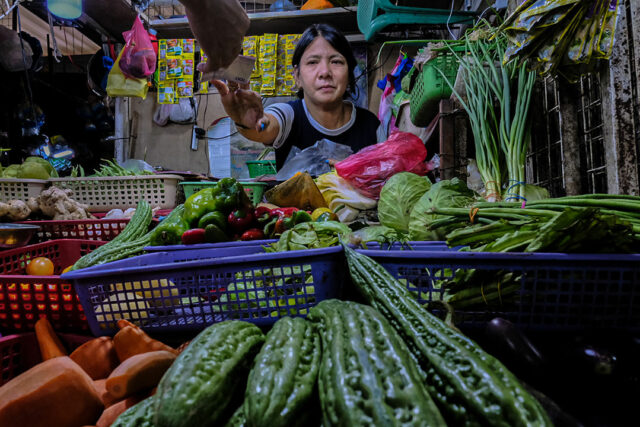
A FEMALE VENDOR accepts payment from a customer at Paco Market in Manila, April 6, 2024.— PHILIPPINE STAR/RYAN BALDEMOR

By Luisa Maria Jacinta C. Jocson, Reporter

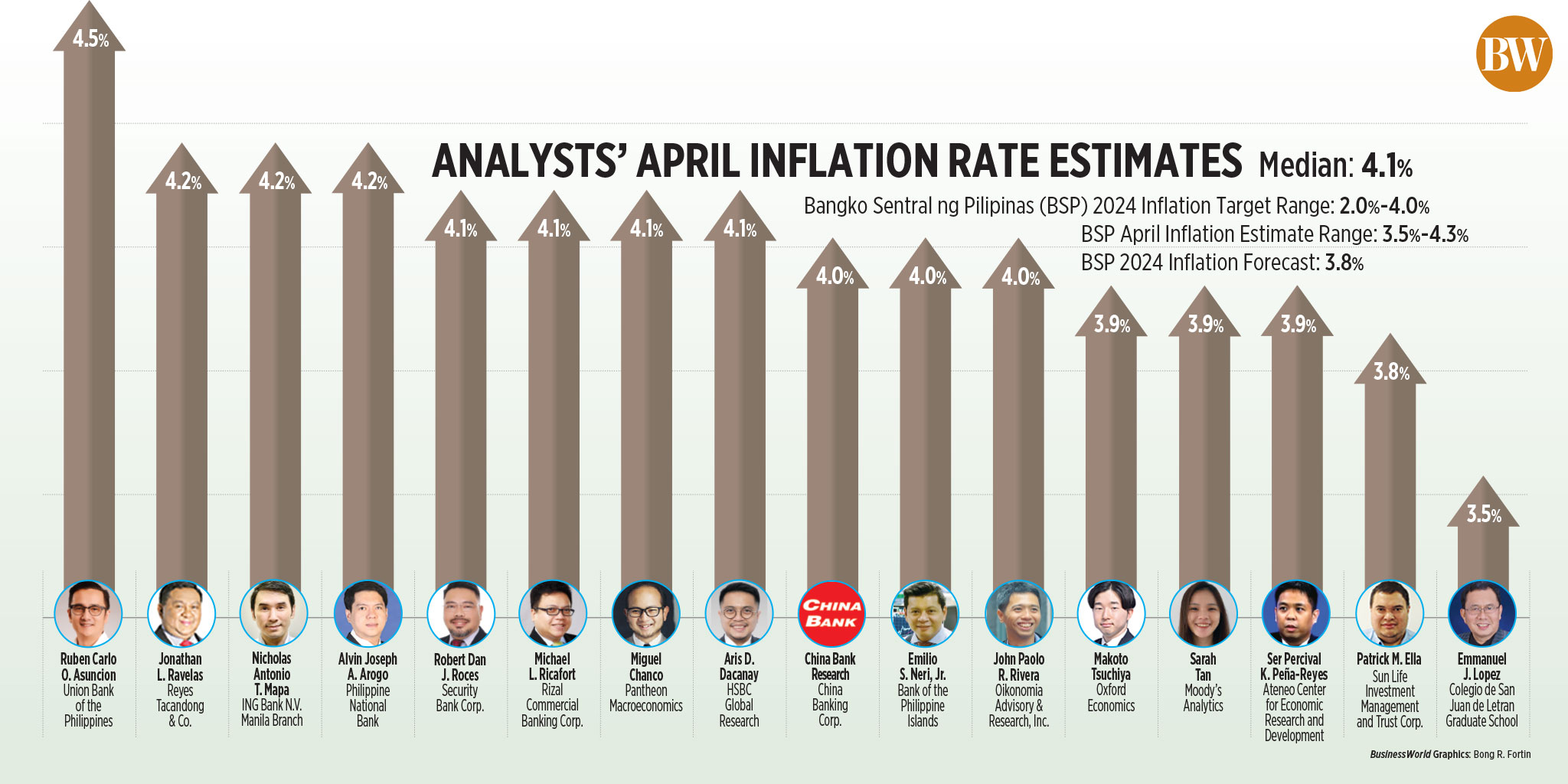
HEADLINE INFLATION may have quickened for a third straight month in April and possibly breached the Philippine central bank’s 2-4% target range, analysts said.

A BusinessWorld poll of 16 analysts yielded a median estimate of 4.1% for the consumer price index (CPI) in April, within the 3.5-4.3% forecast of the Bangko Sentral ng Pilipinas (BSP).

If realized, April inflation would be faster than 3.7% in March but slower than the 6.6% print a year ago.

Analysts’ April inflation rate estimates

This would also surpass the 2-4% target band for the first time since the 4.1% print in November 2023.

April would also mark the third straight month that inflation picked up on a month-on-month basis.

The Philippine Statistics Authority (PSA) will release April CPI data on May 7.

“I’m expecting a further rise in inflation in April to 4.1%, breaching the 4% upper bound of the BSP’s target range for the first time in five months,” Pantheon Chief Emerging Asia Economist Miguel Chanco said.

“The silver lining, though, is that this further upshift should be down mainly to adverse food price base effects — a technicality — rather than a real intensification of food price pressures,” he added.

Bank of the Philippine Islands Lead Economist Emilio S. Neri, Jr. said the monthly change in food prices appear to have “stabilized” in April.

“But a noticeable uptick of the year-on-year headline print in April from March is likely to emanate more from unfavorable base effects, something we expect to persist in May and June,” Mr. Neri said.

Analysts noted that food inflation continued to be the main driver of inflation.

ING Bank N.V. Manila Senior Economist Nicholas Antonio T. Mapa said rice inflation is expected to be north of 24% year on year due to “tight supply conditions” in April.

In March, rice inflation accelerated to 24.4%, its fastest print since the 24.6% in February 2009.

As of end-April, the price of local well-milled rice averaged P48-P55 a kilo from P39-P46 a year ago, data from the Agriculture department showed. A kilo of regular milled rice averaged P50 from P34-P42 a year ago.

Analysts also noted April inflation will reflect the impact from the El Niño weather pattern.

“The main upward pressure comes from rising food prices as the dry spell from El Niño continues to put a toll on crop yields. Notably, rice and pork are the two food items that have suffered heavy supply-side disruptions,” Moody’s Analytics economist Sarah Tan said in an e-mail.

As of April 23, agricultural damage due to the El Niño has reached P4.39 billion. Rice was the most affected crop, accounting for 62% of total agricultural damage, equivalent to P2.71 billion.

“Private transport will also contribute to inflation in April after several weeks of price increase with only the last week of April seeing prices ease somewhat,” Mr. Mapa said.

For the month of April, pump price adjustments stood at a net increase of P2.25 a liter for gasoline, and P0.50 a liter for diesel. Kerosene prices had a net decrease of P0.80 a liter.

“Sequentially, fuel prices likely edged higher, particularly towards the end of the month reflecting a temporary jump in the global oil prices,” Makoto Tsuchiya, an economist from Oxford Economics, said in an e-mail.

OUTLOOK
Inflation may continue to accelerate for the rest of the second quarter before easing in the latter part of the year.

“We expect headline inflation to peak in the range of at least 5% year on year in April-May, consistent with broad food inflation peaking at 6.2% year on year in April before easing to 5.5% in July,” Ruben Carlo O. Asuncion, chief economist at Union Bank of the Philippines, Inc., said

HSBC economist for ASEAN (Association of Southeast Asian Nations) Aris D. Dacanay said he expects inflation to return to within the BSP’s 2-4% target band once the unfavorable base effects wear off in the third quarter.

With inflation likely to remain elevated, the BSP is seen to extend its policy pause at its next meeting.

“We think the BSP will stay put at the upcoming meeting given lingering inflationary risks as well as recent currency movement,” Mr. Tsuchiya said.

The peso returned to the P57 level this month. The BSP has said that this is due to the strong US dollar and not a weak peso amid the Middle East conflict.

“A faster print, especially above the BSP’s target, will strengthen the case for a sustained policy rate pause in May,” Philippine National Bank (PNB) economist Alvin Joseph A. Arogo said.

The Monetary Board stood pat for a fourth straight meeting in April, keeping its benchmark rate at a near 17-year high 6.5%.

From May 2022 to October 2023, the BSP has raised borrowing costs by 450 basis points (bps).

The Monetary Board is set to review policy on May 16.

Weaker-than-expected gross domestic product (GDP) growth may also prompt the BSP to keep its key rate unchanged.

“We suspect that the case for a continued pause will be bolstered by the first-quarter GDP data, which we expect to fall short of expectations,” Mr. Chanco added.

The government is targeting 6-7% growth this year. First-quarter GDP data will be released on May 9.

Mr. Tsuchiya said he expects the BSP to deliver its first rate cut in the fourth quarter.

“For as long as the El Niño impact on food CPI has not receded, BSP will not hesitate to keep its hawkish pause (thus, delay any BSP rate cuts) or highlight the risks to the outlook is still tilted to the upside,” Mr. Asuncion said.

There is also less chance for a rate hike, Ms. Tan said.

“The odds are low for the tightening cycle to resume. BSP is also cognizant that inflation can creep above the upper bound of their target range in the second quarter this year. Meanwhile, it is not yet time for BSP to begin monetary easing, especially as the US Federal Reserve appears to be delaying its first policy rate cut,” she added.

The Federal Reserve kept its Fed funds rates steady at its meeting on April 30-May 1.

Manufacturing expands at fastest clip in 5 months

A WORKER is seen inside a manufacturing facility in Sto. Tomas, Batangas, March 1, 2023. — PHILIPPINE STAR/KJ ROSALES

By Beatriz Marie D. Cruz, Reporter

PHILIPPINE MANUFACTURING activity in April expanded at its fastest pace in five months amid an increase in output and new orders, S&P Global said on Thursday.

The S&P Global Philippines Manufacturing Purchasing Managers’ Index (PMI) rose to 52.2 in April from 50.9 in March, marking the strongest improvement in five months or since the 52.7 reading in November 2023.

A PMI reading above 50 means improved operating conditions from the previous month, while a reading below 50 shows deterioration.

Manufacturing Purchasing Managers’ Index (PMI) of select ASEAN economies, April 2024The Philippines’ PMI reading remained the second fastest among six Association of Southeast Asian Nations (ASEAN) member countries in April, just behind Indonesia (52.9) and ahead of Vietnam (50.3).

Myanmar (49.9), Malaysia (49), and Thailand (48.6) all saw a contraction in manufacturing activity in April.

The Philippines’ PMI reading was above the ASEAN average of 51.

“Building on growth seen in the first quarter of the year, the Filipino manufacturing sector showcased further gains in April,” Maryam Baluch, economist at S&P Global Market Intelligence said in the report. “A quicker rate of expansion was observed for new orders, which in turn triggered a renewed and solid rise in production.”

According to S&P Global, new orders in April increased at the fastest pace since November 2023.

“Export market conditions also improved in April, with new export orders rising for the third month running and at the quickest pace in five months,” it said.

S&P Global said the rate of growth in goods production was “solid” and the “most pronounced” in four months

“With production requirements rising, hiring and purchasing activity remained in growth territory. Moreover, stockbuilding became more widespread in anticipation of greater future output,” Ms. Baluch said.

Manufacturers ramped up purchasing in April, the fastest pace in nine months, due to improved demand and increased production requirements.

“Stronger rates of stockpiling were also recorded at Filipino manufacturing firms, with pre- and post-production stocks accumulated at fastest paces in 12 and 17 months,” it said.

S&P Global noted that manufacturing jobs increased for a third month in a row in April, although easing from March.

“However, the accelerated growth in new orders meant that pressure on capacity had intensified, with some firms struggling to complete work in hand. As a result, the latest rate of backlog depletion was marginal overall and the weakest since August 2023,” it said.

S&P noted that a slower-than-average increase in cost burden meant most manufacturers kept their charges unchanged month on month.

“Prices data indicated a relatively subdued inflationary environment, which also is likely to help support growth in the coming months as firms were able to price more competitively,” Ms. Baluch said.

A BusinessWorld poll of 16 analysts showed inflation may have accelerated to 4.1% in April from 3.7% in March.

Manufacturers were “largely positive” in the next 12 months, with around a quarter saying there will be growth in production. However, the degree of confidence dropped to a four-year low, S&P Global said.

The PMI measures a country’s manufacturing conditions based on the weighted average of five indices: new orders (30%), output (25%), employment (20%), suppliers’ delivery times (15%) and stocks of purchases (10%).

“(PMI) seems to have been unaffected by inflation, with cost of production as measured by the Producer Price Index for manufacturing, having fallen by 1% year on year in March, marking the third consecutive month of decline, although it saw a slight month-on-month increase of 0.3%,” Security Bank Corp. Chief Economist Robert Dan J. Roces said in a Viber message.

If the PMI reading continues to improve, Mr. Roces said he expects an upside to gross domestic product growth.

Bank of the Philippine Islands Lead Economist Emilio S. Neri, Jr. said stronger demand in the electronics and food processing sectors contributed to the uptick in factory activity.

“S&P’s survey is consistent with the recovery in Asian electronics exports, which happens to be one of the major manufacturing subsectors in the Philippines,” he said in a Viber message.

“It is also possible that the local food processing industry, despite higher input costs, continues to thrive given the strength of overall domestic demand, driven largely by favorable demographics and declining unemployment rates,” he added.

Oikonomia Advisory & Research, Inc. President and Chief Economist John Paolo R. Rivera said in a Viber chat that slower inflation may have helped boost factory activity in April.

Rizal Commercial Banking Corp. Chief Economist Michael L. Ricafort said the uptick in factory activity may have been due to the higher number of working days in April versus March.

“This is a sign of resilience despite and defying the still relatively higher interest rates that increased financing costs/borrowing costs for manufacturers since 2022 due to higher prices/inflation,” Mr. Ricafort said in an e-mail.

ADVERTISEMENT
ADVERTISEMENT