Home Blog Page 3264

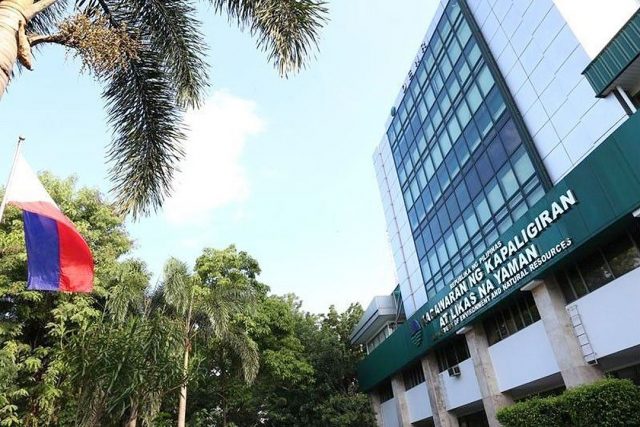
DENR probing Surigao del Norte mine’s failure to contain tailings

TWITTER.COM/DENROFFICIAL

THE Department of Environment and Natural Resources (DENR) said it has launched an investigation into Greenstone Resources Corp. after the reported failure of its tailings storage facility (TSF).

In a statement on Sunday, the DENR said it had dispatched a team to investigate the cause of the TSF failure and assess the extent of the damage.

“The (Mines and Geosciences Bureau) is also working closely with Greenstone Resources, local authorities and community leaders to ensure the safety and well-being of residents in the affected areas,” Environment Secretary Maria Antonia Yulo-Loyzaga said.

Greenstone Resources operates the Siana gold mine in Surigao del Norte.

Separately, the company said that cracks were discovered on the embankment of its tailing storage facility, caused by an earthquake and rains in Mindanao.

“The company voluntarily suspends its mining operations in order to expedite its emergency response activities, to closely examine what has transpired, and to ensure the absolute safety of its beneficiary communities,” it said.

The DENR said that it will investigate the factors that led to the incident, as well as the integrity of the facility and safety systems and procedures in place.

“Infrastructure failures highlight the urgent need for monitoring, regulation and oversight in the mining industry to de-risk operations and prevent incidents in the future,” Ms. Yulo-Loyzaga said.

“This is urgently needed especially because of the seismicity of our country and the impacts of climate change,” she added.

The DENR is currently reviewing the environmental and social impact of mining operation in the country.

“While we understand the important contribution to national development of the mining industry in Surigao del Norte and elsewhere in the country, risk management is a continuous dynamic and pro-active process,” she said.

Greenstone Resources said that it will rebuild any homes damaged by the incident. — Adrian H. Halili

Electricity spot prices rise in early April as hot weather spurs demand

BW FILE PHOTO

ELECTRICITY spot prices rose in early April due to the increase in demand, the Independent Electricity Market Operator of the Philippines (IEMOP) said.

The IEMOP said the average price at the Wholesale Electricity Spot Market (WESM) system-wide rose 33% to P6.90 per kilowatt hour (kWh).

Supply rose 2.1% to 19,210 megawatts (MW) while the demand was up 9.2% at 14,375 MW.

“Demand continues to rise across all regions as the summer season progresses and the heat index increases,” the IEMOP said.

The average WESM price in Luzon rose 31.6% month on month to P6.63 per kWh.

Supply grew 4.5% to 13,308 MW. Demand, meanwhile, jumped 10.1% to 10,310 MW.

In the Visayas, the spot price increased 39.5% from a month earlier to P8.73 per kWh.

For early April, supply fell 2.3% month on month to 2,349 MW while demand hit 2,002 MW, up 7.4%.

The spot price in Mindanao rose 40.9% from a month earlier to P6.43 per kWh.

Mindanao’s supply dropped 3.5% to 3,553 MW while demand increased 6.6% to 2,063 MW.

The IEMOP said that 19.68% of the trading intervals for April were subjected to the secondary price cap (SPC) compared to the previous month’s 7.04%.

The SPC is imposed when the rolling average of the generator weighted average price exceeds P9 per kWh, the market operator said.

“Congestion manifested for the month (7,501 intervals) is more than the March 2024 billing month (3,695 intervals) wherein during this scenario, high-priced plants cleared to meet the demand (such as oil-based),” the IEMOP said.

IEMOP operates the WESM, where energy companies purchase power when their long-term contracted power supply is insufficient to meet customer needs. — Sheldeen Joy Talavera

Foreign investors deterred by mining regulatory uncertainty, ambassador says

OCEANAGOLD.COM

By Adrian H. Halili, Reporter

REGULATORY uncertainty is expected to hinder further foreign investment in the Philippine mining industry, Canada’s ambassador said.

“One of the inhibitors to deeper, you know, investment here has been the frequency, the uncertainty of some of the (changes in) regulations. You know, the regulatory framework,” Canadian Ambassador to the Philippines David Hartman told BusinessWorld on the sidelines of a mining industry event last week.

The government plans to implement a new mining fiscal regime for companies operating within and outside of mineral reserves to drive economic growth.

Under the proposed tax regime, the government expects to generate around P5.5 billion from royalties on miners operating within mineral reservations, P1.31 billion from royalties on miners operating outside reservations and P3.37 billion from windfall profit taxes.

In 2023, the value of mineral production hit P249.05 billion, according to the Mines and Geosciences Bureau.

“What we are hearing now from the government is trying to move in the direction to give that level of certainty to the market, so that (foreign companies) can make these investments,” he added.

Earlier, the Department of Finance proposed a margin-based royalty of 1.5-5%, with only four tiers, compared to the 10 tiers in House Bill No. 8937.

Large-scale metallic mining operations inside mineral reservations will still pay the government the equivalent of 5% of their gross output.

“It is a very costly sector in which to do business. And so, obviously, people are going to be looking for that greater degree of certainty,” he said.

Mining companies currently pay corporate income tax, excise tax, royalty, local business tax, real property tax, and fees to indigenous communities.

Separately, the Department of Environment and Natural Resources said that it is seeking to shorten the approval process for mining permits by one to three years.

According to Environment Secretary Maria Antonia Yulo-Loyzaga the typical approval period for mining permits could run as long as six years.

“We hope that in fact this year, with the work we are doing on digitalizing permitting… we can shorten that permitting time,” Ms. Yulo-Loyzaga told reporters.

Meanwhile, Mr. Hartman said that more capital market participation on the Philippine bourse could draw more interest from Canadian investors.

“I think the more that we can go to capital markets here to participate in some of these processes, the more interest that will be,” he said.

The Philippine unit of Australian-Canadian mining company OceanaGold Corp. is set to list on the Philippine Stock Exchange on Monday, May 13.

“The fact that there’s all of these policy initiatives underway from the government, makes the Philippines a much more palatable, a much more interesting, a much more potentially prosperous area in order to do business,” he added.

OceanaGold Philippines, Inc.’s initial public offering consists of 456 million common shares, equivalent to a 20% stake in the company.

“The Philippines has all the raw ingredients, all the capacity to grow this industry here…the future potential for the mining sector, for future economic growth, for the prosperity of the people of the Philippines is incredibly promising,” Mr. Hartman said.

DBM says budget release rate hits 86%

BW FILE PHOTO

AROUND 86% of the 2024 national budget had been released by the end of April, the Department of Budget and Management (DBM) said.

In its Status of Allotment Releases report, the DBM said it released P4.96 trillion out of the P5.768-trillion budget.

Around P809.16 billion remains undistributed, the DBM said.

The pace of releases is slightly ahead of the 85.8% rate posted by end of April 2023.

Of the total released, 97.2% or P3.4 trillion went to government agencies. Special Purpose Funds accounted for P248.66 billion.

Automatic appropriations amounted to P1.25 trillion, DBM said.

Allotment releases included P231.3 million for the Retirement and Life Insurance Premiums of several National Government agencies.

The DBM also said P10 billion was released to implementing agencies of the Rice Competitiveness Enhancement Fund.

Meanwhile, the DBM has released calamity funds amounting to P6.73 billion as of April 30 to rebuild houses and rehabilitate other infrastructure damaged by typhoons.

The Department of Public Works and Highways received P3.74 billion while the Department of Social Welfare and Development (DSWD) was allocated P2.89 billion, according to the DBM’s National Disaster Risk Reduction and Management Fund update.

The Department of Human Settlements and Urban Development received P102.9 million to construct 190 houses in Ilocos Sur affected by a recent earthquake, DBM said.

The DBM said that P1.34 billion was released to the DPWH for infrastructure repairs in the Southern Tagalog, Bicol, and Eastern Visayas regions affected by various typhoons and volcanic activity.

The DPWH and DSWD received P1 billion and P875 million respectively to replenish their Quick Response Funds, which are standby funds that can be tapped readily to support relief and rehabilitation efforts during calamities.

Around P16 billion under the calamity fund remains undistributed, the DBM said.

The government’s 2024 spending plan is 9.5% higher than last year’s, and is equivalent to 21.7% of gross domestic product. — Beatriz Marie D. Cruz

Climate resilience: Innovation in Philippine business

(Second of two parts)

IN BRIEF:

• Philippine businesses must incorporate resilience in their strategies to navigate climate-related risk and leverage emerging opportunities.

• Leading organizations have ramped up efforts in the past years to improve their market positions, drive long-term value, and advance sustainability development in the country.

Due to escalating climate challenges, Philippine businesses must redefine resilience by navigating risks and capitalizing on emerging opportunities. The previous article explored the foundational principles of climate resilience, emphasizing the imperative for Philippine businesses to adapt and thrive amid climate threats. The discussion highlighted how understanding and managing both physical and transition risks are crucial, alongside strategic shifts towards sustainability that bolster growth and help secure a competitive advantage.

This article explores how leading companies are leveraging their proactive strategies to improve their market position and drive long-term value, as shared by these companies at the recently held SGV Knowledge Institute event, Climate Convergence: Actions Toward a Resilient Future.

ENERGY DEVELOPMENT CORP.: PROACTIVE RISK MANAGEMENT
EDC’s risk management strategies, born from firsthand experiences with climate-related disasters, illustrate the importance of preparedness and adaptive operations. Their structured approach not only safeguards against immediate risk but also builds a foundation for resilience, showcasing how businesses can thrive amid environmental uncertainty.

When Super Typhoon Yolanda hit EDC’s geothermal power plants in Leyte, it took the company four months to restore generation capacity. In response, the company invested over P350 million in resilience measures to typhoon-proof its Leyte plants. Concurrently, EDC reinforced its dedication to climate change mitigation by committing never to build, develop, or invest in coal-fired power plants. In addition, EDC launched the Net Zero Carbon Alliance framework that aims to help its partners achieve carbon neutrality.

JG SUMMIT HOLDINGS: SYSTEMATIC CLIMATE HAZARD MITIGATION
JG Summit Holdings, Inc.’s strategy to assess and enhance resilience against projected climate hazards showcases its approach to safeguarding assets. Specifically, it initiated a pragmatic strategy to progressively enhance resilience across its portfolio.

The conglomerate has also launched initiatives to integrate climate risk intelligence into its strategic businesses processes. Using a data-driven approach, it leverages the latest climate science and granular Philippine-specific data to thoroughly assess its facilities’ exposure to climate hazards.

Concurrently, the conglomerate conducts vulnerability assessments on selected business-critical facilities to evaluate its ability to withstand extreme weather events, shaping retrofitting strategies, refining maintenance protocols and emergency response plans, and establishing necessary backups and redundancies applicable across their portfolio. Central to these efforts is capability building, with significant investments in training risk managers to interpret and utilize climate data at scale.

STEELASIA MANUFACTURING CORP.: PIONEERING GREEN STEEL PRODUCTION
SteelAsia’s journey toward a net-zero future by 2050 demonstrates a transformative approach to decarbonization and managing transition risks. By integrating advanced technology and prioritizing the use of recycled materials, SteelAsia is reducing its carbon footprint and aligning itself with global demands for sustainable building materials.

These solutions include using recycled scrap steel and electric arc furnace (EAF) technology powered by renewable energy, allowing SteelAsia to reduce its emissions intensity (ton of CO2 produced per ton of steel) by 87% compared to the industry-standard Blast Furnace-Basic Oxygen Furnace method. By adopting the cleanest technologies and learning from global advances, SteelAsia has emerged as a global leader in green steel production, achieving one of the lowest emission rates in a traditionally hard-to-abate sector.

In addition to direct emissions reductions, avoiding the cycle of exporting scrap only to import finished products enables SteelAsia to significantly cut emissions along the entire supply chain and deliver steel to its customers more quickly and efficiently. Compared to global competitors, SteelAsia offers dual benefits: its locally produced green steel reduces customers’ embodied emissions and ensures shorter wait times.

NICKEL ASIA CORP.: REIMAGINING MINING WITH SUSTAINABILITY
NAC is actively enhancing its environmental protocols by adopting sustainable mining practices, such as obtaining Science Based Targets initiative (SBTi) certification and implementing comprehensive emission management strategies. These initiatives demonstrate NAC’s commitment to reducing its ecological footprint while maintaining profitability, setting a benchmark for sustainable practices in the mining sector.

It tackled one of mining’s main emissions source — fuel used in operations and mineral transport — by investing in low-emission technologies like hybrid excavators that improve fuel efficiency and cut fuel costs. These efforts will have reduced an estimated 35,000 tCO2e in Scope 1 and 2 emissions by 2025, merging sustainability with operational efficiency.

BDO UNIBANK: LEADING WITH SUSTAINABLE FINANCE
Through its Sustainable Finance Framework, BDO supports projects that offer environmental and social benefits, aligning investment with sustainable growth. This proactive approach addresses the financial aspects of climate resilience and emphasizes the financial sector’s role in fostering a sustainable future. Since 2010, its Sustainable Finance Desk under the Institutional Banking Group has financed projects that pursue energy efficiency, pollution prevention and control, and sustainable management of natural resources and land use.

In particular, BDO has directed a significant portion of its business lending — 34% — toward environmental and social projects. Its ASEAN sustainability bond program, the largest of its kind in the Philippines, raised P52.7 billion for 39 projects encompassing renewable energy, roads & basic infrastructure, affordable housing, food security, and other green and social initiatives. Additionally, BDO has issued $150 million worth of green bonds that finance seven renewable energy projects across wind, biomass, and hydro. More recently, BDO introduced a $100-million blue bond program, the first of its kind in the country, dedicated to financing projects that enhance bulk water supply and improve wastewater management.

SGV & CO.: WALKING THE TALK
SGV is at the forefront of managing its climate risks and spearheading solutions that empower its clients to enhance their management of climate risks and opportunities. The firm has taken decisive action to reduce its emissions, with a particular focus on power consumption, the primary source of its emissions.

By transitioning to renewable energy sources under the Department of Energy’s Green Energy Option Program (GEOP), the firm has made significant strides in cutting down emissions related to electricity. This program enables consumers to switch from conventional energy supplies to renewable sources.

The firm’s portfolio of initiatives includes producing thought leadership reports and articles on sustainability and relevant regulations surrounding it, as well as crafting the annual SGV Sustainability Report and Beyond the Bottom Line publications.

SGV has further strengthened its capability to confront climate-related challenges by establishing a robust climate risk advisory team composed of climate science, geology, and engineering professionals. This strategic development equips the firm to analyze projected climate hazards, develop localized climate hazard information, and perform in-depth vulnerability assessments across assets and portfolios — overcoming a major hurdle in crafting effective climate resilience strategies for its clientele.

ADVANCING THE PHILIPPINE SUSTAINABILITY JOURNEY
Today, Philippine companies are not only safeguarding their future — they are actively shaping the narrative of sustainable development. As we can see from the above examples, businesses, in close cooperation with government, are pivotal in steering the country toward a resilient, sustainable trajectory.

In a rapidly evolving business landscape, further shaped by the pressing imperatives of climate dynamics, trailblazing entities can offer blueprints for action. Through innovative approaches to the intertwined risks and opportunities of climate change, companies can find new ways to gain a competitive edge in an economy increasingly defined by sustainability.

This article is for general information only and is not a substitute for professional advice where the facts and circumstances warrant. The views and opinions expressed above are those of the author and do not necessarily represent the views of SGV & Co.


Bonar A. Laureto is a sustainability services principal of SGV & Co.

SEAG marathon queen Hallasgo tops the women’s 10,000-m run

Christine Hallasgo — CHRISTINE HALLASGO’S FACEBOOK ACCOUNT

FORMER Southeast Asian Games  (SEAG) marathon queen Christine Hallasgo wanted her women’s 10,000-meter victory in the ICTSI Philippine Athletics Championships yesterday resonate as far as her hometown in Bukidnon where her seven-year-daughter Chrisxiah Mae lives.

After all, she was Ms. Hallasgo’s biggest inspiration all throughout her national team tour of duty.

“This is for her,” said the 31-year-old Ms. Hallasgo moments after she clocked 37:00.05 for the gold that came as a fitting Mother’s Day gift.

Edna Magtubo of Spectrum Runners Team A took the silver in 39:46.72 while April Joy Alampayan of Bohol Province the silver in 39:46.81 in this meet organized by the Philippine Athletics Track and Field Association and backed by the Philippine Sports Commission, ICTSI, Milo, CEL Logistics, Inc., Pocari Sweat, SIP, Wireless Link Technologies, Inc., UAI, Masiv Sports, Victory Liner, AAI Worldwide and FilAm Sports.

Army’s Richard Salaño, for his part, took the men’s 10,000m mint in 31:26.82 ahead of University of the East’s James Darrel Orduna (31:38.21) and Spectrum’s Ricky Organiza (31:42.21), who settled for the silver and bronze, respectively.

SEA Games silver medalist Mark Harry Diones did just enough to rule the men’s triple jump following a 15.60m.

It was, however, a far cry from the national record of 16.7m he set seven years ago in the National Open in Ilagan, Isabela.

Also emerging victorious were Masbate’s Prince Charles Branzuela (boys’ Under-18 discus throw) and Thailand’s Kochchakron Hamachan (girls U20 hammer throw).

Aries Toledo, meanwhile, added the 4x100m relay silver to his decathlon gold for a Navy team that also consisted of Clinton Bautista, Alex Talledo, Jr. and Anfernee Lopena. — Joey Villar

UP defeats DLSU, 89-77, in ECJ Preseason Cup

University of the Philippines Figthing Maroons — FACEBOOK.COM/FILECOSPORTS

THE UNIVERSITY of the Philippines (UP) drubbed De La Salle University (DLSU), 89-77, in a rematch between UAAP finalists to open the Filoil EcoOil 17th ECJ Preseason Cup in style over the weekend at the Filoil EcoOil Centre.

JD Cagulangan and Francis Lopez connived as the Fighting Maroons exacted some payback on the Green Archers after a runner-up finish to the same team in the UAAP Season 86 finals late last year.

UP also handed De La Salle, even with the presence of Kevin Quiambao, its first loss in any preseason leagues this summer after a 9-0 perfect championship run in the PBA D-League and an unbeaten 4-0 start in the Pinoy Liga thus far.

Mr. Cagulangan tallied 19 points, three assists and three steals while Mr. Lopez had 16 points, four assists and three steals with new reinforcement Dikachi Ududo in place of former ace Malick Diouf piling up six points, 10 rebounds and two blocks.

Reigning UAAP Most Valuable Player (MVP) Mr. Quiambao had 15 points while PBA D-League MVP Mike Phillips and also new foreign student-athlete Henry Agunanne added 13 points apiece for the wards of coach Topex Robinson.

Meanwhile, Josh Tagala fired 20 points as NCAA champion San Beda University trounced rival Colegio de San Juan de Letran, 76-69, even without NCAA Finals MVP James Payosing and star forward Yukien Andrada.

In other games, Mapua University beat Lyceum of the Philippines University, 75-67, University of Perpetual Help under new head coach Olsen Racela escaped Jose Rizal University in double overtime, 91-89, while University of the East took down Adamson, 65-57. — John Bryan Ulanday

UST vows to force a finals rubber match despite Poyos injury

University of Santo Tomas Golden Tigresses — FACEBOOK.COM/WEARETHEUAAP

DOWN, wounded and all, University of Santo Tomas (UST) vows no retreat, and definitely, no surrender in a bid to force a winner-take-all match in the University Athletic Association of the Philippines (UAAP) Season 86 women’s volleyball finals.

“We never lose hope,” said coach Kungfu Reyes in the aftermath of a double whammy to open the title showdown with National University (NU).

The Golden Tigresses bowed to the Lady Bulldogs in straight sets, 25-23, 25-20, 25-20, and in the process missed the services of ace spiker Angeline Poyos following her unfortunate right ankle injury.

The super rookie Ms. Poyos, who’s the leading scorer of Santo Tomas in its stellar run to the finals for the first time in five years, accidently stepped on the foot of teammate Mary Banagua midway through the second set.

She grimaced in pain and had to be carried out of the court. After the match, she left the venue in walking boot and crutches, making her availability next game a big question mark.

Ms. Poyos will undergo tests before determining her official diagnosis with only a few days in between before Game 2 on Wednesday at the Mall of Asia Arena.

It’s win or go home for the Golden Tigresses, who are determined to stay ready with or without Ms. Poyos as Regina Jurado, Jonna Perdido, Cassie Carballo and captain Bernadett Pepito promise to brave on.

The youthful UST, which dethroned champion De La Salle University in the semis, may have lost a battle against the mighty NU and took a casualty but the war is far from over, urged Mr. Reyes. — John Bryan Ulanday

Third-seed LPU blasts Arellano; Letran next in stepladder finals

PHILSTAR FILE PHOTO

LOSING three straight entering the National Collegiate Athletic Association (NCAA) Season 99 women’s volleyball stepladder semifinals would usually send one into pangs of despair and panic.

Not the Lyceum of the Philippines University (LPU) Lady Pirates though. Instead, LPU turned it into an opportunity and used it as motivation in carving out a 25-17, 24-26, 25-20, 25-19 win over Arellano University (AU) at the Filoil EcoOil Arena that kept it in finals contention.

The victory sent LPU, the No. 3 seed, into another knockout duel, this time against No. 2 Colegio de San Juan de Letran on Wednesday.

If they survive again, the Lady Pirates will make a return trip to the finals where they battle the College of St. Benilde Lady Blazers, the league’s dynastic champions who sealed the first finals seat with a nine-game elims sweep.

And Janeth Tulang was at the center of it all after practically doing everything — from attacking with 23 points to defending with five blocks, 11 digs and eight receptions.

It was also poetic justice as Ms. Tulang, LPU’s third scoring option, made AU pay for focusing on Johna Dolorito and Joan Doguna, who finished with 17 and seven hits, respectively. — Joey Villar

Jayson Tatum scores 33 as Celtics take 2-1 lead on Cavs

JAYSON TATUM recorded 33 points, 13 rebounds and six assists and the Boston Celtics regained the lead in their Eastern Conference second-round series with a 106-93 victory over the host Cleveland Cavaliers on Saturday night.

Jaylen Brown scored 28 points on 13-of-17 shooting and collected nine rebounds as top-seeded Boston took a 2-1 lead in the best-of-seven series. Jrue Holiday added 18 points, eight rebounds and five assists and Derrick White had 12 points for the Celtics.

Donovan Mitchell made seven 3-pointers and scored 33 points for the fourth-seeded Cavaliers. Evan Mobley had 17 points and eight rebounds, while Caris LeVert and Darius Garland scored 15 points apiece for Cleveland.

Game 4 is Monday night at Cleveland.

The Cavaliers were without big man Jarrett Allen (ribs) for the sixth straight game. Kristaps Porzingis (calf) missed his fourth straight game for the Celtics.

Boston shot 51.2 percent from the field, including 13 of 34 from 3-point range. Cleveland connected on 42.9 percent of its shots and was 12 of 36 from behind the Cavaliers trailed by 15 points before scoring the first six points of the final quarter. Mr. Mobley capped it with back-to-back hoops to bring Cleveland within 84-75 with 10:29 remaining.

Payton Pritchard and White nailed 3-pointers over the next few minutes as Boston pushed its lead to 94-81 with 6:58 remaining.

After a three-point play by Mr. Mitchell, Mr. Brown and Mr. White scored to give the Celtics a 98-84 advantage with 5:42 left.

Mr. Tatum’s fall-away baseline jumper over Max Strus made it 104-89 with 2:14 left, and Boston closed it out.

Boston led by nine at the break before opening the third quarter with 14 consecutive points.

Tatum opened the quarter with a three-point play, Mr. White added a 3-pointer and Mr. Brown followed with a layup to increase the margin to 17. Mr. White and Mr. Holiday knocked down treys to end the surge and give the Celtics a 71-48 lead with 9:06 left in the third quarter.

Mr. Mitchell hit a short jumper with 8:39 left in the third to start a 9-0 run as the Cavaliers pulled within 14 with 5:25 left. Boston thwarted the charge, and Mr. Brown drained a long 3-pointer with 20.3 seconds left to give his team an 84-69 advantage entering the final stanza.

Mr. Tatum scored 18 points in the first half as the Celtics took a 57-48 lead into the break. Mr. Mitchell had 23 in the half for Cleveland. — Reuters

Champion Real Madrid celebrates title with crushing win over Granada

GRANADA, Spain — Newly-crowned LaLiga champions Real Madrid earned an emphatic 4-0 win over relegated Granada on Saturday, extending their unbeaten league run to 28 games.

Carlo Ancelotti’s side continued their superb form following their midweek Champions League semi-final win over Bayern Munich, reaching 90 points in the standings, 15 clear of second-placed Girona with three games remaining.

Fran Garcia broke the deadlock with an easy finish after a long series of passes in the 38th minute before he set up Arda Guler to slot home and extend the advantage just before halftime.

Brahim Diaz made it 3-0 in the 49th minute with a shot into the near post, and the Morocco international scored his second nine minutes later off a Luka Modric pass from the right.

Granada remain in 19th place with 21 points, while 15th-placed Mallorca’s victory over Las Palmas earlier in the day confirmed their relegation after just one season in the top flight.

Real boss Mr. Ancelotti meanwhile had words of encouragement for the relegated side.

“In sport you have to look at defeat too, it has to be an opportunity to do better in the future,” the Italian told reporters. — Reuters

T-Wolves vs Nuggets

There’s no doubt that the Timberwolves headed into Game Three with the confidence of winners. Having emerged with victories in the high-altitude lair of the Nuggets, they figured on consolidating their preeminent position by holding court at the Target Center. Unfortunately, they looked flat from tipoff, and the seeming nonchalance with which they greeted the task at hand was all the opening the defending titleholders needed to show that the series is far from settled.

By the time halftime rolled around, the Timberwolves stared at a 15-point deficit borne of a striking inability to keep pace with the well-prepared Nuggets. If they thought they had any advantage that brought them a 2-0 lead in the best-of-seven matchup, it was promptly disabused in the face of the competition’s systematic thwarting of their efforts. Clearly, champion head coach Michael Malone spent the intervening days between Games Two and Three breaking down film and coming up with resilient countermeasures.

To be sure, the Timberwolves appeared to have been thrown off by the tighter officiating that allowed the Nuggets to execute with precision. The latter saw fit to resort to the Nikola Jokic-Jamal Murray high-screen-and-roll action early and often, and the quick whistles of the arbiters prevented them from resorting to the constant physicality that they employed in the two previous contests. And with the baskets came the self-assurance that hitherto appeared to abandon the blue and yellow.

In any case, the Timberwolves stayed ill-equipped in the third quarter; in fact, they were even worse. And by the time the final canto began, the outcome was all but a foregone conclusion. Certainly, lethargy overcame the supposedly lethal duo of Anthony Edwards and Karl-Anthony Towns. ‘I’ll take the blame for this loss. I came out with no energy at all. I can’t afford to do that for my team. I let my team down, coaches down, fans down,” the 22-year-old two-time All-Star often compared to all-time-great Michael Jordan admitted.

The good news is that today is literally another day, and if there’s anything that bench tactician Chris Finch has underscored, it’s his capacity to use any intervening time to make critical adjustments at least as well as Malone does. He knows how important Game Four is to their cause. Prevail, and they subsequently get three chances to advance to the conference finals. Suffer another setback, and they will have reduced the series to a two-out-of-three affair. In short, their destiny is theirs to carve.


Anthony L. Cuaycong has been writing Courtside since BusinessWorld introduced a Sports section in 1994. He is a consultant on strategic planning, operations and human esources management, corporate communications, and business development.

ADVERTISEMENT
ADVERTISEMENT