Home Blog Page 312

Everyone in Asia wants a stronger Japan. Except China
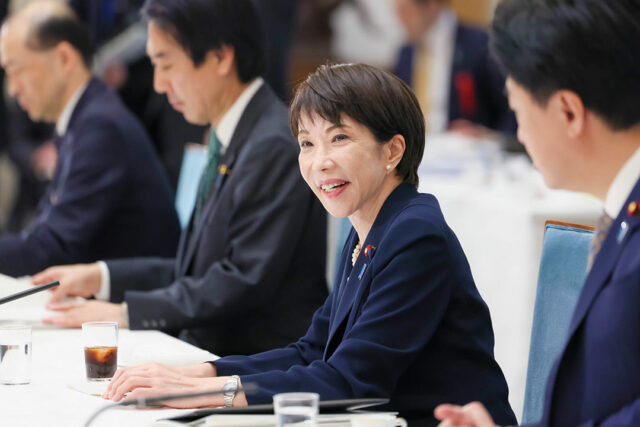
JAPAN’s Prime Minister Sanae Takaichi met with Keidanren (Japan Business Federation) at the Prime Minister’s Office on Jan. 19. — JAPAN.KANTEI.GO.JP

By Karishma Vaswani

ACROSS ASIA, the reaction to Prime Minister Sanae Takaichi’s election triumph has been near unanimous: A stronger Japan is good for the region. Everyone, that is, except China.

Japan’s first-ever female premier secured a historic victory, handing her the strongest mandate of any leader in the country’s postwar era. The scale of this win matters far beyond Japan. Under Takaichi, Tokyo is increasingly viewed as a stabilizing force in the Indo-Pacific region — a stunning reversal for a country that once made Asia deeply wary of any resurgence in its military power. That shift is not happening because the region has forgotten the past. Rather, it’s pragmatically trying to manage the present.

Japan’s occupation of much of Southeast Asia between 1941 and 1945 was marked by severe brutality. Beijing continues to invoke this history — and its own traumatic experience — to warn against any revival of Tokyo’s military role.

But Asia’s middle powers are adapting. Two forces are driving that recalibration: A recognition that US President Donald Trump prizes self-interest and leverage over diplomacy and cooperation, and China’s increasing willingness to use coercion as a routine instrument of statecraft. As the former Indian Foreign Secretary Nirupama Menon Rao has argued, a more transactional US foreign policy “inevitably increases the importance of allies like Japan in providing continuity and strategic ballast in the Indo-Pacific.”

Trump’s America-First approach has left many Asian allies uneasy about his commitments on trade and defense. The US remains engaged, but that no longer comes with predictability. From India to Taiwan, governments have felt that volatility keenly. Last week, New Delhi came to an agreement on trade with Washington, but only after a bruising round of talks with the cards stacked firmly in the White House’s favor. Details are still being finalized but few doubt which side emerged as the winner.

Taipei, meanwhile, has watched anxiously as its future is discussed as leverage in US-China diplomacy ahead of a potential meeting between the US leader and President Xi Jinping. The lesson many regional capitals are drawing is that Washington’s support is conditional, and subject to seemingly fickle changes.

China is making that instinct to hedge more urgent. Whether through coercive trade measures, the harassment of vessels in the South China Sea, or the selective use of economic tools such as restrictions on tourism and critical minerals, Beijing has demonstrated how quickly it can punish behavior it dislikes.

Its sharp reaction to Takaichi’s comments last year — when she suggested that a crisis in the Taiwan Strait could directly implicate Japan’s security — underscores this reality. The fact that she hasn’t walked those comments back, despite repeatedly saying she wants stable relations with China, is telling. Beijing’s pressure has instead backfired, strengthening public support in Japan for reducing economic dependence on the world’s second-largest economy, and boosting domestic resilience on rare earths and energy. 

A more confident Tokyo complicates Beijing’s preferred regional order. For many of Asia’s middle powers, that makes Japan an appealing counterweight. South Korea is a case in point. Long skeptical of Japan’s rise because of historical enmity, Seoul has shown a noticeable shift. Takaichi’s recent “drum diplomacy” with President Lee Jae Myung was more than a viral K-pop moment. It signaled a willingness to set aside old hostilities and deepen cooperation.

This relationship will be a critical one to watch. South Korean ties with Japan have been marked by periods of close security cooperation, oscillating with sharp diplomatic freezes rooted in nationalism. But increasingly there is a shared recognition in both capitals that they need a functional partnership to manage growing pressure from China and the persistent threat posed by North Korea.

This regional calculation is also reshaping Japan’s own security debate. Defense spending is rising to record levels, and the once-taboo discussion of militarization is moving into the mainstream. A 2025 Cabinet Office survey found that 45.2% of respondents now believe the Self-Defense Forces’ size and capabilities should be strengthened. That’s up from 42% in 2022, the last time the survey was conducted. China’s military power and activities in the region were cited as a key reason for the sentiment.

Takaichi now faces both opportunity and risk as she considers revisiting sensitive constitutional questions. She has long pushed for reform of the pacifist constitution, which was imposed by the US after World War II and never amended — but she will have to walk a fine line. Moving too cautiously would undercut her mandate, but moving too boldly could alarm neighbors. It would also feed into Beijing’s narrative that Japan’s military threat has merely been dormant.

For now, the wind is at her back. Her victory gives Tokyo rare political stability to play a larger part in a region squeezed between American volatility and mounting Chinese pressure. For much of Asia, that balance is not just welcome — it is increasingly essential. For China, that is precisely the problem.

BLOOMBERG OPINION
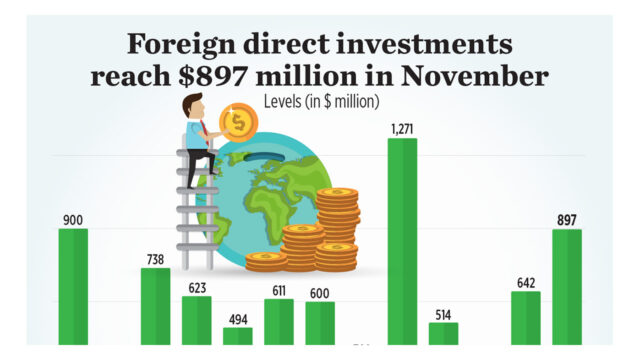
Foreign direct investments reach $897 million in November

NET INFLOWS of foreign direct investments (FDIs) into the Philippines hit a four-month high in November, even as inflows slipped year on year, the Bangko Sentral ng Pilipinas (BSP) said. Read the full story.

Climate risk threatens sovereign credit ratings for dozens of countries

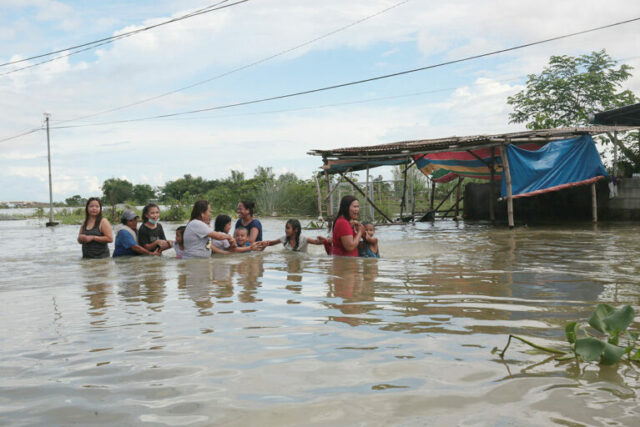
RESIDENTS are seen fleeing their homes due to floods, Oct. 23, 2020. — PHILIPPINE STAR/ MICHAEL VARCAS

NATIONS that pollute the least are among the most vulnerable to disasters and face the highest barriers to the financing they need to protect themselves. As climate impacts worsen, already towering debt loads, finance costs and poor sovereign credit ratings could enforce a “vicious cycle” for developing countries, according to new research.

Fitch Ratings this month published an analysis suggesting that small countries prone to extreme weather and fossil-fuel exporters may face the highest sovereign risks from climate change in coming years.

A new tool for analysis — called Climate Vulnerability Signals — scores sovereign credit on a 100-point scale, based on both physical risks and “transition risks,” or economic sensitivity to declining fossil-fuel use and high clean-tech costs. Of 119 countries analyzed through 2050, 60 had scores high enough to suggest that they were at risk of a credit downgrade by 2050, according to the report. That would make it harder for them to borrow to finance projects that protect against climate change and speed the energy transition.

All countries may face some added costs associated with the clean energy transition and physical impacts, the authors write. “We believe this is consistent with the general scientific view that climate risk is an issue of significant global concern,” the Fitch authors write.

Several countries, including the Bahamas, Jamaica and the Philippines, face among the highest physical risk pressure on credit by 2050, according to the Fitch analysis. Those three nations were hit by devastating cyclones in recent years.

Fitch’s new tool “represents an important advancement in the disclosure of climate risk factors monitored by rating agencies,” said June Choi, a PhD candidate at Stanford University and lead author of separate, preliminary research about the relationship between extreme weather and sovereign credit risk.

Identifying future risks is essential, she said, but it’s equally important for agencies to spell out what kind of adaptations reduce risks.

Ms. Choi and Stanford colleagues late last month published a working draft that looks backward through time and finds a strong association between countries’ exposure to tropical storms and likelihood to have a speculative sovereign rating. The paper has yet to be submitted for peer review, but it adds to growing evidence linking climate impacts to sovereign credit risk.

More and more extreme weather shocks make it harder to service debt, raising the cost of capital and consequently the bar for resilience investments.

Storms and heat are already exacerbating finance risks. The Stanford researchers’ early results show that countries exposed to tropical cyclones since 1990 have debt-to-GDP ratios 30% higher than they would have been without the storms. The combined effects of cyclones and higher temperatures are linked to GDP that is roughly 10% lower than it otherwise might have been.

“A lot of these most exposed countries are really in this gray zone where they’re always hit, never fully recovered, even back to baseline, and they’re just being slammed again,” Ms. Choi said.

Her research shows dozens of countries have had their credit harmed already.

Borrowing costs are estimated to be at least 1 basis point (bp) higher in 28 countries, and around 5 bps higher in the most highly exposed countries. That may not sound like much, but it compounds with repeated post-disaster bond issuances.

Inadequate access to finance has consequences for how countries rebuild. Without fast and sufficient financial assistance after a disaster, communities are often forced to prioritize speed over resilience.

“If financial assistance isn’t delivered to households in a short period of time, they’re going to put the compromised roof back on their house, because they just need to get on with their lives,” Ms. Choi said.

Related research suggests that the cycle is not inevitable. If development and investment move fast enough, countries may still be able to “escape” the trap — but doing so depends on access to affordable finance before repeated climate shocks push borrowing costs even higher, according to working research by Marshall Burke, a Stanford professor of global environmental policy.

The Stanford working paper is already useful, because it links past extreme weather shocks to debt dynamics and borrowing costs, said Pati Klusak, a professor at Heriot Watt University in Edinburgh who specializes in credit rating agencies and financial systems. She noted that the work is likely to evolve as it goes through peer review.

Climate and credit research is critical because “even today, climate risk isn’t mechanically embedded in sovereign ratings,” she said. “So studies that link physical shocks — especially extreme events like cyclones — to debt dynamics and borrowing costs are essential for understanding how climate risk actually becomes credit-relevant.” — Bloomberg

AbaCore, PNOC extend Batangas wind farm study to 2028

STOCK PHOTO | Image by Pvproductions from Freepik

LISTED holding company AbaCore Capital Holdings, Inc. said the study on the potential Batangas wind farm with state-run Philippine National Oil Co. (PNOC) has been extended until Feb. 29, 2028, giving the latter additional time to assess the site’s viability.

“The main objective of the study is to determine viability of the area for the establishment of energy hub and energy infrastructure development,” AbaCore said in a disclosure on Tuesday. “Should the result of the study yield positive result, it will enhance the goal of the company of diversifying its investment asset portfolio.”

Under the amended memorandum of agreement, PNOC has three more months to spearhead an 18-month study covering wind resource assessments, geo-spatial studies, mapping, techno-economic analysis, and forecasting.

The study will examine the potential for an onshore wind energy facility inside Simlong Energy Development Corp.’s 142-hectare property in Batangas.

The project forms part of AbaCore’s strategy to develop energy assets aligned with long-term national demand and sustainability goals.

“Batangas remains a strategically attractive location for renewable energy development, given its growing role as a center for trade logistics, power generation, and port modernization,” the company said.

AbaCore and Simlong Energy Chairman Antonio Victoriano F. Gregorio III said the parties will base any development on the technical findings and viability assessments from PNOC’s study.

Established in 2013, Simlong Energy’s mandate includes the construction and operation of power plants, natural gas terminals, and energy-related infrastructure.

AbaCore acquired a 90% stake in the company in 2021 through a subscription of 900 million shares.

The holding company is also engaged in gaming equipment leasing, mining, real estate, and financial services.

At the local bourse on Tuesday, shares in AbaCore rose 10.77% to close at P0.36 apiece. — Sheldeen Joy Talavera

Catherine O’Hara’s cause of death confirmed by public health department

CATHERINE O’HARA in a scene from Schitt’s Creek.

LOS ANGELES — Catherine O’Hara, the comic actor known for Schitt’s Creek and Home Alone, died of a pulmonary embolism, according to her death certificate released by the Los Angeles County Public Health Department and shared by TMZ on Monday.

The death certificate also listed rectal cancer as an underlying cause and noted she was cremated. Ms. O’Hara, 71, died on Jan. 30, drawing tributes led by co‑star Macaulay Culkin and Canadian Prime Minister Mark Carney.

In 2020 she won the Emmy for best comedy actress portraying Moira Rose in Schitt’s Creek. She played the mother to Mr. Culkin’s character in the 1990 movie Home Alone and Delia Deetz in two Beetlejuice films.

Ms. O’Hara joined the cast of Seth Rogen’s 2025 Hollywood satire series The Studio as Patty Leigh, the fired head of a Hollywood film studio. — Reuters

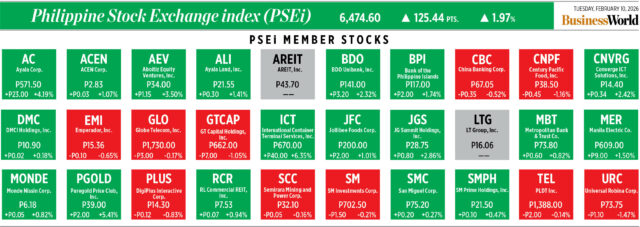
How PSEi member stocks performed — February 10, 2026

Here’s a quick glance at how PSEi stocks fared on Tuesday, February 10, 2026.


PSEi back above 6,400 on strong buying interest

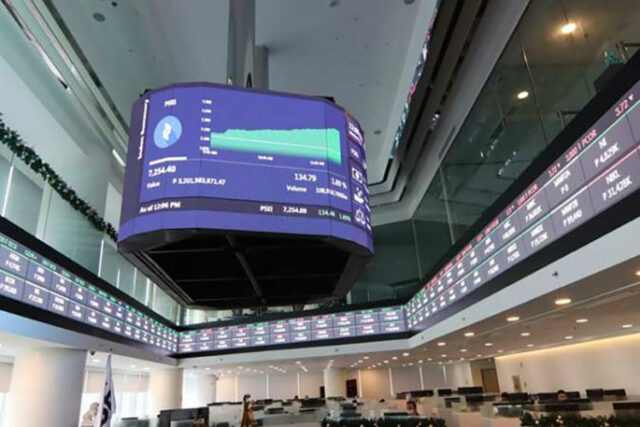
BW FILE PHOTO

PHILIPPINE STOCKS rebounded on Tuesday to return above the 6,400 line on improved buying interest as a stronger peso and gains on Wall Street boosted sentiment.

The benchmark Philippine Stock Exchange index (PSEi) jumped by 1.97% or 125.44 points to close at 6,474.60, while the broader all shares index went up by 0.88% or 31.63 points to end at 3,593.10.

This was the PSEi’s best close in nearly a month or since it finished at 6.487.53 on Jan. 15.

“The PSEi ended sharply higher, rebounding from [Monday’s] decline as buying interest returned to the market. Sentiment was supported by the peso holding firm against the US dollar, which encouraged renewed foreign inflows during today’s session,” Luis A. Limlingan, head of sales at Regina Capital Development Corp., said in a Viber message. “Gains were broad-based as investors took advantage of lower prices amid improving currency stability.”

“The local market rose on the back of the local currency’s appreciation. The positive cues from Wall Street also helped in Tuesday’s climb,” Philstocks Financial, Inc. Research Manager Japhet Louis O. Tantiangco said in a Viber message.

On Monday, the peso surged to a near four-month high of P58.455 against the dollar amid easing geopolitical tensions.

It weakened by 7.5 centavos to close at P58.53 versus the greenback on Tuesday as players took caution before the release of a slew of US data.

Meanwhile, the S&P 500 and the Nasdaq rose solidly after a shaky start on Monday, as technology stocks found their footing following last week’s artificial intelligence-sparked sell-off, while investors waited for key economic data that could shed light on the US Federal Reserve’s interest rate path, Reuters reported.

After surpassing 50,000 points for the first time on Friday, the Dow Jones Industrial Average rose 20.20 points or 0.04% to 50,135.87. The S&P 500 gained 32.52 points or 0.47%, to 6,964.82; and the Nasdaq Composite gained 207.46 points or 0.9% to 23,238.67.

Coming closer in the pipeline is the January nonfarm payrolls report due on Wednesday, which was delayed by a partial government shutdown, and the closely watched January consumer price index on Friday.

All sectoral indices closed in the green on Tuesday. Services surged by 4.39% or 113.24 points to 2,689.17; financials increased by 1.43% or 30.54 points to 2,158.67; holding firms went up by 1.17% or 60.41 points to 5,183.30; mining and oil rose by 0.47% or 84.05 points to 17,891.72; property advanced by 0.43% or 9.62 points to 2,214.40; and industrials climbed by 0.29% or 26.79 points to 9,126.02.

Advancers outnumbered decliners, 110 to 90, while 63 names closed unchanged.

Value turnover rose to P6.86 billion on Tuesday with 754.25 million shares traded from the P6.75 billion with 807.04 million issues that changed hands on Monday.

Net foreign buying ballooned to P1.01 billion from P553.15 million in the previous session. — A.G.C. Magno with Reuters

Weak confidence seen delaying PHL recovery

JCOMP/FREEPIK.COM

THE ECONOMY could struggle to recover in the near term with weak confidence continuing to dampen consumption, investments and public spending, ANZ Research said.

“We are not certain at this stage whether growth in the Philippines will inflect for the better anytime soon,” Sanjay Mathur, ANZ Research chief economist for Southeast Asia and India, said in a report on Tuesday.

Mr. Mathur noted that the flood control corruption scandal has hit consumer and business confidence beyond just slowing government spending, particularly for infrastructure projects. 

“The governance issues surrounding public infrastructure projects have not only led to a significant deceleration in government capital spending, but have also taken a toll on business and household confidence,” he said. 

Last year, extensive flooding led to the discovery of defective or even non-existent flood control projects. Evidence has implicated Public Works officials, legislators, and private contractors in kickback schemes.

As a result, gross domestic product (GDP) growth slumped in the second half of 2025.

GDP growth settled at 3.9% in the third quarter before slowing further to 3% in the fourth quarter, which brought full-year growth to a post-pandemic low of 4.4%.

Economic managers have since acknowledged that governance concerns continue to weigh on investors and household sentiment.

“The share of corporates intending to raise investment has tapered off, whereas households are downbeat on their economic prospects over the next 12 months,” Mr. Mathur noted. “In fact, consumer confidence is lower now than during the pandemic.”

According to the Bangko Sentral ng Pilipinas’ (BSP) Business Expectations Survey, businesses were more optimistic in the fourth quarter, with their overall confidence index (CI) rising to 29.7% from 23.2% in the third quarter but falling from 44.5% a year earlier.

However, businesses turned sour for the first quarter with a 23.7% CI.

Meanwhile, consumer confidence worsened in the fourth quarter, with their CI at -22.2% from -9.8% in the third quarter and -11.1% a year prior.

This was the worst consumer outlook since the pandemic, when the consumer CI came in at -24% in the fourth quarter of 2021.

Whether the government can resume the pace of infrastructure spending also remains uncertain, Mr. Mathur added.

“We do not know how quickly infrastructure spending can be revived,” he said.

“The last restructuring of public finances in 2001 resulted in a prolonged period of low and static public spending. It is not clear whether this will be the case or a faster resolution of governance issues will occur,” he added.

Infrastructure spending declined for a fifth straight month in November, falling 45.2% year on year to P48 billion.

Mr. Mathur said the BSP could ease further to boost the economy, although “weak confidence may restrict its impact.”

“A more expansionary fiscal stance is critical in the present environment,” Mr. Mathur added.

The central bank has been on an easing cycle since August 2024, having delivered a total of 200 basis points (bps) worth of rate cuts.

Mr. Mathur expects the Monetary Board to reduce benchmark borrowing costs one last time by 25 bps, which would bring the key policy rate to 4.25% from the current 4.5%.

BSP Governor Eli M. Remolona, Jr. has said that the monetary authorities could ease once more this month to help spur domestic demand, though the Monetary Board has also noted that the end of the easing cycle is nearing.

The Monetary Board will hold its first policy meeting of the year on Feb. 19. — Katherine K. Chan

Resolution of tariff issues needed before US FTA talks — Ambassador Romualdez

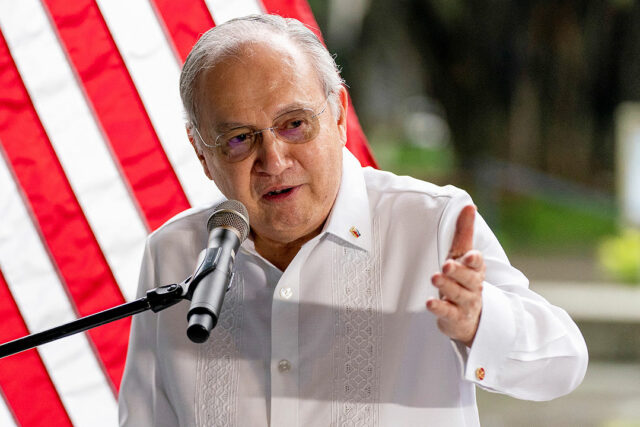
Philippine Ambassador to the US Jose Manuel Romualdez speaks at an event in Manila, Philippines, Aug. 6, 2022. — ANDREW HARNIK/POOL VIA REUTERS

By Justine Irish D. Tabile, Senior Reporter

THE US has signaled openness to pursue a free trade agreement (FTA) with the Philippines, but negotiations can only move forward once a deal on reciprocal tariffs is finalized, the Philippine  ambassador to Washington said.

Ambassador Jose Manuel G. Romualdez said that the US expressed openness to negotiate an FTA during reciprocal tariff talks.

“We mentioned it, and we just said that perhaps this is not the time. But they said that they are open (to an FTA),” he said at the US-Philippines Society briefing on Tuesday.

“ I do not think we are prepared to go into discussions on (an FTA) until we have more or less solidified our agreement on the tariffs. But the Trump Administration is open to having an FTA with the Philippines,” he added.

He said that during the first term of US President Donald J. Trump, his administration had pushed for the FTA.

“We were already on the verge of having some serious conversations on the FTA with the US,” he added.

He also said that the Philippines has been implementing reforms that were previously identified as hurdles to an FTA to happen, including reforming land ownership rules.

“We’ve had successful legislation (that will address US concerns) for an FTA,” he said, referring to the amendments to the Investors’ Lease Act, which allowed foreign investors to lease private land for up to 99 years, up from the previous 50-year limit.

“Right now… we are not really pushing it … because there are other more important things at this time,” he added.

He said on the issue of reciprocal tariffs, “We’ve had a number of conversations with the US Trade Representative, and we have been very happy with the exemptions that we have requested because almost all have been granted,” he said.

“That, I think, has already stabilized our basic request for our trade to be more or less balanced,” he added.

He said the US semiconductor industry has been taking that lead to make sure that chip tariff rates will not be “too upsetting,” as there are many US chip companies operate in the Philippines.

The US business process outsourcing industry has also sought to ensure that the industry will be exempt from tariffs.

“We are still continuing to talk about other issues here and there, but at the end of the day, we are quite happy,” he added.

The US started imposing a 19% reciprocal tariff on most of Philippine goods entering the US market in August.

In November, the US issued an executive order that exempted several agricultural products from the tariff.

This rendered about 46% of Philippine exports to the US in 2024 exempt from the 19% tariff.

Since then, the Philippines has been working on more exemptions, including for some industrial goods.

Mr. Romualdez said there have been continuous talks with regard to the potential Philippine acquisition of aircraft from Lockheed Martin Corp., after the purchase was put on hold in September.

“Lockheed has been talking to us, and we’re finding ways… to finance the purchase,” he said.

“I know our Air Force really wants this, and it’s best right now in terms of what the capabilities of our Air Force are,” he added.

However, he said that the purchase is not feasible given the government’s current budget.

“We’re not closing the door, but it’ll take quite some really imaginative and creative ways to be able to purchase,” he said.

“We need at least a minimum of about 24 F-16 (fighter aircraft). This is a $4.8 billion-$5 billion purchase. We just have to wait and see how we move forward on that particular item,” he added.

The Philippines is budgeting for at least $2.5 billion in defense items between 2026 and 2030 after the US Senate approved a bill that authorized new security assistance.

Mr. Romualdez said most US defense financing will be related to enhancing the capabilities of its ground and maritime forces as well as cyber security.

“It will take some time before we can actually make a firm decision on whether we’ll be able to get the F-16s within the timeframe of a special agreement,” he added.

NRA proposal not considered immediate fix — BIR

PHILIPPINE STAR/RUSSELL PALMA

THE Bureau of Internal Revenue (BIR) said renewed proposals to merge the government’s main revenue-generating agencies into a National Revenue Authority (NRA) should be considered as a last resort, saying that the immediate priority involves restoring credibility and public trust in the current institutions.

New calls to establish an NRA could remain part of the long-term conversation, though, Commissioner Charlito Martin R. Mendoza said.

“It should be approached as a governance reform of last resort, not a first response,” he told BusinessWorld via Viber on Feb. 9.

Former Finance Undersecretary Cielo D. Magno and Asian Consulting Group Chairman Raymond Abrea had called for a sweeping overhaul of the BIR and Bureau of Customs (BoC), including a proposal to establish an NRA, to be run professionally as a Government-Owned and -Controlled Corporation (GOCC).

Mr. Mendoza said this push “reflects long-standing concerns over fragmentation and coordination in revenue administration,” although the problem lies in “governance quality, not merely institutional form.

House Bill 695, filed in 2017 by former President Gloria Macapagal‑Arroyo, then a legislator, sought to replace the BIR and streamline tax collection.

“The more immediate and pragmatic reform path is to strengthen governance where it matters most — deepening coordination and data sharing between revenue agencies, tightening audit integrity and accountability mechanisms, and institutionalizing digital, risk-based processes,” he said.

These reforms directly address the governance deficits that reform advocates seek to correct, without the destabilizing effects of an abrupt merger, he said.

“Without these foundations (in governance reform), structural consolidation risks replicating existing problems at a larger scale,” Mr. Mendoza said.

For 2026, the government hopes to collect P4.82 trillion in revenue, with P3.431 trillion expected from the BIR and P1.003 trillion from the BoC. — Aubrey Rose A. Inosante

Critical minerals agreement expected to unlock investments in processing facilities, DTI says

FREEPIK

THE Department of Trade and Industry (DTI) said the US-Philippines critical minerals agreement has the potential to unlock investments in mineral processing plants and related industries.

“The agreement provides a framework for investment attraction by leveraging the Board of Investments (BoI) to support mineral processing, refining, and downstream manufacturing,” the DTI said on Tuesday.

“The memorandum of understanding (MoU) is also expected to attract diverse investments not only in mining but also in related industries such as power generation, logistics, and chemical handling,” it added.

The department was referring to the agreement signed by the US and the Philippines last week to develop the Philippine critical mineral industry.

“The MoU is a major enabler for the Philippines to shift from simply exporting raw mineral ores to becoming a significant player in value-added processing,” Trade Secretary Ma. Cristina A. Roque said.

“We are aiming (to become) more than just a supplier; we are positioning ourselves as a vital link in the global supply chains for semiconductors, defense, and clean energy,” she added.

According to the DTI, the deal will allow the Philippines to access US grants, feasibility studies, and joint geological mapping to modernize the mining industry.

“It will also reduce over-reliance on a single buyer by connecting Philippine minerals to a broader network of over 50 allied nations and create high-skilled jobs through technology transfer and advanced research initiatives,” it added.

The deal is also expected to reinforce commitments to environmental sustainability in mining.

“Through this agreement, we expect to attract substantial and diverse investments that will develop the workforce and strengthen our standing in the industries of the future,” said Ms. Roque.

Philippine Ambassador to the US Jose Manuel G. Romualdez said that he expects more details of the MoU soon.

“There is going to be a bilateral strategic dialogue with the US and the Philippines in the coming week. I think it is during that time that we will have more information regarding the critical minerals agreement that we have with the US,” he said at the US-Philippines Society briefing on Tuesday.

“We have been talking about being part of the critical minerals supply chain not only for the US but for other countries as well,” he added.

He said that the agreement will allow the Philippines to develop a mineral processing industry, as almost 90% of its nickel exports go to China because of the “processing that we do not have right now.”

“That is one area where I think we can have very good cooperation with the US in the processing of our nickel and many others that they are looking at, like copper,” he said. — Justine Irish D. Tabile

Debt-to-GDP ratio to stay ‘manageable’ as it exceeds 65% over next two years

THE Philippine debt load is less alarming than in past crises and is expected to remain manageable with the debt-to-gross domestic product (GDP) expected to 65% over the next few years, a government think tank said.

The debt ratio is projected to hit 66% in 2026 before easing to 65.7% in 2027, the Philippine Institute for Development Studies (PIDS) said in a Feb. 9 report.

The projection indicates that “the country’s debt position today is less worrisome than during previous debt crises, and that the debt-to-GDP ratio will remain manageable despite peaking above 65% over the next couple of years,” it said.

The Bureau of the Treasury reported that government debt amounted to P17.71 trillion at the end of 2025.

 This brought the outstanding debt as a share of GDP to 63.2%, the highest level since the 65.7% posted in 2005.

PIDS said a swift return to pre-pandemic debt levels is unlikely due to the need for continued government spending to curb long-term economic scarring and give the economy room to recover.

“This underscores the need for a sound medium- to long-term fiscal consolidation plan to anchor sentiment,” the think tank said.

PIDS added that returning to the pre-pandemic level of 40% would require the government’s annual primary balance to increase from 1.4% of GDP in 2020 to 3.4% of GDP in 2031.

The Development Budget Coordination Committee aims to bring the debt ceiling to 61.8% this year and 61.3% in 2027, according to its updated medium-term fiscal framework.

The rule of thumb for healthy levels of debt for developing countries is 60%, which the government has informally abandoned in favor of a new 70% benchmark of the International Monetary Fund (IMF).

Finance Secretary Frederick D. Go has clarified that the government tracks the IMF’s general government (GG) debt-to-GDP ratio rather than the narrower National Government measure.

The Philippine GG debt-to-GDP currently stands at 54% to 55%.

Mr. Go’s office has yet to release the latest GG debt-to-GDP data.

The conclusions were contained in a paper, “Fiscal Effects of the COVID-19 Pandemic: Assessing Public Debt Sustainability in the Philippines,” written by Margarita Debuque-Gonzales, Charlotte Justine Diokno-Sicat, John Paul P. Corpus, Robert Hector G. Palomar, Mark Gerald C. Ruiz, and Ramona Maria L. Miral. — Aubrey Rose A. Inosante

ADVERTISEMENT
ADVERTISEMENT