Home Blog Page 313

NFA to auction nearly 37,000 MT in old rice stock

PHILIPPINE STAR/MIGUEL DE GUZMAN

THE National Food Authority (NFA) said it will auction nearly 37,000 metric tons (MT) of ageing rice to free up warehouse space and improve inventory turnover ahead of the upcoming harvest.

According to the bid invitation, the NFA said the auction will cover about 737,339 50-kilogram bags of rice, or a total of 36,867 MT, valued at approximately P909.8 million.

A pre-auction conference is scheduled on Feb. 13, while the opening of auction tenders will be held on Feb. 20.

The stocks offered for sale are priced between P22.52 per kilogram and P25.16, depending on how long the grain has been stored.

The rice stocks have been in storage between three and 18 months, with 88.1% aged between three and nine months.

“Our milled rice inventory is at 2.74 million bags, and about 700,000 bags of that will be auctioned,” NFA Administrator Larry R. Lacson told reporters. “The remaining two million bags are intended for disposal during calamities, the P20 rice program, and other emergency requirements.”

The NFA reported that as of Jan. 31, its milled rice inventory was the equivalent of 8.52 million bags, or around 426,000 MT, including palay (unmilled rice) holdings yet to be milled. 

According to the NFA, the national rice reserve is equivalent to 11.03 days’ demand. — Vonn Andrei E. Villamiel

Rice import eligibility could be tied to volume of domestic purchases

BW FILE PHOTO

THE Department of Agriculture (DA) said it is considering a proposal to link eligibility to import rice to the volume of rice purchased from domestic farmers.

Agriculture Secretary Francisco P. Tiu Laurel, Jr. said the proposal would require traders to buy palay (unmilled rice) or rice to receive import allocations.

“You have to buy palay or rice to get an import allocation. That’s the general idea. It’s like they invest in local industries, so that they won’t kill the industry with imported products,” he told reporters on the sidelines of an Economic Journalists Association of the Philippines event late Monday.

Mr. Laurel said the scheme is meant to “self-police” stakeholders in the rice industry and ensure transparent and objective import allocation.

A similar mechanism is already in place for molasses imports, where traders are granted import allocations based on the volume of locally produced molasses they purchase, using a 3:1 local-to-imported ratio.

Mr. Laurel, however, said the specific ratio for rice imports and local purchases has yet to be determined.

The DA said it is consulting industry participants, including importers and rice producers, and has formed a technical working group composed of private sector and department representatives.

“The private sector and the government will discuss this. We’ll ask for the recommendation of the private sector and tweak it a little to come up with a win-win solution,” Mr. Laurel said.

Mr. Laurel said the DA is targeting initial implementation of the system in the second half of the year, possibly by July.

“Our target is, hopefully, by the end of this year, the system will be a bit more solid. Initially, there will be trials first because a certain percentage of the quantity to be imported will be subject to the new system, he said.

Mr. Laurel added that the proposed policy will be waiting on authorization from the Rice Industry and Consumer Empowerment (RICE) Act, which the DA hopes will be enacted by June or July.

The RICE Act, currently pending in Congress, seeks to restore and expand the regulatory powers of the National Food Authority (NFA), which were significantly reduced under the Rice Tariffication Law of 2019. The measure would also grant the government broader authority over the rice trade.

Raul Q. Montemayor, national manager of the Federation of Free Farmers, told BusinessWorld that the proposed local purchase requirement “will not be a problem” as some rice importers are also millers and traders.

“For importers who have no local buying operations, they could easily tie up with local millers or traders or put up their own shell companies,” he said via Viber.

Mr. Montemayor said the proposed scheme would also benefit from additional requirements, such as proof of rice purchase at the floor price or higher. — Vonn Andrei E. Villamiel

PHL, Netherlands exploring collaboration in water management, semiconductors

FACEBOOK.COM/ASML

THE PHILIPPINES and the Netherlands are exploring potential collaboration in water management, semiconductors, and agriculture, the Dutch embassy said.

“As we celebrate 75 years of diplomatic relations, the Netherlands looks forward to building an even stronger partnership with the Philippines,” Netherlands Minister of Trade and Development Aukje de Vries said in a statement on Tuesday.

“We share many interests, and I saw firsthand the many economic opportunities for Dutch and Filipino business, including water, agriculture, and semiconductors,” she added.

Ms. De Vries completed a two-day visit to the Philippines, according to the embassy.

“In a high-level meeting with Department of Trade and Industry Secretary Cristina Aldeguer-Roque, both officials underscored the strong economic relationship between the two countries as a testament to decades of friendship and collaboration,” it said.

The meeting “explored possibilities of deepening collaboration in water management and coastal protection, semiconductors, and healthcare, as well as the priorities of the ASEAN Chairship.”

Ms. De Vries also met with Dutch companies operating in the Philippines.

During her visit, Ambassador Marielle Geraedts hosted a roundtable discussion which five agreements were signed between Dutch and Filipino government agencies, businesses, and academic institutes.

Among these agreements was the partnership between Vitens Evides International, which will be donating 25 water bladders to the Department of Environment and Natural Resources (DENR).

“The bladders have already proved their critical value during Typhoon Tino and the magnitude 6.9 earthquake that struck Central Philippines in late 2025,” the embassy said.

“The additional donation of 25 Dutch-sourced water bladders to the DENR further demonstrates their long-term commitment to strengthening the emergency preparedness and resilience of partners in the Philippines,” it added.

Meanwhile, the Anti-Red Tape Authority has also partnered with the Dutch Chamber of Commerce in the Philippines to reduce red tape and promote an efficient, business-friendly government environment.

“Besides the maritime, banking, and water sectors, the semiconductor industry presents significant economic opportunities for collaboration between the Philippines and the Netherlands,” the embassy said.

“With 85% of globally manufactured chips using Dutch technology and the Philippines serving as a critical production hub for testing and packaging, the complementary nature of both nations’ semiconductor capabilities creates natural synergies,” it added. — Justine Irish D. Tabile

Marcos survives impeachment as House backs dismissal by committee

PRESIDENT FERDINAND R. MARCOS, JR. FACEBOOK PAGE

By Kenneth Christiane L. Basilio, Reporter

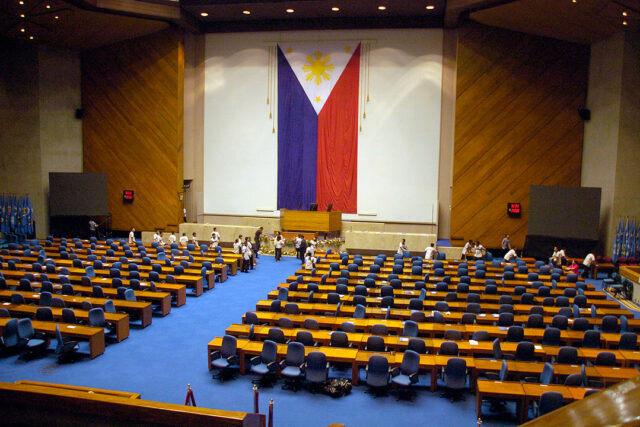
PHILIPPINE President Ferdinand R. Marcos, Jr. survived impeachment on Tuesday after the House of Representatives overwhelmingly supported a congressional body’s dismissal of complaints against him, delivering a political win amid allegations of corruption linked to multibillion-peso flood control projects.

A total of 284 lawmakers voted to uphold the Justice committee’s recommendation to dismiss the cases. Eight opposed the move, while four abstained.

The vote ended the short-lived effort to oust Mr. Marcos, whose administration has faced criticism for scandals that weighed on economic growth and investor confidence.

“Complaints that are fundamentally insufficient in substance must be dismissed, not indulged for the sake of political theater,” Batangas Rep. Gerville R. Luistro, who heads the committee, told the floor before the vote. “To do otherwise is to degrade impeachment from a constitutional safeguard into a weapon of harassment.”

The dismissed complaints alleged that Mr. Marcos had benefited from questionable government contracts linked to defective infrastructure projects, receiving kickbacks and institutionalized corruption through a budget allocation formula for congressional districts.

Additional accusations included his alleged involvement in authorizing the arrest of former President Rodrigo R. Duterte for proceedings at the International Criminal Court and claims of the President’s alleged drug use.

“These complaints failed to establish a factual nexus between the President and any impeachable offense,” Ms. Luistro said. She argued the filings had tried to recast policy disagreements and routine executive actions as betrayal of public trust without proving bad faith or malice.

Opposition lawmakers criticized the decision. “There was strong evidence that the President was aware of corruption in flood control projects, directly participated in it and received kickbacks,” House Deputy Minority Leader Antonio L. Tinio said, urging the House to consider the complaints on their merits.

Analysts said the outcome was widely expected given the composition of the House. “It’s obviously a numbers game,” Dennis C. Coronacion, chairman of the University of Santo Tomas Political Science Department, said in a Facebook Messenger chat.

“No matter what justifications were given by the members of the House Committee on Justice, at the end of the day, it’s still about who remains loyal to the administration.”

The committee dismissal followed earlier votes that stalled the complaints at the panel level. Critics argued the committee had ruled prematurely without allowing full debate on the allegations, effectively shielding the President from scrutiny.

Meanwhile, the House Secretary-General transmitted a third impeachment complaint against Vice-President Sara Duterte-Carpio to the Speaker’s office on Tuesday. The filing, lodged a day earlier, accuses Ms. Duterte of misusing P612.5 million in confidential and intelligence funds allocated to her office and the Department of Education.

The complaint, endorsed by Party-list Rep. Leila M. de Lima, alleges graft, corruption and plunder, claiming violations of the Constitution and public trust.

Referral to the House Justice Committee formally triggers the impeachment process, which bars further complaints against the Vice-President for one year.

Analysts said the case could deepen political fault lines between allies of Mr. Marcos and Ms. Duterte, a potential 2028 presidential contender.

The outcome underscores the consolidation of legislative power by Mr. Marcos’ allies while keeping the spotlight on high-profile corruption allegations that continue to attract public attention.

Critics warn that the handling of these cases may influence perceptions of accountability and governance as the administration approaches midterm policy priorities.

BIR banks on growth to revive tax take this year

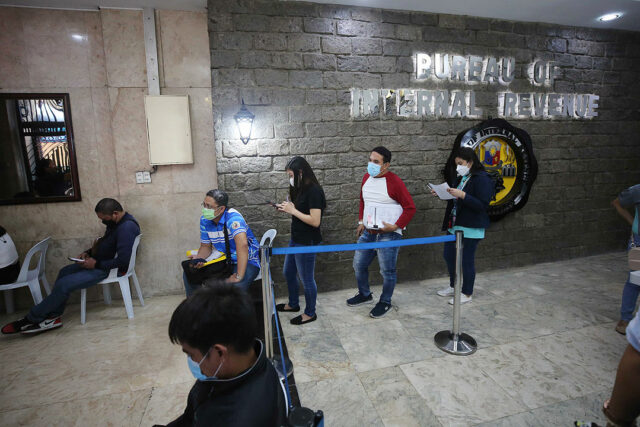
People line up to file their income tax returns at the Bureau of Internal Revenue office in Intramuros, Manila, April 18, 2022. — PHILIPPINE STAR/ RUSSELL A. PALMA

By Adrian H. Halili, Reporter

THE PHILIPPINES’ tax authority is betting that faster growth, a rebound in public works and changes to audit rules will help revive revenue after a disappointing year, even as confidence was shaken by allegations of corruption tied to infrastructure spending.

The revenue increase also hinges on infrastructure spending and administrative reforms aimed at improving tax compliance, Internal Revenue Commissioner Charlito Martin R. Mendoza told BusinessWorld on the sidelines of a Senate hearing on Tuesday.

The Bureau of Internal Revenue (BIR) is targeting P3.431 trillion in collections in 2026, a 10.5% increase from P3.105 trillion raised last year, after falling short of its 2025 goal. The agency is shifting its focus toward voluntary compliance as it tries to rebuild trust among taxpayers while supporting the government’s fiscal position.

Economic growth above 5% would increase income and excise tax collections, Mr. Mendoza said. He added that an acceleration in infrastructure projects would have a “big multiplier effect” on tax receipts.

The economy expanded just 4.4% in 2025, well below 5.7% growth a year earlier and short of the government’s 5.5% to 6.5% target. Growth slowed as public construction weakened amid a corruption scandal in which senior officials and engineers were accused of siphoning off billions of pesos meant for flood control projects.

That episode dented investor confidence and disrupted project rollouts, weighing on domestic demand and tax intake. Collections missed the target last year as uneven activity and enforcement bottlenecks persisted, prompting the BIR to recalibrate its approach.

Mr. Mendoza said the agency is relying less on aggressive audits and more on administrative reforms designed to encourage compliance.

Central to that effort is a revamp of audit authorizations under Revenue Memorandum Order No. 1-2026, which took effect after months of complaints from businesses.

The order introduced a single-instance audit framework, limiting audits to one taxpayer per year. It also clarified the scope of audit authority, adopted risk-based and system-assisted case selection and anonymized examiner assignments to reduce discretion.

These reforms “will boost taxpayer confidence,” Mr. Mendoza said. “Our focus is really on voluntary compliance.”

CLEAR STANDARDS
The changes follow a two-month suspension of audits late last year after lawmakers and business groups alleged that some tax officials abused letters of authority (LoAs) and mission orders. Audits resumed on Jan. 27 under the revised framework.

“With these reforms… standards are clear and accountability is enforced,” the BIR chief told senators during the hearing.

The Senate Blue Ribbon Committee is investigating corruption within the BIR, including claims that personnel pocketed a large share of collections.

Mr. Mendoza told the body at least 30 personnel are under investigation over their misuse of audit documents, as the Senate continues to probe the weaponization of the agency’s letters of authority.

He added that 25 of the workers under investigation are set to be charged either with administrative, civil, or criminal cases.

Foreign chambers and local firms have said unpredictable audits added to operating risks and discouraged investment.

Economists said revenue recovery is possible, but hinges on whether growth and spending rebound in a sustained way.

“Faster economic activity and a ramp-up in infrastructure projects will naturally lift tax take,” Jonathan L. Ravelas, senior adviser at Reyes Tacandong & Co., said in a Viber message. He added that changes to audit rules could improve predictability and trust.

“When people see fairness and clarity, compliance rises,” he said.

Still, risks remain. Infrastructure spending must accelerate meaningfully to offset last year’s drag, while restoring investor confidence is critical after the flood control scandal exposed governance weaknesses.

John Paolo R. Rivera, a senior research fellow at the Philippine Institute for Development Studies, said tax performance would depend on how quickly growth firms up and whether public spending regains momentum.

“Faster infrastructure rollout and improved business activity typically widen the tax base and lift value-added tax, income and corporate tax collections,” he said via Viber. Better compliance can raise efficiency without increasing rates, he added.

Revenue recovery also depends on stabilizing consumption, managing inflation pressures and continuing digitalization to reduce leakages, Mr. Rivera said.

For the government, stronger collections are key as it balances higher spending needs with deficit management. The Marcos administration has signaled that shoring up revenue is a priority after last year’s shortfall narrowed fiscal space.

Mr. Mendoza said the BIR would continue refining its reforms as implementation proceeds. “We will keep listening, monitor outcomes, and refine measures where necessary,” he said.

The agency earlier suspended the issuances of audit documents, but the ban was lifted two months later after reforms were implemented.

Mr. Mendoza said about 45,000 active LoAs would be consolidated into one electronic LoA per taxpayer per taxable year, unless a formal request is made to retain separate issuances.


Marcos supports abolition of travel tax to boost tourism

REUTERS

PHILIPPINE President Ferdinand R. Marcos, Jr. wants Congress to abolish the country’s travel tax system before its June adjournment, Malacañang said on Tuesday, as the administration moves to cut travel costs and support tourism while pushing a broader slate of governance reforms.

The repeal was among 21 priority bills approved during a meeting of the Legislative-Executive Development Advisory Council (LEDAC) at the Palace, according to Press Officer Clarissa A. Castro. The measures are part of the President’s legislative agenda aimed at easing household burdens and restoring confidence in public institutions.

“The President saw that this would make travel more affordable for tourists and for Filipinos who need to travel,” Ms. Castro said, adding that the measure is expected to have positive spillover effects on the economy.

The proposal has raised concerns from groups that benefit from the levy, which funds tourism infrastructure, education and cultural programs. Ms. Castro said the government is aware of these allocations and plans to address the funding gap.

Under existing rules, half of travel tax collections go to the Tourism Infrastructure and Enterprise Zone Authority (TIEZA), 40% support education assistance and scholarships through the Commission on Higher Education, and 10% fund cultural programs of the National Commission for Culture and the Arts.

Ms. Castro said these programs would instead be financed through the national budget if the tax is repealed.

The Palace has also asked TIEZA to submit a full accounting of how travel tax revenues are used as part of efforts to improve transparency and accountability.

Congress has begun moving on the proposal. In the House of Representatives, Majority Leader Ferdinand Alexander “Sandro” A. Marcos III filed House Bill No. 7443 or the Travel Tax Abolition Act of 2026, which seeks to scrap the levy entirely. In the Senate, Senator Rafael “Raffy” T. Tulfo filed a bill that would exempt economy-class passengers while retaining the tax on business and first-class travelers.

House Speaker Faustino “Bojie” G. Dy III has said the chamber would hold nationwide consultations to speed up deliberations on the administration’s priority measures before lawmakers adjourn in June.

The Department of Economy, Planning and Development (DEPDev) said placing the travel tax repeal on the LEDAC agenda reflects a wider push to rebuild public trust, following public backlash over governance and spending issues.

Beyond tourism, the priority list includes proposals such as the Anti-Political Dynasty Law, Expanded Anti-Online Sexual Abuse or Exploitation of Children Act, and CADENA Act, which seeks to strengthen disclosure and oversight of public spending.

In a statement, DEPDev Secretary Arsenio M. Balisacan said the measures are designed to improve public service delivery and ensure stronger scrutiny of government expenditures.

He said the administration sees 2026 as a critical point to regain momentum by focusing on governance reforms that produce visible results for Filipinos. — Erika Mae P. Sinaking

Jose de Venecia, five‑time Speaker, dies at 89

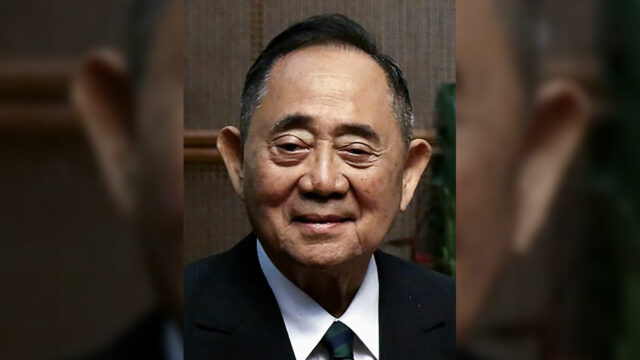
JOSE C. de Venecia, Jr. — PRESIDENTIAL COMMUNICATIONS OPERATIONS OFFICE FILE PHOTO

JOSE C. de Venecia, Jr., the Philippines’ longest‑serving Speaker and a defining figure of post‑Martial Law politics, died on Tuesday at age 89, his family said.

Known affectionately as JDV, Mr. De Venecia’s political career spanned more than three decades. He first entered the House of Representatives in 1987, representing Pangasinan’s fourth district during the restoration of democratic institutions after years of dictatorship.

He was the principal author of several landmark laws designed to revitalize a country emerging from political and economic disarray, including the Dollar Remittance Program, New Central Bank Act, Philippine Economic Zone Act, Bases Conversion and Development Act and the Build-Operate-Transfer Law, his family said in a statement.

He was elected Speaker five times in nonconsecutive terms from 1992 to 2008, a record in the country’s contemporary Congress. His leadership helped guide the Legislature through periods of political transition under multiple Presidents and played a key role in coalition-building in a politically diverse chamber.

Mr. De Venecia was widely regarded as a skilled vote‑counter and strategist who kept majority support in the House during volatile political eras. Supporters credited him with advancing key economic policy reforms and initiatives that aimed to strengthen governance and institutional stability.

He sought the presidency in 1998, finishing second in a crowded field of candidates. Though unsuccessful, the campaign reinforced his national prominence and cemented his status as a veteran lawmaker with deep experience in legislative affairs.

In his later years, Mr. De Venecia stepped back from frontline politics but remained involved as an elder statesman.

He participated in governance forums and institutional discussions and was honored by the House with the inauguration of a building and museum in his name at the Batasang Pambansa complex in 2025.

Mr. De Venecia was born in Dagupan City on Dec. 26, 1936. He studied journalism at the Ateneo de Manila University and was an entrepreneur before entering politics.

He is survived by his wife Maria Georgina Perez-de Venecia, who represents Pangasinan’s fourth district, and five children. — Kenneth Christiane L. Basilio and Norman P. Aquino

Anti-dynasty signature drive eyed

BW FILE PHOTO

A COALITION of civil society groups plans to launch a signature campaign to pressure Congress into passing anti-political dynasty legislation if current efforts fall short, a former Supreme Court Justice said on Tuesday, as a congressional panel resumed hearings on proposals to curb dynastic dominance.

Ex-Senior Associate Justice Antonio T. Carpio said civil groups plan to mount a parallel initiative alongside the House of Representatives’ deliberations on the proposals to ban political dynasties, aiming to push for what they consider to be a version that should be adopted.

“Regardless of what happens here, we will mount a people’s initiative to adopt the kind of anti-political dynasty law that we believe should be enacted,” he told lawmakers.

Congressmen resumed debates on the scope of a proposed ban on political dynasties, a measure long pushed in Congress but repeatedly faltered for lack of support from a legislature dominated by dynastic families.

Most lawmakers come from political dynasties, with eight of 10 belonging to political families, according to a report by the Philippine Center for Investigative Journalism.

Mr. Carpio said an effective ban on political dynasties should cover close and extended relatives, up to first cousins, great aunts and uncles, and bar family members from succeeding a politician who has served out their terms.

“The Constitution recognizes that the fourth degree of consanguinity can be a limitation on appointment,” he said, citing it as a justification for his proposal. “There can be no constitutional issue for that because it’s there in the Constitution.”

“No member of the political family can succeed the person who has finished three terms as congressman or party-list and two terms as senator,” he added.

House Deputy Minority Leader and Caloocan Rep. Edgar R. Erice said stretching the coverage of the ban on political dynasties up to fourth degree of relatives may hamstring the law and make enforcement nearly impossible.

“It’s possible the Commission on Elections could end up acting like a family court, sorting through cousins and relatives, and risk becoming arbitrary because it may be difficult to determine who should be allowed to run,” he told lawmakers.

President Ferdinand R. Marcos, Jr. had declared a measure seeking to outlaw political families from dominating government posts as a priority. The 1987 Constitution explicitly prohibits political dynasties but required an enabling law to take effect.

Lawyer Christian S. Monsod, who helped draft the Constitution, said the framers “made a mistake” when it left the authority to ban dynasties to Congress.

“We underestimated the greed of politicians for power,” he told congressmen. — Kenneth Christiane L. Basilio

Philippines deepens ties with Oman

FOREIGN AFFAIRS Secretary Maria Theresa P. Lazaro met with Omani Foreign Minister Sayyid Badr bin Hamad Al Busaidi in Muscat last Feb. 8. — DFA

THE PHILIPPINES and Oman are looking to deepen their bilateral cooperation through further political collaboration, investments, and people-to-people engagements, the Department of Foreign Affairs (DFA) said on Tuesday.

In a statement, the agency said that Foreign Affairs Secretary Maria Theresa P. Lazaro and Omani Foreign Minister Sayyid Badr bin Hamad Al Busaidi conducted a meeting in Muscat, last Feb. 8.

The discussions “centered on strengthening bilateral relations through enhanced political cooperation, strategic investments, and continued people-to-people exchanges.”

The agency added that the envoys tackled concluding talks on an investment framework, with a working-level meeting scheduled in the coming months.

“The meeting further explored a broad range of future-oriented sectors, including tourism, food security, fisheries, and critical minerals,” the agency said.

It added that both countries are seeking to deepen collaborations in digital transformation, healthcare, and technical-vocational education.

“Both sides agreed to leverage their respective expertise to foster mutual growth,” the DFA said.

Both foreign ministers also discussed prevailing regional issues in Southeast Asia and the Middle East, among them is the escalating tensions in the South China Sea and in Gaza.

“They emphasized the importance of constructive dialogue and political will in resolving complex issues, with the Philippines commending Oman’s established reputation as a trusted and neutral facilitator in regional affairs,” it said.

It added that both countries plan to reconvene during the next Joint Bilateral Consultation Meeting later this year.

The DFA said that Manila and Muscat aim to follow up on their joint initiatives and solidify a framework of long-term cooperation. — Adrian H. Halili

DoTr to launch Israel direct flights

REUTERS

THE Department of Transportation (DoTr) is working to launch direct flights between Manila and Israel as part of the agency’s push to expand international connectivity and strengthen bilateral ties with other countries.

“We can start working on the direct flight from Israel to the Philippines. Rest assured that I’m going to work closely with the Philippine Ambassador to Israel and the Department of Foreign Affairs and the other relevant government agencies,” Transportation Acting Secretary Giovanni Z. Lopez said in a media release on Tuesday.

The agency is pushing to establish direct flights to Tel Aviv within this year, Mr. Lopez said, adding that the Transportation department is working double time to introduce this new service.

“I do identify this opportunity of business as a big opportunity and sky is the limit. So let’s try to explore these opportunities both for Israelis and Filipinos,” said Ambassador of Israel to the Philippines Dana Kursh.

In 2024, the Philippines and Israel announced that they are eyeing further collaboration to drive tourism growth and strengthen economic ties.

Israel has been in a nearly two-year conflict with Hamas, after it led an attack on southern Israel on Oct. 7, 2023. It was the culmination of the decades-long conflict between Israel and Palestine that has seen repeated bouts of violence, mass displacement, and failed peace efforts that continue to destabilize the region.

In June last year, the DFA lowered the alert level in Israel to Alert Level 2 but said that the agency is strictly monitoring the situation in the region. — Ashley Erika O. Jose

More than 1.87M register to vote

PHILSTAR FILE PHOTO

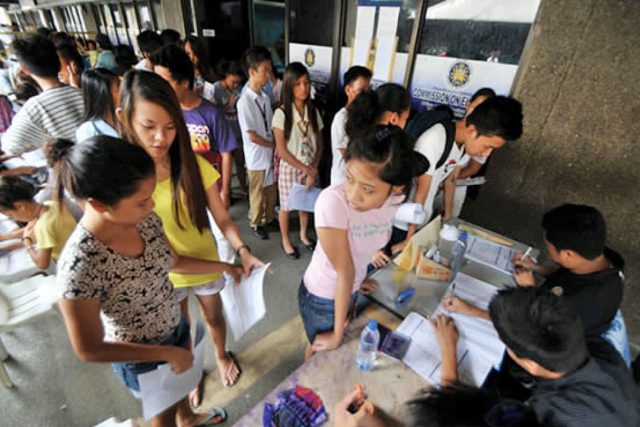
MORE than 1.87 million Filipinos have signed up to vote for the Barangay and Sangguniang Kabataan Elections (BSKE) set to be held later this year, according to the latest data from the Commission on Elections (Comelec).

Data from the poll body showed almost 1.88 million applications processed nationwide as of Feb. 10. Of this number, female registrants led with 988,562, while male registrants reached 889,222.

Among the regions, the Calabarzon Region posted the highest number of processed applications at 350,160, followed by Central Luzon, which logged 223,646, and National Capital Region with 210,165 new voters.

Other regions with significant registration numbers include Central Visayas with 105,078 and the Bicol Region with 101,583 registered voters.

Mimaropa and Caraga posted smaller registration numbers, with 60,806 and 60,420 new voters, respectively. The Cordillera Administrative Region added 27,420, while the Comelec Main Office processed 2,591 applications through its special registration proceedings.

The 2026 BSKE is set for Nov. 2, while the voters registration period remains open until May 18. — Erika Mae P. Sinaking

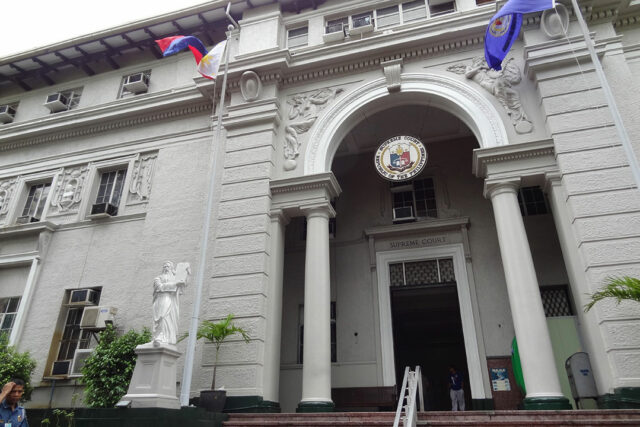
SC affirms co-ownership in same-sex unions

BW FILE PHOTO

THE Supreme Court (SC) has recognized the property rights of same-sex couples, ruling that partners in such relationships may be considered co-owners of property acquired during their union, provided there is proof of actual contribution.

In a decision penned by Associate Justice Jhosep Y. Lopez, made public on Tuesday, the High Court’s second division granted a petition for the partition of property filed by a woman against her former female partner, reversing lower court rulings.

The tribunal said that under Article 148 of the Family Code, which applies to couples who cannot legally marry, “only properties obtained through actual contribution are considered common property.”

The signed acknowledgment showing one partner paid about half of the property costs was deemed “a binding admission and sufficient proof of actual contribution,” according to the SC.

The Court stressed that “[this] Court does not have the monopoly to assure the freedom and rights of homosexual couples,” urging Congress to address policy issues affecting same-sex unions.

Senior Associate Justice Marvic M.V.F. Leonen added that Article 148 “does not distinguish based on gender and applies to all forms of cohabitation,” while Associate Justice Amy C. Lazaro-Javier noted it “is broad enough to cover same-sex cohabitation and should not be limited to heterosexual relationships.” — Erika Mae P. Sinaking

ADVERTISEMENT
ADVERTISEMENT