Home Blog Page 2952

BIR collection of withholding tax from online sellers starts

BW FILE PHOTO

By Beatriz Marie D. Cruz, Reporter

THE BUREAU of Internal Revenue (BIR) on Monday started collecting a withholding tax on online platforms and sellers.

At the same time, the BIR extended the transition period for digital financial service providers by another 90 days to mid-October.

BIR Commissioner Romeo D. Lumagui, Jr. said in a statement that electronic marketplace operators started imposing the withholding tax against sellers and merchants on July 15.

“We have already extended this by 90 days. No further extensions will be given,” he said.

A withholding tax is not a new form of tax, but an advance payment collected from the total income tax liability of an online seller.

Under Revenue Regulations (RR) No. 16-2023, a withholding tax of 1% will be imposed on one-half of the gross remittances by e-marketplace operators and digital financial service providers to the sellers or merchants for the goods and services paid or sold through their platforms or facilities.

In April, the BIR extended the transition period for another 90 days, or until July 14, in response to the request of the private sector.

This regulation covers marketplaces for online shopping, food delivery platforms, platforms to book lodging accommodations, and other similar online service or product marketplaces.

“The BIR aims to level the playing field between brick-and-mortar stores, which are regularly complying with their tax obligations, and online marketplaces,” Mr. Lumagui said.

“Whether their business is operated online or through physical stores, sellers and merchants have to pay their taxes.”

However, the BIR clarified that the tax will not be imposed if the annual total gross remittances to an online seller for the past taxable year has not exceeded P500,000; if the cumulative gross remittances to an online seller in a taxable year has not yet exceeded P500,000 or if the seller is duly exempt from or subject to a lower income tax rate pursuant to any existing law or treaty.

Eleanor L. Roque, tax principal of P&A Grant Thornton, said the BIR’s move would help capture the appropriate taxes from the online marketplace.

“If there is a discrepancy in the gross transactions and amount of withholding taxes, the online sellers will be asked to explain or reconcile the difference. This is the same process when the BIR audits any taxpayer,” she said in a Viber message.

Meanwhile, the BIR issued a circular that extended the transition period for digital financial service providers to comply with the withholding tax by another 90 days or until Oct. 12.

The transition period was supposed to have ended on July 14.

BIR said the extension was meant “to provide additional time to the digital financial services providers to finally complete their respective system adjustments for compliance with the requirements of Revenue Regulations 16-2023.”

The digital economy’s annual contribution to the country’s economic output fell as its growth slowed down in 2023.

In 2023, the digital economy’s share to the country’s gross domestic product (GDP) went down to 8.4% from 8.6% in 2022. This was its lowest share to GDP since 2018.

In terms of gross value added, the digital sector grew by 7.7% to P2.05 trillion last year from the P1.9 trillion recorded in 2022.

The country’s digital economy is projected to reach up to $150 billion by 2030, according to a 2023 report by Google, Temasek Holdings and Bain & Company.

BoI says investment approvals may hit P1.6T this year

Philippine flags line the road in the City of Dasmariñas in Cavite, June 2, 2023. — PHILIPPINE STAR/EDD GUMBAN

APPROVED investment pledges may hit P1.6 trillion this year, amid expectations of higher inflows of foreign direct investments (FDIs) and the pipeline of green lane-endorsed projects, a Trade official said.

Board of Investments (BoI) Managing Head and Trade Undersecretary Ceferino S. Rodolfo said the positive outlook stems from the central bank’s hike in projected FDI net inflows this year.

“(The Bangko Sentral ng Pilipinas) increased its projection to $9.5 billion despite the drop in net FDI in April, and considering that the overall January-April number is still up and the pipeline of projects is still up, we are thinking of adjusting the upper limit to P1.6 trillion,” he told reporters on the sidelines of the Tatak Pinoy Act Forum on Monday.

Latest BSP data showed FDI net inflows fell by an annual 36.9% to $556 million in April, the lowest level in 10 months.

This brought FDI net inflows in the January-to-April period to $3.525 billion, up 18.7% from $2.971 billion a year ago.

The BoI had previously set an internal target of approving P1.25 trillion to P1.5 trillion in investment pledges this year.

The latest figures from the BoI showed that investment approvals reached P950 billion in the first six months, representing 59.4% of the agency’s P1.6-trillion target for the year.

In 2023, the BoI approved P1.26 trillion worth of investment pledges.

Mr. Rodolfo said the pipeline of projects under the green lane has also added to the optimistic outlook for higher investments this year.

The government had established the green lane in all government agencies in order to speed up the approval and registration process for priority or strategic investments.

As of June 20, P2.32 trillion worth of projects were endorsed to its One-Stop Action Center for Strategic Investments since it was established last year.

“But the total projects that were registered out of that are only P1.31 trillion. So, in effect, we still have P1 trillion worth of projects that are not yet registered but are in the pipeline,” he added in mixed English and Filipino.

The majority or 65 of the projects certified for the green lane system are renewable energy (RE) projects with a combined cost of P1.95 trillion.

In its report, the BoI said that only 32 out of the 74 projects approved since last year are already registered with the BoI, with a total project cost of P1.31 trillion. The remaining 42 projects worth P1.02 trillion are still being eyed for registration.

Mr. Rodolfo said that BoI will remain very aggressive in promoting and converting projects in the pipeline to actual registration.

Last month, Trade Secretary and BoI Chairman Alfredo E. Pascual said that 65 projects worth around $19 billion have been realized so far from the deals secured during President Ferdinand R. Marcos, Jr.’s trips.

Of the projects initiated, 12 are already operating and are registered with an investment promotion agency. These are valued at $328 million.

Some 21 projects worth $1.6 billion have registered but are not yet operating, while 32 projects valued at $17 billion are in the process of registering.

The initiated projects account for 30% of the $61.3 billion worth of investment leads gathered during the President’s trips, which covers 201 projects. — Justine Irish D. Tabile

NexGen Energy stock price climbs 1.8% following market debut

By Revin Mikhael D. Ochave, Reporter

NEXGEN Energy Corp., a newly listed renewable energy (RE) company, saw its stocks rise by 1.79% or three centavos to P1.71 per share following its market debut on Tuesday, exceeding its initial price of P1.68 each.

NexGen Energy listed its initial public offering (IPO) on the Philippine Stock Exchange’s (PSE) Small, Medium, and Emerging (SME) Board, becoming the third company to go public this year, alongside OceanaGold Philippines, Inc. and Citicore Renewable Energy Corp.

Shares of NexGen Energy reached a high of P1.84 before settling at P1.71 by the end of its first trading day. The IPO listing of NexGen Energy brings the PSE closer to its target of achieving six public listings this year.

NexGen Energy successfully raised P504 million in gross proceeds from the IPO of its primary common shares, earmarked for the construction and development of solar projects in Zambales and wind projects in Cavite.

The company also plans to allocate a portion of the proceeds for further development and acquisition of RE projects.

NexGen Energy sold 300 million primary common shares and an additional 15 million shares from its overallotment option, both priced at P1.68 apiece.

The proceeds from the overallotment option were sold by Pure Energy Holdings Corp., NexGen Energy’s principal shareholder and parent company.

During the listing ceremony, PSE President and CEO Ramon S. Monzon urged companies to proceed with their IPO plans to stimulate market activity.

“I am often asked these days if companies with IPO plans are correct in waiting for better market conditions. My answer has consistently been that if your company has a good story and it needs capital to pursue its development or expansion plans, then that is the appropriate time to list your company,” Mr. Monzon said.

“The more companies that defer their IPO plans because of what they call poor market conditions, the more these poor market conditions become a self-fulfilling prophecy,” he added.

Mr. Monzon also said that NexGen Energy is the first RE company to list on the PSE’s SME board.

“This IPO serves as a timely reminder to other small companies that need to raise capital that the SME board is a very practical and feasible listing route,” he said.

NexGen Energy President and Chief Executive Officer Eric Peter Y. Roxas said in his speech that the IPO proceeds will help the company’s expansion plans.

“Although our IPO is a small issue, the funds raised will jump-start a basket of projects with our target of developing over 1,600 megawatts (MW) composed of several solar energy service contracts and 12 wind energy service contracts,” Mr. Roxas said.

“The synergy we have with our sister company, Repower Energy Development Corp. (REDC), will play an important factor in the completion of these projects,” he added.

Sought for comment, China Bank Capital Corp. Managing Director Juan Paolo E. Colet said in a Viber message that NexGen Energy’s public listing will encourage other RE or similarly sized companies to explore listing on the PSE.

“This comes on the back of an improving market backdrop, with the PSE benchmark index rising more than 8% since hitting its year-to-date low last June,” he said.

“We are pleased that the stock closed above its IPO price on its market debut. It appears that many short-term traders exited on the first day, but the bulk of NexGen Energy’s investors are strong hands who are confident about the company’s prospects,” he added.

Globalinks Securities and Stocks, Inc. Trader Mark V. Santarina said that NexGen Energy’s stock price is poised to benefit from improving economic conditions and the government’s RE push.

“The stock closed at P1.71, reflecting positive investor sentiment. RE companies are poised to benefit from the Philippine government’s target to increase the renewable energy share in the country’s energy mix,” Mr. Santarina said in a Viber message.

“NexGen Energy shares could benefit from improved economic conditions, especially if the Federal Reserve cuts rates by September,” he added.

Regina Capital Development Corp. Head of Sales Luis A. Limlingan said in a separate Viber message: “At this stage, there’s not enough technical analysis indicators, but hopefully it follows the market’s recent upswing.”

NexGen Energy operates through its subsidiaries SPARC-Solar Powered Agri-rural Communities Corp., 5hour Peak Energy Corp., and Airstream Renewables Corp., which currently produce 13.86 MW of capacity.

IPO proceeds aim to increase the company’s total capacity to 38.86 MW by the end of 2026.

Meralco chair: Commercial deployment of micro-nuclear power plants by 2028 in doubt

FREEPIK

By Sheldeen Joy Talavera, Reporter

POWER DISTRIBUTOR Manila Electric Co. (Meralco) on Tuesday said there may be a delay in its timeline to deploy micro-modular nuclear power plants by 2028 due to some challenges.

“We thought we could be operational by 2028, within the (current) administration, but looking at it, it might be a bit challenging for the commercial deployment of SMRs (small modular reactors) or MMRs (micro-modular reactors) at that time,” Meralco Chairman and Chief Executive Officer Manuel V. Pangilinan told BusinessWorld on Tuesday.

Despite these hurdles, the company still hopes to achieve its goal of having an operational prototype or demonstration plant by 2028, he added.

In May, Meralco said that it was about to complete its feasibility study with US-based Ultra Safe Nuclear Corp.

“We have finished the pre-feasibility with Ultra Safe. We’ve commissioned them maybe about two or three months ago to do the full-blown feasibility. So, we probably should wait another month or so before they complete it,” Mr. Pangilinan said.

In November last year, Meralco and Ultra Safe signed a deal to study the potential deployment of one or more micro-modular reactor energy systems in the country.

An MMR unit or “nuclear battery” can “safely and reliably” provide up to 45 megawatts (MW) of high-quality heat, delivered into a centralized heat storage unit, according to Meralco.

“One or more MMR nuclear batteries combine their heat in the heat storage unit, from where electric power or superheated steam can be extracted through conventional means to meet a wide range of power requirements, from tens to hundreds of MW,” the power distributor said.

The nuclear initiative is part of Meralco’s commitment to adopting next-generation clean technologies. It is also in line with the goal of the Department of Energy of incorporating at least 1,200 MW of nuclear energy in the energy mix by 2032.

Earlier this month, Meralco introduced the pilot batch of scholars under its Filipino Scholars and Interns on Nuclear Engineering (FISSION) program that was launched last year.

Upon completion of the academic program, the FISSION scholars will be sent to nuclear technology companies for their internship.

Once they return to the Philippines in 2028, they will be reintegrated into Meralco and assigned to take on a role in its nuclear power generation unit.

Meralco’s controlling stakeholder, Beacon Electric Asset Holdings, Inc., is partly owned by PLDT, Inc.

Hastings Holdings, Inc., a unit of PLDT Beneficial Trust Fund subsidiary MediaQuest Holdings, Inc., has an interest in BusinessWorld through the Philippine Star Group, which it controls.

The many faces of Filipino contemporary art in 4 exhibits

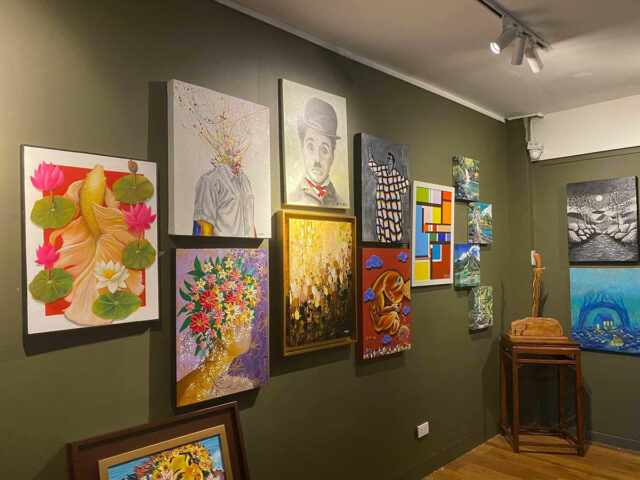
DRAMATIC realist scenes depicting the concepts of honor, loyalty, and justice hang on light gray walls, near abstract, varied-texture representations of the complex human experience. Further into the gallery, the walls are adorned with unique portraits of people with their backs turned and intricate painted recreations of fabric.

These are the works of painters Emman Cardeño, Archie Cayamanda, Dominique Alfonso, and Aubrey Caabay, who are holding simultaneous solo exhibitions at the Provenance Art Gallery.

WEAVING THROUGH THE CROWD
Ms. Caabay has been exhibiting her works since 2012 in multiple galleries. Her works use fabric as a subject, the mix of textures and patterns a striking highlight of her paintings. With the use of resin, she sometimes incorporates real fabric in her works.

Her latest mini solo show, “Weaving Through,” is an example of this. The layers of fabric and flowers that she paints convey movement that catches the eye, tempting viewers to step closer to inspect the remarkable detail.

Meanwhile, the works of Mr. Cardeño in “Yesterday’s Mirage” stand out in their own way, boasting a complex composition of people in stern, texturized environments to represent narratives of personal and national identity.

The artist, the youngest of the group at only 27 years of age, was discovered by the gallery online. His career in art began after graduating with an engineering degree, he told BusinessWorld at the exhibit’s July 13 opening.

“I’m still developing my conceptualization skills. Ang una muna ay narrative, composition, tapos pinupuno ko bago bawasan ang mga hindi kailangan (I first think about the narrative and the composition, then I fill up the whole work before I remove the unnecessary elements),” he said of his process.

Bago ako nakagawa nito, iyong nagturo sakin magpinta YouTube (Before I reached this level, my teacher was YouTube),” he added.

For Raul Francisco, the gallery’s owner, it’s important to nurture self-taught artists like Mr. Cardeño who are passionate and committed to the craft, to help them distinguish themselves from the crowd of other artists.

You need to sort of cultivate it. We only suggest things and provide some creative supervision, but the rest is them, their form of art,” he said.

A GLIMPSE OF PHILIPPINE ART
Mr. Alfonso has been cultivating his art for a long time, his impressionist portraits conveying a certain edge as well as elegance.

“Glimpse,” like his previous exhibitions, turns our attention to people’s backs. Viewers are left to ponder the unseen faces, thoughts, and motivations of those whose portraits he has painted, the brushstrokes capturing something hidden.

In “Altered” by Mr. Cayamanda, there is a similar obscuring of the human soul, this time through abstraction.

His paintings contain different portions, some of closeups of the human body contorted into dramatic shapes, some transposed with textured items like a smooth cloth or sharp-angled surfaces.

“The fabric represents the spirit while the geometric surfaces represent the solid matter. Of course, the human figure represents the human,” explained Mr. Cayamanda. “I aim for each piece to fulfill different aspects of a person.”

He added that artists naturally evolve, making him proud of his current works. “Hindi kami nananatili sa iisang sulok. Nagbabago din base sa experience, sa pinagdadaanan (We never stay in one corner. Our styles change based on experience, based on what we go through).”

As an owner of an upscale gallery, Mr. Francisco explained that curating works for a certain demographic doesn’t mean less variety, with the four artists and their mini solo shows as proof that the art scene is ever-changing.

“We’re all somewhat global citizens. We may not travel, but we’re fully aware of what’s going on in the world through social media, and that influences their work. Filipino contemporary art is amazing because we have such an interesting history — colonization, Catholicism, regional diversity,” he said.

“It’s a breeding ground for creativity.”

“Weaving Through,” “Yesterday’s Mirage,” “Glimpse,” and “Altered” are on view throughout July at Provenance Art Gallery, on the 2nd floor of Shangri-La the Fort, Bonifacio Global City, Taguig. — Brontë H. Lacsamana

Manila Water project targets 700,000 new customers in Taguig by 2025

MANILA Water Co., Inc. said it targets to finish its P577-million pipelaying project by early 2025, aiming to provide service to 700,000 more customers in Taguig City.

The 3.45-kilometer Long Term East 3 (LTE 3) Ruhale-Bambang Felix Line pipelaying project will pass through the areas of Ruhale M. Natividad, Bambang Felix, DM Cruz, F. Manalo, Bantayan Extension, and Cayetano Boulevard, the company said in a statement on Tuesday.

The project is projected to provide an additional 200 million liters per day of treated water coming from new water sources to Taguig, Pateros, Pasig, and portions of Parañaque as part of long-term supply augmentation.

“The LTE 3 Ruhale-Bambang Felix Line will be a vital part of Metro Manila’s water security,” Manila Water’s Corporate Communication Affairs Group Director Jeric T. Sevilla said.

The project will become part of the company’s LTE 3 Distribution Network System connected to new water sources, namely the East Bay Water Treatment Plant and Wawa-Calawis Water Supply System, as well as other long-term sources such as the Kaliwa Dam. 

Manila Water serves the east zone network of Metro Manila, covering parts of Marikina, Pasig, Makati, Taguig, Pateros, Mandaluyong, San Juan, portions of Quezon City and Manila, and several towns in Rizal province. — Sheldeen Joy Talavera

Decades after Billie Holiday’s death, ‘Strange Fruit’ is still a searing testament to injustice — and of faithful solidarity with suffering

SCREENCAP of Billie Holiday singing ‘Strange Fruit.’ — YOUTUBE.COM/@REELININTHEYEARS66

SIXTY-FIVE years ago, on July 17, 1959, Billie Holiday died at Metropolitan Hospital in New York. The 44-year-old singer arrived after being turned away from a nearby charity hospital on evidence of drug use, then lay for hours on a stretcher in the hallway, unrecognized and unattended. Her estate amounted to 70 cents in the bank and a roll of bills concealed on her person, her share of the payment for a tabloid interview she gave on her deathbed.

Today, Holiday is revered as one of the most influential musical artists of all time. Time magazine named her 1939 recording of “Strange Fruit” the song of the 20th century. “In this sad, shadowy song about lynching in the South,” Time wrote in 1999, “history’s greatest jazz singer comes to terms with history itself.”

Abel Meeropol, a New York City teacher and songwriter who used the pen name Lewis Allan, wrote “Strange Fruit” after seeing a photograph of a lynching that shocked and haunted him: “Black body swinging in the Southern breeze / Strange fruit hanging from the poplar trees.”

Holiday’s rendition of Meeropol’s song remains as stunning — and searing — today as when it was first recorded. “It hits, hard,” syndicated columnist Samuel Grafton wrote soon after the record’s release in 1939. “It is as if a game of let’s pretend had ended.”

I’m a scholar of American religion, literature, and the arts, and I’m interested in the ways that even powerfully secular works draw energy from religious narratives of justice, injustice, truth-telling and redemption. I find “Strange Fruit” a resonant example. (See the video of Billie Holiday singing “Strange Fruit” here: https://tinyurl.com/33cx7kf9.)

UNFLINCHING LYRICS
Like so many composers whose songs Holiday recorded — George and Ira Gershwin, Irving Berlin, Jerome Kern — Meeropol came from a family of Jewish immigrants to America who fled antisemitic violence in Europe.

Two Great Migrations defined America in the early 1900s: rural South to industrial North, and Old World to New. Both were driven, in part, by the desire to leave racial terror behind.

Together, these migrations enabled some of the most enduring musical collaborations of the 20th century. Thematically, the joint productions of Black and Jewish musical artists — Broadway productions of Show Boat and Porgy and Bess, Holiday’s performances with Benny Goodman and Artie Shaw — tended to sidestep the brute realities of prejudice, focusing instead on the luxury of ordinary happiness and unhappiness.

“Strange Fruit” was different. The song gazes unflinchingly on the “strange fruit” of the title: hanged, burned, and mangled flesh left to rot on a tree.

Well into the 20th century, white vigilante mobs murdered thousands of Black Americans with impunity: lynching then leaving their bodies on display as a terrorist spectacle.

Meeropol first jotted the song’s words and music on the back of a cabaret program dated Nov. 13, 1938 — four days after Kristallnacht, the night of murderous anti-Jewish rampages throughout Nazi Germany that became a tipping point for the Holocaust.

For Meeropol, a labor activist and a secular Jew, Black and Jewish Americans marched shoulder to shoulder in the cause of freedom from injustice. In another poem, he connected anti-Black violence with the persecutions of Jews:

I am a Jew.
How may I tell?
The Negro lynched
Reminds me well
I am a Jew.

BLACK CHRIST
As Meeropol linked anti-Black and anti-Jewish prejudice, many Black Christians also connected their suffering with that of the Hebrew slaves in the Bible — and with Jesus’ own.

According to theologian James Cone, “Black ministers preached about Jesus’ death more than any other theme because they saw in Jesus’ suffering and persecution a parallel to their own encounter with slavery, segregation, and the lynching tree.”

In the decade Holiday recorded “Strange Fruit,” Harlem Renaissance writers W.E.B. Du Bois, Countee Cullen, and Langston Hughes all centered works around the figure of the crucified Black Christ.

Most African American Christians belong to Protestant churches, but Holiday did not. As a child she was baptized Catholic at a convent reform school, Baltimore’s House of the Good Shepherd for Colored Girls, where she was twice sent by the courts. She remained ambivalently Catholic for the whole of her life.

THE FILLED CROSS
Protestant churches commonly display the “empty” cross, showing the instrument of Jesus’ execution, but not his body. The message of the empty cross is resurrection and new life. According to the Christian story, Jesus was crucified, buried, and rose from the dead to redeem humankind from sin.

In Catholic settings, one is more likely to find the “filled” cross: the body of Jesus with arms outstretched, hands and feet nailed to the wood. The crucifix emphasizes the agony of Jesus’ death and his solidarity with all who suffer.

The filled cross also communicates the message that the crucifixion of Christ — God in human form — is not a once-and-for-all event.

“When [Meeropol] showed me that poem,” Holiday said of “Strange Fruit,” “I dug it right off” because it “seemed to spell out all the things that had killed Pop.” Her father, jazz guitarist Clarence Holiday, died at 39 while touring in Texas. She believed he’d been refused lifesaving care because of his race.

Holiday’s “Strange Fruit” evokes the filled cross in its testament to lynching as ongoing reality. “It still depresses me every time I sing it,” Holiday said in her autobiography. “But I have to keep singing it … the things that killed him are still happening in the South.”

Journalist Vernon Jarrett recalled seeing Holiday perform in 1947. She was “singing this song as though this was for real, as though she had just witnessed a lynching,” Jarrett said of “Strange Fruit.” “There was a sense of resignation, as if ‘these people are going to have power for a long time and I can’t do a damn thing about it except put it in a song.‘”

ONGOING TESTAMENT
Keeping company with brokenness, rather than transcending or overcoming it, also describes Holiday’s way of relating to others in precarious circumstances. Her Harlem apartment, she said, was a “combination YMCA, boardinghouse for broke musicians, soup kitchen for anyone with a hard-luck story, community center, and after-hours joint.”

A 1943 papal encyclical described the church itself similarly, as a place of shared pain, solace and sustenance. Anyone without money “could go there and eat,” poet and jazz vocalist Babs Gonzales recalled of Holiday’s place. “She fed everybody in New York for four years.”

Holiday closed sets with “Strange Fruit” from 1939 until the final months of her life. In making it her trademark song, she offered solidarity and faithful witness to racial violence and injustice, not the remedy for these. But her testament carried extraordinary power.

Shortly after the 2020 murder of George Floyd, Bruce Springsteen, a fellow Catholic with “misgivings,” made a playlist for America. First on his list was “Strange Fruit.”

Asked whether he was optimistic about the future, Springsteen answered in the spirit of Holiday: witness, not triumph. “I don’t think anybody truly knows where we’re going from here,” he told writer David Brooks. But everyone “can see right now that the status quo is not okay. And that’s progress.”


Tracy Fessenden is a professor of Religious Studies at Arizona State University. She has received funding from the National Endowment for the Humanities, the Henry Luce Foundation, and the American Council of Learned Societies.


A-FLOW, LANDBANK ink P2.4-B loan for data center in Laguna

A-FLOW Properties I Corp. (A-FLOW) and Land Bank of the Philippines (LANDBANK) recently signed a P2.4-billion loan agreement for the establishment of a data center campus in Biñan, Laguna

The loan facility will be used for the development of the initial phase of the first A-FLOW data center campus and is the first tranche of a P10.8-billion ten-year loan facility with LANDBANK.

Currently under construction, the six-megawatt IT capacity Phase 1A of the three-building data center campus project is scheduled to be ready-for-service by the end of the year.

“This agreement marks a significant step forward in our shared commitment to develop the largest carrier-neutral data center campus in the Philippines. We are excited to build an ecosystem to attract a combination of international hyperscale customers and local enterprise customers,” A-FLOW President Amandine Wang said in an e-mailed statement on Tuesday.

A-FLOW is a joint venture between listed AyalaLand Logistics Holdings Corp. (ALLHC) and FLOW Digital Infrastructure that invests, develops, and operates digital infrastructure in the Asia-Pacific region.

“This is the first data center project financed by LANDBANK, and with this new partnership, we are confident that this project will yield significant economic benefits,” LANDBANK President and Chief Executive Officer Ma. Lynette V. Ortiz said.

Meanwhile, ALLHC Chairman Anna Ma. Margarita B. Dy said that digital transformation, cloud computing, and the surge of artificial intelligence are technologies that need “robust and scalable data center solutions.”

“Like any other infrastructure project, capital is key. So, we thank LANDBANK for the P10.8-billion loan facility to A-FLOW, a critical enabler for this project,” she said.

ALLHC is a subsidiary of listed property developer Ayala Land, Inc. (ALI).

On Tuesday, ALLHC shares rose by 0.52%, or one centavo, ending at P1.94 apiece, while ALI stocks increased by 3.26%, or P1, finishing at P31.70 per share. — Revin Mikhael D. Ochave

Oliver Jeffers makes climate picture books for adults and kids alike

OLIVERJEFFERS.COM

AT HIS studio in Belfast, Oliver Jeffers sits in front of a poster of the moon’s phases. He leans forward to talk about his work, revealing more of the image behind him. In the center of the lunar chart, the Earth emerges from behind Mr. Jeffers’s head.

We’re talking about the Earth in the wrong ways, Mr. Jeffers says. “It’s not true that the planet is broken. It is doing exactly what it should with the input it’s receiving,” he says. “It’s going to be around long after we’re gone. Life as we know it that’s what’s in danger.”

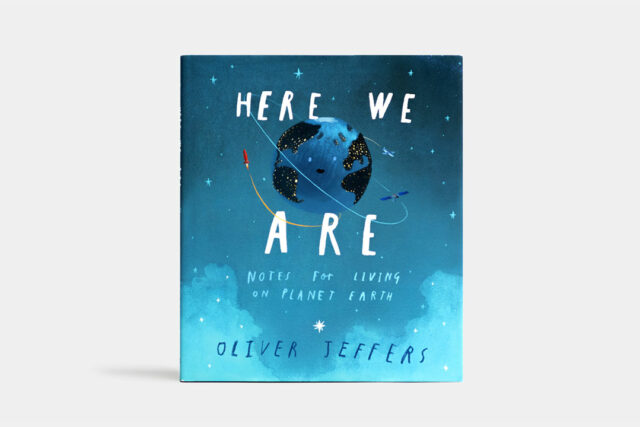
Jeffers is a visual artist, author, and climate activist whose oeuvre spans picture books, fine art, and large-scale installations. At COP26 in Glasgow, he installed two “siblings sculptures” of the Earth that he hoped would remind negotiators of the need for unified policies. In 2022, he crafted a six-mile recreation of the solar system in Northern Ireland, where he lives. And in 2017, fatherhood inspired Mr. Jeffers’s book, Here We Are, which explains the planet to kids.

This week, Mr. Jeffers is presenting and performing a live reading at the Bloomberg Green Festival in Seattle, a gathering of artists, entrepreneurs and activists.

There’s often a sense of scale and wonder in Jeffers’s work, a reflection of his view that emphasizing unity is more effective in the climate fight than leaning into blame. “My granny always said you catch more flies with honey than with vinegar,” he says. “Humor can be incredibly disarming. I think it’s one of the most underutilized tools in the battle against indifference to climate change.”

In Here We Are, for example, Jeffers drew on children’s hopeful feelings about the planet. “As I was walking around with a newborn baby, I was thinking… ‘Earth is beautiful and tremendous,’” he says. “And I thought other people would benefit from reminding themselves of these things they intuitively knew as children.”

Mr. Jeffers argues that isolationism and nationalism make it easier for people to lose sight of the planet. In his COP26 sculpture, he inscribed all dry land with the phrase “People Live Here” and the oceans with “Nobody Lives Here,” a critique of the borders people use to divide themselves. When humans think about the planet in terms of large, abstract groups, it gives them permission to ignore climate change, Mr. Jeffers says.

Mr. Jeffers has been surprised by the reach of some of his work. He first conceived of Begin Again a picture book that looks at human history from its beginnings to today as geared at adult audiences, figuring it would go over children’s heads. But when he took the book on tour, he found it resonated with kids as well, and sparked meaningful dialogue between parents and their children. Those reactions are among his favorites, he says.

Another reaction for the highlight reel: At COP26, Mr. Jeffers recalls a man approaching him to say that he had forgotten the Maldives in his sculpture of the Earth. They talked about how difficult it is to include every island nation, then the man introduced himself: “I’m the president there.”

Mr. Jeffers handed him the paintbrush, and the president added the island himself. Bloomberg

Hann Resorts plans up to P20-B IPO next year — gaming regulator

BW FILE PHOTO

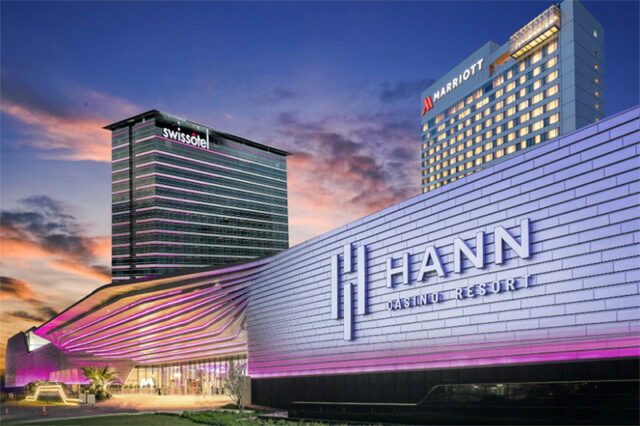
HANN Resorts, an operator and owner of an integrated casino-resort in the Philippines, is planning an initial public offering (IPO) worth P15 billion to P20 billion ($256.6 million to $342.2 million), the chief of the country’s gaming regulator said on Tuesday.

The deal could be the largest maiden share sale in the Philippines since MREIT, Inc.’s P15-billion IPO in 2021, and could match the amount raised by another integrated casino-resort IPO more than a decade ago.

Hann Resorts, led by Korean Dae Sik Han, has a target of listing on the Philippine bourse early next year, Alejandro H. Tengco, chairman of the Philippine Amusement and Gaming Corp., told Reuters.

“The growth story is they have a casino expansion including three championship golf courses and five-star hotels,” Mr. Tengco said.

The Philippine gambling sector, which includes a smaller version of the Las Vegas Strip in Manila, attracts high rollers from countries including China, Japan and South Korea.

Hann Resorts is weighing whether it can pursue an IPO this year, with fresh capital allotted for expanded gaming activities and the development of luxury estate Hann Reserve, a banking source with knowledge of the deal said on Tuesday.

Hann Resorts’ Mr. Han did not immediately respond to a request for comment. The news of the IPO was first reported by news site InsiderPH on Monday. 

Hann Resorts owns a casino-resort with 147 gaming tables, 868 slot machines, two VIP clubs, and two five-star hotels in a former US military air base in Pampanga province.

Its parent firm, Hann Philippines, is spending around $2 billion for Hann Reserve, a 450-hectare luxury estate development at the adjacent Tarlac province, and is among the up to $6 billion worth of investments being made into the Philippines’ casino sector in the next five years, according to the gaming regulator.

Among the Philippines’ integrated casino-resort operators, only Travellers Group, a joint venture between Genting Hong Kong Ltd. and a Philippine conglomerate, conducted an IPO but its owners took it private six years later in 2019. — Reuters

Reissued bonds fetch lower rates

BW FILE PHOTO

THE GOVERNMENT made a full award of the reissued Treasury bonds (T-bonds) on Tuesday at lower rates as the offer was met with robust demand amid expectations of monetary easing by the Bangko Sentral ng Pilipinas (BSP).

The Bureau of the Treasury (BTr) raised P30 billion as planned via the reissued 10-year bonds it auctioned off on Tuesday as total bids reached P96.605 billion, or more than thrice the amount on the auction block.

The bonds, which have a remaining life of nine years and six months, were awarded at an average rate of 6.212%. Accepted yields ranged from 6.18% to 6.223%.

The average rate of the reissued seven-year bonds dropped by 54.2 basis points (bps) from the 6.754% fetched for the series’ last award on June 11 and was 3.8 bps lower than the 6.25% coupon for the issue.

This was also 5.6 bps below the 6.268% quoted for the 10-year bond and 0.8 bp lower than the 6.220% seen for the same bond series at the secondary market before Tuesday’s auction, based on PHP Bloomberg Valuation Service Reference Rates data provided by the BTr.

To accommodate the strong demand seen for Tuesday’s offer, the BTr opened its tap facility window to raise P20 billion more via the bonds at the same average rate.

The government made a full award of the reissued 10-year debt as the offer fetched lower rates on strong demand amid “growing confidence that the BSP will cut sooner and by at least 50 bps total for the year,” a trader said via text message.

BSP Governor Eli M. Remolona, Jr. last month said the Monetary Board may deliver its first rate cut in over three years at its Aug. 15 review — the only policy meeting scheduled in the third quarter — as they expect inflation to continue easing this semester.

The Monetary Board could reduce borrowing costs by 25 bps in the third quarter and by another 25 bps in the fourth quarter, he said.

The BSP last month kept its policy rate at a 17-year high of 6.5% for a sixth straight meeting after raising interest rates by 450 bps from May 2022 to October 2023.

The T-bonds on offer fetched lower yields following dovish signals from US Federal Reserve officials, Rizal Commercial Banking Corp. Chief Economist Michael L. Ricafort said in a Viber message.

Fed Chair Jerome H. Powell said on Monday the three US inflation readings over the second quarter of this year do “add somewhat to confidence” that the pace of price increases is returning to the Fed’s target in a sustainable fashion, remarks that suggest a turn to interest rate cuts may not be far off, Reuters reported.

“In the second quarter, actually, we did make some more progress” on taming inflation, Mr. Powell said at an event at the Economic Club of Washington. “We’ve had three better readings, and if you average them, that’s a pretty good place.”

“What we’ve said is that we didn’t think it would be appropriate to begin to loosen policy until we had greater confidence” that inflation was returning sustainably to 2%, Mr. Powell continued. “We’ve been waiting on that. And I would say that we didn’t gain any additional confidence in the first quarter, but the three readings in the second quarter, including the one from last week, do add somewhat to confidence.”

Last week, the Labor department reported that its consumer price index fell in June from the month before, the first decline in four years. Economists now estimate the gauge the Fed uses for its inflation target, due out later this month, will show yearly price increases have eased closer toward 2%.

The betting among investors has tilted strongly towards the Fed starting rate cuts in September. Changes to the policy statement in July could provide a strong signal of that by updating how inflation is described and assessing how recent data has added to policy makers’ confidence that the pandemic-era outbreak of inflation has subsided.

After rapidly lifting interest rates starting in 2022 to combat the worst inflation outbreak since the 1980s, the Fed has left its benchmark policy rate unchanged since last July in a range of 5.25%-to-5.5%.

As Mr. Powell spoke, financial markets all but abandoned what had been rising bets on a July rate cut. Traders continue to expect a September rate cut followed by additional cuts in November and December, bringing the policy rate down to 4.5%-4.75% by yearend.

The BTr wants to raise P215 billion from the domestic market this month, or P100 billion from Treasury bills and P115 billion via T-bonds.

The government borrows from local and foreign sources to help fund its budget deficit, which is capped at P1.48 trillion or 5.6% of gross domestic product for this year. — A.M.C. Sy with Reuters

Arts & Culture (07/17/24)


Art restorers’ society celebrates anniversary

FIFTY-ONE artists of the Professional Art Restorers Society of the Philippines and Asia (PARSPA) celebrate the organization’s anniversary with an art exhibit this month. Part of the proceeds from the sale of the art will go to workshops and art supplies for children with disabilities, and also free art restoration services for small towns churches. Organized in 2020 with only 10 art restorers mostly from the academe, PARSPA was officially launched in 2021 to promote high standards in art conservation and restorations. It now consists of close to 300 members with art restorers, artists, curators, cultural conservationists, educators, designers, museum and gallery operators, art collectors and art enthusiasts. The exhibit, “July Jubilations,” is on view for the rest of the month at the Fifty One Collective Art House along 51 West Capitol Drive, Kapitolyo, Pasig City.


Artists and curators weigh in on activism in art

THE Metropolitan Theater of Manila will hold a panel discussion featuring contemporary artists who will discuss the movement of street art as a form of activism in urban culture. Moderated by Bambina Olivares, Head for Communication and Special Projects of The M, the panel discussion will feature Indy Paredes, Lisa Ito-Tapang, Ron Lopez Davis, and Buen Abrigo. The talk will be held on July 20, 2 p.m., at the 2nd floor foyer of The M in Bonifacio Global City, Taguig.


Brian Alegre holds solo exhibition

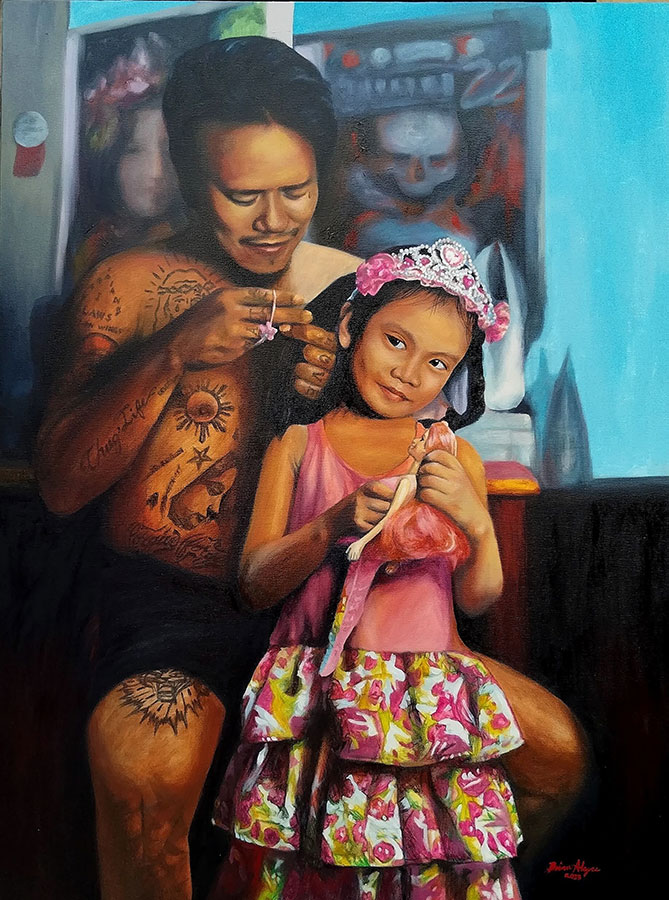
VISUAL artist Brian Alegre, a painter who works with oil, watercolor, acrylic, and soft pastel, will be holding a solo exhibit called “Pasasalamat.” It serves as a showcase of his artistic achievements and a thanksgiving for his second chance at life following a heart attack and coronavirus infection. His works are on display until July 20 at the Gateway Gallery Studio, Gateway Mall, Quezon City. A percentage of sales will be donated to charitable causes.


Facing fears through shadow puppetry

REKWIYEM, a three-act shadow puppetry show invites the audience to confront the depths of their fears on July 20. The show presents three original tales: the mourning after…, gunita, and Grim Symphony. Rekwiyem was produced in celebration of the 10th anniversary of Karilyo, a group of visual artists from the Culture and Arts Unit (CAU) of the De La Salle-College of Saint Benilde (DLS-CSB). The show, which is open to the public, will be on July 20, 6 p.m., at the Augusto-Rosario Gonzalez (ARG) Theater, Benilde Taft Campus, 2544 Taft Ave., Malate, Manila. Tickets are P150 for students and P200 for regular tickets. To attend, register through tinyurl.com/RekwiyemKarilyo.


Exhibits on view at NCCA

THE National Commission for Culture and the Arts (NCCA) Gallery unveiled the “Ille Imperium” exhibit by Filipino contemporary visual artist Paul Hilario on July 6, curated by Laya Boquiren. Mr. Hilario’s works are known for their satirical take on the nation’s current challenges, addressing themes such as governance, societal decay, and corruption, all compiled in the interactive exhibit. The NCCA also opened another exhibit on July 8,Beyond Brass” by Cameron Castrillo. It showcases Mr. Castrillo’s mastery of his medium, highlighting the fluidity and adaptability of brass using elements such as flame, water, acids, air, and light to turn ideas into tangible art forms — Mr. Castrillo’s sculptures and reliefs. Ille Imperium and Beyond Brass are on view until July 31 at the NCCA Gallery, Ground Floor of the NCCA Bldg., 633 General Luna St., Intramuros, Manila.


Gallerist Elaine Herbosa holds final show

ELAINE HERBOSA, artist and founder of the L’Arc en Ciel gallery, is putting on her final show, “CARPE DIEM II.” After undergoing pacemaker surgery, she hopes to conclude her career as a gallerist with this exhibit over 60 artworks by 13 artists, namely Miguel Buhay, Rene V. Canlas, Julia Cu Unjieng, Noemi Concepcion, Ram Skyler de Leon, Margarita L. Fandiño, Miel Pangilinan, Lizette Barretto Gueco, Elaine O. Herbosa, Alfred Galura, Pilar Quiros, Maribeth B. Santiago, and Rommel Tingzon. The group exhibition will be on view from July 17 to 30 at the ArtistSpace, Ayala Museum Annex, Makati Ave. corner De La Rosa St., Greenbelt Park, Makati City.


Fuente Ovejuna adaptation to be staged

AN adaptation of the play Fuente Ovejuna by prolific Spanish playwright and dramatist Lope de Vega will be staged by Benilde’s Novel:Theater. The story centers on the rebellion of residents in the small village of Ovejuna against their dictatorial ruler. The three-act play was translated by Nicolas Pichay and directed by Armando “Tuxqs” Rutaquio, Jr. The two-hour play will have performances from July 26 to Aug. 3, at 1 and 6 p.m., at the 5th Floor Theater of the Benilde Design + Arts Campus, 950 Pablo Ocampo St, Malate, Manila. Tickets are available at P280. For reservations, visit https://rb.gy/j4x6r6.


Exhibition for disability prevention and rehab

“HABAGAT” is a six-month exploratory exhibition that will feature around 25 artists who will highlight the unique perspectives and experiences of individuals living with disabilities, while also emphasizing the commonalities that unite us all. Throughout its six-month run, “Habagat” will also feature events, workshops, performances, and talks in collaboration with government bodies, organizations, and local communities, with the intention of re-examining people’s relationship with disability and collective care. The exhibition  opening is held in partnership with Kwago, the HIRAYA Collective for the Blind, and the Municipality of San Juan in La Union in celebration of National Disability Prevention and Rehabilitation Week.. There will be an exhibition launch and community gathering in the Anges Bed and Books, Ili Norte, San Juan, La Union on July 27, 10 a.m.

ADVERTISEMENT
ADVERTISEMENT