Home Blog Page 2850

Biden and Japan’s Kishida forge new partnership, eyeing China and Russia

COMMONS.WIKIMEDIA.ORG

 – US President Joe Biden and Japanese Prime Minister Fumio Kishida on Wednesday unveiled plans for military cooperation and projects ranging from missiles to moon landings, strengthening their alliance with an eye on countering China and Russia.

A joint news conference at the White House reflected the growing importance of Japan on the world stage and to the United States, as the two leaders weighed in on Gaza and Israel, Ukraine and Russia, North Korea and other world flashpoints.

Mr. Biden and Mr. Kishida brushed off a dispute over Nippon Steel’s offer for US Steel, saying the issue was not a major factor in their discussions on a day of White House pomp and pageantry that culminated in a lavish state dinner.

“This is the most significant upgrade in our alliance since it was first established,” Mr. Biden said after about two hours of talks that focused on the restive Indo-Pacific region and China’s actions.

The United States and its allies, including Japan, have been bolstering their militaries to counter what they see as a growing threat from China in the South China Sea and the East China Sea, and to deter any attempt to seize Taiwan, a self-ruled Island that Beijing considers its own.

Mr. Kishida said the two leaders discussed tense relations between Taiwan and China, and pledged to uphold international order based on the rule of law. Chinese leader Xi Jinping recently said outside interference could not stop the island’s “family reunion” with mainland China.

“Unilateral attempts to change status quo by force or coercion is absolutely unacceptable, wherever it may be,” Mr. Kishida said. The US and Japan will continue to respond to such actions, including challenges from China, he said.

“Regarding Russia’s aggression of Ukraine … Ukraine today may be East Asia tomorrow,” Mr. Kishida said.

Mr. Biden also vowed to keep open lines of communication with China and said the US- Japan alliance was defensive in nature. He spoke to Chinese President Xi Jinping last week.


JOINT MILITARY STRUCTURE

The announcements from Mr. Biden and Mr. Kishida brought the two World War Two enemies into the closest collaboration they have had since they became allies decades ago.

Mr. Biden said their militaries will cooperate with a joint command structure and they will, together with Australia, develop a new air missile defense network. The two leaders also announced that Japanese astronauts will participate in NASA moon missions.

Overall, the US and Japan have hammered out about 70 agreements on defense cooperation, including moves to upgrade the US military command structure in Japan to make it better able to work with Japanese forces in a crisis.

Japan, often described as the US’s most important Asian ally and its largest source of foreign direct investment, is taking on a stepped-up global role after a series of security law changes in the past decade that have transformed its pacifist constitution.

Mr. Kishida will address the US Congress on Thursday and join Mr. Biden and Philippine President Ferdinand Marcos Jr. for a meeting expected to focus on Beijing’s South China Sea incursions.

The meeting took place as China steps up pressure on the Philippines in the South China Sea over areas Beijing claims but that international law says belong to the Philippines.

China is attempting to isolate Japan and the Philippines, a US official said. By meeting the leaders of those two nations this week in Washington, Mr. Biden is aiming to “flip the script and isolate China.”

Fitch cut its outlook on China’s sovereign credit rating to negative on Wednesday, citing risks to public finances as the economy faces increasing uncertainty in its shift to new growth models.

On Thursday, Mr. Biden will also hold a bilateral meeting with Mr. Marcos, whom he welcomed in Washington just last year, before the pair join Mr. Kishida for a trilateral summit.

The visit may give a political boost to Mr. Kishida, whose popularity has waned at home.

He is being greeted with great fanfare, with Japanese flags on display throughout Washington ahead of the glitzy state dinner where guests included former President Bill Clinton, former Secretary of State Hillary Clinton, actor Robert De Niro, Amazon.com’s Jeff Bezos and Federal Reserve Chair Jerome Powell.

Musician Paul Simon provided the entertainment after the dinner, opening his set with a performance of “Graceland.”

Overshadowing the visit is a controversy over the planned $15 billion acquisition of American steel maker US Steel by Japan’s Nippon Steel, a deal some say is “on life support” after criticism by Mr. Biden and former President Donald Trump, his rival in November’s US election.

Mr. Kishida, asked about the deal, said he hoped discussions about it would bear fruit.

“We wish to cement this win-win relationship,” he said.

Mr. Biden said he stood by his commitment to union workers on the issue. – Reuters

Save the date and savour the flavors: The 16th Philippine Food Expo opens this April 12

With just one week until its grand opening, the 16th Philippine Food Expo is gearing up to be the culinary exhibition of the year, promising an unparalleled showcase and experience of the country’s vibrant food and beverage industry. Set to take place from April 12 to 14, 2024 at the World Trade Center Metro Manila, excitement for the “Only All-Filipino Food and Beverage Show” is running high as over 300 exhibitors prepare to impress visitors with a flourishing array of local products, produce, services, and innovations.

This year’s 3-day event will feature a concoction of dedicated pavilions that cater to the needs of all visitors from the everyday Filipino consumer to international traders and importers, each highlighting different facets of the food industry:

Exporters Pavilion: From premium dried fruits to artisanal delicacies, explore a treasure trove of Philippine culinary delights destined for global markets as exporters showcase the best of Filipino flavors.

Retailers Pavilion: Discover the latest trends and offerings from the Philippines’ leading grocery chains and specialty stores. From traditional favorites to innovative new products, retailers will offer a diverse selection to satisfy every palate.

Franchisors Pavilion: Explore exciting opportunities in the world of franchising and entrepreneurship, and become part of popular food franchises and learn firsthand from industry experts.

Equipment, Packaging, & Tech Pavilion: From state-of-the-art kitchen appliances to advanced packaging machinery, get a glimpse of cutting-edge technology and equipment revolutionizing the food industry.

A celebration of Philippine cuisine and the ingenuity of its food industry players make up the 16th Philippine Food Expo, concocting the most comprehensive platform for information exchange, market opportunities and the latest in the food and beverage market trends. With co-located special events, including fiery culinary competitions, live cooking demos, food tastings, technical seminars, and business sessions, visitors can expect an immersive experience that delights the senses and inspires the palate.

Don’t miss out on the 16th Philippine Food Expo serving an unparalleled opportunity to celebrate the rich diversity and innovation of Philippine cuisine. Mark your calendars for the grand opening on April 12, 9 a.m. to 7 p.m., and visit for the rest of the weekend, April 13 to 14, from 10 a.m. to 7 p.m.

The Philippine Food Expo 2024 is co-presented by the Department of Agriculture and is in cooperation with the Department of Tourism, the Department of Trade and Industry, the Export Development Council, the Philippine Exporters Confederation, Inc., and UnionBank of the Philippines. It is supported by GS1 Philippines, Malaysian Chamber of Commerce and Industries Philippines, Inc., La Camara, Philippines Norway Business Council, German-Philippine Chamber of Commerce and Industry, Chamber of Herbal Industries of the Philippines Inc. (CHIPI), Philippine Amalgamated Supermarkets Association, Inc. (PAGASA), Hotel And Restaurant Chefs’ Association Of The Philippines (HRCAP), Council of Hotel and Restaurant Educators of the Philippines (COHREP), Philippine Tour Operators Association (PHILTOA), Philippine Association of Food Technologists, Inc. (PAFT,Inc), Food Caterers Association of the Philippines (FCAP), and Hotel and Restaurant Association of the Philippines (HRAP).

The 3-day exhibition is in partnership with the University of Santo Tomas, College of Tourism and Hotel Management, Merit Stainless Steel, Everest Appliances, Waters Philippines, and Camel. Its Official Media Partners include the Inquirer Group of Companies, Philippine Daily Inquirer, Inquirer.net, Megamobile, BusinessWorld, Chinese Commercial News, Business Mirror, Pilipino Mirror, Philippine Graphic, COOK Magazine, SunStar Cebu, Exhibits Today, Digiboards, Inc., WhenInManila.com, Village Pipol Magazine, and DiscoverMNL.

For event updates, follow #PhilFoodExpo2024 on Facebook and Instagram. For any event inquiries, contact the official event manager at info@eventsbycut.com or through direct lines 8363-5192 / 8363-4900 / 8362-2266.


Spotlight is BusinessWorld’s sponsored section that allows advertisers to amplify their brand and connect with BusinessWorld’s audience by publishing their stories on the BusinessWorld Web site. For more information, send an email to online@bworldonline.com.

Join us on Viber at https://bit.ly/3hv6bLA to get more updates and subscribe to BusinessWorld’s titles and get exclusive content through www.bworld-x.com.

North Korea leader Kim Jong Un says now is time to be ready for war, KCNA says

KREMLIN.RU/EVENTS/PRESIDENT/NEWS/60363/PHOTOS-COMMONS.WIKIMEDIA.ORG

 – North Korean leader Kim Jong Un said unstable geopolitical situations surrounding his country mean now is the time to be more prepared for war than ever, as he inspected the country’s main military university, KCNA news agency said on Thursday.

Mr. Kim gave field guidance on Wednesday at Kim Jong Il University of Military and Politics, named after his father who died in 2011, which KCNA said is the “highest seat of military education” in the country.

North Korea has stepped up weapons development in recent years under Kim and has forged closer military and political ties with Russia, allegedly aiding Moscow in its war with Ukraine in return for help with strategic military projects.

Mr. Kim told university staff and students that “if the enemy opts for military confrontation with the DPRK, the DPRK will deal a death-blow to the enemy without hesitation by mobilizing all means in its possession,” KCNA reported.

DPRK is short for the Democratic People’s Republic of Korea, the North’s official name.

“Outlining the complicated international situation … and the uncertain and unstable military and political situation around the DPRK, he said that now is the time to be more thoroughly prepared for a war than ever before,” KCNA said.

Earlier this month, Mr. Kim supervised the test launch of a new hypersonic intermediate-range ballistic missile using solid fuel, which analysts said would bolster the North’s ability to deploy missiles more effectively than liquid-fuel variants.

North Korea has accused the United States and South Korea of provoking military tensions by conducting what it called “war maneuvers” as the allies have conducted military drills with greater intensity and scale in recent months. – Reuters

Amazon owes $525 mln in cloud-storage patent fight, US jury says

REUTERS

Amazon.com’s Amazon Web Services, the world’s largest cloud-service provider, owes tech company Kove $525 million for violating its patent rights in data-storage technology, an Illinois federal jury said on Wednesday.

The jury determined that AWS infringed three Kove patents covering technology that Kove said had become “essential” to the ability of Amazon’s cloud-computing arm to “store and retrieve massive amounts of data.”

Representatives for Amazon did not immediately respond to a request for comment on the verdict. Kove’s lead attorney Courtland Reichman called the verdict “a testament to the power of innovation and the importance of protecting IP rights for start-up companies against tech giants.”

Chicago-based Kove sued Amazon in the U.S. District Court for the Northern District of Illinois in 2018. The company said in the lawsuit that it pioneered technology enabling high-performance cloud storage “years before the advent of the cloud.”

Kove alleged that AWS’ Amazon S3 storage service, DynamoDB database service and other products infringed the cloud-storage patents. The jury agreed with Kove on Wednesday that AWS infringed all three Kove patents at issue, though it rejected Kove’s contention that AWS violated its rights willfully.

AWS had denied the allegations and argued that the patents were invalid.

Kove also sued Google last year for infringing the same patents in a separate Illinois lawsuit that is still ongoing. – Reuters

South China Sea: Why are China and Philippines tensions heating up?

THE BRP SIERRA MADRE, a marooned transport ship which Philippine Marines live in as a military outpost, is pictured in the disputed Second Thomas Shoal, part of the Spratly Islands in the South China Sea. — REUTERS

 – An escalating diplomatic row and recent maritime run-ins between China and the Philippines, a US treaty ally, have made the highly strategic South China Sea a potential flashpoint between Washington and Beijing.

The issue will be a focus of trilateral meeting between US President Joe Biden, Philippines President Ferdinand Marcos Jr. and Japan Prime Minister Fumio Kishida in Washington on Thursday.


WHAT ARE THE FLASHPOINTS?

Central to recent standoffs between the Philippines and China are two hotly contested features located inside Manila’s 200-nautical mile exclusive economic zone, but which Beijing claims as its own.

China uses the so-called nine-dash line that takes in about 90% of the South China Sea to assert its claim to sovereignty over the Scarborough Shoal, a submerged reef coveted for its bountiful fish stocks, and the Second Thomas Shoal, home to a small contingent of Filipino sailors living aboard a rusty warship that Manila intentionally grounded in 1999 to further its territorial claims.


WHY ARE THINGS HEATING UP?

The Permanent Court of Arbitration in the Hague ruled in 2016 that Beijing’s expansive claims via its nine-dash line had no basis under international law, handing the Philippines a landmark victory, but that has not stopped China, which rejects the ruling, from being more assertive.

Beijing has deployed hundreds of coastguard vessels to patrol those areas, alarming the Philippines, rival claimants and other states operating in the South China Sea, including the United States, which is wary about China’s growing military power and territorial ambition.


WHAT HAVE THE STANDOFFS ENTAILED?

Encounters between the Philippines and China in Asia’s most contested waters have grown tenser and more frequent over the past year as Beijing presses its claims and Manila refuses to cease its fishing and resupply activities to Filipinos at the two shoals. China considers those to be illegal intrusions and has tried to repel the vessels.

China’s coastguard has stepped up so-called “grey-zone” activities such as use of water cannon, collision and ramming tactics, and, according to Manila, use of a military-grade laser, to try to stop the Philippine resupply and patrol missions. It has also deployed an armada of fishing boats the Philippines and allies consider militia.

During the last two Second Thomas Shoal resupply missions, Philippine boats sustained damage and some crew were injured after use of water cannon. China has urged the Philippines to tow away the warship, saying it had promised to do just that, but Manila maintains no such agreement was made.


WHAT WAS THE GLOBAL REACTION?

China’s actions have drawn international condemnation and concern from major powers including the United States, Japan, Australia, France, and Britain.

Foreign journalists have joined some of the Philippine resupply missions and documented events at the invitation of the Philippines, which one security official said was aimed at “shedding light on China’s ‘grey zone’ tactics”. China has accused the Philippines of stirring up trouble and spreading misinformation.

China’s actions are “dangerous, illegal and they are destabilizing the region,” a senior US admiral said on April 9.


HOW IS THE PHILIPPINES RESPONDING?

President Ferdinand Marcos Jr has adopted a tough line against what he sees as Chinese hostility and rejected its pressure, recently vowing to implement countermeasures against “illegal, coercive, aggressive, and dangerous attacks” by China’s coastguard, upping the ante in the escalating row.

The Philippines has said countermeasures will be “multi-dimensional” and involve exhausting diplomatic options. Mr. Marcos has also called for stronger coordination on maritime security to confront “a range of serious challenges” to territorial integrity and peace.


COULD THE UNITED STATES GET INVOLVED?

The Philippines’ dispute with China coincides with an increase in security engagements with the United States under Mr. Marcos, including expansion of U.S. access to Philippine bases. Manila is also seeking close security ties with other allies like Japan and Australia. The engagements include joint patrols, which have frustrated China.

The United States has a Mutual Defense Treaty with the Philippines and has repeatedly made clear it would protect its ally if its coastguard or armed forces came under attack anywhere in the South China Sea, calling the agreement “ironclad”.

The treaty raises the stakes significantly in the Philippines-China dispute in the event of a miscalculation at sea. However, it could also limit how far China is willing to go to keep the Philippines at bay, wary of the risks of conflict and pressure to respond resolutely if there were direct US military involvement.

Philippine officials, including Marcos, have dismissed talk of invoking the treaty in the present situation, stressing it would be a last resort. – Reuters

What overcapacity? China says its industries are simply more competitive

REUTERS

 – The last day of US Secretary Janet Yellen’s trip to China coincided with the strongest retort yet from Beijing officials over her claims that China is flooding global markets with cheap goods, particularly in the new green industries.

As Ms. Yellen laid out plans to formalize dialogue with China over excess industrial capacity in electric vehicles (EVs), solar panels and batteries, saying Washington would not accept US industry being decimated“, the Chinese finance ministry issued a statement saying it had already “fully responded” to her concerns.

Commerce Minister Wang Wentao, at a roundtable meeting with Chinese EV makers in Paris on Monday, said US and European assertions of excess capacity were groundless, adding China’s rise in these industries was driven by innovation and complete supply chain systems, among other factors.

China’s latest response, analysts say, centers on the idea that its production system is simply more competitive, a sharp change in tone from only a month ago when officials including Premier Li Qiang sounded their own warnings on overcapacity.

The strong pushback from Beijing contrasts with the generally warm interactions between Yellen and Chinese officials during her trip, leaving the two largest economies further apart on the hottest dispute in global trade, which could add to tensions.

“They cannot win the race, so they try to slow it down,” said Li Yong, chief researcher at D&C Think, a Chinese think tank, referring to the West’s rhetoric on overcapacity.

“We just do our things, they can do whatever they want — the knife is in their hands.”

Both sides believe they have solid, data-supported arguments not to back down.

The core criticism coming primarily from Washington and Brussels is that state-led support for manufacturers, coupled with depressed domestic demand, is pushing excessive Chinese supply onto global markets.

This drives down prices.

Consequently, it threatens US and EU firms which survive on profits rather than what Western officials argue is a drip-feed of state resources in China. And, it can complicate longer-term investment decisions.

While China denies subsidies and points to US and EU government programs to support their own industries, its critics take a wider view of state support that incorporates cheap loans, land use, huge infrastructure investment and other benefits that span across a fully-integrated supply chain.

EU trade officials have singled out the huge resources redirected by China’s state-dominated financial system from the ailing property sector to its sprawling manufacturing complex, as Beijing looks for other economic growth drivers.

For its part, China says industrial overcapacity is not unique to the world’s second-largest economy.

“The so-called ‘overcapacity’ is a manifestation of the market mechanism at work, where supply-demand imbalance is often the norm,” vice finance minister Liao Min told local media.

“This can occur in any market economy system, including in the United States and other Western countries, where it has happened multiple times in history”.

Industrial capacity utilization in China is lower than in the United States or Europe, but not by much.

Also, China asserts supply and demand should be viewed from a global perspective, particularly given Western criticism focuses on industries key to climate goals for the entire planet.

That argument resonates.

“I’m very skeptical about this idea of overcapacity,” Nicholas Lardy, senior fellow at Peterson Institute told a financial forum in Hong Kong.

“If you think about it, it means every country should only produce what it consumed itself. That means no trade. Where would we be if there was no trade?”

It’s not a new debate. More than a decade ago, Washington complained that the U.S. rust belt was crippled by Chinese overproduction of steel, which had forced China to dump it at very low prices.

But China can argue its output is more in tune with global demand than it was back then. China’s inventory levels have ticked up during the COVID-hit years, but remain well below levels seen in the 2010s.

China views the “new three” industries of electric vehicles, batteries and solar power as key for its development.

In 2023, exports of the “new three” totaled 1.06 trillion yuan ($146.6 billion), up 29.9% year-on-year, official data showed. But they accounted for only 4.5% of China’s total yuan-denominated exports last year, so those on Beijing’s side of the debate see the West’s focus on them as hypocritical.

“US and Europe have a bit of a gangster logic,” said Wang Jun, chief economist at Huatai Asset Management.

In the automotive sector, China argues overcapacity is concentrated in combustion-engine cars rather than EVs and says market mechanisms will eventually weed out weak players.

Moreover, some models by Chinese EV maker BYD sell in Germany for more than double their price in China – an argument that critics use against Europe’s concerns over unfair pricing.

China also says many of its firms are more innovative, hence more competitive. It can point to surpassing the United States as world leader in patent applications.

One industry where global demand does not keep up with Chinese production, though, is solar.

Xuyang Dong, China energy policy analyst at Climate Energy Finance in Sydney, estimates China’s wafer, cell and module capacity coming online in 2024 is sufficient to meet annual global demand now through to 2032.

“If you think of it from this perspective, the Chinese government is subsidising the whole world’s green transition,” said Yue Su, principal China economist at the Economist Intelligence Unit.

“Whether this is fair to EU manufacturers or workers is a different question.”

“Having said that, even if the West increases tariffs, I still foresee that China is going to dominate in many of these industries.” – Reuters

Festive flavors await as the 16th Philippine Food Expo serves fiery culinary competitions, sumptuous cooking demos, and seminars for all

Food aficionados and culinary enthusiasts alike can look forward to the upcoming 16th Philippine Food Expo, a prestigious trade event showcasing the diverse and vibrant culinary landscape of the Philippines, as it caters to unique gastronomic cravings from April 12 to 14, 2024, at the World Trade Center Metro Manila.

Serving as a melting pot of flavors, gathering industry professionals, chefs, food entrepreneurs, and foodies alike, the expo will bring together over 300 food and beverage exhibitors serving the latest innovations, produce, products, and technology from across the country.

As the three-day event takes a further step in being true to its commitment as the “Only All-Filipino Food and Beverage Show,” everyone from the everyday Filipino consumer to international traders and importers of food products can look forward to highlights of the expo that include a series of technical and business sessions, product and cooking demonstrations, and other special events.

Heating the exhibition grounds is the highly anticipated Culinary Challenge Competition, where students and faculty members from 36 culinary schools and universities nationwide will go head-to-head in a friendly battle of skill, creativity, and talent.

With over eight categories to compete in including “PINASarap Breakfast,” “Kitchen Masters,” “Modern Filipino Dessert,” and Mystery Ingredient, visitors will definitely crave and cheer for more as they witness remarkable culinary prowess on display from the competition participants.

A series of captivating and fiery cooking demonstrations will also be featured on stage throughout the event, where renowned chefs showcase their techniques and share their culinary secrets with eager audiences.

Catch the “Bartending Show with Flair” by Evolve University Class or discover the “World’s First Adobo” by Executive Chef Christopher Carangian. Sweeten the deal with a cake decorating demo from content creator, Joycelyn Escarez of Cakes N’ Cookies by Joyce, or savor the experience of learning how to cook Paella de Benguet, Pinakbet Ratatouille, and Taro Salpicao with Chef Manuel De Leon of Hotel And Restaurant Chefs’ Association Of The Philippines (HRCAP).

From traditional Filipino delicacies to modern fusion cuisine, attendees will have the opportunity to learn from the best in the industry and gain insights into various culinary arts.

Looking for more? Attend a lineup of informative seminars and workshops simultaneous to the three-day event, including “Crafting Success: the Art and Business of Mixology and Bartending” by Evolve University Class, Calye Culinarya’s “Latest Trend in Healthy Filipino Beverages,” or join the Department of Agriculture’s Young Farmers Challenge and Agriculture Investment Forum to learn more about its  ongoing program that aims to provide financial grants to young Filipinos looking to start agri-fishery enterprises, and offer support through coaching, mentoring, and other development assistance.

Engage with industry experts, exchange ideas, and gain valuable knowledge to stay ahead in the ever-evolving culinary landscape of the Philippines.

The 16th Philippine Food Expo not only celebrates the rich culinary heritage of the Philippines but also serves as a platform for networking, collaboration, and inspiration within the food industry. With its engaging activities, mouthwatering offerings, and vibrant atmosphere, the Expo is expected to leave a lasting impression on all who are set to attend, reaffirming the Philippines’ position as a culinary destination of choice. Pre-Register online until March 29, 2024 to avail a discounted entrance fee or walk-in during the event days on April 12, 9 a.m. to 7 p.m. and from April 13 to 14, 10 a.m. to 7 p.m.

The Philippine Food Expo 2024 is co-presented by the Department of Agriculture and is in cooperation with the Department of Tourism, the Department of Trade and Industry, the Export Development Council, the Philippine Exporters Confederation, Inc., and UnionBank of the Philippines. It is supported by GS1 Philippines, Malaysian Chamber of Commerce and Industries Philippines, Inc., La Camara, Philippines Norway Business Council, Philippine Amalgamated Supermarkets Association, Inc. (PAGASA), Hotel And Restaurant Chefs’ Association Of The Philippines (HRCAP), Council of Hotel and Restaurant Educators of the Philippines (COHREP), Philippine Tour Operators Association (PHILTOA), Philippine Association of Food Technologists, Inc. (PAFT,Inc), Food Caterers Association of the Philippines (FCAP), and Hotel and Restaurant Association of the Philippines (HRAP).

The three-day exhibition is in partnership with the University of Santo Tomas, College of Tourism and Hotel Management, Merit Stainless Steel, Everest Appliances, Waters Philippines, and Camel. Its official media partners include the Inquirer Group of Companies, Philippine Daily Inquirer, Inquirer.net, Megamobile, BusinessWorld, Chinese Commercial News, Business Mirror, Pilipino Mirror, Philippine Graphic, COOK Magazine, SunStar Cebu, Exhibits Today, Digiboards, Inc., Bitesized.ph, WhenInManila.com, Village Pipol Magazine, and DiscoverMNL.

For event updates, follow #PhilFoodExpo2024 on Facebook and Instagram. To participate as an exhibitor or for any event inquiries, contact the official event manager at info@eventsbycut.com or through direct lines 8363-5192 / 8363-4900 / 8362-2266.


Spotlight is BusinessWorld’s sponsored section that allows advertisers to amplify their brand and connect with BusinessWorld’s audience by publishing their stories on the BusinessWorld Web site. For more information, send an email to online@bworldonline.com.

Join us on Viber at https://bit.ly/3hv6bLA to get more updates and subscribe to BusinessWorld’s titles and get exclusive content through www.bworld-x.com.

SM Offices leverages proptech strategies to better serve tenant-partners

Present at the ParkNcharge EV charging stations launch at SM Offices’ E-com Centers are (from left): DoE Energy Utilization Management Bureau Director (CESO III) Patrick Aquino; SysNet President and CEO Joel Sapul; SMDC Senior Vice-President and Head of Property Management Erickberth Calupe; SM Commercial Properties Group (CPG) Senior Assistant Vice-President Orliber Paule; SM Prime Holdings Vice-President and Head of CPG Alexis Ortiga; EVAP (Electric Vehicle Association of the Philippines) Executive Director Jose Bienvenido Manuel Biona; and EEI Power Corp. President Cris Noel Torres.

Maximizing the latest in technological advancements, the real estate industry has been quick to adopt various property technologies (proptech) into its operations to help open new avenues in advancing the quality of real estate.

Proptech brings forth inventive solutions that enhance buildings — boosting efficiency, streamlining operations, and improving customer experience.

SM Offices, a division of SM Prime, is one of the leading developers in the country that is actively leveraging on such technologies — taking great pride in the proptech solutions it utilizes to slash energy consumption and revolutionizing its space solutions to become more sustainable.

This forward-thinking approach to integrating proptech not only underscores SM Offices’ commitment to ESG goals but also paves the way for innovative adaptations in its infrastructure. In fact, SM Offices recently launched electric vehicle (EV) chargers at three of their office buildings in the Mall of Asia Complex, namely ThreeE-com Center, FourE-com Center, and FiveE-com Center.

By introducing EV chargers in its office buildings, SM Offices takes the next logical step towards reducing environmental impact and enhancing tenant experience.

“Listening to the growing demand from our tenant-partners for more environmentally friendly transportation options, we have proactively installed EV chargers in our properties. This initiative is part of our broader commitment to improving tenant convenience and leading by example in adopting a low-carbon footprint lifestyle. Our efforts are a testament to our belief that green buildings and practices are not merely ethical choices but smart, long-term investments,” said Alexis L. Ortiga, SM Prime Holdings Vice-President and SM Offices Head.

SM Offices has also embraced cutting-edge technologies like the Energy Recovery Ventilator (ERV) — another technology that promotes energy efficiency by transforming stale exhaust air into fresh outside air. Aside from improved energy efficiency, this system enhances air quality, moisture regulation, and provides cool and clean air to the tenants.

Empowering seamless property management, the Building Management System (BMS) utilized by SM Offices offers comprehensive oversight and remote control of essential operations, ensuring efficiency and safety at the heart of its modern office buildings.

Other technologies in its office buildings include a Building Management System (BMS) and Air Conditioning and Ventilation System (ACVS) equipment, which are used to optimize desired comfort cooling requirements at the least energy and water consumption for both common areas and applicable leased spaces.

National Building Code-compliant Seismic Accelerograph earthquake recording instruments and seismic detection devices are also installed to help ensure the serviceability, performance, and structural integrity of the buildings in the event of earthquakes. During seismic events, these technologies trigger alarms and provide relevant information to ensure that emergency protocols are implemented. Elevators also open at the nearest stop for immediate and proper evacuation of passengers.

“Measures like this are crucial for protecting our tenant-partners and their businesses, offering them peace of mind and a secure working environment,” Ortiga emphasized.

And because time is money, SM Offices employs a Centralized Automated Meter Reading (CAMR) System to perform real-time and automatic meter reading for accurate recording, billing, and analytics. For SM Offices, this is a perfect feature to improve technician productivity and for tenants with spaces in multiple floors to access all data in a single location.

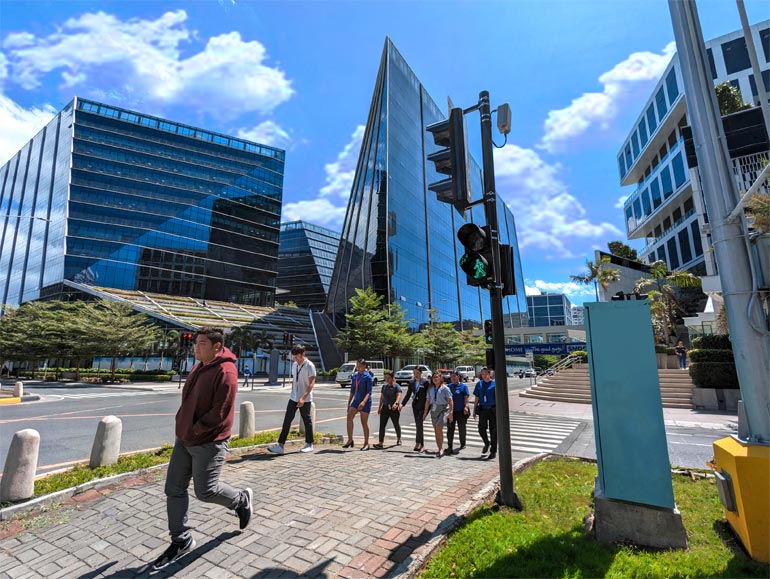
Mall of Asia Complex’s Adaptive Traffic Signal System (inset control box) optimizes traffic flow and ensures a pedestrian-friendly Estate.

Extending the scope of technological integration beyond the confines of their office buildings, SM Prime also pioneers in the application of proptech to enhance the broader infrastructure that supports their complexes. The implementation of adaptive traffic signals within the Mall of Asia Complex, where the SM E-Com Office Block is located, is a prime example of this expansive vision. These adaptive traffic signals detect vehicles and pedestrians crossing the different road lanes through sensors embedded within the pavement. According to their data, these adaptive traffic signals reduce delays by about 20%, stops by 20%, fuel consumption by 212%, and emissions by 7%.

SM Offices’ transformative use of proptech illustrates the profound impact it has on sustainability, efficiency, and the well-being of its tenant-partners. By integrating advanced solutions within its properties, SM Offices not only reimagines the development and management of office spaces but also sets new benchmarks for environmental stewardship and operational excellence.

“We’re not just looking at immediate benefits. Our focus is on the long-term impact, setting new standards, and inspiring a shift across the industry. Through strategic proptech integration, we aim to create spaces that not only serve our current tenants but also pave the way for future generations,” Ortiga shared.


Spotlight is BusinessWorld’s sponsored section that allows advertisers to amplify their brand and connect with BusinessWorld’s audience by publishing their stories on the BusinessWorld Web site. For more information, send an email to online@bworldonline.com.

Join us on Viber at https://bit.ly/3hv6bLA to get more updates and subscribe to BusinessWorld’s titles and get exclusive content through www.bworld-x.com.

ADB forecasts Developing Asia growth at 4.9% in 2024, says risks persist

REUTERS

MANILA – Developing Asia’s growth this year is expected to be slightly stronger than previously forecast as healthy domestic demand in many economies offsets the property-driven slowdown in China, the Asian Development Bank (ADB) said on Thursday.

The ADB nudged up its 2024 growth forecast for Developing Asia to 4.9% from 4.8% projected in December, but warned of persistent challenges such as rising geopolitical tensions, including in the Middle East, that could disrupt supply chains and reignite inflation.

The Manila-based lender’s 2024 growth forecast was slightly weaker than the region’s 5.0% growth in 2023. Growth for 2025 was also forecast at 4.9%.

“Growth in developing Asia will remain robust this year, in spite of uncertainty in the external environment,” ADB Chief Economist Albert Park said in the Asian Development Outlook report.

“The end of interest-rate hiking cycles in most economies as well as continued recovery in goods exports from an upturn in the semiconductor cycle will support growth,” Mr. Park said.

China remains a weight on the regional growth outlook as a protracted property crisis and other challenges keep the world’s No.2 economy from mounting a strong economic revival, the ADB said.

ADB Principal Economist John Beirne, in a briefing ahead of the report’s release, said Wednesday’s cut by Fitch of its outlook on China’s sovereign credit rating to negative was concerning for investor sentiment.

“It can have additional problems that are already apparent in the property sector, and certainly it’s not helpful when we consider local government debts and sustainability of debt and cost of sovereign borrowing,” Mr. Beirne said.

The ADB forecast China would grow 4.8% in 2024. That is higher than its 4.5% estimate made in December, but slower than growth of 5.2% in 2023.

It expects the Chinese economy to lose more steam next year, with growth seen slowing to 4.5%, “driven by the weak property market and amplified by fading domestic consumption growth after last year’s reopening”, the ADB said.

The ADB forecast regional inflation would slow to 3.2% in 2024 from 3.3% in 2023, and ease further to 3.0% in 2025. — Reuters

FDI net inflows surge in January

REUTERS

By Luisa Maria Jacinta C. Jocson, Reporter

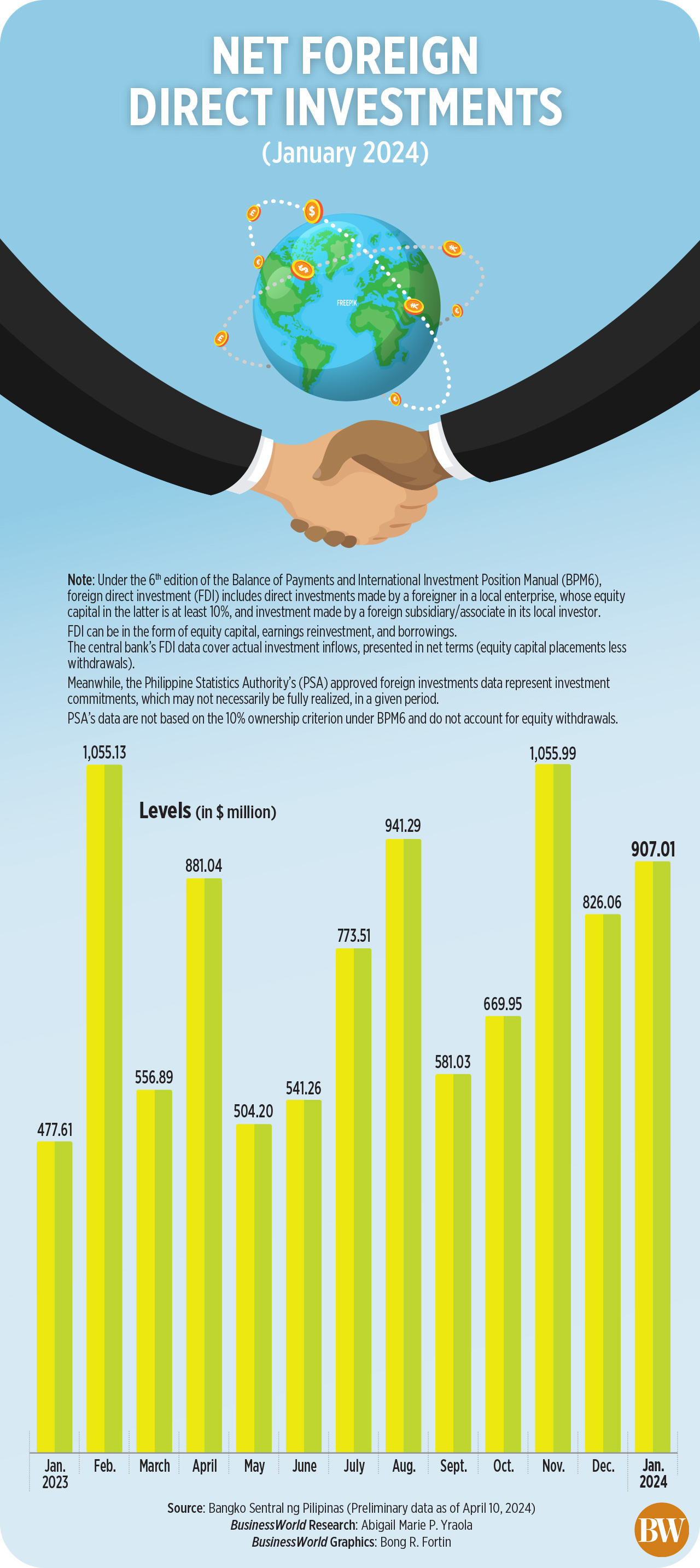
NET INFLOWS of foreign direct investments (FDIs) into the Philippines nearly doubled in January, amid strong demand for local debt instruments, the Bangko Sentral ng Pilipinas (BSP) reported on Wednesday.

Preliminary BSP data showed that FDI net inflows surged by 89.9% to $907 million in January from $478 million in the same month in 2023.

Month on month, net inflows rose by 9.8% from $826 million recorded in December.

Net Foreign Direct InvestmentRuben Carlo O. Asuncion, chief economist at Union Bank of the Philippines, Inc., said that the growth in FDI inflows in January was largely driven by the increase in net investments in debt instruments.

BSP data showed nonresidents’ net investments in debt instruments nearly tripled (173.2%) to $820 million in January from $300 million in the same month in 2023.

“The triple-digit growth may have come from strong demand for local debt instruments as foreign investors’ appetite grew from earlier-than-expected interest rate cuts by the US Fed and market optimism from the potential monetary policy settings pivot,” he said in a Viber message.

Back in January, markets were still expecting the US Federal Reserve to cut rates as early as March.

Now, markets are cutting their bets on future Fed rate cuts, with some now expecting easing to start in July instead of June. The Federal Open Market Committee kept its fed funds rate unchanged at the 5.25-5.5% range at its March meeting. It raised rates by a total of 525 bps from March 2022 to July 2023.

BSP data also showed net investments in equity capital other than reinvestment of earnings posted net outflows of $11 million, a reversal of the $93-million inflows a year ago.

Broken down, equity capital placements declined by 33.5% to $99 million from $149 million, while withdrawals jumped by 97.2% to $110 million from $56 million.

Reinvestment of earnings rose by 16.4% to $99 million from $85 million in January 2023.

Investments in equity and investment fund shares fell by 50.8% to $87 million in January from $178 million a year ago.

Investments in equity capital placements were mainly from Japan (69%) and the United States (19%). These were invested mostly in the manufacturing, real estate, construction and wholesale and retail trade industries.

Rizal Commercial Banking Corp. Chief Economist Michael L. Ricafort said that the higher FDI net inflows in January could be partly attributed to improved economic and financial markets performance.

He cited the easing headline inflation trend seen in January that lifted hopes for policy rate cuts later this year.

Inflation decelerated to a three-year low of 2.8% in January, its slowest since the 2.3% print in October 2020. It was also within the central bank’s 2-4% target.

“Increased FDIs could have also partly been brought about by some realized investment commitments made for more than a year already during the various foreign trips of the administration,” Mr. Ricafort added.

For the coming months, he said that FDIs could pick up further if rate cuts materialize in the latter half of the year.

BSP Governor Eli M. Remolona, Jr. said that if inflation continues to ease and economic growth turns out weaker than expected, the Monetary Board could cut rates as early as the third quarter.

The BSP expects to record FDI net inflows of $9 billion at end-2024.

PHL doubles efforts to finish rail projects as traffic hurts growth

MOTORISTS are stuck in heavy traffic along the northbound lane of EDSA in Cubao, Quezon City, Dec. 22, 2023. — PHILIPPINE STAR/MIGUEL DE GUZMAN

PHILIPPINE President Ferdinand R. Marcos, Jr. on Wednesday said his government is working double time to fast-track railway projects as traffic gridlocks in the capital region alone cost billions of pesos in lost opportunities per day.

“Anyone can use trains, that’s why it’s the only solution,” he said in Filipino during a town hall meeting on the country’s traffic problems, noting that the National Government seeks to shift the mode of transportation to rails from buses, jeepneys, and private cars.

Mr. Marcos reported the progress of ongoing railway projects, including the proposed Metro Manila Subway, which he said was now 41% complete.

The completion rates for the two components of the 147-kilometer North-South Commuter Railway (NSCR) Project — the Tutuban-Malolos and Malolos-Clark sections — have already hit over 50%, he said.

Mr. Marcos said the proposed NSCR’s South Extension, which connects Manila to Calamba, Laguna, was already 38%.

The completion rate for the Light Rail Transit (LRT) Line 1 Cavite Extension stood at 80%; 85% for the rehabilitation and maintenance of the Metro Rail Transit (MRT) Line 3; and 83% for the Unified Grand Central Station.

The MRT Line 7, which runs from Quezon City to San Jose del Monte in Bulacan province, is 67% completed.

Citing a study conducted by the Japan International Cooperation Agency, Mr. Marcos said traffic congestion in the capital region costs the Philippine economy at least P3.5 billion daily or P1.27 trillion annually.

“If we do not do anything, the cost will increase to P9 billion for each day,” he said.

“The only solution to this is the mass transit system, that’s why we are fast-tracking (the projects). That’s our priority in terms of infrastructure against traffic congestion.”

In a statement, the Department of Public Works and Highways (DPWH) outlined its traffic decongestion plan which focuses on the improvement and expansion of the national road network by building additional by-passes, diversion roads, expressways, flyovers, interchanges and underpasses.

“DPWH will continue to develop and conduct further study on infrastructure projects that will alleviate traffic in Metro Manila in coordination with various stakeholders,” Public Works Secretary Manuel M. Bonoan said in a statement.

However, Terry L. Ridon, convenor of InfraWatchPH, said the government should clarify how it is “working double time” to fast-track railway projects.

“Is it expanding personnel working on the various project sites or is it now expediting and expanding the orders for construction materials for these projects?” he said in a Facebook Messenger chat.

“If these things are not yet currently being done, ‘working double time’ does not really mean anything as yet.”

At the same meeting, Mr. Marcos said he wants local government units (LGUs) in Metro Manila to come up with common traffic management to lessen confusion among stakeholders.

“We must consider the road system and the mass transit system in Metro Manila as one system. And one system feeds into another,” he said.

Mr. Marcos said his government seeks to expand areas allowed for the country’s 15 million motorcycle riders.

“We’re trying to see what are the other areas, high-traffic areas, where our motorcycle services could expand.”

He said the government is also considering barring road works during daytime to avoid heavy traffic. He also expressed concern over the prevalence of vehicles plying the roads without necessary permits.

NO EXTENSION
Mr. Marcos, meanwhile, said he would no longer extend the deadline for the franchise consolidation under the government’s Public Utility Vehicle Modernization Program (PUVMP), which was already extended in late January.

“There will be no more extensions under the PUVMP. This extension is final,” Transportation Secretary Jaime J. Bautista said, adding that consolidation of transport workers into a cooperative will help address traffic congestion.

The Land Transportation Franchising and Regulatory Board earlier said 190,000 public utility vehicles units, including UV Express, jeepneys, mini-buses, and buses, have availed of consolidation.

Mr. Marcos also cited the need to decongest Metro Manila by creating more regional centers and creating more roads outside the capital region, which is home to over 13 million people.

The President cited an interlink bridge project that seeks to cut travel time from Bataan in Central Luzon to Cavite to just 30-45 minutes from 4 to 5 hours.

Mr. Bautista said the first phase of the proposed Bataan-Cavite Interlink Bridge is expected to begin soon, amid questions on its progress after the National Economic and Development Authority (NEDA) changed the cost and the timeline for the project.

The project would cost P219.3 billion, up from the initial cost of P175.6 billion, NEDA said in October last year, adding that the implementation period may reach December 2029. The project was earlier projected to begin construction in late 2023.

“The procurement would already start,” Mr. Bautista told reporters on the sidelines of the town hall meeting.

Mr. Bonoan said the DPWH will be bidding out the first two out of the six segments by the first semester. The next two segments may be bid out in the third quarter.

Traffic solutions have so far been focused on Metro Manila, Mr. Marcos said, citing the need to craft similar solutions for other urban centers such as Cebu City in central Philippines and Davao City in the country’s south.

NEDA Secretary Arsenio M. Balisacan said the government encourages businessmen to invest in key areas outside the capital region such as Cavite, Laguna, and Batangas.

He also cited Bulacan, Pampanga, Laoag, Metro Cebu, Metro Davao, Cagayan de Oro, Iloilo, Bacolod, and General Santos City.

Public services in the countryside such as healthcare should also be improved to lessen the demand for services in Metro Manila, the NEDA chief said. — Kyle Aristophere T. Atienza with inputs from Ashley Erika O. Jose

RRR cut unlikely by 3rd quarter — BSP’s Remolona

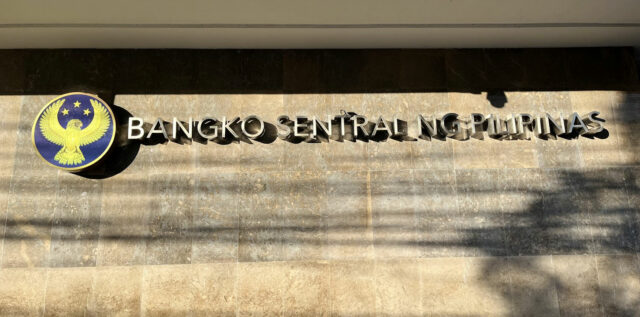
The main office of the Bangko Sentral ng Pilipinas in Manila. — BW FILE PHOTO

THE BANGKO SENTRAL ng Pilipinas (BSP) is seeking to reduce banks’ reserve requirement ratio (RRR) soon, but this is unlikely to happen by the third quarter of this year.

Analysts also cautioned that cutting lenders’ reserve requirement should be timed properly to prevent fanning inflationary pressures.

“We want to eventually reduce the reserve requirement, but we’re trying to figure out the right timing for doing that,” BSP Governor Eli M. Remonola, Jr. told reporters on Monday.

“We will raise it at the Monetary Board meeting at some point soon — when to do it and how much would be reduced but that’s one of the things we want to do going forward.”

Asked if he expects to reduce the reserve requirement by the third quarter, Mr. Remolona said this was “unlikely.”

The RRR is the percentage of bank deposits and deposit substitute liabilities that banks cannot lend out and must set aside in deposits with the BSP.

The BSP has already brought down the RRR for big banks to a single-digit level last year from a high of 20% in 2018.

In June 2023, the BSP slashed the ratio for big banks and nonbank financial institutions with quasi-banking functions by 250 bps to 9.5%.

ING Bank N.V. Manila Senior Economist Nicholas Antonio T. Mapa said that the move to lower the reserve requirement ratio is welcome but “must be timed properly.”

“This is the reason why Mr. Remolona indicated that the reduction may be after the third quarter as any lowering should come after the BSP has shifted to easing,” he said in an e-mail.

“This is because the BSP learned its lesson from the past when they lowered the ratio at a time when they were hawkish, which led to confusion and negative market reaction,” Mr. Mapa added.

Mr. Remolona on Monday said the Monetary Board could cut rates as early as the third quarter if data show an inflation downtrend and weak economic growth.

“I think the rate cuts are more of the spotlight at this point. Mr. Remolona did mention about finding the right timing for the RRR cut and I personally feel that the time is not yet ripe,” Ruben Carlo O. Asuncion, chief economist at Union Bank of the Philippines, Inc., added.

Meanwhile, John Paolo R. Rivera, president and chief economist at Oikonomia Advisory & Research, Inc., warned that the RRR cut could stoke inflation if ill-timed.

“Lowering the RRR later this year alongside expected lowering of policy rate would reinforce economic growth through increased spending brought about by greater money supply in the economy,” he said in a Viber message.

“However, it will cause inflationary pressures. Perhaps it can be done once inflation has stabilized and there is indication that economic growth figures will fall short of target,” he added.

Headline inflation quickened for a second straight month to 3.7% in March from 3.4% in February.

The central bank has said that inflation may temporarily accelerate above the 2-4% target over the next two quarters as upside risks remain.

The BSP expects inflation to average 3.8% this year, higher than its earlier projection of 3.6%. It also raised its risk-adjusted inflation forecast to 4% from 3.9% previously.

Rizal Commercial Banking Corp. Chief Economist Michael L. Ricafort said that the central bank must effectively manage liquidity in the financial system by “properly timing future RRR cuts to eventually align with other Asian countries, to prevent source of inflationary pressures.”

Mr. Ricafort said an RRR cut is also still possible this year or next year if economic and monetary conditions are right.

“Reserve requirement cuts would increase banks’ loanable funds and would also help reduce intermediation costs, (which) would help stimulate more demand for loans and credit that would increase investments and other economic activities,” he added. — Luisa Maria Jacinta C. Jocson