Home Blog Page 2644

Early Martial Law and the legal struggle

FREEPIK

73-02297. That’s my student ID number. And every University of the Philippines (UP) student carries that number forever.

73-02297 is similar to Jean Valjean’s 24601, his prison number which marked him for the rest of his life.

The first two digits of my student number indicate the year I entered UP. Martial law was imposed in September 1972. My cohorts and I were the first batch of freshmen admitted to UP upon the declaration of martial law. We were thus called Martial Law Babies.

This period of the early 1970s was characterized by economic turmoil and political crisis, mass protests and a nascent revolution. It was also the peak of militant student activism and hippie counterculture.

In our high school, it was common for a student to be mouthing slogans against imperialism and fascism while getting stoned. A friend reminisces and describes a caricature in real life of a rebel, a hippie, and a juvenile delinquent, rolled into one: The cool guy with waist-length frizzy hair, sporting John Lennon round-framed glasses, wearing faded unwashed maong (denim jeans), a guitar slung on his shoulder, brandishing an “Ibagsak” placard with his right hand while holding a dividendazo (race horse program) with his left hand.

But martial law had a profound impact on the youth. The installation of dictatorship and the naked use of force radicalized many. Erstwhile non-violent activists were transformed into revolutionaries. Legal avenues to protest and effect change were shut down, thus forcing many moderates to join or help the armed struggle and overthrow the dictatorship.

I myself was drawn into this movement. My cousin Odette, who was my age and who dropped out of St. Theresa’s high school to become a full-time activist, invited me to participate in anti-dictatorship activities like distributing leaflets and attending small mass actions. The activists persevered in stretching the limits although martial law suppressed freedom of the press and freedom of assembly. Odette would likewise connect me to other activists who were incoming UP freshmen.

Even before entering Diliman in the school year of 1973, this batch of martial law babies had already joined political mass organizations like Samahang Demokratiko ng Kabataan (SDK) and Lakasdiwang Rebolusyonaryo (LD-R). The most militant of the youth mass organizations was Kabataang Makabayan (KM).

But martial law banned these mass organizations or MOs. And so, members of the MOs had to find new ways of organizing and mobilizing. Some joined fraternities, sororities and traditional campus organizations. Others revived the academic organizations like Lipunang Kasaysayan (History Club), the UP Political Science Association, Anthropology Society, and UP Journalism Club, which were all suspended upon the declaration of martial law.

Activists also formed new social service and cultural organizations. The first batch of martial law babies formed the Freshman Friendship Circle (FFC). I became part of this group of freshmen. The name and identity of FFC did not attract suspicion that it was a group created by activists to conduct the struggle against the dictatorship. On the surface, the organization was meant to foster cooperation among incoming freshmen and facilitate their adjustment to UP life. But it had an underground core group composed of activists who graduated from UP High School, Philippine Science High School, Maryknoll (now Miriam), Lourdes School in Quezon City, and Ateneo de Manila.

School authorities granted such organizations to operate. Activists coined them as legal organizations or LOs. Their legal character gave the activists the space to conduct open activities like promoting students’ rights and welfare and at the same time provided cover to do revolutionary work.

This practice and adaptation to martial law conditions became the source and inspiration in the crafting of a document titled “Hinggil sa Legal na Pakikibaka” or HLP, published on  Jan. 4, 1974.

For years, the authorship of HLP remained anonymous although it was known to be a document from the SDK.

In 2008, a Southeast Asian Studies article written by Jojo Abinales titled “Fragments of History, Silhouettes of Resurgence: Student Radicalism in the Early Years of the Marcos Dictatorship” mistakenly attributed the HLP authorship to the SDK iconic leader, Antonio Hilario aka Tonyhil. This in turn led other writers studying the Left to assume that Tonyhil was the HLP author. This prompted Soliman Santos, Jr. (or Sol), a close friend of the true HLP author, to make a public correction in 2023, which Abinales acknowledged.

The name of the HLP author is Emmanuel “Noel” de Dios, a propagandist for the SDK and the revolutionary movement who eventually became an esteemed professor at the UP School of Economics (now a Professor Emeritus).

HLP presented a framework (“balangkas”) for the legal struggle. To advance the struggle, HLP enjoined the comrades to be conscious of the lessons drawn from the masses, from history, and from experience.

It elaborated on the limitation of the struggle in urban areas, taking into consideration the balance of forces. The Marcos camp consolidated power, and decimated the ranks of the legal opposition, both the moderate and the revolutionary. And the level of consciousness of the masses had not yet reached the point that would make them rise up in arms. Thus in the early years of martial law, the analysis of both objective and subjective conditions demonstrated the defensive nature of the urban struggle.

Despite the illegal Marcos power grab which he deodorized through acquiescence of a docile Supreme Court, the appropriate strategy at that period was not direct or offensive action. It was essentially defensive.

The form of struggle in urban areas then was not overtly political and had a legal character: advancing trade union demands, asserting students’ rights and welfare, resisting demolition of urban poor’s homes.

The form of organization was not political, much less revolutionary as exemplified by the friendship circle.

And the main slogans were no longer “Ibagsak ang imperyalismo” or “Isulong ang rebolusyon.” The calls of the day became “Sahod itaas” for the workers and “Restore the student council” for the students.

All this suggests an emphasis for the struggle for reforms. And in the pursuit of the reform struggle, the cadres and activists must know how to compromise.

The underlying principle is that the political line is about reaching out to the masses and winning them over to the cause of revolution. But revolution and victory, then and now, are not a straightforward path.

And while HILP learned lessons from the people’s experiences and from Philippine history, it was also a Filipinized version of the strategy and tactics espoused by Lenin, Stalin and Mao. And it was still anchored on strategy that accepted the absolute primacy of armed struggle.

It has been 50 years since HLP was written. And it has been a little over 50 years that I got involved in a great but failed struggle.

Yet despite its flaws, HLP remains relevant not only for the Left but also for other progressive and liberal forces. My main takeaway after re-reading it is that we have to be always flexible about our strategy and tactics and have to adapt to ever-changing conditions. The underlying principle is that the political line is about reaching out to the Filipino people and winning their hearts and minds.

Sadly, what we now witness is that the hearts and minds of average Filipinos have been captured by the Marcos and Duterte camps.

The future, like it was in the 1970s, lies with the youth. The millennials and Gen Zs will have their own version of HLP.


Filomeno S. Sta. Ana III coordinates the Action for Economic Reforms.

www.aer.ph

Avon improves its workhorse Anew line with new ingredient

AVON is releasing a new Anew Power Cream, with an ingredient exclusive to Avon.

Avon’s Anew line, with a serum, cream, and eye cream was launched in Makati on Sept. 10. It features a new ingredient called Protinol, patented by Avon. While the serum has been here for quite some time, the cream is completely new.

According to an article from avonworldwide.com (“Move over retinol, there’s a new ingredient on the block,” Anthony Gonzalez, head of Care at the Avon Innovation Centre, Jan. 9, 2023), “Protinol stimulates an increase in both Collagen I, the most common collagen in skin and collagen III, or ‘baby’ collagen as it’s affectionately termed. It brings the ratio of collagen I and III closer to that found in baby’s skin. The ratio of Collagen III to I decreases as we mature. This changing ratio is thought to contribute to the changing look and feel of skin over time.”

Dr. Chesca Sy-Alvarado, a dermatologist from QuAD Clinic, was present at the cream’s launch at Cafe Aurora. She said that Protinol (an amino acid), increases the remodeling of collagen and helps repairs wounds. “Even if you don’t have wounds, the repair process still ensues.” The ingredient also helps reduce the effects from stress, UV exposure, and oxidative stress.

During the launch, Avon also presented their findings based on clinical trials for the cream. Dr. Zoya Diwan tested Anew Skin Renewal Power Cream on real patients in her clinic over two years. In a week, 12 trial participants saw an average reduction of 9% in the intensity of fine lines and wrinkles, with some experiencing reductions of up to 33%.

“It’s across different women types, across various skin types, across various ages,” said Vanee Gosiengfiao, general manager for Avon Philippines.

Marion Limlengco, Avon’s head of Communications for Asia-Pacific said, “Anew has been there for a long time. It’s really now that we’re really expanding into different lines now. We don’t really shy away from talking about aging. We make products that are really suitable for every woman at every stage.”

CRUELTY FREE
Earlier this year, Avon announced that their products have been certified cruelty-free under the Leaping Bunny program by Cruelty Free International. “It’s really our goal to really show that we are against animal cruelty, so we made sure that all of our lines underwent testing internationally — fragrance, skincare, makeup — now Leaping Bunny-certified,” said Ms. Limlengco in an interview with BusinessWorld.

“We’re not doing it just to sell. We’re doing it as part of our responsibility,” said Ms. Gosiengfiao in an interview.

BANKRUPTCY
Last month, Avon Products, Inc. filed for bankruptcy in relation to various lawsuits pertaining to its use of talc and its connection to cancer. Ms. Limlengco clarified, “We know that Chapter 11 (bankruptcy) has been filed by Avon Products, Inc. It’s actually a holding company of Avon. It doesn’t affect any of the operations outside America, outside the US.” Avon has been owned by Brazilian company Natura & Co. since 2019.

Ms. Gosiengfiao says that Avon products have not been sold in the US since 2016. “It’s business as usual for the Philippines, as will for the rest of international.”

“We’re now accelerating growth. It’s the opposite of every news you’ve heard,” said Ms. Limlengco.

Anew Skin Renewal Power Cream is available exclusively at avonshop.ph, Lazada, Shopee, TikTok Shop, and through Avon Representatives. — Joseph L. Garcia

Rates of Treasury bills, bonds may drop further

BW FILE PHOTO

RATES of the Treasury bills (T-bills) and Treasury bonds (T-bonds) on offer this week could decline further after the US Federal Reserve began its easing cycle and the Bangko Sentral ng Pilipinas (BSP) announced a reduction in lenders’ reserve requirement ratios (RRR).

The Bureau of the Treasury (BTr) will auction off P20 billion in T-bills on Monday, or P6.5 billion in 91- and 182-day papers and P7 billion in 364-day debt.

On Tuesday, the government will offer P25 billion in reissued 20-year T-bonds with a remaining life of 19 years and eight months.

Yields of the T-bills and T-bonds on offer this week could decline to track the week-on-week rally in secondary market rates, Rizal Commercial Banking Corp. Chief Economist Michael L. Ricafort said in a Viber message.

The reissued 20-year bonds could fetch rates ranging from 5.75% to 5.8% on strong demand, with the offer expected to be oversubscribed by over three times, a trader said in an e-mail.

At the secondary market, the 91-, 182-, and 364-day T-bills saw their yields go down by 12.57 basis points (bps), 11.04 bps, and 8.69 bps week on week to end at 5.7359%, 5.8795%, and 5.9249%, respectively, based on PHP Bloomberg Valuation Service Reference Rates data as of Sept. 20 published on the Philippine Dealing System’s website.

The 20-year bond also saw its yield fall by 44.15 bps week on week to end at 5.7725% on Friday.

Secondary market rates declined last week as the Fed kicked off its easing cycle with a big cut, and after the BSP announced that it would cut banks’ RRRs effective next month, both analysts said.

The US central bank on Wednesday kicked off an anticipated series of interest rate cuts with a larger-than-usual half-percentage-point reduction that Federal Reserve Chair Jerome H. Powell said was meant to show policy makers’ commitment to sustaining a low unemployment rate now that inflation has eased, Reuters reported.

“We made a good strong start and I am very pleased that we did,” Mr. Powell said at a press conference after the Fed, noting its increased confidence that the country’s bout with high inflation was over, reduced its benchmark policy rate by 50 bps to the 4.75%-5% range. “The logic of this both from an economic standpoint and from a risk management standpoint was clear.”

In addition to approving the half-percentage-point cut on Wednesday, Fed policy makers projected the benchmark interest rate would fall by another half of a percentage point by the end of this year, a full percentage point next year, and half of a percentage point in 2026, though they cautioned that the outlook that far into the future is necessarily uncertain.

The move marks a significant pivot in US monetary policy and a recognition of the Fed’s growing comfort with inflation continuing to ease to its target. It is currently about half a percentage point above it.

The Fed had kept its policy rate in the 5.25%-5.5% range since last July, when it ended an 18-month rate-hike campaign that was meant to control a surge in inflation, which soared in 2022 to a 40-year high.

Mr. Powell declined to declare victory on that front, but he did say inflation is now near the Fed’s 2% goal, and labor conditions are consistent with the central bank’s other goal of maximum employment.

Rate futures traders moved to price in even more easing than projected by the Fed, with the policy rate now expected to be in the 4.00%-4.25% range by end of this year.

Meanwhile, the BSP on Friday said it will reduce the RRR for universal and commercial banks and nonbank financial institutions with quasi-banking functions by 250 bps to 7% effective on Oct. 25.

It will also cut the RRR for digital banks by 200 bps to 4%, while the ratio for thrift lenders will be reduced by 100 bps to 1%. Rural and cooperative banks’ RRR will likewise go down by 100 bps to 0%.

Last week, the BTr raised P20 billion as planned from the T-bills it auctioned off, with bids reaching P77.899 billion, or more than thrice the amount on offer.

The BTr borrowed P6.5 billion in 91-day T-bills as tenders for the tenor reached P28.624 billion. The three-month debt was quoted at an average rate of 5.743%, 9.7 bps lower week on week. Accepted yields were at 5.72% to 5.774%.

The government also fully awarded P6.5-billion in 182-day T-bills as bids for the tenor reached P24.71 billion. The average rate for the six-month debt was 5.94%, down by 4 bps. Accepted rates were 5.9% to 5.965%

The Treasury likewise raised P7 billion from 364-day T-bills as demand for the tenor reached P24.565 billion. The average rate of the one-year debt fell by 5.6 bps to 5.973%. Accepted rates were 5.95% to 5.975%.

Meanwhile, the reissued 20-year bonds on offer on Tuesday were last auctioned off on Aug. 28, where the BTr raised P25 billion as planned at an average rate of 6.198%, below the 6.875% coupon.

The Treasury wants to raise P195 billion from the domestic market this month, or P80 billion through T-bills and P115 billion via T-bonds.

The government borrows from local and foreign sources to help fund its budget deficit, which is capped at P1.48 trillion or 5.6% of gross domestic product for this year. — A.M.C. Sy with Reuters

Luna Securities eyes expanded market reach

STOCK BROKERAGE firm Luna Securities, Inc. targets to expand its market reach with a lower commission rate pricing program, a company official said.

“Not only do we want more Filipinos to experience stocks, but we also want stocks to be top billing as regards to their money growing exploits,” Luna Securities President and Co-Founder Francis Patrick T. Diaz said during a media briefing in Makati City last week.

“With our commission revolution, we can, in our own way, help stocks compete with other emerging classes of financial assets,” he added.

Mr. Diaz said this as Luna Securities announced a commission rate pricing program where the starting commission rate for all users begins at 0.2% and falls to 0.12% as determined by the user’s per order executed gross traded value.

“Every Luna client will start with a commission rate of 0.2%, which is 20% lower than the current minimum industry standard of 0.25%. If Luna made stocks accessible and advanced before, it is also affordable now,” he said.

“Luna began with a better user experience and the lowest minimum maintaining balance of just P500. Now we offer a compelling fee structure. With lower fees comes the potential for higher investor returns and the incentive to trade. Luna understands there is more work to be done, but we’re here for it, and we are ready,” he added.

Meanwhile, Luna Securities Chair and Co-Founder Michael John P. Gatmaytan said in the same briefing that Luna runs on a cloud-based, full digital user interface, as well as an end-to-end system designed by the company’s financial technology team.

“This allows us to be very efficient and able to offer best in class products, service, and best in rates, all at the same time,” he said.

In April, the Securities and Exchange Commission removed the minimum broker commission fee via Memorandum Circular No. 7.

Before the circular, the SEC had issued a resolution in 1977 setting a broker’s commission rate at 1.5%, while guidelines from the Philippine Stock Exchange mandated a minimum commission ranging from 0.25% to 0.05% of the value of a trade transaction.

Luna Securities was established in October 2021. It began live trading operations in March 2022.  The stock brokerage launched its mobile trading application in April 2023.

The company’s sole shareholder is Millennium Advisors and Management Corp., a Filipino company founded by four professionals with experience and expertise in banking, finance, investments, stock broking, and technology. — Revin Mikhael D. Ochave

Philippines lands at 56th place in 77-country Global Digitalization Index

The Philippines ranked 56th out of 77 countries in the 2024 Global Digitalization Index (GDI) report by Chinese technology firm Huawei Technologies Co. Ltd. The country had an average score of 34.9 out of 100 — the second-lowest in the region — and tagged as a “starters” when it comes to digital transformation. The score was based on 42 indicators and four enablers that assess their digital infrastructure maturity.

Philippines lands at 56<sup>th</sup> place in 77-country Global Digitalization Index

Missouri health worker who had contact with bird flu patient developed symptoms, US officials report

REUTERS

A SECOND Missouri healthcare worker who had contact with a hospitalized patient infected with bird flu developed mild respiratory symptoms but was not tested for the virus, US officials said Friday.

The number of people who were in contact with the hospitalized bird flu patient in Missouri and developed symptoms is now up to three, officials said. All three have recovered.

The other two symptomatic cases included a healthcare worker who tested negative for influenza and a household contact of the patient who developed symptoms at the same time as the hospitalized patient, but was never tested.

Unlike prior US bird flu cases this year, the Missouri patient had no known contact with infected animals, raising concerns the virus currently circulating in dairy cattle may have mutated in a way that makes it spread more easily in people.

Centers for Disease Control and Prevention (CDC) officials said in a Sept. 12 briefing that the agency has been unable to determine if the Missouri case was related to the virus infecting US dairy cattle. Missouri is leading the state’s bird flu investigation with remote assistance from the CDC.

The state’s health officials said in an e-mail last week Missouri is considering taking blood samples to look for antibodies that would indicate prior exposure to bird flu.

The CDC said serologic testing will be offered to the second healthcare worker. Caitlin Rivers, an epidemiologist at Johns Hopkins Center for Health Security, said the results of the blood tests will be critical.

“We’ll need the serology results to assess whether this is evidence of H5 transmission,” she said, adding that COVID-19 activity was also high in August and the symptoms were easy to confuse.

Michael Osterholm, an infectious disease expert with the University of Minnesota, also said it could be “any number of respiratory illnesses.”

The confirmed Missouri case occurred in a patient who was admitted to the hospital with underlying health conditions and was tested for influenza as a part of their workup.

It was unclear whether the patient’s underlying conditions caused the symptoms or the flu.

The Missouri case was the 14th person in the US to be diagnosed with bird flu this year. The other 13 cases were among farm workers and linked to bird flu outbreaks on poultry or dairy farms.

Bird flu has infected more than 200 dairy herds in 14 states since March, according to US Department of Agriculture data. — Reuters

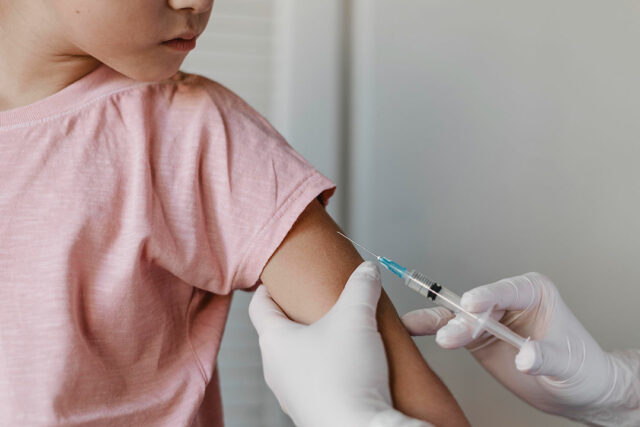
Vaccinating school-age children to prevent outbreaks

FREEPIK

With the opening of classes in the country last month coinciding with the start of the rainy season, there is a higher risk of respiratory and other vaccine-preventable diseases in school environments where children are in close contact.

During a recent Health Connect media forum entitled “Kickstarting a Healthy School Year with Vaccination,” immunization experts underscored the importance of vaccinating school-age children to prevent outbreaks of vaccine-preventable diseases, protect families and vulnerable populations, reduce absenteeism, promote community health, ensure educational continuity, and provide long-term health benefits.

Launched at the height of the COVID-19 pandemic in 2020, Health Connect aims to serve as a platform for medical experts and journalists to provide the general public with accurate, up-to-date health information. The media forum is led by the Department of Health (DoH) with the support of the Philippine Medical Association (PMA), the Philippine Foundation for Vaccination (PFV), and the Pharmaceutical and Healthcare Association of the Philippines (PHAP).

Officials from the DoH Western Visayas Center for Health Development (WV CHD) presented strategies implemented by the city, province, and the Health department to address a pertussis outbreak in Iloilo City earlier this year as well as current initiatives and plans to promote the health and wellbeing of children in Iloilo Province.

Dr. Jose Martin Atienza, Western Visayas Regional Immunization Program Coordinator, said that their immunization program has achieved several milestones through the years, such as certification of elimination of maternal and neonatal tetanus in 2017 and elimination of wild polio virus in 2021. However, he noted that the region’s fully immunized child (FIC) coverage rate has plateaued in recent years due to pandemic-associated disruptions, overburdened health systems, and the added responsibility of mass COVID-19 vaccination efforts, among other factors.

On the positive side, Dr. Atienza revealed that the region’s FIC coverage increased slightly from 59.52% in 2022 to 61.36% in 2023. As of July 2024, around 14,845 children out of the target population in Iloilo Province of 39,077 have been fully immunized, representing a 37.99% FIC coverage rate. A fully immunized child is one who has received one dose of BCG (anti-tuberculosis) vaccine, three doses each of OPV (oral polio vaccine), DPT (diphtheria, pertussis, and tetanus) vaccine, and Hepatitis B vaccine, and one dose of measles vaccine at one year of age.

Dr. Atienza highlighted the DoH memorandum on the Interim Guidelines on the Resumption of School-based Immunization after the COVID-19 pandemic. The memorandum directs the DoH to coordinate with the Department of Education (DepEd) to implement a month-long supplemental immunization of school-age children in all public schools with measles-rubella (MR), tetanus-diphtheria (Td), and human papilloma virus (HPV) vaccines starting October 2024. Private schools can participate by coordinating with their local health centers.

Moving forward, DoH in Western Visayas is looking to engage with all partner stakeholders to mobilize the community and achieve the DoH National Immunization Program (NIP) FIC target coverage of 95%. This will involve local policy support, information dissemination campaigns, human resource augmentation (encoders, vaccinators, among others), activation of vaccination champions, logistics, funding, and transportation support.

Dr. Rodney Labis, chief of the Health Service Delivery Division, Iloilo Provincial Government, presented strategies to prevent disease outbreaks in schools during the rainy season. These include national and local policies, funding support and collaboration with other development partners, effective health promotion activities, functional disease surveillance, capacitated human resources for health, and availability of vaccines, logistics and medical supplies.Dr. Labis also recommended the passage of local ordinances to support program implementation and ensure sustainable funding support; integration in school programs of health promotion activities on infectious disease prevention; integration of schools in the DoH region-wide referral system; strengthening and sustaining of DoH-DepEd collaboration; hiring of adequate human resources for health in local health offices to ensure focused program implementation; and budget allocation by local government units for procurement of vaccines not provided by the DoH.

PFV executive director Dr. Lulu Bravo reiterated her call for a whole-of-government, whole-of-society approach in achieving the 95% FIC target coverage. PMA president Dr. Hector Santos, Jr. lauded the LGUs of Iloilo Province for implementing programs to improve immunization coverage among children. He also expressed their member-doctors’ continuing support for vaccination activities and information dissemination initiatives to address vaccine hesitancy across the country.

Immunization is one of the success stories of the 20th century. Vaccines eliminated most of the childhood diseases that used to cause millions of deaths, making possible a life without disabilities caused by certain communicable diseases like polio.

With every vaccine, vaccine developers and manufacturers, together with partners in the global health community, do more than improve and save lives. They enable vaccination that strengthens global health security through resilient and sustainable national immunization programs around the world.

The research-based pharmaceutical industry is one with the government and other key stakeholders in increasing our country’s immunization coverage so that children and their families are protected against vaccine-preventable diseases.


Teodoro B. Padilla is the executive director of Pharmaceutical and Healthcare Association of the Philippines, which represents the biopharmaceutical medicines and vaccines industry in the country. Its members are in the forefront of research and development efforts for COVID-19 and other diseases that  affect Filipinos.

9th iteration of Clarins’ serum offers lifestyle aging

CLARINSUSA.COM

FRENCH BEAUTY brand Clarins is introducing the 9th formulation of their Clarins Double Serum, a product that has been on shelves since 1985.

The product was launched in the Philippines late last month at Rustan’s Makati, with guests encouraged to rub the product on their hands. The serum felt thick, rich; and was very fragrant, but it took some time to absorb. At between P5,600 to P10,000 (for 30 mL to 75 mL containers), one will probably make the time to wait for the product to seep through the skin.

According to Pam Aguirre, Education Manager of Clarins, when it was first released in 1985, the product came in two separate formulations. In the 1990s, they were placed together in one bottle, as it is to this day. As a nod towards sustainability, the plastic cap has been eliminated, and 94% of the bottle is now made with recyclable materials.

“Some of these ingredients are only water-soluble. The others are oil soluble. Naturally, you can put them together, and then shake it,” she said in a mixture of English and Filipino.

For the product’s ninth formulation, “The biggest change that we have is incorporating the Giant Provençal Reed, which takes care of epi-aging,” she explained.

Clarins tested the product on more than 60 twins (about 30 pairs), showing that different lifestyles age skin differently, despite genetics. Previous formulations of the serum only took care of chronological aging, but the new one seeks to address aging concerns brought about by lifestyle choices (sun exposure, for example; or sleep).

The Giant Provençal Reed extract helps to reverse 100% of the skin changes caused by lifestyle, says Clarins, strengthening the skin’s defenses against environmental stress and visible aging.

Clarins Laboratories selected 22 plant extracts for the new Double Serum formulation. Each has a different role: acerola revitalizes with enhanced oxygenation for a radiant glow, while aloe vera offers soothing hydration. Strawberry tree helps prevent unwanted shine, and seabuckthorn delivers a robust antioxidant boost. Oat and banana tree extracts work to tighten and firm the skin, supporting collagen synthesis for improved elasticity. Cornflower and cocoa tree extracts soothe and hydrate, while teasel and Mary’s thistle provide vital nourishment and comfort. Turmeric and edelweiss, both antioxidants, play key roles in preserving cell communication and skin vitality. Ginger Lily adds anti-aging benefits. Harangana offers retinol-like efficacy for skin renewal, while red jania enhances radiance and clarity. Leaf of Life guards against dehydration, and mango tree protects against environmental stressors. Horse chestnut tree revitalizes dry, dull skin, and lemon balm calms and softens. Avocado extract supports skin regeneration and maintains its suppleness, while evening primrose boosts calcium to renew skin’s radiance.

The serum also features Clarins T.R.U.S.T., a traceability platform using Blockchain technology, allowing consumers to track the production and origin of its ingredients. The product is geared towards those aged 25 and above. Ms. Aguirre says that at that age, “You start with preventive aging already.”

Clarins is available at Rustan’s. — JL Garcia

PNB expects improved consumer loan demand and repayments as borrowing costs go down

BW FILE PHOTO

PHILIPPINE NATIONAL Bank (PNB) expects repayments for consumer loans to improve by 20% this year amid lower borrowing costs, an official said.

“I would say it should be about a 20% improvement. That’s our target for the year, and I think we can do it for the consumer products,” PNB Consumer Finance Head Celeste Marie V. Lim said on the sidelines of an event last week.

The bank has seen an improvement in consumer loan repayments, with soured debt going down despite higher disbursements, she said.

“We’re actually doing very well. In terms of PNB’s past due rates or nonperforming loans, it’s gone down. For the consumer side, it’s going down and our customers have been paying back very well. So, we’ve seen an uptick in the take-up of our consumer products,” Ms. Lim added.

PNB’s overall nonperforming loan (NPL) ratio went down to 2.1% at end-June from 2.7% in the same period last year.

The official said the start of the Bangko Sentral ng Pilipinas’ (BSP) easing cycle is expected to boost demand for consumer loans and also make it easier for borrowers to pay their debt as interest rates begin to go down.

“Last month was the first rate cut. The expectation is [for rates] to gradually go down again, so in which case, the cost of borrowing is going to go down. So, consumers will probably pick up more in terms of borrowing for consumer products,” she said.

The Monetary Board on Aug. 15 cut its policy rate by 25 basis points (bps) to 6.25%, marking its first easing move in nearly four years.

BSP Governor Eli M. Remolona, Jr. previously said they could cut rates by another 25 bps within the year. The Monetary Board’s last two policy-setting meetings this year are on Oct. 17 and Dec. 19.

Ms. Lim added that PNB targets double-digit growth in its consumer portfolio starting next year as the bank wants to increase the share of this type of credit in its loan book.

“2024 is the year that we build our foundation for consumers, so you won’t see double-digit growth this year. However, for next year, we are looking to at least grow by about 25%,” she said.

PNB wants to tap its current client base and new-to-bank customers for its consumer product offerings and promotions, Ms. Lim said.

“I think we have products like the World Elite Mastercard that will entice our existing customers to actually organically grow with PNB. We are going to come out with strategic products and promotions that really push our depositor base to organically grow as well,” she said.

“We’re also pushing to get new-to-bank customers. We partner with a lot of developers or dealers and direct sales to bring them on board,” she added.

PNB’s attributable net income inched down by 0.07% to P4.95 billion in the second quarter as it set aside more loan loss provisions. This brought its net income for the first semester to P10.22 billion, up by 4.72% year on year. — A.M.C. Sy

Bossjob aims to simplify job seeking for Filipinos

KIMBERLY CHEN

By Revin Mikhael D. Ochave, Reporter

AS employers increasingly integrate artificial intelligence (AI) into their operations, Kimberly Chen, the country manager of recruitment platform Bossjob, is focusing on helping Filipino job seekers adapt to the evolving job market.

“Many are saying that Filipinos are smart, but they are not given the opportunity; we’re hoping that Bossjob will be able to provide that platform for Filipinos to have access to more jobs,” Ms. Chen said in an interview with BusinessWorld.

“We want to make the job seeking process simpler and to help everyone,” she added.

Launched in 2018, Bossjob is a chat-first, AI-powered recruitment platform. It has presence in various countries such as the Philippines, Japan, Singapore, Hong Kong, and Indonesia.

“For employers, we want to help them streamline the hiring process and be able to look for the right talent within a minimum of one week. It is not about how fast a platform is. It is about are there enough right talents in the Philippines,” Ms. Chen said.

She urged Filipinos to upskill to stay competitive as more companies adopt AI.

“I would suggest Filipinos to upskill as early as they can. We don’t really know what’s going to happen in the future. We can see that there are technology disruptions with AI,” Ms. Chen said.

“One of the job trends we are seeing right now is more demand for tech-related positions such as software engineers. We’re also expecting more demand for data analysis jobs to make informed decisions for the company’s growth. There is also high demand for green jobs and sustainability-related positions,” she added.

The Asian Development Bank said in a report last year that 20% of Philippine workers are at a “high risk of losing their jobs” due to automation. It added the country should tap education technology to address the skills gap or risk job losses.

In July, National Economic and Development Authority Secretary Arsenio M. Balisacan said the Philippine economy stands to gain P2.6 trillion yearly if domestic businesses adopt AI-powered solutions for their operations.

Mr. Balisacan added that AI will benefit sectors such as retail, logistics, manufacturing, and financial services.

According to Ms. Chen, one of the biggest challenges faced by Filipino workers is skills gap, resulting in high unemployment figures.

“When you look at the number of open job opportunities, it is high. But then, there are also many job seekers. There is a skills gap,” she said.

“Anyone that wants to upskill can use our platform and the content of our partners,” she added.

Bossjob recently partnered with the Technical Education and Skills Development Authority (TESDA) to boost the job readiness of technical and vocational education and training (TVET) graduates.

Under the partnership, Bossjob will provide customized training courses designed specifically for TESDA graduates, as well as offer employment leads and resources for career advancement.

The job platform also recently partnered with local government units and key regional businesses in the Bicol region to streamline the recruitment process.

The country’s unemployment rate surged to a one-year high of 4.7% in July from 3.1% the previous month as fresh graduates entered the labor force, based on preliminary data from the Philippine Statistics Authority.

The figure is equivalent to 2.38 million unemployed Filipinos in July, higher by 755,000 from 1.62 million in June. The Filipino labor force is pegged at around 50.07 million in July, higher by 3.23 million from 46.85 million in the same period last year.

In July, the services sector had the highest employment rate at 60.8%, followed by agriculture at 21.2% and industry at 18%.

Ms. Chen expects the local job market to be positive in the near term but acknowledges some challenges.

“The economy is expected to continue growing, with sectors such as retail, education, healthcare, and business process outsourcing, and information technology-enabled services showing strong demand for labor. However, some sectors, including IT, telecommunications, and financial services may face challenges due to skills gaps and competition,” she said.

“I also anticipate that job opportunities in the tech sector, such as programmers and AI engineers, will continue to grow. Many companies, even startups, are pivoting towards AI. There will undoubtedly be a higher demand for tech-related professionals here in the Philippines,” she added.

As of end-August, Bossjob had over four million registered users and more than 10,000 partner companies including SM Investments Corp., ride-hailing application Angkas, fuel provider Petron Corp., fast-food giant Jollibee Group, and construction company EEI Corp.

Bossjob uses AI and big data to optimize the recruitment cycle, offering features like an AI-powered resume builder and AI-photo generator. Employers can post job openings globally and target specific countries for talent.

Bankrolling mobility

With the banks come the buyers. — PHOTO BY KAP MACEDA AGUILA

It’s been proven that auto sales recovery cannot happen without financing

AS THE PHILIPPINES journeys toward motorization, there are a few necessary enablers to allow it to take its natural course. For one, we need more roads. This will mitigate traffic especially in metropolitan areas where, for now, private vehicles are a necessary substitute for a much needed and more progressive public transport system.

Speaking of roads, economic growth is also hugely dependent on a more efficient farm-to-market road system that cuts down on excessive downtime and losses to gross domestic product (GDP). In fact, early this year, the Management Association of the Philippines (MAP) called on the government to declare a “state of calamity” in Metro Manila due to alarming traffic conditions that cost the economy an estimated P3.5 billion a day. In a study, the Asian Development Bank (ADB) projected this loss to rise to P5.4 billion a day if nothing is done to address the problem.

Another enabler of motorization will be a robust secondary market. At the moment, the used-car market is highly fragmented and unregulated. As with most other markets — the stock market, the art market, the commodities market — a developed secondary market assures that products can be re-traded with full transparency, protection for buyers and sellers, quality assurance, and fair market valuation. Currently, it is estimated that the pre-owned car market is about 1.5 times bigger than the new-car market. It needs to be organized.

Thirdly, there must be a corresponding increase in land transport management systems to assure that the vehicle population conforms to safety, environmental, and other performance standards as prescribed by the government. This also includes the implementation of a more robust and modern traffic management system that assures discipline and order on the roads.

There are a few more worth mentioning but I believe that one of the most critical enablers is the availability of, and access to, consumer loan financing.

FINANCING MOBILITY
Ken Research recently published a study that looked at the state of the Philippine auto finance market. It cited that, in 2022, the market reached US$23.2 billion. Seventy percent was accounted for by new car loans, 20% by used cars, and 10% by refinancing options. It went on to predict that this would double to US$51.6 billion in 2027 with a CAGR of 10.2%, on the back of a rising middle class and a growing appetite for financing solutions.

It will be remembered that the Philippines is a very young population with a median age of 25.3 years, compared to 39.7 in Thailand, 32.4 in Vietnam, 30.1 in Malaysia and 29.8 in Indonesia. We also have the second-largest population in Southeast Asia with 115 million. These numbers foretell a very significant demographic bonus. In fact, the National Economic and Development Authority (NEDA) recognizes that the country is in a demographic sweet spot where more Filipinos are entering the labor force than are being born. In an economy where 70% of GDP is driven by personal consumption, this is a very vital indicator.

The importance of financing to motorization and the growth of the Philippine auto market was very clearly underscored during the COVID-19 years of 2020 to 2022. From 2011 to 2017, compounded annual sales growth for cars was around 18%. To a large extent, banks and financing companies were major drivers of that growth. During the pandemic, financial institutions fled the auto finance market due to a surge in loan defaults and a need to secure their financial soundness in light of the uncertainties. Auto sales plummeted in part to a slump in demand but also due to the absence of consumer loans.

Toyota Motor Philippines (TMP) was, fortunately, able to mitigate the impact of the crash in auto sales due to its partnership with Toyota Financial Services Philippines (TFSPH), its captive financing arm. TFSPH continued to underwrite financial leases during COVID, allowing TMP to cater to the essential mobility needs of Filipinos.

It was generally acknowledged by auto industry players that there would be no recovery in auto sales without the return of financing. And this proved true. As banks and financing companies consolidated their portfolios, their appetite for consumer lending returned. This has led to the strong resurgence of auto sales in 2022 and 2023. A study by AMRO-Asia showed that motor vehicle loans resumed in Q1 of 2022 and have continuously risen since then. This year, the auto market is tracking sales growth of around 10% resulting from more aggressive auto loans from all the major financial institutions. In fact, it will be noted that financing promotions have become more prominent of late.

A fair estimate of financed sales to total motor vehicle sales is about 60% to 70%. This makes it a major predictor of auto sales growth. I see that this trend will remain strong for a number of reasons. As our young population enters the labor force, consumption is expected to rise and this will likely be financed. One reason is that the banked population in the country is expected to rise and this will increase their credit worthiness. Another reason is that more financing solutions are entering the market, including operating leases. Notably, the youth is generally more open-minded to taking on more credit.

A study by TransUnion showed Gen Z as a growing contributor to credit card originations. The percentage share of overall originations among the Gen Z has more than doubled in the last five years — from one in 10 (9%) in 2019 to one in five (20%) in 2023. They also made up 33% of the new-to-card segment of borrowers in 2023. Ninety-eight percent of Gen Z Filipinos see access to credit and lending products as vital to achieving their financial goals.

Another factor that will drive the importance of credit is the transition of the Philippine economy into an upper middle-income economy. The gross net income (GNI) per capita of the Philippines was reported at US$4,230 in 2023, higher than the US$3,950 reported in 2022. If the economy sustains its 6% GDP growth, the country may reach the upper middle income threshold of US$4,515 by around 2026. This will increase the credit ratings of Filipinos in general.

Filipinos tend to be more cautious and conservative when it comes to borrowing. The country’s household debt ratio of only 12.6% is the lowest in Asia. In Thailand, this ratio is 91.6% while in Vietnam, it is 25.6%. The runway for credit growth is still significant and the fortunes of the auto sales are interminably linked to this.

Philippines: Balance of Payments (BoP) Position

THE BANGKO SENTRAL ng Pilipinas (BSP) expects the country’s balance of payment (BoP) position to post a bigger surplus this year, but also anticipates a wider current account deficit. Read the full story.

Philippines: Balance of Payments (BoP) Position

ADVERTISEMENT
ADVERTISEMENT