Home Blog Page 2456

CTA denies Pilipinas Shell’s P43-million tax refund claim

PHOTO FROM PILIPINAS SHELL

THE COURT of Tax Appeals (CTA) denied Pilipinas Shell Petroleum Corp.’s petition for a P43-million tax refund on excise taxes for Jet A-1 fuel sold to tax-exempt international air carriers, citing lack of evidence.

The tax court’s Third Division, in a 15-page decision, said the oil company failed to prove payment of excise tax for the imported Jet A-1 fuel.

While Shell provided details of the alleged importations and excise tax payments, the Court noted the absence of supporting documentation.

The tribunal also emphasized the need for concrete evidence in tax refund cases, especially regarding the payment or collection of the refunded tax.

It cited a Supreme Court ruling in Coca-Cola Bottlers Philippines, Inc. vs. Commissioner of Internal Revenue to underscore that claims for tax refunds are treated as claims for exemption, requiring strict scrutiny and proof of compliance with the conditions for a refund.

“In claims for a refund, it is crucial to show the payment or collection of the amount of tax being refunded, not only for the purpose of determining whether there was a timely filing of the administrative and judicial claims… but more importantly, it is because a claim for refund must always be premised on the fact that the said amount went to the government coffers,” Associate Justice Catherine T. Manahan said in the ruling.

In denying the plea, the tribunal also emphasized the timeliness of the tax claims under the 1997 National Internal Revenue Code.

“Within two (2) years from the date of payment of the tax, the claimant must first file an administrative claim with [the] respondent (Bureau of Internal Revenue) before filing a judicial claim with the courts of law,” it said.

The CTA stressed the mandatory and jurisdictional nature of this timeline, highlighting its inability to consider claims filed outside this timeframe, regardless of subsequent developments.

The oil company said that photocopies should be admissible without comparison to originals, without objection to their authenticity.

However, the tribunal rejected this, pointing out that the BIR had agreed to the admission of the exhibits only if they were compared with the originals.

Pilipinas Shell later filed a Tender of Excluded Evidence, but the court clarified that this procedure is meant for appeals and does not change its conclusion regarding the lack of proof of payment. — Chloe Mari A. Hufana

When democracy decays and recedes

FREEPIK

Francis Fukuyama in his 2018 international bestseller Identity, about his take on political institutions, wrote that the state, rule of law and democratic accountability originated and evolved, and later on interacted with one another only to decay over time. Broadly consistent with Daron Acemoglu and James Robinson’s theory in Why Nations Fail, Fukuyama demonstrated how US institutions “were decaying as the state was progressively captured by powerful interest groups and locked into a rigid structure that was unable to reform itself.”

Fukuyama described Donald Trump as the product and a contributor to that decay. As an outsider, he won the presidency and promised to employ his popular mandate to make America great again through his America First policy.

But his policy, anchored on economic nationalism, actually reduced the perimeter of US economic trade and finance, and insularized its politics and economics. He was a populist in that he used the legitimacy of his political office secured by a democratic election to wield power. In the process, he weakened the institution of checks and balances, the hallmark of a democracy. Civil courts, Congress, independent media and professional bureaucracy were effectively emasculated.

For Fukuyama, who also wrote the more popular The End of History and the Last Man (1992) and Political Order and Political Decay: From the Industrial Revolution to the Globalization of Democracy (2014), the former US president can be ranked with Vladimir Putin of Russia, Recep Tayyip Erdogan of Turkey and yes, Rodrigo Duterte of the Philippines.

Quoting his colleague Larry Diamond’s Facing Up to the Democratic Recession (2015), Fukuyama observed that in 1970, there were only about 35 electoral democracies. By the early 2000s, the number had reached nearly 120 following the collapse of the Soviet Union and the emergence of democracy across Eastern Europe. By mid-2000s, there was a reversal of democracy, and authoritarianism held sway especially with the coming of age of Beijing and the reversion to strong-man rule in Moscow.

It should be no exclamation for us that the greatest surprises for Fukuyama are first, Britain’s decision to exit from the European Union and second, Trump’s victory in the 2016 election.

Are we seeing democracy decaying in the Philippines?

If we go by Fukuyama’s proposition that democracy decays when the institution of the state is progressively captured by powerful interest groups, yes, with a plus. For one, fat and thin dynasties have proliferated, appropriating for themselves both local and national elective and appointive positions. It’s a cruel joke but true that Philippine elections are nothing but a recycling game. When the parents have maximized their tenure in public office, the children are then mobilized to run in their place. A recent phenomenon is several whole families running together like a complete political ticket, a full court press, if we will. We see the same surnames from governor to vice governor to congressman in some provinces. It’s no different in the cities. The father runs for mayor, the son for vice-mayor and the younger children for councilor or congressman. No, they can’t wait for their turn. Three years is too long. And as we are beginning to see in the national scene, even the Senate has become a family affair.

Competence aside, when powerful and moneyed families dominate politics, we lose the essence of democracy. Politicians can argue that they have the skills and the experience, and when relatives take turns at governance, there is greater stability. But what about checks and balances?

There are also signs of decay when big corporates support politicians’ run for strategic public offices like the president of the republic, or senator or member of the House of Representatives. People in these positions decide on official public policy including the budget, and which infrastructure projects will be funded. Supporting politicians could be the best investment for business. It would be difficult to monetize access to Malacañang, which appoints key officials in Agriculture, Finance, Public Works or Transportation, but it must be without doubt priceless.

Democracy could also decay when the poor electorates seem to have no other candidates to choose from except ex-convicts, comedians and actors who have become household names. Democracy decays when those who are highly qualified would rather stay on the sidelines rather than run for public office. It’s one’s choice and therefore some could blame neither of them. But when the odds are against running with an actionable platform of government but with feeble resources, it is not fair. Democracy could hardly thrive in such condition.

Which brings us to the plus, the moral dimension of democracy.

Evidence shows that the liberal democracy that we know today has not benefited most of us. In the Philippines alone, poverty remains elevated even as some measures show some mitigation in recent years. Income inequality continues to be serious, with only a small fraction of the population sharing in more than 90% of gross domestic output. Unemployment and underemployment have left millions of people without access or limited access to livelihood. The Global Financial Crisis of 2008-2009, the debt crisis in Europe and recently, the COVID-19 pandemic exacerbated the worst in liberal democracy. As Fukuyama argued, “since the United States and EU were the leading exemplars, these crises damaged the reputation of liberal democracy as a whole.”

Such a situation has not produced some recognition of human dignity. There is democratic recession when recognition of human dignity is confined only to the few, moneyed, politically empowered individuals who could, and actually do, exercise control over democratic institutions like election and appointment, grant of licenses and franchises, or even the budget process itself.

When this happens, the likelihood of the political and economic system getting reformed is very remote.

Democracy decays when people witness mass vote-buying in favor of incompetence and corruption, or when election results are clearly tampered with because those who do it are in positions of authority. This sabotage of democracy happens at the national level, down to the barangay level. This is one reason why banks are extremely busy during election time, servicing withdrawals of cold cash by politicians. And politicians can get away with it. Those who voted differently must have felt violated.

Democracy decays when licenses or franchises to operate public utilities or media outfits can easily be revoked as a matter of political revenge. Or awarded as a matter of political payback. Effective delivery of services no longer counts, what matters is whom they gave the most exposure and the air time consumed. Never mind those workers who were laid off, ending up as collateral victims to this modern vendetta. This is another form of assault to human dignity.

Democracy decays when the budget process favors one lawmaker and discriminates against another; it means some groups of people, some provinces or some cities get relatively more than the rest. In the first place, why should lawmakers be involved in identifying and funding projects based on their close connection to the party in power? That is the job of the Department of Budget and Management in coordination with local governments’ inputs through the regional development councils. This is the kind of budget process that leaves schools with fewer classrooms, textbooks and teachers; hospitals with fewer hospital beds, medicines and medical staff; and provinces and islands with no connectivity to the rest of the country. This is hardly the way to develop human capital and attain quality economic growth.

When democracy fades and recedes, it means there is little respect for human dignity as embodied in individual rights, the rule of law, the right to education and health. But as Fukuyama reminded us, such is never desirable. It was the same issue that sparked the French Revolution and similar popular movements including the Tunisian revolt and Tahrir Square uprising in recent years. With social media and the internet, these possibilities are not remote.

Which is why, the real-time coverage of the congressional hearing on the POGO controversy, extrajudicial killings and official admission of guilt, could foment another episode of asserting human dignity in the Philippines.


Diwa C. Guinigundo is a former deputy governor for the Monetary and Economics Sector of the Bangko Sentral ng Pilipinas (BSP). He served the BSP for 41 years. In 2001-2003, he was alternate executive director at the International Monetary Fund in Washington, DC. He is a senior pastor of the Fullness of Christ International Ministries in Mandaluyong.


RCBC eyes ‘regular’ bond issues to stay present in debt markets

PHILSTAR FILE PHOTO

RIZAL COMMERCIAL Banking Corp. (RCBC) may issue dollar bonds early next year as it looks to tap both the offshore and domestic debt markets on a regular basis, its top official said.

“It will probably be in the earlier part of the year, but we will obviously time it depending on US interest rates, which as you know will be influenced by November developments,” RCBC Chief Executive Officer Eugene S. Acevedo told BusinessWorld on the sidelines of an event on Wednesday.

He said the issue size could be smaller than the bank’s $400-million note issuance in January, but the final amount has yet to be decided.

“We don’t necessarily have to go big because we want to do this more regularly. I don’t know yet how much exactly, but I don’t think it’s a good idea to max out immediately because we don’t really need that much,” he added.

The US Federal Reserve will meet on Nov. 6-7 to review their policy stance. It will cut its key interest rate by 25 basis points (bps) next week, according to all 111 economists in a Reuters poll, with more than a 90% majority predicting another quarter-percentage-point move in December, Reuters reported.

Since the US central bank kicked off its long-awaited easing cycle in September with a half-percentage-point reduction in the federal funds rate to a 4.75-5% range, news on the economy has been strong, including consumer spending and jobs data.

The Fed’s next policy meeting is scheduled to start just after the Nov. 5 US presidential election, with opinion polls showing a neck-and-neck race but recent momentum behind Republican candidate Donald Trump.

All 111 economists in the Oct. 23-29 Reuters poll predicted the Fed will switch back to a quarter-percentage-point reduction next week. More than 90% of them, a total of 103, expected the same-sized move in December, taking the fed funds rate to a 4.25%-4.5% range.

RCBC on Tuesday upsized its medium-term note program to $4 billion from $3 billion and said that it will soon issue bonds under the program. It also appointed SMBC Nikko Securities, Inc. as the program arranger.

“It’s part of our regular funding plan. What we’d like to do moving forward is make it regular so that our investors get used to our papers being there on a regular basis, as opposed to the past where we would not be there all the time. So, this time, we want to have a more steady supply of our papers,” Mr. Acevedo said.

He added that the bank is also planning to issue peso-denominated bonds regularly starting next year as part of their new funding strategy to establish a regular presence in both foreign and local debt markets.

“We will also probably be doing something similar on the peso side. But depending on deposit growth, there’s a chance that we’d like to have a regular issuance,” Mr. Acevedo said. “That’s what we’d like to do moving forward — to issue more on a regular basis rather than just simply opportunistic. That’s really the change in the funding strategy… What I’m convinced of is that we have to do this on a regular basis — not exactly on tap, but as long as we make sure that our name is in the markets on a regular basis.”

“We don’t have anything in mind right now, but I anticipate that within next year, we will be doing something … to start a regularity in issuances. It’s not going to be a giant issue. We don’t even have a number in mind yet, but what’s more important to us is the regularity. Some bigger banks do something similar. Whether interest rates are high or low we will be issuing something. That’s really the general idea,” he added.

RCBC last tapped the foreign bond market in January, raising $400 million from an issuance of five-year senior unsecured sustainability notes. This marked its return to the overseas debt market after over three years.

The notes were issued out of the bank’s medium-term note program, with the proceeds set to finance and refinance its consumer loans and its operating activities for eligible green and social categories in line with the RCBC’s Sustainable Finance Framework.

Meanwhile, the bank last tapped the local debt market in March 2022, where it raised P3 billion from ASEAN sustainability bonds. This represented the seventh tranche of RCBC’s P100-billion bond and commercial paper program, which still has an unissued balance of P27.96 billion.

RCBC’s net income declined by 12.97% year on year to P2.25 billion in the second quarter amid increased tax expenses.

Its shares closed unchanged at P26.90 apiece on Thursday. — Aaron Michael C. Sy with Reuters

Andrew Garfield and Elmo are going viral with their moving chat. Celebrities can help us talk about grief

SCREENGRAB FROM ANDREW GARFIELD AND ELMO EXPLAIN GRIEF - YOUTUBE.COM/@SESAMEWORKSHOP

WHEN was the last time you heard someone talk in detail about their grief?

For many of us, it could be rarely or never. There are several reasons for this.

Grieving people often avoid raising the topic in conversation because they want to avoid upsetting or burdening people. Family and friends of grieving people often feel unsure or uncomfortable about asking them to talk about it, fearing they will infringe on the person’s privacy. One study of grieving adults in Australia and Ireland showed nearly one-third said they didn’t receive the support they would have liked. Some experts note we tend to deny or minimize others’ grief, increasing their isolation.

Actor Andrew Garfield, best known for playing Spiderman, appeared on Sesame Street last week and spoke with Elmo in moving and affirming ways about grieving his mother’s death. Clips of their short conversation have been widely shared on social media. It presents a great example of communicating well about grief.

Sadness can be a gift explains Mr. Garfield, “a lovely thing to feel in a way because it means you really loved somebody when you miss them.”

KIDS GRIEVE TOO
Issues around grief and isolation can be the same for children and young people as for older people.

In fact, grief in young people is recognized as “the last taboo in public health.” By the age of 18, around one in 20 children have a parent die. Even more will experience grief following the deaths of other close people such as siblings and grandparents. Children also grieve the deaths of pets. Yet we struggle to acknowledge, let alone understand and help them with the grief.

Due to a desire to protect them from harm or distress, adults are often reluctant to talk about dying and death with children. We also underestimate their abilities to understand such difficult topics. My recent work with Lionheart Camp for Kids shows such good intentions leave grieving children with many unanswered questions.

So it was great to see Andrew Garfield (who has discussed the topic before on talk shows and in interviews) share his experience on children’s television.

IT TAKES TWO (OR MORE)
Their exchange begins with the character of Elmo checking in with Mr. Garfield, to see if he’s OK. He asks in a warm and open-ended way.

What Mr. Garfield communicates well is checking if Elmo is willing and comfortable to hear him talk about his thoughts and feelings. He conveys his feelings of grief and speaks about how missing someone is due to love. He shares his understanding about the comforting role memories can bring to the bereaved, and about recognizing a deceased person can be celebrated and missed at the same time.

Elmo also does a great job of listening. He normalizes Mr. Garfield’s thoughts and feelings, and gently affirms his memories of his deceased mother. Importantly, Elmo doesn’t make the conversation about himself or resort to tired clichés like “this shall pass” or “she’d want you to move on.” He doesn’t minimize his discomfort with jokes or provide unsolicited advice on how to feel or behave.

Social support in the wake of loss helps grieving people — if it’s done right. Too often, however, it’s not, and can leave grieving people more distressed.

Though an almost universal need, providing effective social support for grieving people is a complex process. It must involve:

• a potential supporter recognizing the bereaved person’s need for support

• support that is available, sufficient and offered to the bereaved

• them perceiving the support as helpful.

Perceptions of whether an offer if support is useful can depend on where it comes from, the type of support, whether it is offered at the right time, and the griever’s level or receptiveness or social isolation.

LISTENING, VALIDATING, SUPPORT
Mr. Garfield and Elmo aren’t the first celebrities to talk openly about grief.

But in daily life, it’s rare to hear anyone talk openly about these feelings. That’s why it’s so refreshing when people in the public eye break the taboo that surrounds grief and loss. It is important for grieving people of all ages to be able to talk about their grief and be listened to. For potential supporters, it is enriching to think about they can listen, validate and support.

As Mr. Garfield and Elmo show, grieving people and their support people can work together to develop a compassionate connection in a conversation that benefits both parties.


Lauren Breen is a professor of Psychology at Curtin University.

Fairview data center on track for Q2 2025, says STT GDC

STTELEMEDIAGDC.COM

ST Telemedia Global Data Centres (STT GDC) Philippines is on track to launch its 124-megawatt (MW) data center in Fairview, Quezon City, by the second quarter (Q2) of 2025, according to the company’s top official.

“We remain committed to delivering on our project timelines. Last year, we projected that STT Fairview would be ready in the first part of 2025, and we are on schedule to deliver the initial capacity by Q2 2025,” STT GDC Philippines President and Chief Executive Officer Carlomagno E. Malana said in a media release on Thursday.

STT GDC Philippines is Globe Telecom, Inc.’s joint venture with Ayala Corp. and ST Telemedia Global Data Centres.

STT GDC’s STT Fairview is designed to meet the country’s artificial intelligence needs, the company said, noting that the data center is carrier-neutral and has seamless connectivity options.

The data center is also built to incorporate emerging green technologies for sustainable operations.

“Our designs are built around the current and future requirements of hyperscalers, and our ability to deliver on our commitments is underpinned by the ongoing development of local technical talent,” Mr. Malana said.

STT GDC Philippines has seven data centers in the Philippines with a combined IT load of 150 MW, data from its website showed. Aside from STT Fairview, it is also constructing STT Cavite 2, which has an estimated IT load of six MW.

Further, STT GDC anticipates utilizing its expanded capacity to attract major cloud service providers amid growing demand for data center services.

“STT GDC Philippines continues to see strong demand for its services, maintaining impressive capacity utilization despite recent expansions. This high level of utilization reflects strong market confidence and underscores the company’s ongoing commitment to serving its customers while attracting new ones,” the company said. — Ashley Erika O. Jose

US election chaos would endanger the whole world

THE WORLD is feeling the angst of liminality, as America’s friends and foes await the outcome of the presidential election next week. Will the superpower have Donald Trump or Kamala Harris as commander-in-chief? Until that question is answered, nothing much can move, nothing of note can be resolved. But what if no answer is forthcoming, at least not for a while?

Picture decision-makers around the world holding their collective breath right now. In the Middle East, which teeters on the edge of major regional war, envoys from Israel, Egypt, the United States and Qatar are once again meeting in Doha about a ceasefire in the Gaza Strip. But nobody will commit to anything until American voters decide who will sit at the Resolute Desk come January.

In the Kremlin, Russian President Vladimir Putin is waiting for the result on Nov. 5 to decide his next steps in Ukraine and elsewhere. (He’s rooting for Trump, but wary of that scenario too.) In North Korea, Kim Jong Un is paying close attention to the vote as he brandishes his nukes at South Korea. From Beijing to Tehran, Minsk and Caracas, anti-American autocrats are on tenterhooks to find out who their new adversary will be.

America’s allies are in limbo too. Japan, which was already nervous about a second Trump turn, suddenly has its own government crisis, after an election that left no clear winner for the first time since the 1990s. Germany’s government, a year from the next parliamentary election, is a zombie coalition that may fall apart at any moment. Like all American allies, Tokyo and Berlin wonder if they’ll still have a friend in the White House next year, or instead a nationalist who slaps tariffs on their exports and threatens to abandon them to their enemies.

And then there are all the other countries, those which are neither allies nor adversaries of the US, but once looked to it, and only it, to provide some semblance of order in an anarchical world. That’s true from the South Pacific to Africa, where nations are feeling pressure to decide between America and China in mapping out future allegiances. The angst is especially acute in places like Moldova and Georgia, which are swaying between a Russian-dominated East and the Euro-American West and just had elections in which Moscow, as usual, ran massive disinformation campaigns.

The liminality extends to the multilateral system, as embodied in the United Nations and other institutions of international law. Already losing relevance in a world of war and disorder, the UN may not survive, at least in recognizable form, a second term by Trump, who dismisses the organization as a club of “globalists.” Its fate under Harris is almost as unclear.

Even if Trump wins, Nov. 5 might bring some relief as long as it delivers a decision and indicates a clear direction. A worse scenario, however, cannot be ruled out. That’s an absence of resolution, through a contested transfer of power that plays out over months, either in the courts or, heaven forbid, in the streets, with verbal or physical violence of the kind that the United States used to criticize in other countries.

Neither the US nor the world has experience with such a horror script set in America. The close election of 2000 (when George W. Bush defeated Al Gore, but only by a hair and after much lawyering) was a cliffhanger. But it took place during a “unipolar” moment of geopolitics, when no other power dared to test American might and resolve during the transition.

The contentious handover of 2020 was more dangerous, but found resolution once the coup of Jan. 6, 2021, failed. World politics was already wobbly but not yet careening: That happened more recently, after Putin invaded all of Ukraine, after Hamas massacred Israelis and Israel bombed Gaza and Lebanon, and as China ratcheted up its intimidation of Taiwan. Worse yet, Russia, China, North Korea and Iran began forming an anti-American “axis” in all but name, raising the specter of World War III.

A contested transition in 2024 would be more perilous for another reason. Both domestic polarization and foreign disinformation are old news. This year, though, Russia, China and Iran have plumbed new depths of malign sophistication in the propaganda and conspiracy theories they plant and spread to pit Americans against one another. Trump is likely to build on his Big Lie about the 2020 election with even bigger lies, and the trolls and bots of America’s enemies, as well as “useful idiots” in America itself, will amplify them.

Even if America avoids violence this fall and winter, even if either Trump or Harris arrives uncontested in the Oval Office, even if the White House and Congress go to the same side: This larger “epistemic crisis” will keep the US divided and the world in the lurch. Just as Americans can no longer agree on who won an election, they’re increasingly unable to stipulate who is aggressor and victim in Ukraine, say, what principles and interests are worth America’s trouble abroad, and what America’s proper role in the world should be.

Nature abhors a vacuum, Aristotle said. So does geopolitics. The world risks facing a vacuum in the coming months and years, no matter what the ballot count says next week — a vacuum not so much of power, as of truth, reason and ambition.

BLOOMBERG OPINION

Stuff to Do (11/01/2024)


Araneta City announces Undas operating hours

THE operating hours for malls in Araneta City have been announced. Gateway Mall 1 & 2, Farmers Plaza, and Ali Mall will have limited hours on Nov. 1. Retail stores will be open a bit later, from 11 a.m. to 10 p.m. while restaurants and food outlets will be open from 11 a.m. to 11 p.m. Regular business hours will resume on Nov. 2. Meanwhile, Araneta City Busport’s daily operating hours remain from 4 a.m. to 11 p.m. to accommodate the expected heavy commuter traffic.


Robinsons Malls announced Undas operating hours

ROBINSONS Malls will be fully operational during the Undas period to service the communities where they are located. NCR-based malls Robinsons Galleria, Robinsons Magnolia, Robinsons Manila, Opus, and Robinsons Antipolo will be open from 10 a.m. to 10 p.m. on Oct. 31, Nov. 1, and Nov. 2. However, on Oct. 31, the malls operating only from 10 a.m. to 9 p.m. are Robinsons Malabon, Robinsons Metroeast, Robinsons Novaliches, Robinsons Malolos, Robinsons Galleria South, Robinsons Las Piñas, and Robinsons Palawan. On Nov. 1 and 2, the following malls will operate from 10 a.m. to 10 p.m.: Robinsons Malabon, Robinsons Metroeast, Robinsons Novaliches, Robinsons Galleria South, Robinsons Lipa, Robinsons Sta. Rosa, Robinsons Luisita, and Robinsons Palawan.


Sean Archer marks his official debut with the release of his first EP

THE first EP of singer-songwriter Sean Archer, BANDA KA NANG BANDA, is named after a common phrase said to passionate musicians. His rock-leaning sound, drawing inspiration from ’90s grunge and pop-punk influences, can be heard in the release, out now via Sony Music Entertainment. Mr. Archer co-produced the album with his mentor Rico Blanco and award-winning record producer and engineer Angee Rozul. Three songs were previously released but re-recorded with the two collaborators while the other new tracks were recorded in separate sessions. BANDA KA NANG BANDA is out now on all digital music platforms worldwide.


Halsey’s new album, The Great Impersonator, out now

GRAMMY-nominated artist Halsey has released her highly anticipated fifth studio album, The Great Impersonator. To visually interpret her new album, Halsey and Vevo partnered for a Vevo Official Live Performance to create four meticulously designed videos that each encapsulate a different musical decade. The series kicks off today in the ’70s for “Panic Attack,” with Halsey clad in a Stevie Nicks-inspired dress sourced from one of LA’s most famous wardrobe rental houses. Starting earlier this month in anticipation for the album, Halsey revealed impersonations of a different icon each day and teased a snippet of the song they inspired, such as Dolly Parton, PJ Harvey, Kate Bush and more. The Great Impersonator is out now on all digital music platforms worldwide.


Young Cocoa drops new EP

FILIPINO rapper-producer Young Cocoa has released his new EP, liv, luvv, cocoa, out now via Sony Music Entertainment. The 7-track release showcases his range, from chill summer jams to fun and whimsical party tunes. The alternative hip-hop release tackles love and relationships and sees Young Cocoa collaborate with several key players in hip-hop and electronic music production: Brido, Playertwo, Trizzy, and CRWN. “liv, luvv, cocoa” is out now on all digital music platforms worldwide.

FMIC signs share purchase agreement with MET Holdings for its FAMI stake

FIRST METRO Investment Corp. (FMIC), the investment banking arm of Metropolitan Bank & Trust Co. (Metrobank), has signed the share purchase agreement for the sale of its controlling stake in First Metro Asset Management, Inc. (FAMI) to the ATR Asset Management Group (ATRAM Group).

“In connection with the approval by the board of FMIC to sell its 70% stake in FAMI on Oct. 30, FMIC and MET Holdings, Inc. of the ATRAM Group, have signed the share purchase agreement on Oct. 30,” the Ty-led bank said in a disclosure to the stock exchange on Thursday.

“The completion of the transaction is contingent upon the fulfillment of the conditions specified in the agreement.”

Under the transaction, FMIC will sell 1,050,000 common shares representing 70% of the issued and outstanding capital stock of FAMI to a consortium made up of the ATRAM Group, led by its parent firm ATRAM Investment Management Partners Corp., and MET Holdings.

FMIC earlier said it is selling its majority stake in its asset management arm “as part of its strategy to focus on the investment banking business.”

FAMI is the principal distributor, administrator and fund manager of First Metro Philippine Equity Exchange-Traded Fund, Inc. and FMIC’s mutual funds.

It was founded in 2005 by FMIC as a joint venture with the Catholic Educational Association of the Philippines and Marist Brothers Congregation Philippines, Inc.

Meanwhile, the ATRAM Group operates through ATRAM Trust and ATR Asset Management, Inc.,  managing portfolios made up of mutual funds, trust assets, insurance portfolios, and real estate for its clients. It had assets under management of over P385 billion at end-September.

Metrobank’s attributable net income rose by 11.35% to P12.124 billion in the third quarter, bringing its nine-month net profit to P35.729 billion, up by 12.4% year on year.

Its shares declined by P3.45 or 4.34% to close at P76 apiece on Thursday. — A.M.C. Sy

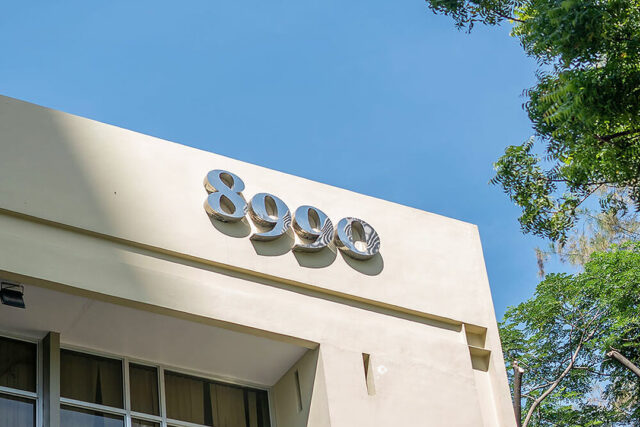
8990 Holdings’ Q3 income down 32% on revenue decline

8990HOLDINGS.COM

LISTED 8990 Holdings, Inc. recorded a 32% decline in its third-quarter (Q3) attributable net income to P1.65 billion from P2.42 billion a year ago due to lower revenue.

Revenue fell by 21.5% to P5.54 billion from P7.06 billion in 2023, 8990 Holdings said in a stock exchange disclosure on Thursday.

Cost of sales and services declined by 19.3% to P2.58 billion from P3.19 billion in 2023.

For the first nine months, 8990 Holdings saw a 24% decline in its attributable net income to P4.71 billion from P6.2 billion in 2023.

The company’s revenue dropped by 8.4% to P15.68 billion from P17.12 billion last year.

The nine-month total cost of sales and services rose by 4.8% to P8.78 billion from P8.38 billion a year ago due to a higher level of resale, which carries a higher cost of sales than fresh units.

In September, 8990 Holdings announced a housing deal that will provide 2,699 housing units to Quezon City government employees and informal settler families.

The housing units will be in the company’s four-tower Urban Deca Homes Commonwealth project near Batasan Road in Barangay Commonwealth.

8990 Holdings is an affordable housing developer. Its projects include low-cost mass housing units and subdivision lots, medium-rise and high-rise building housing units.

On Thursday, 8990 Holdings’ stocks fell by 0.69% or six centavos to P8.60 per share. — Revin Mikhael D. Ochave

‘Endo’ could scare away socially responsible investors, unions say

PHILSTAR FILE PHOTO

By Chloe Mari A. Hufana, Reporter

CONTRACTUALIZATION, also known as “endo,” which denies workers a path to regular employment, is damaging the Philippines’ global standing with regard to labor rights, possibly deterring funds that pick investments on the basis of social responsibility criteria, union leaders said.

Endo “can portray the country as having weak labor protections, which may deter socially responsible investors and impact relationships with world global unions, including the International Trade Union Confederation (ITUC) and United Nations agencies such as the International Labor Organization (ILO),” according to Federation of Free Workers President Jose Sonny G. Matula.

Endo schemes terminate employment before a worker’s tenure hits six months, the period which by law triggers regular employee status.

Mr. Matula said endo goes by various names, like labor-only contracting, “555” arrangements (short-term contracts renewed every five months), or frequent changes in manpower agencies. These practices are prevalent in manufacturing, construction, and services.

“All these strategies are aimed at preventing employees from attaining regular status. These practices allow companies to reduce costs and obligations, but they come at the expense of workers’ job security and benefits,” he told BusinessWorld via Viber.

Mr. Matula added that a strong stance against contractualization could improve worker welfare and strengthen the country’s international position in advocating for fair labor standards.

He urged the Department of Labor and Employment (DoLE) to take a proactive role by using its visitorial and enforcement authority to detect and prevent abusive contracting practices.

In addition, he called for an amendment to the 1974 Labor Code, specifically Article 106 on contracting arrangements, to provide stronger job security protections; and Article 303 to impose stricter penalties on violations.

RESTRICTIONS ON RIGHT TO ORGANIZE
The ITUC earlier this year named the Philippines as one of the worst countries for workers, for the eighth time in a row largely due to so-called red-tagging — the association of labor leaders with the Communist movement — and violence against organizers.

Earlier this week, the Philippines’ score on the global Labor Rights Index worsened largely due to an environment that restricts unions, strikes, and collective bargaining deals.

The Philippines scored zero out of 100 in the Freedom of Association indicator due to the lack of protections for unions and the red-tagging.

Trade Union Congress of the Philippines (TUCP) Legislative Officer Carlos Miguel S. Oñate said the TUCP backs legislation strengthening the right to unionize.

“Workers in particular are calling on President Ferdinand R. Marcos, Jr. to certify as urgent long-pending priority labor legislation on freedom of association, which amends our Labor Code to be in full alignment with international labor standards,” he said via Viber.

The Labor Code is not compliant with international standards and ILO Conventions the Philippines is bound to observe an ILO member-state, he said.

The measures the TUCP is proposing include the lowering of the requirements for union registration or House Bill 1518.

Mr. Oñate said the ILO found many provisions of the Labor Code a restraint to the exercise of the freedom of association.

“This measure removes the 20% minimum membership requirement for union registration; reduces from 10 to 5 locals/chapters the requirement for registration of a federation/national union; and that the independent union or a local/chapter only has to give notice of its creation to DoLE,” he added.

Another TUCP initiative is the lowering of penalties for illegal strikes and lockouts via House Bill 7043.

“Dismissal or imprisonment as a penalty for illegal strikes is too harsh and not proportionate to the seriousness of the violation or action. This measure removes imprisonment as a penalty for illegal strikes and lockouts,” he noted.

“Through pro-labor rights reform, workers can have the opportunity to access more and better jobs to be created by international trade instruments and privileges which the Philippines can only access if it upholds core labor standards and no longer enjoys a reputation for being among the worst for workers.”

LNG market will remain tight until 2027

FREEPIK

AT THE HEIGHT of summer, Europe had hoped that the coming winter would be its last difficult one to secure enough natural gas. By the middle of next year, liquefied natural gas (LNG) was expected to turn into a buyer’s market, easing the squeeze the region has suffered since Russia invaded Ukraine. No longer.

After a series of project delays and stronger-than-expected demand for the fuel in Asia, the LNG market is set to remain tight next year and, probably, until mid-2026. The buyers won’t have the upper hand until early 2027 when new supply will finally arrive, potentially flooding the market for years to come.

The beauty of LNG is it can be loaded into ocean-going tankers. Gas shipped via pipeline remains in its gaseous state, limiting transportation options. The LNG market broadens how importing nations buy the fuel, opening the door to distant suppliers. For Europe, that means moving away from its typical suppliers of Russia, Norway, Algeria and Libya, all within pipeline distance, and reaching out to LNG sellers in the US, Qatar and Australia.

LNG liquefaction plants are multibillion-dollar marvels of engineering, often located in far-flung corners of the world. Even industry leaders — such as Exxon Mobil Corp., Shell Plc and QatarEnergy — often struggle with delays and cost overruns.

Call it the Murphy’s Law of the LNG industry: Any project that’s scheduled to be built on time will be delayed — always. With its corollary: If there’s a particularly bad time to reveal the delay, the announcement will happen exactly at the worst possible time.

For long, the LNG market was a relatively quiet corner of the energy sector, dominated by long-term contracts linked to the price of Brent crude. But the fuel was catapulted into the limelight after Russia, the biggest gas supplier to Europe, invaded Ukraine, forcing the continent to turn to it as an alternative.

From an average price of about $9 per million British thermal unit (Btu) from 2000 to 2020, the cost of LNG surged in 2022 to an all-time high of more than $50 per million Btu. Prices have cooled since then — still, at around $13 per million Btu now, they remain about 40% higher than they were before the war. The buyers’ hope was that next-year prices would fall further. The law of Murphy had other plans, however.

The startup of the Golden Pass LNG export project in Texas, co-owned by QatarEnergy and Exxon, has been postponed for six months until at least the end of 2025, following a contractor dispute. The project, one of the largest expected in the 2025 to 2027 period, may be delayed further, according to the consensus in the industry.

Another big project, the Corpus Christie 3, run by Cheniere Energy, Inc., is scheduled to start at the end of this year, but full production isn’t likely until late 2025 or even early 2026.

The Energia Costa Azul development in Mexico, a smaller LNG plant that US-based Sempra is building, has been delayed a year until mid-2026. And even when projects suffer minor delays, they still have teething problems. Plaquemines LNG, a large export project by US-based Venture Global LNG, Inc., probably won’t ship until January or February. Initially, the company had aimed to start the project this year.

“Significant LNG supply increases which could comfortably exceed demand are now expected in 2027, rather than during 2025 or 2026,” Anne-Sophie Corbeau, an LNG expert at the Center on Global Energy Policy at Columbia University, told me.

To be sure, a few other LNG projects will start on time and budget. But generally, buyers will have fewer options than they had hoped.

The sellers, who had feared losing their control, are rejoicing. “What we’re seeing now is a supply-constrained market,” Anatol Feygin, chief commercial officer at Cheniere, told investors in August. The head of LNG at TotalEnergies SE, Gregory Joffroy, had the same message earlier this month: “We see some LNG projects that were due to come on stream in the coming months have been delayed.”

It won’t last forever. The US and Qatar are still aiming to boost LNG production significantly over the next few years. Even if some projects are delayed, the sheer size of planned LNG facilities means that by 2027, it’s almost impossible that the sellers will remain in control of the market. But that’s two winters away for Europe.

BLOOMBERG OPINION

October 2024 albums to check out

NOW that we are well into the fourth quarter of 2024, a lot of interesting music has come out from different corners of the world. October in particular was a strong month for new releases.

Here is a quick rundown of some albums and singles you can check out that dropped in October 2024.

WINGS — thy
thy (stylized all lowercase), is the mononym of Thuy Thi Thu Tran, a Vietnamese-American singer-songwriter based in Los Angeles, California.

As an independent artist, her music has mainly lived in the Bay Area indie pop niche since she first started in 2015. While she has had a gradual rise in popularity in the 2020s, last year saw her reach peak virality when the 2022 hit “girls like me don’t cry” trended on TikTok.

Her third album so far, wings, came out on Oct. 4. It’s a solid showing from thy, with songs ranging from catchy R&B to dreamlike, moody pop tracks. It’s the type of album to put on in the background on a chill rest day.

Songs to pay attention to are “whatcha gotta say,” where her sultry voice complements featured rapper Blxst’s upbeat verses; “hair down,” a fast-paced yet soulful take on the urge to let go; and “cloud 11,” a sweet and yearning-filled danceable track.

KIZAO — MILLENNIUM PARADE, RAUW ALEJANDRO, TAINY
A FASCINATING single that’s worth a listen is “KIZAO,” (stylized in capitals) made by Japanese music collective MILLENNIUM PARADE (MP) in collaboration with a Puerto Rican duo — singer Rauw Alejandro and producer Tainy.

It is definitely an acquired taste given the music sensibilities of the artists involved. MP, led by J-pop musician Daiki Tsuneta, veers toward rich sound production that is distinctly Japanese, while Mr. Alejandro and Tainy contribute festive Latin American beats and musical style.

In “KIZAO,” the cross-cultural effects are clear. It makes you bob your head, though you have no idea what the lyrics are saying nor why the instrumental traverses epic electronic heights. Those curious enough to check out the music video will also discover MP’s confusing yet intoxicating signature for every song — a hyper futuristic animated narrative that gives the music life.

For most, “KIZAO” may be unusual and unique, but those open to its experimentations will find it somehow very catchy.

APT. — ROSÉ, BRUNO MARS
ANOTHER cross-cultural single that also came out on Oct. 18 is “APT.” This one may not need an introduction as it immediately soared to the top of the charts, became a viral sensation, and gained massive playability globally upon its release. The musicians at its center are superstars: K-pop group BLACKPINK member Rosé, and American hitmaker Bruno Mars.

“APT.” is short for “apartment,” sung in its Korean pronunciation, “apateu” despite the track being otherwise fully in English. The word also refers to a popular Korean drinking game.

Make no mistake, though; this is not a K-pop track. Bruno Mars’ magic touch as producer and featured singer elevated it into a timeless Western pop hit. People with zero inclination towards K-pop gravitate towards “APT.”, with the upbeat rhythm and Rosé channeling 2000s pop-punk icons Avril Lavigne and The Ting Tings making its appeal universal.

Beware: people who’ve listened to “APT.” and liked it are bound to repeat it again and again.

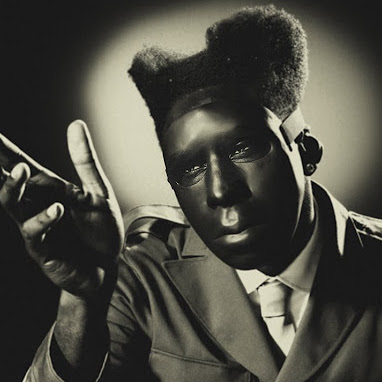
CHROMAKOPIA — TYLER, THE CREATOR
AMERICAN RAPPER and producer Tyler, The Creator has made quite an impact on alternative hip-hop from the 2010s up to present day. His seventh album, CHROMAKOPIA (stylized in capitals), released on Oct. 28, continues to show just why he is so influential. Here, it does so by calling back to styles he’s dabbled in before.

“St. Chroma,” featuring his frequent collaborator Daniel Caesar, is a great opening track. It features Tyler’s hushed voice spitting bars alongside Mr. Caesar’s soulful voice, plus a strong bass that later descends into madness.

Other tracks that provide an awesome sonic experience are “Noid,” the powerful lead single that blends rock instrumentals with a Zambian sample-backed rap about how cultish fame leads to paranoia; and “Take Your Mask Off,” carried by piano and synths as Tyler sings of self-discovery and hope.

An honorable mention goes to “Darling, I,” a tonal stand-out as it takes on the theme of love and sexuality in a soft and optimistic way.

TYPE THE WAY YOU TALK — BLUEBURN
TAIWANESE alternative pop band Blueburn blessed the month with their debut album, which compiled a few of the singles they released since they started in 2020. Though not exceedingly unique, a sound harkening back to ’90s rock mixed with modern bedroom pop makes Blueburn a pleasant listen.

Dropped on Oct. 29, Type The Way You Talk serves as a decent calling card for the relatively new band. The first track, “Cam Girl,” has lyrics all in English that speak of feelings of attraction in a digital age, followed up by “Saw You On Tinder,” this time with Mandarin lyrics but a fun, upbeat tune to dance to.

“Things I Couldn’t Tell You” carries over the confessional-type singing and steady soft rock beats and guitars while the final track “Mr. Peanutbutter” is an earnest and beautifully sung indie dream pop tune worth replaying.

Blueburn is new, raw, and naive in its style and execution, but an endearing comfort artist to have, and this album is proof of it. — Brontë H. Lacsamana

ADVERTISEMENT
ADVERTISEMENT