Home Blog Page 2446

Limits to secret funds eyed
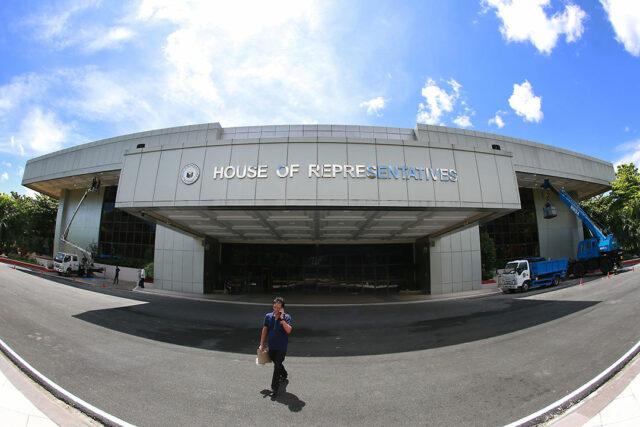
The House of Representatives is seen at the Batasang Pambansa Complex in Quezon City. — PHILIPPINE STAR/MIGUEL DE GUZMAN

A House of Representatives committee is looking at limiting agencies that could request secret funds, a congressman said on Monday.

Manila Rep. Joel R. Chua told reporters that the House good government and public accountability panel is considering restricting which government departments and agencies could request for Confidential and Intelligence Funds (CIF) amid controversies hounding Vice-President Sara Z. Duterte-Carpio.

“We see here a loophole in the law, which is why agencies that have nothing to do with intelligence gathering are being given confidential funds,” Mr. Chua, who heads the House good government and public accountability panel, said in Filipino.

“One of the things we are discussing here is to limit the agencies and departments of the government that will be given a confidential fund,” he added.

Ms. Carpio is being questioned by congressmen for her use of CIF, under the Office of the Vice-President (OVP) budget in 2022 and the Department of Education in 2023, when she sat as its secretary. 

The OVP did not immediately respond to an email seeking comment.

State auditors told congressmen in August that they cannot account for the OVP’s P73-million CIF spending in 2022. Lawmakers are also looking at cash advances worth P112.5 million made by the Education department through three separate checks worth P37.5 million during the first three quarters of 2023.

“The monitoring [of confidential fund spending] has become somewhat lax, so that needs to be tightened, especially for departments that have nothing to do with [secret funds],” said Mr. Chua, noting that he finds the joint circular governing CIF use as “lacking.”

CIFs are meant to finance surveillance and intelligence information gathering activities, according to a 2015 joint circular between the Commission on Audit, Defense, Budget and Interior and Local Government departments.

The circular mandates CIF recipients to prepare a financial plan supporting their activities, but its audit reports are not made public. — Kenneth Christiane L. Basilio

PhilHealth premiums cut pushed

PHILIPPINE STAR/MICHAEL VARCAS

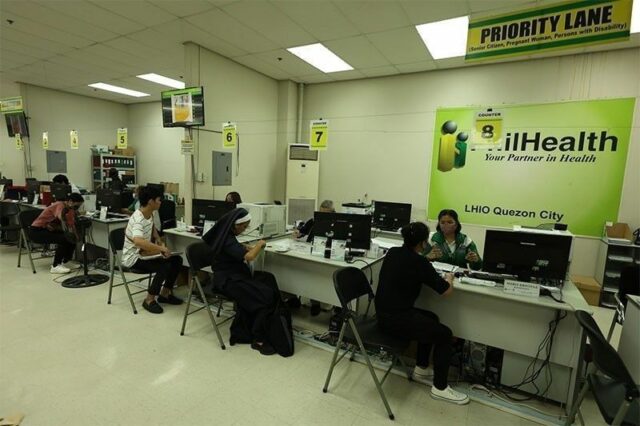
A CONGRESSMAN on Monday urged the House of Representatives to tackle a measure that will cut the Philippine Health Insurance Corp.’s (PhilHealth) premiums to 4% from 5% under the Universal Healthcare Act.

Filed by Party-list Rep. Wilbert T. Lee in October, House Bill No. 10995 seeks to reduce the premium payments made by PhilHealth contributors to 4% this year, with incremental increases of 0.25% until 2026.

The measure also allows the president to suspend further premium contribution hikes in times of national and public health emergencies, and state of calamities.

“PhilHealth has a substantial amount of money, it should be allocated not only for expanding benefits for Filipinos, but also for reducing contributions, which is also a heavy burden for many of our countrymen,” he said in a statement.

In August, the Senate passed a bill reducing monthly premium contributions to 3.25% for those with a monthly income of P10,000 to P50,000.

The agency started hiking its monthly contribution rate in 2019 to sustain the benefits given to its members. — Kenneth Christiane L. Basilio

GMA plea vs ABS-CBN denied 

PHILSTAR FILE PHOTO

THE Court of Appeals (CA) junked the petition of GMA Network Inc.’s executives seeking to reverse the acquittal of ABS-CBN Broadcasting Corp.’s anchors and executives in a libel case filed in 2004, involving the use of exclusive video footage of a kidnapped overseas Filipino worker.

The appellate court’s Third Division ruled that if it granted the petition for review filed by Felipe L. Gozon and others, it would violate the right of the respondent, ABS-CBN, against double jeopardy.

“By the constitutional guarantee against double jeopardy, it is understood that when a person is charged with an offense and the case is terminated either by acquittal or conviction or in any other manner without the consent of the accused, the latter cannot again be charged with the same or identical offense,” Justice Eduardo S. Ramos, Jr. penned in a 36-page decision.

The case stemmed from the homecoming of a kidnapped OFW by Iraqi rebels in July 2004, where ABS-CBN broadcasted a live coverage of his arrival. The Lopez-owned firm’s exclusive video footage was also shown on Reuters Television Service under an existing agreement.

GMA’s subscription to Reuters allowed it access to live and taped video feeds, which it can broadcast in its news programs, thereby paving the way for the airing of ABS-CBN’s exclusive footage.

Through one of its now-defunct news programs, former ABS-CBN news anchor Erwin T. Tulfo alleged that GMA stole ABS-CBN’s video. Lynda Jumilla, another ABS-CBN news anchor, echoed the sentiment.

The tribunal also said the plea suffered from a procedural defect because it was without conformity of the public prosecutor and filed beyond the allowed period.

It also junked the petition on the substantial aspect, ruling the lower court did not commit a grave abuse of discretion when it dismissed the libel case and acquitted the ABS-CBN respondents.

GMA executives then filed two libel cases before a Quezon City court.

The Quezon City court granted the ABS-CBN personnels’ demurrer to evidence in February 2022, dismissing the libel case against them

In junking the libel case, Judge Catherine P. Manodon said the element of identification was not established because there were no references or descriptive terms that connected the statements to any of GMA’s heads in their personal capacity.

Aggrieved, GMA heads elevated the case to the appellate court. They argued that they need not be explicitly named for libel to be present, and it is enough if the allusion is apparent through intrinsic reference.

The CA upheld the lower court’s ruling, saying that a corporation has a legal personality separate and distinct from the people comprising it.

It added that Mr. Gozon and fellow plaintiffs were not referred to in the alleged libelous statements of the two anchors. Only the company was referred to in their statements.

“Even if the individual thinks that he has been injured by the libel of the corporation, he cannot recover unless he can show that he himself thereby was also libeled,” it said. Chloe Mari A. Hufana

Probe of SUV with Senate plate in road incident sought

SENATE President Francis “Chiz” G. Escudero on Monday called on the Land Transportation Office (LTO) to look into a sports utility vehicle (SUV) bearing a senator’s license plate that tried to run over a traffic enforcer by the Guadalupe Metro Rail System station.

“If indeed the owner (of the SUV) is a member of the Senate, I expect him/her to come forward and instruct the person/s driving the vehicle to responsibly face the consequences of their actions …” he said in a statement.

Mr. Escudero urged the LTO to immediately find out who was behind the wheel on Sunday night and for the driver to surrender to the authorities.

Acting on the Senate President’s inquiry, the LTO on Monday evening confirmed to Mr. Escudero that the vehicle used a fake “7” protocol plate.

In a statement, the Department of Transportation said the incident happened at about 7 p.m. on Sunday by the Guadalupe Station’s northbound lane.

Under the agency’s Joint Administrative Order No. 2024-001, the LTO is tasked to keep a registry of protocol license plates such as those belonging to government officials. — John Victor D. Ordoñez

Filing of candidacy for seats in BARMM parliament begins

PHILSTAR FILE PHOTO

COTABATO CITY — Security around the Bangsamoro capitol has been intensified as the filing of candidacy for next year’s parliamentary elections in the autonomous region kicked off on Monday.

Regional officials of the Commission on Elections-Bangsamoro Autonomous Region in Muslim Mindanao (Comelec-BARMM) told reporters on Monday that only through a congressional measure can next year’s first BARMM parliamentary elections can be postponed and appointment of members of the 80-seat regional lawmaking body be done by Malacañang. The filing will run up to Nov. 9.

The first set of 80 BARMM lawmakers who served from 2019 to 2022 were appointed by then President Rodrigo R. Duterte. The incumbent regional parliament members were appointed in August 2022 by President Ferdinand R. Marcos, Jr.

Officials of the pioneer and largest regional political party in BARMM, the Serbisyong Inklusibo, Alyansang Progresibo (SIAP) told reporters on Monday that they are ready for the 2025 first ever parliamentary elections in all five provinces and three cities in the region.

“Our party is all set for next year’s first ever Bangsamoro parliamentary elections,” Lanao del Sur Gov. Mamintal A. Adiong, Jr., a senior SIAP official, said.

Ray D. Sumalipao, regional director of Comelec for BARMM, said they have started accepting certificates of candidacy for representatives to the parliament. — John Felix M. Unson

2 NPA ‘extortionists’ in Bukidnon surrender

COTABATO CITY — Two members of the New People’s Army (NPA) in Bukidnon province, who admitted involvement in extortion and coddling of criminals on orders of their commanders, pledged allegiance to the government on Friday.

Major Gen. Allan D. Hambala, commander of the Army’s 10th Infantry Division, told reporters on Monday that Ronie Aryon Bagubay, 47, and the 34-year-old Loloy Abaro Puklawan agreed to surrender through the joint intercession of Lt. Col. Antonio G. Bulao, commanding officer of the 89th Infantry Battalion (IB), and Brig. Gen. Marion T. Angcao of the 1003rd Infantry Brigade.

Mr. Hambala said local executives and leaders of indigenous tribes in Bukidnon helped convince Mr. Bagubay and Mr. Puklawan to return to the fold of law as prelude to their reintegration into mainstream society.

They turned in their firearms, an M4A1 Carbine rifle and a KG9 machine pistol, before they renounced their membership with the NPA in the presence of Army officials in a simple rite organized held at Barangay Kibungcog in San Fernando, Bukidnon.

The duo had told reporters that they have decided to yield to the 89th IB for fear of getting implicated in the criminal activities of the few remaining leaders of the now moribund NPA.

Mr. Bagubay and Mr. Puklawan had also separately confirmed that the strength of the NPA in Bukidnon had been weakened by the surrender of no fewer than 300 guerillas to the police and military in the past three years.

They both admitted having forced hapless farmers in hinterland towns in Bukidnon to shell out money and food on a periodic basis on order of their commanders, who are also known for providing sanctuary to dealers of crystal meth (shabu) and marijuana who shared to them fractions of earnings from illegal drug trade. — John Felix M. Unson

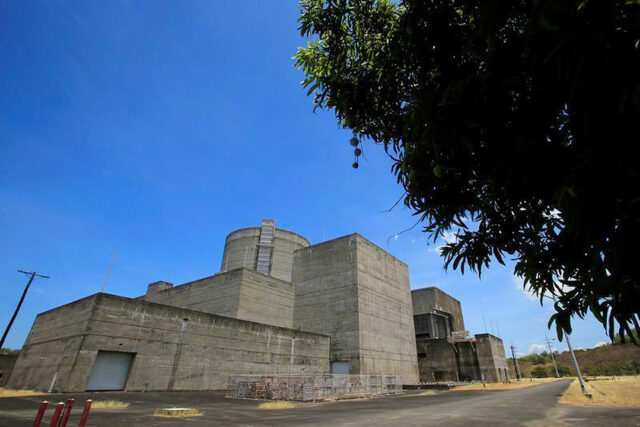
DoE still focused on BNPP rehab but ‘aware’ of data center plan

REUTERS

THE Department of Energy (DoE) said its focus remains on reviving the mothballed Bataan Nuclear Power Plant (BNPP), adding though that is studying a proposal from Bataan province to convert it to a data center.

“We are aware of the position of the provincial government. Typically from our understanding, a data center is about 100 megawatts. If there’s a lot being processed, (it) can go higher. That is why in discussions of the clean energy transition in other countries, investments are being made in nuclear research and development of nuclear energy,” Patrick T. Aquino, director of Energy Utilization Management Bureau of the DoE, told reporters on the sidelines of an event.

In late September, Bataan Governor Jose Enrique S. Garcia III floated the data center plan, touting it as a potential draw for investors.

For now, Mr. Aquino said the Energy department’s focus remains on studying the feasibility of restoring the BNPP to its intended function as a power plant.

Last month, the Philippines and South Korea signed a memorandum of understanding to conduct the feasibility study.

“The Philippines and the Korean government are working on a feasibility study. We will abide by what the results are. If it turns out we can operate it, (a revival of the plant) will not be automatic. There will be a lot of public consultation,” he said.

Mr. Aquino said the DoE has commissioned a survey to assess the public acceptance of nuclear power.

“We have received the results of that study. It is being presented to the government officials. Once it is digested by our officials, we will make it public,” he said.

He said the DoE is targeting at least 80% acceptance of nuclear power among the host communities.

“Nationwide, it has greater sensitivity. There are more respondents. I think what I can tell you is that (acceptance) is about the same level that we had from the 2019 survey,” Mr. Aquino added.

In 2019, the DoE and Social Weather Stations conducted a public perception survey which indicated that about 79% of respondents favored the revival of the BNPP; while about 65% were receptive to building a new power plant. — Ashley Erika O. Jose

Skills mismatch indicates need for better labor market forecasting — PIDS

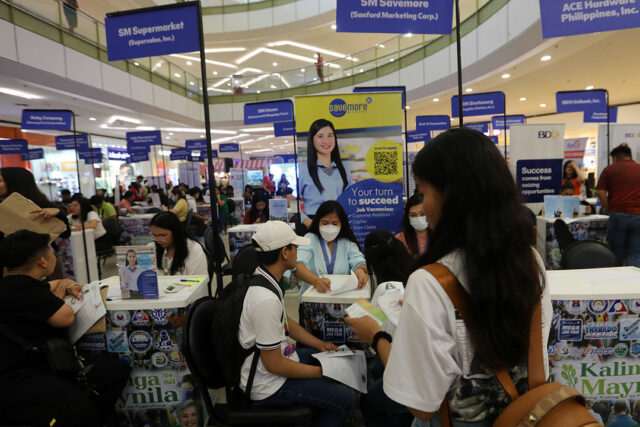
People flock to a job fair at SM City San Lazaro in Manila, June 26, 2024. — PHILIPPINE STAR/EDD GUMBAN

By Aubrey Rose A. Inosante, Reporter

THE Philippine Institute for Development Studies (PIDS) said skills mismatches and shortages indicate a need to improve forecasting with the aid of a Labor Market Information System (LMIS).

In a statement on Monday, PIDS, a government think tank, said outdated and incomplete labor market information may be behind the problem of skills mismatches, undermining productivity and economic competitiveness.

“A comprehensive labor market data system should provide a framework for anticipatory skills mapping, connecting current educational outputs to future labor needs and ensuring that national skill sets evolve with the economy,” PIDS Senior Research Fellows Connie Bayudan-Dacuycuy said.

An LMIS could serve as a “central database” that collects, analyzes, and disseminates data on labor market trends, skills demand, and workforce needs, PIDS said.

Ms. Dacuycuy said an LMIS will enable government agencies and industries to identify skills shortages, align educational programs with labor market needs, and make informed policy decisions.

She also highlighted the need for establishing a skills data foundation, starting with a comprehensive skills taxonomy aligned with the Philippine Standard Occupational Code.

“A strong LMIS, supported by standardized data taxonomies and sector collaboration, is important to bridge information gaps and prepare the workforce for future job demands,” she said.

Ms. Dacuycuy was presenting the findings of her study, “Inputs to the Philippine Labor Market Information System and TESDA’s Skills Anticipation and Prioritization of Skills Requirements Framework.”

Technical Education and Skills Development Authority (TESDA) Executive Director Charlyn Justimbaste called LMIS “essential for anticipating skill requirements and ensuring our education outputs meet the evolving needs of the economy, and addressing the critical skills mismatch that hinders growth.”

She also highlighted the need for a regional, demand-driven approach through the National Technical Education and Skills Development Plan 2020-2028 to boost global recognition of Philippine technical and vocational education.

“To bridge the skills gap, we must enhance our apprenticeship and dual training systems, as these models have proven effective in aligning educational outcomes with industry needs,” according to Emily Christi Cabegin, professor at the University of the Philippines School of Labor and Industrial Relations.

DBM: Diplomat allowance adjustments long overdue

BW FILE PHOTO

THE Department of Budget and Management (DBM) said Executive Order (EO) 73 adjusting foreign service personnel allowances is long overdue after the last adjustment in 2013, with the cost of living in overseas posts having risen significantly.

EO 73, issued Oct. 30, updates the rates, indices, rules, and regulations governing the payment of various allowances applicable to all National Government employees assigned overseas.

“For too long, the financial support provided to our diplomats has not reflected the complexities and challenges associated with their assignments, not to mention the reality of facing higher cost of living abroad and being away from their families,” Budget Secretary Amenah F. Pangandaman said in a statement.

The executive order covers the overseas allowance (OA), living quarters allowance (LQA), representation allowance, family allowance, and education allowance.

The increase authorized by the EO in the base rates for the OA and LQA ranges from 35% to 40%, which will be implemented in four tranches.

“The updated rates and indices resulted from the comprehensive review conducted by the Department of Foreign Affairs (DFA) and the DBM of the allowances under EO 156, s. 2013,” the DBM said.

These are part of the System of Allowances for Foreign Service Personnel under Republic Act 7157 or the Philippine Foreign Service Act of 1991.

The DBM said for the initial year of implementation, the amount needed to cover the authorized adjustments in the allowances of the qualified FSs will be —taken from agency savings and/or the Miscellaneous Personnel Benefits Fund (MPBF) under the 2024 General Appropriations Act (GAA).

“Thereafter, funding for the succeeding years shall be provided in the annual GAA, subject to the usual budget preparation process,” it said.

In the 2025 National Expenditure Program, P974.98 million was earmarked for this purpose under the MPBF. — Aubrey Rose A. Inosante

Child education reliant on efficient procurement system — UNICEF

PHILIPPINE STAR/ WALTER BOLLOZOS

THE GOVERNMENT must ensure efficient procurement for children’s supplies to improve the utilization of education funds, the United Nations Children’s Fund (UNICEF) said.

“Procurement is a very important part of a public finance system for children because its supplies that are very much needed in the schools,” UNICEF Chief of Social Policy Maya Faisal told BusinessWorld last month.

The Budget department reported that the Department of Education posted a disbursement rate of 87.7% in 2020, 90.22% in 2021, and 91.89% in 2022.

Under the 1987 Constitution, education must be allocated the biggest share of the government budget.

“It’s good to see the commitment of the government when it comes to allocation, but we want to be able to understand what is going on with execution,” Ms. Faisal said. “You have those almost you know 15%, 12% that has not been fully optimized and utilized.”

Ms. Faisal cited issues in procurement procedures and access to remote areas as major bottlenecks hampering the full utilization of education funding. 

“It goes back to not having a procurement procedure that allows you to order your supplies on time, to meet the needs of the different schools, for example.”

“You have schools that might be not easily accessible, you might have population that might require different needs. So that’s also part of the picture to understand, why is it that utilization rates are lower than they should be,” she added.

The Philippines ranked 63rd out of 64 countries in an assessment ranking 15–year-old students’ creative thinking skills, according to the Organization for Economic Cooperation and Development. It also found that Filipino students were among the world’s weakest in math and science.

UNICEF’s Ms. Faisal also highlighted the importance of investing in the child’s first five years, particularly in health, education, and social protection, to address the learning crisis.

Investment is also needed in support services, social workers, and primary school teachers, she said.

“The employability of those sectors have to also be taken into consideration because that’s also how you address the needs of children that go beyond math and science,” Ms. Faisal said.

“It’s the social development skillsets that are equally also important in a country like the Philippines.”

Romeo Dongeto, convenor of the group Child Rights Network, said the government must take the lead in upskilling jobs supporting child development.

“The government needs to support or prioritize these vital government jobs. Social workers are expected to learn all child protection and anti-child abuse laws, which continue to be updated as society evolves, because they are few. The sheer number and volume of cases can be overwhelming for them,” he said via Viber.
“Our government needs to incentivize these roles and prioritize programs to support our child protection system.” — Beatriz Marie D. Cruz

ERC seeks emergency powers during calamities in EPIRA amendments

BW FILE PHOTO

THE Energy Regulatory Commission (ERC) is proposing amendments to the 23-year-old Electric Power Industry Reform Act (EPIRA) that would give it emergency powers during calamities.

“One of the things we are studying… is to give authority to either the chair or division of the commission… to respond quickly,” ERC Chairperson and Chief Executive Officer Monalisa C. Dimalanta said at a virtual press conference on Monday, noting that the powers would allow the commission to act without a quorum.

“Government agencies, including ERC, need to respond quicker, and it’s challenging for ERC that needs to act as a commission. The system is so slow when all five members need to meet to address a situation,” she said.

Ms. Dimalanta said the decision-making authority conferred upon the non-quorum body will be limited to “response measures to emergencies.”

Under EPIRA, at least three members of the commission are required to constitute a quorum, and the majority vote of two members is needed to adopt any rule, ruling, order, resolution, or decision.

President Ferdinand R. Marcos, Jr. last week ordered the ERC to study ways to provide relief to power consumers in calamity areas hit by Severe Tropical Storm Kristine.

Mr. Marcos cited relief measures like flexible payment options to ease the financial burden on affected communities. — Sheldeen Joy Talavera

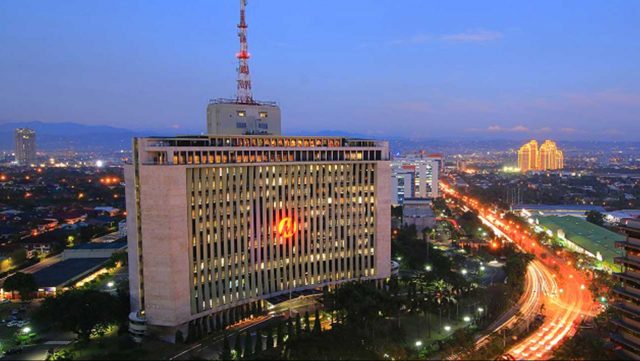
Meralco rate reset ruling modified — ERC

MERALCO.COM.PH

THE Energy Regulatory Commission (ERC) said it made “some modifications” to its pending ruling on the fifth regulatory reset of Manila Electric Co. (Meralco), though it gave no further details.

ERC Chairperson and Chief Executive Officer Monalisa C. Dimalanta said at a virtual briefing on Monday that the changes to the ruling follow input from legislators.

“The Commission, I understand, has decided to revisit this matter and has made some modifications,” Ms. Dimalanta, did not identify the specific modifications but said that the commission is hoping to issue its decision within the year.

“There is a modification on that (rate reset) in response to the sentiments already articulated in the Senate and also reported by media with respect to that budget hearing,” Ms. Dimalanta said.

She confirmed that a decision to forego the rate reset for the 5th regulatory period (5RP) was made before she was suspended in August.

During a Senate budget hearing, ERC Commissioner Catherine P. Maceda said that the commission decided to forego the regular regulatory reset process on the expectation that it will not be completed until 2026.

Senator Sherwin T. Gatchalian said that there should not be “double standards” when it comes to the rate reset process.

“We have to apply the same rules to Meralco. So I don’t agree that we should forego the reset of Meralco because we did it for NGCP (National Grid Corp. of the Philippines), which is a much more complex utility — it’s nationwide,” he said.

“In terms of market power and being a natural monopoly in the NCR (National Capital Region) and the adjacent areas, (Meralco) has to undergo a rate reset as well,” he added.

In March 2022, Meralco filed its application for the fifth regulatory period, which spans from July 1, 2022 to June 30, 2026.

The rate-rest process is usually a forward-looking exercise that requires the regulated entity to submit forecast expenditures and proposed projects over a five-year regulatory period for the ERC to review and adjust.

Under the Electric Power Industry Reform Act of 2001, or EPIRA, the ERC is tasked with establishing and enforcing a methodology for setting transmission and distribution wheeling rates for a distribution utility. — Sheldeen Joy Talavera

ADVERTISEMENT
ADVERTISEMENT