
Home Blog Page 2418

Style (11/11/24)


Nuxe releases holiday goodies

CHARM loved ones with Christmas crackers from Nuxe, each containing a dash of glow in iridescent gold or iridescent pink with roll-on versions of Huile Prodigieuse Or and Or Florale. The little boxes are ready to hang on the Christmas tree, with gift boxes made entirely in France and designed with 0% plastic and 100% recyclable cardboard. Additionally, these sets are FSC-certified and sourced from sustainably managed forests. As for gift boxes, there is the original Huile Prodigieuse with the Prodigieux Collection, featuring its scent alongside luxurious additions. Another gift box has the uplifting floral notes of Huile Prodigieuse Florale and Very Rose care products. Nuxe is available at Rustan’s (Makati, Shangri-La Plaza, Alabang); LOOK (SM Aura, SM Mall of Asia); Mitsukoshi Beauty, and select Beauty Bar stores. It’s also available through Rustans.com, Shopee, Lazada, and ZALORA.


Lancôme releases holiday sets

PARISIAN beauty powerhouse Lancôme launched its new holiday collection reminiscent of diamond snow, featuring gift sets. The holiday gift sets showcase the luxury products from the brand’s fragrance, skincare, and makeup portfolio. This holiday season, Lancôme partners with Filipina actress and Lancôme ambassador, Kathryn Bernardo. The Idole Mini Fragrance Sets showcase Lancôme’s Idole fragrance with brand new mini sets. Meanwhile, the Flawless Skincare set is headlined by Lancôme’s Génifique, their most popular anti-aging skincare collection. They are also launching their first ever Makeup Set that gives the gift of holiday-ready glamor with specially curated makeup. All sets come with a discount of up to 50%. Lancôme has also collaborated with artist Sofia Ouares to create packaging that captures the spirit of the season. Ms. Ouares’ designs, featuring the brand’s signature Celestial Rose are intertwined with Parisian landmarks. As part of its holiday celebration, Lancôme will release a video featuring Kathryn Bernardo. Lancôme is making this holiday season even more special with its 12 Days of Extraordinary Christmas Raffle from Oct. 1 to Nov. 15 where shoppers at Lancôme’s Rockwell and Greenbelt 5 locations can enter to win prizes worth up to P35,000 in the holiday raffle. Online shoppers can also enjoy discounts on Lancôme’s holiday gift sets this coming Nov. 11 on their official Lazada and Shopee stores.


Lacoste launches new version of 1984 scent

LACOSTE and global fragrance company Interparfums present its latest creation, Lacoste Original Eau de Parfum, marking the first collaboration between the two companies. With the 1984 Lacoste Original celebrating its 40th anniversary this year, master perfumer Anne Flipo and perfumer Tanguy Guesnet were inspired to create a modern and addictive scent while highlighting the brand’s emblematic codes and distinctive signature. This resulted in a modern and dynamic woody, ambery, fougère eau de parfum. Ms. Flipo said in a statement, “As a brand, Lacoste combines timeless freshness with creative frenzy. The idea behind this sophisticated fragrance is to express movement in all its forms in a unique, powerful creation.” The perfumers worked on citrusy and spicy scents using bergamot, cardamom, and pink peppercorn as the top notes to convey motion. This mixture gives way to an aromatic fougère heart of clary sage and lavender, the common element between the 2024 and 1984 editions. The heart trails off to a base of tonka bean and sandalwood, while amber and patchouli reinforce the masculine side of the fragrance. Pierre Niney, a French actor, director, producer and screenwriter, is the star of the perfume’s ad campaign. Lacoste Parfums are exclusively distributed by Rustan Marketing Corp. and are available in-store in all leading department stores nationwide; and online at Rustans.com and Zalora.
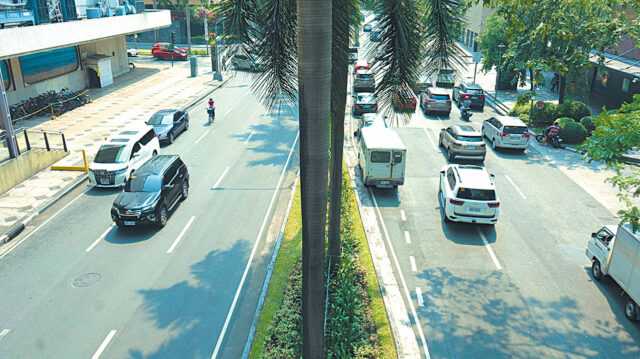
Traffic nightmare before Christmas

PHOTO BY KAP MACEDA AGUILA

Congestion isn’t a simple issue to discuss or solve, but there are ways to mitigate it

HEAVY TRAFFIC in Metro Manila is always news. It never grows tired, no matter that it has been a bane of metro living for decades. This is especially true during this time of the year when — like a trifecta — school, work, and the yearend holidays simultaneously appear to brew a perfect storm. Depending on the day of the week, the time of day, and the season of the year, road congestion arguably goes from bad to worse.

Many have cited the growing mobility needs of the country, the lack of roads, the inadequacy of public transport or a lack of enforcement of traffic rules as reasons for the mayhem. As it turns out, we — the drivers or passengers — are as much at fault. Our driving habits and the way we navigate the thoroughfares of the metro have as much an impact on traffic as the usual culprits we blame. To paraphrase the adage, it is not the car you got but how you use it that matters. Cars do not cause traffic; motorists do.

The dire situation of road congestion will not be denied. The TomTom Traffic Index ranked Metro Manila as the most congested metropolitan area in the world. Average travel time per 10 kilometers across the road network of Metro Manila was reported at 25 minutes and 30 seconds, up by 50 seconds from 2022. During rush hour, the average travel speed was recorded at 19kph.

In 2021, as mobility restrictions from COVID-19 were being lifted, a total of 3.2 million vehicles were reported to be plying the roadways of Metro Manila at an average speed of 30.63kph. In 2023, as businesses and government ramped up the return to office and schools resumed face-to-face classes, the number of vehicles on the roads increased to 3.6 million, moving at an average of 24.5kph.

Though work-from-home arrangements still linger, the resumption of face-to-face life continues to drive vehicles back to the roads. Mobility is, after all, an essential conveyor of economic and social activity. While usage of existing vehicles revert to or exceed pre-COVID-19 levels, traffic congestion is further aggravated by a resurgence in new vehicle sales. The local automotive market peaked at 473,000 units in 2017. It dropped by half to 244,000 in 2020 then trended back up to 438,000 last year. In 2024, sales are expected to reach a new record of close to 480,000. That is almost half-a-million new cars on the road, 40% of which are bought — and used — in Metro Manila. The good news is the government is hard at work building new roads, expressways, peripheral highways, and bridges.

SAFETY FIRST
Road crash incidents — excluding the rising wave of road rage events — are also seen to be rising. From 2016 to 2019, the number of vehicle crashes averaged 114,506 per year, increasing by about 10% per year. This dropped by 61% to 65,032 incidences in 2020 but the 10% spike was again observed in 2021 and 2022. A study by the Metropolitan Manila Development Authority (MMDA) showed this to be a critical occurrence for traffic, since a 30-minute standstill resulting from a road crash incident creates a backlog spanning 2.5 kilometers and requiring 42 minutes to clear.

We’ve all had our fair share of experiences where a fender bender or a vehicle breakdown was enough to result in anarchy on the roads — not only because a lane is taken out of service but also because motorists cannot wait patiently in their lane, resort to creating their own lanes or, worse, make illegal counterflows. Surely, defensive driving and a regular dose of vehicle periodic maintenance service can go a long way in reducing congestion caused by accidents.

According to the MMDA, one cause of delay in the clearing of road accidents is the fact that their deputies need to wait for the police to appear on the scene to issue an accident report. This is apparently required by insurance companies in case of claims. The good news is that the Insurance Commission is now working to allow acceptance of MMDA reports to support insurance claims.

FLYOVERS VS. SERVICE ROADS
Another contributor to traffic is a penchant of motorists to use flyovers and underpasses versus the service roads. Motorists flock to the Shaw underpass on EDSA — cutting from the three right lanes into the two lanes of the underpass even if the service road is open. The MMDA reports that during morning peak hours, there are 49% more vehicles (11,067 vehicles) using the Santolan flyover than the service road (6,681 vehicles). In the afternoon, it is 97% more with 11,600 using the flyover and only 4,030 the service road. I think this is a carryover from before the introduction of the bus carousel lanes. When buses were confined to the rightmost lanes, it was traumatic to use the service roads because of “bus-bullying.” I have taken to using the service roads of EDSA as much as I can.

The MMDA believes that the suspension of the no-contact apprehension policy (NCAP) has also resulted in reduced road discipline and, consequently, increased roadside apprehensions that contribute to traffic. In 2022, a total of 97,000 traffic violations were registered. In 2023, after the implementation of NCAP was suspended by a temporary restraining order from the Supreme Court in August 2022, that number increased to 242,000. Arguably, ill-disciplined motorists have been emboldened due to the shutting of the “big eye in the sky.” Arguably.

Indeed, there are many contributors to our traffic woes. From two-wheelers occupying covered road lanes when it rains, to vendors making use of streets and pavements for business, to pedestrian jaywalking and illegal parking on roadsides. If we all try to get together on the right side of responsible driving and car ownership, though, I think we can help reduce this traffic nightmare that we are as much responsible for as we are victims of.

Crank up urban climate action

PHILIPPINE STAR/RYAN BALDEMOR

It has become easy to blame climate change for every disaster that befalls us. Climate change is a global emergency that suggests no less than urgent and purposive actions. But often we either hide in the belief that the Philippines has a relatively lower carbon footprint compared to highly industrialized countries or blame the latter for not paying up enough for their guilt.

While calling for climate justice, we need to examine our own norths in the domestic north-south divide: cities.

Cities, if not abroad, are where Pinoys go to get jobs and hope to change their lives. According to the Philippine Statistics Authority, as of 2022, 54% of 109.3 million Filipinos have located themselves in cities. Urban density is felt even in small cities like Tagbilaran or Bacolod with densities 10 times the national average of 363 persons per square kilometer. Even more dense are highly urbanized cities like Manila with 73,920 persons per square kilometer. With density, we see cramped living spaces, especially of the poor and unemployed. We also see more transport vehicles to accommodate movement of people and more roads to accommodate vehicles. There are 3.8 million registered vehicles in Metro Manila where the total road length, including barangay roads, is just a little over 3,000 kilometers. Metro Manila is practically a huge parking lot with 1,234 vehicles per kilometer. If they move during rush hours, the speed is about 21 kilometers per hour (kph) in the morning and 17 kph in the evening, according to the 2023 TomTom Traffic Index.

An average driver in Metro Manila spends 240 hours on the road, half of it due to traffic congestion. Each car emits 1,027 kilograms (kg) of carbon dioxide (CO2) each year.

A shift to electric vehicles is still a dream riddled with concerns over affordability and how to securitize and dispose of old vehicles. A 2019 Japan International Cooperation Agency (JICA) study states that Metro Manila transport demand is expected to increase from 18.4 million person trips/day to 22.9 million by 2035. There is not enough space to accommodate vehicles, or for the Department of Public Works and Highways (DPWH) to build roads just to accommodate vehicles; not without impacting living space and land for agriculture and food.

The 2022 report of the Intergovernmental Panel on Climate Change suggests that cities are primarily responsible for global CO2 emissions. It is ironic that what attracts people to move to urban areas perversely creates conditions for more greenhouse gas (GHG) emissions and vulnerability to the problem created.

Cities outside Metro Manila can already telescope their problematic future if there is no change in urban development trajectory. Cherry-picking sectors responsible for GHG emissions is unsound. The approach is to deal with the whole tree of urban development design and planning.

At least three participants (Antipolo, Bacolod, and Tagbilaran) of the Integrated Urban Climate Action for Low-Carbon and Resilient Cities (Urban-Act) jointly implemented by a consortium of the German Development Cooperation, Institute for Climate Smart Cities and Clean Air Asia, and the Department of Interior and Local Government, have opted to crank up climate action. They begin by stirring the enabling environment to further sensitize urban development to climate change.

These cities are smaller than Metro Manila cities, but they foresee similar problems. They still have no count of GHG emissions contributions, but they feel the disaster impacts and other mundane problems such as housing, traffic congestion, and waste disposal, among others. They look beyond flooding and extremes of precipitation and heat. From a series of deliberative policy analysis workshops from May to August this year, they recursively examined the policy environment.

Like other local governments, there are decisions that cities cannot make. In transportation management, they can do road clearing, manage traffic, issue franchises for tricycles or prepare local transport route plans, but they do not have control over the issuance of drivers licenses and franchises of other public transportation vehicles. In housing and settlements, they undertake housing for the poor, informal settlers, and those living in danger zones, but they do not have a handle on the issuance of environmental clearance certificates (ECCs) and subdivision plans of private estates. Some cities have forests, but they do not have control of forest land tenure and resource use permits. They do solid waste management, but the system does not enable public appreciation of how much GHG emission has been avoided and reduced.

What do cities suggest?

First, an explicit policy to formulate medium- and long-term climate action programs. An existing policy enjoins National Government agencies and local governments to climate-tag relevant budget lines of their annual appropriations. While this is good enough, there is a need to think beyond annual appropriations. Reduction and avoidance of GHG emissions and improvements in adaptation capacities of people and ecosystems need medium- and long-term investments.

Government has been able to invest P309 billion on the comprehensive agrarian reform program over 30 years, P581.3 billion for the Risk Resilience Program from 2020 to 2022, and P47.22 billion for the National Greening Program from 2011 until 2019. Purposive climate investment programs can be developed by the National Government and local government units on top of climate-tagged budgets in annual appropriations.

Second, we need clear operational guidelines on resilient and green housing and settlements. Housing and settlements are privatized sectors. Government housing for the poor may not meet the criteria of greenness. There must be a way of influencing market players to go green without losing investments.

Third, local government participation in transportation planning and management must be expanded. Beyond road clearing, traffic management, franchising of tricycles, and route planning, local government units (LGUs) need to share power with the Land Transportation Regulatory Board over franchising of public utility vehicles. At the least, they should have access to franchises and drivers licenses issued by the Land Transportation Office. Most of all, being in charge of their territories, they need what it takes to manage local transportation comprehensively.

Other elements of the enabling environment for urban climate action can be propped up. Cities like Antipolo, Bacolod, and Tagbilaran can take up the challenge bit by bit.


Ed Quitoriano is senior adviser of the Council for Climate and Conflict Action-Asia (CCAA) and is the principal consultant of Visus Consulting.

Famine imminent in Gaza, food security experts say

REUTERS

LONDON/UNITED NATIONS — There is a “strong likelihood that famine is imminent in areas” of the northern Gaza Strip, a committee of global food security experts warned, as Israel pursues a military offensive against Palestinian militant group Hamas in the area.

“Immediate action, within days not weeks, is required from all actors who are directly taking part in the conflict, or have influence on its conduct, to avert and alleviate this catastrophic situation,” the independent Famine Review Committee (FRC) said in a rare alert.

The warning comes just days ahead of a US deadline for Israel to improve the humanitarian situation in Gaza or face potential restrictions on US military aid.

Israel’s mission to the United Nations in New York did not immediately respond to a request for comment.

“If no effective action is taken by stakeholders with influence, the scale of this looming catastrophe is likely to dwarf anything we have seen so far in the Gaza Strip since Oct. 7, 2023,” the FRC said.

The UN Office for the Coordination of Humanitarian Affairs estimates that there are between 75,000 and 95,000 people still in northern Gaza.

The FRC said that it could be “assumed that starvation, malnutrition, and excess mortality due to malnutrition and disease, are rapidly increasing” in north Gaza.

“Famine thresholds may have already been crossed or else will be in the near future,” it said.

Israel began a wide military push in northern Gaza last month. The US has said it is watching to ensure that its ally’s actions on the ground show it does not have a “policy of starvation” in the north.

The FRC reviews findings by the global hunger monitor — an internationally recognized standard known as the Integrated Food Security Phase Classification (IPC).

The IPC defines famine as when at least 20% of people in an area are suffering extreme food shortages, with at least 30% of children acutely malnourished and two people out of every 10,000 dying daily from starvation or malnutrition and disease.

The IPC is an initiative involving UN agencies, National Governments and aid groups that sets the global standard on measuring food crises.

The IPC warned last month that the entire Gaza Strip was at risk of famine, while top UN officials last week described the northern Gaza Strip as “apocalyptic” and everyone there was “at imminent risk of dying from disease, famine and violence.”

The amount of aid entering Gaza has plummeted to its lowest level in a year, according to UN data, and the UN has repeatedly accused Israel of hindering and blocking attempts to deliver aid, particularly to Gaza’s north.

Israel’s UN Ambassador Danny Danon last month told the Security Council that the issue in Gaza was not a lack of aid, saying more than a million tons had been delivered during the past year.

He accused Hamas of hijacking the assistance.

Hamas has repeatedly denied Israeli allegations that it was stealing aid and says Israel is to blame for shortages.

“The daily average number of trucks entering Gaza in late October was about 58 per day,” Jean-Martin Bauer, the UN World Food Programme’s director of food security and nutrition analysis, told Reuters on Friday.

“We were getting about 200 a day in September and August, so that’s really a big, big decline,” he said. — Reuters

Banks eye Trump regulatory reprieve, starting with capital rules

INSIDE the biggest US banks, the mood ranged from cautious optimism to jubilant last week as they eyed the prospect of relief from their common foe: the Biden-era regulators.

Harsher regulation in recent years, led by the proposed higher capital rules known as Basel III Endgame, united the industry in defiance as it fought back like never before. The big banks and the trade associations that represent them poured millions of dollars into a lobbying effort, and scored a concession when the Federal Reserve said it would unveil a softer version.

That version still hasn’t seen the light of day. Now, senior industry executives are viewing it as all but dead, even as regulators have maintained they’d work toward implementing a proposal no matter who won the election.

“In the unlikely event that they could agree on a new proposal, there is no time to put it out and act on it before the new administration gets established,” said Betsy Duke, a former Fed governor who later chaired Wells Fargo & Co.’s board.

The incoming Trump administration would in theory be able to replace heads of the Office of the Comptroller of the Currency (OCC) and the Consumer Financial Protection Bureau on day one, at least on an interim basis. Both of those officials are crucial to the process to propose and enact the new regulations, and banks are already seizing the moment to begin advocating for appointments seen as more friendly to the industry.

Representatives for the Federal Reserve, the OCC and the Federal Deposit Insurance Corp. — the agencies behind the proposal last year — declined to comment.

Fed officials have for months maintained their commitment to getting new rules in place, regardless of the election outcome. Fed Chair Jerome Powell said at a hearing in July that “the point of it is to get it right, not to do it quickly.”

Vice Chair for Supervision Michael Barr echoed that in September: “The Federal Reserve is an independent agency,” he said. “We’re not paying attention to the election cycle in terms of any of our work that we do. And I’m not paying attention to it for this purpose.”

TRANSITION CHATTER
Within hours of Donald Trump’s victory, text chains were alive with chatter about potential transition names, according to one executive, who declined to be identified speaking publicly about the matter. Another described the prospect of Trump regulation compared to the current situation as “night and day.”

Bank stocks soared Wednesday: The 24-firm KBW Bank Index climbed more than 10%. Shares in JPMorgan Chase & Co., which has notched record after record this year, hit yet another one. Wells Fargo’s stock finally broke through a 2018 high it struck before the Fed imposed an asset cap — to close above $70 for the first time ever.

An executive at one top bank said they’re expecting a more predictable regulatory environment that’s less driven by enforcement actions and public campaigns, and more focused on clear rules. However, they cautioned that they expected regulators may push a public agenda that could kneecap diversity and inclusion efforts, as well as investments tied to environmental, social and governance metrics.

The apparent wins for banks weren’t just tied to the presidential election result. Senate Banking Chairman Sherrod Brown, an Ohio Democrat and longtime Wall Street foe, was ousted in favor of Republican Bernie Moreno. That contributed to Republicans winning a Senate majority, and they’re in striking distance of retaining the House of Representatives as well.

NO CAKE WALK
Still, Wall Streeters aren’t expecting a complete cake walk. While the expectation is for a softer touch across the board, some Republicans favor tighter capital rules. The latest plans would require the eight biggest banks to raise their capital by 9% — about half what was originally put forward by regulators.

If the plan is jettisoned or significantly dialed back again, it could complicate matters overseas. The European Union has already delayed a key part of its capital rules that affect banks’ trading activities by a year so that its banks won’t be at a disadvantage. The UK said in September that it would delay its entire package until 2026.

Trump’s election win may pressure both the EU and the UK to relax them or again delay them — which regulators will likely resist, Bloomberg reported. Jurisdictions that signed on to the reforms, which date back to the financial crisis, agreed to meet standards of adoption set by the Basel committee and can later be scored on their compliance.

There’s also the question of populist influences in the incoming Trump administration and the Republican party as a whole.

As a senator, Vice-President-elect JD Vance signed onto legislation that would cap credit card swipe fees — deeply unpopular among big banks. He also used his time in a congressional hearing last year to press the chief executive officers of the largest lenders on what he called “woke actions.”

“Nobody elected you,” Mr. Vance told the group, which included JPMorgan Chief Executive Officer (CEO) Jamie Dimon, Goldman Sachs Group, Inc. CEO David Solomon and Citigroup, Inc. CEO Jane Fraser. “Stay out of public policy unless it affects your core business interests, because if you don’t it’s going to be a lot harder for us to see you guys as neutral arbiters and neutral actors in the American financial system.”

DEALS BOOST
But despite the looming questions, a sense of ebullience emerged across Wall Street as the election results rolled in last week. The Biden administration’s scrutiny on mergers and acquisitions has cast a chill over a long-awaited dealmaking comeback — and the juicy fees banks earn from arranging them.

In each of the last seven quarters, JPMorgan CFO Jeremy Barnum has cited the regulatory environment as a hamper on that business. Now, bankers are expecting an imminent pickup in dealmaking and initial public offerings. For regional banks, that also puts tie-ups with each other back on the table.

Trading desks could also see a boost from client activity around policy shifts. If Trump’s tariff policies — which would slap a 60% levy on goods from China and 20% on everything else — become reality, that could translate to market swings. During his first administration, Mr. Trump would occasionally move markets with a single social media post.

“We’re expecting, broadly, this to be pro-growth and beneficial,” Citigroup CEO Fraser said Friday in a CNBC interview. As for the investment banking environment, “it’s game on.” — Bloomberg

PPA awards Currimao Port expansion project

BW FILE PHOTO

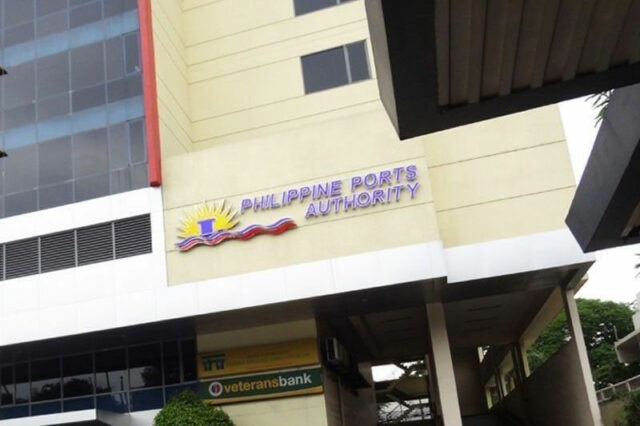
A DAVAO-BASED construction company has secured the contract for the P839.18-million Currimao Port expansion project, the Philippine Ports Authority (PPA) said.

In a notice of award, the PPA said that Khan Kon Chi Construction and Development Corp. has secured the contract for the port expansion project.

Aside from Khan Kon Chi Construction & Development Corp., eight companies submitted bids for the project, namely: Goldridge Construction & Development Corp., Mamsar Construction and Industrial Corp., Sunwest, Inc., SB Construction Corp., WTG Construction & Development Corp., MAC Builders Corp., and UKC Builders, Inc.

The winning contractor is given 720 days from the receipt of the notice to proceed to complete the project, the PPA said.

The country’s port regulator earlier expressed its intention to enhance and develop ports to improve their efficiency and capacity, while also preparing some of them to receive cruise ships.

The PPA has identified the Currimao Port expansion as one of its priority infrastructure projects.

Over the next four years, the PPA plans to allocate about P16 billion for infrastructure projects, including 14 flagship projects, which will undergo feasibility studies. — Ashley Erika O. Jose

Beyoncé leads Grammy nominations with Cowboy Carter

LOS ANGELES — Superstar singer Beyoncé topped the list of Grammy Award contenders unveiled on Friday, earning 11 nods including an album of the year nomination for her venture into country music, Cowboy Carter.

Behind Beyoncé, Billie Eilish, Charli XCX, Kendrick Lamar and Post Malone tied with seven nominations each. Pop phenomenon Taylor Swift and newcomers Chappell Roan and Sabrina Carpenter scored six each.

Beyoncé’s nominations brought her career total to 99, more than any other artist. She had been tied for the lead with her husband, rapper Jay-Z, who has 88.

Women dominated the album of the year category, the top Grammy honor.

Despite her lifetime lead in nominations, and an unrivaled 32 wins, Beyoncé has never taken home the album trophy. Jay-Z called out that fact at the last Grammys ceremony, arguing that voters had failed to give proper recognition to Black artists.

Ms. Swift has won the top prize four times and is in the running again with her breakup album The Tortured Poets Department.

At the awards ceremony on Feb. 2, Beyoncé and Ms. Swift’s records will compete with Ms. Carpenter’s Short n’ Sweet, Brat from Charli XCX, Ms. Eilish’s Hit Me Hard and Soft, and Ms. Roan’s The Rise and Fall of a Midwest Princess.

The nominated male artists were Andre 3000 with New Blue Sun and jazz artist Jacob Collier for Djesse Vol. 4.

Winners will be chosen by the roughly 13,000 singers, songwriters, producers, engineers and others who make up the Recording Academy. The organization has taken steps to diversify its ranks, and said 38% were people of color, a 65% increase since 2019.

Cowboy Carter was viewed by experts and fans as a reclamation and homage to an overlooked legacy of Black Americans within country music and culture. It became the first album by a Black woman to land at No. 1 on the Billboard Top Country Albums chart when it was released last spring.

The Beyoncé album was snubbed, however, by voters for the Country Music Awards in September.

Beyoncé’s other Grammy nods included record and song of the year for single “Texas Hold ‘Em.” She also was nominated in pop, rap and Americana categories, showcasing the variety of genres on Cowboy Carter.

Could it finally be Beyoncé’s time to land the top prize?

“I think she’s got a great shot,” said Jason Lipshutz, executive editor of music at Billboard.

It is unclear, however, how voters will view her foray into new musical territory, he said.

“You could tell me that this kind of reaching across the aisle, appealing to country listeners, does power Beyoncé to her very first album of the year win,” Mr. Lipshutz said.

“You could also tell me that it kind of vexes people and voters a little bit, and kind of perplexes them to the degree that it falls short again,” he added.

NEW ARTIST SHOWDOWN
In the best new artist field, “Espresso” singer Ms. Carpenter will face fellow pop singer Ms. Roan, pop-rock singer Benson Boone, hip-hop/country artist Shaboozey, multi-genre musician Teddy Swims and others.

Ms. Carpenter and Ms. Roan are likely to pick up trophies on Grammys night, Mr. Lipshutz said.

“Chapell is the more kind of eccentric and outlandish artist and people love it and really, really respect it,” he said.

Ms. Carpenter “is the hitmaker,” he added. “She has scored three of the biggest songs of this year with ‘Espresso’ and ‘Taste’ and ‘Please, Please, Please.’”

The Beatles and The Rolling Stones, pioneers of rock ‘n’ roll in the 1960s, also landed on this year’s nominations list.

“Now and Then,” a Beatles song produced with artificial intelligence to bring the voice of John Lennon to life, was nominated for song of the year.

The Stones were recognized with a nomination for rock album of the year for Hackney Diamonds, their first album of original music in 18 years. — Reuters

Yields on gov’t debt rise on US election, key data

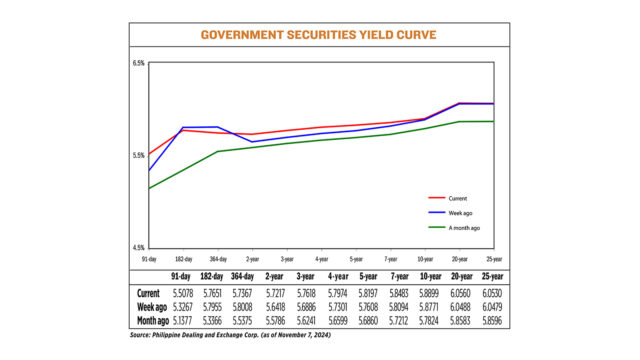
YIELDS on government securities (GS) mostly went up last week following the results of the US election and the release of key domestic economic data.

GS yields, which move opposite to prices, increased by an average of 3.91 basis points (bps) week on week, according to PHP Bloomberg Valuation Service Reference Rates data as of Nov. 8 published on the Philippine Dealing System’s website.

At the short end of the curve, rates were mixed, with the 91-day Treasury bills (T-bills) increasing by 18.11 bps week on week to end at 5.5078%, while the 182- and 364-day T-bills declined by 3.04 bps (to 5.7651%) and 6.41 bps (to 5.7367%), respectively.

At the belly, yields on the two, three, four, five, and seven-year Treasury bonds (T-bonds) climbed by 7.99 bps (5.7217%), 7.32 bps (5.7618%), 6.73 bps (5.7974%), 5.89 bps (5.8197%), 3.89 bps (5.8483%), respectively.

Lastly, at the long end of the curve, rates of the 10-, 20-, and 25-year debt papers went up by 1.28 bps (5.8899%), 0.72 bp (6.0560%), 0.51 bp (6.0530%), respectively.

GS volume traded stood at P45.80 billion on Friday, higher than the P11.95 billion recorded a week prior.

Market players traded cautiously in the early part of the week amid expectations of a close race between Republican Donald J. Trump and Democrat Kamala Harris in the US presidential election, a bond trader said in an e-mail.

“However, after President Trump secured enough electoral votes to warrant his second term in office, local bond yields tracked the substantial upward movement of US Treasuries. This movement was driven by potentially looser US fiscal policy and inflationary risks of the proposed economic policies of former President Trump,” the first trader said.

“Bond yields were higher leading to the US election and results. The market is expecting the Trump administration to be negative for bonds due to the budget deficit,” the second trader said in a Viber message.

Mr. Trump’s return to the White House is expected to usher in fiscally expansive policies that could temper the extent of the Federal Reserve’s future rate cuts, Reuters reported.

The Fed lowered rates by 25 bps at its monetary policy meeting on Thursday, following a jumbo-sized, 50-bp reduction that kicked off its current easing cycle in September.

But the outlook for further rate cuts has been clouded by expectations that key elements of Mr. Trump’s economic platform such as tax cuts and tariffs will lead to faster growth and higher consumer prices. That could make the Fed wary of risking an inflationary rebound by cutting rates too deeply next year, denting expectations that falling borrowing costs could spur a rebound in bonds after a weeks-long selloff.

Treasury yields — which move inversely to government bond prices and tend to follow interest rate expectations — have surged by over 70 bps since mid-September and recently notched their biggest one-month rise since the 2008 global financial crisis, according to UBS Global Wealth Management. The move coincided with Mr. Trump’s improving standing in polls and betting markets throughout October.

Fed funds futures show investors are now expecting rates to decline to about 3.7% by the end of next year from the current 4.5%-4.75% range. That is about 100 bps higher than what was priced in September.

Strategists at BofA Global Research recently shifted their near-term target for Treasury yields to the 4.25% to 4.75% range, from 3.5% to 4.25% previously.

Fed Chair Jerome H. Powell on Thursday declined to speculate on the impact the new US administration will have on monetary policy. He said higher yields were likely more reflective of an improved economic outlook rather than higher inflation expectations. Consumer prices notched their smallest rise in more than 3-1/2 years in September.

Meanwhile, key Philippine economic data released last week caused mixed GS yield movements later in the week, both traders said.

“Traders reacted in mixed directions to the Philippine economic releases last week. While bond yields moved higher in line with the uptick in inflation, this movement has been offset by softer GDP (gross domestic product) report,” the first trader said.

The second trader said these data suggest that the Bangko Sentral ng Pilipinas (BSP) could continue cutting rates, “albeit at a more measured pace.”

Philippine headline inflation picked up to 2.3% in October amid higher food prices, particularly rice, the Philippine Statistics Authority (PSA) reported on Tuesday.

Last month’s consumer price index was faster than 1.9% in September but slower than 4.9% a year ago.

The October print was within the BSP’s 2%-2.8% forecast for the month but slightly below the 2.4% median estimate in a BusinessWorld poll.

Headline inflation averaged 3.3% in the first 10 months, within the BSP’s 2-4% target but slightly above its 3.1% forecast for the year.

Meanwhile, Philippine GDP grew by 5.2% in the third quarter, slower than the upward revised 6.4% expansion in the second quarter and the 6% print in the same period last year, the PSA reported on Thursday.

This was below the 5.7% median forecast in a BusinessWorld poll of 12 analysts.

In the first nine months, economic growth averaged 5.8%, below the government’s 6-7% annual target. The economy now needs to expand by 6.5% in the fourth quarter to meet this goal.

For this week, GS yields may consolidate, both traders said.

“Bond yields are likely to retreat from recent spikes on account of likely softer US consumer and producer inflation reports, as well as downbeat US retail sales data [this] week,” the first bond trader said.

“Yields will remain elevated unless the US bond market resumes its sell-off,” the second bond trader added. — Kenneth H. Hernandez with Reuters

Ford opens parts hub in Calamba

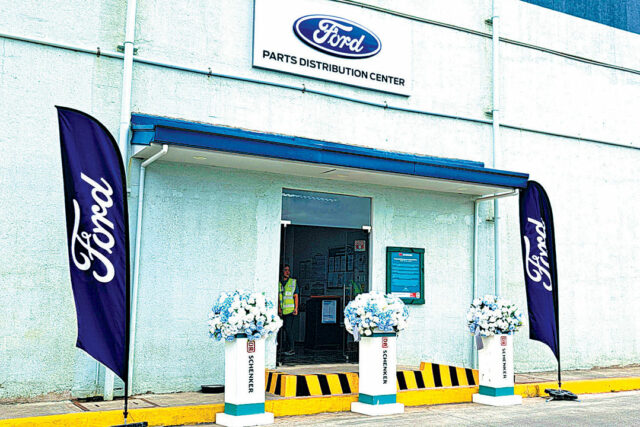
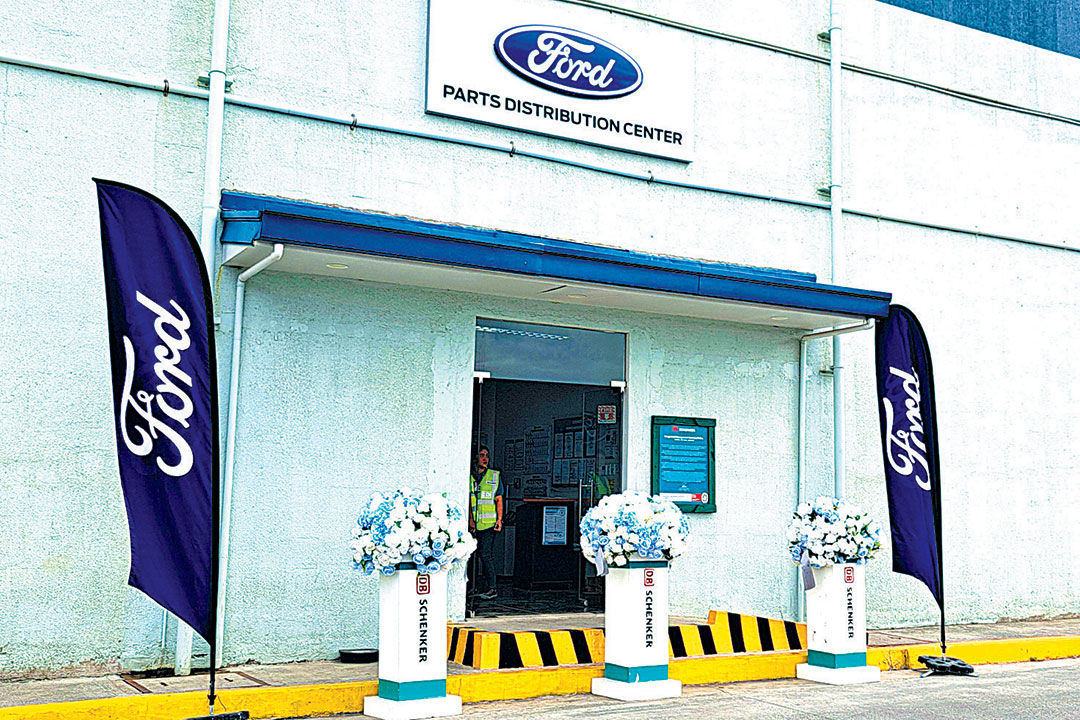
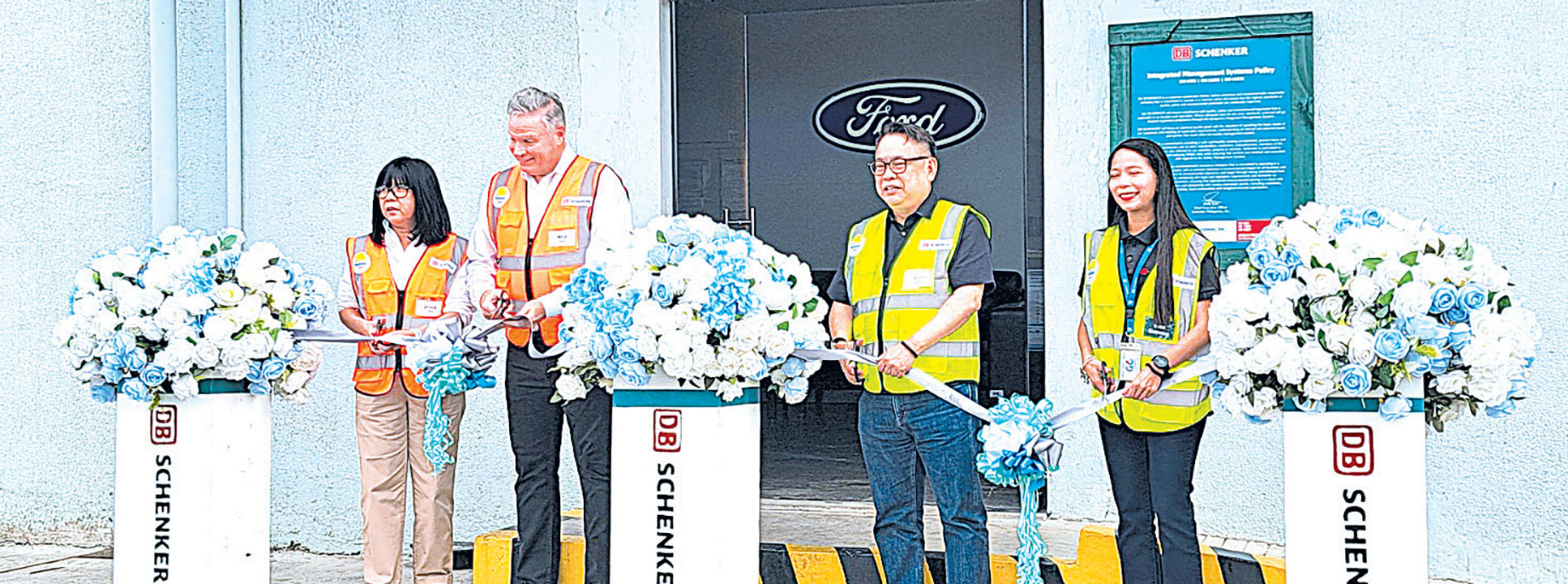
The Ford Parts Distribution Center is operated in partnership with DB Schenker. — PHOTO BY HAZEL NICOLE CARREON

Bigger distribution center expected to ‘boost ownership experience’

By Hazel Nicole Carreon

AS PART of its commitment to “boost the ownership experience” of its customers, Ford Philippines officially inaugurated a new parts distribution center in Calamba, Laguna.

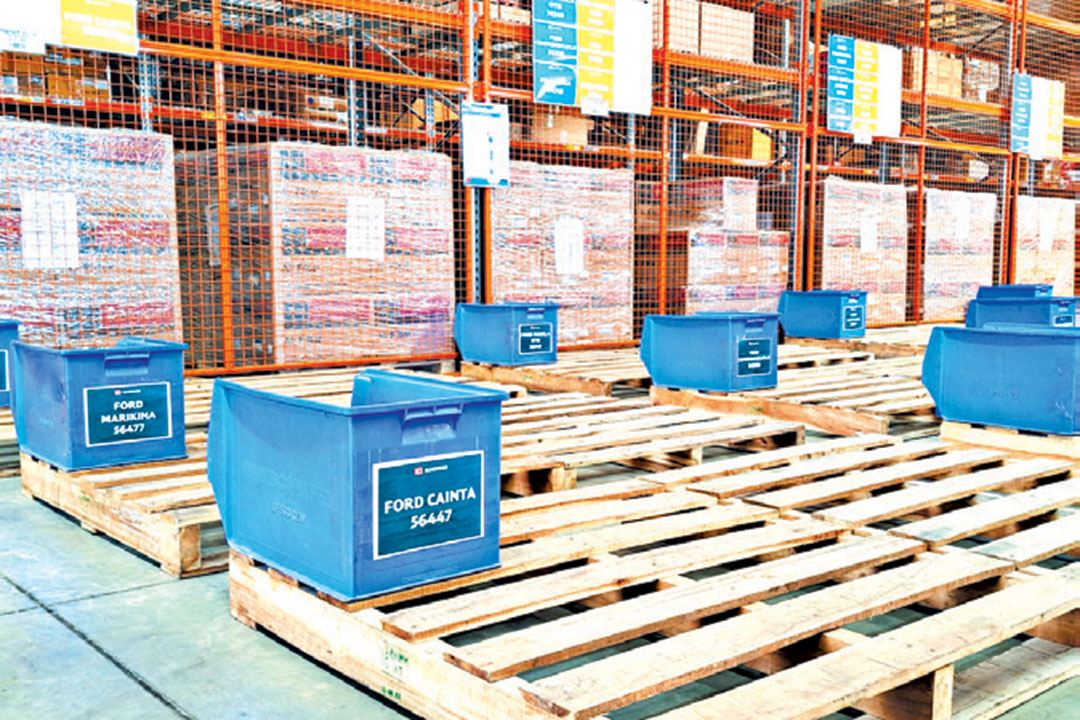
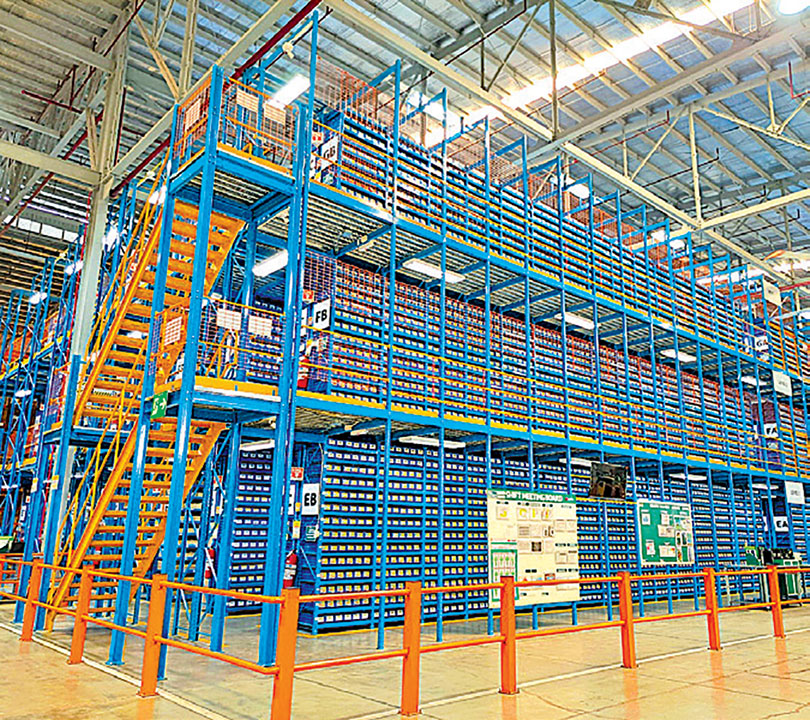
The Ford Parts Distribution Center sits on a massive 13,250-sq.m. space that is more than twice the size of the previous facility. With a capacity of over 100,000 car parts, it is expected to significantly enhance the company’s ability to supply genuine Ford parts to its dealerships and customers nationwide. It is also equipped with eight inbound and outbound docks for improved operational efficiency.

“With the bigger parts distribution center, we are also able to fulfill not only same-day delivery in Metro Manila and nearby areas, but also daily delivery to dealerships in Luzon, Visayas, and Mindanao,” said Ford Philippines President and Managing Director Mike Breen in a speech at the inauguration ceremony.

The executive recalled how the company’s previous facility’s complexity — with multiple buildings and insufficient racking — challenged operations. “Moving into this facility has set up to more than overcome that and really deliver on what we need to do,” he declared.

Ford Philippines entered a five-year partnership with logistics solutions provider DB Schenker for the management of the new parts hub. DB Schenker Philippines Contract Logistics Head Irma Diaz-Guevara said in her speech that the new facility will “guarantee the speed, accuracy, and cost-efficiency in serving the Ford after-sales market in the country.”

“This partnership between Ford and DB Schenker is a true testament of Ford’s investment in the growing Philippine automotive market,” she added.

Alongside the inauguration, Ford Philippines launched the Territory Assure+ program that allows owners of the previous- and current-generation Territory to avail of express periodic maintenance service within just 90 minutes, enjoy free pickup and delivery of the vehicle for maintenance, and realize improved customer support through email. This initiative also lets Territory owners avail of loaner vehicles when their cars need to undergo repair for more than a day.

“Our Territory owners are mostly from the young population who are digitally savvy, always on the go, and pursue busy and active lifestyles. With the Territory Assure+, we are giving them the confidence and peace of mind in owning their Territory, so they can enjoy every driving moment with their friends and family,” Mr. Breen stated.

Diabetes and wellbeing

SWEET LIFE-UNSPLASH

World Diabetes Day is celebrated annually on Nov. 14. This year’s theme is “Diabetes and Wellbeing,” which aims to raise awareness about the physical and mental challenges of diabetes, prioritize wellbeing, and enhance the quality of life of patients.

“With appropriate access to diabetes care and support for their wellbeing, everyone with diabetes has the chance to live well,” the International Diabetes Federation (IDF) said.

Diabetes is a chronic, metabolic disease characterized by elevated levels of blood sugar, which leads over time to serious damage to the heart, blood vessels, eyes, kidneys, and nerves. While the physical impact of diabetes is well-known, it’s important to understand that the disease also takes a toll on mental wellbeing.

Over a third (36%) of people with diabetes experience diabetes distress, according to the IDF. More than six of 10 people with diabetes (63%) say that the fear of developing diabetes-related complications affects their wellbeing. Almost three of 10 people with diabetes (28%) find it hard to remain positive in relation to their condition. Diabetes distress is sometimes mistaken for, and is more common than, depression.

Diabetes distress is the emotional distress that results from living with diabetes and the burden of relentless daily self-management. It can also arise from the social impact of diabetes such as stigma, discrimination, or dealing with other people’s unhelpful reactions or their lack of understanding; and the financial implications of treatment, explains the American Diabetes Association (ADA).

The most common reasons for feeling diabetes distress are worrying about the future and the possibility of serious complications and experiencing feelings of guilt and anxiety when diabetes management goes off track.

Diabetes distress can fluctuate over time and may peak during challenging periods; for example, soon after diagnosis, during major changes in treatment regimen, or at diagnosis/worsening of long-term complications. It can also peak at times of heightened general stress, when the added burden of diabetes self-care becomes too much.

Greater diabetes distress is associated with suboptimal self-management such as reduced physical activity, less healthy eating, not taking medication as recommended, and less frequent self-monitoring of blood glucose; elevated A1C which indicates poor blood sugar control; more frequent severe hypoglycemia (low blood sugar); and impaired quality of life.

If not addressed, long-term diabetes distress could worsen into diabetes burnout, a state of physical or emotional exhaustion caused by the continuous distress of diabetes (and efforts to self-manage it). Signs of diabetes burnout include disengagement from self-care tasks which could include skipping insulin doses or not monitoring blood glucose, unhealthy or uncontrolled eating, risk-taking behaviors, or non-attendance at clinic appointments.

Diabetes UK and the US Centers for Disease Control and Prevention (CDC) offer the following tips to cope with diabetes distress and burnout:

* Be kind to yourself. Let go of really high expectations on things like blood test results and set smaller, more realistic goals. Stop using phrases like “good” or “bad” blood sugar — as this can constantly feel like you’ve done something wrong. Talk about high or low blood sugar instead.

* Allow loved ones to help you take care of your diabetes. Those closest to you can remind you to take your medicines and help monitor your blood sugar levels. They can join you in being physically active and preparing healthy meals. They can also learn more about diabetes and go with you when you visit your doctor.

* Talk to your friends and family about how you feel and how they can support you — you might feel like a weight has been lifted from your shoulders. Or talk to other people with diabetes — it can help to know that you’re not alone.

* Get support from your doctor. If you’re feeling any sort of diabetes distress, your doctor can support you with the physical and emotional side of diabetes. Together you’ll be able to make plans that can reduce your distress, like making small changes to your diabetes routine or going on an education course.

* Your doctor may also refer you to a psychological specialist to help you cope or adjust to life with diabetes. Additionally, some local hospitals and medical centers have diabetes care centers that provide patients and their family with comprehensive education and patient-focused counselling on managing diabetes.

* Do one thing at a time. When you think about everything you need to do to manage your diabetes, it can be overwhelming. To deal with diabetes distress, make a list of all of the tasks you have to do to take care of yourself each day. Try to work on each task separately, one at a time.

* Pace yourself. As you work on your goals, like increasing physical activity, take it slowly. You don’t have to meet your goals immediately. Your goal may be to walk 10 minutes, three times a day each day of the week. But you can start by walking two times a day or every other day.

Innovative biopharmaceutical research companies are working to develop new medicines to prevent and treat many chronic diseases, stated the Pharmaceutical Research and Manufacturers of America. Today, it said that there are 1,181 preventive treatments in development in addressing chronic conditions including diabetes.


Teodoro B. Padilla is the executive director of Pharmaceutical and Healthcare Association of the Philippines which represents the biopharmaceutical medicines and vaccines industry in the country. Its members are in the forefront of research and development efforts for COVID-19 and other diseases that affect Filipinos.

UK confirms bird flu cases at commercial poultry farm

REUTERS

LONDON — The UK government said cases of bird flu had been confirmed in commercial poultry at premises in Yorkshire, after it increased the risk level of the disease from medium to high.

All poultry on the infected premises will be humanely culled, and a three-kilometer protection zone had been put in place surrounding the premises, it said in a statement.

Bird flu, or avian influenza, which has killed hundreds of millions of birds around the globe in recent years, has increasingly spread to mammals, raising concerns it may lead to human-to-human transmission.

Earlier in the day, the government raised its alert level after two different strains of the virus, H5N5 and H5N1, were detected in wild birds in the country over the autumn.

Britain, which had increased the threat level to medium in mid-October, has experienced several bird flu outbreaks over the years, including one in 2021 that was then described as the largest-ever in the country. — Reuters

JFC shares down despite taking full ownership of Tim Ho Wan

FACEBOOK/TIMHOWANPH

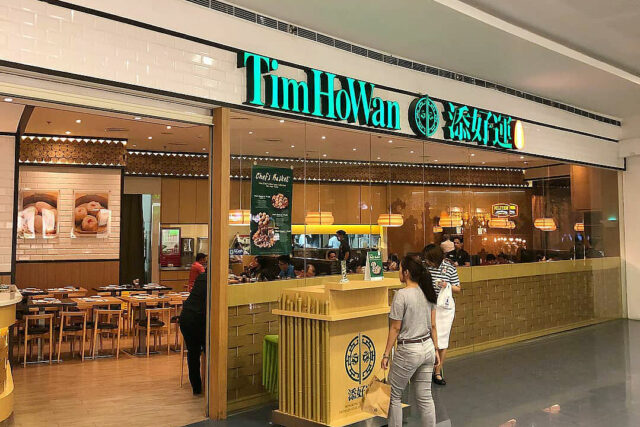
JOLLIBEE Foods Corp. (JFC) shares fell last week after announcing a S$20.2-million (P892.29 million) transaction to gain full ownership and control of Hong Kong-based dim sum restaurant Tim Ho Wan.

Data from the Philippine Stock Exchange showed 1.35 million shares worth P357.5 million switched hands from Nov. 4-8, making it the 17th most actively traded stock in the local bourse last week.

Shares in the company finished trading at P260 apiece on Friday. The stock price fell by 2% from a week earlier, when it closed at P265.20 on Oct. 31.

The stock still maintains an upward trend for the year, growing by 3.4% since its P251.40 close on Dec. 29, 2023.

Luis A. Limlingan, head of Sales at Regina Capital Development Corp., said that news pertaining to Jollibee’s acquisition of Tim Ho Wan primarily affected the stock’s volatility for the week.

The restaurant company announced in a press release to the exchange last Tuesday that it plans to transfer full ownership and management of Tim Ho Wan Holdings Pte.

Ltd., the holding company of the restaurant, to Jollibee Worldwide Pte. Ltd. (JWPL), a subsidiary of JFC.

Tim Ho Wan, a global restaurant chain with around 80 locations across 11 countries, will become the flagship brand for the Jollibee group’s Chinese cuisine segment following the acquisition.

JWPL has held a 92% participating interest in Titan Dining LP, the original proprietor of Tim Ho Wan, since January 2024, raising its total maximum fund for Titan to P18.9 million.

“At least for the week’s trading activity and price movement of JFC, the news of JFC’s acquisition of Tim Ho Wan immediately reflected market’s positive sentiment, with JFC’s stock price surging by +4.09%, closing at P275/share on the day the announcement was made,” Mr. Limlingan said in a Viber message.

“The company has experienced rapid expansion in both domestic and foreign markets, particularly in the Middle East and North America,” said Alfonso G. Teodoro, equity research analyst at Timson Securities, Inc., in a separate Viber message.

“Recent purchases by Jollibee, including a stake in Compose Coffee in South Korea and complete ownership of Tim Ho Wan in Hong Kong, also contributed to the company’s active trading status,” Mr. Teodoro added.

In July, JFC bought 70% of Compose Coffee Co., Ltd. and its roasting facility JMCF Co. Ltd. for P20 billion. Private equity firm Elevation Equity Partners Korea Ltd. kept a 25% stake while Titan Dining II LP (Titan Fund II) owned 5%.

In April, JWPL announced its participation and capital call commitment to Titan Fund II. The fund is planned to acquire and grow food and beverage concepts, with the goal of expanding Asia-Pacific food service brands and bringing global brands to the region. 

“Through strategic acquisitions, robust domestic performance, and strong foreign expansion, JFC is well-positioned to maintain its growth trajectory in 2024,” said Mr. Teodoro.

Mr. Limlingan said that Jollibee is expected to maintain its growth momentum in the third quarter of 2024, building on over a 10% increase in revenue and net income during the first half of the year. This growth is anticipated to be driven by strong same-store sales as well as the company’s expansion efforts.

“However, with recent news pertaining to the US election, higher inflation, and lower GDP (gross domestic product), revisions might be considered for FY2024,” Mr. Limlingan added.

The Philippine economy’s expansion slowed to 5.2% in the third quarter as bad weather and lower government spending held growth back, according to the Philippine Statistics Authority.

“Key risk factors that may have an impact on earnings and revenues for JFC may include supply chain disruptions, rising commodity costs, and the potential for lower consumer spending due to economic slowdowns in some regions,” said Mr. Teodoro.

“Despite ongoing economic difficulties, the company should be able to achieve good revenue growth for the year because of its diverse brand portfolio and efficient operations.”

For the second quarter, Jollibee’s attributable net income grew by 30.8% to P3.04 billion.

Meanwhile, consolidated revenues increased by 10.6% to P67.22 billion.

For the first half of the year, net income grew by 28.9% to reach P5.66 billion, while consolidated revenues grew by 10.9% to P128.52 billion.

“Price has still respected the P273 resistance level the past few weeks and recently closed below the short-term support of P264 per share. As investors await the next earnings result for JFC on Nov. 13, price may still find support at around 250 to 254 per share, having a pullback at the 100-day EMA (exponential moving average),” said Mr. Teodoro.

Mr. Limlingan pegged support and resistance for the stock at P260 and P275, respectively. — Pierce Oel A. Montalvo

ADVERTISEMENT
ADVERTISEMENT